1. Introduction
Contemporary urban development, particularly within the rapidly expanding megacities of the Global South, faces interconnected crises of demographic pressure, environmental degradation, and public health burdens [
1]. This growth exacerbates issues such as urban heat islands, noise pollution, and psychological stress while reducing routine human-nature contact [
2], thereby undermining urban liveability and resilience. Urban blue-green spaces (UBGS), including parks, forests, and water bodies, are gaining recognition as essential multifunctional infrastructures that deliver critical ecosystem services [
3]. In this study, UBGS refers specifically to publicly accessible parks and water-integrated green spaces within the urban fabric of Delhi, distinguishing them from the broader planning concept of blue-green infrastructure (BGI). As nature-based solutions, they provide synergistic benefits, including climate mitigation [
4], biodiversity support, and direct health promotion through psychological restoration and physical activity [
5], serving as a primary public conduit for regulating, supporting, and cultural ecosystem services in dense urban settings [
6].
The delivery of ecosystem services and health benefits by blue-green spaces (BGS) is not guaranteed by their mere presence but is associated with human dimensions, such as accessibility, perceived environmental quality, and patterns of use [
5,
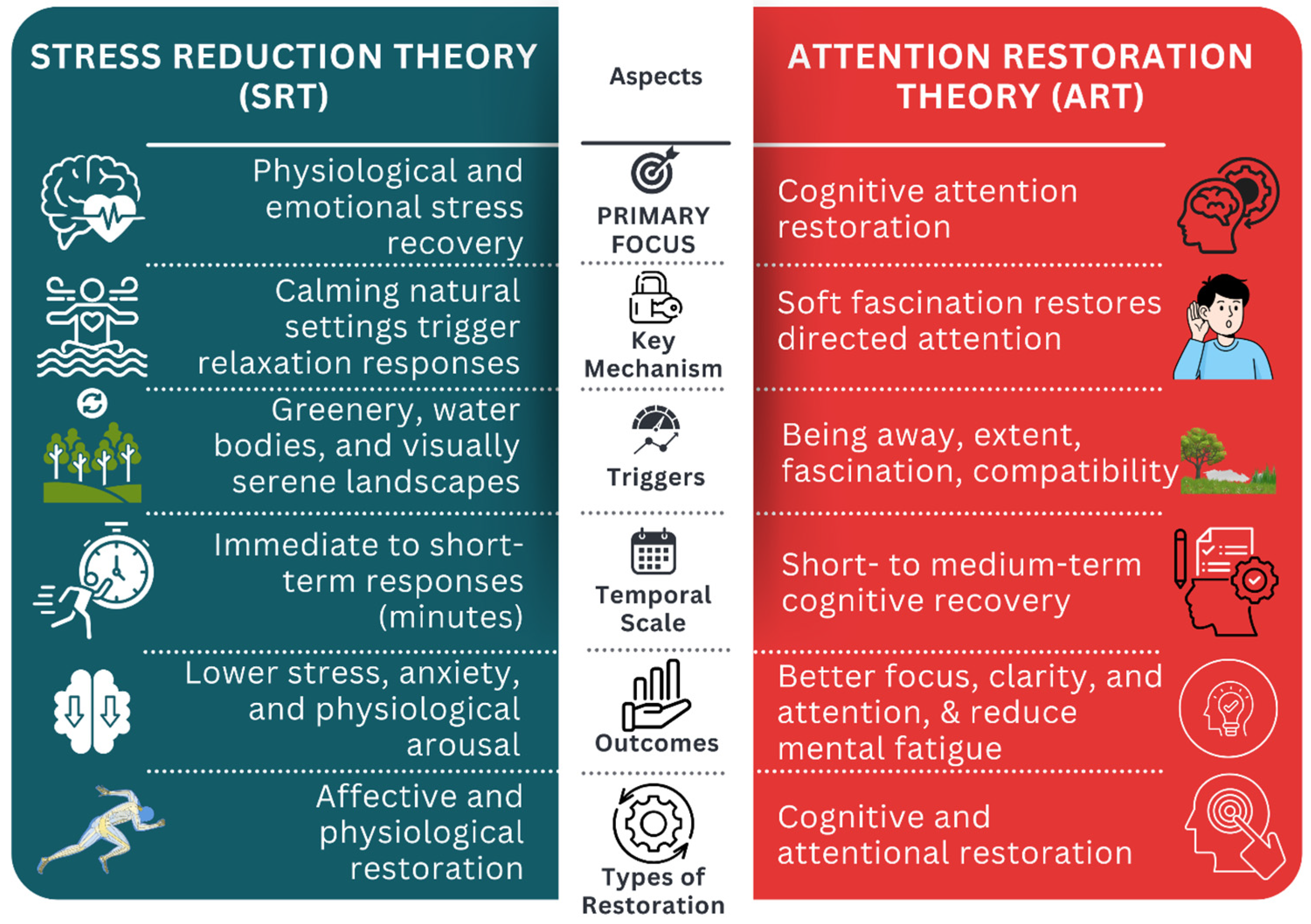
7]. Although research primarily from the Global North demonstrates strong links between UBGS exposure and well-being, particularly through cultural ecosystem services, this evidence is predominantly grounded in Attention Restoration Theory (ART) and Stress Reduction Theory (SRT), which emphasise cognitive recovery and physiological calming in low-density, resource-abundant settings [
8,
9,
10]. Consequently, prevailing approaches prioritise visual aesthetics and cognitive outcomes while underrepresenting behavioural engagement, multisensory environmental quality, and the role of activity type in shaping restorative experiences [
11].
Assessments of environmental quality often remain fragmented, focusing on visual attributes while overlooking acoustic comfort, thermal regulation, and infrastructure, thereby limiting the evaluation of UBGS as integrated systems delivering multiple ecosystem services [
12]. User satisfaction, in this context, functions as a key evaluative outcome associated with experiential engagement into realised well-being benefits and sustained use [
13]; however, empirical research rarely disentangles how activity type, social context, and patterns of use shape satisfaction and ecosystem service flows [
14]. Addressing these gaps, this study adopts a human-centred approach to examine how UBGS ecosystem services are accessed and experienced in Delhi, focusing on use patterns, perceived environmental quality, and both cognitive and embodied restorative outcomes to inform experience-responsive and equitable BGI design.
The existing evidence linking UBGS to human well-being remains geographically skewed and conceptually limited, as predominant models derived from lower-density, resource-affluent contexts [
15] assume a stable delivery of ecosystem services, an assumption of uncertain transferability to rapidly urbanising, environmentally stressed cities of the Global South. It is characterised by extreme density, infrastructure limitations, environmental stressors, and socio-spatial inequalities that fundamentally reshape how UBGS function and are experienced. In these contexts, visual greenness alone is an unreliable proxy for well-being benefits, as cumulative stressors may substantially limit experiential and restorative gains despite the presence of green cover [
16]. This research integrates lived experiences with ecosystem services by focusing on embodied services, such as physical cooling and sensory relief, as well as equitable access, providing insights for designing effective and socially just urban greening strategies. However, this mismatch has rarely been empirically examined. Despite major urban greening initiatives in India, systematic research on urban parks examining environmental quality, restorative experience, usage, and user satisfaction is limited. However, no study has examined these features in Indian urban parks, especially in Delhi, using interpretable machine-learning (ML) techniques.
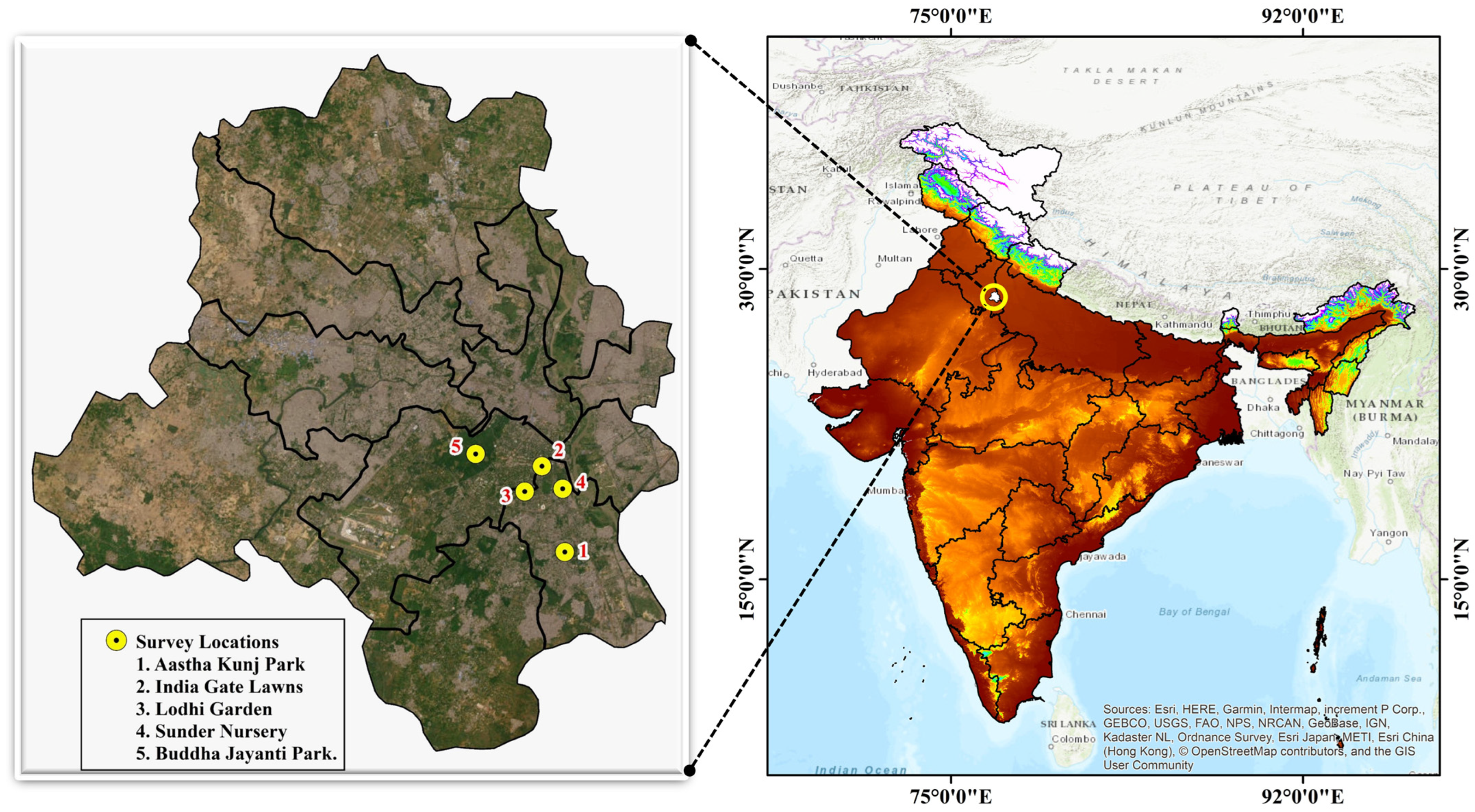
Delhi represents a critical and policy-relevant case for the exploratory investigation of how UBGS may operate as ecosystem service infrastructure under conditions of acute urban stress [
17]. As one of the world’s largest megacities, Delhi faces extreme population density [
18], rapid land-use change, rising heat exposure, chronic air and noise pollution, and limited access to private open spaces. Publicly accessible parks, urban forests, water bodies, and riverfronts provide essential regulating ecosystem services, such as thermal moderation, air purification, and noise buffering, as well as cultural services that support recreation, psychological restoration, and social interaction. These functions are particularly vital for populations with limited adaptive capacity in urban environments. However, the benefits of UBGS in Delhi are neither evenly distributed nor automatically realised; they depend on accessibility, mobility constraints, patterns of use, and users’ subjective perceptions of environmental quality [
19].
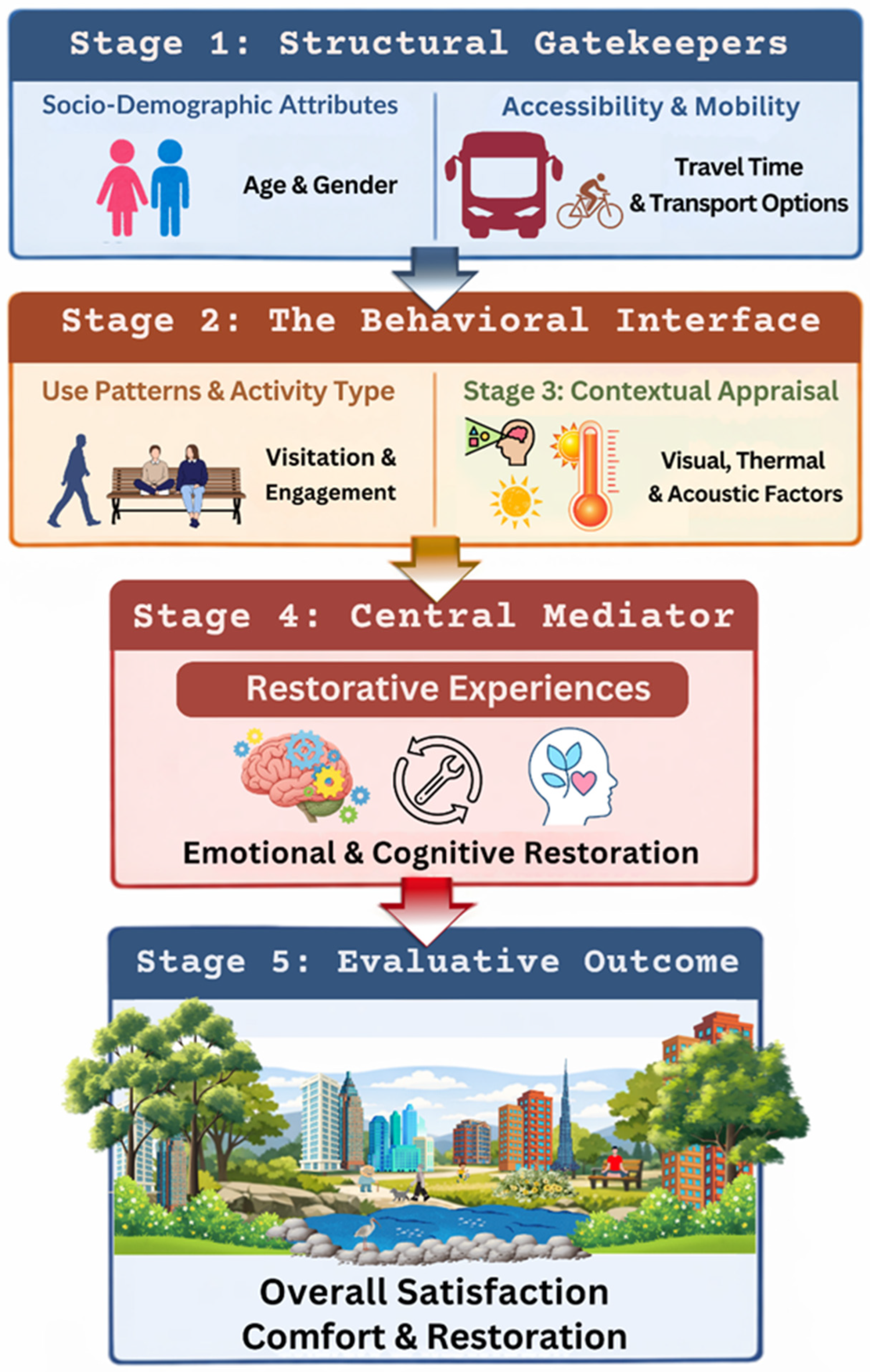
This study addresses conceptual and geographical gaps by adopting an experience-centred framework that positions restorative experience as a central explanatory factor alongside environmental qualities, patterns of use, and user satisfaction in UBGS. The study integrates this framework with SHapley Additive exPlanations (SHAP), an interpretable ML approach enabling transparent assessment of socio-demographic factors, accessibility, behavioural engagement, perceived environmental quality, and restorative responses. Using SHAP, the analysis moves beyond linear models to reveal how multiple interacting factors shape restorative outcomes and satisfaction, an approach largely absent from UBGS research in the Indian and broader Global South context. The study is structured around three integrated objectives: (1) to profile user demographics and characterise behavioural patterns of access and use; (2) to assess perceived environmental quality and quantify restorative experiences grounded in ART and SRT constructs; and (3) to identify the relative contribution of experiential, behavioural, and environmental factors associated with overall user satisfaction using SHAP.
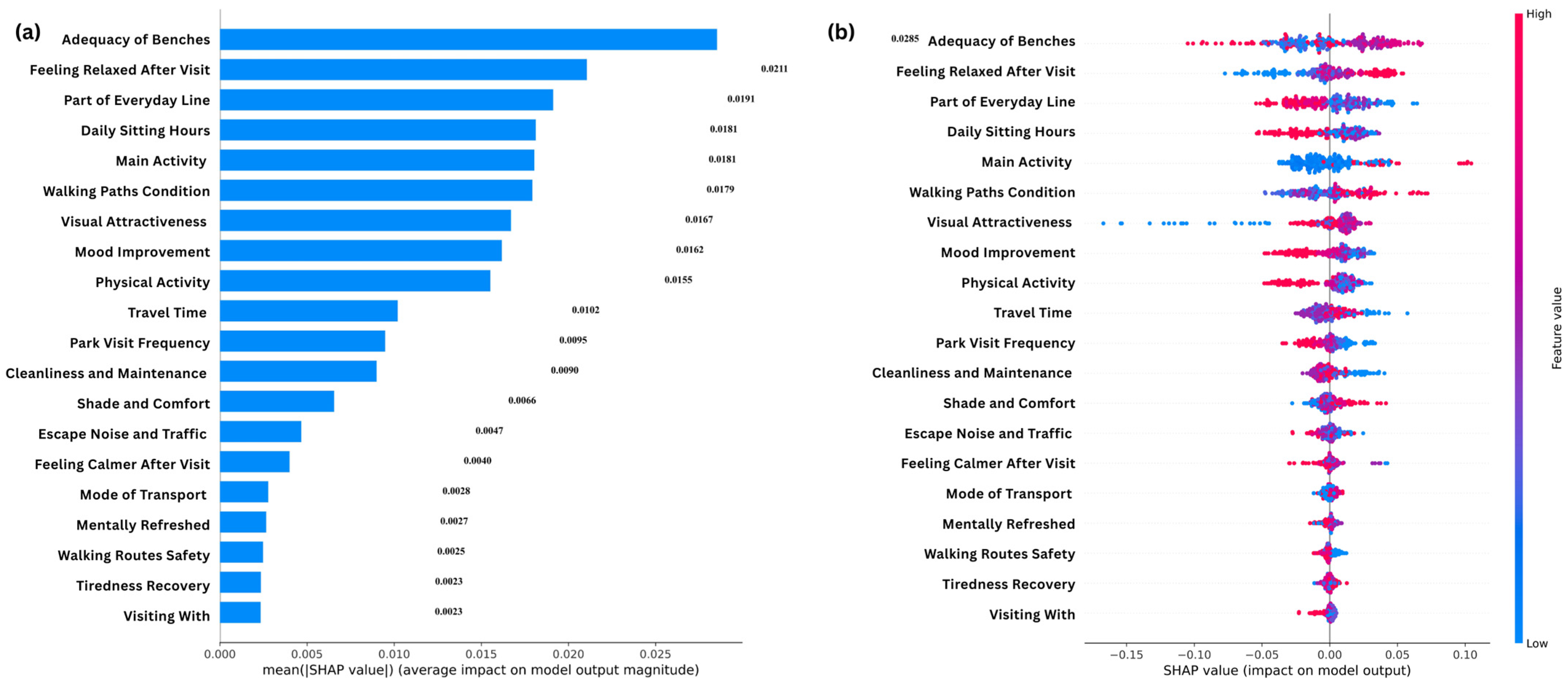
This study makes three central contributions to the literature on urban ecosystems and human well-being. First, it provides exploratory empirical evidence from five urban parks in Delhi, a quintessential Global South megacity, offering context-rich insights that begin to address the geographical bias in the existing research and generate theoretical propositions for testing in broader populations. By examining the context of acute environmental stress, infrastructural constraints, and high density, it extends theories on UBGS restorative benefits beyond the stable, resource-abundant settings from which they emerged. Second, the study advances an integrated analytical framework that links accessibility, perceived multisensory quality, behavioural use, restorative experience, and user satisfaction. This approach transcends single-factor analysis to model UBGS as a lived socio-ecological infrastructure. Our findings indicate that embodied relaxation emerged as the strongest contributing predictor of user satisfaction within the modelling framework, suggesting that sensory and physical relief from heat, noise, and congestion is closely associated with more positive evaluations in high-stress urban environments. This highlights an important but overlooked experiential mechanism. The insights suggest a shift in urban forestry and public health planning, emphasising that equitable outcomes rely on both the spatial distribution of resources and the experiential quality of BGI.
5. Discussion
This study advances the understanding of how UBGS may function as socio-environmental infrastructure in a high-density Global South megacity by examining the interplay between access, use patterns, perceived environmental quality, restorative experiences, and satisfaction among users of Delhi parks. By integrating access and use patterns with perceived environmental quality, restorative experiences, and satisfaction outcomes, the findings move beyond biophysical evaluations to demonstrate the social and experiential functioning of urban BGI. The results indicate that UBGS operates as urban infrastructure, delivering restorative benefits shaped by modes of use and embodied experiences, underscoring its relevance for urban planning and public health in rapidly urbanising contexts.
5.1. Key Findings and Their Significance
These patterns position UBGS in Delhi as neighbourhood-scale infrastructure rather than recreational destinations. The high frequency of use, primarily via walking and public transport, shows that UBGS are embedded in daily urban life as accessible spaces for stress relief. This integration highlights the importance of proximity and pedestrian accessibility in sustaining engagement and enabling well-being. The contrast between positive ratings for visual appeal and lower evaluations of noise and traffic attenuation reveals a gap between aesthetic provision and restorative performance. Although greenery enhances visual appeal, it cannot alone counteract urban stressors in congested areas. These findings show that restorative quality depends on design elements that mitigate sensory stress, particularly acoustic discomfort, rather than visual greening alone.
The respondents reported emotional calmness, mental refreshment, and physical recovery, reinforcing the UBGS as a health-supportive environment. However, variations in satisfaction across activities show that restorative benefits depend on how spaces are used. Passive, nature-oriented activities were associated with higher satisfaction, suggesting that opportunities for quiet observation and contemplation are critical alongside active uses. Multivariate analysis showed that post-visit relaxation was the main predictor of overall satisfaction, whereas mood refreshment had no independent effect when combined. This indicates that somatic restoration and relief from physical tension play a more decisive role in shaping user evaluations than cognitive restoration under urban stress. Gender and age differences in activity patterns and visitation reveal varied needs across population groups, reinforcing the need for an inclusive design that accommodates diverse life-course contexts.
5.2. Usage Patterns as Indicators of Everyday Urban Infrastructure
The high visitation frequency observed among our respondents, with over 40% visiting three or more times weekly, reinforces their role as an everyday urban infrastructure. This pattern aligns with research highlighting the importance of accessible UBGS in Global South cities, where private outdoor space is limited [
58,
59]. However, confirmatory studies with representative samples are needed to establish population-level patterns. Such frequent engagement indicates the regular delivery of urban ecosystem services, especially cultural services (stress reduction, social interaction, and psychological restoration) and regulating services (thermal comfort and air purification), which accrue through repeated exposure. In Delhi, this pattern is supported by walking and public transport as primary access modes, combined with short travel times for most users (67% within 20 min), indicating these spaces operate within neighbourhood-scale catchments [
60]. This pattern suggests that proximity and pedestrian accessibility may be important factors in sustaining frequent use [
61] and enabling the everyday realisation of ecosystem service benefits for urban health and well-being among active users [
62].
This high-frequency use coexists with a significant paradox regarding the accessibility of ecosystem services [
63]. Despite the short distances, many respondents reported difficulty accessing these spaces, highlighting a divergence between potential ecosystem service supply and experienced access. This gap points to qualitative barriers such as safety concerns, inadequate pedestrian connectivity, and poorly designed entrances that constrain people’s ability to benefit from ecosystem services, even when green spaces are nearby [
36]. The presence of frequent and infrequent users reveals persistent heterogeneity in ecosystem service uptake, suggesting that physical availability alone cannot guarantee equitable benefits. Social, perceptual, and experiential factors play a decisive role in determining whether BGS integrates into daily life and functions as an adequate ecosystem service infrastructure [
37]. These findings position usage patterns as a lens for understanding BGS not merely as recreational amenities [
17], but as urban ecosystem service systems whose effectiveness depends on spatial provision, accessibility, quality, and lived experience.
5.3. Accessibility: The Proximity-Perception Gap in Urban Blue-Green Space Access
Our research indicates a significant disparity between the actual proximity of UBGS and users’ perceived experience of accessing them. Although the majority of respondents indicated short travel times, with 67% indicating times under 20 min, a significant percentage (40.1%) concurrently regarded access as challenging or very challenging. This discrepancy highlights a fundamental shortcoming in urban green infrastructure development: although spatial availability is crucial, it does not necessarily ensure equal access to ecosystem services [
23]. The findings reinforce emerging scholarship that distinguishes between metric proximity and lived accessibility, where the latter determines whether the potential ecosystem services supplied by UBGS, particularly cultural and regulating services linked to health and well-being, are realised in everyday urban life [
36,
64].
Perceived accessibility is associated with journey quality and experiential conditions, which influence how ecosystem service supply relates to actual use and perceived benefits of the ecosystem. Deficiencies in pedestrian infrastructure, such as poor sidewalks, missing crossings, or a lack of shade and rest areas, can make short distances burdensome, discouraging use, and limiting ecosystem service benefits [
65,
66]. Safety perceptions, often more influential than objective safety, constrain access, particularly for women, older adults, and caregivers, and are shaped by environmental cues such as lighting, visibility, and vegetation maintenance [
38,
67]. Micro-scale design factors [
68], such as uninviting entrances, poor visual connectivity, and weak integration with pedestrian networks, reduce urban space permeability, making nearby green spaces feel inaccessible [
69,
70]. These dynamics show that cities with extensive green spaces may still reproduce inequities in access to ecosystem services, highlighting the need for planning frameworks that move beyond distance-based metrics to prioritise functional and perceptual accessibility, ensuring that UBGS operates as inclusive urban infrastructure [
71].
5.4. Environmental Quality: The Gap Between Aesthetic and Experiential Quality
Moderate scores across environmental quality indicators reflect a persistent challenge in UBGS design within densely populated cities such as Delhi: the mismatch between aesthetic ecosystem service provision and functional restorative performance [
72]. The high ratings for visual attractiveness align with the literature, highlighting the role of greenery and landscape design in enhancing aesthetic appreciation and scenic quality, corresponding to cultural ecosystem services for visual enjoyment and place satisfaction [
73]. These perceptions are reinforced by the regulating ecosystem services of vegetation, including microclimate regulation through shading and evapotranspiration, air purification, and humidity moderation, which contribute to improved thermal comfort and environmental pleasantness [
44]. Evidence indicating reductions in surface and air temperatures of up to 5 °C underscores the importance of urban vegetation as a climate-regulating asset, supporting both physical comfort and perceived environmental quality in heat-stressed urban settings [
44,
74]. However, while these ecosystem services enhance sensory appeal, they do not automatically translate into more profound restorative benefits for humans.
This limitation is evident in the low scores for escape from noise and traffic, revealing a deficit in regulating and cultural ecosystem services for acoustic comfort and psychological restoration [
75]. Acoustic regulation is central to the “being away” dimension of Attention Restoration Theory, enabling cognitive disengagement from urban stressors and supporting recovery [
8,
76]. Although vegetation can reduce perceived noise, evidence suggests it is often insufficient in high-traffic environments, with effectiveness varying by noise sensitivity and attitudes toward greenery [
43]. Moderate ratings for seating availability, shading adequacy, and pathway conditions indicate infrastructural shortcomings that constrain the benefits of ecosystem services. Inadequate seating and shade can limit visit duration, disproportionately affecting older adults and caregivers who need resting opportunities, while poor pathways undermine accessibility across mobility levels. These findings suggest that while the UBGS in Delhi delivers visible and thermal ecosystem services, its restorative potential remains constrained by noise exposure and amenity deficits.
5.5. Restorative Experiences Are the Core Mechanism of Benefit
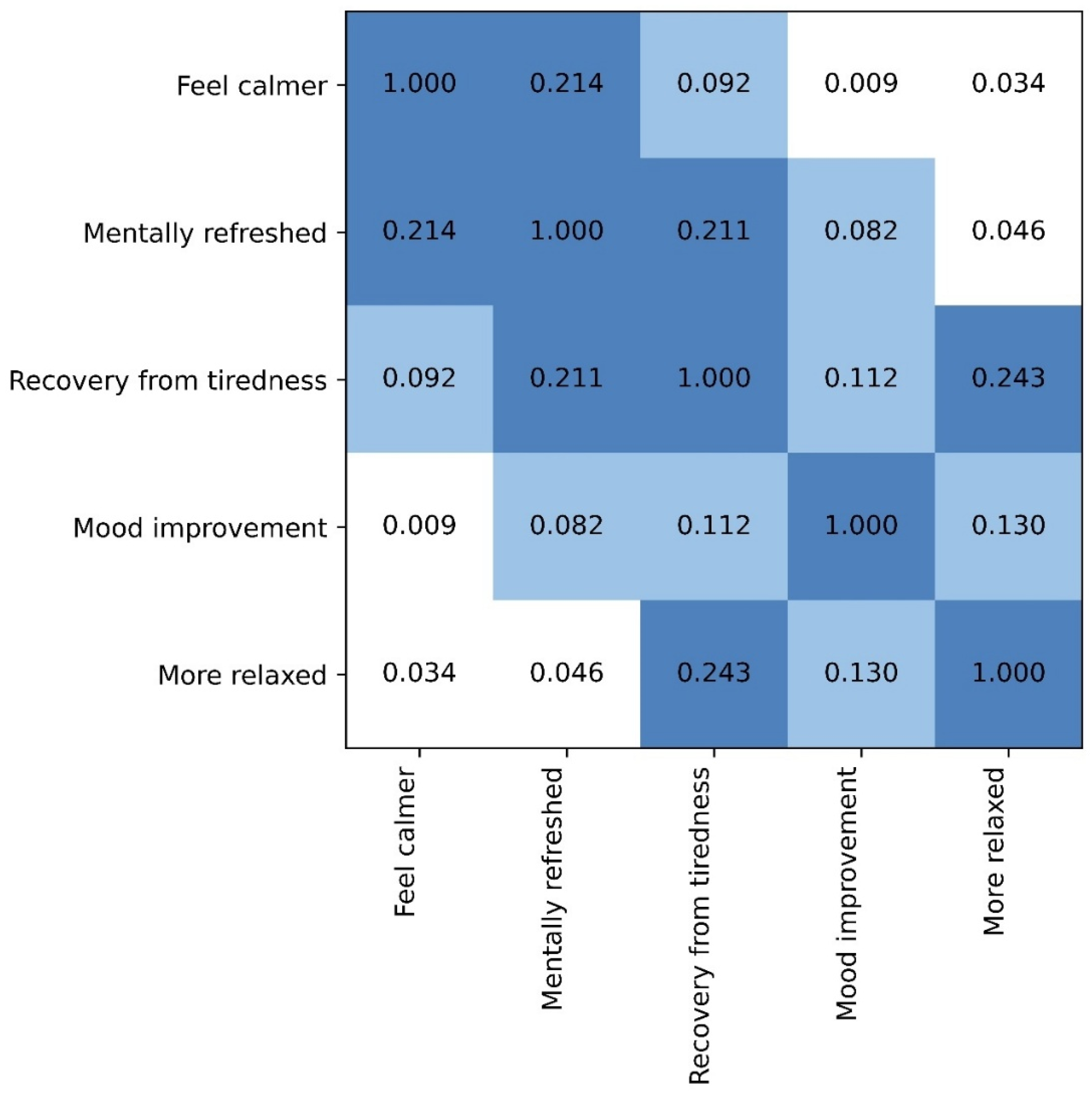
A central contribution of this study is to provide exploratory evidence for the multidimensional restorative experiences associated with UBGS’s restoration, based on the experiences of sampled park users. Respondents reported benefits across emotional, cognitive, and physical domains, including enhanced calmness, mental refreshment [
77], mood improvement, and recovery from tiredness. Intercorrelations among these outcomes are consistent with the view that restoration may involve a synergistic psycho-physiological process rather than isolated effects, reinforcing the understanding of cultural ecosystem services as holistic benefits from human-nature interactions [
11]. Within the ecosystem services cascade, UBGS provide biophysical structures (vegetation and water bodies) that enable regulating functions (microclimate moderation and sensory buffering), translating into experiential benefits such as stress relief, cognitive clarity, and bodily recuperation. These findings are consistent with the conceptualisation of restoration as a key cultural ecosystem service bridging environmental quality and public health outcomes, though representative studies would be needed to establish this more broadly.
Recovery from tiredness and post-visit relaxation emerged as pivotal dimensions of this restorative response. The strong association between these factors (ρ = 0.243) suggests that somatic relaxation may function as a bridging mechanism through which regulating ecosystem services support emotional and cognitive renewal. This interpretation aligns with SRT, emphasising physiological de-arousal as a pathway through which natural environments facilitate recovery [
9], while ART highlights cognitive respite enabled by effortless attention and “being away” experiences [
8,
78]. The multisensory aspects of UBGS, including visual exposure to greenery, birdsong, water sounds, and tactile engagement, activate these pathways, enhance perceived restoration, and encourage health-promoting behaviours like walking and visitation [
11,
79]. Evidence shows that environments with green and blue elements provide stronger restorative ecosystem services, particularly for older adults and vulnerable groups. Studies have confirmed reduced attentional fatigue and negative affect after blue-green exposure [
80]. These findings position UBGS as a critical mental health infrastructure, supporting psychological resilience and highlighting the need for urban planning that prioritises multisensory, accessible, and restorative environments for public health and sustainability [
40].
5.6. Activity Type as a Behavioural Moderator of Satisfaction
Our analysis indicates that the type of activity undertaken in UBGS is a more influential determinant of user satisfaction than the social context of visitation. The significant variation in satisfaction across primary activities (Kruskal-Wallis
p < 0.001), contrasted with the non-significant effect of visiting alone or with others, suggests that, among these respondents, what people do may have mattered more than who they visit with. Activities that facilitate bodily ease and sensory engagement, such as sitting, observing greenery, and quiet contemplation, are associated with higher satisfaction. From an ecosystem services perspective, these activities enable cultural ecosystem services, particularly psychological restoration and emotional regulation through sustained interaction with natural elements. This aligns with “soft fascination,” whereby effortless attention to nature supports recovery from cognitive fatigue and urban stress [
81].
The preference for passive restorative activities over complex social interactions suggests that users primarily value BGS for their individual-level restorative ecosystem services [
82]. These findings support design strategies like activity zoning, which separates quiet, contemplative areas from active or social zones to minimise functional conflict and enhance restorative quality [
41]. Activity-based satisfaction varies across socio-demographic groups, reflecting different capacities and restorative needs over the life course. This underscores the need for urban forestry and park design to accommodate diverse behavioural rhythms and preferences, ensuring equitable access to restorative benefits. Designing with this activity-sensitive approach is central to developing multifunctional green infrastructure that maximises cultural ecosystem services and supports inclusive, health-promoting urban environments [
13,
41].
5.7. Relaxation as the Dominant Predictor of Satisfaction
Ordinal regression analysis showed that post-visit relaxation was a significant predictor of overall satisfaction, whereas mental refreshment lacked explanatory power when both dimensions were considered. This suggests that somatic and affective restoration may play a more immediate role in shaping users’ global evaluations of BGS experiences in dense urban contexts [
48]. This suggests that the cultural ecosystem services most important to users are linked to physiological and emotional relief, such as stress reduction, fatigue recovery, and bodily calmness, rather than abstract cognitive benefits. These findings refine restoration frameworks, which often prioritise attentional recovery as the primary outcome of nature exposure [
31], by showing that in routine, high-stress urban environments, functions supporting physical relaxation directly translate into perceived satisfaction.
A potential concern relates to the conceptual proximity between post-visit relaxation and overall satisfaction. While both reflect positive experiential responses, they were operationalised as analytically distinct constructs: relaxation captures a specific affective-restorative state, whereas satisfaction represents a broader evaluative judgment of the visit. Some degree of conceptual overlap cannot be entirely excluded, as affective states may inform global evaluations. However, the modest explanatory power of the model (Nagelkerke R2 = 0.021) indicates that relaxation accounts for only a limited proportion of the variance in satisfaction, suggesting a partial rather than redundant association. The non-significant effect of mental refreshment further supports the interpretation that not all restorative dimensions are embedded in satisfaction judgments.
These findings suggest that urban forestry strategies should prioritise ecosystem service pathways that facilitate physical and emotional relaxation, strengthening user satisfaction [
83]. Design elements that enhance thermal comfort, acoustic buffering, and ease of use, such as shade, noise attenuation, comfortable seating, and opportunities for passive use, are practical in dense megacity contexts [
84]. While cognitive restoration remains essential, the findings suggest that BGS that supports embodied calmness and recovery [
85] will deliver more perceptible benefits, reinforcing public support for urban green infrastructure and enhancing its role as mental health infrastructure.
5.8. Socio-Demographic Patterning and Equity Implications
The socio-demographic variations observed among our respondents suggest that access to UBGS is associated with physical proximity, social identity, life-course stage, and perceived safety, factors that may influence the distribution of ecosystem service benefits. Gendered activity patterns, in which women engage more in observational and caregiving activities while men dominate vigorous pursuits such as jogging, reflect social norms and differentiated perceptions of public spaces [
86]. These dynamics align with research showing that women’s park engagement is constrained by safety concerns and caregiving duties, limiting their participation in restorative activities [
87] and access to cultural ecosystem services, such as psychological restoration [
34,
88]. Enhancing perceived safety through improved lighting, clear sightlines, and visible park presence is therefore a critical equity intervention that enables a more inclusive realisation of ecosystem service benefits [
33].
Age-related differences in structural patterns of use and ecosystem service uptake. Older adults are frequent users, relying on UBGS for gentle physical activity, social interaction, and daily routines, functions central to healthy ageing and well-being. Their sustained engagement depends on supportive infrastructure, including comfortable seating, accessible pathways, shade, and age-appropriate exercise facilities [
89,
90]. The absence of such features limits older adults’ ability to access regulating and cultural ecosystem services, transforming public spaces into sites of exclusion [
91]. These findings underscore the need for an equity-centred, ecosystem-service-oriented approach to green space design that goes beyond one-size-fits-all solutions. Inclusive [
92], multifunctional spaces are designed through participatory processes that engage women, older adults, and people with disabilities, which are essential for ensuring that the restorative, health-promoting, and social benefits of UBGS are equitably distributed, thereby strengthening social cohesion and urban resilience [
34,
35,
91].
The educational composition of the sample is skewed toward highly educated respondents relative to the broader Delhi population. Educational attainment may influence environmental perceptions by increasing awareness of ecosystem services, biodiversity, and the health benefits of nature exposure, potentially heightening sensitivity to positive attributes (e.g., visual attractiveness) and perceived deficiencies (e.g., seating adequacy, noise intrusion). Higher education may shape response styles and recreational preferences, including an inclination toward contemplative and wellness activities, which may contribute to the prominence of passive restorative uses observed. Moreover, expectations regarding infrastructure quality may be elevated among educated users, influencing their evaluations of amenities such as seating, pathways, and maintenance. Consequently, certain findings, particularly the emphasis on seating adequacy and embodied relaxation, may reflect both the experiential realities and evaluative standards of this educationally skewed subsample.
A key caveat concerns sampling, as respondents were recruited during their visits to the five study parks. The findings reflect the experiences of current UBGS users and do not capture the perspectives of non-users or those facing access barriers. Residents who avoid or cannot visit parks, including those with mobility limitations, safety concerns, caregiving constraints, limited resources, or feelings of exclusion, were not included. As respondents have navigated existing barriers, their positive accessibility evaluations may reflect selection effects rather than broader conditions. Although many participants reported access challenges, this likely underrepresents individuals facing severe constraints who never appear in the park samples. This limitation affects equity analysis because populations most underserved by the UBGS may remain underrepresented. The study did not collect geocoded residential location data, neighbourhood-level deprivation indices, or objective distance-to-park measures. Consequently, spatial accessibility gradients and distributive socio-spatial inequities across Delhi could not be assessed. Accessibility characterisation is limited to self-reported travel time, mode of transport, and perceived ease of access among active users. Consequently, equity-related interpretations should be understood as exploratory and bounded by the study design, rather than indicative of city-wide distributional justice in UBGS provision.
The findings of this study are based on an opportunistic sample of 411 users across five UBGS in Delhi and do not permit statistical generalisation to all Delhi park users or megacities of the Global South. The observed patterns, including embodied relaxation, seating adequacy, and the proximity-perception gap in accessibility, should be interpreted as exploratory evidence in this specific sample and context. This study contributes to the literature by identifying experiential mechanisms and theoretical propositions regarding how density and environmental stress may shape restorative processes and satisfaction within UBGS. While the results remain sample-specific, the conceptual insights offer analytical transferability, suggesting hypotheses for further testing through representative, multi-site, and comparative research across diverse urban settings.
5.9. Implications for Urban Planning, Policy, and Blue-Green Infrastructure
The findings underscore the need for strategic reorientation of urban forestry and green infrastructure policy in rapidly urbanising cities of the Global South. Planning approaches that rely on quantitative indicators, such as green space area or canopy cover, are insufficient to address the realities of dense, stress-prone urban environments. Instead, policies could benefit from adopting an ecosystem service-based framework that recognises BGS as essential public health, climate adaptation, and social equity infrastructure [
93,
94]. In megacities such as Delhi, the potential of UBGS may lie partly in its capacity to deliver regulating and cultural ecosystem services, particularly thermal comfort, stress reduction, fatigue recovery, and psychological calmness. Aligning urban greening strategies with global agendas for healthy, inclusive, and resilient cities requires prioritising functional and experiential performance rather than spatial provision [
95].
Operationalising this policy requires evidence-based design and governance standards. Urban greening interventions should enhance thermal comfort through mature tree canopies and microclimate-sensitive design [
96]. In contrast, acoustic regulation requires layered vegetation, landform design, and water features to mitigate traffic noise and support restorative experiences [
11,
97]. Improving equitable access through safe, shaded pedestrian networks linking homes, transit, and BGS may be particularly important in areas where environmental and health burdens converge [
98,
99]. At the site scale, micro-design elements, including biodiverse planting, seating, and maintained water features, may support restorative ecosystem services and sustained use [
100,
101]. Governance improvements may also be valuable; participatory co-design and stewardship improve relevance and effectiveness [
102], while monitoring frameworks should integrate perception-based indicators of safety, comfort, and restoration with biophysical metrics for adaptive management [
103,
104]. Framing BGS as core components of policies such as the 15-min city can enable coordination among environment, transport, and health agencies, ensuring that ecosystem service delivery contributes to public well-being and sustainable urban development [
95].
5.10. Limitations and Future Research Directions
This study has some limitations that should be considered when interpreting the findings. First, the cross-sectional design limits causal inference regarding the relationships among UBGS use, restorative experience, and user satisfaction. The October-November data collection presents a seasonal limitation, as pleasant post-monsoon conditions may have elevated satisfaction levels and shaped activity patterns differently than during the extreme summer or monsoon seasons. Although core predictor relationships may remain relatively stable, the magnitude of the effects and the relative importance of environmental attributes (e.g., shade versus sun exposure) may vary seasonally. Therefore, multi-season or longitudinal studies are needed to confirm the temporal stability of these relationships and identify design adaptations that support year-round restorative benefits. Although SHAP-based analysis enhances the interpretability of key predictors, it does not establish a temporal causality.
Second, the study relied on self-reported measures of environmental quality, restorative experience, and satisfaction from a single survey instrument. This raises the possibility of common method variance (CMV), recall bias, and social desirability bias for psychological constructs in the SRT and ART frameworks. Although perception-based measures suit experience-centred research, integrating objective environmental monitoring, behavioural observations, and multi-source data would reduce shared-method bias and strengthen causal inference. The analysis does not include spatial or ecological attributes of parks, such as vegetation structure, biodiversity, or microclimatic variation, which may moderate restorative responses. The exploratory factor analysis yielded weak results: the KMO value (0.523) was marginally acceptable, and the two-factor solution explained only 28.6% of the total variance. These values reflect the heterogeneous item set spanning environmental attributes and restorative outcomes, and confirm that the EFA should be interpreted as an exploratory diagnostic rather than robust structural validation. This limitation supports the decision to treat all items individually rather than as composite scales.
Third, the sampling strategy limits generalisability. Participants were recruited during park visits, thereby excluding non-users, infrequent visitors, and individuals facing access barriers, consolidating the earlier repeated discussion of selection effects and unmet demand. This may introduce selection bias and relatively favourable evaluations of accessibility and satisfaction. The sample also overrepresents highly educated respondents, who may differ systematically in environmental awareness and park-use behaviour from underrepresented socio-economic groups. Consequently, the findings cannot be assumed to represent the broader population of Delhi, particularly the underserved communities central to equity-oriented BGI planning. Finally, the single-city focus provides contextual depth but limits applicability to cities with differing climatic, socio-cultural, and infrastructural conditions.
A limitation of this study is its reliance on perceived environmental quality indicators (noise buffering, thermal comfort, and seating adequacy) rather than objective measurements of temperature or noise levels. As predictors and satisfaction outcomes were self-reported in the same survey, common method variance cannot be excluded. While perception-based measures suit experiential satisfaction and restorative appraisal, integrating objective environmental monitoring would strengthen causal interpretation and differentiate subjective evaluation from physical exposure. Additionally, recruiting participants within parks during visits limits the ability to find current UBGS users. Non-users, infrequent visitors, and those facing access barriers were not represented, limiting insights into unmet demand and constraints. Consequently, positive evaluations of accessibility and satisfaction may reflect the selection effects. This limitation is crucial for equity assessments, as populations underserved by the UBGS may be under-represented.
Future research should adopt longitudinal or experimental designs to establish causal pathways between UBGS exposure and seasonal well-being outcomes. Integrating physiological indicators, environmental measurements, and behavioural observations with experiential survey data would strengthen the validation of restorative mechanisms. Comparative multi-city studies across the Global South that combine experiential assessments with GIS-based metrics are needed to identify the contextual moderators of restoration. More inclusive sampling strategies, such as household-based, stratified, or community-targeted recruitment, would help capture the perspectives of non-users and underserved populations. Mixed-methods approaches, including interviews and go-along methods, could enrich the understanding of diverse experiential contexts. Incorporating physical assessments of park quality and testing effect modification across socio-demographic groups would enhance robustness and support equitable, evidence-informed BGI planning.
5.11. Comparison with Existing Literature
The findings from this sample are broadly consistent with global evidence on the salutogenic role of UBGS, and align with the core propositions of ART and SRT [
105]. Improvements in calmness, mental refreshment, and fatigue recovery reported by respondents are consistent with North American and European studies documenting stress reduction, mood enhancement, and cognitive renewal from exposure to urban nature [
5]. The high-frequency, neighbourhood-scale use observed among respondents is consistent with research suggesting UBGS may serve as embedded daily infrastructure for well-being in dense cities with limited private outdoor space [
58]. However, population-level confirmation would require representative sampling. Beyond contributing to the established evidence base, this study advances the literature by foregrounding the embodied dimensions of restoration and providing rare exploratory evidence from a high-density Global South megacity. In this sample, post-visit relaxation and activity type emerged as stronger satisfaction factors than visual preference or green cover, suggesting that somatic relief may outweigh cognitive restoration in stress-intensive environments, though this warrants testing in larger representative samples [
83,
106]. The observed dissonance between visual attractiveness and limited noise buffering suggests the potential need to adapt design principles from lower-density settings to contexts characterised by extreme density and environmental stress [
107]. These findings contribute to a more geographically inclusive exploratory evidence base for planning urban BGI in rapidly urbanising cities [
108].
6. Conclusions
This study provides exploratory evidence that UBGS serves as an essential everyday infrastructure for psychological restoration among users of five parks in Delhi, a high-density Global South megacity. The findings from this sample suggest that spaces of moderate environmental quality can deliver consistent restorative benefits, such as enhanced calmness, mood refreshment, and recovery from fatigue, through routine, neighbourhood-scale engagement. Among the respondents, satisfaction appeared more closely associated with experiential comfort and perceived accessibility than with visit frequency or visual aesthetics alone. Advanced analytical approaches, including ordinal regression and SHAP-based interpretation, revealed that embodied experiences, particularly post-visit relaxation, seating adequacy, thermal comfort, and ease of use, appeared to exert a stronger influence on satisfaction than cognitive restoration or scenic appeal in this sample, suggesting the salience of somatic relief in high-stress urban contexts. These findings point to the potential value of a strategic reorientation of urban greening policy away from quantitative provision targets toward experience-responsive and equity-oriented design that prioritises multisensory comfort, accessibility, and everyday usability, with the aim of better supporting public health, resilience, and well-being in rapidly urbanising cities.




 ,
,