1. Introduction
Across rapidly urbanizing regions, cities confront the challenge of modernizing while preserving culturally embedded architectural heritage. International scholarship has identified persistent tensions between globalization-driven development and locally rooted vernacular systems, particularly in contexts where rapid transformation risks eroding socio-spatial continuity [
1]. Vernacular architecture is increasingly examined not only as a historical artifact but as a knowledge system capable of informing sustainable and culturally responsive urban strategies [
2,
3].
In Saudi Arabia, accelerated urban expansion following the oil boom and, more recently, under Vision 2030, has intensified this dynamic [
4]. While modernization has introduced global architectural typologies, it has also prompted renewed institutional interest in preserving and revitalizing traditional forms such as Najdi mudbrick structures, Hijazi coral stone buildings, and Al-Ula’s stone-and-plaster settlements [
5]. The central challenge is therefore not whether heritage should be preserved, but how vernacular architectural principles can be structurally integrated into contemporary urban development without being reduced to symbolic reference.
Saudi Arabia’s architecture is a unique reflection of its diverse landscape and rich culture. From the mud-brick buildings in Najd to the coral stone structures in Jeddah and the stone-and-plaster houses in Al-Ula, each region’s architecture is a testament to its environment and traditions. However, the rise of urban development, focusing on sleek high-rise buildings made of glass and steel, poses a challenge to preserving these traditional architectural styles [
6]. Even though awareness of the importance of protecting these legacies has increased in recent decades, much of the historic urban fabric has already been lost or altered to accommodate modern urban demands. This has led to growing recognition of the need to preserve and revitalize these traditional forms amid urban growth.
The preservation and revival of Saudi Arabian architecture go beyond just saving the physical structures of buildings. They represent an effort to safeguard the intangible cultural legacy tied to social customs and communal values that these architectural styles foster [
7]. Traditional buildings are not only about their esthetic appeal but also support specific ways of life by offering spaces for family and communal life and by protecting inhabitants from the challenging desert weather, while reflecting social hierarchies through spatial arrangements. The preservation of these buildings, therefore, holds socio-cultural significance, maintaining continuity with the past and grounding the community’s identity in a rapidly changing urban landscape.
Despite growing recognition of the importance of preserving architectural heritage within rapidly modernizing cities, much of the existing discourse in Saudi Arabia remains framed by descriptive narratives of loss, identity, or visual continuity [
8,
9,
10]. Such approaches often treat traditional architecture as a symbolic or stylistic reference, rather than as a socio-spatial system shaped by environmental adaptation, social organization, and cultural practices. This limits the analytical capacity of heritage discourse to engage with contemporary urban transformation critically.
This study adopts a conceptual lens grounded in vernacular architecture theory and adaptive reuse scholarship, viewing traditional architecture not as a static artifact but as a dynamic knowledge system that can inform contemporary urban design. This interpretation builds upon Rapoport’s socio-cultural reading of built form, which situates vernacular environments as expressions of embedded cultural systems rather than stylistic typologies [
11]. It further aligns with scholarship on adaptive reuse that conceptualizes heritage as an evolving spatial resource rather than a frozen historical object [
12]. Recent discussions in built heritage and sustainability studies similarly argue that vernacular knowledge systems can inform climate-responsive and culturally embedded urban strategies [
13,
14].
From this perspective, modernization is not understood as inherently opposed to heritage preservation, but as a condition that can be negotiated through the context-responsive integration of vernacular principles. This position reflects contemporary urban theory that challenges binary oppositions between preservation and development, instead advocating for negotiated coexistence within governance and planning frameworks [
15,
16]. This framing allows the study to move beyond generalized notions of identity and toward a critical examination of how architectural heritage operates within present-day urban governance, sustainability agendas, and socio-cultural change. By situating vernacular architecture within governance structures and sustainability discourses, the study engages with emerging debates on heritage-led urbanism that emphasize policy alignment, community participation, and environmental adaptation as interdependent dimensions of urban transformation [
17,
18].
In today’s city planning scene, the task at hand is to blend these age-old components in a way that goes beyond mere symbolism and instead harmonizes with present-day needs, both functional and esthetic. The study objective is to examine the preservation and incorporation of Saudi architecture in the continuous growth of metropolitan areas such as Riyadh, Jeddah, and Al-Ula. By repurposing architectural principles, the study delves into strategies for navigating the opposing forces of modernization and safeguarding cultural heritage. Integrating traditional architectural features into city planning is not just about reminiscing; it is a practical way to meet the demands of sustainable progress. The environmental benefits of architecture, such as using local materials and designing structures that adapt to the climate, are becoming increasingly important in addressing modern concerns about sustainability and ecological responsibility.
Preserving Saudi Arabia’s architecture serves not only to uphold heritage but also as a method for sustainable and culturally meaningful progress. Incorporating architectural elements into modern designs allows Saudi cities to retain their distinct cultural heritage while meeting contemporary requirements. This study seeks to contribute to the ongoing dialog on conservation efforts and offer actionable suggestions for decision-makers, city planners, and architects shaping the rapidly growing urban landscapes of the Kingdom.
Recent scholarship increasingly recognizes vernacular architecture not merely as a historical artifact but as a dynamic socio-cultural system capable of informing contemporary urban development strategies [
19,
20]. Studies on heritage-led urban regeneration highlight the role of vernacular spatial practices, local materials, and climate-responsive design in sustaining urban identity while supporting environmental performance [
21]. Within rapidly modernizing regions, including the Gulf, researchers have emphasized the need to move beyond symbolic architectural references toward the structural integration of vernacular principles within planning frameworks [
22]. Building on this body of scholarship, the present study investigates how vernacular architectural systems can be operationalized within contemporary urban regeneration initiatives in Saudi Arabia.
While flagship heritage projects such as Diriyah and Al-Ula demonstrate growing institutional commitment to cultural preservation, there remains limited critical evaluation of how vernacular architectural principles are operationalized within contemporary urban development practices [
23,
24]. Existing studies tend to document individual projects without sufficiently interrogating the mechanisms through which traditional architecture contributes to socio-cultural continuity, environmental performance, or public acceptance in rapidly transforming cities. This gap highlights the need for comparative, empirically grounded research that examines vernacular integration as a multidimensional urban process rather than a site-specific design outcome.
Despite a growing body of regional scholarship on heritage conservation in Saudi Arabia, much of the existing literature remains project-specific or policy-descriptive, with limited comparative analysis of how vernacular principles function structurally within contemporary urban governance systems [
25,
26]. Internationally, debates on adaptive reuse, heritage urban DNA, and smart heritage have emphasized the need to move beyond visual preservation toward systemic integration of socio-spatial logic [
17,
27]. However, empirical investigations that operationalize these theoretical discussions within rapidly modernizing Gulf contexts remain limited [
28]. By situating Saudi case studies within these broader scholarly debates, this study addresses a conceptual gap between vernacular theory and contemporary urban implementation.
As a result, the study examines examples from Riyadh, Jeddah, and Al-Ula to explore the methods and challenges of conserving and integrating traditional architecture into urban landscapes. Accordingly, this study is guided by three analytically driven research questions that seek to advance current debates on heritage-led urbanism. First, how are vernacular architectural principles functionally and socially integrated into contemporary urban design and architectural practices in Saudi cities, beyond symbolic or esthetic representation? Second, to what extent does the revival of traditional architecture contribute to socio-cultural continuity, environmental responsiveness, and public engagement within rapidly modernizing urban contexts? Third, how do existing policy frameworks and governance mechanisms enable or constrain the meaningful integration of vernacular architecture in new urban developments? Together, these questions position the study within ongoing academic discussions on vernacular architecture, sustainability, and culturally responsive urban development.
By comparing three distinct urban governance contexts in Saudi Arabia, the study advances beyond project-level description. It contributes to broader debates on vernacular architecture as an adaptive urban system.
2. Literature Review
2.1. Vernacular Architecture: Definitions and Theoretical Foundations
Vernacular architecture is not merely a construction style but a profound expression of cultural identity and environmental adaptation. The work on the anthropology of vernacular architecture suggests that these structures are inherently sustainable as they evolve from indigenous knowledge systems and are tailored to specific environmental and social conditions [
13,
29]. This approach to design and construction can inform modern sustainable practices and inspire innovative solutions for contemporary challenges. By incorporating elements of vernacular architecture into new buildings, we can create spaces that are not only environmentally friendly but also culturally rich and meaningful. Amos Rapoport (2019) [
30] similarly emphasizes the role of vernacular architecture in shaping human settlements through socio-cultural imperatives rather than formalized architectural theories. The discussion highlights the importance of understanding vernacular architecture as a reflection of local values and practices, emphasizing the need for a holistic approach to the study of built environments. This approach allows for a deeper connection between people and their surroundings, fostering a sense of identity and belonging within communities. By recognizing the significance of vernacular architecture, architects and urban planners can design spaces that are more inclusive, sustainable, and rooted in their inhabitants’ cultural heritage. This perspective challenges traditional Western architectural norms and encourages the creation of more meaningful, functional structures that meet the community’s specific needs and preferences. Embracing vernacular architecture allows people to preserve cultural traditions and promote a sense of pride in one’s heritage.
Compared with other studies, several broaden the discussion by examining how vernacular architecture can inform contemporary design practices, particularly in regions undergoing rapid urbanization [
3,
31,
32]. These studies highlight the adaptability of vernacular design principles, such as the use of local materials and passive climate control, in contemporary architecture. They argue that incorporating vernacular elements into modern structures fosters sustainability and resilience and creates a stronger sense of place and identity for residents. By blending traditional techniques with innovative solutions, architects can create culturally rich and environmentally conscious spaces [
33]. This is particularly relevant for regions like Saudi Arabia, where the harsh climate and the growing demand for sustainable development challenge modern construction practices. The adaptive reuse of vernacular principles, Knapp argues, is a method of cultural preservation and a strategy for improving the environmental performance of modern buildings, emphasizing the importance of architects incorporating local knowledge and materials into their designs to achieve sustainability and cultural authenticity [
34].
Recent scholarship on smart heritage further expands the theoretical understanding of vernacular architecture within contemporary urban sustainability agendas. Studies on smart heritage emphasize the integration of digital tools, data-driven management, and participatory governance to enhance the sustainability and resilience of heritage environments [
27,
35]. Rather than replacing traditional knowledge systems, smart heritage frameworks position vernacular architecture as a critical cultural and environmental asset that can be augmented through technological innovation to support long-term urban sustainability [
36]. This perspective reinforces the argument that heritage integration is not a nostalgic endeavor, but a forward-looking strategy aligned with contemporary urban challenges.
2.2. Vernacular Architecture in the Context of Saudi Arabia
In the unique setting of Saudi Arabia, traditional architecture serves as a mirror of the country’s diverse landscapes, showcasing a rich tapestry of designs. The mudbrick buildings in Najd, the stone homes in Jeddah, and the stone-and-plaster constructions in Al-Ula are not just buildings but a testament to the diverse regional styles that have evolved over generations. These styles, each tailored to suit local weather and building materials, reflect Saudi Arabia’s rich cultural heritage and demonstrate a deep understanding of sustainable building practices. The use of local materials and techniques in vernacular architecture not only highlights the importance of adapting to the environment but also creates functional and esthetically pleasing structures. Accordingly, traditional architecture in Saudi Arabia is closely linked to social traditions, particularly in how houses are designed to accommodate family dynamics and the need for both privacy and communal living spaces [
2]. This integration of cultural values and environmental considerations in traditional architecture showcases the holistic approach ingrained in Saudi Arabian design for centuries. By studying these practices, architects and builders can learn valuable lessons on creating sustainable and culturally rich structures in the modern world.
The rapid urbanization of Saudi Arabia accelerated following the oil boom in the 1970s, leading to a significant shift from traditional to contemporary architectural styles that became prevalent across the country. Studies have shown that the cultural impacts of this transition have gradually eroded the unique local architectural heritage in favor of more universal global design trends [
37,
38]. The studies suggested that the disintegration of traditional urban fabrics has led to a decline in social bonds, as new construction often neglects the shared spaces that indigenous architectural traditions traditionally nurtured. This shift has raised concerns about the loss of cultural identity and community cohesion as cities become more homogenized in their architectural styles. As urban areas continue to modernize, researchers and policymakers need to consider ways to preserve and integrate elements of traditional architecture into contemporary designs.
In contrast to this view, the current emphasis on conserving heritage in the Kingdom is evident in initiatives such as Diriyah in Riyadh and the Al-Ula project, which showcase a renewed dedication to blending traditional architecture with contemporary urban design [
5]. This approach maintains a sense of cultural identity and history within the cityscape, creating a unique and vibrant environment that sets these cities apart. By striking a balance between preserving heritage and embracing modernity, cities can achieve a harmonious blend of tradition and innovation in their architectural landscape.
2.3. Preservation vs. Modernization: A Comparative Discussion
The ongoing discussion between preserving building styles and updating urban landscapes is a central point of contention in architecture. Modernist experts highlight that contemporary architecture prioritizes efficiency and global design trends over the cultural and historical roots embedded in traditional structures [
19,
39]. While preservationists argue for maintaining historical significance and character, modernists advocate for progress and innovation in design [
40,
41]. Both perspectives offer valuable insights, sparking a debate that continues to shape the future of architectural development.
Liliane Wong (2024) [
42], for instance, explicitly underscores that altering or demolishing buildings erases tangible heritage and disturbs the intangible cultural rituals these architectural gems uphold. In contrast, Matthew Carmona (2015) [
43] advocates for a balanced approach that could lead to a harmonious coexistence between modernization and preservation. Carmona planning suggests that modern cities can significantly benefit from incorporating traditional architectural elements both esthetically and functionally. Successful examples in cities like Barcelona and Kyoto, where urban designers have seamlessly integrated traditional materials and structures into modern urban layouts, have demonstrated the potential to preserve cultural heritage while embracing progress [
1]. By finding this balance, cities can maintain their unique identities and long histories while adapting to the needs of modern society. This approach could be particularly transformative for Saudi cities, where urban development has often come at the cost of heritage conservation [
44]. Carmona’s proposal offers a reassuring path forward in the ongoing debate between preservation and modernization.
Empirical studies from vernacular rural settlements further demonstrate that the erosion of architectural identity often results from development practices that overlook local socio-spatial logic. Research conducted in Behramkale, Türkiye, illustrates how development interventions that neglect vernacular principles contribute to fragmented identity and weakened community attachment [
45]. Conversely, projects that acknowledge vernacular morphology, materiality, and social practices are more likely to sustain cultural continuity while accommodating change. These findings parallel challenges observed in Saudi cities, reinforcing the relevance of vernacular integration as a transferable and globally applicable urban strategy.
In Saudi Arabia, pursuing modernization alongside preserving its heritage faces challenges due to Vision 2030’s social and political framework that envisions the Kingdom as a modern hub while also valuing its traditions and history [
46]. The Vision 2030 encourages enhancing sites like Diriyah and Al-Ula to boost tourism and preserve national identity. This encouragement highlights the importance of balancing modernization and heritage conservation to maintain Saudi Arabia’s cultural identity while moving toward a more modern future [
47,
48]. This delicate balance will be crucial in ensuring that Saudi cities can continue to develop without sacrificing their rich history and traditions. However, these initiatives may sometimes prioritize benefits over the proper conservation of traditional architecture. Thus, preserving heritage in Saudi Arabia should be based on knowledge systems rather than being enforced from a top-down approach focused solely on economic factors [
49].
2.4. Adaptive Reuse of Vernacular Architecture in Contemporary Urban Design
Reusing buildings to preserve their history and culture while adapting them for modern purposes is gaining popularity in architecture and urban planning. According to scholars such as Bie Plevoets and Koenraad Van Cleempoel (2019) [
12], this approach enables cities to grow and develop without sacrificing their architectural heritage. Thus, adaptive reuse underscores the importance of balancing honoring the past with meeting present-day needs. This principle is becoming more prevalent in urban areas worldwide; by integrating old structures into new urban developments, cities can maintain a sense of continuity and authenticity while promoting sustainability [
50]. For example, in cities such as Amsterdam and Barcelona, historic buildings are being repurposed as modern office spaces, hotels, and residential units, preserving these cities’ unique character while meeting the demands of a growing population [
51,
52]. This approach helps reduce the loss of heritage structures and fosters a sense of community and connection to the past in rapidly changing urban environments [
29,
53].
The concept of heritage urban DNA has recently emerged as a valuable analytical framework for understanding how historic cities can be revitalized without losing their core identity. Research on Foah City demonstrates that successful revitalization strategies prioritize preserving the underlying urban DNA, including spatial patterns, architectural typologies, and cultural practices, rather than focusing solely on visual restoration [
54]. This approach aligns closely with the present study’s emphasis on vernacular architecture as a structural and cultural system, further supporting the argument that heritage-led urban development can be both context-sensitive and adaptable across diverse geographical settings.
In Saudi Arabia, repurposing buildings is seen as a smart approach to integrating traditional architecture into contemporary urban projects in cities like Riyadh and Jeddah [
55,
56]. The focus is mainly on these cities, where older structures are being integrated into new residential and commercial developments to promote sustainable urban growth while honoring the cultural value of traditional designs. Halla Sirror’s (2024) [
23] research highlights the achievements of repurposing buildings in Al-Ula into tourist lodgings and cultural hubs. This blueprint could inspire similar transformations in other urban areas of Saudi Arabia.
2.5. Policy Frameworks for Heritage Preservation
Policy is a crucial tool for preserving heritage and shaping how well traditional architecture harmonizes with contemporary urban areas by exploring various policy approaches to its conservation. For example, heritage policies in Europe underscore the vital role of public and community involvement in ensuring the success of preservation projects [
57,
58]. This concept argues that overly centralized and hierarchical policies often overlook the needs and beliefs of local communities, leading to superficial conservation efforts that prioritize appearance over social utility. This emphasis on community involvement makes each member feel integral to the preservation process.
Aylin Orbaşlı (2020) [
59] elaborates on this concept by highlighting the significance of adaptable policies tailored to specific contexts that facilitate the effective integration of traditional architecture with modern requirements. This discussion by Orbaşlı is relevant to Saudi Arabia’s current landscape, characterized by rapid urban growth that necessitates policies balancing the preservation of cultural landmarks with advances in contemporary construction practices. The stress of balancing traditional architecture with modern requirements instills optimism about the future of urban growth and development. As such, the policy environment of Saudi Arabia highlights the advancements made in conserving heritage within the Kingdom under the Vision 2030 initiative; however, it emphasizes the necessity for strategies to incorporate traditional architecture into modern urban expansions [
60].
The debate over vernacular architecture in Saudi Arabia and beyond underscores the intricate interplay among conservation efforts, advancements in design methods, and cultural representation. Although there is increasing acknowledgment of the importance of architectural forms in constructing eco-friendly and culturally meaningful cities, there are obstacles to reconciling the requirements of present-day progress with the preservation of architectural heritage. The integration of traditional architectural elements into contemporary urban design is not only an issue of esthetics but also of safeguarding culture and ensuring sustainable practices. As Saudi Arabia continues to develop its cities in line with Vision 2030, lessons from global and local studies of vernacular architectural styles can offer valuable perspectives on how the country can advance while preserving its architectural character.
3. Methodology
The methodology section outlines how the research design and methods were employed to study how traditional Saudi vernacular architecture is incorporated into urban projects today. This study employs a convergent mixed-methods research design that combines primary data collection with contextual secondary sources. Primary data consist of semi-structured expert interviews and structured survey questionnaires administered to residents and visitors across the three case study cities. Secondary data include demographic statistics, tourism reports, urban planning documentation, and policy frameworks obtained from municipal authorities, heritage commissions, and publicly available governmental sources. The integration of primary and secondary data enables contextual grounding alongside perception-based analysis. Given the multifaceted nature of the research questions, a mixed-methods approach has been adopted, integrating qualitative and quantitative data to examine the topic thoroughly.
This design follows established mixed-methods research principles, which advocate integrating qualitative and quantitative strands to achieve analytical depth and complementarity rather than methodological parallelism [
61]. The selection of a convergent mixed-methods strategy is particularly well-suited to studies that seek to interpret socio-cultural phenomena alongside measurable patterns of public perception [
62].
The mixed-methods approach adopted in this study is grounded in a convergent research design, in which qualitative and quantitative data are theoretically integrated rather than treated as parallel or independent strands. Convergent designs are widely recognized for enabling simultaneous data collection and integrative interpretation, thereby enhancing internal validity through triangulation of findings [
63]. Qualitative insights derived from expert interviews inform the interpretation of quantitative survey results, while survey findings provide empirical grounding and scale to expert-based observations. This reciprocal relationship allows the study to move beyond descriptive triangulation toward analytical synthesis, ensuring that measurable public perceptions and patterns support socio-cultural interpretations. Such integration is particularly appropriate for investigating vernacular architecture within urban contexts, where cultural meaning, spatial practice, and public reception intersect. By aligning qualitative and quantitative evidence around shared analytical themes, the methodology supports the development of comparative and theoretically informed insights across the selected case studies.
The study centers on three cases In Saudi Arabia—Riyadh, Jeddah, and Al-Ula—each showcasing distinct architectural and urban settings. By conducting a comparative analysis of case studies, the study seeks to gather insights into the practices in action for protecting and reviving vernacular architectural structures and areas to meet modern needs and settings. This approach aims to obtain a nuanced understanding of the practical and socio-cultural aspects of integrating vernacular architecture within contemporary urban design. Combining case studies, expert interviews, and public surveys will help triangulate the findings and provide a more holistic view of the subject.
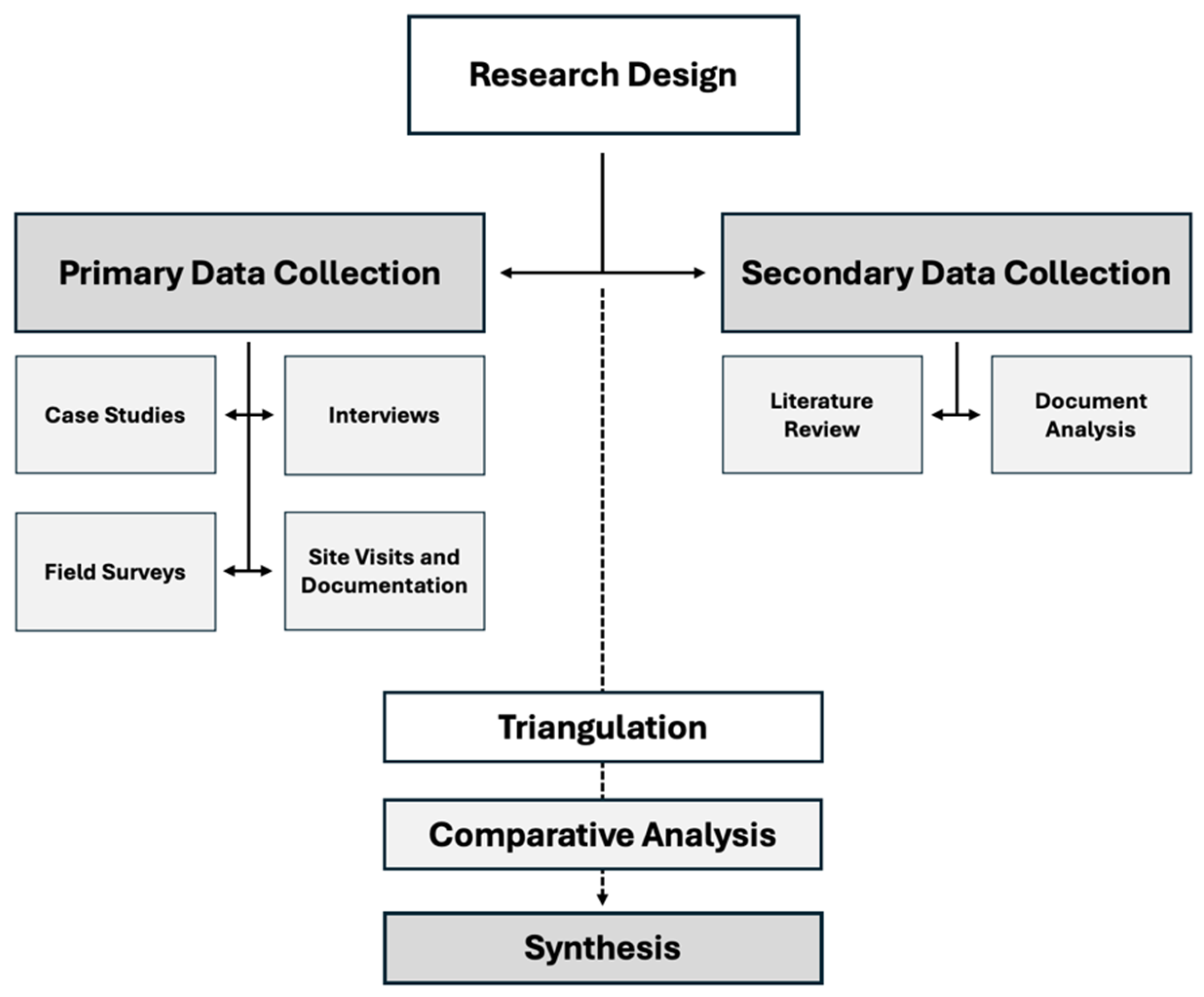
The research design in
Figure 1 comprises four integrated components. Primary data collection includes semi-structured expert interviews and structured survey questionnaires administered to residents and visitors. Secondary data collection comprises demographic statistics, tourism reports, planning documentation, and policy materials obtained from official governmental and municipal sources. Site visits and documentation were conducted at each case study location to observe the spatial configuration, material application, and functional adaptation of vernacular buildings within contemporary development contexts. Document analysis involved a systematic review of urban master plans, heritage regulations, and institutional policy frameworks to contextualize governance structures shaping vernacular integration.
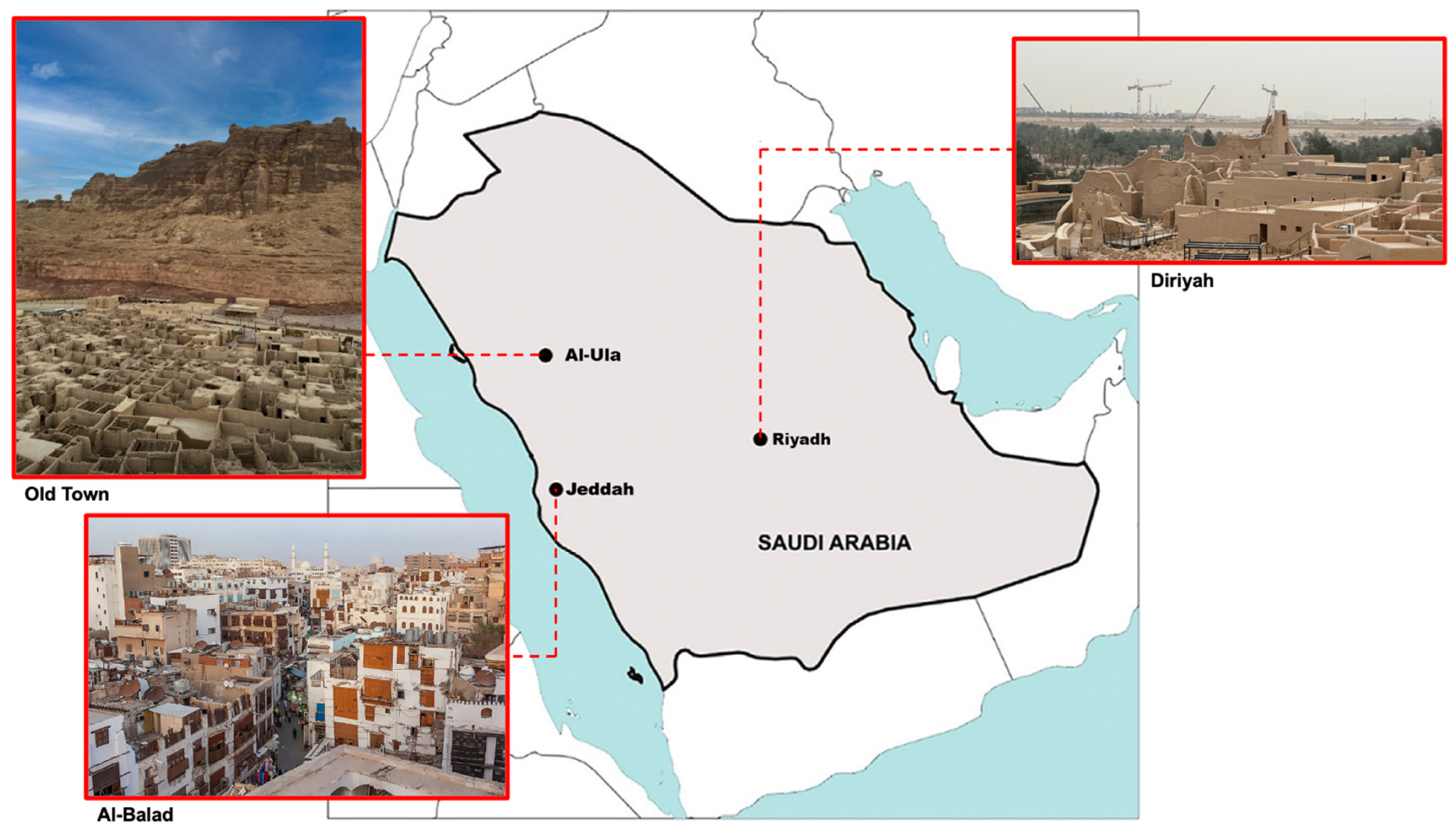
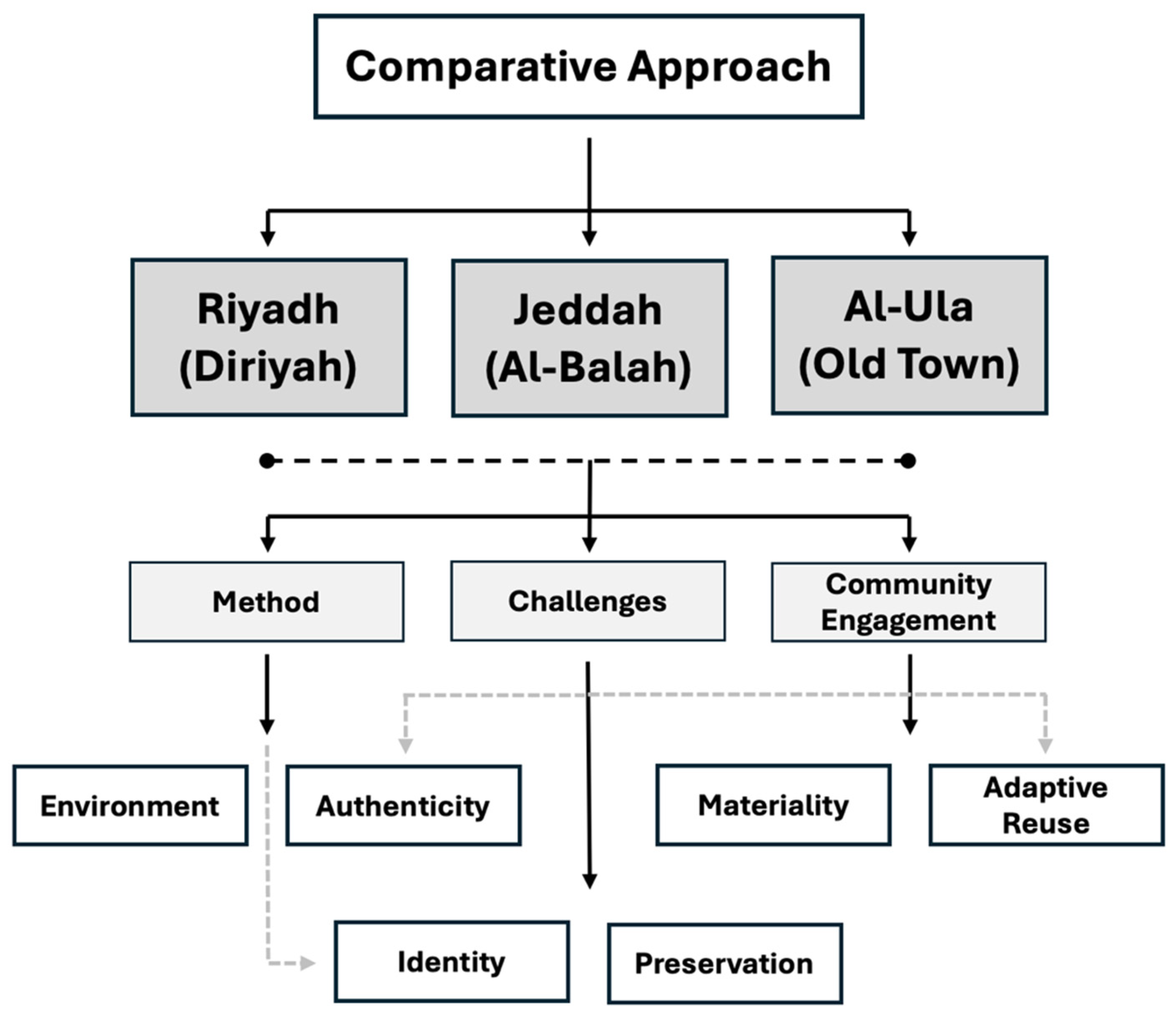
The comparative case study analysis delves into how traditional architectural features have merged into contemporary urban projects in Riyadh, Jeddah, and Al-Ula (
Figure 2). The selection of Riyadh, Jeddah, and Al-Ula is analytically driven rather than solely representative. This approach aligns with comparative case study methodology, which emphasizes analytical variation across contexts to enhance explanatory robustness rather than statistical generalizability [
64]. Case study comparison is particularly appropriate when investigating governance, spatial transformation, and culturally embedded processes [
65]. These cities constitute distinct urban typologies that allow for controlled comparison across governance models, environmental conditions, and heritage typologies. Riyadh represents large-scale state-led heritage redevelopment within a capital city context; Jeddah reflects heritage conservation embedded within dense urban living fabric; and Al-Ula exemplifies heritage-led development driven by tourism and landscape preservation. The integration of these methods allows qualitative interpretation and quantitative pattern recognition to inform one another, ensuring coherence between case-based analysis and respondent-based evaluation.
3.1. Urban and Demographic Context of Case Studies
To contextualize the comparative analysis, document analysis and site-based observation were undertaken to establish demographic scale, spatial extent, governance structure, and functional adaptation patterns within each case study. These urban centers were selected for their diverse architectural histories and their continuous efforts to blend contemporary expansion with traditional architecture. Thus, each city will provide a unique context for exploring the challenges and opportunities of preserving cultural heritage amid rapid urban growth.
Riyadh has a metropolitan population of over 7.5 million. The Diriyah redevelopment area covers approximately 7 square kilometers within the northwestern periphery of the capital. The At-Turaif heritage core is a UNESCO World Heritage site and serves as the symbolic nucleus of the larger Diriyah Gate Development. Traditional Najdi mudbrick structures are concentrated within the historic core, while surrounding development integrates vernacular architectural language into mixed-use commercial, hospitality, and cultural facilities. Ownership structures include state-managed heritage assets under the Diriyah Gate Development Authority alongside privately operated hospitality and retail functions. Annual visitation figures have increased significantly since 2022, with heritage tourism positioned as a key diversification strategy under Vision 2030.
Jeddah has a population of approximately 4.8 million residents. The Al-Balad historic district occupies roughly 2.5 square kilometers within the central urban core. Vernacular Hijazi coral-stone buildings and wooden roshan structures form the dominant architectural fabric of this district. Many buildings remain privately owned, while selected heritage properties are managed or restored under municipal and Heritage Commission initiatives. Adaptive reuse includes transformation into galleries, cultural centers, boutique hotels, and commercial spaces, while portions of the district continue to function as residential neighborhoods. Visitor numbers have grown steadily following intensified restoration programs and UNESCO recognition.
Al-Ula municipality has a smaller population of approximately 50,000 residents, with the heritage old town forming a compact settlement core integrated within a broader archeological landscape. The restored heritage zone comprises dense clusters of traditional stone-and-plaster dwellings adapted into tourism-oriented functions, including guesthouses, museums, and cultural venues. Governance is largely centralized under the Royal Commission for Al-Ula, with coordinated public investment and regulated private sector participation. Visitor numbers have expanded rapidly following international tourism campaigns, positioning Al-Ula as a flagship model of heritage-led economic development.
Providing this contextual framework strengthens comparative interpretation by situating vernacular integration within demographic scale, spatial extent, governance structure, and functional adaptation (
Figure 3).
3.2. Expert Interviews
To gather perspectives from experts actively engaged in preserving heritage and developing urban areas, the study conducted a set of informal interviews with architects, urban planners, and cultural heritage specialists between October and December 2024. These conversations helped the researcher comprehend the real-world factors and obstacles associated with blending traditional architecture into contemporary development settings. Interviews are conducted in person or via video conferencing, depending on the participants’ location and availability. Each interview will be recorded and transcribed for analysis (
Table 1). Written informed consent was obtained from all participants involved in the study. Participation was voluntary, and respondents were assured of the anonymity and confidentiality of their responses. Later, thematic analysis will be used to identify common themes and patterns across the interviews. Thematic analysis was conducted following established qualitative coding procedures that prioritize iterative categorization and cross-case validation to ensure analytical reliability [
66]. This method will help categorize insights into key areas, such as design strategies, policy implications, and public engagement.
To enhance validity, expert participants were purposively selected based on their direct involvement in heritage conservation, urban planning, or architectural design within the selected case study areas. Interview questions were semi-structured and thematically aligned with the study’s conceptual framework, ensuring consistency across interviews while allowing flexibility for contextual depth. Reliability was strengthened through systematic transcription and iterative thematic coding, whereby recurring themes were cross-checked across interviews and cities to minimize individual bias. Although selected quotations are presented illustratively in the discussion, the findings reflect aggregated thematic coding across all 12 expert participants. Recurrent patterns were identified through cross-case comparison rather than reliance on isolated opinions, ensuring analytical robustness beyond anecdotal representation.
The interview protocol was structured around four thematic domains derived from the study’s conceptual framework: (1) governance and policy mechanisms influencing vernacular preservation, (2) material authenticity and construction adaptation, (3) spatial hierarchy and socio-cultural continuity, and (4) integration of vernacular principles within contemporary development models. Semi-structured questions were designed to allow both consistency across interviews and flexibility for contextual elaboration. Each interview began with broad questions regarding the respondent’s professional involvement in heritage projects, followed by targeted questions addressing integration strategies, implementation challenges, community engagement, and perceived outcomes. The Interview guide ensured thematic consistency across the three case study contexts while allowing respondents to elaborate on city-specific governance and design conditions.
3.3. Field Surveys
Field surveys are conducted to understand how people perceive blending architecture into city environments. The survey is distributed using cluster sampling to ensure diverse demographic representation across age, gender, nationality, and geographic location. It has been administered online and in person to residents and visitors in key locations, such as heritage sites, modern urban developments, and public spaces with prominent vernacular elements.
The survey was conducted between October 2024 and January 2025 to align with peak visitation periods in the selected case study sites. The sampling frame comprised adult residents and visitors present in designated heritage districts and adjacent urban developments in Riyadh, Jeddah, and Al-Ula. Respondents were recruited through a combination of on-site intercept distribution and digital circulation via local community networks and professional associations related to architecture, urban planning, and cultural heritage. Participation was voluntary, and screening questions ensured respondents had direct experience of the surveyed locations. This dual recruitment strategy was adopted to balance accessibility with contextual relevance, thereby strengthening representativeness within each case study context.
For clarity, the survey framework and respondent demographics are presented separately.
Table 2 outlines the thematic structure of the questionnaire, while
Table 3 summarizes the demographic distribution across the three case-study cities. The survey data is analyzed using descriptive and inferential statistics to understand public perceptions of reviving traditional architecture and incorporating it into contemporary urban environments. Also, to enhance analytical clarity, survey responses were categorized into two primary respondent groups: residents and visitors. This distinction is methodologically significant, as residents maintain long-term socio-spatial relationships with the built environment, while visitors engage with vernacular architecture primarily through experiential and interpretive encounters. Responses were therefore analyzed both collectively and comparatively to identify differences in perceptions regarding cultural attachment, authenticity, and functional evaluation.
The survey instrument was structured around five analytical dimensions derived from the literature review: (1) perceived authenticity, (2) socio-cultural identity reinforcement, (3) environmental responsiveness, (4) adaptive reuse acceptance, and (5) modernization compatibility. These dimensions served as key variables guiding both the questionnaire design and the subsequent comparative analysis. Rather than testing formal hypotheses, the study adopts an exploratory comparative approach to identify patterns across respondent groups and case-study contexts.
The questionnaire included both closed-ended Likert-scale items and structured categorical questions to enable cross-case comparison and statistical reliability testing. Internal consistency was examined to ensure coherence across perception-based variables. Cluster sampling was selected to enhance demographic representation across heterogeneous urban populations, a technique commonly applied in urban perception studies [
67]. The use of descriptive and inferential statistical procedures strengthens empirical validity by enabling pattern identification and cross-city comparisons [
68]. The examination will also reveal connections among variables and perspectives on traditional architectural styles.
Survey validity was supported through the alignment of questionnaire items with key analytical themes identified in the literature and expert interviews, including authenticity, identity, environmental performance, and adaptive reuse. Reliability was enhanced by distributing the survey across multiple locations and demographic groups, enabling internal consistency checks and comparative analyses across cities. The combined qualitative–quantitative design ensures that findings reflect both expert knowledge and broader public perception.
Analytical procedures were structured around cross-case thematic comparison. Qualitative and quantitative data were first analyzed independently within each case study to identify dominant architectural, socio-cultural, and environmental patterns. These findings were then synthesized through comparative matrices to identify convergences and divergences across the three cities. Triangulation across qualitative and quantitative datasets enhances construct validity and mitigates single-source bias, consistent with established mixed-methods and case study research standards [
64,
69]. This process enabled the transformation of empirical observations into comparative insights, allowing the study to link case-specific evidence to broader theoretical discussions on vernacular integration, sustainability, and heritage-led urban development.
4. Results
This section explores the impacts of incorporating traditional Saudi architecture into modern urban expansions by examining the sociocultural and architectural–environmental aspects of this merging of styles and designs. The discussion centers on how traditional architectural features can promote urban planning practices while preserving cultural heritage and improving the quality of modern metropolitan areas.
Rather than treating the findings as confirmations of predetermined outcomes, this discussion critically interprets the results through established theories of vernacular architecture, adaptive reuse, and heritage-led urbanism. The empirical evidence is examined not only for its positive alignment with heritage preservation goals, but also for the tensions, constraints, and conditional factors that shape how vernacular integration operates within contemporary urban contexts. This interpretive approach enables the findings to contribute to broader conceptual debates on modernization, cultural continuity, and sustainability.
The discussion is set up to delve into the importance of local design in tackling current environmental issues, how traditional architecture helps establish a sense of belonging and self-identity in rapidly developing urban areas, and the impact of policies and community engagement on effective preservation initiatives. Also, insights into finding harmony between progress and the conservancy of heritage, and how they can inspire each other in Saudi Arabia’s changing scene.
Through this analysis, the study seeks to shed light on the practical approaches and challenges associated with integrating heritage conservation into urban development. While presenting recommendations for architects and city planners, decision-makers actively engaged in shaping the development of Saudi urban centers.
4.1. Riyadh: Diriyah Development
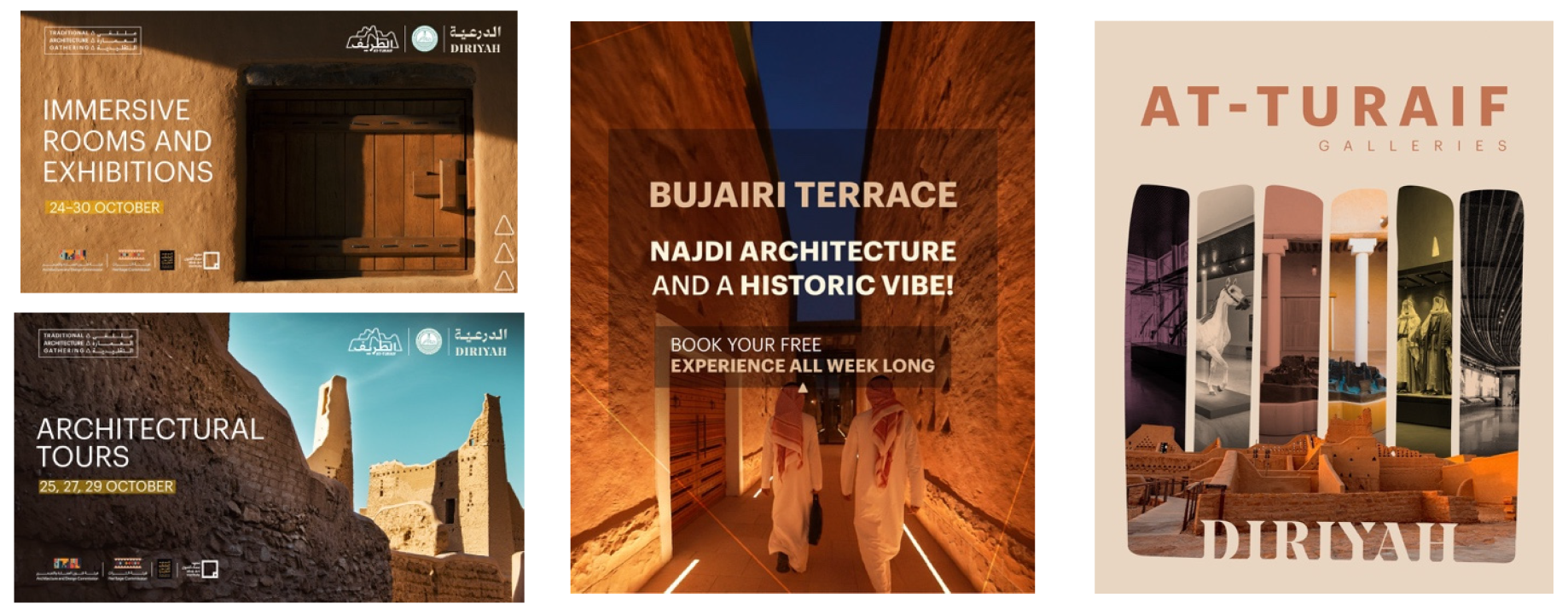
The Diriyah, a UNESCO World Heritage site redevelopment project, is not just a local initiative, but a strategic alignment with Saudi Arabia’s Vision 2030. This national vision aims to transform the country and its economy, and the Diriyah project plays a significant role in this transformation [
70]. The project’s goal is to preserve Diriyah’s cultural heritage while also transforming it into a modern heritage tourist destination, with plans for museums, hotels, restaurants, and recreational facilities to attract visitors from around the world [
7] (
Figure 4).
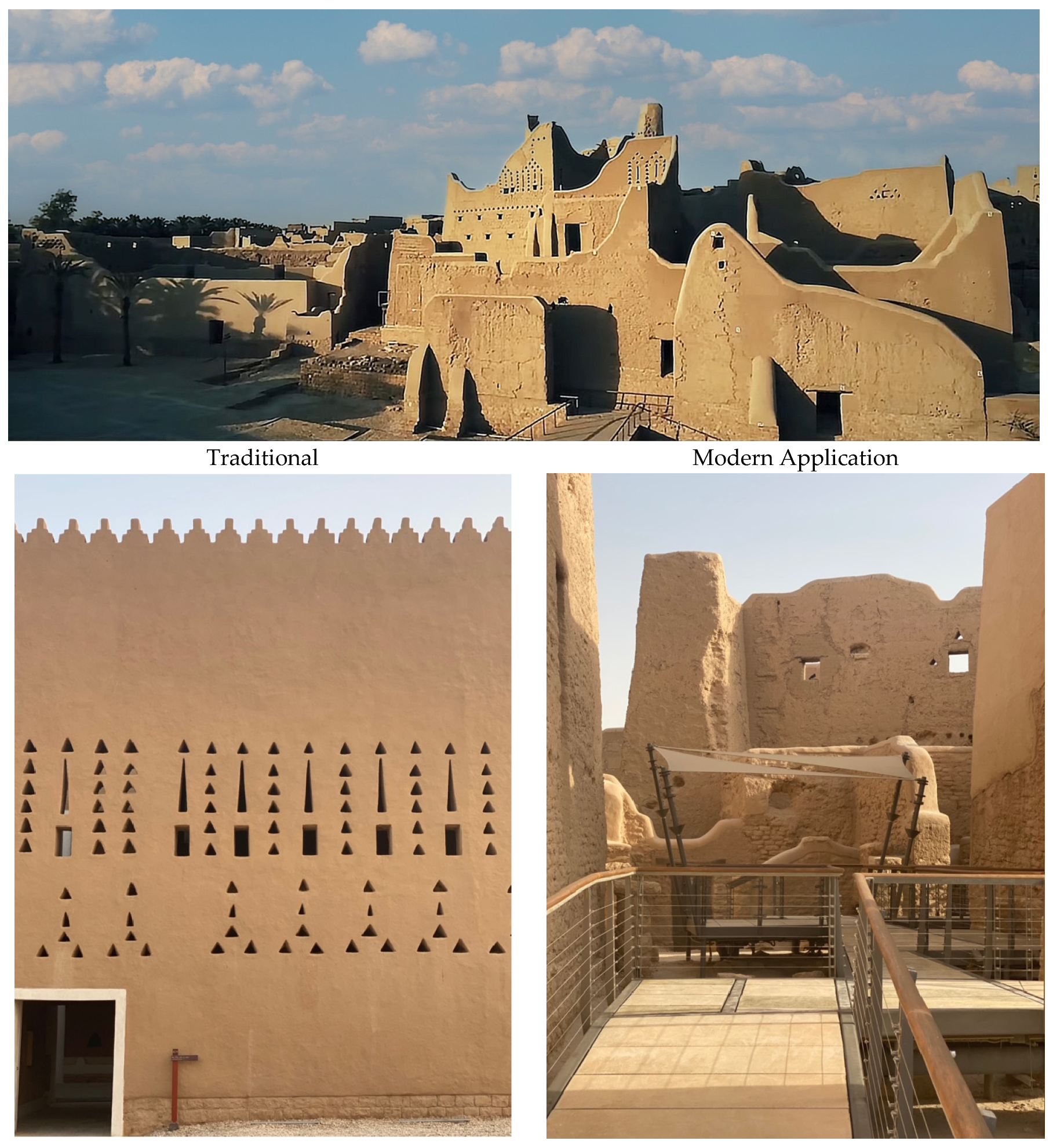
Preserving Diriyah’s heritage is crucial because it emphasizes retaining the essential features of Najdi architecture, such as sturdy mudbrick walls and small windows that help regulate the climate naturally. Modern construction methods have strengthened these buildings while preserving their appearance. This preservation effort ensures that future generations can appreciate and learn from Diriyah’s rich history and architectural legacy. By blending modern amenities with traditional design, Diriyah will offer a one-of-a-kind and immersive experience for visitors seeking to explore Saudi Arabia’s cultural heritage.
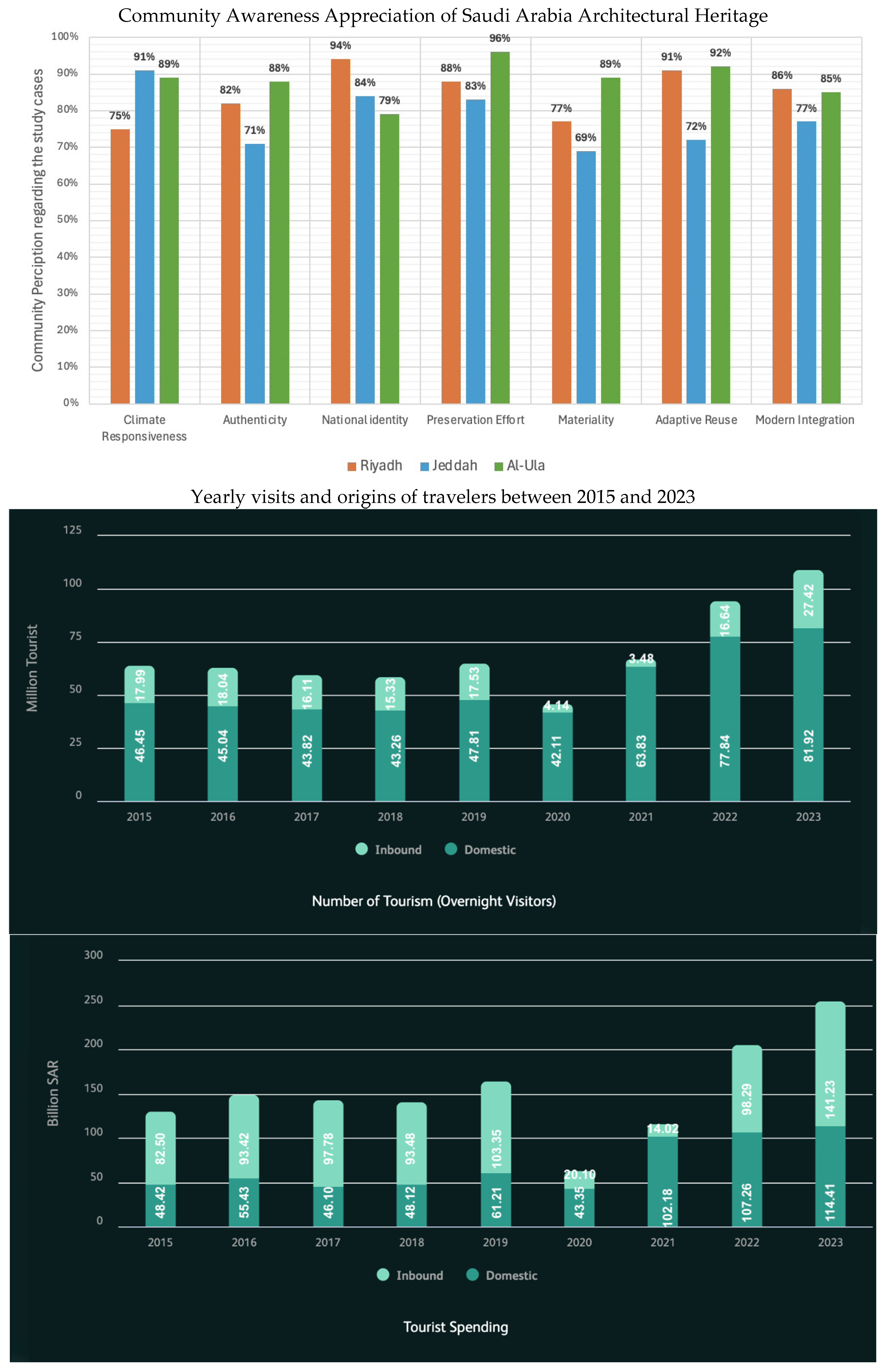
The mudbrick structures in Diriyah provide insulation from the scorching heat of Riyadh city, a crucial aspect for creating sustainable architecture projects in the region. As per an architect engaged in this initiative, our main task was to harmonize traditional materials with contemporary construction norms while safeguarding the ecological adaptability they offer to combat climatic challenges effectively. Cutting-edge engineering methods have been employed to retain the charm of the Najdi architectural style. In-field surveys conducted in Riyadh found that 75% of participants highlighted the comfort and historical importance of traditional construction techniques that still meet present-day requirements. These findings underscore the importance of preserving cultural heritage while embracing modern architectural advancements. Integrating traditional techniques with innovative engineering solutions ensures sustainable and resilient structures for the future.
The approach to architecture in Najdi culture focuses on creating private spaces and arranging them hierarchically, as seen in today’s new developments. According to one city planner interviewed, he stated that they tried to stay true to the central courtyard design that defines Najdi houses while also transforming these areas to host establishments such as eateries and art exhibits. The community in Riyadh has positively embraced this contemporary take on styles. This aligns with a survey conducted in Riyadh city, where 82% of respondents felt that the design region’s cultural heritage resonated with them. This blending of traditional Najdi architecture with modern amenities has not only preserved the region’s cultural identity but also enhanced the overall community experience (
Figure 5).
While the Diriyah project demonstrates strong public approval and effective climate-responsive design, the findings also reveal underlying tensions consistent with critiques in the heritage literature. Scholars such as Carmona and Wong caution that large-scale heritage redevelopment risks commodifying tradition when cultural value is framed primarily through tourism and branding. In Diriyah, expert interviews suggest that the success of vernacular integration remains contingent on continuous regulatory oversight, as commercial pressures may gradually dilute architectural authenticity. This nuance highlights that vernacular integration is not a fixed achievement, but an ongoing governance challenge.
Diriyah’s revival can be likened to the refurbishment efforts in Fes, Morocco, where ancient mudbrick-and-plaster buildings have been safeguarded alongside conveniences seamlessly integrated into the surroundings [
72]. Much like Diriyah’s approach, preserving its architecture while introducing modern urban features harmoniously aligns with Fes’s strategy [
73]. Both cities showcase a blend of tradition and innovation as they navigate through the challenges of contemporary development while cherishing their rich heritage. By combining the old with the new, Diriyah and Fes can maintain their cultural identity while adapting to the demands of modern society. This balance between tradition and progress sets a precedent for sustainable urban development in historic cities worldwide.
The Diriyah development brings socio-cultural advantages that are deeply intertwined with the local identity and national pride. According to a cultural heritage expert, it is not just about preserving history but also about rekindling the connection between Saudi citizens and their past through this project, which links the bygone era to what lies ahead. The public’s reaction supports this notion, as 94% of individuals surveyed indicated that Diriyah is crucial to enhancing Saudi national identity. The fact that many locals see Diriyah as a representation of Saudi Arabia’s rich heritage and a source of national pride further supports this sentiment. The restoration and preservation of Diriyah not only serve to honor the past and inspire future generations to embrace their cultural roots.
The experts all agreed during the interviews that incorporating architecture into a cultural and tourist center in Diriyah would bring significant educational and economic benefits. This innovative approach has established Diriyah as a significant cultural hotspot, a fact that 74% of respondents indicated they would recommend to others due to its unique fusion of traditional and contemporary elements. The integration of modern amenities and historical significance in Diriyah has attracted visitors worldwide, boosting tourism and stimulating economic growth in the region [
74]. This successful blend of old and new has positioned Diriyah as a must-visit destination for those seeking a rich cultural experience in Saudi Arabia.
Analytically, the Diriyah case demonstrates that vernacular integration becomes effective when architectural authenticity is institutionally regulated rather than left to symbolic replication. The strong public approval percentages are not merely indicators of esthetic preference but reflect perceived legitimacy of governance-led heritage framing. This suggests that state-backed heritage redevelopment can sustain cultural continuity when spatial logic, such as courtyard hierarchy and climate-responsive materiality, is preserved structurally rather than visually reproduced. The case, therefore, illustrates that modernization pressures are moderated by regulatory oversight rather than by market forces alone. This reinforces Rapoport’s argument that spatial hierarchy encodes social organization rather than mere stylistic preference [
11], and demonstrates how adaptive reuse frameworks can operate at the metropolitan scale when supported by institutional governance [
12].
4.2. Jeddah: Al-Balad Historic District
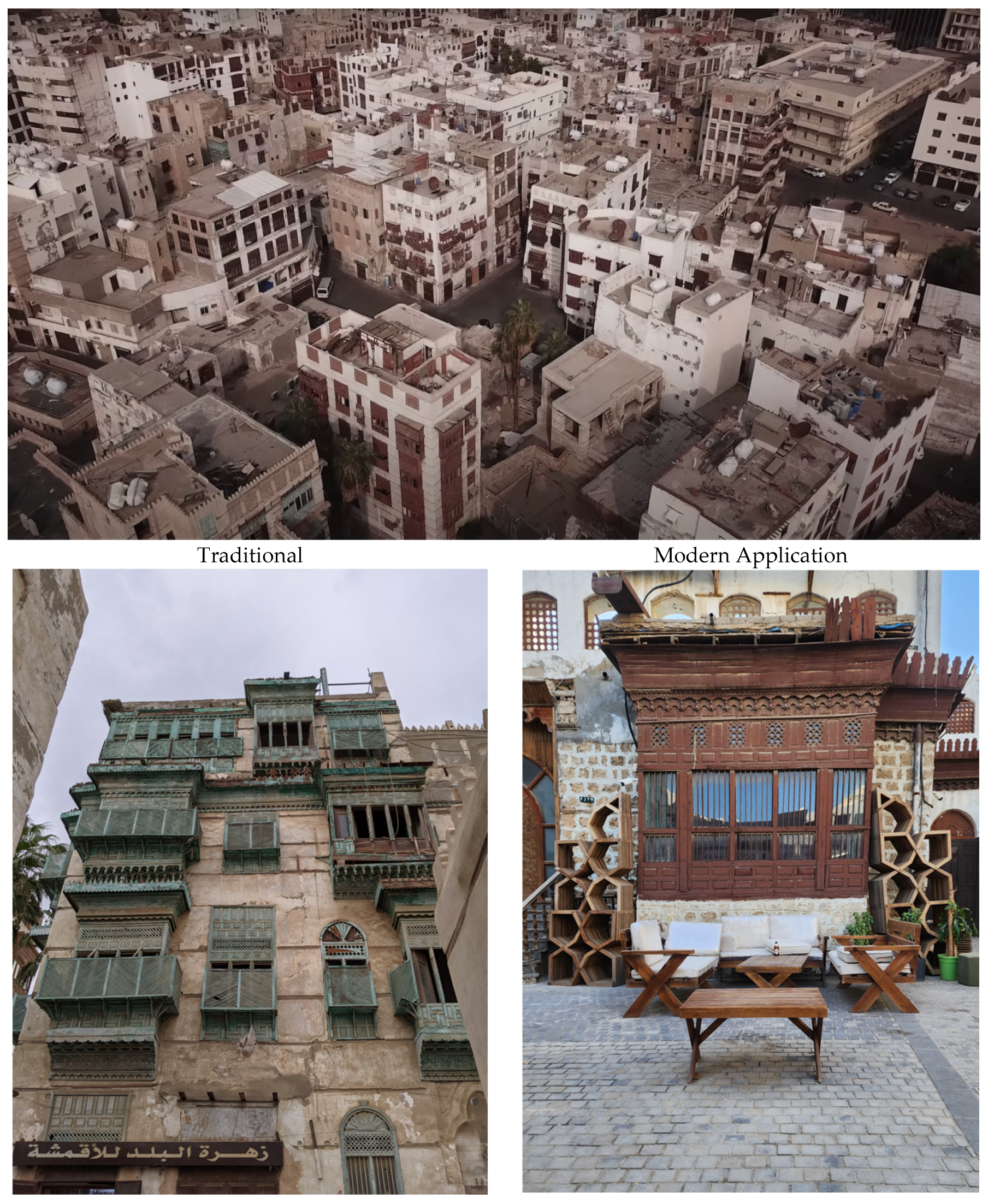
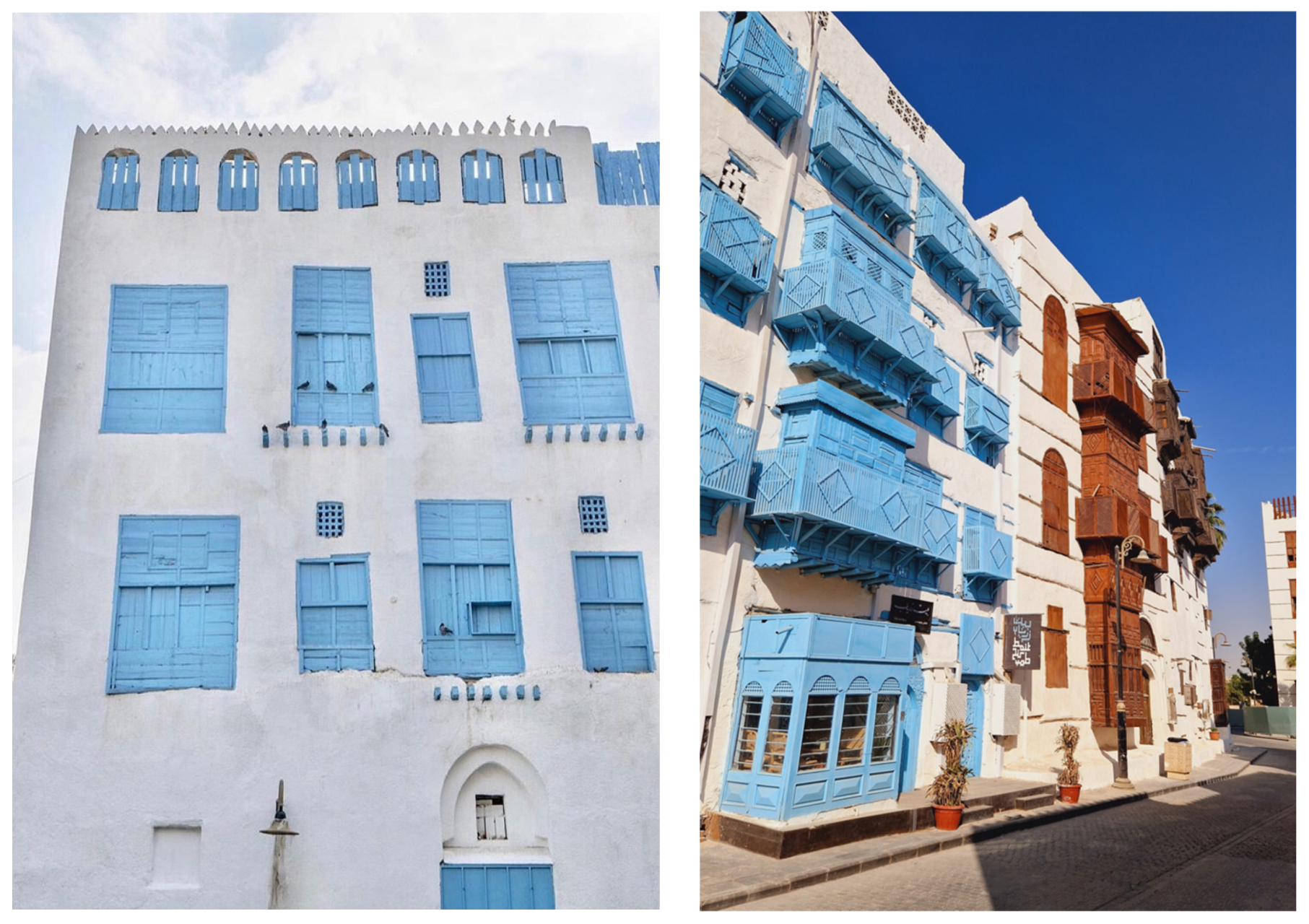
The historical area of Al-Balad in Jeddah was recognized in 2007 as a UNESCO World Heritage site due to its coral stone buildings and intricate wooden roofs, which pose a unique challenge for maintaining their traditional charm while adapting them to modern city living needs [
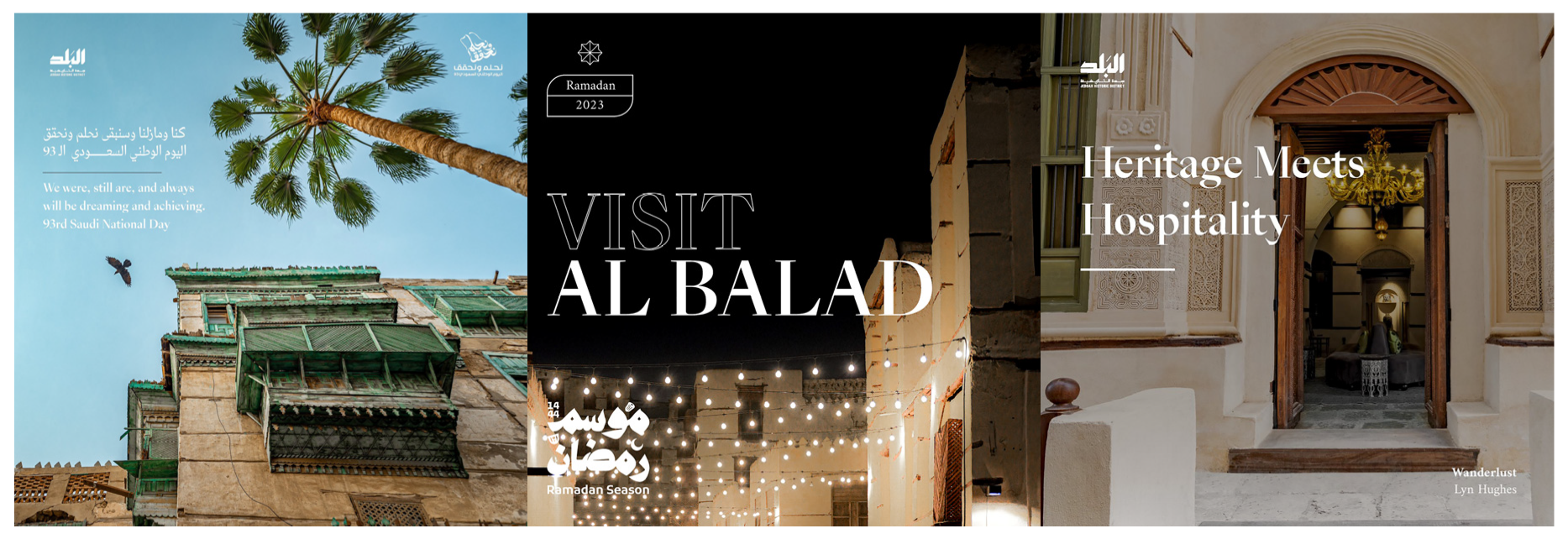
75]. The preservation efforts in Al-Balad have focused on restoring the historic architecture and promoting cultural activities to showcase the area’s rich heritage (
Figure 6). As tourism in Jeddah grows, there is a growing interest in preserving Al-Balad as a living testament to the city’s past.
Al-Balad’s architectural style features stone buildings and roshan, which offer shade and ventilation in Jeddah’s humid coastal weather [
77]. Preservation efforts have aimed to retain their eco features while adapting them for contemporary purposes. By maintaining the traditional elements of Al-Balad’s architecture, such as local materials and intricate designs, the area continues to be a unique attraction for visitors and residents alike. Additionally, efforts have been made to incorporate sustainable practices into the restoration process, ensuring that Al-Balad remains a vibrant and environmentally conscious part of Jeddah’s urban landscape.
An expert architect involved in the project emphasized the challenges and advantages of using stone in Jeddah’s climate. He discussed that the porous nature of coral stone suits the city’s weather conditions but presents difficulties for modern restoration methods. We had to develop solutions to strengthen the structures while maintaining their natural characteristics. Findings from a field survey show that 69% of respondents in Jeddah appreciate how coral stone helps cool down buildings and acknowledge its significance in today’s context. Overall, the use of coral stone in Jeddah’s architecture reflects a harmonious blend of tradition and innovation. It preserves the city’s heritage and addresses contemporary environmental concerns (
Figure 7).
Roshans are wooden latticed windows that serve the dual purpose of providing privacy and allowing ventilation. One interviewed architect highlighted the significance of roshans in Jeddah’s architecture and noted the use of materials in restoration to maintain the traditional esthetic while enhancing durability. Public opinion also aligns, as 77% of respondents in a field survey conducted in Jeddah expressed satisfaction with the blend of tradition and modern practicality found in the renovated roshans. This positive feedback indicates a successful balance between preserving cultural heritage and meeting contemporary needs. It also underscores the importance of incorporating local architectural elements in urban development projects to maintain a sense of identity and connection to the past.
The conservation initiatives in Al-Balad reflect efforts in Zanzibar’s Stone Town, where historic coral stone structures and detailed wooden features have been conserved to suit contemporary urban requirements. Both urban areas face the dilemma of safeguarding their traditional architecture amid rapid urban development and the rise in tourism. Preservation efforts in both locations aim to preserve the unique cultural heritage and identity of the historic areas while ensuring they remain functional and relevant to current residents and visitors. Balancing the preservation of history with the demands of modernization is a complex challenge that requires careful planning and collaboration between various stakeholders.
The preservation of Al-Balda has significantly influenced the cultural fabric of Jeddah’s residents and Saudi society as a whole. According to a cultural historian expert involved in the preservation efforts, Al-Balda represents more than just architecture—it embodies a way of life where the intimate community and narrow streets hold as much heritage value as the buildings themselves. The survey findings from Jeddah’s Field Survey data set further support this, with 71% of participants believing that preserving Al-Balad helps maintain a connection to the past. This sentiment is echoed by many residents who feel a deep sense of attachment to the historic district. The efforts to preserve Al-Balad are seen as crucial to maintaining Jeddah’s identity and heritage for future generations.
During discussions with Jeddah’s city planners, it was mentioned that the initiative has sparked a significant change in attitude towards historic district revitalization in the area. According to one planner expert, many young locals who once considered the old town obsolete now see it as an integral part of Jeddah’s upcoming development. Survey findings reveal a positive shift in attitude among younger individuals towards the revitalization of the district in Jeddah. A significant 83% of respondents under the age of 35 expressed excitement about the restoration efforts and their impact on shaping Jeddah’s identity. This change in attitude is a promising sign for the future of urban preservation, instilling hope in the audience about the potential for a revitalized and culturally rich urban landscape. The younger generation’s enthusiasm for revitalizing the old town reflects a growing appreciation for preserving Jeddah’s historical and cultural heritage. This shift in perspective underscores the importance of engaging youth in urban development initiatives to ensure the city’s sustainable, vibrant future.
In contrast to Riyadh’s state-led redevelopment model, Al-Balad reveals a more community-sensitive dynamic in which vernacular elements maintain relevance through lived urban continuity. The preservation of roshan and coral stone serves not only as an environmental adaptation but also as a medium for sustaining collective memory and neighborhood identity. The generational shift in perception identified in the survey data indicates that heritage revitalization can reshape urban attitudes when spatial authenticity remains embedded in daily urban practice rather than curated exclusively for tourism consumption. The findings align with studies on living heritage and people–place bonds, which emphasize that community attachment emerges from ongoing spatial practices rather than from curated preservation alone [
31,
57].
4.3. Al-Ula: Old Town Heritage and Tourism Integration
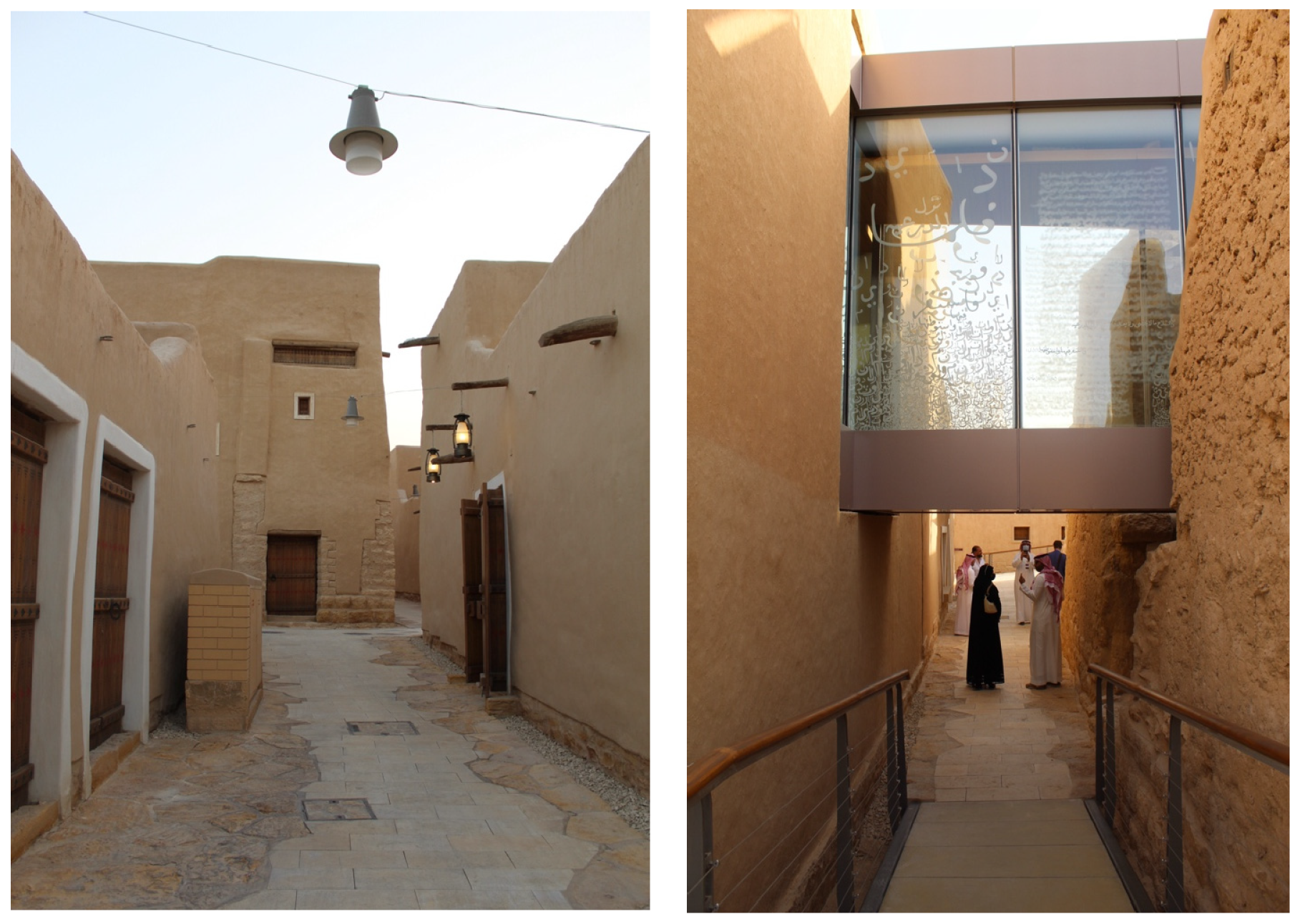
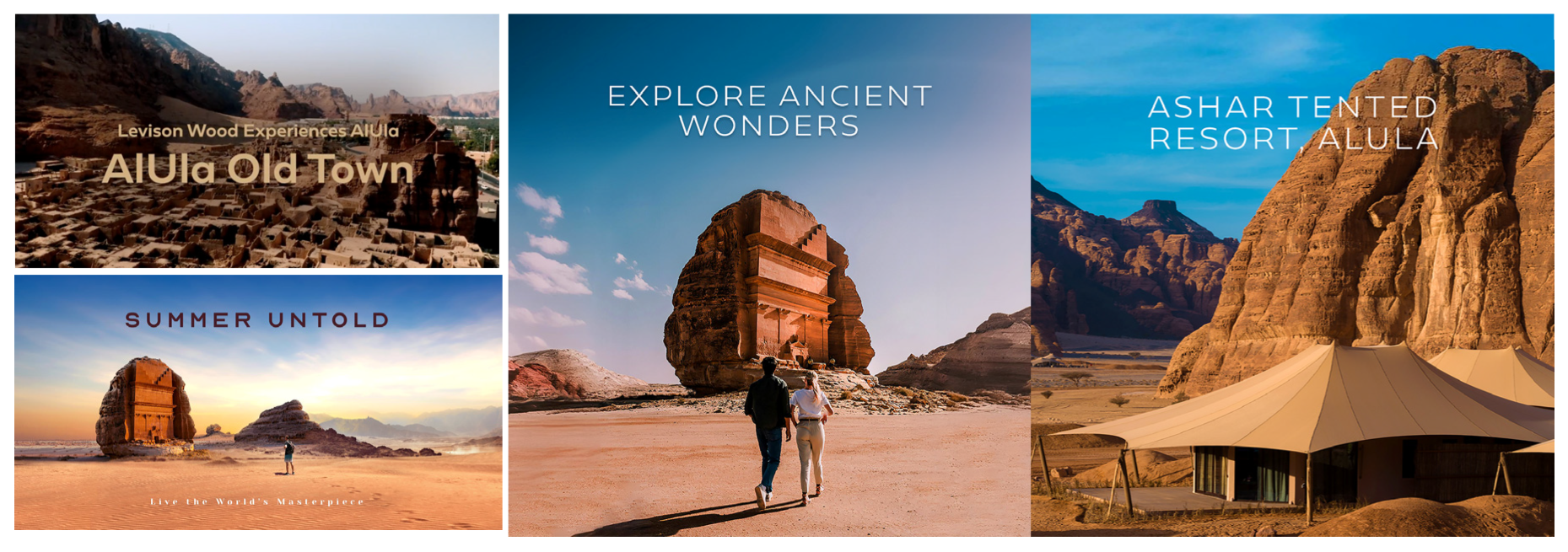
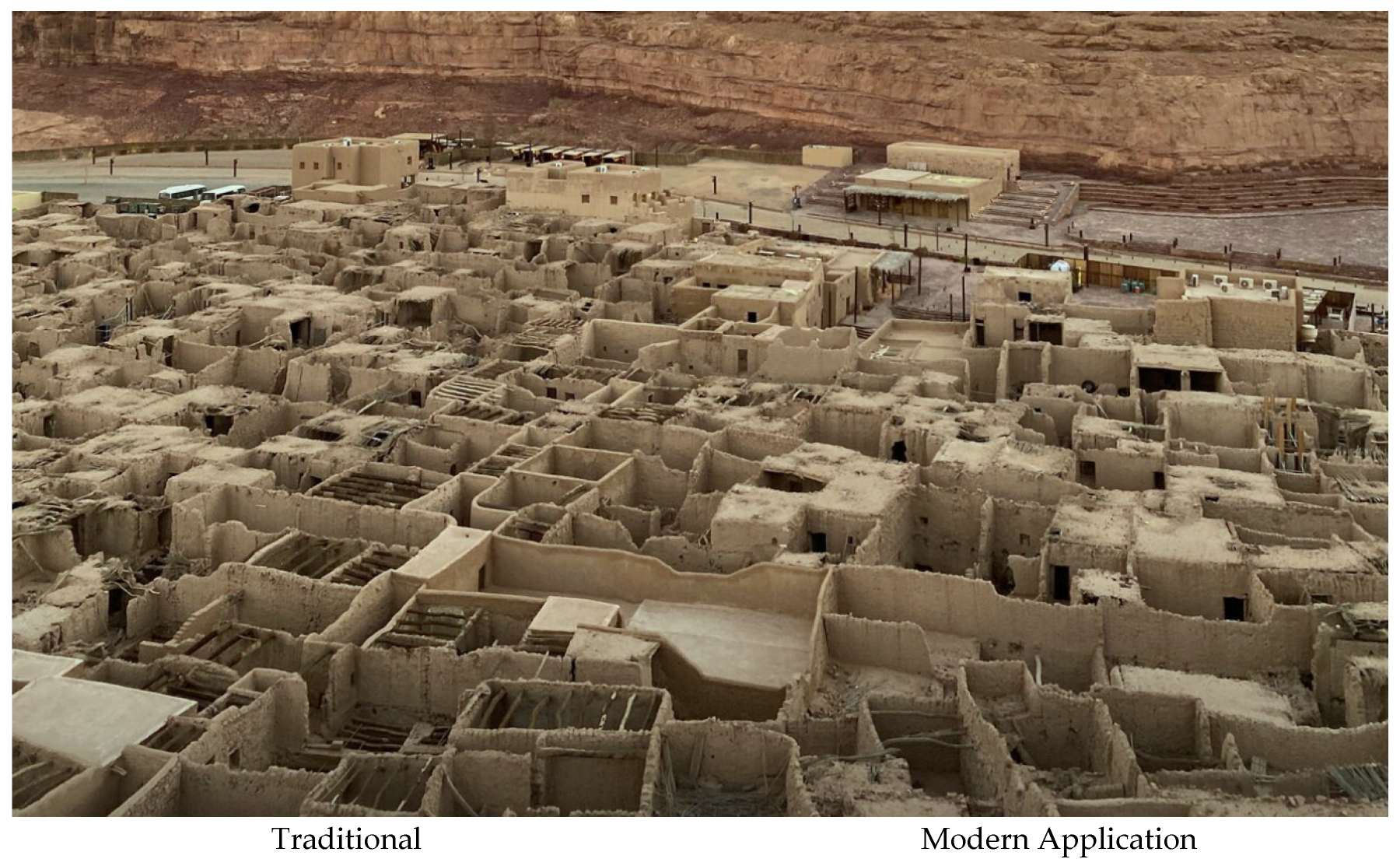
Al-Ula contributes to Saudi Arabia’s efforts to boost heritage tourism by blending the preservation of traditional stone-and-plaster architecture with the creation of contemporary tourist amenities. The town’s UNESCO World Heritage status is an intriguing example of the integration of heritage conservation and economic progress [
23] (
Figure 8). The restoration of Al-Ula’s historic buildings and the development of modern infrastructure have attracted a growing number of visitors, stimulated the local economy, and created job opportunities [
78]. This approach showcases the potential for sustainable tourism development in culturally rich destinations.
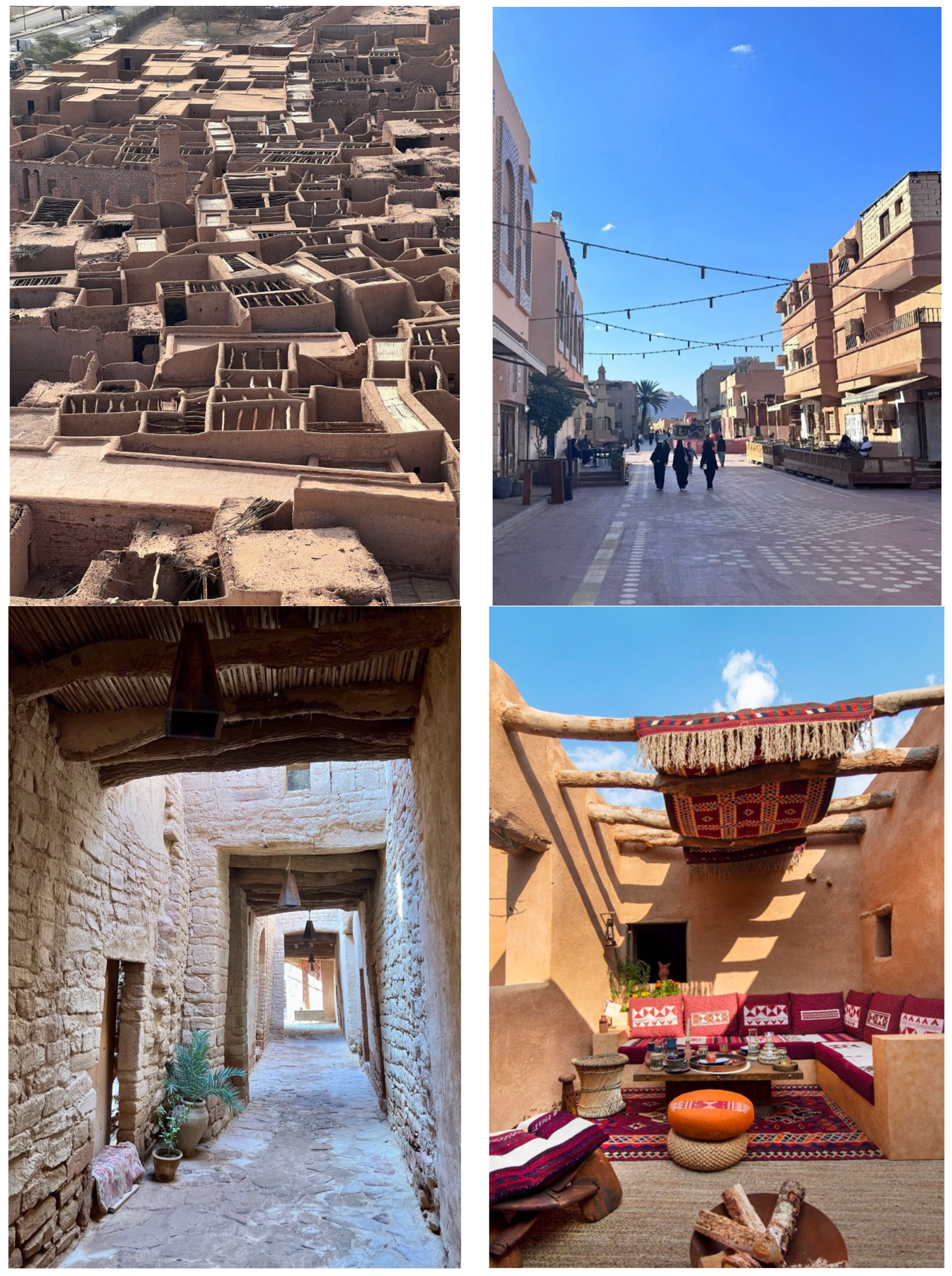
The design of Al-Ula showcases stone-and-plaster construction tailored to the desert climate, and environmental conservation efforts are underway to repurpose these buildings as tourism amenities, such as hotels and cultural hubs. These efforts not only preserve the region’s unique architectural heritage but also provide a model for sustainable development that respects both the environment and local culture, paving the way for a new era of responsible tourism in historically significant destinations by balancing preservation with progress.
A conservation architect shared thoughts on the preservation methods used in Al-Ula. They mentioned using techniques to restore stone walls and cleverly incorporating modern structural support for new purposes, such as hotels with high occupancy. The public also favors this strategy, as 85% of survey participants feel the contemporary updates improve their visit without compromising the site’s integrity. Overall, the conservation efforts in Al Ula are seen as a successful model for sustainable tourism development. By blending traditional preservation methods with modern innovation, the destination attracts visitors while safeguarding its historical and cultural heritage (
Figure 9).
According to the developer of Al-Ula Tourism, traditional residences were designed to reduce exposure to the sun, which still influences the layout of tourist lodgings today. He mentioned that they ensured the design preserves the environmental advantages while adding modern comforts to cater to present-day visitors. This approach not only preserves the site’s authenticity but also enhances the overall visitor experience.
Similar practices of incorporating heritage can be observed in Petra in Jordan, where ancient stone structures have been conserved and repurposed to cater to tourists’ needs while preserving the essence of the architecture. This allows visitors to experience the region’s history and culture firsthand, creating a unique and immersive travel experience. Additionally, the preservation efforts in Al-Ula and Petra help to ensure that future generations can continue to appreciate and learn from these ancient sites.
A tourism specialist remarked that Al-Ula is safeguarding its architectural legacy and leveraging it for economic prosperity, a testament to the harmonious coexistence of tradition and progress. Based on field surveys conducted in the Al-Ula region, visitors were interviewed about their experience at the site, and 88% of respondents expressed appreciation for the authenticity of the heritage buildings. The visitors also highlighted their unique cultural experiences while exploring the ancient sites, further emphasizing the importance of preserving and promoting Al-Ula’s rich heritage. These positive responses underscore the potential for cultural tourism to drive economic growth in the region.
Following a survey in the area, it was highlighted that 92% of visitors noted the site expresses a deeper meaning beyond its touristic appeal. It revealed that visitors were drawn to the historical significance of Al-Ula and the sense of connection and spirituality they felt while exploring the ancient ruins. This suggests that cultural tourism in Al-Ula offers visitors a transformative experience beyond sightseeing. This close tie between the community and the architecture underscores the value of the project. Residents also desire to participate actively in preservation efforts, showcasing a strong sense of ownership and pride in their cultural heritage. This community involvement strengthens the conservation initiatives and fosters a deeper connection between the residents and their surroundings.
The Al-Ula case introduces a hybrid governance model in which heritage preservation and tourism strategy are structurally intertwined. The high visitor appreciation rates suggest that vernacular authenticity enhances experiential depth when modern amenities are spatially subordinated to traditional form. However, the case also demonstrates that heritage-driven economic development requires careful calibration to prevent commodification. Vernacular architecture functions here as both cultural infrastructure and economic asset, revealing the dual pressures of preservation and performance within tourism-oriented urban transformation. The Al Ula case also contributes to smart heritage discourse by illustrating how technological reinforcement and tourism infrastructure can coexist with vernacular environmental logic when governance frameworks prioritize authenticity [
27].
Comparative analysis across the three cases reveals differentiated models of vernacular integration shaped by governance structure, economic orientation, and community involvement. Riyadh represents centralized regulatory preservation embedded within national branding strategies. Jeddah illustrates incremental revitalization within existing living urban fabric. Al-Ula reflects tourism-mediated adaptive reuse driven by the valorization of landscape and heritage. These distinctions demonstrate that vernacular integration operates as a socio-spatial governance mechanism rather than a uniform design strategy.
Across all cases, the decisive variable is not the presence of traditional materials alone, but the structural preservation of spatial logic, environmental adaptation, and social hierarchy. Where these elements remain intact, public perception shifts from nostalgic appreciation to active identification. This confirms that vernacular architecture contributes to modernization when embedded in planning frameworks rather than applied decoratively.
These findings directly address Research Question 1 by demonstrating functional integration beyond esthetic replication, Research Question 2 by evidencing measurable socio-cultural resonance through survey and interview data, and Research Question 3 by revealing governance conditions that enable or constrain the operationalization of vernacular principles within contemporary development frameworks.
Thus, conceptually, the findings contribute to vernacular architecture scholarship by demonstrating how traditional building knowledge can operate as an adaptive urban system within modernization processes. This positions vernacular architecture as a mediator between cultural continuity and urban transformation, challenging binary narratives that frame heritage and modernization as oppositional forces. The following section synthesizes these case-based insights into comparative findings and policy-oriented implications, explicitly linking empirical outcomes to the theoretical framework established in the introduction. The study thus extends existing theory by empirically illustrating how vernacular principles can be recalibrated to support sustainability, identity formation, and governance in rapidly developing cities.
5. Discussion
The results presented above provide empirical insight into differentiated models of vernacular integration across governance structures, urban scales, and respondent groups. This section interprets these findings in relation to the theoretical framework outlined in the introduction, situating the Saudi case studies within broader debates on vernacular architecture, adaptive reuse, and heritage-led urbanism.
Understanding vernacular integration requires differentiating between institutional, lived, and experiential perspectives. While the previous sections examined each case study individually, a comparative interpretation across respondent groups provides deeper insight into how governance structures, long-term residency, and short-term visitation shape perceptions of authenticity, identity, and functionality. Experts engage with vernacular architecture primarily through regulatory, material, and planning frameworks. Residents interpret it through the continuity of daily spatial practices and socio-cultural attachments. Visitors evaluate it in terms of experiential coherence and interpretive value. Analyzing these groups separately allows for a more nuanced understanding of how vernacular architecture operates simultaneously as cultural infrastructure, economic resource, and spatial identity marker within contemporary Saudi cities.
5.1. Groups Expert Perspectives: Governance and Structural Integration
Across the three case studies, expert respondents consistently framed vernacular integration as a governance-mediated process rather than a stylistic exercise. Their emphasis centered on regulatory enforcement, material authenticity, the preservation of spatial hierarchy, and alignment with national development strategies. In Riyadh, experts highlighted institutional oversight as the decisive factor sustaining architectural integrity within large-scale redevelopment. In Jeddah, experts emphasized the complexity of restoring privately owned coral stone structures while balancing commercial pressures. In Al-Ula, governance centralization under the Royal Commission was identified as enabling coordinated integration of heritage and tourism.
Analytically, expert perspectives reveal that vernacular architecture operates as a policy-sensitive urban instrument. Its continuity depends less on esthetic intention and more on regulatory coherence, institutional capacity, and long-term planning frameworks. This confirms that modernization and preservation are structurally mediated rather than inherently oppositional processes.
5.2. Resident Perspectives: Continuity and Socio-Spatial Attachment
Resident respondents demonstrated stronger emphasis on identity continuity, daily usability, and spatial familiarity. In Riyadh and Jeddah, residents associated vernacular revival with reinforcement of cultural memory and neighborhood coherence. Their responses suggest that long-term habitation cultivates sensitivity to spatial hierarchy, courtyard typologies, and material authenticity beyond visual appreciation.
In Al-Ula, residents expressed cautious support for tourism-oriented adaptation while emphasizing the importance of maintaining community participation in preservation decisions. This indicates that residents evaluate vernacular integration through lived continuity rather than curated presentation.
From an analytical standpoint, resident data illustrate that vernacular architecture sustains socio-spatial bonds when it remains embedded in everyday urban life—perceived preservation as externally imposed or economically driven, without community anchoring, risks weakening this attachment.
5.3. Visitor Perspectives: Experiential Authenticity and Interpretive Value
Visitor respondents, particularly in Al-Ula and Diriyah, prioritized experiential authenticity, visual coherence, and interpretive clarity. Unlike residents, visitors evaluated vernacular architecture through short-term engagement shaped by tourism infrastructure, accessibility, and curated narrative frameworks.
High visitor appreciation rates reflect successful alignment between heritage presentation and contemporary expectations of cultural immersion. However, visitor evaluations were more closely tied to experiential satisfaction than to socio-cultural continuity. This distinction highlights the dual role of vernacular architecture as both cultural inheritance and economic assets within heritage-led development models.
5.4. Comparative Interpretation
The findings across the three case studies reinforce Rapoport’s proposition that vernacular environments encode socio-cultural organization rather than stylistic preference [
30]. In Riyadh and Jeddah, the preservation of courtyard hierarchy, material authenticity, and privacy systems demonstrates that spatial logic remains central to public acceptance. This supports studies emphasizing vernacular architecture as a knowledge-based environmental system rather than an esthetic category [
12,
31,
45]. In Al-Ula, the adaptive reuse of stone-and-plaster dwellings as tourism infrastructure reflects international precedents in which heritage assets are economically activated while maintaining structural authenticity [
78].
Yet, the comparative findings also reveal that tourism-oriented heritage development requires careful regulatory calibration to prevent commodification, a concern raised in global heritage debates [
53]. The Saudi examples demonstrate that governance oversight plays a decisive role in determining whether adaptive reuse strengthens or dilutes vernacular integrity.
Consistent with scholarship on heritage urban DNA and community-based preservation [
33,
58], the findings show that spatial continuity and community participation significantly influence perceived authenticity. In Jeddah, where residential continuity remains partially intact, socio-spatial attachment is stronger than in fully curated tourism environments.
The study contributes to this literature by demonstrating that governance centralization, as in Riyadh and Al-Ula, can either enhance structural coherence or risk economic instrumentalization, depending on the level of regulatory enforcement. This nuance extends existing discussions on the balance between top-down planning and community-embedded preservation.
6. Policy Implications and Strategic Recommendations
The comparative analysis of Riyadh, Jeddah, and Al-Ula reveals key insights into the integration of vernacular architecture within modern urban developments.
Figure 10 summarizes the architectural comparisons, socio-cultural impacts, and policy implications observed across these three case studies, highlighting both common themes and unique approaches to heritage preservation and urban development in Saudi Arabia (
Table 4).
The comparative findings from Riyadh, Jeddah, and Al-Ula directly address the three research questions outlined in the introduction by demonstrating how vernacular architectural principles function as functional, socio-spatial systems within contemporary urban governance. Rather than functioning as esthetic reference points, vernacular elements in the examined cases influence spatial hierarchy, climate-responsive construction, and public engagement mechanisms. This supports Rapoport’s argument that vernacular environments encode socio-cultural logic beyond stylistic expression [
11,
30], while also reinforcing adaptive reuse theory that frames heritage as an evolving urban resource [
42].
Furthermore, the findings illustrate that modernization and preservation are not inherently oppositional processes, but are mediated through regulatory frameworks, tourism strategies, and community participation structures. This aligns with Carmona’s call for negotiated coexistence within urban planning systems [
43] and contributes empirical evidence to ongoing debates on heritage-led urbanism and governance alignment [
17,
18]. The Saudi case studies, therefore, extend the theoretical discussion introduced earlier by demonstrating how vernacular integration becomes operational through policy coordination, environmental adaptation, and public perception dynamics rather than through symbolic reconstruction alone.
The foundation of successful heritage preservation lies in robust and comprehensive policy frameworks that go beyond mere acknowledgment of the value of vernacular architecture. Clear mandates and incentives are essential to ensure its integration into new developments. By establishing national and regional policies, offering financial incentives, and strengthening the enforcement of existing laws, Saudi Arabia can create a regulatory environment that actively champions the preservation and adaptation of its architectural heritage.
However, the preservation of cultural heritage is not solely a top-down approach; it necessitates the active participation and support of the community. Educational programs, awareness campaigns, and community-based initiatives can foster a sense of ownership and pride in vernacular architecture. By involving residents in preservation efforts and promoting cultural tourism, Saudi Arabia can ensure that its architectural heritage remains a vibrant and integral part of its modern cities.
Furthermore, traditional architecture offers invaluable lessons in sustainable design, particularly in its climate-responsive features and use of local materials. Encouraging the adoption of these principles in modern construction, establishing sustainability standards, and investing in research and development can help create a built environment that is both culturally relevant and environmentally responsible.
Heritage preservation is undeniably a complex process that requires collaboration among various stakeholders. By establishing a dedicated national committee, fostering public–private partnerships, and promoting international collaboration, Saudi Arabia can create a network of expertise and resources to support the preservation and integration of traditional architecture.
As Saudi Arabia continues its ambitious urban development plans, it is crucial to ensure that traditional architecture is not left behind. Integrating heritage preservation into master plans, incorporating traditional elements into public spaces, and conducting heritage impact assessments can help create a harmonious balance between modernization and the preservation of cultural identity, ensuring that the nation’s rich architectural legacy continues to thrive amidst progress (
Figure 11).
Policy and Strategic Recommendations
Developing Comprehensive Policy Frameworks for Heritage Preservation: The effective integration of vernacular architecture requires enforceable policy mechanisms rather than symbolic endorsement. National and regional planning frameworks should mandate the structural incorporation of vernacular spatial logic, material authenticity, and climate-responsive principles in new developments. Financial incentives for developers who demonstrate measurable integration of traditional architectural systems may further strengthen compliance. Clear regulatory guidelines should distinguish between superficial esthetic imitation and authentic spatial incorporation.
Fostering Community Engagement and Public Awareness: Long-term preservation success depends on community participation. Educational initiatives and awareness programs should emphasize the socio-cultural and environmental value of vernacular architecture. Community-based stewardship models can enhance public ownership of heritage districts, particularly in historically inhabited areas such as Al-Balad. Participatory planning mechanisms ensure that residents remain active stakeholders rather than passive observers of redevelopment.
Encouraging Sustainable Architectural Practices through Vernacular Design: Traditional Saudi architecture offers climate-responsive strategies that remain relevant under contemporary environmental pressures. Policies should encourage the adoption of passive cooling systems, locally sourced materials, and spatial configurations that reduce energy demand. Investment in research and technical adaptation can modernize traditional construction methods without compromising the authenticity of materials.
Strengthening Collaborative Governance Networks: Heritage-led urban development requires coordination between municipal authorities, national heritage bodies, private developers, and local communities. Establishing a dedicated national advisory body for vernacular integration may facilitate cross-regional knowledge exchange. Public–private partnerships should operate within clearly defined conservation standards to prevent commodification of heritage assets.
Integrating Vernacular Principles into Future Urban Master Plans: Urban master plans should formally designate heritage-sensitive zones and require heritage impact assessments for major redevelopment projects. Vernacular principles should inform the design of public spaces, pedestrian networks, and mixed-use planning strategies. Integration must operate at the district scale rather than at the isolated building level to preserve spatial continuity.
7. Conclusions
Preserving and blending traditional architecture into modern city planning is essential for upholding Saudi Arabia’s cultural heritage and historical legacy, as shown by this study, which examined examples from Riyadh, Jeddah, and Al-Ula. Traditional architecture serves as a historical artifact and plays a key role in sustainable urban development by providing eco-friendly solutions that meet present-day requirements.
Studies have shown that incorporating traditional architecture into modern projects can enhance a sense of identity and pride in a place’s culture. More specifically, the comparative analysis revealed three differentiated models of vernacular integration. In Riyadh, integration is predominantly governance-driven, with institutional oversight ensuring the preservation of structures during large-scale redevelopment. In Jeddah, vernacular continuity is sustained through lived urban practice and incremental revitalization within a dense historic fabric. In Al-Ula, heritage preservation operates within a tourism-mediated framework, where economic activation and authenticity must remain carefully balanced. Across respondent groups, experts emphasized regulatory coherence and material integrity, residents prioritized socio-spatial continuity and identity attachment, and visitors evaluated experiential authenticity and interpretive clarity. These layered findings demonstrate that vernacular architecture functions simultaneously as cultural infrastructure, governance instrument, and economic resource within contemporary urban transformation processes.
The study findings from expert interviews and surveys have highlighted the strong public support for heritage preservation efforts. The study has also underscored the cultural advantages of reintroducing traditional architecture, such as reinforcing national pride and community spirit. The benefits of conventional construction methods, like natural temperature regulation and the use of locally sourced materials, further demonstrate the practical advantages of vernacular architecture in addressing contemporary urban problems.
From a theoretical perspective, this study advances vernacular architecture scholarship by empirically operationalizing vernacular principles within contemporary governance and sustainability frameworks. Rather than reiterating preservationist narratives, the research demonstrates how spatial hierarchy, climate responsiveness, and material authenticity function as adaptive urban systems under modernization pressures. By comparatively analyzing three differentiated governance models, the study moves beyond descriptive heritage advocacy and contributes a framework for understanding vernacular integration as a structured socio-spatial process. This responds directly to ongoing international debates on adaptive reuse, heritage urban DNA, and heritage-led urbanism by providing evidence from a rapidly transforming Gulf context.
However, the study also underscores the need for enforceable policy structures to integrate traditional architecture effectively into upcoming urban projects. As Vision 2030 has set the stage for heritage preservation, it is crucial to take steps to ensure that traditional architectural features are not just conserved but also integrated into new ventures. Financial incentives, private–public partnerships, and community involvement are all essential tactics to achieve these objectives.
While the study is situated within the Saudi Arabian context, its conceptual insights are relevant to other rapidly urbanizing regions where heritage conservation intersects with modernization pressures. The analytical framework developed here, particularly the emphasis on governance alignment, socio-cultural engagement, and climate-responsive design, offers a transferable lens rather than a replicable model. Importantly, this distinction underscores the study’s scholarly contribution, which lies in theory-building and comparative insight, rather than in policy advocacy alone.
In conclusion, this research demonstrates that the integration of vernacular architecture into contemporary urban development is neither purely esthetic nor inherently nostalgic. Rather, it is a complex, context-dependent process shaped by social values, governance mechanisms, and environmental conditions. By critically examining how vernacular principles operate within modern urban frameworks, the study contributes to a more nuanced understanding of heritage-led urbanism. It offers a conceptual foundation for future research on culturally grounded sustainability in rapidly transforming cities.
Despite the study’s comparative and mixed-methods design, several limitations should be acknowledged. The focus on three Saudi cities, while analytically intentional, does not capture the full diversity of vernacular traditions across the Kingdom. The findings reflect perceptions during a period of active redevelopment and may evolve as governance frameworks mature. Additionally, emphasis on flagship heritage initiatives may privilege relatively successful integration models over more contested or informal cases. Future research could expand the geographical scope, incorporate longitudinal evaluation of the impacts of heritage governance, and examine how evolving tourism dynamics shape community attachment and perceptions of authenticity over time.