Skip to Content
LandLand
  • Article
  • Open Access

11 March 2026

Application of GIS Technology in Soil Quality Management and Agricultural Development Orientation in Vietnam

,
,
,
and
1
Faculty of Land Management, Hanoi University of Natural Resources and Environment, Hanoi 10000, Vietnam
2
Faculty of Natural Resources and Environment, Vietnam National University of Agriculture, Hanoi 12406, Vietnam
3
School of Business administration, VNU University of Economics and Business, Hanoi 10000, Vietnam
*
Author to whom correspondence should be addressed.

Abstract

Land is the fundamental basis for maintaining agricultural production and ensuring food security. The task of managing and sustainably utilizing land resources has always been a priority for every country in the world. The study used GIS-MEC technology to integrate data from seven types of single-factor maps to construct a soil quality map with 47 land units (including eight land units with an area >100 ha, 29 land units with an area from 10 to 100 ha, and 10 land units with an area <10 ha). In addition, by combining soil quality maps and the nutritional needs of different crops, an assessment of land suitability for six major crops was conducted, and three key crops were selected for focused development: rice, vegetables, and flowers. The application of GIS in soil quality management is in line with the current trends of digital transformation and integrated data management in Vietnam and around the world. However, this method has several limitations that need to be considered when applying it, such as dependence on expert expertise, high demands on input data and verification of output results, and limitations in analyzing trends and analyzing social, non-linear factors.

1. Introduction

Food security is essential for political stability and sustainable socio-economic development of each country (FAO & UNDP, 2020) [1]. Food security is a state in which people have access to safe, nutritious, sufficient food at all times to maintain a healthy and active life (FAO, 2003) [2]. The complex developments of climate change have seriously affected agricultural production and the ability to supply food for most countries in the world, leading to food security becoming an increasingly major concern for humanity (Hasegawa et al., 2021; Kummu et al., 2021) [3,4]. In addition, population growth, rapid industrialization, and urbanization have reduced a large area of agricultural land in the world, increasing the difficulty of ensuring world food security (Van Dijk et al., 2021) [5]. Therefore, ensuring food security is always a key issue of special concern to all countries in the world.
Vietnam is a country with a long tradition of agricultural cultivation and is a leading country in food production, specifically the world’s second-largest rice exporter. First, Vietnam is one of the ten countries most heavily impacted by climate change and natural disaster risks (World Bank, 2007; Germanwatch, 2020; Phuong et al., 2022) [6,7,8]. Harsh climatic conditions have had a direct impact on food production systems. Vietnam’s main food crop is rice, distributed mainly in two large deltas, the Mekong Delta and the Red River Delta, with 54.47% and 24.08% of the country’s cultivated land area, respectively. Both of these regions are being severely impacted by climate change (Phuong et al., 2024) [9]. In addition, under the impact of the industrialization and modernization process, Vietnam’s agricultural land area has continuously decreased in recent years, especially the rice land area. According to statistics, Vietnam’s rice land area decreased by an average of 18.8 thousand hectares/year in the period 2010–2020 (MONRE, 2020) [10]. The main reason is the conversion of land use to non-agricultural land. More than 90% of Vietnam’s agricultural fields are managed by small-scale farmers, making large-scale agriculture development difficult. Although the agricultural production value has improved to 3806 USD/ha, it is still much lower than the production value of other aspects (MARD, 2022) [11]. This is the main reason why farmers convert large areas of agricultural land to other lands. In addition, the degradation of cultivated land due to the use of chemical fertilizers, pesticides, and environmental pollution is also making agricultural production in Vietnam increasingly difficult (Vien, 2011; ADB, 2013; Phuong et al., 2025) [12,13,14].
Faced with the above situation, the Vietnamese Government has made many efforts to maintain and protect agricultural fields to ensure national food security. Decree No. 112/2024/ND-CP of Vietnam’s Government has detailed regulations on rice-growing land. The main contents of rice land management include: planning areas for high-yield, high-quality rice cultivation; converting the structure of crops and livestock on rice land; converting the structure of crops and livestock on rice land; constructing works serving agricultural production on rice land; etc. (Vietnam’s Government, 2024) [15]. These contents aim at exploiting, using, and protecting agricultural land effectively and sustainably. In addition, Vietnam also aims to convert agricultural cultivation to ecological direction to protect the environment and adapt to climate change. High-quality, low-emission rice cultivation models, System of Rice Improvement (SRI), and circular agriculture models have been promoted and strongly developed in recent years (Phuong et al., 2025; Nguyen et al., 2017; Vietnam Irrigated Agriculture Improvement Project, 2022) [14,16,17].
Maintaining agricultural land area not only ensures national food security but also creates a solid foundation for sustainable economic and social development in Vietnam. To do this, it is necessary to identify important agricultural areas that need to be maintained and have specific criteria to determine the agricultural area to be converted (Phuong et al., 2023) [18]. In Vietnam, to effectively manage land resources, land use planning has been given significant attention by the state and is codified in the Land Law (Ref). GIS technology has been gradually applied in land planning to create land use status maps, helping managers to effectively carry out planning, scheduling, and land use allocation (Vietnam National Assembly 2024) [19]. In addition, to manage soil quality, many provinces and cities in Vietnam have developed agrochemical soil maps to assess the current state of soil quality, soil degradation processes, and to support agricultural development (MONRE, 2020) [10]. However, these maps simply represent a basic layer of data on current land use or land quality, lacking in-depth analytical applications to guide effective land use planning and the development of appropriate agricultural production. In recent years, there has been a trend of digital transformation in state management, especially in resource and environmental management. The Vietnamese government encourages the development and construction of digital data at the national and local levels to effectively serve the decision-making process (Prime Minister of Vietnam, 2020) [20]. Based on that, the application of GIS technology to digitize land data, water resources data, climate data, and agricultural production data has begun to receive attention. Land suitability assessment tools for crops have been widely applied in many countries worldwide. In Vietnam, the application of ArcGIS software version 10.3 to evaluate land suitability for crops has begun to be implemented in recent years (Thuy et al., 2020; Ha et al., 2024) [21,22]. The results of applying soil evaluation techniques allow us to determine suitable land areas for growing crops based on many different factors such as soil (soil quality), terrain, climate, irrigation regime, and nutritional needs of crops (Loc et al., 2021; Binh et al., 2024) [23,24]. In addition, the use of GIS software version 10.8 in land suitability assessment for crops also allows the identification of suitable lands with large enough areas for large-scale agricultural development. This is very useful information to provide to managers and policymakers to implement socio-economic development plans reasonably, ensuring that the process of converting agricultural land to other uses is carried out systematically and effectively. However, to effectively utilize digital data to support decision-making, it is necessary to delve deeper into the spatial analysis and overlay functions within GIS software to provide better assessments and guidance for managers. This is a weakness that GIS applications in Vietnam have not been able to overcome in recent years (Loc et al., 2021) [23]. Most GIS applications in Vietnam are for creating current status maps such as current land use, current agricultural production, and current soil quality. In addition, map data is primarily printed on paper and stored as digital files on disks and has not yet been converted into digital data integrated into specialized software (Phuong et al., 2024) [9]. This leads to limitations in accessing and utilizing data. Agricultural planning and development decisions are based not only on natural resources (climate, land, water) but also on social factors (labor, market, production experience) and institutional policies (macroeconomic development orientation). Therefore, while GIS technology cannot encompass all these factors, it has contributed to helping managers gain a clear understanding of the potential and strengths of their local natural conditions, providing a basis for formulating appropriate development directions. This study was conducted to apply GIS technology to integrate data on land resources (topography, soil, soil quality, irrigation) with data on the nutrient requirements of different crops to create in-depth maps, including soil quality maps and land suitability maps for several major crop types based on the nutritional requirements of each crop.

2. Study Area

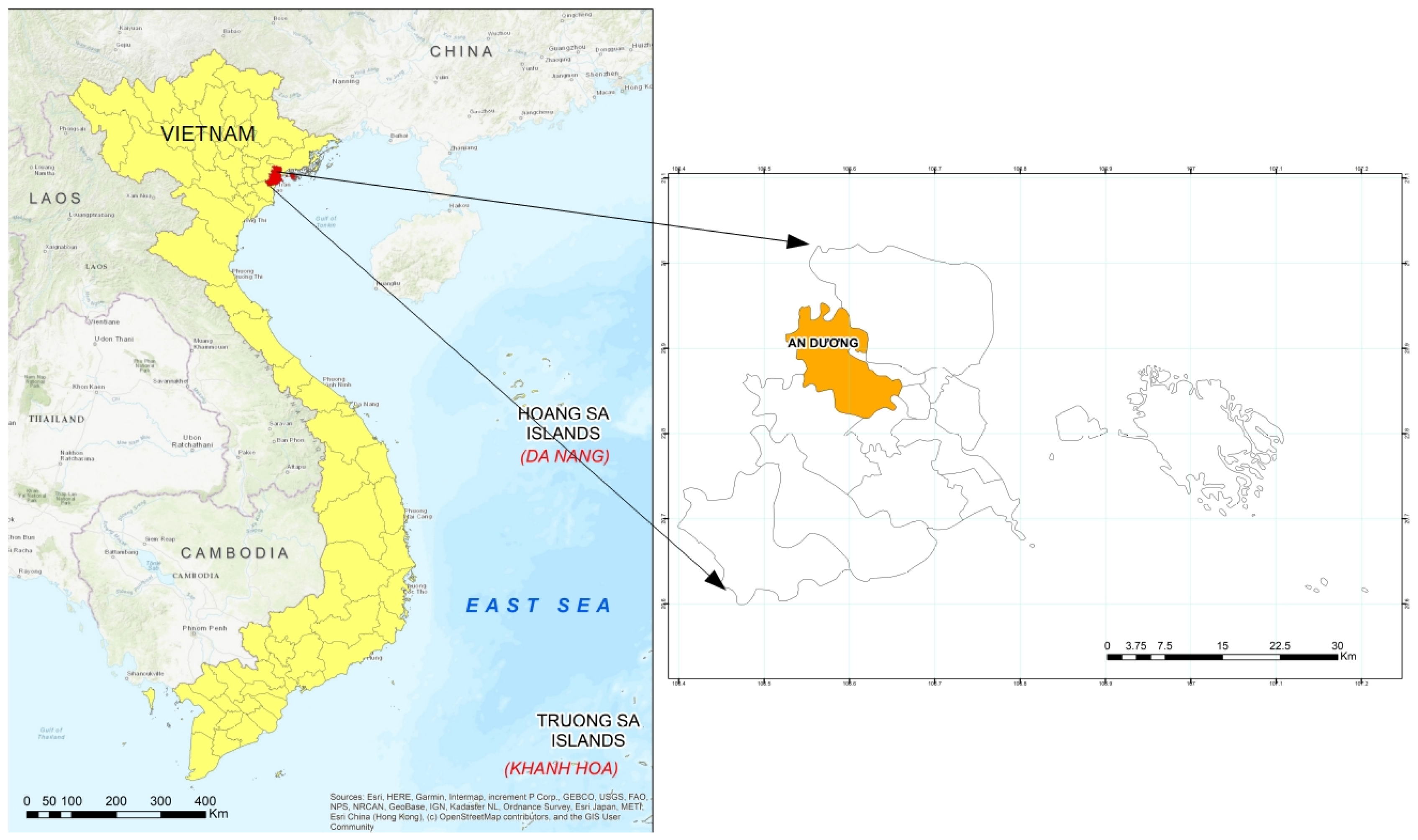
The An Duong area is located at the center of the Red River Delta and within the core of Northern Vietnam’s economic triangle (Hanoi–Quang Ninh–Hai Phong), possessing a favorable geographical position that facilitates connectivity within the Red River Delta, the northern mountainous provinces, and the Hai Phong seaport area (Figure 1). From An Duong, various types of goods, especially agricultural products, can be conveniently distributed to domestic markets as well as international markets (China, ASEAN, Australia, and other regions). As a result, An Duong has emerged as a dynamic economic development area of Hai Phong City and of Northern Vietnam as a whole in recent years.
Figure 1. Geographical location of An Duong District on the map of Vietnam.
An Duong District has a total natural area of 10,426.6 ha, of which agricultural land accounts for 5066.07 ha (48.59%), while non-agricultural land covers 5327.14 ha (51.09%). The soils of An Duong have been formed and enriched by sediments from the Red River and Thai Binh River systems, resulting in relatively flat, fertile, and productive terrain that is highly favorable for transportation and agricultural cultivation. Located within the Red River Delta, An Duong experiences a typical tropical monsoon climate of northern Vietnam. The rainy season lasts from April to September, while the dry season extends from October of the previous year to March of the following year. Seasonal winds prevail, with southeast and southwest winds in summer and north and northeast winds in winter. The average annual rainfall is approximately 1263 mm, concentrated mainly in the summer months from May to August, and the average relative humidity ranges from about 88% to 92%. The average annual temperature ranges from 23 °C to 26 °C, with the hottest months being June, July, and August (temperatures can reach up to 44 °C), and the coldest months being January and February (lowest temperature is 4 °C). Overall, the district’s climate is relatively mild and conducive to socio-economic development activities.
However, from July to September each year, the area is frequently affected by heavy rains and storms, which cause significant adverse impacts on socio-economic conditions, particularly on agricultural production. In terms of population, the district has nearly 200,000 inhabitants, with a population density of about 1918 people/km2. In recent years, An Duong’s economy has grown rapidly, with an average annual growth rate of approximately 15% during the 2020–2025 period. The economic structure has undergone a marked shift from agriculture (accounting for 15%) toward industry and services (accounting for 85%). This rapid expansion of industrial and service sectors has exerted considerable pressure on environmental quality, soil quality, and agricultural production activities in the district. Therefore, in order to maintain and ensure stable and sustainable agricultural development, thereby establishing a solid foundation for socio-economic stability and food security, the assessment and management of agricultural soil quality and the orientation toward suitable crop development are of great importance for the district in the coming period.
According to the land use planning of An Duong District to 2030, the area of agricultural production land is expected to continuously decline in order to accommodate the processes of industrialization and urbanization in the district. As shown in the table, in 2015 the total agricultural land area of the district was 5245.4 ha, which decreased to 5061.6 ha by 2020 (a reduction of 183.9 ha, equivalent to an average decrease of 36.8 ha per year). This area is projected to continue to decline rapidly during the 2021–2030 period, reaching only 3411.5 ha by 2030 (a reduction of 1650.1 ha, with an average annual decrease of about 330 ha, nearly nine times higher than that of the 2015–2020 period) (Hai Phong Department of Agriculture and Environment, 2023) [25]. The primary reason for this trend is the conversion of agricultural land to support the development of industrial zones, commercial areas, and construction projects within the district.
Regarding the current cropping structure, the main crops of An Duong District include rice, maize, vegetables, and fruit trees. The total area of annual crops in the district is approximately 5.8 thousand hectares, of which rice accounts for the largest share, with nearly 3.3 thousand hectares (56.9%). Meanwhile, perennial crops cover a total area of about 1.2 thousand hectares, with fruit trees being the most prevalent, occupying approximately 0.8 thousand hectares (66.7%). Although the overall development orientation of An Duong District is to reduce agricultural land area in favor of urban infrastructure, industrial, and service development, the agricultural sector still needs to be maintained in a stable manner in order to ensure food security and to create a green buffer zone for the district in the coming period. Therefore, the assessment and strategic orientation of agricultural land use in an efficient and sustainable manner are of great importance for the district in the future.

3. Research Methods

3.1. Collection of Secondary Data

Secondary data: Secondary data were collected from relevant local authorities, including the Hai Phong Department of Natural Resources and Environment, the An Duong District Department of Agriculture, and the People’s Committees of communes within An Duong District. The collected information and data include:
-
Socio-economic development reports and reports on the current status of agricultural development in An Duong District.
-
Data on natural conditions (climate, hydrology, topography, and natural resources), land-related data (land use types and soil quality), agricultural statistics (cultivated area, livestock numbers, yields, and output), and population data (population size, labor force, income), among others.
-
Soil type maps and zoning maps that were collected from the Department of Agriculture and Environment of Hai Phong City.
-
Administrative maps and maps showing the current status of agricultural land that were collected at the Department of Agriculture and Environment of An Duong District.

3.2. Field Survey Method

To obtain an accurate understanding of local conditions and to collect information on land use types and typical agricultural development models, three field survey routes were established across the district in October 2024. The survey process was conducted in combination with interviews with local officials and farmers, as well as soil sampling activities.

3.3. Soil Sampling and Analysis Methods

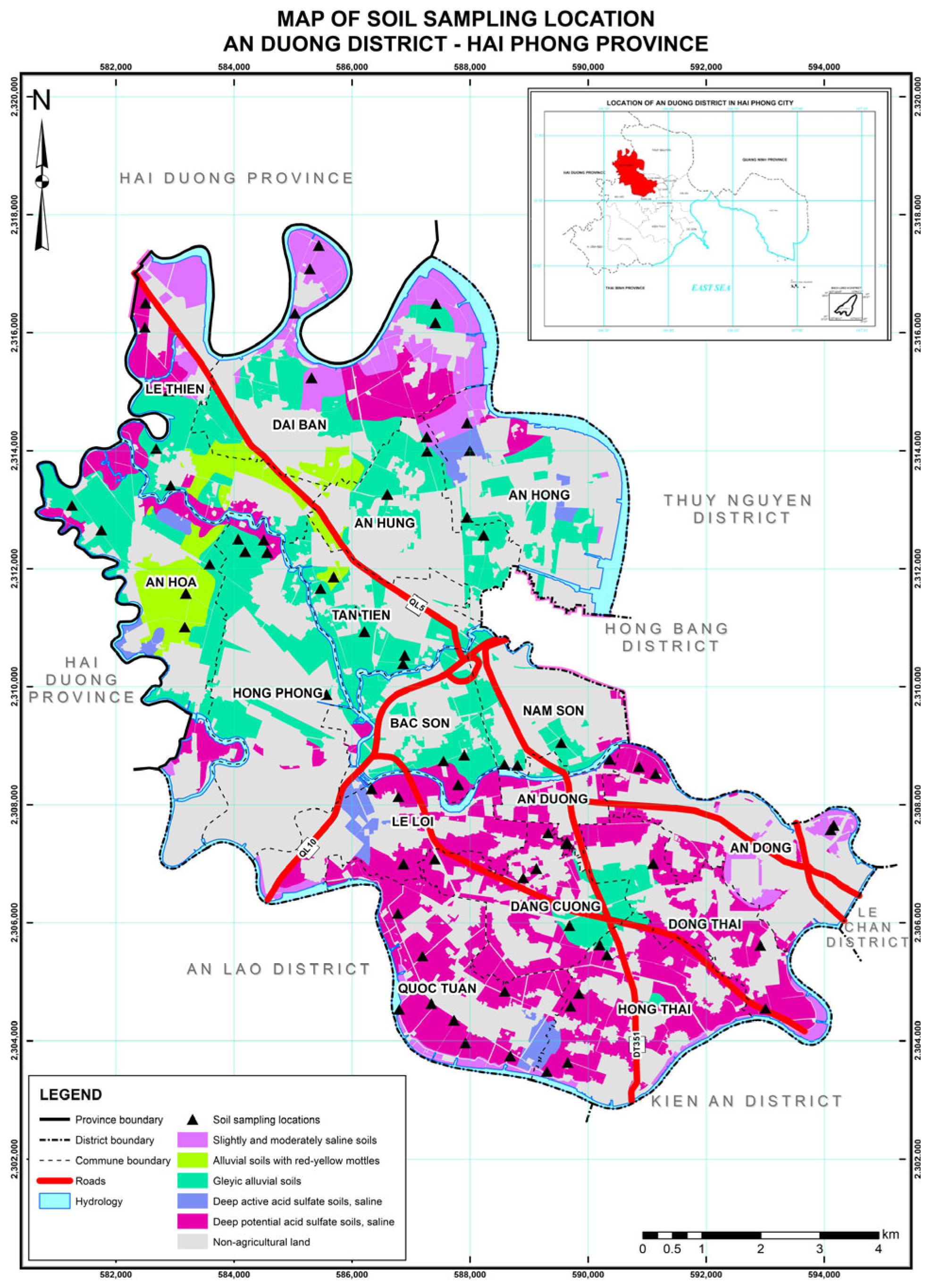
With a natural area of 10,426.6 hectares, according to Vietnamese regulations, maps must be constructed at a scale of 1:25,000. Since the total agricultural land area of the district is 5066.07 hectares, with a flat and relatively uniform terrain, the minimum number of soil samples required for the construction of the agricultural soil chemistry and soil pollution map is 5066.07 ÷ 60 = 84.4 samples (according to regulations, an average of 1 sample should be taken for analysis for every 60 hectares of land) (MONRE, 2015) [26]. In this study, we collected 96 soil samples, which is greater than 84.4% of the sample size, thus ensuring the representativeness of the study area. Soil samples were taken from the surface layer of agricultural land at a depth of 10–30 cm (cultivated layer). Samples were collected across all agricultural soil groups in the district based on soil type maps collected from the District Department of Agriculture and Environment (Figure 2).
Figure 2. Locations for agricultural soil sampling in An Duong District, Hai Phong city of Vietnam.
The topsoil samples were properly preserved and transported to an ISO-certified laboratory at the Institute for Green Growth Research, Vietnam National University of Agriculture, for analysis of soil quality parameters, including particle size distribution, soil pH, organic matter (OM) content, total nitrogen (N), total phosphorus (P2O5), total potassium (K2O), cation exchange capacity (CEC), and heavy metal pollution parameters (Cu, Pb, Zn, and Cd). The analytical parameters were selected based on the land evaluation guidelines of the Vietnamese Ministry of Agriculture and Environment (MONRE, 2015) [26]. The specific analytical methods for each parameter are presented in Table 1.
Table 1. Analytical methods for soil quality and soil pollution parameters.

3.4. Construct Single-Factor Maps

To serve the construction of soil quality maps (or land unit maps), 7 types of single-factor maps include: (1)—Soil type map; (2)—Relative topographic map; (3)—Irrigation map; (4)—Drainage map; (5)—Soil depth; (6)—Soil fertility map; and (7) Soil texture map. Each type of single-factor map is constructed based on the hierarchical classification of corresponding single-factor indicators.
-
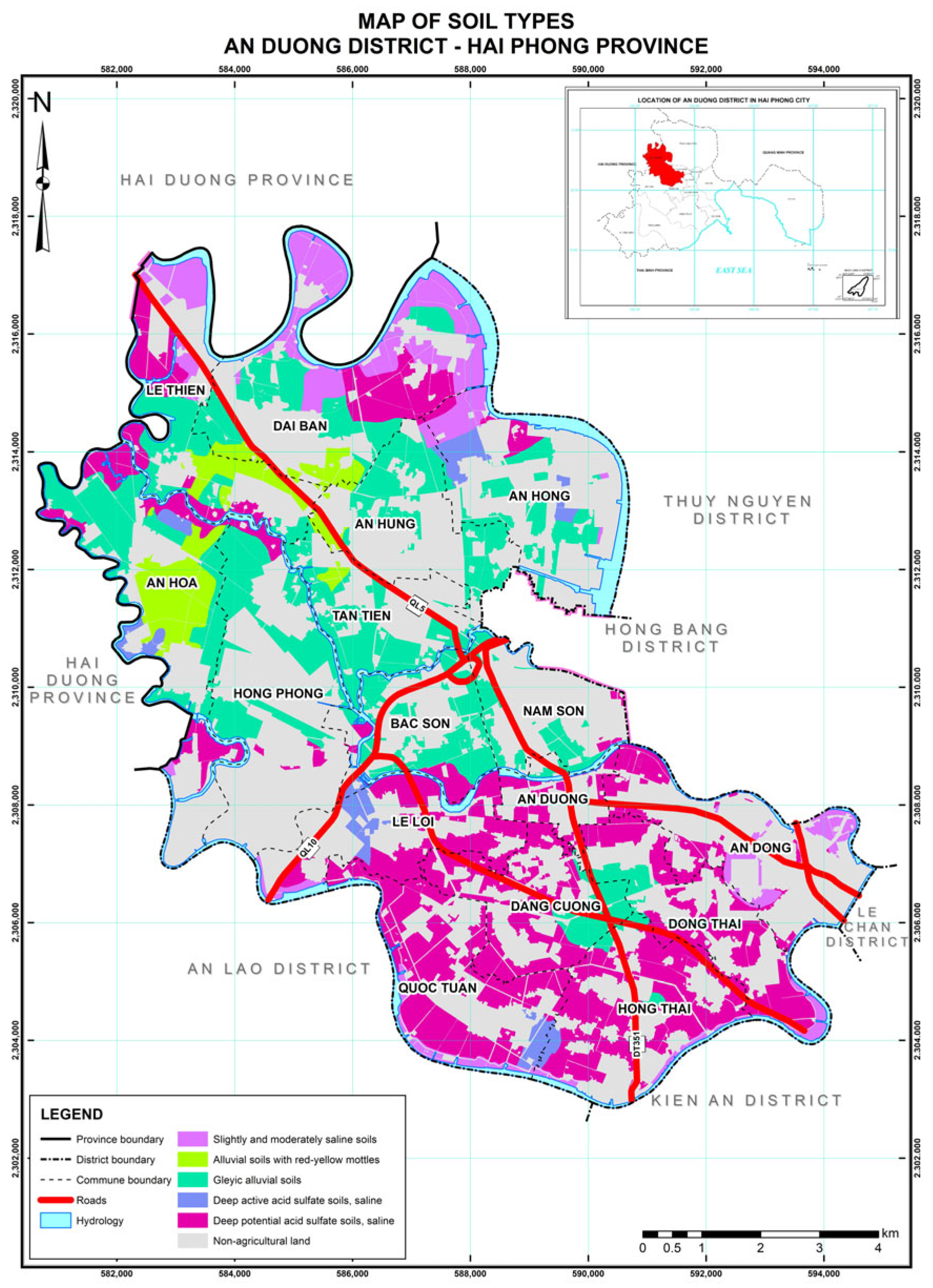
Soil type map is derived from the land classification map of Hai Phong city, compiled in 2022. The total agricultural production land area of An Duong District is 4757.4 ha, of which slightly to moderately saline soils account for 586.7 ha, representing 12.33% of the total area. Alluvial soils with mottled horizons (Pf) cover 333.37 ha (7.01%). Deep active acid sulfate soils with salinity (Sj2M) occupy 169.67 ha, accounting for 3.57%. The two dominant soil types are deep potential acid sulfate soils with salinity (Sp2M) and gleyed alluvial soils (Pg), covering 1956.47 ha (41.12%) and 1711.19 ha (35.97%), respectively. Spatially, alluvial soils are mainly distributed in the northern communes of the district, whereas acid sulfate soils are predominantly found in the southern areas. Saline soils are primarily located along river systems within the district (Figure 3).
-
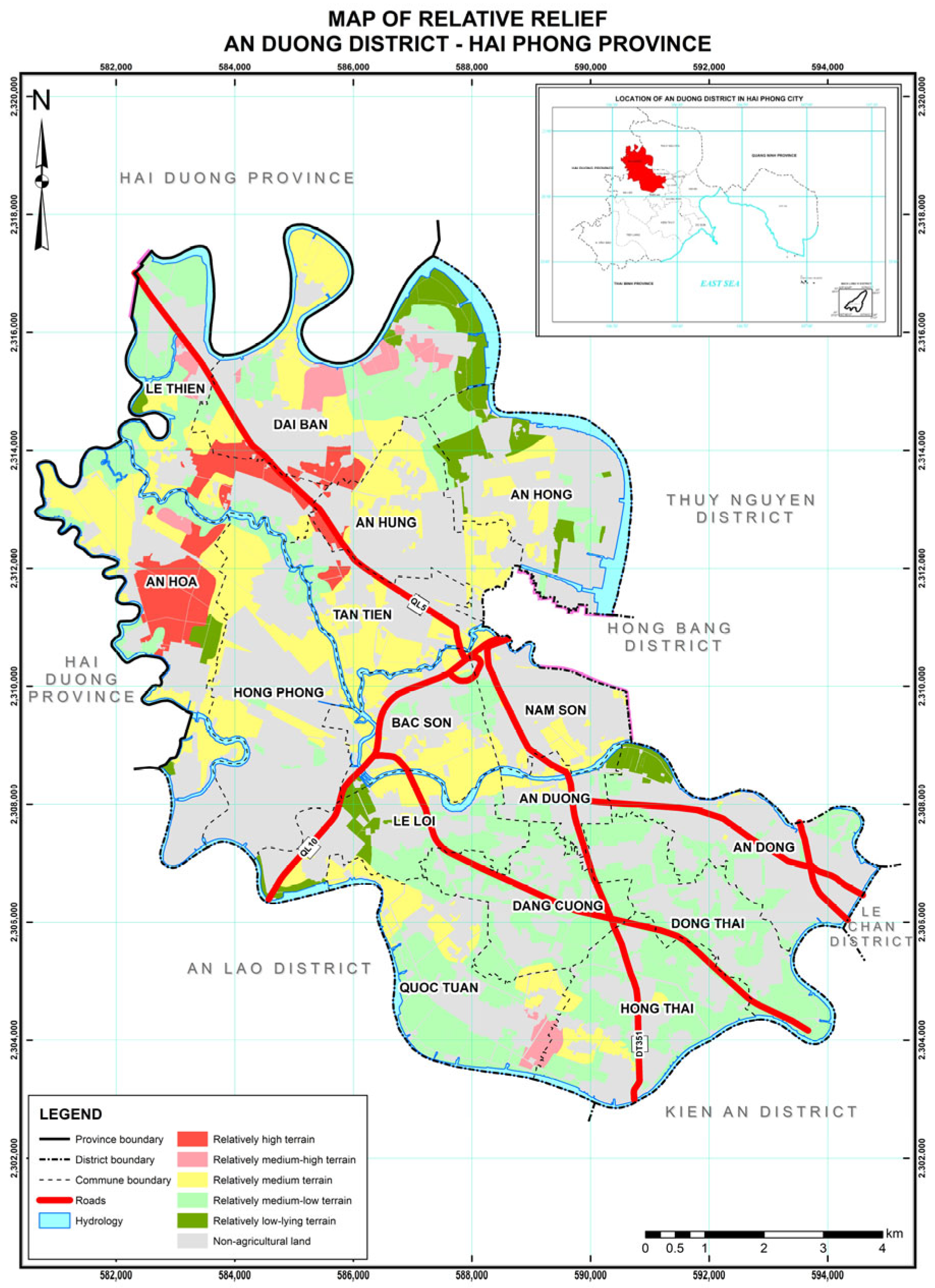
Relative topographic map: To create the relative topographic map, we collected secondary information on topographic features from the Department of Agriculture and Environment of An Duong District, then combined it with field surveys. An Duong District is characterized by typical deltaic terrain with relatively minor elevation differences. Agricultural land was classified into five relative topographic categories: relatively low terrain covering 348.15 ha (7.32%); relatively low-lying “van” terrain accounting for 2181.23 ha (45.85%); relatively “van” terrain covering 1733.77 ha (34.44%); relatively high “van” terrain occupying 160.88 ha (3.38%); and relatively high terrain covering 333.37 ha (7.01%) (Figure 4).
Figure 3. Map of Soil types ò An Duong District, Hai Phong province of Vietnam.
Land 15 00445 g003
Figure 4. Map of Relative relief of An Duong District, Hai Phong province of Vietnam.
Land 15 00445 g004
-
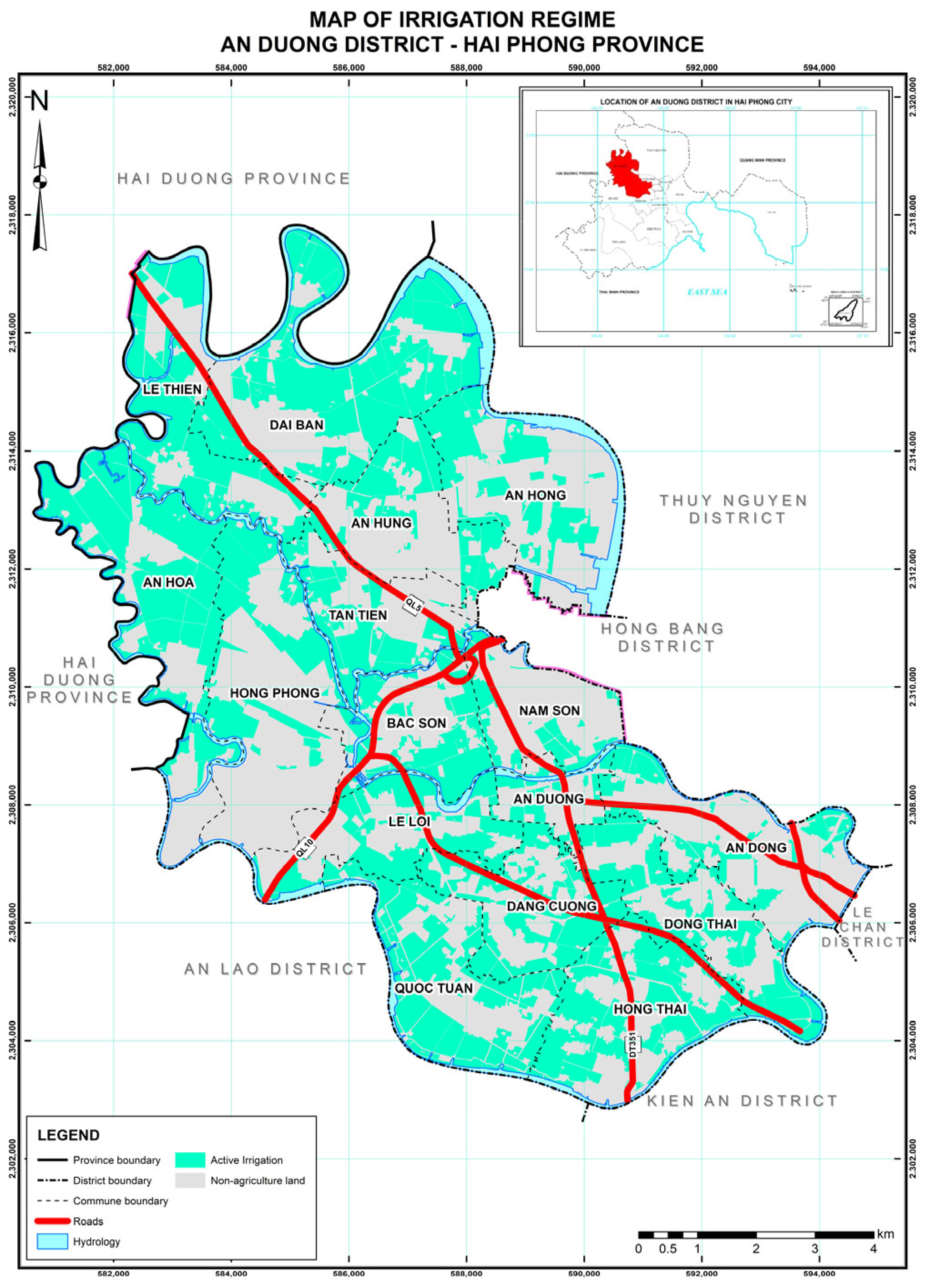
Irrigation regime map: Data on irrigated area for agricultural production was collected from the Department of Agriculture and Environment of An Duong District. Survey results indicate that 100% of agricultural land in An Duong District is supplied with controlled irrigation through the existing irrigation and drainage infrastructure, ensuring full irrigation coverage (Figure 5).
-
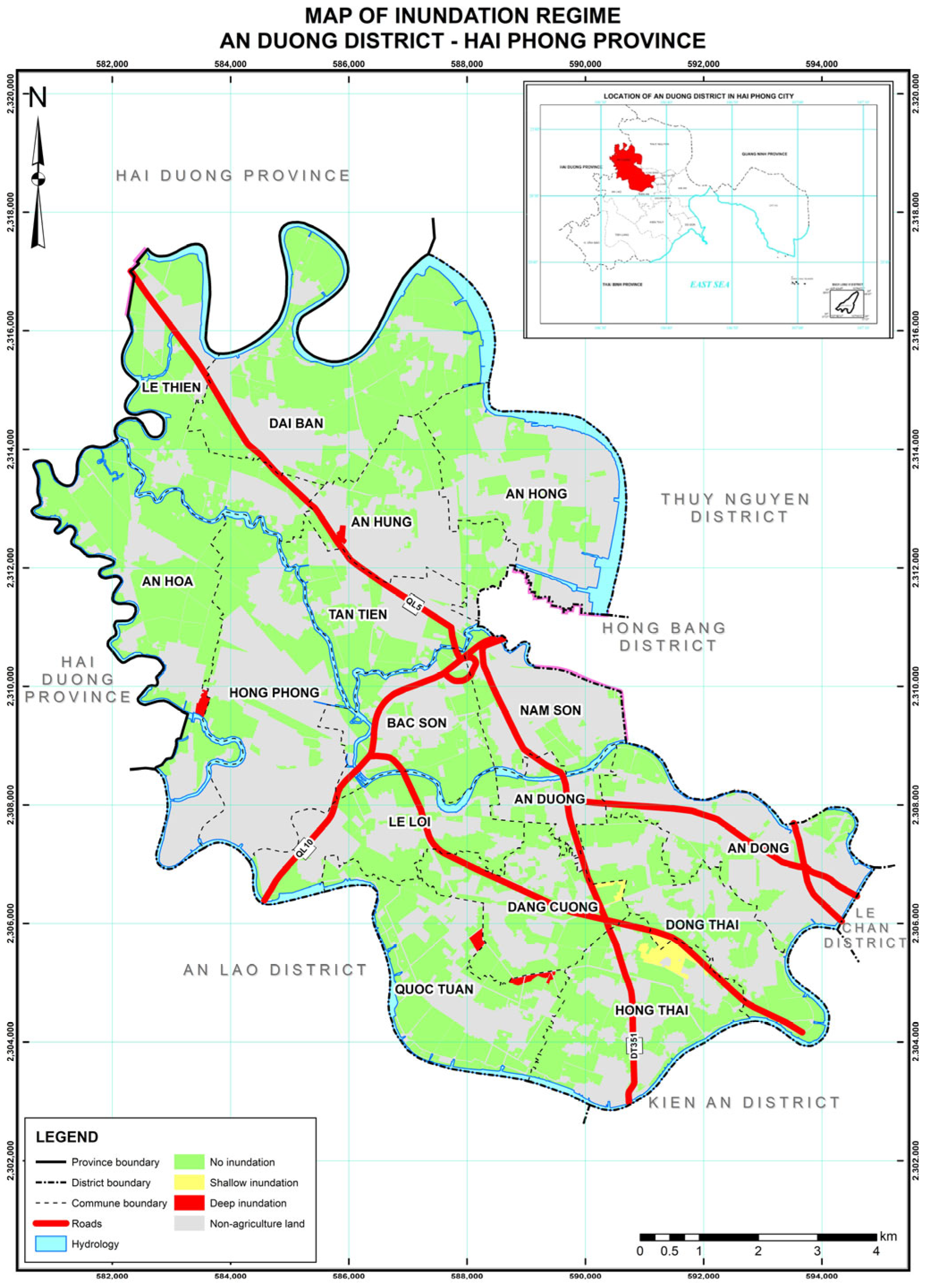
Inudation regime map: This map was developed based on three criteria: severe flooding, slight flooding, and no flooding. Current assessment results show that 98.52% (4686.78 ha) of the district’s agricultural land is not affected by flooding. Only 1.48% (64.02 ha) is affected by flooding, of which 22.18 ha experience severe flooding and 41.84 ha are subject to slight flooding (Figure 6).
Figure 5. Map of Irrigation regime of An Duong District, Hai Phong province.
Land 15 00445 g005
Figure 6. Map of Inudation regime of An Duong District, Hai Phong province.
Land 15 00445 g006
-
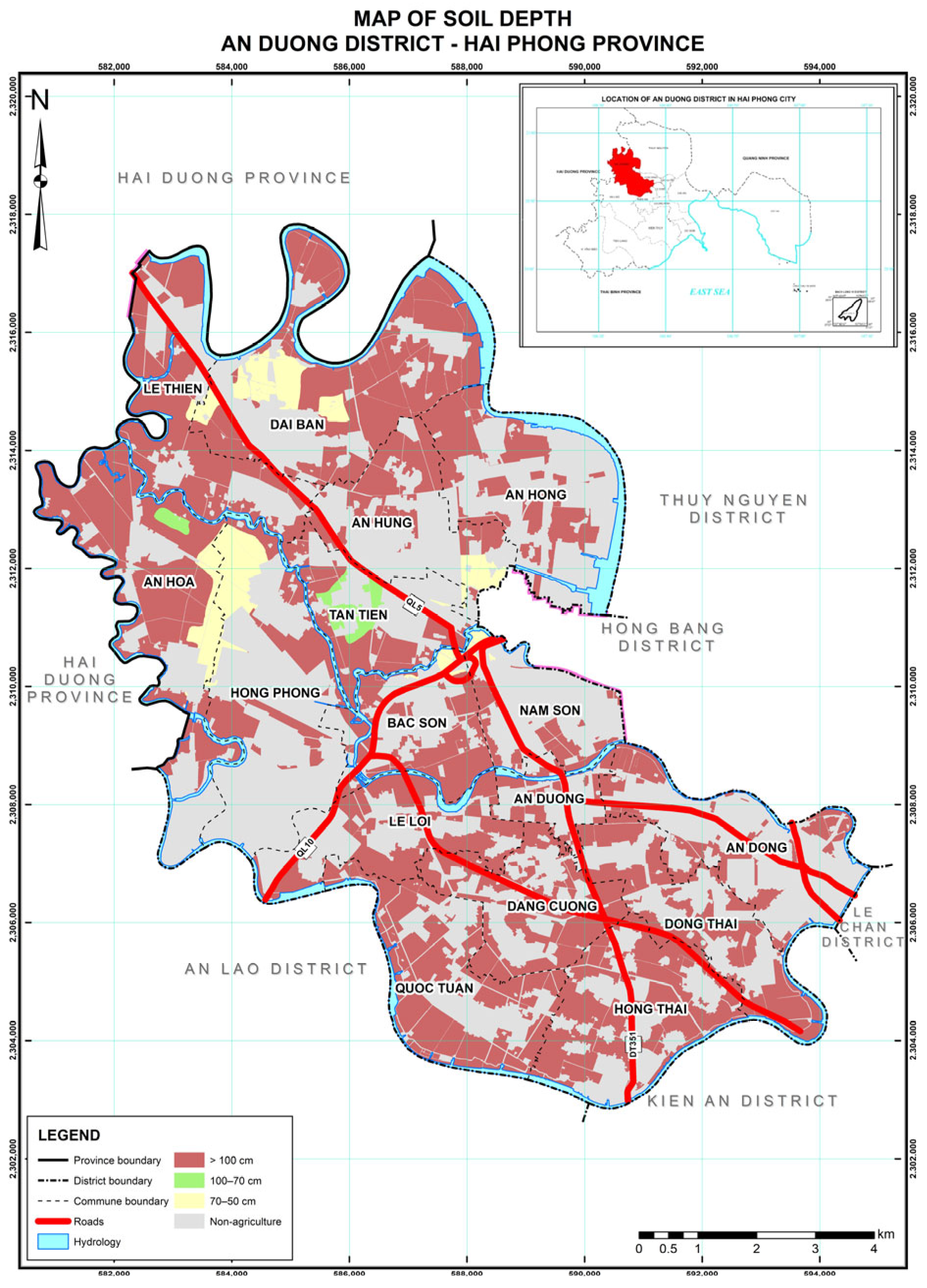
Soil depth map: The thickness of the cultivated soil layer is determined based on secondary data and consultation with experts and agricultural management officials at the Department of Agriculture and Environment of An Duong District. Soil depth plays a crucial role in crop growth and development, as different crops require specific soil depth conditions. Soil depth was determined from the surface layer to the parent material. The soils in the study area were classified into three depth categories: deep soils (>100 cm), covering 4363.46 ha (91.72%); moderately deep soils (70–100 cm), accounting for 61.24 ha (1.29%); and shallow soils (50–70 cm), covering 332.7 ha (6.99%) (Figure 7).
-
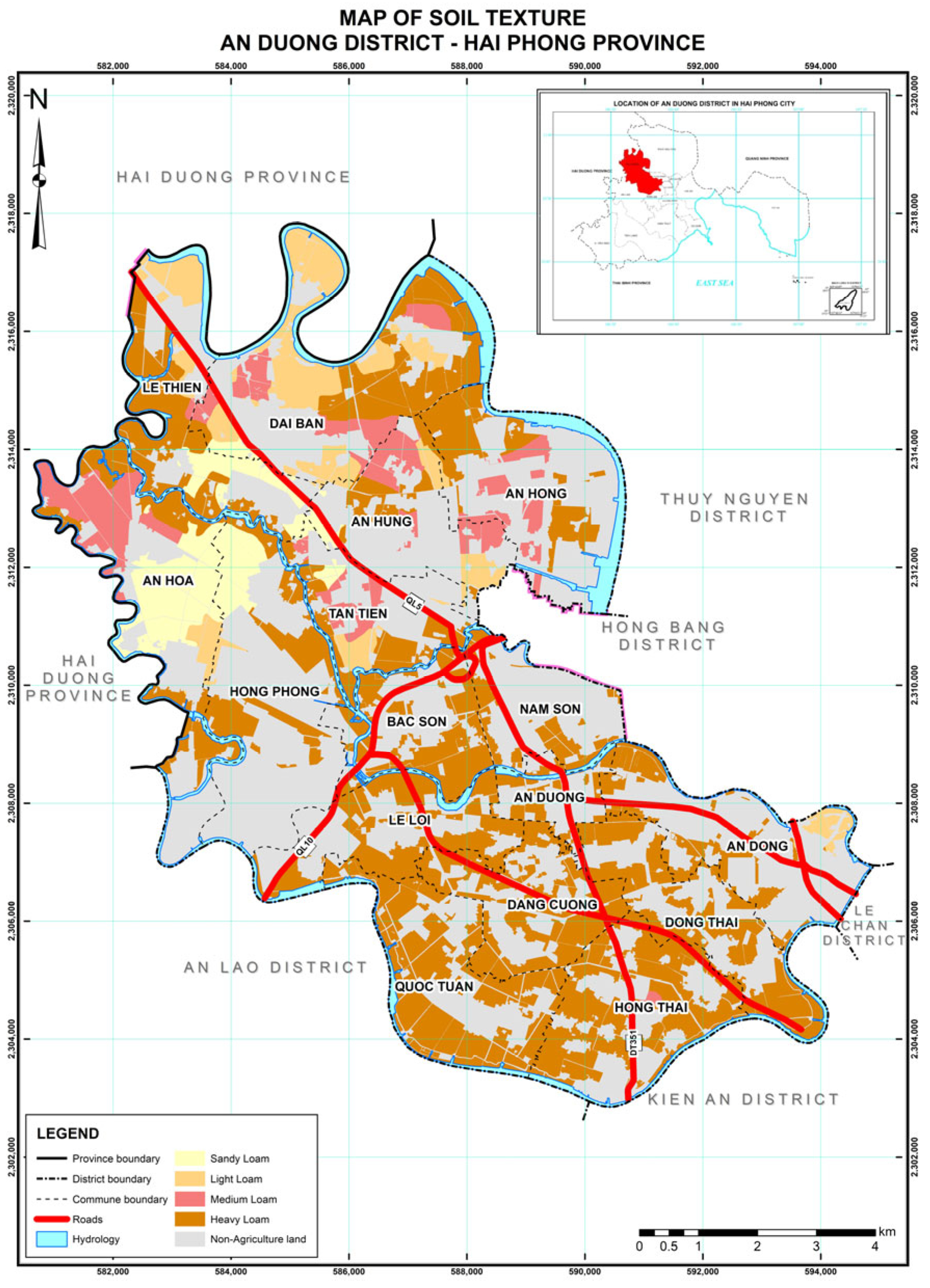
Soil texture map: Soil mechanical composition data was obtained from the analysis of 96 soil samples in An Duong District. The soil texture map of An Duong District was developed based on four texture classes: sandy loam, light loam, medium loam, and heavy loam. The results show that agricultural land in the district is predominantly heavy loam, accounting for 68.78% (3272.18 ha). Light loam and medium loam soils account for 11.29% (536.97 ha) and 10.71% (509.55 ha), respectively. Sandy loam soils occupy the smallest proportion, accounting for only 9.22% (438.71 ha) (Figure 8).
Figure 7. Map of Soil depth of An Duong District, Hai Phong province.
Land 15 00445 g007
Figure 8. Map of Soil texture of An Duong District, Hai Phong province.
Land 15 00445 g008
-
Soil fertility map: Soil fertility, also referred to as soil productivity, represents the integrated capacity of soil to provide favorable conditions for plant growth and development, including adequate nutrient availability in plant-available forms, suitable moisture and temperature conditions, appropriate aeration for plant respiration and microbial activity, absence of toxic substances and weeds, and a loose soil structure. To construct a soil fertility map for An Duong District, we used the Multi-Criteria Evaluation (MCE) method, which includes the following specific steps:
Step 1: Construct a pairwise comparison matrix and determine the weights:
The soil fertility assessment indicators, according to the guidelines of the Vietnamese Ministry of Agriculture, will be divided into 4 groups including: (1) irrigation regime, (2) soil chemical properties, (3) soil type, and (4) soil physical properties. To construct a soil fertility map in An Duong District, we built a pairwise comparison matrix between the groups of indicators. Checking the consistency ratio (CR) of 0.05 < 0.1, we found the matrix to be satisfactory.
In which:
The overall matrix for the 4 groups of criteria is as in the Table 2.
Table 2. Pairwise comparison matrix of soil fertility indicators in An Duong District.
Comparison matrix for soil chemical properties indicators (CEC, pH, OM, and Nutrition: Nts, Kts and Pts) (Table 3).
Table 3. Pairwise comparison matrix of soil chemical properties indicators.
Step 2: Calculate the fertility value S, including:
Determining the score of indicator Xi: In An Duong District, there are 8 indicators with values at three levels according to the classification scale. The results of determining Xi show that the 50%, 30%, and 20% value sets satisfy the 7 criteria, while the irrigation regime criterion is suitable for the 40%, 35%, and 25% value sets. The principle of determining Xi demonstrates a clear correlation between the level values in the indicators.
Calculating the Si fertility value: The results of determining Si in An Duong District are shown in detail in Table 4.
Table 4. Si values of composite soil fertility indicators in An Duong District.
Step 3: Classification of total fertility value S
The total fertility value appears in the range of 0.26 to 0.6 and the average is 0.37. Using ArcGIS software version 10.3, an automatic hierarchical classification based on statistical algorithms is performed to determine the S-value of the directional nodes. Accordingly, there are two points at values of 0.35 and 0.5 that change the graph of the S value.
Using the soil fertility grading scale according to Circular No. 14/2012/TT-BTNMT of Vietnam, the results of classifying the total soil fertility value S in An Duong District are as follows (Table 5).
Table 5. Classification of total soil fertility value S of agricultural land in An Duong District.
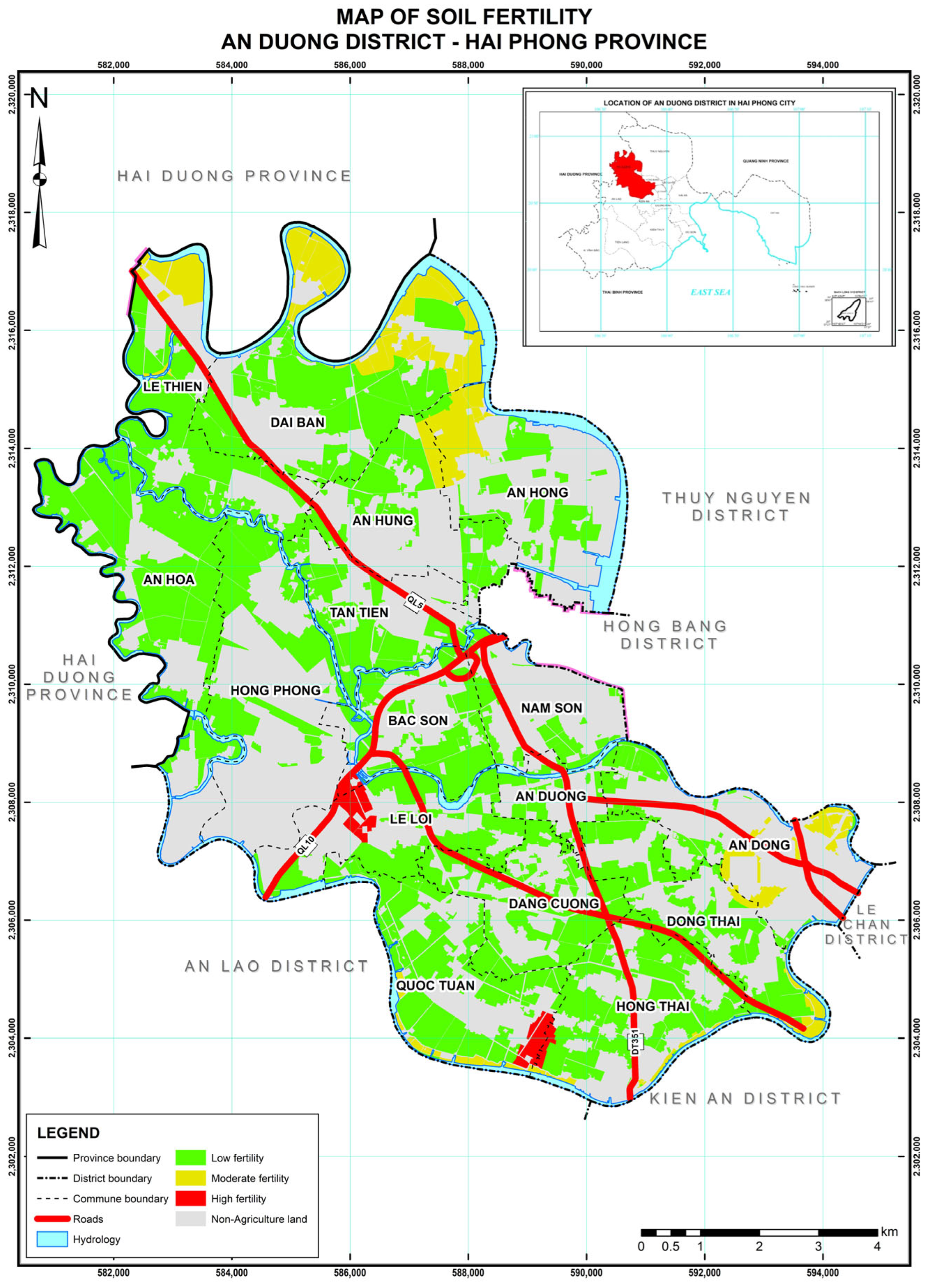
The mapping results indicate that the district has 72.38 ha of high fertility soils (1.52%), 555.39 ha of medium fertility soils (11.67%), and 4120.06 ha of low fertility soils, accounting for 86.73% of the total agricultural land area (Figure 9).
Figure 9. Map of Soil fertility of An Duong District, Hai Phong province.
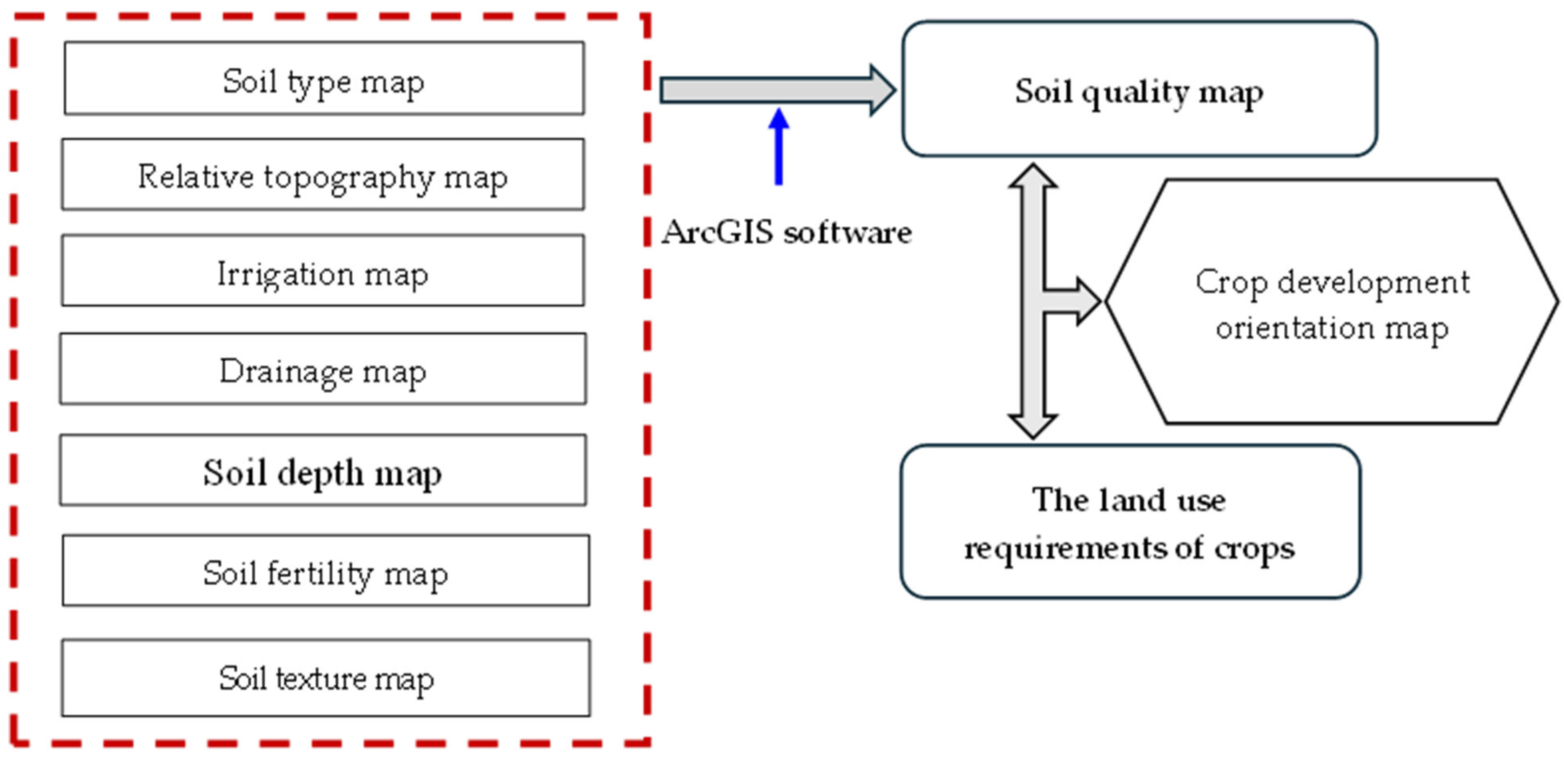
The soil quality map of An Duong District was constructed by overlaying the seven types of single-data maps above using GIS software. Each type of single-factor map is constructed based on the hierarchical classification of corresponding single-factor indicators. The hierarchical classification of indicators for constructing single-factor maps is described in Table 6.
Table 6. Classification criteria for indicators used in the development of single-factor maps.
ArcGIS software was used to develop seven single-factor maps. These maps were then overlaid to generate the soil quality map for the study area (Figure 10).
Figure 10. Schematic workflow for developing the soil quality map and the crop development orientation map in the study area.

3.5. Method for Developing the Crop Development Orientation Map

After developing the soil quality map, land suitability assessment was conducted for six crop types in the study area, including rice, maize, vegetables, potato, flowers, and fruit trees. The land suitability evaluation was based on the soil quality map and the land use requirements of these six crops. The ArcGIS software was used to integrate and overlay the datasets, thereby producing land suitability maps for each crop type in the study area.
The land suitability for each crop type was classified into four levels: S1—Highly suitable, S2—Suitable, S3—Marginally suitable, and N—Not suitable (MONRE, 2015) [26]. The land requirements of each crop type are described in Table 7.
Table 7. Soil quality requirements of crop types.

3.6. Data Processing

Secondary data, survey data, and analytical results were compiled and statistically processed using Microsoft Excel. Meanwhile, spatial data used for developing single-factor maps, the soil quality map, and the crop development orientation map were processed using ArcGIS software.

4. Results

4.1. Current Status of Agricultural Soil Quality Analysis in An Duong District

The results of the agricultural soil quality analysis in An Duong District are summarized and presented in Table 8.
Table 8. Results of agricultural soil quality analysis in An Duong District.
The results presented in Table 8 indicate that agricultural soils in An Duong District exhibit pH values ranging from 3.82 to 6.86, with an average of 5.34, reflecting acidic soil conditions. The average organic matter content is 3.75%, varying from 1.13% to 7.98%. The contents of total nitrogen (Nts), total phosphorus (Pts), and total potassium (Kts) are 0.23%, 0.06%, and 1.31%, respectively. The cation exchange capacity (CEC) ranges from 4.03 to 26.86 ldl/100 g soil, with an average value of 16.81 ldl/100 g soil. According to the FAO classification, agricultural soils in An Duong are characterized as slightly acidic, with medium organic matter content, are relatively rich in nitrogen but poor in phosphorus and potassium, and exhibit relatively low cation exchange capacity.
Regarding particle size distribution, the average sand content is 29.05% (ranging from 9.71% to 60.68%), silt content is 36.19% (20.14–49.86%), and clay content is 34.76% (18.01–46.75%). Based on this composition, agricultural soils in the district are predominantly loam and medium clay soils, which are typical characteristics of soils in the Red River Delta region.
Table 8 also presents the average concentrations of several heavy metals in the soils of An Duong District. Specifically, copper (Cu) concentrations range from 0.50 to 168.47 mg/kg; lead (Pb) has an average concentration of 31.68 mg/kg (ranging from 6.14 to 175.10 mg/kg); zinc (Zn) averages 71.80 mg/kg (ranging from 9.89 to 154.90 mg/kg); and cadmium (Cd) has an average concentration of 0.41 mg/kg (ranging from not detected to 0.70 mg/kg). Overall, the concentrations of heavy metals in the agricultural soils of An Duong District remain relatively low and within safe thresholds according to QCVN 03:2018/BTNMT—the National Technical Regulation on Agricultural Soil Quality. Under this regulation, the permissible limits for Cu, Pb, Zn, and Cd are 100, 70, 200, and 1.5 mg/kg, respectively.
In summary, the results of the agricultural soil quality analysis indicate that soils in An Duong District are generally of good quality and are not contaminated by heavy metals. This provides a fundamental basis for maintaining stable and sustainable agricultural development in the district in the coming period.

4.2. Results of Soil Quality Mapping in An Duong District

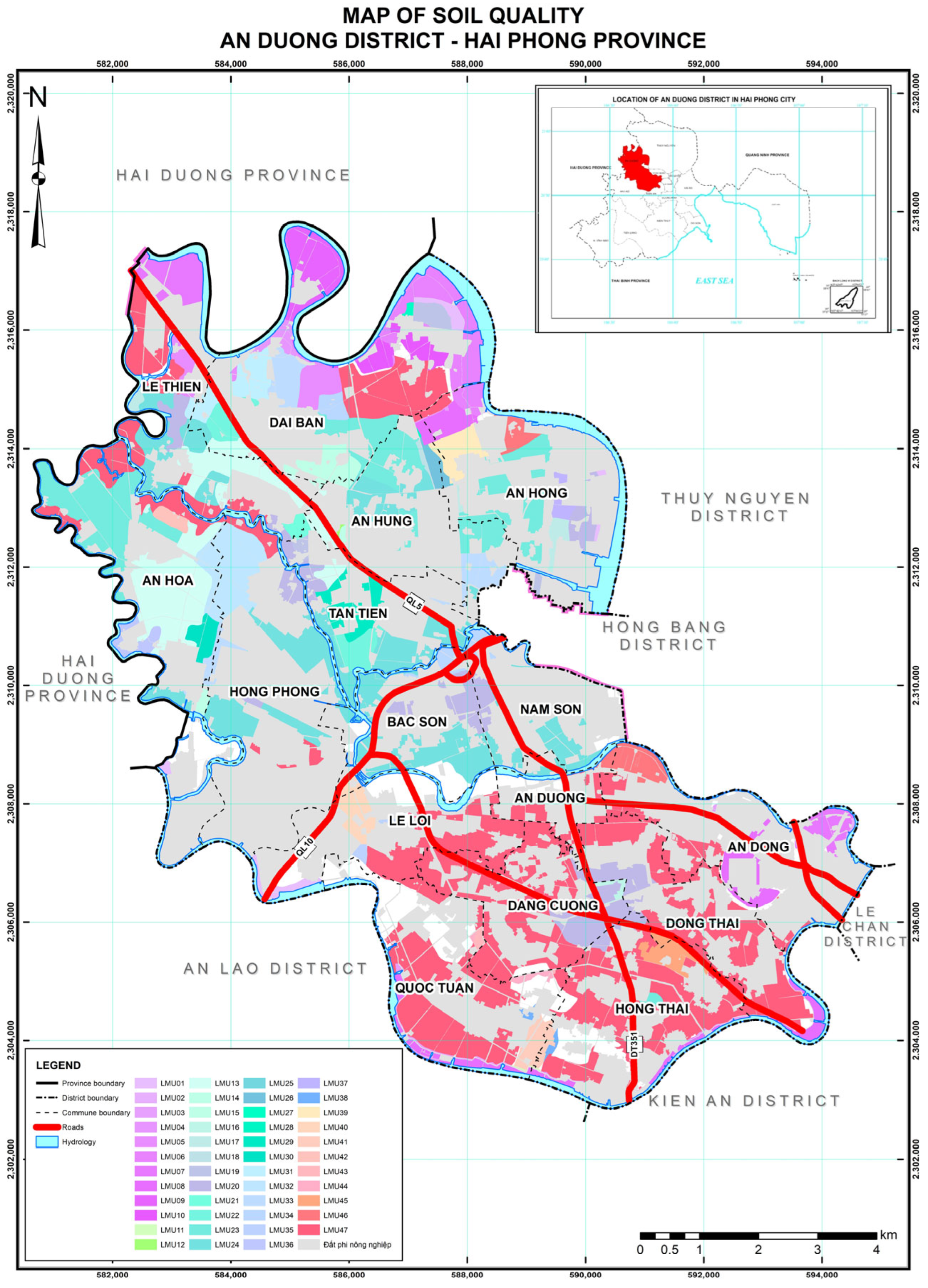
The soil quality map was constructed by overlaying seven thematic maps using ArcGIS software. The resulting land quality map of An Duong District consists of 47 land mapping units (LMUs), each representing a unique combination of soil properties. Each LMU is defined by a specific set of seven land attributes and differs from other units by at least one characteristic (Figure 11). Of the 47 allocated land units, eight units have an area of >100 hectares. These are units that require special attention as they provide sufficient area to support large-scale commercial agricultural development. In addition, there are 10 land plots with an area of less than 10 hectares that are difficult to use for commercial agricultural development; therefore, priority can be given to converting them to other uses to meet the land use needs for the construction of technical infrastructure. The remaining 29 land plots, ranging in size from approximately 10 to 100 hectares, can be developed for medium-scale agricultural models, producing goods for the local region or province, or can be considered for conversion to other land use purposes consistent with the district’s development orientation.
Figure 11. Map of Soil quality of An Duong District, Hai Phong province.

4.3. Results of Developing the Crop Development Orientation Map for An Duong District

Based on the land quality map and the land use requirements of different crops, specific areas suitable for crop cultivation in An Duong District were identified and classified into four suitability levels: highly suitable (S1), suitable (S2), marginally suitable (S3), and not suitable (N4).
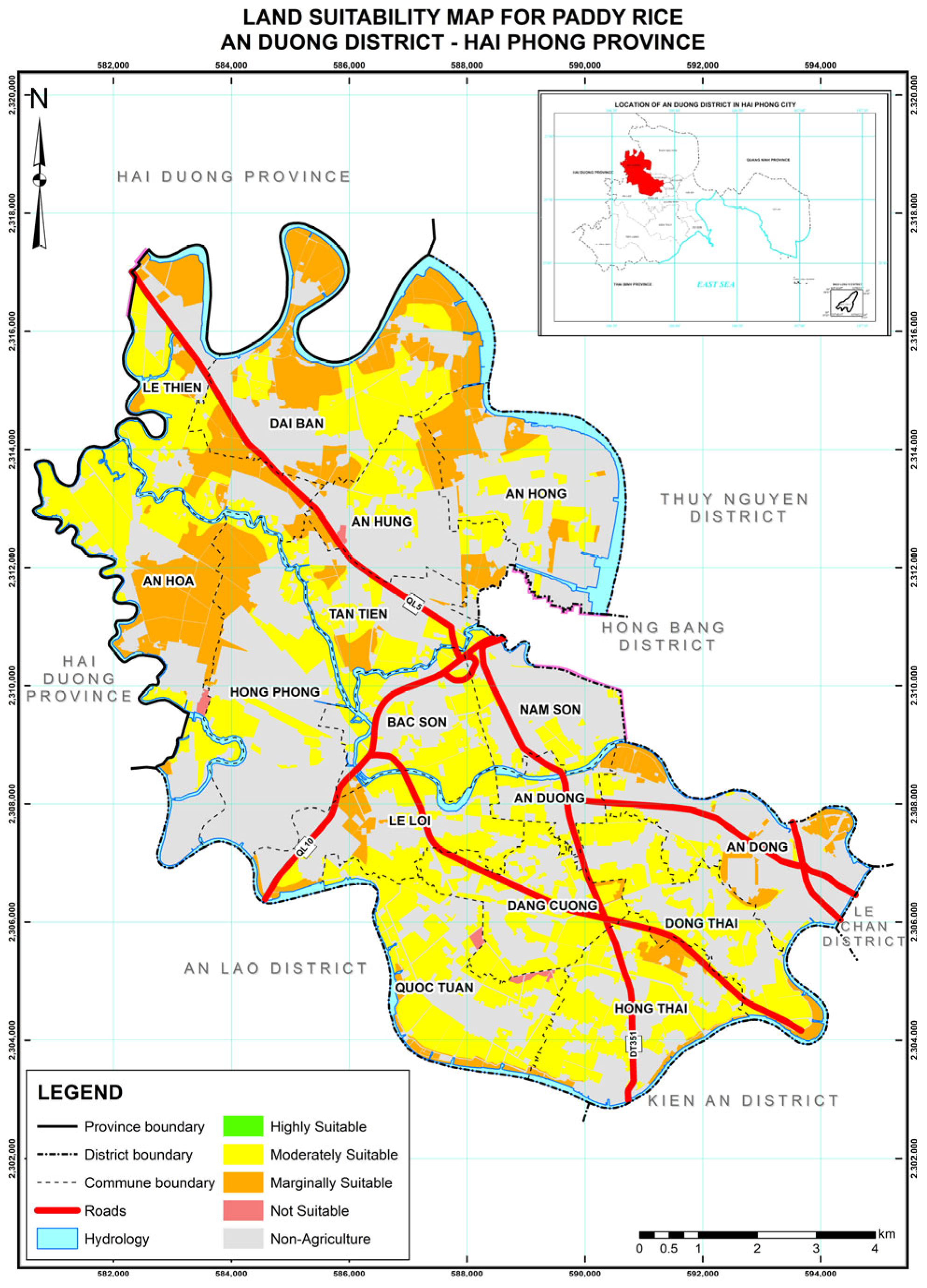
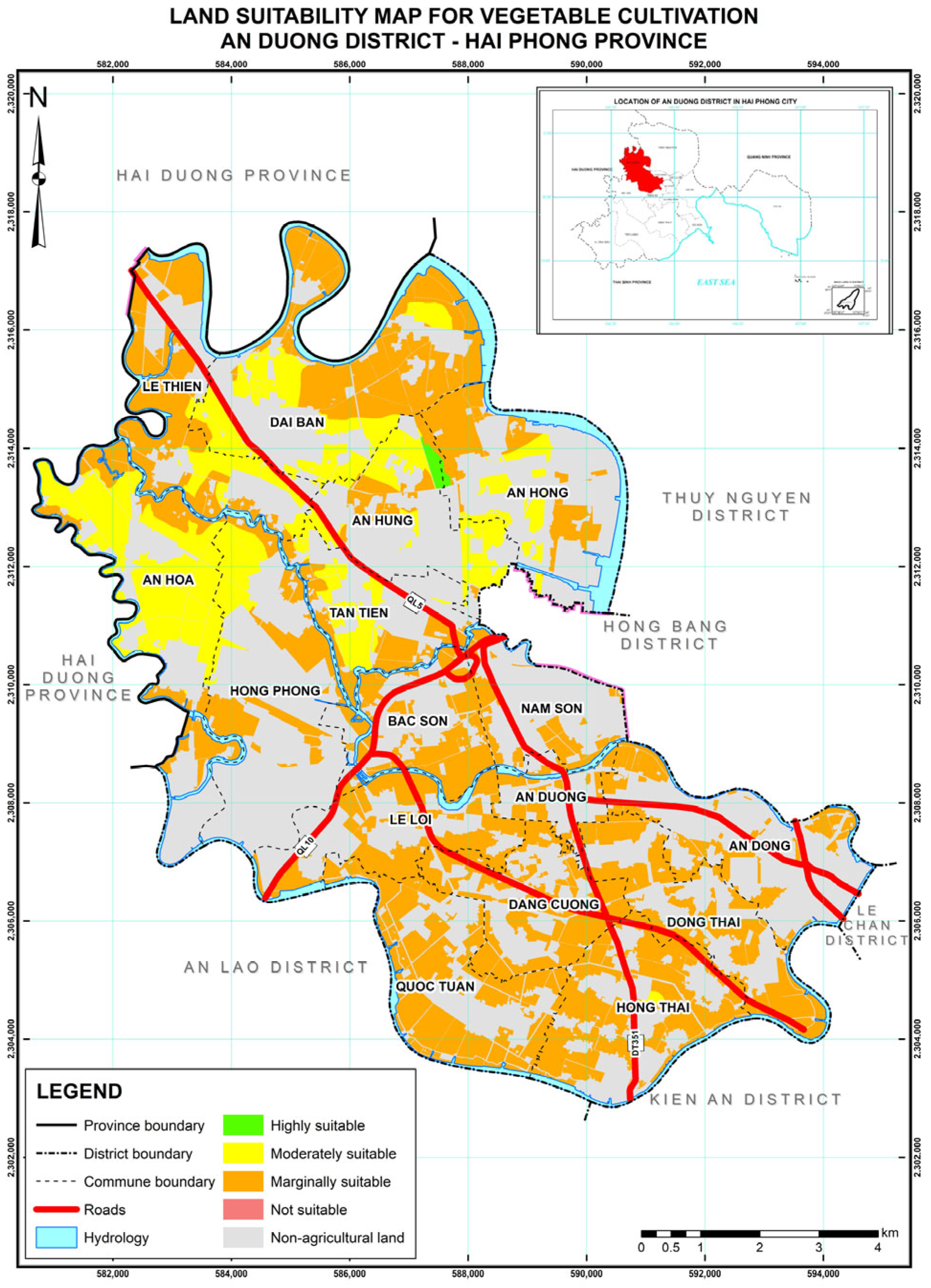
The results indicate that more than 99% of the agricultural land area in the district is suitable for rice cultivation, of which 68.42% falls into the suitable category (S2) and 31.11% into the marginally suitable category (S3). Only 22.18 ha, accounting for 0.47% of the total agricultural land area, is not suitable for rice cultivation. For vegetable crops, 100% of the district’s agricultural land is suitable for development. Specifically, 17.94 ha (0.38%) is classified as highly suitable (S1), 1166.58 ha (24.54%) as suitable (S2), and 3569.31 ha (75.08%) as marginally suitable (S3).
Regarding other crops such as maize, fruit trees, flowers, and potatoes, the proportion of land classified as not suitable for cultivation is identical, accounting for 12.34% (586.7 ha), while the remaining area is categorized as suitable and marginally suitable. These evaluation results suggest that, in addition to rice cultivation, An Duong District has considerable potential for expanding the cultivation of vegetable crops, maize, and flowers, as the proportion of land suitable for these crops is relatively large, reaching 24.92% (including 17.94 ha highly suitable and 1166.58 ha suitable), 24.53% (1166.14 ha), and 24.53% (1166.14 ha), respectively (Table 9).
Table 9. Results of land suitability assessment for selected crops in An Duong District.

5. Discussion

5.1. Trends in Agricultural Development Associated with Ecotourism in An Duong District, Hai Phong

Under the impacts of industrialization and urbanization, agricultural land in An Duong District has been experiencing a rapid decline, with an average reduction of 36.8 ha per year during the period 2015–2020. This downward trend is expected to continue, with agricultural land projected to decrease at an average rate of 330 ha per year during the period 2021–2030. In order to provide land for the development of industrial, urban, and social infrastructure, the conversion of agricultural land to non-agricultural land is an inevitable trend in Vietnam as well as in many other countries worldwide (Binh et al., 2024) [24].
However, ensuring food security remains a critical issue for any country or locality seeking to maintain socio-political stability. For this reason, agricultural production continues to be regarded as a priority sector in most countries, including highly industrialized nations (Vien, 2011; Phuong et al., 2025) [12,14]. The contraction of agricultural land, combined with increasing food demand driven by population growth, requires An Duong District to adopt appropriate agricultural development policies in order to optimize the use of its increasingly limited land resources and ensure sufficient food supply.
The development of a land quality map comprising 47 land mapping units (LMUs), which integrates comprehensive information on soil characteristics and properties and provides a scientific basis for decision-making related to land use and land management in An Duong District. Accordingly, land units with favorable soil quality, sufficient spatial extent, and suitable characteristics for the cultivation of key crops can be prioritized and conserved as high-quality agricultural production zones. These zones can be integrated with ecotourism and community-based tourism activities. At the same time, such areas contribute to the formation of green buffer zones and ecological spaces, helping to mitigate negative environmental impacts associated with industrialization and urbanization in the district.

5.2. Planning and Development of Key Agricultural Crops

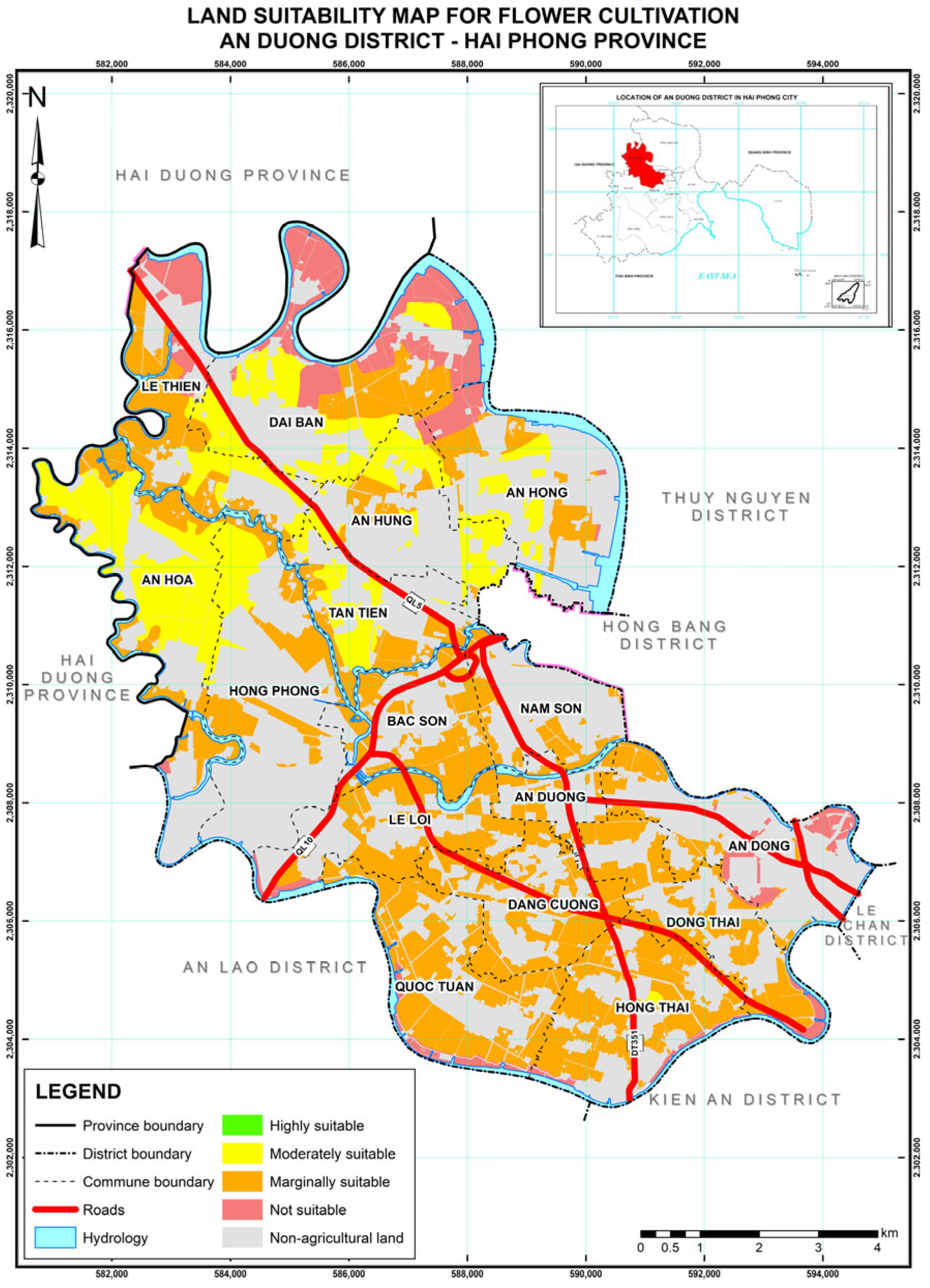
In addition to the sharp reduction in agricultural land projected for the coming period, An Duong District is also facing the challenge of low agricultural production value, which fails to provide sustainable livelihoods for farmers. This situation has led to a relatively widespread phenomenon of abandoned or underutilized agricultural land. According to the An Duong District People’s Committee (2025), the total area of abandoned agricultural land reached 646.43 ha, representing an increase of nearly 100 ha compared to 2020. The primary cause of this trend is the occupational transition of local residents—particularly young laborers—from agriculture to industrial and service sectors, as well as migration to major urban centers in search of employment, resulting in a process of agricultural abandonment and rural outmigration (MONRE, 2020; Binh et al., 2024) [10,24]. Given this context, it is necessary to implement solutions aimed at increasing the economic value of agricultural production in order to create sustainable livelihoods for farmers and attract younger labor forces back to agricultural activities. Based on the results of land suitability assessment for major crops, An Duong District possesses favorable natural soil conditions for the development of several crops, including rice, maize, vegetables, flowers, and fruit trees. However, to better align agricultural development with ecotourism orientation and enhance local economic value, An Duong District has identified three key crops for future agricultural development: rice, vegetables, and flowers (Figure 12, Figure 13 and Figure 14). Among these, rice plays a fundamental role in ensuring local food security. Meanwhile, vegetables and flowers are planned as strategic products supplying nearby major markets such as Hanoi, Hai Phong, and Quang Ninh, and potentially targeting export markets including China, India, and Southeast Asian countries, facilitated by the district’s advantageous geographical location. Furthermore, vegetable- and flower-growing areas are expected to serve as focal points for the development of ecotourism, contributing to landscape enhancement, ecological value, and increased added value for local farmers.
Figure 12. Land suitability map for Paddy rice of An Duong District.
Figure 13. Land suitability map for Flower of An Duong District.
Figure 14. Land suitability map for vegetable cultivation of An Duong District.

5.3. Analysis of the Advantages and Disadvantages of GIS Applications in Soil Quality Management

Analysis shows that GIS applications allow for the rapid storage, management, and layering of multiple map layers (slope, soil type, fertility, irrigation regime, etc.). This allows for more accurate spatial analyses compared to assessments based on individual maps or statistical data using traditional land evaluation methods. In addition, the use of GIS in combination with MEC helps assign land evaluation weights to each evaluation criterion based on pairwise comparisons and expert opinions. The result will be a reduction in subjectivity in the soil quality assessment process (Abdellatif et al., 2021) [35]. Furthermore, numerous studies have shown that applying GIS combined with MEC analysis contributes to solving complex land management problems where many criteria and factors need to be considered, especially when these criteria contradict and conflict with each other (El Baroudy, 2020) [36]. This provides managers with a basis for making optimal decisions based on solid scientific evidence. On the other hand, the GIS-MEC application allows for quick and intuitive access and exploitation of information, as data can be exported in the form of tables or thematic maps with full boundaries and evaluation scope (Abdulmanov, 2021) [37]. Another advantage of this method is its flexibility in evaluation, as the initial evaluation criteria can be easily changed. Therefore, assessments can be flexibly adjusted according to the specific conditions of each locality or according to different development scenarios and economic orientations. For Vietnam, a country where most data is still stored in text form (reports) or as discrete digital data, the application of GIS-MEC allows for improved exploitation and effective utilization of data, research figures, and statistics. This aligns with current trends and the Vietnamese government’s digital transformation strategy in recent times (Prime Minister of Vietnam, 2020) [20].
Despite the advantages mentioned above, the GIS-MEC method for assessing and managing soil quality also has several limitations. Firstly, the weighting assigned when comparing pairs depends on the subjective opinion of the expert. As a result, land evaluations will be inconsistent or less effective when the quality of the evaluators is not guaranteed or is uneven (Lanki and Onwu, 2024) [38]. Furthermore, GIS-MEC often provides assessment results at a specific point in time based on current data and does not adequately simulate future changes (Phuong et al., 2024) [9]. This issue will become even more concerning in the context of complex climate change, which is altering most of the inputs for agricultural production. Furthermore, to ensure accuracy, this method requires precise input data and complexity in assessing sensitivity and verifying output results. Failure to ensure these factors will lead to significant errors in the evaluation process (Ha et al., 2024) [39]. Finally, while GIS-MEC can analyze diverse and complex data, it is very limited in analyzing non-linear factors in land management such as economic development orientation, market trends, production practices, and other social factors (Kheybari et al., 2020) [40].

6. Conclusions

The application of GIS technology contributed to the development of a comprehensive system of land characteristic maps, particularly the soil quality map comprising a total of 47 land mapping units (LMUs) covering the entire agricultural land area of An Duong District. Each LMU represents a combination of seven fundamental land characteristics, serving as a scientific basis for soil quality assessment and informed land use decision-making.
In the context of rapid industrialization and urbanization, which has led to a continuous reduction in agricultural land area, the efficient utilization of the remaining agricultural land is of critical importance to the socio-economic development of An Duong District, especially with regard to food security. Using GIS-based techniques, this study assessed land suitability for six major crop types in the district. Among these, three crops were selected as the key crops for agricultural development toward 2030: rice (to ensure stable food supply), vegetables, and flowers (as major commodities supplying both domestic and international markets).
The application of GIS technology in agricultural soil quality management and in guiding agricultural development planning in An Duong District is consistent with current trends in digital transformation and the adoption of advanced technologies in agricultural development in Vietnam in particular and worldwide in general. To promote the expansion of GIS applications in land management, it is necessary to build a digital data platform that provides input for the assessment process and facilitates the exploitation of output data. In addition, research addressing the limitations in GIS technology applications, as discussed in this study, should also be prioritized.

Author Contributions

N.T.H.H. formed the research idea, supervised the research, collected and analyzed the data, and drafted the manuscript. D.T.T., N.D.T. and N.H.N. commented on and edited the manuscript. C.T.S. supervised the research, commented, and edited the manuscript. All authors have read and agreed to the published version of the manuscript.

Funding

This research received no external funding.

Data Availability Statement

The raw data supporting the conclusions of this article will be made available by the authors on request.

Conflicts of Interest

The authors declare no conflicts of interest.

References

  1. FAO; UNDP. Integrating Agriculture in National Adaptation Plans (NAP-Ag) Programme: Viet Nam Case Study; FAO: Rome, Italy; UNDP: New York, NY, USA, 2020; p. 6. Available online: https://www.adaptation-undp.org/resources/experiences-integrating-agriculture-sectoral-and-national-adaptation-planning-processes (accessed on 20 January 2026).
  2. FAO. Trade Reform and Food Security. 2003. Available online: https://www.fao.org/4/y4671e/y4671e00.htm (accessed on 20 January 2026).
  3. Hasegawa, T.; Sakurai, G.; Fujimori, S.; Takahashi, K.; Hijioka, Y.; Masui, T. Extreme climate events increase the risk of global food insecurity and adaptation needs. Nat. Food 2021, 2, 587–595. [Google Scholar] [CrossRef] [PubMed]
  4. Kummu, M.; Heino, M.; Taka, M.; Varis, O.; Viviroli, D. Climate change risks pushing one-third of global food production outside the safe climatic space. One Earth 2021, 4, 720–729. [Google Scholar] [CrossRef] [PubMed]
  5. Van Dijk, M.; Morley, T.; Rau, M.L.; Saghai, Y. A meta-analysis of projected global food demand and population at risk of hunger for the period 2010–2050. Nat. Food 2021, 4, 416–426. [Google Scholar] [CrossRef] [PubMed]
  6. World Bank. Sea Level Rise from Global Warming: Potential Impact on Developing Countries; DECRG Research Paper; World Bank: Washington, DC, USA, 2007. [Google Scholar]
  7. Germanwatch. Global Climate Risk Index 2020; Germanwatch e.V.: Bonn, Germany, 2020; Available online: https://www.germanwatch.org/en/cri (accessed on 20 January 2026).
  8. Phuong, T.T.; Bien, T.V.; Son, T.N.; Vien, D.T.; Tien, D.N.H. Climate change and livelihood vulnerability of the rice farmers in the North Central Region of Vietnam: A case study in Nghe An province, Vietnam. Environ. Chall. 2022, 7, 100460. [Google Scholar] [CrossRef]
  9. Phuong, T.T.; Vien, T.D.; Son, C.T.; Thuy, D.T.; Grieving, S. Impact of Climate Change on Agricultural Production and Food Security: A Case Study in the Mekong River Delta of Vietnam. Sustainability 2024, 16, 7776. [Google Scholar] [CrossRef]
  10. MONRE—Ministry of Natural Resources and Environment in Vietnam. National State of the Environment Report 2016–2020; MONRE: Hanoi, Vietnam, 2020; 190p.
  11. MARD—Ministry of Agriculture and Rural Development. Report on the Summary of the Agricultural and Rural Development Sector in 2022 and the Implementation of the Plan for 2023; MARD: Hanoi, Vietnam, 2022.
  12. Vien, T.D. Climate change and its impact on agriculture in Vietnam. J. Int. Soc. Southeast Asian Agric. Sci. 2011, 17, 17–21. [Google Scholar]
  13. ADB—Asian Development Bank. Viet Nam: Environment and Climate Change Assessment; Asian Development Bank: Mandaluyong City, Philippines, 2013. [Google Scholar]
  14. Phuong, T.T.; Vien, D.T.; Khue, P.V.; Trung, D.N.; Son, C.T.; Loc, N.D.; Cong, H.V. Factors influencing agricultural land transformation for climate change adaptation in Can Loc district, Ha Tinh province, Vietnam. Environ. Sustain. Indic. 2025, 25, 100576. [Google Scholar] [CrossRef]
  15. Vietnam’s Government. Decree No. 112/2024/ND-CP Dated September 11, 2024, of the Government of Vietnam Has Detailed Regulations on Rice-Growing Land; Vietnam’s Government: Hanoi, Vietnam, 2024.
  16. Nguyen, T.; Roehrig, F.; Grosjean, G.; Tran, D.; Vu, T. Climate Smart Agriculture in Vietnam; CSA Country Profiles for Asia Series; International Center for Tropical Agriculture (CIAT): Hanoi, Vietnam; The Food and Agriculture Organization: Rome, Italy, 2017. [Google Scholar]
  17. Vietnam Irrigated Agriculture Improvement Project. Vietnam—Irrigated Agriculture Improvement; World Bank: Washington, DC, USA, 2022. [Google Scholar]
  18. Phuong, T.T.; Duc, V.T.; Truong, S.C.; Thanh, T.D.; Huu, D.N.; Scholz, W. Analyzing factors influencing land use planning for sustainable land resource management in Vietnam: A case study of dan Phuong district in Hanoi city. Sustainability 2023, 15, 16557. [Google Scholar]
  19. Vietnam National Assembly. Law No. 31/2024/QH15 on Land Law; Vietnam National Assembly: Hanoi, Vietnam, 2024.
  20. Prime Minister of Vietnam. Decision No. 749/QD-TTg on Apprpving the “National Digital Transformation Program to 2025, with Orientation Towards 2030”; Prime Minister of Vietnam: Hanoi, Vietnam, 2020. [Google Scholar]
  21. Thuy, D.T.; Phuong, T.T.; Ba, N.K.V. Applying remote sensing data to assess the level of drought in Loc Ha district, Ha Tinh province. Agric. Rural Dev. 2020, 9, 124–130. [Google Scholar]
  22. Ha, M.K.; Phuong, T.T.; Anh, H.P.; Thuy, D.T.; Son, T.C.; Hoa, N.X. Assessment of the current status of soil quality and types of land degradation in Quang Ninh province, Vietnam. IOP Conf. Ser. Earth Environ. Sci. 2024, 1345, 012020. [Google Scholar] [CrossRef]
  23. Loc, N.D.; Chou, T.Y.; Chen, M.H.; Hoang, T.V.; Tran, T.P. A GIS-based multicriteria analysis of land suitability for groundnut crop in Nghe An province, Vietnam. Int. J. Geoinform. 2021, 17, 85–95. [Google Scholar] [CrossRef]
  24. Binh, N.T.; Duyen, D.H.; Thuy, D.T. Application of GIS in land unit mapping and evaluation of land suitability for agriculture in Uong Bi district—Quang Ninh province. IOP Conf. Ser. Earth Environ. Sci. 2024, 1345, 012017. [Google Scholar] [CrossRef]
  25. Hai Phong Department of Agriculture and Environment. Environmental Protection Report 2023; Hai Phong Department of Agriculture and Environment: Hai Phong, Vietnam, 2023. [Google Scholar]
  26. MONRE—Ministry of Natural Resources and Environment. Circular No. 60/2015/TT-BTNMT of the Ministry of Natural Resources and Environment: Regulations on Technical Aspects of Land Survey and Assessment; MONRE: Hanoi, Vietnam, 2015.
  27. TCVN 4198:2014; Soils—Laboratory Methods for Particle—Size Analysis. Vietnam Ministry of Construction: Hanoi, Vietnam, 2014.
  28. TCVN 5979:2007 (ISO 10390:2005); Soil Quality—Determination of pH. Vietnam Ministry of Science and Technology: Hanoi, Vietnam, 2007.
  29. TCVN 6644:2000 (ISO 14235: 1998); Soil Quality—Determination of Organic Carbon by Sulfochromic Oxidation. Vietnam Ministry of Science and Technology: Hanoi, Vietnam, 2000.
  30. TCVN 6645:2000 (ISO 13878: 1998); Soil Quality—Determination of Total Nitrogen Content by Dry Combustion (“Elemental Analysis”). Vietnam Ministry of Science and Technology: Hanoi, Vietnam, 2000.
  31. TCVN 6499:1999 (ISO 11263: 1994); Soil Quality—Determination of Phosphorus—Spectrometric Determination of Phosphorus Soluble in Sodium Hydrogen Carbonate Solution. Vietnam Ministry of Science and Technology: Hanoi, Vietnam, 1999.
  32. ISO 5310:1986; Fertilizers—Determination of Potassium Content—Titrimetric Method. International Organization for Standardization: Geneva, Switzerland, 1986.
  33. TCVN 8568:2010; Soil Quality—Method for Determination of Cation Exchange Capacity (CEC) by Ammonium Acetate Method. Vietnam Ministry of Science and Technology: Hanoi, Vietnam, 2020.
  34. U.S. EPA—United State Enviromental Protection Agency. Method 200.7: Determination of Metals and Trace Elements in Water and Wastes by Inductively Coupled Plasma-Atomic Emission Spectrometry; Revision 4.4; United State Enviromental Protection Agency: Cincinnati, OH, USA, 1994.
  35. Abdellatif, M.A.; El Baroudy, A.A.; Arshad, M.; Mahmoud, E.K.; Saleh, A.M.; Moghanm, F.S.; Shaltout, K.H.; Eid, E.M.; Shokr, M.S. A GIS-Based Approach for the Quantitative Assessment of Soil Quality and Sustainable Agriculture. Sustainability 2021, 13, 13438. [Google Scholar] [CrossRef]
  36. El Baroudy, A.A.; Ali, A.M.; Mohamed, E.S.; Moghanm, F.S.; Shokr, M.S.; Savin, I.; Poddubsky, A.; Ding, Z.; Kheir, A.M.S.; Aldosari, A.A.; et al. Modeling Land Suitability for Rice Crop Using Remote Sensing and Soil Quality Indicators: The Case Study of the Nile Delta. Sustainability 2020, 12, 9653. [Google Scholar] [CrossRef]
  37. Abdulmanov, R.; Miftakhov, I.; Ishbulatov, M.; Galeev, E.; Shafeeva, E. Comparison of the effectiveness of GIS based interpolation methods for estimating the spatial distribution of agrochemical soil properties. Environ. Technol. Innov. 2020, 24, 101970. [Google Scholar] [CrossRef]
  38. Lanki, A.D.; Onwu, C.A. Geographic Information System (GIS) Application in Soil Fertility Management: A Review. J. Glob. Agric. Ecol. 2024, 16, 29–40. [Google Scholar] [CrossRef]
  39. Ha, D.V.; Linh, N.X.; Huyen, N.T.T.; Tu, D.T. Application of GIS technology and multi-criteria analysis methods in evaluating the reasonableness of land planning plan for educational and training establishments for the period 2021–2030 in Ha Tinh City, Ha Tinh Province. Environment 2024, 2, 4–8. [Google Scholar]
  40. Kheybari, S.; Rezaie, F.M.; Farazmand, H. Analytic network process: An overview of applications. Appl. Math. Comput. 2020, 367, 124780. [Google Scholar] [CrossRef]
Disclaimer/Publisher’s Note: The statements, opinions and data contained in all publications are solely those of the individual author(s) and contributor(s) and not of MDPI and/or the editor(s). MDPI and/or the editor(s) disclaim responsibility for any injury to people or property resulting from any ideas, methods, instructions or products referred to in the content.

Article Metrics

Citations

Article Access Statistics

Multiple requests from the same IP address are counted as one view.