Article

An Assessment of Historical Planning Processes and Greenspace Distribution (1975–2024): A Case Study of Portland, Oregon, USA


by
Quadri Olatunbosun Taiwo
1,*,
Vivek Shandas
1 and
Damilola Emmanuel Oluyege
2
1
Department of Geography, Portland State University, Portland, OR 97201-0751, USA
2
Institute of Food Security, Environmental Resources, and Agricultural Research, Federal University of Agriculture, Abeokuta 110111, Ogun State, Nigeria
*
Author to whom correspondence should be addressed.
Land 2026, 15(3), 444; https://doi.org/10.3390/land15030444
Submission received: 25 January 2026 / Revised: 3 March 2026 / Accepted: 4 March 2026 / Published: 11 March 2026
(This article belongs to the Special Issue Young Researchers in Land Planning and Landscape Architecture)

Abstract

The Portland study examined past planning regulations and greenspace distribution over the period of fifty years, with particular attention given to neighborhood differences between invested and non-invested neighborhoods. This exploratory study examined spatial greenspace using Normalized Difference Vegetation Index (NDVI) imagery. We tested the study hypothesis using the GIS Ordinary Least Squares (OLS) regression test to predict how key sociodemographic characteristics affect the provision of greenspace in non-white disinvested neighborhoods. The key findings suggested a consistent pattern of greenspace inequality, heavily shaped by historically disadvantaged ethnic status. Areas with higher non-white populations may have significant less greenspace (p < 0.001). Although median household income had a minimal negative impact, educational attainment showed a slight positive correlation. We employed multidisciplinary theoretical frameworks such as historical institutionalism, urban political ecology, and environmental justice. The study illustrated how historical decisions may have established path dependencies that are currently perpetuating greenspace inequalities. Policy solutions advocate for integrating restorative justice principles and rigid enforcement of 3-30-300 greenspace equity legislation to offset these long-term disparities.

1. Introduction

“…Portland, like many U.S. cities, has a longstanding history of land use practices that created and reinforced racial segregation and inequities. Exclusionary zoning, racially restrictive covenants, and redlining are early examples of this, with their effects still visible today. These discriminatory practices have all played a role in shaping the city’s urban form—and in exacerbating inequities along lines of race and class”
[1]
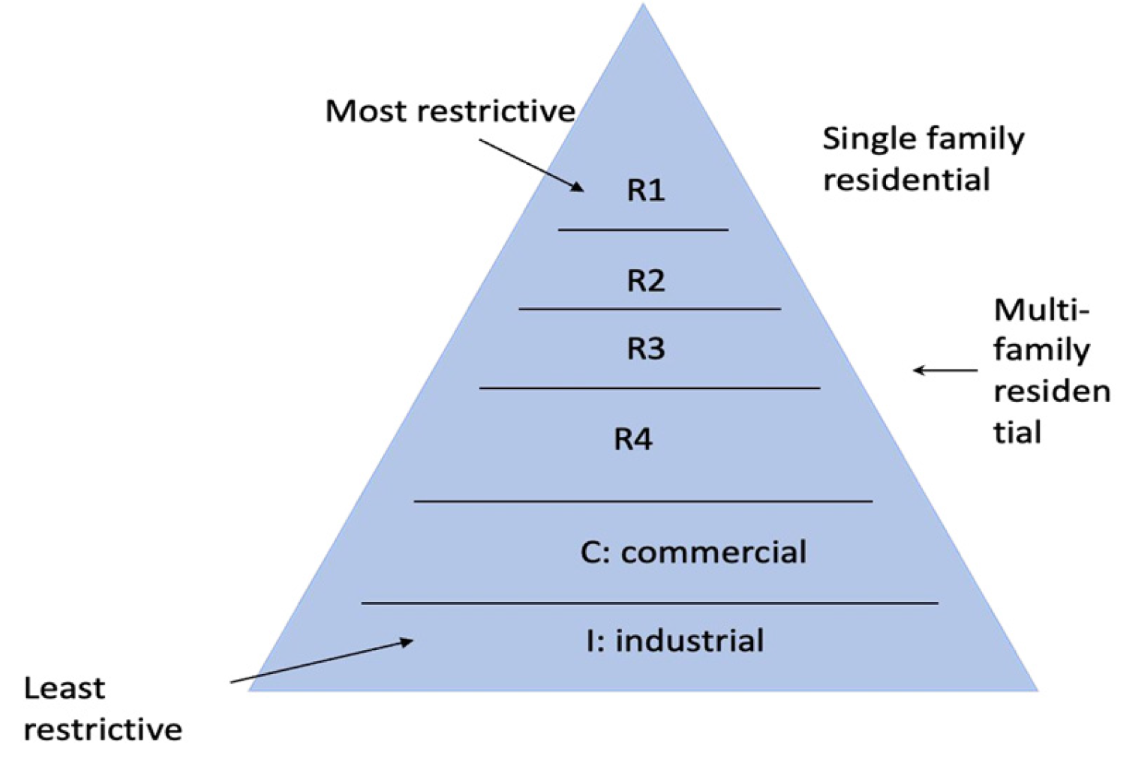
The industrial revolution was an impetus for historical zoning codes, early ordinances, and planning processes—people were increasingly working away from home, and industrial uses for land were frequently toxic and disruptive to residential life [2]. This gradually led to the separation of residential, commercial, industrial, agricultural, and recreational uses, enforced by local ordinances. Specifically, zoning, also known as land use planning, dictates the distribution of resources in cities, towns, and suburbs across Western, higher-income countries [3]. In the United States, numerous studies provide strong justifications for recreational land use, which strongly support and promote public health [4,5,6]. Municipal, private, or civic investments in parks, gardens, playgrounds, greenways, or climate-resilient infrastructure are examples of greenspace conservation interventions [7,8,9]. Many of those projects have both climate mitigation (e.g., through reforestation) and adaptation (e.g., through flood or urban heat island effect protection) function [10]. Much of the interest stems from the realization that greenspace management is not a neutral intervention—its effects are necessarily shaped by a historically uneven “playing field” between neighborhoods and cities that were historically greener (and wealthier and affluent white) and those that were greyer, toxic, polluted, climate insecure, and underinvested (inhabited by low-income residents—indigenous people, afro-descendants, and immigrants) [11,12]. The United States Supreme Court overturned racial zoning ordinances that several cities in the eastern and southern United States adopted in the early 1900s to create separate areas for Black and White households [13]. Portland, like many U.S. cities, has a longstanding history of racist land use practices that created and reinforced racial segregation and inequities. In 1924, Portland electorates approved the first zoning ordinance, which included four distinct zones (see Figure 1): Zone I—Single Family, Zone II—Multi-Family, Zone III—Business—Manufacturing, and Zone IV—Unrestricted.
Zone II designated most residential areas, while Zone I designated more than 15 neighborhoods considered to be of the “highest quality.” Property owners in these areas requested the creation of single-family zones, which today include parts of neighborhoods such as Hillsdale, Homestead, Southwest Hills, Irvington, Laurelhurst, and Eastmoreland [1]. The Homeowners’ Loan Corporation (HOLC) lending patterns following the Great Depression in the 1930s to 1950s reinforced pre-existing segregation in many places. HOLC security maps and redlining are associated with present-day levels of racial segregation, poverty, and income inequality [4,15,16,17]. Neighborhoods were graded on a color-coded scale: green (Grade A) for “best,” blue (Grade B) for “still desirable,” yellow (Grade C) for “definitely declining,” and red (Grade D) for “hazardous [4].” These grades were based primarily on sociodemographic characteristics, with predominantly white, U.S.-born populations receiving higher grades, while areas with racial minorities and poverty-ridden populations were graded lowest [17,18]. Since the 1920s, very little change has occurred in the original 15 single-family zones. These neighborhoods have remained stable, greener, and demographically homogeneous, with low levels of displacement vulnerability. Their boundaries closely align with racially concentrated areas of privilege—areas with high concentrations of white and high-income people, also known as “racially concentrated areas of affluence” [19]. In contrast, areas such as inner North/Northeast Portland (including Albina) have experienced drastic changes, with high household turnover, gentrification, and displacement of many African American residents and businesses [19]. Redlining played a significant role in preserving racial segregation, intergenerational poverty, and the wealth gap between white Portlanders and other racial groups [1]. Recent studies have found that HOLC lending programs in the late 1930s exacerbated segregation in many parts of the U.S. Today’s segregation, income inequality, economic decline, and differences in green space coverage are all linked to redlining and residential security maps [4,15,20]. Historical research has also shown a significant relationship between the lack of green spaces and urban heat islands, as well as unsafe air quality in racially segregated residential areas [21,22,23]. Homeownership provides a medium to build wealth, but the inability of low-income earners, particularly African Americans, to secure housing loans over time has led to gentrification and exacerbated racial wealth gaps [17,24]. Higher incomes, supported by past and current urban development policies, growth boundaries, allow certain households to categorize themselves according to their preferences, thereby controlling local political processes that perpetuate exclusion [25].

Historical Problem Statement

The Fair Housing Act of 1968 is not mentioned specifically in relation to redlining, it does ban discrimination at some stage of lending or home insurance, and subsequent court decisions have construed that it does ban redlining. During the 1970s, the Portland metropolitan area began changing its land use and community planning focus. The Home Mortgage Discrimination Act of 1975, the Community Reinvestment Act of 1977, and the Equal Credit Opportunity Act of 1974 have all added more protection against redlining in Portland [1]. Still, researchers and city planners have started to investigate how institutional racism, poverty, eco-gentrification, and racial displacement affect land use planning, policy decisions, and racial disparities in US cities, Portland included [19,26]. For example, the 2015 study by Goodling et al. investigated Portland’s shifting capital and uneven development [27]. It shows that the city’s eco-investments and sustainability paradigm often help wealthy white residents in the urban core while ignoring economic disadvantaged and racially diverse communities on the eastern edge. However, few academics and planners have contextualized Portland’s disparities within a broader historical urban framework, with little scholarship highlighting the systemic factors driving greenspace investments and disinvestments at the neighborhood level. Exclusionary zoning, racially restrictive covenants, and redlining are early examples of this, with their effects still visible today [28]. These discriminatory practices have all played a role in shaping the city’s urban greenspace distributions—and exacerbating inequities along lines of race and class. This study is an attempt to explore the extent to which historical land-use planning processes contribute to the persistence of existing greenspace distribution patterns in Portland over the period of 50 years. The exploratory research questions of this study are:
i.
How has green space coverage changed over time in neighborhoods with different investment histories?
ii.
How have historical planning practices shaped the spatial distribution of greenspace, non-white population, income, and educational attainment?
iii.
What is the relationship between sociodemographic characteristics and historical greenspace patterns in non-white, disinvested neighborhoods?

2. Materials and Methods

2.1. Study Area

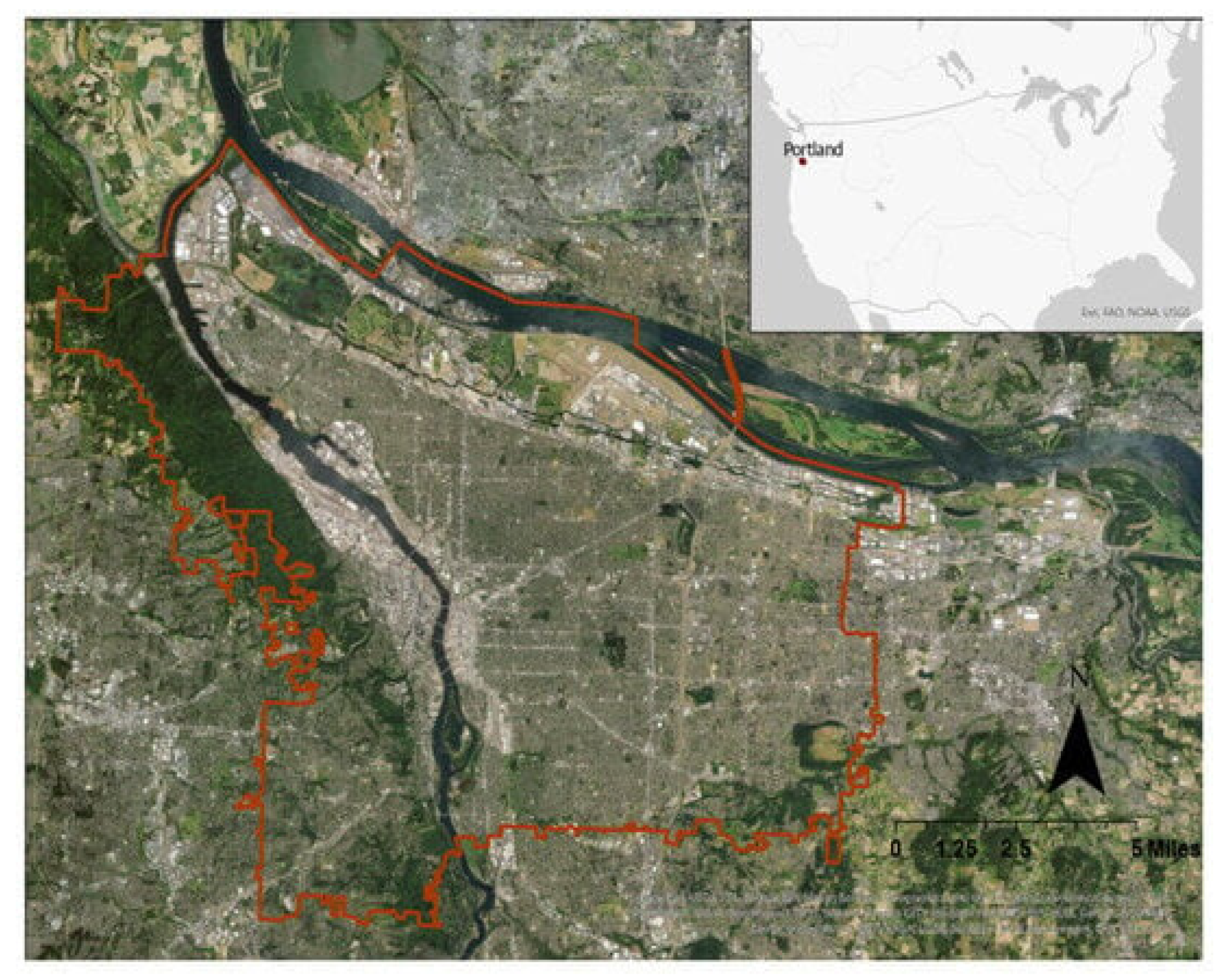
Portland, Oregon, USA, has a land area of 133.4 square miles and is located at latitude 45°31′23.0304″ N and longitude 122°40′35.3388″ W (see Figure 2). The city has an estimated population of 652,503. The racial and ethnic composition includes 449,025 non-Hispanic or Latino, 72,336 Hispanic or Latino, 7335 American Indian and Alaska Native, 52,854 Asian, 38,217 Black or African American, and 32,736 individuals of some other race [29]. It is widely recognized that this mid-sized city is perceived by many as a green utopia [27], contributing to its livability and growing influx since the 2000s. The city prides itself on its increasing green infrastructure networks and sustainability initiatives, which include, but are not limited to, street trees, park trees, arboretums, and several expanses of greenways. Municipal greening efforts are at the core of the city’s contemporary planning and sustainable development strategy [30]. Despite these efforts, disparities in eco-investment between the west and east neighborhoods remain a contentious issue. The west side, inhabited by historically privileged and high-income white residents, benefits from 54% urban canopy coverage. In contrast, the east side, with a significant deficiency in urban tree canopy at about 21% [6], is home to historically disadvantaged neighborhoods primarily composed of low- and middle-income earners [4,31]. A commentary from a study conducted by the University of California, CA, USA, and the Columbia University Mailman School of Public Health, NY, USA, in January 2021 noted, “Though redlining is now outlawed, its effects on urban neighborhoods persist in many ways, including by depriving residents of green space, which is known to promote health and buffer stress.” In a proclamation by Portland’s Bureau of Planning and Sustainability Director [32], to address these nuisances, urban planners will utilize equitable decision-making processes for citywide programs and investments through the following PBPS Strategic Plan principles (https://www.portland.gov/bps/about-bps, accessed on 4 March 2025):
i.
Planners will establish unbiased outcomes to eliminate ethnic and racial disparities.
ii.
Planners will identify who benefits and who may be harmed by their planning decisions.
iii.
Planners will take risks and adopt new problem-solving tools and technological approaches.
iv.
Planners will form genuine partnerships, seen as an avenue to leverage capital resources to invest in underserved neighborhoods.
v.
Planners will harness facts and figures from scientific literature to develop long-lasting solutions.

2.2. Population, Sampling Techniques, and Sample Size

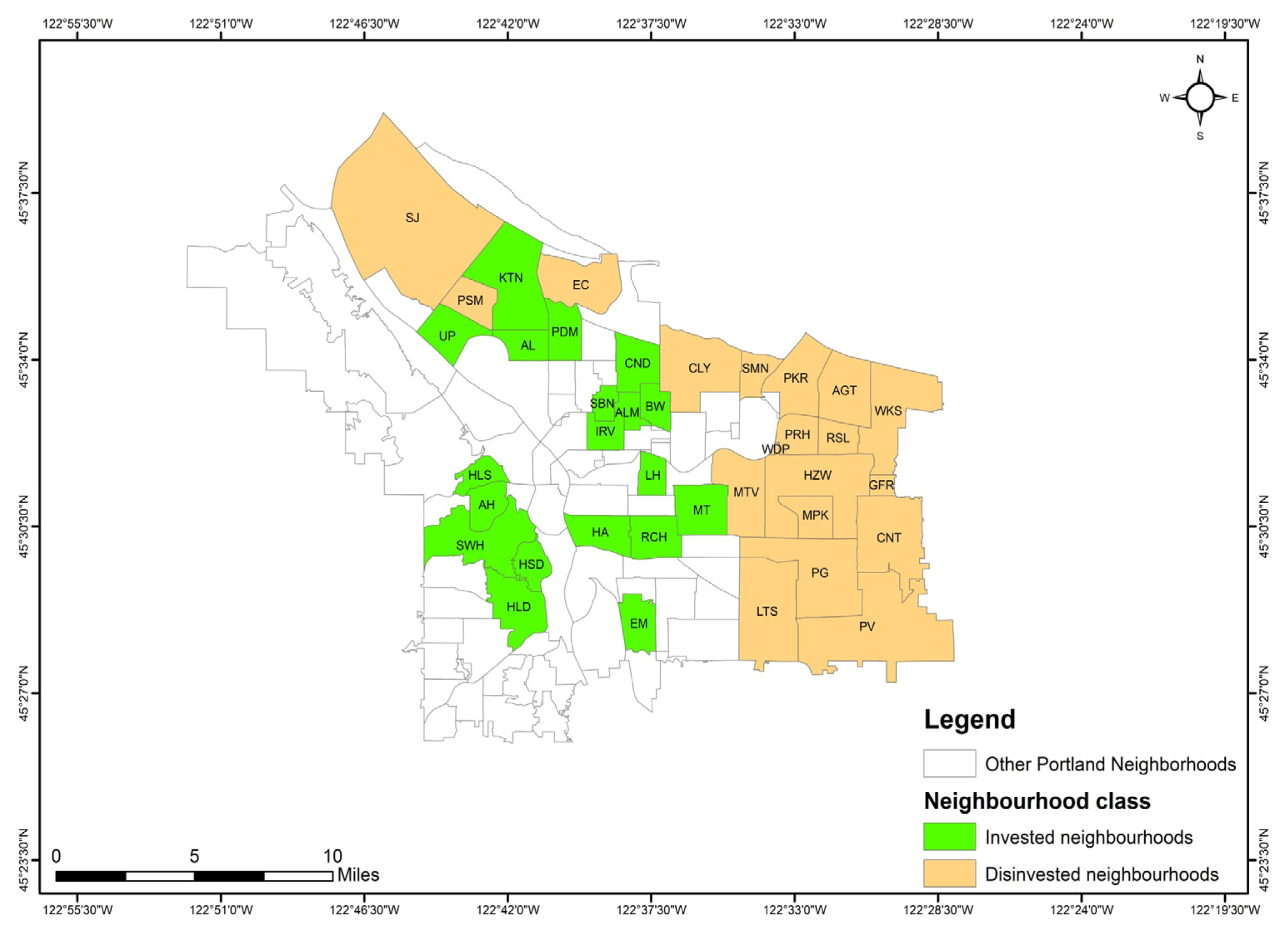
The study population city limit is divided into five: Southwest Portland, Southeast Portland, Northwest Portland, Northeast Portland, and North Portland, comprising 94 officially recognized neighborhood boundaries (City Code, Title 3.96 (https://www.portland.gov/code/3/96, accessed on 15 March 2025)). Due to time constraints and limited resources, it was unrealistic and impossible to investigate the entire population [33]. Therefore, the appropriateness of the sampling technique guided the rationale for selecting invested and disinvested neighborhoods, which was one of the main objectives for this study. When a sample for a study is carefully chosen, it enhances the generalization and empirical validity of the research findings [34]. For this study, we strategically selected 38 widely acclaimed invested and disinvested neighborhoods using a purposive sampling technique (see Table 1). Hughes et al. report on the historical context of Portland’s segregation through planning, arguing that since the 1920s, 19 neighborhoods have maintained demographic homogeneity and high levels of sustainable investments [1]. The boundaries are also closely knitted with racially concentrated areas of privilege—areas with high concentrations of white and high-income people living in single-family homes [35], safeguarded by HOLC security maps [36]. Conversely, more than 19 neighborhoods, such as North Portland, I-205 Northeast Portland, and Albina were annexed multifamily homes and business hubs to underserve and low-income BIPOC residents. These neighborhoods have undergone numerous disinvestments [37], resulting in a patchwork pattern that has negatively impacted their livability. This study adopted a purposive sampling method due to its relevance in describing and exploring the research questions in greater depth [33]. Consistent with this approach, the selection of 38 neighborhoods was guided by the goal of including neighborhoods with specific characteristics critical to the study (e.g., varying levels of income and land use zone). This focused sample size is feasible and fit for our purpose, capturing sufficient variation to address the exploratory research questions. While the resulting data richness supports the credibility and trustworthiness of findings within this specific context [38,39], our results are not statistically generalizable to the broader population.
Table 1. The Criteria for Sample Selection or Neighborhood Inclusion.
Invested NeighborhoodsDisinvested Neighborhoods
n = 38Inclusion Criteria: Single-Family Zone and High-Income Areas (Figure 3)Inclusion Criteria: Multi-Family Zone and Low-Income Areas (Figure 3)
1Alameda (ALM)Argay Terrace (AGT)
2Arbor Lodge (AL)Centennial (CNT)
3Arlington-Heights (AH)Cully (CLY)
4Beaumont-Wilshire (BW)East Columbia (EC)
5Concordia (CND)Glenfair (GFR)
6Eastmoreland (EM)Hazelwood (HZW)
7Hillsdale (HSD)Lents (LTS)
8Hillside (HLD)Mill Park (MPK)
9HomesteadMontavilla (MTV)
10Hosford-Abernathy (HA)Parkrose (PKR)
11Irvington (IRV)Parkrose Heights (PRH)
12Kenton (KTN)Pleasant Valley (PV)
13Laurelhurst (LH)Portsmouth (PSM)
14Mt. Tabor (MT)Powellhurst-Gilbert (PG)
15Piedmont (PDM)Russell (RSL)
16Richmond (RCH)St. Johns (SJ)
17Sabin (SBN)Sumner (SMN)
18Southwest Hills (SWH)Wilkes (WKS)
19University Park (UP)Woodland Park (WDP)
Figure 3. The map shows the invested and disinvested neighborhoods in Portland, OR (n = 38).
Land 15 00444 g003

2.3. Data Collection

We utilized USGS remotely sensed data and US Census Bureau secondary data, to create a comprehensive geographical history of Portland’s land-use processes from 1975 to 2024 [40,41]. We highlighted the role of specific city planning decisions and interrelated sociodemographic factors in both invested and disinvested areas of the city. We concluded by discussing the implications of this history for current efforts and exclusionary practices in Portland’s green spaces allocation. In line with Goodling et al., we discussed how uneven cycles of investment and disinvestment shape access to green resources in a city renowned for progressive development, offering a cautionary recommendation for municipalities around the world aspiring to imbibe Portland’s greenscape urbanism [27].

2.4. Data Analysis

Smith and Dunn et al. reported that secondary data analysis of accessible datasets reduces the time and research costs associated with collecting data from primary sources [42,43]. Secondary data analysis facilitates research progression by eliminating time constraints related to primary data collection, survey participant recruitment, poor response rates, and small populations or sample sizes [33].

2.4.1. Remote Sensing Digital Image Analysis

One of the merits of utilizing remotely sensed imagery is its hyperspectral coverage of geographical boundaries and its ability to easily display spatial arrangements [44]. This methodological approach analyzed green space changes in Portland using Landsat satellite images over different years. In other words, remote sensing methods were used on a Landsat time series [43]. The process involves image acquisition, NDVI calculation, reclassification, area computation, and change analysis.
i.
Downloaded Landsat Images: Dursun et al. utilized satellite imagery to monitor time-dependent changes in land use and land cover (LULC) between 1975 and 2019 in Diyarbakir city, SE Turkey [45]. Landsat satellite images covering Portland (Path 46, Row 28) were obtained for the year 1975, 1985, 1995, 2005, 2015, and 2024 from USGS Earth Explorer (see https://earthexplorer.usgs.gov/ (accessed on 29 January 2025)). In this study, the decadal Landsat imagery provided historical records of land cover, enabling long-term green space analysis.
It is worth noting that the 1975 satellite imagery was downscaled to a 30 m resolution. In spatial pattern analysis, upscaling continuous datasets oversimplifies the data, posing significant challenges for landscape ecologists ([46,47], see also Table 2). Each Landsat sensor captured multiple spectral bands, with the Red and Near-Infrared (NIR) bands were used to compute the Normalized Difference Vegetation Index (NDVI) following the chronological steps below:
ii.
NDVI Calculation: The NDVI formula was applied to each image using the following equation: NDVI = {NIR − Red}/{NIR + Red}. The red and near-infrared used includes Landsat 2 (MSS) Band 5 and Band 7, Landsat 5 (TM) Band 3 and Band 4, Landsat 8 (OLI) Band 4 and Band 5 and Landsat 9 (OLI) Band 4 and Band 5. NDVI captured all greenspace from large trees, shrubs, and grass lands [48]. The calculated NDVI values range from −1 to 1, where: (i) Higher values (≥0.3) indicate green vegetation; (ii) Lower values (<0.3) represent non-vegetated areas (built-up, bare land, or water).
iii.
NDVI Reclassification to Green Space vs. No Green Space: To differentiate vegetation from non-vegetated areas, NDVI values were reclassified into two classes. This classification was applied consistently across all years to allow direct comparison.
iv.
Calculation of Green Space Area per Year: After reclassification, the total area covered by Green Space and No Green Space was calculated for each year. This helped quantify green space changes over time.
v.
Change Detection Analysis: Reclassified NDVI images from different years were compared to detect areas of change between green space and non-green space. This analysis highlights where green spaces are disappearing or expanding over time. For example, Demir and Dursun used an NDVI threshold of 0.3 in their mid-latitude study to distinguish land cover changes and burned areas while minimizing mixed-pixel effects [45].
vi.
Change Analysis by Neighborhood Type: To understand how green space change relates to investment in different neighborhoods, the change analysis was broken down for 19 invested and 19 disinvested neighborhoods in Portland.
Overall, the Normalized Difference Vegetation Index (NDVI) is suitable for assessing urban greenspace equity because it measures active vegetative biomass rather than just land use. A threshold of 0.3 m is commonly used to distinguish vegetated from non-vegetated surfaces, though this approach has limitations as it may underestimate arid-adapted vegetation, vary seasonally, and fail to distinguish accessible greenspace from inaccessible vegetation or fragmented tree canopy.

2.4.2. GIS Analysis

The main objective of this study is to ascertain the relationship between green space distribution and sociodemographic variables across disinvested neighborhoods in Portland using Ordinary Least Squares (OLS) regression. To conduct this assessment, key sociodemographic variable data were collected and subjected to geospatial analysis using ArcGIS Pro 2.8.3. As mentioned earlier, green space areas were extracted using Normalized Difference Vegetation Index (NDVI) analysis. We utilized the National Historical Geographic Information System (NHGIS) census tract data to incorporate sociodemographic variables into our comprehensive analysis. These included the median household income, the percentage of non-white residents, and the highest level of education. After the data cleaning, we performed spatial processing to ensure consistency across the layers. Neighborhoods were used as the spatial unit of analysis, and all datasets were reprojected into a common coordinate system. Missing values were checked, and data normalization was performed where necessary to facilitate comparability. The two variables were displayed using land use thematic maps for proper visualization [49].

2.5. Ordinary Least Squares (OLS) Regression on Green Space Distribution Trends

Ordinary Least Squares (OLS) is a common linear regression method used to find out how the dependent variable is related to one or more independent variables [50]. While spatial regression models could account for neighborhood spillover effects, OLS offers a transparent foundation for identifying broad patterns before introducing additional complexity. To analyze the influence of sociodemographic characteristics on the distribution of green space in Portland between 1975 and 2024, an OLS regression was conducted with the objective of ascertaining how income, education, and racial demographics altered to influence changes in green space cover across the periods. There were several key steps in the methodology. As an initial step, green space cover for 1975 and 2024 was estimated using remote sensing techniques, NDVI from satellite imagery (see Table 2). Green space area was summated for both years at the census tract or neighborhood level to ensure spatial consistency. Subsequently, green space change was computed as the difference between 2024 and 1975 values for each analytical unit (Δ Green Space = Green Space2024 − Green Space1975).
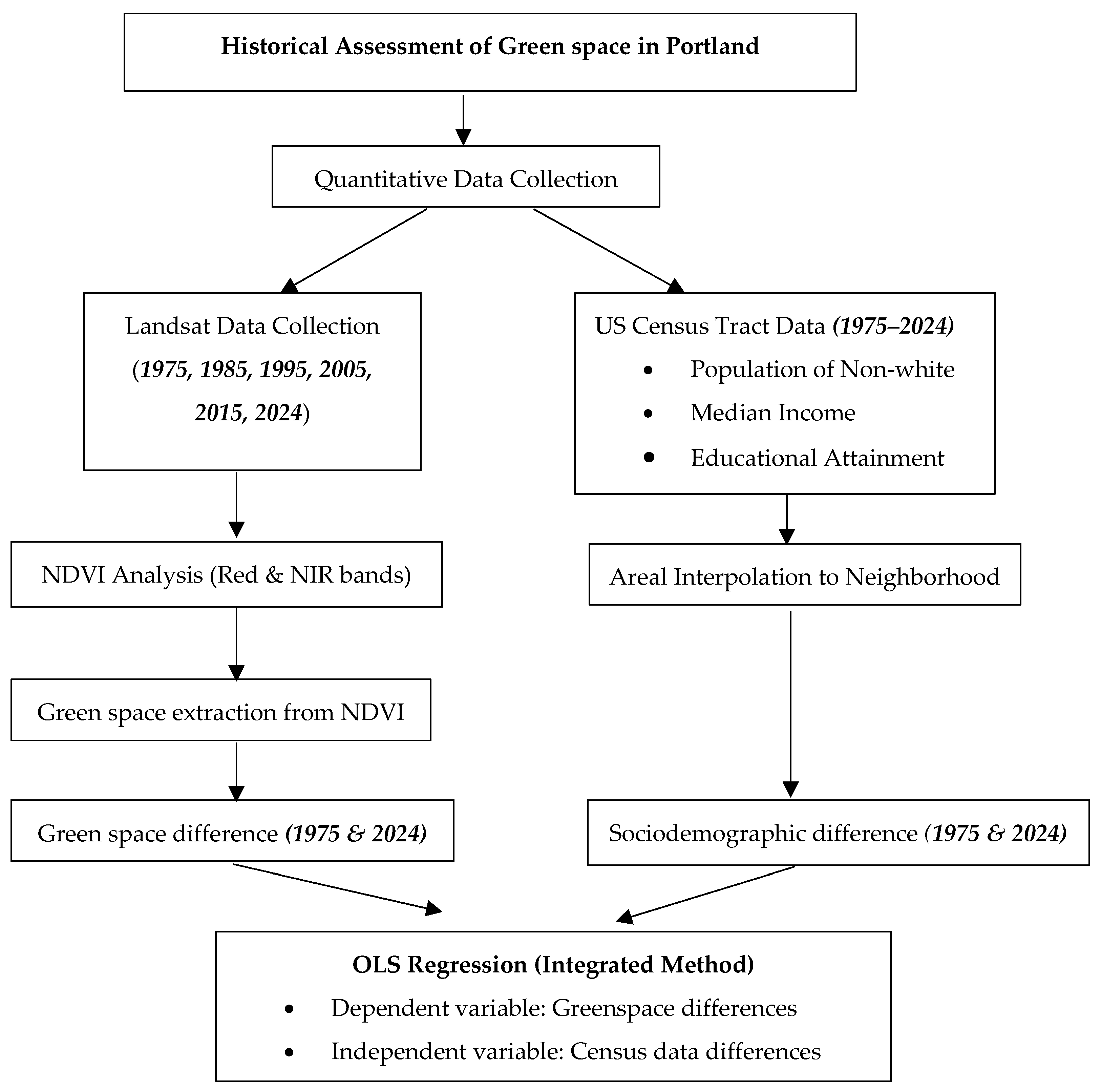
Similarly, sociodemographic variables—median household income, percentage of the population with a bachelor’s degree or higher, and percentage non-white residents, were also computed as difference values (2024 minus 1975) to capture long-term trends rather than static conditions. These difference values were used to normalize temporal effects and better reflect cumulative changes over the 50-year period. OLS regression analysis can identify whether green space disparities are still present in historically marginalized neighborhoods [51]. In this study, we built an OLS multiple linear regression model to explore the relationship between green space distribution and three different types of independent variables (see Figure 4). The OLS regression analysis was performed using ArcGIS pro [50]. R2 and Adjusted R2 values were used to determine extent of variation in greenspace areas between invested and disinvested Portland neighborhoods can be explained by three different sociodemographic variables, i.e., independent or exploratory variables. All exploratory variables were tested for statistical significance using p-values to select only the significant variables (p < 0.05) for consideration in interpretation. The model is formulated as [52]:
Y = β0 + β1 × 1 + β2 × 2 + … + ϵ
where y is the dependent variable, i.e., Δ green space; ×1, ×2 …, are independent variables i.e., Δ median income; Δ education attainment; Δ non-white population; β0 is the intercept; β1, β2 …, are the coefficients; ϵ represents the error term.
Therefore, Δ green space = β0 + β1 (Δ non-white population) + β2 (Δ median income) + β3 (Δ education attainment) + ϵ.
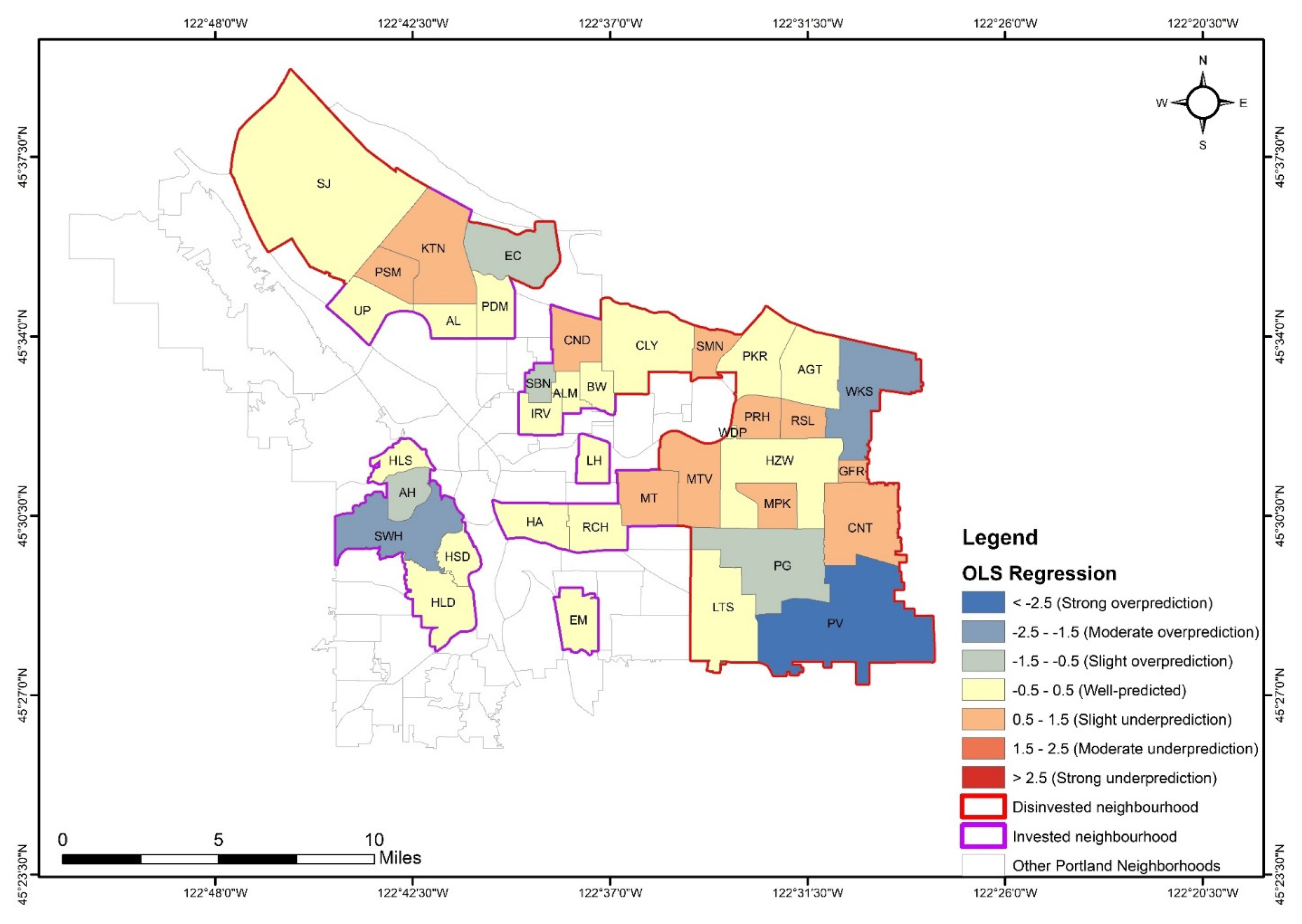
In conclusion, we created a coefficient residual map to highlight neighborhoods where the regression model under- or over-predicted greenspace distribution (see Figure 8). The findings were summarized in a statistical table to support policy recommendations and decision-making regarding equitable greenspace distribution across Portland (see Table 3). Given the exploratory nature of our study, we prioritize establishing baseline relationships between key neighborhood characteristics using a parsimonious non-spatial model. While we acknowledge that spatial autocorrelation is common in neighborhood data and its omission is a limitation, this approach provides a necessary foundation before advancing to more complex spatial techniques in future research.

3. Results and Discussion

3.1. Greenspace Distribution Changes Between 1975 and 2024

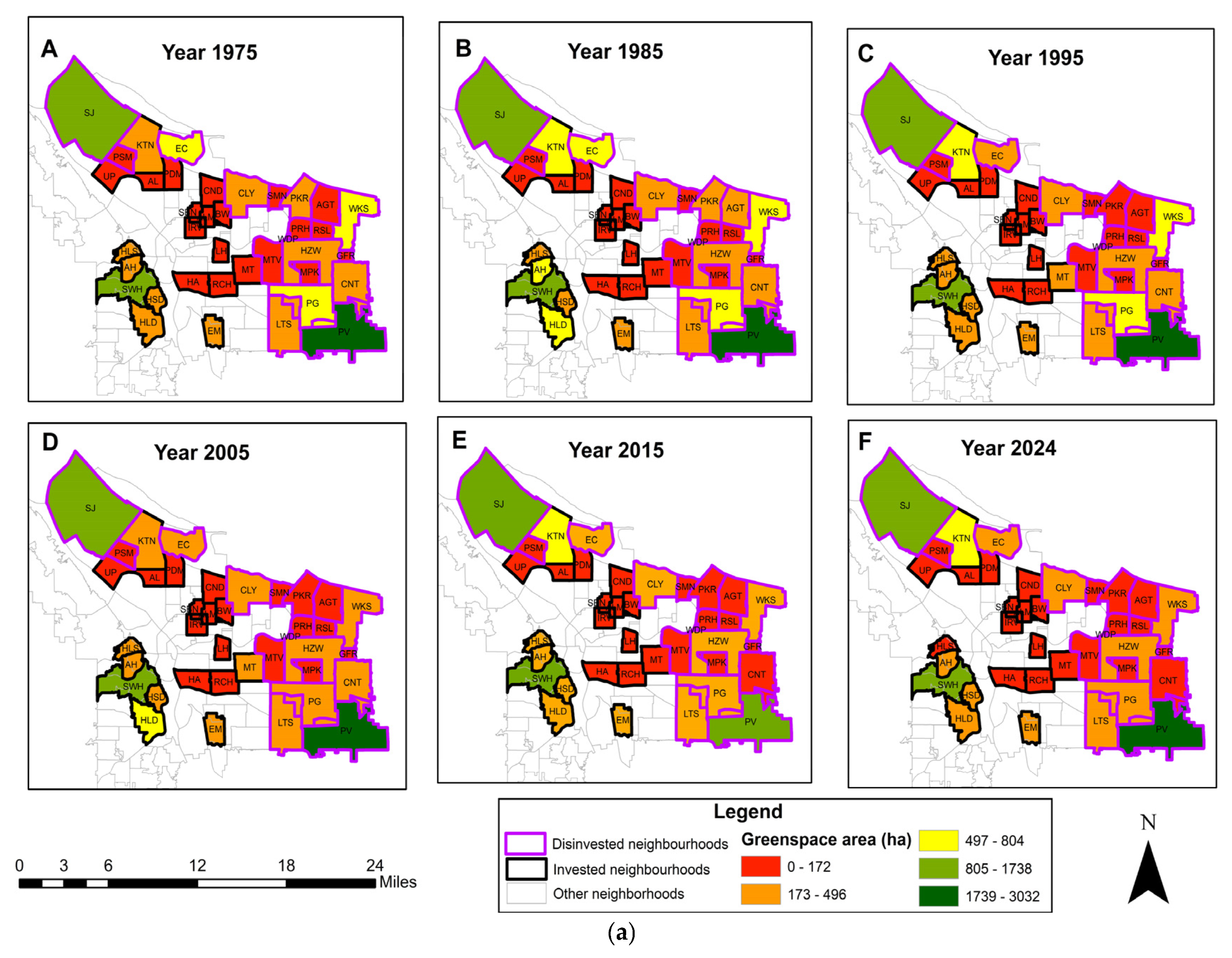
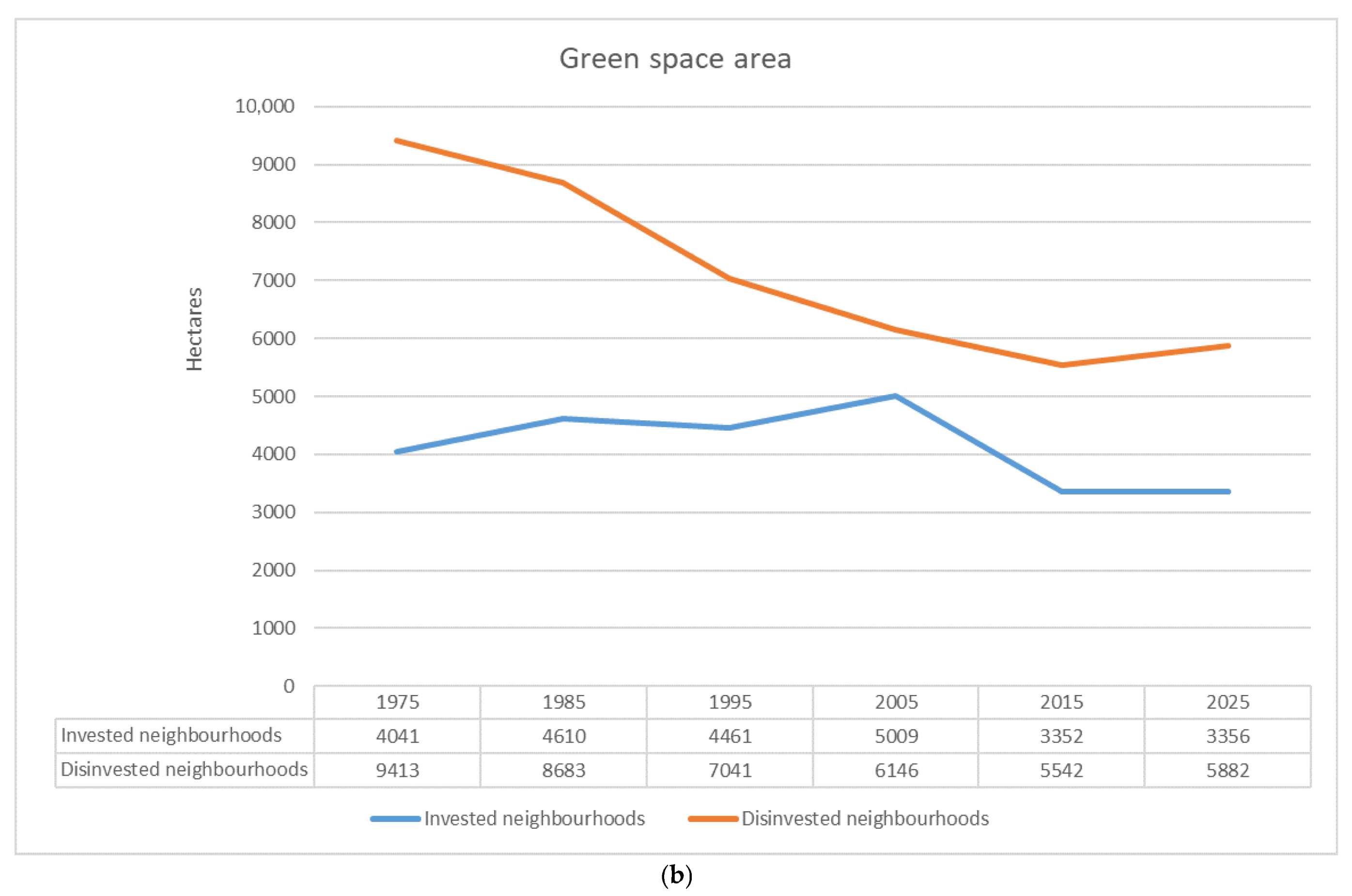
The distribution and changes in green space areas across some invested and disinvested neighborhoods in Portland between 1975 and 2024 (see Figure 5b). The line graph and the accompanying data provide a compelling and detailed narrative of urban inequality, tracking the divergence in green space availability between “Invested” and “Disinvested neighborhoods” over a nearly 50-year period (1975–2024). It is a story not just of two simple categories, but of a complex landscape where a few neighborhoods stand as green exceptions against a backdrop of systemic environmental injustice.
The most striking feature is the dramatic and widening gap between the two sets of Portland communities. The invested neighborhoods (represented by the blue line, see Figure 5b) have consistently enjoyed a significantly higher level of green space, and this advantage has grown markedly over time. This is exemplified by neighborhoods like Southwest Hills (SWH), Hillside (HLD), and Arlington Heights (AH) in western Portland (see Figure 5a). Southwest Hills, for instance, has maintained its Grade ‘A’ status from historic HOLC security maps [4], boasting a substantial hectare of vegetation. Its rugged topography has naturally limited major development, allowing it to act as a reservoir of green space. These areas are also strategically located near massive green assets like the historic Forest Park, established in 1948, which spans over 2094 hectares and bolsters the green cover of nearby invested neighborhoods like Hillsdale (HSD), Homestead, and Hosford-Abernathy (HA). In stark contrast, the trajectory for disinvested neighborhoods (represented by the orange line, see Figure 5b) tells a story of environmental decline. While they began with a respectable, though lower, amount of green space in 1975, their trendline is one of consistent and precipitous decline. However, our result shows that this decline is not uniform, creating a landscape of stark internal inequality. Notably, most neighborhoods in the disinvested region have a very low amount of green space (see Figure 5a). This group includes communities like Cully (CLY), Sumner (SMN), Lents (LTS), and Parkrose (PKR), each struggling with a limited vegetative cover (see Figure 5a).
Yet, standing in stark opposition to this trend are two disinvested neighborhoods, seen as critical outliers: Pleasant Valley (PV) and St. Johns (SJ). These neighborhoods rank among the highest in green space coverage for the entire city, serving as crucial urban thermal buffers for residents of disinvested areas. Pleasant Valley (PV) consistently registered the highest green space in the region, ranging from 1739 to 3032 hectares (very high). Its abundance is so significant that it rivals or surpasses that of invested neighborhoods. St. Johns (SJ) follows as the second greenest, with about 805–1738 hectares, an impressive total bolstered by the 8212 living trees recorded within its boundaries.
Overall, the historical reasons for the decline in disinvested areas are clear. Portland’s annexation efforts from the 1980s to the 2000s, coupled with the development of critical infrastructure like the I-205 highway, hospitals, and the MAX light rail, led to significant greenspace clearance [53]. The city’s zoning code updates during this time disproportionately focused multi-family development in the newly annexed East Portland, leading directly to the clearing of land in places like Pleasant Valley neighborhood. For instance, Pleasant Valley (PV) experienced a noticeable reduction in green space between 1985 and 1995 precisely to make room for more multi-tenant buildings (see Figure 5a,b). This pattern of infrastructure-led greenspace loss continued through 2005, impacting at least five East Portland disinvested neighborhoods: Parkrose (PKR), Powellhurst-Gilbert (PG), Russell (RSL), and Wilkes (WKS). During this period, neighborhoods like Pleasant Valley and others lost an additional 20–30% of their vegetative cover. By the 2005–2015 period, the impact of these policies had become deeply entrenched. Our result revealed that most historically disinvested neighborhoods in East Portland maintained the smallest green-space footprints. This stands in stark contrast to invested neighborhoods, where even those with less green space than the western hills, such as Alameda (ALM), Arbor Lodge (AL), Beaumont-Wilshire (BW), Concordia (CND), and Eastmoreland (EM), are now identified by the city as lower-priority areas for new green space investment, as their coverage is already considered adequate.
Recognizing these substantial disparities, the City of Portland adopted equity-focused plans like Vision PDX (2005) and the Portland Plan (2009). The most recent policy, the 2035 Comprehensive Plan (2016), finally establishes anti-displacement policies. As part of this forward-looking initiative, Portland Parks and Recreation identified Urban Forestry Priority Service Areas for targeted tree planting and greenspace maintenance. Crucially, these high-priority areas now comprise most of the disinvested neighborhoods in this study, including St. Johns (SJ), Cully (CLY), Lents (LTS), and Parkrose (PKR) acknowledging their critical role for thermal refuges [18,54,55,56]. This marks an urban planning policy shift aimed at finally reversing the 50-year trend of growing green space inequality documented in the line graph (see Figure 5b).

3.2. Sociodemographic Analysis

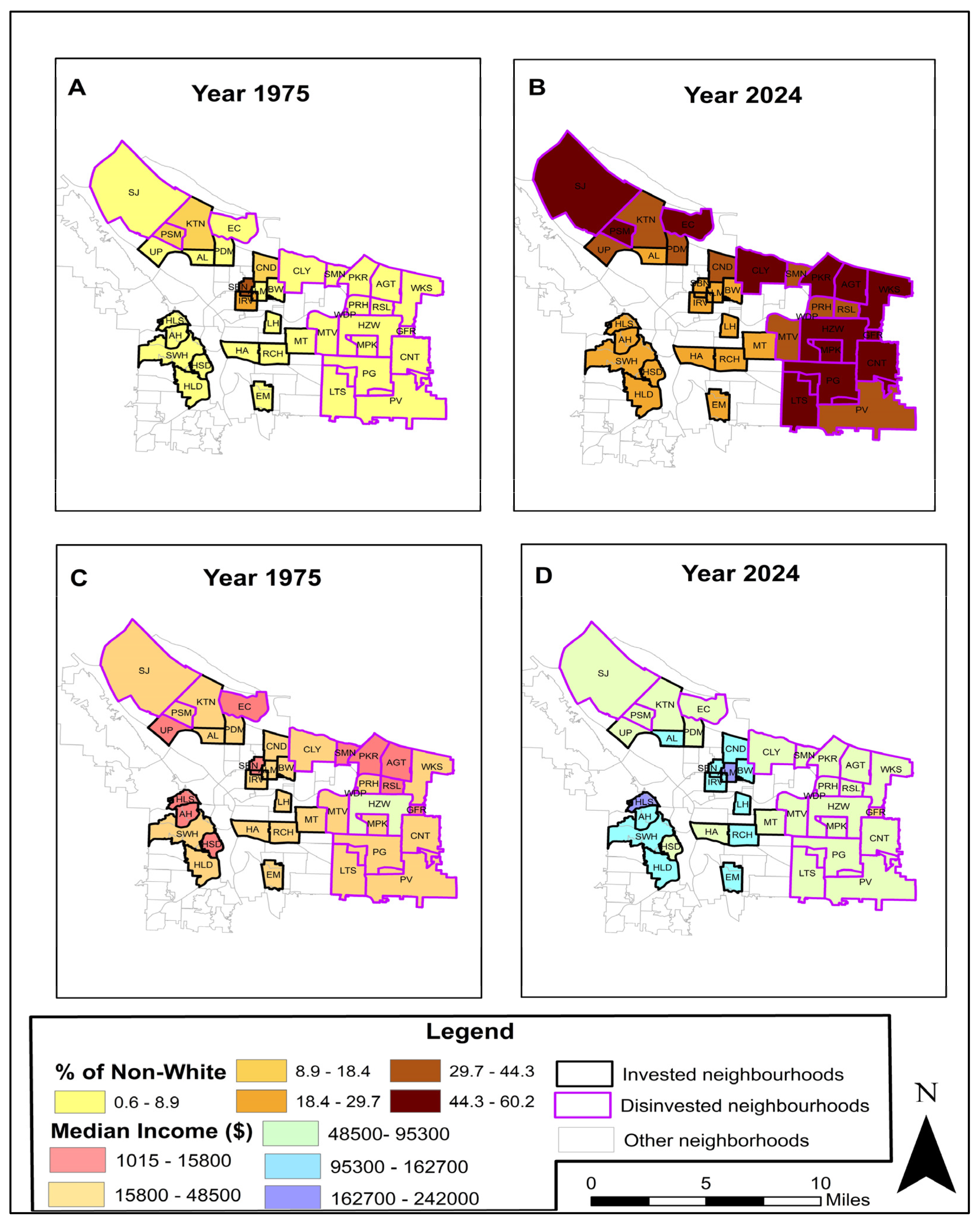
A comparison of urban maps from 1975 and 2024 reveals significant changes in the relationship between race and neighborhood investment, alongside notable continuities. In 1975, the city exhibited a clear spatial divide: “Invested neighborhoods” with higher median incomes ($48,500–$242,000) were overwhelmingly white, containing only 0.6 to 8.9 percent non-white residents (see Figure 6). Conversely, “Disinvested neighborhoods” concentrated non-white populations—reaching 44.3–50.2%—at the lowest income levels ($1015–$15,800). Our result shows a pattern that reflects the historical effects of housing policies and lending practices that systematically excluded non-white households from areas of economic opportunity.
By 2024, the urban landscape had transformed considerably. Some neighborhoods previously classified as disinvested now appear as “Invested,” indicating the process of gentrification. These areas have attracted new capital and now exhibit greater racial diversity, with non-white populations sometimes reaching 44–50% within higher-income areas (see Figure 6). This suggests increased access for non-white households to areas of economic privilege. However, the persistence of “Disinvested neighborhoods” elsewhere—often containing concentrated non-white populations—indicates that displacement has also occurred. As some communities have gained investment, others have experienced pressure to relocate, potentially to peripheral areas with fewer resources. The underlying relationship between race and spatial marginalization has thus been reorganized rather than eliminated.
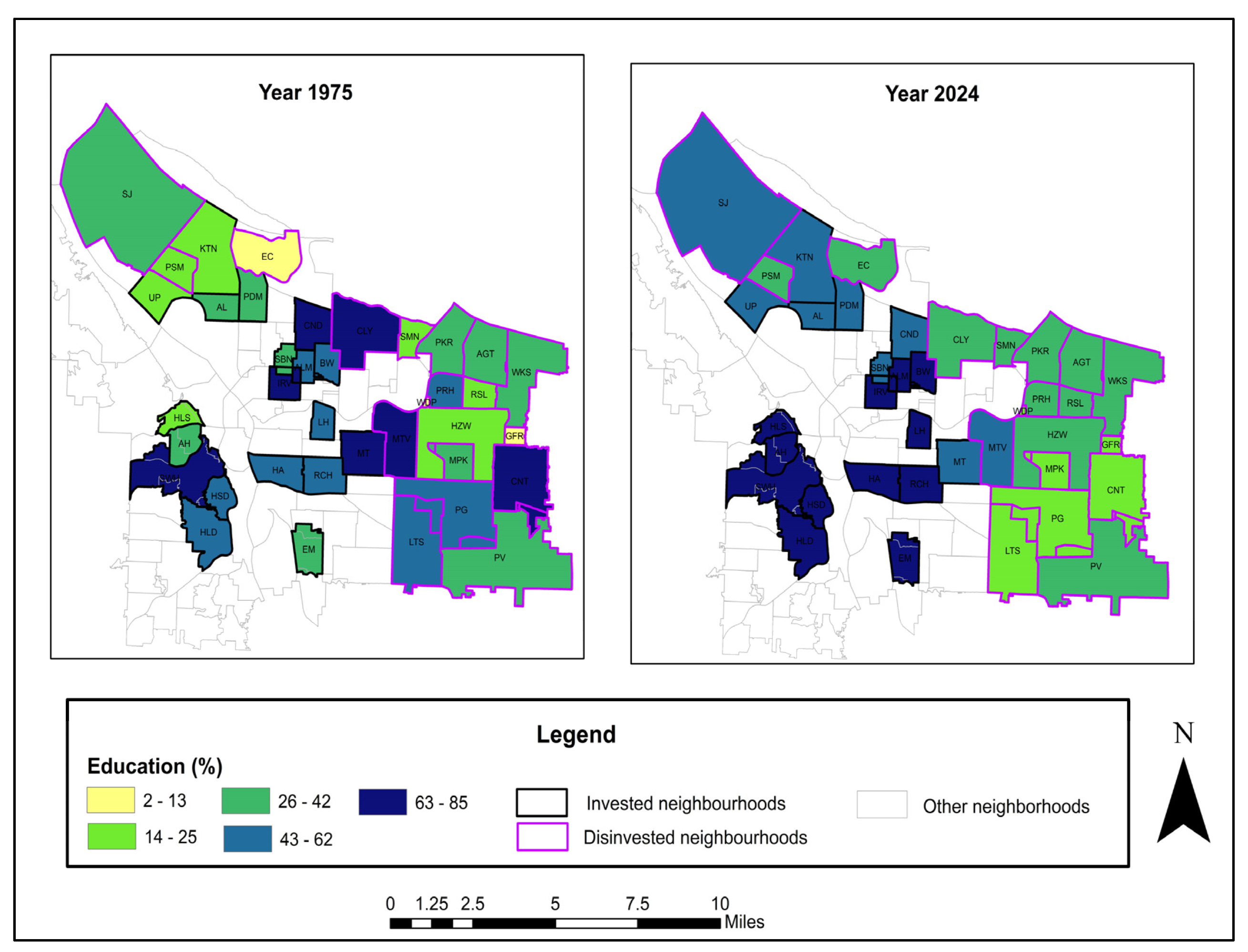
The comparative analysis of educational attainment between 1975 and 2024 reveals significant spatial continuities and selective transformations in the distribution of human capital across urban neighborhoods (see Figure 7). In 1975, a distinct pattern of stratification was evident, with “Invested Neighborhoods”—including Southwest Hills (SWH), Hillside (HLD), Hillsdale (HSD), and Irvington (IRV) exhibiting concentrated educational advantage, likely corresponding to areas with robust institutional infrastructure, professional employment sectors, and intergenerational transmission of educational capital. Conversely, “Disinvested Neighborhoods” such as East Columbia (EC), Glenfair (GFR), Hazelwood (HZW), and Woodland Park (WDP) demonstrated persistently low educational attainment, reflecting systemic barriers including inadequate educational resources, economic marginalization, and limited social mobility. These dichotomous categories were mediated by a range of intermediate neighborhoods, which occupied the middle strata of educational distribution.
By 2024, the spatial configuration of educational attainment had undergone partial reconfiguration while maintaining fundamental structural continuities. The emergence of new “Invested Neighborhoods”—notably Hillside (HLD) and Arlington (AH)—indicates processes of demographic transition, urban regeneration, and knowledge economy expansion that have facilitated the concentration of highly educated populations in previously unremarkable areas. Our result revealed that these transformations likely reflect policy interventions, market dynamics, and institutional investments that have reshaped the educational geography of the city. However, the persistence of the identical “Disinvested neighborhoods” from 1975 in the lowest attainment categories represents the most analytically significant finding. East Columbia (EC), Glenfair (GFR), Hazelwood (HZW), and Woodland Park (WDP) remain entrenched in educational disadvantage five decades later, suggesting that spatial inequality in educational outcomes is not transient but deeply embedded in structural conditions that resist conventional policy interventions. This continuity points to path-dependent processes whereby historical patterns of disinvestment create cumulative disadvantages that perpetuate themselves across generations through mechanisms including under resourced schools, concentrated poverty, and limited social networks. In our study, the diachronic comparison thus reveals a pattern of selective mobility alongside entrenched immobility. While certain neighborhoods have successfully ascended or maintained their status within the educational hierarchy, a core set of communities remains trapped in conditions of persistent educational poverty. This spatial immobility underscores the path-dependent nature of educational inequality and the profound influence of place-based structural factors in shaping life opportunities across decades.

3.3. Result of OLS Model

The Ordinary Least Squares (OLS) regression results analyzing green space distribution in Portland’s disinvested neighborhoods reveal several key findings. The model explains approximately 17.2% of the variability in green space distribution (Multiple R-squared = 0.172), with statistically significant results confirmed by both the joint F-statistic (2.354) and Wald statistic (15.309), each having p-values below 0.01. Variance Inflation Factor (VIF) values for all variables remained below 7.5, indicating no significant multicollinearity concerns.
The OLS regression revealed that greenspace distribution is moderately influenced by racial or ethnic demographics, with a 1% increase in non-white (NW) residents associated with 6.39 fewer units of greenspace (p < 0.001). This finding highlights traceable systemic disparities and historical segregation. Median Household Income has a negligible negative effect (−0.0019, p = 0.006), suggesting wealth alone does not drive greenspace access. Education Attainment shows a marginal positive effect (+2.45, p = 0.058), implying educated communities may secure more greenspace provision through environmental advocacy and activism. The significant intercept (195.89, p = 0.0065) indicates unmeasured factors, such as historical planning biases like redlining, urban renewal like highway constructions, park funding biases, tree planting discrimination, which all could play significant roles.
Our study employs Ordinary Least Squares (OLS) regression analysis to evaluate the relationship between sociodemographic variables and historical greenspace distribution patterns in non-white neighborhoods. Using ArcGIS Pro, the dependent variable was defined as the difference in greenspace distribution between 1975 and 2024. The explanatory variables included changes in three socioeconomic factors: non-white population, median income, and education attainment. The OLS model—Δ greenspace = β0 + β1 (Δ non-white population) + β2 (Δ median household income) + β3 (Δ education attainment) + ϵ—was applied to assess how historical planning processes influenced greenspace distribution in disinvested neighborhoods.
The residuals of the model reveal clear patterns of predictive error concerning changes in greenspace (see Figure 8). Residual values indicate prediction error magnitude. Values below −2.5 represent significant overprediction (model forecasted greater loss than observed), −2.5 to −1.5 moderate overprediction, and −1.5 to −0.5 slight overprediction. These errors reflect statistical uncertainty. Contextual factors—such as conservation initiatives, green infrastructure investments, or data inaccuracies—are offered not as definitive explanations of model error, but as hypotheses to guide further investigation into why actual loss was lower than predicted.
Most importantly, Residual values that are accurately predicted, ranging from −0.5 to 0.5, closely match the actual changes observed in disinvested Portland Neighborhoods which include but not limited to Argay Terrace (AGT), Lents (LTS), Hazelwood (HZW), Parkrose (PKR), Cully (CLY), and St. Johns (SJ) (see Figure 8). Residuals between 0.5 and 1.5 suggest a minor underestimation, where the model has not fully captured the loss. Residuals from 1.5 to 2.5 indicate a moderate underprediction, likely due to unforeseen deforestation or urban expansion. When residual values go beyond 2.5, it signifies a strong underprediction, pointing to a significant unexpected loss, which could be caused by rapid urban development, policy changes, or abrupt land use alterations. Critically, the OLS regression shows racial disparities in greenspace access, with 1% more non-white residents having 6.39 fewer greenspace units (p < 0.001). Median household income helps little, and education attainment is marginally positive. The high intercept suggests that past discrimination (e.g., redlining, urban planning discrimination) has a major effect on greenspace disparity.
In essence, the ordinary least squares (OLS) regression analysis revealed that race is the most likely significant factor influencing the distribution of greenspace. Nevertheless, previous studies found a strong correlation between racial ethnicity and urban greenspace distribution and accessibility [6,10,11,51,57,58,59]. This study found that neighborhoods with larger non-white populations are more likely to have significantly less greenspace (p < 0.001), whereas income and education levels showed minimal effects. However, a substantial number of studies link low household income and educational levels with limited access to ecosystem services in marginalized neighborhoods [15,60,61,62,63,64,65]. For example, an OLS study by Zhang & Chen on greenspace accessibility and the influences of individual characteristics such as income and educational level disparities in London, UK, showed a significant relationship [50]. In this study, the OLS model is crucial because it reveals lingering patterns that demonstrate how historical biases and neglected factors, such as infrastructure development decisions—continue to influence current inequalities. Additionally, some neighborhoods have experienced unexpected changes in green space due to conservation initiatives or rapid development, e.g., Southwest Hills is an invested neighborhood in comparison to St. John’s disinvested neighborhood.

4. Conclusions

4.1. Theoretical Implications and Policy Recommendations

Drawing on the study’s findings and incorporating the theoretical frameworks, the persistent inequalities in greenspace distribution in Portland from 1975 to 2024 can be examined through the lenses of Historical Institutionalism, Urban Political Ecology, and Environmental Justice.
From a Historical Institutionalism perspective, the study suggests that historical land use practices, such as exclusionary zoning, established institutional pathways that may continue to shape urban form and contribute to inequities along lines of race and social class. These early planning decisions appear to have created a path dependency; whereby subsequent policies and investments have tended to reinforce existing imbalances in greenspace provision between historically invested and disinvested communities. This pattern is consistent with prior research indicating that land use conversions to multifamily districts within East Portland neighborhoods, including Parkrose (PKR), Powellhurst-Gilbert (PG), Russell (RSL), Argay Terrace (AGT), Lents (LTS), Hazelwood (HZW), and Cully (CLY), were not accompanied by corresponding greenspace development, a pattern potentially shaped by historical disinvestment and annexation processes reinforced through institutional behavior.
The study’s findings, though modest in magnitude, suggest that wealthier, predominantly white neighborhoods tend to be surrounded by more urban greenspace than historically disadvantaged areas on the east side. Prior research on gentrification indicates that investment in certain areas can reflect how economic and political systems operate, sometimes resulting in the displacement of low income and racialized communities from neighborhoods with increased greenspace investments. The Urban Growth Boundary, while intended to promote sustainable development, may have also contributed to land use conflicts and, in some contexts, to gentrification pressures that affect greenspace access in disinvested areas. This illustrates the interdependent relationship between ecological and political economic processes.
From an Environmental Justice perspective, the distribution of environmental burdens and benefits, including greenspace, warrants attention, particularly as it pertains to economically and politically marginalized populations. The enduring influence of HOLC redlining, for instance, exemplifies how past institutional lending practices may have constrained access to resources and contributed to sustained patterns of green disinvestment, particularly in Northeast Portland, suggesting the lasting influence of historical decisions on contemporary conditions.
From an Urban Political Ecology perspective, uneven greenspace distribution can be interpreted as reflecting broader dynamics in the manipulation and control of material conditions within the city. The OLS regression results, which indicate an inverse correlation between the proportion of non-white residents and greenspace provision, may be viewed as consistent with this interpretation of distributive patterns. A recent study by Elderbrock et al. identified priority areas in Portland for targeted urban greenspace investment to advance distributional justice [28]. The findings are consistent with the disinvested neighborhoods in the spotlight of this study. For instance, Cully (CLY), annexed by Portland in the 1980s, has been systemically underinvested for decades. Today, community-based movements, such as 350 PDX, APANO, Verde, Friends of Trees, Depave, and Thrive East PDX Coalition, demonstrate neighborhood-level support of greenspace equity.
Guided by the principles of the Portland Bureau of Planning and Sustainability Strategic Plan, we recommend that policy revisions incorporate restorative justice principles into Portland’s planning frameworks, including the 2005 Vision PDX and the 2035 Comprehensive Plan adopted in 2016. To effectively serve underserved communities, strict implementation of the 3-30-300 greenspace equity rule should be prioritized. This evidence-based standard requires that (i) every resident has a direct view of greenspace, e.g., a minimum of three mature, healthy trees, and green patches from their dwelling; (ii) a 30% of greenspace coverage in residential areas is maintained; and (iii) quality green spaces (e.g., public parks and pocket parks) are within 300 m of all residences. While Portland and most American cities fall short of these standards today, successful examples in European and Asian cities demonstrate the viability of such investment in equitable green infrastructure. In a similar vein, new greenspace policies should recognize and prioritize the diverse needs, preferences, values, and cultural identities in disinvested neighborhoods. The recognition of these racial dimensions forms a basis for environmental justice, making Portland’s green space infrastructure welcoming and beneficial to all.

4.2. Limitations of the Study

There are notable limitations in this study. Failing to account for spatial autocorrelation is a limitation in our neighborhood-level study, our approach is reasonable for three reasons. First, this study is exploratory and aims to establish a simple starting point by identifying basic relationships between variables. Second, our main interest is in the specific neighborhood characteristics we selected, and their effects are likely still meaningful even without a spatial model. Third, we faced practical limitations in building the necessary geographic connectivity matrix for this set of neighborhoods. Therefore, these results should be seen as preliminary and should be confirmed by future studies that use spatial analysis techniques.
Furthermore, the Ordinary Least Squares (OLS) model has a multiple R-squared value of 0.172, i.e., it only predicts and explains 17.2% of greenspace distribution in disinvested neighborhoods in Portland. One of the leading causes of this problem was data mining constraints. Conversely, the spatial analysis was solely based on three major socioeconomic status variables (SES), namely racial demographics, household income, and education levels. In contrast to our spatial analysis, the OLS study conducted by Zhang & Chen considered a wide range of land use, greenery types, and sociodemographic variables. The parameters include, but are not limited to, gender, age, White race, Black race, income, education, greenspace, park, and historical discrimination variables (e.g., redlining security maps). The OLS model and assessment indicated a multiple R-squared value of 0.369482 (approximately 37%) for greenspace accessibility in London Metropolis. In future Portland case studies, academic researchers and urban planners should strictly consider explanatory or predictor variables as utilized by Zhang and Chen to better understand the historical drivers of greenspace inequalities.

Author Contributions

Conceptualization, Q.O.T. and V.S.; Data curation, Q.O.T. and D.E.O.; Formal analysis, Q.O.T.; Investigation, Q.O.T. and D.E.O.; Methodology, Q.O.T. and D.E.O.; Project administration, Q.O.T. and V.S.; Resources, Q.O.T. and D.E.O.; Software, Q.O.T. and D.E.O.; Supervision, V.S.; Validation, Q.O.T. and D.E.O.; Visualization, D.E.O. and Q.O.T.; Writing—original draft, Q.O.T.; Writing—review and editing, Q.O.T. and V.S. All authors have read and agreed to the published version of the manuscript.

Funding

The resources required to develop this paper were supported by generous funding from the National Science Foundation (grant #2010014) and the Climate Resilient Neighborhoods project at Portland State University, OR, USA. Open access publication of this article was made possible by the Portland State University Library’s Open Access Fund.

Data Availability Statement

The raw data supporting the conclusions of this article will be made available by the authors on request.

Acknowledgments

This exploratory work was originally developed and written by Quadri Olatunbosun Taiwo (first author) for his 96-page master’s thesis in Geography at Portland State University, Portland, OR, USA [66]. Dissertations and Theses. Paper 6845. https://doi.org/10.15760/etd.3966. The first author wishes to acknowledge the guidance of the master’s committee: Vivek Shandas (academic advisor and second author), Paul Loikith, and Christopher Grant, all of whom are affiliated with the Department of Geography at Portland State University, Oregon. Finally, the authors gratefully acknowledge the peer reviewers for their insightful feedback, which has enhanced the rigor and accessibility of this work.

Conflicts of Interest

The authors declare no conflicts of interest.

References

  1. Hughes, J.; Armstrong, T.; Curren, R.; Engstrom, E.; Jonson, L.; Kobel, N.; Loehlein, N.; Lum, L.; Stein, D.; Wood, S.; et al. A History of How Planning Segregated Portland. Pg. 1–32. 2019. Available online: https://www.portland.gov/bps/documents/historical-context-racist-planning/download (accessed on 9 November 2024).
  2. Lens, M.C. Zoning, Land Use, and the Reproduction of Urban Inequality. Annu. Rev. Sociol. 2022, 48, 421–439. [Google Scholar] [CrossRef]
  3. Hirt, S.A. Planning During Post-Socialism. In International Encyclopedia of the Social & Behavioral Sciences; Elsevier: Amsterdam, The Netherlands, 2015; pp. 187–192. [Google Scholar] [CrossRef]
  4. Hoffman, J.S.; Shandas, V.; Pendleton, N. The Effects of Historical Housing Policies on Resident Exposure to Intra-Urban Heat: A Study of 108 US Urban Areas. Climate 2020, 8, 12. [Google Scholar] [CrossRef]
  5. Nardone, A.; Rudolph, K.E.; Morello-Frosch, R.; Casey, J.A. Redlines and Greenspace: The Relationship between Historical Redlining and 2010 Greenspace across the United States. Environ. Health Perspect. 2021, 129, 017006. [Google Scholar] [CrossRef] [PubMed]
  6. Ock, Y.; Shandas, V.; Ribeiro, F.; Young, N. Drivers of Tree Canopy Loss in a Mid-Sized Growing City: Case Study in Portland, OR (USA). Sustainability 2024, 16, 1803. [Google Scholar] [CrossRef]
  7. Angelo, H. Added Value? Denaturalizing the “Good” of Urban Greening. Geogr. Compass 2019, 13, e12459. [Google Scholar] [CrossRef]
  8. Kabisch, N.; Haase, D. Green Justice or Just Green? Provision of Urban Green Spaces in Berlin, Germany. Landsc. Urban Plan. 2014, 122, 129–139. [Google Scholar] [CrossRef]
  9. Meerow, S.; Newell, J.P. Urban Resilience for Whom, What, When, Where, and Why? Urban Geogr. 2019, 40, 309–329. [Google Scholar] [CrossRef]
  10. Connolly, J.J.T.; Anguelovski, I. Three Histories of Greening and Whiteness in American Cities. Front. Ecol. Evol. 2021, 9, 621783. [Google Scholar] [CrossRef]
  11. Anguelovski, I.; Oscilowicz, E.; Connolly, J.J.T.; García-Lamarca, M.; Perez-del-Pulgar, C.; Cole, H.V.S.; Immergluck, D.; Triguero-Mas, M.; Baró, F.; Martin, N.; et al. Does Greening Generate Exclusive Residential Real Estate Development? Contrasting Experiences from North America and Europe. Urban For. Urban Green. 2024, 101, 128376. [Google Scholar] [CrossRef]
  12. García-Lamarca, M.; Anguelovski, I.; Cole, H.V.S.; Connolly, J.J.T.; Pérez-del-Pulgar, C.; Shokry, G.; Triguero-Mas, M. Urban Green Grabbing: Residential Real Estate Developers Discourse and Practice in Gentrifying Global North Neighborhoods. Geoforum 2022, 128, 1–10. [Google Scholar] [CrossRef]
  13. Angotti, T.; Morse, S. (Eds.) Zoned Out! Race, Displacement, and City Planning in New York City; Terreform: New York, NY, USA, 2016. [Google Scholar]
  14. McCoy, M. Introduction to Zoning. Village of Euclid v. Ambler Realty Co., 272 US 365 (1926) 2008, Chapter 5, p. 116. Available online: https://txplanningguide-ojs-utexas.tdl.org/txplanningguide/article/view/12/8 (accessed on 4 March 2025).
  15. Locke, D.H.; Hall, B.; Grove, J.M.; Pickett, S.T.A.; Ogden, L.A.; Aoki, C.; Boone, C.G.; O’Neil-Dunne, J.P.M. Residential Housing Segregation and Urban Tree Canopy in 37 US Cities. NPJ Urban Sustain. 2021, 1, 15. [Google Scholar] [CrossRef]
  16. Mitchell, B.; Franco, J. HOLC “Redlining” Maps: The Persistent Structure of Segregation and Economic Inequality. In Home Owners’ Loan Corporation “Redlining” Maps: The Persistent Structure of Segregation and Economic Inequality; National Community Reinvestment Coalition: Washington, DC, USA, 2018. [Google Scholar]
  17. Hillier, A.E. Redlining and the Home Owners’ Loan Corporation. J. Urban Hist. 2003, 29, 394–420. [Google Scholar] [CrossRef]
  18. Rothstein, R. The Color of Law: A Forgotten History of How Our Government Segregated America, 1st ed.; Liveright Publishing Corporation: New York, NY, USA, 2017. [Google Scholar]
  19. Gibson, K.J. Bleeding Albina: A History of Community Disinvestment, 1940–2000. Transform. Anthropol. 2007, 15, 3–25. [Google Scholar] [CrossRef]
  20. Namin, S.; Xu, W.; Zhou, Y.; Beyer, K. The Legacy of the Home Owners’ Loan Corporation and the Political Ecology of Urban Trees and Air Pollution in the United States. Soc. Sci. Med. 2020, 246, 112758. [Google Scholar] [CrossRef]
  21. Heynen, N. Green Urban Political Ecologies: Toward a Better Understanding of Inner-City Environmental Change. Environ. Plan. A 2006, 38, 499–516. [Google Scholar] [CrossRef]
  22. Nowak, D.J.; Crane, D.E.; Stevens, J.C. Air Pollution Removal by Urban Trees and Shrubs in the United States. Urban For. Urban Green. 2006, 4, 115–123. [Google Scholar] [CrossRef]
  23. Jesdale, B.M.; Morello-Frosch, R.; Cushing, L. The Racial/Ethnic Distribution of Heat Risk–Related Land Cover in Relation to Residential Segregation. Environ. Health Perspect. 2013, 121, 811–817. [Google Scholar] [CrossRef]
  24. Krivo, L.J.; Kaufman, R.L. Housing and Wealth Inequality: Racial-Ethnic Differences in Home Equity in the United States. Demography 2004, 41, 585–605. [Google Scholar] [CrossRef]
  25. Reardon, S.F.; Bischoff, K. Income Inequality and Income Segregation. Am. J. Sociol. 2011, 116, 1092–1153. [Google Scholar] [CrossRef] [PubMed]
  26. Grove, J.M.; Locke, D.H.; O’Neil-Dunne, J.P.M. An Ecology of Prestige in New York City: Examining the Relationships Among Population Density, Socio-Economic Status, Group Identity, and Residential Canopy Cover. Environ. Manag. 2014, 54, 402–419. [Google Scholar] [CrossRef] [PubMed]
  27. Goodling, E.; Green, J.; McClintock, N. Uneven Development of the Sustainable City: Shifting Capital in Portland, Oregon. Urban. Geogr. 2015, 36, 504–527. [Google Scholar] [CrossRef]
  28. Elderbrock, E.; Russel, K.; Ko, Y.; Budd, E.; Gonen, L.; Enright, C. Evaluating Urban Green Space Inequity to Promote Distributional Justice in Portland, Oregon. Land 2024, 13, 720. [Google Scholar] [CrossRef]
  29. US Decennial Census. Quick Facts; Portland City, Oregon. 2020. Available online: https://www.census.gov/quickfacts/fact/table/portlandcityoregon/LND110220 (accessed on 10 July 2025).
  30. SustainLane. The Annual U.S. City Rankings. 2008. Available online: https://www.csrwire.com/press_releases/18628-sustainlane-announces-annual-u-s-city-rankings (accessed on 27 February 2025).
  31. Hoffman, C. Inside the Urban Melting Pot: Exploring the Effects of Redlining and Greenspace on Heat Distribution in Providence, Rhode Island. Available online: https://dem.ri.gov/sites/g/files/xkgbur861/files/2025-12/Hoffman-Prov-HeatTreeAnalysis.pdf (accessed on 12 April 2025).
  32. Durbin, A. The Director, City of Portland, Oregon, Bureau of Planning and Sustainability Proclamation to Portlander. 2019. Available online: https://www.portland.gov/bps/documents/cover-letter-bps-director-andrea-durbin-about-history-racist-planning-work/download (accessed on 8 August 2024).
  33. Ahmed, S.K. How to Choose a Sampling Technique and Determine Sample Size for Research: A Simplified Guide for Researchers. Oral Oncol. Rep. 2024, 12, 100662. [Google Scholar] [CrossRef]
  34. Andrade, C. The Inconvenient Truth About Convenience and Purposive Samples. Indian J. Psychol. Med. 2021, 43, 86–88. [Google Scholar] [CrossRef]
  35. Goetz, E.; Damiano, T.; Hicks, J. “Racially Concentrated Areas of Affluence: A Preliminary Investigation” (University of Minnesota Humphrey School of Public Affairs). 2017. Available online: https://conservancy.umn.edu/server/api/core/bitstreams/100ca5a5-3152-45cc-84f6-b121c4608115/content (accessed on 17 August 2025).
  36. Aaronson, D.; Faber, J.; Hartley, D.; Mazumder, B.; Sharkey, P. The Long-Run Effects of the 1930s HOLC “Redlining” Maps on Place-Based Measures of Economic Opportunity and Socioeconomic Success. Reg. Sci. Urban Econ. 2021, 86, 103622. [Google Scholar] [CrossRef]
  37. Finney, S.; Wolfgang, K.; Palmer, G. A Report to the Portland Clean Energy Fund Committee. East Portland Resilience Coalition. 2022. Available online: https://thriveeastpdx.org/wp-content/uploads/2022/09/CommunityResilienceReport_FINAL-WEB08-2022.pdf (accessed on 7 March 2025).
  38. Krejcie, R.V.; Morgan, D.W. Determining Sample Size for Research Activities. Educ. Psychol. Meas. 1970, 30, 607–610. [Google Scholar] [CrossRef]
  39. Altman, D.G. Practical Statistics for Medical Research, 1st ed.; Chapman and Hall/CRC: Boca Raton, FL, USA, 1990; ISBN 9780429258589. [Google Scholar] [CrossRef]
  40. Martins, F.S.; Cunha, J.A.C.D.; Serra, F.A.R. Secondary Data in Research—Uses and Opportunities. RIAE 2018, 17, 1–4. [Google Scholar] [CrossRef]
  41. Scott, J. A Matter of Record: Documentary Sources in Social Research; Wiley: London, UK, 1990. [Google Scholar]
  42. Smith, B. Generalizability in Qualitative Research: Misunderstandings, Opportunities and Recommendations for the Sport and Exercise Sciences. Qual. Res. Sport Exerc. Health 2018, 10, 137–149. [Google Scholar] [CrossRef]
  43. Dunn, S.L.; Arslanian-Engoren, C.; DeKoekkoek, T.; Jadack, R.; Scott, L.D. Secondary Data Analysis as an Efficient and Effective Approach to Nursing Research. West. J. Nurs. Res. 2015, 37, 1295–1307. [Google Scholar] [CrossRef] [PubMed]
  44. Qiu, K.; Jia, B. The Roles of Landscape Both inside the Park and the Surroundings in Park Cooling Effect. Sustain. Cities Soc. 2020, 52, 101864. [Google Scholar] [CrossRef]
  45. Demir, S.; Dursun, İ. Determining Burned Areas Using Different Threshold Values of NDVI with Sentinel-2 Satellite Images on Gee Platform: A Case Study of Muğla Province. Uluslararası Sürdürülebilir Mühendislik Ve Teknol. Derg. 2023, 7, 117–130. [Google Scholar]
  46. Xu, K.; Tian, Q.; Yang, Y.; Yue, J.; Tang, S. How Up-Scaling of Remote-Sensing Images Affects Land-Cover Classification by Comparison with Multiscale Satellite Images. Int. J. Remote Sens. 2019, 40, 2784–2810. [Google Scholar] [CrossRef]
  47. Markham, K.; Frazier, A.E.; Singh, K.K.; Madden, M. A Review of Methods for Scaling Remotely Sensed Data for Spatial Pattern Analysis. Landsc. Ecol. 2023, 38, 619–635. [Google Scholar] [CrossRef]
  48. James, P.; Banay, R.F.; Hart, J.E.; Laden, F. A Review of the Health Benefits of Greenness. Curr. Epidemiol. Rep. 2015, 2, 131–142. [Google Scholar] [CrossRef] [PubMed]
  49. Chen, Y.; Shi, Z.; Li, Y.; Han, D.; Li, M.; Zhao, Z. Land Use Thematic Maps Recommendation Based on Pan-Map Visualization Dimension Theory. Land 2024, 13, 1389. [Google Scholar] [CrossRef]
  50. Zhang, K.; Chen, M. Multi-Method Analysis of Urban Green Space Accessibility: Influences of Land Use, Greenery Types, and Individual Characteristics Factors. Urban For. Urban Green. 2024, 96, 128366. [Google Scholar] [CrossRef]
  51. Dai, D. Racial/Ethnic and Socioeconomic Disparities in Urban Green Space Accessibility: Where to Intervene? Landsc. Urban Plan. 2011, 102, 234–244. [Google Scholar] [CrossRef]
  52. Waples, J. OLS Regression: The Key Ideas Explained. 2025. Available online: https://www.datacamp.com/tutorial/ols-regression (accessed on 13 March 2025).
  53. Wolch, J.R.; Byrne, J.; Newell, J.P. Urban Green Space, Public Health, and Environmental Justice: The Challenge of Making Cities ‘Just Green Enough’. Landsc. Urban Plan. 2014, 125, 234–244. [Google Scholar] [CrossRef]
  54. Ling, T.-Y.; Chiang, Y.-C. Well-Being, Health and Urban Coherence-Advancing Vertical Greening Approach toward Resilience: A Design Practice Consideration. J. Clean. Prod. 2018, 182, 187–197. [Google Scholar] [CrossRef]
  55. Mickle, L.; Starin, N.; Piekarski, C.; Pauley, D. East Portland Historical Overview & Historic Preservation Study. City of Portland, Bureau of Planning. 2007. Available online: https://www.scribd.com/document/71097231/East-Portland-Hist-032409-Web (accessed on 8 April 2025).
  56. Urban Forestry Priority Service Areas. Metro. 2019. Available online: https://www.portland.gov/trees/priority-service-areas (accessed on 21 April 2025).
  57. Nesbitt, L.; Meitner, M.J.; Girling, C.; Sheppard, S.R.J.; Lu, Y. Who Has Access to Urban Vegetation? A Spatial Analysis of Distributional Green Equity in 10 US Cities. Landsc. Urban. Plan. 2019, 181, 51–79. [Google Scholar] [CrossRef]
  58. Shukla, S. Racial Disparities in Access to Public Green Space. Chicago Policy Review, 23 September 2020. Available online: https://chicagopolicyreview.org/2020/09/23/racial-disparity-in-access-to-public-green-space/ (accessed on 8 September 2024).
  59. Mushangwe, S.; Astell-Burt, T.; Steel, D.; Feng, X. Ethnic Inequalities in Green Space Availability: Evidence from Australia. Urban For. Urban Green. 2021, 64, 127235. [Google Scholar] [CrossRef]
  60. Gerrish, E.; Watkins, S.L. The Relationship between Urban Forests and Income: A Meta-Analysis. Landsc. Urban Plan. 2018, 170, 293–308. [Google Scholar] [CrossRef] [PubMed]
  61. Venter, Z.S.; Shackleton, C.M.; Van Staden, F.; Selomane, O.; Masterson, V.A. Green Apartheid: Urban Green Infrastructure Remains Unequally Distributed across Income and Race Geographies in South Africa. Landsc. Urban Plan. 2020, 203, 103889. [Google Scholar] [CrossRef]
  62. Liu, D.; Kwan, M.-P.; Kan, Z. Analysis of Urban Green Space Accessibility and Distribution Inequity in the City of Chicago. Urban For. Urban Green. 2021, 59, 127029. [Google Scholar] [CrossRef]
  63. Gregory, K.; Ajibade, I. Participatory Mapping of Tree Equity, Preferences, and Environmental Justice in Portland, Oregon. Urban For. Urban Green. 2024, 97, 128374. [Google Scholar] [CrossRef]
  64. Schwarz, K.; Fragkias, M.; Boone, C.G.; Zhou, W.; McHale, M.; Grove, J.M.; O’Neil-Dunne, J.; McFadden, J.P.; Buckley, G.L.; Childers, D.; et al. Trees Grow on Money: Urban Tree Canopy Cover and Environmental Justice. PLoS ONE 2015, 10, e0122051. [Google Scholar] [CrossRef]
  65. Taiwo, Q.O.; Shandas, V. Towards an Explicit Understanding of Network Governance in Urban Forestry Management: A Case Study of Portland (OR), USA. Sustainability 2025, 17, 4028. [Google Scholar] [CrossRef]
  66. Taiwo, Q.O. A Fifty-Year Assessment of Historical Planning Processes and Green Space Distribution (1975–2025): A Case Study of Portland, OR, USA. Master’s Thesis, Portland State University, Portland, OR, USA, 2025. Paper 6845. [Google Scholar] [CrossRef]
Figure 1. Portland’s first zoning ordinance [14].
Land 15 00444 g001
Figure 2. Location of Portland, Oregon, USGS NAIP Image [6].
Land 15 00444 g002
Figure 4. OLS regression calculation flowchart.
Land 15 00444 g004
Figure 5. (a) Greenspace distribution by hectare in invested and disinvested neighborhoods in Portland (1975–2024). Source: Landsat_NDVI. (b) The line graph shows greenspace distribution changes by hectare in invested and disinvested neighborhoods in Portland (19752024).
Land 15 00444 g005aLand 15 00444 g005b
Figure 6. Non-white population and Median Income in invested and disinvested neighborhoods in Portland (1975 and 2024). Source: NHGIS—2024 Decennial US Census Bureau Data.
Land 15 00444 g006
Figure 7. Educational Attainment in invested and disinvested neighborhoods in Portland (1975 and 2024). Source: NHGIS—2024 Decennial US Census Bureau Data.
Land 15 00444 g007
Figure 8. OLS Results per Selected Neighborhoods in Portland.
Land 15 00444 g008
Table 2. Landsat Types and Resolution.
YearSpacecraftSensorResolution
1975Landsat_2 MSS60 (downscaled to 30 m)
1985Landsat_5 TM30
1995Landsat_5 TM30
2005Landsat_5 TM30
2015Landsat_8 OLI30
2024 Landsat_9OLI30
Table 3. Ordinary Least Squares (OLS) regression results.
VariableCoefficientStd. Errort-StatProbabilityRobust_SERobust_tRobust_PrVIF
Intercept195.887148.4781.3190.19588467.5982.8978140.006534 *--------
Non-white#break#
Population
−6.387392.8230−2.2620.030167 *1.768−3.6109470.000971 *1.67549
Median Household Income−0.001860.0012−1.4850.1467500.0006−2.9259240.006082 *2.76489
Education Attainment2.450691.97331.2410.2227751.2491.9616960.0580272.07260
* p values < 0.05; R-Squared: 0.172013; Adjusted R-Squared: 0.098955; Dependent Variable: Greenspace distribution (integrated method).
Disclaimer/Publisher’s Note: The statements, opinions and data contained in all publications are solely those of the individual author(s) and contributor(s) and not of MDPI and/or the editor(s). MDPI and/or the editor(s) disclaim responsibility for any injury to people or property resulting from any ideas, methods, instructions or products referred to in the content.