


Abstract
The cultural services of urban cultural landscape ecosystems are easily perceived by visitors, and their quantitative assessment and exploration of influencing factors can provide a scientific basis for the optimization of urban cultural landscapes. Existing studies rarely reveal the spatial distribution of the social values of urban cultural landscape ecosystem cultural services and the influencing factors of this spatial distribution from the visitors’ perspective. To reveal the spatial distribution pattern of the social values of urban cultural landscape ecosystem cultural services from the visitors’ perspective, explore its influencing factors, and verify the applicability of the SolVES model in urban cultural landscapes, this study obtained the overall perception and preferences of visitors towards Cangzhou Garden Expo Park through a questionnaire survey. Combining the questionnaire survey data with geographical data, the SolVES 3.0 model was employed to conduct quantitative assessments and spatial distribution analyses of six social values of the ecosystem: esthetic, biodiversity, historical, recreation, learning, and life-sustaining values. The following conclusions were drawn: (1) The maximum value index of recreation value and esthetic value were highest, and showed significant spatial concentrated characteristics, with hotspots concentrated at the northeast side of the park. (2) Biodiversity value and historical value were prominent near areas rich in plant resources and industrial heritage sites. (3) The distance to roads and slope significantly influenced the assessment of social values; social values showed a significant negative correlation with distance to roads. (4) The Garden Expo Park had strong advantages in ecological restoration and social value supply, but there were still problems such as inconvenient transportation and uneven value distribution. Based on the above results, this study proposed suggestions for enhancing the social values of the ecosystem services in Cangzhou Garden Expo Park, and further provided targeted optimization suggestions for the construction and management of urban cultural landscapes. The SolVES model showed good performance in assessing the social values of the ecosystem services of an urban cultural landscape, with high reliability and promising application prospects.
1. Introduction
Urban cultural landscape (UCL) refers to a comprehensive landscape system formed by the long-term interaction between natural environmental elements and human historical and cultural activities during the process of urban development [1]. According to the definition of cultural landscape provided by the Convention Concerning the Protection of the World Cultural and Natural Heritage, cultural landscape is the result of the interaction between nature and human beings, reflecting the historical evolution and cultural identity of a specific region [2]. An urban cultural landscape usually includes elements such as historical relics, traditional garden forms, industrial heritage, cultural corridors and urban public spaces, and has comprehensive values in terms of historical inheritance, cultural display, ecological restoration, tourism and leisure and public education. With the advancement of urban renewal and ecological civilization construction, urban cultural landscape has become an important carrier for enhancing the city’s image and cultural soft power. Despite the fact that in recent years, the protection and utilization [3], ecosystem quality assessment [4] and urban public space vitality assessment [5] of urban cultural landscapes have received widespread attention and research, the spatial assessment of the ecosystem cultural services of urban cultural landscape and its main influencing factors are still rarely reported. The lack of relevant understanding has affected the social value realization of urban cultural landscape and the management decision-making for sustainable development.
Ecosystem cultural services (CES) emphasize the non-material value that humans obtain from nature through spiritual perception, cognitive thinking, recreation and esthetic experience [6]. They are more easily perceived by humans and serve as a bridge linking natural ecosystems and human well-being. And they play an important role in raising public awareness of ecosystems and improving human well-being. In early CES assessment studies, the monetary value of CES was mainly estimated based on economic principles [7,8,9], using methods such as market price method [10] and travel cost method [11] to estimate the value of ecosystem cultural services. However, it is controversial to express social values with multiple value attributes using only economic means [12]. Moreover, in addition to leisure and entertainment services, other social values such as esthetics and popular science education are difficult to reflect with economic indicators [13]. At the same time, only conducting economic value analysis ignores the potential management of CES in space and makes it difficult to reflect its spatial heterogeneity [14]. In terms of non-monetary assessment, social media information collection [15,16] and the questionnaire method [17] are commonly used assessment methods. With the development of remote sensing technology, a large number of scholars have carried out methodological explorations on the spatial assessment of ecosystem cultural services. The social attributes and spatial heterogeneity of CES have received more attention, and participatory mapping has been carried out [18]. Although the application of participatory geographic information methods can confirm the uneven spatial distribution of CES, it ignores the relationship between CES and environmental variables. The SolVES (social values for ecosystem services) model, which is developed from the social and ecological levels, provides a feasible way for the assessment of cultural services. Compared to other assessment methods, SolVES can process data based on respondents’ attitudes and preferences towards the social values, and analyze the impact of environmental and human factors on the spatial distribution of social values [19]. It can also provide a more refined assessment of differences among stakeholder groups [20].
The SolVES model has a wide range of applications, and flexible selection of driving factors. In recent years, researchers have used this model to assess the social values of ecosystem services in ecological spaces such as nature reserves [21], wetlands [22], and rural areas [23]. In the research and practice of urban landscape, Chen et al. focused on three urban wetland parks in China and evaluated and transferred the social values of ecosystem services in urban wetland parks using the SolVES model [24]; Sun et al. focused on an urban wetland park and investigated the social values for ecosystem services by demonstrating an approach that combined a visitor-employed photography method with the SolVES [25]; Zhang et al. focused on urban riverfront space and used the SolVES model to evaluate the social values of ecosystem services on the east bank of the Fenghe River, and studied the contribution of different environmental variables to social values [26]. Although these studies have demonstrated the applicability of SolVES in urban landscape, their research contexts have primarily focused on relatively natural or semi-natural ecosystems. In contrast, urban cultural landscape is comprehensive and spatial, formed by combining multiple elements such as landscape design, cultural expression, and functional organization on the basis of ecological restoration. Therefore, this study expanded the application context of the SolVES from urban ecosystems dominated by natural ecological structures to composite landscape types that deeply integrate ecology and culture. In such environments, ecological elements no longer function as the dominant structural framework of space. And the social values stem from the interaction between ecological components, designed landscape, cultural symbols, and spatial organization.
Visitors to urban cultural landscapes are the main users and experience subjects of cultural landscape. Visitors’ perception of cultural landscape reflects the social values of the cultural landscape. Therefore, visitors’ perception is an effective way to evaluate the social values of a cultural landscape [27]. The visitors in this study include all individuals who enter the study area for sightseeing and leisure purposes, including local residents and visitors from other places. For managers of urban cultural landscape, understanding visitors’ perceptions and preferences not only helps to enhance the visitor experience, but also helps to identify differences in the distribution of social values, providing a basis for decision-making to optimize spatial organization, functional configuration and enhance overall social values expression [28].
This study aimed to understand visitors’ perceptions and experiential preferences in an urban cultural landscape, thereby enhancing spatial attractiveness and creating better social benefits. To achieve this aim, the Cangzhou Garden Expo Park—an urban cultural landscape integrating ecological restoration, garden landscape, and industrial heritage display—was selected as the study area. From the visitors’ perspective, the study analyzed the spatial distribution of social values related to ecosystem cultural services, explored the influencing factors of this spatial distribution, and verified the applicability of the SolVES 3.0 model in the assessment of the urban cultural landscape. The Cangzhou Garden Expo Park was transformed from abandoned industrial land and is a typical case of ecological restoration and renewal practice in resource-based cities. Meanwhile, this area is an important part of the Grand Canal. As a World Heritage Site, it not only carries ecological restoration functions but also maintains the historical context and regional cultural memory along the canal, exhibiting significant urban cultural landscape characteristics. Taking Cangzhou Garden Expo Park as a case, this study explored a quantitative assessment method for the social values of urban cultural landscape ecosystem services. Through questionnaires, it obtains visitors’ overall perceptions and preferences of the park, and used the SolVES 3.0 model for quantitative assessment and spatial analysis of social values. The research results can provide important references for planners and managers of urban cultural landscapes to identify the distribution of ecosystem cultural service values, thereby further enhancing the ecosystem cultural services value of urban cultural landscapes.
2. Study Area
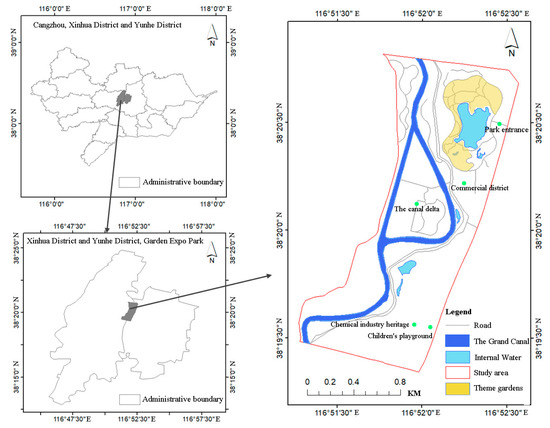
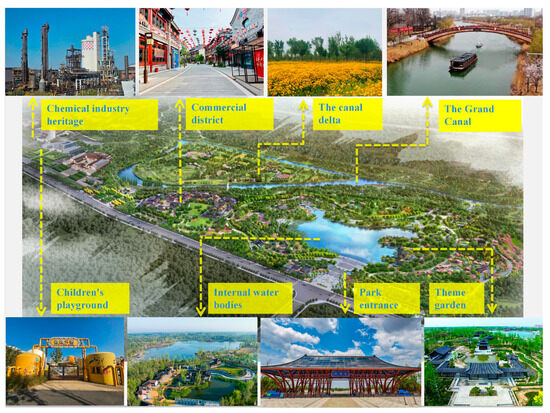
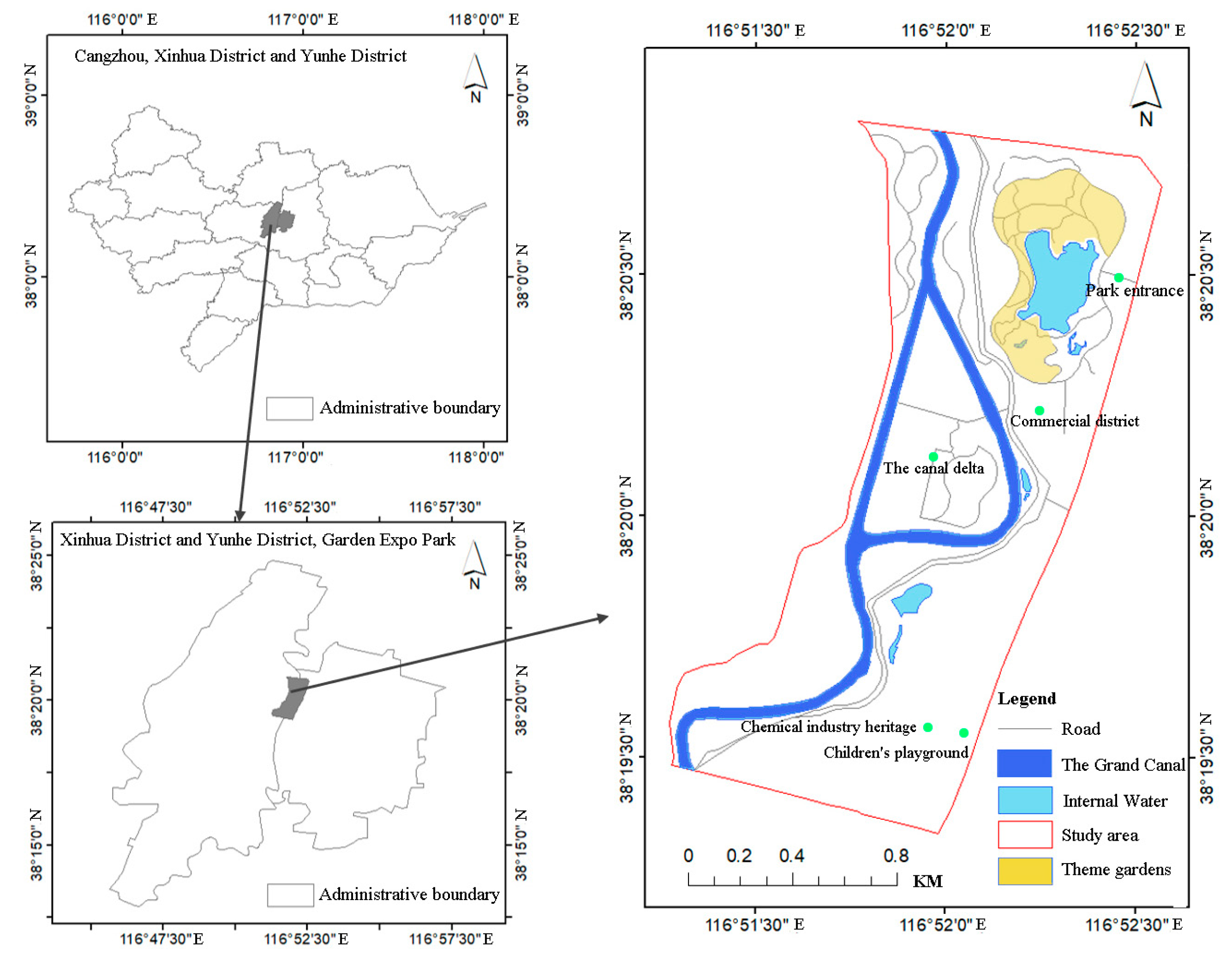
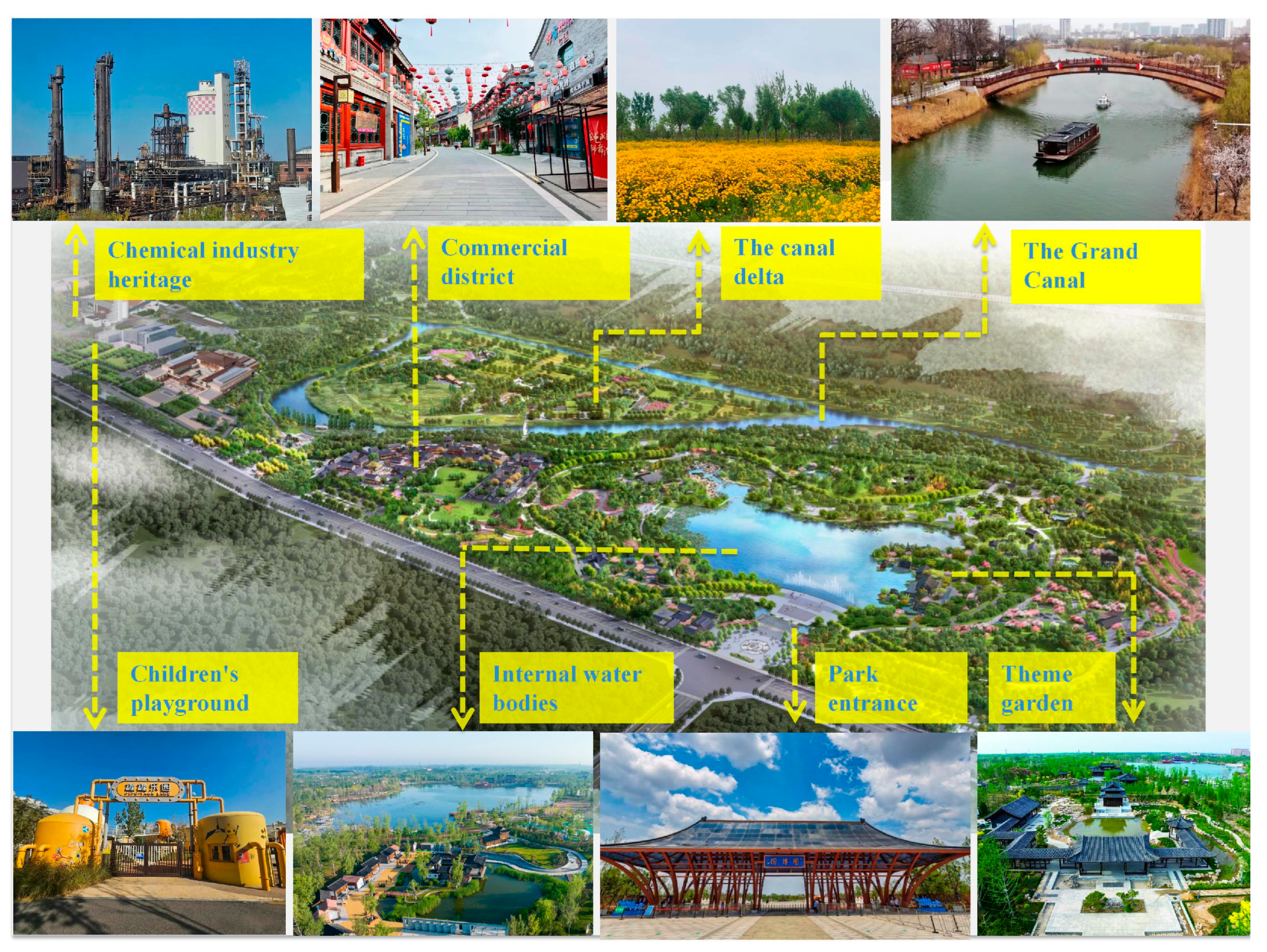
The Cangzhou Garden Expo Park, as an important node in the ecological restoration of the Grand Canal, serves as both an ecological corridor and a cultural tourism landmark for the city. The study area is far from the city’s commercial and residential centers, boasting a healthy ecological environment. The Grand Canal flows through the park, its waterways wide and its scenery beautiful. The park covers an area of 246.05 hectares (Figure 1), divided into three interconnected areas: north, central, and south. The northern part of the park is mainly theme gardens of the Garden Expo Park, which reflect the cultural characteristics of different cities in Hebei Province; the central part includes the Canal Delta Ecological Park and the Cangzhou Lane commercial district; and the southern part includes children’s playground, upscale hotels, and a large-scale chemical industry heritage exhibition area. In terms of road density, the northern part has the highest density, followed by the central part, while the southern part has the lowest density due to its large plaza area.
Figure 1.
Location of the study area and distribution of major scenic attractions.
3. Research Methods and Data Processing
3.1. SolVES Model and MaxEnt Model
SolVES can comprehensively assess, quantify, and map the social values of ecosystem services, and conduct social values analysis in areas such as recreation, esthetic, historical, education, and biodiversity [29]. In assessing and quantifying the social value, the assessment results are represented by a value index ranging from 1 to 10, and the larger the value index, the higher the social value [25].
The SolVES model consists of three sub-models: the ecosystem services social-values model, the value mapping model, and the value transfer mapping model. The ecosystem services social-values model and the value mapping model need to be used in combination and require data such as geographical environmental data, survey data, and study area boundaries. The value transfer mapping model can be used independently and is suitable for converting areas with existing survey data to study areas lacking such data [26]. This study employed the ecosystem services social-values model and the value mapping model from SolVES to assess the social values of ecosystem services in the Cangzhou Garden Expo Park.
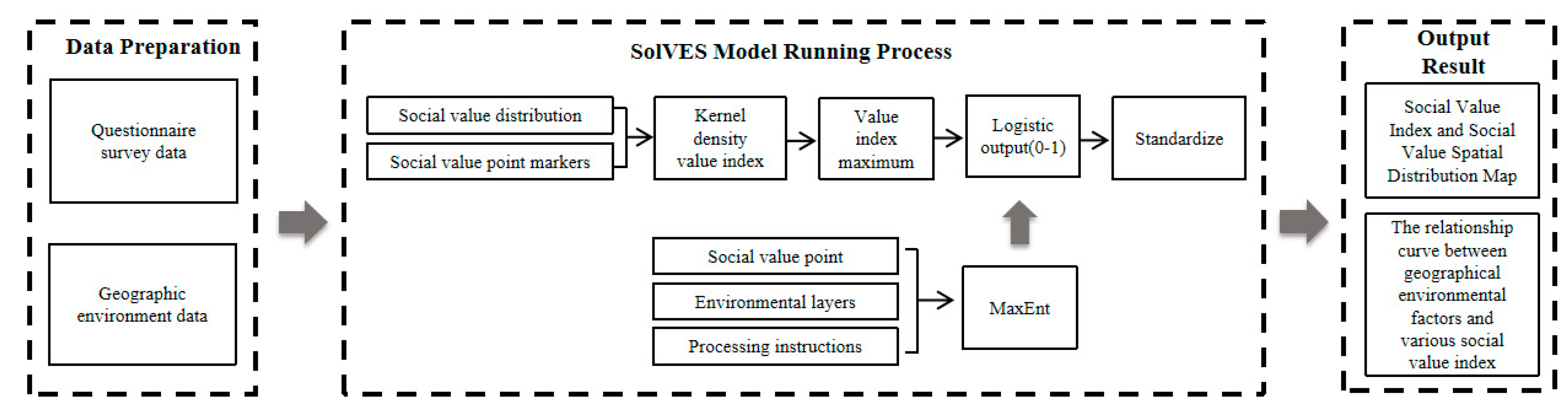
During the SolVES model operation, the social value model first selected the respondent group and obtained the maximum value index through social value point marking and social value allocation; secondly, MaxEnt statistics were used for logistic output, and the value index was standardized; the final output results were the social value index and its spatial distribution map, and the relationship curved between geographical environmental factors and various social values (Figure 2).
Figure 2.
SolVES model operation and analysis process.
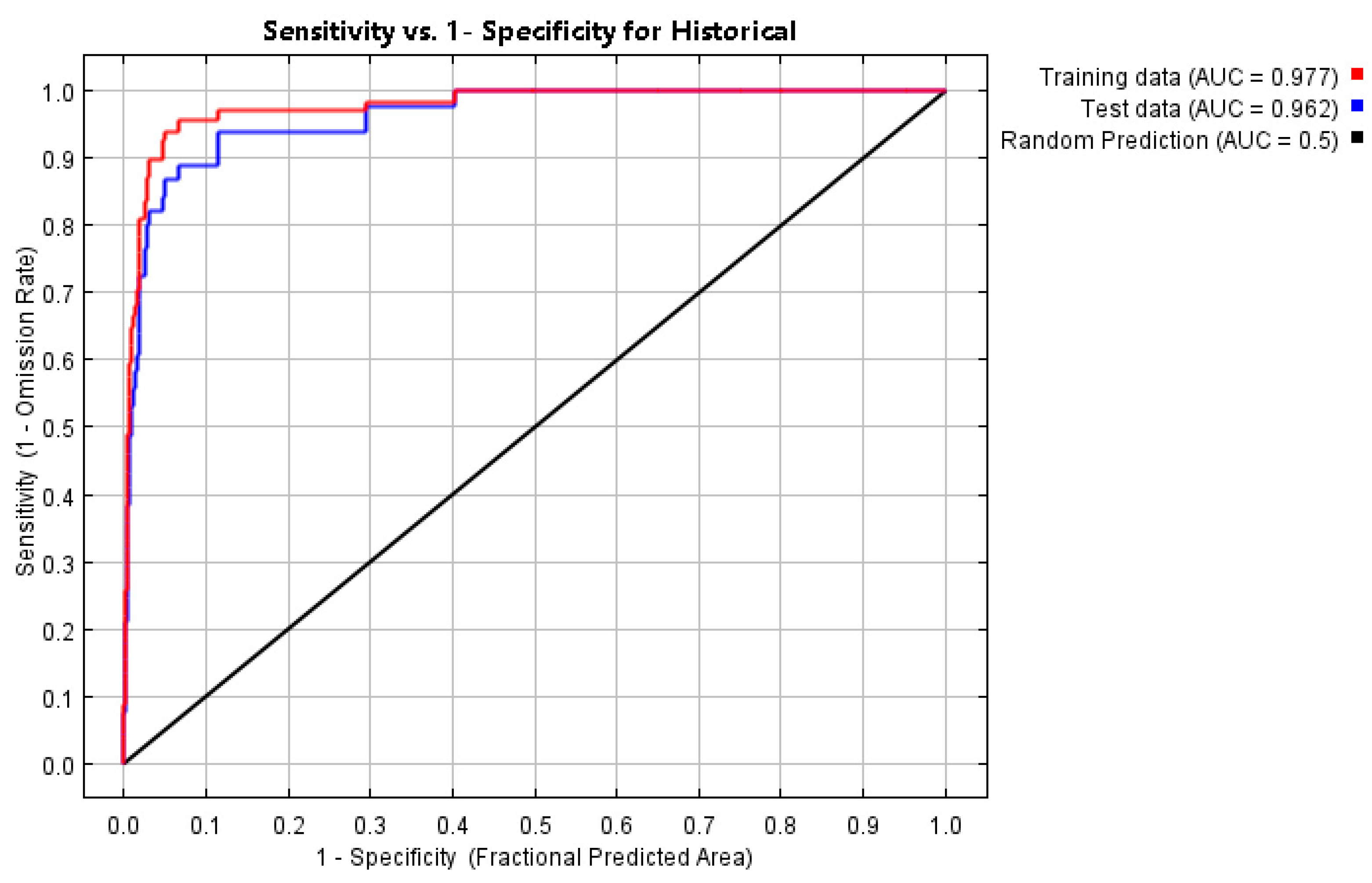
The maximum entropy (MaxEnt) modeling program contained in SolVES can generate statistical models to explain the relationship between social values and environmental layers, and complete the visualization mapping of assessment results. During analysis, the SolVES model imports geographical environmental data into MaxEnt, randomly selects 25% of distribution points as the test dataset, and uses the remaining 75% as the training dataset. It then performs a jackknife test. The MaxEnt results are output as a map in ArcGIS 10.5 software, generating a statistical model that reveals the relationship between the social value index map and environmental factors [30]. In addition, the receiver operating characteristic curve generated by MaxEnt and its related Area Under the Curve (AUC) can be used to evaluate the credibility of the analysis results of the SolVES model (Figure 3). The AUC value is a number between 0 and 1. When the AUC value is 0.5 or lower, the model performs poorly; when the AUC value is 0.7 or higher, the model is considered to have potential application value [31].
Figure 3.
Receiver operating characteristic curve and associated Area Under the Curve (AUC) statistics generated by MaxEnt. Note: This image was from the research outputs, and it represented the AUC parameter value of historical value output by the solves model. It is for illustrative purposes only.
3.2. Data Collection
3.2.1. Questionnaire Survey
The questionnaire consisted of four parts: questionnaire purpose and survey context explanation, respondent’s visit characteristics and feelings, social value point marking and value allocation, and respondent’s basic situation. Among these, the social value allocation and value point marking constituted the core data required for SolVES model operation. To ensure that the selected social values covered the visitors’ perception of the Garden Expo Park, this study first used Shrrouse’s social values classification system [31] as a basis, referred to the social value classifications of other related studies [26,32,33], and combined the cultural–ecological composite attributes of the Garden Expo Park as an urban cultural landscape to formulate an initial framework of six social values: esthetic, biodiversity, historical, recreation, education, and life-sustaining value. The initial framework was verified during the preliminary survey, and the respondents believed that there was no conceptual ambiguity or value omission in the social value classification, so the six social values were formally determined (Table 1). In terms of social values allocation, the respondents were asked to allocate 100 yuan of virtual money to the social values they considered important based on their personal visit experience. For the social values of the allocated amount, they were asked to mark 1–4 locations they considered most representative on the park map, namely social value points. The questionnaire provided some locations as references, and respondents can also mark new locations on the park map.
Table 1.
Types and descriptions of social value of ecosystem services in the Garden Expo Park.
The questionnaire survey was divided into two stages. The first stage was preliminary survey, which was conducted in early April 2025. Survey personnel distributed 30 questionnaires to visitors in the Garden Expo Park. In order to enable visitors to fully understand the ecosystem service of the Garden Expo Park, survey personnel introduced and explained relevant terms to the respondents, then conducted the survey after the respondents confirmed their understanding. After respondents filled out the questionnaires, survey personnel chatted with them to understand their feelings and encouraged them to express their opinions and suggestions using the questionnaire. After preliminary survey, the questionnaire content was revised and the questionnaire structure was optimized. The number of questions in each questionnaire was adjusted based on the time it took respondents to complete them. Ultimately, each questionnaire took approximately 6 min to complete, a moderate duration that effectively improved the efficiency of the on-site survey and the willingness of respondents to participate. The second stage was the formal survey, conducted from 15 April 2025 to 31 August 2025, at the Garden Expo Park. The survey period included various holidays, weekends, and weekdays, ensuring a representative sample and data accuracy. The selection of respondents was based on on-site non-probability sampling; survey personnel randomly selected visitors at the park’s entrances and exits (which all visitors must pass through). After explaining their identity and purpose, the survey personnel explained the questionnaire content and asked respondents to complete the paper questionnaire themselves. To ensure data objectivity, no detailed descriptions were provided to respondents when they assigned values and marked social value points. Respondents who completed the questionnaire received a reward, such as a small toy or keychain. Regarding the number of respondents, drawing on the sample sizes of existing literature [17,23,26], the effective sample size for study areas with similar or larger spatial scales ranged from 200 to 400. Furthermore, given the relatively dispersed instantaneous visitor flow in the Garden Expo Park, the total number of potential respondents that can be reached within the research period was limited; therefore, the sample size setting must consider the feasibility of on-site investigation. In addition, considering the need for a sufficient number of spatial value points for the SolVES model to generate a robust value distribution map, the effective sample size for the formal survey was set at 340. Ultimately, 359 questionnaires were sent out, and a total of 339 questionnaires were successfully returned, with a response rate of 94.43%.
3.2.2. Geospatial Data
The social values of ecosystem are closely related to environmental factors. When applying the SolVES model, the selection of different environmental factors in geospatial data can have a differentiated impact on the social values assessment [26]. Accurate and comprehensive variables can effectively improve the credibility of the model [34]. Based on previous studies [21,35], most studies selected environmental factors in the SolVES model according to the environmental characteristics of the research object. The environmental factors applicable to urban ecosystems generally include elevation, slope and distance to the road [23]. Given the canal characteristics, slightly undulating terrain, and well-developed road network in the Cangzhou Garden Expo Park, four environmental factors—elevation, slope, distance to water, and distance to roads (Table 2)—were selected as influencing factors for the spatial distribution of the social values of ecosystem services in the study area. Using the vectorization tools in ArcGIS 10.5 software, the map of the Garden Expo Park was registered and vectorized to obtain the geospatial data of the park boundaries, roads and water of the study area. The pixel size of the above geospatial data is 30 m × 30 m. After projection transformation, the data is analyzed and calculated using the SolVE model.
Table 2.
Description of geospatial data.
3.3. Data Processing and Analysis
3.3.1. Overall Spatial Distribution of Social Value Points
The locations corresponding to each social value type identified by respondents in the questionnaire were entered into an Excel spreadsheet named “SURVEY_POINT,” matching each location with its latitude and longitude. The “SURVEY_POINT” spreadsheet was imported into ArcGIS for kernel density analysis to analyze the overall distribution of social value points.
3.3.2. Digitization of Social Values Allocation
The social values distribution data from the questionnaire was digitized to form the “VALUE_TYPES” and “VALUE_ALLOCATION” tables. These were imported into ArcGIS and combined with other geospatial data to form a file geodatabase. Analysis was then performed using the SolVES model’s social value module and value mapping module.
3.3.3. Model Credibility Verification
The Area Under the Curve (AUC) of the respondents’ working characteristics was used to describe the credibility of the model assessment results. The larger the value, the higher the credibility of the model assessment value [29].
3.3.4. Spatial Distribution of Various Social Values
The average nearest neighbor analysis was performed on the social value points corresponding to the six social values using the SolVES model to obtain the average nearest neighbor ratio (R) and standard deviation (Z), thereby determining the spatial clustering of each social value [29]. The questionnaire scores were normalized to obtain the maximum value index (M-VI) for each social value, which was then used to rank the social values.
3.3.5. Environmental Factors and Contribution Analysis
The importance of environmental factors (elevation, slope, distance to water, distance to roads) to the social values was analyzed. By running the SolVES model, the impact curves of environmental factors on each social value and the contribution of each environmental factor were obtained.
4. Results
4.1. Basic Characteristics and Visiting Characteristics of Respondents
This questionnaire survey covered a diverse range of visitors with strong randomness. Overall, the male-to-female ratio was roughly equal, with 179 women (52.80%). The majority of respondents were between 20 and 50 years old (73.15%). Respondents generally had a high level of education, with 54.27% holding a bachelor’s degree or higher.
Regarding the visitor origin, the Cangzhou Garden Expo Park primarily attracted visitors from Cangzhou city and nearby cities. Additionally, 39.23% of respondents lived in Cangzhou city, and 30.09% were from Cangzhou county, and 23.30% came from Beijing, Tianjin, and other cities in Hebei Province. Regarding the distribution of visitor origins, the proportion of non-local visitors increases significantly during holidays and weekends, indicating a more diversified group of visitors; in contrast, weekday visitors were mainly local residents.
According to the survey, 264 visitors visited 1–2 times a year, accounting for 77.87%; 53 people visited 3–5 times a year, accounting for 15.63%. The number of visitors with 6–10 or more visits was 10 and 12 respectively, accounting for only 6.49% of the total. Overall, visitors mainly visited sporadically, with a relatively low proportion of frequent repeat visits.
4.2. Model Performance Assessment
As shown in Table 3, the output AUC values of the MaxEnt statistical model for the social values of ecosystem services in the Garden Expo Park were all higher than 0.9, indicating that this study had a good assessment effect and high credibility on the social values of ecosystem services in the Garden Expo Park.
Table 3.
AUC values of six social values in Cangzhou Garden Expo Park.
4.3. Distribution of Social Value Points
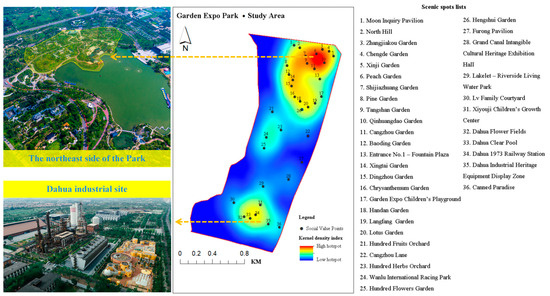
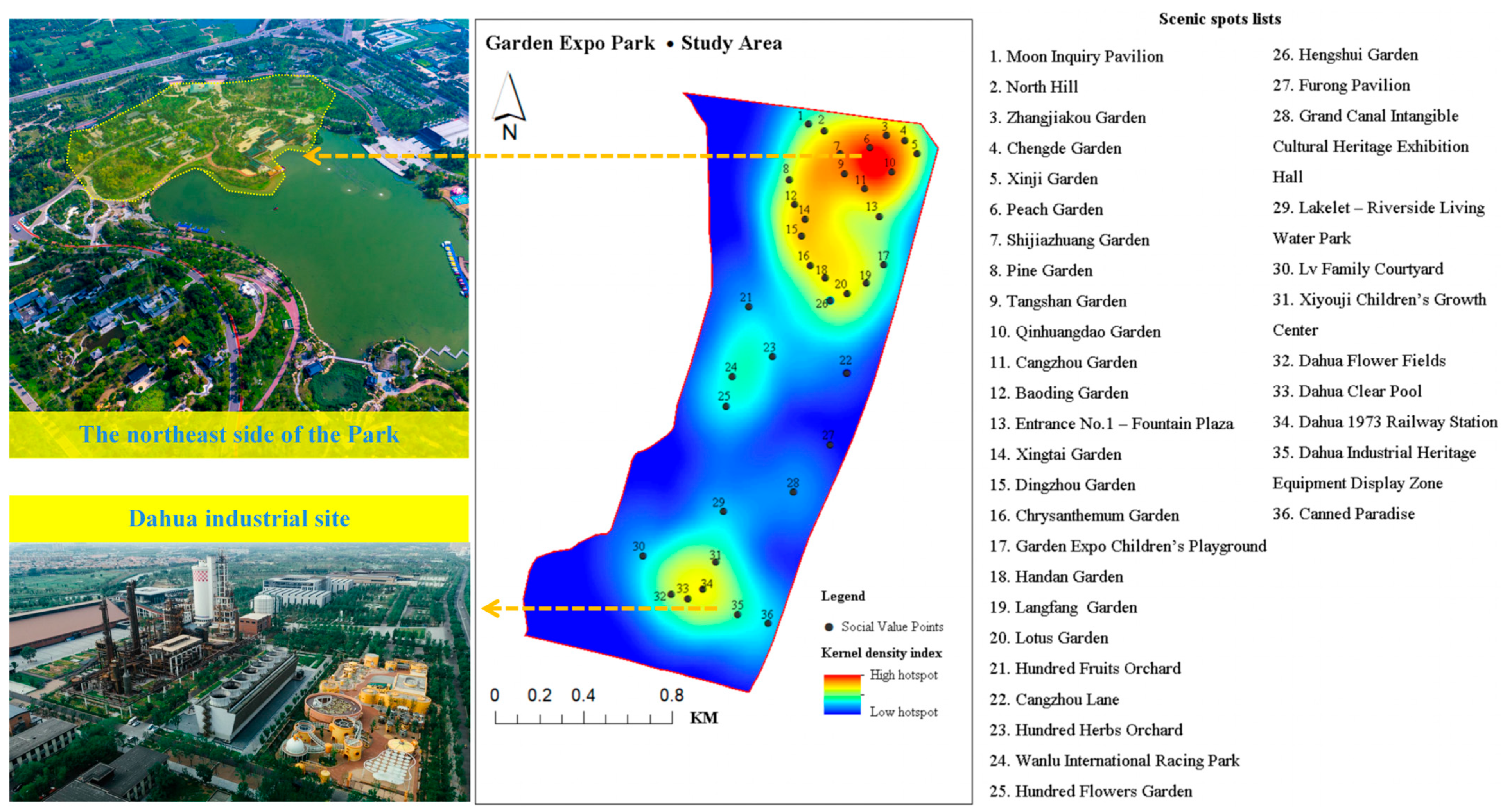
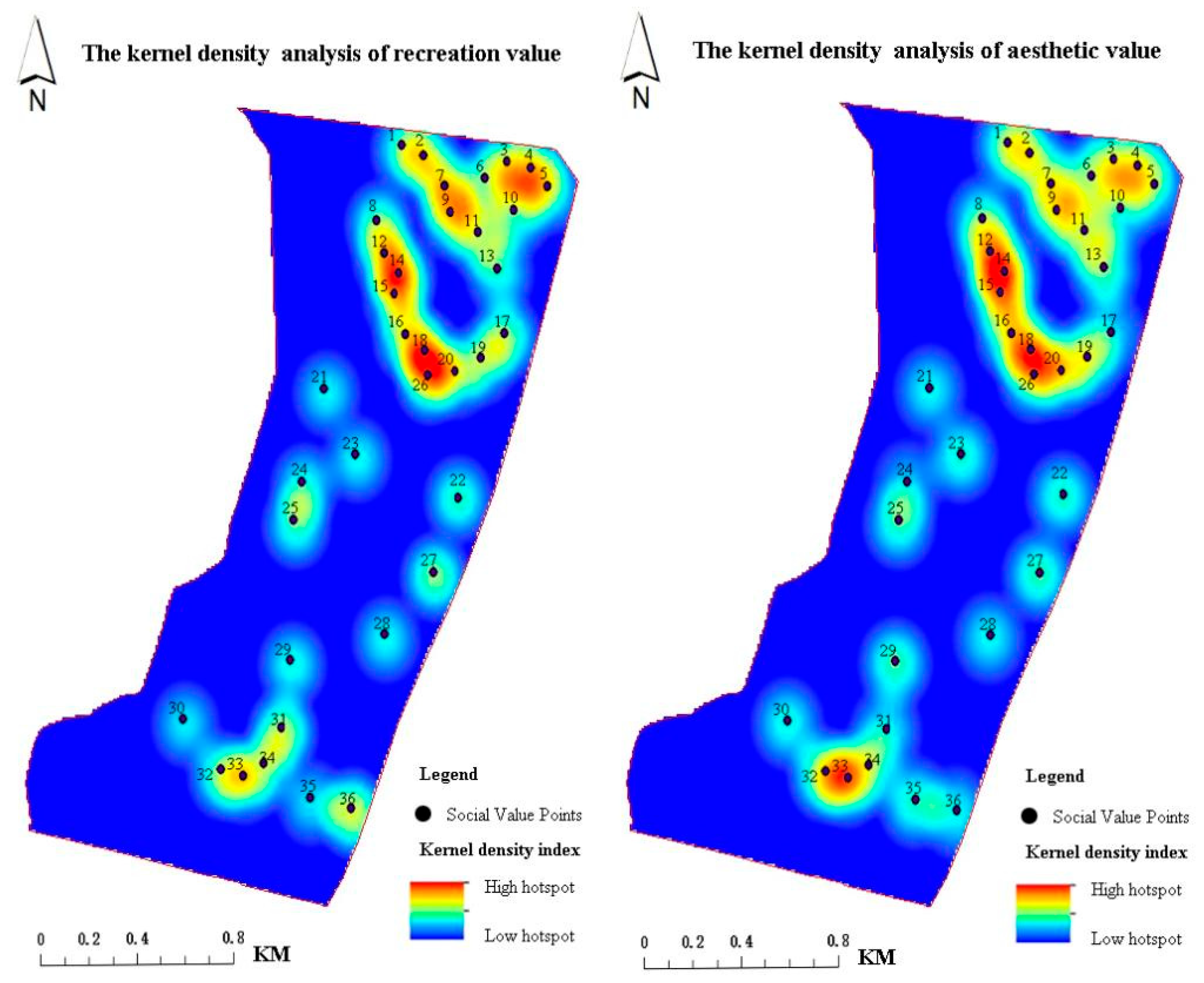
The distribution of social value points marked by respondents in the questionnaire partially reflected visitors’ preferences for different locations. In this survey, 339 visitors marked the social value points of the park, obtaining a total of 4088 social value points in terms of data (including duplicate markers for the same location). The spatial distribution ultimately corresponded to 36 locations within the Garden Expo Park (Figure 4). After conducting a kernel density analysis, the results showed that the density of social value points in the northeast side of the Garden Expo Park significantly exceeded that of other areas, mainly concentrated in the north of the park entrance, such as the areas enclosed by Tangshan Garden, Shijiazhuang Garden, Cangzhou Garden, and Peach Garden. These areas were closer to the internal lakes and offered higher recreational and scenic value. Secondarily, the concentrated areas of social value points are the Dahua industrial site on the south area of the park, centered around the Dahua Industrial Heritage Equipment Display Zone, and the Dahua 1973 Railway Station. There were still scattered low-value areas in the central part of the Garden Expo Park, including locations such as Hundred Fruits Orchard, Hundred Flowers Garden, and Wanlu International Racing Park. Overall, the most popular area was the northeast side near the water, accessible from the park entrance.
Figure 4.
Spatial distribution map of social value points in Cangzhou Expo Park.
4.4. Value Indices for Social Value
The average nearest neighbor results for the six social values indicated (Table 4) that all six social values of the Garden Expo Park ecosystem services exhibited significant spatial clustering patterns (R < 1 and the absolute value of Z is relatively large). Among these, recreation value (R = 0.004, Z = −66.851) showed the highest degree of spatial clustering, followed by esthetic value (R = 0.004, Z = −63.063) and historical value (R = 0.004, Z = −60.317). Biodiversity value is in the middle, while the clustering of education value and life-sustaining value was relatively insignificant.
Table 4.
Average nearest neighbor analysis results and maximum value index.
Regarding the maximum value index (M-VI) on a 10-point scale (Table 4), respondents’ preference for the six social values ranked as follows: recreation value > esthetic value > biodiversity value > historical value > education value > life-sustaining value. Overall, both education value and life-sustaining value lagged behind in both clustering patterns and maximum value index. Therefore, the subsequent study focused on the top four values: recreation, esthetic, biodiversity, and historical value.
4.5. Spatial Distribution Differences of Four Social Values
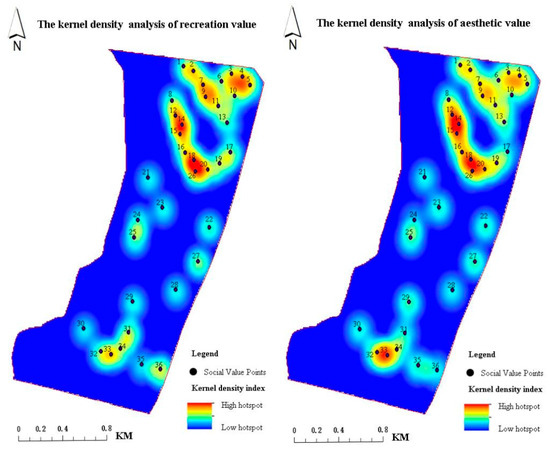
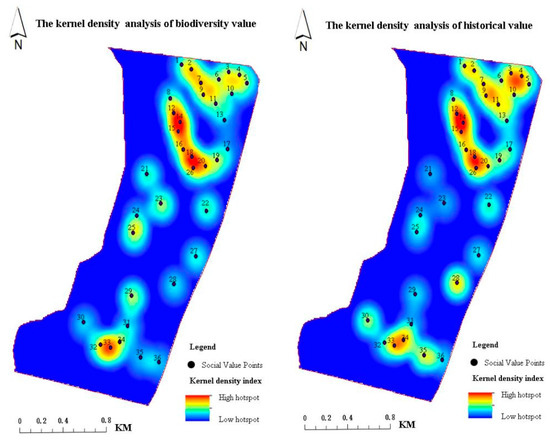
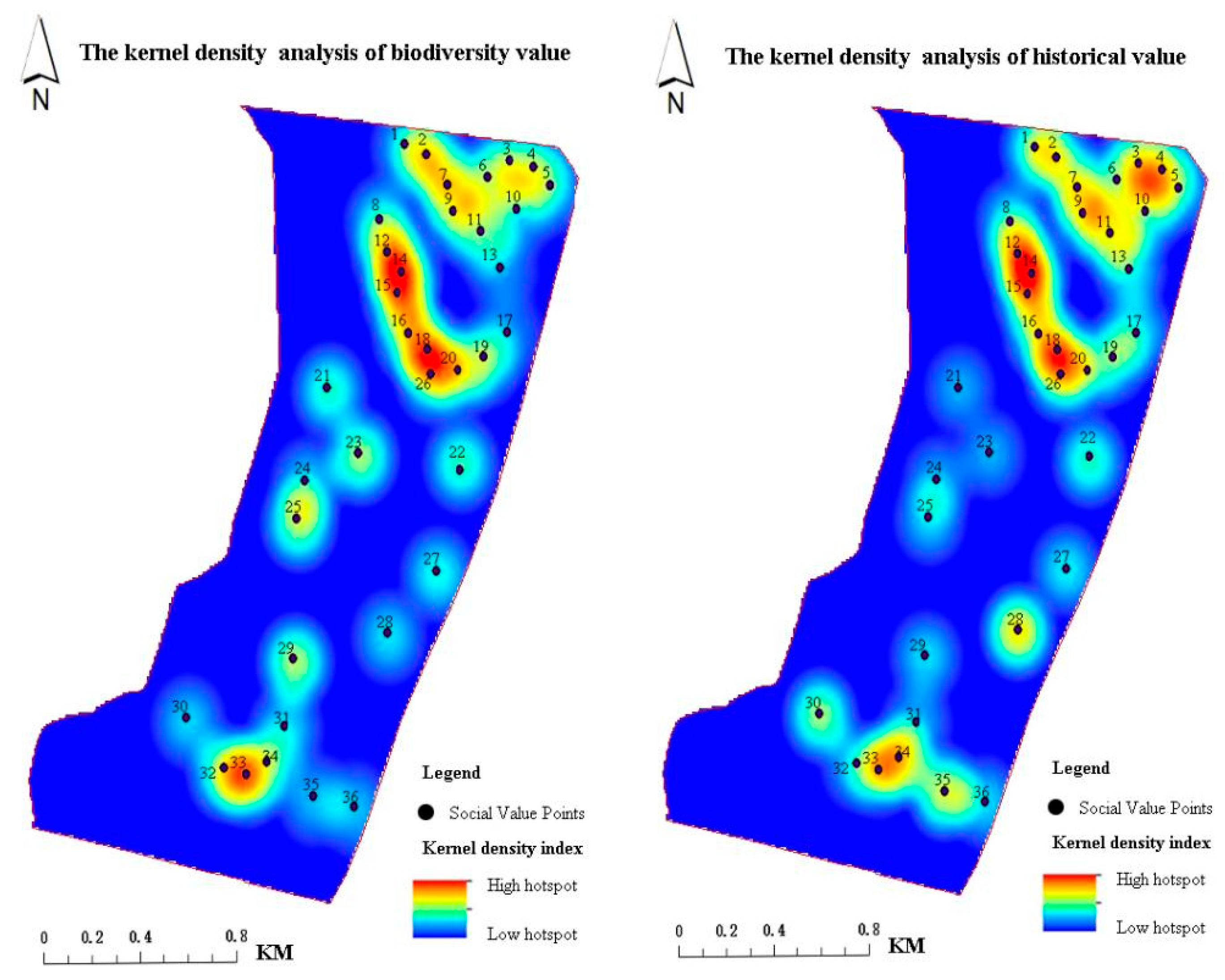
A kernel density analysis of high-value locations within Garden Expo Park—specifically those offering recreation, esthetic, biodiversity, and historical value that were popular among visitors (Figure 5)—revealed that sites with higher recreation value include Canned Paradise, Handan Garden, Hengshui Garden, and the Children’s Playground. This indicated that family-oriented visitors place greater emphasis on children’s play experience. Sites with high esthetic value include Dahua Flower Fields, Baoding Garden, and Handan Garden, Hengshui Garden, characterized by expansive flower displays and distinctive architecture. Sites with high biodiversity value include Dahua Flower Fields, Dahua Clear Pools, Hundred Fruit Garden, Hundred Herb Garden, and Hundred Flower Garden, primarily concentrated in the canal delta and surrounding the internal lake. Historical value was concentrated at sites like the Grand Canal Intangible Cultural Heritage Exhibition Hall, Lv Family Courtyard, Dahua 1973 Railway Station, and Dahua Industrial Heritage Equipment Display Zone. These sites were transformed from the original Dahua factory and Lvjiayuan Village, and contain many old buildings and industrial equipment. Overall, high-value and low-value areas of social values highly overlapped.
Figure 5.
Spatial distribution map of social value points in Cangzhou Garden Expo Park. Note: The numbers in the map represented different social value points, corresponding to 36 locations, with the same meaning as in Figure 4.
4.6. Impact of Environmental Factors on the Four Social Values
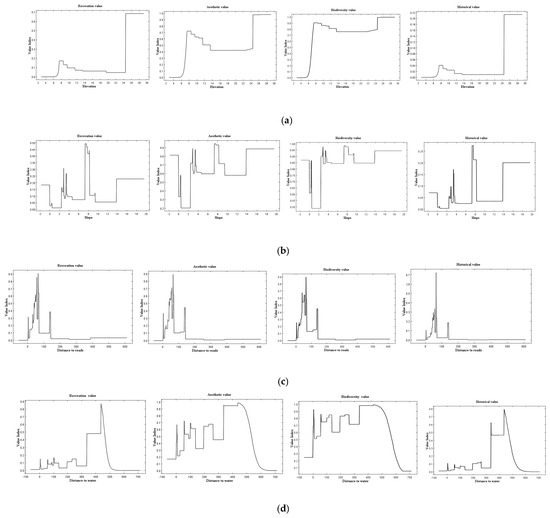
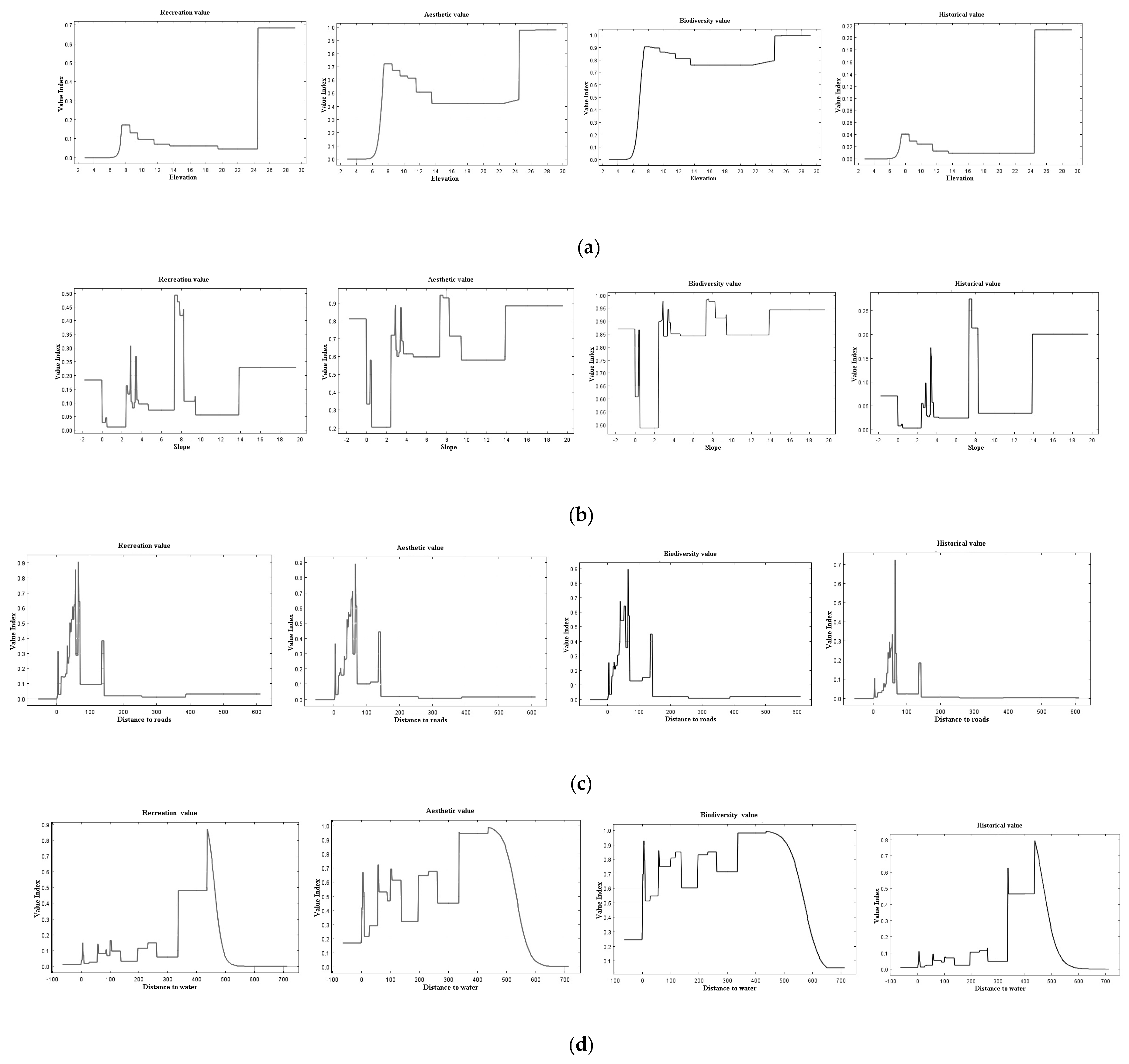
By using the maximum entropy (MaxEnt) statistical model, the relationship maps were generated for the four social values in relation to elevation, slope, distance to roads, and distance to water (Figure 6). In terms of the impact of elevation on the four social values (Figure 6a), the four social values have higher values at an elevation of 8 m, followed by a gradual decline, and then reached their highest levels again at elevations above 24 m. Among them, elevation had a stronger influence on esthetic value and biodiversity value, resulting in higher value indices, while its influence on recreation and historical values was weaker. This may be because sites with higher elevations can provide visitors with a wider view, and the small hills within the park had well-maintained vegetation, contributing to higher biodiversity value. In terms of slope (Figure 6b), the four social values were lowest when the slope was 0–2°. Value indices fluctuated across other slope ranges but generally peaked at an 8° slope for all four values. The overall terrain of the park was relatively flat, with limited variation in elevation and slope. There were some gentle slopes in the area, which were favored by visitors. In terms of the impact of distance to the road on the four social values (Figure 6c), all values peaked at 60 m, declined at 100 m, exhibited varying minor peaks at 130 m, and followed by a sustained low value. The highest value appeared at 60 m because it can cover most of the scenic attractions just 60 m away from the road, and then showed a downward trend, indicating that the farther away from the road, the more difficult it was for visitors to walk to reach, and the attractiveness of distant site decreased, resulting in a lower value index. In terms of the impact of distance to the water on the four social values (Figure 6d), the value indices fluctuated significantly. It had weaker effects on recreation and biodiversity values, but stronger effects on esthetic and historical values. Overall, the value index increased with the distance to the water. This was because the Grand Canal was located on the western side of the park. The canal was low-lying and obscured by dense vegetation, resulting in limited connectivity between the park roads and the canal. Visitors did not engage in close-up water activities but could instead enjoy views of the canal from the buildings farther away from the water.
Figure 6.
The relationship between four social values and environmental factors. (a) The relationship between recreation, esthetic, biodiversity, historical value and elevation; (b) the relationship between recreation, esthetic, biodiversity, historical value and slope; (c) the relationship between recreation, esthetic, biodiversity, historical value and the distance to roads; and (d) the relationship between recreation, esthetic, biodiversity, historical value and the distance to water.
Meanwhile, the MaxEnt statistical model can analyze the contribution of each environmental factor to social values [31]. As shown in Table 5, there were certain differences in the impact of different environmental factors on recreation, esthetic, biodiversity, and historical value, but the overall trends were consistent. Distance to roads contributed the highest percentage to all value types, exceeding 50% in each case. Combined with the consistent results of the impact of distance from the road on environmental factors in Figure 6b, this indicated that internal park accessibility played a crucial role in visitors’ perceived value. Areas with dense road networks and convenient walking typically concentrated more social value points, reflecting visitors’ preference for recreation, viewing, and experiential activities in easily accessible spaces. Slope contributed between 22.82% and 25.69%, ranking as the second-most influential factor. The park made use of slope variations to create winding paths, resulting in better views and a sense of spatial variation, thereby stimulating visitors’ esthetic pleasure and exploratory interest. Particularly for historical value, slope exhibited the highest contribution rate (25.69%). The social value points with rich slope changes in the park were mainly the exhibition area of Dahua Industry Heritage Display Zone and its surroundings. Visitors passing through the industrial factory area with undulating slopes can help form a profound industrial spatial memory, thereby triggering resonance and understanding of historical culture. The contribution rate of distance to water ranged between 16.99% and 18.94%, exerting relatively minor influence overall but showing significant effects on esthetic and biodiversity values. Most social value points within the park were laid out along the internal lake, and the overall landscape perception largely depended on the lake and the canal features. Meanwhile, the canal delta region constituted a high-value area for biodiversity, with its formation also primarily relying on the canal system. However, due to the closed nature of the canal on the west side of the park, visitor participation was limited, resulting in a low contribution to its social values. Elevation contributed between 5% and 7% to the overall values, indicating its relatively limited influence on the distribution of social values. This was mainly due to the overall flat terrain of the park, with an elevation difference of only 23 m, lacking scenic views from higher vantage points and clear vantage points.
Table 5.
Contribution rate of environmental factors to social values.
5. Suggestions for Enhancing the Social Value of the Ecosystem Services in Cangzhou Garden Expo Park
5.1. Problem Analysis and Countermeasure Response
5.1.1. Improve Transportation and Guided Tour System
From the spatial distribution of social value points, it can be seen that social value points were highly concentrated at the park entrance area and the northern side of the internal lake. After entering the park, the site was spacious, the road along lake was winding and meandering, and the waterside movie screenings have a good visual effect, which can attract a large number of visitors. However, this may also be due to the large area of the park and the fact that internal transportation was only available on foot, and public transportation was charged. Visitors were affected by physical strength and their preferred locations were concentrated near the park entrance and roads, then resulting in low utilization of park resources (Table 6). Therefore, a low-cost or free shuttle systems should be established within the park. The text-based signage or digital navigation and spatial guidance system should be used to guide visitors and ensure convenient access to all sites within the park.
Table 6.
Problem analysis and countermeasure response matrix.
5.1.2. Creating Differentiated Park Characteristics
The distribution of social values reflected, to some extent, the diverse value needs of visitors. The differences in the distribution of the four social values showed that the overall distribution of different social values in the Garden Expo Park was highly concentrated. This indicated that visitors perceived multiple social value in the same popular areas. This reflected the park’s design, with its emphasis on integrating multiple values and creating a comprehensive experience, and also suggests that these popular areas can further strengthen the value characteristics of different areas. So it is necessary to more clearly shape the thematic landscapes and service functions of different areas in future planning.
Park managers should create differentiated characteristic scenic attractions, enhance visitors’ perception of the social values of different areas, and thus improve the balanced distribution of the overall ecosystem service social values of the park. For example, the canal delta area primarily offers biodiversity value, and efforts should be made to improve accessibility and increase experiential activities, rather than simply viewing (Table 6).
5.1.3. Enhancing the Spatial Value of the Grand Canal
The Grand Canal, as an important support for the ecological pattern and cultural space of the Garden Expo Park, carries the historical context and regional identity of Cangzhou, enabling visitors to form a unique cultural resonance during the process of viewing and relaxation. However, based on the distribution of social values and the contribution rate of environmental factors, the Grand Canal’s impact on visitors’ perceptions was insufficient. This was mainly because the waterfront areas along the Grand Canal within the park were not yet fully open, and the synergistic effect of the canal’s cultural and ecological landscape has not yet been fully realized. Therefore, based on the existing topography, waterfront spaces should be added to the canal area to create diverse recreational scenes and strengthen the canal’s landscape scenarios and cultural perception in the park (Table 6).
5.1.4. Optimizing Landscape Construction in Key Areas
From the perspective of the relationship between the four social values and geographical environmental factors, the four social values fluctuated frequently within the range of 8–24 m in elevation, 2–8 degrees in slope, and 60–100 m away from the road. Visitors had a high perception of esthetic, recreation, biodiversity, and historical values. Future planning and construction should focus on the above-mentioned areas.
5.2. Establishing a Monitoring and Evaluation Mechanism
To ensure the effectiveness of response measures and achieve dynamic optimization of management strategies, a systematic monitoring and evaluation mechanism needs to be established. First, a public social value perception survey should be conducted every 3–5 years, using the social values and point marking methods employed in this study to continuously track the spatial distribution evolution of each social value within the park. The survey will focus on assessing changes in visitor rates and perceived value in remote areas such as the canal delta after transportation connectivity optimization, the degree of improvement in spatial balance of different social values after the construction of themed landscape areas, and the effect of waterfront spaces on enhancing the perceived cultural value of the canal area. Second, multi-source behavioral data fusion analysis will be introduced. By combining objective behavioral data such as mobile phone signaling data, social media check-in photos, and park Wi-Fi access data, managers can analyze visitors’ movement trajectories and hotspots, and spatially overlay these with subjective perceived value analysis, to more accurately identify “high perception-low usage” or “low perception-high usage” areas, providing dual evidence to support facility optimization. Finally, it is necessary to strengthen the comparative assessment before and after the implementation of the plan, to examine the scientific nature of the planning decision, and revise the subsequent management strategy accordingly to form a closed-loop management process of “planning-implementation-monitoring-optimization.”
6. Discussion
6.1. Limitations of the Questionnaire Survey
In this study, the questionnaires were distributed randomly. Visitors of different ages, education levels, purposes of visit, and spatial experience may have differences in their understanding and value judgments of the questionnaires, which made the survey results subjective to some extent. This issue has also been widely pointed out and discussed in previous studies on related social values [36,37]. In addition, this study conducted 339 questionnaires. Although the sample size was within the typical range of SolVES studies, the representativeness of the sample composition remained a limitation. Regarding the respondents, the majority were low-frequency visitors (77.87% visited 1–2 times per year). These visitors often lacked in-depth understanding of the park’s overall spatial layout and the characteristics of each area, and their experience relied more on limited perception of popular attractions or entrance areas. This perception of cultural novelty can influence respondents’ judgment of social values. Due to unfamiliarity with the overall park space, respondents may tend to choose the most memorable landmarks when marking social value points, while paying insufficient attention to deeper areas or other areas, thus overestimating popular areas and underestimating less popular areas. Future research will further expand the questionnaire respondents and conduct more in-depth and detailed surveys targeting different stakeholders, comparing the differences in social value perception between low-frequency and high-frequency visitors, and more comprehensively revealing the values preferences of groups with different usage intensities.
In terms of time scale, this study’s questionnaire survey covered spring and summer, but failed to conduct uniform sampling throughout the year and across all types of holidays. Seasonal variations in vegetation conditions, biodiversity, and climate comfort can influence visitors’ perceptions and assessments of ecosystem services [36]. In addition, different weather conditions and different holidays may affect tourists’ willingness to travel, the composition of the population, and their perceived preferences for ecosystem services [38]. Overall, the distribution of the survey time has some impact on the research results. Future research will further refine the survey timing design, conduct surveys throughout the four seasons, implement multi-group comparative analysis, and adopt a stratified sampling strategy to more rigorously and comprehensively assess the distribution of social values.
6.2. Characteristics of the Concentrated Spatial Distribution of Social Values
In this study, the distribution of different social values in the park was highly concentrated with little variation, which was quite different from previous studies [23,36,38], which showed significant differences in the spatial distribution of social values. Compared with previous studies, the excessive concentration of social value spatial distribution in this study was due to two main reasons. On the one hand, it was difficult for visitors to have a comprehensive understanding of all the internal areas when they were in a large area, and this limited spatial experience may lead to more value recognition and selection bias towards impressive scenic attractions, but on the other hand, inconvenient transportation has indeed seriously affected the frequency of visitors traveling to the depths of the park, to the point that few visitors reached the canal delta area in the survey.
6.3. Environmental Variables and Their Interpretive Power
Environmental factors can affect the diversity and intensity of social values [21]. Compared with previous studies [34,39,40], the selection of environmental factors was based on the characteristics of the research area and the setting of research objectives, and the impact forms and degrees of environmental factors on the research area were also different. The influence of distance to the road in this study was significantly higher than that in the above studies, which was closely related to the inconvenience of public transportation in the Garden Expo Park. In practical management practices, in order to more accurately screen out environmental factors that have a more significant impact on enhancing ecosystem functions, it is necessary to increase the number of environmental factors after having sufficient understanding of the study area, such as infrastructure, land cover [41], Normalized Difference Vegetation Index (NDVI), and distance to residential areas [23]. This study only selected environmental variables, while, in urban cultural landscapes, the perception of social values can also be significantly influenced by humanistic-social dimension variables, such as cultural facilities and service infrastructure. Since the Cangzhou Garden Expo Park consists of multiple separate theme gardens, the gardens themselves possess cultural facilities, making it difficult to extract cultural facilities as an independent spatial variable without overlap with the social value points identified by visitors. Furthermore, service facilities within the park are usually embedded within the theme gardens or temporarily adjusted during large-scale seasonal events (such as autumn chrysanthemum exhibition and spring lantern festival), resulting in unstable spatial distribution of service facilities. Therefore, this study prioritized relatively stable geographical environmental variables. However, this choice inevitably limited the model’s explanatory power in the humanistic-social dimensions. For example, the contribution rate of distance to water was relatively low, reflecting not only the difficulty for visitors to access the canal but also a possible lack of relevant supplementary variables. Therefore, future research could integrate humanistic-social variables and more environmental variables into the SolVES framework; a more comprehensive variable system will help enhance the SolVES model’s explanatory power in cultural–ecological complex landscape.
7. Conclusions
This study used the Cangzhou Garden Expo Park as an empirical case, employing the SolVES model to quantify visitors’ perceptions of the social value of urban cultural landscape ecosystem services. It systematically analyzed the spatial distribution characteristics of social values and its environmental influencing factors, aiming to explore the methodological pathways and practical application of urban cultural landscape social value assessment.
Firstly, the study methodologically validated the good applicability of the SolVES model in assessing the social values of urban cultural landscape ecosystem services. The model performance assessment values for all six social values were higher than 0.9, indicating that the model had good applicability and credibility in the social value assessment of urban cultural landscape ecosystem services. More importantly, this study revealed the formation mechanism of spatial distribution differences in social values by introducing quantitative analysis of geographical environmental factors. This analytical framework of “value mapping + impact attribution” provided a replicable methodological reference for the in-depth application of the SolVES model in urban cultural landscapes, realizing a methodological expansion from “what” to “why”.
At the empirical level, the top four social values were selected for focused analysis. These four social values exhibited significant spatial concentrated characteristics, with recreation and esthetic value indices being the highest, reflecting visitors’ significant preference for sightseeing and recreational functions. While the spatial distribution of the four social values varied slightly, it generally tended towards consistency, indicating a lack of strong distinctiveness in the development of park landscape. From the perspective of influencing environmental factors, the geographical environmental factors on social values influence were, in descending order: distance to roads, slope, distance to water, and elevation. Specifically, the impact of distance to the road on social value peaked within approximately 60 m, with the highest value index observed in gentle slopes of about 8°. Elevation contributed the least to social values, and insufficient accessibility to the Grand Canal resulted in areas farther from the canal having higher values.
Based on the methodological exploration and empirical findings, this study enhanced the understanding of visitors’ experiential preferences in urban cultural landscape, providing a practical basis for improving spatial attractiveness, promoting the coordinated development of social and economic benefits, and providing clear practical guidance for the planning and management of urban cultural landscape. For landscape designers, the social value spatial distribution map generated by the SolVES model can directly serves as a basis for “evidence-based design”, guiding designers on the problems that need to be addressed in high-value perception areas and low-value perception areas. For policymakers and park managers, the results of the SolVES model can suggest a shift in management strategies from simple facility maintenance to “social value-oriented spatial management”, maximizing the social benefits of cultural landscape.
Author Contributions
Conceptualization, Y.G. and S.L.; methodology, Y.G. and S.L.; validation, Y.G.; formal analysis, Y.G.; investigation, Y.G.; resources, S.L.; data curation, Y.D. (Yao Du) and Y.G.; writing—review and editing, Y.G.; visualization, Y.G.; supervision, S.L. and Y.D. (Yuhong Dong). All authors have read and agreed to the published version of the manuscript.
Funding
The research was funded by the National Natural Science Foundation of China (42271097), and Science Research Project of Hebei Education Department (QN2025704).
Data Availability Statement
Data available at https://doi.org/10.17632/73tdgzrkfr.1.
Acknowledgments
We sincerely thank the anonymous reviewers for their time and effort in reviewing this paper. Their suggestions on the research objectives, research methods, and structural framework have been very helpful to this paper.
Conflicts of Interest
The authors declare no conflicts of interest.
References
- Taylor, K. The Historic Urban Landscape paradigm and cities as cultural landscapes. Challenging orthodoxy in urban conservation. Landsc. Res. 2016, 41, 471–480. [Google Scholar] [CrossRef] [Scilit]
- World Heritage Convention. Cultural Landscape. Available online: http://whc.unesco.org/en/culturallandscape (accessed on 6 January 2026).
- Gonçalves, G.M.; de Faria, A.P.N. Incorporating landscape cultural and aesthetical aspects in the analysis and strategies of Planning and Urban Design in a coastal settlement of Pelotas, in Southern Brazil. Rev. Geogr. Norte Gd. 2023, 85, 1–21. [Google Scholar]
- Lin, H.; Hong, X.-C.; Wen, C.; Hu, F. The historical sensing of urban forest based on the indicators of CES and landscape categories: A case of Kushan scenic area in CHINA. Ecol. Indic. 2024, 166, 112440. [Google Scholar] [CrossRef] [Scilit]
- Ziyaee, M. Assessment of urban identity through a matrix of cultural landscapes. Cities 2018, 74, 21–31. [Google Scholar] [CrossRef] [Scilit]
- Scholte, S.S.K.; van Teeffelen, A.J.A.; Verburg, P.H. Integrating socio-cultural perspectives into ecosystem service valuation: A review of concepts and methods. Ecol. Econ. 2015, 114, 67–78. [Google Scholar] [CrossRef] [Scilit]
- Brander, L.; de Groot, R.; Schägner, J.; Guisado-Goñi, V.; van’t Hoff, V.; Solomonides, S.; McVittie, A.; Eppink, F.; Sposato, M.; Do, L.; et al. Economic values for ecosystem services: A global synthesis and way forward. Ecosyst. Serv. 2024, 66, 13. [Google Scholar] [CrossRef] [Scilit]
- Sjafrie, N.D.M.; Rahmadi, P.; Triyono, T.; Kurniawan, F.; Supriyadi, I.H.; Zulpikar, F.; Adrianto, L.; Rahmawati, S.; Hernawan, U.E. Monetary value of ecosystem services in unhealthy seagrass meadows in Indonesia. Ecosyst. Serv. 2024, 70, 13. [Google Scholar] [CrossRef] [Scilit]
- Zabel, A.; Bokusheva, R.; Bozzola, M. Dealing with negative monetary ecosystem services values in environmental and economic accounting. Ecosyst. Serv. 2024, 66, 6. [Google Scholar] [CrossRef] [Scilit]
- Zang, S.; Wu, C.; Liu, H.; Na, X. Impact of urbanization on natural ecosystem service values: A comparative study. Environ. Monit. Assess. 2011, 179, 575–588. [Google Scholar] [CrossRef] [Scilit] [PubMed]
- van Berkel, D.B.; Verburg, P.H. Spatial quantification and valuation of cultural ecosystem services in an agricultural landscape. Ecol. Indic. 2014, 37, 163–174. [Google Scholar] [CrossRef] [Scilit]
- Christie, M.; Fazey, I.; Cooper, R.; Hyde, T.; Kenter, J.O. An evaluation of monetary and non-monetary techniques for assessing the importance of biodiversity and ecosystem services to people in countries with developing economies. Ecol. Econ. 2012, 83, 67–78. [Google Scholar] [CrossRef] [Scilit]
- Czembrowski, P.; Kronenberg, J.; Czepkiewicz, M. Integrating non-monetary and monetary valuation methods—SoftGIS and hedonic pricing. Ecol. Econ. 2016, 130, 166–175. [Google Scholar] [CrossRef] [Scilit]
- Huang, S.; Tian, T.; Zhai, L.; Deng, L.; Che, Y. Understanding the dynamic changes in wetland cultural ecosystem services: Integrating annual social media data into the SolVES. Appl. Geogr. 2023, 156, 102992. [Google Scholar] [CrossRef] [Scilit]
- Bryce, R.; Irvine, K.N.; Church, A.; Fish, R.; Ranger, S.; Kenter, J.O. Subjective well-being indicators for large-scale assessment of cultural ecosystem services. Ecosyst. Serv. 2016, 21, 258–269. [Google Scholar] [CrossRef] [Scilit]
- Donahue, M.L.; Keeler, B.L.; Wood, S.A.; Fisher, D.M.; Hamstead, Z.A.; McPhearson, T. Using social media to understand drivers of urban park visitation in the Twin Cities, MN. Landsc. Urban Plan. 2018, 175, 1–10. [Google Scholar] [CrossRef] [Scilit]
- Martín-López, B.; Iniesta-Arandia, I.; García-Llorente, M.; Palomo, I.; Casado-Arzuaga, I.; Del Amo, D.G.; Gómez-Baggethun, E.; Oteros-Rozas, E.; Palacios-Agundez, I.; Willaarts, B.; et al. Uncovering ecosystem service bundles through social preferences. PLoS ONE 2012, 7, e38970. [Google Scholar] [CrossRef] [Scilit]
- Plieninger, T.; Dijks, S.; Oteros-Rozas, E.; Bieling, C. Assessing, mapping, and quantifying cultural ecosystem services at community level. Land Use Policy 2013, 33, 118–129. [Google Scholar] [CrossRef] [Scilit]
- Yaman, Y.; Örücü, S. Spatial Distribution of Cultural Ecosystem Services in Rural Landscapes Using PGIS and SolVES. Sustainability 2025, 17, 18. [Google Scholar] [CrossRef] [Scilit]
- Gould, R.K.; Adams, A.; Vivanco, L. Looking into the dragons of cultural ecosystem services. Ecosyst. People 2020, 16, 257–272. [Google Scholar] [CrossRef] [Scilit]
- Zhang, H.; Gao, Y.; Hua, Y.; Zhang, Y.; Liu, K. Assessing and mapping recreationists’ perceived social values for ecosystem services in the Qinling Mountains, China. Ecosyst. Serv. 2019, 39, 13. [Google Scholar] [CrossRef] [Scilit]
- Zhang, W.; Yu, Y.; Wu, X.; Pereira, P.; Borja, M.E.L. Integrating preferences and social values for ecosystem services in local ecological management: A framework applied in Xiaojiang Basin Yunnan province, China. Land Use Policy 2020, 91, 12. [Google Scholar] [CrossRef] [Scilit]
- Duan, H.; Xu, N. Assessing Social Values for Ecosystem Services in Rural Areas Based on the SolVES Model: A Case Study from Nanjing, China. Forests 2022, 13, 21. [Google Scholar] [CrossRef] [Scilit]
- Chen, B.; Lu, Y.; Imran, M.; Adam, N.A.; Jang, J. Evaluating and transferring social value of ecosystem services in urban wetland parks using the SolVES model. Ecol. Indic. 2025, 172, 13. [Google Scholar] [CrossRef] [Scilit]
- Sun, F.; Xiang, J.; Tao, Y.; Tong, C.; Che, Y. Mapping the social values for ecosystem services in urban green spaces: Integrating a visitor-employed photography method into SolVES. Urban For. Urban Green. 2019, 38, 105–113. [Google Scholar] [CrossRef] [Scilit]
- Zhang, Z.; Zhang, H.; Feng, J.; Wang, Y.; Liu, K. Evaluation of Social Values for Ecosystem Services in Urban Riverfront Space Based on the SolVES Model: A Case Study of the Fenghe River, Xi’an, China. Int. J. Environ. Res. Public Health 2021, 18, 26. [Google Scholar] [CrossRef] [Scilit]
- Shao, C.; Chung, W. The impact of park environmental characteristics and visitor perceptions on visitor emotions from a cross-cultural perspective. Urban For. Urban Green. 2024, 102, 128575. [Google Scholar] [CrossRef] [Scilit]
- Zheng, T.; Yan, Y.; Lu, H.; Pan, Q.; Zhu, J.; Wang, C.; Zhang, W.; Rong, Y.; Zhan, Y. Visitors’ perception based on five physical senses on ecosystem services of urban parks from the perspective of landsenses ecology. Int. J. Sustain. Dev. World Ecol. 2020, 27, 214–223. [Google Scholar] [CrossRef] [Scilit]
- Sherrouse, B.C.; Clement, J.M.; Semmens, D.J. A GIS application for assessing, mapping, and quantifying the social values of ecosystem services. Appl. Geogr. 2011, 31, 748–760. [Google Scholar] [CrossRef] [Scilit]
- Sherrouse, B.C.; Semmens, D.J.; Clement, J.M. An application of Social Values for Ecosystem Services (SolVES) to three national forests in Colorado and Wyoming. Ecol. Indic. 2014, 36, 68–79. [Google Scholar] [CrossRef] [Scilit]
- Sherrouse, B.C.; Semmens, D.J. Social Values for Ecosystem Services, Version 3.0 (SolVES 3.0): Documentation and User Manual; Open-File Report; USGS: Lawrence, KS, USA, 2015. [Google Scholar]
- Luo, Y.Y.; Xu, H.L.; Zhang, J.J.; Chen, N.; Ye, H.Y.; Lei, W.Y. Magnifier or refractor? Exploring the impact of geographical indication on people’s perception of the value of cultural ecosystem services based on the SolVES model. Front. Ecol. Evol. 2023, 11, 19. [Google Scholar] [CrossRef] [Scilit]
- Shi, X.; Zhao, X.; Pu, J.; Gu, Z.; Zhao, Q.; Feng, Y.; Zhou, S. Creating a monetization-SolVES model to visualize the cultural ecosystem services for promoting landscape conservation. J. Nat. Conserv. 2024, 77, 16. [Google Scholar] [CrossRef] [Scilit]
- Sherrouse, B.C.; Semmens, D.J.; Ancona, Z.H.; Brunner, N.M. Analyzing land-use change scenarios for trade-offs among cultural ecosystem services in the Southern Rocky Mountains. Ecosyst. Serv. 2017, 26, 431–444. [Google Scholar] [CrossRef] [Scilit]
- Jiang, J.; Li, C.; Lyu, L.; Zheng, D.; Hu, Y. Social valuation of urban ecosystem services using the SolVES model: A case study of Dalian City. Hum. Soc. Sci. Commun. 2025, 12, 11. [Google Scholar] [CrossRef] [Scilit]
- Guan, D.; Ran, B.; Zhou, L.; Jin, C.; Yu, X. Assessing and transferring social value of ecosystem services in wetland parks based on SolVES model. Ecol. Indic. 2023, 157, 13. [Google Scholar] [CrossRef] [Scilit]
- Cheng, Q.; Zhou, L.F.; Wang, T.L. Assessment of ecosystem services value in Linghekou wetland based on landscape change. Environ. Sustain. Indic. 2022, 157, 100195. [Google Scholar] [CrossRef] [Scilit]
- Chen, Y.; Ke, X.; Min, M.; Cheng, P. Disparity in Perceptions of Social Values for Ecosystem Services of Urban Green Space: A Case Study in the East Lake Scenic Area, Wuhan. Front. Public Health 2020, 8, 370. [Google Scholar] [CrossRef] [Scilit] [PubMed]
- Zhao, Q.; Li, J.; Liu, J.; Cuan, Y.; Zhang, C. Integrating supply and demand in cultural ecosystem services assessment: A case study of Cuihua Mountain (China). Environ. Sci. Pollut. Res. 2019, 26, 6065–6076. [Google Scholar] [CrossRef] [Scilit] [PubMed]
- Pan, J.; Ma, Y.; Cai, S.; Chen, Y.; Chen, Y. Distribution patterns of lake-wetland cultural ecosystem services in highland. Environ. Dev. 2022, 44, 16. [Google Scholar] [CrossRef] [Scilit]
- Brown, G.; Brabyn, L. The extrapolation of social landscape values to a national level in New Zealand using landscape character classification. Appl. Geogr. 2012, 35, 84–94. [Google Scholar] [CrossRef] [Scilit]

Disclaimer/Publisher’s Note: The statements, opinions and data contained in all publications are solely those of the individual author(s) and contributor(s) and not of MDPI and/or the editor(s). MDPI and/or the editor(s) disclaim responsibility for any injury to people or property resulting from any ideas, methods, instructions or products referred to in the content. |
© 2026 by the authors. Licensee MDPI, Basel, Switzerland. This article is an open access article distributed under the terms and conditions of the Creative Commons Attribution (CC BY) license.