Evaluation and Driving Analysis of Eco-Environmental Quality in Guangdong Province Based on an Improved Water Benefit-Based Ecological Index

Abstract
1. Introduction
- An improved water benefit-based ecological index (ImWBEI) was developed by integrating internationally recognized kernel-based indices (kNDVI, kNDMI) that exhibit heightened sensitivity to moisture and vegetation activity. This improved composite index was designed to better represent regional hydro-ecological conditions and to capture synergistic water–vegetation effects.
- Long-term dynamic monitoring and spatial pattern analysis of EEQ were performed. Using the ImWBEI, the spatial differentiation and changing trends of the EEQ in Guangdong from 2000 to 2021 were analyzed, and a data-informed basis was established for understanding regional ecological processes.
- Driving mechanisms and coupling relationships were systematically examined. The independent and interactive effects of climate, topography, and urbanization on spatial heterogeneity were quantified. The coupling coordination degree model was further applied to dynamically assess the interaction between the EEQ and key factor subsystems.
2. Materials and Methods
2.1. Study Area
2.2. Data Acquisition and Processing
2.3. Development of the ImWBEI
2.4. Trend Analysis
2.4.1. Theil–Sen Median Method and Mann–Kendall Test
2.4.2. Hurst Exponent
2.5. Analysis of Driving Factors
2.6. Coupling Coordination Degree Model
3. Results and Analysis
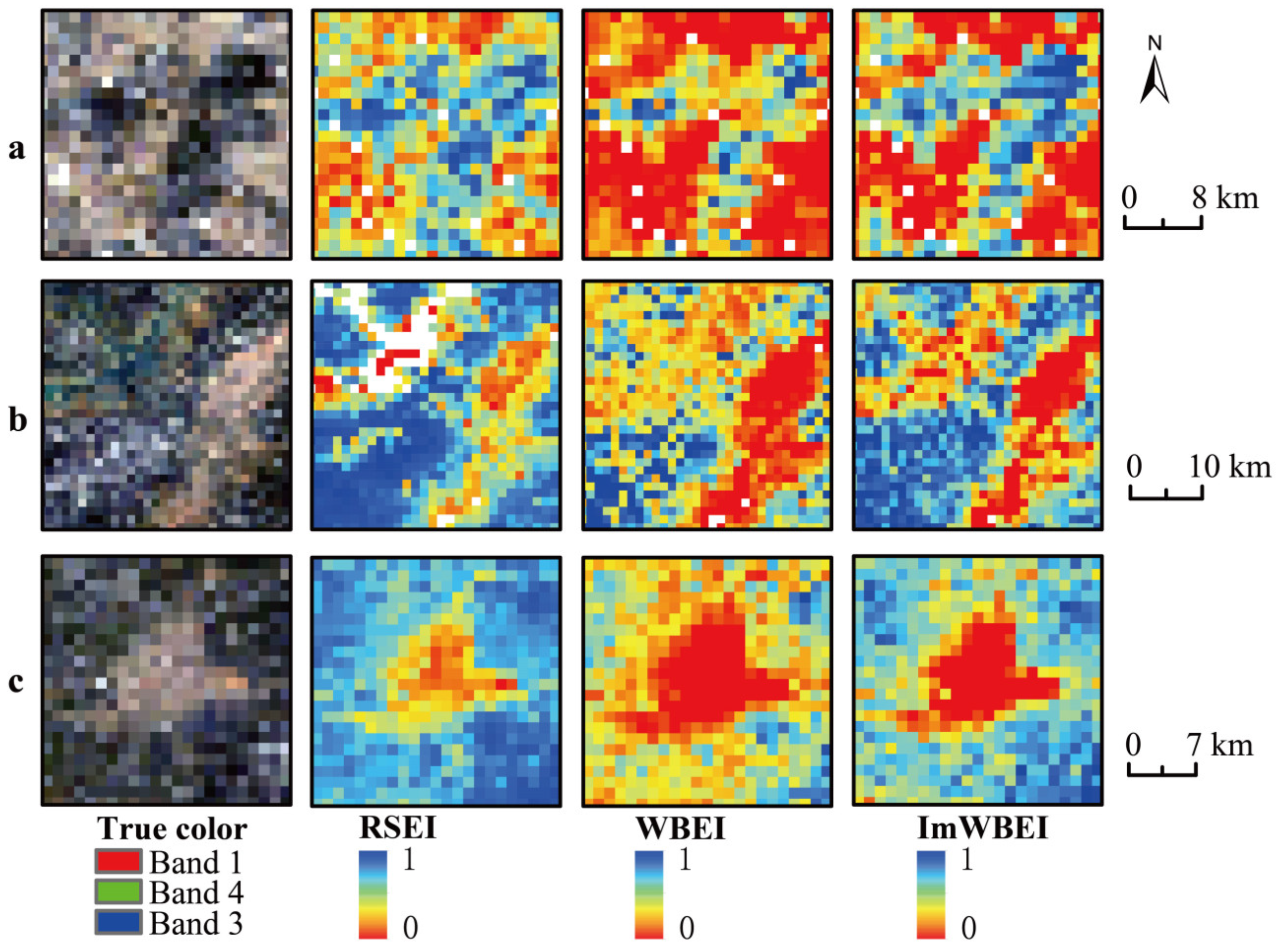
3.1. Local Comparative Analysis of the ImWBEI
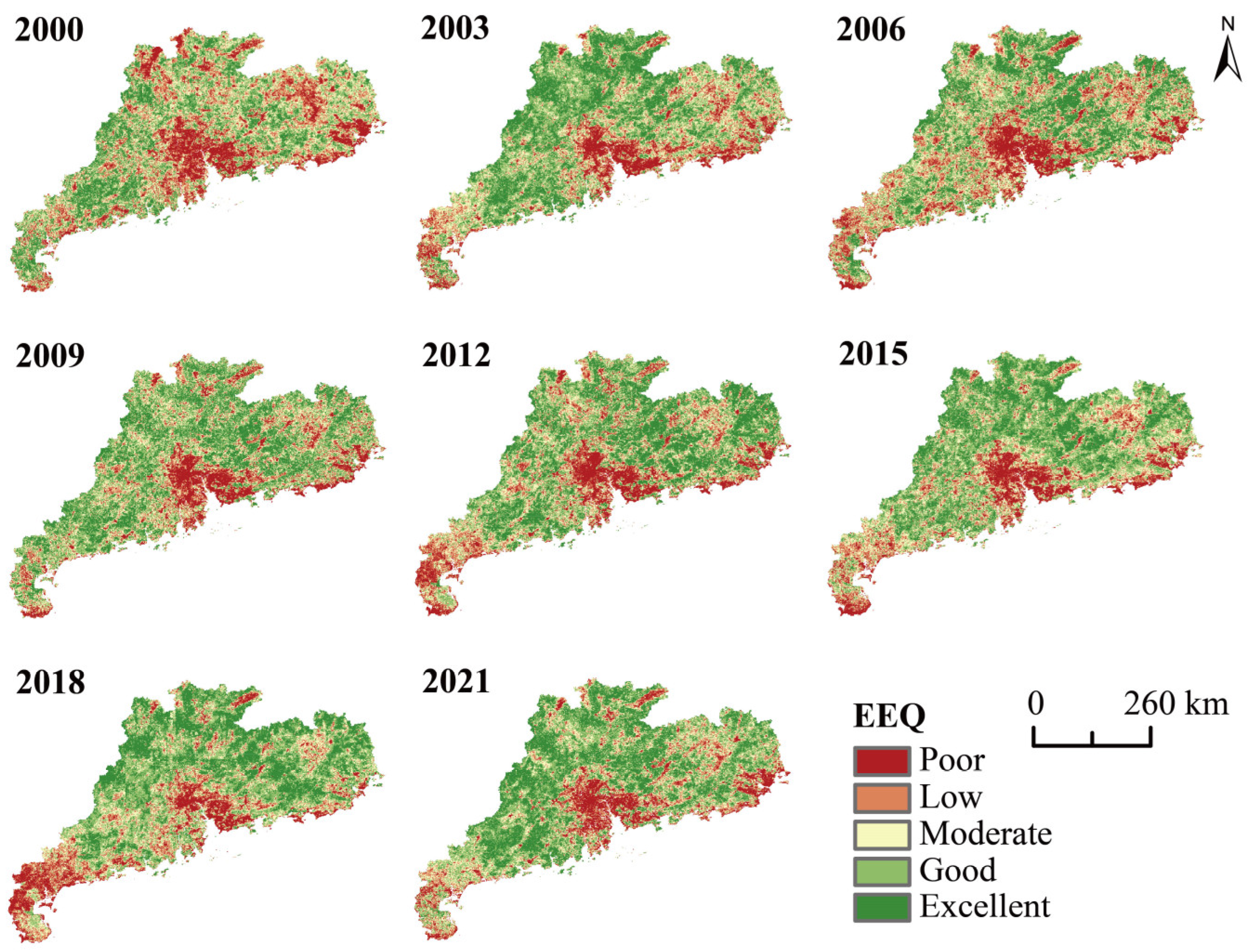
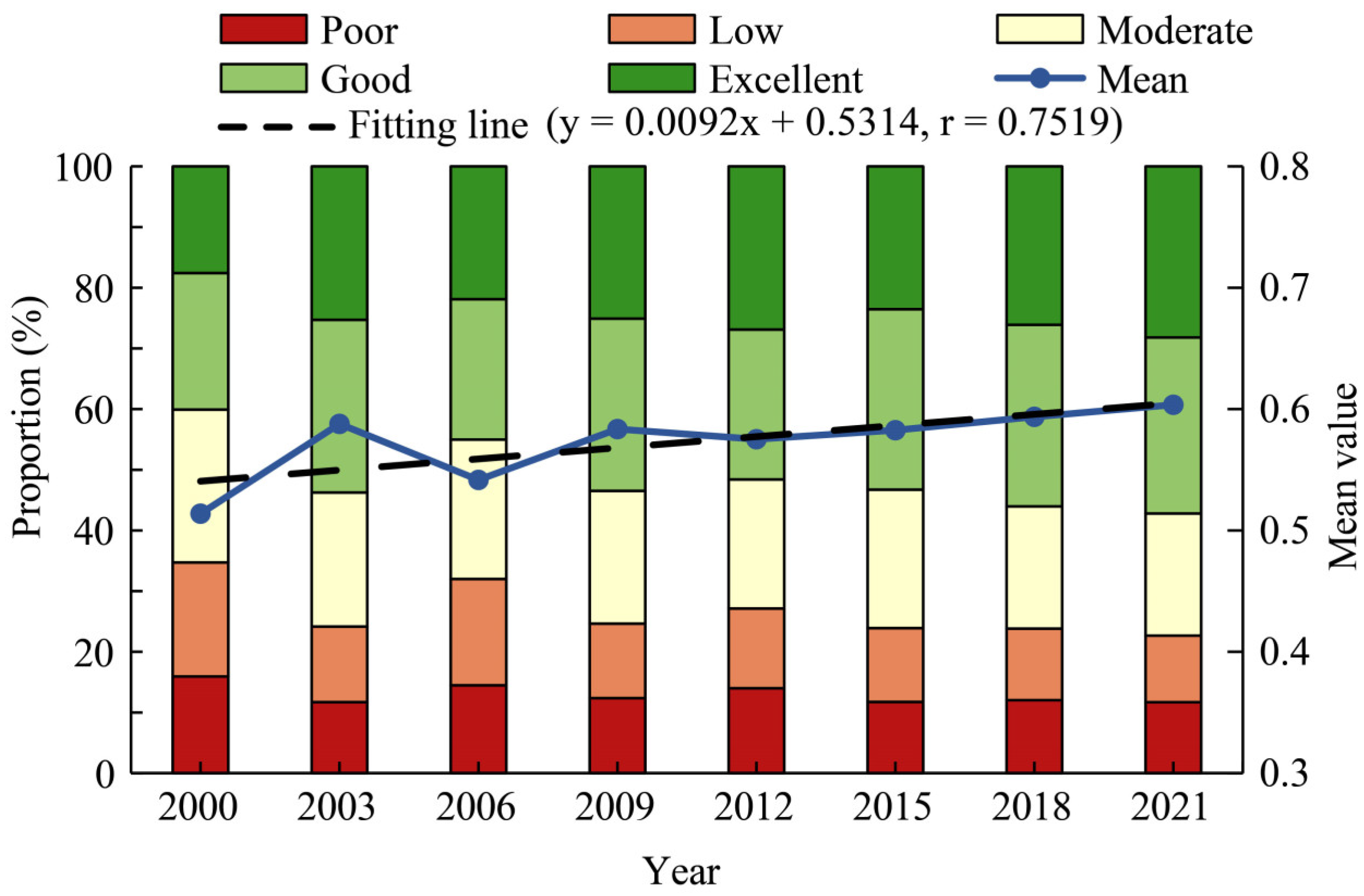
3.2. Spatial Distribution of the EEQ
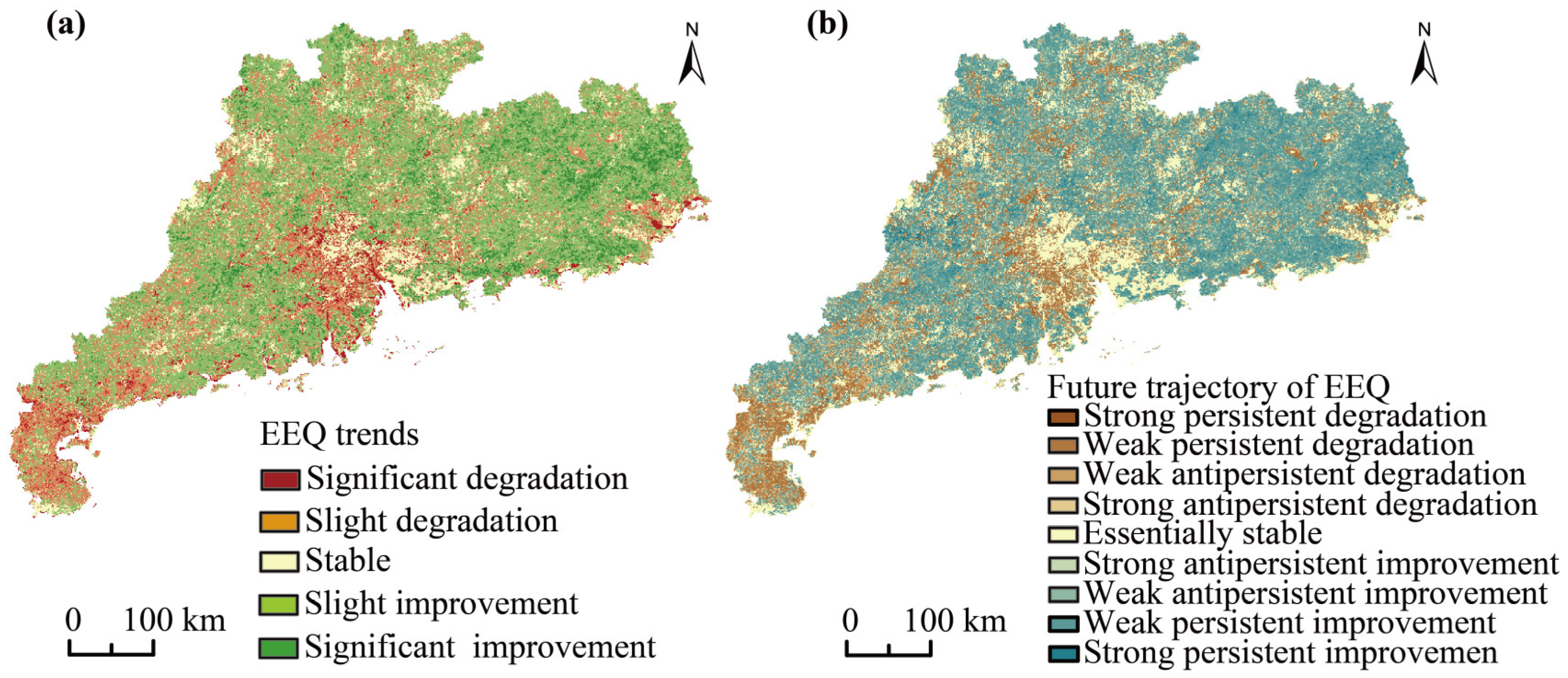
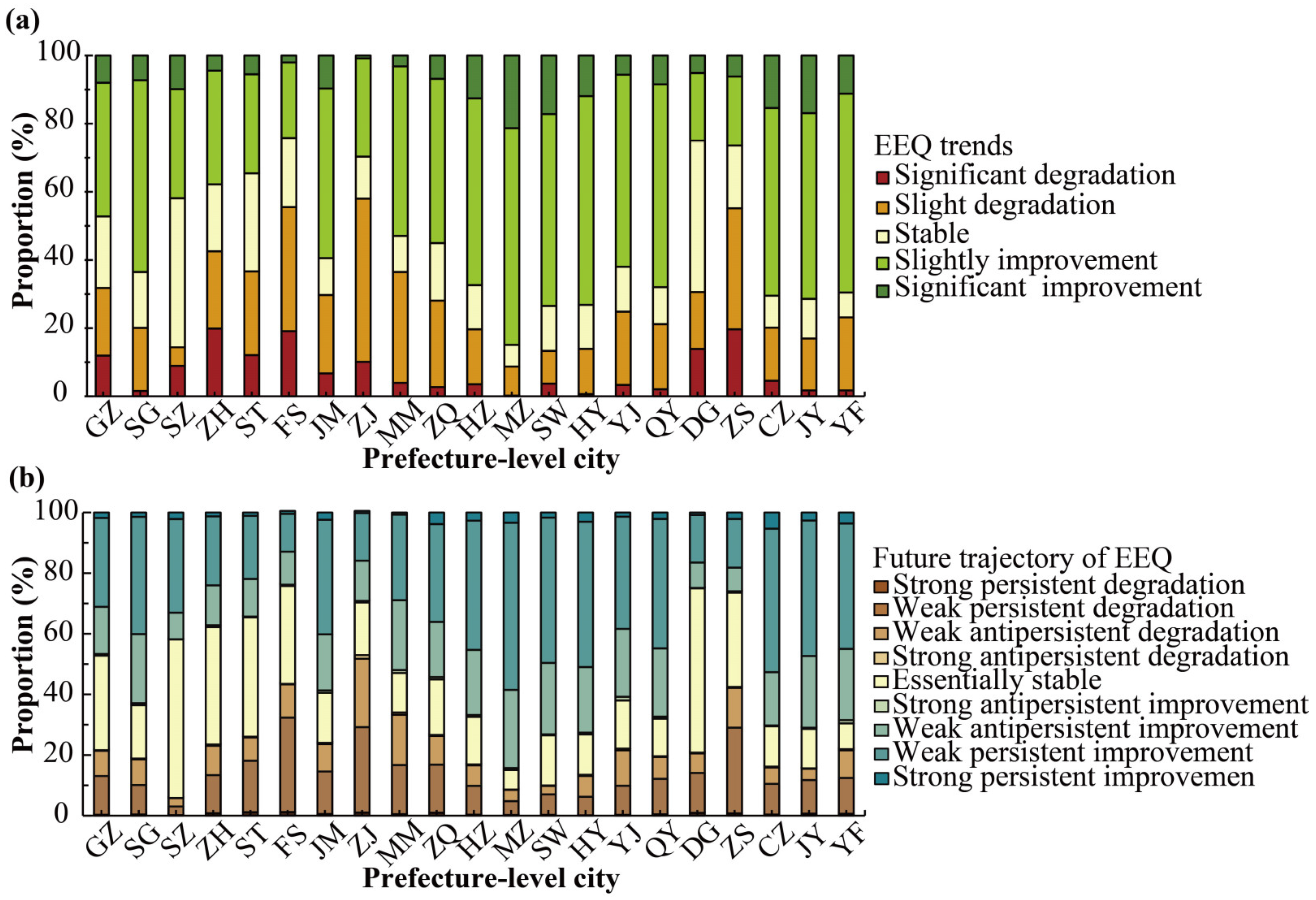
3.3. Trends in EEQ Changes
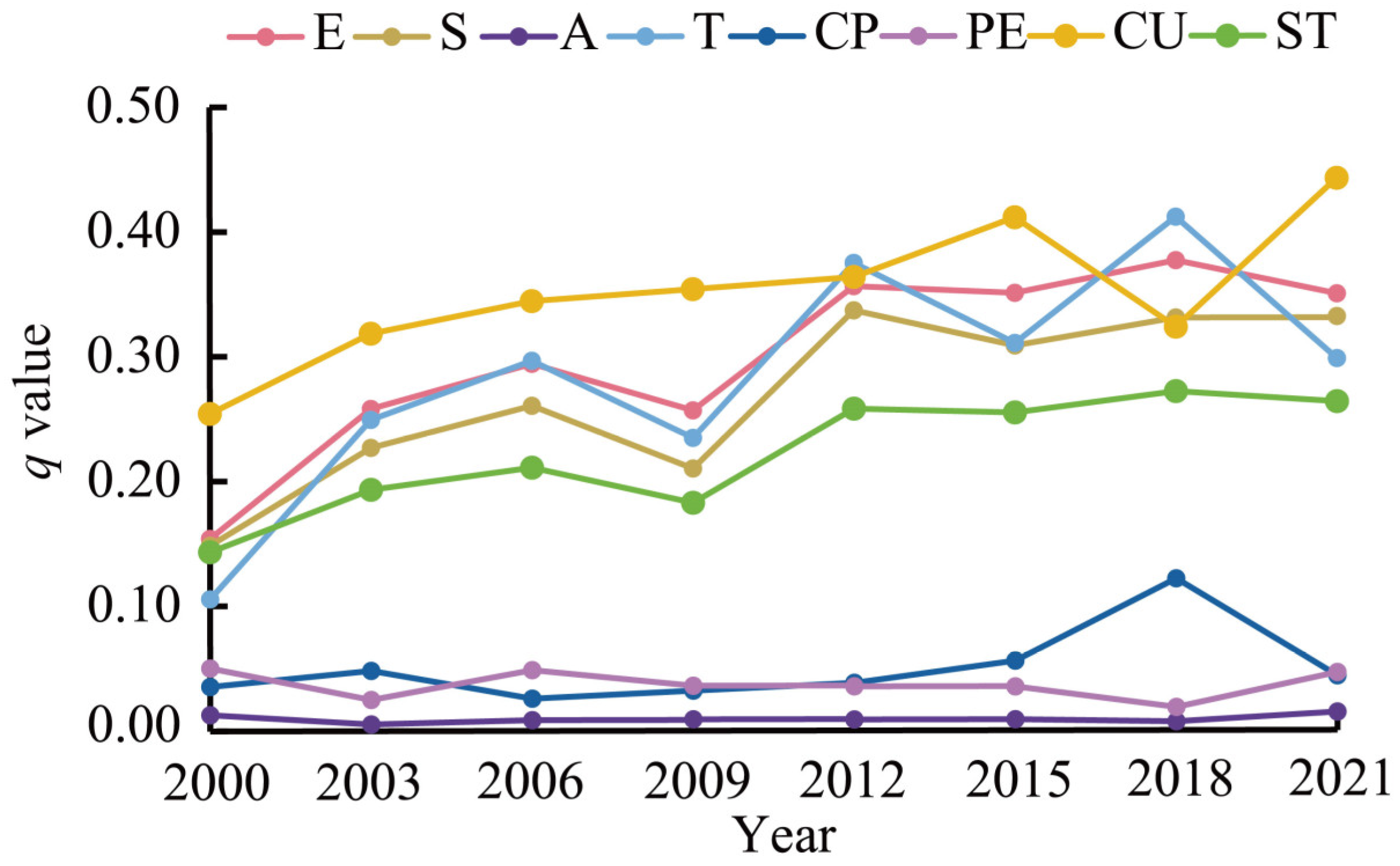
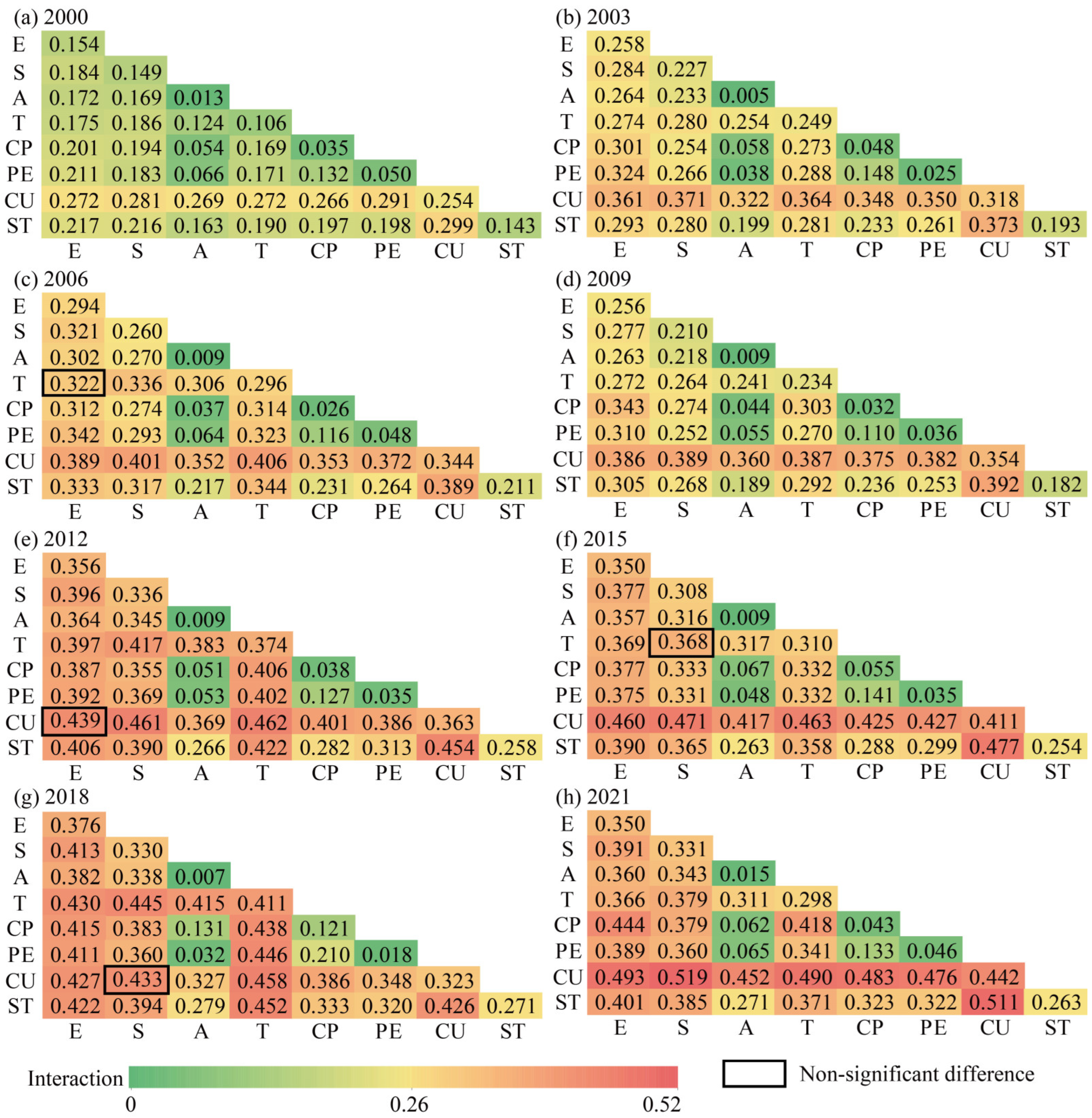
3.4. Driving Factors of EEQ
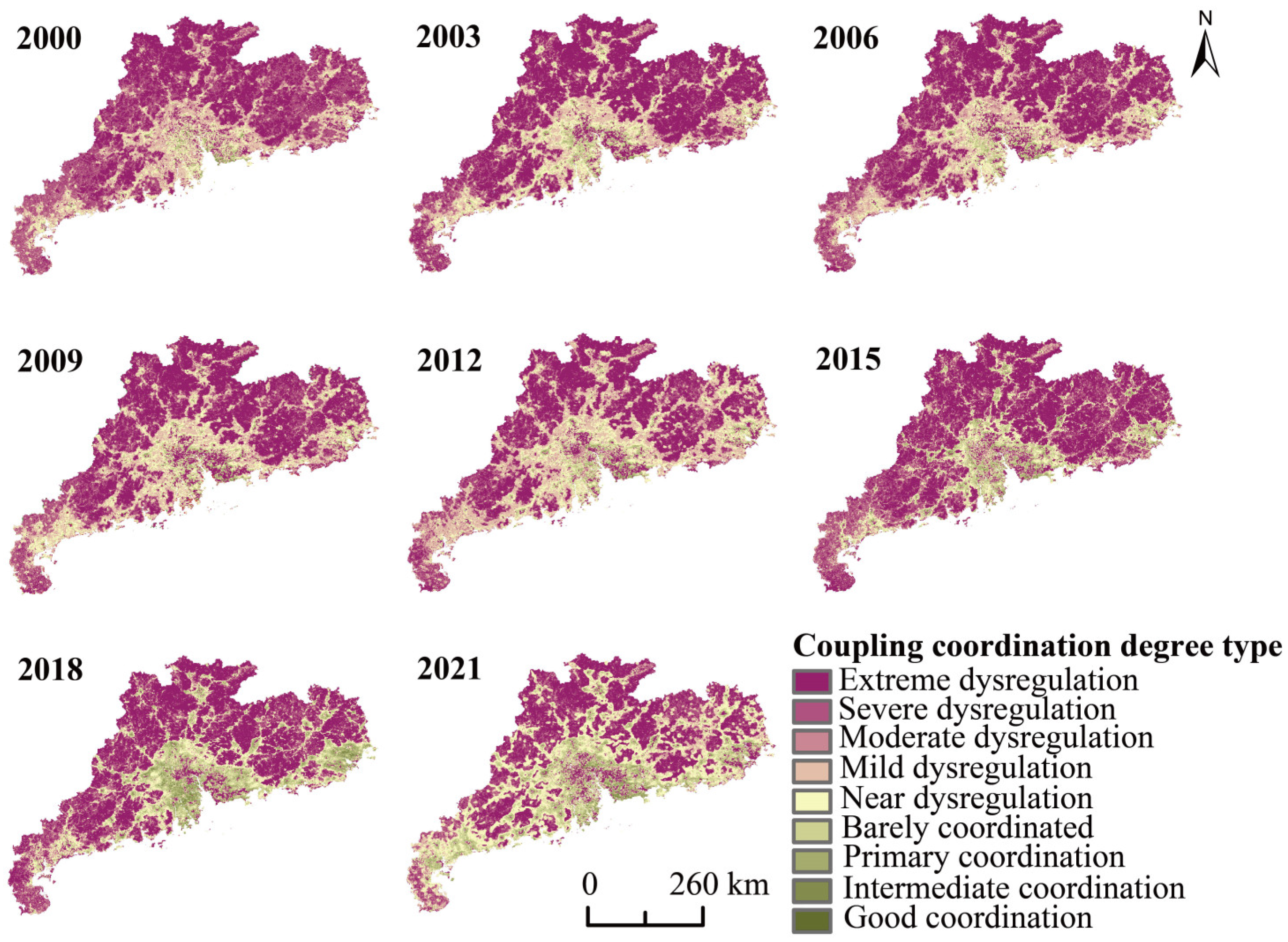
3.5. Coupling Coordination Between the EEQ and Comprehensive Urbanization
4. Discussion
4.1. Advantages of the ImWBEI
4.2. Coupling Analysis Between EEQ Trends and Urbanization Development
4.3. Limitations and Prospects
5. Conclusions
Author Contributions
Funding
Data Availability Statement
Acknowledgments
Conflicts of Interest
References
- Zhao, X.; Wang, Z.; Xia, W.; Hu, B.; Vasa, L.; Nassani, A.A. Unlocking energy efficiency: Exploring the dynamic evolution and regional correlations in the Huaihe Eco-economic Belt. Gondwana Res. 2025, 145, 57–70. [Google Scholar] [CrossRef]
- Bastian, S.; André, E.; Jesús, L.F.; Kraft, D.; Käser, Y.; Thali, M.; Kubik Huch, R.A.; Niemann, T. Assessing Environmental Sustainability in Dual-Energy CT: Exploring Energy Consumption and Ecological-Economic Impact in Low Utilization Times. Acad. Radiol. 2024, 31, 4528–4537. [Google Scholar] [CrossRef]
- Hong, X.; Peng, Q.; Zheng, R.; Lin, W.; Fan, S.; Su, K. Evaluating the Spatial Evolution of the Eco-Economy Harmony in Anxi County, China, Based on Ecosystem Services Value. Sustainability 2024, 16, 1491. [Google Scholar] [CrossRef]
- Zhou, J.; Wang, S. Examining carbon emissions from household consumption and inequality in Guangdong based on micro-survey data. Habitat Int. 2025, 156, 103275. [Google Scholar] [CrossRef]
- Qiu, L.; Chang, Z.; Luo, X.; Chen, S.; Jiang, J.; Lei, L. Monitoring Forest Disturbances and Associated Driving Forces in Guangdong Province Using Long-Term Landsat Time Series Images. Forests 2025, 16, 189. [Google Scholar] [CrossRef]
- Xie, C.; Chen, J.; Zhao, X.A. Study on the Coupling of High Quality Economic Development and Ecological Protection in the Yellow River Basin. Acad. J. Environ. Earth Sci. 2024, 6, 53–60. [Google Scholar] [CrossRef]
- Li, Y.; Wu, Z.; Zhu, L.; Huang, X.; Mo, J. Innovative reconstruction and evaluation of forest refinement datasets by combining multi-source data: A case study of Guangdong Province. Ecol. Indic. 2024, 169, 112788. [Google Scholar] [CrossRef]
- Han, M.; Liu, Y. Evaluating urban green resilience through deep learning and multicriterion decision-making approaches: A spatiotemporal analysis of Guangdong Province. Sustain. Cities Soc. 2025, 131, 106755. [Google Scholar] [CrossRef]
- Chen, A.; Jiang, J.; Luo, Y.; Zhang, G.; Hu, B.; Wang, X.; Zhang, S. Temperature vegetation dryness index (TVDI) for drought monitoring in the Guangdong Province from 2000 to 2019. PeerJ 2023, 11, e16337. [Google Scholar] [CrossRef]
- Sun, Q. Research on Guangdong’s Economic Transformation and Development Direction under the Influence of International Situation. J. Bus. Mark. 2025, 2, 1–6. [Google Scholar] [CrossRef]
- Nie, Y.; Chen, N.A. Study on the Impact of Liberalization of Trade in Services in the Guangdong–Hong Kong–Macao Greater Bay Area on Guangdong’s Economy. Int. J. Front. Sociol. 2021, 3, 27–31. [Google Scholar]
- Li, W.; Xiang, K.; Xie, J.; Zhang, H. Trend and drivers of forest biomass change in the Greater Bay Area of China from 2000 to 2022. Sci. Rep. 2025, 15, 40638. [Google Scholar] [CrossRef] [PubMed]
- Chen, X.; Fang, Y.; He, Y.; Dai, W.; Jiang, L.; Wei, H.; Wang, D.; Wang, C. Response mechanism of ecological environment quality variation to multifactor coupling at Spatiotemporal scales. Sci. Rep. 2025, 15, 30460. [Google Scholar] [CrossRef]
- Mamun, M.A.A.; Alauddin, M.; Meraj, G.; Almazroui, M.; Ehsan, M.A. Evaluating the spatiotemporal variation of agricultural droughts in Bangladesh using MODIS-based vegetation indices. Earth Syst. Environ. 2024, 8, 997–1010. [Google Scholar] [CrossRef]
- Li, Z.; Lai, Q.; Bao, Y.; Sude, B.; Bao, Z.; Liu, X. Carbon Allocation to Leaves and Its Controlling Factors and Impacts on Gross Primary Productivity in Forest Ecosystems of Northeast China. Forests 2024, 15, 129. [Google Scholar] [CrossRef]
- Feng, X.; Li, F.; Somenahalli, S.; Zhao, Y.; Li, M.; Zhou, Z.; Li, F. Analysis of the Coupling Trend Between the Urban Agglomeration Development and Land Surface Heat Island Effect: A Case Study of Guanzhong Plain Urban Agglomeration, China. Sustainability 2025, 17, 5239. [Google Scholar] [CrossRef]
- Li, J.; Zhang, Y.; Yang, L.; Shan, Z. Seasonal variations in ecological environment quality across different geomorphological regions and their response mechanisms to climate change. Sci. Rep. 2025, 15, 26385. [Google Scholar] [CrossRef] [PubMed]
- Pagano, L.P.; Garofalo, C.; Mazzeschi, C.; De Caro, E.F.; Delvecchio, E. A systematic review of environmental identity: Definitions, measurement tools, and future directions. J. Environ. Psychol. 2025, 105, 102657. [Google Scholar] [CrossRef]
- Zhang, Z.; Xiong, K.; Zhang, Y.; Ning, Y. Research Progress on Forest Eco-Product Value Realization and Eco-Industry: The Inspiration for Planted Forests in Karst Desertification Control. Forests 2024, 15, 517. [Google Scholar] [CrossRef]
- Perschke, M.J.; Harris, L.R.; Sink, K.J.; Lombard, A.T. Using ecological infrastructure to comprehensively map ecosystem service demand, flow and capacity for spatial assessment and planning. Ecosyst. Serv. 2023, 62, 10536. [Google Scholar] [CrossRef]
- Shen, L.; Hao, J.; Cui, L.; Chen, H.; Wang, L.; Wang, Y.; Tong, Y. Assessing the Impact of Agricultural Land Consolidation on Ecological Environment Quality in Arid Areas Based on an Improved Water Benefit-Based Ecological Index. Remote Sens. 2025, 17, 2987. [Google Scholar] [CrossRef]
- Garcia-Ayllon, S.; Radke, J. Diffuse Anthropization Impacts in Vulnerable Protected Areas: Comparative Analysis of the Spatial Correlation between Land Transformation and Ecological Deterioration of Three Wetlands in Spain. ISPRS Int. J. Geo.-Inf. 2021, 10, 630. [Google Scholar] [CrossRef]
- Hannah, S.; Kelsey, E.; Mark, S.R. Informing snow measurement site selection with remote sensing and local ecological knowledge: A case study in Oregon. Remote Sens. Appl. Soc. Environ. 2026, 41, 101912. [Google Scholar]
- Liu, R.; Lv, L.; Cui, Y.; Pan, W.; Zhang, X.; Fu, J. Spatial and temporal evolution of wetland ecological quality in the Yellow River Delta: A comprehensive analysis based on multi-temporal remote sensing and improved ecological indices. Adv. Space Res. 2026, 77, 1664–1678. [Google Scholar] [CrossRef]
- Jiao, Z.; Sun, G.; Zhang, A.; Jia, X.; Huang, H.; Yao, Y. Water Benefit-Based Ecological Index for Urban Ecological Environment Quality Assessments. IEEE J. Sel. Top. Appl. Earth Obs. Remote Sens. 2021, 14, 7557–7569. [Google Scholar] [CrossRef]
- Liu, X.; Chen, J.; Tang, B.H.; He, L.; Xu, Y.; Yang, C. Eco-environmental changes due to human activities in the Erhai Lake Basin from 1990 to 2020. Sci. Rep. 2024, 14, 8646. [Google Scholar] [CrossRef]
- Yao, C.; Li, Z.; Wang, Y.; Zhang, F.; Xia, B.; Wang, L. Redefining the modified water benefit-based ecological index to evaluate the impact of cropland expansion on the ecological environment in an arid area. J. Clean. Prod. 2024, 477, 143730. [Google Scholar] [CrossRef]
- Luo, K.; Samat, A.; Van de Voorde, T.; Li, W.; Xu, W.; Abuduwaili, J. Assessing ecological quality dynamics and driving factors in the Irtysh River Basin using AWBEI and OPGD approaches. IEEE J. Sel. Top. Appl. Earth Obs. Remote Sens. 2024, 18, 1153–1173. [Google Scholar] [CrossRef]
- Ye, J.; Xu, R.; Wang, Y.; Huang, X. High-Precision Reconstruction of Water Areas Based on High-Resolution Stereo Pairs of Satellite Images. Remote Sens. 2025, 17, 2139. [Google Scholar] [CrossRef]
- La Salandra, M.; Colacicco, R.; Panza, S.; Fumai, G.; Dellino, P.; Capolongo, D. RivAIr: A custom-designed UAV-based sensor for real-time water area segmentation and surface velocity estimation. Int. J. Appl. Earth Obs. Geoinf. 2025, 142, 104720. [Google Scholar] [CrossRef]
- Yang, J.; Huang, X. The 30m annual land cover dataset and its dynamics in China from 1990 to 2019. Earth Syst. Sci. Data 2021, 13, 3907–3925. [Google Scholar]
- Wu, Y.; Shi, K.; Chen, Z.; Liu, S.; Chang, Z. Developing improved time-series DMSP-OLS-Like data (1992–2019) in China by integrating DMSP-OLS and SNPP-VIIRS. IEEE Trans. Geosci. Remote Sens. 2022, 60, 4407714. [Google Scholar] [CrossRef]
- Xu, H.; Sun, H.; Xu, Z.; Wang, Y.; Zhang, T.; Wu, D.; Gao, J. kNDMI: A kernel normalized difference moisture index for remote sensing of soil and vegetation moisture. Remote Sens. Environ. 2025, 319, 114621. [Google Scholar]
- Zhang, Z.; Fan, Y.; Jiao, Z. Wetland ecological index and assessment of spatial-temporal changes of wetland ecological integrity. Sci. Total Environ. 2023, 862, 160741. [Google Scholar] [CrossRef] [PubMed]
- Feng, X.; Tian, J.; Wu, J.; Wu, G.; Ren, Y.; He, C.; Bao, W.; Yu, T. Exploring the Spatio-temporal Distribution Characteristics and the Impacts of Climate Change and Human Activities on Global Grassland Based on kNDVI. Environ. Res. 2025, 279, 121884. [Google Scholar] [CrossRef]
- Xu, S.; Jin, X. Ecological environment quality evaluation and its influencing factors in yuecheng district based on remote sensing ecological index. Environ. Dev. Sustain. 2024, 1–17. [Google Scholar] [CrossRef]
- Liu, S.; Wang, Z.; Kumilamba, G.; Yu, L. Optimizing green space configuration for mitigating land surface temperature: A case study of karst mountainous cities. Sustain. Cities Soc. 2025, 125, 106345. [Google Scholar] [CrossRef]
- Escobedo, V.M.; Acuña Rodríguez, I.S.; García, L.Y.; Torres Díaz, C.; Atala, C.; Suazo, M.J.; Gómez González, S.; Newsham, K.K. Native woody species depend on the soil microbiome to establish on burned soils, while non-native do not. J. Appl. Ecol. 2024, 61, 2971–2984. [Google Scholar]
- Tong, S.; Zhang, J.; Bao, Y.; Lai, Q.; Lian, X.; Li, N.; Bao, Y. Analyzing vegetation dynamic trend on the Mongolian Plateau based on the Hurst exponent and influencing factors from 1982–2013. J. Geogr. Sci. 2018, 28, 595–610. [Google Scholar] [CrossRef]
- Wang, J.; Ju, T.; Li, B.; Peng, S.; Lei, S. Characteristics of Tropospheric Ozone Pollution and Analysis of the Influencing Factors in the Horqin Grassland. Acad. J. Environ. Earth Sci. 2023, 5, 9. [Google Scholar] [CrossRef]
- Long, Y.; Jiang, F.; Deng, M.; Wang, T.; Sun, H. Spatial-temporalchanges and driving factors of eco-environmental quality in the Three-North region China. J. Arid. Land 2023, 15, 231–252. [Google Scholar] [CrossRef]
- Ling, H.; Guo, B.; Yan, J.; Deng, X.; Xu, H.; Zhang, G. Enhancing the positive effects of ecological water conservancy engineering on desert riparian forest growth in an arid basin. Ecol. Indic. 2020, 118, 106797. [Google Scholar] [CrossRef]
- Li, J.; Li, S.; Pi, H. Interaction effects of various impact factors on the snow over the Yangtze and Yellow River Headwater Region, China. Ecol. Indic. 2024, 166, 112330. [Google Scholar] [CrossRef]
- Yang, L.; Ji, X.; Li, M.; Yang, P.; Jiang, W.; Chen, L.; Yang, C.; Sun, C.; Li, Y. A comprehensive framework for assessing the spatial drivers of flood disasters using an optimal Parameter-based geographical Detector–machine learning coupled model. Geosci. Front. 2024, 15, 101889. [Google Scholar] [CrossRef]
- Geng, N.; Tian, G.; Zhang, H. The spatial–temporal evolution characteristics and influencing factors of coordinated development in the Yellow River Basin: Based on the perspective of flood-sediment transport, eco-environmental, and socio-economic subsystems. Ecol. Indic. 2025, 176, 113673. [Google Scholar] [CrossRef]
- Li, Y.; Ma, W.; Li, Y.; Luo, L.; Pan, Y.; Wei, J.; Cui, Y. The evolutionary characteristics and driving factors of the coupling coordination degree of digital economy and cultivated land use efficiency in China. Front. Sustain. Food Syst. 2025, 9, 1617727. [Google Scholar] [CrossRef]
- Chaoligeer; An, X.; Han, R.A.; Sun, Z.Y.; Sun, X.H. Assessment of ecological environment in arid region based on the improved remote sensing ecological index: A case study of Wuchuan County, Inner Mongolia at the northern foot of Yin Mountains. J. Appl. Ecol. 2024, 35, 1907–1914. [Google Scholar]
- Bai, Z.; Han, L.; Liu, H.; Jiang, X.; Li, L. Spatiotemporal change and driving factors of ecological status in Inner Mongolia based on the modified remote sensing ecological index. Environ. Sci. Pollut. Res. Int. 2023, 30, 52593–52608. [Google Scholar]
- Pedzisai, K.; Mutanga, O.; Odindi, J.; Dube, T. Impacts of eco-environmental quality, spatial configuration, and landscape connectivity of urban vegetation patterns on seasonal land surface temperature in Harare metropolitan city, Zimbabwe. Afr. Geogr. Rev. 2024, 43, 125–143. [Google Scholar]
- Sun, Y.; Jin, G.; Zhao, L.; Guo, J.; Yue, D. Assessment of eco-environmental changes along roads in the Qinghai-Tibetan Plateau based on remote sensing data: A case study of the Sino-Nepalese Transport Corridor. Land Degrad. Dev. 2024, 35, 3552–3566. [Google Scholar] [CrossRef]
- Zhang, L.; Hou, Q.; Duan, Y.; Ma, S. Spatial and Temporal Heterogeneity of Eco-Environmental Quality in Yanhe Watershed (China) Using the Remote-Sensing-Based Ecological Index (RSEI). Land 2024, 13, 780–799. [Google Scholar]
- Ding, Y.; Yin, J.; Jiang, H.; Xia, R.; Zhang, B.; Luo, X.; Wei, D. Dynamic simulation of carbon emission under different policy scenarios in Pearl River Delta urban agglomeration, China. Environ. Sci. Pollut. Res. Int. 2023, 30, 102402–102417. [Google Scholar] [PubMed]
- Ge, Y.; Huang, Y.; Xie, L.; Li, C.; Qi, X.; Ye, P.; Guo, X.; Deng, C.; Hu, R.; Wang, B.; et al. Per- and polyfluorinated substances in reservoir water from a metropolitan city in the Guangdong–Hong Kong–Macao Greater Bay Area, China, and their ecological risks. Environ. Chem. Ecotoxicol. 2025, 7, 364–372. [Google Scholar] [CrossRef]
- Xu, X.; Wu, Y.; Lin, G.; Gong, J.; Chen, K. Exploring diurnal and seasonal variabilities in surface urban heat island intensity in the Guangdong–Hong Kong–Macao Greater Bay Area. J. Geogr. Sci. 2024, 34, 1472–1492. [Google Scholar] [CrossRef]
- Nguyen, H.; Dinh, T.; Phan, P.; Nguyen, Q.H. Transformation and Fragmentation of Wetlands in Mekong Delta Floodplains: A Case Study in Dong Thap Province, Vietnam. Proc. Bulg. Acad. Sci. 2025, 78, 207–215. [Google Scholar] [CrossRef]
- Rocchini, D.; Boyd, D.S.; Féret, J.-B.; Foody, G.M.; He, K.S.; Lausch, A.; Nagendra, H.; Wegmann, M.; Pettorelli, N. Satellite remote sensing to monitor species diversity: Potential and pitfalls. Remote Sens. Ecol. Conserv. 2016, 2, 25–36. [Google Scholar] [CrossRef]
- Yan, X.; Li, J.; Smith, A.R.; Yang, D.; Ma, T.; Su, Y.; Shao, J. Evaluation of machine learning methods and multi-source remote sensing data combinations to construct forest above-ground biomass models. Int. J. Digit. Earth 2023, 16, 4471–4491. [Google Scholar] [CrossRef]
- Ning, Q.; Ouyang, X. Spatio-temporal characteristics and mechanism of ecological degradation in a hilly southern area—A case study of Dongting Lake Basin. Environ. Sci. Pollut. Res. Int. 2023, 30, 45274–45284. [Google Scholar] [PubMed]





| Coupling Coordination Degree | Coupling Coordination Degree Type | Coupling Coordination Degree | Coupling Coordination Degree Type |
|---|---|---|---|
| 0.0 ≤ D ≤ 0.1 | Extreme dysregulation | 0.5 < D ≤ 0.6 | Barely coordinated |
| 0.1 < D ≤ 0.2 | Severe dysregulation | 0.6 < D ≤ 0.7 | Primary coordination |
| 0.2 < D ≤ 0.3 | Moderate dysregulation | 0.7 < D ≤ 0.8 | Intermediate coordination |
| 0.3 < D ≤ 0.4 | Mild dysregulation | 0.8 < D ≤ 0.9 | Good coordination |
| 0.4 < D ≤ 0.5 | Near dysregulation | 0.9 < D ≤ 1.0 | High-quality coordination |
Disclaimer/Publisher’s Note: The statements, opinions and data contained in all publications are solely those of the individual author(s) and contributor(s) and not of MDPI and/or the editor(s). MDPI and/or the editor(s) disclaim responsibility for any injury to people or property resulting from any ideas, methods, instructions or products referred to in the content. |
© 2026 by the authors. Licensee MDPI, Basel, Switzerland. This article is an open access article distributed under the terms and conditions of the Creative Commons Attribution (CC BY) license.
Share and Cite
Duan, Z.; Song, Y.; Sun, B.; He, G. Evaluation and Driving Analysis of Eco-Environmental Quality in Guangdong Province Based on an Improved Water Benefit-Based Ecological Index. Land 2026, 15, 422. https://doi.org/10.3390/land15030422
Duan Z, Song Y, Sun B, He G. Evaluation and Driving Analysis of Eco-Environmental Quality in Guangdong Province Based on an Improved Water Benefit-Based Ecological Index. Land. 2026; 15(3):422. https://doi.org/10.3390/land15030422
Chicago/Turabian StyleDuan, Zhi, Yanni Song, Bozhong Sun, and Gongxiu He. 2026. "Evaluation and Driving Analysis of Eco-Environmental Quality in Guangdong Province Based on an Improved Water Benefit-Based Ecological Index" Land 15, no. 3: 422. https://doi.org/10.3390/land15030422
APA StyleDuan, Z., Song, Y., Sun, B., & He, G. (2026). Evaluation and Driving Analysis of Eco-Environmental Quality in Guangdong Province Based on an Improved Water Benefit-Based Ecological Index. Land, 15(3), 422. https://doi.org/10.3390/land15030422