Review

Feeding the Future: Food Security, Fertilizer Dependence, and Climate Change in Brazil


by
Thiago Assis Rodrigues Nogueira
1,*,
Rodrigo Silva Alves
1,
Nilton Eugénio Mário
1,
Angel Camurça da Silva
1,
Franco Monici Fabrino
1,
Paulo Paschoalotto Marques
1,
Aline Renée Coscione
2,
Arun Dilipkumar Jani
3 and
Gian Franco Capra
4
1
Department of Soil Science, School of Agricultural and Veterinary Sciences, São Paulo State University, Via de Acesso Prof. Paulo Donato Castellane s/n, Jaboticabal 14884-900, SP, Brazil
2
Center of Soils Fertilizer Research, Institute Agronomic Campinas, São Paulo State, Av. Barão de Itapura, 1481-Botafogo, Campinas 13075-630, SP, Brazil
3
Department of Biology, Agriculture, and Chemistry, California State University, Monterey Bay, Seaside, CA 93955, USA
4
Department of Architecture, Design, and Urban Planning, University of Sassari, Bionaturalistic Campus, Via Piandanna No. 4, 07100 Sassari, Italy
*
Author to whom correspondence should be addressed.
Land 2026, 15(3), 382; https://doi.org/10.3390/land15030382
Submission received: 26 January 2026 / Revised: 20 February 2026 / Accepted: 25 February 2026 / Published: 27 February 2026
(This article belongs to the Section Land, Soil and Water)

Abstract

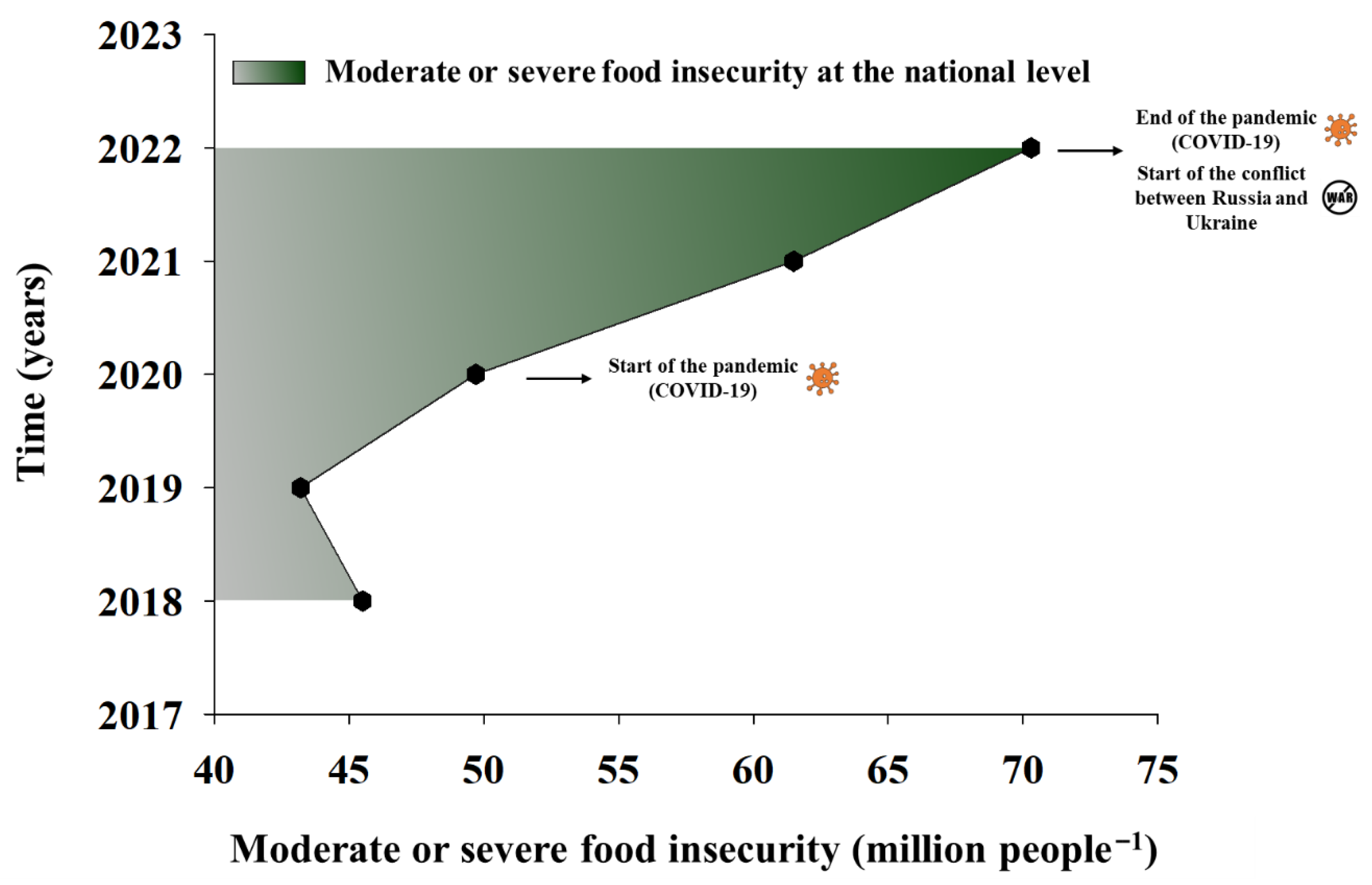
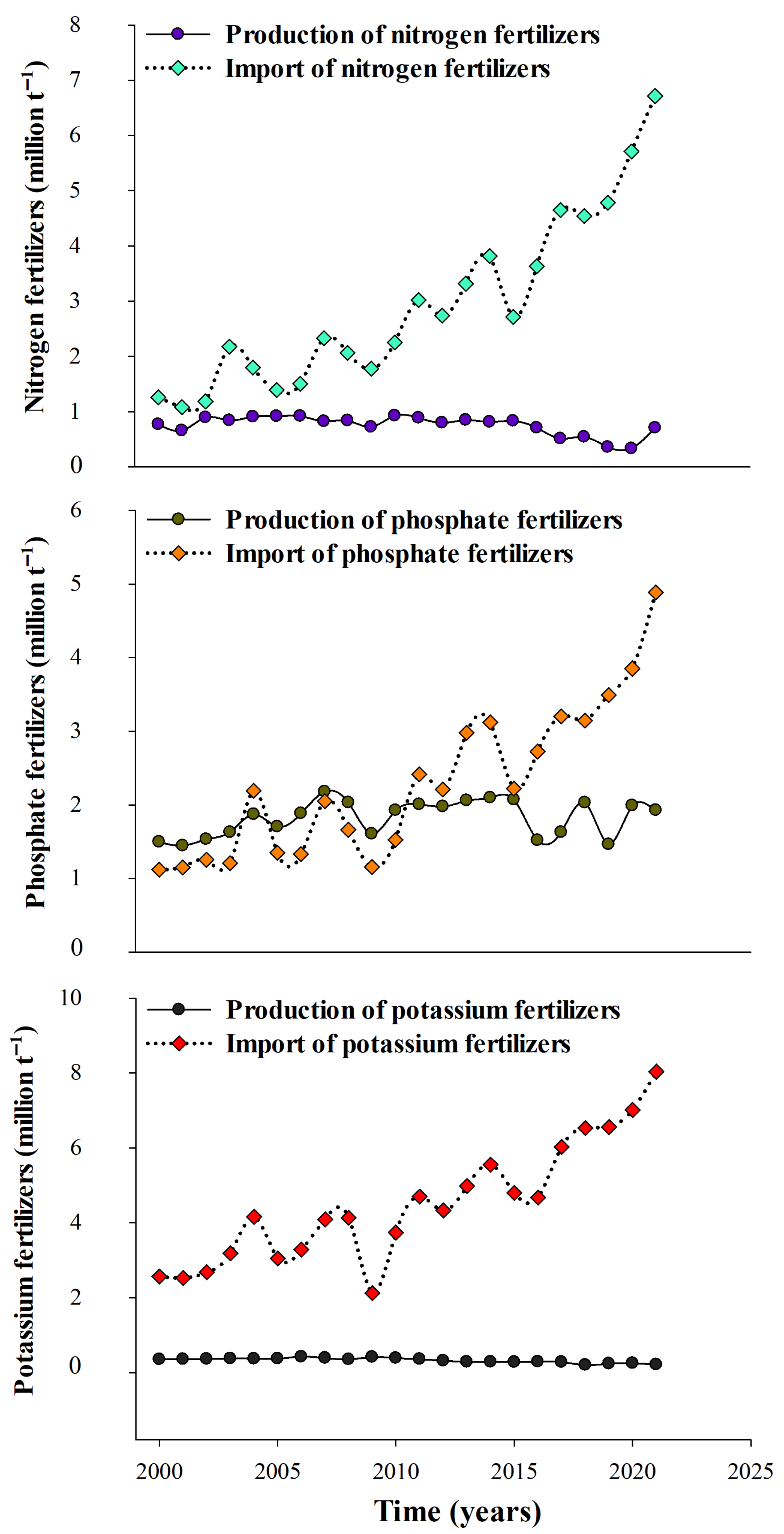
The world’s population faces serious challenges related to food security, particularly in the agribusiness sector, as it grapples with dependence on mineral fertilizers in key producing regions, susceptible to tariff policy fluctuations and wars, amid climate change and population growth, despite increased food production enabled by new technologies and management practices. This narrative review synthesizes evidence on the main challenges to food security in Brazil, with emphasis on how agricultural production, land use, and mineral fertilizer dependence interact under global climate change. We employed comprehensive literature review methods and analyzed data from national and international agencies to compile relevant information on the influence of this scenario on agricultural production, providing an overview of the topic to understand trends and future projections of these challenges. The results revealed significant vulnerabilities in the sector, especially concerning reliance on imported mineral fertilizers to meet its full demand. In 2024, Brazil imported approximately 90% of the mineral fertilizers used in its agricultural sector, which heightens exposure to geopolitical and market shocks. Moreover, climate change also negatively impacts agriculture, raising production costs and prices of staple foods, thereby exacerbating food insecurity. Therefore, improving fertilizer use efficiency and adopting alternative fertilization sources, combined with conservation practices, represent key strategies to mitigate food insecurity. Among these strategies, reducing import dependence through improved fertilizer use efficiency emerges as the most immediately actionable priority, as it could reduce current demand by 20–30% within 5 years. This should be complemented by medium-term investments in alternative fertilizer sources and long-term climate adaptation measures. These actions can also support the promotion of sustainable development goals aligned with the United Nations’ 2030 Agenda. Aligning fertilizer strategies with climate-smart and low-carbon agriculture policies could simultaneously reduce greenhouse gas emissions and enhance the resilience of food systems.
Keywords: Brazilian agriculture; climate-smart agriculture; environmental change; food production; mineral fertilizers; sustainable development goals Brazilian agriculture; climate-smart agriculture; environmental change; food production; mineral fertilizers; sustainable development goals