1. Introduction
Post-industrial mill sites present a critical opportunity for landscape-led regeneration and the expansion of public green open space. In many North American mill towns, these sites are extensive in size and frequently associated with inherited industrial corridors along rivers, watersheds, and former infrastructures such as dams, mill races, and rail alignments [
1]. Although ownership structures vary across contexts, including cases of fragmented control or public–private partnerships, the spatial continuity of these industrial landscapes often provides a structural foundation for ecological restoration, public access, and regional connectivity [
2,
3]. At the same time, the long history of industrial disturbance embedded within these landscapes situates them firmly within the category of cultural landscapes, shaped by both environmental modification and social labor histories [
4,
5].
Across the American South, and particularly in South Carolina, abandoned mill sites are increasingly recognized by planners, designers, and civic advocates as opportunities rather than liabilities [
6,
7]. However, these landscapes often demand immediate intervention due to their classification as brownfields or environmentally compromised lands [
8,
9]. Issues of soil contamination, water pollution, and structural decay compel decision-makers to address these sites, even in the absence of clear redevelopment pathways [
10,
11]. Within this context, parkification has emerged as a compelling and often pragmatic response: transforming industrial remnants into publicly accessible landscapes that simultaneously address environmental remediation, heritage interpretation, and community needs [
12].
Parkification in post-industrial mill landscapes is closely tied to inherited hydrological systems that once structured industrial production. Rivers, dams, mill ponds, and floodplains, initially engineered to support manufacturing, now shape the spatial logic of landscape transformation [
13,
14]. In many cases, parkification reclaims or reinterprets these hydrological infrastructures, restoring river access or embracing constructed ecologies such as mill ponds, artificial lakes, and wetlands formed through dam operations and long-term sedimentation. Boardwalks, trails, and interpretive landscapes enable public engagement with these hybrid ecosystems, allowing sites defined by industrial water control to function as accessible civic and ecological spaces [
15].
Importantly, this research focuses on landscape transformation rather than the adaptive reuse of mill structures for housing or mixed-use development, foregrounding the role of open space and green infrastructure.
Greenville, South Carolina, offers a compelling regional context for examining these transformations. Founded as a mill town in the late eighteenth century, Greenville has experienced successive waves of industrial decline and landscape reinvention [
16]. Following the opening of Falls Park on the Reedy in the early 2000s, Greenville experienced a gradual sequence of landscape-led interventions rather than an immediate wave of park development. Subsequent projects unfolded over two decades and across different contexts, including Conestee Nature Preserve downstream within the Reedy River watershed, later additions such as Unity Park along the Reedy corridor, and the incremental expansion of the Swamp Rabbit Trail along former rail alignments. Together, these projects illustrate a staggered and cumulative pattern of parkification, with the most recent mill-related park opening in 2022. Notably, the success and visibility of early projects appear to have influenced subsequent investments, suggesting a cumulative pattern of landscape transformation.
This research argues that parkification, defined here as the transformation of post-industrial sites into publicly accessible urban parks and green landscapes, generates ripple effects that extend beyond individual project boundaries [
17]. These ripple effects include the proliferation of additional park projects, the development of connected greenway networks, shifts in land-use patterns, and evolving social and cultural relationships to industrial heritage. By framing parkification as a process rather than a fixed outcome, the study investigates how individual projects generate cumulative spatial and institutional ripple effects across urban–regional systems, positioning these interventions as active agents in reshaping broader landscape and governance structures.
Greenville is therefore examined as a case study region to spatially map and evaluate how parkification unfolds over time and how its ripple effects extend across environmental, social, and land-use systems. To support this analysis, the study first establishes a foundational understanding of the selected sites, clarifies the concept of parkification, and identifies key indicators for mapping ripple effects, including centers of influence, degrees of spatial expansion, and the emergence of interconnected networks.
3. Theoretical Framework: Parkification as Process
To bridge the theoretical discussion of parkification and ripple effects with the methodological approach of this study, this research conceptualizes parkification not as a singular design outcome, but as a process that unfolds over time and across scales. Understanding parkification as a process allows for the systematic tracing of how landscape transformation initiates, accelerates, and redirects subsequent spatial, social, and institutional changes [
31]. This framing provides the conceptual foundation upon which the mapping and analytical methods of the study are built.
Rather than evaluating post-industrial parks solely by their final physical form or programmatic success, this research treats parkification as a sequence of actions, decisions, and landscape modifications. These include site remediation, public access provision, ecological restoration, narrative reframing of industrial heritage, and the gradual integration of sites into broader greenway and planning networks. Each stage of this process has the potential to generate ripple effects that extend beyond the project boundary, influencing adjacent land uses, governance priorities, and community perceptions.
This process-based understanding responds to limitations in existing post-industrial redevelopment literature, which often evaluates projects as isolated case studies. By contrast, framing parkification as a temporal and relational process enables the study to examine how one intervention sets conditions for subsequent transformations, both planned and unanticipated. In this sense, parkification functions as a navigational framework through which landscape change can be tracked, compared, and spatially visualized.
3.1. Conceptualizing Ripple Effects for Spatial Analysis
Within this framework, ripple effects are defined as the observable spatial, social, and environmental changes that emerge following parkification and propagate outward over time [
12,
42,
43,
44]. These effects are not assumed to be linear or uniform; instead, they may intensify, dissipate, or transform as they interact with local contexts, policies, and community dynamics. Importantly, ripple effects may originate from more than one center, overlap with other initiatives, or reinforce one another through cumulative processes.
By operationalizing the ripple effect concept, this research establishes a foundation for methodological translation, moving from abstract theory to measurable and mappable phenomena. This approach positions ripple effects as relational indicators rather than causal proof, emphasizing patterns of association, proximity, and temporal sequencing.
3.2. Analytical Factors Informing the Mapping Framework
To support a process-oriented reading of parkification, the study adopts a small set of interrelated analytical considerations that guide spatial mapping and interpretation. These considerations are not treated as discrete variables, but as overlapping ways of reading landscape change across space and time. As the analysis developed, it became clear that many of the initially identified dimensions were closely intertwined in practice, reinforcing one another rather than operating independently. For this reason, they are consolidated here to emphasize analytical clarity while remaining attentive to the complexity of landscape transformation.
The mapping framework is organized around five interrelated factors: spatial expansion and connectivity, temporal sequencing, land-use and landscape transformation, environmental remediation and ecological performance, and institutional and social alignment [
45,
46]. Together, these factors inform how parkification is read as a process rather than a fixed outcome. Mapping examines how parkified sites extend outward through trails, river corridors, greenways, and former rail alignments; how the timing and sequencing of interventions establish momentum for subsequent projects; and how surrounding land uses and relationships to waterways shift over time. Environmental processes, such as remediation, wetland formation, habitat development, and restored river access, are considered where they visibly structure landscape performance and public use. Institutional and social dimensions are incorporated by situating spatial change within broader contexts of policy support, funding mechanisms, civic advocacy, and governance alignment.
Taken together, these considerations provide a flexible structure for tracing ripple effects without assuming direct or linear causality. They allow parkification projects to be read as influential nodes within a broader field of landscape change, where spatial, ecological, and institutional processes intersect and accumulate over time.
4. Methodology
This study employs a multi-methods case study approach to examine parkification as a process and to trace the ripple effects associated with the transformation of post-industrial mill landscapes into interconnected public greenways. The methodology operationalizes the theoretical framework outlined in
Section 3 by translating the concept of parkification as process into spatial, temporal, and qualitative analytical procedures.
Three interconnected case studies in Greenville, South Carolina; Falls Park on the Reedy, Conestee Nature Preserve, and the Swamp Rabbit Trail, were selected through purposive sampling based on their shared industrial origins, spatial proximity, and functional interdependence within a broader greenway system. Together, they represent distinct typologies of parkification while remaining embedded within a single regional context.
Each case was examined individually and comparatively. For each site, historical conditions, institutional actors, spatial constraints, and phases of transformation were reconstructed through archival documents, interviews, and spatial mapping. The cases were first analyzed as distinct trajectories of parkification and subsequently read relationally to identify cross-site sequencing, connectivity, and cumulative effects at the regional scale. The research unfolded in three sequential phases:
First, archival research and document analysis were conducted to reconstruct the historical evolution of each site and to identify key institutional actors, policy decisions, and redevelopment milestones. This phase involved reviewing municipal plans, environmental assessments, master plans, and publicly available project documentation (see
Appendix A Table A1).
Second, semi-structured interviews were carried out with stakeholders and decision-makers involved in the planning, funding, advocacy, or management of the three sites (see
Appendix A Table A2). Participants were selected through purposive sampling based on their institutional roles and cross-site involvement.
Table 1 summarizes the interview participants, their institutional affiliations, and their relationship to the case study sites. Interviews focused on project sequencing, governance dynamics, and institutional alignment. Interviews continued until thematic saturation was reached. Thematic analysis of interview data provided interpretive insight into how parkification initiatives accumulated over time.
Third, spatial and temporal analysis was conducted using Geographic Information Systems (GIS), historical aerial imagery, and comparative mapping techniques to document land-use conditions and infrastructural relationships across three phases: industrial use, post-industrial decline, and parkification.
These materials were synthesized into comparative maps and timelines that visualize sequencing, connectivity, and the accumulation of greenway networks over time. Mapping was guided by analytical factors identified in the conceptual framework, including proximity, connectivity, land-use change, and temporal sequencing.
By triangulating spatial analysis, archival documentation, and qualitative interviews, the study reconstructs how parkification unfolded incrementally and relationally across the study area. This approach supports a process-based interpretation of landscape transformation while avoiding claims of direct or linear causality.
5. Study Area & Case Study Context
The study is situated in Greenville in the Upper State region of South Carolina, an area whose landscape has been profoundly shaped by industrialization, water infrastructure, and rail-based production systems. Beginning in the late eighteenth century and accelerating through the nineteenth and early twentieth centuries, Greenville developed as a mill-centered economy organized around the Reedy River and its tributaries. Textile mills, dams, mill ponds, and rail corridors formed a tightly coupled industrial landscape that structured patterns of settlement, labor, and environmental modification. As manufacturing declined in the mid- to late twentieth century, many of these sites were abandoned or underutilized, leaving behind environmentally compromised lands, disrupted hydrological systems, and fragmented open space.
In recent decades, Greenville has experienced a shift toward landscape-led regeneration, in which former industrial lands are increasingly reclaimed as public open spaces, parks, wetlands, and trails. This transition reflects both practical and strategic considerations: the environmental constraints associated with brownfield conditions, the public ownership or consolidated landholdings of mill sites, and growing civic interest in river access, recreation, and ecological restoration. Collectively, these conditions have created a regional context in which parkification has become a recurring and recognizable mode of post-industrial transformation rather than an isolated response to individual sites.
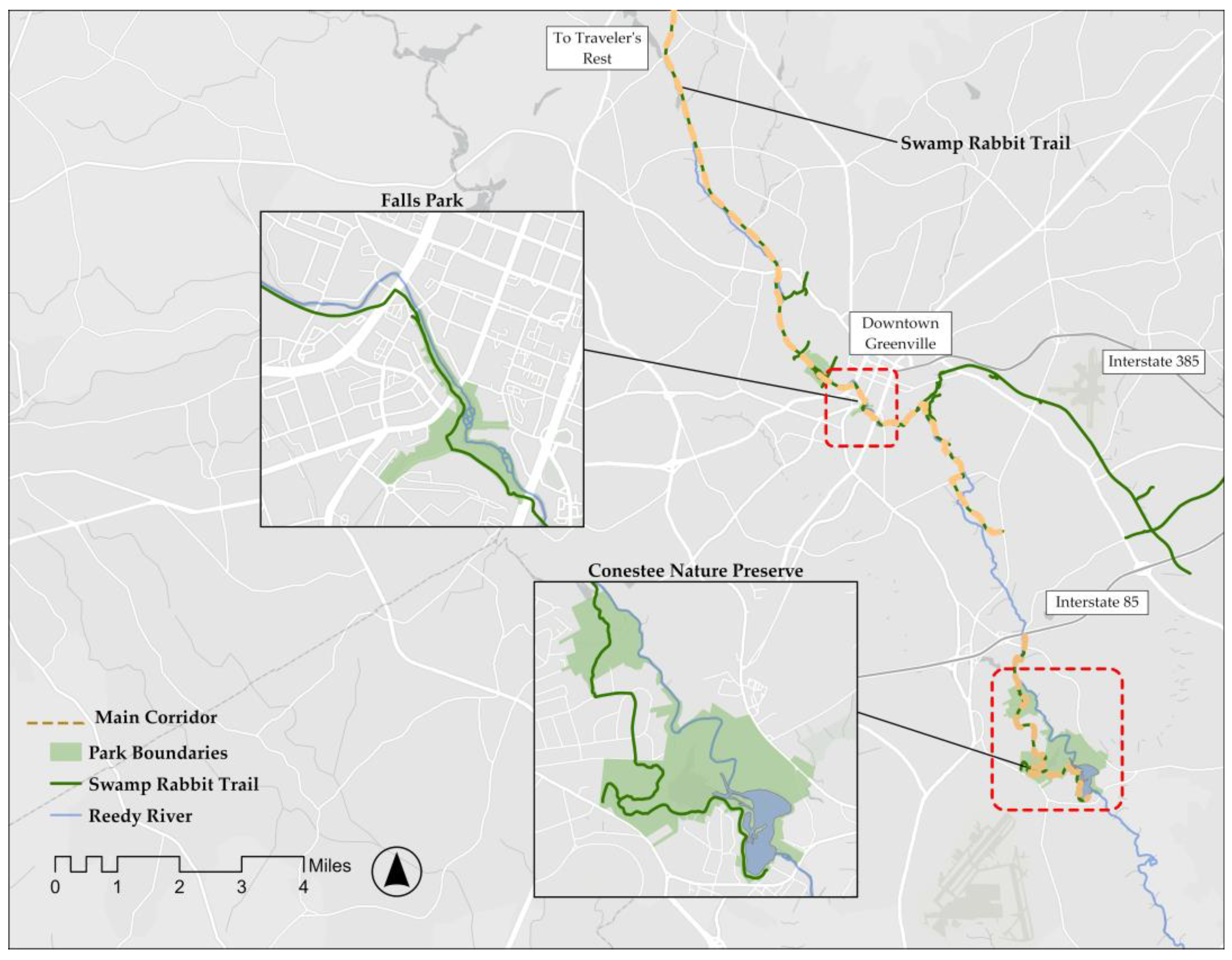
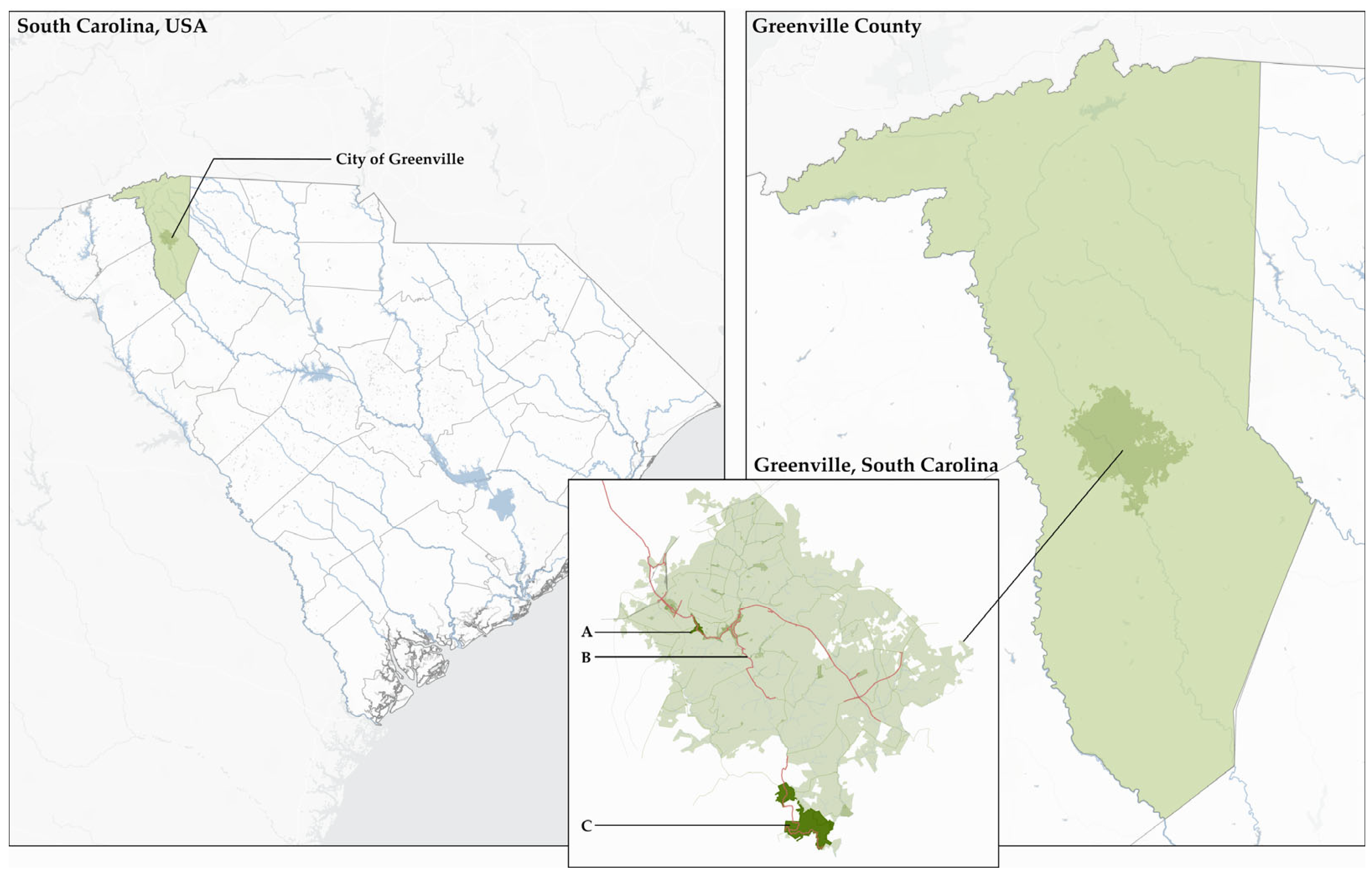
Within this regional landscape, three interconnected sites form the focus of this study: Falls Park on the Reedy, Conestee Nature Preserve, and the Swamp Rabbit Trail,
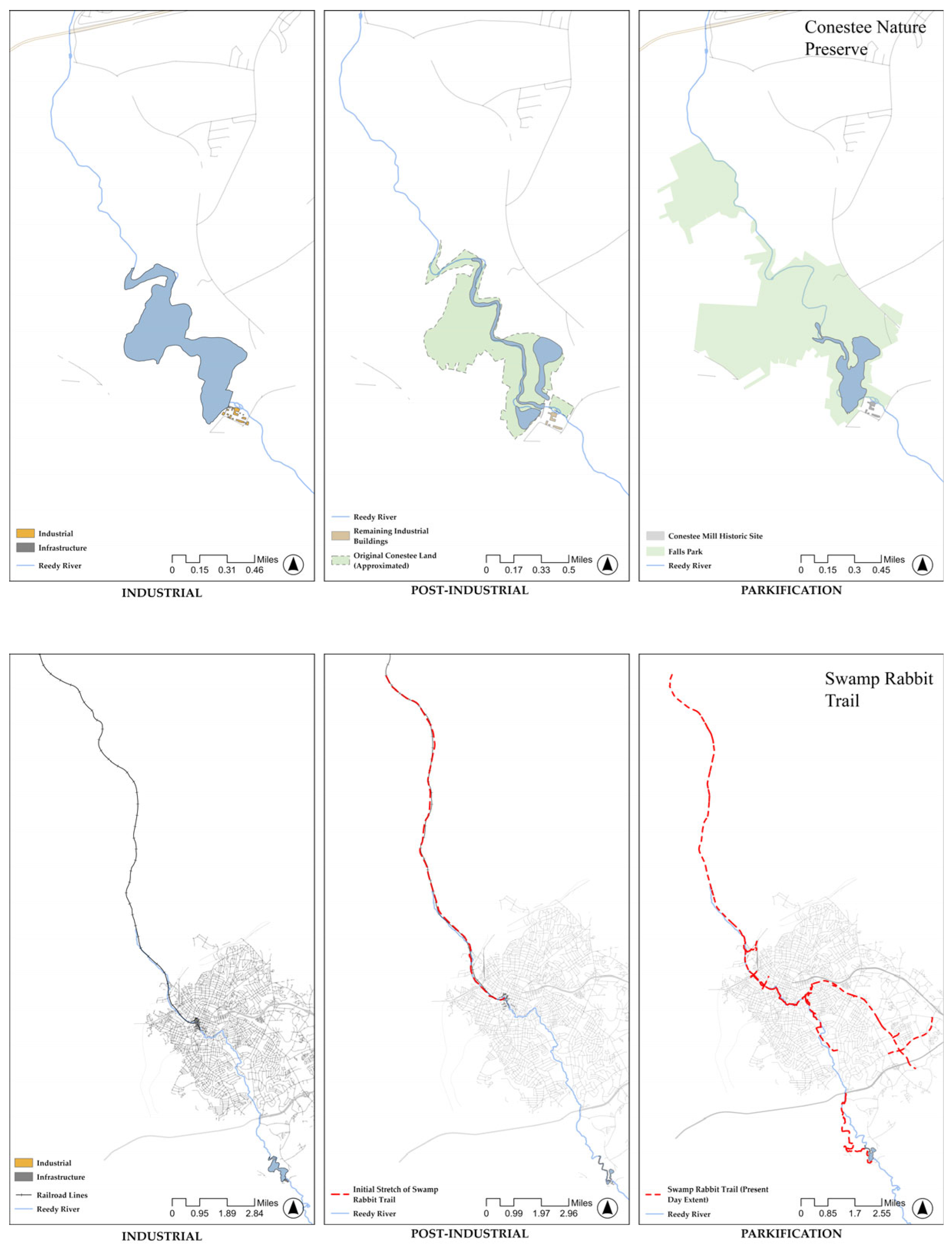
Figure 1. Each originated within a distinct industrial context, ranging from mill-adjacent river infrastructure to industrial waste and rail corridors, yet all have undergone landscape transformation centered on public access, ecological repair, and connectivity. Together, they illustrate different spatial expressions of parkification while remaining embedded within a shared regional system. To support this interpretation, the study employs a series of maps that situate the sites spatially and temporally, including a location map and a comparative timeline that traces their transition from industrial use, through post-industrial conditions, to parkification.
5.1. Falls Park on the Reedy
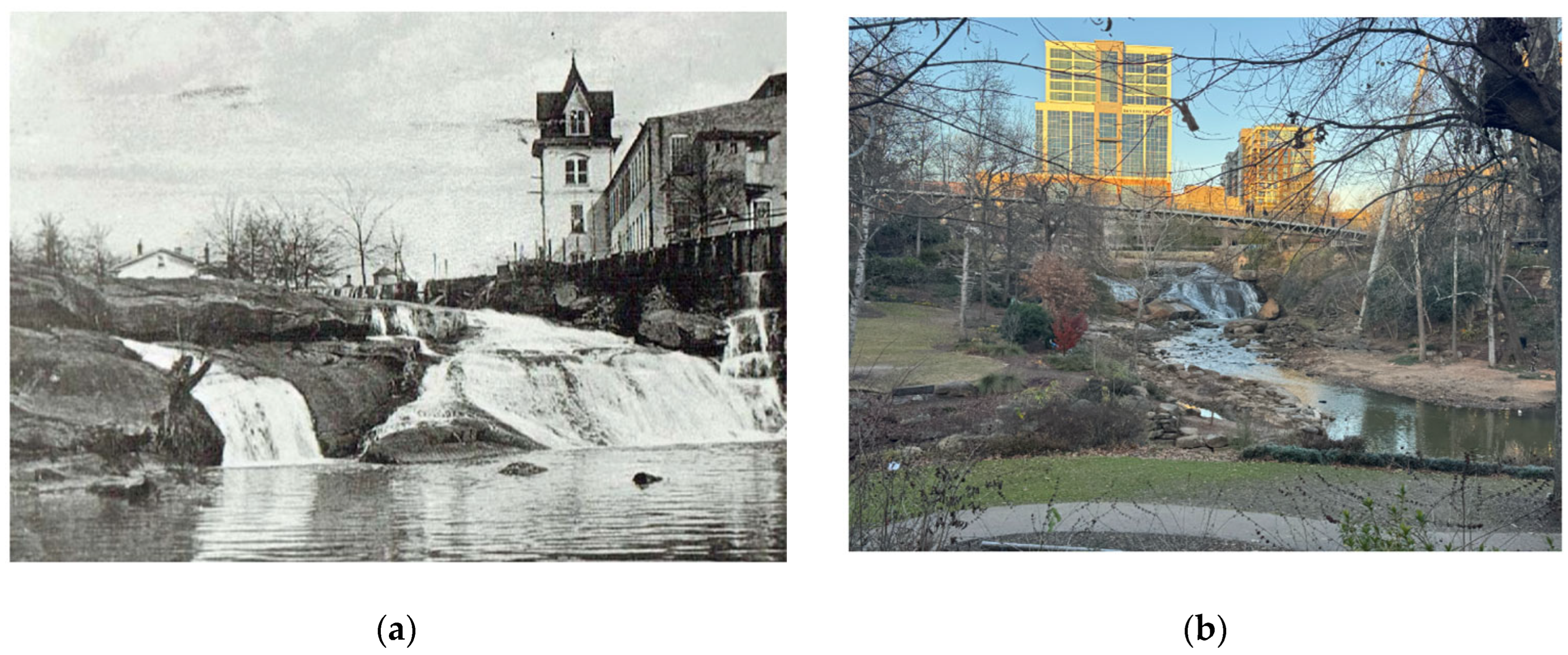
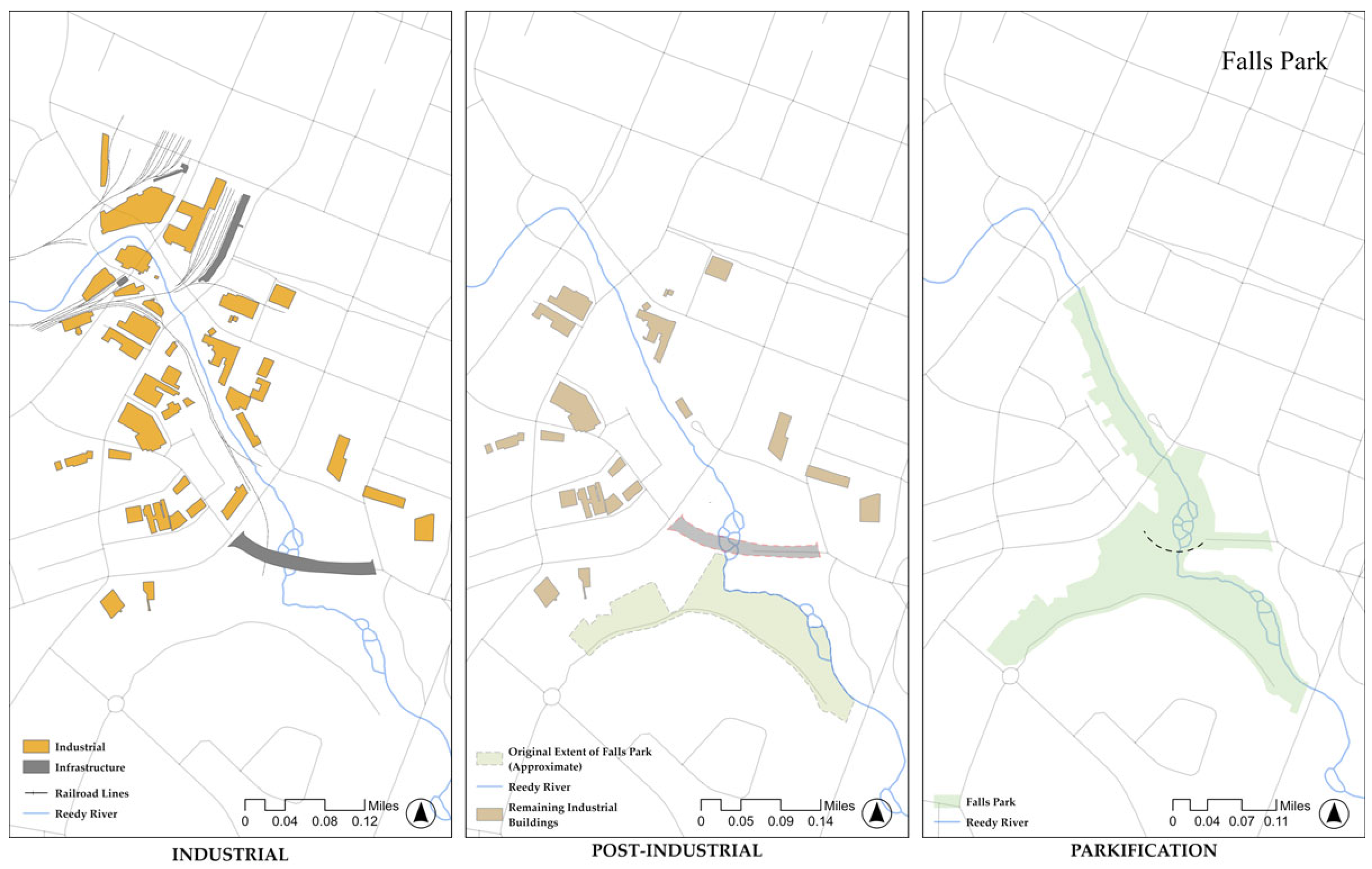
Falls Park on the Reedy is 32-acre park located in downtown Greenville along a formerly industrialized stretch of the Reedy River. Prior to parkification, this river corridor functioned primarily as industrial infrastructure, supporting textile mills, dams, and associated facilities that prioritized production and waste disposal while limiting public access to the water. Channel modification, pollution, and odor significantly degraded the river’s ecological condition and reinforced its perception as a back-of-house landscape rather than a civic or recreational space,
Figure 2. The construction of major transportation infrastructure above the falls further obscured the site’s primary natural feature and physically disconnected the city from the river.
The parkification of this corridor transformed these conditions through a combination of river restoration, landscape design, and pedestrian infrastructure. The removal of vehicular dominance and the introduction of accessible paths, overlooks, bridges reoriented the river toward public use while retaining visible traces of its industrial past. Rather than erasing the site’s history, Falls Park reframed it, allowing ecological recovery and civic engagement to coexist within a highly constrained urban setting.
Today, Falls Park functions as a central public landscape within Greenville’s downtown and serves as a major destination for residents and visitors. Its open lawns, river overlooks, pedestrian bridge, and continuous access to the Reedy River integrate recreation, ecological presence, and urban life. Beyond its programmatic role, the park has become a defining element of Greenville’s urban identity and a visible demonstration of landscape-led transformation.
Within the context of this study, Falls Park is understood as an early and influential parkification project that established a reference point for subsequent landscape interventions in the region. Its success demonstrated that a heavily degraded and infrastructurally constrained site could be reclaimed through landscape transformation rather than conventional development. As such, Falls Park functions as an initiating node whose visibility and public value helped shape later parkification efforts along the Reedy River corridor and beyond.
5.2. Conestee Nature Preserve
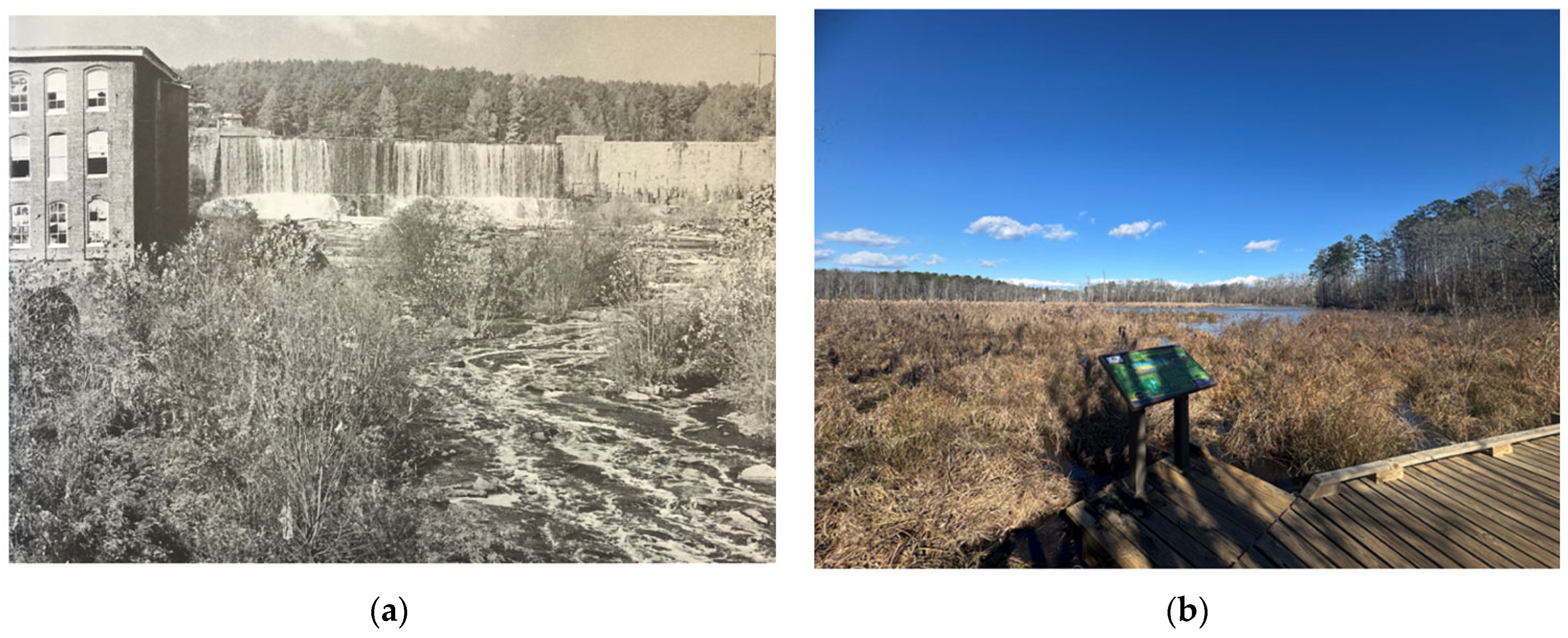
Conestee Nature Preserve is 400-acre preserve located downstream of Greenville along the Reedy River and occupies a landscape shaped by both direct industrial use and cumulative upstream impacts. Prior to parkification, the site was widely perceived as environmentally degraded and inaccessible, defined by extensive sedimentation, contamination, and flooding. While mill activity occurred on-site, the post-industrial condition of Lake Conestee was driven largely by decades of upstream industrial discharge and urban runoff from Greenville and its surrounding suburbs, reinforcing the lake’s reputation as a hazardous and undesirable landscape,
Figure 3.
The construction of a large industrial dam in the late nineteenth century created Lake Conestee as part of the region’s manufacturing infrastructure. Over time, the lake accumulated contaminated sediments that severely constrained redevelopment options and complicated remediation. By the late twentieth century, industrial decline, legal disputes, and environmental liability contributed to the site’s abandonment. These conditions made conventional development impractical and positioned the landscape within the category of brownfields requiring long-term environmental management.
Parkification at Conestee emerged through sustained civic advocacy and institutional collaboration rather than market-driven redevelopment. Conservation advocates reframed the lake and its surrounding lands as a potential ecological asset, emphasizing the extensive wetlands and wildlife habitat that had developed through decades of sedimentation. Public acquisition of the site, supported by environmental settlement funding and coordinated with state environmental agencies, enabled a remediation strategy that prioritized ecological restoration and controlled public access rather than full-scale removal of contaminated material.
Today, Conestee Nature Preserve functions as a large-scale ecological park and nature preserve, offering trails, boardwalks, and educational facilities that provide public access while protecting sensitive environments. Unlike Falls Park on the Reedy, which operates as a highly urban civic space, Conestee emphasizes habitat conservation, wetland performance, and environmental education. Within the context of this study, Conestee represents a parkification pathway driven by environmental constraint and remediation, demonstrating how post-industrial landscapes with limited redevelopment feasibility can serve as foundational ecological nodes within a regional greenway system.
5.3. Swamp Rabbit Trail
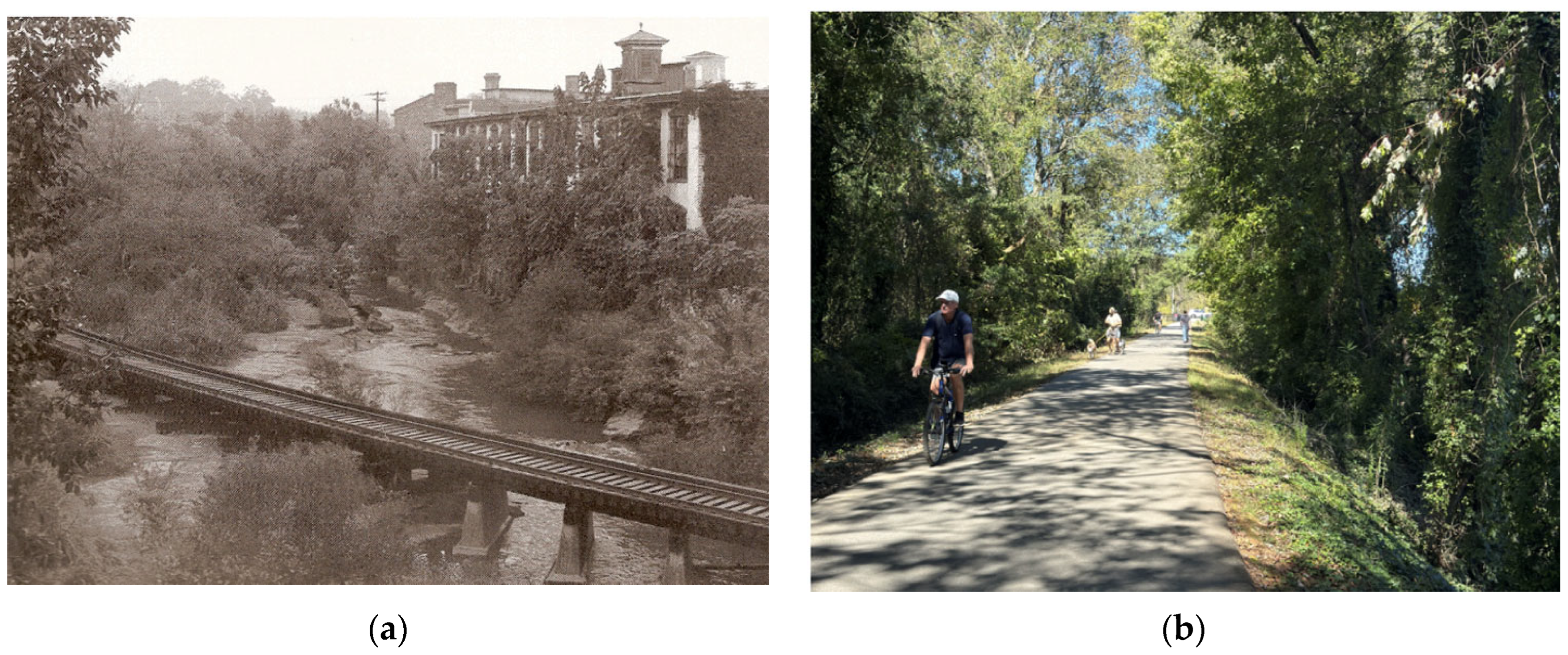
The Swamp Rabbit Trail follows a 19.9-mile former rail corridor that once supported Greenville’s textile and manufacturing economy by connecting mill sites to regional markets. Developed in the late nineteenth and early twentieth centuries, the rail line functioned as an industrial backbone until shifts in transportation and industry led to its gradual decline,
Figure 4. By the late twentieth century, rail operations had ceased, and the corridor faced potential abandonment and fragmentation.
Today, the Swamp Rabbit Trail extends more than twenty miles and functions as a continuously evolving greenway rather than a fixed linear path. Beyond its primary north–south alignment, the trail now branches east and west through a series of extensions that link neighborhoods, parks, and post-industrial landscapes. Of particular significance is its connection to Conestee Nature Preserve, where the trail reinforces ecological access to the Reedy River system while physically linking one parkification project to another. These incremental extensions demonstrate how the trail has grown through accumulation, translating earlier site-based parkification efforts into a broader regional network.
Public acquisition of the corridor marked a critical turning point. In the late 1990s, conservation advocates recognized the corridor’s potential as a continuous landscape infrastructure rather than a surplus industrial asset. Through coordinated efforts led by Upstate Forever and supported by Greenville County, the abandoned rail line was acquired and preserved for public use despite initial public skepticism regarding the investment.
The conversion of the corridor into a multi-use trail began in the mid-2000s and was completed incrementally, supported by public and private funding. Today, the Swamp Rabbit Trail functions as a regional greenway that connects downtown Greenville with surrounding communities, parks, and post-industrial landscapes. Its transformation illustrates how the reuse of industrial infrastructure can translate earlier parkification efforts into a connected system, amplifying the influence of site-based parks and enabling ripple effects at the regional scale.
6. Results
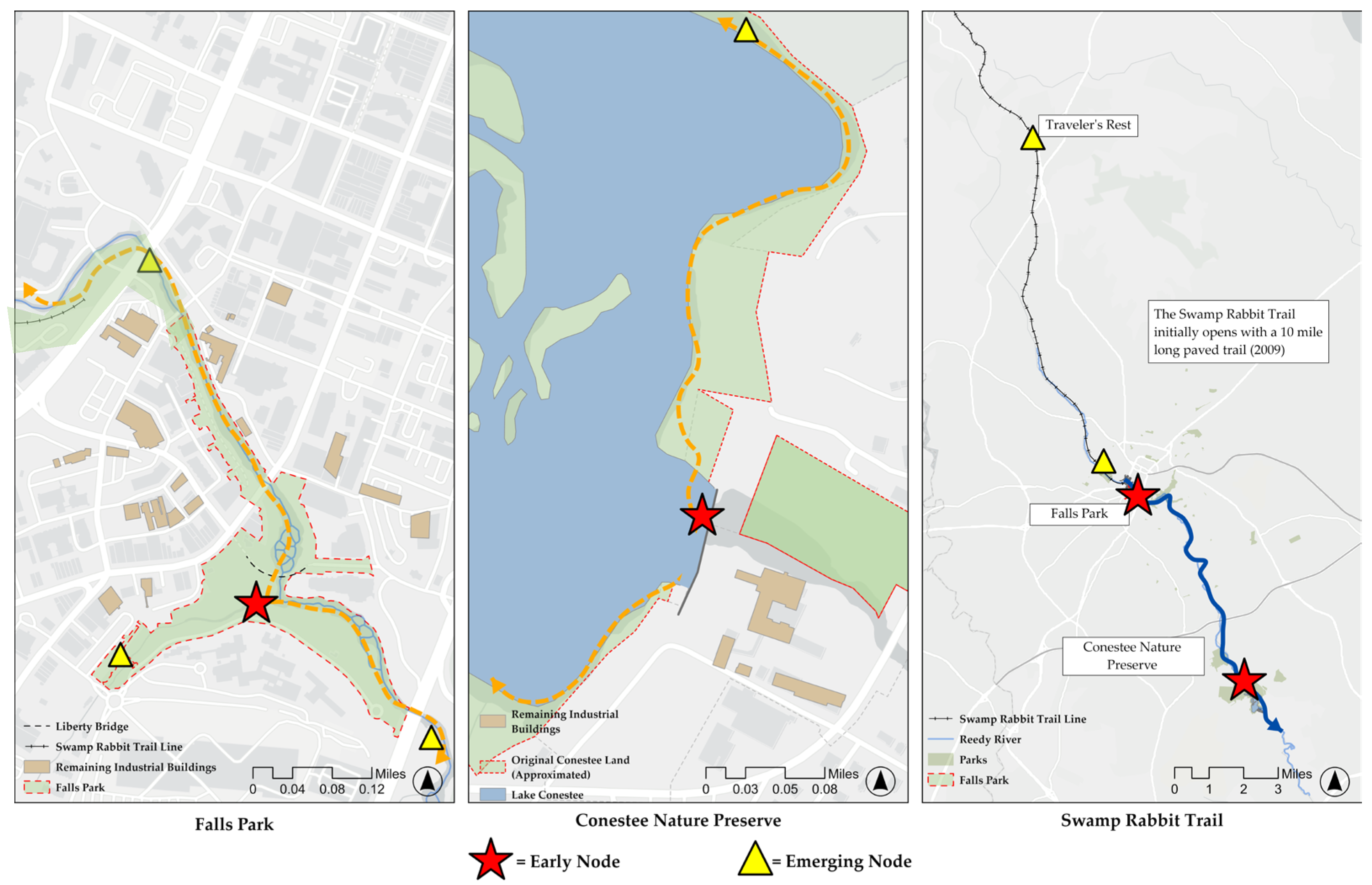
The results demonstrate that parkification in Greenville functioned as a cumulative and spatially relational process rather than a series of isolated projects. Across the Reedy River watershed and its associated trail corridors, early landscape interventions generated patterns of expansion, connectivity, and institutional alignment that extended beyond individual sites and contributed to the formation of a regional greenway system. The three case studies, Falls Park on the Reedy, Conestee Nature Preserve, and the Swamp Rabbit Trail, are embedded within a shared landscape structure shaped by industrial legacies, hydrological systems, and inherited infrastructure, providing a common spatial context for the transformations observed,
Figure 5.
Taken together, the findings show that parkification unfolded through successive phases, in which early site-based interventions established conditions that enabled later connections through river corridors, trails, and coordinated civic action. Rather than emerging simultaneously, these projects accumulated over time, with each intervention influencing subsequent landscape decisions. The results presented in the following sections trace this process, beginning with pre-parkification conditions and proceeding through the emergence of initiating nodes, expanding connectivity, and the institutional alignment that supported cumulative ripple effects.
6.1. Pre-Parkification Landscape Conditions
Across all three sites, parkification emerged as a response to specific post-industrial conditions that restricted access to natural features, limited redevelopment feasibility, and positioned these landscapes as environmental and infrastructural liabilities. Rather than reflecting a proactive design agenda, the impetus for parkification was rooted in the degraded and constrained nature of the sites themselves.
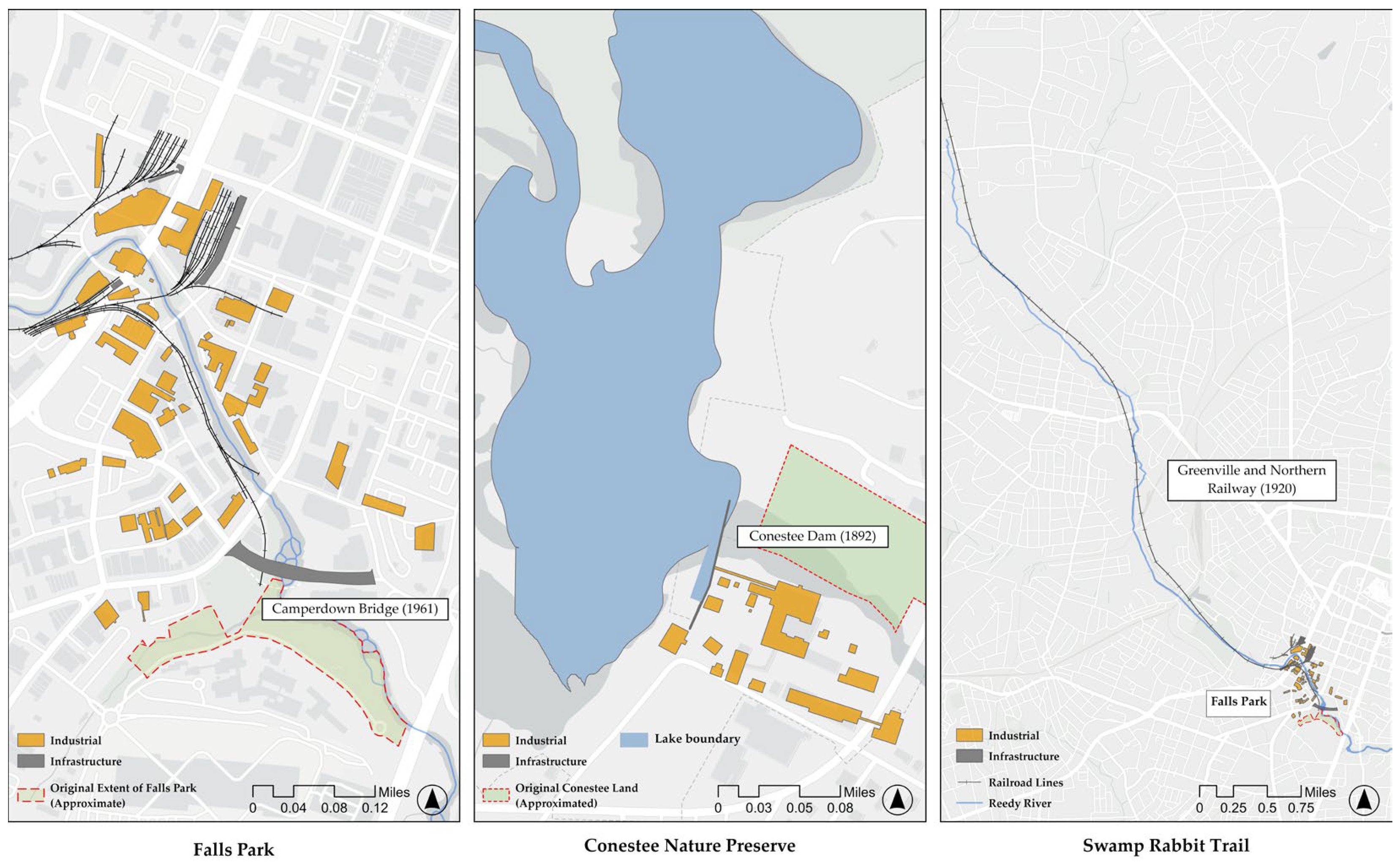
The map in
Figure 6 documents the inherited industrial and infrastructural conditions of the three case study sites prior to parkification. Former mill sites, rail infrastructure, river corridors, and dam-created water bodies are shown to establish a baseline of environmental constraint and limited public access. These pre-parkification conditions form the starting point for subsequent mapping of landscape transformation, parkification nodes, and emerging greenway connections.
At Falls Park on the Reedy, the river corridor was shaped by industrial use and infrastructural dominance that obscured and degraded the river environment. Although the waterfall remained physically present, interviewees described how public access to both the falls and the river was severely limited due to poor water quality, odor, and chemical pollution associated with upstream industrial activity. One interviewee recalled that the area was widely avoided and that many residents “didn’t even realize the waterfall was there” because it functioned as an industrial back-of-house landscape rather than a civic space.
Compounding these conditions, Camperdown Road carried vehicular traffic directly over the falls, reinforcing the prioritization of movement over access and further disconnecting the downtown from the river.
Surrounding land uses and land ownership patterns reinforced these access limitations. Parcels adjacent to the river were controlled by institutional and civic entities, constraining market-driven redevelopment while simultaneously creating conditions favorable to preservation-oriented intervention. Mapping of ownership boundaries demonstrates that these institutional controls limited private development options and contributed to the emergence of landscape-based reuse as a viable alternative.
At Conestee, pre-parkification conditions were defined by long-term industrial waste disposal and environmental contamination. The lake itself was a direct product of industrial activity, and interviewees emphasized that chemical residues, unstable soils, and accumulated sediment rendered the site unsuitable for residential or commercial reuse. As one stakeholder noted, the site’s recognition as a brownfield meant that remediation and ecological management were prerequisites to any form of public engagement.
These conditions effectively narrowed redevelopment pathways and positioned ecological restoration as the most feasible response.
The former rail corridor that later became the Swamp Rabbit Trail similarly entered a post-industrial phase characterized by disuse and vulnerability. Interviews confirmed that the corridor was perceived as obsolete infrastructure and was at risk of being sold and fragmented, despite its continuous linear form through the city. While the corridor offered latent connectivity, it lacked public access and formal recognition as an open space asset prior to intervention.
Flooding and hydrological constraints further limited redevelopment across all three sites. Floodplain mapping along the Reedy River and within the Conestee basin reveals recurring inundation that made building-based redevelopment difficult and costly. Interviewees consistently described flooding as a persistent challenge that clarified the suitability of parks and open space as flexible land uses capable of accommodating environmental fluctuation.
Together, these pre-parkification conditions establish a shared baseline in which parkification emerged as a pragmatic response to environmental degradation, access constraints, and limited redevelopment alternatives, setting the stage for subsequent landscape transformation. Interviewees consistently described this period as one of constraint rather than opportunity, emphasizing contamination, infrastructural legacy, and regulatory limitations as factors that made conventional development unlikely. As one stakeholder involved in early conservation and planning efforts at Conestee noted, the site was recognized as a brownfield shaped by accumulated industrial and municipal pollution, where land acquisition and remediation occurred incrementally because “it wasn’t pristine land” and required long-term commitment before public access could even be considered.
This logic was echoed across other parkification efforts in Greenville. As another interviewee explained, parks frequently emerged in flood zones or abandoned industrial areas precisely because “you can’t do much there”, noting that Unity Park exemplifies how hydrological constraints and limited redevelopment feasibility repeatedly positioned such sites for landscape-led reuse.
6.2. Emergence of Early Parkification Nodes: Falls Park on the Reedy
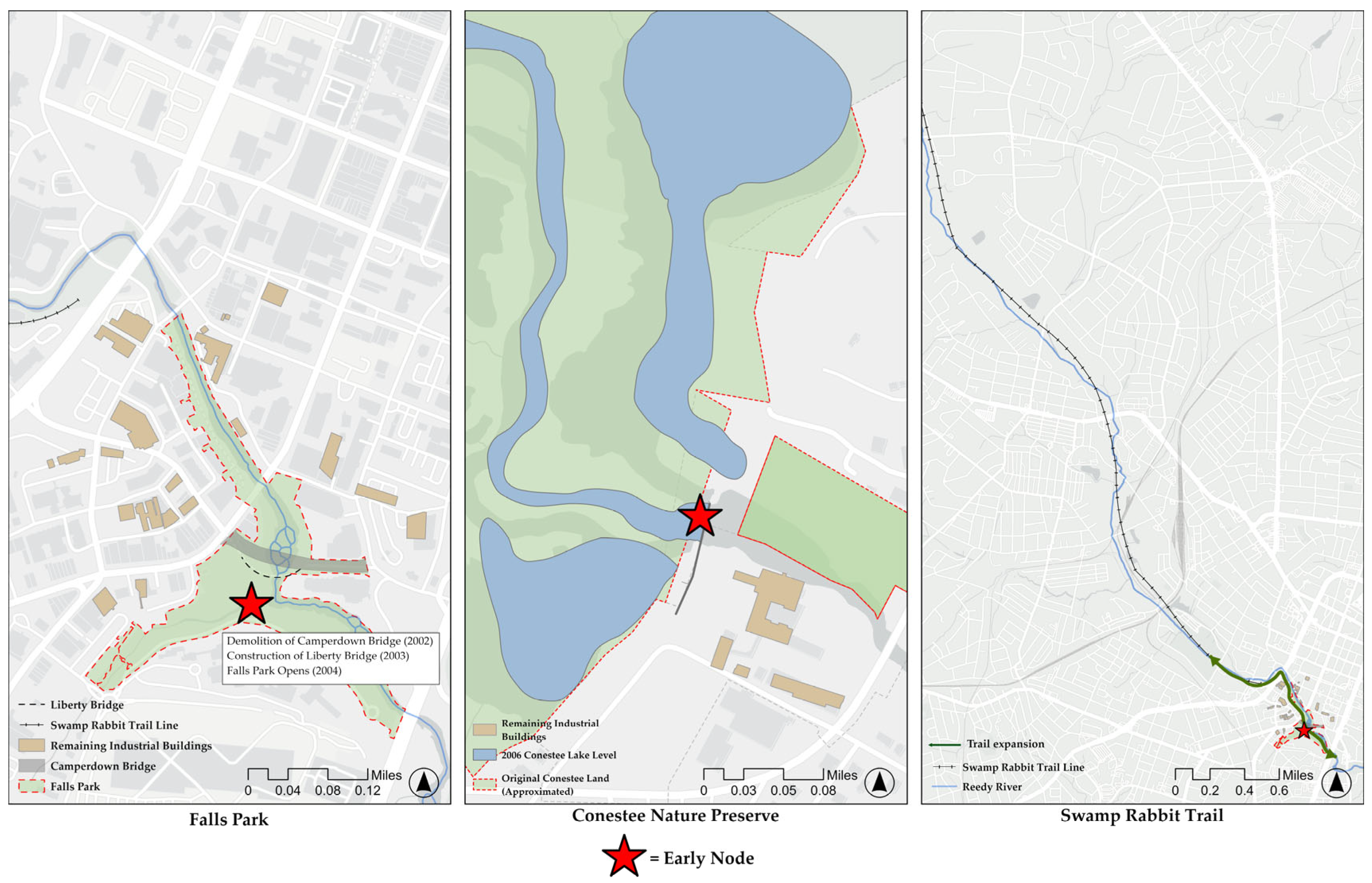
The results indicate that Falls Park on the Reedy functioned as the primary initiating node for parkification in Greenville, setting in motion a sequence of landscape transformations that extended beyond the site itself.
Figure 7 highlights the spatial conditions that positioned Falls Park as the first parkification node in Greenville. Prior to redevelopment, the area was a deteriorated mill landscape characterized by industrial remnants, limited public access, and environmental degradation. Despite these conditions, the presence of the Reedy River waterfall persisted as a distinctive natural feature embedded within the industrial corridor.
Spatial analysis identifies the removal of Camperdown Road and its replacement with a pedestrian bridge as a critical turning point. Interviewees described how, prior to this intervention, the waterfall was largely obscured and experienced only incidentally from passing vehicles. As one stakeholder explained, once the vehicular bridge came down, “people could really see the waterfall,” noting that while residents may have known of its existence, it was not previously a place where people lingered or gathered.
The period between the bridge removal and the construction of the pedestrian bridge revealed the waterfall as a visible landscape feature, prompting public surprise and renewed attention: “people are like, oh my goodness, I didn’t know there was a waterfall there”. Interviewees further noted that the proposal initially faced resistance from city leadership due to traffic concerns, but support shifted once the spatial and civic potential of the intervention became clear, with the project ultimately reframing downtown redevelopment trajectories.
Land ownership and civic advocacy further reinforced this early parkification node. The donation of land by Furman University to the Carolina Foothills Garden Club, under the condition that it be preserved as public parkland, established a governance structure that protected the river corridor from private development. Advocacy by civic organizations played a critical role in maintaining public access and environmental stewardship, ensuring that the site’s transformation aligned with broader community values rather than short-term economic interests. These institutional arrangements, when mapped alongside early park investments, highlight how ownership and advocacy operated as enabling conditions for parkification.
Flooding emerged as an additional factor shaping the trajectory of transformation. The site’s vulnerability to periodic inundation limited conventional development options, reinforcing the suitability of a park-based approach. Environmental documentation and sediment records indicate that hydrological risk and accumulated sedimentation significantly constrained redevelopment feasibility. In this context, parkification functioned not only as a design choice but as a pragmatic response to recurring flooding, allowing the landscape to accommodate hydrological processes while remaining publicly accessible and socially valued.
6.3. Environmental Constraint and Ecological Reclamation: Conestee Nature Preserve
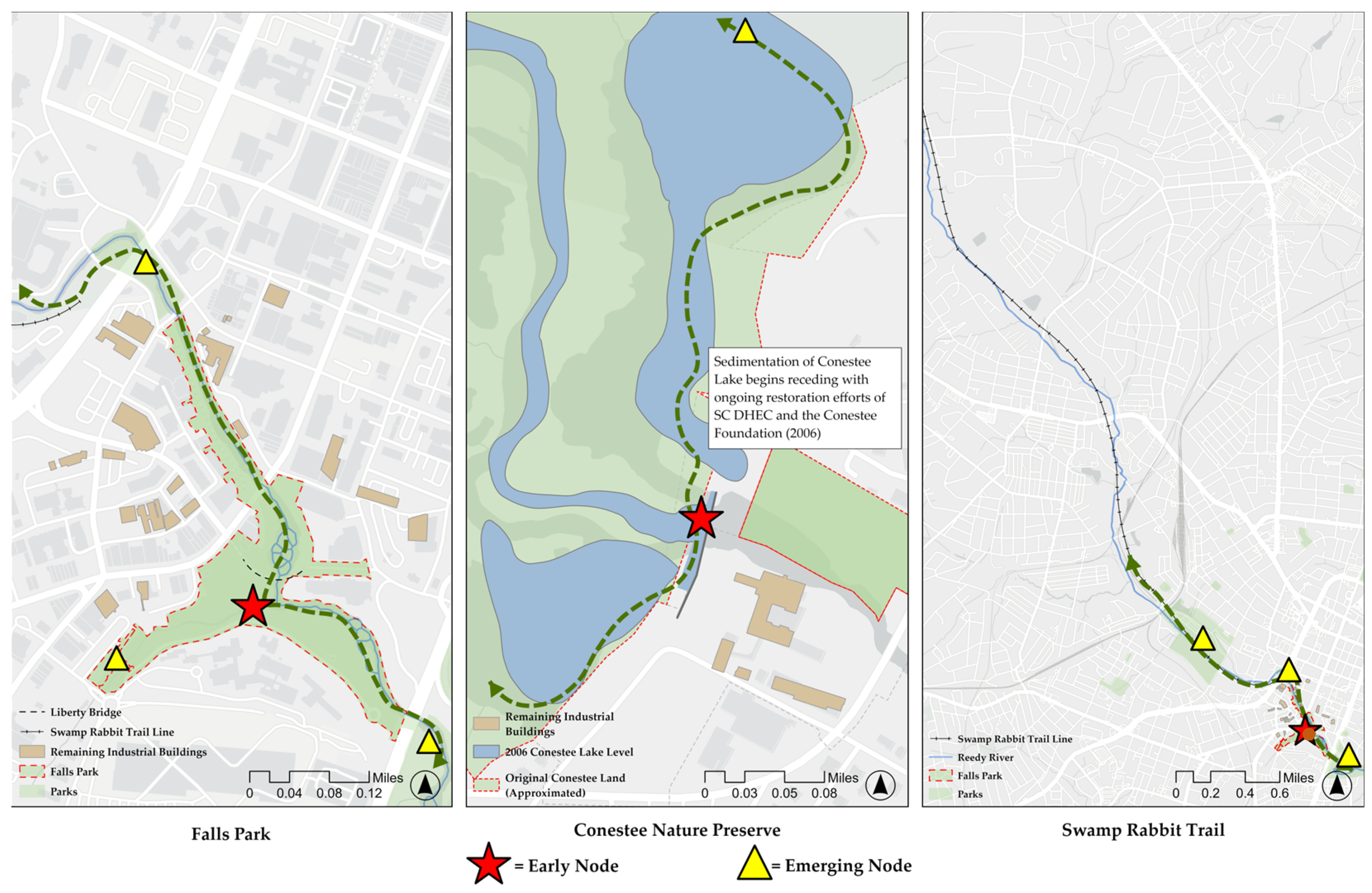
Conestee Nature Preserve represents a parallel pathway of parkification driven primarily by environmental constraint, reputational stigma, and sustained advocacy. The lake system originated from industrial activity and waste disposal that continued into the late twentieth century, resulting in contamination and extensive sediment accumulation. Interviewees emphasized that, prior to intervention, the site carried a strong negative reputation tied to its degraded environmental condition. One interviewee recalled that the lake was widely known by a derogatory nickname, “Conasty”, reflecting its polluted state and reinforcing public avoidance. Despite this stigma, early advocates within the nonprofit Friends of the Reedy River identified the site’s ecological potential and initiated efforts to adopt the lake as a restoration project.
Interview evidence indicates that the very conditions contributing to the lake’s poor reputation, slow sedimentation, contamination, and hydrological alteration following dam construction, also produced extensive wetlands that later became central to its transformation. As one interviewee explained, these wetlands emerged through decades of sediment accumulation and were ultimately recognized as ecological assets rather than liabilities. Mapping confirms that these environmental conditions rendered the site unsuitable for residential or commercial redevelopment while simultaneously positioning ecological restoration as the most feasible and defensible reuse strategy (
Figure 8).
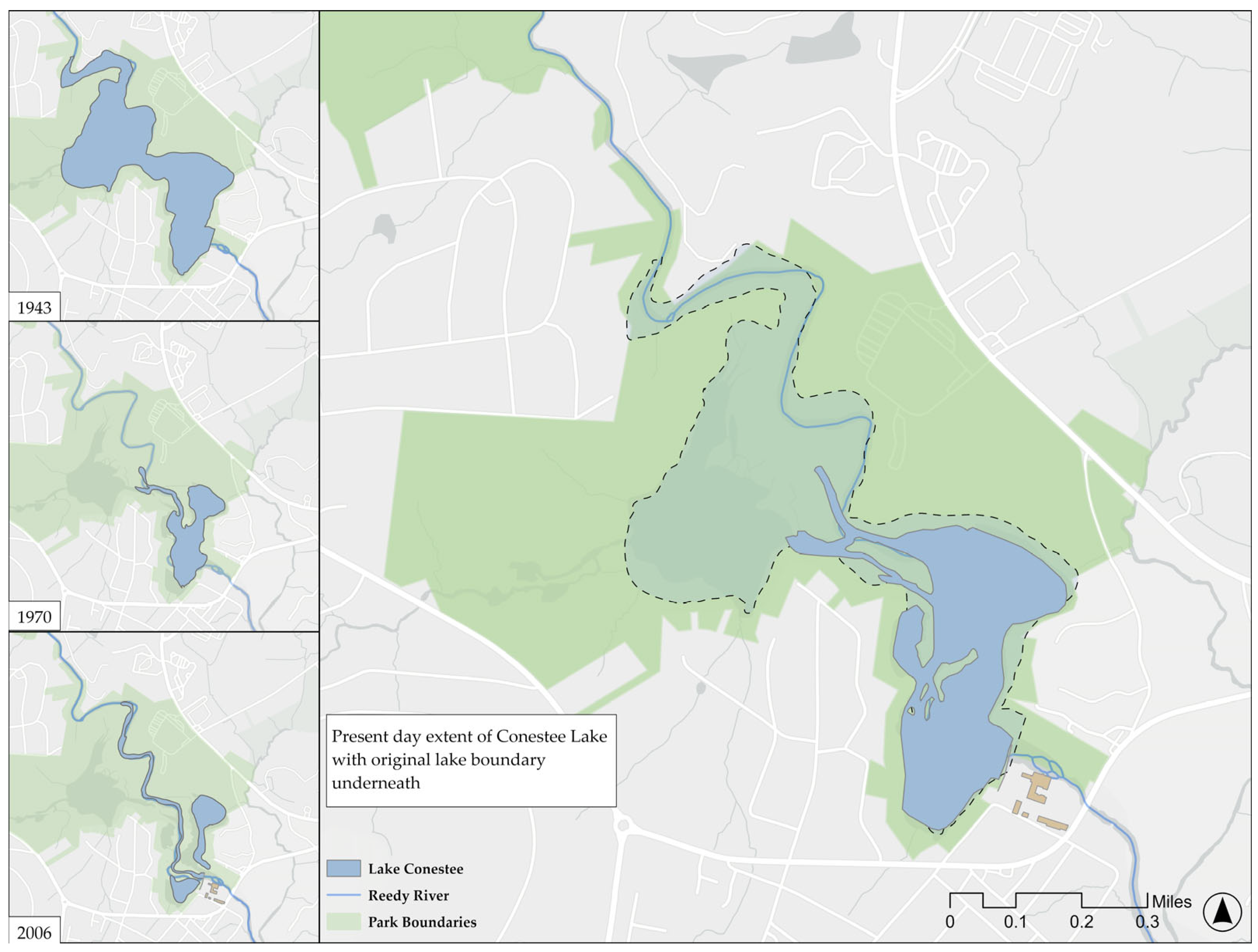
The presence of the dam and the resulting lake system further reinforced this trajectory. Rather than functioning as a conventional recreational lake, Conestee increasingly operated as a hybrid, managed wetland shaped by altered hydrology, long-term sediment deposition, and constrained water movement. Interviewees emphasized that parkification did not aim to restore the site to a pre-industrial condition but instead worked with the ecological reality produced by decades of industrial activity. In this context, the lake itself became an ecological structure, supporting wetland habitats and limiting intensive human use, rather than a water body intended for full remediation or redevelopment.
Figure 9 maps the series of events such as dam construction, altered hydrology, and long-term sediment accumulation have reshaped the lake into a managed wetland system, constraining conventional redevelopment while supporting ecological restoration as the primary pathway for parkification.
Stakeholders described how the site’s brownfield designation enabled access to remediation and conservation funding, narrowing conventional redevelopment pathways while opening opportunities for long-term ecological management and public stewardship. Rather than pursuing full contamination removal, parkification proceeded incrementally, aligning funding structures with habitat protection and controlled public access. Over time, institutional coordination strengthened, enabling phased improvements and reinforcing Conestee’s identity as a managed ecological preserve.
Interviewees also emphasized the ecological consequences of sediment deposition during the industrial period. Once active pollution ceased, accumulated sediments contributed to wetland formation and hydrological stabilization. Although contamination concerns remained, these conditions supported the emergence of a managed ecological landscape. Boardwalks and controlled trail systems were later introduced to facilitate public engagement while maintaining habitat protection. The eventual addition of a nature-based playground reflects the gradual transition from ecological stabilization toward broader public programming.
6.4. Expansion of Connectivity and Greenway Networks: Swamp Rabbit Trail
Results from the third case study indicate that the Swamp Rabbit Trail emerged through a distinct but complementary process of parkification driven by preservation, timing, and cumulative vision rather than site-based remediation alone. Interview evidence reveals that a critical moment occurred when the former rail corridor was slated for sale following the decline of rail use. At that point, leadership from a local conservation organization recognized the corridor as a strategic landscape asset rather than surplus infrastructure.
One interviewee described stepping away from a legal career to focus on conservation advocacy after identifying the imminent risk of privatization of the rail corridor. In anticipation that the corridor could be lost, funds were actively gathered to secure the land if public acquisition failed. Ultimately, Greenville County purchased the corridor, preserving it as a continuous public right-of-way. Spatial mapping confirms that this acquisition occurred prior to the formalization of a trail project, underscoring that preservation preceded design,
Figure 10.
The vision to transform the preserved rail corridor into a multi-use trail developed incrementally and was informed by the success of earlier parkification projects, particularly along the Reedy River. Rather than representing a singular planning initiative, the Swamp Rabbit Trail reflects a cumulative decision-making process shaped by growing public support for green spaces, demonstrated benefits of earlier parks, and increasing institutional confidence in landscape-led investment. Interviewees emphasized that the trail aligned with an emerging city-wide vision for connectivity, recreation, and quality of life, rather than originating as a standalone transportation project.
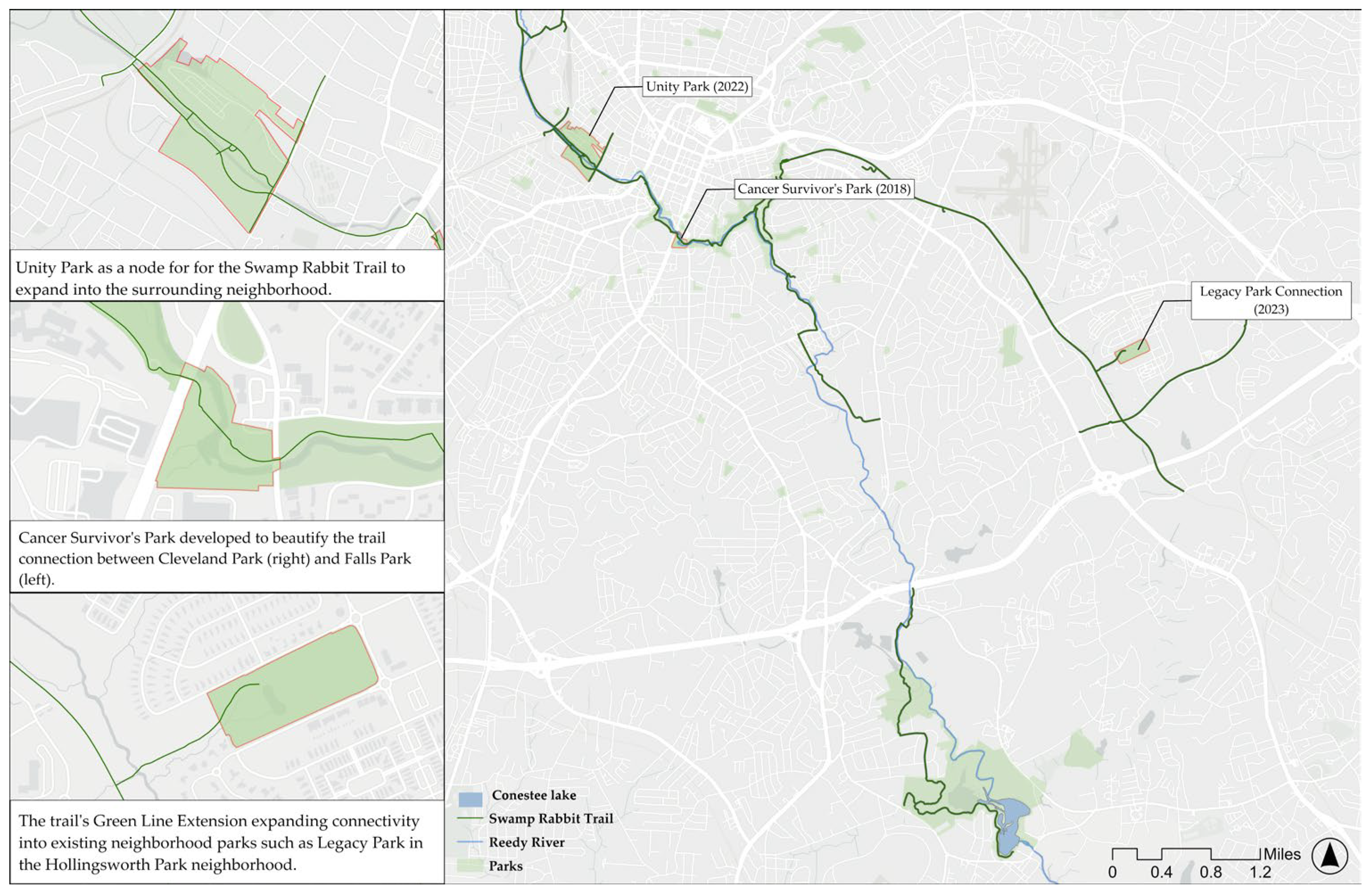
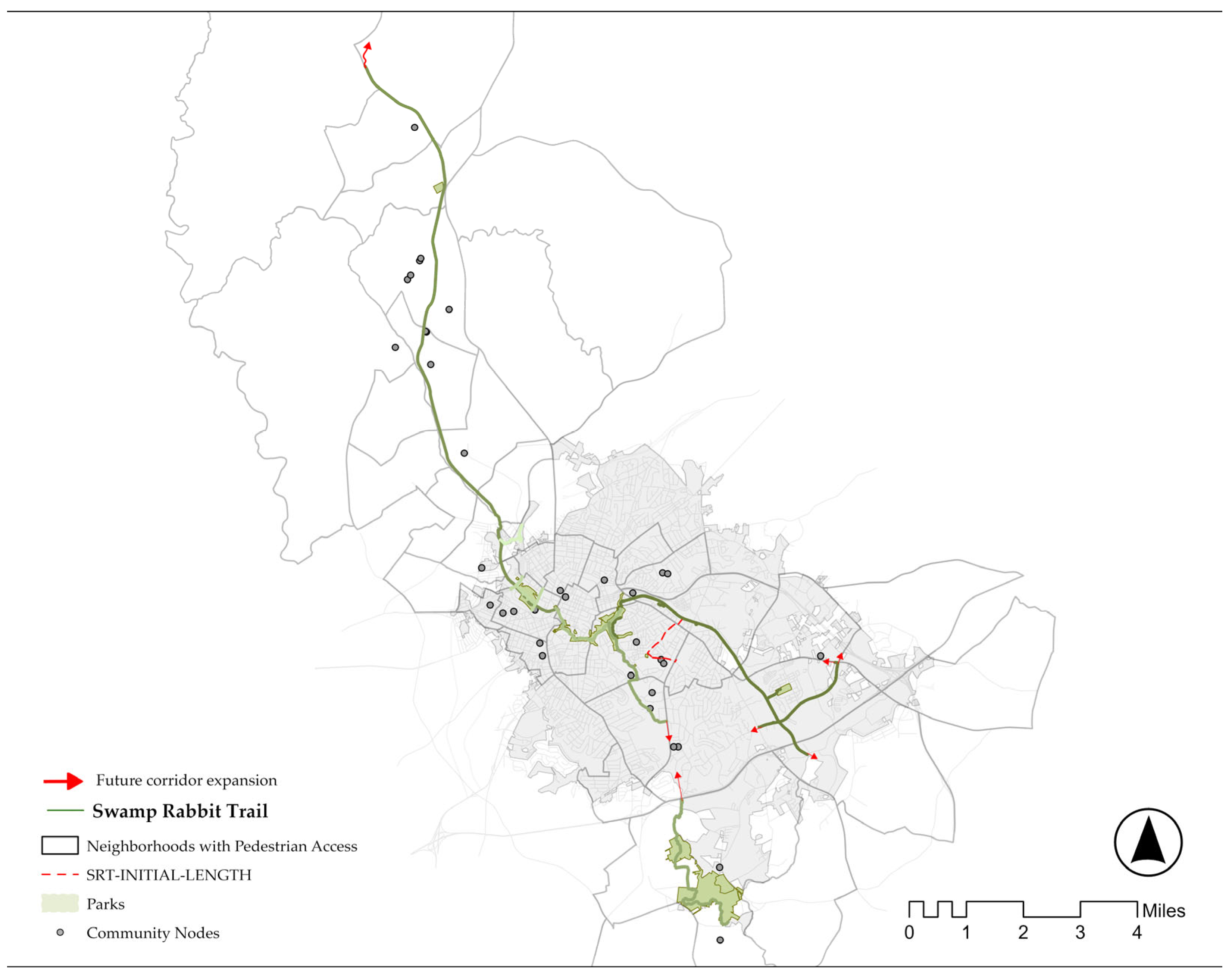
Mapping of trail extensions over time shows how the Swamp Rabbit Trail functions as a connective spine linking multiple parkification nodes, including Falls Park and Conestee Nature Preserve, while extending north toward Travelers Rest and south along the Reedy River corridor,
Figure 11. The development of Unity Park along the trail represents a critical secondary node that emerged as a direct outcome of this connectivity, reinforcing the trail’s role in structuring new park investments rather than merely linking existing ones.
In addition to park development, spatial analysis indicates that the trail accelerated adjacent landscape and urban projects, including neighborhood parks, river access points, and recreational amenities that clustered along its alignment,
Figure 11. These patterns suggest that the trail amplified the ripple effects of earlier parkification by extending their spatial influence and concentrating subsequent investment along a linear corridor.
At the same time, the results reveal limits to this expansion. Where trail extensions moved beyond the original rail alignment, land ownership fragmentation and neighborhood opposition slowed or constrained connectivity. Interviewees described resistance from adjacent property owners in areas lacking former rail infrastructure, highlighting how NIMBYism (Not in My Back Yard) and acquisition challenges shaped the uneven geography of expansion.
NIMBYism describes place-based opposition to development perceived as locally disruptive, even when such projects align with wider public or environmental goals. In the case of trail expansion, this resistance shaped the pace and direction of connectivity beyond former rail alignments. These frictions underscore that while the Swamp Rabbit Trail functioned as a powerful catalyst, its ripple effects were mediated by governance, ownership, and social context.
Together, these findings position the Swamp Rabbit Trail as both a product and an amplifier of parkification processes initiated at earlier nodes. By physically connecting parks, enabling new ones, and accelerating landscape investment along its length, the trail transformed isolated interventions into a coherent, though contested, regional greenway network.
6.5. Institutional Alignment as a Driver of Parkification
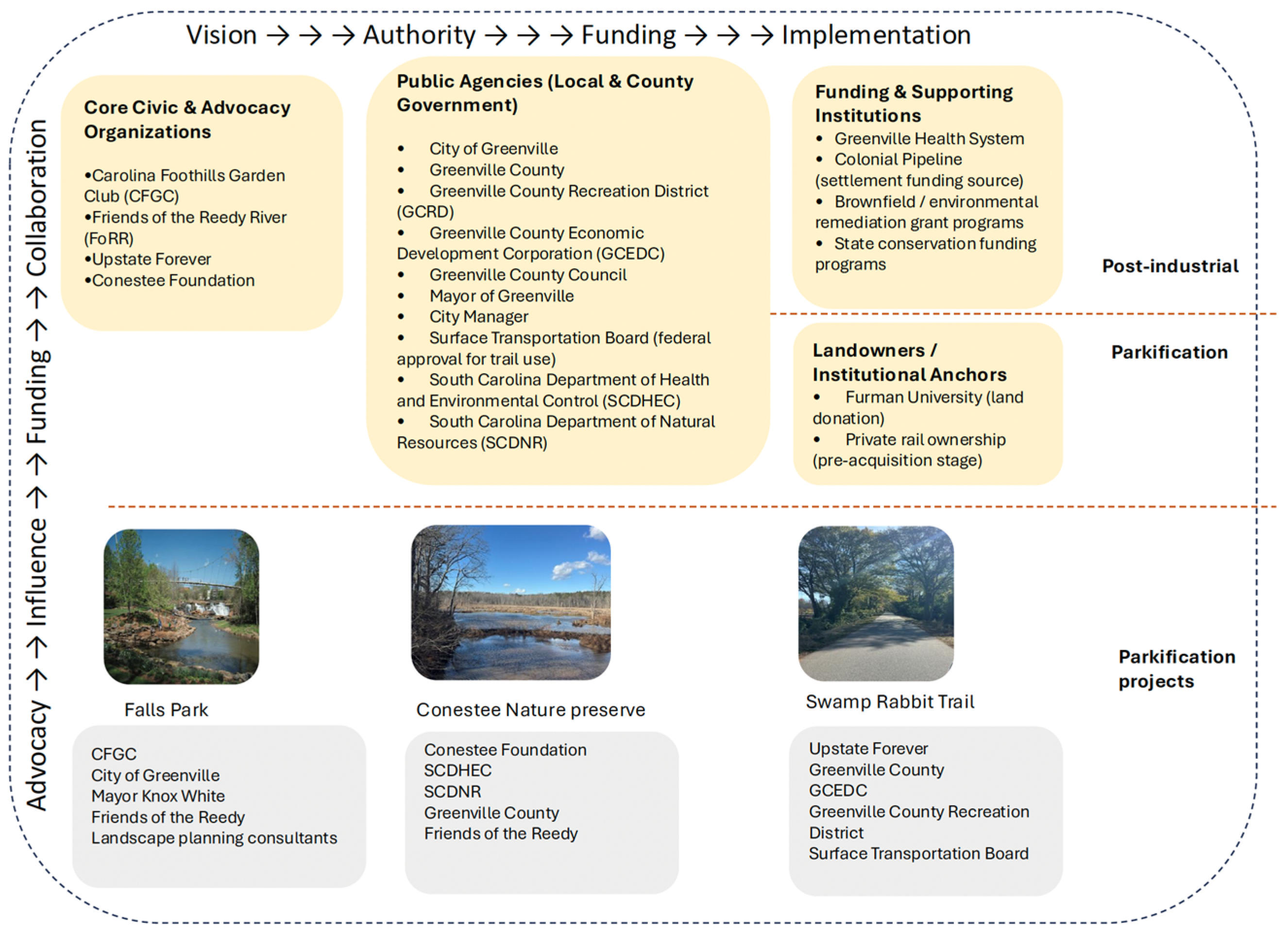
Beyond physical transformation, the results reveal cumulative effects within institutional and governance structures that were central to enabling parkification across Greenville. Interview evidence highlights the sustained involvement of civic organizations and advocacy groups, including the Carolina Foothills Garden Club, Upstate Forever, Friends of the Reedy River, and related non-profit entities, as critical actors in initiating, sustaining, and scaling parkification efforts. These organizations operated not as isolated sponsors of individual projects, but as intermediaries that translated environmental constraints and landscape potential into actionable visions.
Interviewees consistently emphasized that the presence of landscape architects, conservation professionals, and design-oriented leadership within these organizations shaped how post-industrial sites were understood and negotiated. Rather than framing sites solely as contaminated or obsolete land, these actors articulated future-oriented landscape visions that made parks legible to decision-makers as viable, low-risk interventions. In several cases, interviewees noted that park projects were among the few forms of development capable of advancing under conditions of flooding, contamination, or regulatory restriction, positioning parkification as a uniquely effective strategy for aligning environmental realities with public goals.
Mapping of project timelines alongside interview data indicates that early parkification efforts, particularly Falls Park, functioned as institutional reference points,
Figure 12. Once realized, these projects reduced uncertainty for subsequent initiatives by demonstrating that landscape-led approaches could deliver public value despite environmental and infrastructural constraints. As one interviewee explained, the success of early park projects made it easier for agencies and elected officials to support later efforts, as parks were no longer perceived as experimental but as proven responses to post-industrial conditions.
This growing confidence contributed to stronger alignment among municipal departments, county agencies, and non-profit organizations. Over time, parkification emerged as a recognizable and repeatable mode of intervention, supported by shared funding mechanisms, coordinated planning efforts, and overlapping institutional mandates. Rather than operating as isolated projects, parks functioned as organizing instruments that aligned vision, professional expertise, and governance capacity, enabling individual landscape interventions to accumulate into an interconnected regional greenway system.
6.6. Cumulative Ripple Effects and Regional Landscape Integration
The final phase of analysis examines how parkification accumulated spatially across the study area through interconnected projects rather than isolated interventions. The combined mapping of parks, trails, and associated green spaces illustrates how early site-based projects expanded their influence over time, generating cumulative ripple effects at the regional scale.
Figure 13 visualizes this pattern of accumulation. Early parkification nodes, including Falls Park, Conestee Nature Preserve, and later Unity Park, did not remain spatially isolated. Their influence extended through trail connections, adjacent landscape projects, and incremental green infill along the Reedy River corridor and former rail alignments. The Swamp Rabbit Trail functioned as a connective spine, linking discrete parks and enabling the emergence of additional recreational and ecological zones.
These ripple effects were not uniform or uninterrupted. In areas where trail expansion extended beyond former rail corridors, land acquisition challenges and localized opposition slowed connectivity, producing uneven patterns of growth. Nevertheless, the cumulative effect of repeated parkification initiatives reinforced a shared regional identity centered on public landscapes and access to green space.
To further clarify the cumulative nature of this transformation,
Figure 14 compares industrial, post-industrial, and parkification phases across the three case sites. The comparative sequence illustrates how spatial contraction during industrial decline was followed by progressive green expansion and corridor consolidation. What initially appeared as fragmented post-industrial remnants evolved into connected landscape systems through successive phases of parkification.
To assess whether these spatial patterns correspond to measurable connectivity change, a quantitative analysis of trail expansion and node integration was conducted.
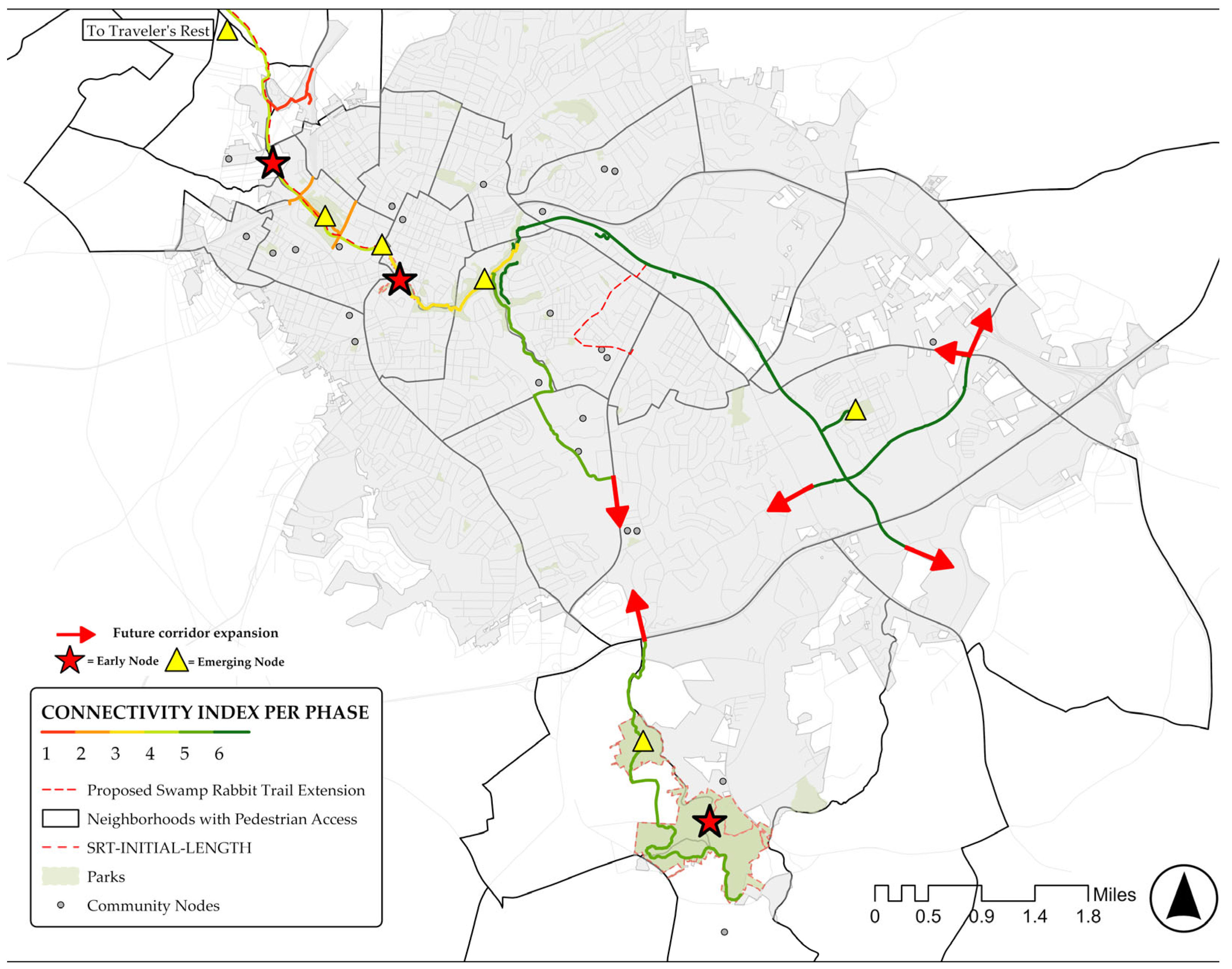
The phased expansion of the Swamp Rabbit Trail demonstrates a measurable increase in connectivity and cumulative ripple effects over time. As shown in
Table 2, growth in trail length corresponds with an increasing number of connected park nodes, reaching a total of 14 newly connected parks across successive phases. This expansion is accompanied by rising percentages of green corridor coverage within a 400 m buffer and increased population exposure within an 800 m walking radius. These quantitative indicators align with the spatial patterns observed in the mapping analysis, reinforcing the relationship between trail expansion, node connectivity, and broader regional landscape integration (
Figure 15).
6.7. Evaluative Framework of Parkification and Ripple Effect
Taken together, the spatial and quantitative evidence suggests that ripple effects materialized through three reinforcing mechanisms:
Node Stabilization—Early parkification projects reframed post-industrial sites as civic assets and established visible anchors for further investment.
Connector Amplification—Trail extensions and river corridors physically linked nodes, transforming isolated parks into a coherent greenway system.
Corridor Densification—Incremental infill and adjacent green development expanded both ecological coverage and population access, consolidating landscape integration at the regional scale.
Through this layered process, parkification transitioned from isolated site remediation to an integrated regional landscape system.
Table 3 synthesizes these findings into a transferable, process-based spatial framework. Rather than serving as a summary alone, the table reorganizes the case evidence into analytical criteria that can be used to evaluate parkification trajectories in other post-industrial contexts.
The spatial, temporal, and institutional analyses across the three case studies reveal consistent patterns in how parkification unfolded over time. When examined collectively, these patterns indicate that parkification operated through identifiable stages rather than as isolated or opportunistic interventions.
Mapping of land-use transitions, trail extensions, and project timelines demonstrates that parkification accumulated through the interaction of initiating nodes, connective corridors, and expanding zones of influence. Early projects did not remain spatially confined but contributed to progressively integrated landscape structures as connections formed and extended. These observations allow the findings to be organized into a four-stage evaluative framework that synthesizes recurring spatial and institutional dynamics observed in the study area.
Across Falls Park, Conestee Nature Preserve, and the Swamp Rabbit Trail, parkification consistently began under conditions of environmental or infrastructural constraint. This initial condition was followed by the stabilization of visible public landscape nodes, subsequent connective expansion through corridors, and eventual institutional consolidation across agencies and civic organizations,
Table 4.
Based on these recurring empirical patterns, the results can be structured into the following four stages:
Stage 1—Constraint Recognition (Pre-Condition):
In all three cases, parkification emerged under conditions of limitation rather than opportunity. Contamination, sedimentation, flooding, infrastructural obsolescence, rail abandonment, and fragmented redevelopment feasibility narrowed conventional development pathways. These constraints did not automatically produce parks; rather, they created contexts in which low-intensity, landscape-based interventions were among the few viable options. Parkification, therefore, begins not as an aspirational strategy, but as a pragmatic response to environmental and regulatory restriction.
Stage 2—Node Formation (Initiation Phase):
Parkification stabilized spatially through the creation or preservation of visible, publicly accessible nodes. These nodes were typically embedded within hydrological corridors or inherited infrastructures—mill sites, rail alignments, river edges—where landscape transformation could be spatially legible.
The formation of these nodes reduced uncertainty for decision-makers. Once realized, early projects demonstrated that landscape-led interventions could generate public value despite environmental constraints. In this sense, nodes reframed post-industrial land as civic asset rather than liability.
Stage 3—Connector Development (Expansion Phase):
Following node stabilization, parkification extended through connectors—trails, river corridors, and former rail alignments—that physically linked projects across the region. These connectors did not emerge simultaneously but incrementally, often after initial nodes had demonstrated feasibility and public acceptance.
This phase marks the spatial manifestation of ripple effects. Rather than adding isolated parks, parkification projects began to form connected systems. Connectivity amplified the influence of earlier interventions and embedded them within broader greenway networks.
Stage 4—Institutional and Spatial Consolidation (Cumulative Ripple Effects):
As parkification projects accumulated, governance structures adapted. Civic organizations, advocacy groups, public agencies, and design professionals developed stronger coordination, shared funding mechanisms, and overlapping mandates. What began as site-specific intervention gradually became normalized as a repeatable mode of action.
At this stage, parkification operates not as a discrete project but as an institutionalized strategy. Ripple effects become embedded in planning culture, shaping how post-industrial sites are perceived, evaluated, and acted upon across the region.
7. Discussion
7.1. Parkification as a Generative Process
The results indicate that parkification functioned not as a terminal redevelopment outcome, but as a generative process that established conditions for longer-term environmental and social change. In Greenville, early parkification projects emerged under conditions of contamination, flooding, and infrastructural obsolescence, where conventional development options were limited or infeasible. Within these constraints, parks provided a means to reintroduce public access, stabilize landscapes, and support everyday use while accommodating ecological processes.
Rather than functioning as isolated amenities, these projects reshaped how post-industrial landscapes were perceived and valued. Parkified sites expanded access to open space, reconnected communities to river corridors, and supported everyday physical activity. More significantly, their visibility and public acceptance encouraged subsequent investments in trails, river access, and adjacent green spaces. In this sense, parkification operated as an enabling condition, establishing the spatial and institutional groundwork for broader landscape transformation.
Unlike growth-driven regeneration models or comprehensive master planning approaches that depend on large-scale capital investment, the cases examined here demonstrate how incremental landscape interventions can initiate transformation under conditions of constraint. Parkification did not require immediate economic restructuring; instead, it structured future possibilities through phased spatial and institutional alignment.
7.2. Post-Industrial Sites as Strategic Nodes
The findings highlight the strategic role of post-industrial sites as nodes within emerging greenway systems. Former mill sites, rail corridors, and industrial riverfronts are embedded within pre-existing networks of hydrology and transportation, giving them a latent structural capacity to support connectivity at multiple scales. The results show that when parkification occurred at these locations, it activated these alignments rather than introducing new infrastructure independently.
Falls Park, Conestee Nature Preserve, and the Swamp Rabbit Trail illustrate distinct expressions of this nodal logic. Early site-based parks functioned as stabilizing nodes, while linear infrastructures such as the Swamp Rabbit Trail amplified their influence by physically linking them. Connectivity did not emerge simultaneously but incrementally, as connectors extended outward from established nodes. Through this process, discrete interventions accumulated into a continuous regional greenway structure.
This spatial logic clarifies that connectivity was not an afterthought but an emergent property of parkification when situated within inherited river and rail alignments.
7.3. Ripple Effects Beyond the Physical Landscape
Beyond spatial connectivity, the results reveal that parkification generates ripple effects through institutional and cultural mechanisms that are critical to sustaining long-term landscape transformation. Early parkification projects reduced uncertainty for decision-makers by demonstrating that landscape-led interventions could succeed under conditions of environmental constraint and regulatory complexity. Over time, this experience fostered institutional learning, clarified roles among agencies and non-profit organizations, and normalized parkification as a viable response to post-industrial conditions.
The sustained involvement of organizations such as the Garden Club, Upstate Forever, and Friends of the Reedy underscores the importance of intermediary institutions capable of translating landscape vision into actionable projects. The presence of landscape architects and conservation professionals within these organizations shaped how sites were framed in public and political discourse, making parks legible as low-risk, high-value interventions at moments when other forms of development were infeasible. These institutional ripple effects operated alongside spatial expansion, reinforcing the alignment necessary for regional greenway formation.
Read together, the spatial and temporal maps reveal that parkification projects did not accumulate randomly, but followed identifiable patterns of sequencing and institutional reinforcement, with early sites functioning as reference points for subsequent landscape decisions.
7.4. Implications for Post-Industrial Urban Regeneration
The results suggest that parkification can function as a practical response to post-industrial conditions where environmental constraint, flooding, contamination, and fragmented ownership limit conventional redevelopment options. In the Greenville case, parks did not emerge as comprehensive regeneration solutions but as incremental landscape interventions that allowed stalled or constrained sites to be re-engaged through public access, ecological management, and low-intensity use. Rather than signaling the completion of redevelopment, parkification operated as an initial and stabilizing step that made longer-term transformation possible.
Importantly, the findings indicate that the regenerative effects associated with parkification were not inherent to the creation of parks alone but depended on their position within broader spatial and institutional systems. When parkification occurred at sites embedded within hydrological corridors or inherited infrastructures, such as rivers and rail alignments, these interventions were more likely to support subsequent connections and extensions. Similarly, where early projects demonstrated public value under constrained conditions, they reduced uncertainty for decision-makers and enabled later initiatives to proceed.
Viewed through a process-based lens, these findings suggest that parkification’s relevance to post-industrial regeneration lies less in its capacity to deliver immediate economic outcomes and more in its ability to structure future possibilities. By operating as an early, low-risk intervention, parkification can shape how post-industrial landscapes are perceived, governed, and incrementally transformed over time. This interpretation shifts attention away from parks as standalone amenities and toward their role within cumulative and relational processes of landscape change.
7.5. Limitations and Future Research
This study is limited to a single regional context and does not claim direct causality between parkification and subsequent development outcomes. Instead, it offers a relational interpretation of how parkification unfolds through time, space, and governance structures through the integration of spatial mapping and interview evidence. While this approach reveals patterns of sequencing, connectivity, and institutional alignment, it does not capture the full range of social, economic, or environmental impacts that may emerge over longer timeframes.
Future research could extend this framework through comparative analysis across multiple post-industrial regions to examine how different governance structures, hydrological systems, and industrial legacies shape parkification trajectories. Additional work integrating longitudinal environmental data, public health indicators, or land-use change metrics could further test and refine the process-based relationships identified here. Research examining interactions between parkification, housing dynamics, and equity outcomes would also strengthen understanding of how cumulative landscape transformation unfolds across diverse urban contexts.
8. Conclusions
This study examined parkification as a process-based landscape strategy through which post-industrial mill sites in Greenville, South Carolina, have been incrementally transformed into interconnected public parks and regional greenways. By tracing spatial, temporal, and institutional dynamics across Falls Park on the Reedy, Conestee Nature Preserve, and the Swamp Rabbit Trail, the research demonstrates that parkification functions not as a singular redevelopment outcome, but as a catalyst that initiates cumulative ripple effects across urban–regional systems.
The findings show that parkification consistently emerged from conditions of constraint rather than opportunity. Environmental degradation, flooding, regulatory limitations, and infrastructural legacies narrowed conventional redevelopment pathways, positioning parks as among the few viable interventions capable of advancing under such conditions. Early parkification projects established visible and accessible landscape nodes that reshaped public perception, reframed post-industrial sites as civic assets, and created reference points for subsequent decision-making. Over time, these nodes were extended and linked through trails, river corridors, and preserved infrastructures, contributing to the formation of a regional greenway network.
Equally significant are the institutional ripple effects identified in this analysis. The sustained involvement of civic organizations, advocacy groups, and landscape professionals enabled the translation of environmental constraint into shared vision. As parkification projects accumulated, institutional alignment strengthened, uncertainty diminished, and landscape-led approaches became normalized within planning and governance frameworks. In this way, projects often perceived as physically simple, such as parks, trails, and open spaces, generated complex systemic effects by aligning expertise, policy, and public support.
By integrating process-based landscape theory with spatial mapping and qualitative inquiry, this research contributes a framework for understanding how parkification operates across scales and over time. Rather than evaluating post-industrial parks as isolated amenities, the study demonstrates the value of examining their sequential, connective, and institutional dimensions. This process-oriented perspective offers a transferable approach for other post-industrial regions seeking to leverage landscape transformation as a foundation for ecological repair, public access, and regional connectivity.
Ultimately, the research positions parkification not as an endpoint of redevelopment, but as an evolving strategy through which post-industrial landscapes can be incrementally reintegrated into contemporary urban systems. When understood as process rather than product, parkification reveals how landscape architecture can structure long-term transformation through alignment, connectivity, and adaptive response to constraint.