

Article

Spatial Inequality in Hospital Accessibility and Urban Well-Being: Evidence of a Nonlinear Relationship Mediated by Demographic Change


1
School of Statistics and Data Science, Capital University of Economics and Business, Beijing 100070, China
2
Institute of Social Science Survey, Peking University, Beijing 100871, China
*
Author to whom correspondence should be addressed.
Land 2026, 15(2), 323; https://doi.org/10.3390/land15020323
Submission received: 16 January 2026 / Revised: 6 February 2026 / Accepted: 9 February 2026 / Published: 14 February 2026
(This article belongs to the Special Issue Urban Spatial Planning for Health and Well-Being)

Abstract

Ensuring equitable access to healthcare services safeguards individual wellbeing and enhances society’s overall happiness. This study investigates the complex relationships between spatial hospital accessibility, spatial inequality, and urban wellbeing, focusing on the physical dimension of access measured by travel time. Using geospatial and economic data from 13,776 hospitals, this study reveals that inequality in hospital accessibility, as measured by the Gini coefficient, significantly and negatively impacts urban happiness. Additionally, the results reveal a nonlinear, inverted U-shaped relationship between hospital accessibility and city-level happiness, indicating an optimal threshold beyond which marginal benefits decline. Additionally, the results indicate a key mediating mechanism: unequal access drives population out-migration and reduces the permanent resident population. This outcome, in turn, partially transmits adverse effects to city-level wellbeing. These findings demonstrate substantial spatial and contextual heterogeneity, underscoring the need for policymakers to tailor urban health policies that prioritize enhancing accessibility and ensure equitable distribution to foster sustainable demographic stability and overall urban wellbeing.

1. Introduction

As a key indicator of societal development, the equitable distribution of healthcare resources has become a major global concern in recent years [1,2,3] and is a key objective for urban planners [4]. In this study, urban wellbeing is conceptualized as the multidimensional quality of life experienced by city residents, encompassing not only material living standards but also access to essential services, environmental quality, social cohesion, and subjective life satisfaction. Similarly, healthcare equity refers to the just and fair distribution of healthcare resources and opportunities, enabling all individuals to attain their full health potential regardless of socioeconomic or geographic barriers. An equitable distribution of healthcare resources ensures that individuals have access to basic necessities for quality-of-life standards, acts as a fundamental factor in maintaining national social stability, and is a key indicator of societal progress [5,6,7]. Hospital accessibility is an indicator for evaluating the equitable spatial allocation of medical resources that directly influences residents’ convenience in accessing healthcare and their subsequent health outcomes [8]. For example, in many cities, residents in suburban or low-income neighborhoods may face significantly longer travel times to the nearest hospital than those in central districts, illustrating a tangible form of spatial inequity. This factor influences disparities in health services and healthcare access, and often plays a pivotal role in measuring healthcare equity [9,10,11]. Therefore, improving hospital accessibility is indispensable for advancing health equity and social justice.
With the advancement of society and the continuous improvement in living standards, quality of life and wellbeing are drawing increasing attention from academia and governments worldwide [12,13,14]. People not only seek continuous enhancement in economic living standards, but also aspire to lead joyful and fulfilling lives. Empirical studies in the United States [15,16], Japan [17,18], Russia [19], Brazil [20], and Colombia [13] investigate the determinants of wellbeing, particularly the roles of urban infrastructure, public services, and the environment. Factors such as government policies [21], household asset allocation [22], economic performance [23], and community relationships [18] influence urban happiness and overall wellbeing significantly. Despite extensive research on the impact of factors such as policies [21], economy [23], and community [18] on wellbeing, empirical studies on the critical dimension of spatial accessibility, particularly the geographical inequality of healthcare resources and their underlying mechanisms, remain relatively scarce. It is important to note that ‘accessibility’ in this study is specifically operationalized as spatial-physical access, distinct from other crucial dimensions such as financial, qualitative, or primary care access. Moreover, existing research relies primarily on data such as subjective satisfaction surveys [24,25] and lacks deep integration with objective and precise hospital spatial data. This limitation hinders the identification of unequal geographic patterns and their nonlinear effects.
Universal health coverage and inequality reduction are two crucial pillars underlying the United Nations Sustainable Development Goals (SDGs) [26,27]. Research on the impact of spatial inequalities in healthcare resource distribution on wellbeing is essential for advancing SDGs, particularly for achieving SDG 3 (Good Health and Well-Being) [28] and SDG 10 (Reduced Inequalities) [29,30]. Amid demographic shifts, evolving disease patterns—with chronic diseases becoming predominant—and climate change that may exacerbate health risks, resilient and equitable healthcare systems are essential. Analyzing the effects of existing healthcare inequalities on wellbeing supports proactive planning for healthcare infrastructure deployment, improves emergency resource allocation, and strengthens society’s overall resilience to health crises.
To this end, this study analyzed data from 13,776 hospitals across China to investigate the effects of hospital accessibility and spatial inequality on city happiness, along with the underlying mechanisms. This study presents three key theoretical and methodological innovations: First, it reveals that the relationship between hospital access and city happiness is complex. Instead of a straight line [31,32], it follows an inverted U-shape; more access helps but only up to a point. Beyond a certain threshold, these benefits fade. This challenges old thinking and suggests that too much of a concentration of medical resources can backfire in terms of overall wellbeing [33,34]. Second, this study clarifies the underlying mechanism through which inequality in healthcare access diminishes urban wellbeing. Beyond direct health outcomes [35,36], unequal access triggers demographic shifts by prompting resident out-migration, which in turn leads to population decline. This population loss partially mediates the adverse effects of accessibility inequality on city-level happiness. These findings reveal a sequential chain of effects in which unequal access drives population change and ultimately undermines urban wellbeing. Third, the findings demonstrated significant spatial and contextual variability in how healthcare accessibility impacts urban wellbeing. This variability highlights the importance of designing policies tailored to specific contexts. Although equitable access to healthcare remains universally imperative for urban happiness [37,38], effective interventions must be strategically tailored to address the distinct socioeconomic, infrastructural, and demographic conditions of each locality.
The remainder of this paper is structured as follows. Section 2 reviews the existing literature and develops the hypotheses. Section 3 outlines our data sources, variables, and empirical strategy. Section 4 presents the empirical results, including baseline regressions, robustness checks, endogeneity treatment, mediation mechanism analysis, and heterogeneity analysis. Section 5 discusses the theoretical and practical implications, acknowledges the limitations of this study, and suggests directions for future research. Finally, Section 6 concludes by summarizing the key findings.

2. Literature Review and Hypothesis Development

Cities worldwide experience a paradoxical reality: while urban centers have an unparalleled concentration of medical resources and technological advancements, they incubate profound and persistent healthcare inequalities that undermine the wellbeing of their populations [39,40,41]. This contradiction highlights the shortcomings of the traditional “density equals access” assumption and shows that the uneven distribution of social determinants of health, rather than the mere physical availability of hospitals, significantly influences urban life outcomes [42]. Healthcare inequality in cities is not just an ethical issue; it negatively affects collective urban wellbeing, economic productivity, and social cohesion [43]. Empirical studies typically measure healthcare inequality using the Gini coefficient for hospital accessibility [44,45] and assess urban wellbeing using the CHI [22,23]. Therefore, investigating the relationship between healthcare inequality and urban wellbeing requires an exploration of the empirical link between the Gini coefficient of hospital accessibility and a city’s happiness index.
This relationship is unclear in the existing literature. The prevailing view argues for a negative correlation; unequal access erodes social trust [46,47], creates health disparities [48], and imposes daily burdens [49], thereby reducing collective wellbeing [50]. The negative moderating role of healthcare expenditure suggests that unequal access to affordable care may indirectly undermine wellbeing by deepening income gaps [38]. Theories on the social determinants of health and social capital support this perspective [35,51]. However, a more critical view suggests that under specific conditions, such as during rapid development in highly polarized cities or when happiness metrics prioritize economic output, a positive or neutral correlation may appear [52,53]. This outcome can occur due to “elite capture,” anticipation of future benefits, or pride in centralized world-class facilities [54]. Ultimately, the observed relationship depends heavily on the measurement of happiness and the broader social context. However, long-term sustainable wellbeing requires more equitable access to essential services such as healthcare. Within the context of China’s regional disparities [51], this result suggests that inequitable healthcare resource distribution may not only directly impair residents’ health access and satisfaction, but also hinder the broader economic welfare of less-developed regions [55], thereby creating a double burden that further depresses the overall CHI [22]. Thus, healthcare inequality negatively impacts happiness by operating through both direct (access, stress, and health outcomes) and indirect (constraining regional economic wellbeing) pathways.
Thus, we propose the following hypothesis based on the above discussion:
Hypothesis 1.
The Gini coefficient of hospital accessibility and CHI have a negative linear relationship.
Researchers predominantly analyze the relationship between healthcare resource distribution and societal wellbeing through linear frameworks, focusing on either equity-driven benefits or efficiency-driven tradeoffs. Hospital accessibility is an important area of research in healthcare resource distribution research [55]. Hospital accessibility, often measured by travel time or spatial metrics such as the 2SFCA method, is becoming more critical in ensuring people’s health and wellbeing [56]. Multiregional studies in China indicate a clear positive linear relationship between equitable healthcare accessibility and key outcomes related to wellbeing. Wu et al. (2022) identify highway development as a structural enhancer of medical resource accessibility that directly contributes to greater distributional equity [49]. Dai et al. (2022) reinforce this finding through their analysis, which reveals that regions in eastern China, characterized by higher Health Resource Allocation Density (HRAD) and thus superior accessibility, demonstrate stronger health service quality, whereas western regions with lower HRAD face significant access barriers that compromise wellbeing [44,57]. This regional contrast confirms that improved accessibility reliably enhances population welfare through effective and timely care. Furthermore, Weng et al. (2025) demonstrate that increased accessibility significantly reduces the likelihood of avoidable emergency department visits and hospitalizations [58]. This critical link illustrates that equitable access not only optimizes health system efficiency but also prevents care gaps that undermine broader wellbeing. Collectively, this evidence indicates a consistent, positive link: enhancing accessibility linearly improves healthcare equity, system efficiency, and population wellbeing.
However, upon synthesizing competing theoretical and empirical perspectives, the relationship between the equality of hospital accessibility, often measured by the Gini coefficient, and a city’s composite happiness index is most accurately characterized as nonlinear and inverted U-shaped. This model posits that happiness does not increase indefinitely with greater accessibility but rather peaks at an optimal level of distribution before declining. For instance, Wang et al. (2025) observe that an extreme spatial concentration of hospitals in urban cores leads to systemic congestion and diminishes patient satisfaction beyond a certain density threshold [10]. This result aligns with the inverted U-shaped framework: while moderate improvements in accessibility enhance preventive care uptake and emergency responsiveness, thereby elevating wellbeing, excessive density or hyper-accessibility can trigger negative externalities, such as overcrowding, inflated healthcare costs, and environmental disruptions, which collectively erode quality of life. Chen et al. (2025) note diminishing marginal returns from accessibility enhancements in digitally integrated health systems, where overreliance on telehealth and hyper-efficiency can paradoxically strain operational workflows and fuel public frustration [43]. Similarly, Lin et al. (2021) demonstrate that continuous investment in medical resources does not linearly improve service efficiency or health outputs, which indicates clear diminishing returns beyond an optimized allocation level [59]. Together, these findings substantiate that hospital accessibility has a nonlinear, threshold-dependent impact on urban happiness, wherein both insufficiency and excess can compromise wellbeing, and an optimal balance must be sought in spatial health planning.
Thus, we propose the following hypothesis based on the above discussion:
Hypothesis 2.
Hospital accessibility and the CHI have an inverted U-shaped relationship, implying that as hospital accessibility increases, the CHI first improves, but then declines beyond a certain threshold.
An increasing number of studies examine the relationship between equitable healthcare resource distribution and urban demographic dynamics. Theoretical perspectives from urban economics and health geography posit that this inequality can significantly affect migration decisions and negatively affect a city’s permanent resident population size [60,61]. Empirical studies provide robust support for this hypothesis. For example, an analysis of Guangdong Province finds that regions with higher Gini coefficients for health resource accessibility, which indicate greater inequality, experienced slower growth or even a decline in their permanent resident populations over time [48]. These areas struggled to retain and attract households. These findings align with those of previous study whose multi-city analysis reveals that cities with more equitable health resource distribution (lower Gini coefficients) were more successful in sustaining population growth. The authors attribute this success to enhanced urban attractiveness and resident satisfaction [62]. Furthermore, extant research provides district-level evidence that areas with unequal population-based resource allocation are more likely to experience net outward migration, particularly among younger, skilled demographic groups [49]. Together, these studies highlight that healthcare inequality is a dynamic demographic determinant and not merely a social outcome.
Thus, we propose the following hypothesis based on the above discussion:
Hypothesis 3a.
The Gini coefficient of hospital accessibility has a negative effect on the permanent resident population.
The relationship between a city’s permanent resident population and its aggregate happiness index is a critical dimension of urban development. Cross-national research often associates larger populations with greater inequality and administrative complexity [63]. However, at the urban scale, particularly in rapidly developing contexts such as China, a substantial permanent population generally signifies successful agglomeration that generates compounded wellbeing advantages through three interconnected mechanisms. First, scale-driven public service optimization enables more efficient and higher-quality provision of healthcare, education, and cultural amenities. This outcome is evident in the Yangtze River Delta, where populous cities achieve superior health resource allocation efficiency and resident satisfaction [43]. Second, enhanced opportunity structures emerge through labor market specialization, richer educational options, and diverse cultural offerings. Prior studies consistently show that urban residency correlates with higher happiness scores mediated by service accessibility and employment stability [22,64]. Third, the knowledge spillovers and innovation externalities fostered by talent concentration and social diversity contribute to human capital development and social mobility [65]. Policy reforms promoting household registration liberalization and public service equalization amplify these mechanisms in China and position population size not merely as a demographic indicator but as a catalyst for multidimensional wellbeing enhancement through improved infrastructure, opportunity networks, and systemic efficiencies.
Thus, we propose the following hypothesis based on the above discussion:
Hypothesis 3b.
The permanent resident population has a positive impact on CHI.
Assuming that Hypotheses 3a and 3b are both true, we propose the following hypothesis:
Hypothesis 3.
An increase in the Gini coefficient reduces the CHI by decreasing the permanent resident population. Consequently, the permanent resident population mediates the relationship between the Gini coefficient and CHI.
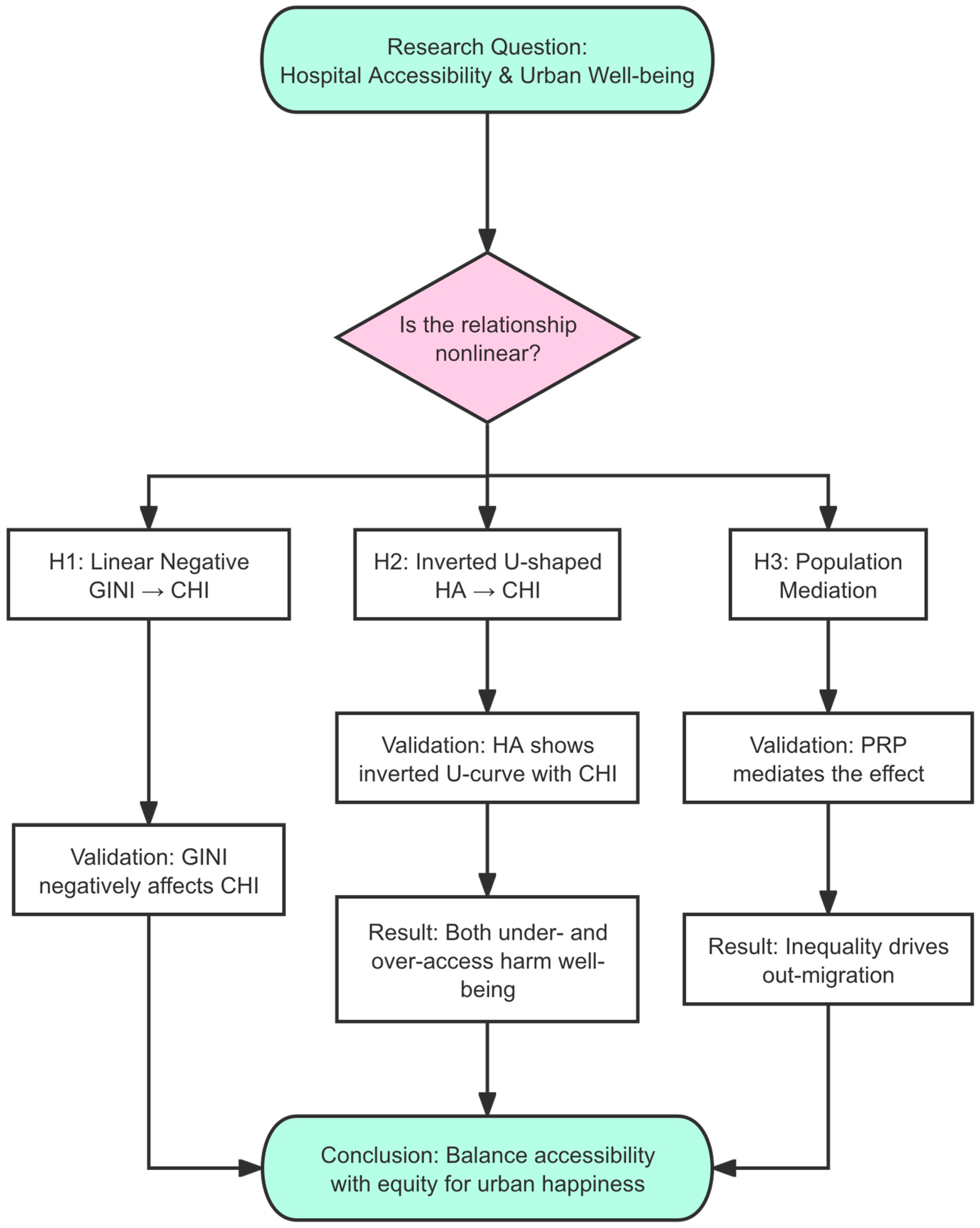
Based on the aforementioned academic hypotheses and theories, the analytical framework of this study is illustrated in Figure 1.

3. Research Data, Variables, and Empirical Strategies

3.1. Sample and Data

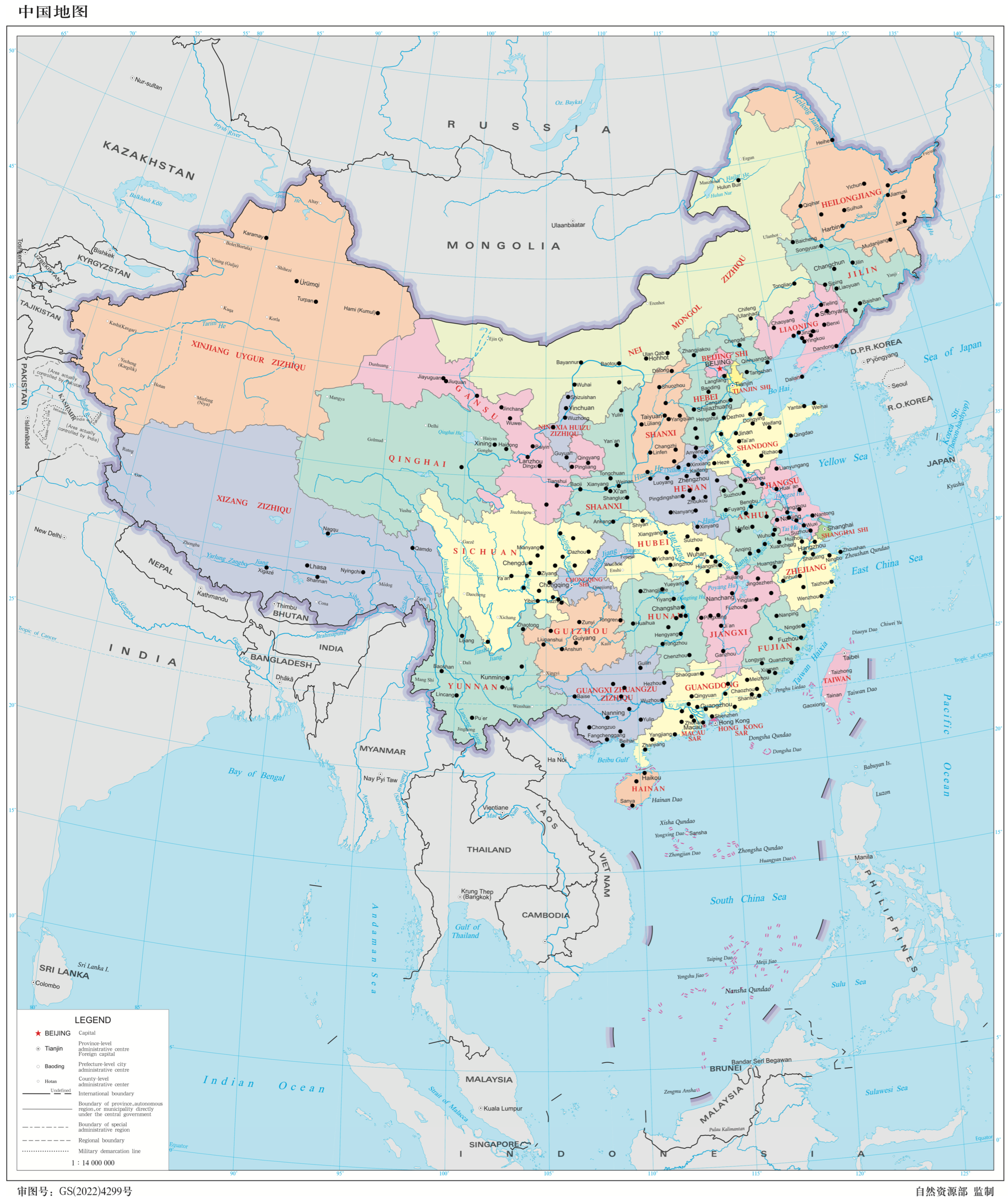
We chose 2020 as the primary research window because of its unique policy and data significance. During this period, the global COVID-19 pandemic created a natural experiment that starkly exposed and potentially exacerbated preexisting disparities in healthcare accessibility [48,49]. This period also captures the stabilization of healthcare infrastructure investments made during the 13th Five-Year Plan (2016–2020). This setting enables us to evaluate their distributional outcomes. Moreover, analyzing this single cross-section minimizes temporal confounding factor of healthcare policy fluctuations while remaining relevant to current urban planning debates. The convergence of these factors makes 2020 a strategic baseline to investigate the structural determinants of spatial healthcare inequality. The specific sample distribution is demonstrated in Figure 2.
We obtained the data for this study from multiple sources to ensure comprehensiveness and spatial accuracy. We collected hospital-related information from the YAOZH medical big data platform (https://db.yaozh.com/, accessed on 14 July 2025), a leading open-access medical database in China that integrates comprehensive healthcare information from authoritative domestic and international sources. The collected information included hospital bed capacity and addresses. We then derived the geographic coordinates of each hospital geocoding the addresses using the API provided by Baidu Maps (https://lbsyun.baidu.com/, accessed on 27 July 2025). After processing, we retained 13,776 hospitals with capacity information, including 3034 tertiary, 6876 secondary, 1728 primary, and 2138 unclassified hospitals. We collected population distribution data from the WorldPop project (https://www.worldpop.org, accessed on 30 July 2025) at a spatial resolution of 30 arc-seconds (approximately 1 km at the equator). We converted the population surface raster into settlement points by treating the center of each grid cell as a representative settlement location for accessibility calculations. We sourced road network data from OpenStreetMap and used it to compute the travel time from each population settlement point (grid center) to the nearest hospital. In line with China’s hierarchical diagnosis and treatment system, we constructed four distinct travel time datasets: travel time to the nearest hospital (any level) and travel times to the nearest primary, secondary, and tertiary hospitals. These metrics formed the basis for constructing the hospital accessibility (HA) variable and its associated inequality measure (GINI).

3.2. Variable Construction

3.2.1. Dependent Variable: City Happiness Index

Urban wellbeing assessments rely on multidimensional indices, each with a distinct scope and limitation. The major frameworks include the World Happiness Report (UN SDSN), which evaluates six factors ranging from GDP to perceived corruption; the OECD Better Life Index, which covers 11 domains ranging from housing to civic engagement; the Ipsos Global Happiness Index, which focuses on subjective daily life domains; and the Legatum Prosperity Index [23], which assesses 12 areas of prosperity. National studies such as Indonesia’s three-dimensional Happiness Index complement these frameworks by adding contextual specificity. The positive contributors common across the indices include GDP [66], generosity [18], life expectancy [16], and social support [21,67]. However, a key critique of these indices is that they are aggregated and use a top-down design that often fails to capture the spatial and distributional inequalities within cities. While these indices effectively compare nations or large regions, they may overlook the uneven distribution of resources, opportunities, and wellbeing across neighborhoods and social groups in urban contexts. These omissions limit their utility in guiding targeted equity-sensitive urban policies and planning.
Building upon these happiness indices, we construct a happiness index at the urban level. For details on the dimensions and indicators of the Urban Happiness Index, please refer to the Appendix A. Specifically, we construct a composite city happiness index (CHI) by integrating 20 objective indicators across four systemic dimensions: Economic Inclusiveness (X1X3), Living Consumption (X4X8), Health Security (X9X13), and Environmental Capacity (X14X20).
We applied the entropy method to ensure objective and data-driven weighting of these indicators. In information theory, entropy quantifies the degree of uncertainty or informational variation within a system. In this context, the entropy value of each indicator reflects its relative contribution to the overall variance in urban wellbeing. That is, a higher entropy value indicates that the indicator contains more information and should therefore have a larger weight in the composite index. Specifically, for a dataset covering n cities and m indicators, we derive the weight of indicator j as follows.
First, to eliminate scale effects, we normalize each indicator:
p i j = x i j i = 1 n x i j
where xij denotes the value of indicator j for city i.
Then, we compute the information entropy ej of indicator j:
e j = 1 ln n i = 1 n p i j ln p i j
Subsequently, we determine the weight wj of indicator j based on its entropy value:
w j = 1 e j j = 1 m ( 1 e j )
We then use the resulting weights wj to aggregate the standardized indicators into the composite CHI:
C H I i = j = 1 m w j p i j

3.2.2. Independent Variables: Gini Coefficient and Hospital Accessibility

To measure spatial equity in healthcare allocation, we use the Gini coefficient (0 = perfect equality, 1 = maximal inequality), a widely adopted metric for assessing accessibility inequality where higher values indicate more uneven service provision [46,57,68,69]. Based on its application in prior studies on regional health disparity [70], resource distribution of traditional Chinese medicine hospitals [70], and population-weighted accessibility analysis [55], we use the Gini coefficient data calculated by Ye et al. (2024) to evaluate how unequal hospital access influences urban wellbeing [8].
To operationalize accessibility, we apply the Gaussian two-step floating catchment area (2SFCA) method, which improves upon the conventional 2SFCA approach by modeling continuous distance-decay, rather than assuming binary access within a fixed radius [71,72]. Reflecting China’s tiered healthcare system, we apply differentiated travel-time thresholds: 30 min for primary hospitals, 45 min for secondary hospitals, and 60 min for tertiary hospitals, in line with their service scopes and expected catchment ranges. This approach offers a more realistic measure of spatial accessibility, a factor central to equitable service distribution and resident wellbeing in urban contexts [73]. The parameter choices for the Gaussian 2SFCA method are informed by both policy guidelines and empirical research on healthcare accessibility in China. The Gaussian decay function is selected over binary or other decay forms to better reflect the continuous decline in accessibility with increasing travel time, which has been shown to improve the realism of spatial accessibility modeling in urban contexts. It is crucial to clarify that the hospital accessibility (HA) variable constructed here captures the spatial-physical dimension of access—specifically, the ease of reaching a hospital geographically. This operationalization does not encompass other vital dimensions of healthcare access, such as affordability, service quality, facility capacity constraints, or the availability of primary care services. While these dimensions are undoubtedly critical for a holistic understanding of healthcare equity, the present study focuses on spatial equity as a foundational and policy-sensitive component of resource distribution.

3.2.3. Control Variables

As in prior studies, we include the growth rate of regional GDP (GGDP), number of industrial enterprises above the designated size (IE), and average annual number of employees (AAE) as control variables. GGDP captures the impact of macroeconomic growth dynamics on urban living standards [48,74,75]. IE reflects the influence of local industrial structure and economic vitality [76,77]. Finally, AAE accounts for the scale of the local labor force, which indicates both economic vitality and social stability [78]. Collectively, these controls enable a more precise identification of the independent effects of healthcare accessibility on city happiness by accounting for key economic and demographic confounders.

3.2.4. Instrumental Variables and Mediating Variables

As in extant research [79,80,81], we use per-capita cultivated land area (CLA) as an instrumental variable to address endogeneity in the model and meet the exogeneity requirement. We use the square root of the instrumental variable in the calculations.
In addition, drawing upon extant research [82], we apply the permanent resident population (PRP) as a mediating variable to verify the demographic transmission mechanism through which healthcare inequity influences urban wellbeing and further clarify how the Gini coefficient affects the CHI via population dynamics.

3.2.5. Descriptive Statistics of Varibles

Table 1 summarizes the descriptive statistics of the variables.
In Table 1, the city happiness index (CHI) has a mean of 0.022 and standard deviation of 0.016, with values ranging from 0.008 to 0.300. This result reflects a generally low but variable level of self-reported wellbeing across cities and indicates substantial heterogeneity in urban happiness. Hospital accessibility (HA) has a mean of 0.313 and a notably higher standard deviation of 0.914, with observations ranging from 0 to 14.423. The derived quadratic term (HA2) exhibits even greater dispersion, with a mean of 0.933 and standard deviation of 12.391, confirming significant cross-city variation in both the level and squared effect of healthcare access. The Gini coefficient of hospital accessibility (GINI) averages 0.448, with a standard deviation of 0.153 and range of 0.116 to 0.999. This finding suggests that spatial inequality in access to hospitals is prevalent across the sample, with some cities exhibiting near-perfect equality and others approaching extreme inequality.

3.3. Empirical Model

To examine the relationship between hospital accessibility, its spatial inequality, and urban wellbeing, a cross-sectional regression framework is employed based on city-level data for the year 2020. The baseline econometric model is specified as follows:
C H I i = β 0 + β 1 G I N I i + β 2 H A i + β 3 H A i 2 + γ X i
where CHIi denotes the City Happiness Index for city i; GINIi is the Gini coefficient of hospital accessibility, reflecting the degree of inequality in spatial access to healthcare; HAi represents hospital accessibility measured by travel time (in hundred minutes); HAi2 is its quadratic term to capture potential nonlinear effects; Xi is a vector of city-level control variables, including GGDP, IE, and AAE. The coefficients β1 and β2 are of particular interest, as they jointly indicate whether the relationship between hospital accessibility and urban happiness follows an inverted U-shaped pattern.

4. Empirical Results and Analysis

4.1. Baseline Results

The baseline model first applies HA, its quadratic term HA2, and GINI (Column 1). We then augment the model stepwise by sequentially introducing GGDP (Column 2), IE (Column 3), and AAE (Column 4). We incorporate year and province fixed effects simultaneously. Table 2 presents the baseline results.
The results demonstrate a consistent and statistically significant pattern: the Gini coefficient (GINI) has a significant negative relationship with the city happiness index (CHI) across all models. This robust finding confirms that greater inequality in physical access to healthcare services corresponds to lower aggregate urban wellbeing, thereby supporting Hypothesis 1. These results align with and reinforce prior research on accessibility equity and population wellbeing [8,49]. The mechanisms underlying this phenomenon are multifaceted and well-documented in the literature. First, Xu and Lei (2021) identify a critical structural disparity between population- and geography-based equity [45]. Second, exogenous shocks, such as public health emergencies, can exacerbate preexisting inequities. As Wu et al. (2023) note, the COVID-19 pandemic significantly disrupted both the equity and efficiency of health resource allocation and utilization, revealing and intensifying systemic vulnerabilities in access [48]. Together, these insights illustrate how the spatial mismatch between where people live and where services are located and systemic fragility in the face of crises function as key pathways through which healthcare accessibility inequality translates into diminished urban happiness. This finding extends the existing literature by empirically validating these mechanisms at the city level and highlighting the measurable impact of spatial healthcare injustice on overall urban wellbeing.
The coefficient of HA remains positive at the 1% significance level across all specifications, indicating a positive association between improved geographical access to hospitals and the city happiness index (CHI). Meanwhile, the coefficient of its quadratic term (HA2) is persistently negative and significant. This combination suggests an inverted U-shaped relationship between hospital accessibility and urban wellbeing. Specifically, enhancing hospital accessibility promotes city happiness up to a certain optimal threshold (HA = 7.4); beyond this point, further improvements yield diminishing or even negative marginal returns. After adding a control mechanism to address spatiotemporal heterogeneity in Model (4), the impact of HA persists as a significant factor (first-order term coefficient: 0.074; second-order term: −0.005). Thus, Hypothesis 2 is confirmed. Optimizing the spatial distribution of medical resources and integrating both offline and online service models can significantly enhance overall regional healthcare accessibility, thereby increasing residents’ satisfaction and sense of gain regarding medical services [10,83]. However, a high resource concentration may introduce new equity dilemmas. For instance, Chen et al. (2025) imply that accessibility has positive effects, but that excessive centralization might reduce benefits, hinting at diminishing returns [43]. Existing research reveals that although medical resource distribution based on the population is relatively balanced, the geographical distribution shows significant disparities. In some central cities, the density of medical resources far exceeds that in other regions [45]. Such excessive agglomeration can easily lead to resource-surplus areas experiencing intensified competition for medical services, higher waiting times, and increased pressure on community services, which may undermine residents’ healthcare experiences and overall wellbeing.
Access to resources influences residents’ happiness, as do psychological expectations and perceptions of fairness [22]. Choi (2025) highlights this tendency, known as the Easterlin Paradox, suggests that after meeting people’s basic needs, resource allocation has a limited incremental benefit to overall happiness [23]. When hospital accessibility in certain areas is significantly higher than that in surrounding regions, residents may develop a subjective perception of unfair resource distribution. This sense of relative deprivation can weaken the overall evaluation of the health care system and social equity, thereby negatively affecting happiness. In the context of smart cities, happiness is a composite concept shaped by multiple dimensions. Related research proposes a comprehensive evaluation system covering dimensions such as smart governance, public services, safety management, the ecological environment, and economic support [21], noting that healthcare accessibility is only one of many factors influencing happiness. Beyond an optimal threshold, its positive marginal effect on happiness may gradually diminish or even be offset by negative emotions arising from issues in other dimensions such as traffic congestion, declining environmental quality, or insufficient policy transparency.
In addition, the estimated coefficients and significance levels of the other control variables are consistent with expectations, further substantiating the rationality of the model setting. Specifically, GGDP has a positive and statistically significant coefficient (ranging from 0.003 to 0.004), confirming that stronger economic performance contributes to higher urban wellbeing. The coefficient of IE varies by specification, being significantly positive in Column 3 (0.067) but negative in Column 4 (−0.087). This result suggests a nuanced relationship where industrial expansion may enhance happiness up to a point beyond which congestion or structural inefficiencies could diminish its benefits. AAE has a positive and significant coefficient (0.001), indicating that a larger employed population is associated with greater city happiness, likely through enhanced economic stability and social vitality. These results collectively reinforce the validity of the model and underscore the multifaceted economic and demographic foundations of urban wellbeing.

4.2. Robustness Checks

To ensure the robustness of the findings, we conduct three sensitivity tests. First, we replace the dependent variable with a principal component analysis-derived city happiness index (CHI). The regression results in Column 1 of Table 3 show that the linear term of hospital accessibility (HA) remains significantly positive (2.628), the quadratic term is significantly negative (−0.175), and the Gini coefficient (GINI) is significantly negative (−0.303). Second, we replace HA with the first quartile value. The results in Column 2 of Table 3 indicate the linear term stays positive (0.462), the quadratic term remains negative (−2.090), and the GINI stays negative (−0.002). Third, we exclude municipality samples from the annual subsample analyses (2021–2023). According to Columns 3, 4, and 5 of Table 3, the coefficients of the HA linear term remain positive (0.076–0.081), the quadratic term negative (−0.005 to −0.006), and the GINI negative (−0.032 to −0.035). All outcomes align with the baseline regressions and confirm the robustness of the conclusions.

4.3. Endogeneity

We employ an instrumental variable approach to address potential endogeneity concerns, such as reverse causality or omitted variable bias, in the relationship between GINI and CHI. The selection of per-capita cultivated land area (CLA) as an instrumental variable is grounded in its plausible fulfillment of the relevance and exclusion conditions. First, CLA directly influences the spatial configuration of healthcare resources: regions with higher per-capita cultivated land typically exhibit more dispersed settlement patterns and lower population density, which complicates the equitable spatial distribution of hospitals and tends to increase the Gini coefficient of accessibility (relevance condition). Second, CLA satisfies the exclusion restriction because it is unlikely to affect urban happiness (CHI) through channels other than healthcare accessibility. While CLA may correlate with agricultural economic structure or rural lifestyles, these pathways are largely captured by those control variables (GGDP, IE, AAE) and absorbed by province fixed effects, which account for time-invariant regional heterogeneity. Moreover, CLA is primarily a geographical and land-use variable that is not conceptually linked to subjective wellbeing beyond its impact on service distribution.
We confirm the validity of the instrument through diagnostic tests. The Anderson canon. corr. LM statistic (28.433) rejects the null hypothesis of under-identification, confirming that the instrument is relevant. Furthermore, the Cragg-Donald Wald F statistic (27.944) exceeds the critical value for weak instrument detection, indicating that the CLA is a strong instrument. After instrumenting GINI, we provide the two-stage least squares (2SLS) results in Column 2 of Table 4. The coefficient of GINI is negative and statistically significant (−0.039), reinforcing the baseline finding that greater inequality in hospital accessibility reduces city happiness. Overall, the instrumental variable estimation confirms the robustness of the negative relationship between healthcare accessibility inequality and urban wellbeing. These results therefore alleviate endogeneity concerns and strengthen the causal interpretation of the main findings. CLA could be correlated with unobserved regional characteristics, such as historical land-use policies or cultural attitudes toward health. However, our empirical strategy mitigates these concerns through multiple layers of control: (1) province fixed effects remove time-invariant regional confounders; (2) economic control variables capture contemporaneous structural differences. The consistency of the IV estimates with the baseline results further suggests that any residual correlation between CLA and unobserved determinants of CHI is unlikely to drive the findings.

4.4. Mediating Mechanism Analysis

To identify the underlying pathways through which hospital accessibility influences the CHI, we employ a classical mediation mechanism analysis [84]. Specifically, we explore the permanent resident population (PRP) as a potential mediator.
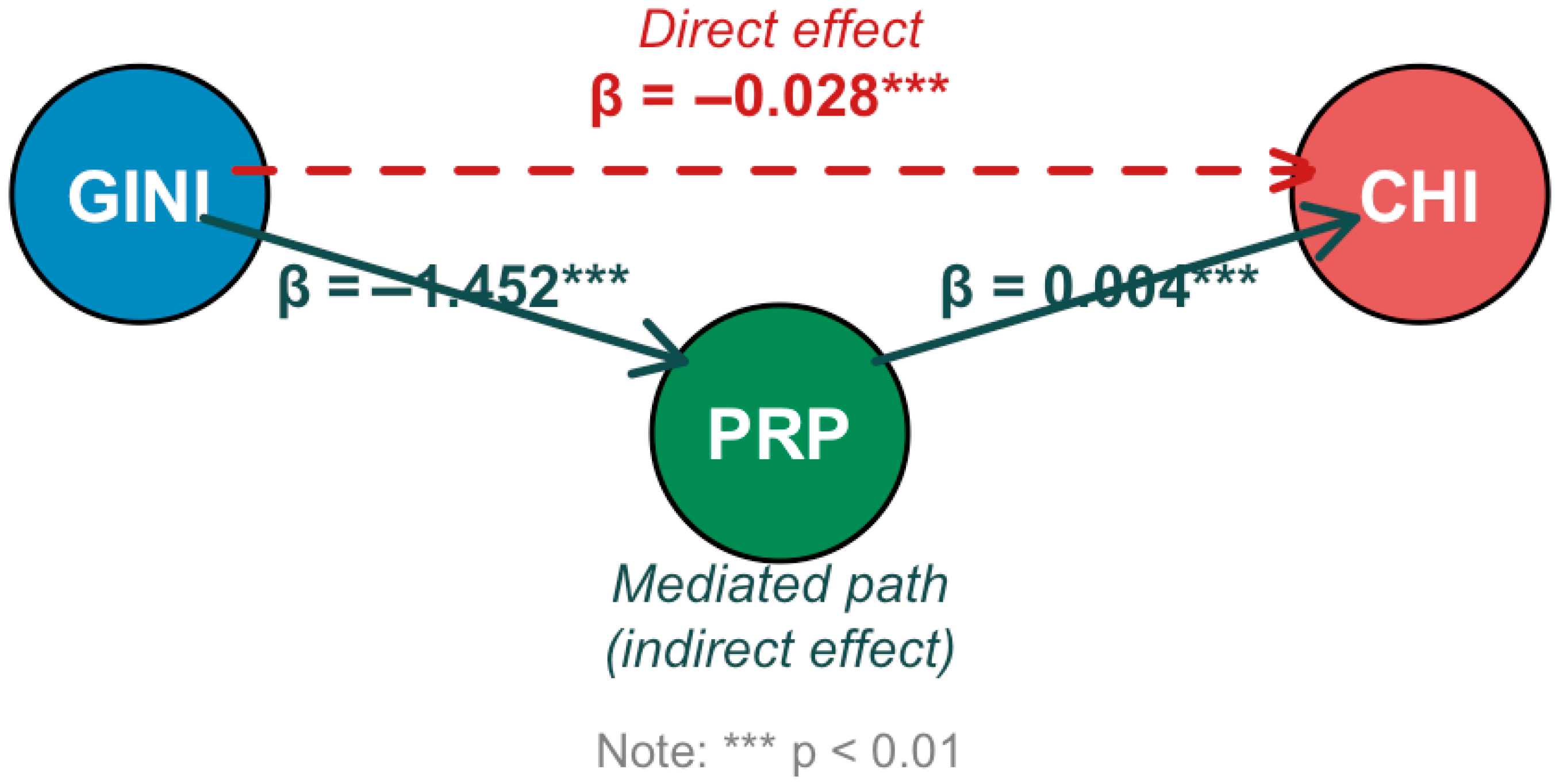
In Table 5, Column 2, GINI has a strong negative impact on PRP (−1.452), indicating that greater inequality in hospital accessibility is associated with a reduction in the permanent resident population. Thus, Hypothesis 3a is confirmed. This relationship may be driven by out-migration from areas with poor or unequal healthcare access as residents seek better services and living conditions elsewhere [49,62]. In Column 3 of Table 5, after introducing PRP as a mediator, the coefficient of GINI remains negative and significant but with a weaker magnitude (−0.022) relative to its total effect in Column 1. Simultaneously, PRP has a significantly positive coefficient (0.004). This pattern indicates a partial mediation effect: some of the negative impact of healthcare accessibility inequality on urban happiness is transmitted through demographic channels, specifically by reducing the city’s permanent resident population. Thus, Hypothesis 3 is confirmed. According to Chang (2025), urban density supports higher patient volumes, enabling comprehensive service offerings that reduce the need for long-distance referrals [55]. Shi et al. (2021) demonstrate that the permanent population has a positive impact on the number of elite hospitals in the region [82]. This result implies that a larger resident base not only attracts higher-level medical resources but also fosters a virtuous cycle in which improved healthcare infrastructure further enhances the city’s attractiveness, thereby supporting sustained population growth and reinforcing the positive link between population size and urban wellbeing. This reciprocal relationship highlights the mediating role of the permanent resident population through which equitable healthcare accessibility contributes to demographic stability and enhanced urban wellbeing. Therefore, policymakers aiming to enhance city happiness should consider not only the equitable distribution of medical resources per se, but also the broader demographic consequences of such inequalities.
However, it is acknowledged that the direction of causality in the relationship between healthcare accessibility inequality and demographic change may be complex and bidirectional. While the mediation analysis, supported by the instrumental variable approach, suggests a significant pathway from inequality to population out-migration, the possibility of reverse causality—where population decline leads to reduced investment in healthcare infrastructure—cannot be entirely ruled out in a cross-sectional design. This potential endogeneity is considered a limitation of the current study, and is further discussed in Section 5.3. This mediating mechanism is illustrated in Figure 3.

4.5. Heterogeneity Analysis

Given the considerable regional disparities in healthcare infrastructure, economic development, and population density across China, we examine the regional heterogeneity of the impact of hospital accessibility inequality on the CHI by conducting subgroup analyses based on geographical location, economic development level, and demographic structure.

4.5.1. Geographical Heterogeneity

In line with prior studies [70,85,86,87], we conduct a geographical heterogeneity analysis of sample by dividing it into southeastern (Column 1, Table 6) and northwestern (Column 2, Table 6) regions. The results show significant regional variation. The positive effect of HA on CHI is stronger in the northwestern region (0.255) than in the southeastern region (0.073). Similarly, the negative impact of access inequality (GINI) is more pronounced in the northwest (−0.037) than in the southeast (−0.005). This finding indicates that improvements in hospital accessibility and equity yield greater marginal gains in happiness in less-developed northwestern areas, likely because of their initially poorer healthcare infrastructure.

4.5.2. Heterogeneous Economic Development and Demographic Structure

As in prior studies, we separate the sample into two categories for an economic and demographic heterogeneity analysis: passenger transport volumes above and below average [9,88,89]. In Columns 1 and 2 of Table 7, the positive effect of HA is stronger in cities with higher passenger transport volumes (0.497) than in those with lower volumes (0.074). This result implies that enhanced connectivity and mobility likely facilitate greater utilization of healthcare resources, thereby magnifying the wellbeing returns from improved hospital accessibility.
We also divide the sample into patent authorizations above below average [90,91] for an economic and demographic heterogeneity analysis. In Columns 3 and 4 of Table 7, the coefficient of HA is significantly larger (2.294) in cities with above-average patent authorization than in cities with below-average innovation (0.090). This finding suggests that the benefits of healthcare access are greater in more innovative, knowledge-intensive economies, possibly because such environments feature higher human capital and greater health awareness, which together enhance the marginal value of accessible healthcare.
In line with prior work, we divide the sample into: total investment in fixed assets above and below average [91,92] for an economic and demographic heterogeneity analysis. As indicated in Columns 5 and 6 of Table 7, the positive coefficient of HA is slightly larger in cities with a higher total investment in fixed assets (0.101) than in cities with a lower total investment in fixed assets (0.090). This outcome may indicate that cities with stronger infrastructure investment tend to have better integrated healthcare systems, allowing hospital accessibility to translate more effectively into realized health gains and thus wellbeing.
Across all subsamples, the negative coefficient of GINI remains significant, thereby reinforcing the universal detriment of access inequality to wellbeing, irrespective of the city’s economic or demographic profile.

5. Discussion

5.1. Theoretical Implications

The findings of this study yield several significant theoretical implications for urban planning, health geography, and wellbeing economics. We find that the Gini coefficient of hospital accessibility inequality has a substantial negative impact on the CHI. This outcome aligns with Yu et al. (2021), who report a Gini coefficient of 0.88 for physician distribution by service area in China [46]. This result indicates high inequality in geographic accessibility to medical resources. However, their population-based Gini coefficient was only 0.003, reflecting relative equity [46]. Such spatial disparities in medical resource allocation can exacerbate health inequities, ultimately undermining subjective wellbeing and urban happiness, as limited access to healthcare services reduces the perceived quality of life and social justice.
The negative correlation between spatial inequality and urban wellbeing echoes findings from cross-national studies on broader economic inequality. For example, Lyu et al. (2025) reported a significant, though complex, association between national Gini coefficients and suicide rates, suggesting that macro-level economic disparity is linked to severe deficits in population wellbeing [93]. Furthermore, our proposed demographic mediation mechanism—whereby spatial inequality affects urban happiness through measurable mediating factors (i.e., permanent resident population)—finds a parallel in micro-level psychological research. Park (2025) demonstrated that among Korean young adults, the perception of social inequality reduces life satisfaction through the mediation of happiness, with the strength of this pathway being moderated by emotional states [94]. While Park’s study focuses on perceived inequality and individual emotional mediation, our research identifies a distinct macro-level, spatial-demographic mediation pathway. Together, these studies, from a global context, underscore the multifaceted nature of the inequality-wellbeing nexus, operating through both perceptual-psychological and objective-structural channels across different levels of analysis. This comparison highlights the unique contribution of our study in elucidating a spatially explicit, demographic transmission mechanism within urban systems.
From a theoretical perspective, this study reinforces the importance of spatial justice principles in urban planning frameworks. The persistent geographic inequality in medical resources, as studies on Chinese provinces and cities [40,43,48,49] report, suggests that exacerbating disparities in access to healthcare negatively influences residents’ life satisfaction. In health geography, the findings highlight the role of place-based factors in shaping health outcomes. For instance, the uneven distribution of physicians and hospitals can create “medical deserts” in rural or economically disadvantaged areas [95], amplifying health disparities. Thus, wellbeing economic theories must account for not only income-based metrics but also access to essential services such as healthcare [50], as equitable distribution is a paramount principle in medical resource allocation mechanisms [96]. The negative correlation between the Gini coefficient and happiness index echoes the capability approach, where unequal opportunities to access health services constrain individuals’ ability to achieve the desired functioning.
Specifically, the mechanisms influencing hospital accessibility inequality are mainly reflected in the three aspects. First, spatial hospital accessibility inequality often leads to uneven geographic opportunity to reach care, resulting in poorer health outcomes for disadvantaged populations, which is a key component of subjective wellbeing. For instance, Wu et al. (2022) emphasize that the inequitable distribution of health resources such as beds and health technicians can cause delays in treatment and increased morbidity, thereby reducing overall happiness [49,50]. Second, inequality fosters social stratification and erodes social trust [97], where countries with higher inequality scores demonstrate lower happiness indices due to diminished social cohesion [23]. Third, from a geographical perspective, spatial mismatches in healthcare infrastructure can amplify urban-rural divides [48,49], further depressing happiness in peripheral areas.
Additionally, this study extends the theoretical discourse on the determinants of urban happiness by empirically establishing a nonlinear relationship between hospital accessibility and the CHI. The confirmed inverted U-shaped pattern suggests that, while accessibility is crucial, theories of urban wellbeing must account for the threshold (HA = 7.4) effects and diminishing returns associated with resource over-concentration. This conclusion challenges the linear assumption common in early accessibility studies [44,57,58] and aligns with theories of optimal urban scale and agglomeration diseconomies [98,99].
The mediating mechanism analysis reveals that hospital accessibility inequality significantly influences the CHI through the demographic channel of the permanent resident population (PRP). This result confirms a partial mediation effect. Specifically, hospital accessibility inequality has a strong negative impact on the permanent resident population, indicating that more unequal healthcare accessibility drives population out-migration as residents seek better services elsewhere, aligning with the extant research on healthcare-induced migration patterns [49,62]. After introducing PRP as a mediator, the empirical results underscore the fact that reduced population density partially transmits the negative effects of accessibility inequality on urban wellbeing. Shi et al. (2021) reinforce the validity of this demographic intermediary by finding that a larger resident base attracts high-level medical resources and fosters a virtuous cycle in which improved infrastructure enhances city attractiveness and sustains population growth, thereby boosting happiness [82]. Similarly, Wu et al. (2022) emphasize population as a primary factor in spatial equity [49], while urbanization trends highlight how population agglomeration mitigates accessibility disparities [55]. Moreover, Ouyang et al. (2020) show that asset allocation and expectations serve as channels that affect wellbeing, paralleling the role of demographic stability in our study [22]. Nevertheless, it should be noted that the relationship between healthcare accessibility and population dynamics is likely bidirectional. While this study focuses on the pathway from inequality to migration, the reverse causality—where demographic decline undermines the economic viability of healthcare investments—also merits attention in future theoretical and empirical work. Ultimately, this mediation underscores the need for policies that address not only equitable medical resource distribution, but also broader demographic dynamics, as population retention is crucial for leveraging healthcare investments to enhance urban happiness.
The heterogeneity analysis reveals nuanced patterns in how hospital accessibility and equity shape urban wellbeing across China. Accessibility improvements yield greater wellbeing returns in less-developed regions and cities with stronger transport networks [100], where efficient mobility multiplies the benefits of available healthcare. This effect is also amplified in innovation-intensive cities, suggesting that higher human capital and health awareness enhance the perceived value of accessible care. Critically, however, inequality in access consistently reduces city-level happiness across all contexts, reinforcing the idea that fair distribution is fundamental to urban wellbeing as an absolute volume of services. Therefore, policy efforts should focus on expanding healthcare resources with targeted measures to close access gaps, especially in under-served regions and vulnerable urban groups.

5.2. Practical Implications

Within the domain of spatial planning, the findings translate into a two-pronged policy strategy: moving beyond blanket expansion toward a diagnostic and context-sensitive approach to healthcare resource allocation, while aggressively prioritizing equitable spatial distribution. Cities should assess local conditions using spatial equity metrics (e.g., Gini coefficient of accessibility), population needs, and existing infrastructure density. Rather than treating the estimated national threshold (HA = 7.4) as a universal prescription, policymakers should interpret it as an empirical signal of diminishing returns to accessibility concentration. In under-served areas, investments remain essential to reach a locally defined baseline of access. In saturated urban cores, the focus should shift toward decentralizing services, strengthening primary care, and integrating digital health to mitigate congestion—not to justify disinvestment, but to redirect resources toward equity and efficiency. Crucially, reducing inequality in access, as measured by the Gini coefficient, is as vital as improving average access. This approach will require that policymakers apply spatial equity metrics in urban health planning and create targeted incentives to attract medical resources to disadvantaged neighborhoods. By treating equitable healthcare access not merely as a social service but also as a foundational investment in demographic stability and urban vitality, policymakers can more effectively enhance city-wide wellbeing. In addition, our findings encourage policymakers in other national contexts to adopt a spatially sensitive and equity-focused approach to health infrastructure planning. Rather than pursuing uniform density targets, cities—whether in emerging economies or developed nations—can benefit from assessing local accessibility distributions and prioritizing investments in underserved zones while optimizing resource use in saturated cores. The integration of digital health solutions and primary care strengthening, as emphasized in this study, also aligns with global strategies for sustainable health system development.

5.3. Limitations and Future Research

This study is based on a cross-sectional design, which provides a robust snapshot of the relationships between hospital accessibility, spatial inequality, and urban wellbeing, but does not capture their long-term causal dynamics or temporal evolution. Future longitudinal research is needed to validate the stability of the accessibility threshold and mediation effects over time.
The analysis is conducted at the city level, which may mask significant within-city disparities in hospital accessibility. Even cities with high average accessibility can contain neighborhoods or districts with poor access to healthcare, potentially leading to overgeneralizations about spatial equity. Furthermore, while our objective composite index of urban happiness is methodologically sound, it may not fully capture subjective wellbeing. Integrating georeferenced survey data in future work would enrich this dimension.
A key conceptual limitation lies in the scope of our accessibility measure. We deliberately focused on spatial-physical accessibility (travel time), a clear and policy-relevant metric for geographic equity, but this omits other essential dimensions of healthcare access such as financial accessibility, service quality, facility capacity, and the distinction between primary and tertiary care. Consequently, our interpretation of “equal access” is confined to the spatial dimension. Future studies should develop multi-dimensional accessibility indices that integrate spatial, financial, and qualitative data at a finer geographical scale—such as district or neighborhood level—to better uncover intra-urban disparities and support more holistic policy recommendations.
Although we conducted robustness checks with adjacent years to mitigate the potential confounding influence of the COVID-19 pandemic, our primary snapshot remains centered on a period of significant disruption. Longitudinal analyses spanning years before, during, and after such exogenous shocks would help disentangle structural effects from temporary crises and examine the resilience and evolution of the accessibility-wellbeing relationship over time.
Additionally, the aggregate accessibility threshold identified in this study should not be directly operationalized without local calibration. Future research should develop context-specific benchmarks that account for regional differences in population structure, urban form, and healthcare system maturity.
Finally, while our findings are context-specific to Chinese cities, they underscore the value of comparative international research to test the generalizability of the observed nonlinear and equity-driven relationships. Cross-national studies examining how institutional arrangements, cultural values, and health financing models moderate the link between accessibility and wellbeing could help distill context-aware policy principles from universal patterns, advancing a more globally integrated understanding of urban health equity.

6. Conclusions

This study empirically investigated the intricate relationship between hospital accessibility, spatial inequality, and urban wellbeing in Chinese cities. The findings revealed a curvilinear (inverted U-shaped) link between hospital accessibility and city happiness, where improvements enhance wellbeing only up to an optimal threshold (HA = 7.4), beyond which diminishing returns set in. This threshold should not be interpreted as a fixed policy target, but as evidence that both under-access and over-concentration can undermine urban wellbeing. Simultaneously, inequality in access, as measured by the Gini coefficient, has a consistently negative linear impact on urban happiness. A key mechanism through which this inequality operates is demographic. Specifically, unequal healthcare access drives population out-migration, reducing the permanent resident population, which, in turn, partially mediates the decline in city-level wellbeing. These results challenge simplistic linear assumptions and highlight the fact that both the level and equity of healthcare accessibility are crucial for urban happiness.
Consequently, an effective urban health policy should be operationalized through context-sensitive planning that integrates explicit spatial equity metrics (such as the Gini coefficient of accessibility) into health resource allocation frameworks. This involves adopting a dual strategy: in under-served regions, ensuring adequacy of access remains a priority; in well-served areas, the focus should shift from mere expansion to spatial rebalancing, quality enhancement, and system integration—for instance, by decentralizing tertiary services, strengthening primary care networks, and promoting digital health solutions. Thus, prioritizing equity and demographic stability is central to enhancing overall urban wellbeing.
Looking forward, future research should further test the applicability of the nonlinear accessibility-wellbeing relationship across diverse institutional and cultural settings, and explore how integrated policy tools—combining equity metrics, demographic forecasts, and healthcare demand modeling—can be deployed to design more resilient and equitable urban health systems.

Author Contributions

Conceptualization, J.G. and S.G.; methodology, J.G.; software, J.G.; validation, J.G. and S.G.; formal analysis, S.G.; investigation, S.G.; resources, J.G.; data curation, S.G.; writing—original draft preparation, S.G.; writing—review and editing, J.G.; visualization, J.G.; supervision, J.G.; project administration, J.G.; funding acquisition, J.G. All authors have read and agreed to the published version of the manuscript.

Funding

The authors disclose receipt of the following financial support for the research, authorship, and/or publication of this article: This research is funded by the National Social Science Foundation of China (17BSH122).

Data Availability Statement

The data presented in this study are available on request from the author.

Conflicts of Interest

The authors declare no conflicts of interest.

Appendix A

Table A1. Dimensions and Indicators of the Urban Happiness Index.
Target LayerSystem LayerIndicator LayerUnitVariable
Urban Happiness IndexEconomic Inclusiveness Well-beingPer Capita Regional GDPYuanX1
Proportion of Tertiary Industry Value-Added in GDP/X2
Year-end Balance of Urban and Rural Household SavingsTen thousand yuanX3
Living Consumption Well-beingOperating Revenue of Large-scale Service IndustriesTen thousand yuanX4
Total Retail Sales of Consumer GoodsTen thousand yuanX5
Number of International Internet UsersIndividualX6
Residential Electricity Consumption (Urban and Rural)Ten thousand kWhX7
City Electricity ConsumptionTen thousand kWhX8
Health Security Well-beingNumber of Health InstitutionsInstitutionX9
Number of Hospitals and Health CentersInstitutionX10
Number of Beds of Hospital and Health CentersBedX11
Number of Licensed (Assistant) PhysiciansIndividualX12
Number of Employees Covered by Basic Medical InsuranceIndividualX13
Environmental Capacity Well-beingAverage Annual PM2.5 Concentrationμg/m3X14
Proportion of Days with Good Air Quality%X15
Domestic Sewage Treatment Rate%X16
Domestic Waste Harmless Treatment Rate%X17
Comprehensive Utilization Rate of Industrial Solid Waste%X18
Comprehensive Utilization Rate of General Industrial Solid Waste%X19
Centralized Sewage Treatment Plant Rate%X20

References

  1. Tseng, M.-H.; Wu, H.-C. Accessibility Assessment of Community Care Resources Using Maximum-Equity Optimization of Supply Capacity Allocation. Int. J. Environ. Res. Public Health 2021, 18, 1153. [Google Scholar] [CrossRef]
  2. Plachkinova, M.; Vo, A.; Bhaskar, R.; Hilton, B. A conceptual framework for quality healthcare accessibility: A scalable approach for big data technologies. Inf. Syst. Front. 2018, 20, 289–302. [Google Scholar] [CrossRef]
  3. Upreti, H.; Malhotra, R.; Sharma, P.; Choudhury, T. Open Access and Its Role in Realising SDG 3: Pathway to Health and Well Being; Springer: Berlin/Heidelberg, Germany, 2025; pp. 41–56. [Google Scholar] [CrossRef]
  4. Karou, S.; Hull, A. Accessibility modelling: Predicting the impact of planned transport infrastructure on accessibility patterns in Edinburgh, UK. J. Transp. Geogr. 2014, 35, 1–11. [Google Scholar] [CrossRef]
  5. Yin, C.; He, Q.; Liu, Y.; Chen, W.; Gao, Y. Inequality of public health and its role in spatial accessibility to medical facilities in China. Appl. Geogr. 2018, 92, 50–62. [Google Scholar] [CrossRef]
  6. Rachmad, Y.; Yera, Y. Social Justice, Health Equity, and the Right to Happiness; The United Nations and The Education Training Centre: Geneva, Switzerland, 2009. [Google Scholar]
  7. Gu, J.; Zhu, R. Social Capital and Self-Rated Health: Empirical Evidence from China. Int. J. Environ. Res. Public Health 2020, 17, 9108. [Google Scholar] [CrossRef] [PubMed]
  8. Ye, P.; Ye, Z.; Xia, J.; Zhong, L.; Zhang, M.; Lv, L.; Tu, W.; Yue, Y.; Li, Q. National-scale 1-km maps of hospital travel time and hospital accessibility in China. Sci. Data 2024, 11, 1130. [Google Scholar] [CrossRef]
  9. Gu, Z.; Luo, X.; Tang, M.; Liu, X. Does the edge effect impact the healthcare equity? An examination of the equity in hospitals accessibility in the edge city in multi-scale. J. Transp. Geogr. 2023, 106, 103513. [Google Scholar] [CrossRef]
  10. Wang, Q.; Weng, L.; Li, J. Modeling the Impact of Tele-Health on Accessibility and Equity of Medical Resources in Metropolitan Cities in China. Healthcare 2025, 13, 2105. [Google Scholar] [CrossRef]
  11. Wang, C.; Li, C.; Zhang, A.; Gu, G.; Yang, S. Healthcare inequities in Chinese megacities: The older adult population’s accessibility to public hospitals in suburban Shanghai. Front. Public Health 2025, 13, 1700098. [Google Scholar] [CrossRef]
  12. Power, M. Well-Being, Quality of Life, and the Naïve Pursuit of Happiness. Topoi 2013, 32, 145–152. [Google Scholar] [CrossRef]
  13. Anaya, J.-M.; Vinaccia, S.; Castelblanco-Toro, S.; Lozada-Martinez, I.D.; Salazar-Uribe, J. Quality of life and well-being in Colombian centenarians. Sci. Rep. 2025, 15, 32071. [Google Scholar] [CrossRef]
  14. Argento, F.; Augustovski, F.; Belizán, M.; Ini, N. PP95 Conceptual Mapping Of Health-Related Quality Of Life, Quality Of Life, And Well-Being: A Systematic Review. Int. J. Technol. Assess. Health Care 2025, 41, S123. [Google Scholar] [CrossRef]
  15. Brouillette, J.-F.; Jones, C.; Klenow, P. Race and Economic Well-Being in the United States. Am. Econ. Rev. Insights 2025, 7, 429–446. [Google Scholar] [CrossRef]
  16. Khan, A.; Godavarthy, R.; Mattson, J.; Motuba, D. The Impact of Transportation and the Built Environment on Community and Individual Well-Being in the United States. Urban Sci. 2025, 9, 490. [Google Scholar] [CrossRef]
  17. Endo, K.; Mutoh, A.; Satoh, M.; Ogawa, K.; Shimatani, K.; Suzuki, N. Urban veterinary accessibility and community well-being in Japan: A cross-sectional analysis using regional indicators. J. Vet. Med. Sci. 2025, 88, 251–256. [Google Scholar] [CrossRef] [PubMed]
  18. Kudo, Y.; Tomabechi, T.; Shimizu, Y.; Fukuyama, S.; Igeta, Y.; Ohtaka, M.; Hashimoto, T. Multidimensional Analysis of Well-Being Domains in Japan: Fulfillment, Importance, and Contribution to Overall Well-Being. Urban Sci. 2025, 9, 155. [Google Scholar] [CrossRef]
  19. Teplova, D.; Yarkin, P. Psychological well-being and environmental identity: A cross-cultural study of young adults in Russia and France. Psychol. Educ. 2025, 7, 155–164. [Google Scholar] [CrossRef]
  20. Freitas, A. Well-Being and Social Stratification in Contemporary Brazil. Available online: https://ssrn.com/abstract=4158539 (accessed on 8 February 2026).
  21. Tian, J. Analysis of Influencing Factors of Residents’ Happiness in Smart Cities based on Principal Component Analysis. J. Educ. Educ. Res. 2024, 8, 61–69. [Google Scholar] [CrossRef]
  22. Ouyang, Z.; Liu, F.; Zhai, G.; Bilan, S. Assessment of Resident Happiness under Uncertainty of Economic Policies: Empirical Evidences from China. Sustainability 2020, 12, 7296. [Google Scholar] [CrossRef]
  23. Choi, Y. Developing an integrated happiness index and analysis of Korea’s happiness level and policy directions. Data Metadata 2025, 4, 853. [Google Scholar] [CrossRef]
  24. Allik, J.; Mõttus, R.; Realo, A.; Rozgonjuk, D. What Makes Young Russians Happy and Satisfied With Their Lives? SAGE Open 2018, 8, 2158244018803136. [Google Scholar] [CrossRef]
  25. Li, Z.; Hu, B. Temperature Effects on People’s Subjective Well-Being and Their Subjective Adaptation: Empirical Evidence from China. Soc. Indic. Res. 2025, 177, 1081–1112. [Google Scholar] [CrossRef]
  26. Dvulit, Z.; Maznyk, L.; Horbal, N.; Melnyk, O.; Dluhopolska, T.; Bartnik, B. Harmonizing the Interplay Between SDG 3 and SDG 10 in the Context of Income Inequality: Evidence from the EU and Ukraine. Sustainability 2025, 17, 7442. [Google Scholar] [CrossRef]
  27. Dalgiç, P. The Role of Sustainable Development Goals (SDGs) in Reducing Health Inequalities. In Sustainable Development Goals (SDG) and Its Intersection With Health and Well-Being; IGI Global: Hershey, PA, USA, 2025; pp. 491–520. [Google Scholar] [CrossRef]
  28. Kufeoglu, S. SDG-3 Good Health and Well-Being. In Emerging Technologies; Springer: Berlin/Heidelberg, Germany, 2022; pp. 229–253. [Google Scholar] [CrossRef]
  29. Madinah, N.; Shamsuddin, A.O. The Impacts of (SDGs 10)-Reduce Inequality within and Among Countries: An Exploratory Discourse. J. Harbin Eng. Univ. 2023, 44, 247–257. [Google Scholar]
  30. Gu, J. Energy poverty and government subsidies in China. Energy Policy 2023, 180, 113652. [Google Scholar] [CrossRef]
  31. Li, C.; Wu, X.; Lacuo, Y.; Lu, L.; Chen, G.; Dawa, Z.; Li, S. Healthcare accessibility and subjective well-being in Xizang: Evidence from a high-altitude region of China. BMC Health Serv. Res. 2025, 25, 1447. [Google Scholar] [CrossRef]
  32. Samavati, S.; Veenhoven, R. Happiness in urban environments: What we know and don’t know yet. J. Hous. Built Environ. 2024, 39, 1649–1707. [Google Scholar] [CrossRef]
  33. Reid, T.R. The Healing of America: A Global Quest for Better, Cheaper, and Fairer Health Care; Penguin Books: New York, NY, USA, 2010. [Google Scholar]
  34. Schrecker, T. Downing the Master’s Tools? New Research Strategies to Address Social Determinants of Health Inequalities. Int. J. Soc. Determ. Health Health Serv. 2023, 53, 253–265. [Google Scholar] [CrossRef] [PubMed]
  35. Nyelele, M.; Estela, K.; Jagneaux, T.; Ikuma, L.; Knapp, G. Impact of social determinants of health on sepsis outcomes: A retrospective study of a single centre in the USA. BMJ Open 2025, 15, e102064. [Google Scholar] [CrossRef]
  36. Sjg, P.; Robert, A. Assessing Health Inequality Through Health Outcome in India’s Progressive and Lagging States: A Comparative Analysis. Kristu Jayanti J. Manag. Sci. (KJMS) 2025, 3, 1–12. [Google Scholar] [CrossRef]
  37. Chari, A.; Fintel, D.; Burger, R. Inequality in Public Health Spending and Access to Healthcare Services in Zimbabwe: A Cross-Sectional Study. Health Sci. Rep. 2025, 8, e71634. [Google Scholar] [CrossRef] [PubMed]
  38. Liu, G. Social welfare and economic equality: Healthcare expenditure as a moderator. Front. Public Health 2025, 13, 1547027. [Google Scholar] [CrossRef]
  39. Lin, Y.; Chen, G.; Lu, H.; Qin, R.; Jiang, J.; Tan, W.; Luo, C.; Chen, M.; Huang, Q.; Huang, L.; et al. Inequality and heterogeneity in medical resources for children with autism spectrum disorders: A study in the ethnic minority region of southern China. BMC Public Health 2025, 25, 1677. [Google Scholar] [CrossRef]
  40. Zhou, M. Equity and Efficiency of Medical Resource Allocation in National Central Cities, China. Risk Manag. Healthc. Policy 2025, 18, 1881–1893. [Google Scholar] [CrossRef]
  41. Gu, J. High-Speed Rails and City Innovation System: Empirical Evidence from China. Systems 2023, 11, 24. [Google Scholar] [CrossRef]
  42. Zhu, R.; Rong, Z.; Wang, H. Evaluation of the Spatial Equality of the Medical Service Function from the Perspective of the Life Circle: A Case Study of Chengdu City; Research Square Platform LLC: Durham, NC, USA, 2024. [Google Scholar] [CrossRef]
  43. Chen, Y.; Li, Q.; Zhang, Y.; Zhang, X.; Zheng, H. Investigating the efficiency of medical and health resources and its influencing factors in the Yangtze River Delta urban agglomerations: Based on the undesirable super-efficiency SBM-Malmquist-Tobit model. Front. Public Health 2025, 13, 1527424. [Google Scholar] [CrossRef]
  44. Dai, G.; Li, R.; Ma, S. Research on the equity of health resource allocation in TCM hospitals in China based on the Gini coefficient and agglomeration degree: 2009–2018. Int. J. Equity Health 2022, 21, 145. [Google Scholar] [CrossRef] [PubMed]
  45. Xu, Z.; Lei, X. Analysis on equity of health human resource allocation in Hubei Province based on the Gini coefficient and a HRDI model. J. Phys. Conf. Ser. 2021, 1941, 012063. [Google Scholar] [CrossRef]
  46. Yu, H.; Yu, S.; He, D.; Lu, Y. Equity analysis of Chinese physician allocation based on Gini coefficient and Theil index. BMC Health Serv. Res. 2021, 21, 455. [Google Scholar] [CrossRef] [PubMed]
  47. Mouratidis, K.; Delclòs-Alió, X. Urban vitality versus urban livability: Does vibrancy matter for neighborhood satisfaction and neighborhood happiness? Cities 2026, 168, 106473. [Google Scholar] [CrossRef]
  48. Wu, Q.; Wu, L.; Liang, X.; Xu, J.; Wu, W.; Xue, Y. Influencing factors of health resource allocation and utilisation before and after COVID-19 based on RIF-I-OLS decomposition method: A longitudinal retrospective study in Guangdong Province, China. BMJ Open 2023, 13, e065204. [Google Scholar] [CrossRef]
  49. Wu, X.; Zhang, Y.; Guo, X. Research on the Equity and Influencing Factors of Medical and Health Resources Allocation in the Context of COVID-19: A Case of Taiyuan, China. Healthcare 2022, 10, 1319. [Google Scholar] [CrossRef]
  50. Sheliemina, N.; Rekun, I. Economic and mathematical modeling of the mutual influence between a country’s economic well-being and healthcare expenditure. Probl. Prospect. Econ. Manag. 2025, 1, 111–122. [Google Scholar] [CrossRef]
  51. Liu, X.; Wang, X.; He, Y.; Tang, X.; Wang, J.; An, X.; Liao, L.; Yan, X.; Zhang, Y.; Song, C. Co-evolution of private and public hospitals: Spatiotemporal disparities, geospatial interactions, and social determinants over 19 years in Sichuan, China. Front. Public Health 2025, 13, 1644657. [Google Scholar] [CrossRef] [PubMed]
  52. Birkmeyer, J.D.; Siewers, A.E.; Finlayson, E.V.A.; Stukel, T.A.; Lucas, F.L.; Batista, I.; Welch, H.G.; Wennberg, D.E. Hospital Volume and Surgical Mortality in the United States. N. Engl. J. Med. 2002, 346, 1128–1137. [Google Scholar] [CrossRef] [PubMed]
  53. Jost, J.T.; Hunyady, O. Antecedents and Consequences of System-Justifying Ideologies. Curr. Dir. Psychol. Sci. 2016, 14, 260–265. [Google Scholar] [CrossRef]
  54. Rothstein, B. The Quality of Government: Corruption, Social Trust, and Inequality in International Perspective; University of Chicago Press: Chicago, IL, USA, 2011. [Google Scholar]
  55. Chang, X. Urbanization and Hospital Accessibility Inequality in China: Evidence from 2020 Provincial Data; Research Square: Durham, NC, USA, 2025. [Google Scholar] [CrossRef]
  56. Faizan, R.; Azam, E.; Naveed, N. Accessibility assessment of hospitals in a metropolitan city of a developing country. Int. J. Asian Soc. Sci. 2025, 15, 406–416. [Google Scholar] [CrossRef]
  57. Woldemichael, A.; Takian, A.; Baba akbari, A.; Olyaeemanesh, A. Inequalities in healthcare resources and outcomes threatening sustainable health development in Ethiopia: Panel data analysis. BMJ Open 2019, 9, e022923. [Google Scholar] [CrossRef]
  58. Weng, Y.; Hsieh, C.; Liao, H.; Tung, Y. Impact of spatial accessibility to primary care physicians on health care outcomes and costs. Int. J. Health Geogr. 2025, 24, 38. [Google Scholar] [CrossRef]
  59. Lin, L.; Wu, F.; Chen, W.; Zhu, C.; Huang, T. Research on Urban Medical and Health Services Efficiency and Its Spatial Correlation in China: Based on Panel Data of 13 Cities in Jiangsu Province. Healthcare 2021, 9, 1167. [Google Scholar] [CrossRef]
  60. Tiebout, C.M. A Pure Theory of Local Expenditures. J. Polit. Econ. 1956, 64, 416–424. [Google Scholar] [CrossRef]
  61. Boyle, P.; Norman, P.; Rees, P. Does migration exaggerate the relationship between deprivation and limiting long-term illness? A Scottish analysis. Soc. Sci. Med. 2002, 55, 21–31. [Google Scholar] [CrossRef]
  62. Meng, N.; Wan, Z.; Chen, H.; Pei, T.; Lin, X.; Wu, D.; Chen, Y.; Meng, X. The spatial effects and influencing factors of inter-provincial health resource allocation efficiency in China. BMC Health Serv. Res. 2025, 25, 1543. [Google Scholar] [CrossRef]
  63. Stiglitz, J.E. The Price of Inequality: How Today’s Divided Society Endangers Our Future; W. W. Norton & Company: London, UK, 2013. [Google Scholar]
  64. Chen, J.; Davis, D.S.; Wu, K.; Dai, H. Life satisfaction in urbanizing China: The effect of city size and pathways to urban residency. Cities 2015, 49, 88–97. [Google Scholar] [CrossRef]
  65. Glaeser, E.L.; Gottlieb, J.D. The Wealth of Cities: Agglomeration Economies and Spatial Equilibrium in the United States. J. Econ. Lit. 2009, 47, 983–1028. [Google Scholar] [CrossRef]
  66. Titisari, A.; Santoso, M. Exploring the Contributing Factors to the Happiness Index in the Context of Social Environment. Asian J. Collab. Soc. Environ. Educ. 2025, 2, 87–100. [Google Scholar] [CrossRef]
  67. Liu, Q. Factors Affecting the Happiness Index. Interdiscip. Humanit. Commun. Stud. 2024, 1, 5. [Google Scholar] [CrossRef]
  68. Oyunchimeg, E.; Paramita, S.; Yamazaki Kobayashi, C.; Koyama, H. Distribution of health care resources in Mongolia using the Gini coefficient. Hum. Resour. Health 2017, 15, 56. [Google Scholar] [CrossRef]
  69. Drezner, T.; Drezner, Z.; Guyse, J. Equitable service by a facility: Minimizing the Gini coefficient. Comput. Oper. Res. 2009, 36, 3240–3246. [Google Scholar] [CrossRef]
  70. Dong, E.; Sun, X.; Xi, Y.; Wang, Y.; Wang, T.; Gao, W. Identifying determinants of spatial agglomeration of healthcare resources by using spatial econometric methods: A longitudinal study in China. Front. Public Health 2024, 12, 1351849. [Google Scholar] [CrossRef]
  71. Luo, W.; Wang, F. Measures of Spatial Accessibility to Health Care in a GIS Environment: Synthesis and a Case Study in the Chicago Region. Environ. Plan. B Plan. Des. 2003, 30, 865–884. [Google Scholar] [CrossRef]
  72. Radke, J.; Mu, L. Spatial Decompositions, Modeling and Mapping Service Regions to Predict Access to Social Programs. Ann. GIS 2000, 6, 105–112. [Google Scholar] [CrossRef]
  73. Dai, D. Black Residential Segregation, Disparities in Spatial Access to Health Care Facilities, and Late-Stage Breast Cancer Diagnosis in Metropolitan Detroit. Health Place 2010, 16, 1038–1052. [Google Scholar] [CrossRef] [PubMed]
  74. Ligonenko, L.; Borysov, Y. The relationship between subjective and objective happiness: A historical review of research, new empirical evidence, and reflections. Galician Econ. J. 2024, 90, 210–220. [Google Scholar] [CrossRef]
  75. Sari, N.; Huruta, A.; Robiyanto, R. The Easterlin paradox in ASEAN: Welfare and economic growth. Eur. J. Appl. Econ. 2025, 22, 82–98. [Google Scholar] [CrossRef]
  76. Guo, Z.; Li, H. From Growth to Quality: Evaluating the Green Transformation of Regional Manufacturing Through Spatial Econometrics; eLife Sciences Publications Ltd.: Cambridge, UK, 2025. [Google Scholar] [CrossRef]
  77. Wang, L.; He, Y.; Wang, T. Analysis of the Spatial Structure of Regional Enterprises and Its Impact on Regional Economic Development Based on the Data Envelopment Analysis Model (DEA). J. Math. 2021, 2021, 8153506. [Google Scholar] [CrossRef]
  78. Ahmed, E. The Role of Micro and Small Enterprises in Employment Creation and Income Generation in Samara-Logia Town, Afar Regional State. Sci. Acad. 2025, 10, 18–22. [Google Scholar]
  79. Cai, Y.L.; Fu, Z.Q.; Dai, E.F. The minimum area per capita of cultivated land and its implication for the optimization of land resource allocation. Acta Geogr. Sin. 2002, 57, 127–134. [Google Scholar]
  80. Guo, X.; Liu, Y.; Liu, Y.; Ma, T.; Cai, Y.; Du, G.; Yang, S. Research on Cultivated Land Use System Resilience in Major Grain-Producing Areas Under the “Resource–Utilization–Production–Ecology” Framework: A Case Study of the Songnen Plain, China. Land 2025, 14, 2292. [Google Scholar] [CrossRef]
  81. Luo, M.; Li, Y.; Yao, F.; Chen, H.; Zhang, Z.; Zhou, C. Spatiotemporal Trends and Determinants of Cultivated Land Ecological Efficiency in China. Ecol. Econ. Manag. 2025, 1, 4. [Google Scholar] [CrossRef]
  82. Shi, B.; Fu, Y.; Bai, X.; Zhang, X.; Zheng, J.; Wang, Y.; Li, Y.; Zhang, L. Spatial Pattern and Spatial Heterogeneity of Chinese Elite Hospitals: A Country-Level Analysis. Front. Public Health 2021, 9, 710810. [Google Scholar] [CrossRef] [PubMed]
  83. Holyk, J.; Kis, N.; Stetsko, I. The Formula for Happiness: Urban Planning Aspects. Urban Dev. Spat. Plan. 2025, 88, 274–282. [Google Scholar] [CrossRef]
  84. Baron, R.M.; Kenny, D.A. The moderator–mediator variable distinction in social psychological research: Conceptual, strategic, and statistical considerations. J. Personal. Soc. Psychol. 1986, 51, 1173–1182. [Google Scholar] [CrossRef]
  85. Yi, M.; Peng, J.; Zhang, L.; Zhang, Y. Is the allocation of medical and health resources effective? Characteristic facts from regional heterogeneity in China. Int. J. Equity Health 2020, 19, 89. [Google Scholar] [CrossRef]
  86. Zhang, Q.; Bao, Y. Spatiotemporal Variation Patterns of and Response Differences in Water Conservation in China’s Nine Major River Basins Under Climate Change. Atmosphere 2025, 16, 837. [Google Scholar] [CrossRef]
  87. Wang, M.; Zhang, M.; Chen, H.; Yu, D. How Does Digital Economy Promote the Geographical Agglomeration of Manufacturing Industry? Sustainability 2023, 15, 1727. [Google Scholar] [CrossRef]
  88. Sikorskaitė-Narkun, E.; Okunevičiūtė-Neverauskienė, L.; Linkevičius, D. Assessment of the development of the European Union’s airport sector under economic globalization conditions. In Proceedings of the 15th International Scientific Conference “Business and Management 2025”, Vilnius, Lithuania, 15–16 May 2025. [Google Scholar] [CrossRef]
  89. Yang, F.; Huang, Z.-G.; Yuan, H.-Z.; Wang, J.-J.; Li, W.-J.; Wang, S. Passenger Volume Prediction by a Combined Input-Output and Distributed Lag Model and Data Analytics of Industrial Investment. J. Adv. Transp. 2020, 2020, 6675042. [Google Scholar] [CrossRef]
  90. Chen, W. Research on Invention Patents and the Development of China’s GDP. Glob. Econ. Perspect. 2025, 3, 152–156. [Google Scholar] [CrossRef]
  91. Huang, C. GDP Forecasting for Representative Cities in Jiangsu Province: A Comparative Study of Multiple Linear Regression and Random Forest. Appl. Comput. Eng. 2025, 202, 56–64. [Google Scholar] [CrossRef]
  92. Gong, Y. The Correlation of China’s Social Fixed Asset Investment with GDP, Fiscal Expenditure and Total Retail Consumer Goods. Adv. Econ. Manag. Polit. Sci. 2024, 125, 121–126. [Google Scholar] [CrossRef]
  93. Lyu, J.; Zhang, J.; Lamis, D. A Worldwide Study of the Relationship Between Gini Coefficients and Suicide Rates. Int. J. Environ. Res. Public Health 2025, 22, 1110. [Google Scholar] [CrossRef]
  94. Park, D. The Effects of Perception of Social Inequality and Happiness on Life Satisfaction among Young Adults: The Moderated Mediation Effect of Negative Emotional Experiences. Korean J. Youth Stud. 2025, 32, 89–114. [Google Scholar] [CrossRef]
  95. Brinzac, M.; Kuhlmann, E.; Dussault, G.; Ungureanu, M.; Cherecheş, R.; Baba, C. Defining medical deserts—An international consensus-building exercise. Eur. J. Public Health 2023, 33, 785–788. [Google Scholar] [CrossRef]
  96. Li, G.; Feng, C.; Zhang, T.; Nguepnang, C.; Jiang, X. Spatially Equitable Allocation of Medical Resources for Pandemic Containment: A Service Level-Based Approach. Transp. Res. Rec. J. Transp. Res. Board 2025, 2680, 646–662. [Google Scholar] [CrossRef]
  97. Akaeda, N. Social Trust and Well-Being Inequality According to Social Stratification. Res. Soc. Stratif. Mobil. 2022, 82, 100733. [Google Scholar] [CrossRef]
  98. Richardson, H. Economies and Diseconomies of Agglomeration; Springer: Berlin/Heidelberg, Germany, 1995. [Google Scholar] [CrossRef]
  99. Jayantha, C.; Geetha, P. Economic Agglomerations In Bengaluru: A Multi-Theoretical Analysis. Int. J. Res. Anal. Rev. 2025, 12, 44–56. [Google Scholar]
  100. Mishra, A. Medical Services Using Drone: Revolutionizing Healthcare Logistics. Int. J. Sci. Res. Eng. Manag. 2025, 9, 1–9. [Google Scholar] [CrossRef]
Figure 1. Research Flowchart.
Land 15 00323 g001
Figure 2. Distribution Map of Sample Cities.
Land 15 00323 g002
Figure 3. Mediation Mechanism Diagram.
Land 15 00323 g003
Table 1. Descriptive statistics.
Variable NameSymbolObsMeanStd. Dev.MinMax
City happiness indexCHI11760.0220.0160.0080.300
Gini coefficientGINI11760.4480.1530.1160.999
Hospital accessibilityHA11760.3130.914014.423
(Hospital accessibility) 2HA211760.93312.3910208.033
Growth rate of regional GDPGGDP11764.8783.183−20.6319.8
Number of industrial enterprises above designated size (ten thousand)IE11760.1410.1950.00051.498
Average annual number of employees (ten thousand)AAE117651.091126.54401945
Per capita cultivated land areaCLA
Permanent resident population (million)PRP11764.2293.1350.2421.4
Total passenger transport volume (ten thousand)PT11767484.328 9683.0072106,268
Number of patent authorizationsPA117611,473.2725,033.663279,177
Total investment in fixed assets (ten thousand yuan)FA11764.44 × 1074.46 × 10724,4253.36 × 108
Table 2. Empirical results for baseline models.
VariableDependent Variable: CHI
(1)(2)(3)(4)
GINI−0.067 ***
(−1.01)
−0.057 ***
(−3.01)
−0.026 ***
(−1.13)
−0.028 ***
(−1.81)
HA0.511 ***
(7.31)
0.180 ***
(2.51)
0.077 ***
(2.31)
0.074 ***
(2.43)
HA2−1.031 ***
(−4.11)
−0.012 ***
(−2.51)
−0.005 ***
(−2.41)
−0.005 ***
(−2.52)
GGDP 0.004 ***
(1.13)
0.003 ***
(1.11)
0.003 ***
(9.83)
IE 0.067 ***
(1.31)
−0.087 ***
(−2.71)
AAE 0.001 ***
(4.51)
City fixed effectYesYesYesYes
Observation294294294294
Wald chi22186.16 ***//2087.10 ***
Note: *** represents significance at the 1% level; T-statistics are in parentheses.
Table 3. Robustness test of the main results.
VariableDependent Variable: CHI
(1)(2)(3)(4)(5)
GINI−0.303 ***
(−4.12)
−0.002 ***
(−9.60)
−0.032 ***
(−2.42)
−0.033 ***
(−2.30)
−0.035 ***
(−1.69)
HA2.628 ***
(1.81)
0.462 ***
(1.11)
0.076 ***
(2.91)
0.076 ***
(2.79)
0.081 ***
(1.94)
HA2−0.175 ***
(−1.81)
−2.09 ***
(−8.82)
−0.005 ***
(−3.12)
−0.005 ***
(−2.89)
−0.006 ***
(−2.05)
GGDP0.016 ***
(1.13)
0.003 ***
(4.69)
0.003 ***
(1.13)
0.003 ***
(1.19)
0.004 ***
(8.70)
IE41.638 ***
(2.79)
−0.066 ***
(−1.51)
−0.166 ***
(−6.19)
−0.219 ***
(−7.31)
−0.206 ***
(−4.72)
AAE−0.114 ***
(−1.76)
0.0002 ***
(1.26)
0.001 ***
(8.26)
0.001 ***
(9.16)
0.001 ***
(6.08)
City fixed effectYesYesYesYesYes
Observation294294294294294
Wald chi22322.20 ***/6771.17 ***8341.93 ***3640.33 ***
Note: *** represents significance at the 1% level; T-statistics are in parentheses.
Table 4. Empirical results for endogeneity analysis.
VariableDependent Variable
(1) GINI(2) CHI
CLA0.094 ***
(5.29)
GINI −0.039 **
(−2.62)
HA−0.044
(−1.48)
0.098 ***
(5.32)
HA20.005 *
(2.51)
−0.009 ***
(−6.41)
GGDP0.002
(0.58)
0.001 *
(2.29)
IE−0.037
(−0.45)
0.056 ***
(8.68)
AAE−0.001
(−1.00)
−6.75 × 10⁻⁶
(−0.76)
Observation294
Anderson canon. corr. LM statistic28.433 ***
Cragg-Donald Wald F statistic27.944 ***
Note: ***, **, and * represent significance at the 1%, 5%, and 10% levels, respectively; T-statistics are in parentheses.
Table 5. Empirical results for mediating mechanism analysis.
VariableDependent Variable
CHIPRPCHI
(1)(2)(3)
GINI−0.028 ***
(−1.81)
−1.452 ***
(−5.70)
−0.022 ***
(−2.78)
HA0.074 ***
(2.43)
9.251 ***
(1.83)
0.032 ***
(7.77)
HA2−0.005 ***
(−2.52)
−0.623 ***
(−1.98)
−0.002 ***
(−7.97)
PRP 0.004 ***
(7.47)
Control variableYesYesYes
City fixed effectYesYesYes
Sample size294294294
Wald chi22081.17 ***6472.13 ***4661.71 ***
Note: *** represents significance at the 1% level; T-statistics are in parentheses.
Table 6. Geographical heterogeneity analysis.
VariableDependent Variable: CHI
(1)(2)
GINI−0.005 ***
(−2.58)
−0.037 ***
(−4.71)
HA0.073 ***
(7.88)
0.255 ***
(4.01)
HA2−0.005 ***
(−7.98)
−0.519 ***
(−5.71)
Control variableYesYes
City fixed effectYesYes
Sample size26331
Wald chi25831.71 ***/
Note: *** represents significance at the 1% level; T-statistics are in parentheses.
Table 7. Economic and demographic heterogeneity analysis.
VariableDependent Variable: CHI
(1)(2)(3)(4)(5)(6)
GINI−0.099 ***
(−1.53)
−0.028 ***
(−6.42)
−0.382 ***
(−2.06)
−0.029 ***
(−6.35)
0.015 ***
(−14.95)
−0.029 ***
(−3.32)
HA0.497 ***
(1.89)
0.074 ***
(8.51)
2.294 ***
(2.10)
0.090 ***
(1.41)
0.101 ***
(38.92)
0.090 ***
(2.41)
HA2−0.897 ***
(−1.94)
−0.005 ***
(−9.00)
−2.750 ***
(−2.03)
−0.006 ***
(−1.41)
−0.007 ***
(−39.82)
−0.013 ***
(−2.32)
Control variableYesYesYesYesYesYes
City effectYesYesYesYesYesYes
Sample size932015923580214
Wald chi28991.18 ***/2337.10 ***/5611.05 ***1771.61 ***
Note: *** represents significance at the 1% level; T-statistics are in parentheses.
Disclaimer/Publisher’s Note: The statements, opinions and data contained in all publications are solely those of the individual author(s) and contributor(s) and not of MDPI and/or the editor(s). MDPI and/or the editor(s) disclaim responsibility for any injury to people or property resulting from any ideas, methods, instructions or products referred to in the content.