From Descriptors to Decisions: Structuring the Libyan National Land Cover Reference System with Land Cover Meta Language


Abstract
1. Introduction
2. Methods
2.1. Translating National Classes to LCML Descriptors
2.2. Protocol for Resolving Semantic Conflicts and Ambiguities
3. Results
3.1. The LCML-Based Libyan National Land Cover Reference System
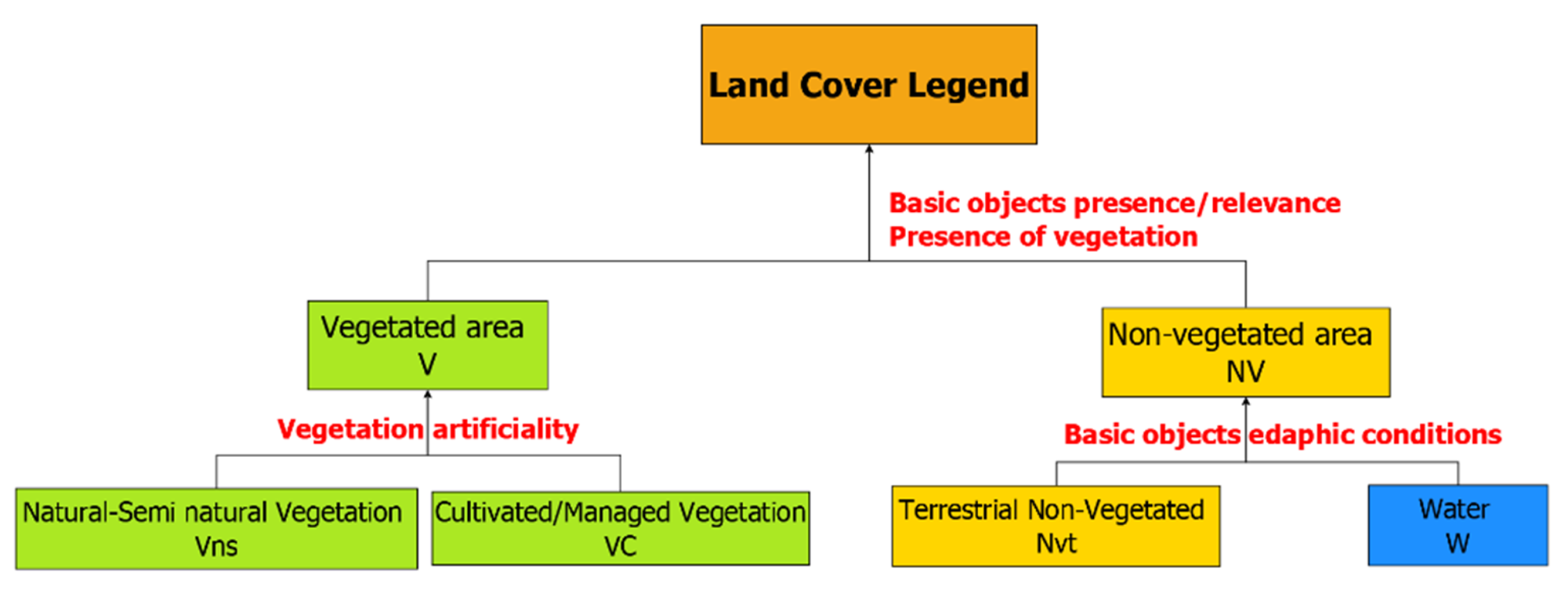
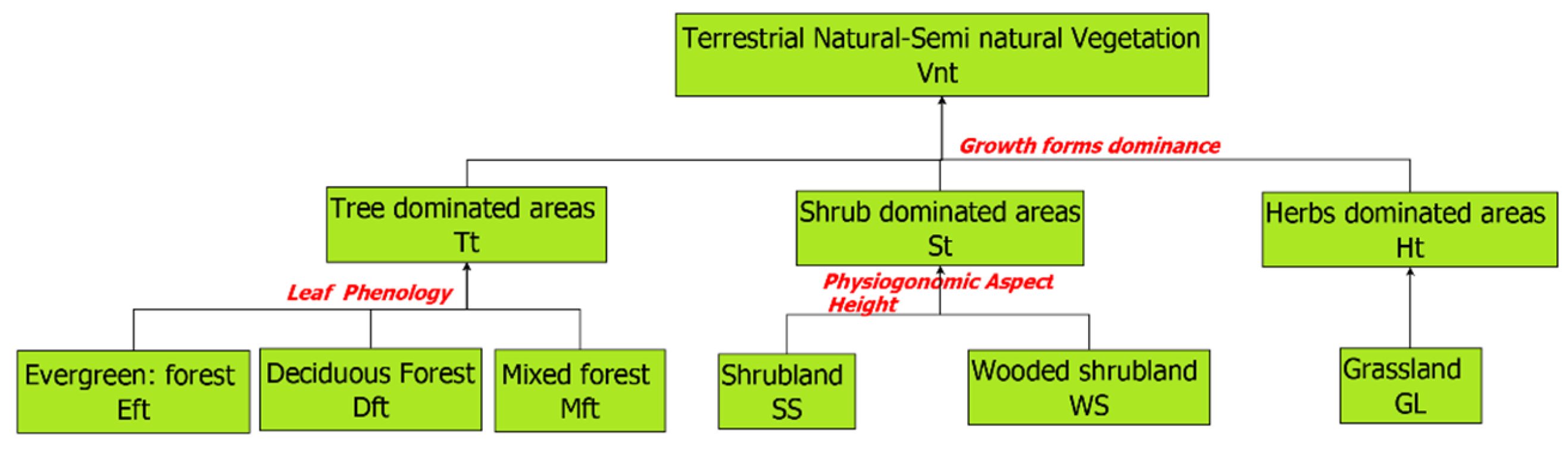
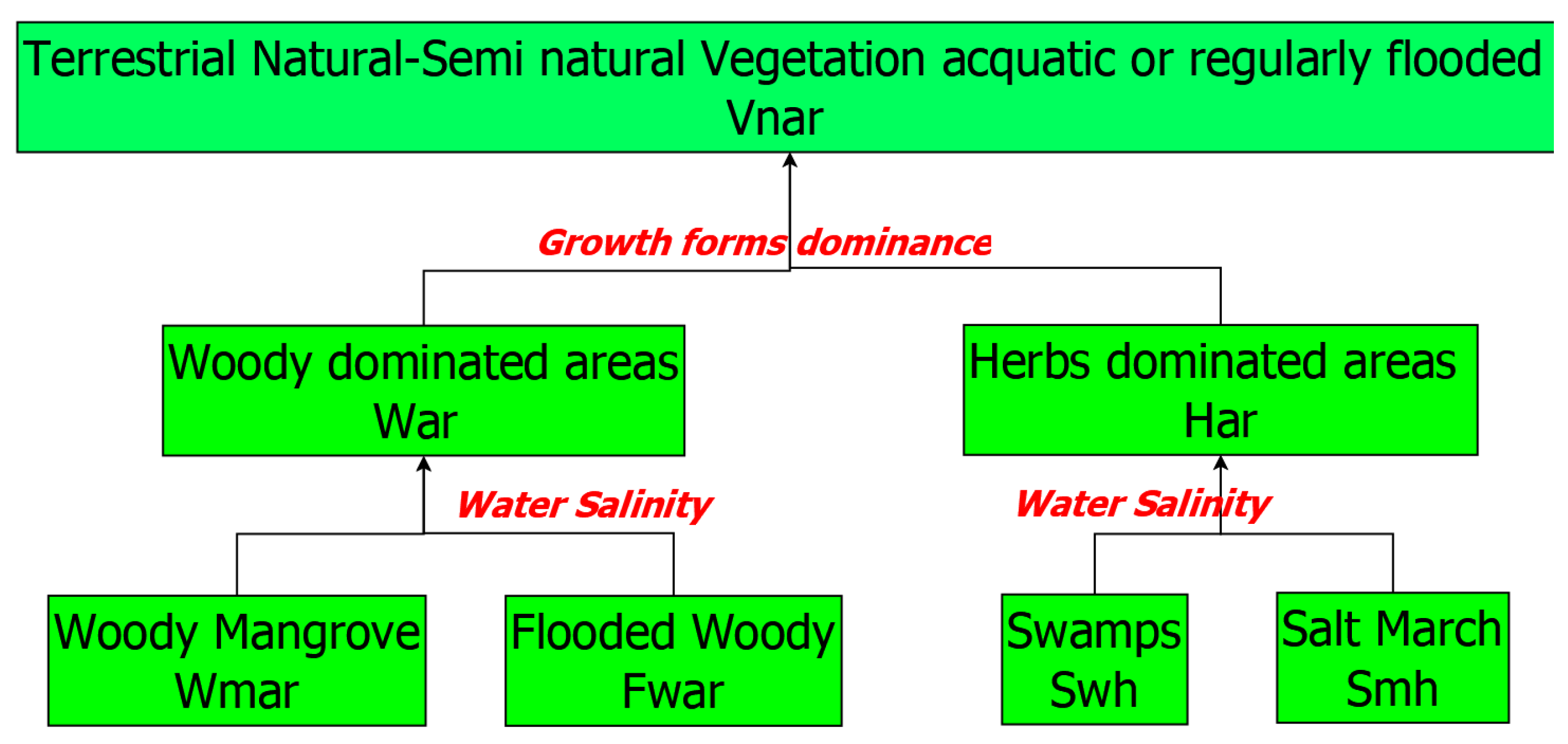
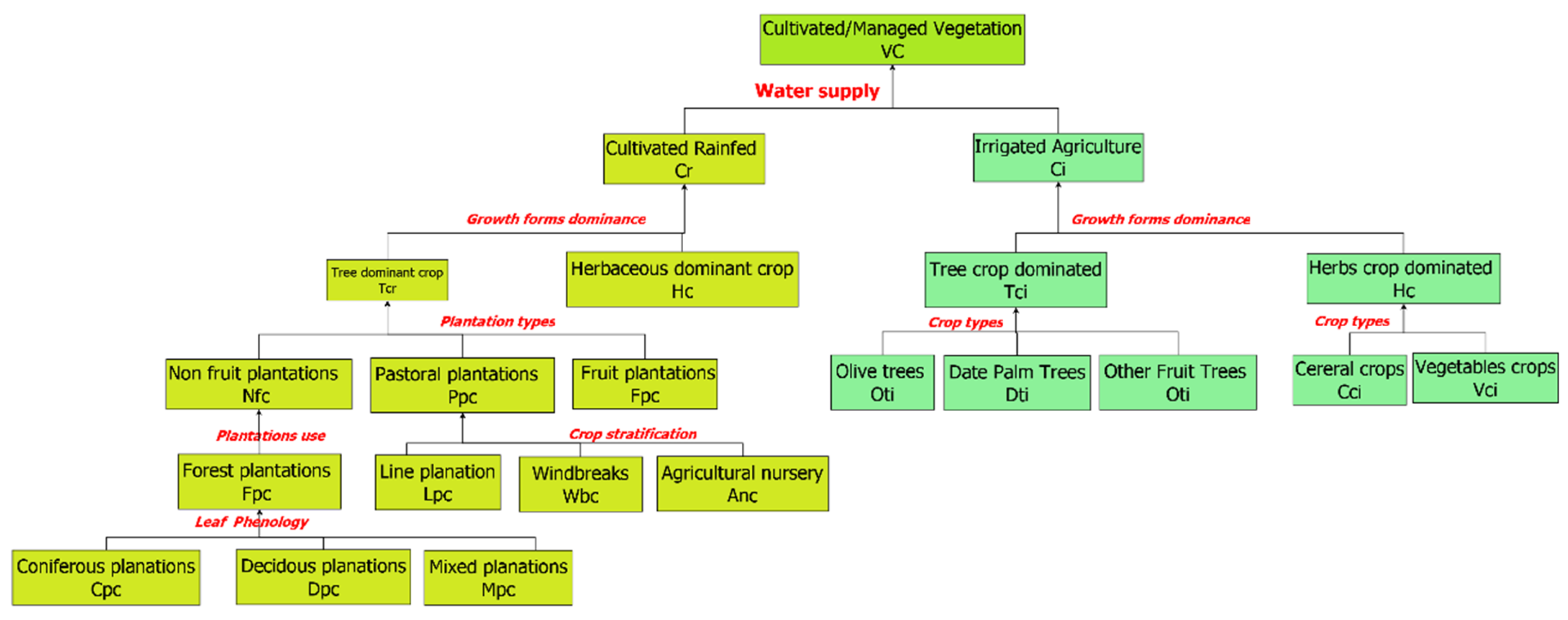
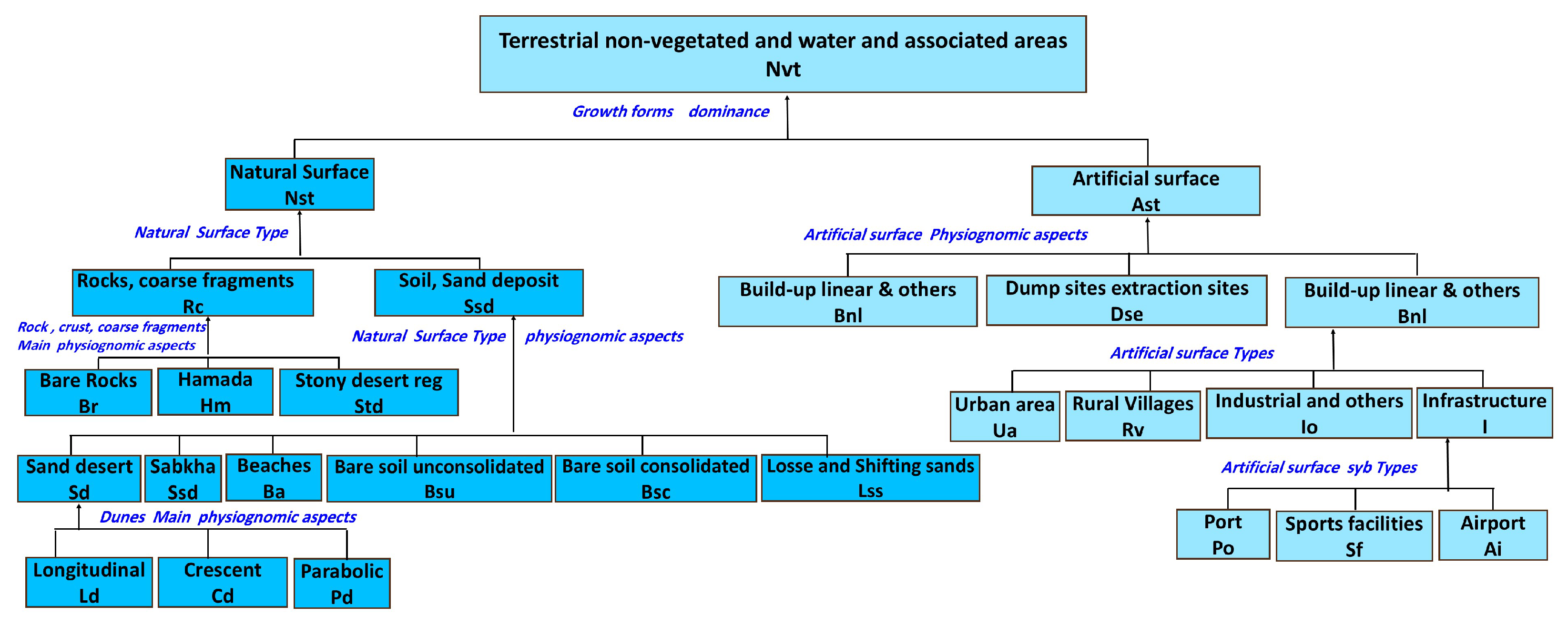
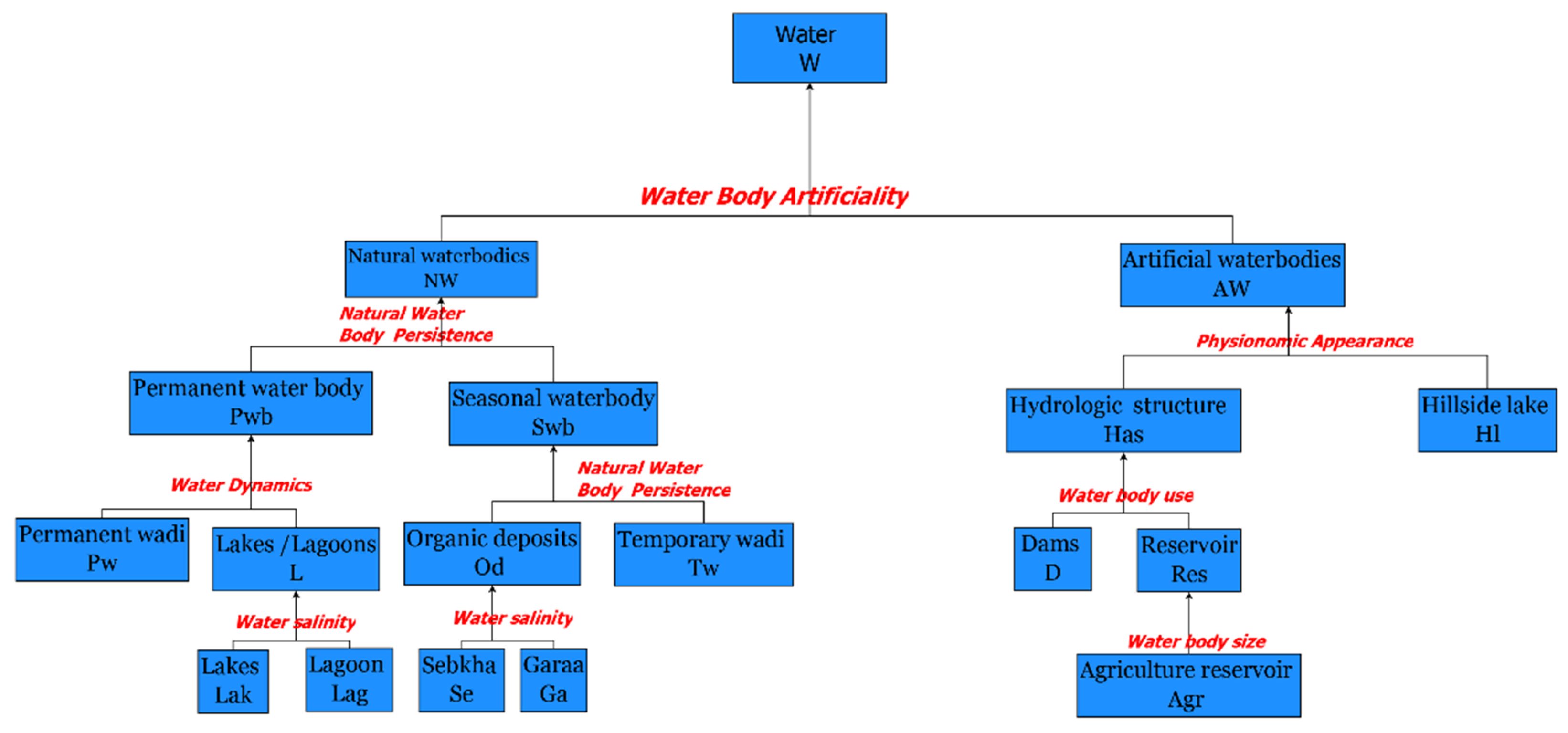
3.1.1. Hierarchical Structure and Key Descriptors
3.1.2. Description of Meta-Classes and Rules
3.1.3. Interoperability and Validation (Revised and Expanded)
4. Discussion
4.1. Theoretical Advancements and Semantic Integration
4.2. Addressing Arid Land Classification Challenges
4.3. Practical Applications for Sustainable Development
4.4. Implications for Feature Extraction and Operationalization: Bridging Ontology and Implementation
4.5. Limitations and Future Directions: Navigating Constraints in Dynamic Arid Environments
5. Conclusions
Author Contributions
Funding
Institutional Review Board Statement
Informed Consent Statement
Data Availability Statement
Acknowledgments
Conflicts of Interest
Abbreviations
| LCML | Land Cover Meta Language |
| LLCRS | Libyan National Land Cover Reference System |
| LCHS | Land Characterization System (version 3.0) |
| FAO | Food and Agriculture Organization |
| SDG | Sustainable Development Goal |
| UN-GGIM | United Nations Committee of Experts on Global Geospatial Information Management |
References
- Mushtaq, F.; O’Brien, C.D.; Parslow, P.; Åhlin, M.; Di Gregorio, A.; Latham, J.S.; Henry, M. Land Cover and Land Use Ontology—Evolution of International Standards, Challenges, and Opportunities. Land 2024, 13, 1202. [Google Scholar] [CrossRef]
- Yang, H.; Li, S.; Chen, J.; Zhang, X.; Xu, S. The Standardization and harmonization of land cover classification systems towards harmonized datasets: A review. ISPRS J. Photogramm. Remote Sens. 2017, 128, 154. [Google Scholar] [CrossRef]
- Wulder, M.A.; Hermosilla, T.; Coops, N.C.; White, J.C.; Hobart, G.W. Land cover classification in an era of big and open data: Optimizing localized implementation and training data selection to improve mapping outcomes. Remote Sens. Environ. 2021, 264, 112780. [Google Scholar]
- Di Gregorio, A.; Jansen, L.J.M. A new concept for a land-cover classification system. Land 1998, 2, 55–65. [Google Scholar]
- ISO 19144-2:2023; Geographic Information—Classification Systems—Part 2: Land Cover Meta Language (LCML). International Organization for Standardization: Geneva, Switzerland, 2023.
- FAO. Register Implementation for Land Cover Legends; FAO: Rome, Italy, 2021. [Google Scholar]
- Di Gregorio, A. Land Cover Classification System: Classification Concepts, Software Version 3; FAO: Rome, Italy, 2016.
- Di Gregorio, A.; Jansen, L.J.M. Land Cover Classification System (LCCS): Classification Concepts and User Manual; FAO: Rome, Italy, 2000. [Google Scholar]
- Di Gregorio, A. Land Cover Classification System; FAO: Rome, Italy, 2005. [Google Scholar]
- European Environment Agency. CORINE Land Cover (CLC) 2018, Version 20; EEA: Copenhagen, Denmark, 2019. [Google Scholar]
- Arino, O.; Ramos Perez, J.J.; Kalogirou, V.; Bontemps, S.; Defourny, P.; Van Bogaert, E. Global Land Cover Map for 2009 (GlobCover 2009); European Space Agency (ESA): Paris, France; Université Catholique de Louvain (UCL): Louvain-la-Neuve, Belgium, 2012. [Google Scholar] [CrossRef]
- Defourny, P.; Lamarche, C.; Bontemps, S.; De Maet, T.; Van Bogaert, E.; Moreau, I.; Brockmann, C.; Boettcher, M.; Kirches, G.; Wevers, J.; et al. Land Cover CCI Product User Guide Version 2.0; European Space Agency: Paris, France, 2017. [Google Scholar]
- Buchhorn, M.; Smets, B.; Bertels, L.; De Roo, B.; Lesiv, M.; Tsendbazar, N.-E.; Herold, M.; Fritz, S. Copernicus Global Land Service: Land Cover 100 m: Collection 3: Epoch 2019: Globe; Zenodo: Geneva, Switzerland, 2020. [Google Scholar] [CrossRef]
- FAO. Atlas of Natural Resources for Agricultural Use in Libya; FAO: Rome, Italy, 2009. [Google Scholar]
- Friedl, M.; Sulla-Menashe, D. MCD12Q1 MODIS/Terra+Aqua Land Cover Type Yearly L3 Global 500 m SIN Grid V006 [Data Set]; NASA EOSDIS Land Processes DAAC: Greenbelt, MD, USA, 2019. [CrossRef]
- Alawamy, J.S.; Balasundram, S.K.; Hanif, A.H.M.; Sung, C.T.B. Detecting and analyzing land use and land cover changes in the Region of Al-Jabal Al-Akhdar, Libya using time-series landsat data from 1985 to 2017. Sustainability 2020, 12, 4490. [Google Scholar] [CrossRef]
- Kosmidou, V.; Petrou, Z.; Bunce, R.G.H.; Mücher, C.A.; Jongman, R.H.G.; Bogers, M.M.B.; Lucas, R.M. Harmonization of the Land Cover Classification System (LCCS) with the General Habitat Categories (GHC) classification system. Ecol. Indic. 2014, 36, 290–300. [Google Scholar] [CrossRef]
- Mushtaq, F.; Henry, M.; O’Brien, C.D.; Di Gregorio, A.; Jalal, R.; Latham, J.; Chen, Z. An International Library for Land Cover Legends: The Land Cover Legend Registry. Land 2022, 11, 1083. [Google Scholar] [CrossRef]
- Cord, A.; Conrad, C.; Schmidt, M.; Dech, S. Standardized FAO-LCCS land cover mapping in heterogeneous tree savannas of West Africa. J. Arid Environ. 2010, 74, 1083–1091. [Google Scholar] [CrossRef]
- Loveland, T.R.; Reed, B.C.; Brown, J.F.; Ohlen, D.O.; Zhu, Z.; Yang, L.; Merchant, J.W. Development of a global land cover characteristics database and IGBP DISCover from 1 km AVHRR data. Int. J. Remote Sens. 2000, 21, 1303–1330. [Google Scholar] [CrossRef]
- United Nations. The 17 Goals. Available online: https://sdgs.un.org/goals (accessed on 12 September 2025).
- Alawamy, J.S.; Balasundram, S.K.; Hanif, A.H.M.; Sung, C.T.B. Response of potential indicators of soil quality to land-use and land-cover change under a mediterranean climate in the region of Al-Jabal Al-Akhdar, Libya. Sustainability 2022, 14, 162. [Google Scholar] [CrossRef]
- Al-Bukhari, A.; Hallett, S.; Brewer, T. A review of potential methods for monitoring rangeland degradation in libya. Shepherds Sahara 2018, 1, 39–51. [Google Scholar] [CrossRef]
- Belhaj, O.S.; Mubako, S.T. Land use land cover change and urban growth in Khoms district, Libya, 1976–2015. Int. J. Appl. Geospat. Res. 2020, 11, 42. [Google Scholar] [CrossRef]
- Li, W.; Perera, S.; Linstead, E.; Thomas, R.; El-Askary, H.; Piechota, T.; Struppa, D. Investigating Decadal Changes of Multiple Hydrological Products and Land-Cover Changes in the Mediterranean Region for 2009–2018. Earth Syst. Environ. 2021, 5, 173–187. [Google Scholar] [CrossRef]
- Jalal, R.; Golam Mahboob, M.; Udita, T.S.; Aziz, T.; Masum, S.M.; Costello, L.; Saha, C.R. Toward Efficient Land Cover Mapping: An Overview of the National Land Representation System and Land Cover Map 2015 of Bangladesh. IEEE J. Sel. Top. Appl. Earth Obs. Remote Sens. 2019, 12, 3852–3861. [Google Scholar] [CrossRef]
- United Nations Committee of Experts on Global Geospatial Information Management (UN-GGIM). The Global Fundamental Geospatial Data Themes; UN-GGIM: New York, NY, USA, 2019. [Google Scholar]
- Owers, C.J.; Lucas, R.M.; Clewley, D.; Planque, C.; Punalekar, S.; Tissott, B.; Chua, S.M.T. Living Earth: Implementing national standardised land cover classification systems for Earth Observation in support of sustainable development. Big Earth Data 2021, 5, 368–390. [Google Scholar] [CrossRef]




| Meta-Class | Sub-Metaclass—Code | Key Descriptors | Example Applications | Expansion Rules |
|---|---|---|---|---|
| Natural and Semi-Natural Vegetation (Terrestrial)—Vnt | Tree-Dominated Area—Tt | Cover: 20–100%; Height: 5–30 m; Phenology: Evergreen/Deciduous | Forest monitoring, deforestation tracking, carbon stock assessment | Add floristic names (e.g., Pinus halepensis), sub-canopy strata layers |
| Shrub-Dominated Area—St | Cover: 20–100%; Height: 0.2–5 m; Growth Forms: Shrubs (with possible sparse trees) | Steppe transition monitoring, desertification early warning, erosion control planning | Include leaf type (broad/needle), geographic location (e.g., coastal vs. inland) | |
| Natural and Semi-Natural Aquatic Vegetation—Vnar | Woody-Dominated Area—War | Cover: >20%; Water Salinity: Brackish; Persistence: Tidal influence | Wetland conservation, coastal biodiversity assessment, blue carbon mapping | Add water periodic variation metrics, specific floristic names (e.g., mangrove species) |
| Herbs-Dominated Area—Har | Cover: 20–100%; Water Salinity: Fresh/Brackish; Persistence: Perennial | Avian migration route protection, oasis ecosystem monitoring, water scarcity mitigation | Include grazing intensity, additional herbaceous strata (e.g., floating vegetation) | |
| Cultivated and Managed Vegetation—Cr/Ci | Rainfed Tree Crop Plantation—Tcr | Water Supply: Rainfed; Plantation Type: Fruit/Non-Fruit; Phenology: Seasonal | Agricultural zoning, yield estimation under climate variability, soil conservation planning | Add field size, planting geometry, soil water retention attributes |
| Irrigated Tree Crop-Dominated—Tci | Water Supply: Irrigated; Crop Type: Olives/Date Palms; Cover: 15–30% | Irrigation efficiency auditing, crop rotation analysis, groundwater use impact assessment | Include cultivar names, geographic altitude, irrigation system type (drip, pivot) | |
| Natural Surfaces (Non-Vegetated)—Sn | Rocks, Coarse Fragments—Tr | Physiognomic Aspect: Bare Rocks/Hammada/Stony Desert (Desert Pavement) | Desertification tracking (stony pavement formation), geological mapping, soil accessibility assessment | Add detailed rock type (limestone, basalt), soil crust type, surface roughness |
| Soil & Sand Deposit—Ss | Physiognomic Aspect: Sandy Desert/Longitudinal Dunes/Sabkha (Saline Flats) | Sand encroachment localization, coastal zone management, mineral resource mapping | Add dune mobility index, salt crust thickness, sediment grain size distribution | |
| Artificial Surfaces—Ast | Built-up Nonlinear—Bnl | Impervious Surface: >50%; Types: Urban/Rural/ Industrial; Building Density: High | Urbanization impact analysis, heat island effect studies, infrastructure planning | Add construction status, primary land use type, population density proxy |
| Built-up Linear and Others—Bla | Geometry: Linear; Types: Roads/Pipelines/Powerlines; Connectivity: High | Energy transport corridor analysis, habitat fragmentation assessment, conflict damage mapping | Include construction material, traffic level (proxy), maintenance status | |
| Waterbodies—NW | Permanent Water Body—Pwb | Dynamics: Standing/Flowing; Salinity: Fresh/Brackish/ Saline; Depth: >2 m | Water resource inventory, reservoir monitoring, aquatic ecosystem health assessment | Add water depth variability, seasonal turbidity, shoreline stability |
| Seasonal Waterbodies—Swb | Persistence: Intermittent/ Ephemeral; Types: Wadis/Flash Flood Plains/Playas | Flood risk assessment, seasonal hydrology, groundwater recharge zone identification | Add inundation frequency, sediment load, connection to aquifer systems |
| LLCRS Meta-Class/Code | LCCS v3 Equivalent | CORINE Equivalent | GlobCover Equivalent | Semantic Enhancement Notes |
|---|---|---|---|---|
| Vnt/Tree-Dominated Area (Tt) | A12 (Natural Terrestrial Vegetation) | 3.1.1 (Broad-leaved Forest) | 40 (Closed to Open Broad-leaved Evergreen Forest) | LLCRS adds explicit height and phenology constraints for arid-adapted forests. |
| Vnar/Woody Mangrove (Wm) | A24 (Aquatic Vegetation) | 4.1.1 (Inland Marshes) | 170 (Flooded Broadleaved Forest) | LLCRS incorporates tidal influence and salinity descriptors absent in global classes. |
| Cr/Tree Crop Plantation (Tcr) | A11 (Cultivated Terrestrial Areas) | 2.2.1 (Non-Irrigated Arable Land) | 11 (Post-Flooding Cropland) | LLCRS specifies water supply (rainfed) and plantation type, crucial for dryland agriculture. |
| Sn/Sandy Desert (Sd) | A3A20B3 (Bare Areas—Sand) | 3.3.3 (Sparsely Vegetated Areas) | 200 (Bare Areas) | LLCRS differentiates dune types (longitudinal, crescent) specific to Saharan geomorphology. |
| Ast/Built-up Nonlinear (Bn) | A1 (Artificial Surfaces) | 1.1.1 (Continuous Urban Fabric) | 190 (Urban Areas) | LLCRS includes building density and imperviousness for post-conflict urban analysis. |
| NW/Permanent Water Body (Pwb) | B15 (Natural Waterbodies) | 5.1.2 (Water Bodies) | 210 (Water Bodies) | LLCRS adds depth and dynamics descriptors for monitoring water scarcity. |
Disclaimer/Publisher’s Note: The statements, opinions and data contained in all publications are solely those of the individual author(s) and contributor(s) and not of MDPI and/or the editor(s). MDPI and/or the editor(s) disclaim responsibility for any injury to people or property resulting from any ideas, methods, instructions or products referred to in the content. |
© 2026 by the authors. Licensee MDPI, Basel, Switzerland. This article is an open access article distributed under the terms and conditions of the Creative Commons Attribution (CC BY) license.
Share and Cite
Nwer, B.; Dadhich, G.; Alkasih, A.; Maki, A.; Mushtaq, F. From Descriptors to Decisions: Structuring the Libyan National Land Cover Reference System with Land Cover Meta Language. Land 2026, 15, 257. https://doi.org/10.3390/land15020257
Nwer B, Dadhich G, Alkasih A, Maki A, Mushtaq F. From Descriptors to Decisions: Structuring the Libyan National Land Cover Reference System with Land Cover Meta Language. Land. 2026; 15(2):257. https://doi.org/10.3390/land15020257
Chicago/Turabian StyleNwer, Bashir, Gautam Dadhich, Akram Alkasih, Abdourahman Maki, and Fatima Mushtaq. 2026. "From Descriptors to Decisions: Structuring the Libyan National Land Cover Reference System with Land Cover Meta Language" Land 15, no. 2: 257. https://doi.org/10.3390/land15020257
APA StyleNwer, B., Dadhich, G., Alkasih, A., Maki, A., & Mushtaq, F. (2026). From Descriptors to Decisions: Structuring the Libyan National Land Cover Reference System with Land Cover Meta Language. Land, 15(2), 257. https://doi.org/10.3390/land15020257