Article

Influence of Urban Landscape Patterns on PM2.5 Concentrations from the LCZ Perspective in Shanghai City


College of Civil Engineering, Nanjing Forestry University, Nanjing 210037, China
*
Author to whom correspondence should be addressed.
Land 2026, 15(2), 252; https://doi.org/10.3390/land15020252
Submission received: 21 November 2025 / Revised: 30 January 2026 / Accepted: 30 January 2026 / Published: 2 February 2026

Abstract

Under the fast development of urbanization, PM2.5 pollution has become a prominent issue affecting the urban ecological environment and residents’ health. To investigate the impact of urban landscape patterns on PM2.5 concentrations, this study applies the Local Climate Zone (LCZ) classification to Shanghai using the World Urban Database and Access Portal Tools (WUDAPT). LCZ-derived landscape metrics are adopted as predictor variables to focus on how urban form and spatial configuration affect PM2.5 distribution and to identify the key landscape categories and types influencing PM2.5 levels. The results reveal notable seasonal and spatial differences in the effects of different LCZ types and landscape metrics on PM2.5 concentrations; on average, over 69% of the spatial variation in PM2.5 across the four seasons can be explained by the Multi-scale Geographically Weighted Regression (MGWR) model. This research demonstrates that the LCZ framework effectively uncovers the seasonal and spatial mechanisms by which urban landscape patterns influence PM2.5 concentrations in Shanghai. It offers a novel perspective for understanding the interplay between urban landscape and atmospheric pollution, and provides scientific guidance for sustainable urban planning and precise air pollution control strategies in other cities.

1. Introduction

The process of urbanization has been rapidly advancing worldwide, with cities gradually becoming the core hubs of economic, cultural, and political activities [1]. As a typical developing country, China has made remarkable achievements in urbanization: its urbanization rate surged from less than 20% in 1978 to over 60% today [2]. Notably, intensive urbanization has directly led to large-scale transformations of natural landforms and extensive deforestation for city construction, significantly exacerbating air pollution problems [3]. PM2.5, one of the primary atmospheric pollutants, is known to cause respiratory and cardiovascular diseases [4,5,6], reduce visibility, alter climate patterns, and damage ecosystems [7,8]. Additionally, widespread use of concrete and asphalt in urban construction contributes to heat absorption, further deteriorating local climate conditions and indirectly intensifying pollutant retention [9]. Investigating the relationship between urban landscape patterns and PM2.5 is instrumental for rational city planning, improving atmospheric environmental quality, and promoting sustainable urban development.
At present, investigations into the correlation between urban landscape configurations and air quality predominantly rely on the traditional Land Use and Land Cover (LULC) classification framework. At the categorical level, vegetation and water bodies are considered significant landscape components in reducing PM2.5 concentrations, whereas built-up areas tend to exacerbate PM2.5 concentrations [10,11,12]; At the landscape level, overall landscape evenness (SHEI) and fragmentation (CONTAG) are strongly correlated with PM2.5 concentrations [13]. In high-density and highly compact urban areas, variations in building height and building density lead to different urban functionalities, making the LULC classification insufficient to accurately characterize urban features [14]. Stewart and Oke proposed the Local Climate Zone (LCZ) classification framework [15], which enables a more effective explanation of the relationship between urban landscape patterns and atmospheric particulates than traditional land use change methods [16]. LCZ classification data can be mainly divided into three categories: those based on remote sensing, those based on geographic information systems (GIS), and methods that combine both [17,18]. Among these, classification methods based on remote sensing are used most frequently. The World Urban Database and Access Portal Tools (WUDAPT) is a global database that provides LCZ maps for cities worldwide [19]. The platform initially offered a standard, universal workflow that utilized random forest classification, using free data from the open-source community-such as Landsat imagery and free software like SAGA. Building on this foundation, WUDAPT introduced another major advancement: an online platform for generating urban LCZ maps. This platform can automatically map cities to LCZ types with only a valid training area file and some metadata as inputs [20]. This generator has simplified the process of creating LCZ maps, greatly facilitating urban climate research for researchers.
The LCZ framework is a classification system based on the physical properties of the surface and climatic functions. This system uses 12 core indicators-including building morphology parameters (such as height and density), surface cover attributes (such as impervious materials, vegetation density, and the distribution of water bodies)-to divide urban spaces into 17 standard types (comprising 10 built-up cluster types and 7 natural surface types). Urban morphological and climate studies have shown that the heterogeneity of different LCZ types is significantly spatially coupled with their historical evolutionary stages [21]. The LCZ scheme has been widely applied in studies analyzing the relationship between urban landscape patterns and atmospheric particulate concentrations [14,22]. Most research results indicate that, throughout the year, PM2.5 concentrations in built types generally follow the patterns of “compact > open” and “high-rise > mid-rise > low-rise”. The PM2.5 concentration in natural categories is always lower than that in built categories [22]. However, studies on the spatial correlation between LCZ type landscape metrics and seasonal urban PM2.5 concentrations remain limited. In this study, the LCZ framework is used to characterize urban landscape patterns, with PM2.5 as the representative atmospheric pollutant. The impacts of urban landscape patterns under the LCZ classification on the seasonal spatial variation in PM2.5 are examined.
Focusing on Shanghai, we generated the LCZ classification map following the WUDAPT Level 0 protocol. To rigorously examine the coupling effects between urban landscape configurations and PM2.5, a hierarchical analytical framework was employed. This included Pearson’s correlation for preliminary screening, multiple linear regression for global assessment, and Multi-scale Geographically Weighted Regression (MGWR) for capturing local non-stationarity, thereby offering deep insights ranging from general statistical associations to complex spatial heterogeneity. The results of this multi-scale analysis reveal the mechanisms linking LCZ landscape patterns with urban air pollution across different spatial scales, offering empirical evidence to guide the refinement of urban spatial configurations and the development of precision air quality management policies. The main workflow of this study is illustrated in Figure 1.

2. Materials and Methods

2.1. Study Area

Shanghai (120°52′ E–122°12′ E, 30°40′ N–31°53′ N) is located in East China, with a total area of 6340.5 km2. In recent years, the atmospheric environmental quality in Shanghai has improved significantly, with a downward trend in the concentrations of major pollutants. However, the annual average concentration of fine particulate matter (PM2.5) was 35 µg/m3 in 2022, ranking at a medium-to-low level nationally. This is mainly due to the rapid increase in the number of motor vehicles, intensive urban construction, and the fast growth of population and economy, which continue to pose substantial challenges to air quality.

2.2. Seasonal Spatial PM2.5 Concentration Estimation

2.2.1. PM2.5 Estimation Data

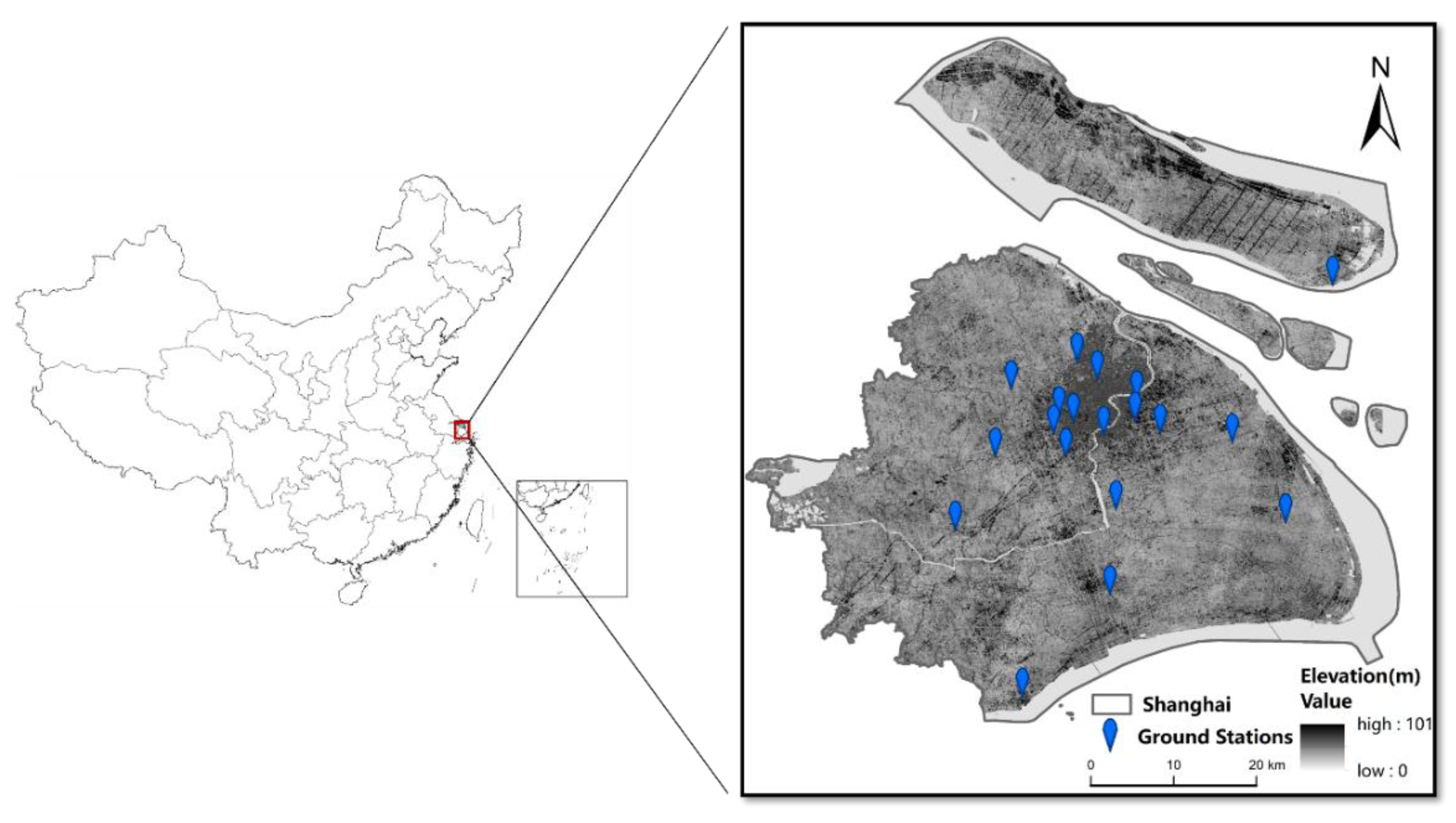
The PM2.5 data used were sourced from national air quality monitoring stations, specifically from the China National Environmental Monitoring Center (http://www.cnemc.cn/ (accessed on 15 November 2023)) and the historical PM2.5 data website (https://www.aqistudy.cn/ (accessed on 15 November 2023)). Data from 19 national air quality monitoring stations in Shanghai in 2022 were selected, and hourly PM2.5 concentration monitoring data for each day throughout the year were obtained and used to calculate daily averages [23]. The distribution of the monitoring sites is shown in Figure 2. The Aerosol Optical Depth (AOD) data product is MODIS MCD19A2 V6 aerosol data (https://earthexplorer.usgs.gov/ (accessed on 24 April 2024)). MODIS satellite sensors were used to acquire daily AOD data, and the MCD19A2 V6 product is a grid-based Level 2 aerosol optical depth (AOD) product from the joint Multi-Angle Implementation of Atmospheric Correction (MAIAC) algorithm for MODIS Terra and Aqua, generated daily at a spatial resolution of 1 km [24]. Meteorological data were obtained from the ERA5 reanalysis dataset (hourly) provided by the European Centre for Medium-Range Weather Forecasts (ECMWF) (https://www.ecmwf.int/en/forecasts/datasets (accessed on 19 June 2024)) [25]. Variables selected include 2 m air temperature, surface temperature, relative humidity, wind speed, wind direction, precipitation, and atmospheric pressure, all at a daily time resolution.

2.2.2. Construction of Inversion Models

To accurately capture the spatial variation in seasonal PM2.5, this study employs the PSO-XGBoost model for PM2.5 estimation. Extreme Gradient Boosting (XGBoost) is an efficient and widely used machine learning algorithm that demonstrates remarkable scientific rigor and practical value in PM2.5 estimation. It is capable of efficiently and accurately modeling the complex relationships among environmental variables [26,27]. Based on the gradient boosting framework, XGBoost iteratively minimizes model residuals for optimization, and incorporates multiple innovations that significantly enhance its accuracy, efficiency, and scalability. The model is represented as follows:
y ^ l = k = 1 k f k x i , f k F   i = 1 , 2 , 3 , , n
where y ^ l represents the predicted value for the ith sample, k denotes the number of trees, and F represents the space of regression tree ensembles; xi denotes the feature vector of the ith data point. To further enhance the performance and generalization ability of the XGBoost model, as well as to improve the accuracy and effectiveness of PM2.5 inversion, the Particle Swarm Optimization (PSO) algorithm is incorporated.
x k + 1 = x k + v k + 1
v k + 1 = ω × x k + c 1 × r 1 × p p b e s t k x k + c 2 × r 2 × p p b e s t k x k
As a global optimization algorithm, Particle Swarm Optimization (PSO) can quickly search for optimal combinations of hyperparameters by simulating the collaborative behavior of particles in the search space. Compared to traditional methods such as Grid Search or Random Search, PSO offers higher optimization efficiency and stronger global search capabilities [28]. During the model construction process, a PSO algorithm framework tailored to the characteristics of the experimental data and the requirements of the XGBoost model was designed based on the core principles of PSO optimization. By integrating the PSO algorithm with the XGBoost model, a PSO-optimized XGBoost model was successfully developed, laying a solid foundation for achieving more efficient and accurate model performance.
PM2.5 station data, Aerosol Optical Depth (AOD) data, and meteorological data were utilized for seasonal PM2.5 estimation. The study period was stratified into four standard seasons: spring (March to May), summer (June to August), autumn (September to November), and winter (December to February), and the PSO-XGBoost model was established for each period. The dataset was randomly partitioned into a training set (75%) and a validation set (25%). An in-depth evaluation and analysis of the results were performed. Model performance was assessed using the coefficient of determination (R2), mean absolute error (MAE), and root mean square error (RMSE). To avoid prior partitioning bias of the samples, the modeling process was repeated three times, and the optimal model was selected as the final best model. Finally, the PM2.5 concentrations predicted by the final PSO-XGB model were mapped onto a 100 m spatial resolution grid.

2.3. Quantifying the Land Use and Landscape Spatial Pattern

2.3.1. Construction of LCZ Classification Map

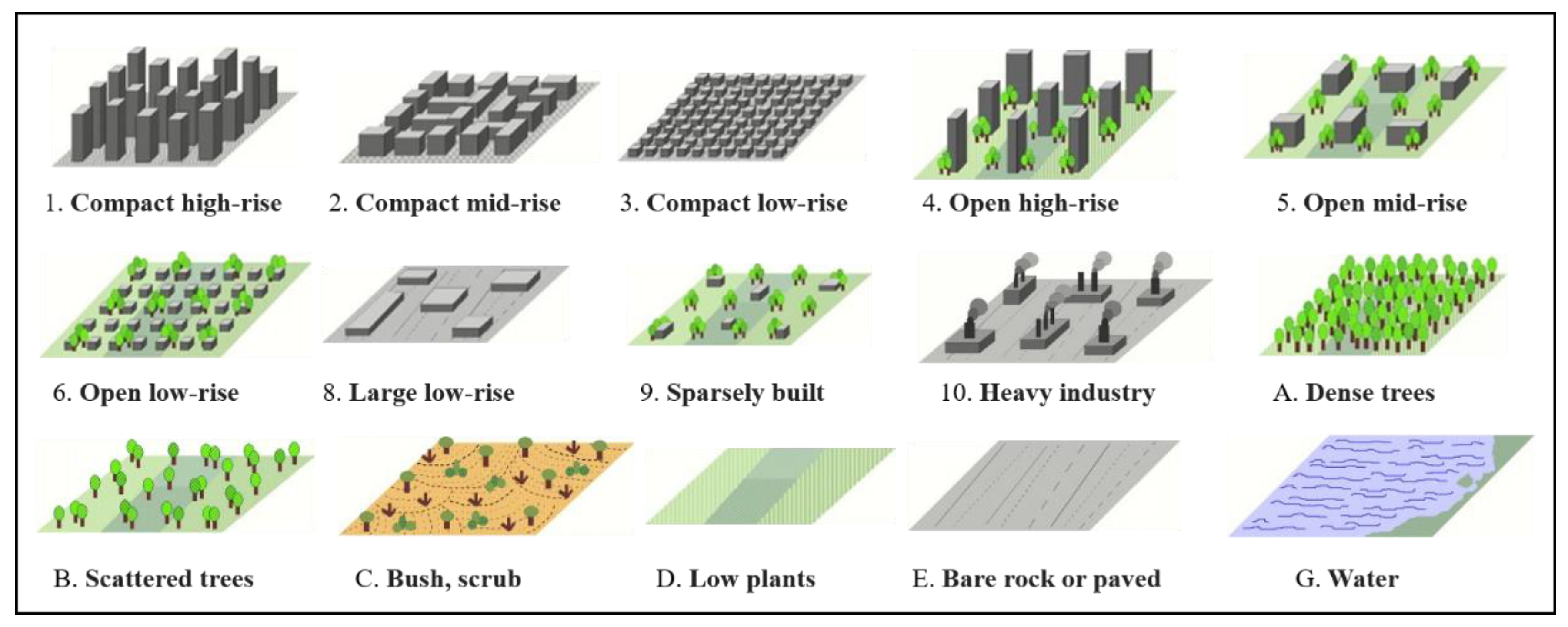
The Local Climate Zone (LCZ) scheme provides a more detailed description of urban morphology compared to traditional land-use classification, highlighting the response of compact and high-density urban forms to environmental factors. The LCZ system divides urban areas into 10 types of built-up zones and 7 types of natural land zones (Figure 3). For the urban spatial morphology of Shanghai, LCZ7 (lightweight low-rise buildings) and LCZF (bare soil or sand), which do not exist in this area, were excluded to achieve a more accurate representation of the city’s morphology.
The WUDAPT workflow was utilized to generate the LCZ zoning map, referencing established models from previous studies [29] and following these steps: (1) Representative areas of each LCZ class were identified and delineated as training samples using polygons in Google Earth, supplemented by Baidu Street View imagery. For each LCZ class, 40–50 training samples were selected. (2) Pre-processed Landsat satellite images and the selected training areas were loaded into the LCZ Generator. Using the online random forest classification method, the local climate zone classification for the study area was performed, resulting in a preliminary zoning map. (3) The KML file generated in step (2) was loaded into Google Earth for verification. For areas where inconsistencies existed, new training samples were delineated and step (2) was repeated until the generated map accurately reflected real-world conditions.

2.3.2. Calculation of Landscape Metrics

This study selects landscape metrics from both the class level and the landscape level. At the class level, four metrics are used: Patch Area Percentage (PLAND), which indicates the composition characteristics of landscape patches; Largest Patch Index (LPI), reflecting the dominant patch types; Landscape Shape Index (LSI), representing the proportional composition of patch shapes; and Aggregation Index (AI), which measures the degree of spatial clustering of specific landscape types within the study area. At the landscape level, two metrics are employed: the Shannon Equability Index (SHEI), which represents the overall evenness of different landscape categories and identifies dominant classes; and the Contagion Index (CONTAG), which reflects the overall fragmentation degree of the urban landscape pattern. Fragstats was used to calculate all landscape metrics.
To quantify the dominance of specific land cover types, we calculated the PLAND, which measures the proportional area of each LCZ class relative to the total study extent. The calculation method is as follows:
P L A N D = j = 1 n a i j A 100
where n is the total number of patches of a specified landscape type within the study area, and aij is the area of patch j of the landscape type i. A represents the total landscape area.
The dominance of the single most extensive patch within a class was assessed using the LPI, serving as an indicator of fragmentation or continuity. The calculation method is as follows:
L P I = a m a x A × 100
where amax is the area of the largest patch within the patch type.
LSI represents the proportion of a specific patch type within the landscape. Its value ranges from 0 to 100; the fewer the number of patches, the smaller the LSI value. The calculation method is as follows:
L S I = 0.25 k = 1 m e i k A
where eik denotes the cumulative length of edges shared by patch types i and k, encompassing the entire landscape boundary and the partial or full background edge segments associated with class i.
The AI is the percentage value of the spatial adjacency frequency between raster cells of a particular landscape type. The spatial adjacency index AI is chosen to evaluate the degree of clustering of patches within each landscape type. When all patches of a given landscape type are completely dispersed, AI equals 0. The calculation method is as follows:
AI = g i i max _ g i i
where gii represents the number of similar neighboring pixel pairs of class i based on the single-count method. max_gii indicates the maximum number of similar neighboring pixel pairs between pixels of class i based on the single-count method.
SHEI is used to measure whether the area distribution of different patch types in the landscape is uniform. Its value ranges from 0 (only one patch type exists in the landscape, indicating the lowest evenness) to 1 (high diversity, all patch types have equal area, indicating the highest evenness). The calculation method is as follows:
S H E I = i = 1 m P i ln P i ln m
where Pi is the area proportion of class i. m is the total number of landscape types in the study area.
CONTAG is an index that measures whether patches of the same type are spatially adjacent and form continuous patches. It primarily reflects the spatial connectivity of the landscape, rather than the area distribution. The calculation method is as follows:
C O N T A G = 1 + i = 1 m k = 1 m P i k ln P i k 2 ln m × 100 %
where Pik is the probability that patches of type i are adjacent to patches of type j. m is the total number of landscape types in the study area.

3. Results

3.1. The Seasonal Spatial Characteristic of PM2.5 and LCZ Classification

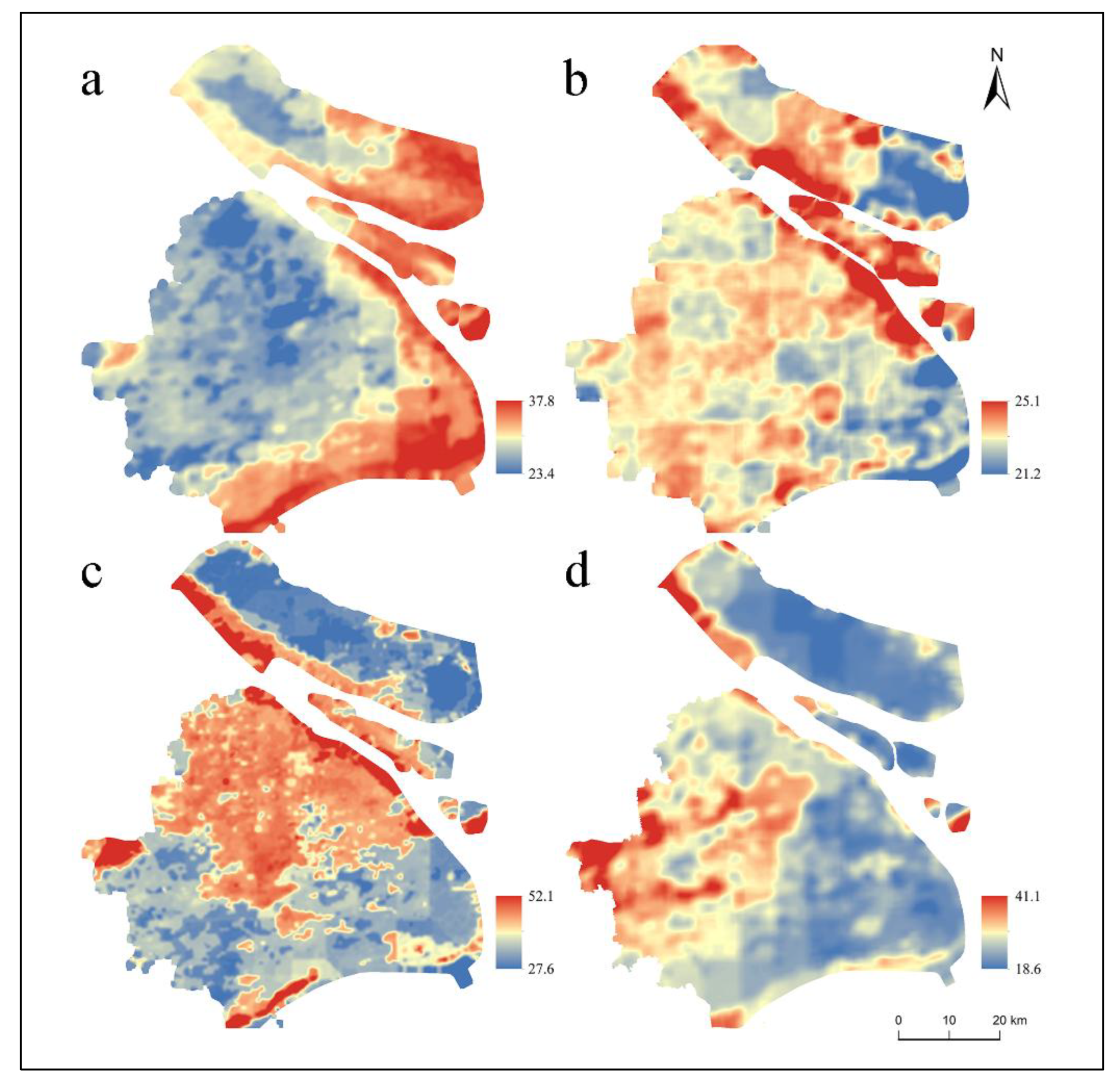
The estimation results of PM2.5 using the PSO-XGBoost model are shown in Figure 4. Model performance metrics for seasonal PM2.5 estimation indicate R2 values of 0.778, 0.777, 0.885, and 0.822 across four seasons, respectively. Corresponding root mean square error (RMSE) values are 7.216, 3.99, 4.43, and 5.41, while mean absolute errors (MAE) are 4.723, 2.921, 3.310, and 5.412. Overall, the PM2.5 concentrations in Shanghai are at a favorable level, remaining below the Chinese air quality threshold of 75 μg/m3. Seasonal variation shows that PM2.5 concentrations are highest in autumn and winter, followed by spring, and lowest in summer. Apart from the significant influence of water bodies at urban boundaries on PM2.5 levels, the central urban built-up areas exhibit higher PM2.5 concentrations, whereas regions with dense vegetation cover at the outskirts show comparatively lower concentrations.
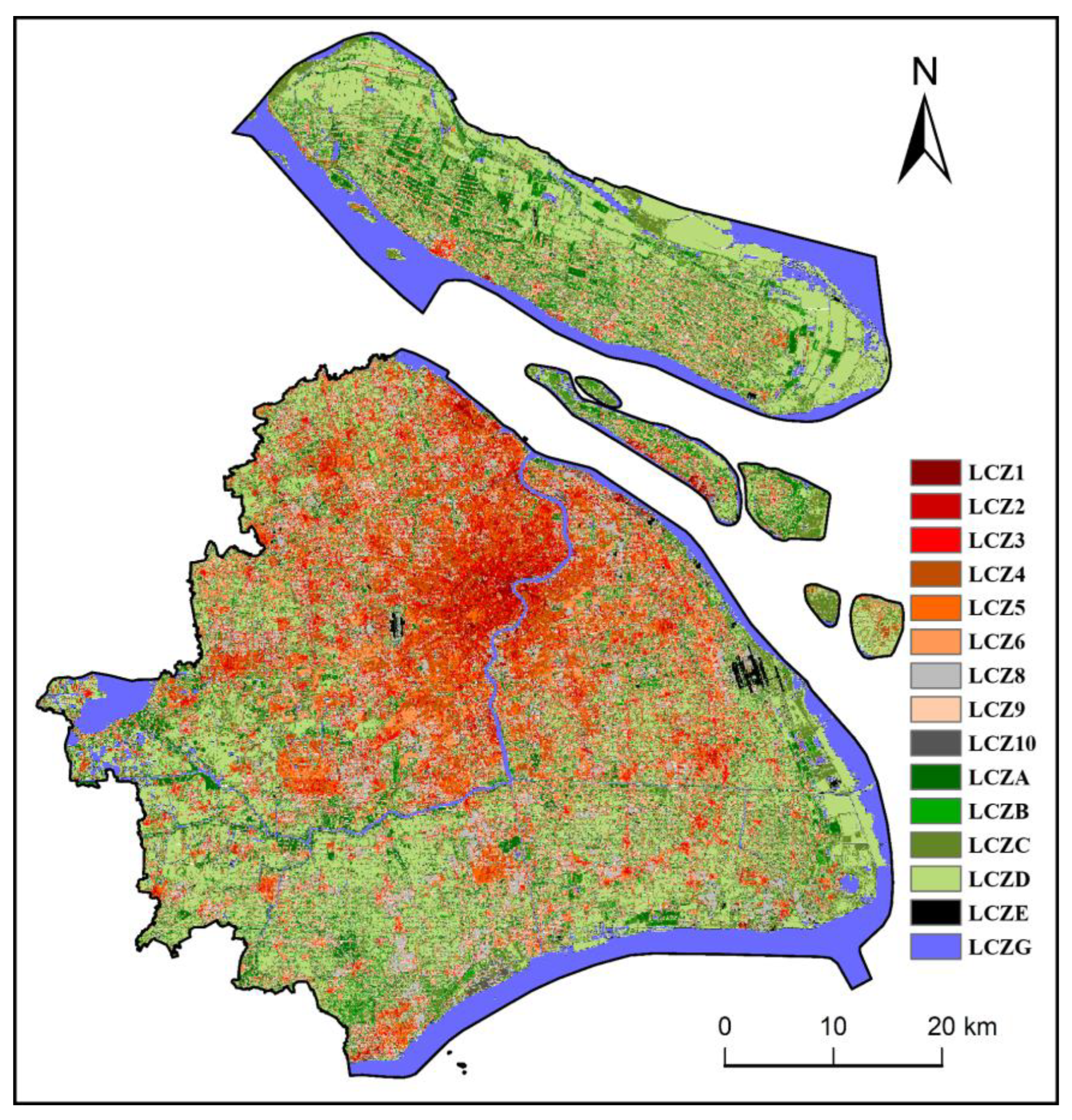
According to the LCZ map (Figure 5), it is apparent that building types—primarily indicated by red areas—are predominantly concentrated in the central urban region. High-density built-up zones, including LCZ1 (approximately 0.7%), LCZ2 (approximately 1.87%), and LCZ3 (approximately 3.62%), are mainly clustered around the Lujiazui area and its surroundings. In contrast, LCZ4 (about 7.2%), LCZ5 (about 5.71%), and LCZ6 (about 9.28%) are primarily distributed in districts such as Yangpu, Hongkou, Putuo, and Xuhui. Most natural landscape types, except for LCZG, are found in the peripheral areas of the city, with LCZE accounting for the largest proportion at approximately 22.4%. The overall classification accuracy is 77%, with a Kappa coefficient of 72.54%.

3.2. The Relationship Between PM2.5 and Landscape

To investigate the relationship between PM2.5 distribution and landscape characteristics, this study employs a spatial analysis method based on a moving window technique. Initially, the study area is divided into uniform grids measuring 6 km by 6 km. The average PM2.5 concentration within a 6 km buffer zone centered on the geometric centroid of each grid is calculated. Circular buffers with radii of 300 m, 500 m, 1000 m, 2000 m, 3000 m, and 5000 m are set around the grid centers, serving as the analysis scope of the moving window. The sizes of the buffers are determined based on previous research and the urban morphology of the study area [30,31]. Within each buffer zone, landscape metrics are computed using LCZ classification data. By systematically moving the grid centers in space, the spatial distribution of landscape metrics across the region is obtained. For each buffer radius, the same landscape index is considered as different variables, denoted as LCZ(i)_y_x, where i indicates the LCZ category, y indicates the landscape type, and x represents the buffer radius.
To investigate the impacts of urban form and landscape patterns on PM2.5 concentrations, a three-stage screening process was employed to select predictor variables:
① Pearson’s correlation coefficients were calculated to preliminarily assess the relationships between the landscape metrics of different LCZ types and PM2.5 concentration data. Prior to further analysis, variables undergo collinearity diagnosis: by comparing the Pearson’s correlation coefficients of variables across different buffer zones, the buffer with the highest absolute correlation coefficient is selected as the subcategory for screening. Subsequent collinearity diagnostics are performed to eliminate multi-collinearity among model variables.
② To further refine variable selection, this study employs multiple linear regression analysis on the preliminarily screened variables. Both the remaining independent variables and the dependent variable are included in the multiple linear regression analysis. During model development, variables that do not meet the significance level (α = 0.05), such as those with failing t-tests (regression coefficient p-value > 0.05), variables that fail the overall F-test, or variables inconsistent with the model’s prior assumptions, are iteratively removed. Additionally, the contribution of each variable to the model’s coefficient of determination (R2) is evaluated, and variables contributing less than 1% to R2 are discarded. This process is repeated until the model converges, resulting in an optimized regression model where all variables are significant and contribute meaningfully to the explanation of the model, as shown in the table.
③ The selected predictor variables from multiple linear regression are used to build a Multi-scale Geographically Weighted Regression (MGWR) model, which describes the spatial heterogeneity of relationships among variables in spatial data. In contrast to conventional GWR models that enforce a uniform spatial scale across all predictors, MGWR assigns distinct bandwidths to individual variables. This flexibility allows the model to differentiate between local and regional effects, thereby providing a more precise representation of spatial heterogeneity [32,33].
The adjusted R2 values of the four seasonal models are 0.999, 0.999, 0.993, and 0.995, indicating strong explanatory power. The Variance Inflation Factor (VIF) for all variables is within reasonable ranges, demonstrating that the independent variables have significant impacts on the dependent variable and are not highly correlated with each other(Table 1). In the spring model, the LPI of LCZ3 within the 1000 m buffer is negatively correlated with PM2.5 concentrations. Additionally, the AI value of LCZ6 within the 5000 m buffer also shows a negative correlation with PM2.5. These results suggest that dispersed, low-rise open buildings effectively reduce pollution levels. The LSI value of LCZB shows a significant positive correlation with PM2.5, and its Beta value is the highest among all variables, indicating that large areas of vegetation and woodland have a notable impact on PM2.5 concentrations. In the summer model, LCZ3, LCZ6, and LCZB again appear as significant factors, with natural landscape type LCZB exerting the strongest influence on PM2.5. Furthermore, the PLAND value of LCZ8 within the 500 m buffer shows a significant positive correlation with PM2.5, implying that large structures and factories influence local pollution levels. In the autumn model, the PLAND value of LCZ9 is significantly negatively correlated with PM2.5, suggesting that sparse medium- and small-sized buildings can reduce pollution levels. Meanwhile, LCZ8 reappears as a significant positive factor at a larger buffer of 1000 m, indicating that large constructions and factories impact PM2.5 pollution over broader areas. In the winter model, the AI values of LCZ1 and LCZ4 are negatively correlated with PM2.5, whereas the AI of LCZ3 shows a positive correlation. This suggests that compact mid- to high-rise buildings and human activities might promote PM2.5 pollution. Notably, SHEI_3000 appears across all four models, showing a positive relationship with PM2.5 during spring and autumn, and a negative relationship during summer and winter.
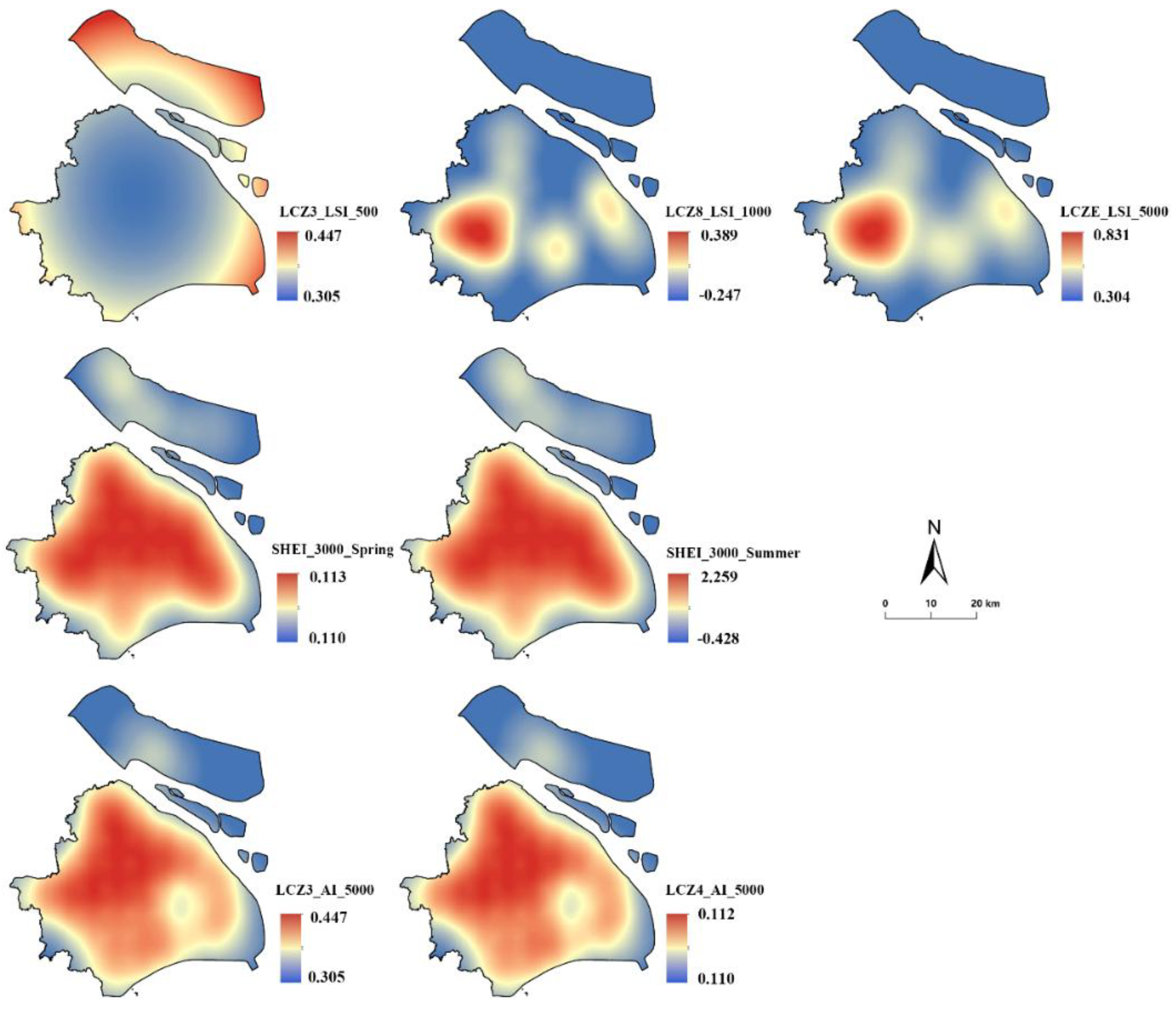
The results indicate that the R2 values for the seasonal models are 0.804, 0.745, 0.885, and 0.804, with corresponding AICc values of 80.664, 99.240, 107.774, and 92.680 (Table 2). The summarized statistics—including mean, standard deviation, median, minimum, and maximum—enable comparison of coefficient values for each independent variable and reveal the spatial variation in these coefficients within the study area (Figure 6). In the spring model, SHEI_3000 shows a significant positive influence. During summer, LCZ3_LSI_500 and SHEI_3000 exhibit both positive and negative effects, respectively. In autumn, LCZ8_LSI_1000 and LCZE_LSI_5000 have a significant positive influence. In winter, LCZ3_AI_5000 and LCZ4_AI_5000 are the variables with the most influence. The coefficient of LCZ8_LSI_1000 exhibited a decreasing trend from west to east; it was higher in the western inland region and gradually transitioned to negative values along the eastern coast. In contrast, LCZE_LSI_5000 demonstrated a stronger positive driving effect on PM2.5 concentrations in the northern region. Notably, the influence of SHEI revealed substantial seasonal heterogeneity. During spring, its positive impact was predominantly concentrated in the central urban area and its periphery. However, in summer, the high-value zone shifted to the eastern coastal belt, while coefficients in the western region became negative.

4. Discussion

The influence buffers for LCZ1 and LCZ4 are larger, indicating that high-rise building environments have a broader spatial impact. These tall buildings alter wind flow, suppress dispersion, and aggregate pollution sources, thereby significantly expanding the influence range of PM2.5. This observation aligns with previous studies which report that variations in building height under different wind directions differently affect PM2.5 diffusion [34]. The influence range of LCZ8 extends from 500 m to 1000 m, suggesting that large low-rise structures, through mechanisms such as physical barriers and low-height emissions, markedly broaden the impact zone of PM2.5. The repeated inclusion of LCZB in the models, with substantial buffer zones, confirms that vegetation effectively reduces air pollution-consistent with prior research indicating that vegetation improves air quality through interception, adsorption of particulate matter, and absorption of gaseous pollutants [35,36]. The SHEI variable appears across models in all four seasons, with influence buffers consistently set at 3000 m but exhibiting seasonal differences in effect direction. This may be due to increased biological emissions and agricultural activities during spring and autumn, exacerbating PM2.5 pollution, while vegetation’s purifying effects dominate in summer, and anthropogenic emissions mask ecological impacts in winter.
Although the research results are promising, several limitations remain unresolved. Due to constraints in monitoring site locations and numbers, as well as limitations of meteorological data, the accuracy of PM2.5 distribution still needs improvement. In this study, the selection and layout of control points were relatively balanced, and the analysis reflected the spatial differences in landscape patterns and PM2.5 concentrations. However, it only confirmed the relationship between landscape patterns and PM2.5 concentrations under the LCZ framework. This study did not clearly explain the underlying mechanisms and processes, which require further investigation.

5. Conclusions

This study utilized WUDAPT Level 0 products and introduced landscape metrics, through the application of mathematical statistics, multiple regression, MGWR, and other methods, to investigate the impact of urban landscape patterns on PM2.5 concentrations, ranging from direct quantitative correlations to analyses of spatial variation differences. The result is as follows:
(1)
The regression analyses of landscape metrics and PM2.5 showed that LCZ3 and LCZ6 entered the regression equations in both spring and summer with different buffer sizes, indicating that dispersed low-rise open buildings can effectively mitigate PM2.5 pollution. In the winter model, LCZ1 and LCZ4 exhibited negative correlations with PM2.5, while the aggregation index of LCZ3 was positively correlated, suggesting that compact mid-/high-rise buildings and intensified human activities contribute to elevated PM2.5 levels. The LCZB factor appeared repeatedly in the models with larger buffer ranges and substantial effects, confirming the effectiveness of vegetation in reducing air pollution.
(2)
Factors selected through multiple linear regression were subsequently included in the MGWR model, where they collectively explained on average over 69% of the spatial variation in PM2.5, highlighting the significant impact of urban landscape configuration on the spatial distribution of pollution, as well as the utility of the LCZ framework in elucidating urban PM2.5 variation.
The findings demonstrate the scientific value of employing the LCZ classification system to analyze urban land use and PM2.5 pollution linkages. This study not only provides a novel perspective for understanding the mechanisms underlying the interaction between urban landscape structure and airborne pollutants, but it also offers a scientific foundation for sustainable planning and air quality improvement strategies in other urban areas.

Author Contributions

Q.Y. designed the research framework; Q.Y. and W.C. developed the methodology and conducted the experiments; Y.C. and S.J. collected and analyzed the statistical data; Q.Y. and C.L. edited the manuscript; Y.C. created figures and visualizations. All authors have read and agreed to the published version of the manuscript.

Funding

This research received no external funding.

Data Availability Statement

The PM2.5 data used were sourced from national air quality monitoring stations, specifically from the China National Environmental Monitoring Center (http://www.cnemc.cn/ (accessed on 15 November 2023)) and the historical PM2.5 data website (https://www.aqistudy.cn/ (accessed on 15 November 2023)). The Aerosol Optical Depth (AOD) data product is MODIS MCD19A2 V6 aerosol data (https://earthexplorer.usgs.gov/ (accessed on 24 April 2024)). Meteorological data were obtained from the ERA5 reanalysis dataset (hourly) provided by the European Centre for Medium-Range Weather Forecasts (ECMWF) (https://www.ecmwf.int/en/forecasts/datasets (accessed on 19 June 2024)).

Acknowledgments

We acknowledge the data support from “China National Environmental Monitoring Center (http://www.cnemc.cn/ (accessed on 15 November 2024))”.

Conflicts of Interest

The authors declare no conflicts of interest.

References

  1. Yeh, A.G.-O.; Chen, Z. From cities to super mega city regions in China in a new wave of urbanisation and economic transition: Issues and challenges. Urban Stud. 2020, 57, 636–654. [Google Scholar] [CrossRef]
  2. Guan, X.; Wei, H.; Lu, S.; Dai, Q.; Su, H. Assessment on the urbanization strategy in China: Achievements, challenges and reflections. Habitat Int. 2018, 71, 97–109. [Google Scholar] [CrossRef]
  3. Zhang, X.; Han, L.; Wei, H.; Tan, X.; Zhou, W.; Li, W.; Qian, Y. Linking urbanization and air quality together: A review and a perspective on the future sustainable urban development. J. Clean. Prod. 2022, 346, 130988. [Google Scholar] [CrossRef]
  4. Khan, M.F.; Shirasuna, Y.; Hirano, K.; Masunaga, S. Characterization of PM2.5, PM2.5–10 and PM> 10 in ambient air, Yokohama, Japan. Atmos. Res. 2010, 96, 159–172. [Google Scholar]
  5. Lim, C.-H.; Ryu, J.; Choi, Y.; Jeon, S.W.; Lee, W.-K. Understanding global PM2.5 concentrations and their drivers in recent decades (1998–2016). Environ. Int. 2020, 144, 106011. [Google Scholar] [PubMed]
  6. Xing, Y.-F.; Xu, Y.-H.; Shi, M.-H.; Lian, Y.-X. The impact of PM2.5 on the human respiratory system. J. Thorac. Dis. 2016, 8, E69. [Google Scholar]
  7. Zhou, W.; Wu, X.; Ding, S.; Ji, X.; Pan, W. Predictions and mitigation strategies of PM2.5 concentration in the Yangtze River Delta of China based on a novel nonlinear seasonal grey model. Environ. Pollut. 2021, 276, 116614. [Google Scholar]
  8. Yang, D.; Wang, X.; Xu, J.; Xu, C.; Lu, D.; Ye, C.; Wang, Z.; Bai, L. Quantifying the influence of natural and socioeconomic factors and their interactive impact on PM2.5 pollution in China. Environ. Pollut. 2018, 241, 475–483. [Google Scholar]
  9. Gregory, J.; AzariJafari, H.; Vahidi, E.; Guo, F.; Ulm, F.-J.; Kirchain, R. The role of concrete in life cycle greenhouse gas emissions of US buildings and pavements. Proc. Natl. Acad. Sci. USA 2021, 118, e2021936118. [Google Scholar]
  10. Li, K.; Li, C.; Liu, M.; Hu, Y.; Wang, H.; Wu, W. Multiscale analysis of the effects of urban green infrastructure landscape patterns on PM2.5 concentrations in an area of rapid urbanization. J. Clean. Prod. 2021, 325, 129324. [Google Scholar] [CrossRef]
  11. Feng, H.; Zou, B.; Tang, Y. Scale-and region-dependence in landscape-PM2.5 correlation: Implications for urban planning. Remote Sens. 2017, 9, 918. [Google Scholar] [CrossRef]
  12. Lu, D.; Mao, W.; Yang, D.; Zhao, J.; Xu, J. Effects of land use and landscape pattern on PM2.5 in Yangtze River Delta, China. Atmos. Pollut. Res. 2018, 9, 705–713. [Google Scholar]
  13. Wu, J.; Xie, W.; Li, W.; Li, J. Effects of urban landscape pattern on PM2.5 pollution—A Beijing case study. PLoS ONE 2015, 10, e0142449. [Google Scholar] [CrossRef]
  14. Shi, Y.; Ren, C.; Lau, K.K.-L.; Ng, E. Investigating the influence of urban land use and landscape pattern on PM2.5 spatial variation using mobile monitoring and WUDAPT. Landsc. Urban Plan. 2019, 189, 15–26. [Google Scholar]
  15. Stewart, I.D.; Oke, T.R. Local climate zones for urban temperature studies. Bull. Am. Meteorol. Soc. 2012, 93, 1879–1900. [Google Scholar] [CrossRef]
  16. Jiang, R.; Xie, C.; Man, Z.; Afshari, A.; Che, S. LCZ method is more effective than traditional LUCC method in interpreting the relationship between urban landscape and atmospheric particles. Sci. Total Environ. 2023, 869, 161677. [Google Scholar] [CrossRef]
  17. Lehnert, M.; Savić, S.; Milošević, D.; Dunjić, J.; Geletič, J. Mapping local climate zones and their applications in European urban environments: A systematic literature review and future development trends. ISPRS Int. J. Geo-Inf. 2021, 10, 260. [Google Scholar]
  18. Huang, F.; Jiang, S.; Zhan, W.; Bechtel, B.; Liu, Z.; Demuzere, M.; Huang, Y.; Xu, Y.; Ma, L.; Xia, W. Mapping local climate zones for cities: A large review. Remote Sens. Environ. 2023, 292, 113573. [Google Scholar]
  19. Bechtel, B.; Alexander, P.J.; Böhner, J.; Ching, J.; Conrad, O.; Feddema, J.; Mills, G.; See, L.; Stewart, I. Mapping local climate zones for a worldwide database of the form and function of cities. ISPRS Int. J. Geo-Inf. 2015, 4, 199–219. [Google Scholar] [CrossRef]
  20. Demuzere, M.; Kittner, J.; Bechtel, B. LCZ Generator: A web application to create Local Climate Zone maps. Front. Environ. Sci. 2021, 9, 637455. [Google Scholar] [CrossRef]
  21. Zhao, J.; Chen, G.; Yu, L.; Ren, C.; Xie, J.; Chung, L.; Ni, H.; Gong, P. Mapping urban morphology changes in the last two decades based on local climate zone scheme: A case study of three major urban agglomerations in China. Urban Clim. 2023, 47, 101391. [Google Scholar]
  22. Yang, H.; Leng, Q.; Xiao, Y.; Chen, W. Investigating the impact of urban landscape composition and configuration on PM2.5 concentration under the LCZ scheme: A case study in Nanchang, China. Sustain. Cities Soc. 2022, 84, 104006. [Google Scholar]
  23. Zhao, L.; Xie, Y.; Wang, J.; Xu, X. A performance assessment and adjustment program for air quality monitoring networks in Shanghai. Atmos. Environ. 2015, 122, 382–392. [Google Scholar]
  24. Ranjan, A.K.; Patra, A.; Gorai, A. Effect of lockdown due to SARS COVID-19 on aerosol optical depth (AOD) over urban and mining regions in India. Sci. Total Environ. 2020, 745, 141024. [Google Scholar] [CrossRef]
  25. Hersbach, H.; Bell, B.; Berrisford, P.; Hirahara, S.; Horányi, A.; Muñoz-Sabater, J.; Nicolas, J.; Peubey, C.; Radu, R.; Schepers, D. The ERA5 global reanalysis. Q. J. R. Meteorol. Soc. 2020, 146, 1999–2049. [Google Scholar] [CrossRef]
  26. Pan, B. Application of XGBoost algorithm in hourly PM2.5 concentration prediction. Proc. IOP Conf. Ser. Earth Environ. Sci. 2018, 113, 012127. [Google Scholar]
  27. Ma, J.; Yu, Z.; Qu, Y.; Xu, J.; Cao, Y. Application of the XGBoost machine learning method in PM2.5 prediction: A case study of Shanghai. Aerosol Air Qual. Res. 2020, 20, 128–138. [Google Scholar]
  28. Jiang, H.; He, Z.; Ye, G.; Zhang, H. Network intrusion detection based on PSO-XGBoost model. IEEE Access 2020, 8, 58392–58401. [Google Scholar] [CrossRef]
  29. Abougendia, S.M. Investigating surface UHI using local climate zones (LCZs), the case study of Cairo’s River Islands. Alex. Eng. J. 2023, 77, 293–307. [Google Scholar] [CrossRef]
  30. Zhao, L.; Li, T.; Przybysz, A.; Guan, Y.; Ji, P.; Ren, B.; Zhu, C. Effect of urban lake wetlands and neighboring urban greenery on air PM10 and PM2.5 mitigation. Build. Environ. 2021, 206, 108291. [Google Scholar]
  31. Xu, G.; Ren, X.; Xiong, K.; Li, L.; Bi, X.; Wu, Q. Analysis of the driving factors of PM2.5 concentration in the air: A case study of the Yangtze River Delta, China. Ecol. Indic. 2020, 110, 105889. [Google Scholar] [CrossRef]
  32. Yue, H.; Duan, L.; Lu, M.; Huang, H.; Zhang, X.; Liu, H. Modeling the determinants of PM2.5 in china considering the localized spatiotemporal effects: A multiscale geographically weighted regression method. Atmosphere 2022, 13, 627. [Google Scholar] [CrossRef]
  33. Fotheringham, A.S.; Yang, W.; Kang, W. Multiscale geographically weighted regression (MGWR). Ann. Am. Assoc. Geogr. 2017, 107, 1247–1265. [Google Scholar] [CrossRef]
  34. Pan, J.; Ji, J. Influence of building height variation on air pollution dispersion in different wind directions: A numerical simulation study. Appl. Sci. 2024, 14, 979. [Google Scholar] [CrossRef]
  35. Gheorghe, I.F.; Ion, B. The effects of air pollutants on vegetation and the role of vegetation in reducing atmospheric pollution. Impact Air Pollut. Health Econ. Environ. Agric. Sources 2011, 29, 241–280. [Google Scholar]
  36. Zhai, H.; Yao, J.; Wang, G.; Tang, X. Study of the effect of vegetation on reducing atmospheric pollution particles. Remote Sens. 2022, 14, 1255. [Google Scholar] [CrossRef]
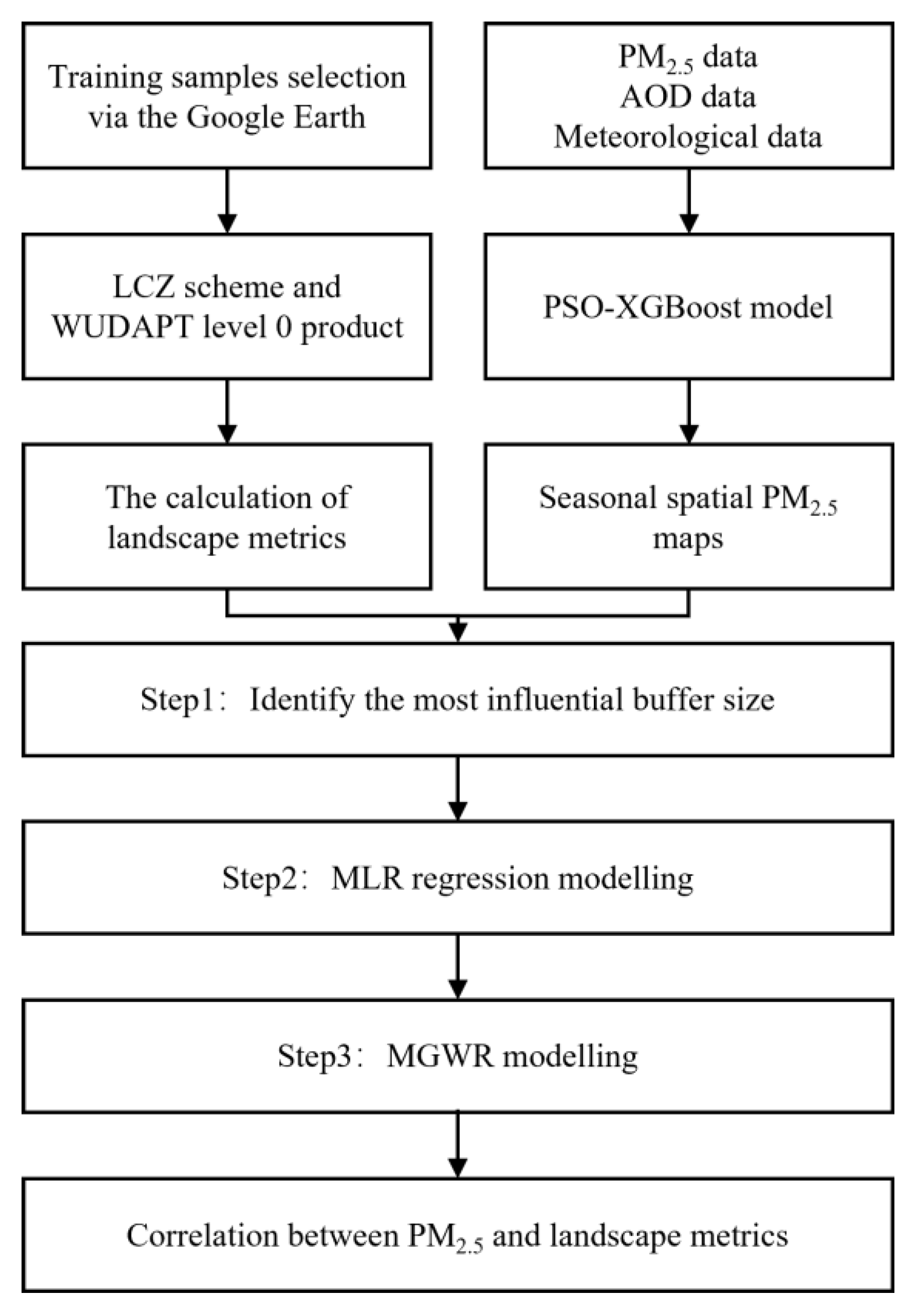
Figure 1. The main workflow of this study.
Land 15 00252 g001
Figure 2. Geographical location and corresponding air pollution monitoring stations in Shanghai.
Land 15 00252 g002
Figure 3. LCZ schematic diagram [15].
Land 15 00252 g003
Figure 4. PM2.5 maps of Shanghai in difference seasons in the year of 2022 ((a) spring; (b) summer; (c) autumn; (d) winter).
Land 15 00252 g004
Figure 5. LCZ map of Shanghai.
Land 15 00252 g005
Figure 6. Estimation of predictive variable coefficients for PM2.5 concentration MGWR model.
Land 15 00252 g006
Table 1. MLR model for PM2.5 concentration.
Predictor VariablesPredictor VariablesPredictor VariablesBetaVIFR2
Spring regression modelIntercept20.838 0.999
LCZ3_LPI_1000−0.044−0.1111.062
LCZ6_AI_5000−0.0159−0.6171.033
LCZB_LSI_30000.8030.6631.043
SHEI_30008.4150.3381.039
Summer regression modelIntercept22.953 0.999
LCZ3_LSI_5000.1950.5831.244
LCZ6_PLAND_50000.0040.0461.124
LCZ8_PLAND_5000.0070.1941.076
LCZB_LPI_30000.5450.631.119
SHEI_3000−0.739−0.1171.016
Autumn regression modeIntercept7.524 0.993
LCZ8_LSI_10002.4360.3731.029
LCZ9_PLAND_3000−0.981−0.581.038
LCZ15_LSI_5000−0.125−0.0231.111
SHEI_300030.9780.6471.101
Winter regression modelIntercept63.725--0.995
LCZ1_AI_5000−0.051−0.3721.156
LCZ3_AI_50000.2010.3551.322
LCZ4_AI_5000−0.228−0.3031.095
SHEI_3000−45.941−0.9861.274
Table 2. Summary of PM2.5 concentration MGWR model statistics.
Spring regression modelR20.804
Adj. R20.729
n32.872
AICc80.664
Predictor VariablesMeanSTDMinMedianMax
Intercept−0.0290.77−1.053−0.1182.009
LCZ3_LPI_1000−0.0070−0.008−0.007−0.007
LCZ6_AI_5000−0.070.017−0.095−0.072−0.032
LCZB_LSI_3000−0.3570.204−0.821−0.3680.09
SHEI_30000.1120.0010.110.1120.113
Summer
regression
model
R20.745
Adj. R20.562
n19.086
AICc99.240
Predictor VariablesMeanSTDMinMedianMax
Intercept−0.1020.13−0.515−0.0750.078
LCZ3_LSI_5000.3740.0340.3050.3720.447
LCZ6_PLAND_50000.0690.0010.0660.0690.071
LCZ8_PLAND_5000.2070.0010.2050.2060.209
LCZB_LPI_30000.1980.0010.1960.1980.199
SHEI_30000.2080.722−0.428−0.1062.259
Autumn regression modeR20.863
Adj. R20.774
n38.031
AICc138.652
Predictor VariablesMeanSTDMinMedianMax
Intercept−0.0390.548−0.905−0.1580.819
LCZ8_LSI_10000.0650.145−0.2470.0830.389
LCZ9_PLAND_30000.0460.0010.0440.0460.047
LCZE_LSI_50000.0190.304−0.344−0.0570.831
SHEI_30000.20900.2090.2090.21
Winter regression modelR20.804
Adj. R20.729
n32.872
AICc92.680
Predictor VariablesMeanSTDMinMedianMax
Intercept0.0130.699−1.1310.0311.683
LCZ1_AI_50000.0150.0010.0130.0150.017
LCZ3_AI_50000.0970.0010.0950.0970.098
LCZ4_AI_50000.1110.0010.110.1110.112
SHEI_3000−0.0760.001−0.078−0.076−0.074
Disclaimer/Publisher’s Note: The statements, opinions and data contained in all publications are solely those of the individual author(s) and contributor(s) and not of MDPI and/or the editor(s). MDPI and/or the editor(s) disclaim responsibility for any injury to people or property resulting from any ideas, methods, instructions or products referred to in the content.