Communication

The Root of Urban Renewal: Linking Miyawaki Afforestation to Soil Recovery

by
Andres F. Ospina Parra
1,
John Evangelista
2 and
Daniela J. Shebitz
3,*
1
Department of Earth and Environmental Science, Rutgers University, 101 Warren Street, Newark, NJ 07102, USA
2
Groundwork Elizabeth, 205 1st St., Elizabeth, NJ 07206, USA
3
Department of Environmental and Sustainability Science, Kean University, 1000 Morris Ave, Union, NJ 07083, USA
*
Author to whom correspondence should be addressed.
Land 2026, 15(1), 84; https://doi.org/10.3390/land15010084
Submission received: 19 November 2025 / Revised: 21 December 2025 / Accepted: 29 December 2025 / Published: 31 December 2025

Abstract

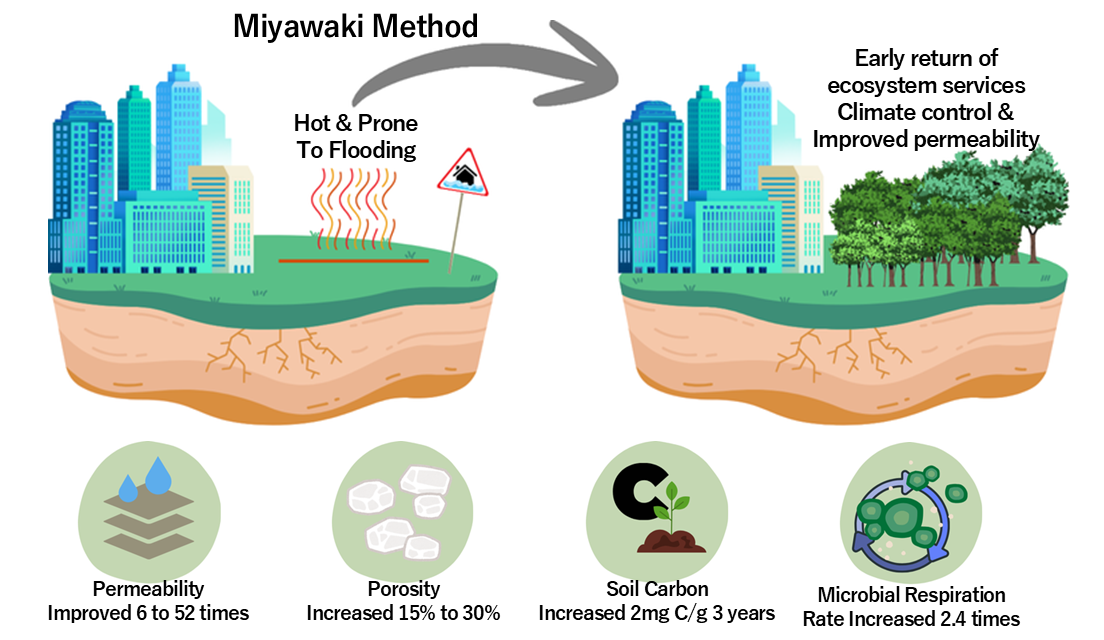
Urban areas often suffer from enduring environmental issues, including flooding, biodiversity loss, heat island effects, and air and soil pollution. The Miyawaki method of afforestation, characterized by dense planting of native species on remediated soil, has been proposed as a rapid, nature-based solution for restoring urban ecological function. This study aims to evaluate early-stage changes in soil health following Miyawaki-style microforest establishment in formerly redlined neighborhoods in Elizabeth, New Jersey. Specifically, it investigates whether this method improves soil permeability, carbon content, and microbial activity within the first three years of planting. Three microforests aged one, two, and three years were assessed using a chronosequence approach. At each site, soil samples from within the microforest and adjacent untreated urban soil (control) were compared. Analyses included physical (porosity, dry density, void ratio), chemical (total carbon), and biological (microbial respiration, biomass, metabolic rate, carbon use efficiency) assessments. Soil permeability was estimated via the Kozeny–Carman equation. Microforest soils showed significantly greater porosity (p = 0.015), higher void ratios (p = 0.009), and reduced compaction compared to controls. Soil permeability improved dramatically, with factors ranging from 5.99 to 52.27. Total carbon content increased with forest age, reaching 2.0 mg C/g in the oldest site (p < 0.001). Microbial metabolic rate rose by up to 287.5% (p = 0.009), while carbon use efficiency also improved, particularly in the older microforests. Within just one to three years, Miyawaki microforests significantly enhanced both the physical and biological properties of degraded urban soils, signaling rapid restoration of soil function and the early return of ecosystem services.

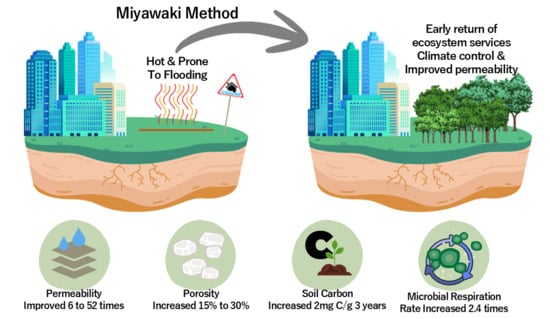
Graphical Abstract

1. Introduction

Microforests planted using the Miyawaki method are being increasingly adopted in urban areas worldwide to address local challenges such as flooding, soil erosion, biodiversity loss, urban heat island effects, and air and soil pollution [1,2,3]. This technique accelerates natural vegetation succession from bare soil to mature forest, enabling rapid ecological restoration of degraded environments [1,4]. A hallmark of the Miyawaki Method is intensive soil preparation, which is especially critical in urban areas with contaminated or compacted soils [5]. Native species are planted at high densities, up to 30 times greater than conventional methods, and can grow up to 10 times faster while sequestering carbon up to 15–30 times faster than natural forests [6]. Though small in scale, these microforests have the potential to collectively contribute to global environmental restoration [3,7].
Although first developed to convert barren sites to tropical forests in Japan in the 1970s, Akira Miywaki conceived his method as a globally adaptable restoration strategy, accommodating various soil types and climates [7,8,9]. He referred to these plantings as “environmental protection forests,” with over 280 established across Japan in the first two decades alone to restore greenery, reduce disaster risk, and promote ecological resilience [7,8]. By 1998, over 550 Miyawaki forests had been implemented in countries including Japan, China, Malaysia, Brazil, and Chile [7].
Since the early 2010s, the Miyawaki method has been increasingly adapted to temperate and arid climates [4], and for the remediation of urban soils [2]. In the United States, microforests have recently been planted in cities such as Cambridge, Massachusetts; Los Angeles, California; New York City, and on the Yakama Reservation in Washington [10]. These projects echo Miyawaki’s urgent call to “start the restoration and reconstruction of native green environments immediately” [11]. Over the past 50 years, the method has been employed in more than 3000 projects globally, consistently yielding positive environmental outcomes [5,12].
A core component of the Miyawaki method involves enhancing the upper soil layer with organic materials. Originally, this entailed amending the top 20–30 cm of soil with regionally sourced compost and leaf litter [7]. However, in highly degraded or contaminated urban soils, remediation may require the removal and replacement of up to 1 m of topsoil to establish conditions conducive to plant growth [13]. Despite growing global interest, few peer-reviewed studies have evaluated the Miyawaki method’s effects on soil properties [14], especially in the United States. In the absence of empirical data, projections such as those in the Urban Forests Company report [15] estimate carbon sequestration at 60 kg C/m2 of forest cover, with an annual flux of 0.5 kg C/m2. The report suggests that 100 m2 of Miyawaki forest may offset the annual carbon emissions of one European person. Since vegetation often takes decades to mature, early-stage shifts in soil physiochemical properties and microbial activity can serve as critical indicators of restoration success [14,16]. For instance, Ref. [14] reported significantly greater improvements in soil fertility and microbial density in Miyawaki forests in China over traditional afforestation methods.
As urbanization continues to drive the loss of green spaces globally, urban communities seek rapid, cost-effective, and low-maintenance solutions to increase vegetative cover on degraded soils [3,17] and to reduce flood susceptibility [18]. Urban Miyawaki forests can serve as effective tools for Ecosystem-based Disaster Risk Reduction (Eco-DRR) and Nature-based Solutions (NbSs) [18], offering benefits such as carbon sequestration, stormwater absorption, new habitat creation, pollution reduction, and extreme temperature mitigation [2,5]. In addition to environmental services, they offer opportunities for restorative human interaction with nature, helping to reduce stress and improve mental health in densely populated areas [19].
However, the distribution of green space remains inequitable in many cities, often reflecting the legacy of environmental racism and redlining. Redlining, government-sanctioned policies that denied financial services to predominantly nonwhite neighborhoods, continues to influence patterns of tree canopy cover and public health outcomes [20,21,22]. Formerly redlined neighborhoods have been found to have significantly lower street tree diversity and fewer mature trees, contributing to increased heat vulnerability and negative mental health impacts [21,22]. By providing targeted greening in these areas, Miyawaki forests may help address historical environmental injustices while enhancing community well-being [5].
Issues such as limited land availability, ongoing maintenance demands, economic feasibility, and public perceptions of unmanicured green spaces pose significant challenges to the widespread adoption of the Miyawaki Method, particularly in urban environments [23]. Implementing the technique often requires intensive and costly site preparation, especially in cities where soil contamination is common. Additional concerns include the risk that intense competition for light and resources may lead to high mortality rates among planted trees, as well as cautions against overemphasizing the potential of these microforests to mitigate global climate change [5]. Despite these constraints, the growing environmental burdens on cities underscore the potential of the Miyawaki approach. In the context of stormwater, air pollution, heat island effects, and persistent environmental inequities, the Miyawaki method may offer a compelling technique for rapidly restoring ecological function and resilience in urban environments.
While the benefits of mature forests are well understood, less is known about how quickly microforests begin to deliver key ecosystem services, especially in historically marginalized neighborhoods. To address this gap, this study investigates the early-stage development of three Miyawaki-style microforests planted within redlined districts in Union County, New Jersey. The goal of this paper is to use soil physical and biological characteristics as indicators of restoration progress. Specifically, we compare afforested plots with adjacent urban soils to assess whether soil permeability, microbial biomass, and respiration improve during the first years of microforest establishment. This work aims to provide insight into the speed and extent of environmental service recovery in newly planted urban Miyawaki forests.

2. Materials and Methods

2.1. Site Selection and Preparation

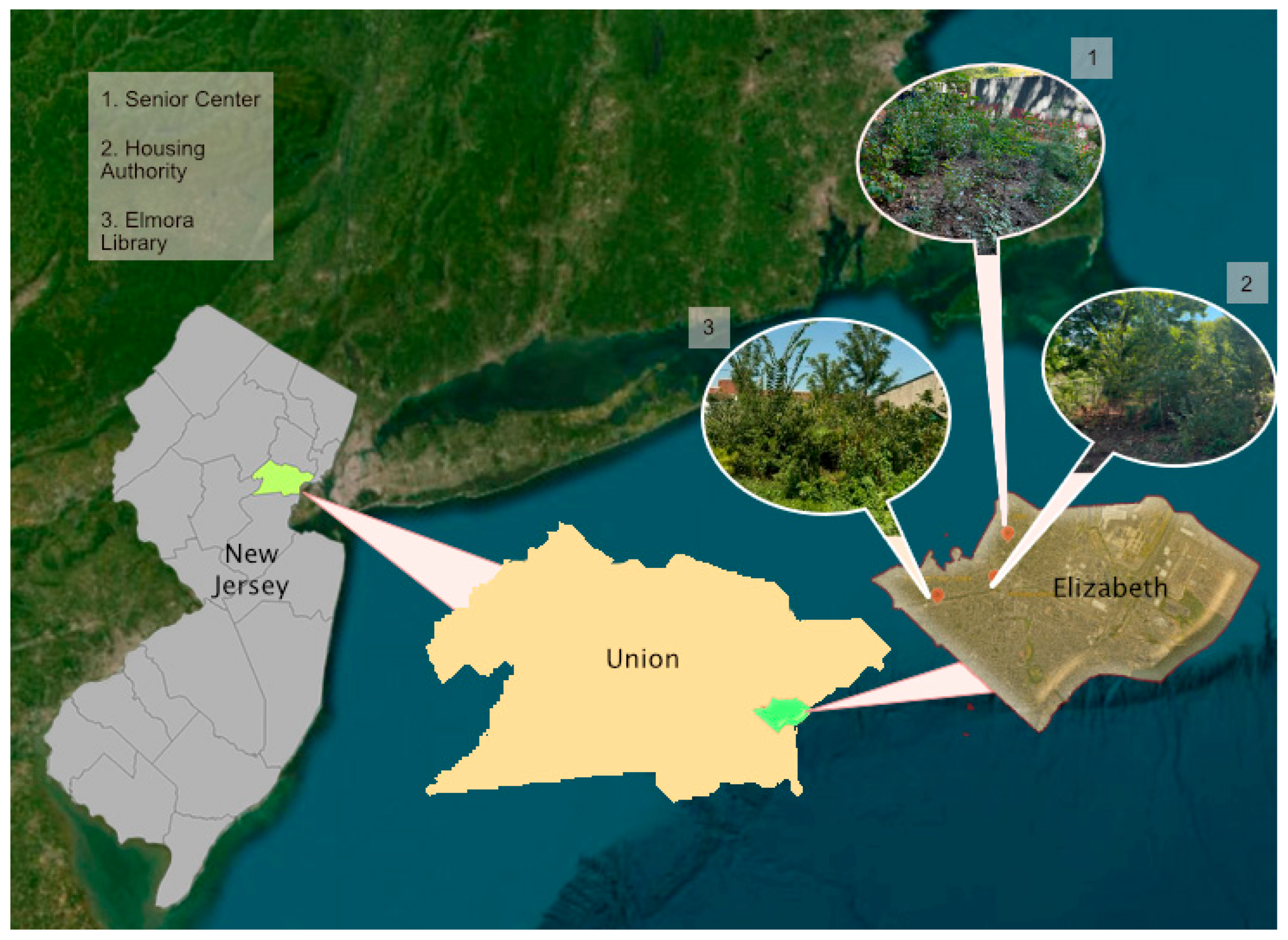
This study was conducted in Elizabeth, New Jersey (Figure 1), a rapidly growing urban center with a 2024 population of 140,143 people. Groundwork Elizabeth, a non-profit organization with two decades of experience in community-based environmental restoration, partnered with the New Jersey Conservation Foundation (NJCF) to install microforests in climate-vulnerable neighborhoods that had previously been redlined.
Three microforests using the Miyawaki Method were planted over three consecutive years: the first in 2021 on the grounds of Elizabeth’s Elmora Library (“Elmora”), the second in 2022 at a public housing authority apartment building (“Housing Authority”), and the third in 2023 near a senior center (“Senior Center”). Each planting involved community members and included soil remediation. Site preparation consisted of removing 45–60 cm of existing soil to address historic contamination. The removed soil was replaced with a mixture of peat moss, topsoil, and sand in equal volumes (1:1:1). The sand was sourced from mature forests in the New Jersey Pine Barrens. Leaf litter from local forest was mixed into the soil as a natural mulch. Trees and shrubs were installed at a density of 1–2/m2. (Table 1). This density is a little lower than the 2/m2 that [14] found to be ideal for improving soil fertility, but much higher than a typical afforestation project that has a planting density of 0.24/m2, or one plant every 2.5 m [13,14]. All species planted were native to New Jersey, aside from one Kentucky coffeetree (Gymnocladus dioicus) and Dawn redwood (Metasequoia glyptostroboides) at the Elmora site that were requested by the community (Table 2).
By establishing three sites one year apart and using consistent planting and soil preparation techniques, the study aimed to investigate the effects of time on soil development over time.

2.2. Soil Sampling

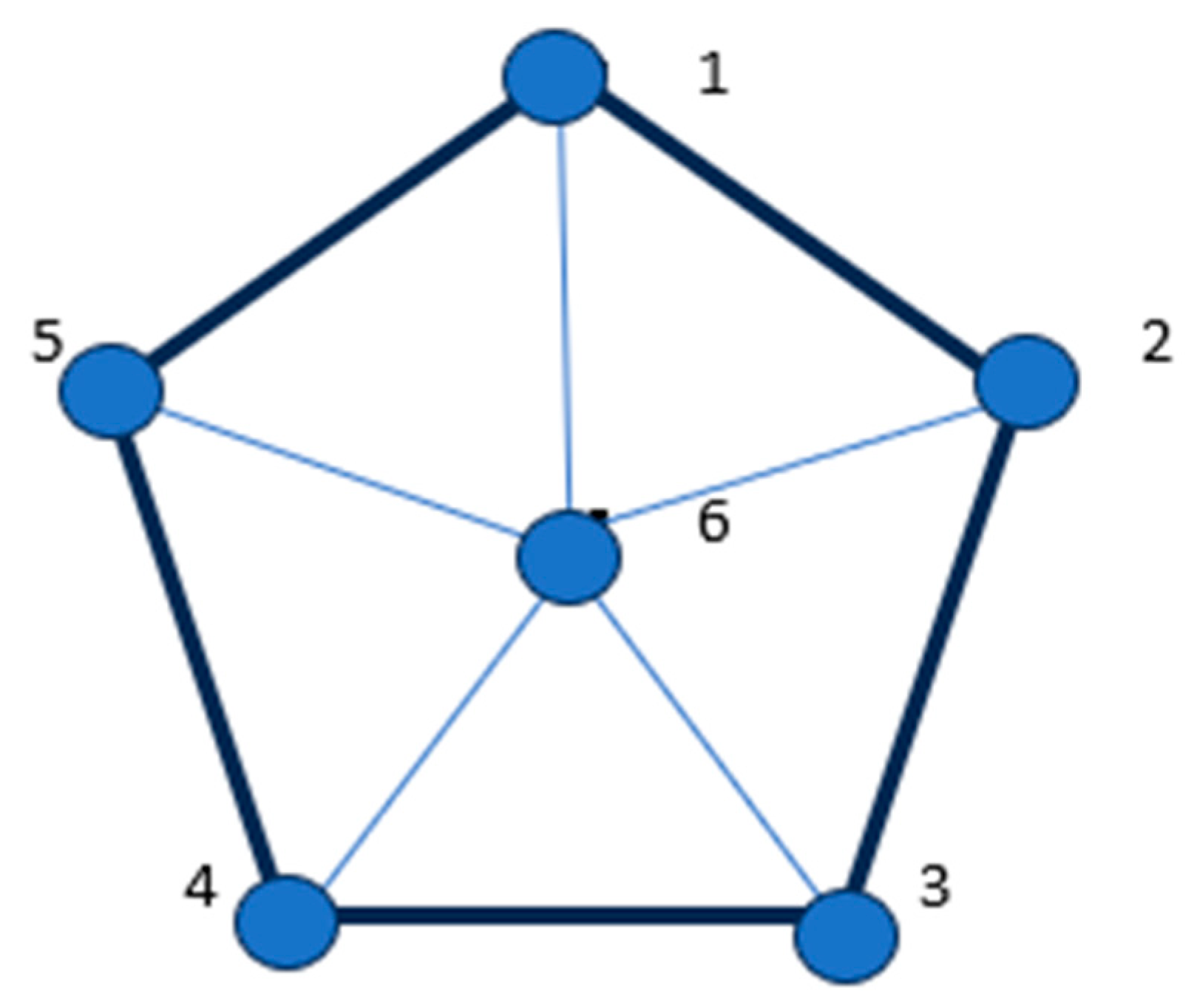
During the summer of 2024, soil samples were collected from each microforest and its corresponding control area. The control areas were undisturbed soil covered with lawn and located at least three meters away from the microforests Samples were taken to determine soil grain size and three specific analyses: microbial respiration and biomass, physical properties, and total carbon (TC). A total of twelve soil samples were collected for microbial respiration and biomass analysis: six from within each microforest and six from the adjacent control area. Within the microforests, samples were spaced at least one meter apart and collected in a pentagonal pattern, as shown in Figure 2. For all analyses, samples were collected from the top 15 cm of soil using a hand auger. They were placed in Ziplock bags and kept on ice during transport to ensure their integrity. For the assessment of the soil’s physical properties, a single composite sample was collected to represent the soil from each microforest and control site. For Total Carbon (TC) analysis, four samples were collected from each location. The data from these four samples were then combined to derive a single TC value for subsequent calculations and analysis. Soil pH was measured in four random locations in each microforest and control area using a Kelway pH meter.

2.3. Soil Porosity

The soil sample collected from the central point (#6 in Figure 2) of each microforest underwent detailed physical analysis. This included particle size distribution to determine the percentage of fines (clay and silt), hydrometer test and measurements of dry density, porosity, and hydraulic conductivity. Particle size and soil texture were analyzed following ASTM D422-63 [24] and D7928-21e1 [25] Calculations for porosity (n), dry density ( ρ d ) and void ratio (e) followed ASTM D7263-21 [26] guidelines, using the formulas:
n = (V − Vs)/Vs × 100.
ρ d = M s V
e = V v V s
where M s is the mass of solids (dry weight), V is the total volume of the specimen, V s is the volume of the solids and V v is the volume of voids.

2.4. Hydraulic Conductivity and Permeability

Hydraulic conductivity ( k ) was estimated using the Kozeny–Carman equation and adapted from [27], which relates soil permeability to particle size and porosity:
k e 3 / 1 + e d 10 2
In this equation, d 10 is the effective grain diameter and e is the void ratio. To evaluate the effect of microforest planting on soil permeability, an improvement factor was calculated by dividing the hydraulic conductivity of the forest soil by the conductivity of the corresponding control soil.

2.5. Total Carbon Analysis

Total carbon (TC) content was measured for each location creating an average of the TC measure along 4 sample replicates per soil type in each location. The samples were first sieved to remove roots and rocks, then oven-dried at 80 °C until reaching a constant weight. Each dried sample was weighed and split into three portions within ceramic boats. Carbon analysis was performed using a Shimadzu TOC-L analyzer with an SSM-5000A solid sample module at Kean University.

2.6. Soil Microbial Activity: Respiration and Biomass

Microbial activity in the soil was quantified through measurements of soil respiration and microbial biomass. A total of 6 samples per soil type in each location for a (n = 6) was tested, using twenty grams of air-dried soil placed into 250 mL glass flasks and rewetted with 5 mL of deionized water. The samples were incubated at 25 °C for 44 h. After this initial incubation, CO2 concentrations were measured using a Pasco CO2 wireless analyzer, using automatic readings every sec for 10 min. Subsequently, 50 mg of glucose was added to each sample to induce microbial respiration, and the samples were incubated for an additional four hours. CO2 measurements were then repeated after the second incubation period.
The total respired carbon and slope calculation representing the median activated respiration rate, which quantifies the overall biological activity of the microbial community were calculated using the following formulas adapted from [28]:
m c = C f C i / 10 6 P V / R T M W C 1000
C p p m   t = m t + C i
where C f is the final CO2 concentration (ppm) after incubation, C i is the initial concentration (ppm), P is the pressure in the headspace, R is the ideal gas constant, T is the incubation temperature in kelvin, V is the headspace volume (liters), M W c is the molecular weight of carbon (12 g/mol), C p p m is the concentration of CO2 in ppm as a function of time, t is the time in seconds (s), and m is the slope representing the rate of change in CO2 concentration inside the flask.

2.7. Microbial Biomass Carbon

Microbial Biomass Carbon (MBC) was calculated to assess how effectively microbes convert assimilated carbon into biomass, using the equations for Soil-induced respiration (SIR), adapting the total CO2 respired equation and [29] including glucose and the dry mass of the soil tested as a component of the equation to calculate the response of microbes to an excess source of carbon available:
S I R = m s l o p e V h M W C 3600 / R T W k g g
M B C = S I R R a t e / k c
Both median activation rate (MAR) and microbial biomass carbon ( M B C ) provide important indicators of soil health and microbial functioning. In Equations (7) and (8), S I R refers to soil-induced respiration, V h is the head volume space and K c is the empirical conversion coefficient, and W k g is the sample weight in kg.

2.8. Data Analysis

Statistical analyses were performed using Python (v3.12.11) with the SciPy library. Due to the limited sample size (n < 10), the data were non-normally distributed. Consequently, non-parametric tests were employed for all comparisons. To ensure statistical rigor and address the small sample size, exact p-values were calculated for pairwise comparisons using the Mann–Whitney U test, avoiding the asymptotic approximations typically used in standard software configurations. The Mann–Whitney U test (exact method) was applied to compare Total Carbon (TC) values, microbial biomass carbon (MBC) and activated respiration rates between microforest and control soils (n = 3).

3. Results

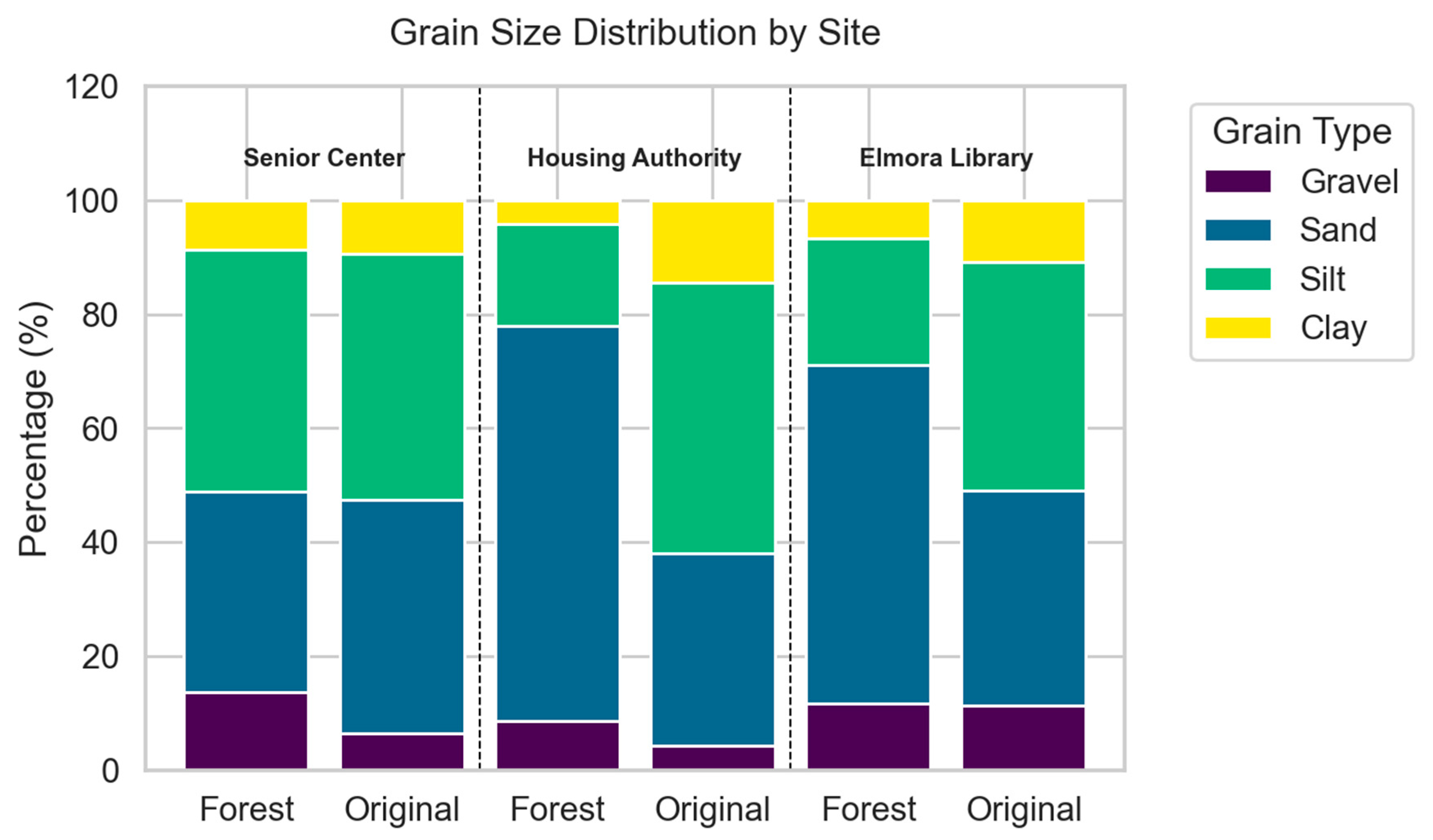
The grain size distribution analysis (Figure 3) reveals a consistent texture shift in the forest soils, with an increased percentage of sand and gravel, as well as reduced amounts of clay. This was particularly emphasized in the Housing Authority size where the soil composition increased its sand content by ~35.6%. In the Elmora Library site, we observed an increase in sand content by ~21.7% and in the Senior Center, we observed an increase in fine gravel particles of ~6%.
Soils within the microforests were less compact than those in the adjacent control areas. The microforest soil was 25.6% more porous than the adjacent controls and there was a 33.2% reduction in the dry density. The percentage improvement was 85.1 for the void ratio. (Table 3). There median soil pH in the microforests was 6.6 and in the control sites, the median pH was 6.2.
Permeability improvements in the microforests, compared to controls, varied by site. The Elmora microforest exhibited a permeability improvement factor of 13, the Housing Authority site showed a factor of 52.27, and the Senior Center site had an improvement factor of 5.99.
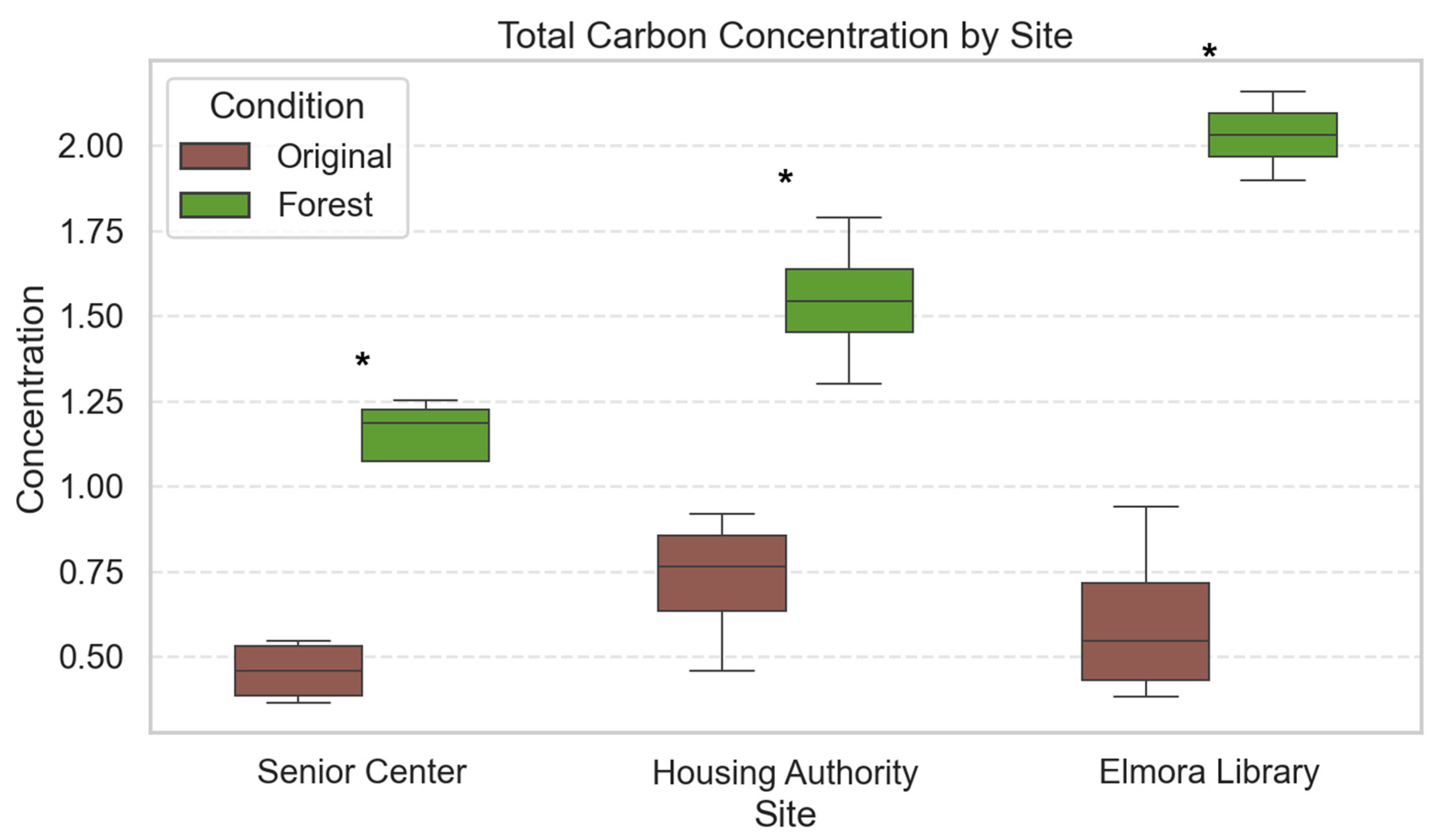
Total Carbon (TC) content was significantly higher in all microforest soils compared to controls (p = 0.0285). The oldest microforest, Elmora, had the highest TC concentration at 2.0 mg C/g soil, followed by the two-year-old Housing Authority site at 1.54 mg C/g soil, and the youngest, one-year-old Senior Center microforest at 1.11 mg C/g soil (see Figure 4).
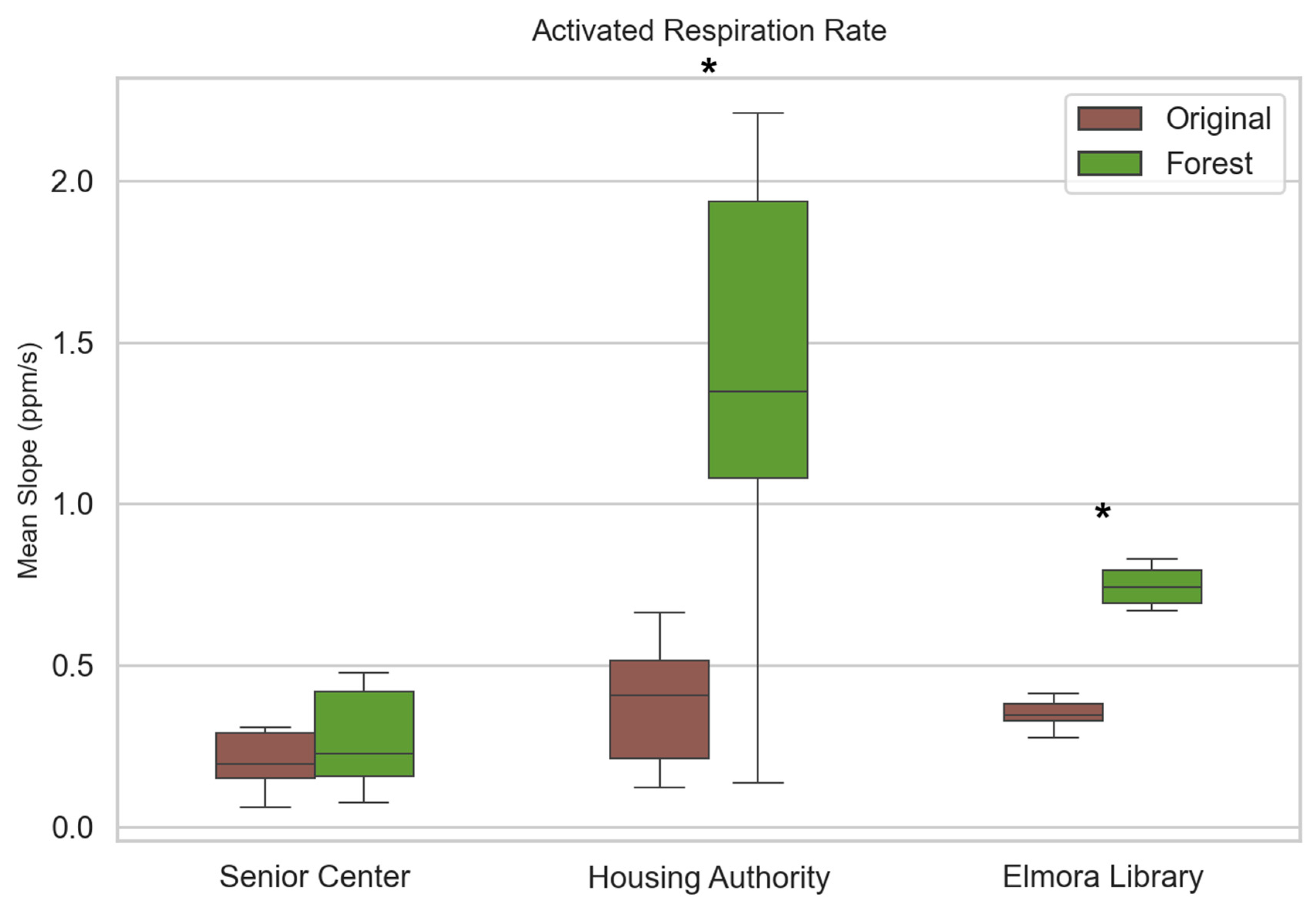
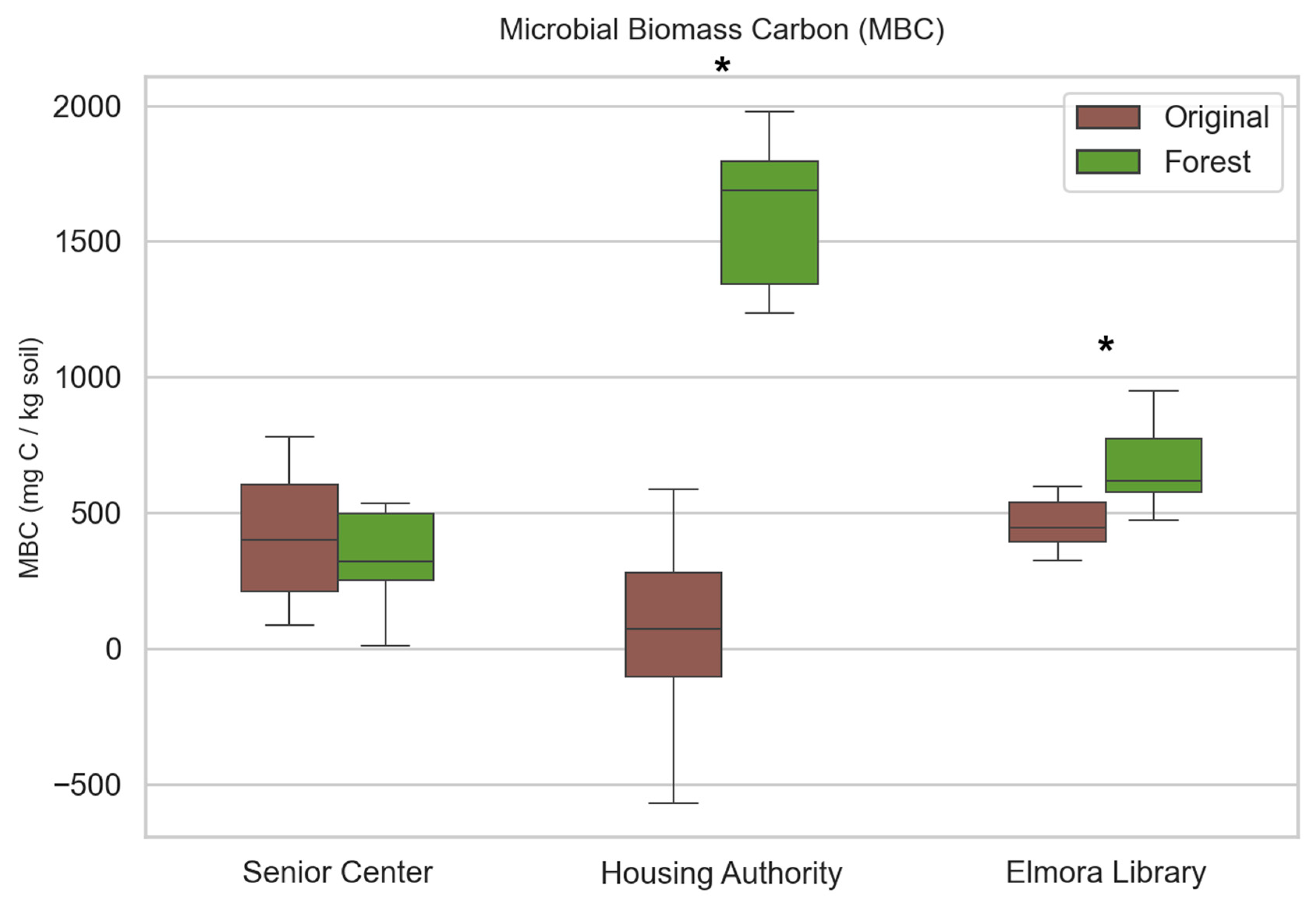
Median activated respiration rate (MAR), a measure of soil biological activity, was also significantly greater in the two older microforests (Figure 5). Elmora Library showed a 103.7% increase in MAR compared to its control (p < 0.0022), and the Housing Authority site showed an even larger 287.5% increase (p = 0.041). The youngest site exhibited a 51% increase in MAR, but this was not statistically significant (p = 0.82). Similarly, the Microbial Biomass Carbon (MBC) (Figure 6) improved with microforest age. At Elmora, MBC increased 48.62% over the control (p < 0.026) while the Housing Authority site showed an even larger increase of 2404.7% (p = 0.0086), but there was great variability in the data (Figure 5). The youngest site did not have a significant difference in MBC (p = 0.82).

4. Discussion

4.1. Rapid Improvements in Soil Structure

The shifts in porosity, dry density, void ratio and total fines in microforest soils compared to adjacent controls are consistent with the intentional soil remediation described in the Methods. These interventions, grounded in the Miyawaki method, appear to have effectively jumpstarted the development of a more porous, aerated soil structure conducive to root penetration and microbial colonization.
Elizabeth is considered to have a “major risk from flooding”, since 29.6% of all properties in Elizabeth are at risk of flooding over the next 30 years [30]. While one microforest may not yield a city-wide reduction in stormwater runoff, as more compact soil or impervious surface is converted into microforests, these small areas collectively have the potential to make significant differences. Hydraulic conductivity values revealed permeability improvement factors ranging from 5.99 (Senior Center) to 52.27 (Housing Authority) over adjacent urban soil. These values underscore the significance of Miyawaki-style soil preparation. Improved infiltration capacity is a critical function in flood-prone urban areas that experience significant stormwater runoff due to impervious surfaces and poor drainage. These findings align with previous literature citing the Miyawaki method’s utility in flood mitigation and soil rehabilitation [9].

4.2. Organic Carbon Accumulation and Soil Respiration

Our results also show a clear positive chronosequence trend in Total Carbon (TC) from all microforests to their corresponding control soils. The three-year-old Elmora site contained over three times more carbon than its adjacent control, suggesting active organic matter accumulation through plant inputs, microbial processing, and litter incorporation. These values support the contention that Miyawaki forests can act as rapid carbon sinks when designed with soil restoration in mind [31]. The replacement of the control soil with the mixture of peat moss, top soil and sand not only affected the grain size distribution, but also likely contributed to the changes observed in the soil microbial community.
Higher carbon content likely contributed to the enhanced microbial activity observed in the older microforests. Both median activated respiration (MAR) and Microbial biomass carbon (MBC) were significantly elevated in the Elmora and Housing Authority forests, indicating not only increased biological activity, but also more efficient conversion of carbon into biomass. Notably, the 2-year-old Housing Authority site exhibited the highest MAR (287.5% increase over control), despite having less total carbon than the Elmora site. This discrepancy may reflect optimal soil moisture and permeability conditions enhancing microbial respiration, as suggested by the exceptionally high permeability improvement at this site.

4.3. Early Signs of Ecological Self-Organization

While the youngest forest (Senior Center) showed improvements in total carbon and microbial respiration, these were less pronounced and statistically insignificant in the case of MAR and MBC. This suggests a lag in biological development following physical restoration, a finding consistent with soil chronosequence studies that demonstrate a time-dependent recovery of microbial communities following disturbance [32]. However, even in its first year, the Senior Center microforest exhibited significantly improved porosity and TC levels, indicating early-stage ecological assembly is underway.
Together, the physical and biological metrics measured in this study represent early signs of soil self-organization, where feedback loops between plant roots, microbial communities, and organic matter accumulation create conditions for long-term resilience. The Miyawaki method appears to accelerate this feedback cycle by providing initial structural and biological inputs that would otherwise take decades to develop naturally [3,7].

5. Conclusions

This study provides some of the first empirical evidence from the United States that Miyawaki-style microforests can rapidly improve key soil physical and biological properties within just one to three years of planting, even in highly degraded urban environments. Our findings support the hypothesis that microforest establishment enhances soil function—through improved permeability, carbon sequestration, and microbial activity—thereby accelerating ecological restoration. These early results confirm that Miyawaki microforests can deliver meaningful environmental services on short timescales and may serve as a model for equitable urban greening strategies, particularly in redlined and climate-vulnerable communities.
This work holds particular relevance for cities grappling with legacy contamination, heat vulnerability, and unequal access to green space, many of which align with historically redlined areas [21,22]. By demonstrating that ecological function can be restored within a few years through community-engaged microforest planting, our findings reinforce the potential of Miyawaki forests as tools for environmental justice. The rapid development of biologically active soils in these neighborhoods supports broader goals of climate adaptation, mental health improvement, and equitable access to ecosystem services [18,19].
While our results are promising, they are based on a limited number of sites and years. In addition, the outcome of the statistical comparisons corresponding to each site cannot be generalized for the entire microforest since the soil samples were not randomly collected and consequently, the soil data were not independent, but spatially correlated. Long-term monitoring is needed to assess whether these trends continue as the forests mature.
Future studies in these, and additional microforests that will be planted in Elizabeth will evaluate aboveground biomass, biodiversity changes, changes in soil nutrients, evapotranspiration rates, noise and pollution abatement, and temperature regulation effects to build a comprehensive picture of ecosystem service delivery. We also intend to conduct comparative studies across climate zones and urban typologies to help refine best practices for adapting the Miyawaki method globally.
There is compelling evidence that Miyawaki-style microforests, even in their infancy, can transform compacted urban soils into biologically active systems, findings that carry significant implications for restoring essential ecosystem functions in urban environments. Through targeted soil remediation, the addition of large grain-size soil particles such as sand, and dense native planting, these forests enhance carbon sequestration, microbial health, and soil permeability within a matter of years, making them valuable tools for equitable climate resilience in urban communities. As cities look for scalable nature-based solutions, this work suggests that microforests deserve serious consideration as rapid, cost-effective, and community-driven interventions.

Author Contributions

A.F.O.P. (Methodology [lead], Investigation [equal], Writing—original draft [equal]), J.E. (Funding acquisition [lead], Writing—review & editing [equal]), D.J.S. (Conceptualization [lead], Investigation [equal], Methodology [supporting], Project administration [lead], Writing—original draft [equal] and review & editing [equal]. All authors have read and agreed to the published version of the manuscript.

Funding

Funding for the microforests was received from Groundwork USA and New Jersey Conservation Foundation. The National Science Foundation LSAMP program funded student research for this project (U.S. National Science Foundation: HRD-1909824).

Data Availability Statement

The raw data supporting the conclusions of this article will be made available by the authors on request.

Acknowledgments

We acknowledge Groundwork Elizabeth and the New Jersey Conservation Foundation (especially Emile DeVito and Jay Watson) for their invaluable partnership, leadership, and dedication to community-based environmental restoration. This research would not have been possible without the support and cooperation of the City of Elizabeth. We specifically thank the Elmora Library, and the Housing Authority for graciously providing the sites for these important urban greening projects. A special thanks is also extended to the many community members and volunteers in Elizabeth whose hands-on participation brought these microforests to life. Gemini 3.0 Pro was utilized to help with the development of the Python codes used to analyze the data and assist with grammar and spelling correction during the writing of this paper. We thank Kean University for providing the laboratory facilities and technical support for the soil analysis. We are grateful to Eduardo Echegorri (RSA Geolab), and Shuting Liu and Sofia King (Kean University) for their assistance with soil analysis. Financial support for the installation of the microforests was generously provided by the New Jersey Conservation Foundation and Groundwork USA and we acknowledge their critical contributions.

Conflicts of Interest

The authors declare no conflicts of interest.

References

  1. Lewis, H. Mini-Forest Revolution: Using the Miyawaki Method to Rapidly Rewild the World; Chelsea Green Publishing: White River Junction, VT, USA, 2022. [Google Scholar]
  2. Riyas, A.F. Miyawaki Technique: Creating Mini Forests in Urban Areas; ClearIAS: Thiruvananthapuram, India, 2022; Available online: https://www.clearias.com/miyawaki-technique/ (accessed on 25 March 2023).
  3. Singh, C.; Saini, G. Sustainable Solution for Urban Environment: Miyawaki Forest. 2019. Available online: https://www.researchgate.net/publication/351372104_Sustainable_Solution_for_Urban_Environment_Miyawaki_Forest#fullTextFileContent (accessed on 20 November 2025).
  4. Schirone, B.; Salis, A.; Vessella, F. Effectiveness of the Miyawaki method in Mediterranean forest restoration programs. Landsc. Ecol. Eng. 2011, 7, 81–92. [Google Scholar] [CrossRef]
  5. Qi, H.; Dempsey, N.; Cameron, R. Seeing the forest for the trees? An exploration of the Miyawaki forest method in the UK. Arboric. J. 2024, 46, 292–304. [Google Scholar] [CrossRef]
  6. Roy, A.; Lopus, M.; Surendran, S.; Kushwaha, A.; Sreejith, K.A.; Akhila, K.C.; Anna, G.; Saranga, P.; Sethulakhsmi, N.; Jaiswal, D. Assessing carbon sequestration in urban Miyawaki forests of south India: Implications for climate mitigation planning and land suitability. Trees For. People 2025, 21, 100925. [Google Scholar] [CrossRef]
  7. Miyawaki, A. Creative ecology: Restoration of native forests by native trees. Plant Biotechnol. 1999, 16, 15–25. [Google Scholar] [CrossRef]
  8. Miyawaki, A. Native forest by native trees: Restoration of indigenous forest ecosystem. Bull. Inst. Environ. Sci. Technol. 1993, 19, 73–107. [Google Scholar]
  9. Nargi, L. The Miyawaki Method: A better way to build forests? JSTOR Daily, 24 July 2019. Available online: https://daily.jstor.org/the-miyawaki-method-a-better-way-to-build-forests/ (accessed on 20 November 2025).
  10. Buckley, C. Tiny forests with big benefits. The New York Times, 26 August 2023. Available online: https://www.nytimes.com/2023/08/24/climate/tiny-forests-climate-miyawaki.html (accessed on 30 November 2025).
  11. Miyawaki, A. Restoration of urban green environments based on the theories of vegetation ecology. Ecol. Eng. 1998, 11, 157–165. [Google Scholar] [CrossRef]
  12. Webber, S. The Miyawaki Method for Creating Forests—Creating Tomorrow’s Forests: Restoring Biodiversity by Creating Habitats and Planting Trees [WWW Document]. 2022. Available online: https://www.creatingtomorrowsforests.co.uk/blog/the-miyawaki-method-for-creating-forests (accessed on 7 August 2025).
  13. Kavana, L. Miyawaki Forest Technical Report. 2023. Available online: https://www.researchgate.net/publication/372909629_Miyawaki_Forest (accessed on 7 August 2025).
  14. Guo, X.F. Effects of different forest reconstruction methods on characteristics of understory vegetation and soil quality. Appl. Ecol. Environ. Res. 2018, 16, 7501–7517. [Google Scholar] [CrossRef]
  15. Manuel, C. The Miyawaki Method—Data & Concepts; Urban Forests Company: Chennai, India, 2020; Available online: https://urbanforest.be/wp-content/uploads/2025/01/Urban-Forests-report-The-Miyawaki-method-%E2%80%93-Data-concepts.pdf (accessed on 30 November 2025).
  16. Xu, H.; Chen, C.; Pang, Z.; Zhang, G.; Wu, J.; Kan, H. Short-term vegetation restoration enhances the complexity of soil fungal network and decreases the complexity of bacterial network. J. Fungi 2022, 8, 1122. [Google Scholar] [CrossRef] [PubMed]
  17. Sandip, R.; Sharma, P.; Modi, N.R. Development of tree plantation through Miyawaki method at Sabarmati Riverfront Development Corporation Limited: A research. Int. Assoc. Biol. Comput. Dig. 2022, 1, 163–174. [Google Scholar] [CrossRef]
  18. Viezzer, J.; Schmidt, M.A.R.; dos Reis, A.R.N.; Freiman, F.P.; de Moraes, E.N.; Biondi, D. Restoration of urban forests to reduce flood susceptibility: A starting point. Int. J. Disaster Risk Reduct. 2022, 74, 102944. [Google Scholar] [CrossRef]
  19. Ebenberger, M.; Arnberger, A. Exploring visual preferences for structural attributes of urban forest stands for restoration and heat relief. Urban For. Urban Green. 2019, 41, 272–282. [Google Scholar] [CrossRef]
  20. Burghardt, K.T.; Avolio, M.L.; Locke, D.H.; Grove, J.M.; Sonti, N.F.; Swan, C.M. Current street tree communities reflect race-based housing policy and modern attempts to remedy environmental injustice. Ecology 2023, 104, e3881. [Google Scholar] [CrossRef] [PubMed]
  21. Schinasi, L.H.; Kanungo, C.; Christman, Z.; Barber, S.; Tabb, L.; Headen, I. Associations between historical redlining and present-day heat vulnerability, housing and land cover characteristics in Philadelphia, PA. J. Urban Health 2022, 99, 134–145. [Google Scholar] [CrossRef] [PubMed]
  22. Tsai, W.; Nash, M.S.; Rosebaum, D.J.; Prince, S.E.; D’Aloisio, A.A.; Mehaffey, M.H.; Sandler, D.P.; Buckley, T.J.; Neale, A.C. Association of redlining and natural environment with depressive symptoms in women in the Sister Study. Environ. Health Perspect. 2023, 131, 107009. [Google Scholar] [CrossRef] [PubMed]
  23. Zeybek, O. Evaluating the Miyawaki afforestation technique in urban landscapes: Opportunities and challenges. ICONARP Int. J. Archit. Plan. 2025, 13, 314–315. [Google Scholar] [CrossRef]
  24. ASTM D422-63; Standard Test Method for Particle-Size Analysis of Soils. ASTM International: West Conshohocken, PA, USA, 2007.
  25. ASTM D7928-21e1; Test Method for Particle-Size Distribution (Gradation) of Fine-Grained Soils Using the Sedimentation (Hydrometer). ASTM International: West Conshohocken, PA, USA, 2021.
  26. ASTM D7263-21; Standard Test Methods for Laboratory Determination of Density and Unit Weight of Soil Specimens. ASTM International: West Conshohocken, PA, USA, 2021.
  27. Wang, J.; François, B.; Lambert, P. Equation for hydraulic conductivity estimation from particle size distribution: A dimensional analysis. Water Resour. Res. 2017, 53, 8127–8134. [Google Scholar] [CrossRef]
  28. Irving, D.; Bakhshandeh, S.; Tran, T.K.A.; McBratney, A. A cost-effective method for quantifying soil respiration. Soil Secur. 2024, 16, 1001626. [Google Scholar] [CrossRef]
  29. Ananyeva, N.D.; Susyan, E.A.; Gavrilenko, E.G. Determination of the soil microbial biomass carbon using the method of substrate-induced respiration. Eurasian Soil Sci. 2011, 44, 1215–1221. [Google Scholar] [CrossRef]
  30. First Street Foundation. High Water, High Stakes: FEMA, Flood Risk, and the NFIP [Data Set]. Zenodo. 2025. Available online: https://firststreet.org/city/elizabeth-nj/3421000_fsid/flood (accessed on 20 November 2025).
  31. Kueh, R.J.H.; Majid, N.M.; Ahmed, O.H.; Gandaseca, S. Assessment of carbon stock in chronosequence rehabilitated tropical forest stands in Malaysia. J. For. Environ. Sci. 2016, 32, 302–310. [Google Scholar] [CrossRef]
  32. Peddle, S.D.; Bissett, A.; Borrett, R.J.; Bullock, P.; Gardner, M.G.; Liddicoat, C.; Tibbett, M.; Breed, M.F.; Krauss, S.L. Soil DNA chronosequence analysis shows bacterial community re-assembly following post-mining forest rehabilitation. Restor. Ecol. 2023, 31, e13706. [Google Scholar] [CrossRef]
Figure 1. Map of microforest locations within Elizabeth (Union County, New Jersey).
Land 15 00084 g001
Figure 2. Diagram of soil sampling locations that were used for each microforest and adjacent soil site, with numbers corresponding to the samples selected at each site.
Land 15 00084 g002
Figure 3. Grain size distribution comparison between sites.
Land 15 00084 g003
Figure 4. Total carbon (TC) comparison between sites (* = statistically significant difference between microforest and control soils at α = 0.05).
Land 15 00084 g004
Figure 5. Activated metabolic rate comparisons between sites (* = statistically significant difference between microforest and control soils at α = 0.05).
Land 15 00084 g005
Figure 6. Microbial Biomass Carbon (MBC) comparisons between sites (* = statistically significant difference between microforest and control soils at α = 0.05).
Land 15 00084 g006
Table 1. Summary of the three microforests installed by Groundwork Elizabeth and used in this study.
SiteYearSizeEstimated CostTotal Plants
Installed
Tree
Species
Total Plant
Species Richness
Planting Density
Elmora Library2021100 m2$80,00010619311.06/m2
Housing Authority2022163 m2$70,000200581.23/m2
Senior Center2023153 m2$68,00017520271.14/m2
Table 2. List of plant species installed in the three microforests used in this study. (* = species whose individual canopies overlaid a soil sample location, by site).
SpeciesCommon NameGrowth FormElmora LibraryHousing AuthoritySenior Center
Acer rubrumRed mapleTree x *x
Amelanchier canadensisServiceberryShrubx
Aronia arbutifoliaRed chokeberryShrub x
Aronia melanocarpaBlack chokeberryShrub x *
Asimina trilobaPawpawTreex x
Betula lentaSweet birchTree x
Betula nigraRiver birchTree x *
Betula populifoliaGray birchTree x *
Calycanthus floridusCarolina allspice Shrub x
Calycanthus occidentalisSpice bushShrub x
Castanea dentataAmerican chestnutTreex
Ceanothus americanusNew Jersey teaShrub x
Celtis occidentalisHackberryTreex x *
Cercis canadensisEastern redbudTreex x
Clethra alnifoliaSweet pepperbushShrub x
Cornus floridaFlowering dogwoodTreexxx *
Cornus racemosaGray dogwoodTreex x
Diospyros virginianaPersimmonTreex x
Euonymus americanusStrawberry bushShrubx
Fagus grandifoliaAmerican beech Tree x
Gleditsia tricanthosHoney locustTreex
Gymnocladus dioicusKentucky coffee treeTreex
Hamamelis virginianaWitch hazelShrubx * x *
Ilex opacaAmerican hollyTreex x
Ilex verticillataWinterberry hollyShrubx
Juniperus virginianaEastern red cedarTreex
Lidera benzoinNorthern spicebushShrubx
Liriodendron tulipiferaYellow poplarTree x *x
Metasequoia glyptostroboidesDawn redwoodTreex
Myrica pensylvanicaNorthern bayberryShrubx
Nyssa sylvaticaBlack gumTreex
Photinia pyrifoliaRed chokeberryShrubx
Pinus albaWhite pineTreex
Pinus echinataShortleaf pineTree x
Pinus resinosaRed pineTreex
Platanus occidentalisAmerican sycamoreTree x
Prunus maritimaBeach plumShrubxx
Quercus albaWhite oakTree x
Quercus bicolorSwamp white oakTreex * x
Quercus coccineaScarlet oakTree x
Quercus phellosWillow oakTreex x *
Quercus montanaChestnut oakTreex x
Quercus rubraRed oakTree x *
Rhus typhinaStaghorn sumacShrub x
Rosa carolinaCarolina shrubShrub x
Sambucus canadensisCommon elderberryShrubx
Sassafras albidumSassafrasTreex x
Vaccinium corymbosumHighbush blueberryShrubx
Viburnum dentatumArrowwood viburnumShrubx
Viburnum prunifoliumBlackhaw viburnumShrubx *
Table 3. Petrophysical soil property results for the three microforests and their controls.
Elmora LibraryHousing AuthoritySenior Center
ForestControlForestControlForestControl
Porosity %72.3163.0268.4153.2472.0253.06
Dry density pcf47.0262.7953.6479.447.5179.71
Void ratio2.611.72.171.142.571.13
Total fines %28.950.92261.951.252.5
K-value1.1 × 10−58.6 × 10−71.1 × 10−52.2 × 10−73.1 × 10−65.1 × 10⁻⁷
pcf = Pounds per cubic feet, K-value = Hydraulic conductivity. [Note: These values are the result of the calculations that followed the grain size analysis, hydrometer, and density test of the central sample (#6 in Figure 2) for each soil type in all sites.].
Disclaimer/Publisher’s Note: The statements, opinions and data contained in all publications are solely those of the individual author(s) and contributor(s) and not of MDPI and/or the editor(s). MDPI and/or the editor(s) disclaim responsibility for any injury to people or property resulting from any ideas, methods, instructions or products referred to in the content.