Spatiotemporal Heterogeneity and Driving Mechanisms of Rural Resilience in a Karst River Basin: A Case Study of the Wujiang River Basin, China


Abstract
1. Introduction
2. Materials and Methods
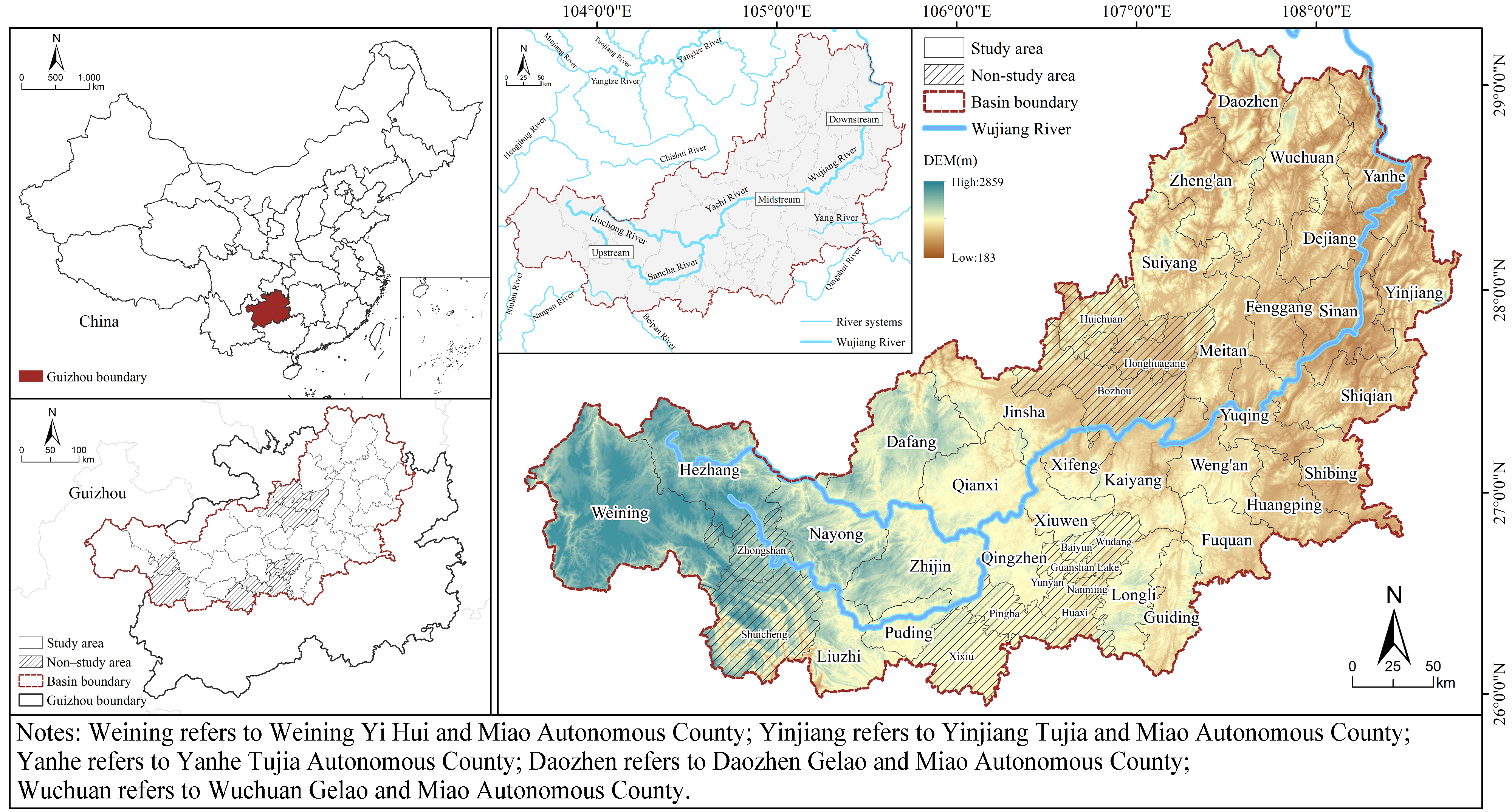
2.1. Study Area
2.2. Construction of Index System
2.2.1. Construction of an Evaluation Index System for RR
2.2.2. Preliminary Selection of the Driving Factors for RR
2.3. Data Sources and Preprocessing
- (1)
- Statistical data (2011, 2015, 2019, 2023) were collected from the Guizhou Statistical Yearbook, the China County Statistical Yearbook, municipal and prefectural statistical yearbooks, bulletins on national economic and social development statistics, and the China Forestry and Grassland Statistical Yearbook. Missing data were addressed using linear interpolation or imputation with the mean value from adjacent years.
- (2)
- Spatial and thematic data for the years 2010, 2014, 2018, and 2022: Normalized Difference Vegetation Index (NDVI) data and Land Use and Land Cover Change (LUCC) data were obtained from the Data Center for Resources and Environmental Sciences, Chinese Academy of Sciences (https://www.resdc.cn/, accessed on 15 January 2025), with a spatial resolution of 30 m. Digital Elevation Model (DEM) data, with a spatial resolution of 12.5 m, were sourced from the Geospatial Data Cloud platform (https://www.gscloud.cn/, accessed on 15 January 2025). Hydrological data were derived from the Wujiang River Basin Water Environment Protection Plan (2015–2020). Road network data were acquired from the OpenStreetMap (OSM) website (https://www.openstreetmap.org/, accessed on 15 January 2025), with a spatial resolution of 1 km. CO2 emission data at a 1 km × 1 km resolution were obtained from the Center for Global Environmental Research (CGER) (https://cger.nies.go.jp/en/, accessed on 16 January 2025). PM2.5 concentration data were provided by the Center for International Earth Science Information Network (CIESIN) at Columbia University, with a spatial resolution of 1 km. (https://ciesin.climate.columbia.edu/, accessed on 16 January 2025).
2.4. Methodology
2.4.1. Entropy Weight Method
2.4.2. Spatial Autocorrelation Analysis
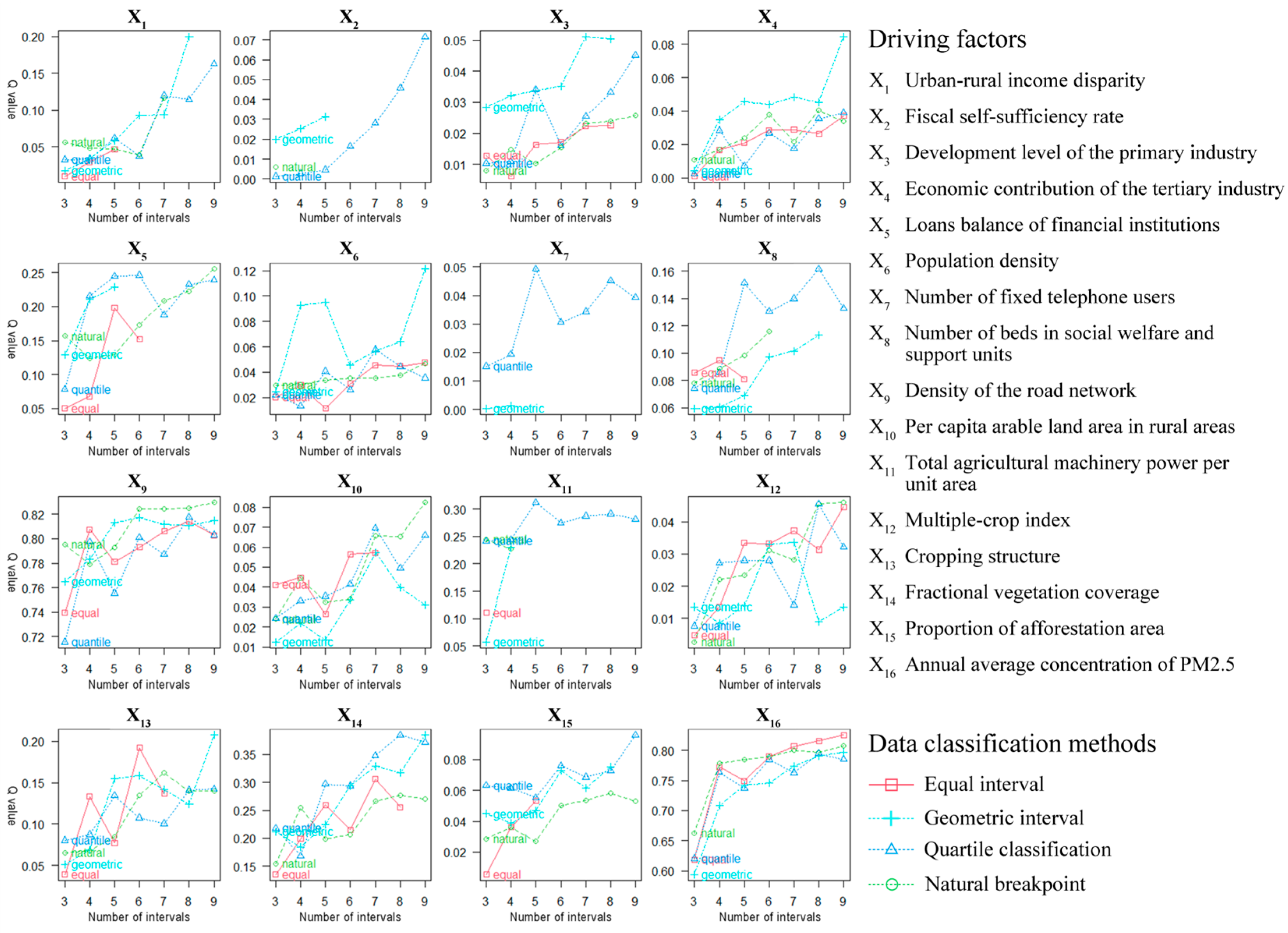
2.4.3. Optimal Parameters-Based Geographical Detector (OPGD)
2.4.4. Geographically and Temporally Weighted Regression (GTWR)
3. Results
3.1. Spatiotemporal Characteristics of the Evolution of RR
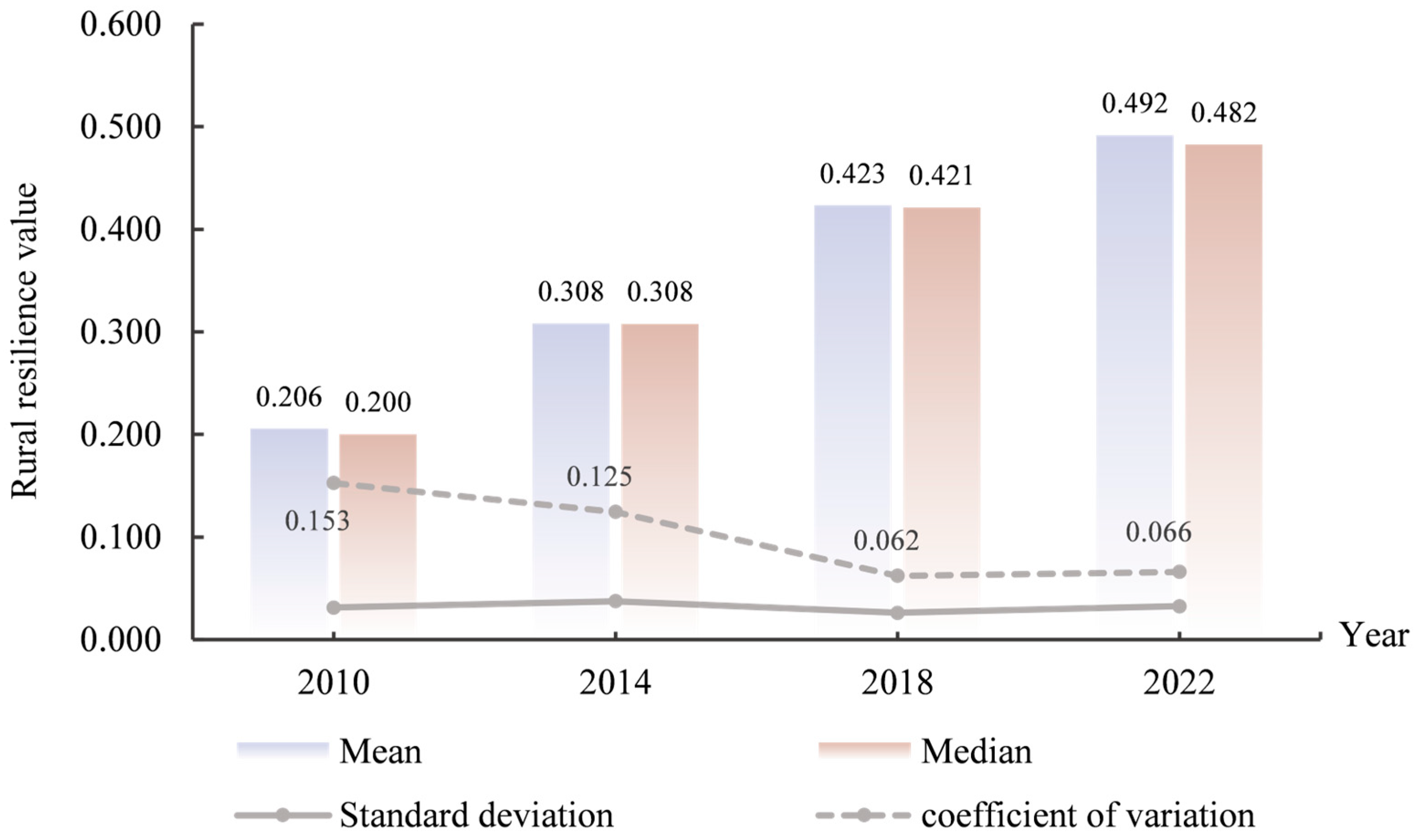
3.1.1. Temporal Characteristics of the Evolution of RR
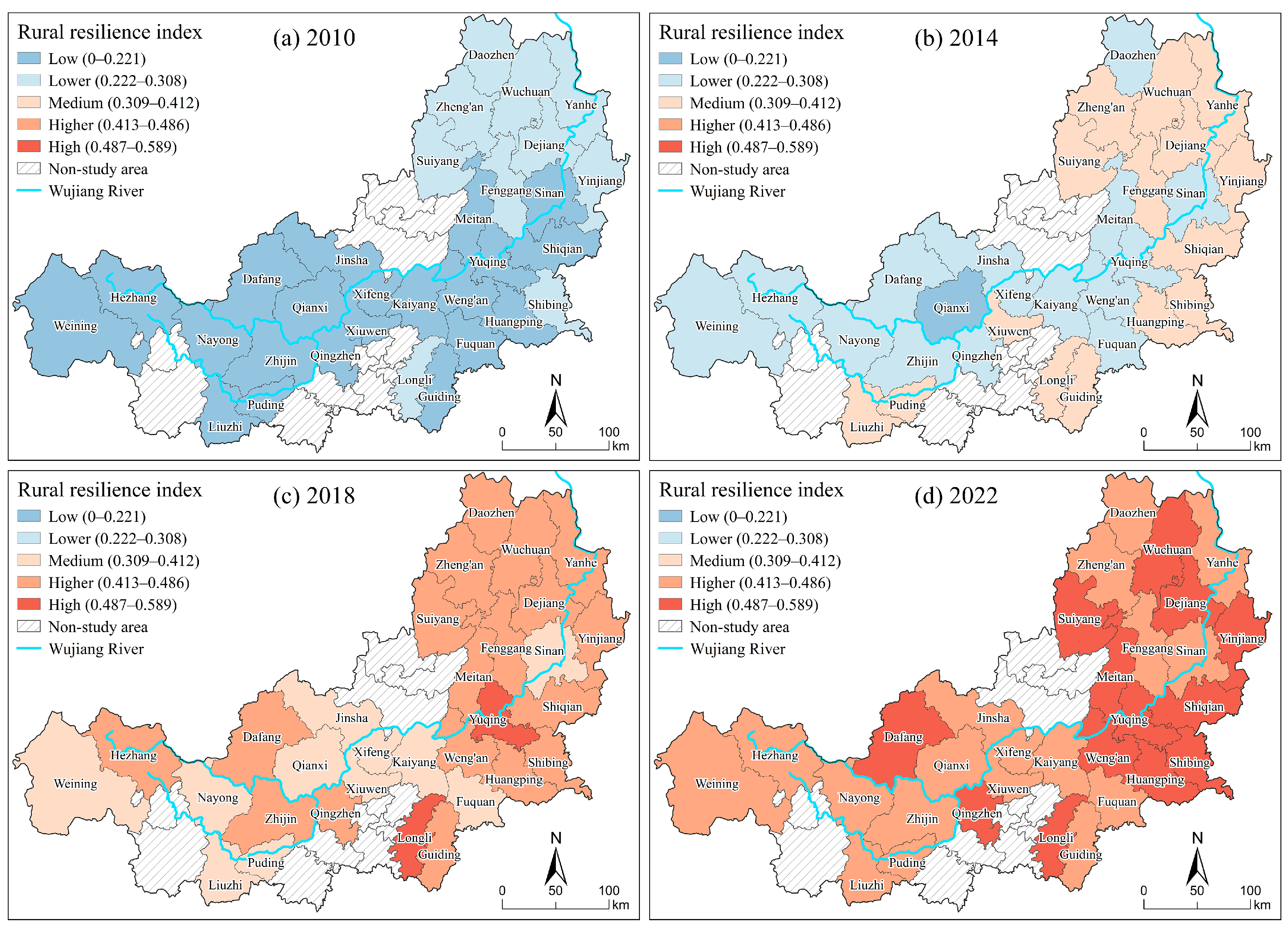
3.1.2. Spatial Characteristics of the Evolution of RR
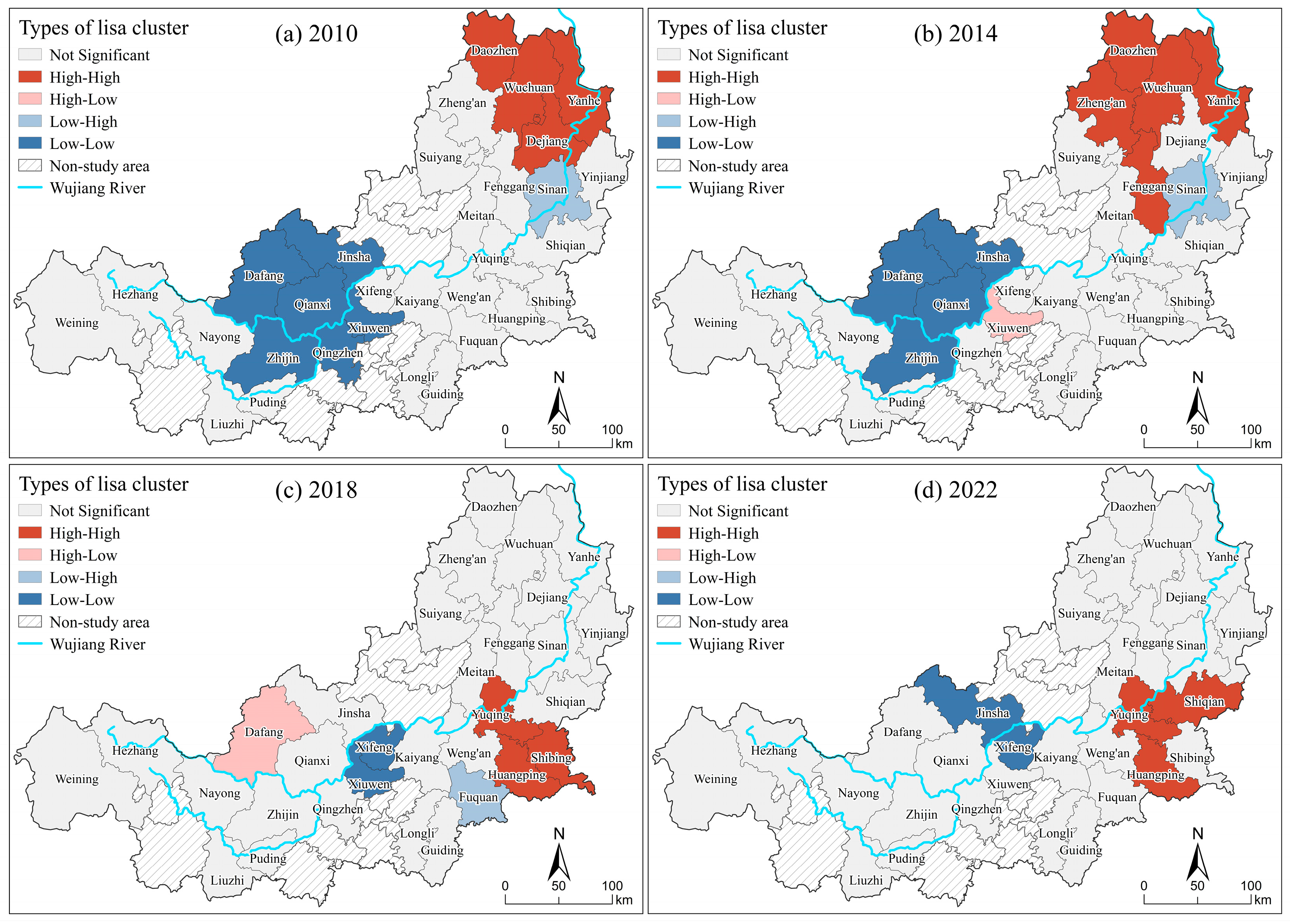
3.2. Spatial Clustering Characteristics of RR
3.3. Identification of Key Drivers and Spatiotemporal Heterogeneity of Their Mechanisms
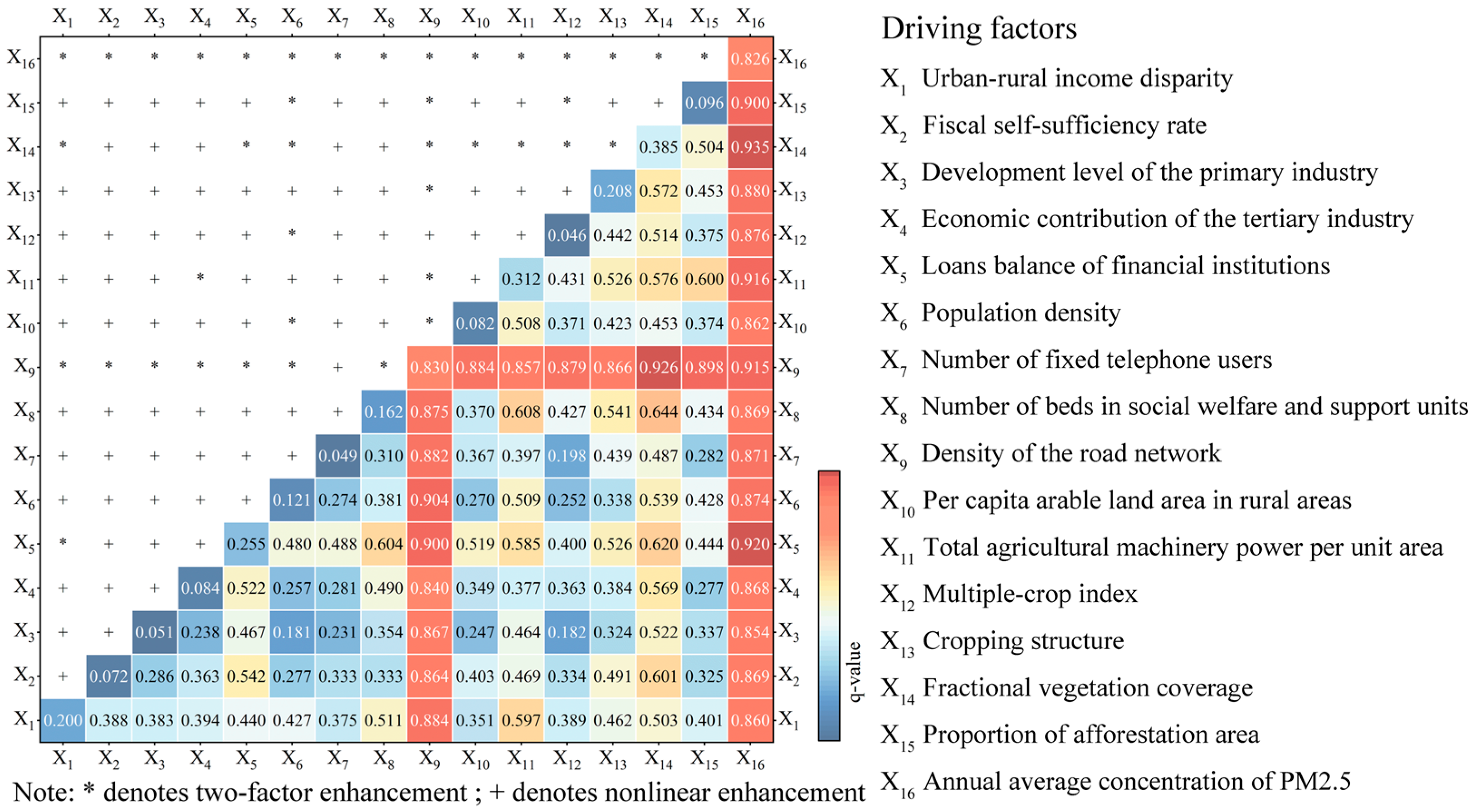
3.3.1. Identification and Interaction Effects of Key Drivers
3.3.2. Determination of Key Drivers and Regression Model Comparison
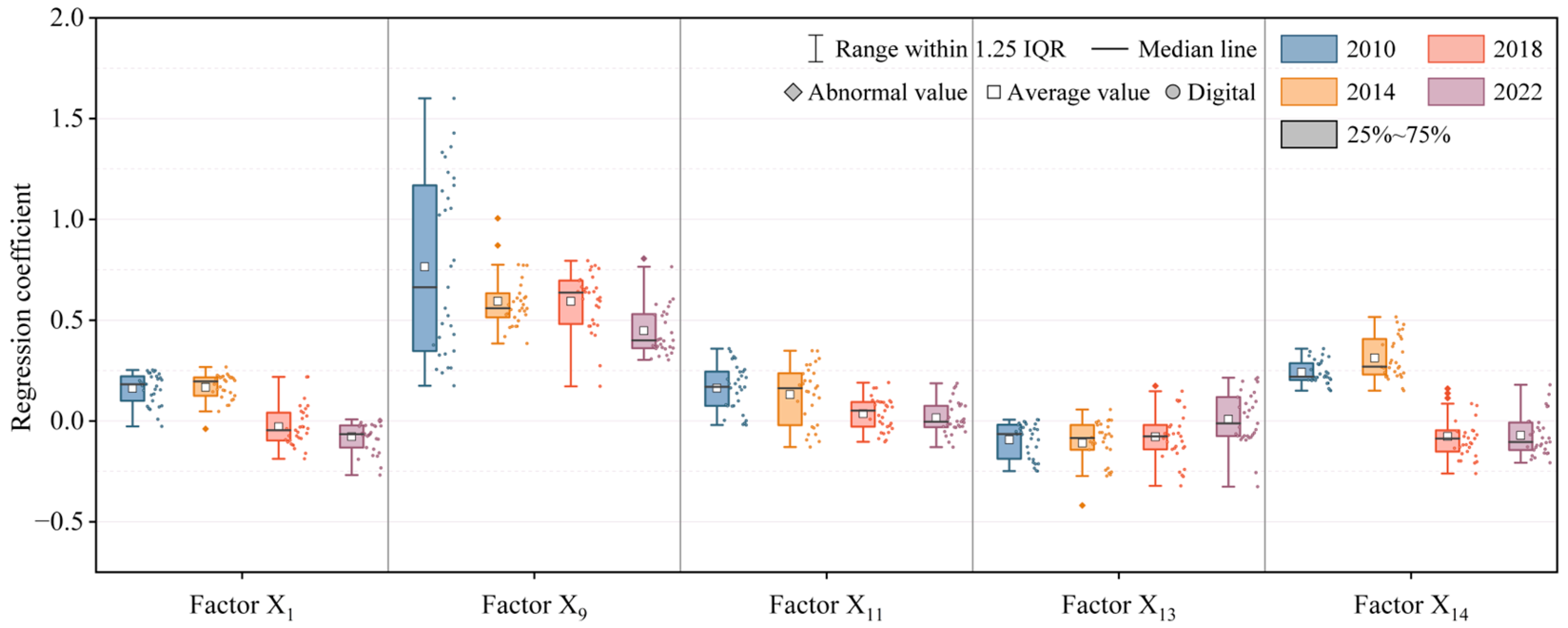
3.3.3. Temporal Evolution of Driving Mechanisms
3.3.4. Spatial Heterogeneity of Driving Mechanisms
4. Discussion
4.1. Driving Mechanisms of RR in the Wujiang River Basin
4.1.1. Temporal Non-Stationarity and Threshold Effects of Driving Mechanisms
4.1.2. Spatial Heterogeneity of Driving Mechanisms and the Role of Spatial Power
4.2. Policy Recommendations
- (1)
- Shift toward differentiated regulatory mechanisms based on ecological carrying capacity assessments. In core karst zones with severe rocky desertification and high ecological fragility, priority should be given to planting pioneer tree species that tolerate poor soils, while controlling inefficient anthropogenic disturbances. In peripheral zones with milder desertification and more concentrated farmland, focus on maintaining vegetation coverage within an optimal range This approach strengthens the ecological buffer for core zones and safeguards sustainable agricultural space.
- (2)
- Shift from single-objective optimization to multi-objective synergy, seeking systemic optima by balancing economic efficiency and ecological sustainability. In core zones, flexible ecological ranger positions could be established, they would be responsible for vegetation patrol and soil erosion control. In peripheral zones, contiguous farmland should support the scaled cultivation of specialty crops. Leveraging improved road networks, processing enterprises can meet labor needs by drawing workers from core zones.
- (3)
- Shift from end-of-pipe intervention to whole-process supervision by establishing a differentiated early-warning and response system. In core zones, focus on the dual constraints of ecological thresholds and factor outflow, tracking vegetation coverage and labor retention rates. If vegetation coverage approaches the lower threshold, a tiered emergency restoration protocol should be activated. A sustained increase in outmigration rates should trigger parallel incentives for ecological ranger positions to prevent a vicious cycle between conservation and labor loss. In peripheral zones, the road investment per unit of agricultural output should be adopted as a key monitoring indicator. An increase over two quarters should prompt a shift in infrastructure planning from expanding mileage to improving supporting facilities.
- (4)
- Strengthen regional coordination and linkage, and improve cross-regional collaborative safeguarding mechanisms. By innovating ecological compensation and horizontal fiscal transfer mechanisms, the positive externalities generated through ecological protection can be quantified scientifically and compensated fairly. This helps address imbalances in development rights caused by asymmetric functional divisions. Counties near core cities should focus on enhancing resource feedback mechanisms and strengthening industrial support and public services. Counties farther from core cities, efforts should increase their capacity to create ecological products and promote the transformation of unique local resources into innovative, sustainable development pathways.
4.3. Research Advantages and Limitations
5. Conclusions
- (1)
- From 2010 to 2022, RR levels showed a significant upward trend across the Wujiang River Basin, alongside a marked narrowing of inter-county disparities. This indicates improved regional coordination and more balanced development. Spatial autocorrelation analysis revealed a significant positive spatial dependence of RR. The observed clustering patterns underwent dynamic evolution, shaped by the combined effects of policy interventions and environmental constraints.
- (2)
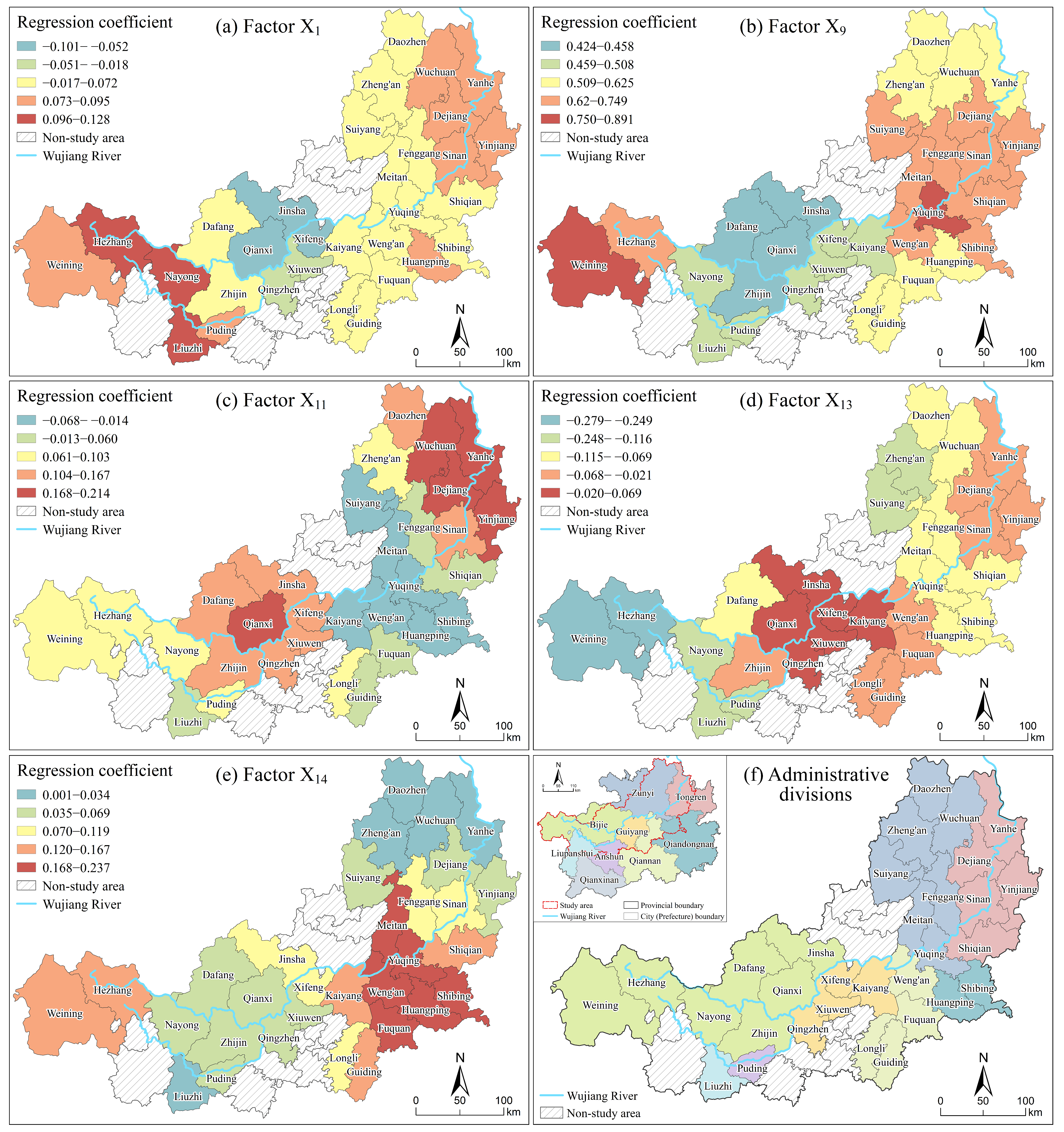
- The driving mechanisms of RR exhibited pronounced spatiotemporal non-stationarity and complex nonlinearity. Key drivers identified include the urban–rural income disparity (X1), density of the road network (X9), total agricultural machinery power per unit area (X11), cropping structure (X13), and fractional vegetation coverage (X14). The GTWR results demonstrated that the effects of these drivers are subject to significant spatiotemporal non-stationarity. Notably, the direction of influence of factors such as the urban–rural income gap and vegetation coverage has reversed over time. This shift indicates that, in ecologically fragile areas, the efficacy of interventions is constrained by ecological thresholds. Furthermore, the heterogeneity in the impacts of driving factors is closely linked to regional spatial power structures, revealing that geographic space acts not merely as a passive container for development but as an active medium shaping resilience processes.
Author Contributions
Funding
Data Availability Statement
Conflicts of Interest
Abbreviations
| KRB | Karst river basins |
| RR | Rural resilience |
| OPGD | Optimal parameters-based geographical detector |
| GTWR | Geographically temporally weighted regression |
| NDVI | Normalized difference vegetation index |
| LUCC | Land use and land cover change |
| OSM | OpenStreetMap |
| CIESIN | Center for International Earth Science Information Network |
| CGER | Center for Global Environmental Research |
| GD | Geographical Detector |
| GWR | Geographically Weighted Regression |
| OLS | Ordinary least squares |
| AICc | Akaike Information Criterion, corrected |
References
- Yu, C.; Zhou, Z.Y.; Gao, J.B. Rural Network Resilience: A New Tool for Exploring the Mechanisms and Pathways of Rural Sustainable Development. Sustainability 2024, 16, 5850. [Google Scholar] [CrossRef]
- Aruna, J.O.; Tinuola, F.; Olaseinde, S.O. Quality of Life of Rural Women and Government Intervention Programmes in Ondo State, Nigeria. Open J. Soc. Sci. 2025, 13, 307–332. [Google Scholar] [CrossRef]
- Li, Y.H.; Wu, W.H.; Wang, Y.S. Global poverty dynamics and resilience building for sustainable poverty reduction. J. Geogr. Sci. 2021, 31, 1159–1170. [Google Scholar] [CrossRef]
- Folke, C. Resilience: The emergence of a perspective for social–ecological systems analyses. Glob. Environ. Change 2006, 16, 253–267. [Google Scholar] [CrossRef]
- Cox, R.S.; Hamlen, M. Community Disaster Resilience and the Rural Resilience Index. Am. Behav. Sci. 2015, 59, 220–237. [Google Scholar] [CrossRef]
- Scott, M. Resilience: A Conceptual Lens for Rural Studies? Geogr. Compass 2013, 7, 597–610. [Google Scholar] [CrossRef]
- Dai, L.; Liu, L.; Cui, J. Assessing the Adaptability of Rural Households to Tourism from the Perspective of a Social-ecological System: A Case Study of Two Villages in Beijing Suburbs. J. Asian Archit. Build. Eng. 2018, 17, 417–424. [Google Scholar] [CrossRef]
- Liu, R.; Zhang, L.; Tang, Y.; Jiang, Y. Understanding and evaluating the resilience of rural human settlements with a social-ecological system framework: The case of Chongqing Municipality, China. Land Use Policy 2024, 136, 13. [Google Scholar] [CrossRef]
- Qu, S.; Jiang, Y.; Gao, J.; Wang, L.; Chen, Q.; Zhang, Y.; Huang, F. Revealing the Coupling Coordination of Social-Ecological System Resilience: Insights From the Southwest Karst Rural Area, China. Land Degrad. Dev. 2025, 36, 1255–1268. [Google Scholar] [CrossRef]
- Guo, X.; Kapucu, N.; Huang, J. Examining resilience of disaster response system in response to COVID-19. Int. J. Disaster Risk Reduct. 2021, 59, 17. [Google Scholar] [CrossRef]
- Scharte, B. The need for general adaptive capacity-Discussing resilience with complex adaptive systems theory. Risk Anal. 2025, 45, 1443–1452. [Google Scholar] [CrossRef]
- Shi, Y.; Zhai, G.; Xu, L.; Zhou, S.; Lu, Y.; Liu, H.; Huang, W. Assessment methods of urban system resilience: From the perspective of complex adaptive system theory. Cities 2021, 112, 13. [Google Scholar] [CrossRef]
- He, X.; Lin, Z.; Xiong, K. Using a Coupled Human-Natural System to Assess the Vulnerability of the Karst Landform Region in China. Sustainability 2015, 7, 12910–12925. [Google Scholar] [CrossRef]
- Wang, S.; Fu, B.; Zhao, W.; Liu, Y.; Wei, F. Structure, function, and dynamic mechanisms of coupled human-natural systems. Curr. Opin. Environ. Sustain. 2018, 33, 87–91. [Google Scholar] [CrossRef]
- Li, Y.H. A systematic review of rural resilience. China Agric. Econ. Rev. 2023, 15, 66–77. [Google Scholar] [CrossRef]
- Yang, M.; Jiao, M.Y.; Zhang, J.Y. Spatio-Temporal Analysis and Influencing Factors of Rural Resilience from the Perspective of Sustainable Rural Development. Int. J. Environ. Res. Public Health 2022, 19, 12294. [Google Scholar] [CrossRef]
- Quandt, A. Measuring livelihood resilience: The Household Livelihood Resilience Approach (HLRA). World Dev. 2018, 107, 253–263. [Google Scholar] [CrossRef]
- Alam, G.M.M.; Alam, K.; Mushtaq, S.; Filho, W.L. How do climate change and associated hazards impact on the resilience of riparian rural communities in Bangladesh? Policy implications for livelihood development. Environ. Sci. Policy 2018, 84, 7–18. [Google Scholar] [CrossRef]
- Salvia, R.; Quaranta, G. Adaptive Cycle as a Tool to Select Resilient Patterns of Rural Development. Sustainability 2015, 7, 11114–11138. [Google Scholar] [CrossRef]
- Arouri, M.; Nguyen, C.; Youssef, A.B. Natural Disasters, Household Welfare, and Resilience: Evidence from Rural Vietnam. World Dev. 2015, 70, 59–77. [Google Scholar] [CrossRef]
- Heath, L.C.; Tiwari, P.; Sadhukhan, B.; Tiwari, S.; Chapagain, P.; Xu, T.; Li, G.; Ailikun; Joshi, B.; Yan, J. Building climate change resilience by using a versatile toolkit for local governments and communities in rural Himalaya. Environ. Res. 2020, 188, 109636. [Google Scholar] [CrossRef]
- Ženka, J.; Pavlík, A.; Slach, O. Resilience of metropolitan, urban and rural regions: A Central European perspective. GeoScape 2017, 11, 25–40. [Google Scholar] [CrossRef]
- Anthopoulou, T.; Kaberis, N.; Petrou, M. Aspects and experiences of crisis in rural Greece. Narratives of rural resilience. J. Rural Stud. 2017, 52, 1–11. [Google Scholar] [CrossRef]
- McManus, P.; Walmsley, J.; Argent, N.; Baum, S.; Bourke, L.; Martin, J.; Pritchard, B.; Sorensen, T. Rural Community and Rural Resilience: What is important to farmers in keeping their country towns alive? J. Rural Stud. 2012, 28, 20–29. [Google Scholar] [CrossRef]
- Steiner, A.; Atterton, J. Exploring the contribution of rural enterprises to local resilience. J. Rural Stud. 2015, 40, 30–45. [Google Scholar] [CrossRef]
- Goldscheider, N.; Chen, Z.; Auler, A.S.; Bakalowicz, M.; Broda, S.; Drew, D.; Hartmann, J.; Jiang, G.H.; Moosdorf, N.; Stevanovic, Z.; et al. Global distribution of carbonate rocks and karst water resources. Hydrogeol. J. 2020, 28, 1661–1677. [Google Scholar] [CrossRef]
- Zhang, J.; Xiong, K.N.; Liu, Z.J.; He, L.X.; Zhang, N.; Gu, X.Y.; Chen, D. Exploring the synergy between Karst World Heritage site’s OUV conservation and buffer zone’s tourism industry development: A case study of the Libo-Huanjiang Karst. Herit. Sci. 2023, 11, 202. [Google Scholar] [CrossRef]
- Zhang, S.H.; Xiong, K.N.; Qin, Y.; Min, X.Y.; Xiao, J. Evolution and determinants of ecosystem services: Insights from South China karst. Ecol. Indic. 2021, 133, 108437. [Google Scholar] [CrossRef]
- Cao, W.; Yang, Q.; Liu, Y.; Liu, X.; He, H.; Yang, J.; Deng, Q.; Wang, Y. Research on Social-Ecological Resilience Assessment of Rural Settlements in Typical Mountainous Areas of Southwest China Based on the Coordination of Kernel and Peripheral Systems. Land 2025, 14, 2054. [Google Scholar] [CrossRef]
- Garmestani, A.; Allen, C.; Angeler, D.; Gunderson, L.; Ruhl, J. Multiscale adaptive management of social-ecological systems. Bioscience 2023, 73, 800–807. [Google Scholar] [CrossRef]
- Zhao, Q.; Wen, Z. Integrative networks of the complex social-ecological systems. In Proceedings of the 18th Biennial ISEM Conference on Ecological Modelling for Global Change and Coupled Human and Natural Systems, Beijing, China, 20–23 September 2011; pp. 1383–1394. [Google Scholar]
- Rudiarto, I.; Handayani, W.; Wijaya, H.; Insani, T. Rural Livelihood Resilience: An Assessment of Social, Economic, Environment, and Physical Dimensions. In Proceedings of the 5th International Conference on Sustainable Built Environment (ICSBE)-Management of Changes for Livable Environment, Banjarmasin, Indonesia, 11–13 October 2018. [Google Scholar]
- Su, F.; Luo, J.; Liu, H.; Tong, L.; Li, Y. Assessment and Promotion Strategy of Rural Resilience in Yangtze River Delta Region, China. Sustainability 2022, 14, 5382. [Google Scholar] [CrossRef]
- Tao, T.; Ma, L.; Liu, Y.; Tang, H.; Wang, X.; Wu, S. A systematic framework for rural resilience assessment in the rural Gansu Province, China. Environ. Impact Assess. Rev. 2025, 110, 16. [Google Scholar] [CrossRef]
- Wu, J.; Guo, D.; Zuo, J.; Yang, J.; Liu, S. Evolution characteristics and obstacle factors of rural resilience in Chinese minority areas in the background of rural tourism and COVID-19. Sci. Rep. 2025, 15, 16. [Google Scholar] [CrossRef]
- Zhang, Y.; Xie, X.; Qiu, X.; Jing, Z.; Yu, Y.; Wang, Y. Study on Livelihood Resilience of Rural Residents under the Rural Revitalization Strategy in Ethnic Areas of Western Sichuan, China. Agriculture 2023, 13, 1957. [Google Scholar] [CrossRef]
- Luo, W.; Lei, Y.; Zhao, Y.; Yang, W.; Du, H.; Luo, J.; Guo, X.; Tao, W.; Li, Z.; Tao, J.; et al. Patch Area and Soil Resource Availability Outweigh Heterogeneity in Shaping Karst Plant Diversity During Early Restoration. Ecol. Evol. 2025, 15, 16. [Google Scholar] [CrossRef]
- Wu, Q.; Xiao, H.; Song, S.; Li, Q.; Li, R.; Zhang, H.; Zhou, G.; Chen, H. Problems and Countermeasures of Agricultural Development in the Karst Area of Southwest China. Fresenius Environ. Bull. 2019, 28, 4247–4255. [Google Scholar]
- Li, X.; Guan, R.; Zhu, J.; Yang, Q.; Zhang, B. Scientometric insights into the human settlement environment in the karst regions: Trends, challenges, and future directions. Landsc. Ecol. Eng. 2025, 21, 947–964. [Google Scholar] [CrossRef]
- Song, S.; Qiu, M.; Li, W.; Li, Q. Development Strategy of Agriculture Product Logistic in Guizhou Province on the Transportation Network Context. In Proceedings of the 9th International Conference on Internet and Distributed Computing Systems (IDCS), Wuhan, China, 28–30 September 2016; pp. 393–404. [Google Scholar]
- Li, Y.; Yu, M.; Zhang, H.; Xie, Y. From expansion to shrinkage: Exploring the evolution and transition of karst rocky desertification in karst mountainous areas of Southwest China. Land Degrad. Dev. 2023, 34, 5662–5672. [Google Scholar] [CrossRef]
- Zhang, Y.; Xiong, K.; Chen, Y.; Bai, X. Spatiotemporal changes and driving factors of ecological vulnerability in karst World Heritage sites based on SRP and geodetector: A case study of Shibing and Libo-Huanjiang karst. npj Herit. Sci. 2025, 13, 65. [Google Scholar] [CrossRef]
- Intergovernmental Panel on Climate Change. Climate Change 2022—Impacts, Adaptation and Vulnerability: Working Group II Contribution to the Sixth Assessment Report of the Intergovernmental Panel on Climate Change; Cambridge University Press: Cambridge, UK, 2023. [Google Scholar]
- European Commission. A Long-Term Vision for the EU’s Rural Areas—Towards Stronger, Connected, Resilient and Prosperous Rural Areas by 2040. Available online: https://eur-lex.europa.eu/LexUriServ/LexUriServ.do?uri=SWD:2021:0167:FIN:EN:PDF (accessed on 3 January 2025).
- Li, H.; Liu, Y.; Zhao, R.; Zhang, X.; Zhang, Z. How Did the Risk of Poverty-Stricken Population Return to Poverty in the Karst Ecologically Fragile Areas Come into Being?-Evidence from China. Land 2022, 11, 1656. [Google Scholar] [CrossRef]
- Zhang, J.; Zhou, Z.; Chen, Q.; Zhu, C.; Ma, G. The Impact of Livelihood Sources on Relative Poverty among Households in the Karst Mountains, a case study from Huajiang demonstration area, SW China. Geogr. Tidsskr. 2022, 122, 59–72. [Google Scholar] [CrossRef]
- Li, Y.; Zhang, Z.; Liu, S.; Cao, Z.; Ke, Q.; Chen, L.; Wang, G. Long-term responses in different karst agricultural production systems to farm management and climate change: A comparative prefecture-scale study in Southwest China. Agric. Ecosyst. Environ. 2023, 352, 12. [Google Scholar] [CrossRef]
- Wang, J.; Wang, J.; Xiong, J.; Sun, M.; Ma, Y. Spatial-temporal characterization of cropland abandonment and its driving mechanisms in the Karst Plateau in Eastern Yunnan, China, 2001–2020. PLoS ONE 2024, 19, 17. [Google Scholar] [CrossRef]
- Tang, J.; Xiong, K.; Wang, Q.; Chen, Y.; Wu, Q. Village ecosystem vulnerability in karst desertification control: Evidence from South China Karst. Front. Ecol. Evol. 2023, 11, 14. [Google Scholar] [CrossRef]
- Zhao, M.J.; Liu, N.; Chen, J.L.; Wang, D.Q.; Li, P.C.; Yang, D.; Zhou, P. Navigating Post-COVID-19 Social-Spatial Inequity: Unravelling the Nexus between Community Conditions, Social Perception, and Spatial Differentiation. Land 2024, 13, 563. [Google Scholar] [CrossRef]
- Zhang, M.M.; Kafy, A.A.; Ren, B.; Zhang, Y.W.; Tan, S.K.; Li, J.X. Application of the Optimal Parameter Geographic Detector Model in the Identification of Influencing Factors of Ecological Quality in Guangzhou, China. Land 2022, 11, 1303. [Google Scholar] [CrossRef]
- Zhao, X.Y.; Tan, S.C.; Li, Y.P.; Wu, H.; Wu, R.J. Quantitative analysis of fractional vegetation cover in southern Sichuan urban agglomeration using optimal parameter geographic detector model, China. Ecol. Indic. 2024, 158, 111529. [Google Scholar] [CrossRef]
- He, Q.S.; Yan, M.; Zheng, L.Z.; Wang, B. Spatial stratified heterogeneity and driving mechanism of urban development level in China under different urban growth patterns with optimal parameter-based geographic detector model mining. Comput. Environ. Urban Syst. 2023, 105, 102023. [Google Scholar] [CrossRef]
- Hu, J.Y.; Zhang, J.X.; Li, Y.Q. Exploring the spatial and temporal driving mechanisms of landscape patterns on habitat quality in a city undergoing rapid urbanization based on GTWR and MGWR: The case of Nanjing, China. Ecol. Indic. 2022, 143, 109333. [Google Scholar] [CrossRef]
- Shi, Q.W.; Li, Z.G.; Xu, Y.; Yan, T.C.; Chen, M.M. Dynamic Scenario Simulations of Sustainable Rural and Towns Development in China: The Case of Wujiang District. Sustainability 2023, 15, 8200. [Google Scholar] [CrossRef]
- Jiang, M.; Hu, X.; Chunga, J.; Lin, Z.; Fei, R. Does the popularization of agricultural mechanization improve energy-environment performance in China’s agricultural sector? J. Clean. Prod. 2020, 276, 124210. [Google Scholar] [CrossRef]
- Yan, F.Z.; Sun, X.T.; Chen, S.S.; Dai, G.L. Does agricultural mechanization improve agricultural environmental efficiency? Front. Environ. Sci. 2024, 11, 1344903. [Google Scholar] [CrossRef]
- Zhang, H.Q. Evaluation and driving factors of resilience level of food system in three major functional zones of China. Environ. Dev. Sustain. 2024. [Google Scholar] [CrossRef]
- Cattaneo, A.; Adukia, A.; Brown, D.L.; Christiaensen, L.; Evans, D.K.; Haakenstad, A.; McMenomy, T.; Partridge, M.; Vaz, S.; Weiss, D.J. Economic and social development along the urban–rural continuum: New opportunities to inform policy. World Dev. 2022, 157, 105941. [Google Scholar] [CrossRef]
- Omofunmi, O.; Olaniyan, A. Present Status and Future Prospects of Farm Mechanization and Agricultural Machinery Industry in Nigeria. Ama-Agric. Mech. Asia Afr. Lat. Am. 2018, 49, 118–124. [Google Scholar]
- Wang, T.; Liu, H.; Wang, Z. Decomposing the Impact of Agricultural Mechanization on Agricultural Output Growth: A Case Study Based on China’s Winter Wheat. Sustainability 2025, 17, 1777. [Google Scholar] [CrossRef]
- Wang, J.; Yuan, Z.; Wu, Z.; Kuang, X.; Ye, F. Insurance policy and cropping structure adjustment toward staple grains in China: Implications for food system resilience and security. Front. Nutr. 2025, 12, 1636296. [Google Scholar] [CrossRef]
- Ayogu, M. Infrastructure and Economic Development in Africa: A Review. J. Afr. Econ. 2007, 16, 75–126. [Google Scholar] [CrossRef]
- Ke, X.; Lin, J.Y.; Fu, C.H.; Wang, Y. Transport Infrastructure Development and Economic Growth in China: Recent Evidence from Dynamic Panel System-GMM Analysis. Sustainability 2020, 12, 5618. [Google Scholar] [CrossRef]
- He, J.; Shi, X. Detection of social-ecological drivers and impact thresholds of ecological degradation and ecological restoration in the last three decades. J. Environ. Manag. 2022, 318, 115513. [Google Scholar] [CrossRef]
- Zhang, X.; Song, J.; Wang, Y.; Sun, H.; Li, Q. Threshold effects of vegetation coverage on runoff and soil loss in the Loess Plateau of China: A meta-analysis. Geoderma 2022, 412, 115720. [Google Scholar] [CrossRef]
- Chen, Y.-p.; Wang, K.-b.; Fu, B.-j.; Wang, Y.-f.; Tian, H.-w.; Wang, Y.; Zhang, Y. 65% cover is the sustainable vegetation threshold on the Loess Plateau. Environ. Sci. Ecotechnol. 2024, 22, 100442. [Google Scholar] [CrossRef]
- Liu, Y.; Li, Y. Revitalize the world’s countryside. Nature 2017, 548, 275–277. [Google Scholar] [CrossRef]
- Wu, Y.; Zhou, Y.; Liu, Y. Exploring the outflow of population from poor areas and its main influencing factors. Habitat Int. 2020, 99, 102161. [Google Scholar] [CrossRef]
- Ren, Y.-S.; Kuang, X.; Klein, T. Does the urban–rural income gap matter for rural energy poverty? Energy Policy 2024, 186, 113977. [Google Scholar] [CrossRef]
- Evans, P.; Newton, A.; Cantarello, E.; Martin, P.; Sanderson, N.; Jones, D.; Barsoum, N.; Cottrell, J.; A’Hara, S.; Fuller, L. Thresholds of biodiversity and ecosystem function in a forest ecosystem undergoing dieback. Sci. Rep. 2017, 7, 6775. [Google Scholar] [CrossRef]
- Lin, J.; Liu, S.; Wang, W.; Tian, Z.; Li, Y.; Wu, G. Integrating ecosystem services and ecological sensitivity to assess ecological restoration potential and determine thresholds in the Wujiang River Basin, southwest China. Ecol. Indic. 2025, 179, 114233. [Google Scholar] [CrossRef]
- Lwin, K.; Ota, T.; Shimizu, K.; Mizoue, N. Assessing the Importance of Tree Cover Threshold for Forest Cover Mapping Derived from Global Forest Cover in Myanmar. Forests 2019, 10, 1062. [Google Scholar] [CrossRef]
- Lyytimäki, J.; Hildén, M. Coping with Ecological Thresholds in Coastal Areas: Results from an International Expert Survey. Coast. Manag. 2011, 39, 598–612. [Google Scholar] [CrossRef]
- Wang, K.; Zhang, C.; Chen, H.; Yue, Y.; Zhang, W.; Zhang, M.; Qi, X.; Fu, Z. Karst landscapes of China: Patterns, ecosystem processes and services. Landsc. Ecol. 2019, 34, 2743–2763. [Google Scholar] [CrossRef]
- Wang, S.C.; Song, D.L.; Gao, M.M. The tight balance state and mechanism of disaster-resilient resources in karst small towns: A Chinese karst landform case study. Sci. Rep. 2025, 15, 758. [Google Scholar] [CrossRef]
- Kurikka, H.; Grillitsch, M. Resilience in the Periphery: What an Agency Perspective Can Bring to the Table. In Economic Resilience in Regions and Organisations; Wink, R., Ed.; Springer Fachmedien Wiesbaden: Wiesbaden, Germany, 2021; pp. 147–171. [Google Scholar]
- Leick, B.; Lang, T. Re-thinking non-core regions: Planning strategies and practices beyond growth. Eur. Plan. Stud. 2018, 26, 213–228. [Google Scholar] [CrossRef]
- Chen, Z.; Dong, H. Spatial and temporal evolution patterns and driving mechanisms of rural settlements: A case study of Xunwu County, Jiangxi Province, China. Sci. Rep. 2024, 14, 24342. [Google Scholar] [CrossRef]
- Van Loon, J.; Woltering, L.; Krupnik, T.J.; Baudron, F.; Boa, M.; Govaerts, B. Scaling agricultural mechanization services in smallholder farming systems: Case studies from sub-Saharan Africa, South Asia, and Latin America. Agric. Syst. 2020, 180, 102792. [Google Scholar] [CrossRef] [PubMed]
- Geng, Y.; Yang, X.; Zhang, N.; Li, J.; Yan, Y. Sustainable rural development: Differentiated paths to achieve rural revitalization with case of Western China. Sci. Rep. 2024, 14, 31507. [Google Scholar] [CrossRef] [PubMed]



| Objective Layer | Guideline Layer | Indicator Layer | Attributes | Weights |
|---|---|---|---|---|
| Rural resilience | Agricultural production | Value added of the primary industry | + | 0.097 |
| Per capita resource area in rural areas | + | 0.077 | ||
| Total agricultural machinery power per unit area | + | 0.065 | ||
| Grain production per unit area | + | 0.031 | ||
| Rural human resources | + | 0.044 | ||
| Residential living | Per capita disposable income of rural permanent residents | + | 0.103 | |
| Number of primary and secondary school students per 10,000 people | + | 0.025 | ||
| Number of beds in medical and health institutions per 10,000 people | + | 0.049 | ||
| Density of the road network | + | 0.167 | ||
| Per capita savings deposit balance of residents | + | 0.107 | ||
| Ecological environment | Carbon dioxide emissions | − | 0.019 | |
| Proportion of afforestation area | + | 0.072 | ||
| Proportion of sloping land area | − | 0.052 | ||
| Annual average concentration of PM2.5 | − | 0.069 | ||
| Fractional vegetation coverage | + | 0.022 |
| Dimensions | Driving Factor | Calculation Formula |
|---|---|---|
| Economic Development and financial support | X1 Urban-rural income disparity | Per capita disposable income of urban residents /per capita disposable income of rural residents |
| X2 Fiscal self-sufficiency rate | General budget revenue/ general budget expenditure | |
| X3 Development level of the primary industry | GDP of the primary industry/total GDP | |
| X4 Economic contribution of the tertiary industry | GDP of the tertiary industry/total GDP | |
| X5 Loans balance of financial institutions | — | |
| Social livelihoods and infrastructure | X6 Population density | Total population of the region/ total area of the region |
| X7 Number of fixed telephone users | — | |
| X8 Number of beds in social welfare and support units | — | |
| X9 Density of the road network | Total kilometers of roads/area | |
| Agricultural production conditions and efficiency | X10 Per capita arable land area in rural areas | Cultivated land area/total rural population |
| X11 Total agricultural machinery power per unit area | Total power of agricultural machinery/ area sown in crops | |
| X12 Multiple-crop index | Total sown area of crops/area of arable land | |
| X13 Cropping structure | Area sown in food crops/total area sown in crops | |
| Ecological Environment and sustainable development | X14 Fractional vegetation coverage | (NDVI − NDVIsoil)/(NDVIveg − NDVIsoil) |
| X15 Proportion of afforestation area | Current year’s afforestation area/ total area of the region | |
| X16 Annual average concentration of PM2.5 | — |
| Basis for Judgment | Types of Interaction |
|---|---|
| q(X1 ∩ X2) < Min(q(X1), q(X2)) | Nonlinear attenuation |
| Min(q(X1)), q(X2)) < q(X1 ∩ X2) < Max(q(X1), q(X2)) | Single–factor nonlinear attenuation |
| q(X1 ∩ X2) > Max(q(X1), q(X2)) | Dual–factor enhancement |
| q(X1 ∩ X2) = q(X1) + q(X2) | Independent enhancement |
| q(X1 ∩ X2) > q(X1) + q(X2) | Nonlinear enhancement |
| 2010 | 2014 | 2018 | 2022 | |
|---|---|---|---|---|
| Moran’s I | 0.288 ** | 0.423 ** | 0.310 ** | 0.316 ** |
| z-score | 2.615 | 3.907 | 2.996 | 3.074 |
| p-value | 0.009 | 0.000 | 0.003 | 0.002 |
| X1 | X2 | X3 | X4 | X5 | X6 | X7 | X8 | |
| q-value | 0.200 ** | 0.072 | 0.051 | 0.084 | 0.255 ** | 0.121 | 0.049 | 0.162 * |
| p-value | 0.003 | 0.421 | 0.471 | 0.295 | 0.001 | 0.101 | 0.220 | 0.011 |
| X9 | X10 | X11 | X12 | X13 | X14 | X15 | X16 | |
| q-value | 0.830 ** | 0.082 | 0.312 ** | 0.046 | 0.208 ** | 0.385 ** | 0.096 | 0.826 ** |
| p-value | 0.000 | 0.312 | 0.000 | 0.747 | 0.005 | 0.000 | 0.214 | 0.000 |
| Driving Factor | Correlation Test | Multicollinearity Test | |||
|---|---|---|---|---|---|
| Pearson Correlation Coefficient | Covariance Statistics Before Exclusion | Covariance Statistics After Elimination | |||
| p–Value | VIF | p–Value | VIF | ||
| X1 | 0.176 * | 0.033 * | 1.366 | 0.014 * | 1.294 |
| X5 | −0.131 | — | — | — | — |
| X8 | 0.309 ** | 0.161 | 1.337 | — | — |
| X9 | 0.891 ** | 0.000 ** | 5.141 | 0.000 ** | 1.279 |
| X11 | 0.452 ** | 0.100 | 1.504 | 0.046 * | 1.330 |
| X13 | −0.253 ** | 0.002 ** | 1.232 | 0.002 ** | 1.191 |
| X14 | 0.452 ** | 0.000 ** | 1.448 | 0.000 ** | 1.303 |
| X16 | −0.808 ** | 0.030 * | 5.489 | — | — |
| Model | R2 | Adjusted R2 | AICc | Residual Moran’s I | z-Score | p-Value |
|---|---|---|---|---|---|---|
| OLS | 0.880 | 0.875 | 103.171 | 0.0523 ** | 15.595 | 0.000 |
| GWR | 0.955 | 0.953 | 63.837 | −0.0084 | −0.074 | 0.941 |
| GTWR | 0.976 | 0.975 | 33.756 | −0.0081 | 0.019 | 0.985 |
Disclaimer/Publisher’s Note: The statements, opinions and data contained in all publications are solely those of the individual author(s) and contributor(s) and not of MDPI and/or the editor(s). MDPI and/or the editor(s) disclaim responsibility for any injury to people or property resulting from any ideas, methods, instructions or products referred to in the content. |
© 2026 by the authors. Licensee MDPI, Basel, Switzerland. This article is an open access article distributed under the terms and conditions of the Creative Commons Attribution (CC BY) license.
Share and Cite
Rong, K.; Zhao, Y.; Bao, Y.; Yu, Y. Spatiotemporal Heterogeneity and Driving Mechanisms of Rural Resilience in a Karst River Basin: A Case Study of the Wujiang River Basin, China. Land 2026, 15, 109. https://doi.org/10.3390/land15010109
Rong K, Zhao Y, Bao Y, Yu Y. Spatiotemporal Heterogeneity and Driving Mechanisms of Rural Resilience in a Karst River Basin: A Case Study of the Wujiang River Basin, China. Land. 2026; 15(1):109. https://doi.org/10.3390/land15010109
Chicago/Turabian StyleRong, Ke, Yuqi Zhao, Yiqin Bao, and Yafang Yu. 2026. "Spatiotemporal Heterogeneity and Driving Mechanisms of Rural Resilience in a Karst River Basin: A Case Study of the Wujiang River Basin, China" Land 15, no. 1: 109. https://doi.org/10.3390/land15010109
APA StyleRong, K., Zhao, Y., Bao, Y., & Yu, Y. (2026). Spatiotemporal Heterogeneity and Driving Mechanisms of Rural Resilience in a Karst River Basin: A Case Study of the Wujiang River Basin, China. Land, 15(1), 109. https://doi.org/10.3390/land15010109