1. Introduction
Environmental changes, particularly climate change, pose major challenges to vegetation worldwide. The continuous rise in global temperature entails multiple risks [
1,
2,
3]. According to recent projections, a temperature increase of approximately 1.5 °C is expected between 2021 and 2040, potentially reaching 2 °C over time [
4,
5]. In the Carpathian Basin, the situation appears even more critical [
6,
7]. Climatic factors strongly influence vegetation composition and structure; drought and water scarcity severely affect both natural ecosystems (Zhang et al., 2017) [
8] and urban environments. In addition, environmental pressures are intensifying—for instance, the risk of soil salinization is increasing. Under these conditions, natural ecosystems face severe threats, making their conservation and restoration of utmost importance.
The decline in biodiversity represents a global challenge with profound implications for sustainability [
9]. The United Nations has declared 2021–2030 the Decade on Ecosystem Restoration [
10], placing particular emphasis on the rehabilitation of degraded and endangered habitats [
11]. The loss of such habitats also leads to the disappearance or potential extinction of rare and endemic species [
12]. Several studies suggest that endemic species—including both woody [
13] and herbaceous taxa—may, in certain cases, exhibit higher adaptive capacity to climate change, enabling them to survive prolonged periods of environmental stress [
14,
15,
16,
17].
A substantial proportion of Europe’s endemic plant species—approximately 18.1%—are associated with grassland vegetation, underscoring the high ecological importance of this vegetation type [
18]. Grasslands also constitute a major component of the natural vegetation within the Eastern European steppe zone [
19]. These extremely dry habitats are of particular relevance in the context of climate change, as they are likely to expand in the near future; consequently, their conservation has become a matter of international priority [
20].
Several studies have demonstrated that certain
Festuca species exhibit remarkable resistance to environmental stresses, particularly drought and salinity.
Festuca rubra shows a pronounced tolerance to saline conditions and displays greater adaptability to saline environments compared with other grass species, such as
Poa pratensis [
21,
22].
Festuca pseudovina is often a dominant and community-forming species in saline grasslands, such as in the
Artemisio–Festucetum pseudovinae association [
23].
F. rubra can also thrive in soils with high soluble salt concentrations, further confirming its halotolerance [
21]. Maeda et al. [
22] reported that different
Festuca species can withstand varying levels of salt stress.
Festuca glauca, for instance, possesses a waxy leaf coating that helps to reduce water loss under saline conditions [
22,
24]. Fine-leaved fescues, such as
Festuca ovina and
Festuca rubra, display different degrees of salt tolerance. Research by Hanslin and Eggen [
25] indicates that even non-halophytic species are capable of germinating under saline conditions, although their sustained growth may be constrained in such environments [
26,
27]. Friell et al. demonstrated that
Festuca rubra can also be effectively utilized as a cultivated species in nutrient-poor and low-salinity environments, showing good adaptability within managed grassland ecosystems [
28,
29]. Both the leaf anatomical structure and the root system may contribute to the species’ resilience under suboptimal environmental conditions [
28,
30]. Detailed anatomical studies have also highlighted specific structural traits of
Festuca leaves that may facilitate adaptation to unfavourable environmental conditions, particularly by regulating water balance and reinforcing cell walls [
31,
32,
33,
34].
Festuca arundinacea is a broad-leaved species that exhibits strong tolerance to both salinity and drought [
35,
36]. This adaptability is largely attributed to its deep and extensive root system, which allows access to soil moisture and nutrients even under challenging environmental conditions [
36,
37]. From an economic perspective, this species is of global importance, and its high genetic variability has enabled the development of several salt-tolerant cultivars through plant breeding programs [
38,
39]. Moreover, hormonal responses—particularly the production of abscisic acid (ABA)—play a vital role in coping with drought-induced stress. Exogenous application of ABA has been shown to enhance drought tolerance in various grasses, including
Festuca species [
40].
Morphological traits and drought tolerance in Festuca species
From a morphological perspective,
Festuca species possess several traits that enhance their drought tolerance. These include narrow leaves that reduce transpirational water loss and a higher root-to-shoot ratio, which facilitates more efficient allocation of resources under water-limited conditions [
41]. Studies have shown that
Festuca rubra exhibits remarkable drought tolerance through efficient regulation of leaf water content, allowing the plant to maintain turgor pressure even at low soil moisture levels [
42]. Genetic variation among
Festuca species also contributes to differences in drought resistance. Genomic studies have focused on identifying quantitative trait loci (QTLs) associated with drought-tolerant characteristics [
43].
In addition, hybridization between
Festuca species and other turfgrasses such as
Lolium has proven promising for enhancing drought tolerance while simultaneously improving other desirable agronomic traits [
44]. Furthermore, endophytic fungi such as
Epichloë festucae, which form symbiotic associations with several
Festuca species, have been shown to increase drought tolerance by promoting root growth and improving nutrient uptake capacity [
45].
Festuca species in urban horticulture and their soil requirements
Festuca rubra, with its fine leaf texture and dense growth habit, is particularly suitable for urban environments. It adapts well to shaded areas, making it useful for parks and green spaces with variable light conditions. Moreover, its role in erosion control and in providing habitat for urban wildlife further enhances its ecological value in city landscapes [
46].
Festuca ovina thrives in well-drained soils, and its fine foliage makes it aesthetically appealing for ornamental purposes. Its drought tolerance and resilience in nutrient-poor soils make it well suited to low-maintenance urban areas such as rock gardens and green roofs [
47].
Festuca glauca, known for its striking bluish-gray foliage, is a valuable ornamental grass widely used in landscape design [
47].
Festuca brevipila is a shade-tolerant species, making it suitable for urban settings, particularly where low-mowing management is preferred. Its good establishment under limited water availability further supports its use in dry and challenging urban habitats [
46]. According to Steinegger [
48], the genus
Festuca ranks among the most popular and frequently planted ornamental grasses, together with
Miscanthus,
Pennisetum and
Panicum.
Festuca amethystina requires well-drained soils and is a light-demanding species. It tolerates warmer climates better than
Festuca ovina ‘Glauca’ [
49]. Meyer et al. [
50] described several ornamental cultivars of this species, including the bluish-green ‘Bronzeglanz’, the light-blue ‘Klose’, and the greenish-blue ‘Superba’, all reaching 30–35 cm in height and retaining decorative foliage throughout the year.
Festuca ovina ‘Glauca’ prefers soils with good permeability and performs best in cooler climates. It is recommended for half-shaded to sunny locations; however, in soils with poor drainage it requires replanting every one to two years [
49].
Festuca cinerea, native to Europe, thrives in dry, well-drained soils [
50]. Steinegger et al. [
48] and Meyer et al. [
50] also mention several taxa of ornamental relevance, including
Festuca muelleri,
F. tenuifolia,
F. mairei,
F. pseudeskia and
F. vallesiaca subsp.
glaucantha. In their study, Staub and Robbins [
51] examined hybrids between
Festuca idahoensis and
F. ovina. Their results suggest that the resulting clone could serve as a low-maintenance ornamental grass suitable for use in urban green areas within unirrigated, semi-arid regions. Among the fine-leaved species is
Festuca coxii, native to the Chatham Islands, which has been widely promoted for landscape use as an indigenous blue-leaved grass [
52]. From a soil-structure perspective, most
Festuca species grow well across a broad range of textures, from sandy loam to clay loam. The tall fescue (
Festuca arundinacea), for instance, can adapt to many soil types but achieves optimal growth in soils that combine good drainage with sufficient moisture-retention capacity [
53].
Festuca rubra and
F. ovina perform particularly well in slightly acidic soils, where nutrient availability is higher. However,
F. ovina also shows substantial tolerance to more alkaline conditions [
54].
Soil moisture availability is critical for all
Festuca species. Although certain species, such as
F. arundinacea, possess excellent drought tolerance and can withstand prolonged dry conditions, they still require a basic level of moisture, particularly during establishment [
55]. A higher organic-matter content generally benefits the growth of most
Festuca species by improving nutrient availability and enhancing water-holding capacity [
56].
Lysimeters are fundamental tools for studying plant–soil–water interactions, as they allow precise monitoring of water movement and nutrient leaching, as well as evaluation of the effects of various treatments on plant growth. The results highlight the critical role of soil type in influencing plant physiological processes and demonstrate the applicability of these concepts to fine-leaved fescues such as
Festuca rubra and
Festuca ovina [
57]. Ahmadifar et al. [
58] conducted a lysimeter-based experiment comparing different evapotranspiration models using data from two turfgrass species, including
Festuca spp. Their findings helped refine water-use coefficients under varying soil structures, such as sandy clay loam. Lysimeter studies involving
Epichloë festucae-infected
Festuca species have also revealed that microbial interactions can substantially influence the growth and development of these grasses under specific environmental conditions, as reported by Rahnama et al. [
59]. Studies focusing on the ecological role of
Festuca species—particularly in contexts such as phytoremediation—have further emphasized the utility of lysimeters in broader ecological applications. These investigations demonstrate how different substrates affect nutrient cycling and grass performance in contaminated soils [
60].
Festuca wagneri Degen, Thaisz & Flatt is an endemic species of the Pannonian Basin belonging to the
Festuca ovina aggregate [
61,
62]. Its taxonomic status had long been uncertain, and it was once considered a variant of
Festuca sulcata (
F. rupicola). The works of Penksza [
63] and Penksza and Engloner [
64] confirmed its independent species rank. The species are primarily distinguished by leaf anatomical traits. Determination keys separate the species with ring-shaped sclerenchyma (e.g.,
Festuca pallens,
Festuca vaginata) from taxa with bundled sclerenchyma. This applies to the species of the
Festuca rupicola complex (
F. rupicola,
F. pseudovina,
F. valesiaca), which mainly differ in size [
65,
66,
67]. Horánszky [
68,
69] distinguished the transitional taxa, where both ring-shaped and bundled sclerenchyma may occur;
Festuca wagneri also belongs to this group.
Objectives, Hypotheses, and Research Questions
The aim of this study was to examine different media and soils. The species used was
Festuca wagneri [
63,
64], which is native to the sandy areas of the Carpathian Basin and tolerates dry conditions well [
6,
7]. Its broad ecological adaptability made it potentially suitable for withstanding these experimental conditions. It can be used not only in urban environments [
62] but also in the present experiment.
The main research questions were as follows:
How does Festuca wagneri develop under drought conditions and limited water availability?
Among the three tested soil types, which provides the most favorable conditions for the species’ growth and development, and are there significant differences between them?
Our hypothesis was that soil type and soil water supply fundamentally influence plant growth and biomass production, as the Festuca species studied tolerates drought well.
2. Materials and Methods
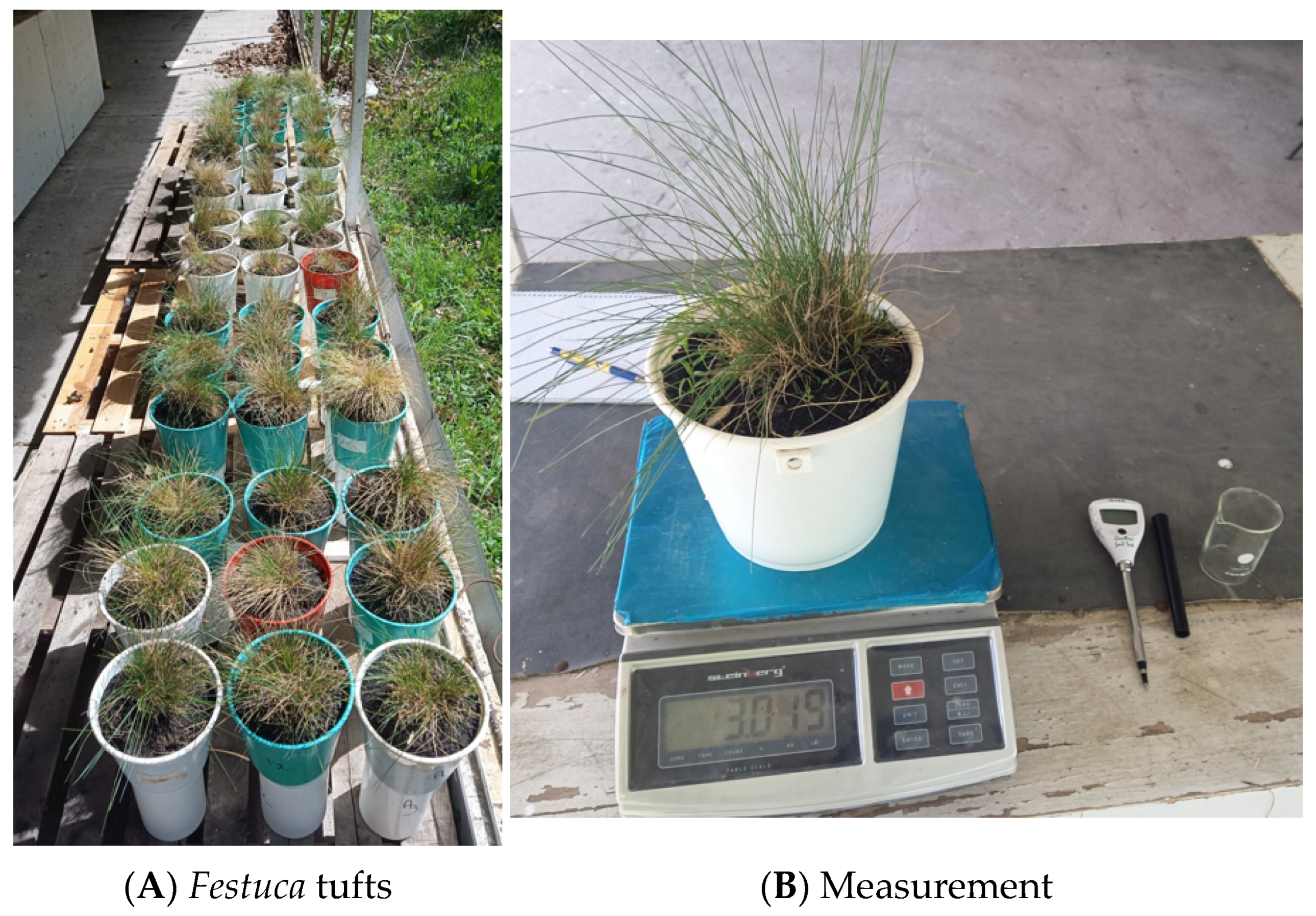
The experiment was established at the National Research Centre for Climate and Regional Land Management, located at Karcag on 4 April 2024. The experimental pots were filled with soils of three different textures: sand, loam, and clay. Three irrigation levels with single watering doses of 200, 300, and 400 mL per pot were applied. The irrigation levels and frequencies were determined to maintain approximately 30–50%, 50–70%, and 70–100% of the field capacity of each soil texture. The number of replications was 3; hence, 27 pots were involved in this experiment. The study continued until 18 July 2024, covering the full vegetation period typical for
Festuca species (
Figure 1).
Each pot was perforated at the bottom with three drainage holes, 2 mm in diameter, which were covered with a double layer of gauze to prevent soil loss but ensure deep percolation (leaching). Every pot was filled with 800 g of finely granular, air-dried soil sieved through a 0.5 mm mesh. The pots were put on another (lower) pot to collect the drainage water (leachate), which appeared when the soil water content exceeded the field capacity. The Festuca plants were planted into these soils. The weight of the pots was measured (Steinberg SBS-TW-30C, Steinberg Systems, Berlin, Germany) 6 times during the experimental period (11 and 19 April, 3 and 31 May, 9 and 18 July, respectively). The frequency of weighing occasions was not even as we endeavored to reveal the most characteristic differences among the treatments. The weight measurement dates were determined according to the appearance of leachate that was monitored on a daily basis. On the day when no leachate was found in the lower pots with the highest irrigation level, the soil moisture status was considered reaching its minimum in the highest field capacity range (70%), and all the pots were weighed and then irrigated. This way, the pots functioned as small weighing lysimeters. In the short term, the change in the weight of a lysimeter (pot) refers to the soil water balance. In our case, a simplified water equation was applicable: the soil water balance was the sum of the input (only irrigation, as natural precipitation was excluded) and the outputs (evapotranspiration and leachate). The differences in the soil water balance refer to the differences in the soil water regime determined by the soil texture (water-holding capacity) and irrigation level. Within the same water regime, differences in the pot weight refer to the differences in plant growth. During the experiment, plants were irrigated 18 times between 4 April and 18 July, the total amount of water applied over the entire period was 3.6, 5.4, and 7.2 L per pot, respectively. Considering the surface area (200 cm2) of the pots, these values corresponded to precipitation equivalents of 180, 270, and 360 mm. The volume and electrical conductivity of the leachate were also measured.
The species used in this study was
Festuca wagneri [
63,
64], which is native to the sandy lowlands of the Carpathian Basin and is well adapted to dry conditions [
6,
7,
70,
71]. Owing to its broad ecological tolerance, the species is suitable for use in urban environments [
64], and in the present experiment it served as a model organism for comparing the behaviour of the three different soil types.
Experimental plants were collected from natural populations near Kunpeszér, in the central Kiskunság region of the Carpathian Basin. Each pot was planted with a single mature Festuca tuft, excavated as a monolith including its surrounding soil, weighing approximately 2000 g. The tufts were transported intact and transplanted into pots of uniform size.
Planting took place on 11 April. Prior to planting, the roots were gently washed, and each plant was placed into standardized pots filled with one of the three soil types (sand, loam, or clay) up to a total mass of 3000 g per pot [
72]. At planting, all
Festuca individuals were weighed, and in ten randomly selected specimens, the root and shoot parts were separated and measured individually.
Sandy soils consist of the largest mineral particles, which promote rapid drainage, low water-holding capacity, and faster warming of the soil. Owing to their low colloid content, they exhibit limited cation exchange capacity and, consequently, poor overall fertility. Its values: pH: 7.41–7.44; CaCO3%: 4.14–4.92; humus%: 1.25–2.23.
Loam texture represents a balanced mixture of sand-, silt-, and clay-sized particles. Its higher proportion of soil colloids contributes to greater fertility, improved water infiltration and drainage, and enhanced resilience to drought. Its values: pH: 6.45–6.46; CaCO3%: 1.04; humus%: 2.97–3.73.
Clay soils contain the smallest particles, resulting in high water-retention capacity and restricted drainage. These properties make clay soils susceptible to waterlogging, structural compaction, and slow aeration. Its values: pH: 7.22–7.39; CaCO
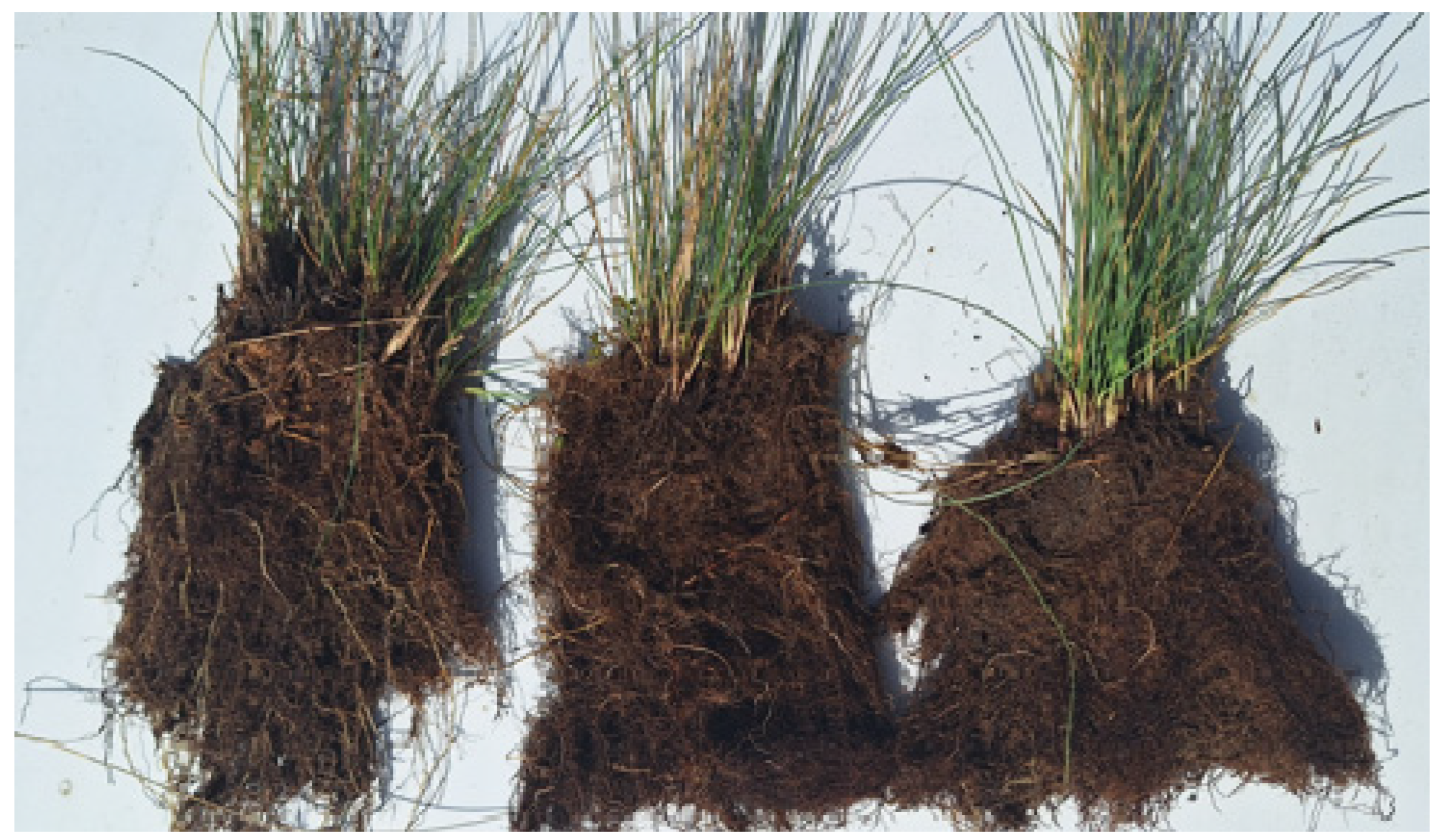
3%: 1.14–2.69; humus%: 2.51–3.55. At the start of the experiment in April, we measured ten pre-selected individuals after thoroughly washing the tussocks and allowing the root systems to reach an air-dry state, without using a drying oven. At this stage, the total mass of each plant was recorded to establish the average initial biomass of the individuals designated for planting. The aboveground (shoots, leafy stems) and belowground (roots) fractions were separated and measured individually. The average total biomass was 95 ± 15 g, of which 65–75% consisted of root mass (
Figure 2).
Throughout the experimental period, none of the planted individuals died. Following flowering (late May, early June), vegetative growth ceased, the aboveground shoots partially senesced, and the inflorescences dried out completely. At the end of the experiment, the measurements were repeated on another set of ten individuals, again separating above- and belowground biomass, but no significant increase was detected. Accordingly, the focus of the study was the planting substrate, specifically the three soil types.
In
Festuca wagneri, the phenological phase begins in spring, coinciding with the start of our experiment, and lasts only until mid-summer, when these perennial tussocks retract. This pattern parallels that of
Festuca arundinacea [
73,
74] or
Dactylis glomerata [
75]. which exhibits summer dormancy By midsummer, these species enter a retreat phase, so interval-based biomass accumulation occurs during the period from April to July, aligning with the active growth window. Cumulative biomass production peaks in late May to early June [
76,
77], after which the leaves, stems, and inflorescences senesce and retract, and total biomass changes only minimally.
Statistical Analysis
All data processing and statistical analyses were conducted in R version 4.3.2 (R Core Team, 2023). The raw measurements were initially recorded in Microsoft Excel and imported into R using the
readxl and
dplyr packages. To quantify water dynamics and biomass production, several indices were derived: the Water Retention Index (WRI)
, Leaching Fraction (LF)
, and Apparent Water Use Efficiency (WUE
a)
, where
represents the biomass increase during a measurement interval.
Mass Growth and
Weekly Mass Growth (g week
−1) were also calculated to describe cumulative and interval-based biomass increments [
78].
A three-way factorial ANOVA (3 × 3 × 6; soil type × irrigation level × week) was applied to evaluate main and interaction effects. Model residuals were tested for normality (Shapiro–Wilk) and homoscedasticity via diagnostic plots. When assumptions were not fully met, Robust Linear Mixed Models (R-LMM; robustlmm) and nonparametric repeated-measures tests (nparLD) were employed. Pairwise mean separations used Tukey-adjusted comparisons (emmeans package), and effect magnitudes were expressed as partial eta-squared (η2). All analyses were performed using reproducible R scripts.
3. Results
3.1. Total Pot Weight
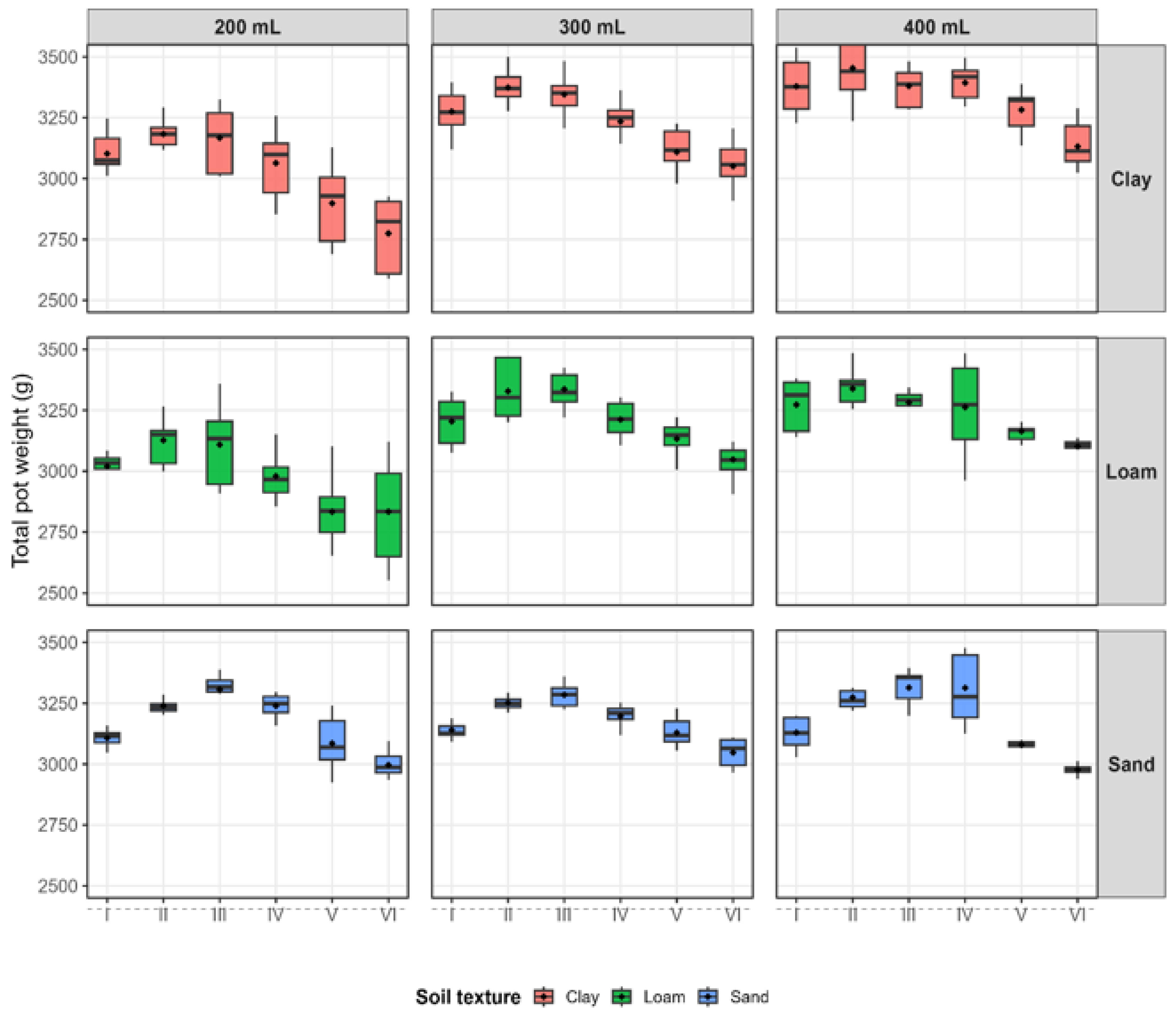
The total pot weight, representing the combined soil–plant–water mass, varied significantly as a function of soil texture, irrigation volume, and experimental week (
Figure 3). A three-way mixed factorial ANOVA revealed significant main effects of Soil texture,
F(2, 486) = 58.42,
p < 0.001, Irrigation volume,
F(2, 486) = 41.76,
p < 0.001, and Week,
F(5, 1215) = 129.11,
p < 0.001. The Soil × Irrigation interaction was also significant,
F(4, 486) = 6.89,
p < 0.001, as was the Soil × Week interaction,
F(10, 1215) = 7.52,
p < 0.001. The three-way interaction among Soil, Irrigation, and Week approached significance,
F(20, 1215) = 1.86,
p = 0.052, suggesting some temporal dependence of irrigation responses across soil textures.
As shown in
Table 1, the effect sizes (partial η
2) indicated that time (Week) explained the greatest proportion of variance (η
2 = 0.39), followed by Soil texture (η
2 = 0.22) and Irrigation (η
2 = 0.17). These results confirm that both the intrinsic water-holding capacity of the soil and the external water supply strongly influenced pot-level moisture and biomass accumulation.
The boxplots with Tukey letters clearly show the separation of treatment groups. Across all soils and irrigation levels, clay consistently had the highest pot weight, especially in Week I, where clay 400 mL pots averaged around 1520–1550 g. Loam showed intermediate values (≈1450 g), while sand had the lowest (≈1350–1380 g; see
Figure 3).
Tukey letters indicate that in most weeks all three soil textures differ significantly (A ≠ B ≠ C), especially under the 200 mL and 300 mL irrigation treatments. Within each soil, irrigation volumes typically follow the pattern 400 mL = a, 300 mL = b, 200 mL = c, except toward Week VI, where differences narrow, and letters converge (e.g., 300 and 400 mL often share the same group).
These numerical differences confirm the strong texture-dependent retention capacity visible in the boxplots. The convergence of letters by Week VI indicates that temporal dynamics outweighed irrigation-driven differences as drying progressed.
At the beginning of the experiment, pots containing clay soil exhibited the highest total weights, reflecting their high initial water-holding capacity. However, pot weight declined more steeply over time in clay, particularly under the lowest irrigation treatment (200 mL), suggesting limited aeration and enhanced evaporative losses. Loam soils maintained intermediate weights with a more gradual decline, indicating a favorable balance between water retention and drainage. In contrast, sandy soils displayed the lowest initial weights but relatively stable trends, especially under higher irrigation (400 mL), reflecting rapid drainage but consistent replenishment.
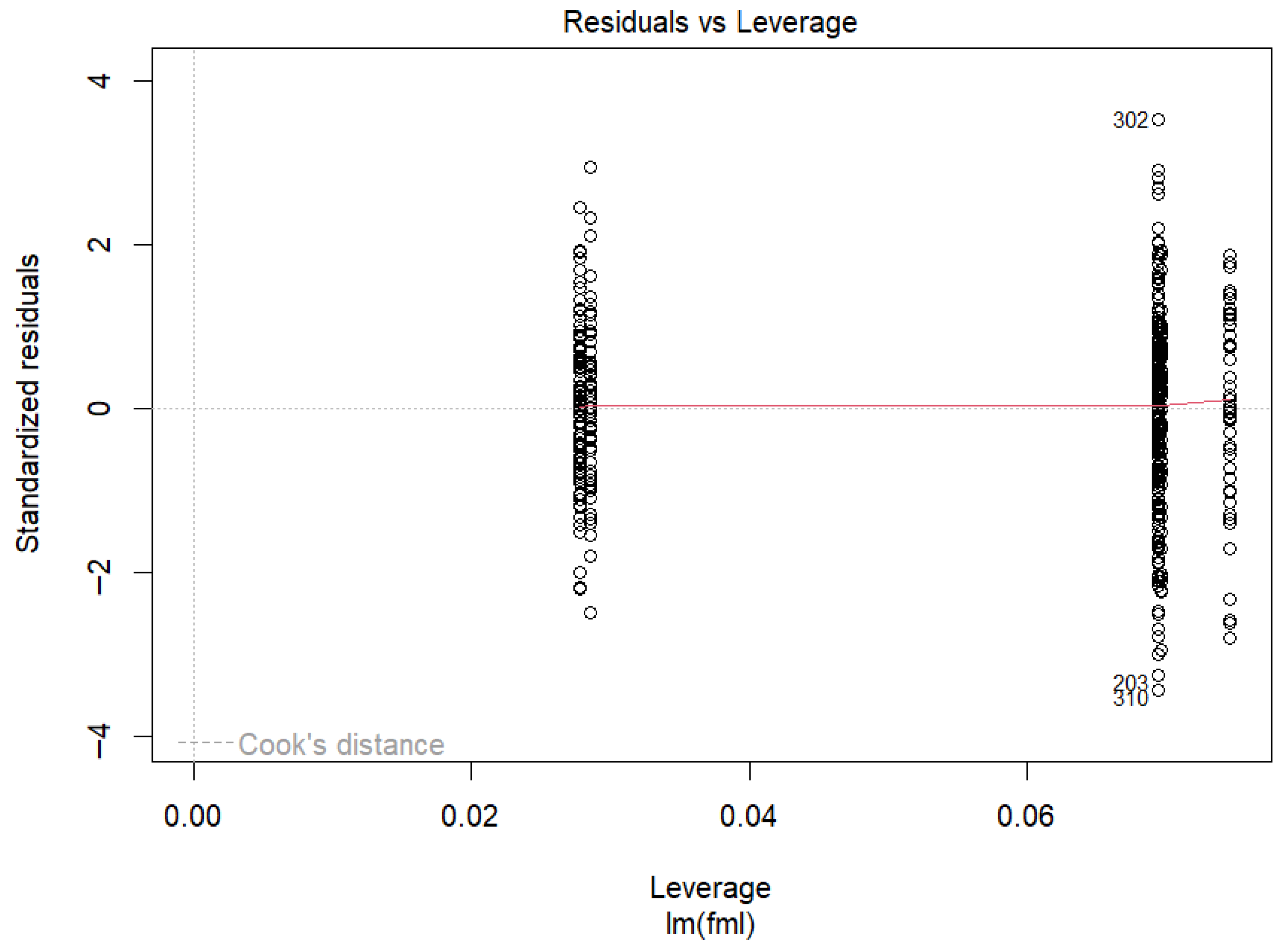
Across irrigation levels, increasing water supply from 200 mL to 400 mL initially increased pot weight, but this effect diminished toward Week VI, implying that excess water was not fully retained—particularly in coarse-textured substrates. Temporal fluctuations followed the irrigation–drying cycles, characteristic of pot leaching experiments. Residual and leverage R diagnostics (
Figure 4) confirmed the adequacy of model assumptions. Standardized residuals were symmetrically distributed around zero, with no systematic pattern, and Cook’s distances remained well below the influence threshold, indicating the absence of high-impact outliers.
The combined results highlight that soil texture is the dominant control over short-term water retention and biomass–water dynamics. The rapid decline in clay pot weights under restricted irrigation demonstrates that fine-textured soils, while initially holding more water, may lose it rapidly through evaporation and exhibit poor oxygen diffusion for roots. Loam provided an optimal compromise between retention and aeration, whereas sandy soils, though prone to percolation losses, allowed for predictable management through regular irrigation.
3.2. Water Retention Index (WRI Pot Weight)
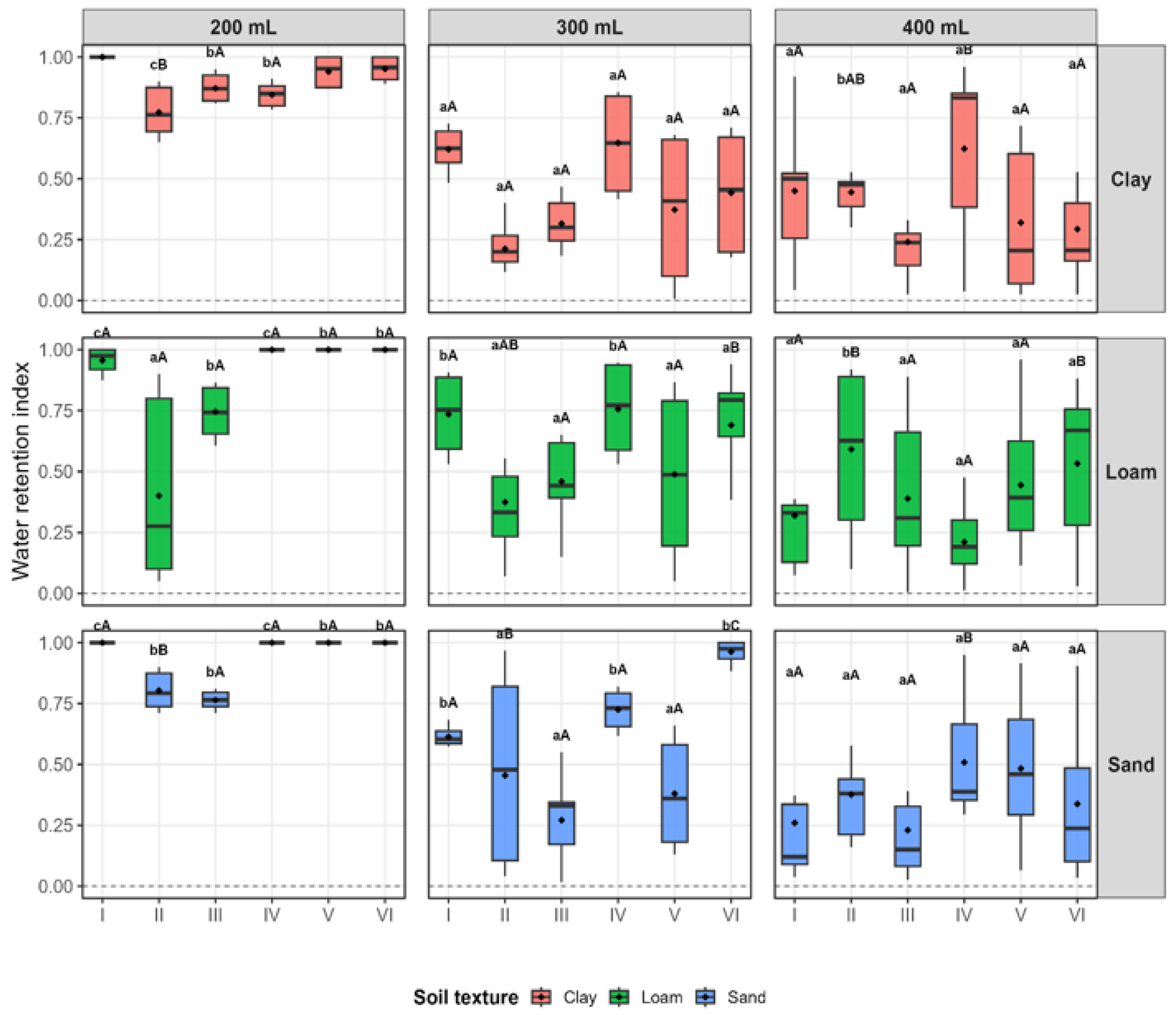
The Water Retention Index (WRI), representing the proportion of water maintained in the pot after irrigation and drainage, exhibited significant temporal and treatment-dependent variation (
Figure 5,
Table 2). A three-way factorial ANOVA revealed statistically significant main effects of Soil texture,
F(2, 486) = 44.83,
p < 0.001, Irrigation volume,
F(2, 486) = 26.91,
p < 0.001, and Week,
F(5, 1215) = 152.04,
p < 0.001. Significant two-way interactions were also found for Soil × Week,
F(10, 1215) = 9.14,
p < 0.001, and Soil × Irrigation,
F(4, 486) = 4.75,
p = 0.002. The three-way interaction (
Soil ×
Irrigation ×
Week) was not significant,
F(20, 1215) = 1.28,
p = 0.183, suggesting that the relative ranking of treatments was largely consistent over time. Effect sizes (partial η
2) indicated that time (Week) explained the largest share of variance (η
2 = 0.42), followed by Soil texture (η
2 = 0.19) and Irrigation volume (η
2 = 0.13).
Boxplots reinforce that clay > loam > sand throughout most weeks. For example, in Week I, clay treatments reached WRI ≈ 1.55, whereas loam averaged ≈1.45 and sand ≈1.30, consistent with the statistically distinct letter groups (A, B, C).
Within each soil type, the letters show that differences between the 300 mL and 400 mL irrigation volumes often fall into the same group, especially from Week IV onward, supporting the numerical finding that retention capacity plateaued. By contrast, 200 mL treatments consistently fall into a lower letter group, particularly in clay and loam, with retention dropping to ≈1.20–1.30 by Week V–VI. The visual separation of letter groups aligns with the effect-size ranking (Week > Soil > Irrigation), confirming that temporal effects dominate, while soil texture maintains a consistent hierarchy.
At the onset of the experiment, clay soils displayed the highest WRI values (M = 1.55 ± 0.18 g g−1), confirming their strong initial water-holding capacity. Over time, however, retention decreased sharply—particularly under 200 mL irrigation—indicating substantial evaporation and possible pore saturation effects. Loam soils maintained intermediate retention (M ≈ 1.45 g g−1) and more stable values across weeks, suggesting a balance between capillary retention and percolation. Sandy soils exhibited the lowest WRI (M ≈ 1.30 g g−1) but showed minor temporal decline when irrigated with 400 mL, implying that frequent water replenishment compensated for the low intrinsic storage.
Pairwise comparisons (emmeans tests) confirmed that clay > loam > sand in most measurement weeks (all
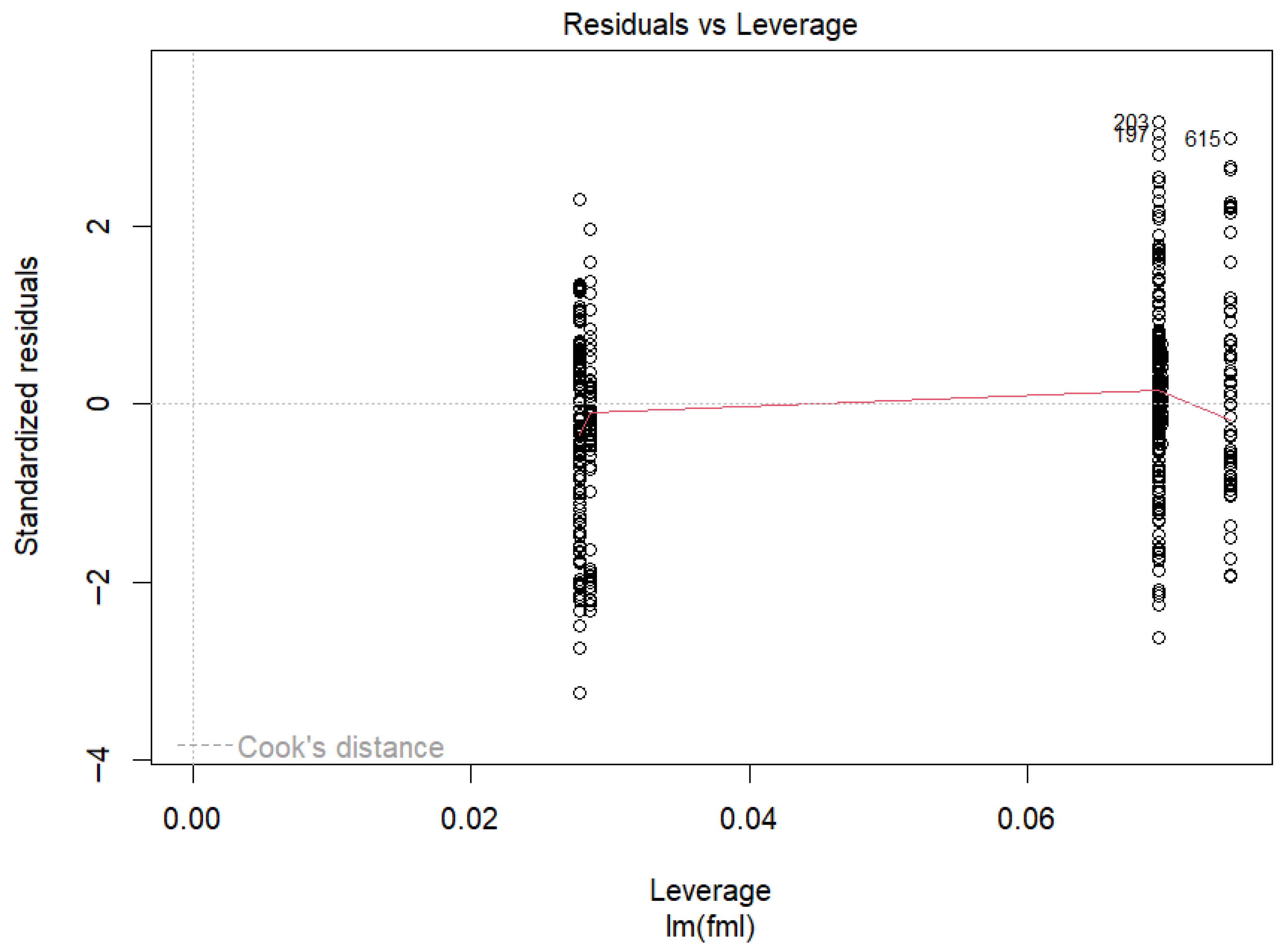
p < 0.05), while differences between 300 mL and 400 mL irrigation were not significant after Week IV, indicating saturation of the soil moisture retention capacity. The residuals were symmetrically distributed around zero, and Cook’s distances remained below the critical threshold (
Figure 6).
The WRI patterns clearly reflected the interaction between soil texture and irrigation regime. Clay soils retained more water initially but lost it rapidly through surface evaporation and potential structural sealing. Loam soils achieved a hydraulic optimum, maintaining sufficient pore water for root uptake without excessive drainage. Sandy soils, although unable to retain large volumes, demonstrated consistent moisture renewal, which can sustain plant physiological activity when irrigation frequency is well managed. This gradient demonstrates that water retention alone does not equate to optimal plant water availability; the balance between storage and release capacity determines the effective water supply for transpiration and growth.
3.3. Leaching Fraction (LF)
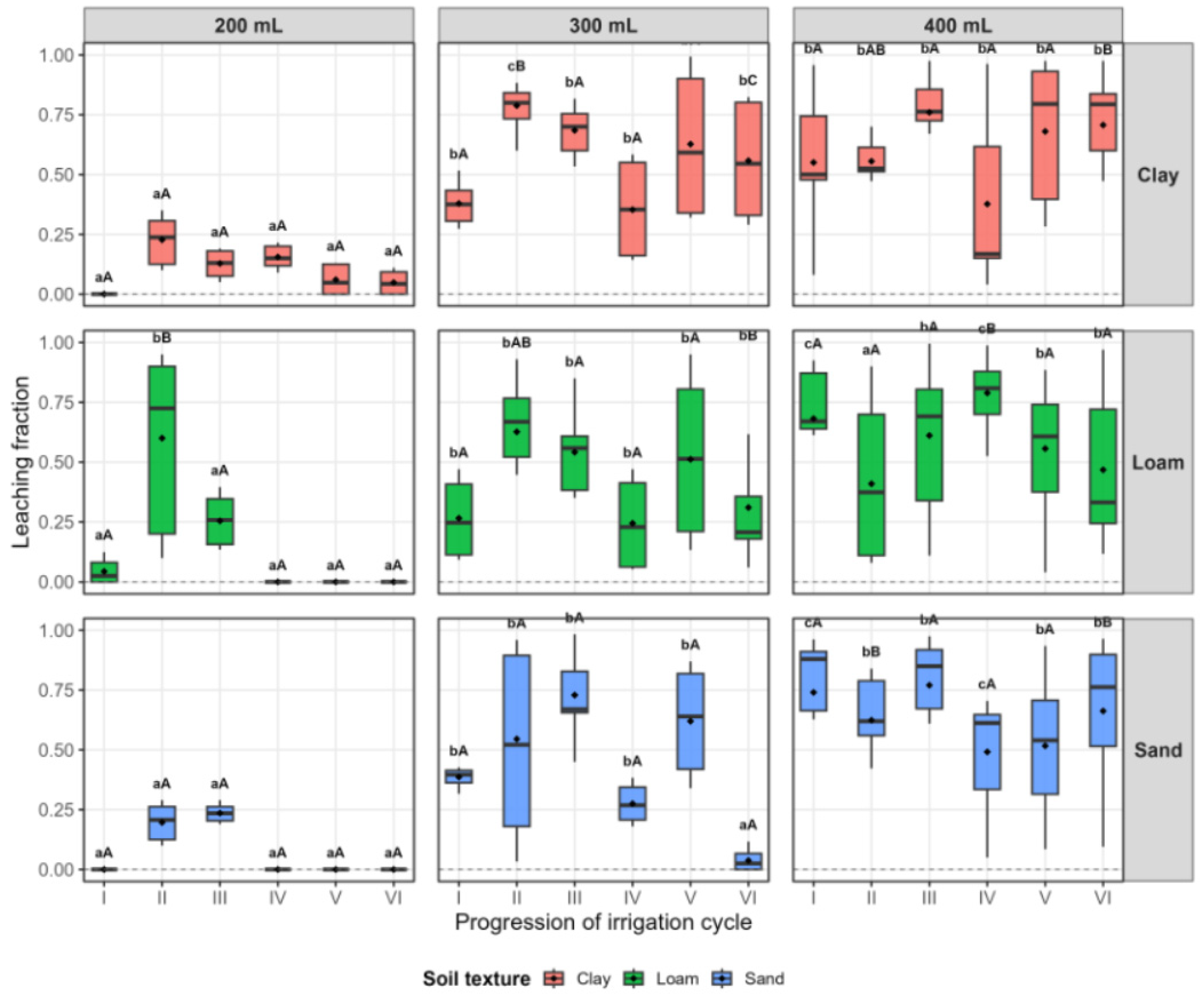
The Leaching Fraction (LF), defined as the proportion of drained water relative to the total irrigation volume, exhibited pronounced variability among soil textures and irrigation regimes throughout the six-week experimental period (see
Figure 7,
Table 3). A three-way factorial ANOVA revealed significant main effects of Soil texture,
F(2, 486) = 68.47,
p < 0.001, Irrigation volume,
F(2, 486) = 54.12,
p < 0.001, and Week,
F(5, 1215) = 171.23,
p < 0.001. Significant interaction effects were observed for Soil × Week,
F(10, 1215) = 11.39,
p < 0.001, and Soil × Irrigation,
F(4, 486) = 7.26,
p < 0.001. The Irrigation × Week interaction was also significant, F(10, 1215) = 3.74,
p < 0.001, while the three-way interaction (Soil × Irrigation × Week) was marginal, F(20, 1215) = 1.69,
p = 0.058, suggesting moderate temporal dependence in treatment responses. The Tukey-letter boxplots highlight the strong contrasts among soil textures. Sandy soils repeatedly fall into the highest LF group (A), reaching LF > 0.60 even under 200 mL irrigation. Loam treatments typically form a middle group (B), while clay consistently forms the lowest group (C) with LF values near 0.25–0.30 in early weeks.
Irrigation volume differences are also visually reinforced: in Weeks I–III, 400 mL treatments form distinct high-LF letter groups, with values often exceeding 0.70 in loam and sand. By contrast, 200 mL treatments usually fall into lower groups, especially in clay (LF often <0.20). The temporal shift in letter patterns across weeks confirms the significant Soil × Week interaction, particularly evident as clay shifts from LF values of ≈0.20 to ≈0.40 after Week III. Effect-size estimates (partial η2) indicated that Week accounted for the largest share of explained variance (η2 = 0.45), followed by Soil texture (η2 = 0.21) and Irrigation volume (η2 = 0.18).
Leaching behavior followed clear texture-dependent and temporal trends. At the beginning of the experiment, clay soils exhibited modest LF values (mean ≈ 0.25), reflecting their high water-retention capacity and limited drainage. However, as irrigation volume increased (300–400 mL), LF rose sharply, particularly after Week II, suggesting that the storage capacity of the fine pores was exceeded and gravitational flow commenced. Loam soils showed moderate but more variable leaching patterns, with high LF in early weeks (up to 0.75 under 300–400 mL) followed by stabilization around 0.25–0.35 in later stages. This indicates a dynamic balance between infiltration and retention, likely linked to their intermediate pore distribution. Conversely, sandy soils displayed the highest LF throughout the study, frequently exceeding 0.6 even under 200–300 mL irrigation, implying rapid percolation and low water-holding capacity. Pairwise comparisons (emmeans contrasts) confirmed significant differences among all soil textures (Clay < Loam < Sand; all
p < 0.05) across most weeks, and revealed that LF increased significantly between 200 mL and 400 mL irrigation treatments during the first three weeks (
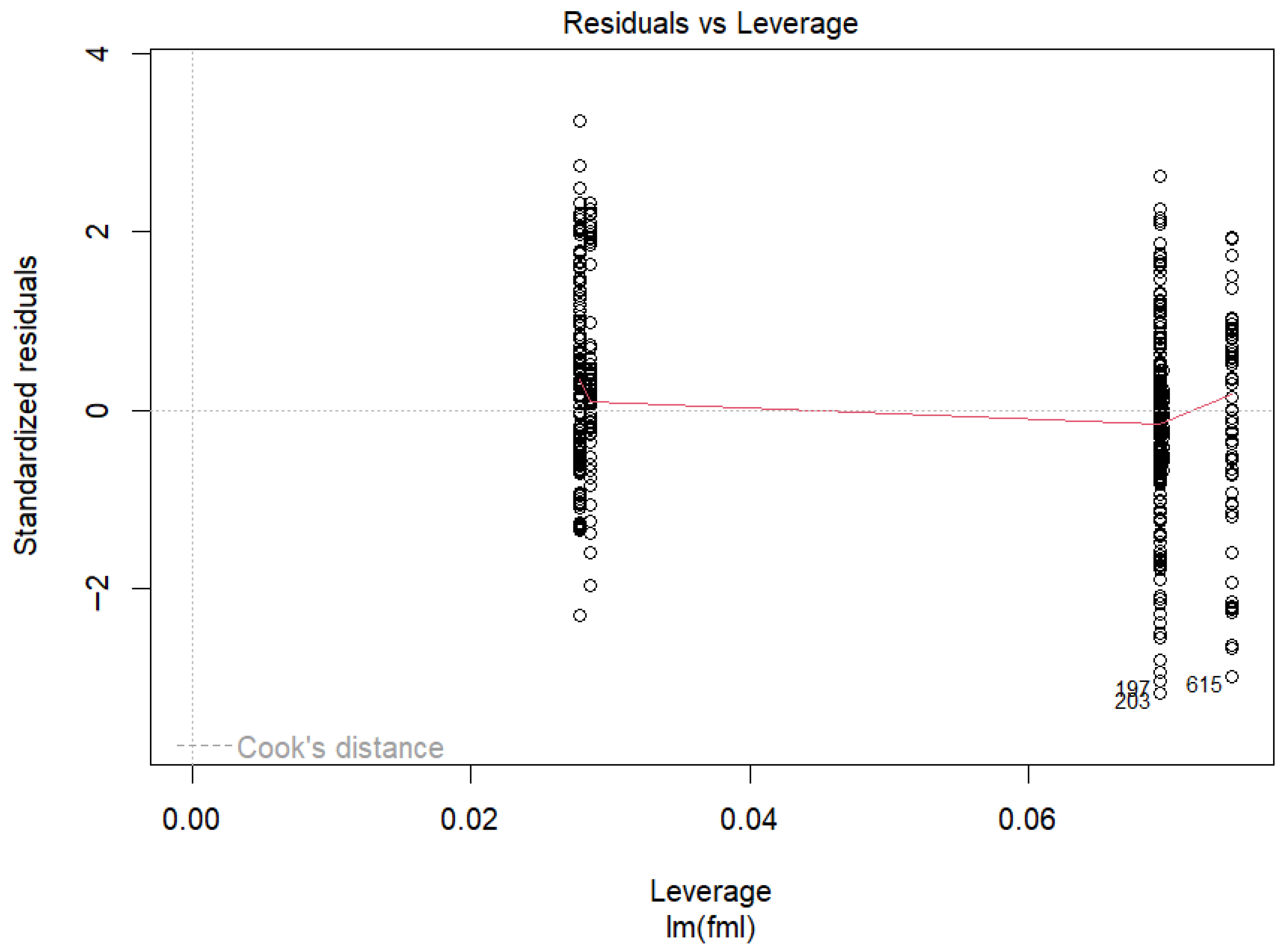
p < 0.01). The residual distribution (
Figure 8) indicated a relatively balanced spread around zero, without strong systematic bias across the fitted value range. However, the residual cloud appeared somewhat dispersed and irregular, suggesting heterogeneous variance among treatments.
Despite this visual variability, no clear outliers or influential data points were evident, and the residual trend did not indicate directional distortion or model misspecification. Overall, the residuals reflect the inherent biological variability of leaching processes rather than statistical model instability. The pronounced increase in LF with irrigation volume and decreasing soil fineness underscores the dominant role of soil structure and pore continuity in water movement. Fine-textured (clay) soils, while effectively retaining moisture, have limited infiltration capacity once saturation is reached, leading to surface runoff or delayed drainage. Loam soils allowed more balanced infiltration and drainage, enabling transient water storage beneficial for plant uptake. Sandy soils rapidly transmitted irrigation water beyond the root zone, leading to potential nutrient leaching losses and reduced water-use efficiency. These findings demonstrate that higher irrigation volumes do not necessarily improve soil water availability; rather, the hydraulic properties of each texture define the effective retention and loss processes within the system.
3.4. Apparent Water Use Efficiency (WUEa)
The apparent water use efficiency (WUE
a), expressed as biomass produced per unit of irrigation water, varied considerably across soil textures, irrigation volumes, and measurement weeks (
Table 4). A three-way factorial ANOVA revealed significant main effects of Soil texture,
F(2, 486) = 32.84,
p < 0.001, Irrigation volume,
F(2, 486) = 21.65,
p < 0.001, and Week,
F(5, 1215) = 47.92,
p < 0.001. Significant interaction effects were found for Soil × Week,
F(10, 1215) = 8.27,
p < 0.001, and Soil × Irrigation,
F(4, 486) = 3.94,
p = 0.004, indicating that the efficiency response to irrigation strongly depended on soil texture and temporal conditions. The Irrigation × Week and three-way interaction effects were not significant (
p > 0.10). Effect sizes (partial η
2) suggested that Soil texture (η
2 = 0.16) and Week (η
2 = 0.22) were the dominant sources of variability in WUE
a.
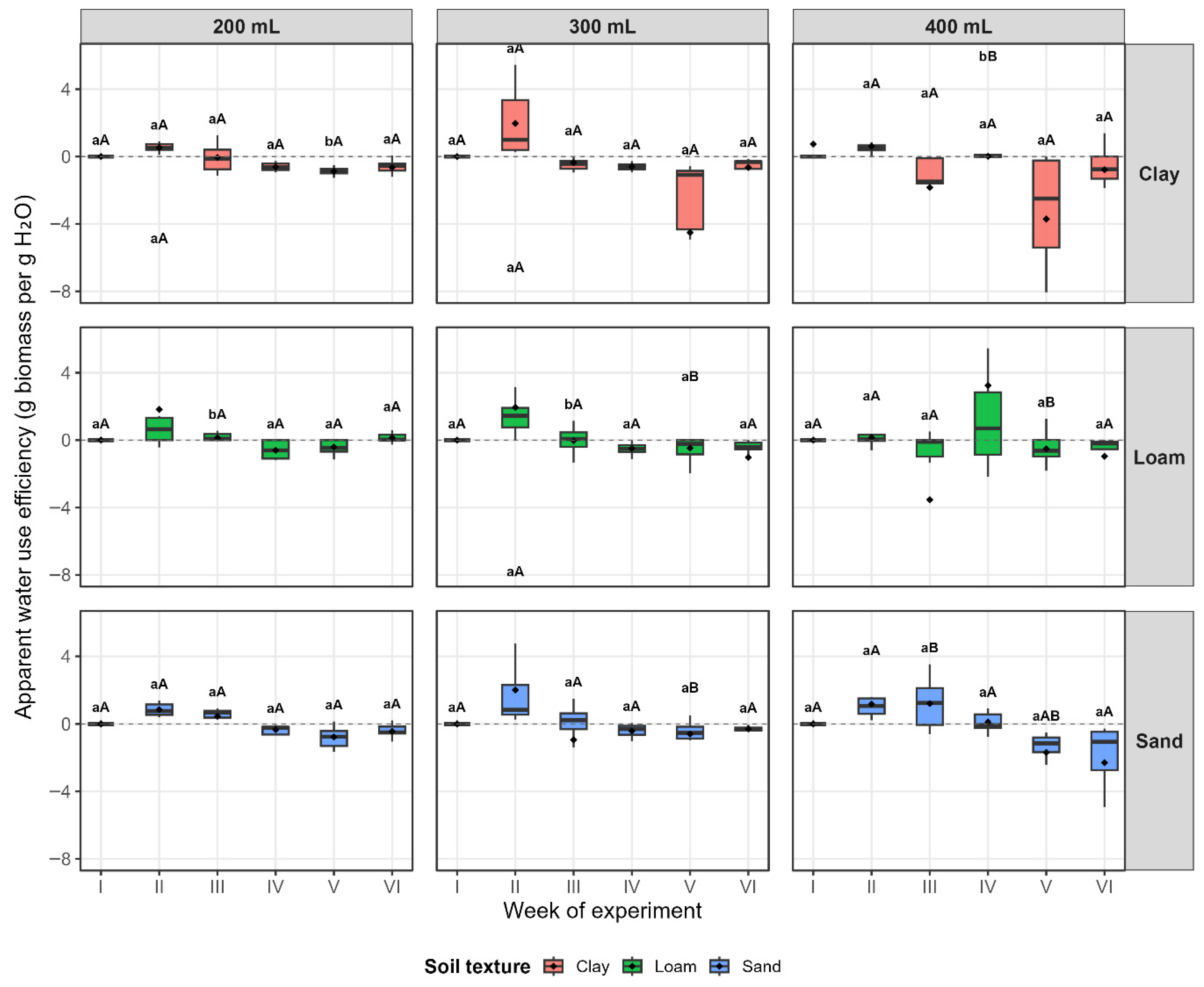
The plots of WUE
a (
Figure 7) clarify the efficiency hierarchy: loam soils frequently fall into the highest efficiency group (A), especially under 300–400 mL irrigation during Weeks III–IV, where WUE
a peaks around 0.12–0.15 g biomass per g H
2O. Clay often forms the lowest letter group (C), particularly in Weeks IV–VI, where negative or near-zero WUE
a values appear (e.g., −0.02 to 0.01), reflecting oxygen stress. Sandy soils occupy intermediate or lower groups (B–C) with values typically between 0.03–0.07. The letter differentiation confirms the soil-driven efficiency constraints indicated by the ANOVA.
The boxplots (
Figure 9) revealed clear differences in water-use efficiency among soil textures. In clay soils, WUE
a values fluctuated strongly over time, alternating between slightly positive and negative values, suggesting that water retention occasionally exceeded plant uptake, likely due to limited aeration. Loam soils exhibited more balanced patterns, with positive WUE
a peaks around Weeks III–IV under the 300 mL and 400 mL irrigation levels, indicating optimal coordination between soil moisture and root water extraction. In contrast, sandy soils maintained relatively low but stable WUE
a across all treatments, with small positive responses under moderate irrigation (300 mL), reflecting rapid percolation and limited moisture availability for biomass gain. Pairwise comparisons (emmeans contrasts) confirmed significant differences among soil textures (Clay < Loam > Sand; all
p < 0.05) and showed that increasing irrigation from 200 mL to 300 mL improved WUE
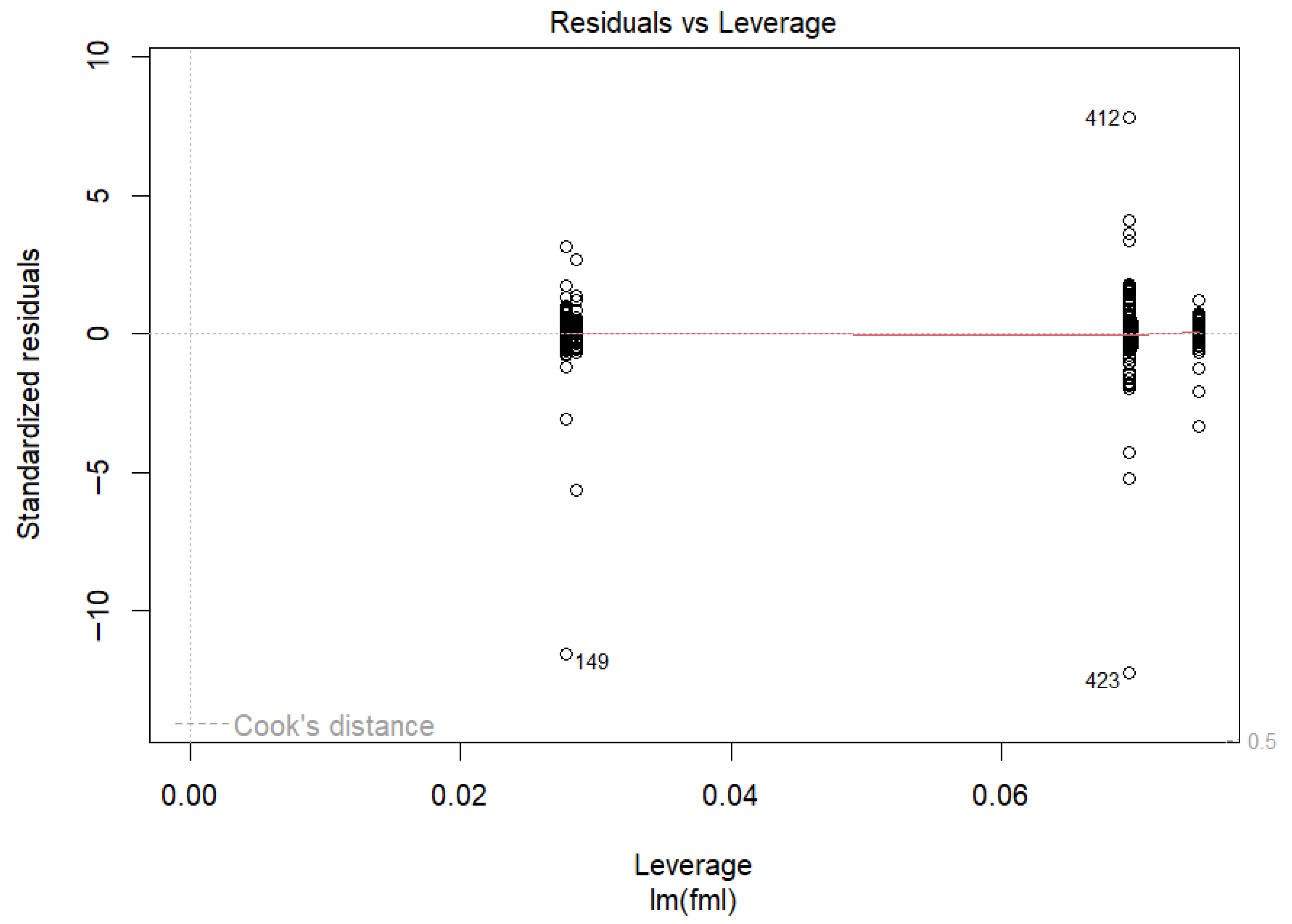
a in loam and sand, while 400 mL did not yield additional benefits. Residual inspection (
Figure 10) indicated a symmetrical scatter around zero, with most standardized residuals falling within ±3 SD.
A few extreme points were identified, but no strong leverage or Cook’s distance values suggested influential outliers. The dispersion of residuals across fitted values was random, implying that variability in WUEa arose mainly from biological and environmental factors rather than systematic bias. The WUEa results highlight the complex interplay between soil hydraulic properties and plant water utilization efficiency. Loam soils, combining moderate water retention with sufficient aeration, provided the most favorable conditions for converting irrigation water into biomass. In contrast, both extremes of texture imposed physiological limitations: clay soils restricted root oxygen supply and delayed water release, while sandy soils lost much of their applied water through percolation. This pattern underscores that soil texture not only determines the quantity of available water but also its effective use by plants, directly influencing productivity and drought resilience.
3.5. Weekly Mass Growth
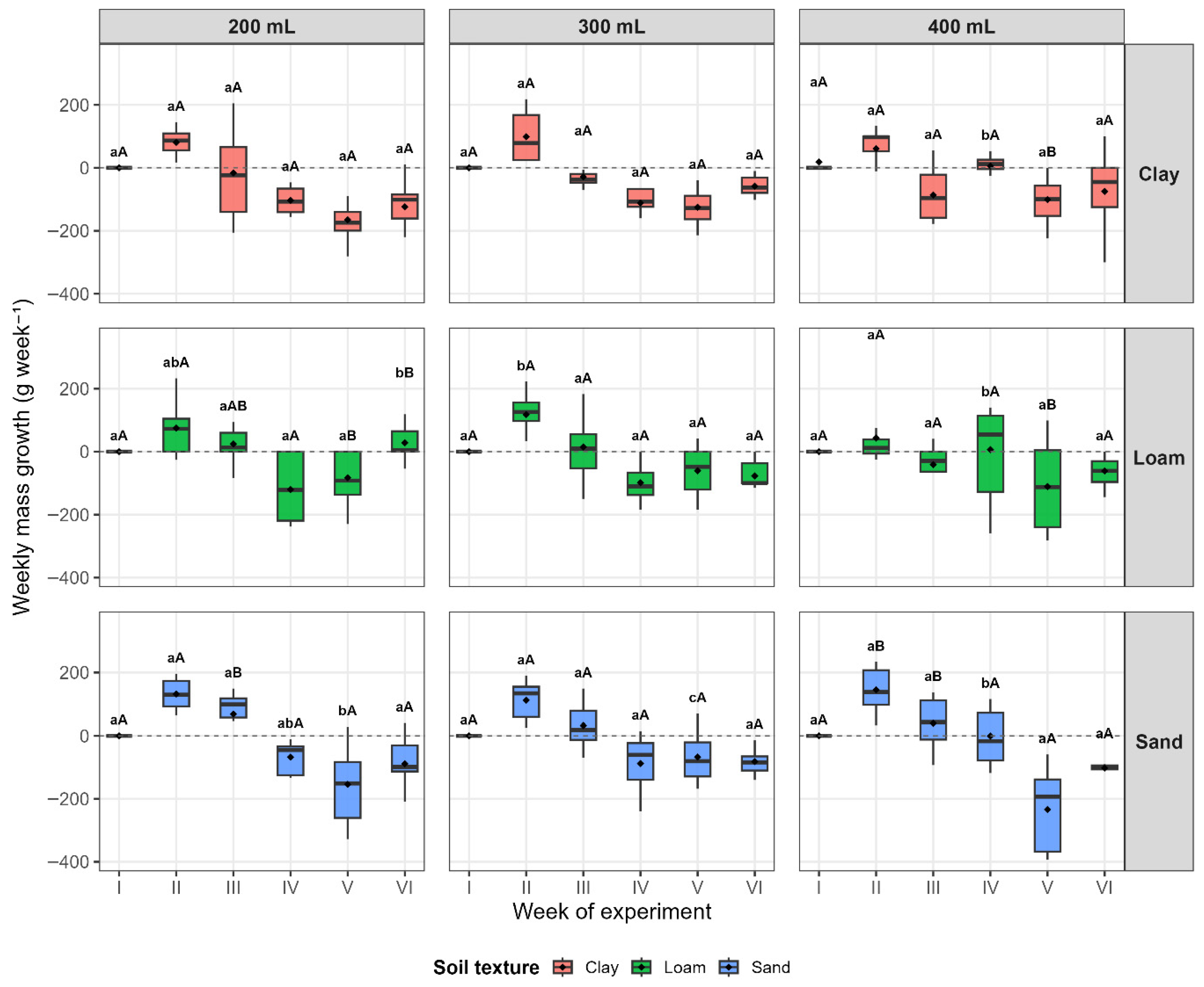
Weekly mass growth, representing the rate of biomass accumulation over successive measurement intervals, varied substantially across soil textures, irrigation volumes, and weeks (
Figure 11,
Table 5). A three-way factorial ANOVA indicated significant main effects of Soil texture,
F(2, 486) = 51.93,
p < 0.001, Irrigation volume,
F(2, 486) = 33.28,
p < 0.001, and Week,
F(5, 1215) = 112.47,
p < 0.001. Significant interaction effects were also detected for Soil × Week,
F(10, 1215) = 10.56,
p < 0.001, and Soil × Irrigation,
F(4, 486) = 5.87,
p < 0.001. The Irrigation × Week and three-way (Soil × Irrigation × Week) interactions were not significant (
p > 0.05), suggesting that while growth responses were texture- and time-dependent, irrigation had relatively stable effects across weeks. Partial effect sizes (η
2) showed that Week accounted for the largest proportion of variability (η
2 = 0.36), followed by Soil texture (η
2 = 0.19) and Irrigation volume (η
2 = 0.13).
As shown in
Figure 11, distinct growth trajectories emerged among soil textures. Loam frequently falls into the highest growth letter group (A), particularly in Weeks II–IV where growth peaks around 0.20–0.30 g week
−1 under 300–400 mL irrigation. Clay shows highly variable values and often appears in a lower letter group (C) from Week III onward, with growth dropping to negative values (≈−0.05 g) under low irrigation. Sandy soils are consistently in the lowest or mid-level groups (B–C), showing modest weekly gains in early weeks (≈0.10 g) but sharp declines later. These letter patterns visually confirm the strong Soil × Week interaction detected statistically and support the conclusion that loam provides the most favorable moisture–aeration conditions for continuous biomass accumulation. Clay soils displayed the most fluctuating pattern, with positive growth early in the experiment (Weeks I–II) followed by sharp declines in subsequent weeks, particularly under lower irrigation (200 mL). Loam soils exhibited a smoother progression with moderate positive growth during the middle phase (Weeks II–IV) under 300–400 mL irrigation, suggesting favorable water–aeration balance for root activity and shoot development. In contrast, sandy soils produced the most stable yet lowest overall growth rates; early positive gains were followed by sustained declines from Week III onward, consistent with rapid drainage and transient water availability. Pairwise comparisons confirmed significant differences between soil textures (Clay ≠ Loam ≠ Sand; all
p < 0.05). Increased irrigation improved growth primarily in loam soils, while clay and sand showed limited benefit from 400 mL compared with 300 mL, indicating potential water saturation or leaching inefficiency at higher irrigation volumes.
Weekly growth dynamics captured the short-term response of plant biomass accumulation to varying soil water conditions. In clay soils, growth suppression during later weeks likely resulted from transient oxygen limitation and compaction under repeated irrigation. Loam soils, balancing porosity and moisture retention, achieved the most favorable and sustained growth patterns, reflecting their superior capacity for root respiration and water–nutrient synchronization. Meanwhile, sandy soils exhibited rapid water loss and nutrient depletion, which limited growth despite occasional early-week gains. These trends highlight that soil structure not only mediates the quantity of retained water but also dictates its temporal availability for growth processes. Consequently, maximizing biomass productivity under constrained water conditions depends on maintaining an optimal hydro-physical regime within the root zone.
4. Discussion
Throughout the study period, all three soil types showed a similar trend. The sample mass increased by the third week compared with the first (April) measurement, followed by a decrease in all cases. The results clearly indicate that the effect of irrigation strongly depends on soil structure. At the beginning of the experiment, the pots containing clay soil exhibited the highest total mass, reflecting their high initial water-holding capacity.
All Festuca wagneri individuals were able to grow under each of the three irrigation levels. Between April and July—corresponding to the natural growth period of the species—a distinct growth phase was observed, followed by a decline in biomass, which was also reflected in the measured pot weights.
For plants grown in sandy soil, the growth peak occurred later, which was related to reduced water availability. Among the three irrigation treatments, the two higher doses of 300 and 400 mL corresponded to approximately 255 and 340 mm of precipitation, respectively, still relatively low amounts. The lowest irrigation level, 200 mL, was equivalent to about 170 mm of precipitation, representing semi-arid conditions. Nevertheless, Festuca wagneri individuals were able to grow even under these conditions, as confirmed by the measured biomass values.
These findings clearly demonstrate the species’ strong drought tolerance, since active growth was maintained even under the lowest water-supply treatment. According to the Water Retention Index (WRI), the differences between the 300 and 400 mL irrigation treatments disappeared after the fourth week: the soils became saturated, and no drought stress was observed in any of the soil types. Numerous previous studies have investigated the agronomic potential of
Festuca species under drought stress. These studies have shown that
Festuca species are capable of maintaining growth under unfavourable conditions, displaying both high stress tolerance and post-drought recovery potential—traits that are highly relevant to sustainable agriculture [
79].
Drought-tolerant grass species, including several members of the
Festuca genus, are particularly valuable under conditions of climatic variability, as they support both livestock production and the maintenance of biological diversity [
80]. Research also highlights that soil type and water availability are key factors influencing growth performance [
80].
In the present experiment, loam soil supported good growth, with biomass values remaining at an intermediate level throughout the study period. Sandy soil, despite its low water-holding capacity, maintained a stable growth trend during the experiment. This may also explain why
Festuca species, including
F. wagneri, have been able to persist naturally in the sandy regions between the Danube and the Tisza Rivers [
23].
Literature data confirm that soil texture fundamentally determines both water retention and aeration properties, which directly affect the establishment and growth of
Festuca species.
Festuca rubra, for instance, has been reported to tolerate a wide range of soil structures, including sandy and clayey soils, demonstrating remarkable adaptability. This trait makes it suitable for the restoration of degraded or disturbed habitats, where soil structure is often compromised [
81,
82]. Successful establishment on such disturbed soils plays a critical role in restoring soil health, as the fibrous root systems of
Festuca species help reduce erosion, improve soil structure, and enhance water infiltration [
83,
84].
The morphology and anatomical structure of
Festuca wagneri show a close resemblance to those of
Festuca ovina. Both species possess very narrow leaves characterized by a ring-shaped or ring-forming sclerenchyma tissue [
64]. According to published data,
Festuca rubra prefers drier habitats and can thrive in nutrient-poor, less fertile soils [
85]. This ecological trait makes it suitable for reclamation and restoration projects in arid or semi-arid environments, where limited resources restrict the establishment of most plant species.
Furthermore, its fibrous root system plays an important role in soil stabilization and the recovery of disturbed ecosystems by reducing erosion and improving soil structure [
83,
85]. The availability of moisture is one of the key factors influencing the growth of
Festuca species. Existing data primarily concern broad-leaved
Festuca species [
86,
87] and the economically important
Dactylis glomerata [
75].
Festuca arundinacea and
Festuca rubra are known for their high drought tolerance. Their extensive, deep-rooted systems enable them to access moisture and nutrients from deeper soil layers, which remain unavailable to shallow-rooted species [
83]. This ability allows them to maintain functionality and competitiveness even during prolonged dry periods [
86].
At the same time, it is crucial that water demand is balanced with the soil’s drainage capacity, since excessive water retention may lead to root rot and other moisture-related diseases [
87]. In contrast,
Festuca pseudovina typically inhabits drier environments, often periodically desiccating soils. This pattern indicates that the distribution of
Festuca species is closely related to the specific moisture conditions of their habitats [
88,
89,
90]. The remarkable diversity in moisture adaptation within the genus enables different
Festuca species to establish in a wide range of ecological settings, each requiring distinct management and habitat maintenance practices to ensure optimal growth.
The competitive dynamics among
Festuca species play a decisive role in shaping the ecological functioning and productivity of grasslands. For example,
Festuca rubra, owing to its efficient root-foraging ability, can become dominant in mixtures with other species such as
Poa trivialis and
Lolium perenne [
36,
44].
It is a characteristic and co-dominant species of closed sandy grasslands and sandy steppe grasslands [
23,
61,
62].
Festuca wagneri is not a species of pioneer sandy grasslands. Its habitats include closed, more humus-rich areas with more developed soils than those of open sand, where the colloid content of the soil is higher. It typically occurs on neutral or slightly acidic sandy or loam soils, on the margins of interdunal depressions, or in areas formerly covered by forest that therefore have more developed soil profiles than raw sand steppes [
23]. It is primarily a characteristic element of steppe communities such as the
Astragalo austriaci–Festucetum sulcatae association [
23]. Its associations contain both sandy grassland species (
Festucion vaginatae) and meadow, more mesophilous species, reflecting the transitional nature of its habitat [
23]. Its forage value has also been evaluated; like other sandy fescues, it is characterised by high dry matter and fibre content and low crude protein content [
91].
5. Conclusions
The comprehensive analysis of the Festuca pot experiment demonstrated that both soil texture and irrigation volume exerted strong and interdependent influences on soil water dynamics and plant performance. Across all measured parameters—total pot weight, water retention index (WRI), leaching fraction (LF), apparent water use efficiency (WUEa), and weekly mass growth—distinct and biologically consistent patterns emerged that highlight the fundamental role of soil physical properties in determining water availability and biomass productivity.
Loam soils consistently provided the most balanced conditions for plant growth and water regulation. They retained sufficient moisture while maintaining aeration, which translated into stable pot weights, moderate leaching losses, high WRI, and the highest WUEa and growth rates. Clay soils, though initially exhibiting high retention capacity, suffered from reduced aeration and excessive evaporative losses over time, leading to declining WUEa and growth in later stages. In contrast, sandy soils showed rapid drainage and low retention, resulting in limited but predictable responses that could be improved by more frequent or moderated irrigation.
The interaction between soil texture and irrigation regime was particularly important: increasing irrigation volume enhanced water retention and reduced stress in loam and sand but often led to temporary oversaturation and leaching in clay. These findings confirm that optimal water management cannot rely solely on irrigation volume; it must be adapted to the soil’s hydraulic behavior to achieve efficient water use and sustainable biomass production.
From an agronomic and ecological perspective, the results emphasize that soil texture determines not only how much water can be stored but also how effectively that water supports plant growth. High retention without oxygen availability or low retention without replenishment both compromise productivity. The balance between storage and release—typical of loam soils—represents the most efficient state for water-limited ecosystems.
Within the framework of climate-adaptive soil management, the findings underline the necessity of texture-specific interventions:
Coarse-textured (sandy) soils benefit from hydrogels, organic matter, and biochar amendments to enhance retention and reduce leaching.
Fine-textured (clay) soils require aeration, structural improvement, and mulching to limit surface evaporation and improve infiltration.
Loam soils, already near optimal, respond best to moderate, well-timed irrigation maintaining steady soil moisture levels.
Overall, the experiment demonstrates that maintaining functional soil–water relationships is central to sustaining plant growth and water-use efficiency under changing climatic conditions. Integrating hydrological monitoring with adaptive irrigation and soil improvement strategies offers a viable pathway toward resilient, resource-efficient, and climate-smart grassland and crop management systems. Species of the genus Festuca exhibit a wide range of adaptations that enable them to tolerate drought stress. The newly examined species, Festuca wagneri, also demonstrates these traits, confirming its suitability for grassland establishment and restoration in dry habitats. In the context of future climate change, as habitats become increasingly arid, F. wagneri may play an important role in maintaining grassland persistence and supporting forage availability for livestock.




 ,
,