Article

Planning Sustainable Green Blue Infrastructure in Colombo to Optimize Park Cool Island Intensity


by
A. A. S. G. Wijesundara
1,2,
B. G. N. Sewwandi
1,2,* and
Thomas Panagopoulos
3,*
1
Department of Zoology and Environmental Management, Faculty of Science, University of Kelaniya, No. 218, Kandy Road, Kelaniya 11600, Sri Lanka
2
Faculty of Graduate Studies, University of Kelaniya, No. 218, Kandy Road, Kelaniya 11600, Sri Lanka
3
Faculty of Science and Technology, University of Algarve, Campus de Gambelas, 8005-139 Faro, Portugal
*
Authors to whom correspondence should be addressed.
Land 2025, 14(11), 2164; https://doi.org/10.3390/land14112164
Submission received: 28 August 2025 / Revised: 14 October 2025 / Accepted: 28 October 2025 / Published: 30 October 2025

Abstract

Colombo, a rapidly urbanizing city, increasingly faces the Urban Heat Island (UHI) effect due to urban expansion and climate change. Urban parks mitigate UHI by creating cool microclimates, quantified as Park Cool Island Intensity (PCII), the temperature difference between parks and surrounding areas. Colombo exhibits an average cooling effect of 0.98 °C ±   0.21 % . The results found that the park area has the most significant positive relationship with the PCII, where the model explained 87.7% of the variance (R2 = 0.877), indicating a strong fit, following the park perimeter (R2 = 0.811). Park vegetation characteristics exert a significant influence to enhance the cooling effect, with canopy density emerging as a primary factor with a variance of 87.1% (R2 = 0.871). Notably, canopy density of more than 80% demonstrates a marked PCII exceeding 1.0 °C. Additionally, other vegetation attributes, tree basal area (R2 = 0.868), tree height (R2 = 0.784), DBH (R2 = 0.757), and stem density (R2 = 0.717), exhibit a significant positive correlation with PCII, following canopy density in descending order. Furthermore, park composition analysis reveals that higher water and green cover contribute to maximizing PCII, underscoring the importance of reducing impervious cover in urban park design. These findings provide valuable insights for urban planners in facilitating the development of more effective urban park designs aimed at maximizing cooling effects, promoting sustainable urban development, and contributing to the achievement of SDG 11 and SDG 13.

1. Introduction

Urbanization, rapid population expansion, and development of urban areas have become a defining feature of the modern era that has profound implications for climate change dynamics, particularly in the context of the Urban Heat Island (UHI) effect. The UHI phenomenon refers to the disparity in temperature between urban and rural areas, primarily driven by human activities and the built environment. With urban growth being a focal point of research, numerous studies have documented the significant temperature increases associated with expanding cities [1]. The rise in temperatures, ranging from 0.5 to 5 °C in various regions worldwide, underscores the substantial impact of urbanization on local climates [2]. Moreover, the UHI effect manifests differently across urban landscapes, with higher temperatures concentrated in dense urban cores. This spatial variation exposes residents in densely populated areas to heightened risks of heat-related mortality, highlighting the urgent need for sustainable mitigation strategies [3].
However, the influence of urbanization on climate change extends beyond temperature increases. Anthropogenic heat release, resulting from human activities like industrial processes and energy consumption, further exacerbates urban warming. While urban growth remains a dominant factor, anthropogenic heat contributes significantly to elevated temperatures, particularly in compact, high-density cities [4]. Additionally, the interaction between urbanization and climate change amplifies the challenges posed by rising temperatures. Climate change alters weather patterns, soil moisture levels, and atmospheric conditions, thereby influencing the intensity and frequency of the UHI effect. Studies have shown that changes in wind speed, cloud cover, and soil dryness can either exacerbate or mitigate urban warming, underscoring the complex interplay between urban development and climatic factors [5]. Mitigation and adaptation measures offer avenues for addressing the adverse effects of urbanization on climate change. Strategies such as increased greening, reflective surface coverings, and sustainable urban planning have shown efficacy in reducing UHI intensity and mitigating heat stress. Therefore, enhancing vegetative cover can significantly alleviate the UHI effect, demonstrating the potential of nature-based solutions in fostering climate-resilient cities [6].
The UHI effect is a complex phenomenon influenced by several factors that contribute to elevated temperatures in urban areas. One significant factor is the Albedo Effect, where urban surfaces such as roads and buildings possess lower albedo (reflectivity) compared to natural surfaces [7]. This characteristic results in increased absorption of sunlight, leading to heightened temperatures within urban environments. The built environment plays a crucial role in shaping the UHI effect. The presence of structures and buildings can disrupt natural air flow patterns, reducing ventilation and trapping heat within urban areas. Additionally, tall buildings may impede the flow of cooling winds, exacerbating the thermal conditions in the surroundings [8]. Human activities significantly contribute to the UHI effect through heat emissions. Industrial processes, vehicular traffic, and high energy consumption release heat into the urban environment. This anthropogenic heat intensifies the warming of urban spaces, creating a localized temperature disparity [4]. Therefore, the demand for effective strategies to mitigate heat stress within urban environments has been intensified. Among these strategies, urban parks have emerged as potential solutions due to their ability to create cool microclimates, known as “Park Cool Islands” (PCI) [9]. Urban parks, as essential components of modern cities, offer a comprehensive array of benefits that extend beyond their immediate environmental and well-being advantages. First, in their role as natural filters, these green spaces contribute significantly to air quality improvement by not only absorbing pollutants but also releasing oxygen through the process of photosynthesis [10]. This dual function enhances the overall environmental health of urban areas, creating pockets of cleaner air amid the often densely populated and industrialized city landscapes.
Urban parks contribute significantly to both environmental and social well-being. They enhance urban biodiversity by providing habitats for various species, supporting ecological balance and resilience [11]. Additionally, parks promote human health not only through physical activity and stress relief but also by fostering social interaction and community cohesion through spaces for cultural events and recreation [12]. Moreover, their green infrastructure helps manage stormwater, reducing flooding, soil erosion, and water pollution, thus promoting sustainability in urban environments [13]. Urban parks are increasingly recognized as “cool islands,” designed to regulate urban temperatures through shade-providing trees, water elements, and optimized layouts. This cooling effect enhances urban livability, reduces air conditioning demand, conserves energy, and lowers carbon emissions [14]. Parks, thus, play a crucial role in sustainable urban planning by addressing climate change and urbanization challenges [15]. The cooling provided by park vegetation, layout, and composition helps reduce the Urban Heat Island (UHI) effect, creating microclimates that are cooler than surrounding built-up areas [1].
The PCI effect occurs when vegetation and other natural elements in urban parks act as heat sinks, absorbing and dissipating heat and providing cooler temperatures within their surroundings. The difference between the temperature of the green space and that of the surrounding areas of the park is defined as the Park Cool Island Intensity (PCII) [16]. Urban parks play a vital role in mitigating the urban heat island effect, contributing to a more comfortable and cooler environment within urban landscapes. Several key features within these parks work synergistically to create a cooling effect, including the vegetation, water elements and the reflective surfaces present in each of the parks [17]. Vegetation plays a key role in the cooling effect of urban parks, where trees provide shade and engage in evapotranspiration, reducing air temperatures [18,19]. Water features like ponds and fountains act as heat sinks, absorbing and gradually releasing heat, helping to maintain a cooler microclimate [20]. Reflective surfaces, such as lawns, enhance this effect by reflecting sunlight and minimizing heat absorption, thus reducing the UHI effect [21]. Together, these elements contribute to PCI, promoting sustainable urban planning and resilience.
Urban parks designed as “cool islands” play a vital role in advancing seven key Sustainable Development Goals (SDGs) by 2030. Parks promote public health (SDG 3) by offering relief from heat and encouraging physical activity [18] and reduce energy consumption by cooling nearby buildings [19], supporting affordable and clean energy (SDG 7). In line with sustainable cities (targets) (SDG 11), they mitigate the UHI effect, enhancing urban resilience and livability. Park cool islands also address climate action (SDG 13) by combating rising temperatures and fostering biodiversity (SDG 15) through thoughtful landscaping. Additionally, they contribute to clean water and sanitation (SDG 6) by absorbing and filtering rainwater, reducing flood risks, and promoting sustainable water management [22]. The development of the parks showcases innovative infrastructure (SDG 9), and their success relies on partnerships between governments, communities, and private entities (SDG 17), highlighting their role in sustainable urban planning [22].
In Colombo, urbanization has worsened the UHI effect, with a temperature rise of 1.64 °C from 1997 to 2017, despite a 1.3% increase in green cover from 2012–2022 [6]. Colombo offers a scientifically valuable case study as a rapidly urbanizing tropical city in the Global South, where urbanization-driven thermal stress is expected to intensify under climate change scenarios [23,24]. Its wet-zone climate provides a strong contrast to UHI studies in arid cities, allowing exploration of PCI effects under high humidity and year-round greenery [25]. Findings from Colombo can inform climate adaptation strategies for other tropical metropolises facing similar urban heat risks, contributing to global knowledge on nature-based solutions for SDG 11 (Sustainable Cities) and SDG 13 (Climate Action). The cooling effect of urban parks varies due to factors like park size, shape, tree canopy cover, tree height, basal area, and layout, including green spaces, water bodies, and impervious surfaces [15]. These elements can individually or collectively influence PCI intensity. The rise in construction and transportation activities has driven higher temperatures, increased energy use, and health issues, such as heat-related illnesses and respiratory problems [26]. Comprehensive research on the effect of park characteristics on PCI intensity in Colombo is essential to optimize their cooling potential and mitigate UHI impacts.
This study aims to quantify the PCI intensity in selected parks of Colombo, Sri Lanka, based on park layout, vegetation structure and park composition, and provide evidence-based recommendations for urban planners, landscape architects and policymakers on optimizing urban park design and management that maximizes the cool island effect of the urban parks. Further, this study contributes to the existing body of knowledge on the role of urban green spaces in climate adaptation and resilience in rapidly urbanizing environments.

2. Materials and Methods

2.1. Study Area

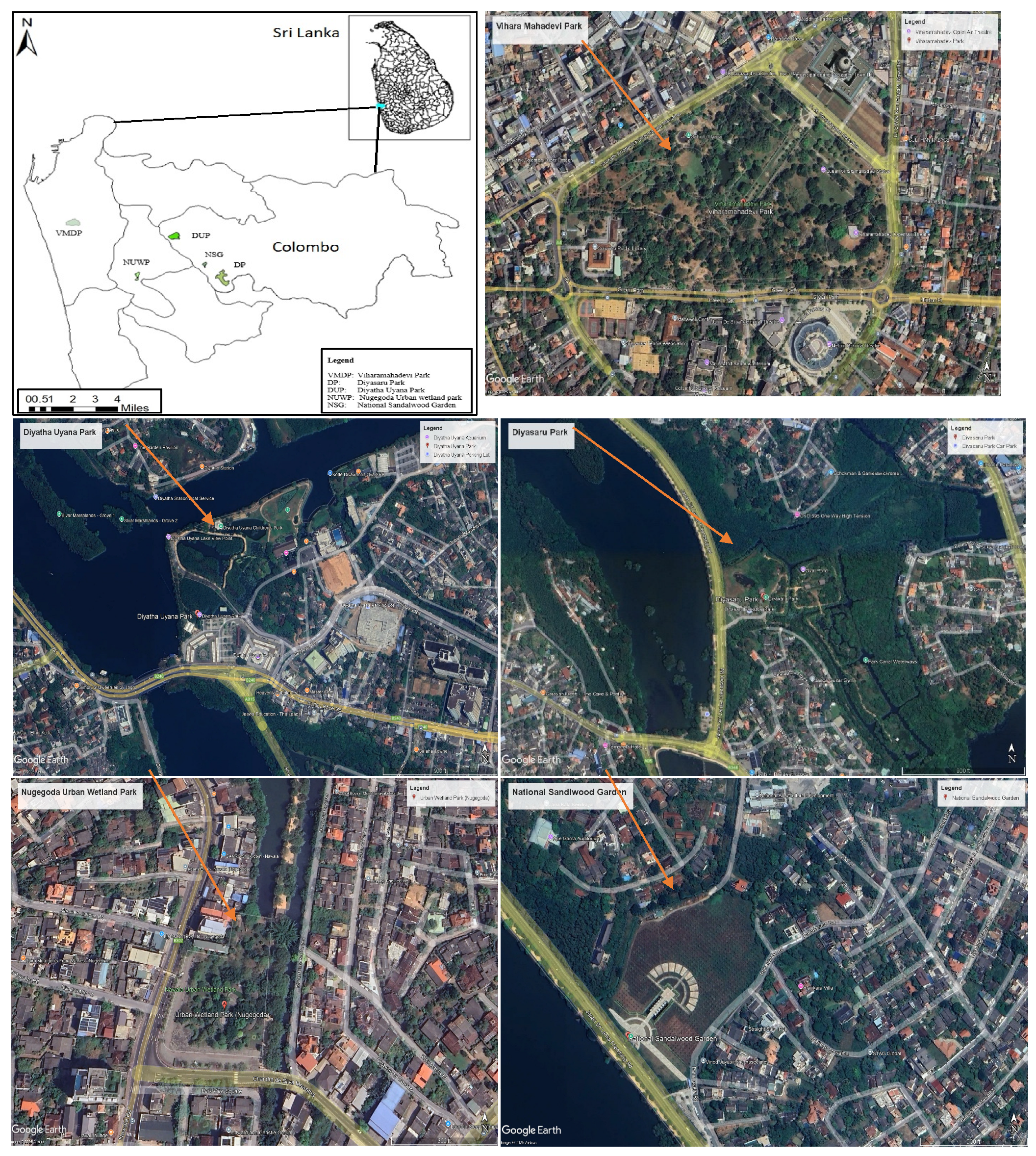
The study was carried out in selected urban parks in Colombo and suburbs: Vihara Mahadevi Park (VMDP), Diyasaru Park (DP), Diyatha Uyana Park (DUP), Nugegoda Urban wetland park (NUWP) and the National Sandalwood Garden (NSG) which were centered around rapidly urbanized areas in Colombo district (Figure 1). Where the park layout, Park composition and the park size could be clearly observed. Colombo district (6°55′37.4844″ N and 79°51′40.4784″ E), is in the Wet Zone of Sri Lanka, the major commercial center of the country where many government institutes and other industries exist. Colombo District has an area of 699 km2 which 13% of the country’s total population are residents. Colombo experiences an annual average temperature range between 28–29 ° C , Colombo area has a slight variation in the monthly average temperature in compared to the rest of the country [6]. However, the daily maximum temperature in the Colombo urban area averages around 31 ° C all year around. According to the meteorological records, the average temperature of Colombo area has increased by 1.64 ° C from 1997–2017. In recent years, the urban thermal environment has deteriorated due to the UHI phenomena in the Colombo urban area caused by rapid urbanization and accelerating global warming.

2.1.1. Park Layout (Park Area, Park Perimeter, Park Shape)

The mapping of the selected urban parks was performed using Google earth Pro 7.3 images and actual field-based reference points obtained by visiting each of the urban parks. The data obtained from the google earth were the images taken on 17 December 2022. Selected urban parks in the Colombo urban city were marked accordingly and the obtained shape files were geo-referenced by Universal Traverso Mercator (UTM) coordinate system and then visually interpreted to derive the selected urban parks in ArcMap 10.8 software (Figure 1). An accurate assessment was conducted based on obtained ground truth data around the boundary of each selected park during the field work in September-December 2023. The total accuracy of the derived map was 91.23%.
After obtaining an accurate map of the selected parks in the study area, ArcMap 10.8 software was used to calculate the park layout characteristics including park area and park perimeter. The area (A) and the perimeter (P) of each park were calculated by using the Geometric calculator tool in ArcGIS 10.8. The shape of the park was determined by the Perimeter/Area (P/A) ratio which is calculated by using the field calculator on ArcMap 10.8 software from the previously derived area and perimeter.

2.1.2. Vegetation Structure in Urban Parks

Division of each park into sampling quadrats for systematic analysis was facilitated by using Fishnet option of ArcMap 10.8 software to collect field-based data. Quadrats of 30 × 30 m, (0.09 ha) were created. The procedure for a comprehensive and fine-grained examination of the vegetation dynamics within the parks provides a foundation for a more detailed investigation into various aspects of the study area. Subsequently, the number of sampling quadrats from each park was determined in proportion to its respective area, and a stratified random sampling methodology was employed. The number of sampling plots for each park is shown in Table 1. This strategic approach ensured the representative sampling process of the diverse ecological zones within each park, enhancing the accuracy of data collection.
Fishnet maps were systematically created for each park, and field measurements were established and executed. The data collection procedures were implemented on days characterized by optimal weather conditions, specifically, sunny days under clear skies. The utilization of pertinent optical instruments and adherence to standardized forestry methodologies contributed to a rigorous and systematic approach, ensuring the precision and reliability of the acquired information throughout the designated timeframe. The field measurements were conducted in fifty (50) plots and within each plot all the trees were meticulously measured, resulting in a comprehensive primary data collection of 239 tree individuals for all sampling sites. Various indices of urban forest structures, such as tree height (H), diameter at breast height (DBH), stem density (SD), tree basal area (BA), and canopy density (CD), were systematically measured at each sampling quadrat using standard methods.

2.1.3. Park Composition

Satellite images obtained from LANDSAT were utilized to analyze the environmental composition of various parks. Data were downloaded from the USGS Earth Explorer (https://earthexplorer.usgs.gov/) as Level 1 Terrain Corrected (L1TP) products, WRS path/Row numbered 141/056 where the cloud cover is <5%. The images were processed using ArcGIS 10.8 software, employing the supervised classification tool to categorize the terrain into three primary classes: green cover, water cover, and impervious surface cover. Ground truth data collected during field visits was utilized to ensure accuracy, which was overall 88.75%. This data allowed for a comparison between the classified images and real-world observations. Additionally, the kappa coefficient, a statistical measure of agreement between classification results and ground truth data, was generated to assess the accuracy of the classification process. Kappa coefficient of 0.86, confirming its robustness despite the 30 m resolution used for this study. Through rigorous analysis within ArcMap 10.8, the percentages of water bodies, impervious cover, and green areas within each park were quantified accordingly and used for further analysis.

2.1.4. Park Cool Island Intensity (PCII)

Temperature data were systematically collected to capture peak solar heating and maximum park–urban thermal contrast, following standard protocols for PCI studies [27]. Temperature was measured in 3 replicates per quadrat monthly using Mercury thermometer during the days that are characterized by clear skies and optimal meteorological conditions, from October 2023 to February 2024, between 11.00 a.m. and 1.00 p.m. This time window also reduces the effect of early morning and late afternoon temperature lag that may confound PCII estimation [28]. The impact of the inter-monsoon surge during the study period was minimized by choosing the days on which temperature measurements were not affected by the inter-monsoon surge in cloud cover and avoiding their impact on evapotranspiration and PCII. Monthly air temperature was measured in the selected sampling points of the park (Tp) and within a 500 m buffer zone surrounding the adjacent urban area (Tu). Subsequently, the monthly average temperatures for Tp and Tu were computed separately. Then the PCI intensity was calculated using Equation (1).
TPCI = Tu − Tp
where Tu is the average temperature within a 500 m buffer zone surrounding the adjacent urban area (excluding other parks and water bodies), and Tp is the average temperature inside the park. The calculated TPCI values for each park are then utilized for further analysis with the other data obtained throughout the study.

2.2. Statistical Analysis

Statistical analysis was performed by using Minitab 17. Linear regression models and Pearson’s correlation were employed to determine the influence of urban park characteristics on PCI intensity. Linear regression analysis models were utilized to assess the relationship between PCI and urban park characteristics where all the data nearly follow the normal distribution, PCI was treated as the dependent variable, while urban park characteristics were considered as independent variables. Furthermore, standardized coefficients of regression analysis were computed to quantify the relationship between PCI and urban park characteristics. Additionally, 9 linear regression models were established to unveil the quantitative relationship between PCI and urban park characteristics.

3. Results

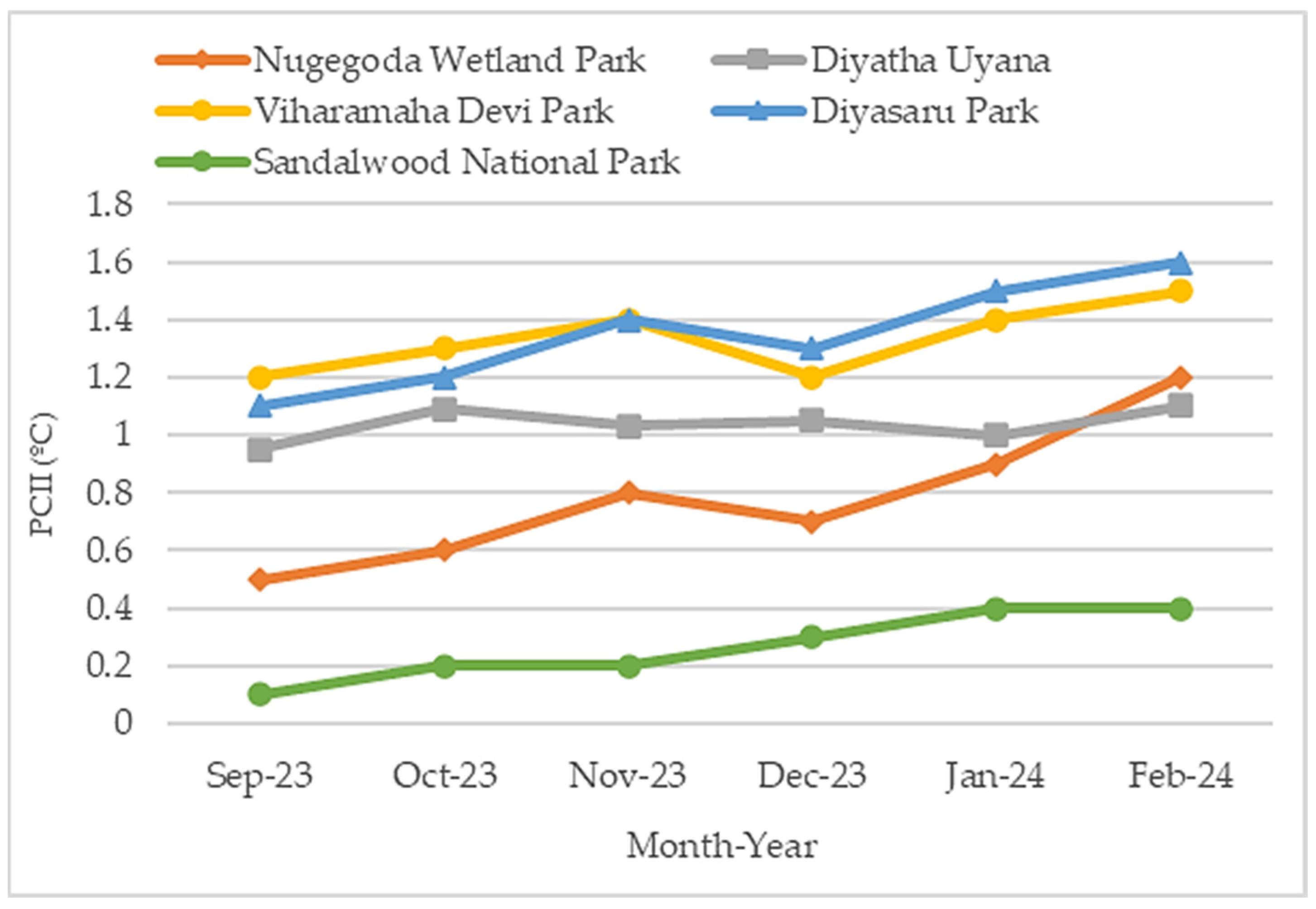
The statistics of the PCI intensity measures and the urban park size along with the number of selected plots in each park are given in Table 2. The area and perimeter of selected urban parks had a relatively large range of mean ± standard deviation of 16.11 ± 10.90 ha and 2012.14 ± 1031.90 m, respectively. Figure 2 shows the temporal variation in PCII in each park during the study period. Accordingly, the highest PCI was obtained in the park that has the largest area and the perimeter, which can be a main influence on the PCII. Furthermore, several other factors can also affect the PCII.
Moreover, on average, all parks were cooler than their surrounding environment, which confirmed the term “Park Cool Island”. However, several other factors such as park vegetation characteristics and park composition in each park affect the PCI intensity in several ways rather than the size of each park.
Figure 2 shows temporal variation in Park Cool Island Intensity (PCII) across the five selected urban parks for the study from September 2023 to February 2024. Diyasaru Park and Viharamaha Devi Park consistently recorded the highest PCII values, exceeding 1.4 °C by February 2024, while National Sandalwood Garden showed the lowest PCII throughout the study period. All parks exhibited a general upward trend in PCII from September to February, with a slight decline in December, likely to reflect the influence of monsoonal rainfall and cloud cover on temperature differentials.
Table 3 indicates the regression results that clearly demonstrate that the park area (R2 = 0.877) and perimeter (R2 = 0.811) are key determinants of PCII, with larger parks providing greater cooling benefits. However, the weaker relationship for shape (P/A ratio; R2 = 0.701) suggests that park compactness alone does not strongly influence cooling when compared to overall size. Due to limited parks used for the study may be cause for the weaker relationship. Among vegetation characteristics, basal area (R2 = 0.868) and canopy density (R2 = 0.871) were the most influential drivers, indicating that mature, well-developed tree stands with dense canopies are critical for maximizing park cooling effects. Stem density, tree height, and diameter also contributed positively, though with slightly lower influence. These results collectively emphasize that prioritizing larger parks with high canopy cover and mature tree structure is more effective for enhancing PCII than focusing solely on park shape and other minor vegetation metrics.

4. Discussion

4.1. Temporal Variation in PCII Across Each Park

As shown in Figure 2, Diyasaru Park (DP), Vihara Maha Devi Park (VMDP), and Nugegoda Urban Wetland Park (NUWP) show a broadly parallel temporal pattern in PCII over the observed months, with values gradually increasing from September to November, experiencing a slight decrease in December, and gradually increasing again through January to February. Similarly, similar trends suggest these parks might be similarly responsive to shared weather patterns (such as rainfall in December), local climate, or broader environmental factors like seasonal vegetation cycles and park usage. The synchronized decrease in PCII during December across these parks likely reflects a transient, external factor. December often coincides with monsoonal or heavier than average rainfall in many regions, which may temporarily alter microclimates, reduce temperature differences, or influence pollutant deposition, all of which can depress PCII measurements [29]. Diyatha Uyana Park (DUP) shows a less pronounced fluctuation compared to the above three parks, with a more moderate, steady PCII and a smaller decline in December. National Sandalwood Garden (NSG), meanwhile, consistently records the lowest PCII values throughout the observed period, although it also exhibits a steady increase. Its lower baseline may be due to factors such as reduced vegetative cover, younger plantings, less park area, or unique microclimatic effects [30].

4.2. Effect of Urban Park Size and PCII

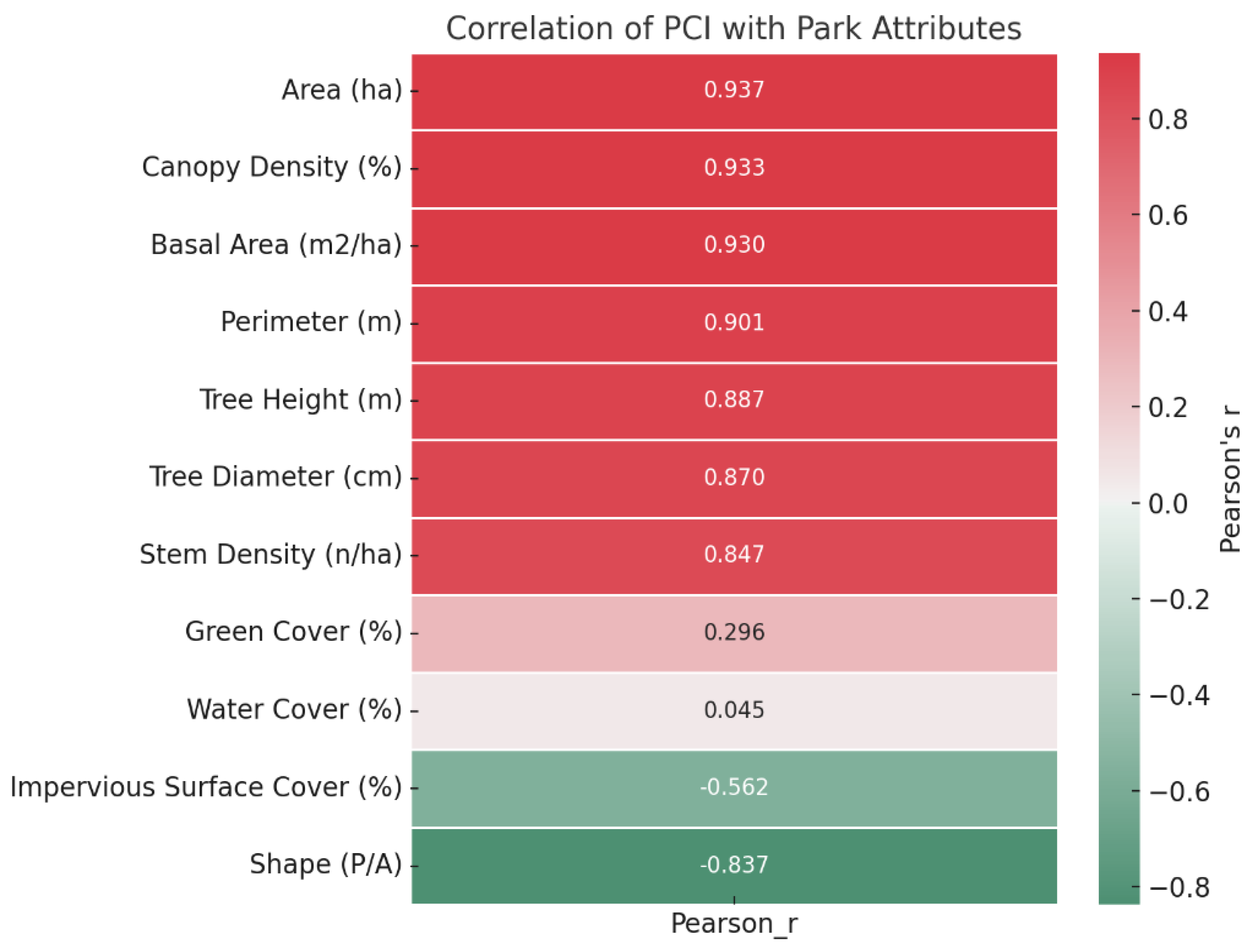
An examination of the relationship between PCII and various attributes of urban parks, such as area and perimeter, reveals noteworthy correlations. Figure 3 illustrates the relationship between PCII and urban park size incorporating both area and perimeter metrics. Notably, the Pearson correlation coefficient underscores a stronger correlation between the Urban Park area and PCII compared to park perimeter and PCII, indicating a more pronounced influence of park area on PCII. Intriguingly, despite these findings, there is no significant relationship observed between PCII and park shape, as indicated by the park Perimeter to Area (P/A) ratio. Moreover, qualitative regression models indicate a positive linear relationship between PCII and urban park area as well as perimeter. Specifically, the results demonstrate that PCII exhibits a consistent linear increase with the expansion of urban park area and perimeter. This underscores the intrinsic connection between park size and PCII, shedding more light on the dynamic interplay between urban park attributes and the intensity of associated activities or amenities.
As shown in Table 3, the linear model with urban park area and perimeter as independent variables could explain 87.7% and 81.1% of PCII variance, respectively. However, the urban park area plays a crucial role in increasing PCII. Although there is no significant relationship between park shape and PCII, the regression models indicate a negative trend, where increased shape complexity is associated with a reduction in PCII, explaining 70.1% of the variance. It is suggested that the complex relationship between urban park characteristics and PCII cannot be represented only by the urban park size [31]. Differences in PCI intensity among parks are linked to variations in park layout, vegetation, and composition. Comparison of PCII among the parks confirms that the parks reduce temperatures by an average of 0.98 °C compared to surrounding areas, highlighting the role of urban green spaces in mitigating urban heat. Additionally, factors like extreme weather, pests, and management may also influence cooling capacity [32].
The findings highlight the critical role of park size in determining the intensity of the PCI effect in urban areas. It finds a strong positive correlation between park area and PCII, with a coefficient of 0.937, and a 0.901 correlation for park perimeter, showing that larger parks generate stronger cooling effects. Diyasaru Park, the largest park studied, exhibited the highest PCII, while the smallest, NSG, had the lowest PCII. Though the recommended park size for maximizing PCII is around 26.24 ha, this may vary based on specific park features. Regression analysis confirms a positive linear relationship between park size and PCII, indicating that larger parks contribute more significantly to mitigating the UHI effect. The enhanced cooling in larger parks is primarily due to greater tree density and vegetation, which create cooler microclimates compared to surrounding urban areas [33]. This shows significant implications for urban planning and environmental management, advocating for the development of larger green spaces as an effective strategy to combat rising urban temperatures. By promoting larger urban parks, cities can address climate-related challenges, enhance cooling efficiency, and create more sustainable, livable environments.
This study investigates the relationship between park shape, measured by the Perimeter-to-Area (P/A) ratio and PCII. While no significant correlation was found between park shape and PCII, studies from other countries have suggested a potential inverse relationship, where parks with more complex shapes (higher P/A ratios) tend to exhibit higher PCI intensities [1]. However, due to the limited sample size, this relationship remains inconclusive in the present study. The findings align with studies in other tropical and humid cities such as Singapore, Bangkok, and Chennai, which report strong positive correlations between urban park area and cooling intensity (R2 > 0.85) and emphasize canopy cover as a dominant driver of cooling effects [19,34]. These parallels provide a climatically appropriate context for Colombo, highlighting that large, vegetated parks can effectively mitigate UHI impacts in humid tropical cities. The research highlights the need to expand the study to a larger number of parks and consider additional factors such as proximity to water bodies and geological features. For example, DUP is partly bordered by a water body, which may influence its microclimate, unlike other parks in the study, which are far from water sources. Other geographical factors like soil composition, elevation, and vegetation distribution may also interact with park shape to affect PCII. Future studies should incorporate a wider range of parks, consider geographical and geological factors, and use advanced analytical techniques to better understand the relationship between park morphology and urban cooling effects [6,35]. This would help to clarify the role of park shape in enhancing urban microclimates and the effectiveness of green infrastructure. The findings provide insights for urban planners to design parks that enhance cooling efficiency and address urban heat challenges, contributing to sustainable urban planning strategies.

4.3. Effect of Urban Park Vegetation Structure and PCII

The significant correlation between PCII and vegetation attributes such as stem density, tree diameter, tree height, basal area and canopy density is shown in Figure 3. These findings indicate a notable influence of urban park vegetation structure on PCII, complementing the previously identified associations with park area and perimeter. The Pearson correlation coefficients computed between PCII and various urban forest structures revealed a distinct order of significance, as the canopy density exhibited the strongest correlation, followed by tree basal area, tree height, tree diameter, and stem density, respectively. This hierarchical arrangement underscores differential weightages of each vegetation characteristic in influencing PCII within urban park environments. The consistent pattern of high correlation coefficients across multiple variables (stem density, tree diameter, tree height, basal area, and canopy density) suggests a robust relationship between park vegetation/forest structure and PCII, which strengthens the validity of the findings.
In addition to analyzing the qualitative aspects of the observed relationship of the different urban park vegetation characteristics and the PCII, several regression models have been established for each vegetation characteristic. The results show that each of the vegetation characteristics, including canopy density, tree basal area, tree height, tree diameter, and stem density shows a positive linear relationship with PCII, indicating an increase in PCII with the increment of urban forest structures in parks. It was seen that among the vegetation characteristics, canopy density shows the strongest relationship with the PCII.
These linear models developed using several urban park characteristics, including stem density, tree diameter, tree height, basal area and canopy density as independent variables, could explain 71.7%, 75.7%, 78.4%, 86.8% and 87.1% variance in PCII, respectively, for the five selected urban parks. Accordingly, the established models indicate that several vegetation structures present in each park have a considerable impact on PCII. This study emphasizes the crucial role of vegetation characteristics in urban parks for mitigating the UHI effect and enhancing cooling microclimates. Analysis reveals strong correlations between vegetation features such as canopy density, tree height, diameter, stem density, and basal area and PCII, with correlation coefficients ranging from 0.847 to 0.933. Canopy density is the most influential factor, followed by tree basal area, height, and diameter. The dense canopies in Vihara Mahadevi and Diyasaru Parks maximize PCII by providing shade, reducing solar absorption, increasing evapotranspiration, and promoting airflow and heat dispersion. Other vegetation characteristics also contribute to cooling through mechanisms like evapotranspiration, where trees with larger basal areas and diameters release water vapor into the atmosphere, cooling air and surfaces [36]. Additionally, vegetation influences airflow and ventilation, with taller trees and greater stem density modifying wind patterns to promote convective cooling [37,38]. Trees with larger basal areas also act as thermal buffers, gradually releasing stored heat at night, enhancing nighttime cooling [31]. The biodiversity of tree species further boosts ecological resilience, as species vary in their heat tolerance and cooling capacities, making urban parks more adaptive to climate change [9]. By optimizing vegetation characteristics, urban planners can design parks that effectively mitigate the UHI effect, enhance thermal comfort, and promote environmental sustainability [39].

4.4. Effect of Urban Park Composition and PCII

Urban parks were categorized into three classes depending on their environmental composition as % green cover, % water cover and % impervious surface cover. By correlating urban park classification with the PCII of each park, the correlation between each of these characteristics and the PCII is notably very low, indicating that there was no significant relationship between the park composition and the PCII for the selected parks. It was found that the % of the green cover in parks has been a major factor in increasing the PCII rather than the % of impervious cover and the % of water cover. However, the green cover and water cover were directly proportionate to the PCII while the impervious surface cover will have the opposite effect to the PCII.
Apart from the factors discussed above, the impact of park composition, such as green cover, water cover, and paved surfaces, has also been impacted on PCI intensities in five urban parks in Colombo. On average, the parks exhibited 76.54% green cover, 12.70% water cover, and 10.76% paved surfaces. Contrary to expectations and findings from other studies [40], no significant relationship between these composition characteristics and PCI intensity was found. However, positive coefficients for water and green cover, and a negative coefficient for paved cover, suggest a trend where higher green and water cover may enhance cooling, while more paved surfaces reduce PCII. Notably, parks like VMDP and DP, with over 90% green and water cover, showed the highest PCI intensities, supporting the idea that these elements contribute to cooling. The lack of statistical significance may be due to the small sample size and other uncertainties. Future research with a larger and more diverse set of parks, accounting for confounding factors like location and surrounding land use, is needed to clarify the relationship between park composition and PCII. These findings suggest that increasing green and water cover while minimizing paved surfaces in urban parks could help mitigate the UHI effect. Policymakers can use these insights to design sustainable, resilient urban environments that enhance residents’ well-being and conserve natural resources.

4.5. Other Factors Affecting PCII

Beyond the park characteristics previously analyzed, it is important to recognize the numerous other factors that may influence PCII. Extremes in weather conditions and occurrences of natural hazards pose direct threats to park vegetation, thereby compromising its cooling effect [9]. Moreover, studies have shown that pest attacks and diseases on plant species within urban parks significantly reduce stem density, consequently impacting PCII [41]. Lack of proper management of urban parks may also have created loss of vegetation and polluted water bodies, which may also have an impact on the cooling capacity of an urban park and reduce their ability to combat urban heat and climate regulation. Additionally, extreme weather events such as increased precipitation rates and prolonged drought periods can alter park composition, further affecting PCII. Furthermore, factors such as air pollution levels, soil composition, and surrounding land use patterns may also play pivotal roles in determining PCII. Thus, a comprehensive understanding of these diverse factors is crucial for effective park planning and management strategies aimed at maximizing cooling benefits. Further research is necessary to comprehensively analyze these potential factors over an extended period to see how these factors also collectively contribute to PCII.
This study confirms that urban parks exhibit an average cooling effect of approximately 0.98 °C compared to their surrounding environments, reinforcing the concept of PCII. Larger parks, as noted in prior research [1], show stronger PCII, establishing a positive linear relationship between park size and cooling effects. Conversely, complex park shapes, with more contact with built-up areas, diminish PCI intensity [15,27]. A study by Qiu and Jia in 2020 underscores the critical role of urban forest structures in enhancing PCII, with canopy density, tree shading, and evapotranspiration being key cooling mechanisms [19]. However, key limitations include the relatively small number of parks analyzed (n = 5), potential seasonal bias from a 6-month study window, and reliance on mercury thermometers, which may have lower precision and accuracy than digital sensors. Mercury thermometers were selected due to their accessibility, robustness in outdoor field conditions, and ability to provide precise readings within the required temperature range. While digital loggers may provide higher temporal resolution, mercury thermometers remain widely used in PCI studies [21]. Another major limitation of this study is that it focused on identifying empirical relationships between park characteristics and Park Cool Island Intensity (PCII) rather than developing predictive models. Future research should apply advanced statistical and machine learning methods, such as ridge, LASSO, or Random Forest regressions, to address multicollinearity and improve prediction accuracy. Future research should expand sampling to more parks across multiple climate seasons, employ automated data loggers for continuous temperature monitoring, and integrate additional variables such as species diversity, soil moisture, and anthropogenic heat sources [36]. These improvements would refine the PCII models and enhance predictive power for urban cooling interventions.
In addition, further research is needed to examine tree position, species diversity, and other factors. Park composition, particularly the balance of green and water coverage, significantly impacts PCII, aligning with prior studies [42,43,44]. Increasing green and water coverage while reducing paved areas, is essential for maximizing PCII and mitigating urban heat [41]. Urban planners should prioritize strategies to enhance canopy density, focusing on effective tree planting and forest management practices, such as tree selection and pruning [9]. Incorporating multilayered forest structures can further intensify cooling effects, while increasing park size and optimizing park tree cover patterns can enhance the PCII [45]. Additionally, optimizing park composition by increasing vegetation and water bodies while reducing impervious surfaces, such as paved areas, will help mitigate local temperatures and support sustainable urban development. Policymakers should consider the most relevant park characteristic to maximize ecosystem services when choosing the type of park supplied in the city [46]. These findings provide guidelines for policymakers to integrate scientific evidence into urban planning, helping cities build resilience to heat stress and promote ecological sustainability.

5. Conclusions

This study demonstrates the crucial role of urban parks in mitigating the UHI effect, particularly in urban areas, where parks act as heat absorbers and climate regulators, confirming the Park Cool Island (PCI) phenomenon. Based on ground data and LANDSAT imagery, it establishes a strong relationship between PCII and park characteristics. Larger parks contribute more to UHI mitigation; however, park shape and forest structure, especially tree canopy density, also play important roles. The study highlights strategies for enhancing the cooling performance of urban parks through effective vegetation management, emphasizing the importance of diverse vegetation, dense urban forest structures, reduction in impervious surfaces, and increase in tree and water cover. Multilayer planting styles involving trees, shrubs, and grasses can maximize the cooling potential of urban parks. Further research is needed to refine these findings.
Urban planners, landscape architects, and policymakers should prioritize data-driven approaches for sustainable urban development, creating well-designed urban green spaces and integrating ecological principles into green infrastructure planning. Strategies include incorporating diverse green spaces to mitigate the urban heat island and improve thermal comfort, designing resilient green networks with strong ecological connectivity, and developing urban green infrastructure that provides multiple ecosystem services for community well-being. The findings of this study offer valuable insights for improving park design and provide feedback on policies for climate adaptation and resilient cities.

Author Contributions

Conceptualization, A.A.S.G.W. and B.G.N.S.; methodology, A.A.S.G.W. and B.G.N.S.; validation, A.A.S.G.W. and T.P.; formal analysis, A.A.S.G.W. and B.G.N.S.; investigation, A.A.S.G.W.; writing—original draft preparation, A.A.S.G.W.; writing—review and editing, B.G.N.S. and T.P.; supervision B.G.N.S.; funding acquisition, T.P. All authors have read and agreed to the published version of the manuscript.

Funding

This research received no external funding.

Data Availability Statement

The raw data supporting the conclusions of this article will be made available by the authors on request.

Acknowledgments

This research has been supported by the University of Kelaniya, Sri Lanka and the Erasmus+ Merging Voices Consortium. Further, they acknowledge the Urban Development Authority, Sri Lanka, Colombo Municipal Council, Sri Lanka Land Development Corporation for granting permission to conduct this study at selected parks.

Conflicts of Interest

The authors declare no conflicts of interest.

Abbreviations

The following abbreviations are used in this manuscript:
PCIPark Cool Island
PCIIPark Cool Island Intensity
UHIUrban Heat Island
SDGSustainable Development Goals
DBHDiameter at Breast Height
UTMUniversal Traverso Mercator
CDCanopy Density

References

  1. Chapman, S.; Watson, J.E.M.; Salazar, A.; Thatcher, M.; McAlpine, C.A. The impact of urbanization and climate change on urban temperatures: A systematic review. Landsc. Ecol. 2017, 32, 1921–1935. [Google Scholar] [CrossRef]
  2. Nuruzzaman, M. Urban Heat Island: Causes, Effects and Mitigation Measures—A Review. Int. J. Environ. Monit. Anal. 2015, 67, 67–73. [Google Scholar] [CrossRef]
  3. Tella, J.L.; Hern, D.; Blanco, G.; Hiraldo, F. Urban Sprawl, Food Subsidies and Power Lines: An Ecological Trap for Large Frugivorous Bats in Sri Lanka? Diversity 2020, 12, 94. [Google Scholar] [CrossRef]
  4. Oleson, K.W.; Monaghan, A.; Wilhelmi, O.; Barlage, M.; Brunsell, N.; Feddema, J.; Hu, L.; Steinhoff, D.F. Interactions between urbanization, heat stress, and climate change. Clim. Change 2015, 129, 525–541. [Google Scholar] [CrossRef]
  5. Masson, V.; Marchadier, C.; Adolphe, L.; Aguejdad, R.; Avner, P.; Bonhomme, M.; Bretagne, G.; Briottet, X.; Bueno, B.; de Munck, C.; et al. Adapting cities to climate change: A systemic modelling approach. Urban Clim. 2014, 10, 407–429. [Google Scholar] [CrossRef]
  6. Fonseka, H.P.U.; Zhang, H.; Sun, Y.; Su, H.; Lin, H.; Lin, Y. Urbanization and its impacts on land surface temperature in Colombo Metropolitan Area, Sri Lanka, from 1988 to 2016. Remote Sens. 2019, 11, 957. [Google Scholar] [CrossRef]
  7. Jabbar, H.K.; Hamoodi, M.N.; Al-Hameedawi, A.N. Urban heat islands: A review of contributing factors, effects and data. IOP Conf. Ser. Earth Environ. Sci. 2023, 1129, 012038. [Google Scholar] [CrossRef]
  8. Han, Q.; Nan, X.; Wang, H.; Hu, Y.; Bao, Z.; Yan, H. Optimizing the Surrounding Building Configuration to Improve the Cooling Ability of Urban Parks on Surrounding Neighborhoods. Atmosphere 2023, 14, 914. [Google Scholar] [CrossRef]
  9. Aronson, M.F.J.; Lepczyk, C.A.; Evans, K.L.; Goddard, M.A.; Lerman, S.B.; MacIvor, J.S.; Nilon, C.H.; Vargo, T. Biodiversity in the city: Key challenges for urban green space management. Front. Ecol. Environ. 2017, 15, 189–196. [Google Scholar] [CrossRef]
  10. Herath, H.M.P.I.K.; Halwatura, R.U.; Jayasinghe, G.Y. Evaluation of green infrastructure effects on tropical Sri Lankan urban context as an urban heat island adaptation strategy. Urban For. Urban Green. 2018, 29, 212–222. [Google Scholar] [CrossRef]
  11. Sadeghian, M.M.; Vardanyan, Z. The Benefits of Urban Parks, a Review of Urban Research. J. Nov. Appl. Sci. 2013, 2, 231–237. [Google Scholar]
  12. Irfeey, A.M.M.; Chau, H.W.; Sumaiya, M.M.F.; Wai, C.Y.; Muttil, N.; Jamei, E. Sustainable Mitigation Strategies for Urban Heat Island Effects in Urban Areas. Sustainability 2023, 15, 10767. [Google Scholar] [CrossRef]
  13. Zhang, J.; Gou, Z.; Shutter, L. Effects of internal and external planning factors on park cooling intensity: Field measurement of urban parks in gold coast, Australia. AIMS Environ. Sci. 2019, 6, 417–434. [Google Scholar] [CrossRef]
  14. Panagopoulos, T.; Duque, J.A.G.; Dan, M.B. Urban planning with respect to environmental quality and human well-being. Environ. Pollut. 2016, 208, 137–144. [Google Scholar] [CrossRef]
  15. Wang, X.; Cheng, H.; Xi, J.; Yang, G.; Zhao, Y. Relationship between park composition, vegetation characteristics and cool island effect. Sustainability 2018, 10, 587. [Google Scholar] [CrossRef]
  16. Ren, Z.; He, X.; Zheng, H.; Zhang, D.; Yu, X.; Shen, G.; Guo, R. Estimation of the relationship between urban park characteristics and park cool island intensity by remote sensing data and field measurement. Forests 2013, 4, 868–886. [Google Scholar] [CrossRef]
  17. Terkenli, T.; Bell, S.; Toskovic, O.; Tomicevic, J.D.; Panagopoulos, T.; Straupe, I.; Kristianova, K.; Staigyte, L.; O’Brien, L.; Zivozjinovic, I. Tourist perceptions and uses of urban green infrastructure: An exploratory cross-cultural investigation. Urban For. Urban Green. 2020, 49, 126624. [Google Scholar] [CrossRef]
  18. Basu, S.; Nagendra, H. Perceptions of park visitors on access to urban parks and benefits of green spaces. Urban For. Urban Green. 2021, 57, 126959. [Google Scholar] [CrossRef]
  19. Qiu, K.; Jia, B. The roles of landscape both inside the park and the surroundings in park cooling effect. Sustain. Cities Soc. 2020, 52, 101864. [Google Scholar] [CrossRef]
  20. Zhang, L.; Wei, D.; Hou, Y.; Du, J.; Liu, Z.; Zhang, G. Outdoor Thermal Comfort of Urban Park—A Case Study. Sustainability 2020, 12, 1961. [Google Scholar] [CrossRef]
  21. Chang, C.R.; Li, M.H.; Chang, S.D. A preliminary study on the local cool-island intensity of Taipei city parks. Landsc. Urban Plan. 2007, 80, 386–395. [Google Scholar] [CrossRef]
  22. Bali Swain, R.; Yang-Wallentin, F. Achieving sustainable development goals: Predicaments and strategies. Int. J. Sustain. Dev. World Ecol. 2020, 27, 96–106. [Google Scholar] [CrossRef]
  23. Ni, X.; Chang, Y.; Bai, T.; Liu, P.; Song, H.; Wang, F.; Jin, M. Projections of Urban Heat Island Effects Under Future Climate Scenarios: A Case Study in Zhengzhou, China. Remote Sens. 2025, 17, 2660. [Google Scholar] [CrossRef]
  24. Ngie, A. Thermal remote sensing of urban climates in south Africa through the mono-window algorithm. Int. Arch. Photogramm. Remote Sens. Spat. Inf. Sci. 2020, XLII-3/W11, 117–123. [Google Scholar] [CrossRef]
  25. Johansson, E.; Emmanuel, R. The influence of urban design on outdoor thermal comfort in the hot, humid city of Colombo, Sri Lanka. Int. J. Biometeorol. 2006, 51, 119–133. [Google Scholar] [CrossRef]
  26. Barbosa, V.R.F.; Damasceno, R.M.; Dias, M.A.; Castelhano, F.G.; Roig, H.L.; Requia, W.J. Ecosystem services provided by green areas and their implications for human health in Brazil. Ecol. Indic. 2024, 161, 11975. [Google Scholar] [CrossRef]
  27. Cao, X.; Onishi, A.; Chen, J.; Imura, H. Quantifying the cool island intensity of urban parks using ASTER and IKONOS data. Landsc. Urban Plan. 2010, 96, 224–231. [Google Scholar] [CrossRef]
  28. Gao, Y.; Pan, H.; Tian, L. Analysis of the spillover characteristics of cooling effect in an urban park: A case study in Zhengzhou city. Front. Earth Sci. 2023, 11, 1133901. [Google Scholar] [CrossRef]
  29. Arnfield, A.J. Two decades of urban climate research: A review of turbulence, exchanges of energy and water, and the urban heat island. Int. J. Climatol. 2003, 23, 1–26. [Google Scholar] [CrossRef]
  30. Feng, X.; Yu, J.; Xin, C.; Ye, T.; Wang, T.; Chen, H.; Zhang, X.; Zhang, L. Quantifying and Comparing the Cooling Effects of Three Different Morphologies of Urban Parks in Chengdu. Land 2023, 12, 451. [Google Scholar] [CrossRef]
  31. Shi, N.; Yu, Y.; Liang, S.; Ren, Y.; Liu, M. Effects of urban green spaces landscape pattern on carbon sink among urban ecological function areas at the appropriate scale: A case study in Xi’an. Ecol. Indic. 2024, 158, 111427. [Google Scholar] [CrossRef]
  32. Street, M.; Reinhart, C.; Norford, L.; Ochsendorf, J. Urban heat island in boston—An evaluation of urban air temperature models for predicting building energy use. In Proceedings of the BS 2013: 13th Conference of the International Building Performance Simulation Association, Chambéry, France, 25–28 August 2013; pp. 1022–1029. [Google Scholar]
  33. Chapman, S. The Impact of Urban Growth and Climate Change on Heat Stress in a Sub-Tropical Australian City. Ph.D. Thesis, The University of Queensland, Brisbane, Australia, 2018. [Google Scholar]
  34. Norouzi, M.; Chau, H.-W.; Jamei, E. Design and Site-Related Factors Impacting the Cooling Performance of Urban Parks in Different Climate Zones: A Systematic Review. Land 2024, 13, 2175. [Google Scholar] [CrossRef]
  35. Zhao, X.; Kong, K.; Wang, R.; Liu, J.; Deng, Y.; Yin, L.; Zhang, B. Assessing the cooling effects of urban parks and their potential influencing factors: Perspectives on maximum impact and accumulation effects. Sustainability 2025, 17, 7015. [Google Scholar] [CrossRef]
  36. Kendal, D.; Williams, N.S.G.; Williams, K.J.H. Drivers of diversity and tree cover in gardens, parks and streetscapes in an Australian city. Urban For. Urban Green. 2012, 11, 257–265. [Google Scholar] [CrossRef]
  37. Stojanovic, N.; Vasiljevic, N.; Mešicek, M.; Lisica, A. The influence of roadside green spaces on thermal conditions in the urban environment. J. Archit. Plann. Res. 2018, 35, 165–178. [Google Scholar]
  38. Nowak, D.J.; Hirabayashi, S.; Doyle, M.; McGovern, M.; Pasher, J. Air pollution removal by urban forests in Canada and its effect on air quality and human health. Urban For. Urban Green. 2018, 29, 40–48. [Google Scholar] [CrossRef]
  39. Barreira, A.P.; Andraz, J.; Ferreira, V.; Panagopoulos, T. Perceptions and preferences of urban residents for green infrastructure to help cities adapt to climate change threats. Cities 2023, 141, 104478. [Google Scholar] [CrossRef]
  40. Makvandi, M.; Li, B.; Elsadek, M.; Khodabakhshi, Z.; Ahmadi, M. The interactive impact of building diversity on the thermal balance and micro-climate change under the influence of rapid urbanization. Sustainability 2019, 11, 1662. [Google Scholar] [CrossRef]
  41. Guan, Y.; Zhang, X.; Zheng, F.; Wang, B. Trends and variability of daily temperature extremes during 1960–2012 in the Yangtze River Basin, China. Glob. Planet. Change 2015, 124, 79–94. [Google Scholar] [CrossRef]
  42. Hashemi Sigari, R.; Panagopoulos, T. A Multicriteria decision-making approach for urban water features: Ecological landscape architecture evaluation. Land 2024, 13, 1799. [Google Scholar] [CrossRef]
  43. Shi, M.; Chen, M.; Jia, W.; Du, C.; Wang, Y. Cooling effect and cooling accessibility of urban parks during hot summers in China’s largest sustainability experiment. Sustain. Cities Soc. 2023, 93, 104519. [Google Scholar] [CrossRef]
  44. Liao, W.; Guldmann, J.M.; Hu, L.; Cao, Q.; Gan, D.; Li, X. Linking urban park cool island effects to the landscape patterns inside and outside the park: A simultaneous equation modeling approach. Landsc. Urban Plan. 2023, 232, 104681. [Google Scholar] [CrossRef]
  45. Algretawee, H. The effect of graduated urban park size on park cooling island and distance relative to land surface temperature (LST). Urban Clim. 2022, 45, 101255. [Google Scholar] [CrossRef]
  46. Barreira, A.P.; Andraz, J.; Ferreira, V.; Panagopoulos, T. Relevance of ecosystem services and disservices from green infrastructure perceived by the inhabitants of two Portuguese cities dealing with climate change: Implications for environmental and intersectional justice. J. Environ. Plan. Manag. 2025, 68, 1390–1420. [Google Scholar] [CrossRef]
Figure 1. Location Map and Google Earth map images of selected urban parks in Colombo, Sri Lanka.
Land 14 02164 g001
Figure 2. Temporal variation in PCII across each park from September 2023 to February 2024.
Land 14 02164 g002
Figure 3. Heatmap of Pearson correlations between PCII and park characteristics.
Land 14 02164 g003
Table 1. Size, PCI intensity and number of sampling plots for each urban park.
ParkArea (ha)Perimeter (m)PCII (°C)No. of Plots
NUWP6.491617.110.82 ± 0.434
DUP17.931866.861.02 ± 0.5410
VMDP23.161864.131.34 ± 0.2115
DP29.313738.921.46 ± 0.2019
NSG3.66973.670.25 ± 0.492
Note: Vihara Mahadevi Park (VMDP), Diyasaru Park (DP), Diyatha Uyana Park (DUP), Nugegoda Urban wetland park (NUWP) and the National Sandalwood Garden (NSG).
Table 2. Park vegetation characteristics and park composition in selected parks.
ParkPCII
(°C)
Vegetation CharacteristicsPark Characteristics
Stem Density (n/ha)Tree Height (m)Tree
Diameter (cm)
Basal Area (m2/ha)CD (%)Green Cover (%)Water Cover (%)Impervious Cover (%)
NUWP0.82 ± 0.436216.6740.085.9668.473.818.57.7
DUP1.02 ± 0.544012.4834.854.4651.654.824.420.8
VMDP1.34 ± 0.216018.8943.996.7578.586.84.29
DP1.46 ± 0.206417.6739.467.8188.388.810.80.4
NSG0.25 ± 0.4995.2115.871.2110.278.55.615.9
Note: Vihara Mahadevi Park (VMDP), Diyasaru Park (DP), Diyatha Uyana Park (DUP), Nugegoda Urban wetland park (NUWP) and the National Sandalwood Garden (NSG). The values of variables are the average data results over the entire area of each park.
Table 3. Regression models of park vegetation characteristics and PCII.
CategoryAttributeRegression ModelR2
Park LayoutArea (ha)y = 0.0412x + 0.31380.877
Perimeter (m)y = 2.069ln(x) − 5.7710.811
Shape (P/A)y = −0.004673x + 1.7510.701
Vegetation/Forest StructureStem Density (n/ha)y = 0.01742x + 0.15940.717
Tree Diameter (cm)y = 0.03761x − 0.33280.757
Tree Height (m)y = 0.07628x − 0.10380.784
Basal Area (m2/ha)y = 0.1743x + 0.06490.868
Canopy Density (%)y = 0.01459x + 0.11110.871
Correlation is significant at the 0.05 level (two-tailed).
Disclaimer/Publisher’s Note: The statements, opinions and data contained in all publications are solely those of the individual author(s) and contributor(s) and not of MDPI and/or the editor(s). MDPI and/or the editor(s) disclaim responsibility for any injury to people or property resulting from any ideas, methods, instructions or products referred to in the content.