Article

Weed Seed Banks in Intensive Farmland and the Influence of Tillage, Field Position, and Sown Flower Strips

by
Liesa Schnee
1,*,
Laura M. E. Sutcliffe
1,
Christoph Leuschner
1 and
Tobias W. Donath
2,*
1
Plant Ecology, Albrecht von Haller Institute for Plant Sciences, Untere Karspüle 2, 37073 Göttingen, Germany
2
Landscape Ecology, Institute for Natural Resource Conservation, Kiel University, Olshausenstr. 75, 24118 Kiel, Germany
*
Authors to whom correspondence should be addressed.
Land 2023, 12(4), 926; https://doi.org/10.3390/land12040926
Submission received: 13 March 2023 / Revised: 3 April 2023 / Accepted: 12 April 2023 / Published: 21 April 2023

Abstract

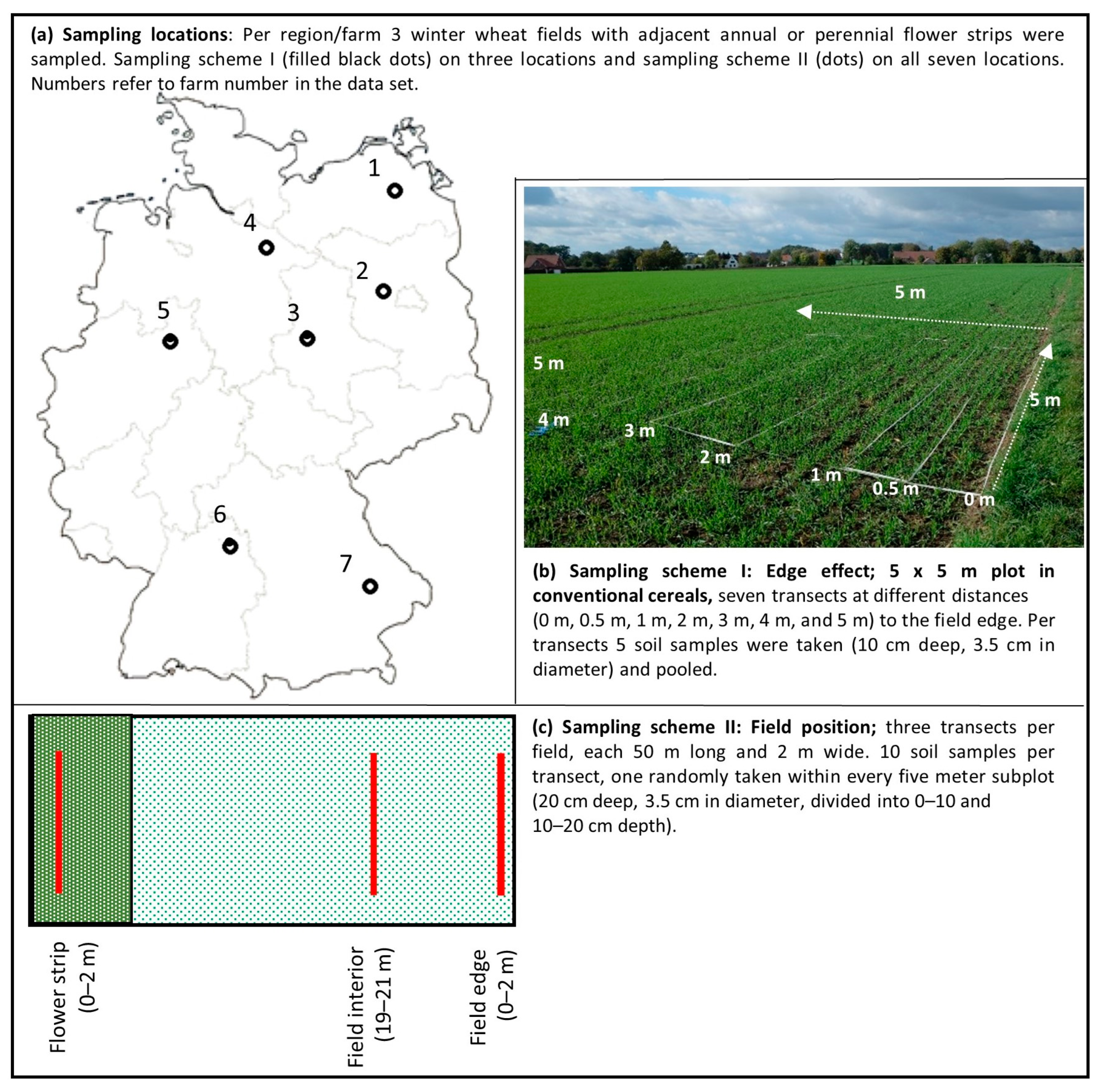
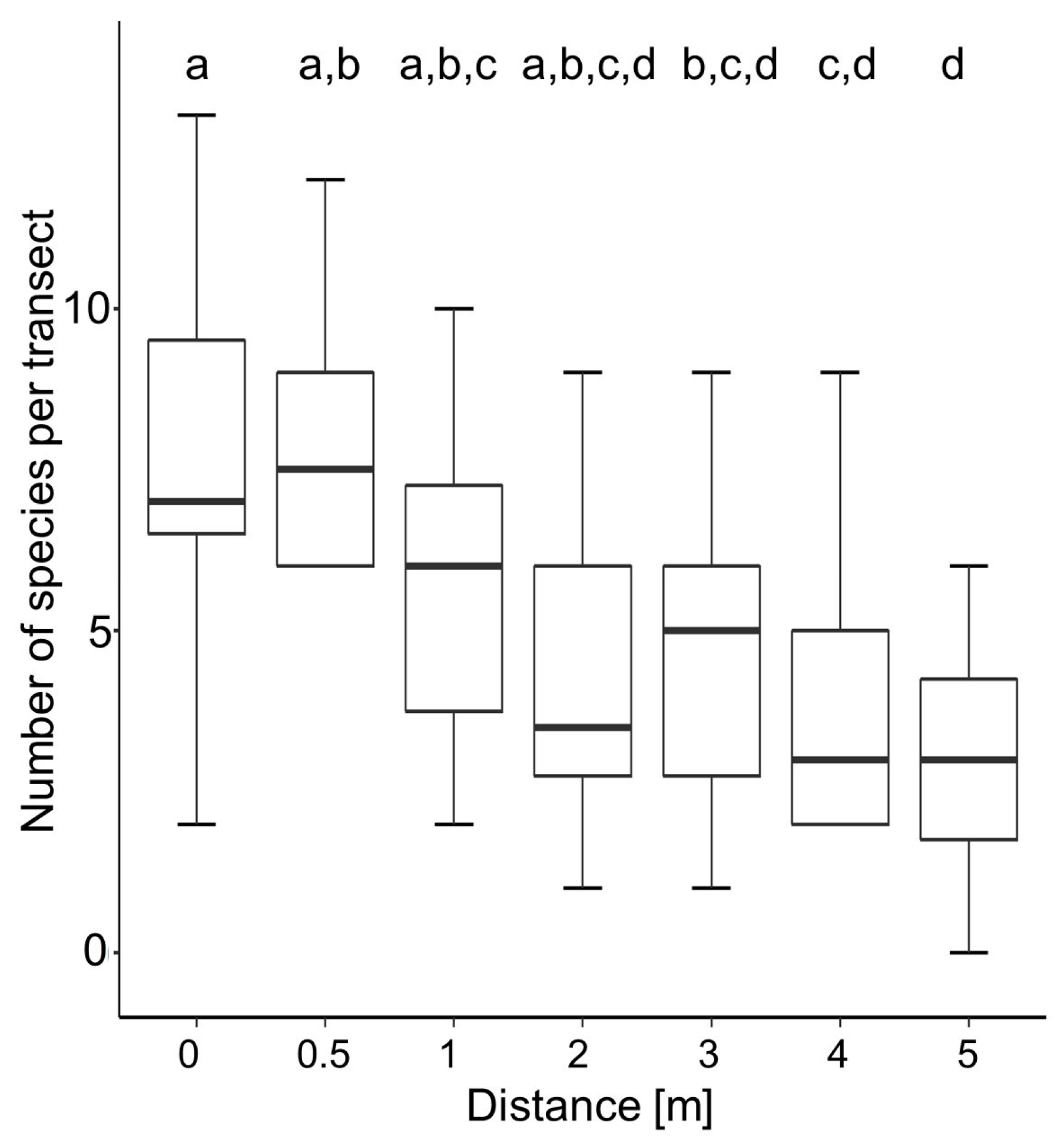
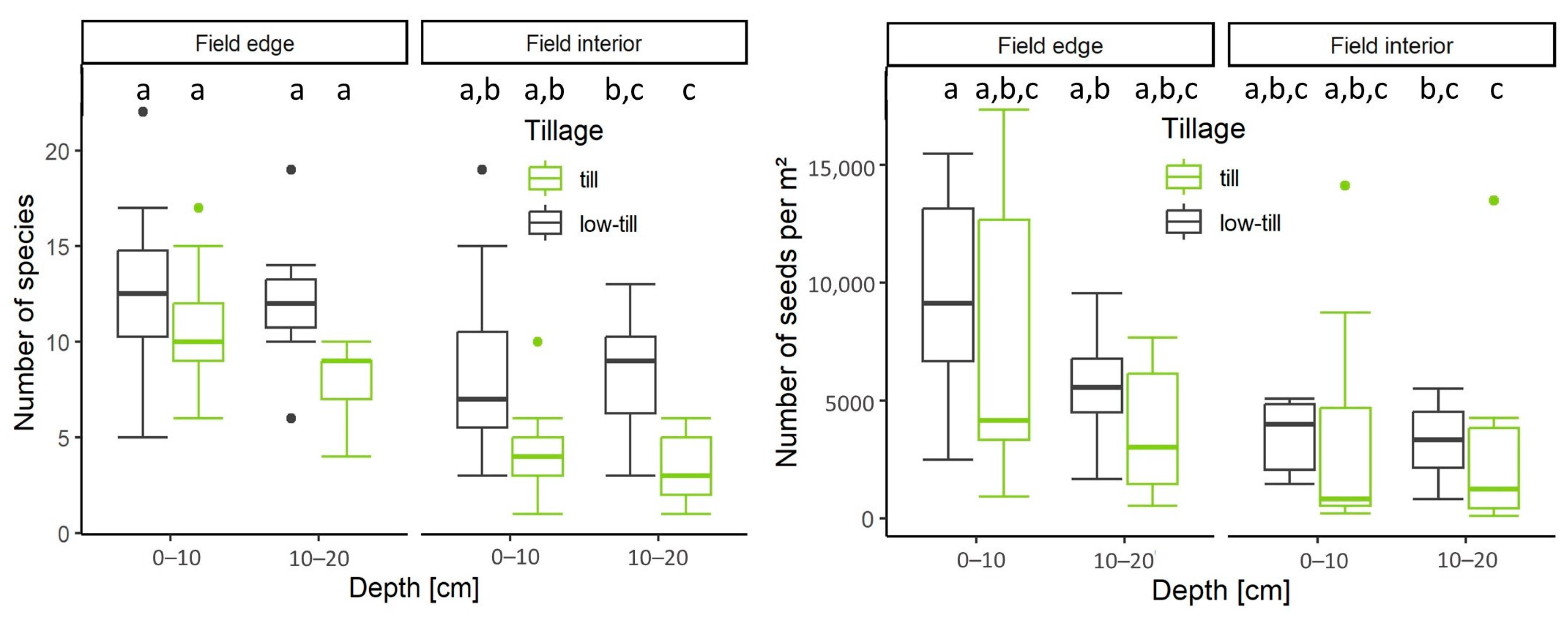
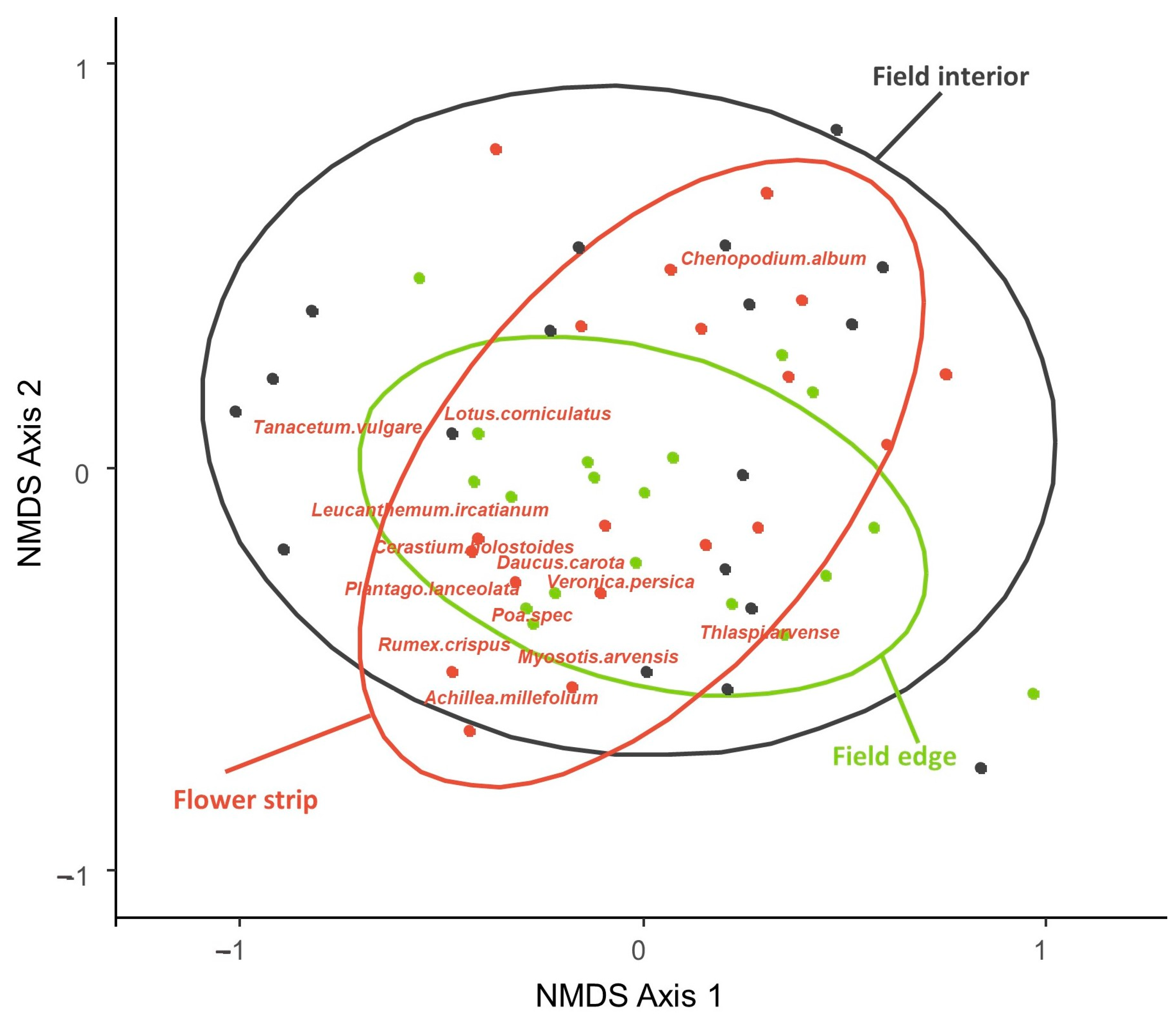
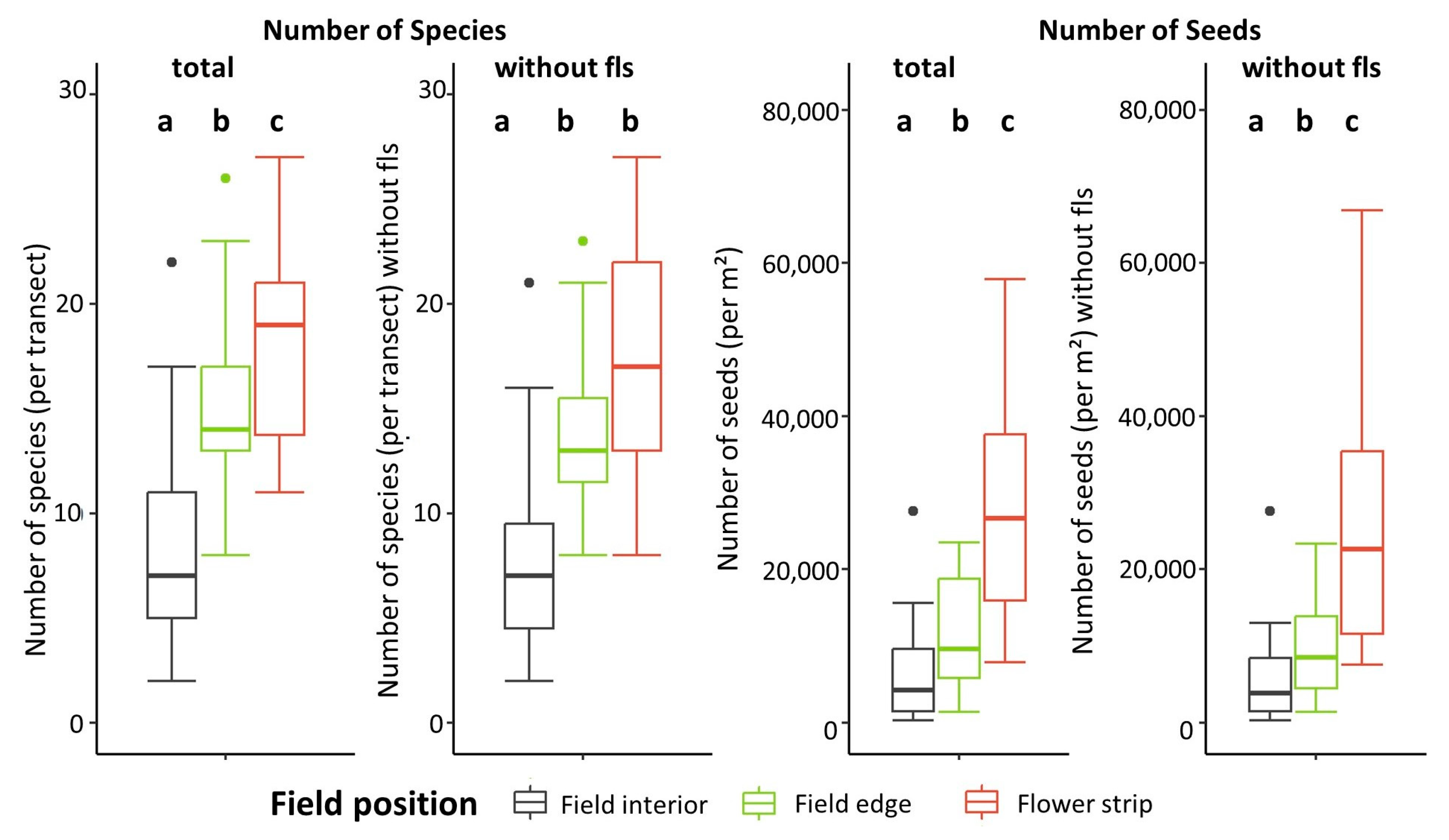
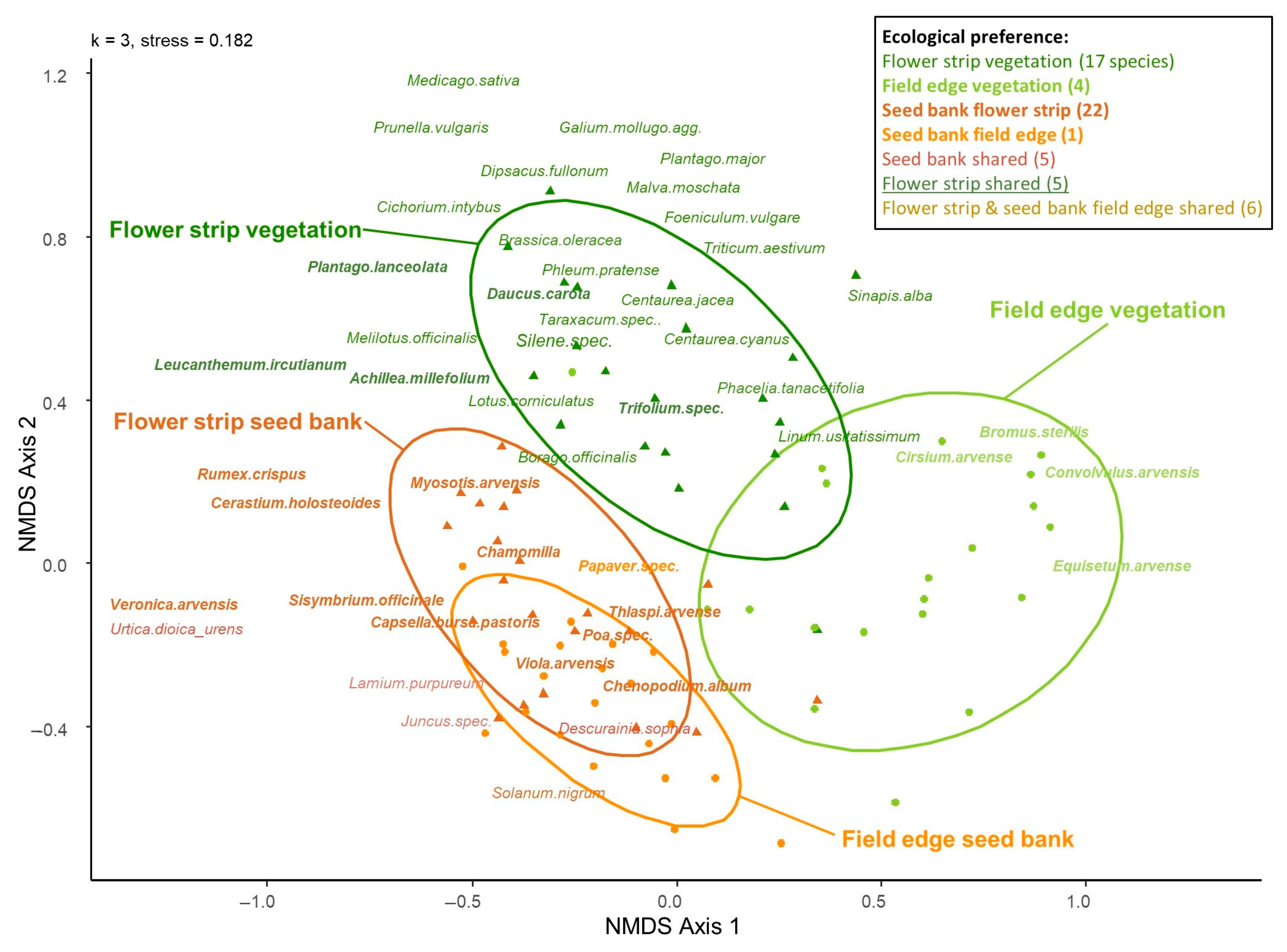
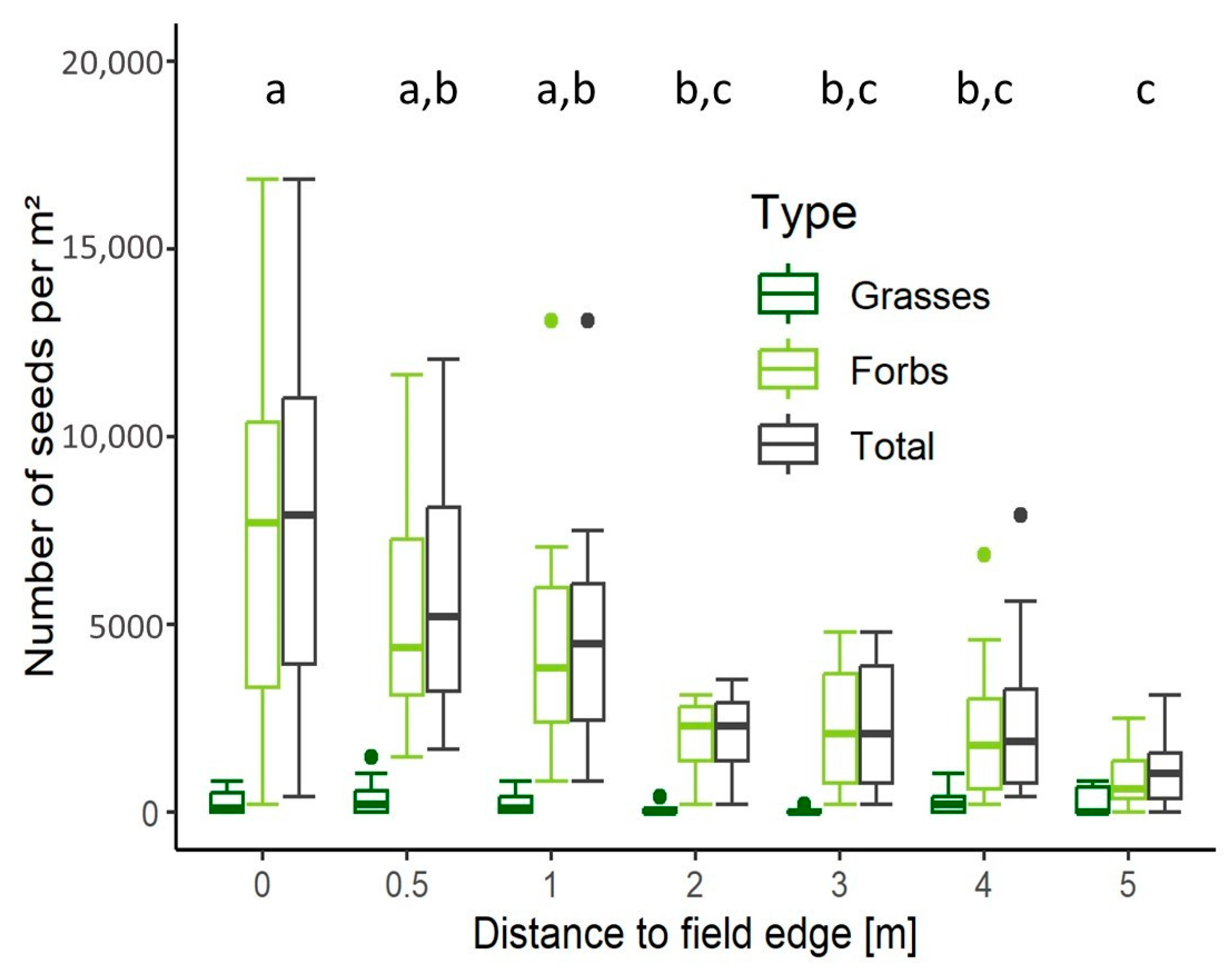
Agricultural intensification has caused once diverse arable fields to become species-poor. Their seed banks, which are fundamental for re-establishment and maintenance of plant communities in such repeatedly disturbed environments, are now largely depleted. In order to advise farmers on the successful implementation of agri-environmental measures, as well as reduce potential subsequent costs of continued weed control, understanding seed bank dynamics in relation to aboveground vegetation is essential. We (1) investigated the change in seed bank composition in the field edge and the interior, and (2) analyzed the seed bank in flower strips and adjacent fields in relation to the aboveground vegetation on intensively managed arable farms across Germany. Low-tillage systems contained more plant species and higher seed densities in the seed bank than regularly ploughed fields. Species diversity at the field edge was higher than in the field interior, with a continuous decrease in the number of species and seed density within the first 2 m from the edge. Flower strips can lead to an enrichment of the seed bank, but it is driven by the strong rise in a few common species such as Chenopodium album. To cultivate successful flower strips, we recommend close onsite monitoring, as well as rapid intervention in the case of weed infestation.
Keywords: agrobiodiversity; arable weeds; field edge; field interior; seed bank; segetal plants; tillage agrobiodiversity; arable weeds; field edge; field interior; seed bank; segetal plants; tillage