Article

Stress Recovery Effects of Viewing Simulated Urban Parks: Landscape Types, Depressive Symptoms, and Gender Differences


1
School of Urban Design, Wuhan University, Wuhan 430072, China
2
School of Industrial Design, Hubei University of Technology, Wuhan 430068, China
*
Author to whom correspondence should be addressed.
Land 2023, 12(1), 22; https://doi.org/10.3390/land12010022
Submission received: 5 November 2022 / Revised: 1 December 2022 / Accepted: 19 December 2022 / Published: 21 December 2022

Abstract

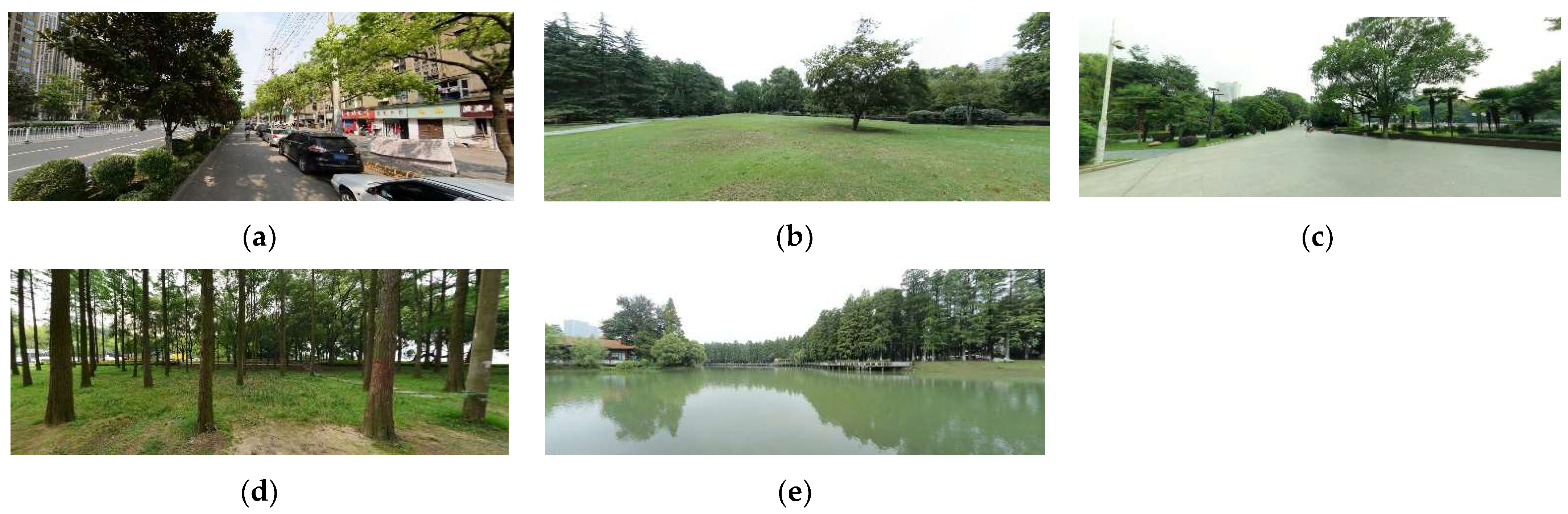
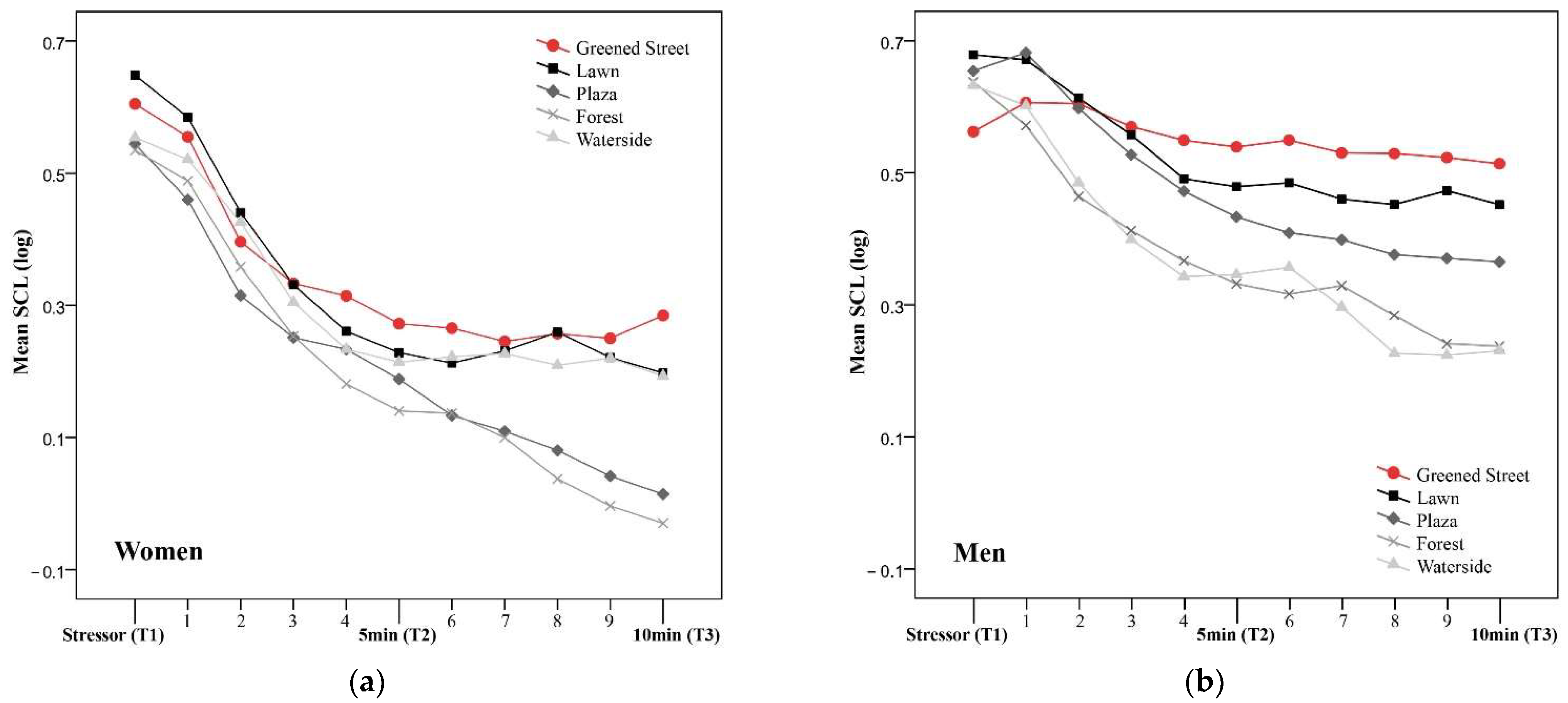
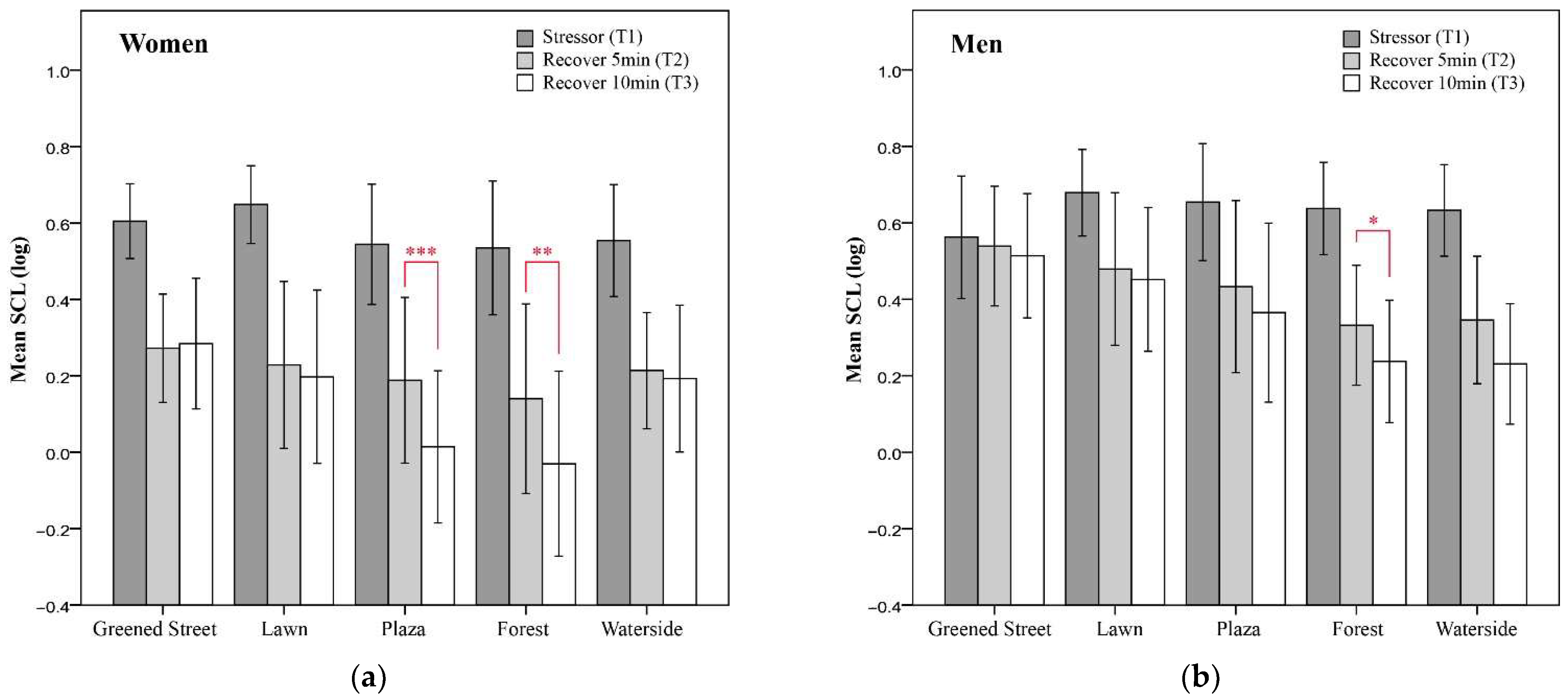
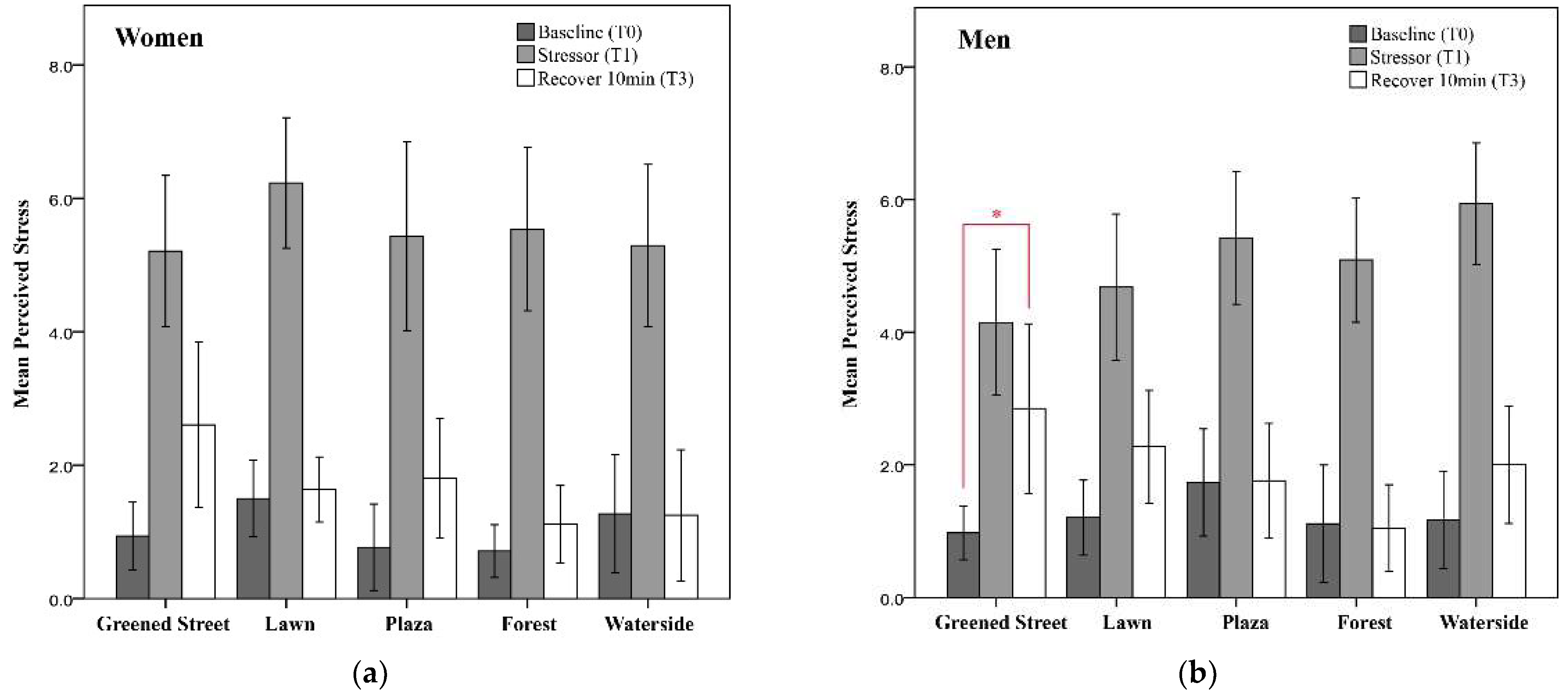
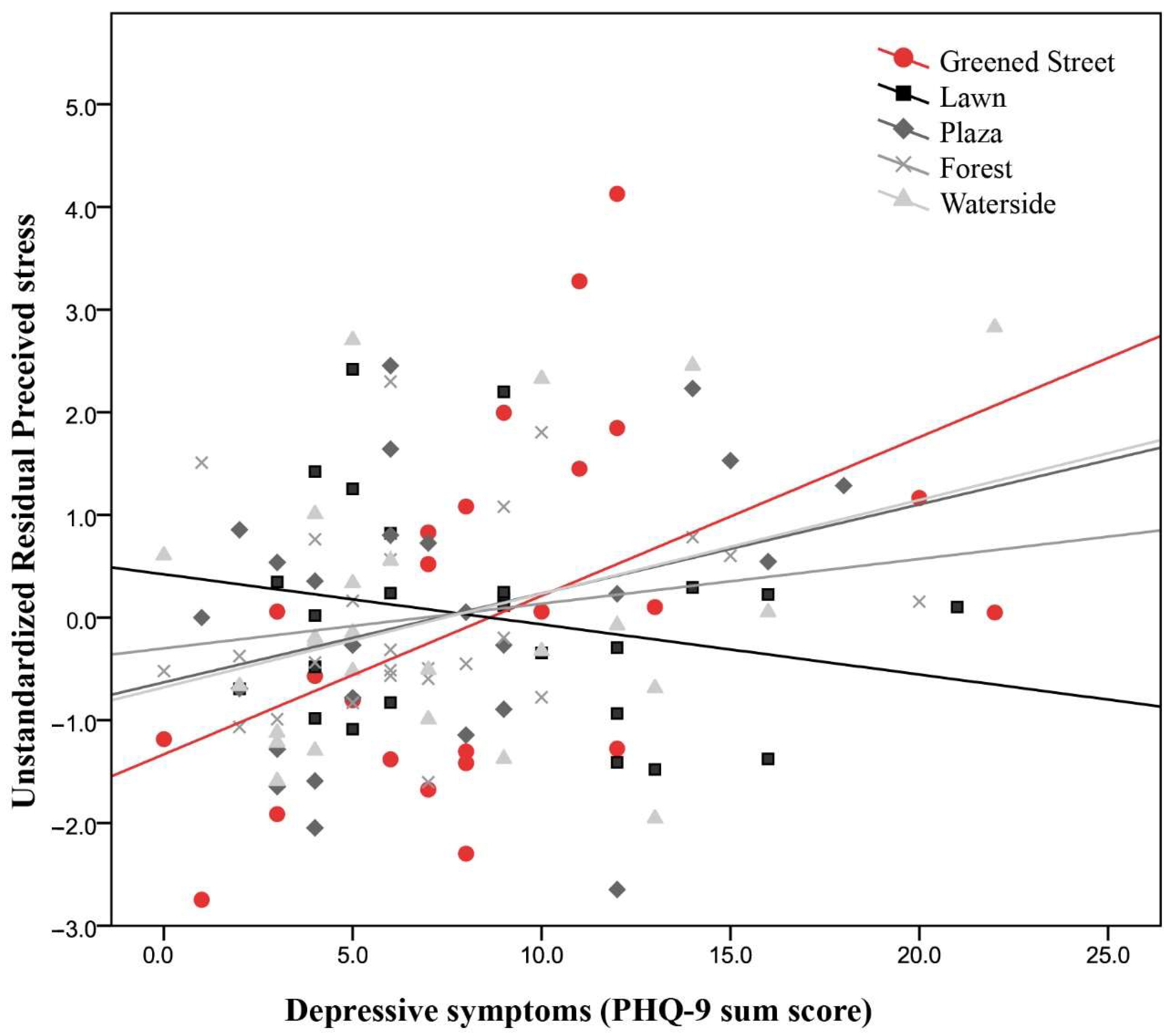
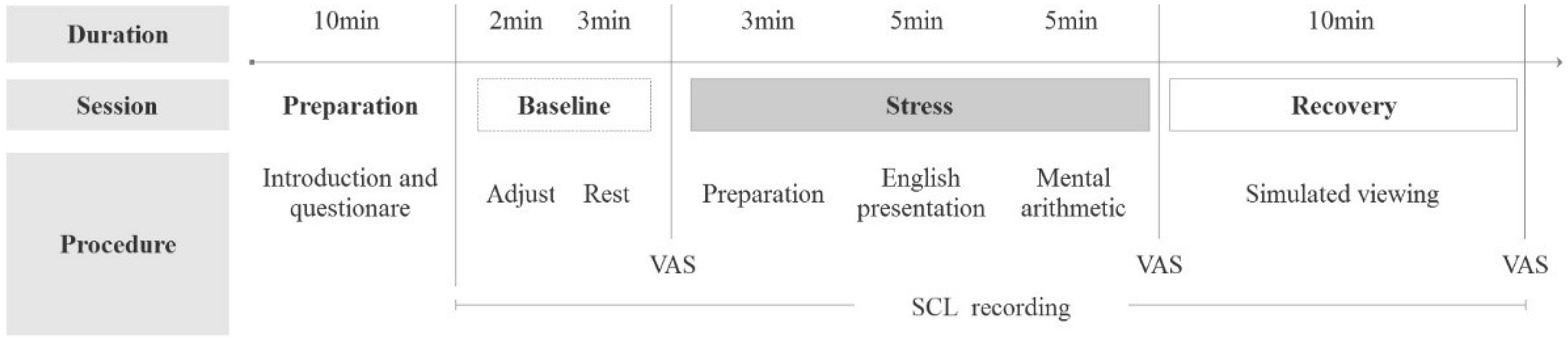
Previous studies may have overstated the restorative benefits of natural environments by comparing them to low-quality urban environments. Few studies have compared the stress recovery effects across various park settings. Moreover, it is unclear how depressive symptoms affect these benefits. Depressive symptoms may lessen or boost the restorative effects of viewing nature. A total of 125 participants engaged in the Trier Social Stress Test (TSST) to induce stress and were then randomly assigned to view one of five 10 min video presentations depicting greened streets, lawns, plazas, forests, or watersides. Depressive symptoms experienced over the last month were measured using the Patient Health Questionnaire (PHQ-9). The analysis revealed that, while greened streets had a physio-psychological stress-relieving effect, they were not as effective as the four park settings. The skin conductance level (SCL) declined significantly in the forest group’s first and second halves of the recovery period. However, the difference between the four park settings was insignificant at the end of recovery. Subjects viewing the four park conditions (vs. the greened street) reported that perceived stress remained stable as individual depressive symptoms increased; subjects with higher depressive symptoms reported lower perceived stress under lawn conditions. However, the SCL did not show the same trend. Our findings may support the hypothesis that natural interventions may be especially beneficial for people suffering from subclinical depressive symptoms. We also found gender differences in perceived stress and SCL reduction across all five settings, which may be due to the differences in women’s and men’s perceptions and use of restorative environments, or their responses to stressors.
Keywords: physio-psychological stress responses; gender different; urban park landscapes; greened street; simulated viewing; depressive symptoms physio-psychological stress responses; gender different; urban park landscapes; greened street; simulated viewing; depressive symptoms