Spatio-Temporal Evolution and Driving Mechanisms of Rural Residentials from the Perspective of the Human-Land Relationship: A Case Study from Luoyang, China

Abstract
:1. Introduction
2. Overview of the Study Area and Research Methodology
2.1. Overview of the Study Area
2.2. Data Source and Processing
2.2.1. Data Source
2.2.2. Data Processing
3. Research Method
3.1. Elastic Coefficient
3.2. Spatial Correlation Analysis
3.3. Types of Coupling Relationship between Rural Residential Areas and Rural Population Change
3.4. Spatial Autoregression
4. Results Analysis
4.1. Spatial Autoregression
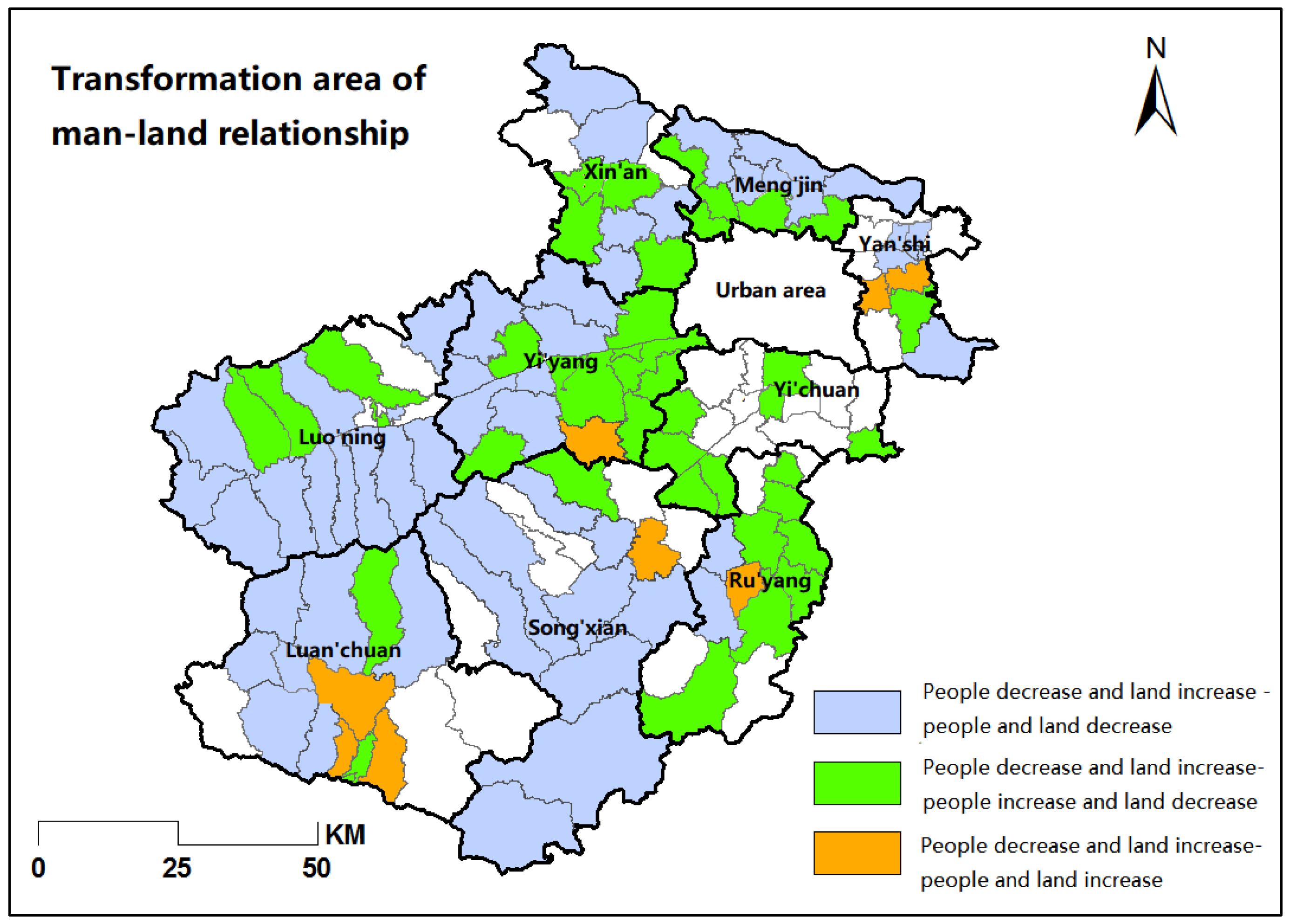
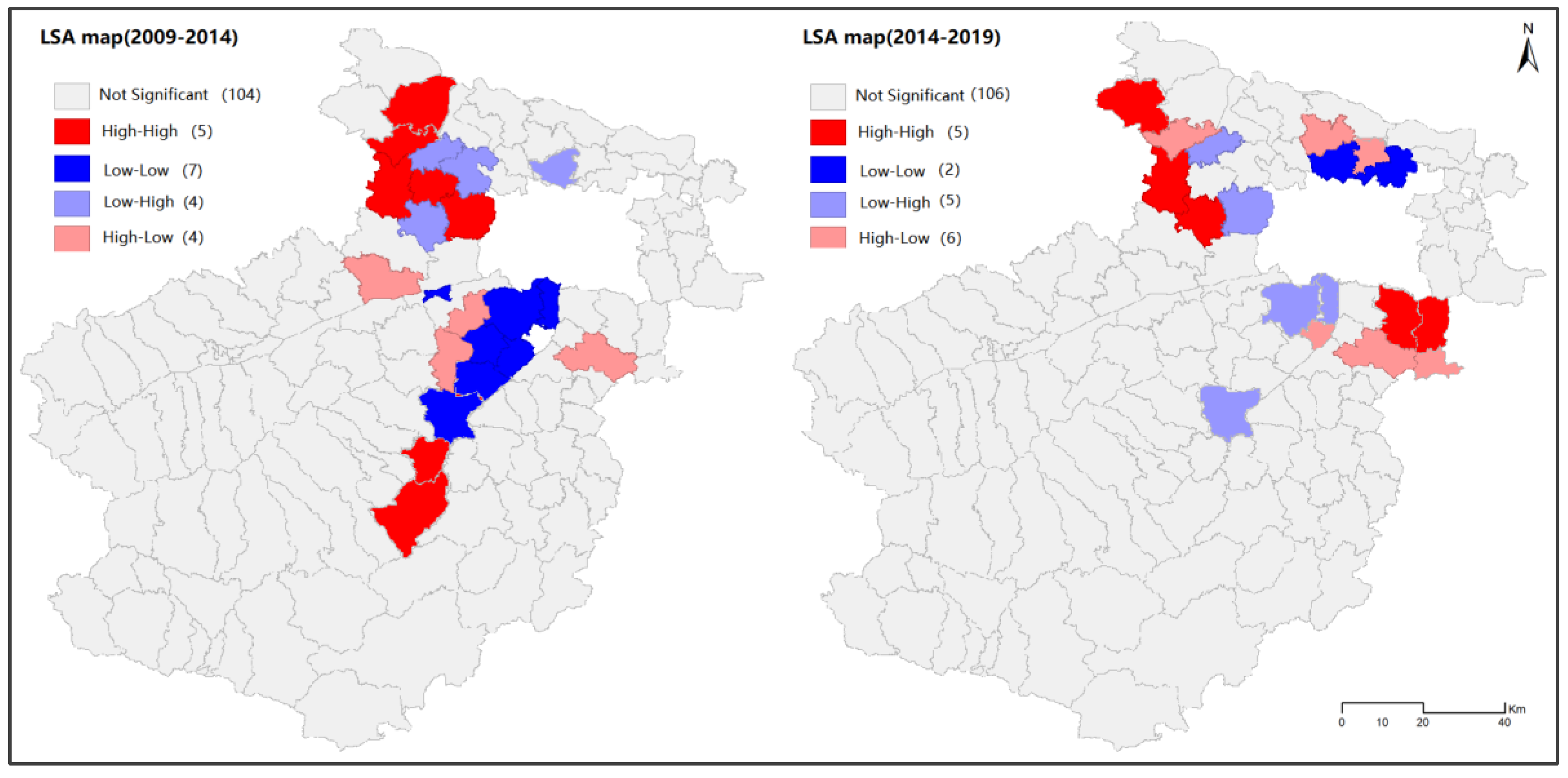
4.2. Spatio-Temporal Evolution Characteristics of Man-Earth Coupling Relationship Types Based on EC
4.3. Typical Transect Analysisc
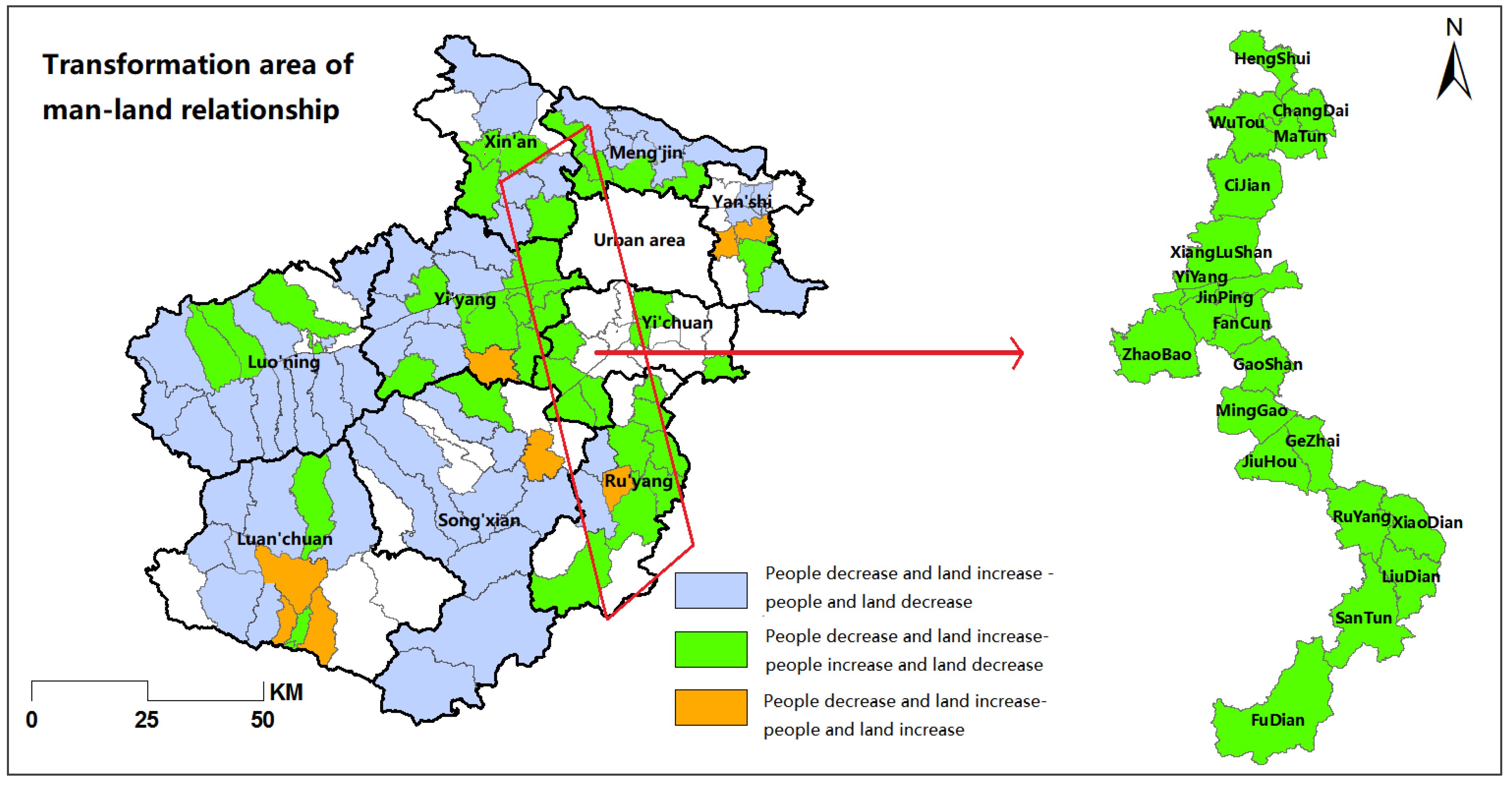
4.3.1. Population Decrease and Land Increase—Population Increase and Land Decrease
- Rural revitalization strategy to promote new rural construction: 14 villages in Mengjin County were selected for the pilot project of beautiful countryside construction in 2013. Consequently, the living environment and quality of rural life have continuously improved. In addition, in recent years, Ru’yang County’s characteristic superior agricultural output value and per mu benefit of characteristic planting have increased significantly, while public service facilities and living environment have also improved.
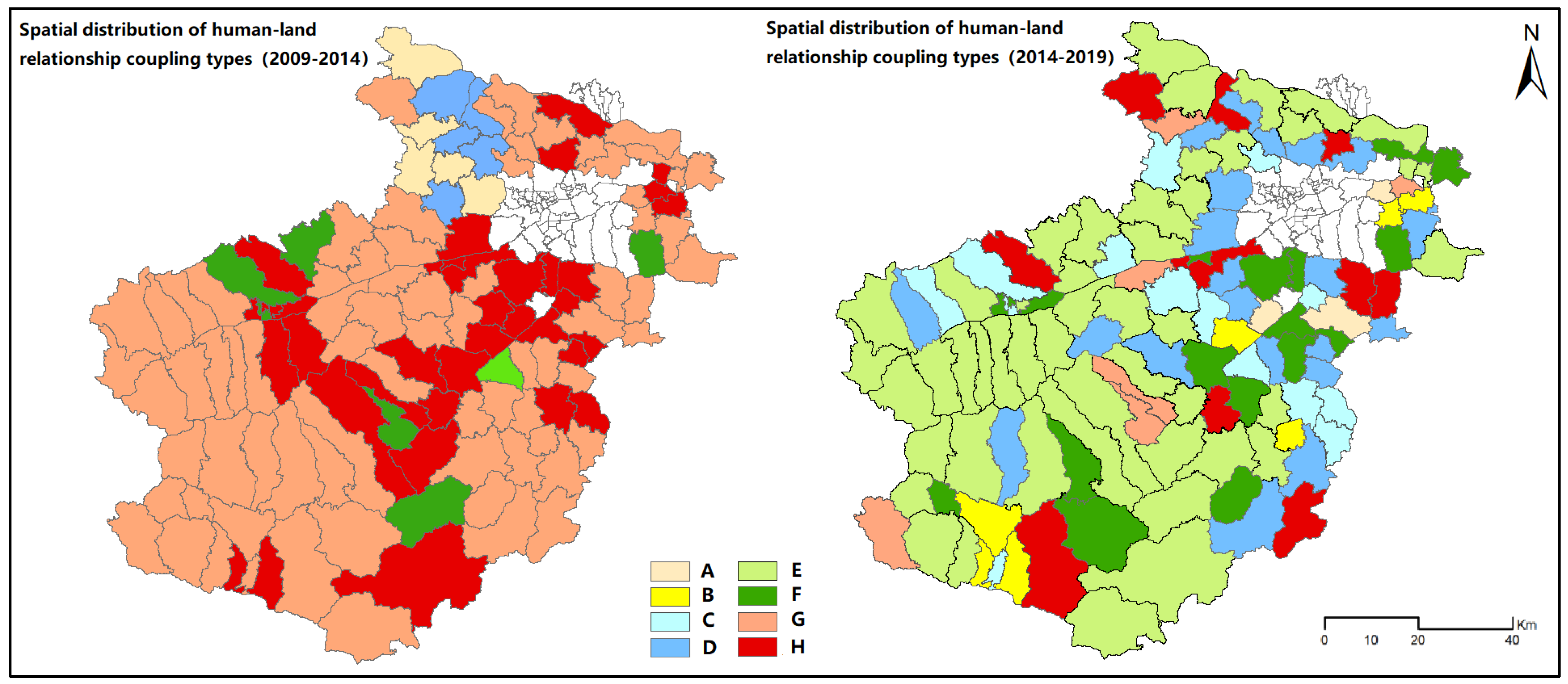
- Rapid development of the tourism industry: in recent years, Luoyang region has been vigorously developing rural tourism projects. These not only promote the employment of poor people and broaden the channels of income generation but also thoroughly organize and plan the utilization of rural land resources. Mengjin County, Luanchuan County, and Song County are representative counties that have developed a greater number of scenic patches and consistent policy support has attracted various groups to join this industry. This is also the main reason why the rural population in the typical sample counties has returned in the past five years, while the land size of rural residentials has decreased, thus resulting in the “increase in people and decrease in land”.
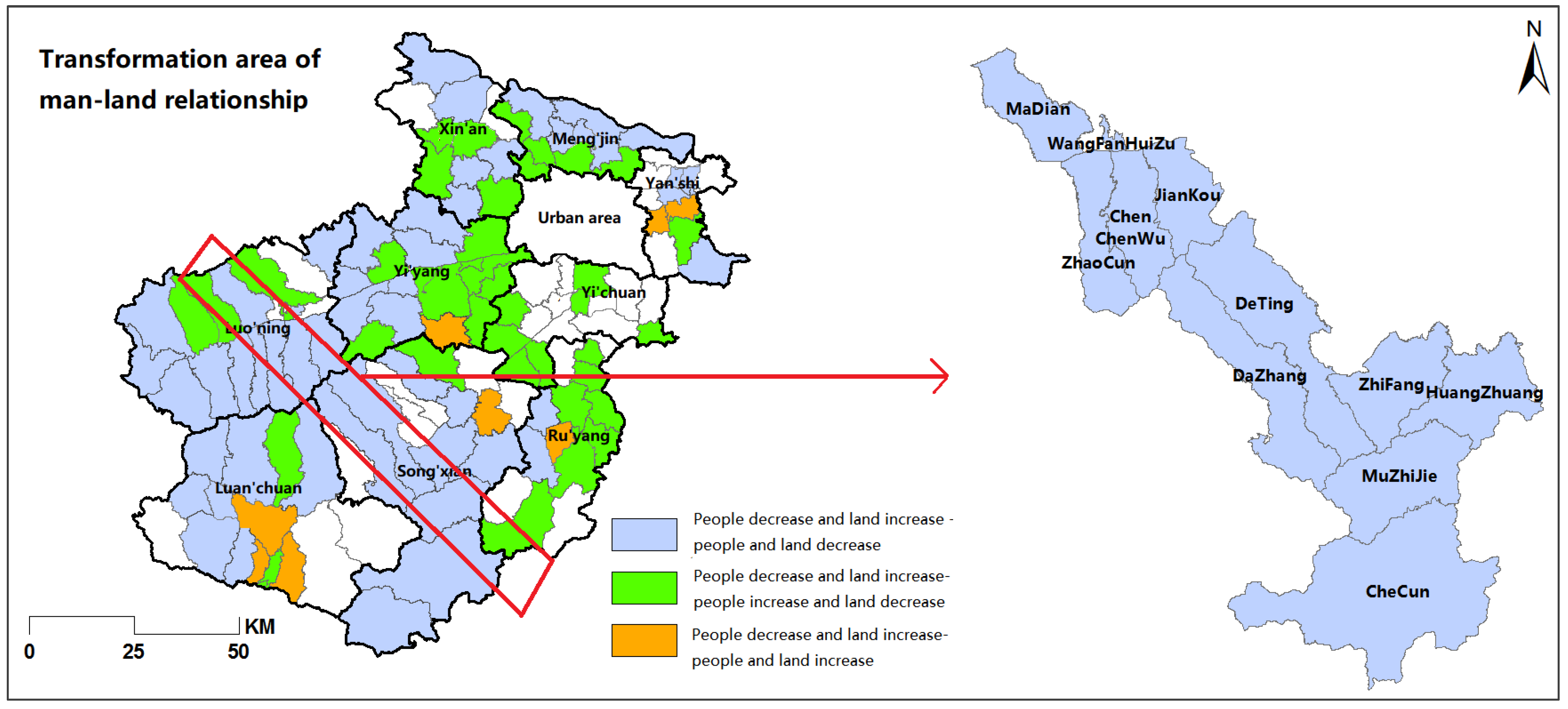
4.3.2. Population Decrease and Land Increase—Population and Land Decrease Area
4.4. Analysis of Driving Mechanism of Spatio-Temporal Evolution of Man-Land Relationship
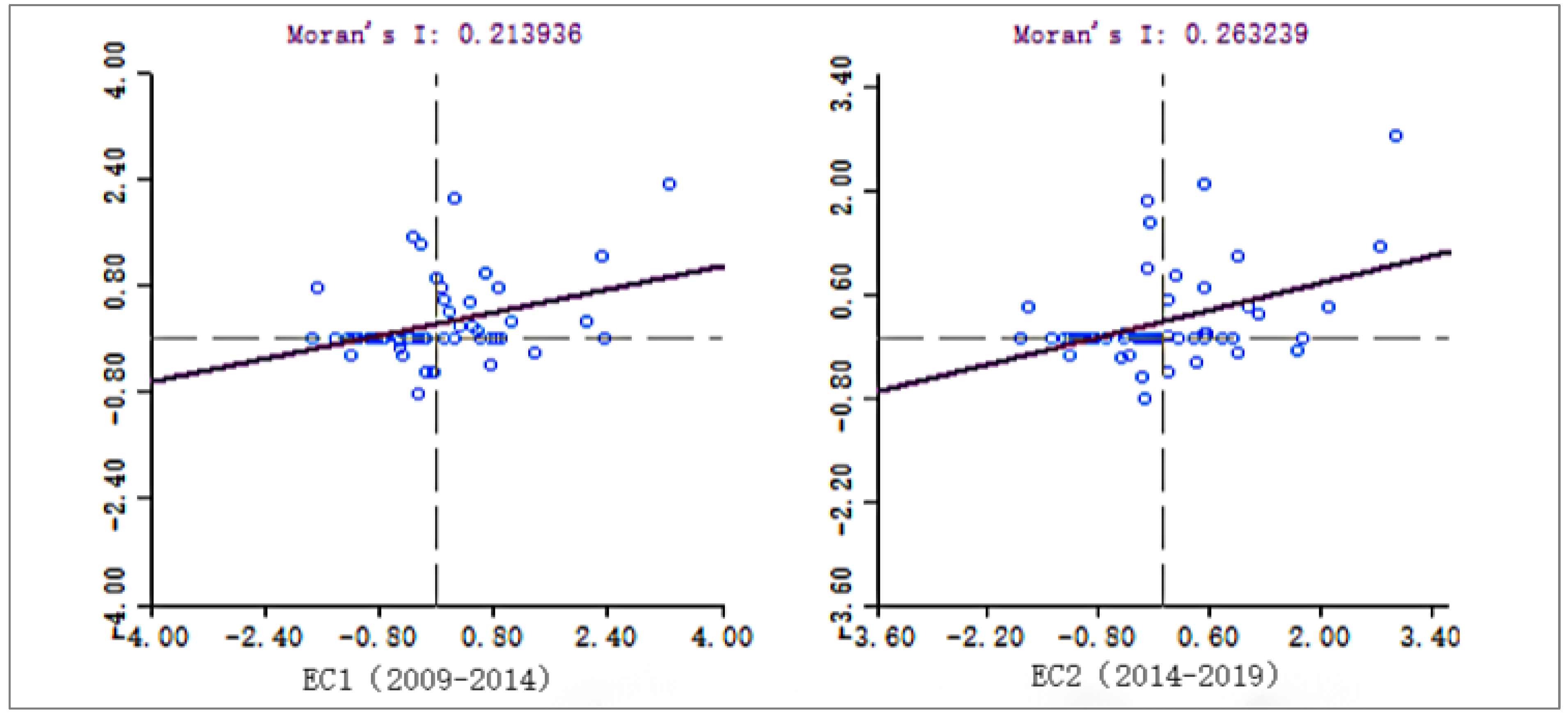
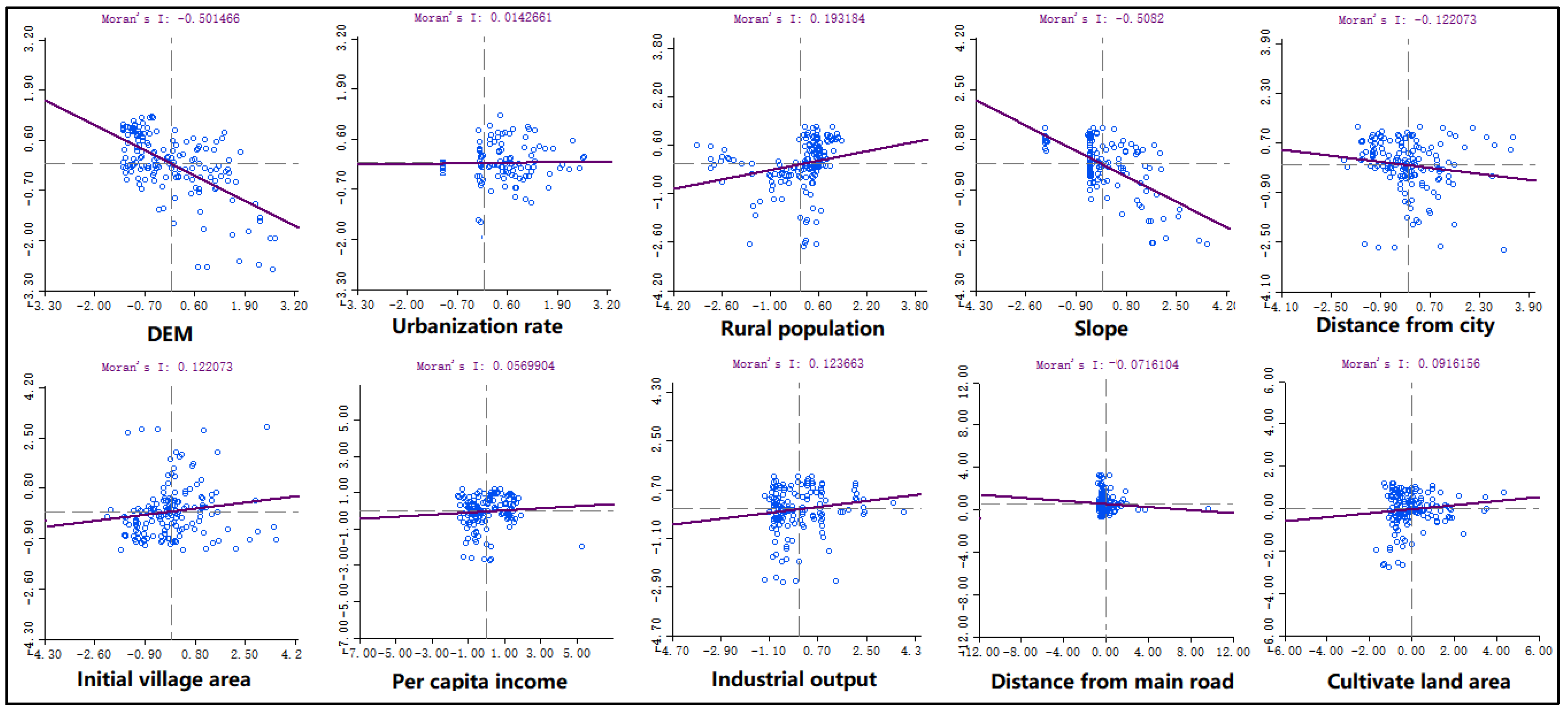
4.4.1. Spatial Correlation Analysis
4.4.2. Selection of Driving Factors
4.4.3. Driving Mechanism Modeling of Spatio-Temporal Evolution of Man-Land Relationship
5. Conclusions
- (1)
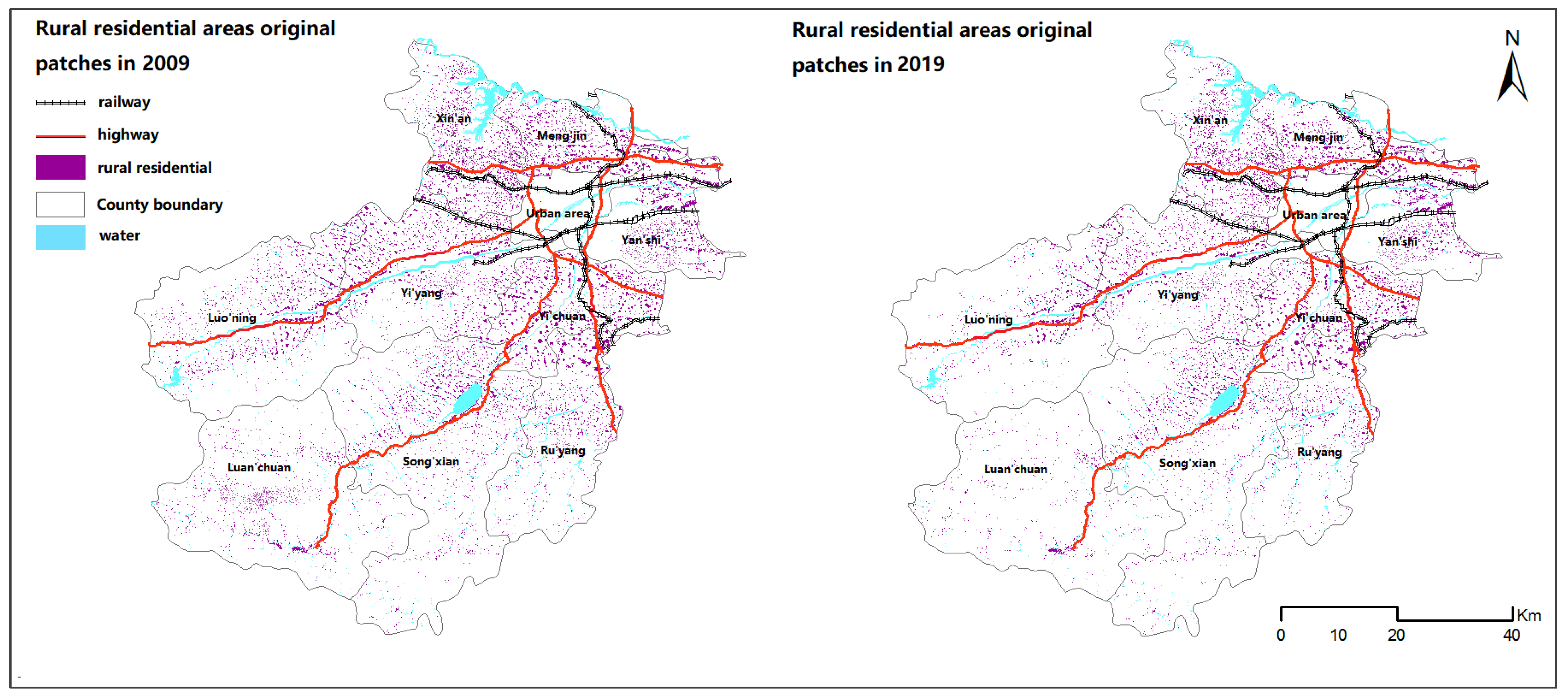
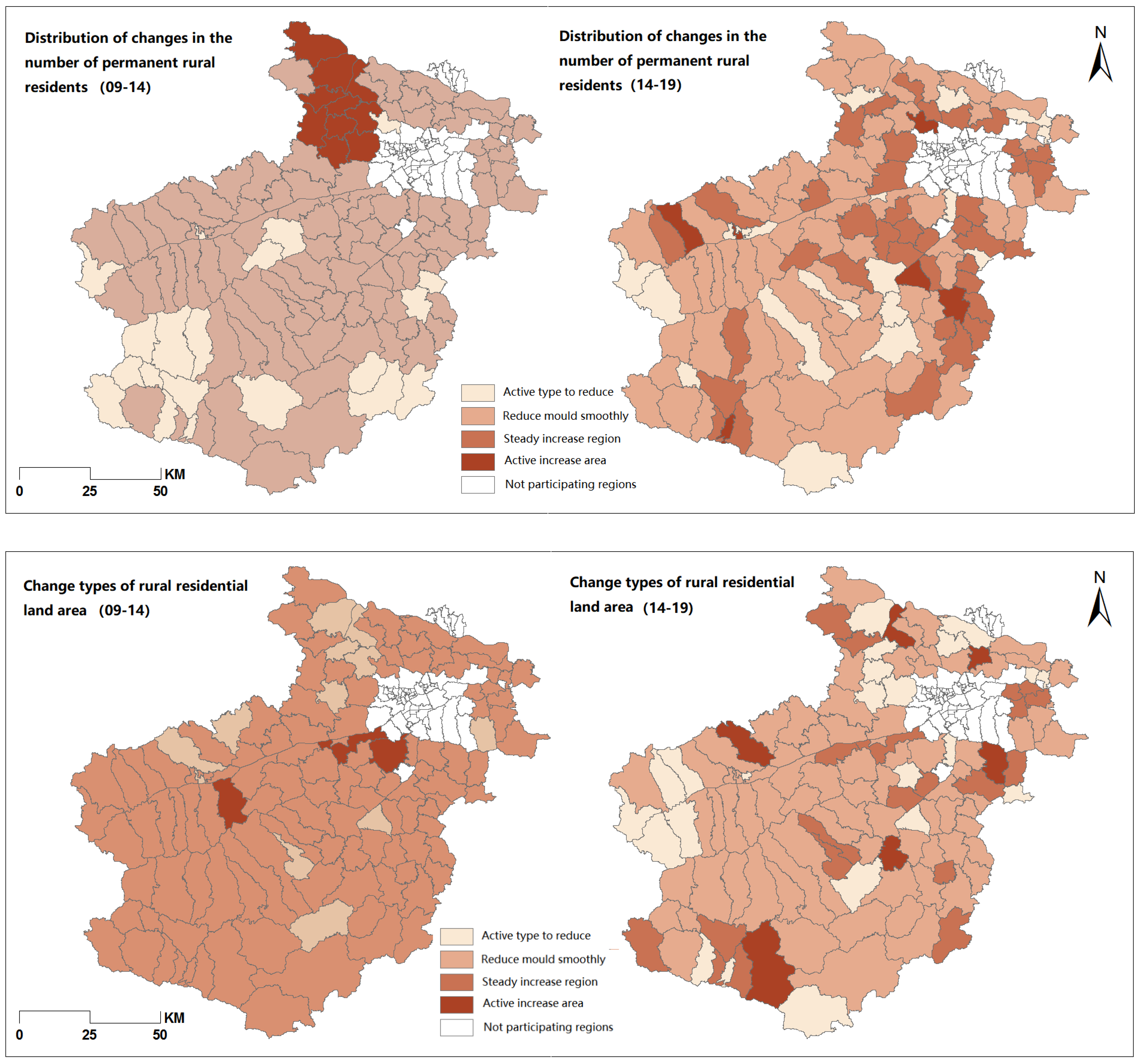
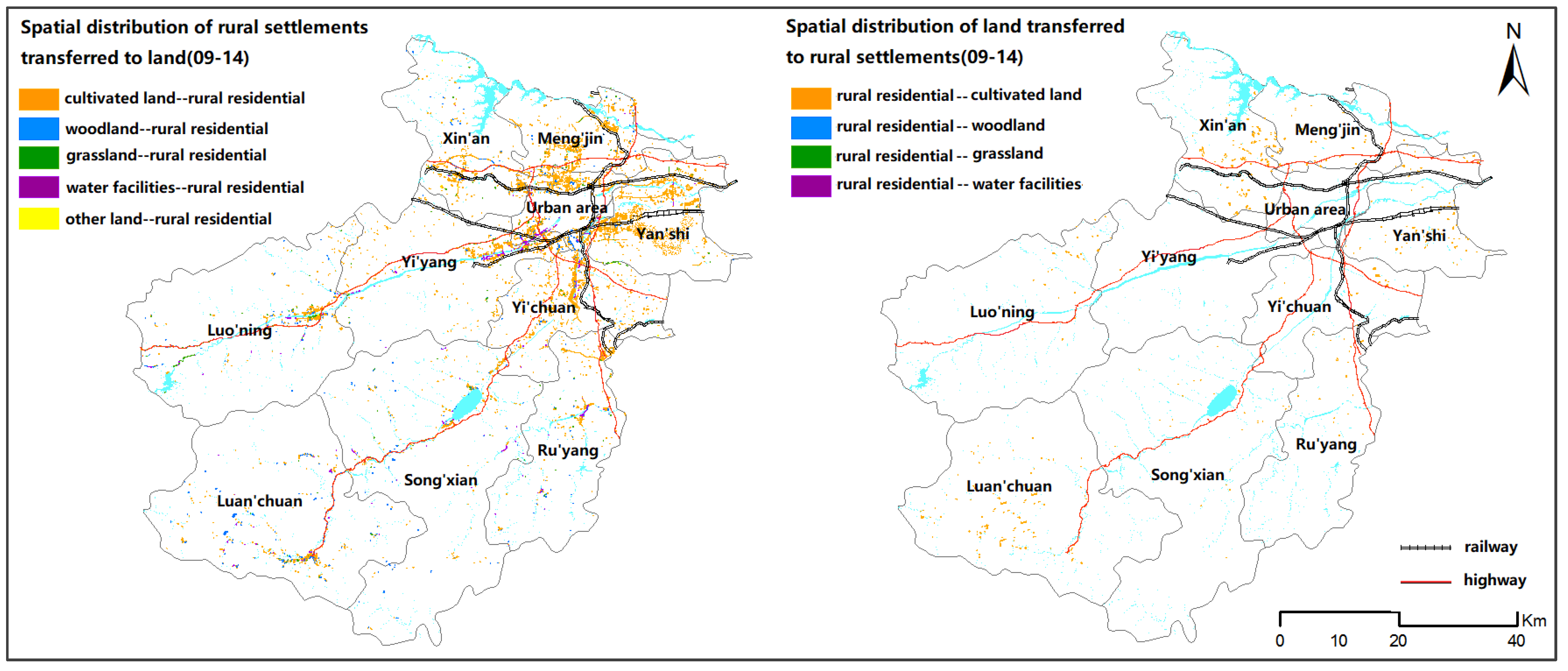
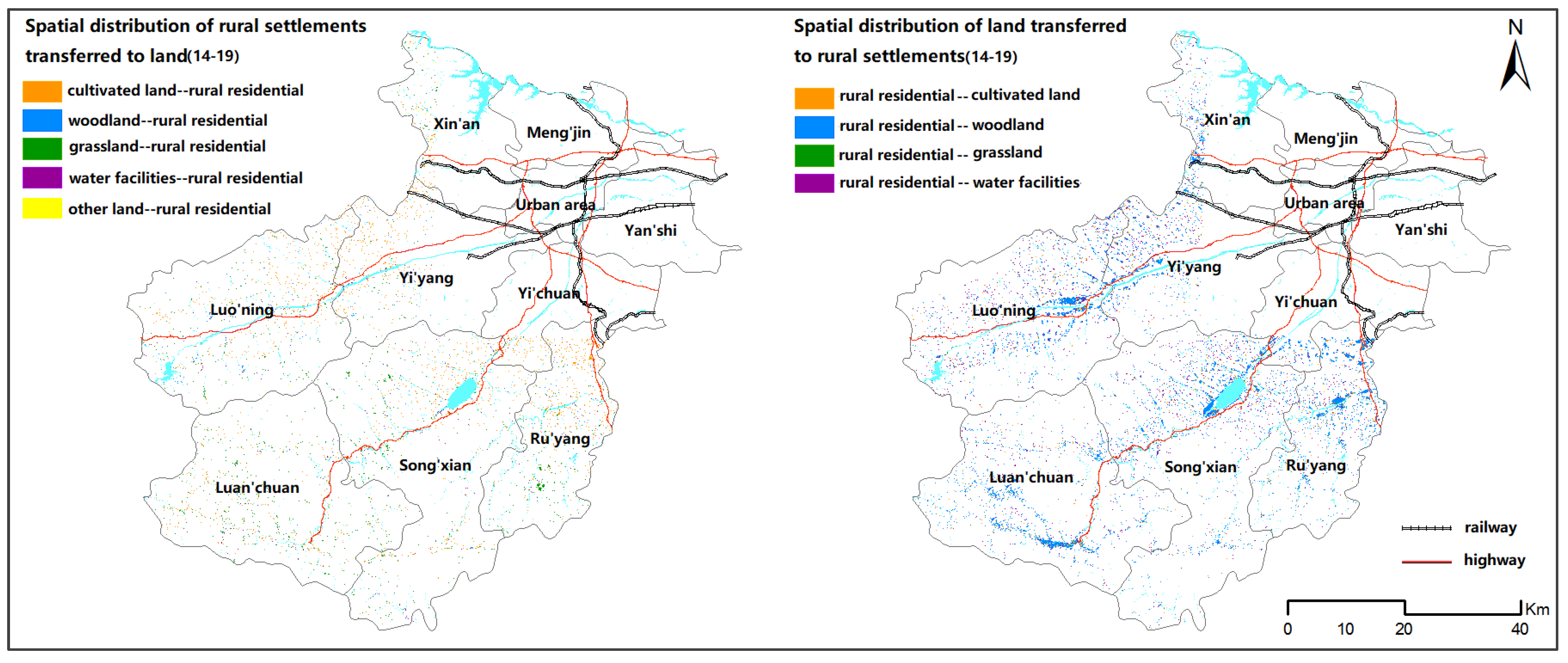
- During 2009–2019, the rural population of Luoyang region continued to decrease, while the scale of rural residential land first increased and then decreased. Per capita rural residential land in Luoyang region reached 225.02 m2/person in 2014, with a trend of serious imbalance in the relationship between people and land. This value decreased to 180.7 m2/person in 2019, with a slightly lower imbalance. During this period, the main outward flow of rural residential land was arable land, forest and garden land, and other land, while the inward source was mainly arable land, forest, and garden land and grassland. These were focused around the central city.
- (2)
- The type of human-land relationship in rural Luoyang region at the township scale evolves from the dominant imbalance of “people decreasing and land increasing” to the dominant harmonious relationship of “people and land decreasing”, thus moderating the conflict between people and land. The villages around the central city show a zonal distribution pattern.
- (3)
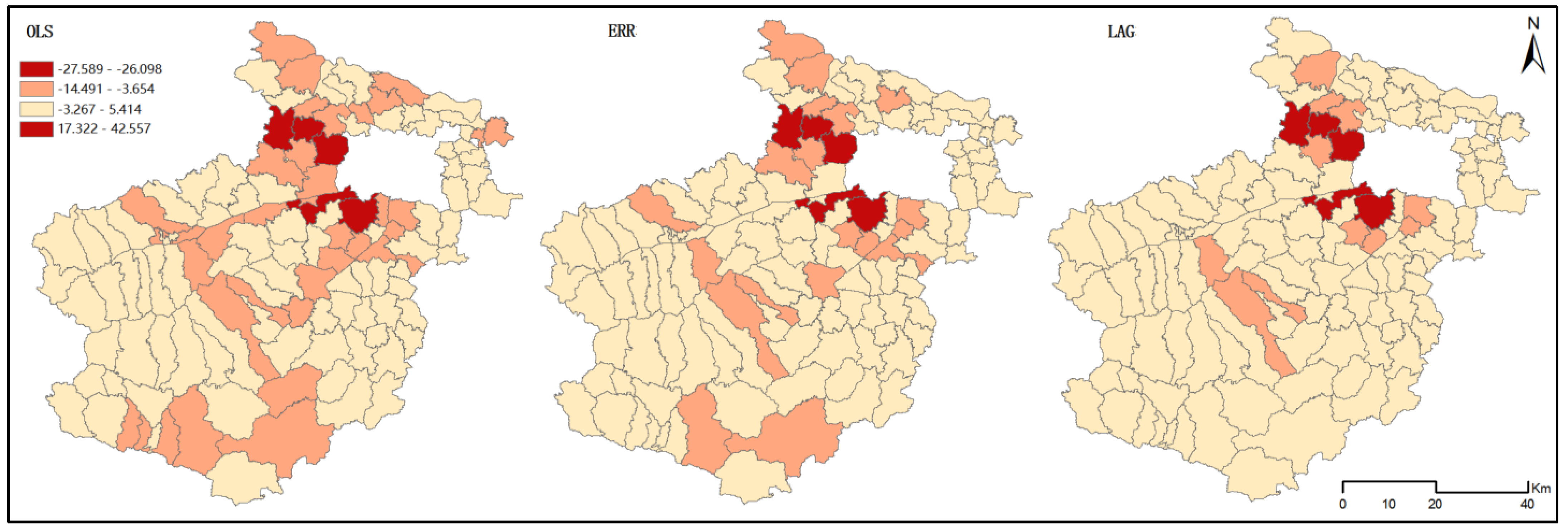
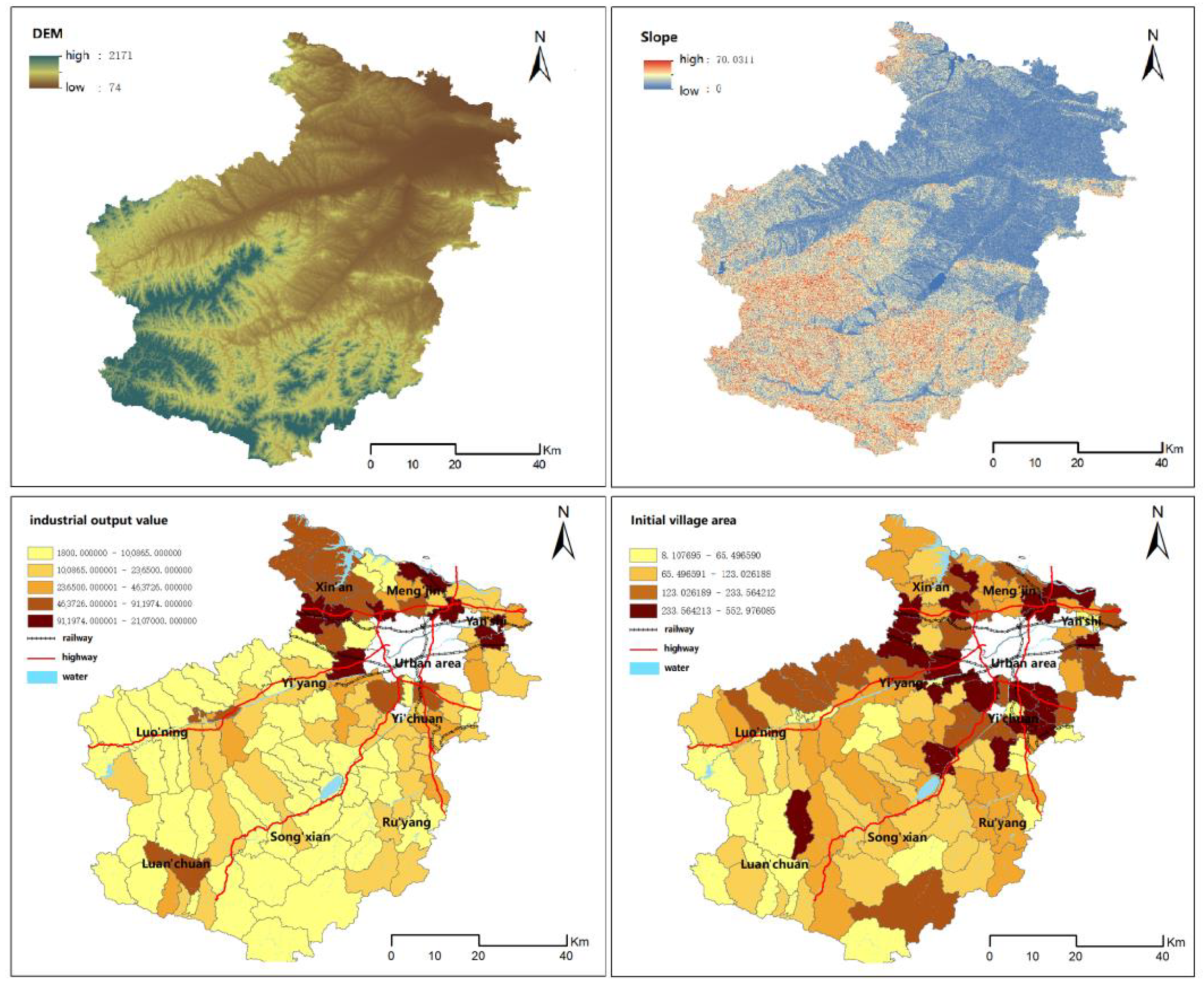
- The relationship between rural people and land in Luoyang region is spatially correlated. However, under the combined influence of different environmental and socio-economic factors, the spatial distribution of rural residentials exhibits significant geographical differentiation. The bivariate spatial autocorrelation and the spatial autoregressive model illustrated that the drivers that promote the coordinated development of human-land coupling are, in order of influence, as follows: initial size of rural residentials > arable land area > rural resident population > industrial output value. Similarly, the drivers that cause an imbalance in the type of human-land coupling are, in order of influence: slope > elevation > distance from the city.
- (4)
- With the continuous promotion of the rural revitalization strategy in recent years, most townships in Luoyang region have driven regional economic development through a series of measures, such as developing special industries. These in turn promote the intensive use of land resources. It is evident that, in the process of modernization, the key to regulating the relationship between people and land is the elimination of the drawbacks of the urban-rural dual structured development to achieve more integrated development. In addition, several complex factors influence the spatial and temporal evolution of rural residentials. However, in the process of quantitative analysis, a theoretical perspective is adopted for the treatment of some indicators and the determination of relevant parameters, which introduces a degree of subjectivity into the analysis. Moreover, there is no universal standard for research methods. Therefore, it is necessary to take into account environmental and policy influences and potential uncertainties in future research and to conduct more rigorous quantitative evaluation and analysis of these factors in order to achieve a more reasonable and optimal allocation of land resources.
Author Contributions
Funding
Institutional Review Board Statement
Informed Consent Statement
Data Availability Statement
Conflicts of Interest
References
- Zang, Y.; Liu, Y.; Yang, Y. Land use pattern change and its topographic gradient effect in the mountainous areas: A case study of Jinggangshan city. J. Nat. Resour. 2019, 34, 1391–1404. [Google Scholar]
- Liu, Y.; Li, Y. Revitalize the world’s countryside. Nature 2017, 548, 275–277. [Google Scholar] [CrossRef] [PubMed]
- Zhao, X.; Sun, H.; Chen, B.; Xia, X.; Li, P. China’s rural human settlements: Qualitative evaluation, quantitative analysis and policy implications. Ecol. Indic. 2019, 105, 398–405. [Google Scholar] [CrossRef]
- Zhang, H.; Zhang, B. A review of international land use/cover change modeling studies. J. Nat. Resour. 2018, 20, 422–431. [Google Scholar]
- He, J.; Zhang, X.; Deng, Z.; Zhang, H.; Zhang, M. Study on the spatial distribution characteristics of rural residentials and their influencing factors at multiple scales. Agric. Resour. Zoning China 2019, 40, 8–17. [Google Scholar]
- Lang, Y.; Song, W.; Deng, X. Projected land use changes impacts on water yields in the karst mountain areas of China. Phys. Chem. Earth 2018, 104, 66–75. [Google Scholar] [CrossRef]
- Romano, B.; Zullo, F.; Fiorini, L.; Marucci, A.; Ciabò, S. Land transformation of Italy due to half a century of urbanization. Land Use Policy 2017, 67, 387–400. [Google Scholar] [CrossRef]
- Zhao, Y.; Zhang, Y.; Xiong, G. Analysis of the peoples’ willingness to pay for ecological compensation in the Ganjiang River Basin based on the Random Utility Theory. Resour. Environ. Yangtze Basin 2017, 26, 1049–1056, (In Chinese with English Abstract). [Google Scholar]
- Chaudhuri, G.; Mishra, N.B. Spatio-temporal dynamics of land cover and land surface temperature in Ganges-Brahmaputra delta: A comparative analysis between India and Bangladesh. Appl. Geogr. 2016, 68, 68–83. [Google Scholar] [CrossRef]
- Conrad, C.; Rudloff, M.; Abdullaev, I. Measuring rural settlement expansion in Uzbekistan using remote sensing to support spatial planning. Appl. Geogr. 2015, 62, 29–43. [Google Scholar] [CrossRef]
- Niraj, K.C.; Thapa, L.; Shukla, D.P. Fate of Agricultural Areas of Kailali District of Nepal: A Temporal Land Use Land Cover Change (LUCC) Analysis. Isprs—International Archives of the Photogrammetry. Remote Sens. Spat. Inf. Sci. 2020, 43, 1601–1606. [Google Scholar]
- David, G.A. Thematic Resolution Impacts in Spatial Analysis—Application of Land Use Cover Change (LUCC) Model Calibration. Comput. Environ. Urban Syst. 2019, 78, 101375. [Google Scholar]
- Meneses, B.M.; Reis, E.; Reis, R.; Vale, M.J. The Effects of Land Use and Land Cover Geoinformation Raster Generalization in the Analysis of LUCC in Portugal. ISPRS Int. J. Geo-Inf. 2018, 7, 390. [Google Scholar] [CrossRef] [Green Version]
- Sun, P.; Xu, Y.; Liu, Q.; Liu, C.; Wang, H. Spatiotemporal evolution and driving forces of changes in rural residentials in the poverty belt around Beijing and Tianjin: A case study of Zhangjiakou city, Hebei Province. J. Mt. Sci. 2017, 14, 980–997. [Google Scholar] [CrossRef]
- Liu, R.; Jiang, D.; Shi, L. Urban land Use Development Research Based on Multi-Agent Simulation System. Sci. Geogr. Sin. 2017, 37, 537–545. [Google Scholar]
- Tian, G.; Ma, B.; Xu, X.; Liu, X.; Xu, L.; Liu, X.; Xiao, L.; Kong, L. Simulation of urban expansion and encroachment using cellular automata and multi-agent system model—A case study of Tianjin metropolitan region, China. Ecol. Indic. 2016, 70, 439–450. [Google Scholar] [CrossRef]
- Liu, Y.; Song, W.; Deng, X. Understanding the spatiotemporal variation of urban land expansion in oasis cities by integrating remote sensing and multi-dimensional DPSIR-based indicators. Ecol. Indic. 2019, 96, 23–37. [Google Scholar] [CrossRef]
- Yang, F.; Wang, Z.; Zhang, H.; Tan, L. Spatial pattern evolution characteristics and driving mechanisms of rural residentials in poor alpine areas. J. Agric. Eng. 2021, 37, 285–293. [Google Scholar]
- Han, Y.; Wei, Y. Analysis of spatial distribution characteristics and influencing factors of rural residentials in the desert oasis area of Hexi. Sci. Technol. Bull. 2021, 37, 19–24, 84. [Google Scholar]
- Liu, J.; Liu, Y.; Li, Y.; Hu, Y. Spatial and temporal coupling between land use in rural residentials and rural population in China, 2007–2015. J. Nat. Resour. 2018, 33, 1861–1871. [Google Scholar]
- Li, H.; Song, W.; Chen, B.; Zhang, Y. A Review of Simulation Studies on the Spatial and Temporal Pattern Evolution of Rural residentials. Agric. Resour. Zoning China 2019, 40, 79–88. [Google Scholar]
- Sun, D.; Hong, B.; Ren, P. Study on the spatial and temporal evolution and drivers of rural residentials in Dujiangyan City. Yangtze River Basin Resour. Environ. 2020, 29, 2167–2176. [Google Scholar]
- Yang, Y.; Deng, X.; Wu, F.; Chen, T. An analysis of rural settlement evolution and socioeconomic affect factors in North China Plain. Hum. Geogr. 2019, 35, 324–331. [Google Scholar]
- Liu, Y.; Yang, Q.; He, X. Study on the coupling relationship between land use in rural residentials and rural population change in Chongqing. Agric. Eng. News 2019, 35, 266–274. [Google Scholar]
- Shang, R.; Qu, Y.; Jiang, H. Spatial and Temporal Characteristics and Formation Mechanism of Rural residential Transformation from the Perspective of Human-Land Relationship. Resour. Sci. 2020, 42, 672–684. [Google Scholar]
- Zou, L.; Wang, J. A Review of Research on the Optimization of Rural residential Layout in China. China Popul. Resour. Environ. 2015, 35, 59–68. [Google Scholar]
- Liu, S.; Ye, Y.; Lin, Y. Decomposition of the evolutionary characteristics and drivers of rural residentials based on decoupling theory and LMDI model. J. Agric. Eng. 2019, 35, 272–280. [Google Scholar]
- Yang, L.; Yi, Z.; Lin, B.; Xu, W.; Wang, C. Analysis for the Characteristics of Spatial Difference of Cultivated Land Quality in Fujian Province. Chin. J. Agric. Resour. Reg. Plan. 2018, 39, 52–58. [Google Scholar]
- Tang, F.; Li, Y.; Wang, Q.; Liu, X.; Wang, S. Spatial and temporal distribution characteristics of rural residentials in karst trough valley areas and their driving mechanisms. J. Nat. Resour. 2021, 36, 978–992. [Google Scholar]
- Zhang, H.; Zhao, X.; Ouyang, Z.; Guo, X.; Kuang, L.; Li, W. Spatial disparity features and protection zoning of cultivated land quality based on spatial autocorrelation—A case study of Shanggao County, Jiangxi Province. Res. Soil Water Conserv. 2018, 25, 304–312. [Google Scholar]
- Yu, H.; Yang, X.; Guo, X. The Research on the Spatial Characteristics of the Newly Increased Cultivated Land Quality in Hilly Regions of South China—A Case Study of Yichun City in Jiangxi Province. Chin. J. Agric. Resour. Reg. Plan. 2019, 40, 110–117. [Google Scholar]
- Zhang, T.; Zhang, F.; Xie, Z.; Huang, J. Spatial Pattern Evolution of Rural residentials in Yunnan’s Ethnic Minority Mountainous Areas in the Context of Precise Poverty Alleviation. J. Agric. Eng. 2019, 35, 246–254. [Google Scholar]


| No. | Data | Description of Data Source | Department of Data Source |
|---|---|---|---|
| 1 | Land use data and traffic and water conservancy planning data of Luoyang region in 2009, 2014 and 2019 | The second National Land Survey Project in 2009, the Land Change Project in Henan Province in 2014, and the third National Land Survey project in 2019 | Natural Resources Planning Bureau of Henan Province Land bureau of Henan Province |
| 2 | Original data of driving factors such as elevation, population and industrial output value of each township in Luoyang region in 2019 | Evaluation Results of Cultivated Land Quality Renewal and County Statistical Yearbook (2019) | Agriculture Bureau |
| 3 | Town bound boundaries | Industrial and tourism development planning | Development and Reform Commission |
| Type | LNR | PNR | EC | Coordination or Not | 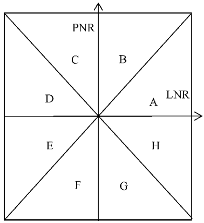 |
|---|---|---|---|---|---|
| A | + | + | [1, +∞] | not | |
| B | + | + | [0, 1) | coordinate | |
| C | − | + | [−1, 0) | coordinate | |
| D | − | + | (−∞, −1] | coordinate | |
| E | − | − | [1, +∞] | coordinate | |
| F | − | − | [0, 1) | not | |
| G | + | − | [−1, 0) | not | |
| H | + | − | (−∞, −1] | not |
| Impact Factors | Coefficient | Standard Error | t-Statistics | p-Value |
|---|---|---|---|---|
| constant | 0.788471 | 0.043790 | 18.0056 | <0.0001 |
| DEM/m | −0.030123 | 0.003780 | 1.53636 | 0.12702 |
| Slope/° | −0.037962 | 0.004216 | −9.00427 | <0.0001 |
| Rural population/per | 0.000862 | 0.000982 | −0.60782 | 0.25148 |
| Industrial output/million | 5.16E-08 | 2.56E-08 | 2.01904 | 0.04566 |
| Initial village area/Km2 | 0.00132278 | 0.000814639 | 1.62377 | 0.10648 |
| Distance from city/Km | −5.89531e-006 | 5.81535e-006 | −1.01375 | 0.31230 |
| Cultivated land area/Km2 | 0.0012688 | 0.000182707 | 6.94446 | <0.0001 |
| Urbanization rate/% | 0.00241696 | 0.00527052 | 0.458582 | 0.64737 |
| Distance from main road/Km | −7.89347e-005 | 4.42925e-005 | −1.78212 | 0.07728 |
| Per capita income/yuan | 8.31935e-007 | 1.8275e-006 | 0.455231 | 0.64977 |
| TEST | MI/DF | VALUE | PROB |
|---|---|---|---|
| Moran’s I (error) | 0.159 | 3.1076 | 0.00189 |
| Lagrange Multiplier (lag) | 1 | 13.2549 | 0.00027 |
| Robust LM (lag) | 1 | 6.3343 | 0.01184 |
| Lagrange Multiplier (error) | 1 | 6.9736 | 0.00827 |
| Robust LM (error) | 1 | 0.053 | 0.81791 |
| Impact Factors | Coefficient | Standard Error | t-Statistics | p-Value |
|---|---|---|---|---|
| constant | 0.313857 | 0.0883505 | 3.55241 | 0.00038 |
| DEM/m | 0.587033 | 0.070835 | 8.28737 | <0.0001 |
| Slope/° | −0.034160 | 0.000075 | −2.13364 | 0.00387 |
| Rural population/per | −0.031770 | 0.004234 | −7.50271 | <0.0001 |
| Industrial output/million | 4.99E-07 | 6.10E-07 | 0.81721 | 0.00381 |
| Initial village area/Km2 | 6.11E-08 | 2.36E-08 | 2.58325 | 0.00979 |
| Distance from city/Km | 0.00100533 | 0.000746413 | 1.34688 | <0.0001 |
| Cultivated land area/Km2 | −4.83359e-006 | 5.19545e-006 | −0.930349 | 0.17802 |
| Urbanization rate/% | 0.00111366 | 0.000166644 | 6.68283 | <0.0001 |
| Distance from main road/Km | 0.00205353 | 0.00502457 | 0.408698 | 0.068276 |
| Per capita income/yuan | −8.26303e-005 | 4.22326e-005 | −1.95655 | 0.050401 |
| Impact Factors | 2.05259e-007 | 1.74131e-006 | 0.117876 | 0.090617 |
Publisher’s Note: MDPI stays neutral with regard to jurisdictional claims in published maps and institutional affiliations. |
© 2022 by the authors. Licensee MDPI, Basel, Switzerland. This article is an open access article distributed under the terms and conditions of the Creative Commons Attribution (CC BY) license (https://creativecommons.org/licenses/by/4.0/).
Share and Cite
Wang, H.; Zhu, Y.; Huang, W.; Yin, J.; Niu, J. Spatio-Temporal Evolution and Driving Mechanisms of Rural Residentials from the Perspective of the Human-Land Relationship: A Case Study from Luoyang, China. Land 2022, 11, 1216. https://doi.org/10.3390/land11081216
Wang H, Zhu Y, Huang W, Yin J, Niu J. Spatio-Temporal Evolution and Driving Mechanisms of Rural Residentials from the Perspective of the Human-Land Relationship: A Case Study from Luoyang, China. Land. 2022; 11(8):1216. https://doi.org/10.3390/land11081216
Chicago/Turabian StyleWang, Hua, Yuxin Zhu, Wei Huang, Junru Yin, and Jiqiang Niu. 2022. "Spatio-Temporal Evolution and Driving Mechanisms of Rural Residentials from the Perspective of the Human-Land Relationship: A Case Study from Luoyang, China" Land 11, no. 8: 1216. https://doi.org/10.3390/land11081216
APA StyleWang, H., Zhu, Y., Huang, W., Yin, J., & Niu, J. (2022). Spatio-Temporal Evolution and Driving Mechanisms of Rural Residentials from the Perspective of the Human-Land Relationship: A Case Study from Luoyang, China. Land, 11(8), 1216. https://doi.org/10.3390/land11081216