Article

Spatio-Temporal Analysis of Population-Land-Economic Urbanization and Its Impact on Urban Carbon Emissions in Shandong Province, China

1
School of Public Policy and Administration, Xi’an Jiaotong University, Xi’an 710049, China
2
College of Land Science and Technology, China Agricultural University, Beijing 100193, China
3
Administration and Management Institute of Ministry of Agriculture and Rural Affairs, Beijing 102208, China
4
School of Management Engineering, Qingdao University of Technology, Qingdao 266520, China
*
Author to whom correspondence should be addressed.
Land 2022, 11(2), 266; https://doi.org/10.3390/land11020266
Submission received: 20 January 2022 / Revised: 3 February 2022 / Accepted: 4 February 2022 / Published: 10 February 2022
(This article belongs to the Topic Climate Change and Environmental Sustainability)

Abstract

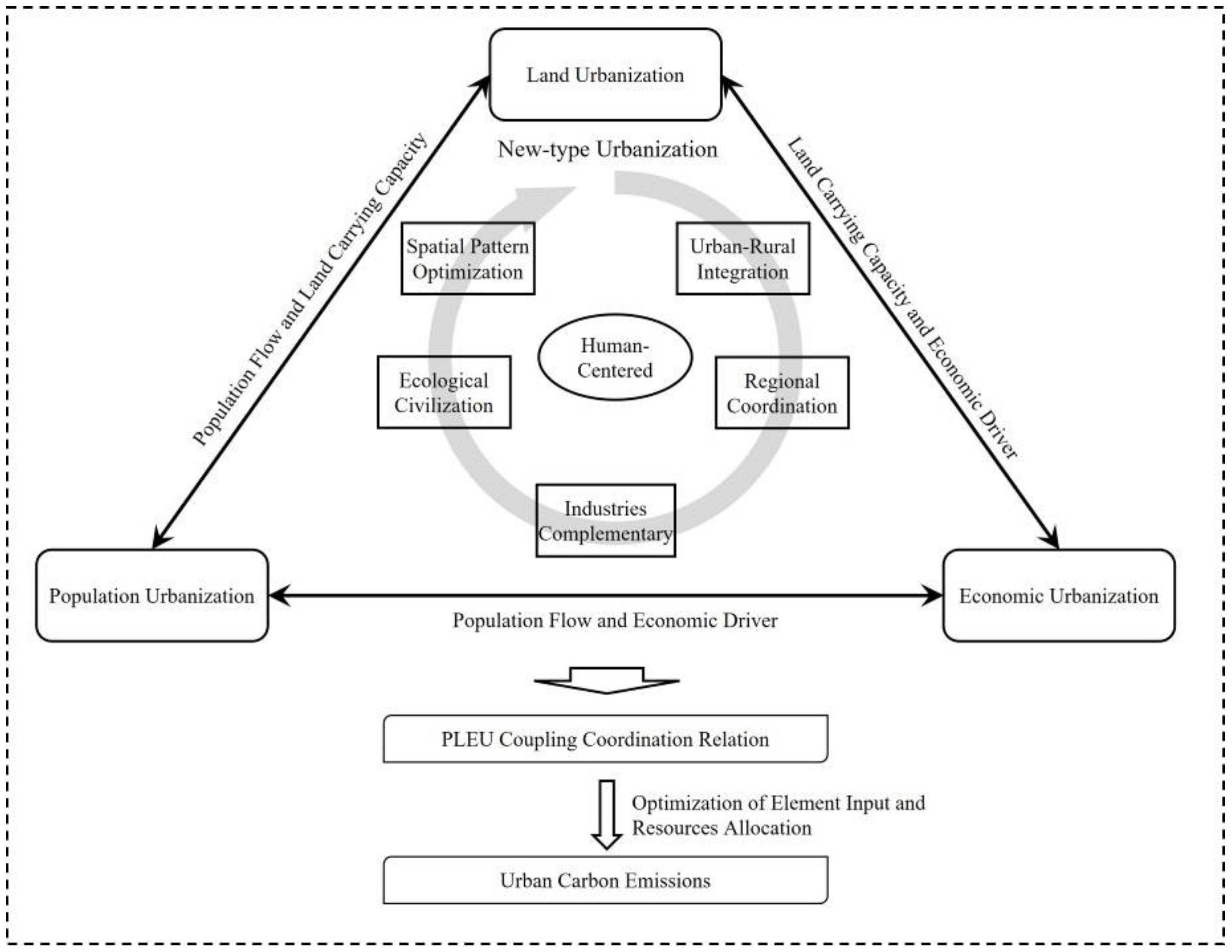
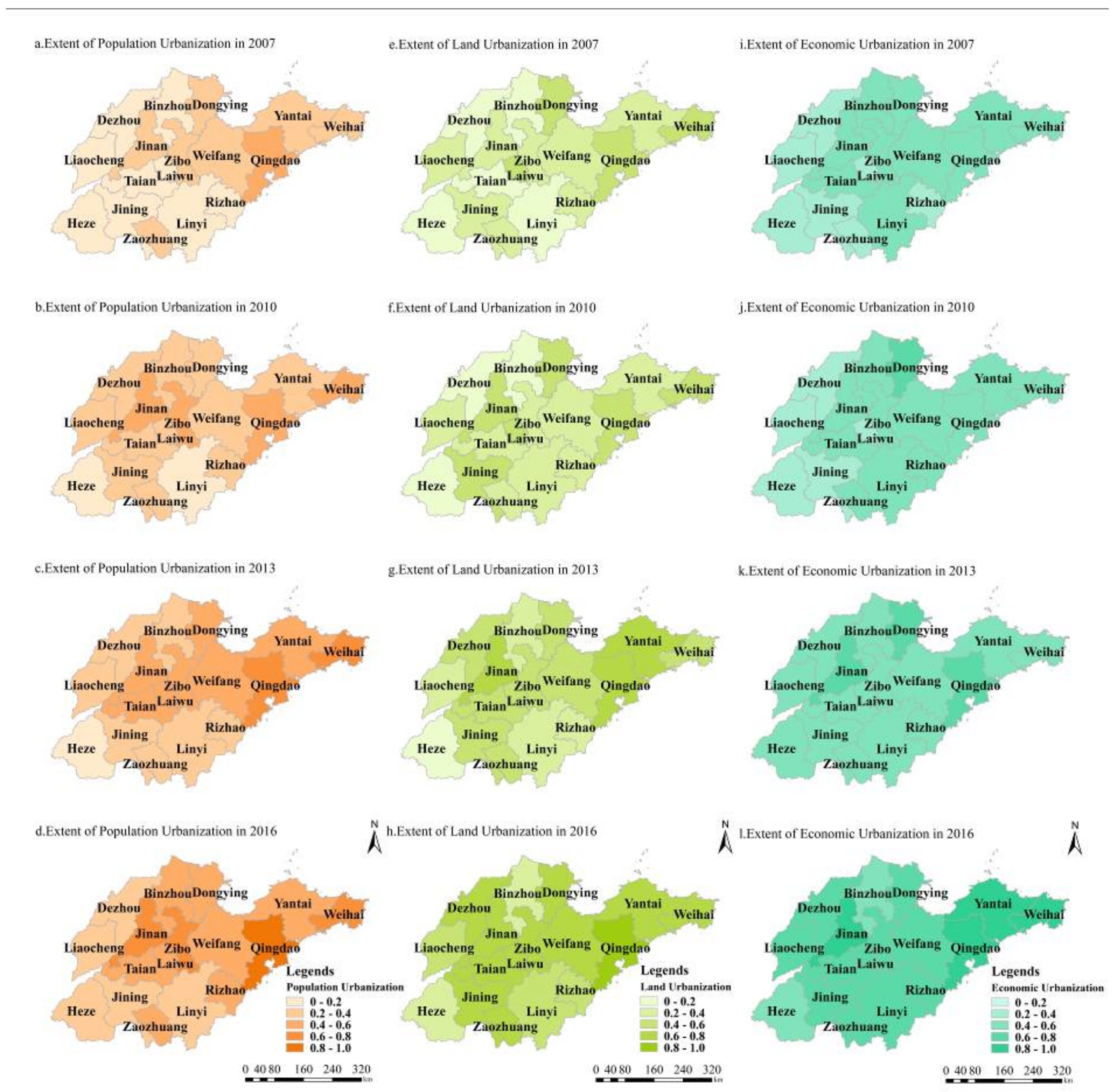
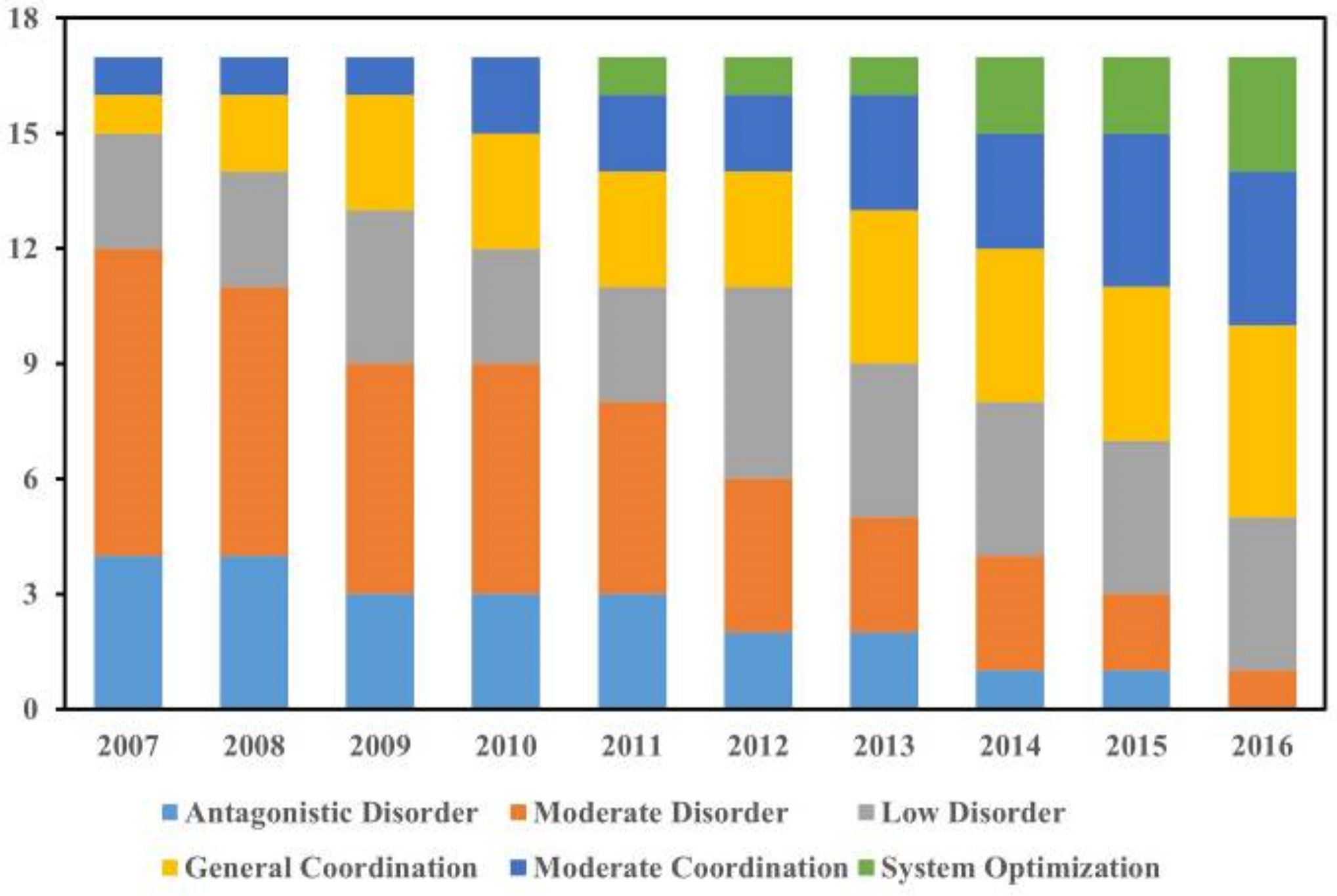
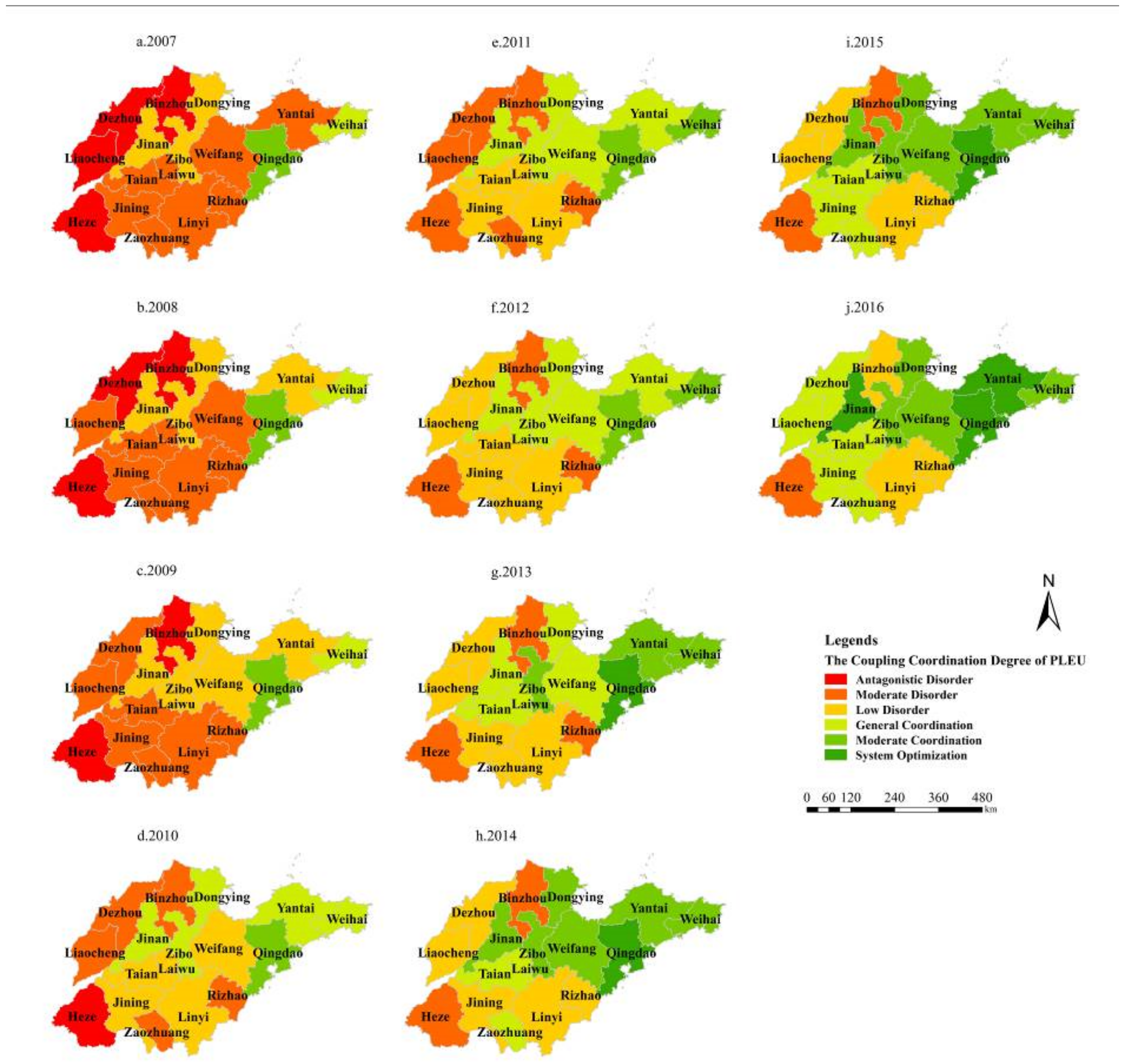
New-type urbanization is a dynamic process composed of numerous elements and multiple subsystems. Coordination and coherence of various subsystems are critical for promoting urban-rural integration and regional synergistic development and will have a complicated impact on sustainable development in the trade-off between socioeconomic growth and environmental conservation. This paper theorized the interconnected and mutually influential coupling coordination relationship between population-land-economic urbanization (PLEU) and the mechanism by which this relationship affects urban carbon emissions. The Wavelet Neural Network (WNN), Coupling Coordination Degree model, and econometric model were used to reveal this relationship and mechanism. A total of 17 cities in Shandong Province, China, were used as study subjects for empirical examination. The results show that the level of PLEU in Shandong was significantly improved from 2007 to 2016, but the gap between cities tended to further expand. The 17 cities gradually got rid of the antagonistic disorder issue of the coupling coordination relationship of PLEU from 2007 to 2016, spatially showing the agglomeration characteristics with Qingdao and Jinan as the core, respectively. The influence of the coupling coordination degree of PLEU on urban carbon emissions presents an inverted, U-shaped characteristic, that is, the total urban carbon emissions will first increase and then decrease as the improvement of the coupling coordination relationship of PLEU. China’s new-type urbanization has provided an efficient solution to sustainable development, namely planning and designing at the highest strategic level to establish scientific goals. This new-type urbanization strategy could provide an effective alternative for other emerging countries worldwide, for addressing the challenges to sustainable development.
Keywords: population-land-economic urbanization (PLEU); spatio-temporal characteristics; urban carbon emissions; wavelet neural network (WNN); coupling coordination relationship; econometric model population-land-economic urbanization (PLEU); spatio-temporal characteristics; urban carbon emissions; wavelet neural network (WNN); coupling coordination relationship; econometric model