1. Introduction
With the increasing penetration of renewable energy into modern power systems, the demand for operational flexibility and large-scale energy storage is growing [
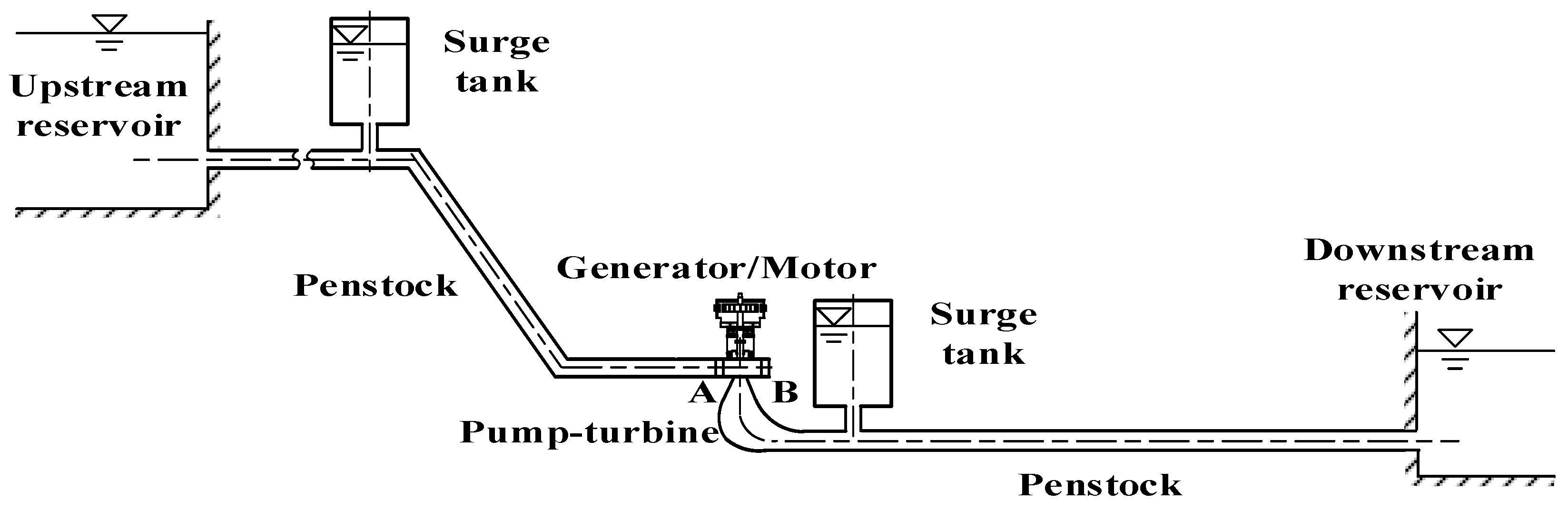
1]. Renewable energy being adopted at a large scale and penetrating at high levels into the grid is posing challenges to the power system with respect to operational flexibility and energy storage adequacy. Pumped-storage hydropower is the most technically mature energy storage option available today and is operationally safe and stable, while it is also relatively friendly to the environment. In this context, pumped-storage hydropower [
2] can be developed and used on a large scale. In a pumped-storage scheme, the pump-turbine is the energy conversion device that does the crucial operation of effectively converting electrical energy into potential energy [
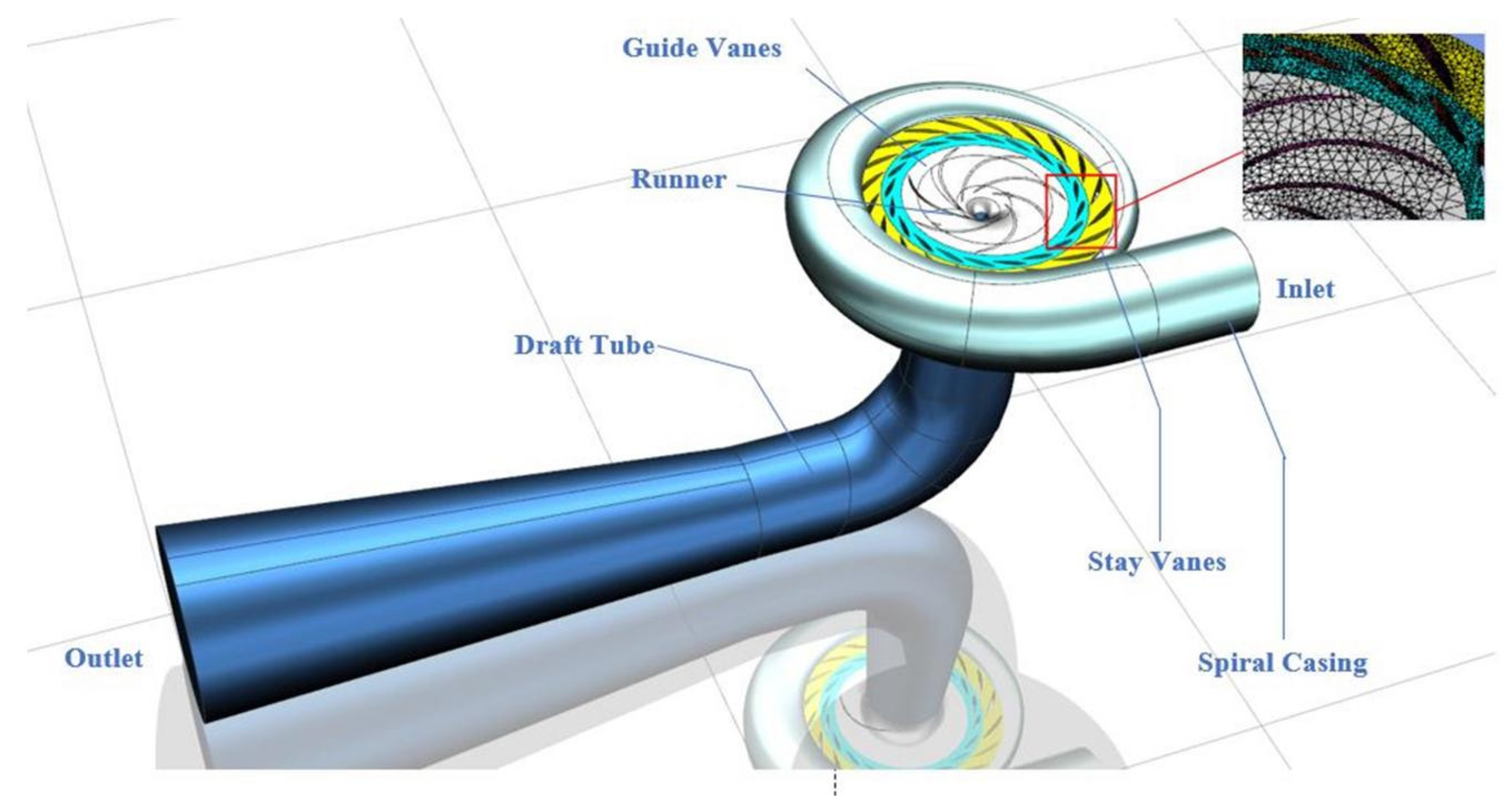
3]. The system in
Figure 1 is a pumped-storage system.
China has achieved important technological achievements in tackling issues related to the development of pumped-storage projects with a high head (up to 700 m) and a large capacity (single-unit 400 MW class) [
4]. The challenges include operational instability in the hump characteristic zone [
5], hydraulic oscillations in the S-shaped [
6] characteristic zone, and cavitation and wear problems. China has made significant progress in the development of high-head and large-capacity pumped-storage units. Industry experts contend that the core components of pumped-storage power plants are high-performance pump-turbines, and the safety and economy of a large-scale energy storage system are directly impacted by their technological advancement. Among the challenges, the hump characteristic in pump mode and the S-shaped characteristic in turbine mode cause severe hydraulic instability and strong pressure pulsations [
7]. These two unstable phenomena occur in different operating quadrants with distinct underlying mechanisms, yet both significantly impact the safety and stability of pump-turbines. In turbine brake operation, the main flow passes from the spiral casing to the draft tube, whereas in pump operation, the main flow passes from the draft tube to the spiral casing. Therefore, the S-shaped characteristic in turbine mode and the hump characteristic in pump mode should be clearly distinguished. This study focuses on the hump instability in pump mode.
The hump phenomenon refers to a non-monotonic characteristic in the unit speed versus flow rate curve of a pump-turbine operating in pump mode, which typically occurs under low-head and low-load conditions. It is mainly associated with an excessively large flow angle at the turbine inlet, leading to strong flow separation [
8], vortices, and backflow on the blade suction side [
9]. These complex flow structures result in increased energy losses and hydraulic instabilities. Consequently, the characteristic curve exhibits a convex “hump” shape, where multiple flow rates may correspond to the same unit speed (multivalued behavior). The fluctuations in speed and power generation of the turbine raise problems for the connection to the grid and stability control. Also, it generates powerful low-frequency pressure pulsations that affect the casing and draft tube, causing severe vibrations and noise [
10]. Long-term operation under these conditions will accelerate metal fatigue [
11] and cavitation damage [
12] to critical components like the runner and main shaft, affecting their structural integrity. To solve this difficulty, modern design of hydro turbine runners, which mostly make use of Computational Fluid Dynamics (CFD) technology, are optimized to reduce the hump zone. Further, strict operational limits are implemented to avoid a hump. Moreover, speed control systems operate quickly, allowing the unit to pass through this unstable region. So operational stability is achieved, and the life of the equipment is enhanced.
Research on the mechanisms of instability and the flow behavior in the hump region of water pump-turbines is influenced by internal flow separation and the generation of vortices [
13]. When the flow rate enters the hump zone, the angle of incidence at the impeller inlet increases sharply, which causes flow separation on a large scale on the suction side of the blade. The flow gets separated and forms strong vortex structures and recirculation within the double-row wicket gate zone comprising the movable and stay vane. These vortices decrease the effective flow cross-section of the channel, and the hydraulic losses show a sharp increase, leading to an abnormal bulge in the head characteristic curve [
14,
15]. The flow in the hump zone is more complicated than a simple first-order phase transition. It involves abrupt changes in flow state, which are accompanied by high-pressure oscillations [
16]. This phenomenon is closely related to unsteady vortex evolution and rotating stall in the wicket gate region [
17]. For instance, it becomes 0.32 times the rotational frequency at wide wicket gate openings and reduces to 0.066 times at narrow openings. According to entropy production theory analysis [
18], these findings were supported. Entropy production-based analysis has also been applied to the hump region. In one recent study, the hydraulic loss in the hump zone was reported to be dominated by indirect entropy production (about 71%), followed by wall entropy production (about 27%), while direct entropy production accounted for only about 1% [
19,
20]. Earlier and more-recent studies have likewise shown that entropy production analysis is effective for identifying the dominant loss regions and relating hump instability to vortex evolution, flow separation, and near-wall dissipation in pump-turbines [
21,
22].
To study the transient complex flow field in the area of the hump, high-precision full-channel numerical simulation methods have been adopted. One of the major works comes from Wuhan University, where the authors built a detailed 9.37-million-grid-cell model for the prototype unit and achieved the flow separations and vortex distribution characteristics in the hump region with the Scale-Adaptive Simulation–Shear Stress Transport (SAS-SST) turbulence model [
23]. The simulation results show that the low-velocity zone in the areas of the spiral casing and guide vanes expands under low-flow conditions, and the number of vortices increases greatly. The 2% difference between simulation results and experimental results shows the accuracy of the model used in the study.
In addition to numerical simulations, advanced flow field measurement techniques played a significant role in experimental validation [
24]. Using a high-speed camera and Particle Image Velocimetry (PIV), the rotating stall vortex development in the wicket gate region was studied. This method, combined with three-dimensional compressible-flow model analysis [
25], provided important experimental evidence for the development of rotating stall and asymmetric vortex structures in the wicket gate region. For example, the team of Gabriel Ciocan [
26] utilized Laser Doppler Velocimetry (LDV) and PIV technologies extensively to capture the transient velocity field distribution between active wicket gates under hump conditions successfully. As a consequence, asymmetric velocity and rotating vortex clusters were observed in the area of guide vanes, causing channel blockage and flow separation [
27].
Despite the presence of a hump, the scientific community continues to explore ways to improve turbine functionality. Researchers have also quantitatively linked hydraulic losses in the hump region to guide vane opening using entropy production-based loss analysis. Although these studies have provided valuable insights into vortex evolution, flow separation, and hydraulic loss mechanisms in the hump region, most of them mainly focus on explaining the instability phenomenon itself. The relevance of these mechanisms to practical flow-control design for hump suppression has not yet been sufficiently clarified [
28,
29].
Therefore, this study combines full-channel unsteady numerical simulations based on the SAS-SST model with experimental validation to investigate the hump phenomenon of a pump-turbine under pump operating conditions. The flow–head characteristics, internal flow structures, hydraulic losses, and pressure pulsations are analyzed to clarify the mechanism of hump formation. On this basis, a fin-based flow-control strategy is introduced in the draft tube and evaluated by comparing the flow behavior and pressure pulsation characteristics before and after the modification. The results show that the hump region is closely related to pre-swirl and spiral backflow in the draft tube, non-uniform runner inflow, and vortex-induced flow separation in the wicket gate region. The proposed fins can effectively suppress swirl and backflow, improve inflow uniformity, reduce pressure pulsation intensity, and narrow the hump region, thereby improving the operational stability of the pump-turbine.
2. Methodology
2.1. Basic Parameters
The purpose of this study is to carry out numerical simulations of a particular pump-turbine model to predict its performance in the hump low-flow region. Additionally, it offers a detailed analysis of the internal flow features and pressure fluctuations within this hump region. The fundamental parameters of the model are listed in
Table 1.
To acquire the entire flow path computational domain of the pump-turbine, this study utilized the CFD software ANSY 2024 R2 SpaceClaim to develop a three-dimensional model of the pump-turbine. This approach constructed structural models of the pump-turbine’s spiral casing, stay vane, movable wicket gates, runner, and draft tube. Subsequently, a full-channel numerical simulation and analysis of the pump-turbine were performed, leading to the creation of a complete full-channel computational domain.
Figure 2 depicts the full-channel computational domain of this model.
2.2. Numerical Calculation Method of Turbulence
The SAS-SST model, introduced by Menter [
30] in 2003, dynamically modifies turbulent viscosity based on the von Kármán length scale [
31] to enable detailed vortex simulations in separation regions. The revised ω equation and SAS source term are its main elements, which produce good results for aircraft landing gear noise, wing flow separation and the flow around slender bodies. The model provides the best balance between accuracy and computing efficiency and can thus be employed as a Scale-Adaptive Simulation tool in CFD. The SAS-SST flow model [
32] is defined by the set of Equation (1), which describes the behavior of the turbulent dissipation rate.
where
is the fluid density;
U is the velocity vector;
is the specific dissipation rate;
is the dissipation coefficient;
is the von Kármán constant;
μ and
are the turbulent eddy viscosity;
is the production term of turbulent kinetic energy; γ,
,
and
are model constants; amd
F1 is the blending function used in the SST model. (1) denotes the turbulent diffusion term, term (2) the turbulence production term, term (3) the turbulence dissipation term, and term (4) the composite function correction term.
is the SAS dynamic adjustment items. The corresponding expression is given in Equation (2).
In the formula above,
is the turbulence length scale;
is the von Kármán constant;
LvK is the von Kármán length scale, which is defined as the maximum of the von Kármán scale estimated from the local flow field and the grid-related lower bound;
are the model constants;
S is the strain rate tensor invariant;
and
k are the turbulent kinetic energy and the specific dissipation rate; and
and
are the squared magnitudes of the gradients of
and
k. The outer max operator ensures that the SAS source term remains non-negative. To avoid numerical instability, apply grid constraints to
LvK. The details are as follows:
In the formula above, is the von Kármán constant, U is the velocity vector, S is the strain rate tensor invariant, is the Laplacian of velocity, is an empirical constant (usually taken as 0.11), and ∆ is the grid size. In summary, this paper employs the SAS-SST turbulence model to conduct unsteady numerical simulations of the pump-turbine model, aiming to capture complex turbulence behaviors.
2.3. Boundary Conditions and Mesh
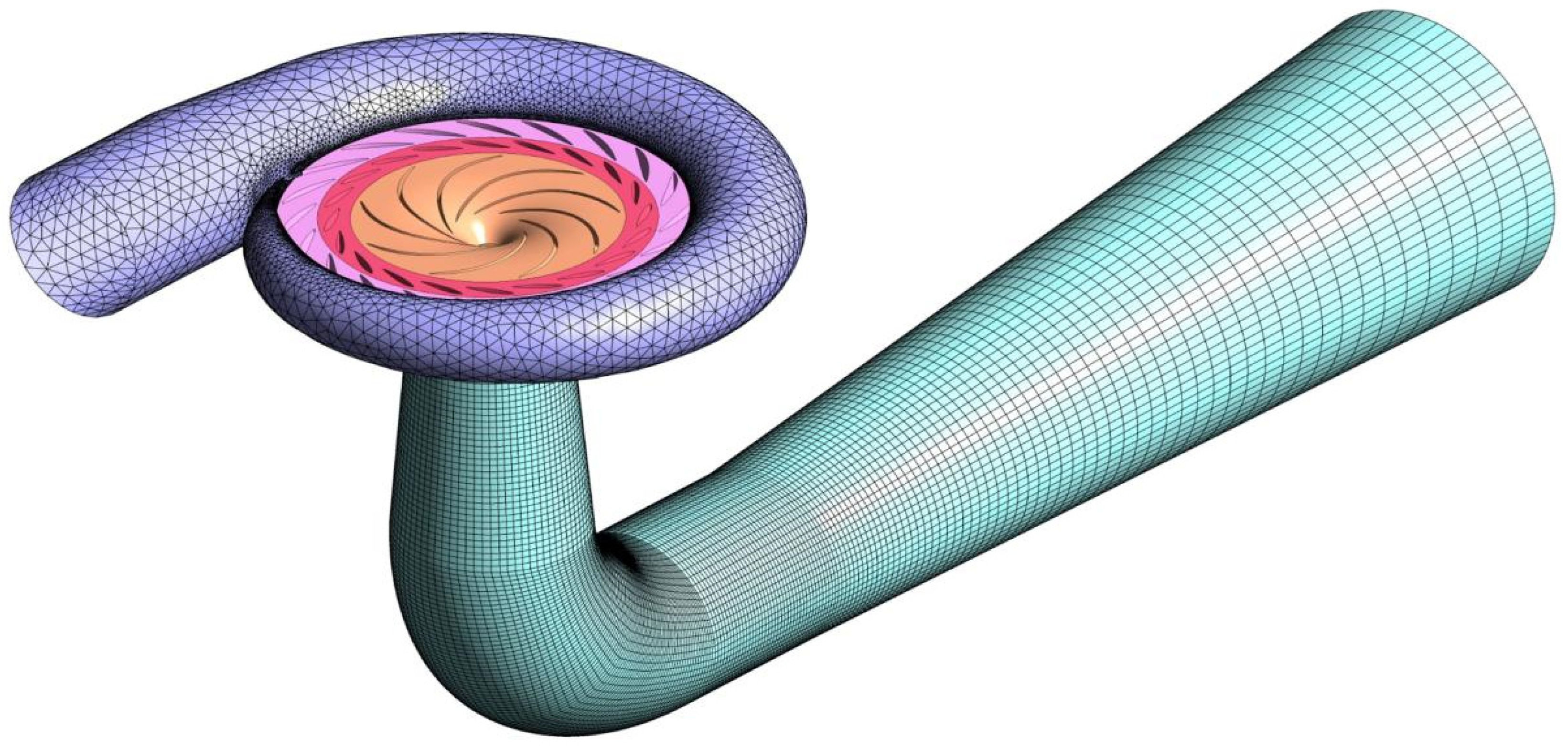
In this research, a hybrid meshing strategy was adopted for the pump-turbine model. Most flow passage components were discretized using unstructured meshes, while the draft tube region was meshed with a structured or locally structured grid to improve mesh quality and flow resolution. The surface meshes of each key component were then matched at the interfaces using the common node approach. Following this, the grid merging feature within Integrated Computer Engineering and Manufacturing (ICEM 2024R2) software was utilized to combine the meshes of each section, creating a complete full-flow-channel mesh system for the pump-turbine model. The resulting meshes are illustrated in
Figure 3. The grid statistics are summarized in
Table 2, the mesh quality metrics are listed in
Table 3, and the boundary conditions are given in
Table 4.
In addition to the grid statistics, the quality of the final mesh was further evaluated using several standard indicators, including the minimum angle, maximum skewness, maximum aspect ratio, and average y+ value, as summarized in
Table 3. These metrics confirm that the final mesh is suitable for the present numerical simulations.
It should be noted that, under unstable operating conditions in the hump region, the mass flow rate in an actual pump-turbine system may vary with time because of the hydraulic interaction between the machine and the water conveyance system. In the present study, however, a constant-mass-flow boundary condition was adopted as a simplified treatment to focus on the intrinsic internal flow behavior of the pump-turbine at representative operating points. The purpose of this work is to identify the dominant flow structures, hydraulic loss mechanisms, and pressure pulsation characteristics associated with hump instability, and to compare these features before and after the installation of fins under the same boundary condition framework. Therefore, although the constant-mass-flow assumption may affect the exact quantitative magnitude of the global unsteady response, it does not alter the main physical interpretation of the hump-related flow mechanisms or the relative evaluation of the proposed fin-based control strategy. A fully coupled simulation with time-varying flow rate will be considered in future work. For the same reason, the present study does not address the hysteresis behavior in the hump region, which would require continuous loading/unloading processes and corresponding transient experimental validation. This issue will be investigated in future work.
2.4. Verification of Grid Independence
Computational accuracy highly depends on grid density. Increasing the number of grid cells generally leads to a more precise resolution of the flow field dynamics; nonetheless, excessively dense grids may incur increased costs and reduced efficiency. Conducting a grid independence test is essential to remove the influence of the number of grid cells on the outcomes of the simulation [
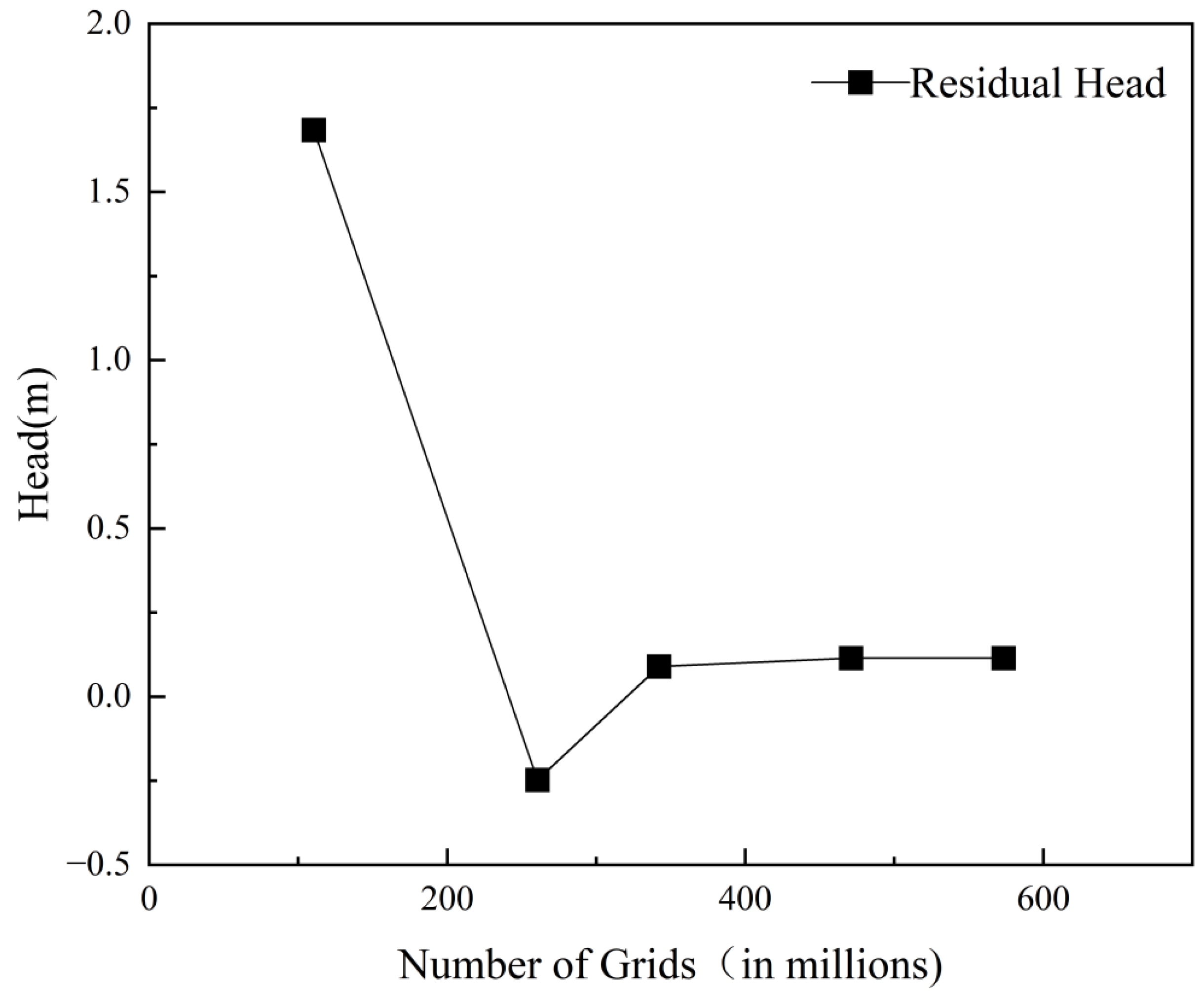
33]. This refers to changing the global size factor of the unstructured grid in ICEM CFD while keeping the generation pattern identical and increasing the grid cells from 1 million to 6 million. For five grids of different densities in the above number range, comparative tests were carried out at standard opening conditions and inlet mass flow rates for the optimal grid density [
34]. This method ensures the best trade-off between precision and computational efficiency. The findings are shown in
Figure 4. As the grid count rises, the head residual gradually stabilizes. Once the number of grids surpasses 4 million, the residual value stays near 0.1%, satisfying the criteria for the calculations. Increasing the grid count beyond this point not only consumes additional computational resources but also offers minimal improvement in accuracy. Consequently, this study opts for 4 million grids.
2.5. Quantitative Evaluation Parameters for Flow Field Improvement
To quantitatively evaluate the flow field improvement induced by the fins installed in the draft tube, four characteristic parameters were introduced, namely the swirl number, reverse-flow area ratio, impeller inlet velocity non-uniformity coefficient, and root-mean-square value of the pressure pulsation coefficient. These parameters were used to characterize the changes in swirl intensity, backflow extent, inflow uniformity, and unsteady pressure fluctuation level, respectively.
The swirl intensity at the selected cross-section was quantified by the swirl number, defined as
where
A is the cross-sectional area,
is the fluid density,
is the axial velocity component,
is the circumferential velocity component,
r is the local radial coordinate, and
R is the characteristic radius of the selected section.
A smaller value of
S indicates weaker swirling motion and a more stable flow state.
To evaluate the extent of backflow in the draft tube, the reverse-flow area ratio was defined as
where
Ar is the area with negative axial velocity, namely
< 0, and
A is the total area of the selected cross-section.
A lower value of
Kr indicates a smaller reverse-flow region and weaker recirculation.
The inflow uniformity at the impeller inlet was evaluated by the velocity non-uniformity coefficient:
where
is the area-averaged axial velocity at the impeller inlet, expressed as
A smaller value of indicates a more uniform inflow distribution at the impeller inlet.
To characterize the intensity of unsteady pressure fluctuations, the pressure pulsation coefficient was defined as
where
is the instantaneous pressure difference relative to the time-averaged pressure at the monitoring point,
is the fluid density,
is the gravitational acceleration, and
H is the pump head under the corresponding operating condition.
Based on this definition, the root-mean-square value of the pressure pulsation coefficient was calculated as
For discrete sampled data, it can be written as
where
T is the sampling period and
N is the total number of samples. A lower value of
indicates weaker pressure pulsation and better flow stability.
In the present study, S and Kr were calculated at the draft tube cone section, was evaluated at the impeller inlet, and was obtained from the representative pressure monitoring points in the draft tube and impeller region.
2.6. Analytical Estimation of Leakage and Rotor Side-Space Losses
Since the present CFD domain resolves only the complete main-flow passage, the seal-clearance leakage paths and runner side spaces were not explicitly included in the numerical model. Therefore, analytical estimations were introduced to account for these omitted secondary losses. The leakage flow rate was estimated by
and the corresponding leakage head loss was obtained from
The rotor side-space loss was estimated using a disc-friction-type model:
Here, is the leakage coefficient, is the equivalent leakage area, is the pressure difference across the leakage path, is the moment coefficient, is the angular velocity, and R is the characteristic radius of the rotor side space.
3. Experimental Verification
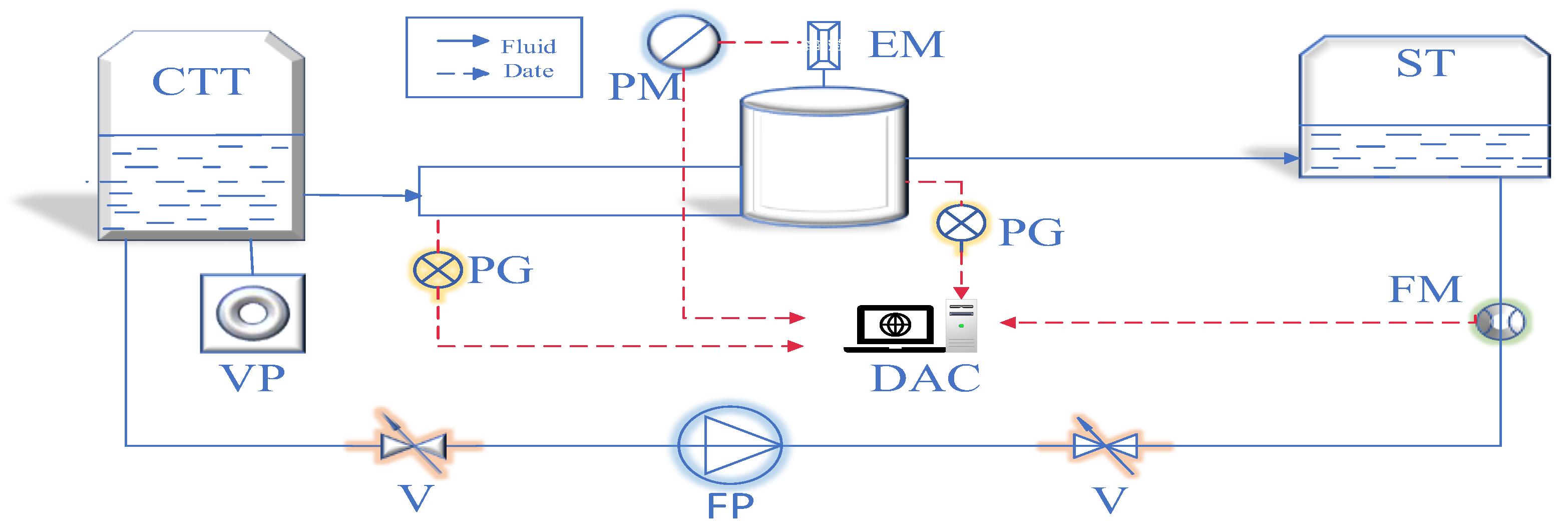
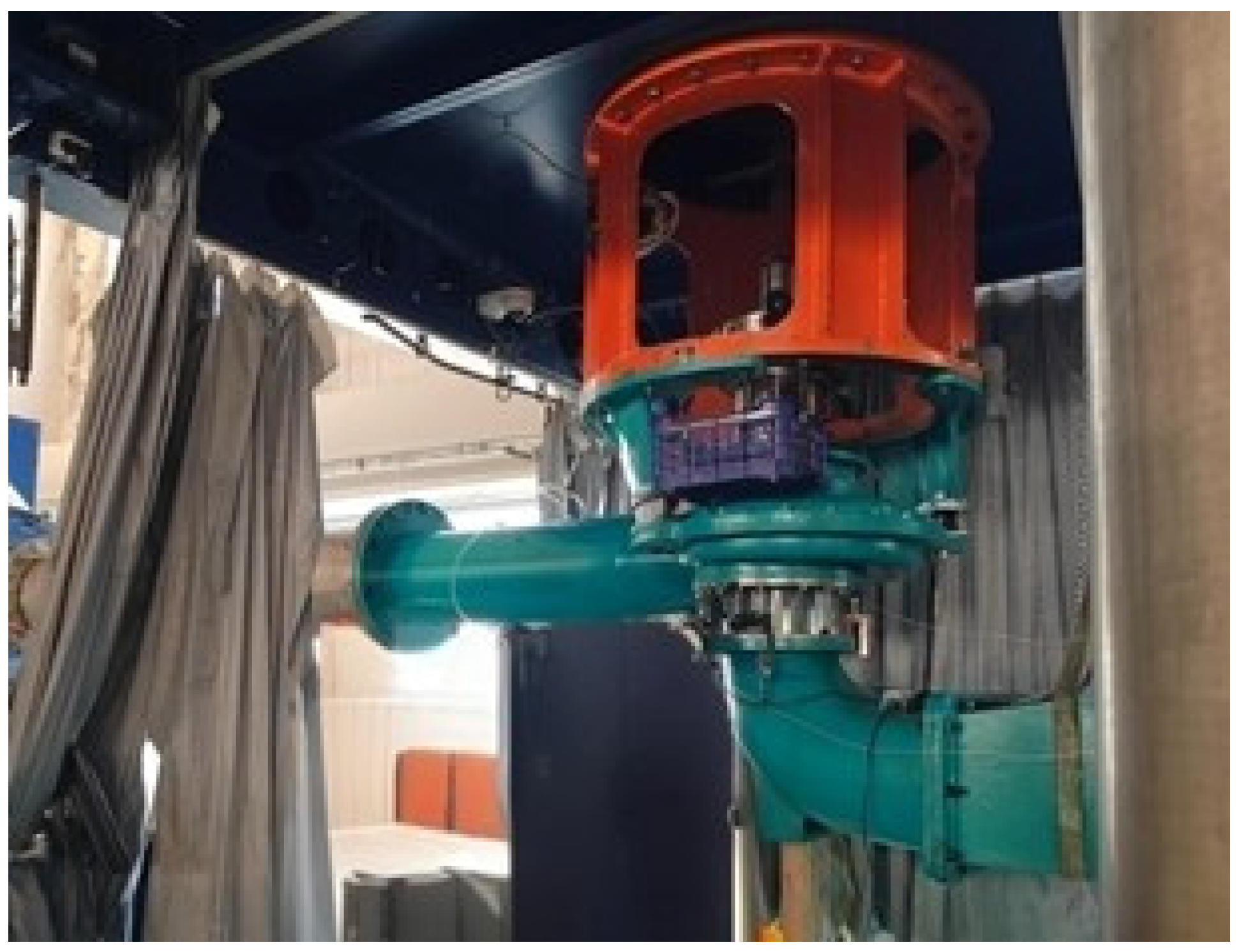
This section uses a closed hydraulic machinery test rig, with the primary components and layout shown in
Figure 5 and
Figure 6 [
35]. The test data were sourced from Hohai University. An electromagnetic flowmeter is used on the test rig to measure flow, with a measurement uncertainty of 0.325%. The head is determined using Equation (4).
Among these, H represents the hydraulic head of the pump-turbine, denotes the pressure difference between the inlet and outlet of the model pump-turbine, is the fluid density and g is the gravitational acceleration. Lastly, the head of the adjustable wicket gate was recorded at various flow rates with an opening angle of 20°.
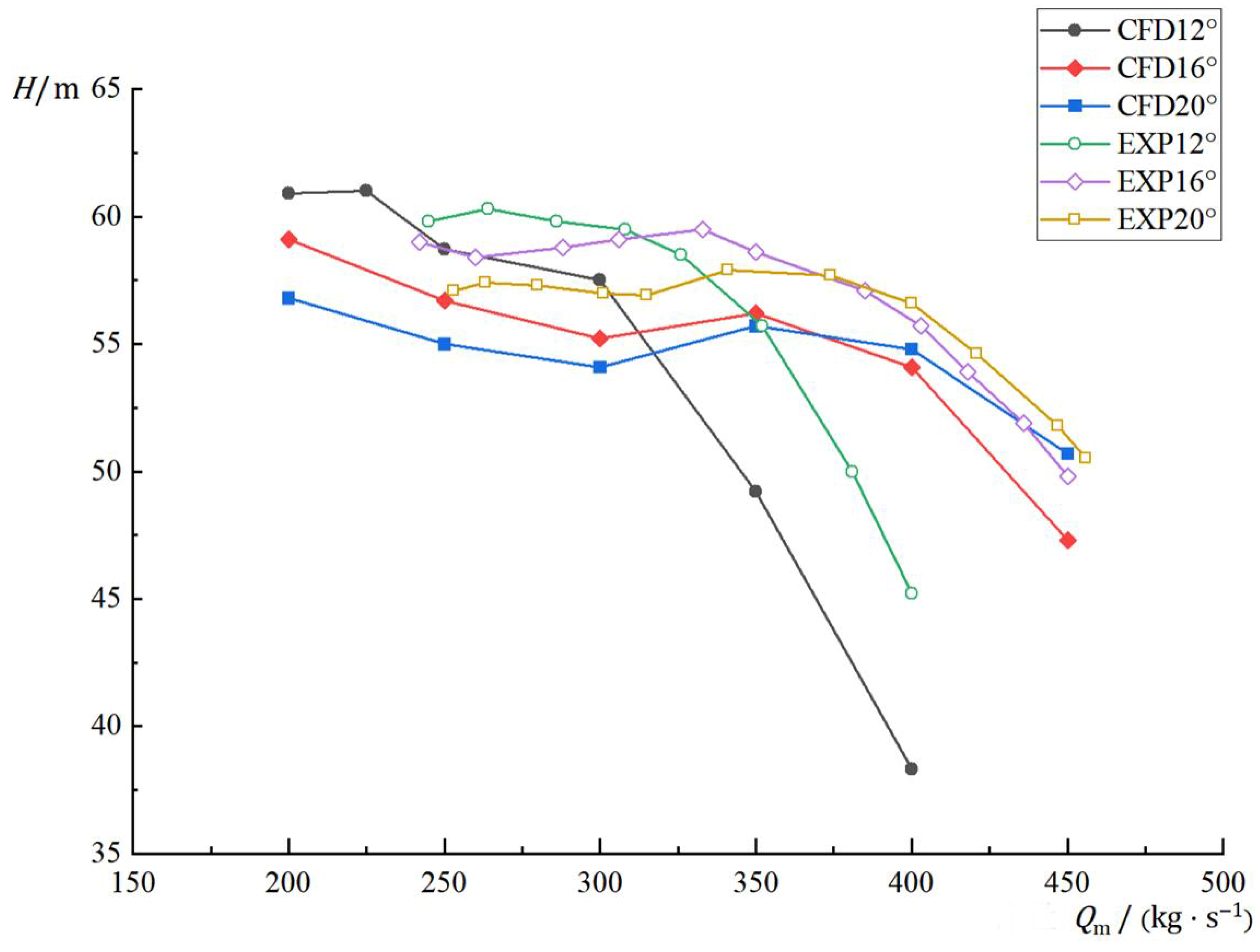
In this chapter, numerical simulations were conducted under three guide vane openings of 12°, 16°, and 20°, covering six different flow rate conditions for each case. For the 20° guide vane opening, the selected inlet mass flow rates were 200, 250, 300, 350, 400, 450, and 480 kg/s. For the 16° opening, the inlet mass flow rates were 200, 250, 300, 350, 400, and 450 kg/s, while for the 12° opening, the selected inlet mass flow rates were 200, 225, 250, 300, 375, and 400 kg/s. As shown in
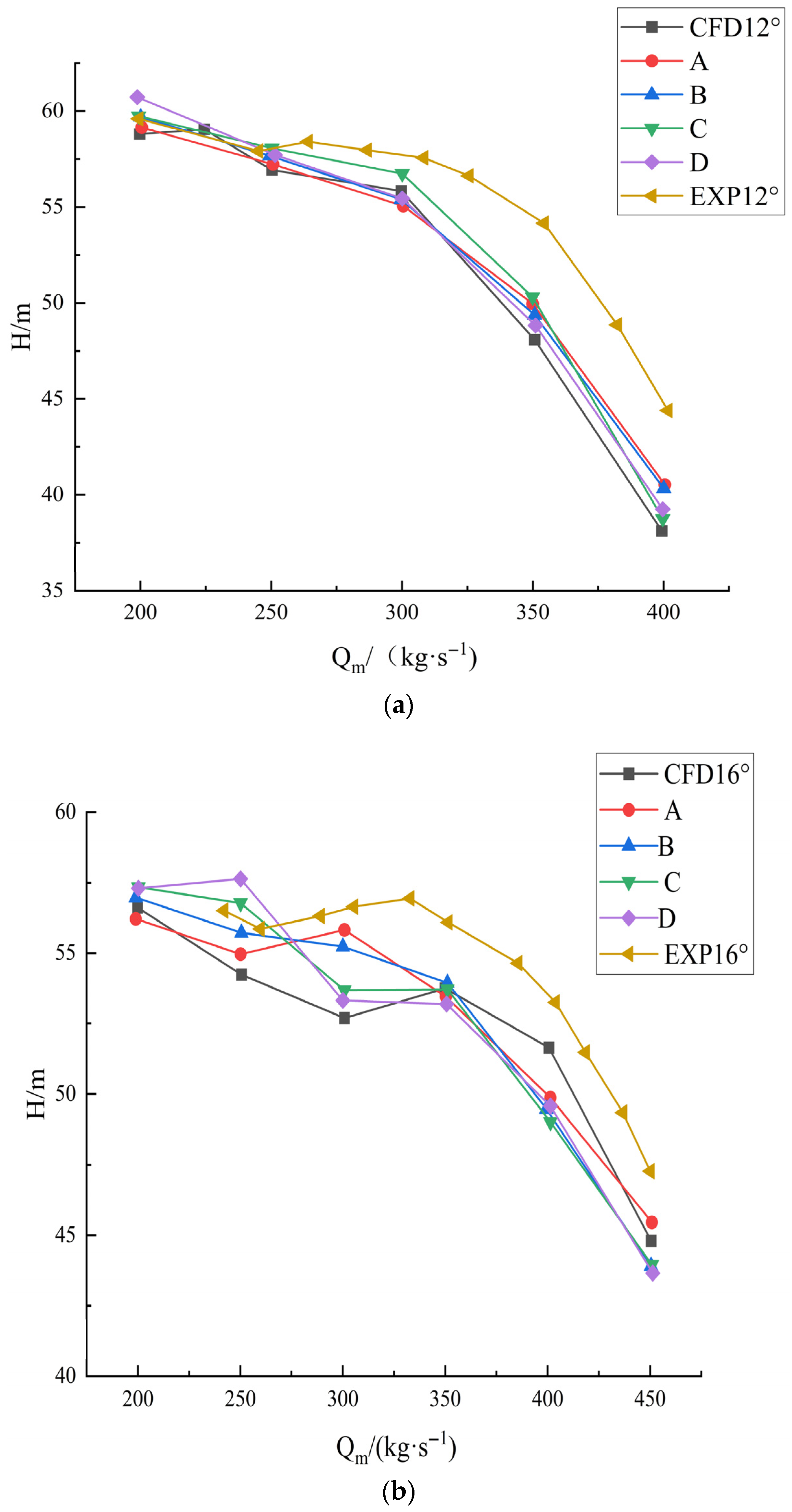
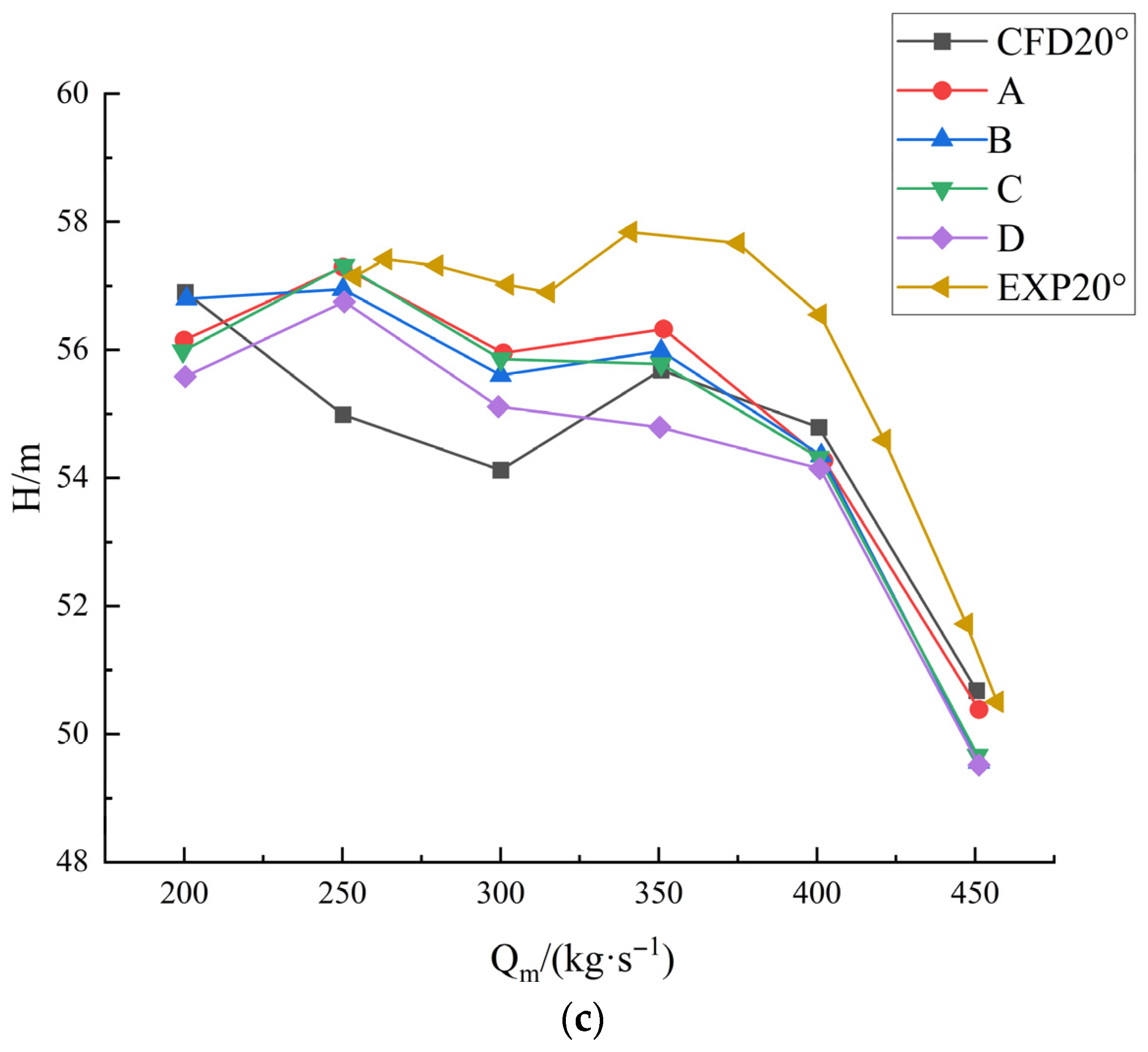
Figure 7, the simulated flow–head curves reproduce the main variation trend of the experimental H–Q characteristics under different guide vane openings, although noticeable quantitative discrepancies remain in the hump region [
36]. It should also be noted that the available historical experimental dataset did not include reliable measurements in the near-shutoff region. Therefore, the present comparison of performance characteristics is limited to the measured operating range and does not extend to the zero-flow condition.
Table 5 presents the errors between the calculated and experimental values at four flow rate conditions of 250, 300, 350, and 400 kg/s, where both the calculated head and experimental head are taken as the average values under the three guide vane openings of 12°, 16°, and 20°. The results indicate that the discrepancies between the calculated and experimental values fall within an acceptable range. Therefore, the numerical model is considered adequate for analyzing the overall hump-related hydraulic behavior and internal flow mechanism, while the quantitative accuracy of some unsteady details remains limited by the absence of dynamic experimental validation.
It should be emphasized that the available historical experimental data from the university test rig were limited to external hydraulic characteristics, mainly the H–Q curves. High-frequency dynamic pressure sensors were not installed during those earlier tests; therefore, direct experimental validation of the pressure pulsation results was not possible in the present study. Accordingly, the comparison with experiments in this work is restricted to the external performance characteristics, whereas the pressure pulsation results are interpreted as qualitative numerical predictions for mechanism analysis. Nevertheless, the SAS-SST model adopted here has been widely reported in previous studies to provide reasonable capability for capturing low-frequency unsteady flow structures and pressure pulsation trends in pump-turbines.
4. Baseline Flow and Pressure Pulsation Characteristics
4.1. Hydraulic Loss Analysis
At a wicket gate opening of 20°, as the flow rate nears the operating point of 300 kg/s, the flow rate–head curve crosses the pipeline characteristic curve several times within the hump region [
37]. This leads to instability in the unit’s operation, consequently lowering its efficiency and stability [
38]. To understand the reasons behind the hump characteristics during pump operation, one must examine the hydraulic losses in each part of the unit. To aid in analyzing hydraulic losses in different components under varying flow conditions, these losses are represented as head losses using Equation (5). In this equation,
denotes the converted head loss, while
and
represent the total pressures at the component’s outlet and inlet interfaces;
and g = 9.8 m/s
2, each weighted by the mass flow rate.
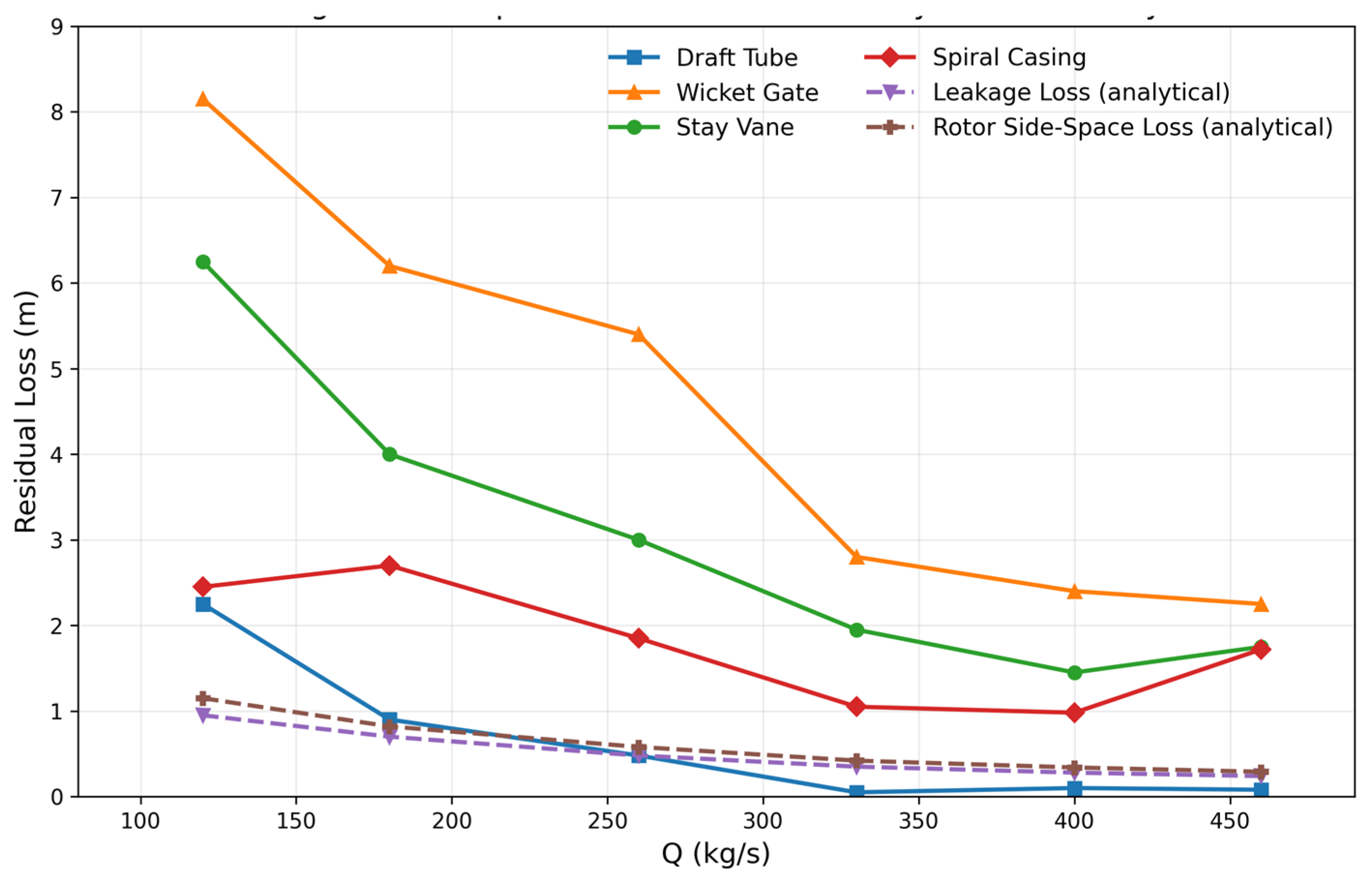
In addition to the CFD-resolved main-passage losses,
Figure 8 also includes analytically estimated leakage loss and rotor side-space loss as head-equivalent correction terms, because these secondary loss paths were not explicitly resolved in the present CFD domain.
Figure 8 illustrates that under low-flow conditions, the greatest head loss occurs due to the movable wicket gates, followed by the stay vane. The draft tube and spiral casing also cause energy losses, but to a lesser degree. With an increase in flow rate, the head loss associated with the movable wicket gates reduces; after the flow exceeds the lowest point within the hump zone, this loss levels off at a comparatively high degree. Meanwhile, losses from the spiral casing and stay vane first decrease and then rise as flow continues to increase, whereas losses from the draft tube remain consistently very low. A detailed analysis of head losses across different pump-turbine components revealed that when the flow rate does not reach the hump zone, the total hydraulic losses are considerably high [
39]. The double-row wicket gates are the main contributors to energy consumption, while hydraulic losses in the draft tube before the impeller are relatively minor, indicating that most hydraulic losses are concentrated in the diffuser components located downstream of the impeller.
The analysis shows that variations in the hydraulic losses of pump-turbines are strongly linked to the form of their head–flow curves. This suggests that the presence of hump zones is closely connected to the hydraulic losses inside the internal flow parts. Greater familiarity with this link could be gained through further research into the flow behavior in the internal components of pump-turbines.
4.2. Analysis of Internal Flow Characteristics of Draft Tube
The draft tube is the initiating component within the pump-turbine flow channel. It influences the flow conditions within the second flow channel through interaction. The draft tube’s flow pattern and hydraulic losses determine the flow conditions in the second flow channel and further downstream.
- (1)
Straight cone pipe section
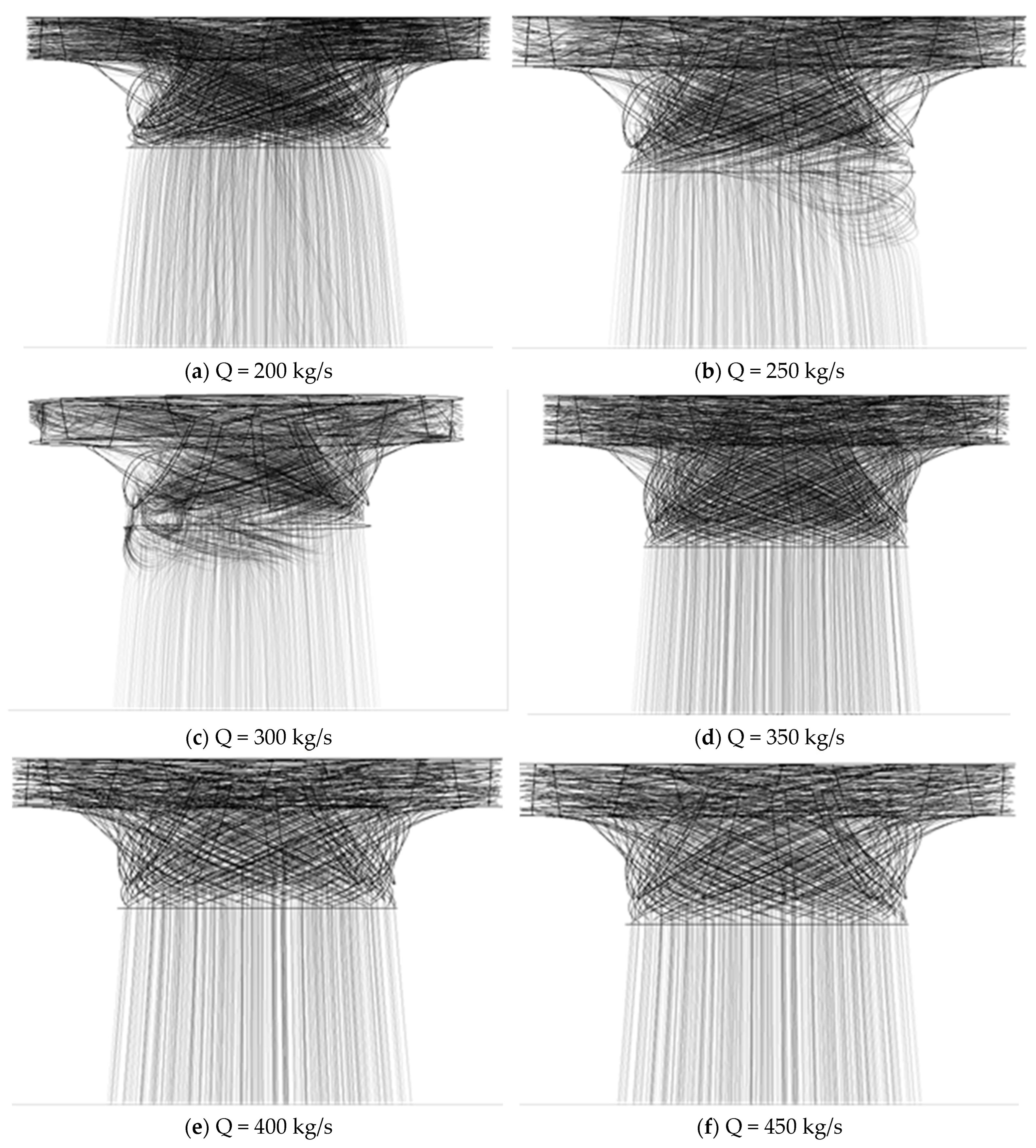
Figure 9 shows the arrangement of flow lines in the draft tube’s straight conical segment under different flow conditions. The study noted that a low-flow condition allowed the formation of vortices in the turbine inlet in this section at the valley point of the hump region. The flow rate from the peak of the hump zone to 250 kg/s is reduced due to an increase in vortices. In addition, spiral recirculation [
39] occurs near the pipe wall and at the peak of the hump zone under reduced-flow conditions. Once past the peak of the hump zone flow, the flow stabilizes and eventually becomes uniform in the conical section and the turbine area. Thus, it can be said that the unstable-flow phenomena, spiral recirculation under low-flow conditions, to be specific, are the primary contributors to hydraulic losses in the draft tube [
40]. Moreover, these losses worsen with the reduction in flow.
Vortex and swirling flow take place in the draft tube at flow rates of 250 kg/s and 300 kg/s, which generate similar pressures. These are visible mostly at the elbow and the diffuser section. The pressure contours of the cone section show different patterns. This is because the pre-swirl and spiral recirculation create a low-pressure zone close to the turbine wheel interface. On the other side, there is a high-pressure zone close to the cone. The high flow rates of 350 kg/s, 400 kg/s and 480 kg/s show an asymmetric distribution of vortices. The pressure contour map shows the presence of two low-pressure zones. The asymmetry increases hydraulic loss in the conical pipe section and energy loss in the draft tube. Moreover, the pre-swirl and the spiral recirculation negatively impact the downstream flow pattern of the turbine, thus further increasing hydraulic loss.
4.3. Analysis of Internal Flow Characteristics of Guide Vane Area
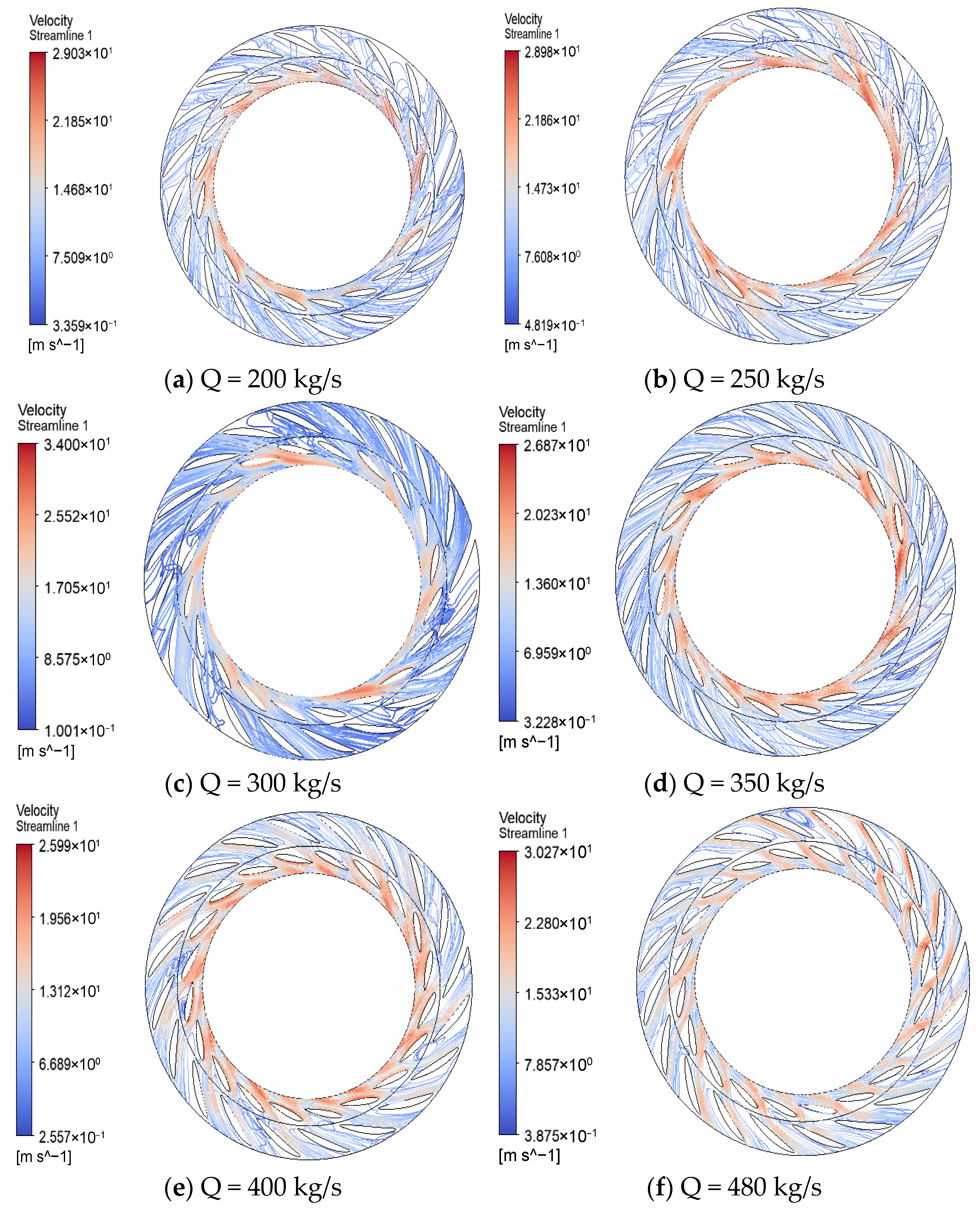
As shown in
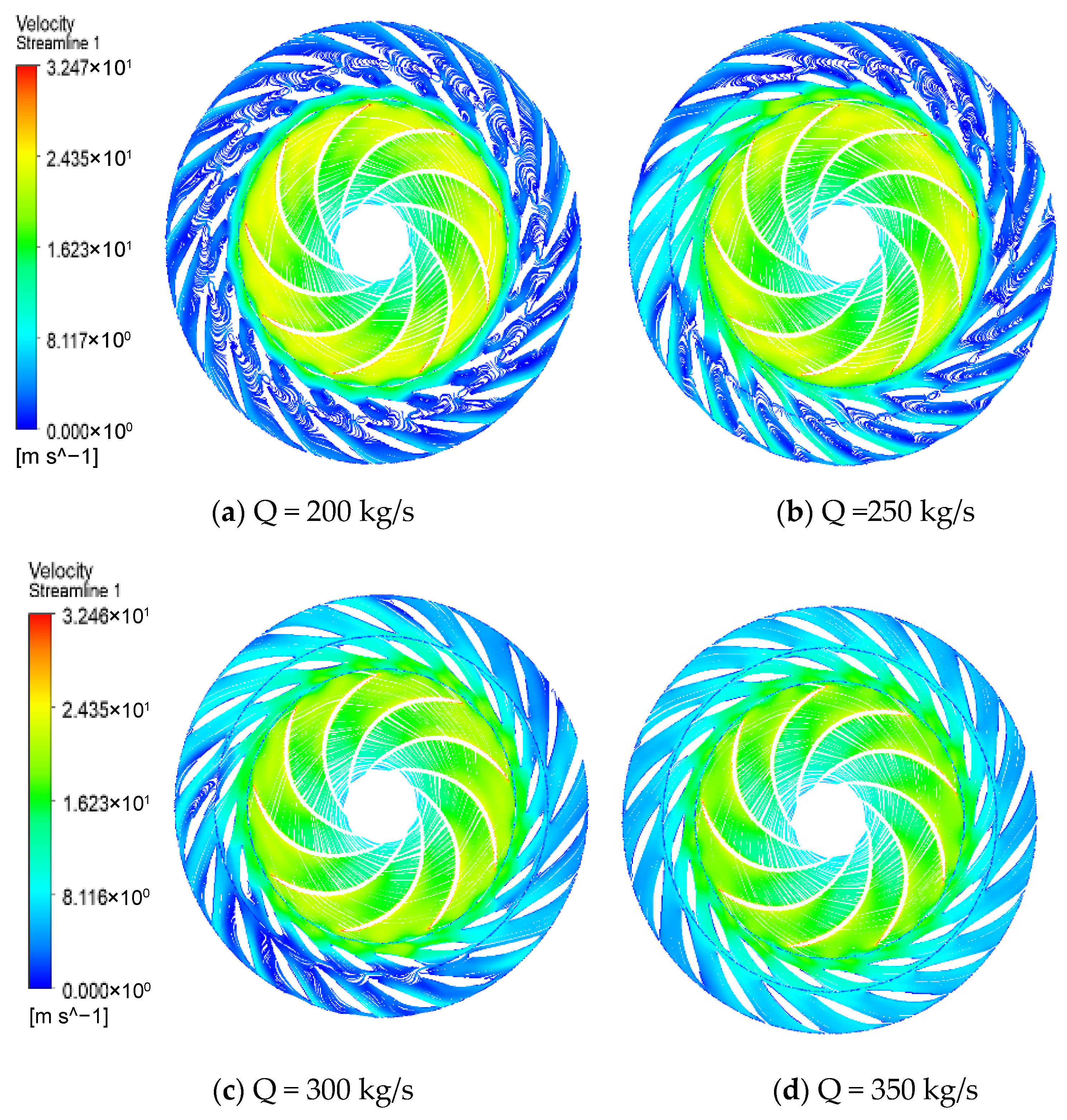
Figure 10, when the unit operates in the hump region (e.g., 200 kg/s to 300 kg/s), severe flow separation occurs within the double-row wicket gates. The high-velocity fluid and associated turbulence lead to the formation of multiple vortex structures parallel to the flow direction. These vortices block the flow passage, which is a major contributor to the abnormal hydraulic losses in the hump zone. As the flow rate increases to 400 kg/s and 480 kg/s, the streamline pattern becomes orderly, and the blockage is alleviated.
4.4. Pressure Pulsation Analysis of Baseline Condition
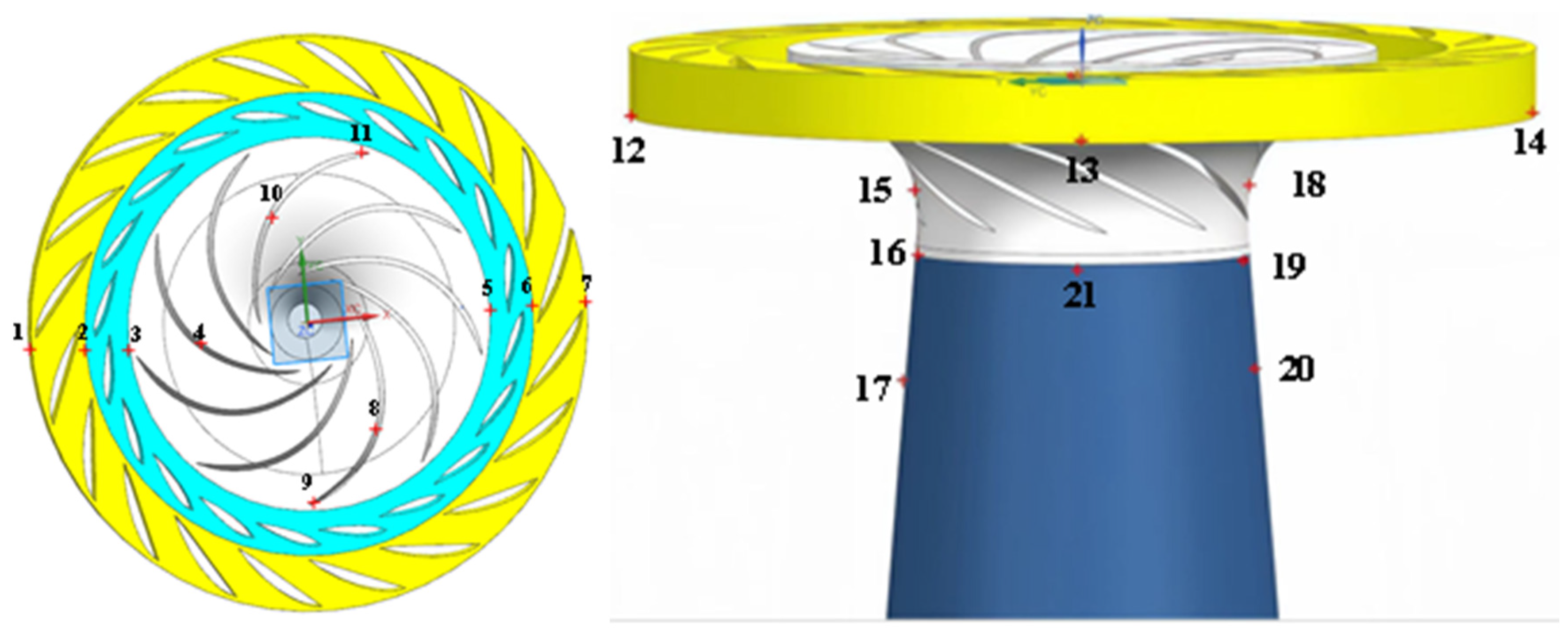
To comprehensively examine the origins of the unit’s humming behavior and its correlation with internal flow dynamics, an unsteady numerical analysis of pressure pulsations was performed on the pump-turbine across a range of flow rates: 200, 250, 300, 350, 400, and 480 kg/s. Monitoring locations for pressure pulsations were established at the draft tube outlet section, within the runner region, and along the flow passage delineated by the vanes, as illustrated in
Figure 11. Because no historical dynamic pressure measurements were available from the test rig, the following pressure pulsation analysis is based on unsteady numerical results and is intended primarily to reveal qualitative low-frequency instability features and their relation to internal flow structures.
A total of four monitoring points, designated as DT1 through DT4, are situated at both the draft tube and the pump inlet. Additionally, three monitoring points, labeled IMP1 to IMP3, can be found within the flow channel of the turbine. Furthermore, four monitoring points, named GV1 to GV4, are placed in the flow channel associated with the movable wicket gate, while another four monitoring points, referred to as SV1 to SV4, are positioned within the stay vane flow channel.
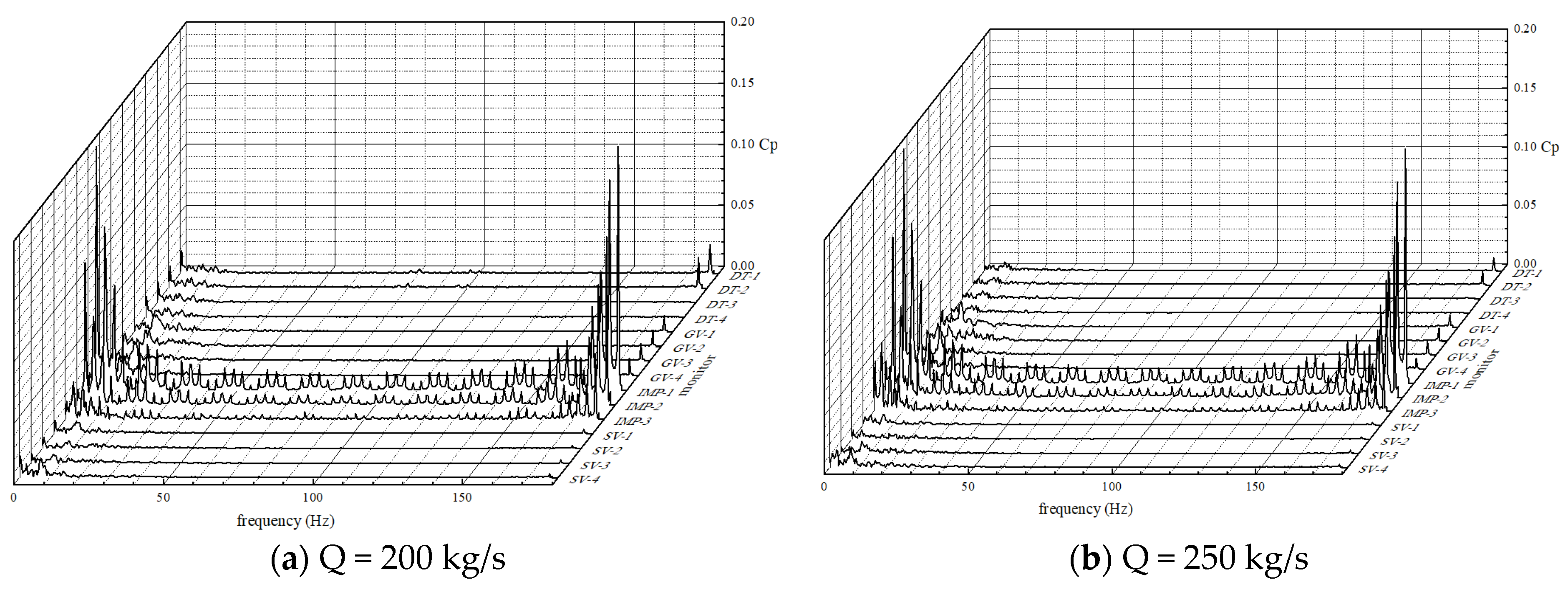
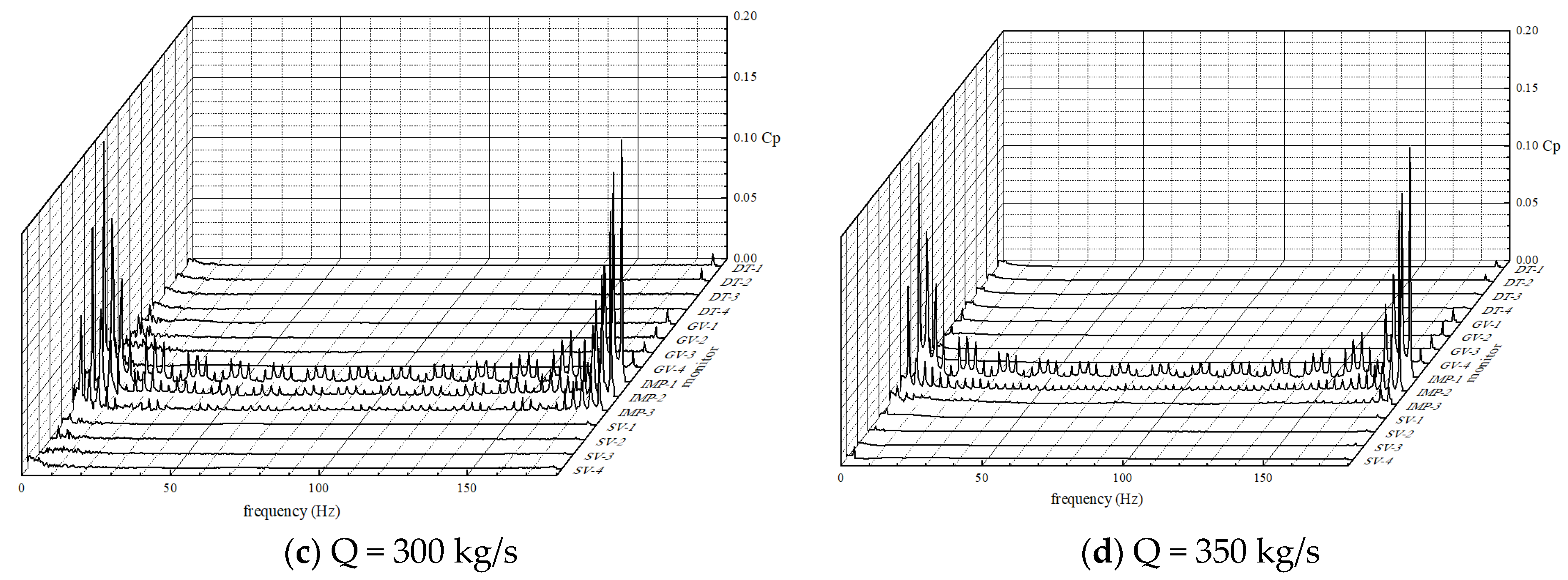
The frequency-domain analysis (
Figure 12) reveals a strong correlation between the flow patterns and internal pressure fluctuations. Under low-flow conditions in the hump region, low-frequency pressure pulsations dominate all monitoring points, corresponding to the severe pre-swirl and vortex structures identified previously. As the flow rate increases and stabilizes, the amplitude of these low-frequency pulsations significantly decreases. The severe pre-swirl, spiral recirculation in the draft tube, and flow separation in the wicket gates are the primary sources of hydraulic blockage and severe pressure pulsations in the hump region. Therefore, suppressing these vortex flow behaviors in the draft tube is the key to improving operational stability. Based on this mechanism, a passive flow-control strategy using draft tube fins is proposed and evaluated in
Section 5.
Although direct experimental pressure validation is unavailable in the present work, previous studies have demonstrated that the SAS-SST model can reasonably capture the dominant low-frequency unsteady structures in pump-turbines, which supports the qualitative credibility of the present pressure pulsation trends.
5. Effect of Draft Tube Fins on Hump Suppression
Unlike
Section 4, where frequency-domain analysis was employed to identify the dominant mechanisms of pressure pulsations in the hump region, the present section focuses on evaluating the effectiveness of the proposed fin-based flow-control strategy.
Therefore, the analysis in this section mainly adopts time-domain signals and statistical indicators, such as the root-mean-square value of the pressure pulsation coefficient, to quantitatively assess the reduction in pulsation intensity and the improvement in flow stability. Since the dominant low-frequency characteristics associated with vortex structures have already been clarified in Chapter 4, repeating frequency-domain analysis here would be redundant. Instead, the effectiveness of the fins is reflected through the attenuation of pulsation amplitudes and the stabilization of the flow field.
5.1. Computational Model
In order to suppress the swirl and spiral backflow observed in the draft tube under low-flow conditions, a passive flow-control strategy using stabilizing fins was introduced in the draft tube region. Previous studies have shown that installing flow-guiding structures or fins in the draft tube can effectively weaken vortex intensity, reduce spiral recirculation, and improve the inflow conditions at the impeller inlet, thereby enhancing the hydraulic stability of pump-turbines. Such vortex control strategies have been widely applied in hydraulic machinery to mitigate flow separation and reduce hydraulic losses.
Based on the analysis of the internal flow structures presented in
Section 4, strong pre-swirl and spiral recirculation were found to occur in the straight conical section of the draft tube, particularly near the impeller inlet. These flow structures contribute significantly to hydraulic losses and pressure pulsations in the hump region. Therefore, stabilizing fins were installed along the inner wall of the draft tube cone section to weaken the swirling flow and restrict the development of large-scale vortex structures.
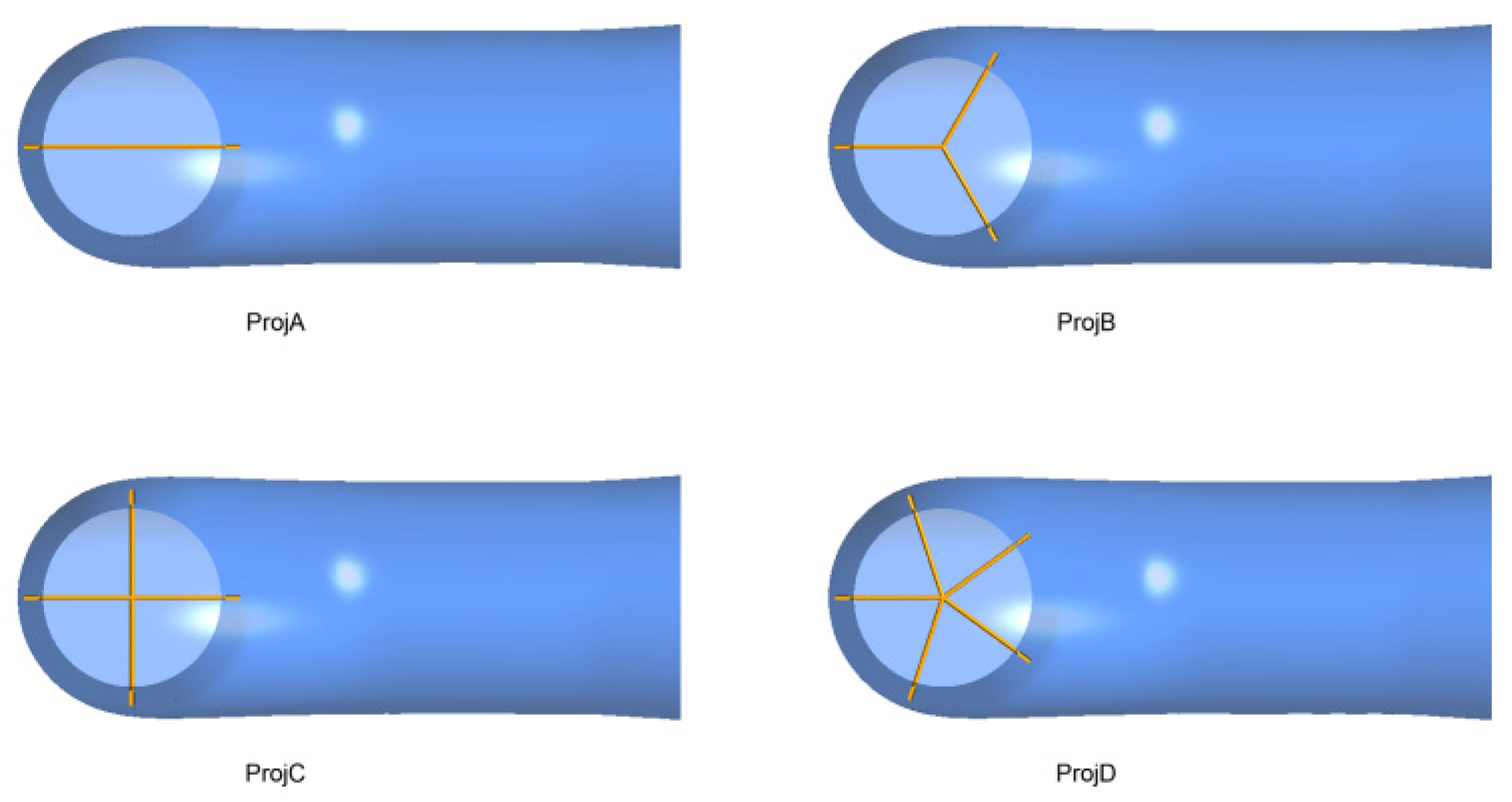
To maintain the symmetry of the flow field and minimize additional hydraulic blockage, four groups of fins with different numbers were arranged uniformly along the circumference of the draft tube. The geometric parameters of the fins were determined by considering the draft tube diameter, the impeller inlet dimensions, and the need to balance vortex suppression capability with minimal flow resistance. In particular, the fin length was selected to cover the main vortex development region, while the fin thickness was kept relatively small to avoid excessive blockage of the flow passage.
Similar configurations of vortex suppression devices have been reported in previous studies on draft tube flow-control in hydraulic turbines, demonstrating their effectiveness in reducing swirl intensity and improving flow stability. The detailed geometric parameters of the fins used in this study are summarized in
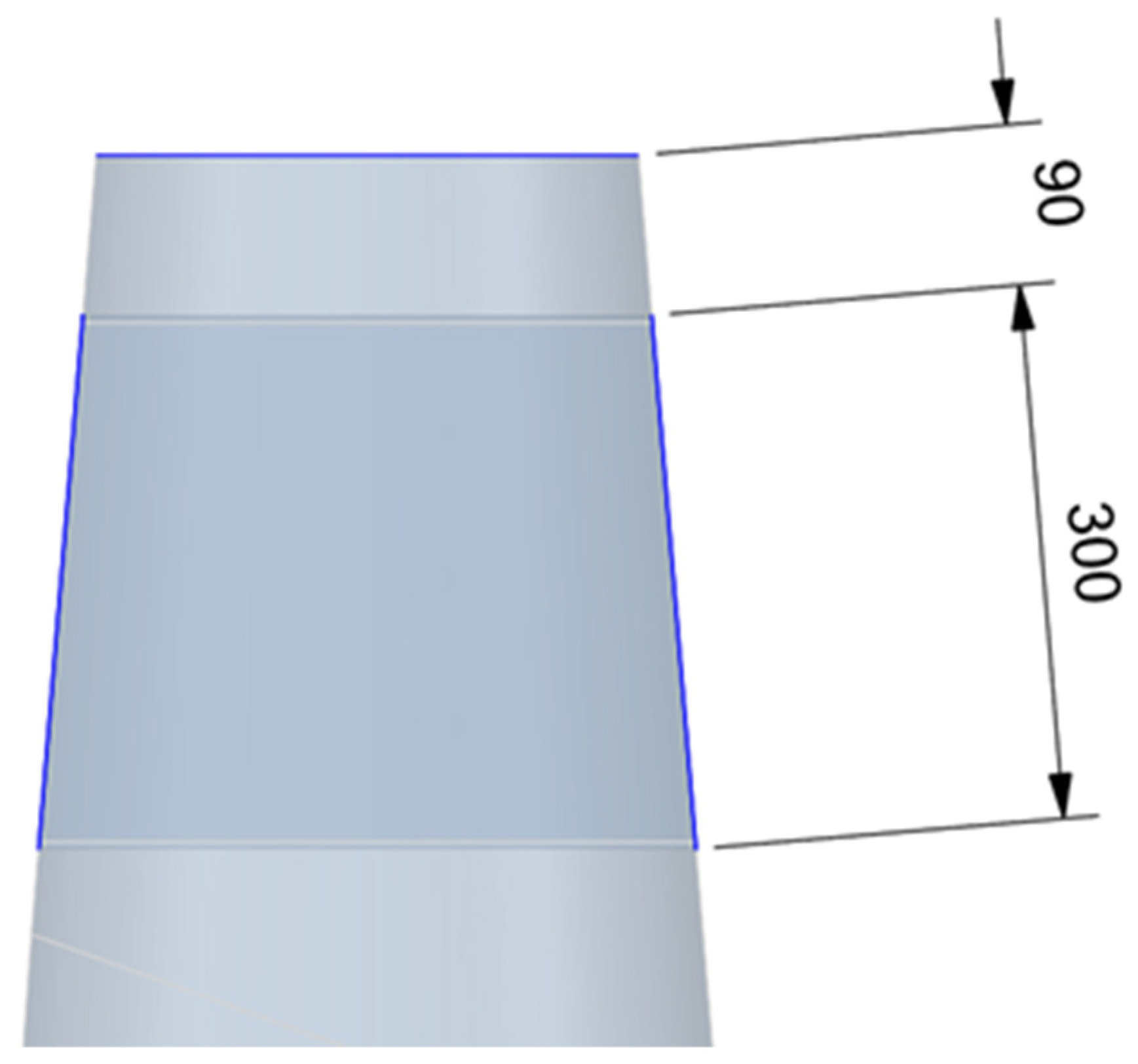
Table 6. The geometric dimensions of the fin cross-section are displayed in
Figure 13 and
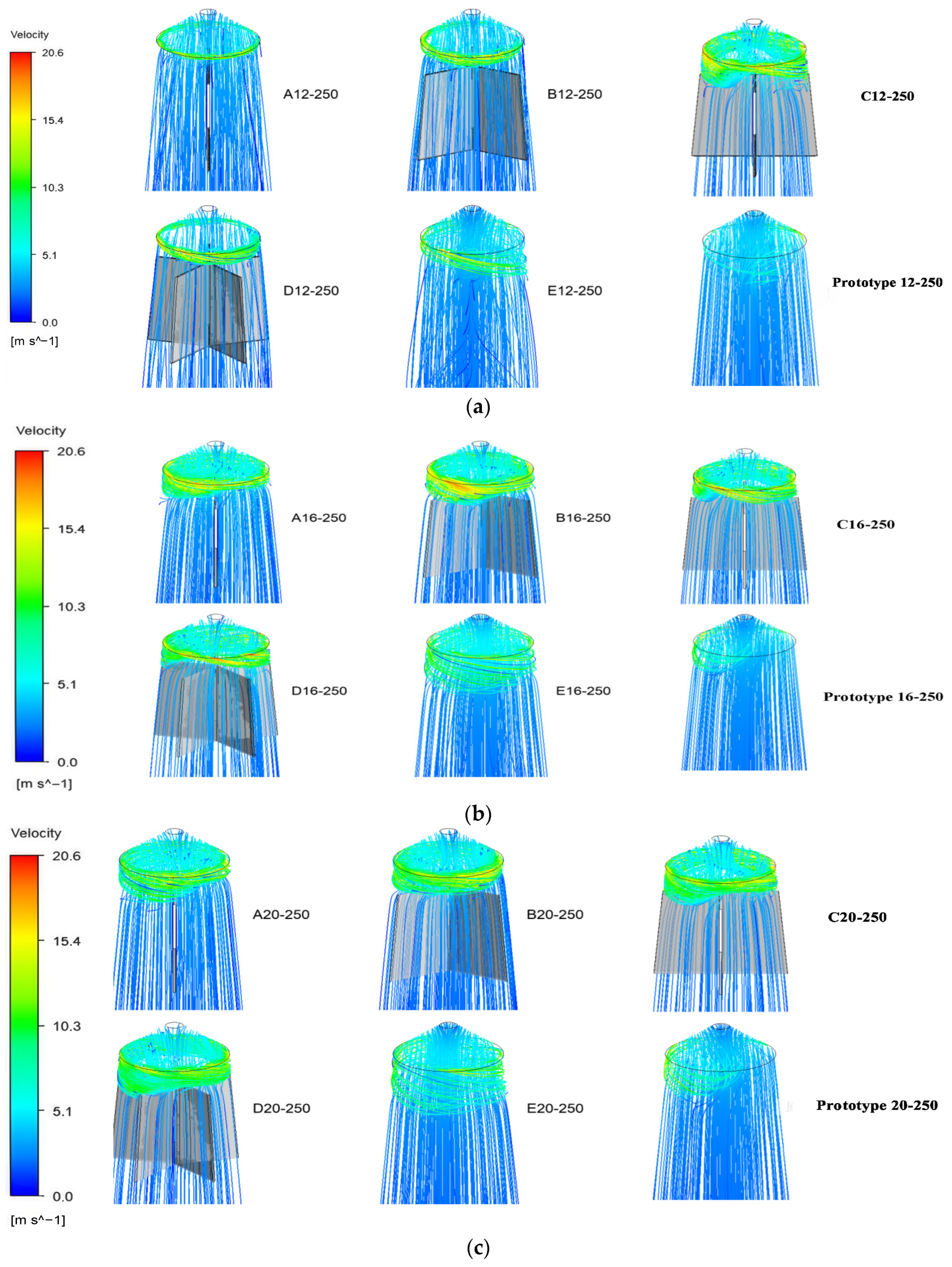
Figure 14. To facilitate the description of parameters under different operating conditions, we will use Scheme A, with a guide vane angle of 12° and an inlet flow rate of 200 kg/s, as an example, denoted as “A12-200.” This notation will be used throughout the remaining subsections of this section.
As shown in
Figure 15, even after adding fins to the tailpipe, the model pump-turbine still exhibited a hump phenomenon; however, the head near the hump region increased, and the size of the hump and the positive slope of the head curve were reduced. For the 12° opening angle, the increase in head across the various schemes is relatively small, with an improvement of approximately 3%. Furthermore, the head is improved at all flow rates except for the 300 kg/s condition, with Scheme C yielding results closest to the experimental data. For the 16° and 20° opening angles, the improvement in head within the hump region is very significant, reaching approximately 8%. In the C16-250 and D16-250 cases, the rate of head decline is steep. The C12, A16, and A20 schemes are the ones that most closely match the experimental curve at their respective opening angles.
Although the installation of fins introduces additional flow resistance and results in a reduction in head under high-flow conditions, this trade-off should be interpreted in the context of operational requirements. In pumped-storage units, the hump region at low flow rates is associated with severe hydraulic instability, strong pressure pulsations, and potential structural risks. Therefore, improving stability in this critical operating range is of primary importance.
It should also be noted that the proposed fin-based strategy does not completely eliminate the hump characteristic, but rather mitigates its adverse effects. The persistence of the hump indicates that the method is not a complete solution. However, the results demonstrate that the fins significantly suppress pre-swirl and spiral backflow, reduce pressure pulsation amplitudes, and improve inflow uniformity, thereby substantially weakening the instability intensity.
In contrast, high-flow operating conditions are inherently more stable and less prone to damaging unsteady-flow phenomena. Therefore, the efficiency penalty caused by parasitic drag at high flow rates is considered acceptable from an engineering perspective. Moreover, the geometry and arrangement of fins can be further optimized to reduce flow resistance while maintaining their flow-control effectiveness.
Therefore, improving stability in this critical operating range is of primary importance. The slight efficiency penalty at high flow rates is acceptable, since these operating conditions are inherently stable and less prone to damage. Overall, the fin-based strategy provides a net benefit by enhancing operational reliability in the most critical regime.
5.2. Flow Characteristics of Draft Tubes
Figure 16 presents the streamline distributions in the straight conical section of the draft tube under different wicket gate openings at a flow rate of 250 kg/s. For the original model, strong swirl and spiral backflow are observed in the straight conical section, indicating an unstable flow pattern in the draft tube. After the fins are installed, the swirl intensity is significantly weakened and the large-scale recirculation region is restricted to a smaller area near the fin outlet and the draft tube–impeller interface. In other words, the fins effectively suppress the extension of the pre-swirl flow along the axial direction and reduce the spatial extent of the vortex structures. This behavior corresponds to a decrease in the swirl number
S and the reverse-flow area ratio
Kr.
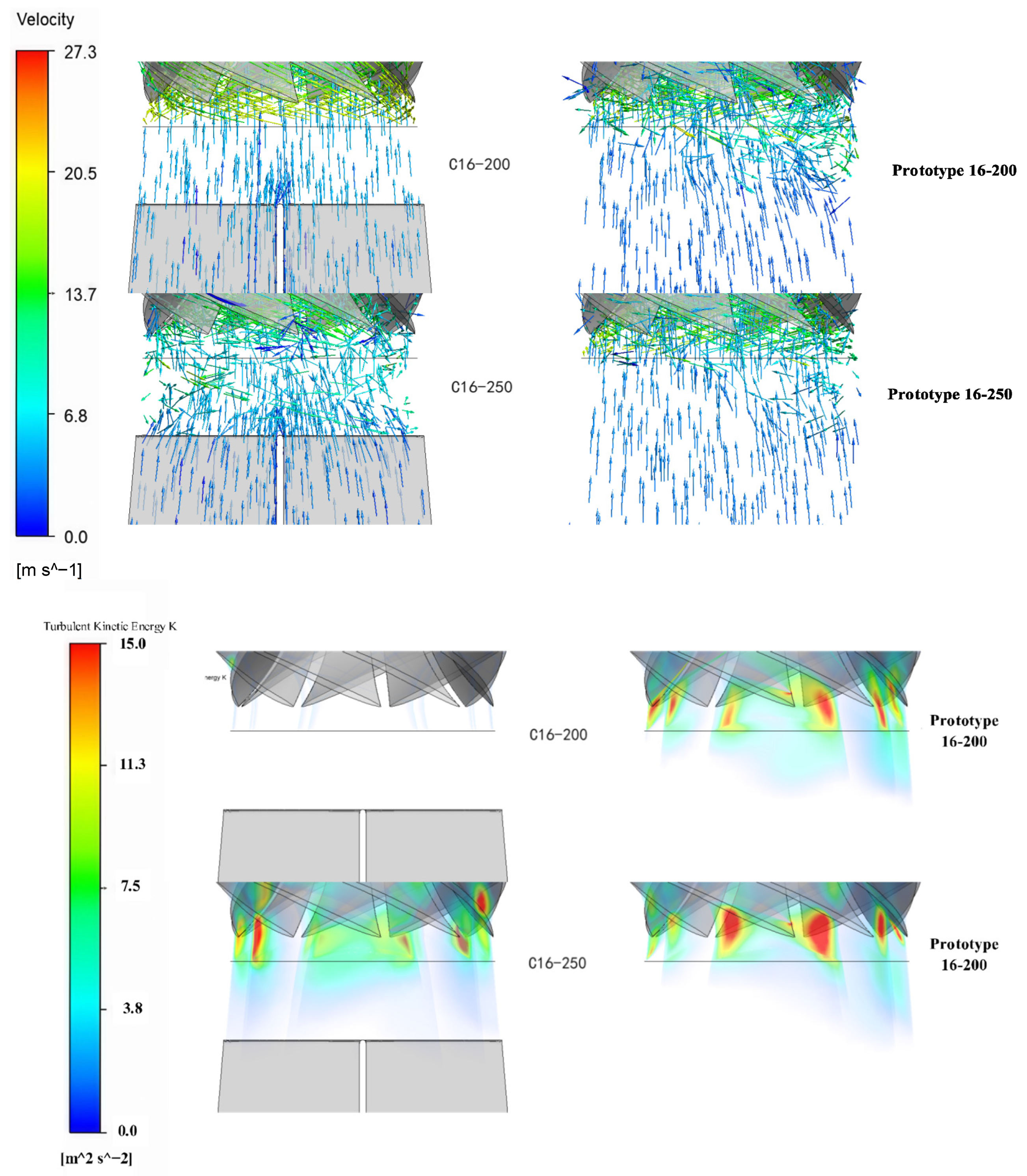
Figure 17 further shows the velocity vector distributions near the interface between the draft tube and the impeller under several representative operating conditions. For the finned configuration, the incoming flow in the straight conical section becomes more uniform and stable, and the angular deviation between the inlet relative velocity and the blade orientation is reduced. By contrast, in the original model, the strong pre-swirl near the wall causes the incoming flow to deviate from the blade inlet direction, which promotes additional disturbance by the blade leading edges and triggers spiral recirculation. Therefore, the fins improve the inflow condition at the impeller inlet, which is reflected by a lower impeller inlet velocity non-uniformity coefficient
.
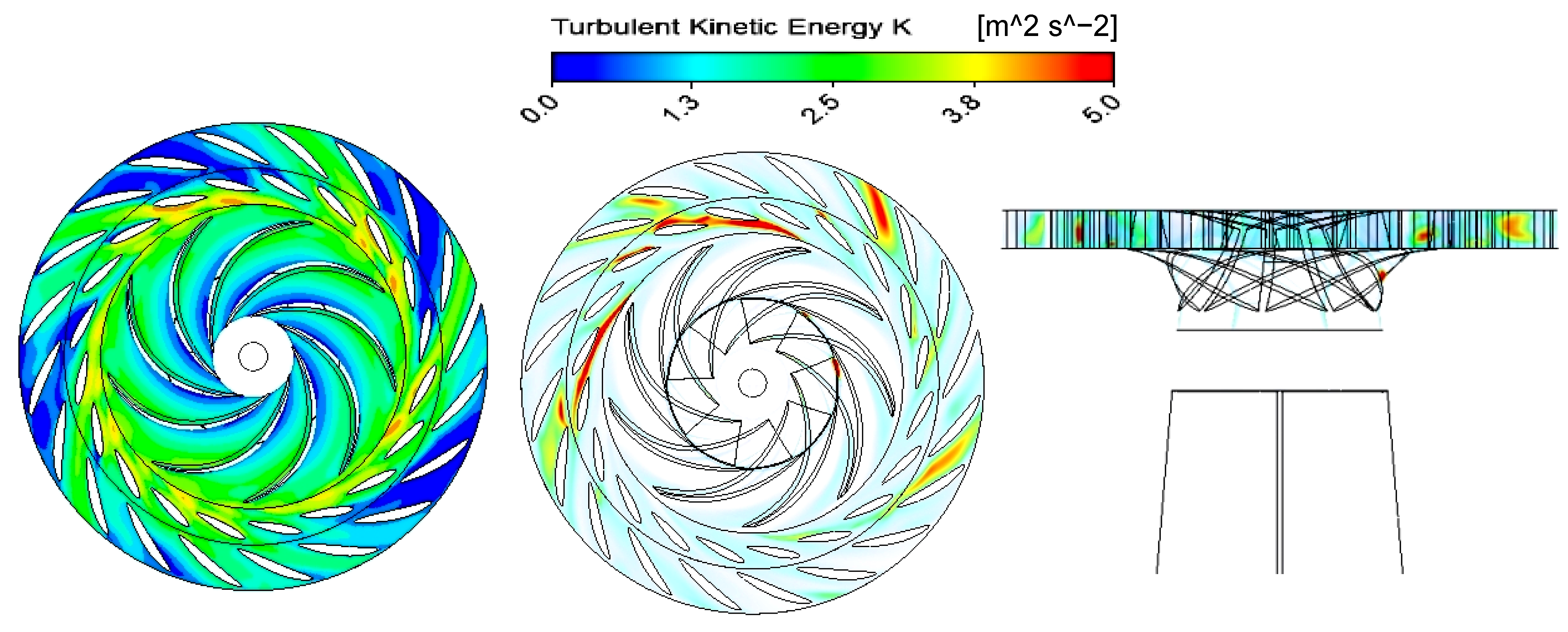
Moreover, the turbulent kinetic energy near the blade leading-edge corners is reduced after the fins are introduced, indicating that the local unsteady flow and vortex interaction are weakened. Overall, the fins suppress the pre-swirl and spiral backflow in the draft tube, improve the flow uniformity at the impeller inlet, and thereby reduce the hydraulic losses associated with the hump region.
5.3. Internal Flow Characteristics of Double-Row Vanes and Impeller
Figure 18 and
Figure 19 illustrate velocity contour maps and a turbulent kinetic energy map of the double-row vanes and impeller cross-section under varying-flow conditions. A comparative analysis of the data obtained before and after the modifications indicates no substantial changes in the overall flow characteristics. Nevertheless, the presence of recirculation adversely affects the flow field quality, especially at low flow rates, where multiple low-velocity regions develop within the blade channels. At the entrance of the vane, the separation of flow at the edges results in an irregular distribution of high-velocity flow directed toward the center, creating vortices in the vicinity of the half-region of the stay vane flow passage. This blockage effect is the main reason for the low-velocity zones. As the flow rate continues to increase towards the peak of the hump region, the flow field inside the rotor has a significant improvement. For a flow rate of 300 kg/s, the velocity distribution inside the blade gaps becomes more uniform. Furthermore, the high-pressure zone in front of the movable wicket gates has conformed closer to the flow channel geometry. And the blockage vortices in front of the stay vane are alleviated to some extent. For a flow rate of 350 kg/s, the velocity distribution between rows of blades becomes more uniform, conforming closer to the original model’s flow.
According to the studies, with the installation of fins, the number of flow channels having a uniform velocity distribution becomes two to three times more than that of the basic model. The observation of the flow in the outlet of the draft tube shows that the occurrence of a spiral recirculation between the fins and the impeller significantly affects the flow in the impeller. Also, compared to the original model with no fins, the fins prevent any spiral flow from entering the central flow area. The fins in the straight conical part of the draft tube suppress the spiral vortex in this region and improve the entering flow conditions of the water into the impeller, thus reducing the hydraulic losses.
The insertion of fins into the draft tube effectively curbs spiral recirculation phenomena taking shape within the nozzle region between the turbine wheel and the draft tube outlet, thus enhancing the fluid dynamic interaction occurring between the draft tube and turbine wheel interior. However, fins do not have a significant impact on flow characteristics in the spiral casing region. As dynamic pressure pulsation takes place during pump-turbine operation, one must systematically monitor and evaluate pressure pulses in the draft tube and impeller inlet section, subsequent to fin installation. The pressure monitor points are set up in accordance with the method provided by
Section 5.1.
5.4. Pressure Pulsation Analysis of Fin Control Condition
The pressure pulsation behavior after the installation of fins was evaluated using the pressure pulsation coefficient, defined as
Cp. Based on this definition, the fluctuation intensity at each monitoring point was quantified by the root-mean-square value
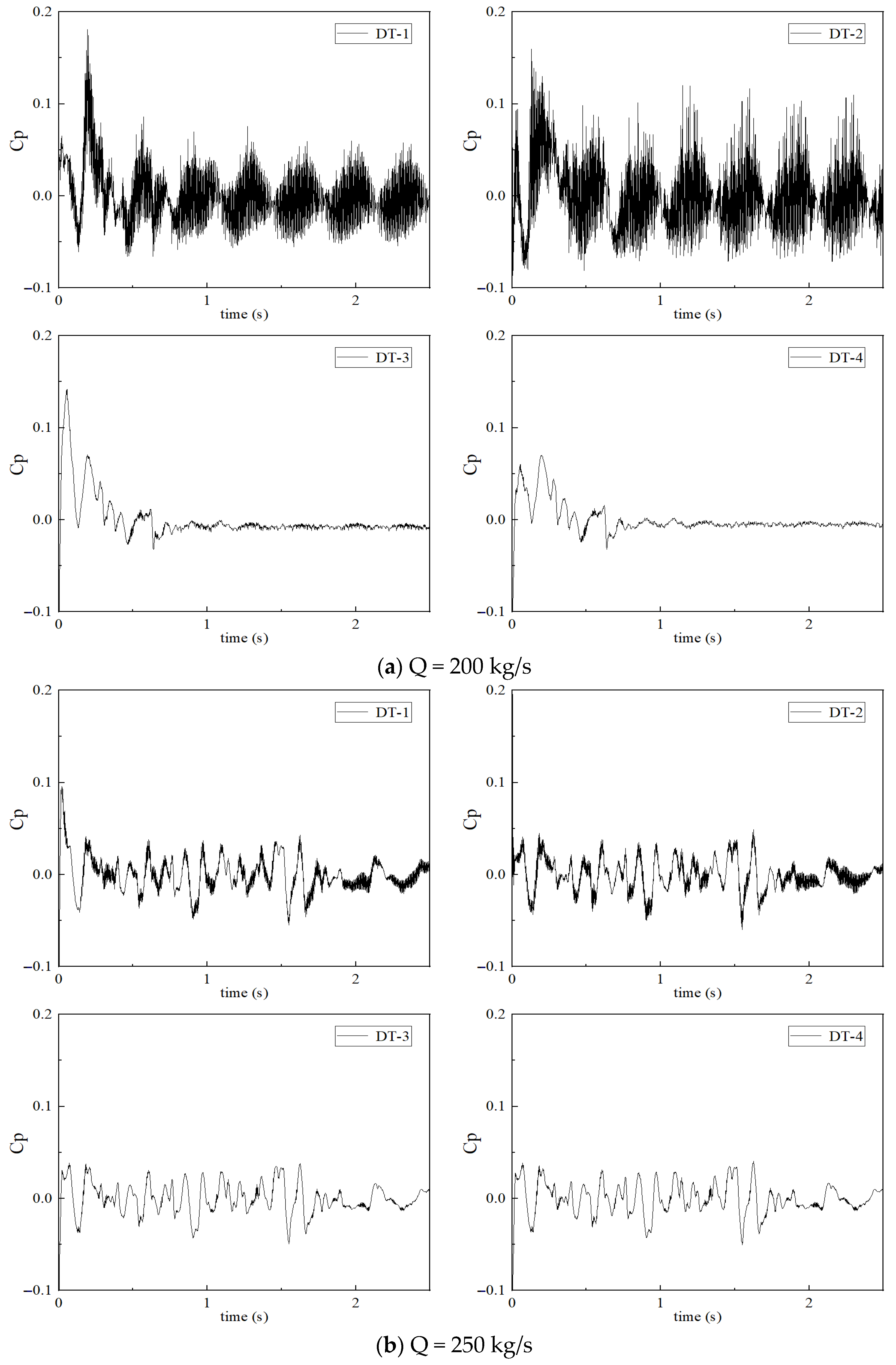
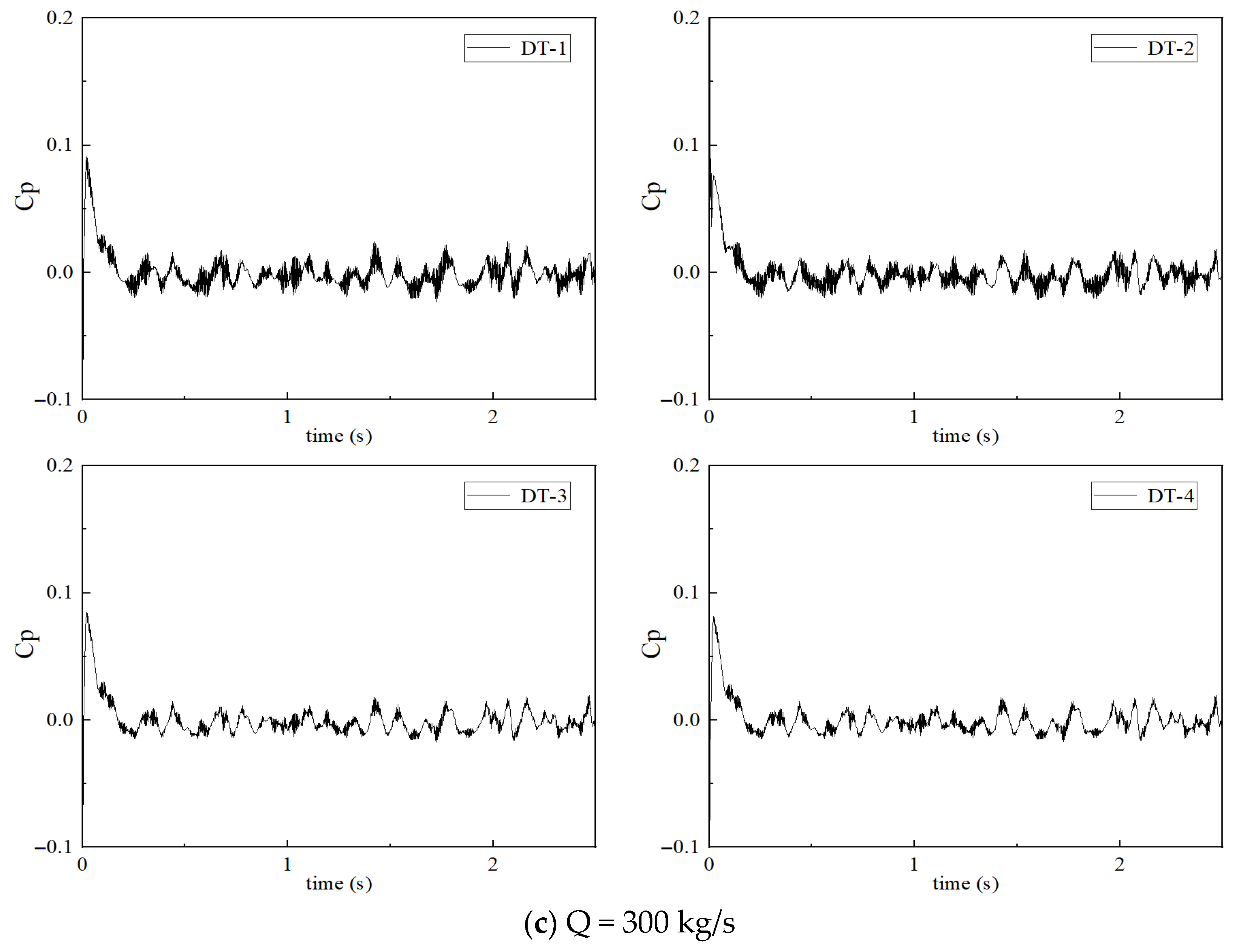
. As shown in
Figure 20, after the structural modification, the amplitudes of pressure pulsation at the representative monitoring points are significantly reduced, and the recovery process becomes faster, indicating that the fins improve the unsteady hydraulic behavior of the pump-turbine.
This improvement is closely related to the modification of the internal flow field discussed in
Section 5.2. By suppressing the swirl and spiral backflow in the draft tube, the fins weaken the large-scale vortex structures responsible for low-frequency pressure fluctuations. As a result, the pressure pulsation levels in the draft tube and near the impeller inlet are reduced, and the overall flow instability in the hump region is mitigated. In terms of the characteristic parameters, the reduction in
is consistent with the decreases in
S,
Kr, and
, demonstrating that the fin configuration improves both flow stability and pressure pulsation characteristics.
These results indicate that although the hump region still exists, the associated unsteady flow intensity and pressure pulsation levels are significantly reduced, which effectively lowers the operational risk of the unit within this regime.
Furthermore, the fins prevent the vortex structures from extending into the core flow region, thereby stabilizing the fluid interaction between the draft tube and the impeller inlet. Consequently, the low-frequency dynamic pressure fluctuations are attenuated, the pressure recovery period is shortened, and the hydraulic stability of the unit is improved. These results confirm that the fin-based passive flow-control strategy is effective for weakening the hump-related instability of the pump-turbine.




 ,
,