1. Introduction
Nitrogen is a core biogenic element that supports primary productivity and biodiversity in inland aquatic ecosystems. The balance of its cycle directly determines the stability of aquatic ECOLOGICAL functions—for instance, it maintains food web structures by participating in phytoplankton photosynthesis and protein synthesis in aquatic organisms [
1,
2]. However, over the past half-century, intensive agricultural fertilization, urban expansion, and industrial development have input excessive nitrogen into inland waters such as lakes, rivers, and reservoirs via surface runoff and subsurface leaching, triggering global nitrogen pollution [
3,
4]. According to the latest assessment by the World Meteorological Organization (WMO), approximately 60% of inland waters worldwide exhibit nitrogen enrichment. Among these, cyanobacterial blooms caused by eutrophication have tripled in annual frequency compared to 2000. These blooms not only block sunlight for aquatic plants and disrupt food chains but also induce aquatic hypoxia during their decomposition, leading to large-scale fish mortality and biodiversity decline [
5]. More critically, nitrous oxide (N
2O)—a potent greenhouse gas with a global warming potential 298 times that of carbon dioxide—released during aquatic nitrogen transformation processes further exacerbates climate change, forming a “nitrogen pollution–climate feedback” vicious cycle [
6]. This cascading effect positions the imbalance of nitrogen cycling in inland waters as a key link threatening regional ecological security and global climate stability [
7].
The intensification of climate change has become a core driver reshaping nitrogen migration and transformation processes in inland waters, with impacts extending beyond single environmental stressors. Rising temperatures accelerate the metabolic rates of aquatic microorganisms, altering the efficiency of key nitrogen transformation processes such as nitrification and denitrification—for example, each 1 °C increase in water temperature can boost denitrification rates by 8–12% [
8,
9]. Changes in precipitation patterns directly regulate nitrogen migration pathways: extreme rainstorm events can surge nitrogen runoff output from watersheds by 30–50%, while prolonged droughts extend water retention time, promoting nitrogen accumulation and release in sediments [
10]. Additionally, glacial melting and sea-level rise driven by global warming further disrupt the adsorption–desorption balance and cross-system migration of nitrogen by altering water salinity and hydrological connectivity [
11,
12]. In recent years, the academic community has conducted extensive research on the “climate factor–nitrogen process–aquatic response” nexus [
13]. However, existing studies mostly focus on single climate factors (e.g., temperature or precipitation) or local regions (e.g., temperate lakes or tropical rivers), lacking systematic integration of long-term research evolution and cross-scale coupling mechanisms, which hinders the understanding of the overall interaction between climate change and nitrogen cycling [
14].
Despite the rich body of literature accumulated on climate change-driven nitrogen migration and transformation in inland waters, the current research landscape still has significant limitations [
15]. First, research perspectives are fragmented: most studies focus on specific water body types (e.g., lakes) or specific processes (e.g., nitrogen deposition), with insufficient integrated analysis of multi-interface coupling processes across “watershed–water body–sediment” [
16]. Second, methodological applications are scattered: the integration of traditional water quality monitoring, numerical simulation, and emerging remote sensing technologies or molecular biology tools is weak, limiting the comparability and generalizability of results across different studies [
17]. Third, the theoretical framework remains ununified: existing studies mostly rely on linear causal models to analyze the impacts of climate factors, lacking systematic understanding of the nonlinear feedback mechanisms among “extreme climate–human activities–nitrogen cycling” [
18]. These limitations not only impede a clear grasp of the evolutionary trajectory of research hotspots but also restrict the development of targeted nitrogen pollution control and ecological restoration strategies, necessitating the integration of existing knowledge systems through large-scale literature analysis tools [
19].
Bibliometrics, relying on quantitative analysis of large-scale literature data, provides a robust approach to objectively trace disciplinary evolution, identify research frontiers, and detect knowledge gaps—offering strong support for addressing research fragmentation [
20]. Among mainstream bibliometric tools, CiteSpace enables intuitive visualization of the knowledge structure and dynamic changes in research fields through functions such as co-occurrence network analysis, thematic clustering, and burst term detection, and has been widely applied in environmental science, hydrology, and related disciplines [
21]. Based on this, this study takes publications related to “climate change-driven nitrogen migration and transformation in inland waters” from 1962 to 2024 in the Web of Science Core Collection as the research object, conducting visual analysis using CiteSpace. Beyond the conventional bibliometric statistics of output, author, and institution, this study analyzes the cognitive evolution of the field from four core dimensions: (1) the shift of research subjects from single-water-body nitrogen processes to multi-system coupling and key carriers; (2) the deepening of core questions from phenomenon description to mechanism simulation and regulatory potential; (3) the innovation of methodologies from traditional monitoring to multi-technology integration and big data-driven approaches; and (4) the advancement of theoretical frameworks from “linear models” to complex network theory. By integrating representative research cases, this study aims to systematically identify the evolutionary hotspots, core bottlenecks, and emerging trends of the field, providing a scientific basis for integrating fragmented knowledge, promoting theoretical research innovation, and formulating nitrogen management strategies for inland waters under the background of climate change.
2. Data and Methods
2.1. Data Sources
This study employed the Web of Science Core Collection (WoSCC,
https://www.webofscience.com) as the main source for literature retrieval. A precise search strategy was developed to delineate the research scope, using the following query: TS = ((inland water OR freshwater OR river OR lake OR reservoir OR watershed OR stream OR pond OR creek OR canal OR tributary) AND (nitrogen OR nitrogen cycle OR nitrogen transformation OR nitrogen migration OR nitrate OR ammonia OR dissolved inorganic nitrogen OR dissolved organic nitrogen) AND (temperature rise” OR climate change OR climate warming OR rainfall variability OR extreme precipitation OR drought OR flooding)) NOT TS = (soil OR terrestrial ecosystem OR groundwater OR subsurface water OR wastewater treatment OR activated sludge OR reactor OR sewage treatment OR algae OR phytoplankton OR zooplankton OR macrophytes OR fish OR aquatic plants OR animals OR constructed wetlands OR biofilm OR engineered system OR marine environment OR estuary). The search was confined to publications from 1962 to 2024, and only research articles and reviews were included. Due to the explicit NOT logic used in the search equation to exclude unrelated topics such as soil, groundwater, sewage treatment, marine ecology, specific biological and engineering systems, the preliminary relevance of the literature to the topics of nitrogen cycling and climate change in inland water bodies was ensured. Subsequently, we removed duplicate records and manually reviewed the titles, abstracts, and keywords, removing records that were clearly irrelevant (such as studies on estuaries, oceans, sewage treatment plants, or terrestrial ecosystems) or had incomplete information. In the end, we obtained 2608 valid literature (search date: 1 December 2024).
2.2. Analytical Methods
The literature data retrieved from WoSCC were initially processed with Origin 2023 to quantify annual publication volumes by country and institution. Subsequent bibliometric analysis was conducted using CiteSpace 6.1.R6 (Drexel University, Philadelphia, PA, USA) under the following parameter settings: time slicing by year; node types including author, institution, country, and keyword; a selection threshold of the top 50 items per slice; and Pathfinder network pruning [
22]. This procedure yielded three key analytical outputs: (1) keyword co-occurrence networks, highlighting thematic linkages; (2) cluster maps, outlining distinct research subfields; and (3) timelines of keyword bursts, capturing evolving research fronts. Together, these results provide a systematic basis for identifying research hotspots, core mechanisms, and critical scientific questions related to microbial-driven nitrogen transformation in inland waters.
3. Results and Discussion
3.1. Spatial–Temporal Distribution and Research Pattern of the Literature
3.1.1. Temporal Evolution of Research Output
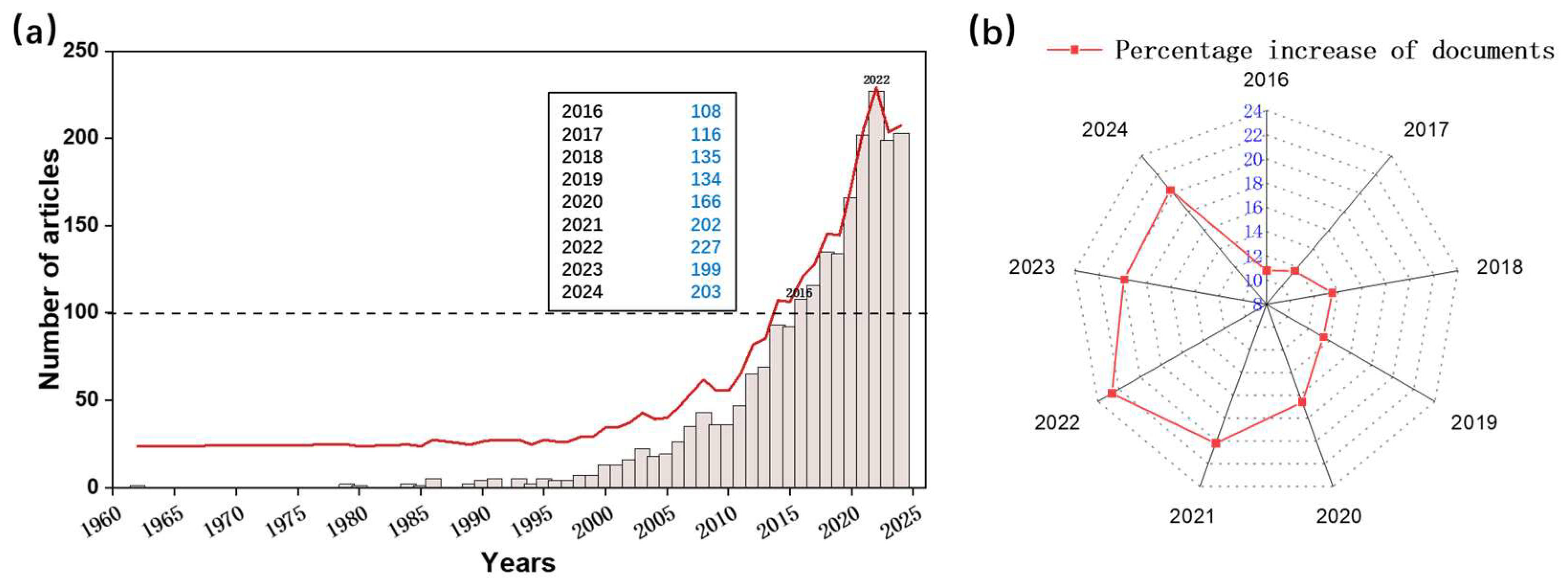
The annual publication trend reveals a significant and accelerating research focus on the impact of climate change on nitrogen migration and transformation in inland water bodies (
Figure 1a). The field remained a niche area with very limited publications (fewer than 20 articles per year) until the early 2000s. A steady upward trajectory began around 2006, followed by a period of rapid growth post-2012. Annual output surpassed 100 articles by 2016 and peaked at 227 publications in 2022. The sustained high number of publications in 2023 (199) and 2024 (203), even with incomplete data for the latter year, underscores this topic’s continued prominence. This marked increase in SCI publications highlights the growing consensus on the critical interplay between climate change and the aquatic nitrogen cycle, positioning this field as a dynamic and central frontier in environmental science.
The analysis of publication growth rates clearly indicates that research on the impact of climate change on nitrogen migration and transformation in inland water bodies has entered a phase of accelerated development since 2016 (
Figure 1b). The annual growth rate, which stood at 10.8% in 2016, demonstrated a consistent upward trajectory, surpassing 20% for the first time in 2021 and peaking at 22.7% in 2022. Although there was a slight moderation in 2023 (19.9%), the rate remains robust at 20.3% for 2024. This sustained period of high growth rates, markedly above the average for many environmental science fields, underscores that this specific research domain is not merely expanding but is doing so at an accelerating pace. The trend highlights its rising prominence as a high-priority frontier within the SCI-indexed literature, reflecting the scientific community’s intensified focus on understanding the intricate interactions between climate change and aquatic nitrogen cycles [
23].
3.1.2. Geographical Distribution and Institutional Contributions
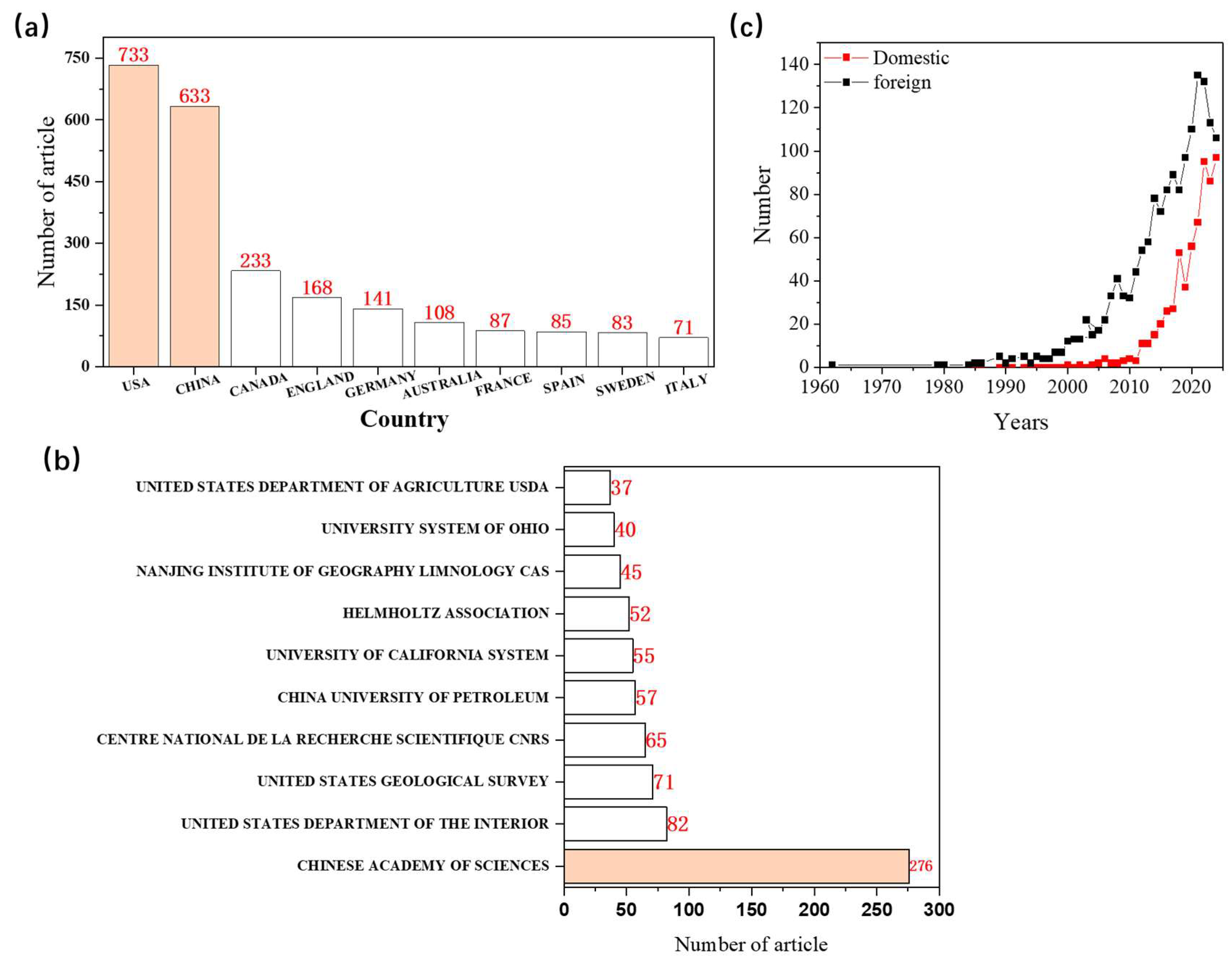
Based on the distribution of publications by country/region, research leadership in the field of climate change impacts on nitrogen cycling in inland waters is highly concentrated (
Figure 2). The United States (733 publications) and China (633 publications) collectively dominate the research landscape, representing the most prolific contributors by a considerable margin. They are followed by Canada (233), England (168), and Germany (141), which form a secondary group of active nations. The prominence of these countries highlights a strong correlation between research output in this field and overall national scientific capacity and investment. The geographic distribution of contributing countries, primarily spanning North America, Europe, and Australia, further indicates that the study of climate–water–nitrogen interactions is a priority in regions with diverse aquatic ecosystems and advanced environmental research programs. This pattern underscores the global recognition of the topic’s significance while revealing a distinct concentration of intellectual productivity (
Figure 2a).
The temporal trend in publication origins reveals a significant shift in the geographic focus of research on climate change and nitrogen dynamics in inland waters. Throughout the initial decades (1962–2000), scholarly output was exclusively or predominantly international, with minimal contribution from domestic sources (
Figure 2b). A noticeable transition began in the early 2000s, as domestic publications started to emerge and gradually increase. Since approximately 2012, domestic research output has entered a phase of accelerated growth. This upward trajectory became particularly pronounced after 2018, with domestic publications rising sharply from 53 in 2018 to 97 in 2024. Conversely, international publications plateaued and began a slight decline over the same recent period. The converging trends in 2024—where domestic (97) and international (106) publication volumes are nearly equal—signify that the field has evolved from being internationally dominated to one where domestic research capacity is now on par with global contributions, reflecting substantial growth in local scientific investment and expertise [
24].
Analysis of institutional productivity reveals a highly concentrated research landscape, with a few leading organizations driving scholarly output on this topic. The Chinese Academy of Sciences (CAS) stands as the predominant contributor, with 276 publications, significantly outpacing all other institutions. Major U.S. federal agencies, including the United States Department of the Interior (82), the United States Geological Survey (71), and the United States Department of Agriculture (37), collectively demonstrate a strong national research focus. The presence of the China University of Petroleum (57) within the top ranks suggests a specific research emphasis on the energy–water–climate nexus [
25]. European contributions are represented by large-scale research organizations such as the Centre National de la Recherche Scientifique (CNRS, France) and the Helmholtz Association (Germany). The prominence of national research academies and government agencies underscores the strategic importance of climate–water–nitrogen interactions and highlights the field’s reliance on long-term, institutional-scale scientific support (
Figure 2c).
3.2. Research Hotspot Evolution and Topic Clustering
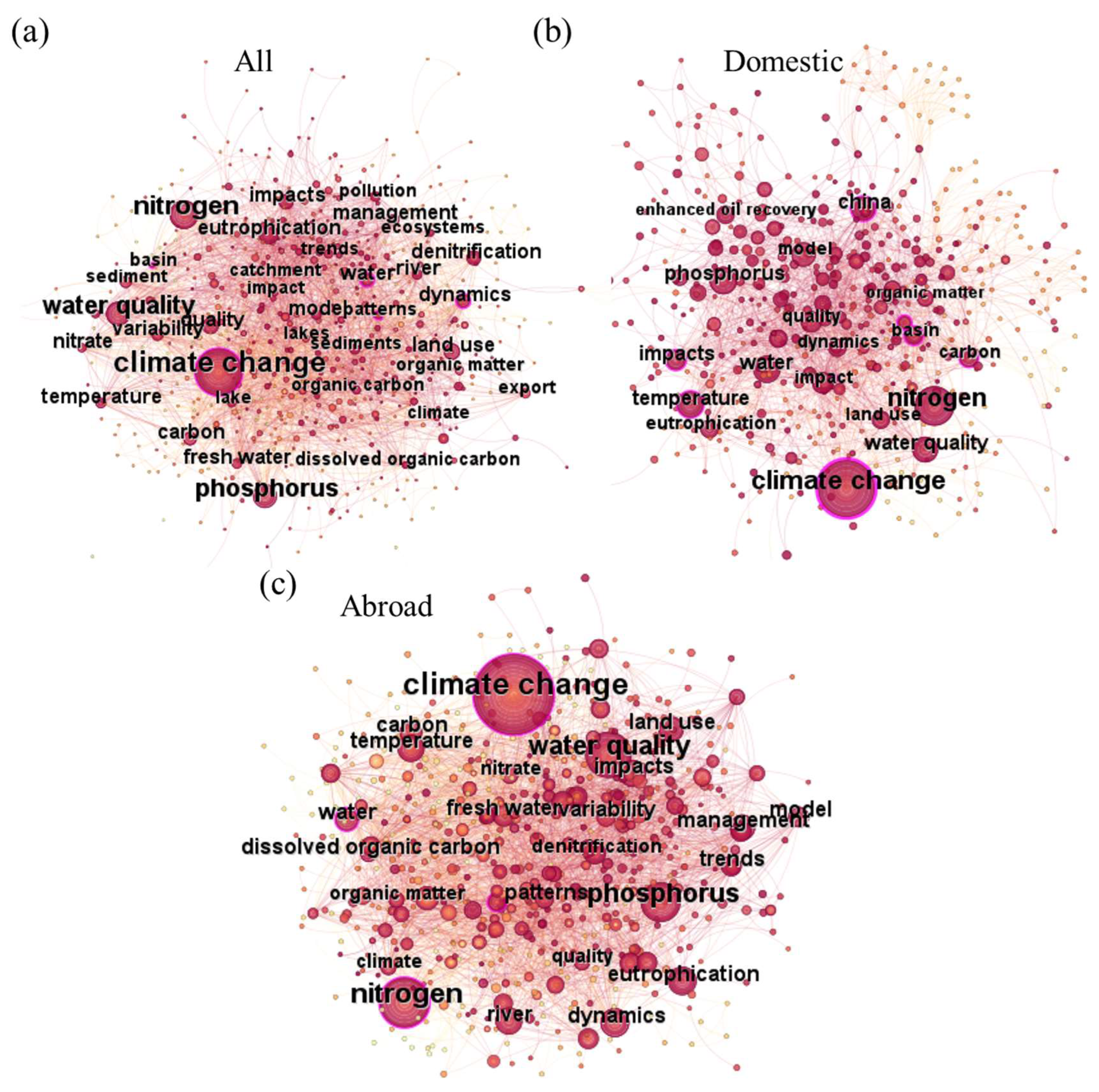
Keyword co-occurrence analysis reveals a well-defined and multi-faceted research framework focused on the interplay between climate change and biogeochemical cycles in aquatic environments [
26]. The high frequency of terms such as “climate change” (454), “nitrogen” (239), “water quality” (172), and “phosphorus” (144) confirms that the core research thrust examines how climatic drivers influence nutrient dynamics and their environmental consequences. This is further substantiated by strong associations with key processes like “eutrophication” (85) and “denitrification” (47), and environmental media such as “river” (74) and “freshwater” (52). The significant presence of terms like “land use” (79), “catchment” (37), and “basin” (43) highlights the recognition of watershed-scale processes as critical mediators of climate impacts. Furthermore, the focus on “temperature” (67), “variability” (57), and “models” (53) indicates a strong methodological emphasis on understanding mechanistic drivers and projecting future scenarios. Collectively, the keyword landscape portrays a mature field that integrates hydrological, biogeochemical, and management perspectives to assess the vulnerability and resilience of inland waters to a changing climate (
Figure 3a) [
27].
The frequency analysis of domestic keywords elucidates the core themes and priorities in the research field of the impact of climate change on inland waters (
Figure 3b) [
20]. The dominance of “climate change” (454) and “nitrogen” (239) firmly anchors the research focus at the intersection of climatic drivers and nutrient biogeochemistry. Strong linkages to “water quality” (172), “eutrophication” (85), and “phosphorus” (144) underscore a central concern for ecological consequences and dual-nutrient dynamics. The presence of terms such as “land use” (79), “river” (74), and “basin” (43) indicates that studies frequently adopt a watershed perspective, recognizing the integration of terrestrial and aquatic processes. Methodologically, the significance of “model” (53), “dynamics” (80), and “temperature” (67) reflects an emphasis on mechanistic understanding and predictive simulation. Keywords like “management” (51) and “trends” (39) further reveal an underlying concern for applying scientific insights to environmental policy and forecasting future trajectories. This thematic structure highlights a mature, application-oriented field striving to understand and manage complex climate–water–nutrient interactions [
28].
The frequency analysis of foreign keywords reveals a cohesive and multidimensional research structure centered on climate- and human-driven factors in the biogeochemical cycles of freshwater ecosystems (
Figure 3c). The pronounced prominence of “climate change” (434) and “nitrogen” (228) confirms the central focus on climate–nutrient interactions. Strong connections to “water quality” (177), “eutrophication” (83), and “phosphorus” (125) highlight a persistent concern for ecological impacts and the interplay of multiple nutrients. The significant presence of “land use” (60), “river” (57), and “catchment” (27) reflects a widespread recognition of the terrestrial–aquatic linkage in shaping nutrient dynamics. Methodologically, the recurrence of “dynamics” (87), “temperature” (54), and “model” (41) indicates an emphasis on process-based understanding and predictive modeling, while keywords such as “management” (46) and “trends” (40) signal a clear interest in translating research findings into practical mitigation strategies and long-term projections [
28].
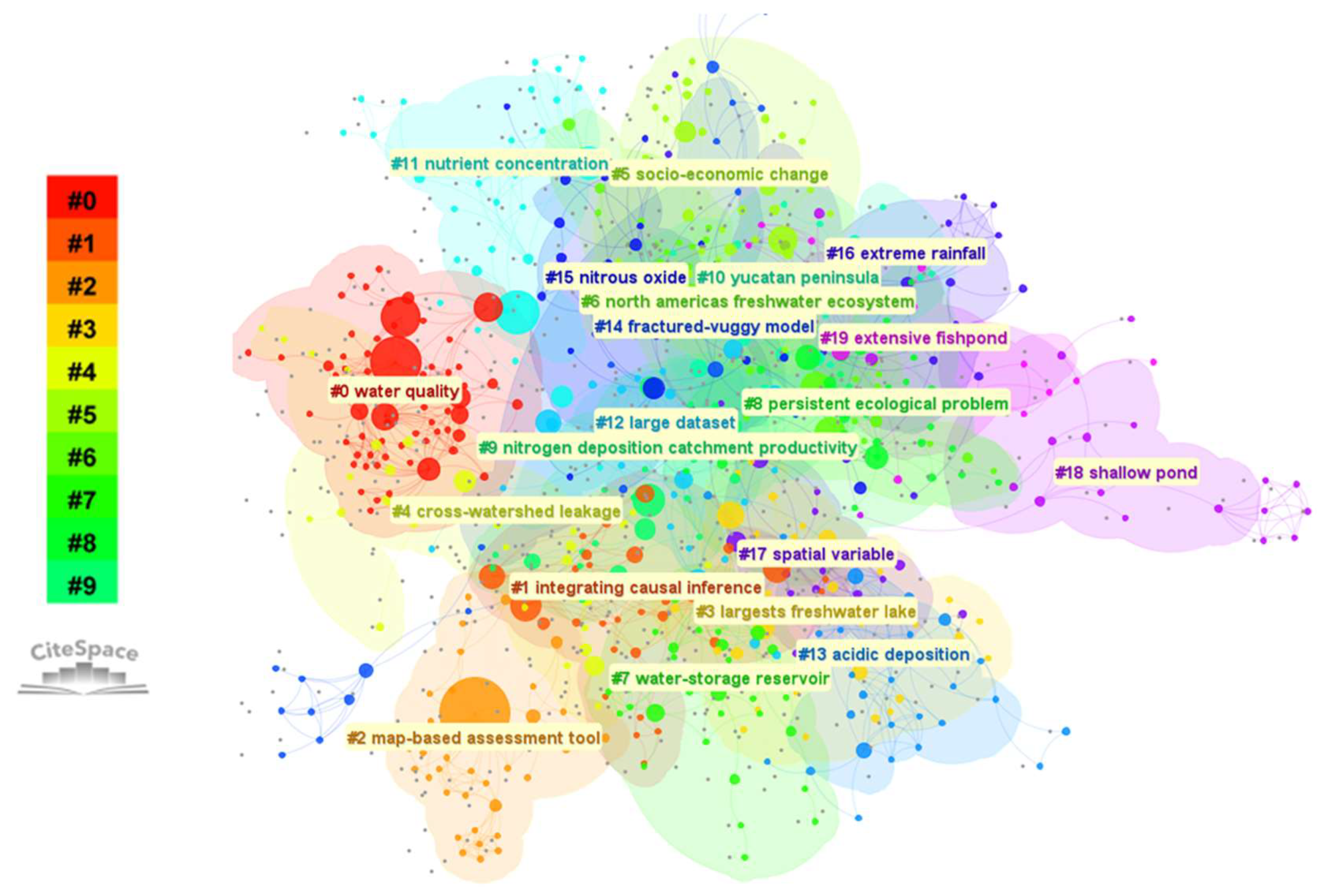
From the keyword clustering map (
Figure 4), it can be seen that the research on nitrogen migration and transformation in inland waters revolves around multi-ecosystem carriers and multi-process driving mechanisms, and is closely coupled with climate change. On the one hand, # 0 water quality, # 3 largest freshwater lake, # 7 water-storage reservoir, # 18 shallow pond, and other clusters show that different types of inland waters such as lakes, reservoirs, and shallow ponds are the core scenarios for nitrogen migration and transformation. Climate change directly affects the process of nitrogen dissolution, adsorption, and microbial-mediated transformation by changing the water temperature and hydrological rhythm of the waters (such as runoff changes caused by extreme rainfall represented by # 16 extreme rainfall); warming will accelerate the mineralization and denitrification of nitrogen by microorganisms. Heavy rainfall inputs a large amount of nitrogen into the waters through # 4 cross-watershed leakage (inter-basin leakage), and changes the load level and migration path of nitrogen [
29].
On the other hand, # 9 nitrogen deposition catchment productivity, # 13 acidic deposition, # 15 nitrous oxide, and other clusters revealed the two-way driving relationship between nitrogen cycle and climate change. Nitrogen deposition (including nitrogen components in acidic deposition) is a key pathway for exogenous nitrogen input in inland waters. Changes in atmospheric circulation and precipitation patterns under climate change will adjust the spatial and temporal distribution of nitrogen deposition, thereby affecting basin productivity and nitrogen availability in waters. At the same time, the nitrogen-containing greenhouse gases released by the nitrogen conversion process (such as denitrification to produce # 15 nitrous oxide) will feed back to exacerbate climate warming, forming a positive feedback loop of climate change–nitrogen cycle. In addition, the clustering of # 1 integrating causal causality and # 2 map-based assessment tool also reflects the development of integrated research and evaluation technology of causality in human society, which provides methodological support for analyzing the complex process of nitrogen migration and transformation under the background of climate change, and also reflects the influence of the interaction between social and economic activities and natural processes on the nitrogen cycle.
3.3. Research Development Context and Hot Trends
3.3.1. Evolution of Research Hotspots Based on Keyword Emergence Analysis
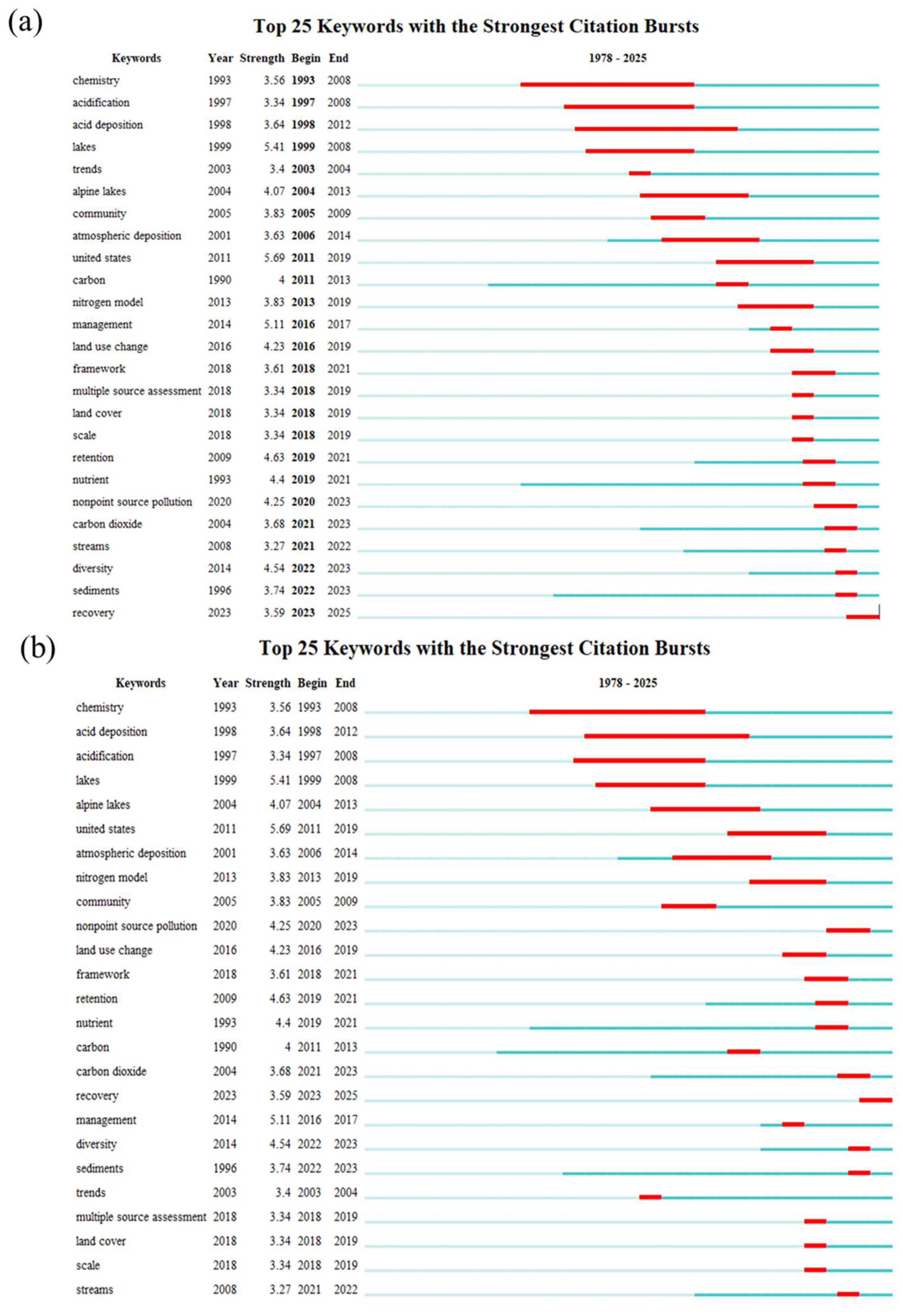
As shown in
Figure 5, from the perspective of the time dimension of keyword emergence and the evolution of research topics, several stages can be clearly identified: In the early stage (1990s–early 2000s), research focused on basic processes and core habitats. In
Figure 5a, chemistry (outbreak in 1993, intensity 3.56), acidification (outbreak in 1997, intensity 3.34), acid deposition (outbreak in 1998, intensity 3.64), and other keywords ranked high in terms of outbreak intensity, reflecting that the academic community gave priority to exploring the chemical mechanism of nitrogen migration and transformation in inland waters, as well as the disturbance of acidification and acid deposition on the nitrogen cycle, which laid a theoretical foundation for the discipline.
In the middle of the study period (early 2000s–~2010), the research extended to habitat heterogeneity and multi-media coupling. In
Figure 5b, the duration and intensity of the outbreak of alpine lakes (2004, intensity 4.07) indicated that the research object expanded from ordinary lakes to special habitats such as alpine lakes, paying attention to the shaping effect of habitat differences on nitrogen cycle. The long-term high attention to atmospheric deposition (starting from 2001, the outbreak period continued to 2014, with a long time span in
Figure 5b) reflects that atmospheric nitrogen deposition is a key pathway for exogenous nitrogen input, and its impact on nitrogen load in inland waters is a core issue across time periods. The joint outbreak of carbon (broke out in 1990) and carbon dioxide (started in 2004, continued in the later period, and still appeared in the later period in
Figure 5b) further revealed that carbon–nitrogen coupling is the core logic of the biogeochemical cycle in inland waters. Scholars realized that the nitrogen cycle needs to be studied in coordination with the carbon cycle in order to fully explain the law of material cycling in waters.
Recently (post 2010), research has shifted to regional cases, technology applications, and real-world governance. The high outbreak intensity of United States (2011, intensity 5.69) in
Figure 5a reflects the importance of regional case studies—the in-depth analysis of the region represented by the United States has become an important way to identify general trends; the outbreak of nitrogen model (2013, intensity 3.83) and management (2014, intensity 5.11) (intensity prominent in
Figure 5a) marked the rise of model simulation technology and management strategy exploration, and the research shifted from basic process description to quantitative simulation and application practice. Keywords such as land use change (intensity 4.23) in 2016 and framework in 2018 (the time series in
Figure 5b is later and has obvious emergence), reflecting that land use change driving nitrogen cycle and theoretical framework construction integrating multiple factors, have become new directions. After entering 2020, the outbreak of nonpoint source pollution (2020, intensity 4.25) and recovery (2023, intensity 3.59, and lasting until 2025, where
Figure 5b shows the latest emerging trend) will anchor the research focus on real environmental issues—nonpoint source pollution prevention and control, ecosystem restoration, and meeting the governance needs of nitrogen problems in inland waters under the background of climate change. Keywords such as diversity (starting in 2014, continuing in the later period) and sediments (starting in 1996 and re-emerging in the later period, and the timeline in
Figure 5b reflects long-term attention and stage re-heating) further reflect the depth of the research on the fine process: the former focuses on the regulation of biodiversity on the nitrogen cycle, and the latter focuses on the complex role of sediments as nitrogen sources and sinks, which is the embodiment of the coupling development of the discipline to micro-mechanism and multi-biological factors. On the whole, the evolution of keywords from their foundation in basic theory to their expansion through application and practice, from single-factor/medium research to multi-factor/multi-medium coupling, and from phenomenon description to mechanism simulation and governance strategy not only reflects the in-depth development of the discipline itself, but also reflects the dynamic response of nitrogen research in inland waters to real environmental challenges such as climate change and pollution prevention and control.
3.3.2. Thematic Evolution and Convergence Revealed Through Timeline Mapping
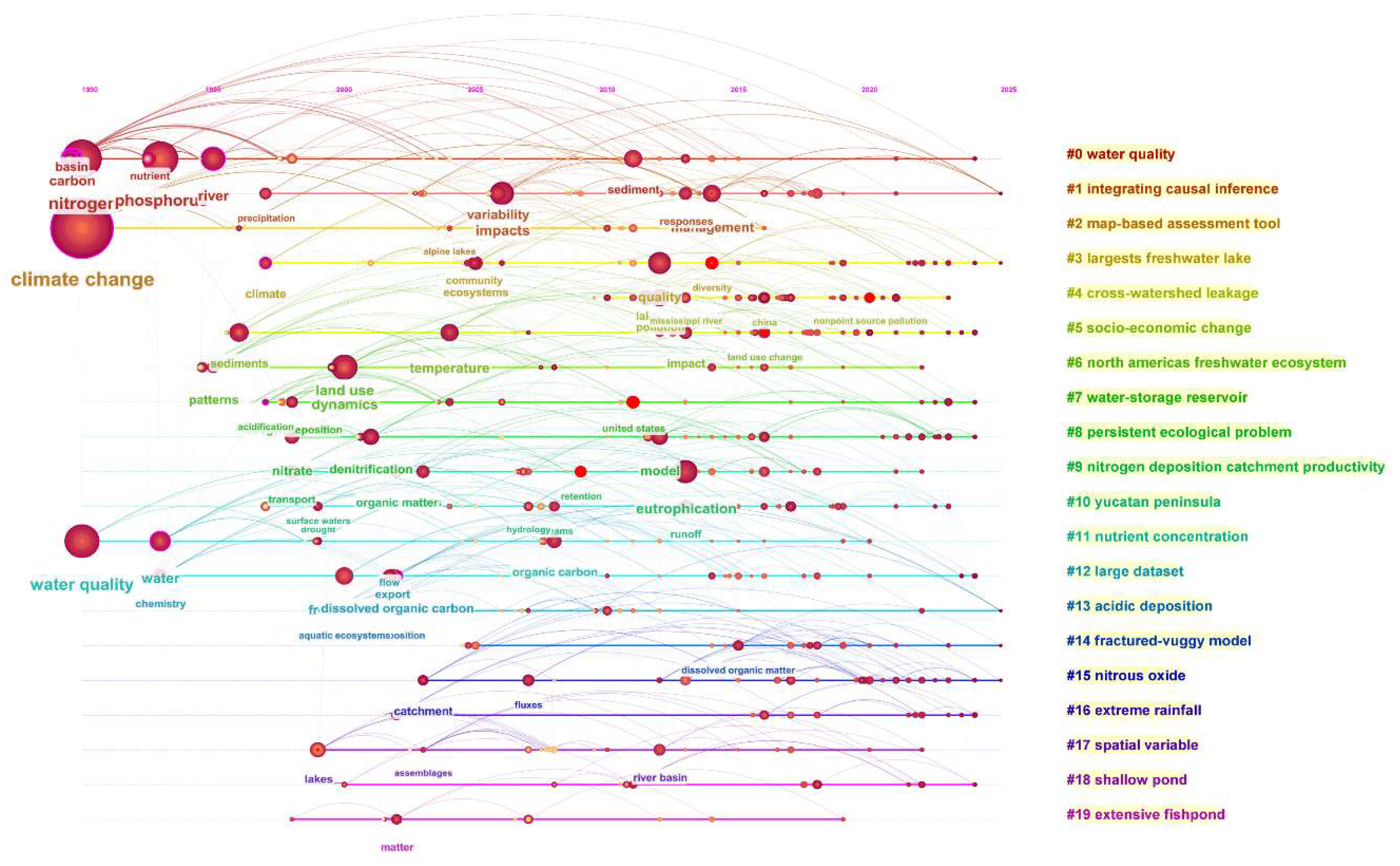
From the perspective of the evolution logic of the timeline (
Figure 6), early research (from the end of the 20th century to the beginning of the 21st century) has constructed the core correlation framework of climate change–biomass factor–water quality. In the figure, climate change, as a key node, is deeply connected with nitrogen–phosphorus, water quality, carbon, and other factors, reflecting that the academic community initially focused on the direct impact of climate change on the biogeochemical cycle of nitrogen (and phosphorus, carbon) in inland waters through precipitation (precipitation), temperature (temperature), and other climatic factors. It acts on the migration (such as transport process) and transformation (such as microbial-mediated metabolic process) of nitrogen, and then shapes the evolution of water quality, which lays the basic logic of climate change, drives the circulation of biogenic elements, and ultimately affects water quality for subsequent research.
With the passage of time (after 2000), the research dimension has expanded to human activities, ecological problems, technical support, and regional empirical focus, and has formed a more complex coupling of drivers with climate change. The emergence of keywords such as land use, acidification, and eutrophication reflects the synergy of human land use change, acidification, eutrophication and climate change, which jointly drive the nitrogen cycle in inland waters: land use change adjusts the source–sink pattern of watershed nitrogen (e.g., the increase in agricultural land will increase the nonpoint source input of nitrogen) and acidification changes the chemical environment of water (e.g., pH fluctuations affect the adsorption–desorption and nitrification–denitrification rates of nitrogen). Eutrophication is a typical ecological characterization of nitrogen cycle imbalance. Climate change (e.g., extreme rainfall-induced runoff mutations, temperature fluctuations regulating microbial metabolism) provides a key background driving force for these processes. At the same time, the rise of method keywords such as model and large dataset, the integration of causal inference, and the deepening of regional cases such as North America’s freshwater ecosystem and Yucatan Peninsula indicate that the research uses model simulation, big data analysis, causal inference, and other technical means to start from the empirical evidence from typical regions. It is now possible to more accurately analyze the complex mechanisms of nitrogen migration and transformation under climate change (such as the dynamic changes of nitrogen load under different climate scenarios and the nonlinear response of multi-factor coupling), and develop research from a theoretical framework to application and law extraction in specific scenarios.
The evolution of this research trajectory essentially reflects a systematic deepening in both the epistemology and methodology of the field. The early linear framework linking climatic factors directly to water quality parameters (as seen in foundational works like [
21], on anthropogenic disruption of the nitrogen cycle) established a basis for understanding the primary impacts of climate change on aquatic systems. However, as research progressed, the scientific community increasingly recognized that the effects of climate change manifest through complex couplings with human activities (e.g., land use) and internal ecosystem processes (e.g., eutrophication, acidification) [
23]. This shift in cognition has driven the research focus from analyzing single driving factors towards exploring combined “climate–human–ecosystem” systems [
18]. For instance, research on how “land use” synergizes with “extreme rainfall” to exacerbate nitrogen loss exemplifies this coupled-system perspective [
19]. Concurrently, advances in methodology, such as the application of “big data” analytics and “causal inference” models, have made it possible to dissect these multi-factor, nonlinear interactions [
15]. Therefore, what the timeline reveals is not merely an expanding list of research topics, but an epitome of disciplinary paradigm evolution: moving from seeking singular cause–effect relationships to understanding systemic interactions, from describing phenomena to quantifying mechanisms, and ultimately aiming to provide evidence-based solutions for sustainable water resource management [
20].
3.4. The Evolution of Research Focus: Objects, Questions, and Methods
3.4.1. Shifting Research Subjects: From Single Biogenic Elements to Multi-Element Coupling and Key Process Carriers
The evolution of research hotspots was fundamentally driven by breakthroughs in methodological capabilities, which in turn refined the research subjects. In the early stage (1990s–early 2000s), the focus on “water quality” and “nitrogen deposition” relied on traditional water quality monitoring and physicochemical analysis of sediments, treating inland waters as a “black box” system for nitrogen migration and transformation. The emergence of terms like “alpine lakes” and “water-storage reservoir” (2000–2015) coincided with the application of watershed hydrological simulation and habitat classification techniques, shifting the research subject to nitrogen cycle differences in various types of inland waters (lakes, reservoirs, ponds, etc.). The inclusion of “cross-watershed leakage” and the “fractured-vuggy model” indicated the expansion from single-waterbody studies to cross-system processes of “watershed–waterbody”.
The most significant leap occurred after 2015. The linkage between “extreme rainfall”, “socio-economic change”, and nitrogen cycle keywords (2015–2025) marks the current era, where the research subject has become the nitrogen migration and transformation network under the coupling of climate change and human activities, as well as the ecosystem carriers (such as sediments and vegetation–microorganism complexes) that play key regulatory roles in the nitrogen cycle. This shift reflects a strategic move from studying “single-element migration” to identifying “key process carriers of multi-factor coupling” and analyzing their “driver–response relationships”, aiming for a more precise understanding of the core carriers and pathways of nitrogen migration and transformation under climate change.
The evolution of research hotspots not only reflects the technological iteration of methodological tools, from traditional monitoring to watershed simulation, habitat classification, and ultimately complex systemic network analysis, but also reveals, at a deeper level, a shift in the epistemological paradigm of the field. This shift moves from pursuing simplified, single-cause explanatory black-box models toward acknowledging and attempting to understand complex systems characterized by multiple drivers, nonlinear feedbacks, and cross-scale couplings [
15]. This progression from elements to processes, and from single media to cross-boundary networks, signifies a profound transformation of the research paradigm from a deterministic causal chain to a systemic response network [
9]. The recent emphasis on the coupling relationships between external forcings such as extreme rainfall and socio-economic changes and the intrinsic processes of the nitrogen cycle is not accidental. Rather, it is an inevitable manifestation within the conceptual framework of the Anthropocene in global change science, reflecting a growing focus on the interwoven influences of human activities and natural processes [
18].This expansion of research focus necessitates a methodological leap beyond singular monitoring or modeling, steering toward a data-intensive, multi-technology-integrated, and system-synthesizing path of convergence science. This shift aims to achieve the transition from understanding what has happened to predicting what might happen and ultimately guiding how to respond [
26]. Therefore, the evolutionary trajectory of research hotspots is not merely a record of technological advancement; it also serves as a mirror reflecting how the field has progressively responded to and attempted to address increasingly complex and urgent global environmental challenges.
3.4.2. Refining Core Questions: From Process Description to Mechanism Simulation and Regulatory Potential
The core scientific questions have evolved in tandem with the shifting subjects. Early research (1990s) asked, “How do climate change affect key nitrogen migration and transformation processes in inland waters?” This is evidenced by the dominance of keywords like “denitrification” and “acidic deposition”, focusing on quantifying the direct impacts of climatic factors (such as precipitation and temperature) on nitrogen processes.
In the 2000–2015 period, the question expanded to, “Which environmental and anthropogenic factors synergistically control these nitrogen processes?” The appearance of keywords like “land use change” and “socio-economic change” reflects this shift toward understanding nitrogen cycling under the joint constraints of “climate change–human activities”.
The recent period (2015–2025) is defined by more mechanistic and application-oriented questions: “What are the multi-media coupling and biogeochemical mechanisms of nitrogen migration and transformation under climate change?” and “Can we predict and regulate these processes to address environmental challenges?”. The burst of keywords like “large dataset”, “integrating causal inference”, and “functional prediction” signifies this profound transition. The field now seeks not only to understand processes but also to predict the dynamics of the nitrogen cycle under climate change scenarios and explore regulatory strategies to mitigate nitrogen pollution and ecological imbalance.
3.4.3. Revolutionizing Methodologies: From Traditional Monitoring to Multi-Technology Integration and Big Data-Driven Approaches
The evolution of research hotspots was fundamentally driven by breakthroughs in methodological capabilities. The early focus on “water quality” and “nitrogen concentration” (1990s–early 2000s) relied on traditional water chemical analysis and field fixed-point monitoring. The emergence of terms like “diversity” and “spatial variable” (2000–2015) coincided with the adoption of molecular techniques, spatial remote sensing, and geographic information systems (GIS). The most significant leap occurred after 2015, with the rise of “network analysis”, “large dataset”, and “map-based assessment tool”, marking the era of high-throughput data analysis, multi-source data fusion (remote sensing, model, and monitoring data), and computational simulation. These tools transformed the field from “describing how nitrogen migrates and transforms” to “analyzing the driving mechanisms and interactive relationships of processes”, enabling the current pursuit of “predicting and regulating the nitrogen cycle”.
4. Future Directions of Research Focus in Climate Change-Driven Nitrogen Migration and Transformation in Inland Waters
The bibliometric trends delineated in this study provide more than a quantitative footprint of academic activity; they offer a diagnostic lens to decipher the field’s intellectual priorities, structural biases, and evolving challenges. The exponential growth in publications post-2016 is not merely a metric of productivity but a direct response to the escalating global urgency surrounding water security under climate change. The sustained dominance of the United States and China in research output reflects a synergy between substantial national scientific investment and the acute environmental pressures within these regions (e.g., intensive agriculture, complex watershed management), effectively positioning them as macro-scale testbeds. However, this concentration has inadvertently fostered a knowledge base skewed towards temperate lake systems, raising critical questions about the generalizability of derived models and management paradigms to understudied yet vulnerable ecosystems, such as tropical monsoonal rivers or Arctic thaw ponds. Concurrently, the thematic evolution from foundational processes (“denitrification”, “acid deposition”) to applied solutions (“nonpoint source pollution”, “recovery”, “management”) reveals a field in transition. Yet, the persistent co-occurrence of advanced methodological terms (“model”, “big data”) with these application-oriented keywords highlights a persistent translational gap, a disconnect between mechanistic understanding and the development of robust, scalable intervention strategies capable of withstanding deep climate uncertainty. Therefore, the true added value of this analysis lies in its capacity to identify strategic imperatives. It moves beyond documenting “what has been studied” to prescribing “what needs to be studied next” to address the identified asymmetries and knowledge gaps. The following research directions are proposed not as incremental extensions, but as focused pathways to transform the field from a descriptive and reactive science into a predictive and prescriptive one. Building upon the evolutionary trajectory of research themes and emerging keywords identified in the above sections, several promising future research directions can be projected for the field of climate change-driven nitrogen migration and transformation in inland waters.
Integration of multi-technology fusion and system simulation: The rising prominence of keywords such as “functional prediction”, “network analysis”, and “large dataset” indicates a shift toward systems-level understanding. Future research will likely combine watershed hydrological models, eco-geochemical models, and multi-source observation data (remote sensing, in situ monitoring, molecular data) to predict the pathways and intensity of nitrogen migration and transformation under changing environmental conditions. This integration will help bridge the gap between “process mechanisms” and “ecosystem responses”.
Analysis of key processes under the coupling of climate change and human activities: The co-occurrence of “socio-economic change”, “extreme rainfall”, and nitrogen cycle keywords suggests growing interest in understanding nitrogen cycling driven by the coupling of “climate change–human activities”. Research may increasingly focus on threshold effects of nitrogen cycling under such coupling (e.g., sudden changes in nitrogen load triggered by extreme precipitation), ecosystem resilience, and adaptive responses of biological components such as microorganisms.
Cross-habitat and multi-scale integrated analysis: The persistence of terms like “alpine lakes”, “shallow pond”, and “North America’s freshwater ecosystem” underscores the need to study nitrogen cycling across temporal and spatial scales. Future work could use autonomous sensors, high-frequency sampling techniques, and machine learning coupled with molecular tools to capture dynamic nitrogen migration and transformation processes at the ecosystem and landscape levels, especially the heterogeneous responses of different habitat types.
Data science and collaborative platform construction: With the increase in “network analysis” and “functional prediction”, there will be a greater need for computational tools, machine learning models, and openly shared datasets to integrate complex ecological, climatic, and nitrogen cycle data. Collaborative platforms enabling data synthesis across studies and geographic regions will help address biases in global sampling and support model generalization.
5. Conclusions
This study employs a systematic bibliometric approach to comprehensively analyze the evolution of research on nitrogen migration and transformation in inland waters under global climate change (1962–2024). The findings reveal that the field has progressively shifted from traditional analyses of isolated nitrogen processes in single water bodies toward an integrated, network-based research paradigm that couples climatic factors, ecological carriers (such as sediment–microbe–vegetation complexes), and human activities. In terms of core research questions, the focus has moved beyond merely describing the spatiotemporal distribution and transformation of nitrogen to providing predictive mechanistic support for environmental governance and water sustainability. Methodologically, the reliance on conventional water quality monitoring has been supplanted by the deep integration of multiple technologies, including remote sensing, molecular biology, modeling, and big data analytics. Theoretically, the field has evolved from linear, isolated models of nitrogen processes toward a systemic understanding based on complex network theory, emphasizing interactions and feedback among multiple processes. This multi-dimensional paradigm shift signifies the maturation of the field into an interdisciplinary science at the intersection of environmental science, hydrology, and ecosystem science. Nevertheless, this analysis also highlights persistent limitations, such as spatial sampling biases (e.g., disproportionate attention to specific water body types) and fragmented knowledge across disciplines. Looking ahead, future research must achieve breakthroughs in the following areas: First, it will be important to promote the integration of multiple technologies to develop predictive digital twin systems through the deep fusion of high-frequency monitoring networks, AI-driven models, and remote sensing data, thereby enhancing the mechanistic interpretation and prediction of nitrogen cycling under extreme climate events. Second, comparative studies must be conducted across different ecosystems—such as lakes, reservoirs, and streams—to extract more universally applicable theoretical frameworks. Third, application-oriented management approaches must be strengthened by coupling nitrogen cycle mechanisms with watershed ecological restoration and adaptive management strategies, thereby fostering synergies between climate change adaptation and nitrogen pollution control. Ultimately, this will provide scientific foundations and practical pathways for the sustainable management of inland waters in the context of global change.