1. Introduction
Ground subsidence is the downward movement of the Earth’s surface caused by the removal or displacement of underground materials, and it poses significant geotechnical and socio-economic risks worldwide [
1]. Ground subsidence in this study refers to a vertical displacement of the ground surface, whether caused by natural voids (e.g., karst sinkholes), construction failures (e.g., poor excavation), or utility-related activities (e.g., defective sewer installation). This definition includes incidents often labeled as potholes or sinkholes when they meet structural collapse criteria. In urban areas, especially those experiencing rapid growth, subsidence can result in serious problems such as damage to infrastructure, disruption of services, safety hazards for residents, and financial losses [
2,
3]. In recent years, South Korea, with its densely populated urban centers and intricate subsurface infrastructure, has experienced a concerning increase in ground subsidence incidents. This increase has raised public concern and led to national efforts to identify the root causes and prevent future events [
4,
5].
Ground subsidence has been linked to natural processes, including karst formation and tectonic activity [
6]. However, recent studies indicate that many subsidence events are triggered by human activities, including underground excavations, tunneling, inadequate backfilling, and groundwater extraction [
7,
8,
9]. The growth of underground infrastructure such as subways, utility tunnels, and sewage systems and urban redevelopment in South Korea have increased stress on underground ecosystems [
10]. If thorough geotechnical assessments and monitoring do not support these projects, they can lead to unexpected subsidence events [
11]. Recent ground subsidence incidents in major South Korean cities such as Seoul and Busan have disrupted daily life and highlighted the urgent need for a deeper understanding of their causes and impacts [
12,
13]. Despite advancements in engineering and geospatial technologies, subsidence events often occur unexpectedly due to the interplay of complex geological, hydrological, and construction-related factors [
14]. Inconsistent reporting practices and variations in causal analysis further hinder the development of universally applicable conclusions. Therefore, comprehensive, data-driven research is essential to identify key contributing factors and evaluate their broader implications.
South Korea presents a valuable case study, given its extensive incident databases, national infrastructure records, and growing governmental emphasis on geotechnical safety [
15]. As the country expands its smart cities and utilizes more underground space, understanding the interaction between modern infrastructure and subsurface risks becomes increasingly critical.
2. Purpose and Objectives
This study addresses the current research gap by conducting a comprehensive analysis of 303 documented ground subsidence incidents in Gyeonggi Province, South Korea, between 2018 and 2024. Utilizing detailed records from each case, which include root cause, geographic location, seasonal timing, and associated consequences, the research applies both descriptive and inferential statistical methods to extract meaningful insights.
The primary purpose of this study is to investigate the characteristics and impacts of these incidents and to identify statistically significant relationships between causes and consequences. Using Fisher’s Exact Test, the analysis reveals associations between specific causes and outcomes such as human injury, vehicle damage, seasonal variation, and regional distribution
To achieve this purpose, the study pursues the following objectives: (1) to characterize the spatial, temporal, and causal patterns of reported ground subsidence incidents; (2) to identify statistically significant associations between subsidence causes and contextual factors, including seasonality, vehicle damage, human injury, and regional location; and (3) to interpret observed temporal and spatial patterns in relation to seasonal rainfall conditions, urban development intensity, and infrastructure characteristics.
3. Previous Studies
3.1. Classification and Causes of Ground Subsidence
Ground subsidence can be broadly categorized into natural and human-induced types, with the latter increasingly dominating urban environments [
16,
17]. Understanding this distinction is essential for accurately diagnosing the causes and implementing preventive strategies.
Natural subsidence results from geological and hydrological processes, including karst formation, tectonic activity, soil consolidation, and desiccation of clay or peat layers [
6]. While sinkholes from karst terrain are rare in South Korea, subsidence can still occur in areas with weak alluvial soils or groundwater fluctuations. However, these events are relatively infrequent in densely urbanized regions and are typically overshadowed by anthropogenic causes [
18].
Human-induced subsidence has become a significant issue in modern cities due to rapid urbanization, the expansion of underground infrastructure, and inadequate regulation [
19]. Subsidence is now largely driven by human activities, including tunneling, mining, groundwater extraction, poor compaction, and aging utility networks [
2].
Another study identified four major contributors: inadequate backfilling, deteriorating pipelines, over-extraction of groundwater during construction, and unchecked expansion of underground facilities [
20]. These risks are particularly high in major cities like Seoul, Busan, and Incheon, where complex subterranean systems increase the likelihood of collapse [
21,
22].
One critical mechanism involves damaged sewer pipes, where leaks lead to soil erosion and void formation. Laboratory tests have shown that such leaks allow fine particles to migrate, gradually weakening the surrounding ground and triggering collapse. This issue is especially acute in older neighborhoods with corroded or poorly installed pipelines [
23].
Construction practices also play a significant role. Inadequate excavation, poor compaction, and insufficient post-construction monitoring have been found to frequently lead to subsidence soon after project completion [
12]. These findings also highlight the essential role of robust site supervision and thorough inspection protocols in mitigating the risk of ground subsidence [
24]. Additionally, seasonal influences, such as heavy monsoon rainfall, can accelerate ground subsidence in areas already destabilized by excavation or underground utility work. Fluctuations in hydrological conditions have been observed to amplify the effects of urban development, increasing both the frequency and severity of subsidence events [
7]. Similarly, seasonal variability in the surface conditions of agricultural land leads to inconsistent radar reflections over time, making it challenging to detect stable ground points through remote sensing analysis [
25].
Other previous studies have identified key sewer pipeline deterioration factors, including pipe aging, material corrosion, joint defects, soil–pipe interaction, groundwater intrusion, and construction quality, indicating that leakage-induced soil erosion is a dominant mechanism leading to ground subsidence [
26]. Structural failure modes such as cracking, deformation, and collapse have also been shown to cause progressive ground loss around damaged pipes, which can ultimately propagate to surface subsidence [
27]. These findings emphasize the combined influence of infrastructure condition and hydrological factors—particularly rainfall infiltration—highlighting the critical role of aging sewer systems in urban subsurface instability.
3.2. Impacts of Ground Subsidence Incidents
The impacts of ground subsidence are multifaceted, affecting infrastructure, public safety, the economy, and social trust. Physical damage is often the most immediate consequence, particularly in urban areas where roads, buildings, bridges, and underground utilities are tightly packed. Even minor ground movements can lead to cracks in building foundations, disrupted utility lines, and deformed pavement surfaces, resulting in costly and prolonged repairs [
28,
29,
30].
In South Korea, aging utility systems have been identified as a primary contributor to subsidence-related damage. According to the Korea Infrastructure Safety Corporation, many sinkhole incidents during the study period were linked to deteriorated water and sewer lines [
15]. When these systems fail, leaks can erode surrounding soils, forming underground voids that threaten surface integrity. Cities like Seoul and Incheon have experienced pavement collapses caused by poorly compacted backfill or burst sewer pipes, highlighting the vulnerability of urban infrastructure [
31].
Fine-grained soils can infiltrate through compromised pipe joints, progressively forming underground voids that eventually result in surface collapse [
23]. Their findings emphasize the importance of preventive inspection and timely maintenance, as seemingly minor infrastructure defects can evolve into significant geotechnical hazards. Although fatalities from subsidence events are relatively rare, injuries have been documented, and incidents occurring near sensitive areas such as schools, hospitals, or commercial districts tend to provoke heightened public anxiety and scrutiny [
32].
Beyond physical damage, subsidence can trigger psychological and social effects. Residents living near affected areas often experience anxiety and reduced confidence in municipal safety efforts. Repeated sinkhole incidents in Seoul have been reported to lead to declining property values, reduced public trust, and increased demands for transparency in infrastructure inspections [
33].
From an economic perspective, ground subsidence severely disrupts transportation networks and utility services, impeding daily activities and commercial operations in densely populated urban areas [
34]. The resulting traffic congestion, emergency infrastructure repairs, and utility outages impose significant financial burdens on both municipal authorities and local communities. These challenges are particularly acute in cities experiencing vertical and subterranean expansion due to limited surface land availability [
35]. In response, researchers have emphasized the need for integrated strategies such as predictive modeling, early warning systems, and lifecycle-oriented infrastructure management to mitigate risks and reduce long-term costs [
36,
37,
38].
In South Korea, where underground development is accelerating, urban resilience planning must prioritize geotechnical safety. Without proactive investment in prevention and monitoring, subsidence will continue to erode infrastructure, inflate costs, and damage public confidence in urban safety systems.
3.3. Frequency and Spatial Distribution of Subsidence
Understanding the spatial and temporal patterns of ground subsidence is crucial for effective risk mitigation and urban planning [
39]. Geographic Information System (GIS)-based analyses have identified subsidence “hotspots” in areas characterized by weak soils, high construction intensity, and past land use, such as reclaimed or filled-in sites [
34]. These insights support the development of targeted zoning regulations and the planning of underground infrastructure.
In South Korea, subsidence events show strong seasonal trends, particularly during the monsoon months of July and August. Heavy rainfall during this period infiltrates the ground, primarily through fractures or poorly compacted soil, which increases pore water pressure and reduces shear strength [
40]. This makes the ground more prone to failure, particularly around aging utility systems and recently excavated sites. Similar seasonal patterns have been observed in other urban regions, such as Chinese cities, where rainfall combined with ongoing construction increases the frequency of summer collapses [
29,
41]. Although freeze–thaw cycles are relevant in colder climates, they are less significant in South Korea’s milder winters.
Subsidence frequency also varies over longer timeframes, often rising during periods of rapid urban expansion or as infrastructure reaches the end of its design life. Without regular maintenance, aging underground systems become major sources of collapse risk [
2]. Spatial clustering of incidents is particularly evident in metropolitan areas such as Seoul, Busan, Incheon, and Gyeonggi Province, where underground networks are dense and subsurface conditions have been heavily modified.
Kernel Density Estimation (KDE) has been applied to identify subsidence clusters, revealing strong correlations with the density of underground facilities, including subway lines, water mains, and electrical conduits [
42]. High-risk areas often overlapped with former riverbeds and reclaimed land, where heterogeneous or poorly compacted fill materials remain vulnerable to collapse. The legacy risks associated with filled-in wetlands and historical waterways continue to exhibit weak subsurface conditions despite surface development [
43].
Integrating spatial and temporal subsidence data into resilience planning enables cities to move from reactive responses to proactive risk management. The use of subsidence vulnerability indices, which combine hazard, exposure, and capacity metrics, is advocated to support data-driven resource allocation and enhance urban infrastructure resilience [
44].
4. Research Limitations
Several limitations should be considered when interpreting the results of this study. The dataset comprises documented ground subsidence incidents compiled from official infrastructure reports and municipal records in Gyeonggi Province and may not capture all events. Some cases were excluded due to missing or irregular information, potentially limiting the representation of atypical or extreme conditions. The study is geographically confined to one province in South Korea. Although this region provides valuable insight into urban infrastructure behavior, the findings may not be directly generalized to areas with different geological, climatic, or infrastructural characteristics. In addition, the focus on recent incident records limits the evaluation of long-term trends in infrastructure aging or climate variability.
Cause classification relied on descriptive administrative records, which may involve subjective interpretation and lack standardized root-cause identification protocols, introducing uncertainty in categorization. The available records did not include information on building loads, foundation types, or structural mass; therefore, the influence of surface structures could not be quantitatively assessed. In addition, data on rainfall, temperature, and city-level population were not available during the research period, which limited further analysis. While descriptive and inferential statistical analyses effectively identified patterns and associations, predictive modeling and simulation-based approaches, which are valuable for proactive risk management, were beyond the scope of this study.
5. Research Methods
This study uses multiple statistical methods, combining descriptive statistical analysis and inferential testing to examine ground subsidence incidents in Gyeonggi Province, South Korea. The methods are designed to (1) identify temporal, spatial, and causal patterns in subsidence data, and (2) find statistically significant relationships between incident causes and related effects.
5.1. Data Collection and Classification
A total of the ground subsidence incidents dataset was compiled from official provincial infrastructure reports, municipal records, and maintenance logs covering the period from January 2018 to December 2024 across 31 cities in Gyeonggi Province, South Korea. In each municipality, the water supply division is responsible for managing underground infrastructure—including water, sewer, and stormwater systems—and for coordinating responses to subsidence events. The dataset contains incident-level information such as precise location (e.g., Dangsu-dong, Gwonseon-gu, Suwon-si), dates of occurrence and recovery (e.g., 29 February 2024, to 6 May 2024), the reported root cause, and whether human injury or vehicle damage occurred. Human injury and vehicle damage were recorded as binary variables, indicating presence (1) or absence (0).
The classification of subsidence causes relied exclusively on official municipal infrastructure reports and administrative records prepared following each incident. No independent expert review, cross-validation process, or formal inter-rater reliability assessment was conducted as part of this study. Consequently, the identification of root causes reflects the interpretations documented by the reporting agencies at the time of investigation. To reduce potential misclassification bias, cases with missing, inconsistent, or ambiguous causal descriptions were excluded from the analysis. While this approach ensures internal consistency within the dataset, reliance on secondary administrative records may introduce classification uncertainty, which should be considered when interpreting the results.
To further ensure data quality, records containing missing or clearly erroneous information were removed, resulting in 303 valid cases for analysis. Each incident was reviewed and assigned to one of seven primary root-cause categories based on narrative descriptions and administrative documentation. Because causal information was reported in multiple formats across jurisdictions, the causes were standardized into the following categories in
Table 1.
This systematic coding framework enabled detailed descriptive and inferential analyses to examine relationships among subsidence causes, associated impacts, temporal trends, and geographic distribution.
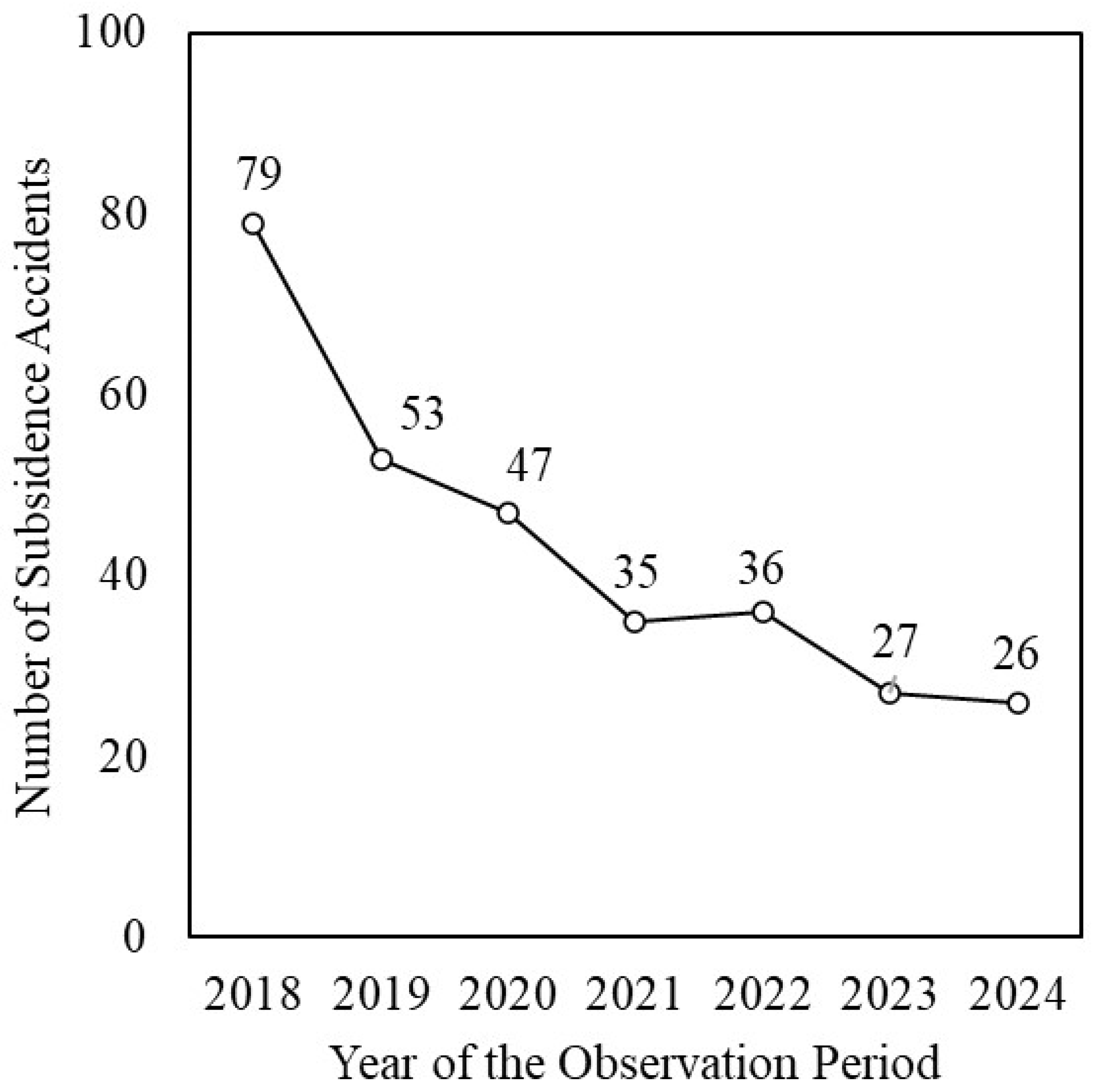
Figure 1 illustrates the annual distribution of ground subsidence incidents over the study period.
5.2. Descriptive Statistical Analysis
Descriptive statistical analyses were performed to explore the frequency, patterns, and spatial distribution of ground subsidence events in Gyeonggi. These analyses aimed to build a basic understanding of the data before applying inferential statistical methods.
To evaluate the frequency of different contributing factors, each incident was classified by its root cause, and the number of cases in each category was counted. This helped identify the most common failure types leading to subsidence, such as inadequate compaction, damaged utility lines, or construction-related problems. Besides total counts, trends over the seven-year study period were analyzed to see if the occurrence of specific causes increased, decreased, or stayed the same over time. This temporal analysis offered insights into emerging risks or the impact of policy or construction practice changes.
Each incident was also categorized by season, based on South Korea’s four distinct meteorological zones: winter (December to February), spring (March to May), summer (June to August), and fall (September to November). Seasonal classification was especially important in evaluating the possible impact of weather patterns—particularly heavy rainfall during the summer monsoon—on the likelihood of ground subsidence events.
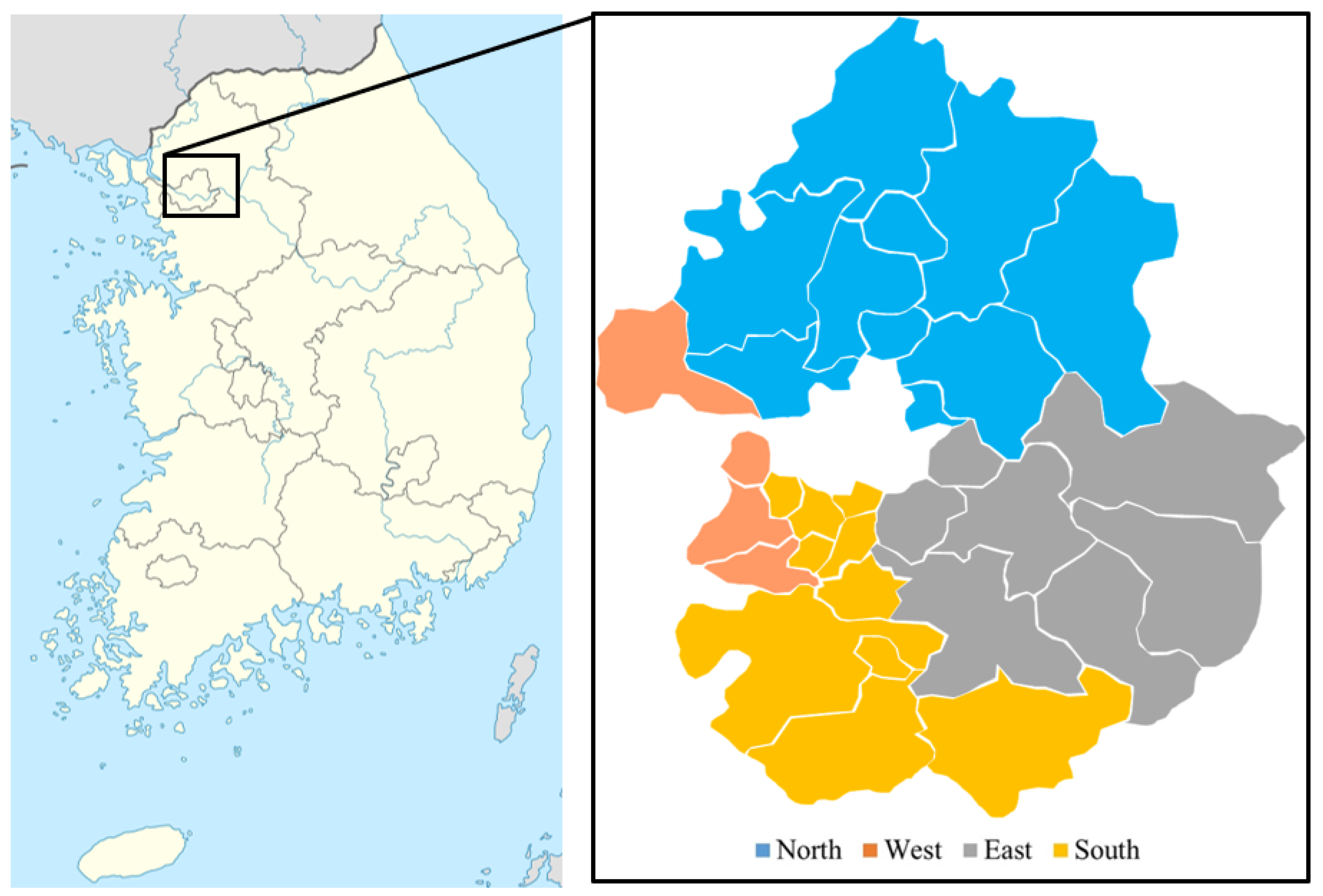
To analyze spatial patterns, each case was assigned to one of four main administrative zones within Gyeonggi Province, north, east, west, or south, as shown in
Figure 2. This regional classification supported a spatial distribution analysis focused on identifying potential geographic clusters or localized vulnerabilities.
All descriptive results were summarized using frequency tables and visualized with bar charts and other graphical methods. These visual and tabular summaries not only highlighted broad patterns within the dataset but also helped guide later inferential testing by revealing initial associations among the variables of interest.
5.3. Inferential Analysis Using Extended Fisher’s Exact Test
To evaluate whether particular causes of ground subsidence are statistically associated with outcomes such as human injury, vehicle damage, seasonal timing, and geographic region, this study applied categorical association analysis. This method is especially suitable for small sample sizes and sparse categorical data, where traditional chi-square tests might be unreliable. Unlike the standard 2 × 2 Fisher’s test, the extended version can handle multi-dimensional contingency tables, such as the seven root cause categories combined with the four regional zones in this study, making it well-suited for the dataset’s structure.
For each outcome variable, the analysis involved creating a two-dimensional contingency table that displayed observed and expected frequencies of incidents across various root cause categories. Statistical significance was evaluated using a p-value threshold of 0.05. When the test showed a significant relationship between the variables, a post hoc cell-level analysis was conducted to determine which specific combinations contributed most to the association.
In the post hoc analysis, adjusted residuals were computed for each cell in the contingency table. Cells with residual values greater than ±1.96 were deemed statistically significant at the 95% confidence level, indicating that the observed frequency in that category significantly differed from what would be expected if the variables were independent. This inferential method enabled the study to go beyond surface observations and make statistically supported conclusions about the relationships between causes and outcomes. Ultimately, the analysis identified which types of subsurface infrastructure failures are most strongly linked to public safety hazards and where preventive measures could be most effectively implemented.
6. Findings and Results
6.1. Subsidence Frequency by Root Cause
Across the study period, the average recovery time following a subsidence incident was approximately 26 days, ranging from 1 to 493 days. The median recovery duration was three days, with a standard deviation of 52.8 days, indicating substantial variability in incident severity. Among the recorded incidents, approximately 3.6% involved human injuries, while 7.6% resulted in vehicle damage.
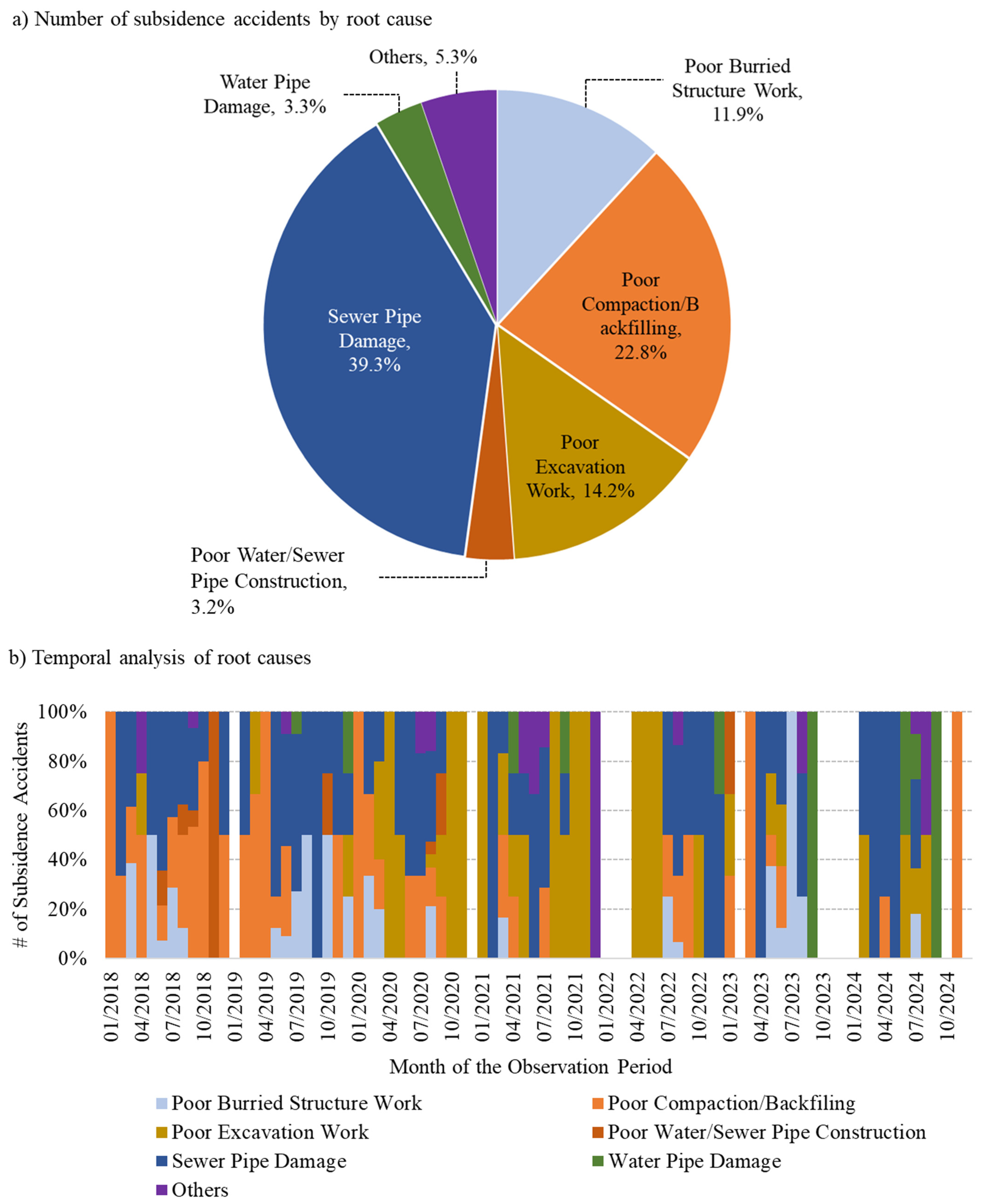
Figure 3a presents the distribution of incidents by root cause. ‘Sewer Pipe Damage’ was the most frequently reported cause, responsible for 39.3% of the total cases. ‘Poor Compaction or Backfilling’ and ‘Poor Excavation Work’ followed, accounting for 22.8% and 14.2%, respectively. At the other end of the spectrum, ‘Poor Water or Sewer Pipe Construction’ appeared in only 3.2% of the cases, making it the least common cause identified in the dataset. Examining the monthly distribution of root causes (
Figure 3b) closely reveals a distinct seasonal pattern. “Sewer Pipe Damage” consistently accounted for a significant percentage of the total accidents during the summer months (i.e., June, July and August). Two contrasting temporal trends were also observed. ‘Poor Compaction or Backfilling’ was a prevalent cause during the early part of the observation period (i.e., 2018–2019) but became rare in subsequent years. In contrast, ‘Poor Excavation Work’ was relatively uncommon in the first two years, while it emerged more frequently as a contributing factor between 2020 and 2022.
6.2. Spatio-Temporal Distribution of Subsidence
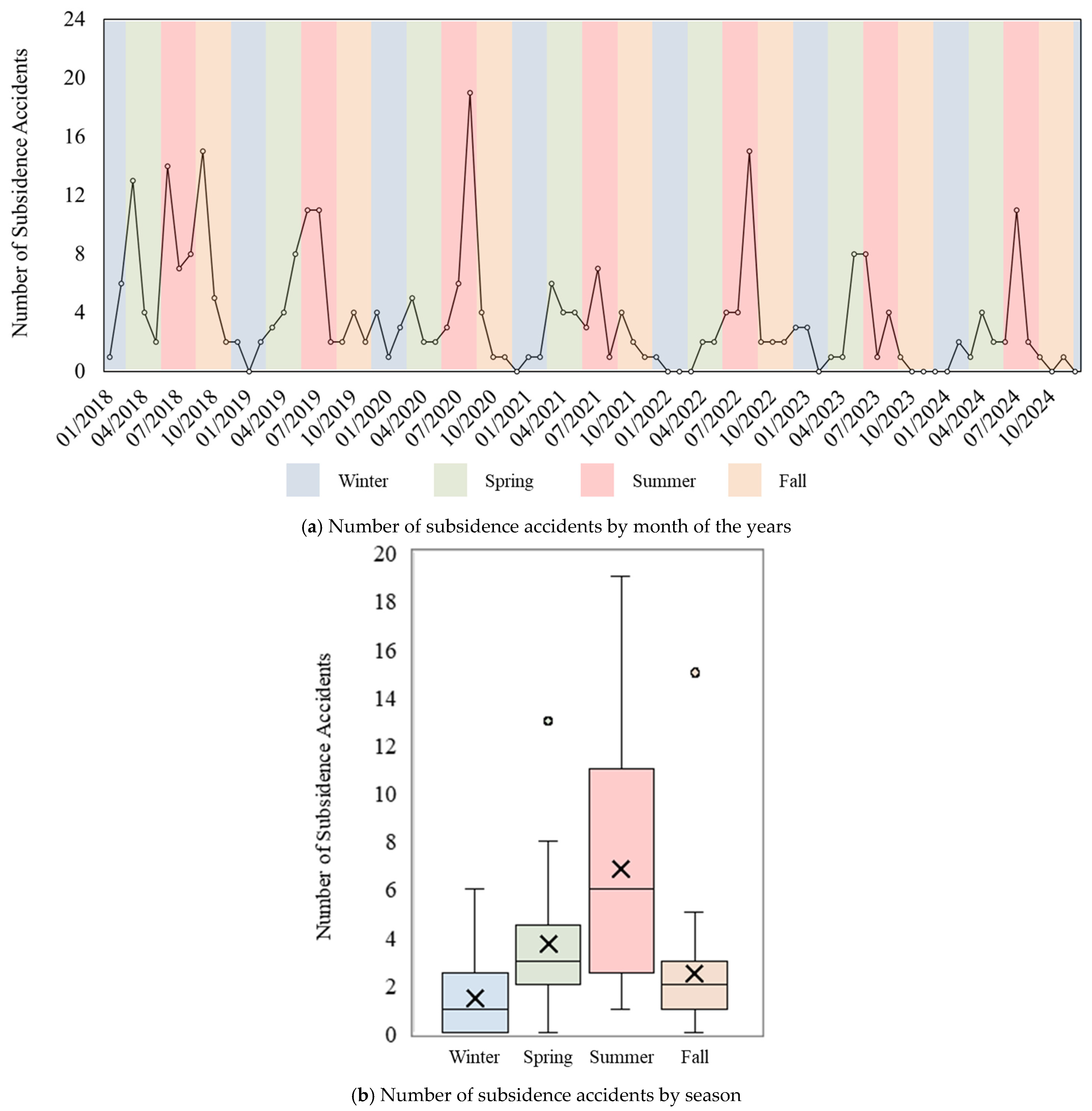
An analysis of the temporal distribution of subsidence incidents over the study period revealed a clear seasonal trend by month of the years (
Figure 4a). Across all seven years, the majority of accidents occurred during the summer months, with particularly high concentrations noted in several years: 36.7% in 2018, 45.2% in 2019, 59.5% in 2020, 31.4% in 2021, 63.8% in 2022, 48.1% in 2023, and 57.6% in 2024. This recurring pattern suggests a strong correlation between seasonal climate conditions, especially heavy rainfall during the monsoon season in July and August (summer), and the occurrence of ground subsidence. In contrast, subsidence accidents were significantly less frequent during the winter months. For each year of the observation period, winter accounted for the smallest share of incidents: 11.3% in both 2018 and 2019, 8.5% in 2020 and 2021, 8.3% in 2022, 11.1% in 2023, and just 7.6% in 2024.
Figure 4b shows the number of subsidence accidents by season.
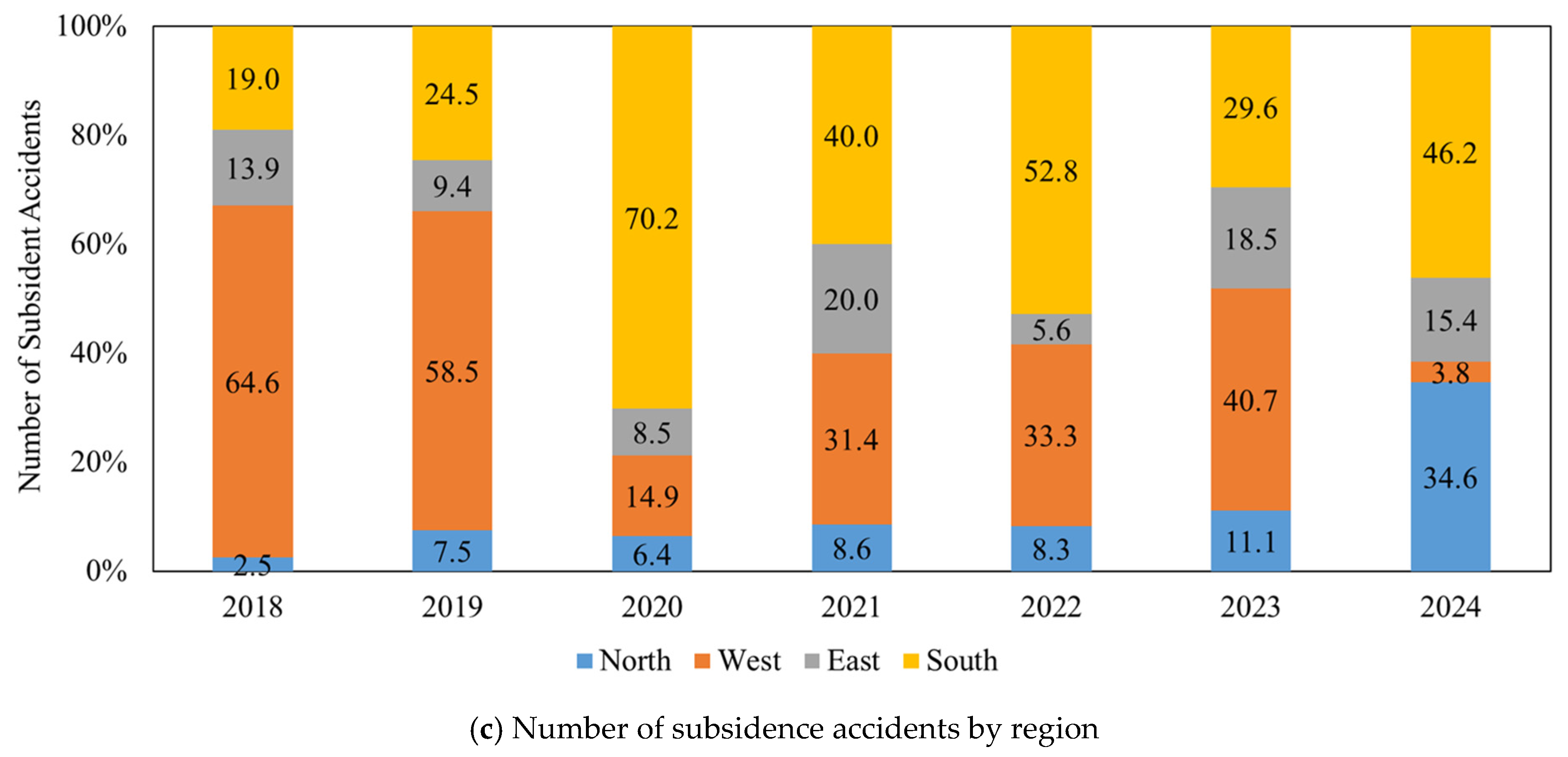
Spatial analysis across the four regional divisions of the province (
Figure 4c) revealed notable differences in the distribution of subsidence incidents. The southern and western regions accounted for the highest proportions of cases, representing 40.9% and 37.6% of the total incidents, respectively, whereas the northern and eastern regions exhibited substantially lower frequencies (8.9% and 12.5%). The spatial analysis was conducted at the regional level to ensure sufficient sample size and statistical robustness for categorical association testing. While this aggregation improves inferential reliability, it reduces the city-level resolution and limits direct comparisons with demographic or infrastructure indicators, such as population density or sewer network length. In particular, the western region, despite its smaller areal extent, contains several major metropolitan cities characterized by high population density and extensive underground utility networks, which may partially explain its elevated subsidence frequency.
6.3. Association Analysis by Fisher’s Exact Test
Table 2 presents the observed and expected frequencies of subsidence accidents by root cause across categories of human injury, vehicle damage, season, and regional location. Expected frequencies were calculated based on marginal totals under the assumption of independence between variables. The results of the extended Fisher’s exact test indicate no significant association between root causes and human injury (
p = 0.754), but a significant association with vehicle damage (
p = 0.030). Post hoc cell-wise analysis revealed that the observed frequency of subsidence incidents attributed to Poor Water/Sewer Pipe Construction was significantly higher than expected when vehicle damage occurred (4 observed vs. 1 expected; adjusted residual = 4.06).
On the other hand, the frequency of subsidence accidents caused by ‘Poor Water/Sewer Pipe Construction’ was significantly higher than expected when the vehicle was not damaged (6 vs. 9, adjusted residual = −4.06). These results suggest that ‘Poor Water/Sewer Pipe Construction’ is a major contributor to the occurrence of damaged vehicles.
Additionally, the results on the frequency of subsidence accidents show a significant association between the type of root causes and season (p-value = 0.006). Specifically, the results of post hoc pairwise comparisons revealed the following three key seasonal patterns based on adjusted residuals. The observed frequency of subsidence accidents caused by sewer pipe damage in summer was significantly higher than the expected frequency (65 vs. 56, adjusted residual = 2.08). This means that summer is associated with a higher risk of subsidence accidents due to ‘Sewer Pipe Damage’. Second, the observed frequency of subsidence accidents caused by ‘Poor Excavation Work’ was significantly higher in spring than expected (18 vs. 11, adjusted residual = 2.61) and significantly lower in summer than expected (12 vs. 20, adjusted residual = −2.74). This implies that a risk of subsidence accidents increases in Spring due to ‘Poor Excavation Work’. Third, ‘Poor Water/Sewer Pipe Construction’ produced a significantly higher observed frequency of subsidence accidents in fall than their expected frequency (5 vs. 2, adjusted residual = 2.80). This indicates that ‘Poor Water/Sewer Pipe Construction’ increases the risk of subsidence accidents in winter.
Furthermore, there was a significant association between root cause and regional location of subsidence accidents (p-value = 0.008). According to the results of the post hoc analysis, the observed frequency of subsidence accidents caused by ‘Poor Water/Sewer Pipe Construction’ was significantly higher in eastern cities than their expected frequency (6 vs. 1, adjusted residual = 4.61) but significantly lower in western cities than expected (0 vs. 4, adjusted residual = −2.68). These results indicate that the risk of subsidence accidents for eastern areas of the province increases with ‘Poor Water/Sewer Pipe Construction’.
7. Discussion
The findings indicate that sewer pipe damage, poor compaction or backfilling, and excavation activities account for the majority of reported incidents, highlighting the dominant role of underground infrastructure conditions in urban subsidence development.
Clear seasonal patterns were observed, with sewer related subsidence peaking during the summer monsoon period. This trend suggests that rainfall infiltration plays a critical role in destabilizing aging sewer systems and poorly compacted soils. Increased groundwater flow and soil erosion during periods of intense precipitation likely accelerate void formation around deteriorated pipelines, increasing the probability of sudden surface collapse. In contrast, the relatively low frequency of incidents during winter may be attributed to reduced rainfall, decreased construction activity, and more stable soil conditions associated with colder temperatures. These seasonal variations emphasize the importance of weather-sensitive monitoring and preventive maintenance strategies.
Spatial disparities in subsidence occurrence were also evident. Higher incident concentrations in southern and western municipalities, which include major urban centers with dense pipeline networks and ongoing development, suggest that urban density, infrastructure age, and construction intensity strongly influence subsurface vulnerability. Conversely, lower incident rates in other regions may reflect differences in development history, subsurface conditions, or infrastructure management practices. These findings demonstrate that subsidence risk is not uniformly distributed and must be evaluated within localized urban contexts.
The association analysis further revealed that while subsidence causes were not significantly related to human injury, they were significantly associated with vehicle damage, seasonal timing, and regional location. This indicates that subsidence impacts are shaped more by environmental exposure and infrastructure configuration than by direct human interaction. These results underscore the need for region-specific and seasonally adaptive management approaches rather than uniform, year-round inspection frameworks.
8. Conclusions
This study analyzed a compiled dataset of documented ground subsidence incidents in Gyeonggi Province, South Korea, providing data-driven insights into their causes, spatial temporal patterns, and associated impacts. Descriptive analysis identified sewer pipe damage as the leading contributor, followed by poor compaction or backfilling and excavation related activities.
Inferential analysis using the Extended Fisher’s Exact Test revealed significant associations between subsidence causes and vehicle damage, seasonality, and regional distribution, while no statistically meaningful relationship was observed with human injury. Excavation-related subsidence was more frequent in spring, sewer pipe damage predominated during summer, and defective pipe construction posed elevated risks in eastern municipalities.
From an infrastructure management perspective, these findings provide a practical framework for prioritizing inspections, allocating maintenance resources, and scheduling rehabilitation projects in a data-informed manner. Intensified sewer inspections during the summer monsoon period and strengthened oversight of excavation activities during spring construction seasons may substantially reduce subsidence risk. Moreover, targeted investment in high-risk regions could improve the efficiency of municipal maintenance programs and enhance public safety.
This study contributes to strengthening urban resilience against ground subsidence by linking causal mechanisms with environmental and spatial conditions. Continued monitoring, integration of predictive modeling techniques, and expansion of incident datasets beyond Gyeonggi Province are recommended as essential next steps toward developing proactive, nationwide strategies for mitigating subsidence risks in South Korea.