Review

Multi-Stable Isotope Constraints on the Sources and Evolution of Potash-Forming Fluids in the Mahai Basin, Qinghai–Tibetan Plateau


1
Qinghai Geological Survey, Technology Innovation Center for Exploration and Exploitation of Strategic Mineral Resources in Plateau Desert Region, Ministry of Natural Resources, Xining 810001, China
2
Key Laboratory for Water Quality and Conservation of the Pearl River Delta, Ministry of Education, School of Environmental Science and Engineering, Guangzhou University, Guangzhou 510006, China
3
State Key Laboratory of Environmental Geochemistry, Institute of Geochemistry, Chinese Academy of Sciences, Guiyang 550081, China
4
Key Laboratory of Green and High-end Utilization of Salt Lake Resources, Qinghai Institute of Salt Lakes, Chinese Academy of Sciences and Qinghai Provincial Key Laboratory of Geology and Environment of Salt Lakes, Xining 810016, China
5
Key Laboratory of Tibetan Plateau Land Surface Processes and Ecological Conservation, Ministry of Education, Academy of Plateau Science and Sustainability, Qinghai Normal University, Xining 810008, China
6
State Key Laboratory of Plateau Ecology and Agriculture, Qinghai University, Xining 810016, China
*
Authors to whom correspondence should be addressed.
Water 2026, 18(4), 443; https://doi.org/10.3390/w18040443
Submission received: 11 January 2026 / Revised: 4 February 2026 / Accepted: 6 February 2026 / Published: 7 February 2026

Abstract

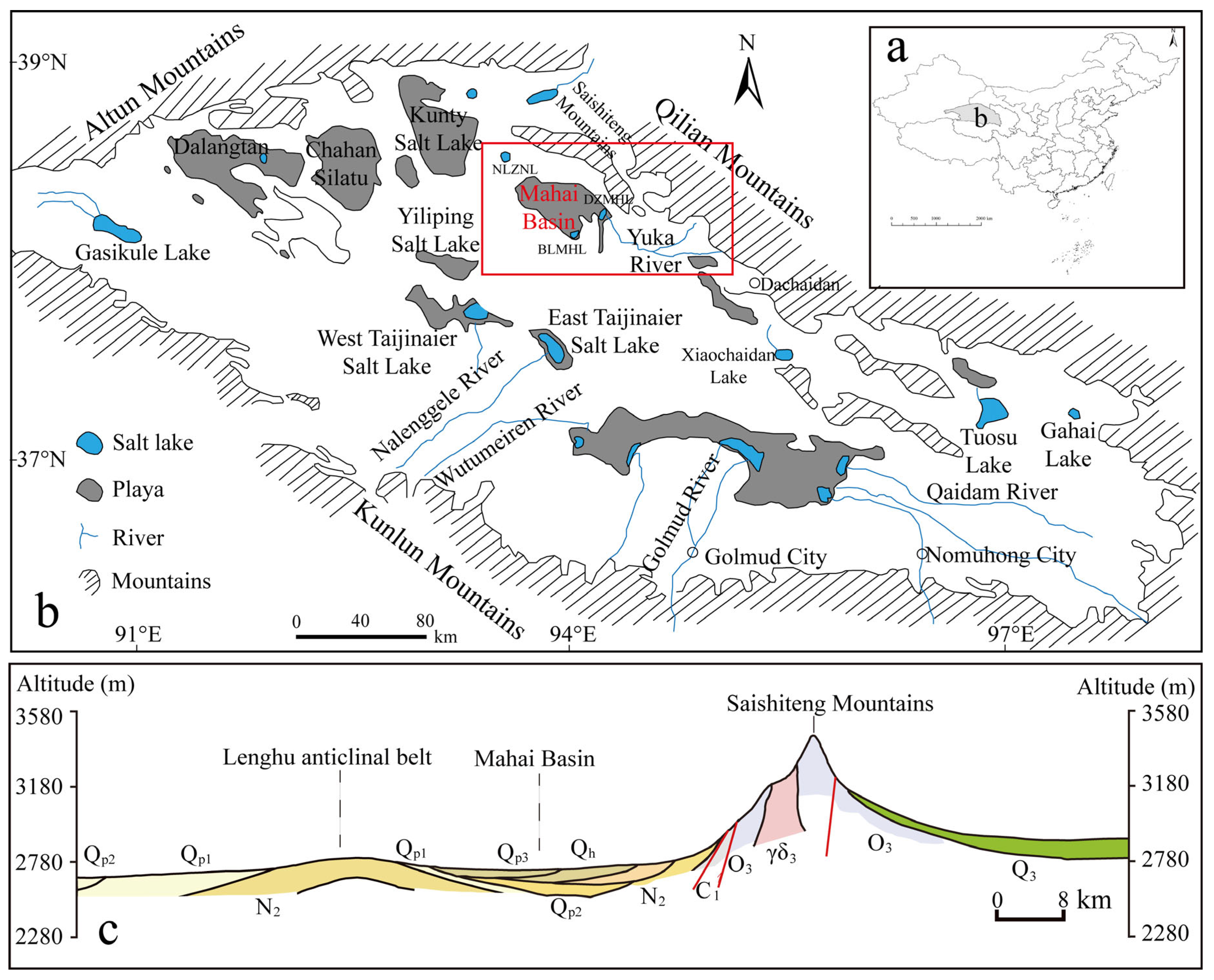
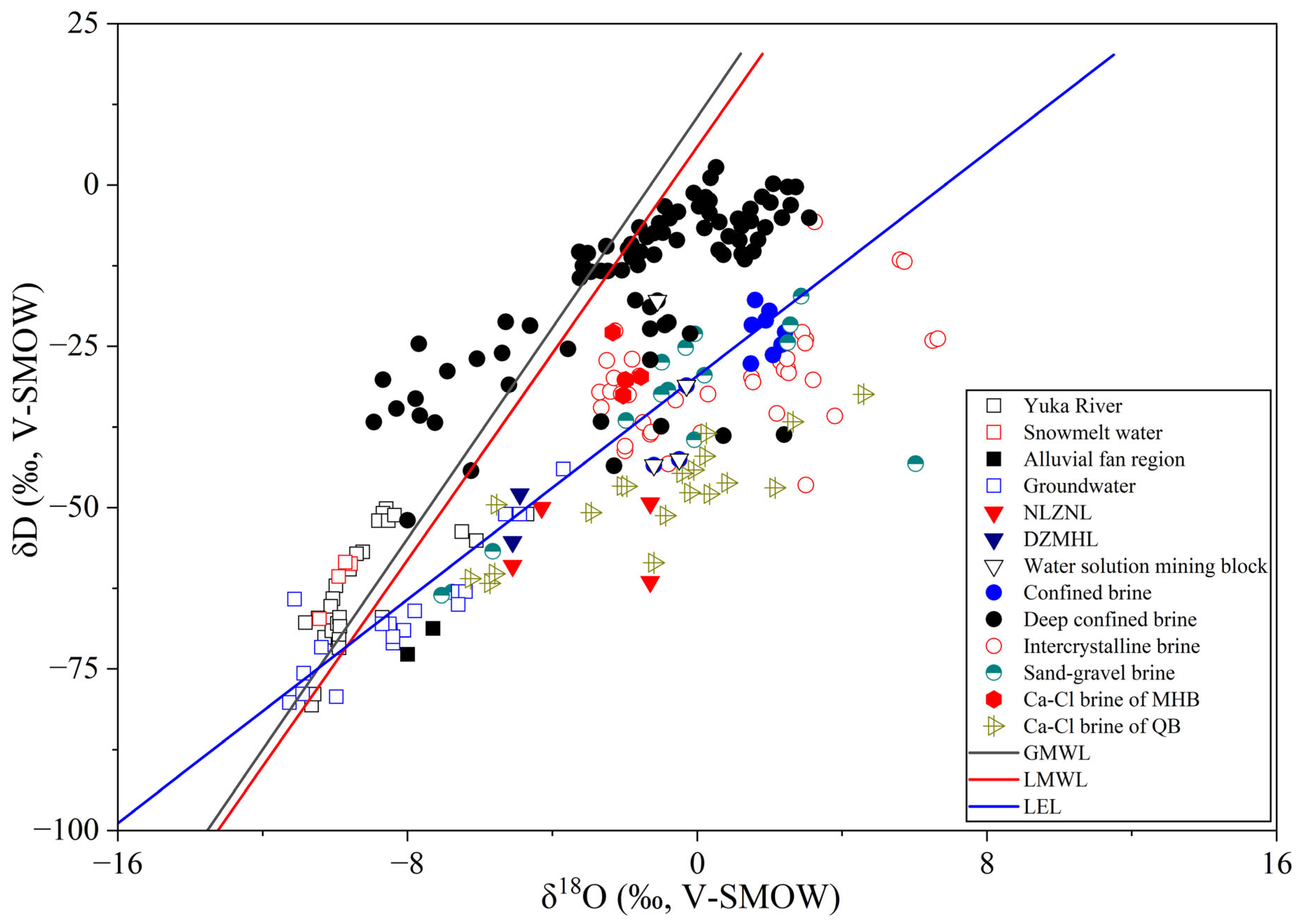
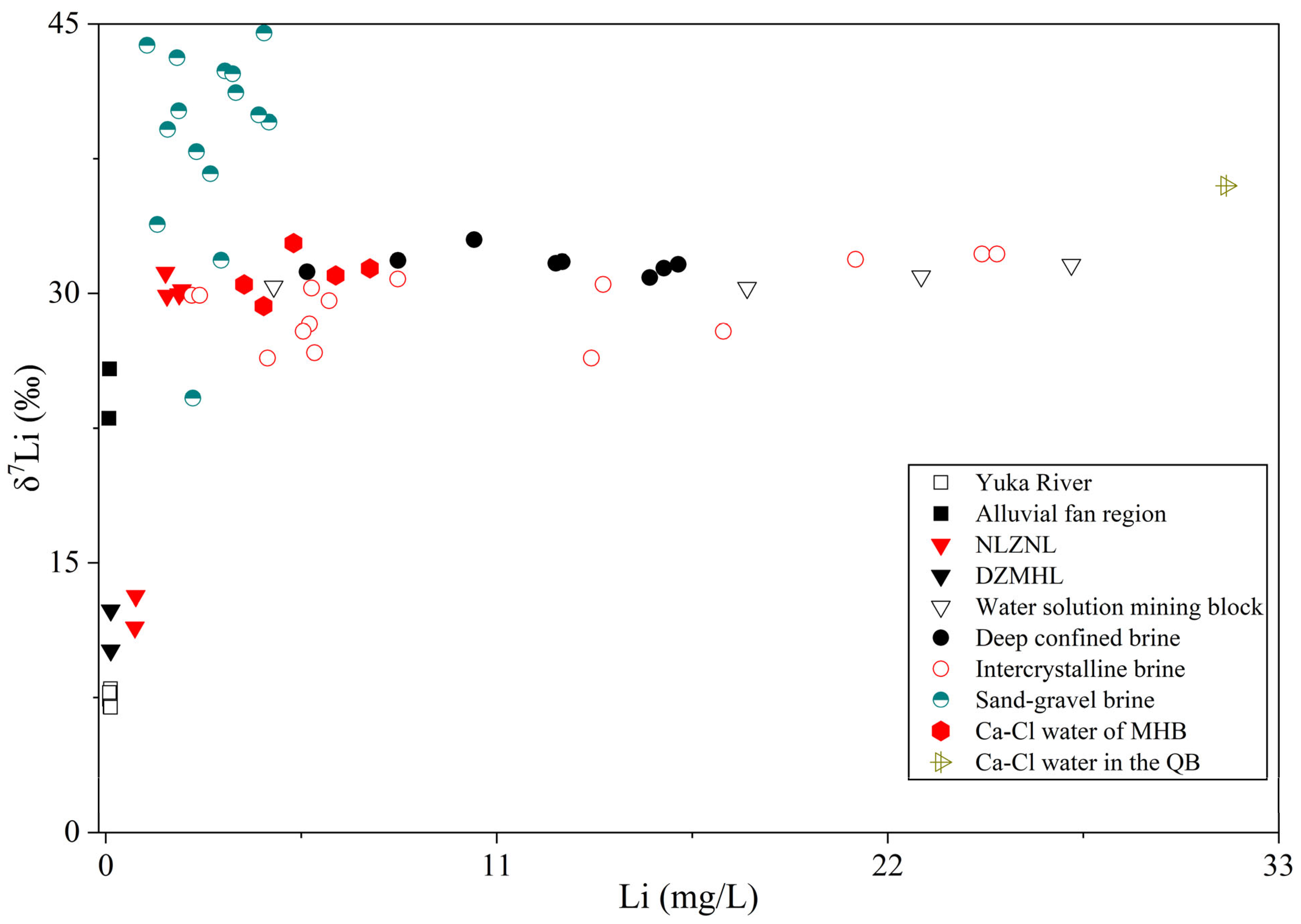
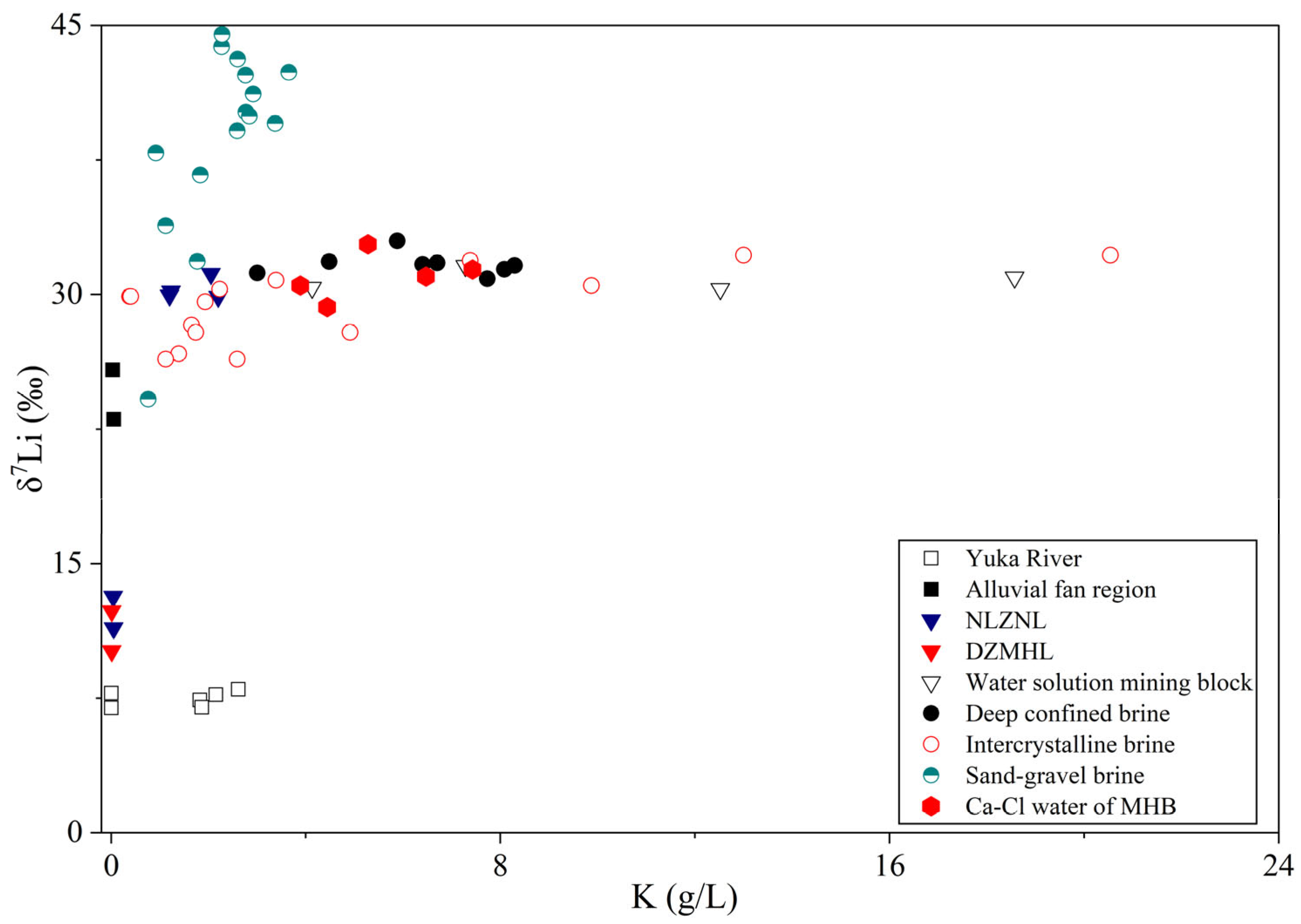
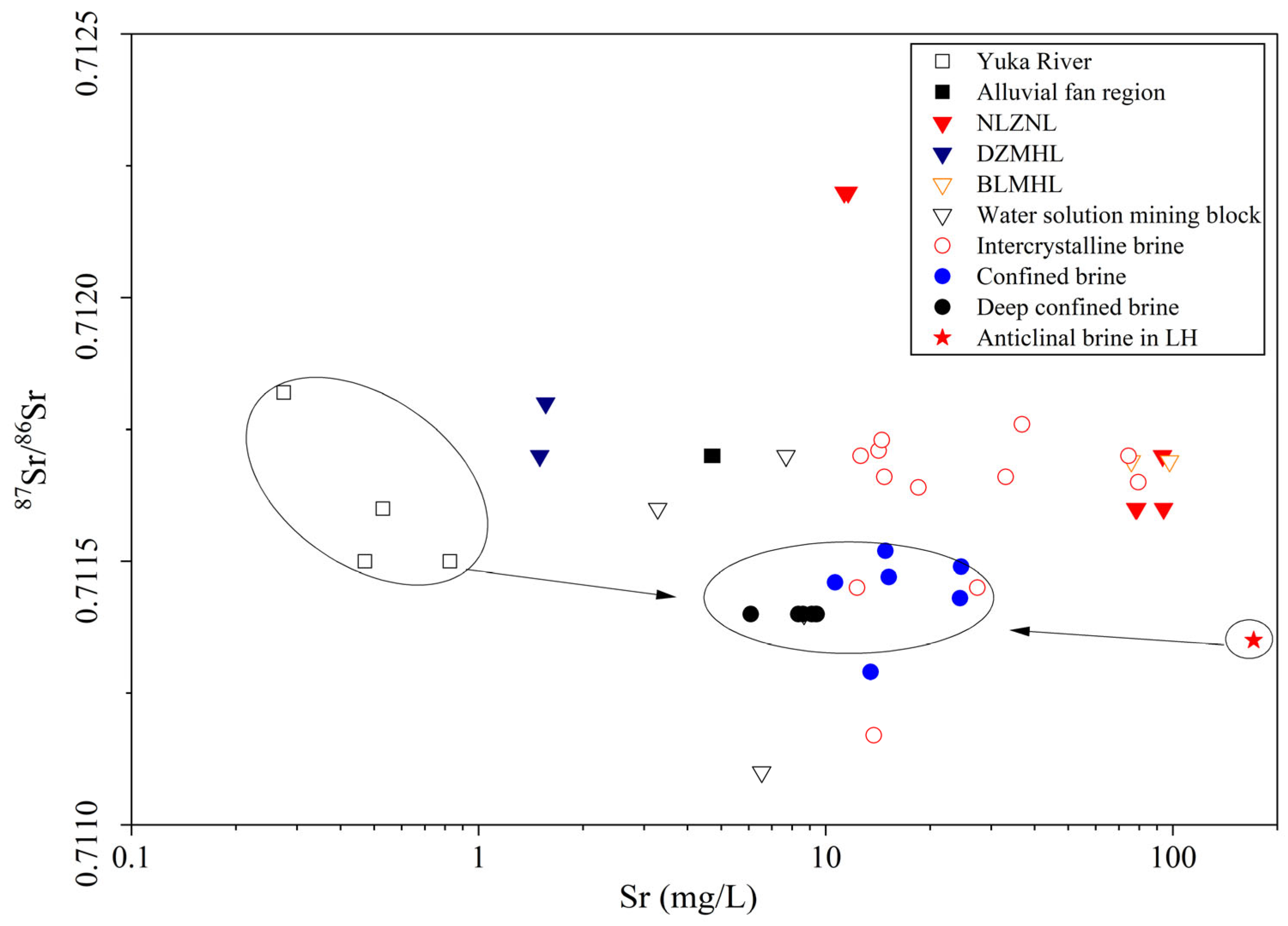
The Mahai Basin (MHB), situated in the northern Qaidam Basin on the Qinghai–Tibetan Plateau, hosts significant Quaternary potash resources. Nevertheless, the sources and evolutionary pathways of potash-forming fluids remain controversial. In this study, a comprehensive multi-isotope dataset and online-first publications spanning the period from 2015 to 2025 were compiled to constrain the end-member characteristics and evolution of brines in the MHB. δD-δ18O indicates that the initial fluids were derived mainly from Qilian Mountains precipitation and snowmelt, delivered via surface runoff and concentrated through prolonged evaporation under arid, semi-closed conditions, forming a river-lake-brine evolution sequence. δ7Li (+7‰ to +40‰) systematically increases with salinity and K content, reflecting long-term low-temperature water–rock interactions and selective 6Li adsorption by secondary clays, while deep Ca-Cl brines represent highly evolved endmembers. Elevated 87Sr/86Sr ratios (0.7113–0.7122) confirm silicate weathering contributions, with intercrystalline brines acting as key intermediate end members. B, S, and Cl isotopes further highlight deep fluid ascent along faults and anticlines, driving K co-enrichment, while sandy–gravel brines inherit highly evolved paleo-lake signatures. These multi-isotope constraints define an integrated evolutionary model involving surface runoff recharge, evaporation-driven concentration with water–rock interaction, deep fluid mixing, lateral migration, and final potash precipitation.
Keywords: Potash from fluids; Mahai Basin; stable isotope; fluid sources; fluid evolution; Qinghai–Tibetan Plateau Potash from fluids; Mahai Basin; stable isotope; fluid sources; fluid evolution; Qinghai–Tibetan Plateau