Article

Impact of Food Processing Industry Wastewater on Root Growth and DNA Damage in Allium cepa L. as Assessed by the Comet Assay

1
Department of Botany, Government College University Lahore, Lahore 54000, Pakistan
2
Department of Biological and Environmental Sciences (BIOS), University of Gothenburg, 405 30 Gothenburg, Sweden
3
Department of Environmental Sciences, University of Veterinary and Animal Sciences (UVAS), Lahore 54000, Pakistan
4
Department of Environmental Engineering and Management, Chaoyang University of Technology, Taichung 413310, Taiwan
5
Department of Applied Chemistry, Chaoyang University of Technology, Taichung 413310, Taiwan
6
State Key Laboratory of Chinese Medicine Modernization, Tianjin University of Traditional Chinese Medicine, Tianjin 301617, China
7
Gulab Devi Institute of Pharmacy (GDIP), Gulab Devi Educational Complex, Lahore 54000, Pakistan
8
Department of Botany, Government MAO College, Lahore 54000, Pakistan
*
Authors to whom correspondence should be addressed.
Water 2026, 18(3), 435; https://doi.org/10.3390/w18030435
Submission received: 30 December 2025 / Revised: 22 January 2026 / Accepted: 3 February 2026 / Published: 6 February 2026

Abstract

Wastewater from food processing industries contains synthetic dyes and preservatives that may pose phytotoxic and genotoxic risks. The present work represents an exploratory study based on a wastewater source and sampling period. Wastewater was characterized by physicochemical analysis and high-performance liquid chromatography (HPLC). Onion seeds and bulbs were exposed to 0% (control), 20%, 40%, 60%, 80%, and 100% wastewater dilution. DNA was extracted from root cells using the cetyltrimethylammonium bromide (CTAB) method. The DNA damage was analyzed by the comet assay. HPLC analysis confirmed the presence of sorbic acid, citric acid, benzoic acid, butylated hydroxyanisole (BHA), and butylated Hydroxytoluene (BHT) by showing corresponding peaks. The mean root length in wastewater was significantly reduced by 55%, 50%, and 65% on days 3, 5, and 7, respectively, relative to the control. On day 3, the highest genotoxicity at 100% wastewater was indicated by 96.69% tail DNA, a tail moment of 108.3 a.u., an Olive tail moment of 58.01 a.u., and a comet length of 136 µm. Enhanced DNA damage persisted on days 5 and 7, with comet lengths reaching 127–149 µm and 111–182 µm, respectively. Although the observed effects may reflect general cytotoxicity arising from a complex wastewater mixture and showed that untreated food processing wastewater presents a significant genotoxic risk and requires effective treatment prior to reuse.

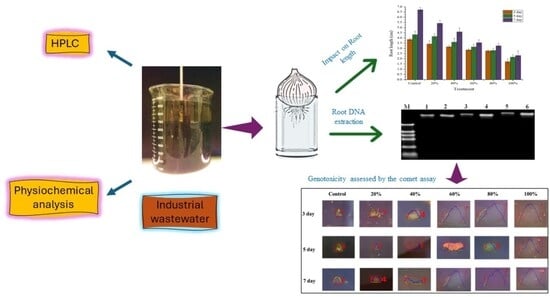
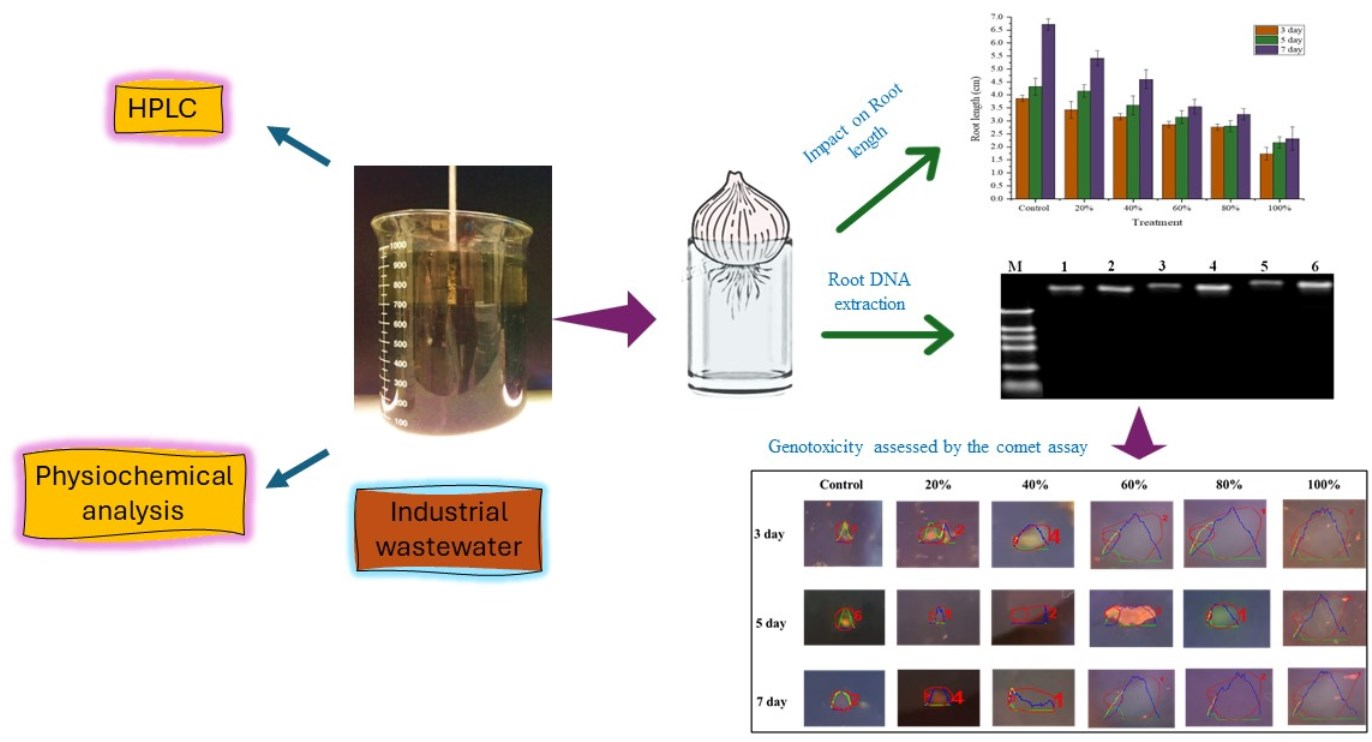
Graphical Abstract

1. Introduction

The global water crisis has become a significant threat to agriculture and food security, a challenge exacerbated by rapid industrialization, which, although essential for economic development, substantially contributes to environmental degradation [1]. Food-processing and other industrial activities generate vast quantities of wastewater, much of which remains untreated, contaminating soil and water resources and posing serious risks to human health and life expectancy [2]. Globally, untreated wastewater discharge remains widespread, with production projected to rise by 24% by 2030 and 51% by 2050. Asia is currently the largest wastewater producer, generating ~159 billion m3 annually, accounting for 42% of global output, and is expected to account for around 44% of the world’s wastewater by the end of the UN-SDG period in 2030 [3]. Europe and North America follow with annual outputs of 68 and 67 billion m3, respectively. In contrast, sub-Saharan Africa produces the lowest per capita wastewater volume (46 m3), largely due to limited water availability and inadequate wastewater collection infrastructure [4].
Industrial wastewater contains a mixture of harmful contaminants, including inorganic and organic pollutants, high dissolved solids, and elevated biological oxygen demand (BOD) [5]. The food processing industry, in particular, uses large volumes of water and releases synthetic additives into the environment. The food processing industry utilizes substantial amounts of water and releases synthetic additives, including dyes such as Azorubine (E-122), Tartrazine (E-102), and Allura Red AC (E-129), which can be genotoxic to soil microorganisms, particularly plant growth-promoting rhizobacteria (PGPR) [6]. These azo-based dyes are widely used due to their strong color intensity and high water solubility [7]. Food preservatives, including sorbic acid, sodium benzoate, butylated hydroxyanisole (BHA), butylated hydroxytoluene (BHT), and sodium nitrite, are added to extend shelf life and prevent microbial spoilage [8]. However, these chemicals can disrupt soil microbial communities by damaging cell membranes and proteins, increasing membrane permeability, and causing leakage of essential ions such as potassium [9]. Their accumulation in soil through wastewater irrigation poses significant risks to both plant growth and microbial health.
Wastewater from food processing industries can contaminate soil and cause serious risks to human health. Contaminated food is the primary exposure pathway, accounting for more than 90% of pollutant intake [10]. The World Health Organization estimates that one-tenth of the global population becomes ill annually from contaminated food, with about 420,000 related deaths [11]. Chemicals such as citric and benzoic acids inhibit root growth and reduce chlorophyll, while sorbic acid may slightly increase soil pH [12]. BHT, a common antioxidant, can disrupt microbial metabolic pathways [13]. High biological oxygen demand (BOD), chemical oxygen demand (COD), and total dissolved solids (TDS) levels further alter soil chemical properties and microbial balance. Elevated COD increases soil sodium, degrading soil structure and fertility [14], and high TDS suggests the presence of harmful contaminants [15]. Wastewater temperature also affects the solubility of dissolved solids, which in turn impacts soil and plant systems [16].
Several synthetic food additives have been shown to induce DNA damage in plant cells, leading to mutations and chromosomal abnormalities [17]. Synthetic food dyes and preservatives have been shown to exert genotoxic effects on both plants and humans, with numerous studies documenting their toxicity using Allium cepa L. root tips as a standard bioindicator [18]. Food preservatives significantly reduce the mitotic index and increase chromosomal abnormalities in A. cepa, including C-mitosis, micronuclei formation, chromosomal lagging, stickiness, and breakage [19]. Kumar et al. [20] also reported cytological defects, such as fragmentation and chromosomal bridges, in root apical meristem cells, with the abnormalities increasing as the additive concentration increased. Higher concentrations of synthetic dyes similarly caused laggards, precocious movement, unequal separation, and other mitotic disturbances [17,21].
Contaminated agricultural water introduces toxic substances into the food chain, posing serious environmental and public health risks. Numerous studies have investigated the genotoxic effects of industrial wastewater using A. cepa as a bioindicator species [4,22]. However, the present study specifically focuses on wastewater from the food-processing industry, which is often enriched with synthetic dyes and preservatives. Based on the available literature, no studies have yet evaluated wastewater from the food-processing industry. Therefore, the objective of this study was to assess the effects of food-processing wastewater on root growth of A. cepa and to evaluate DNA damage using the comet assay.

2. Materials and Methods

2.1. Sample Collection

Wastewater samples were collected on 28 April 2024, from three locations along the effluent discharge stream in the food industry zone near Lahore, Pakistan. Sampling was conducted during peak industrial activity to capture the highest levels of contaminants. According to Fetaw et al. [23], sampling was done from three sampling stations: S1 (the point where brewery effluent is released), S2 (50 m downstream from S1), and S3 (100 m downstream from S1). After Physicochemical analysis, samples from each site were combined to make a composite sample. The samples were immediately placed in insulated coolers with ice packs to maintain a temperature of 4 °C during transport. Upon arrival at the laboratory, samples were refrigerated at 4 °C and analyzed within 48 h to prevent any chemical or biological alterations.

2.2. Physicochemical and HPLC Analysis of Wastewater

Physicochemical parameters, including pH, COD, BOD, electrical conductivity (EC), TDS, and temperature, were measured using a Soil Integrated Sensor (Biztech, Shenzhen, China) and a calibrated laboratory thermometer. Synthetic additives, including benzoic acid, sorbic acid, citric acid, BHA, and BHT, were quantified using high-performance liquid chromatography (HPLC, Agilent 1100, Agilent Technologies, Santa Clara, CA, USA). A reverse-phase C18 column was used with a water–acetonitrile gradient mobile phase, a flow rate of 1 mL/min, and UV detection at 254 nm. Calibration curves prepared from certified standards ensured precise quantification.

2.3. Preparation of Dilution

Five wastewater dilutions at concentrations of 20%, 40%, 60%, 80%, and 100% were prepared using the v/v (volume/volume) method, in which wastewater was mixed with distilled water. For the 20% dilution, 20 mL of wastewater was mixed with 80 mL of distilled water; for the 40% dilution, 40 mL of wastewater was mixed with 60 mL of distilled water; for the 60% dilution, 60 mL of wastewater was mixed with 40 mL of distilled water; and for the 80% dilution, 80 mL of wastewater was mixed with 20 mL of distilled water. The 100% dilution consisted of undiluted wastewater. Fresh water was used for the control dilution. All prepared dilutions were stored in clean glass jars until further use.

2.4. Plant Growth Assessment

Certified seeds of A. cepa were obtained from the Punjab Seed Corporation, Pakistan. Eight seeds were placed in each of six sterile Petri dishes lined with filter paper and treated with five wastewater concentrations (20%, 40%, 60%, 80%, and 100% v/v), while the control received ultrapure water. At the start of the experiment, 5 mL of the respective solution was added to each dish, followed by 3 mL every 48 h. Petri dishes were randomly arranged in a controlled growth chamber. Root Coloration was monitored at each dilution level.
For bulb assays, outer scales and dry root primordia were removed, and three bulbs were pre-germinated in sand until root lengths reached ~2 cm. This experiment was repeated three times using the three A. cepa bulbs. The bulbs of each treatment were then exposed to the same wastewater dilutions (20–100%) for 7 days, with distilled water serving as the control. After treatment, roots were gently excised, blotted to remove excess moisture, and individual root lengths of each treatment were measured using a standard ruler.

2.5. DNA Extraction

Root samples of each treatment were stored at −20 °C overnight and subsequently ground in liquid nitrogen using a pre-chilled mortar and pestle. Genomic DNA was extracted following the cetyltrimethylammonium bromide (CTAB) protocol with some modifications. The extraction buffer was preheated with 0.3% (v/v) β-mercaptoethanol. Root samples were ground with 3 g PVP using a pestle and mortar and transferred to 50 mL Falcon tubes. A total of 5 mL preheated extraction buffer and 15 mL distilled water were added, followed by centrifugation at 5000× g for 10 min and incubation at 60 °C for 1 h. Subsequently, 5 M NaCl and 10% CTAB were added, and the mixture was centrifuged at 5000× g for 5 min. Chloroform: isoamyl alcohol (3 mL) and chilled 95% ethanol (5 mL) were added, and the supernatant was incubated at −20 °C for 15 min. The DNA pellet was collected by centrifugation, washed with 70% ethanol, air-dried, and then dissolved in 50 μL of TE buffer. It was then stored at −20 °C. DNA concentration was quantified using a spectrophotometer, and purity was assessed by the A260/A280 ratio. DNA integrity was further confirmed through agarose gel electrophoresis, following the method of [24].

2.6. Comet Assay and DNA Damage Analysis

Slides of each three treatments were precoated with 1% normal-melting-point agarose and dried overnight. A cell suspension was prepared by mixing 40 µL of plant DNA with 140 µL of 1% low-melting-point agarose. Fifty microliters of the mixture were then placed onto the slides, covered with a coverslip, and solidified at 4 °C for 30 min. Slides were subjected to alkaline electrophoresis at 25 V and 300 mA for 30 min at 4 °C, followed by neutralization, ethanol fixation, and air drying. DNA was stained with ethidium bromide and visualized under a fluorescence microscope at 10× magnification. The 4–5 nuclei were observed on the three slides of each treatment. Comet images were captured and analyzed using Comet Assay IV software (v. 4.3) to quantify DNA damage.

3. Results

3.1. Physicochemical Analysis of Wastewater

The physicochemical characteristics of wastewater from food processing industries were analyzed to evaluate their environmental quality. The average temperature was 27.97 °C, with minor variations along the effluent stream, reflecting a high organic load and reduced biodegradation efficiency. The wastewater was acidic (pH 5.20 ± 0.50), a condition that can negatively affect soil microbial activity and plant growth if applied untreated. COD (499 mg/L) and BOD (350 mg/L) exceeded the permissible limits, indicating substantial oxidizable organic matter that can deplete oxygen and disrupt microbial and nutrient cycling processes. The averaged EC was 1170.02 ± 706.75 µS/cm, signifying a high ionic content, while total dissolved solids (TDS) measured 575.53 ± 347.97 mg/L, confirming elevated solute concentrations (Table 1). Such physicochemical conditions may impair soil structure, salinity balance, and plant–water relations when wastewater is used for irrigation.

3.2. Chemical Analysis of Wastewater

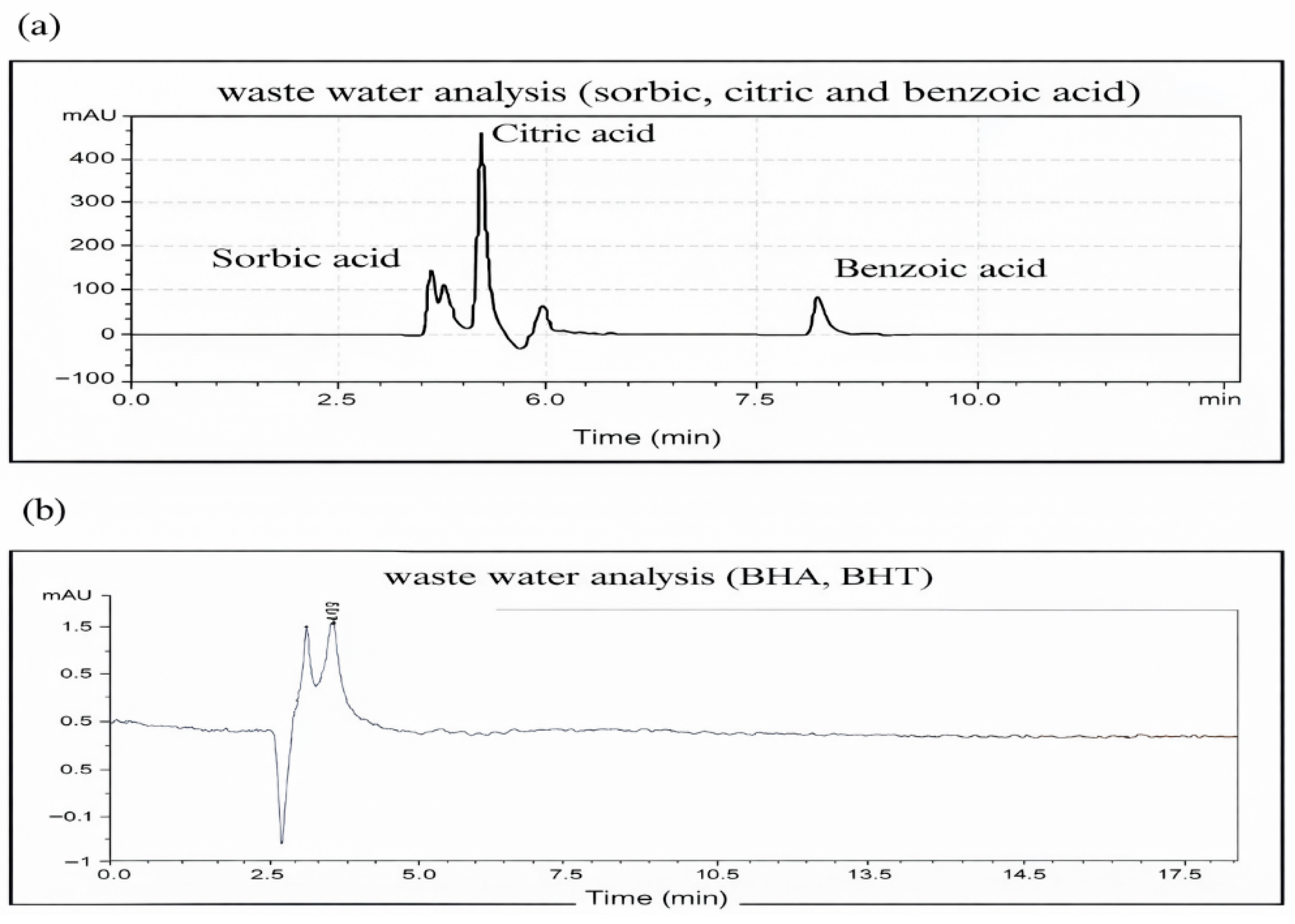
HPLC was used to identify and quantify food preservatives in the wastewater samples. Standard solutions of sorbic acid, citric acid, benzoic acid (10 µg/mL), BHA, and BHT were analyzed to establish retention times and calibration curves. Quantification was performed using calibration curves generated from certified standards. The retention times for the standards were as follows: sorbic acid, 3.69 min; citric acid, 3.85 min; benzoic acid, 8.69 min; BHA, 9.26 min; and BHT, 4.04 min. Chromatographic analysis of the wastewater showed clear peaks corresponding to sorbic acid, citric acid and benzoic acid in Figure 1a, while BHA and BHT in Figure 1b, confirming their presence.

3.3. Plant Growth Analysis

3.3.1. Observation of Root Color

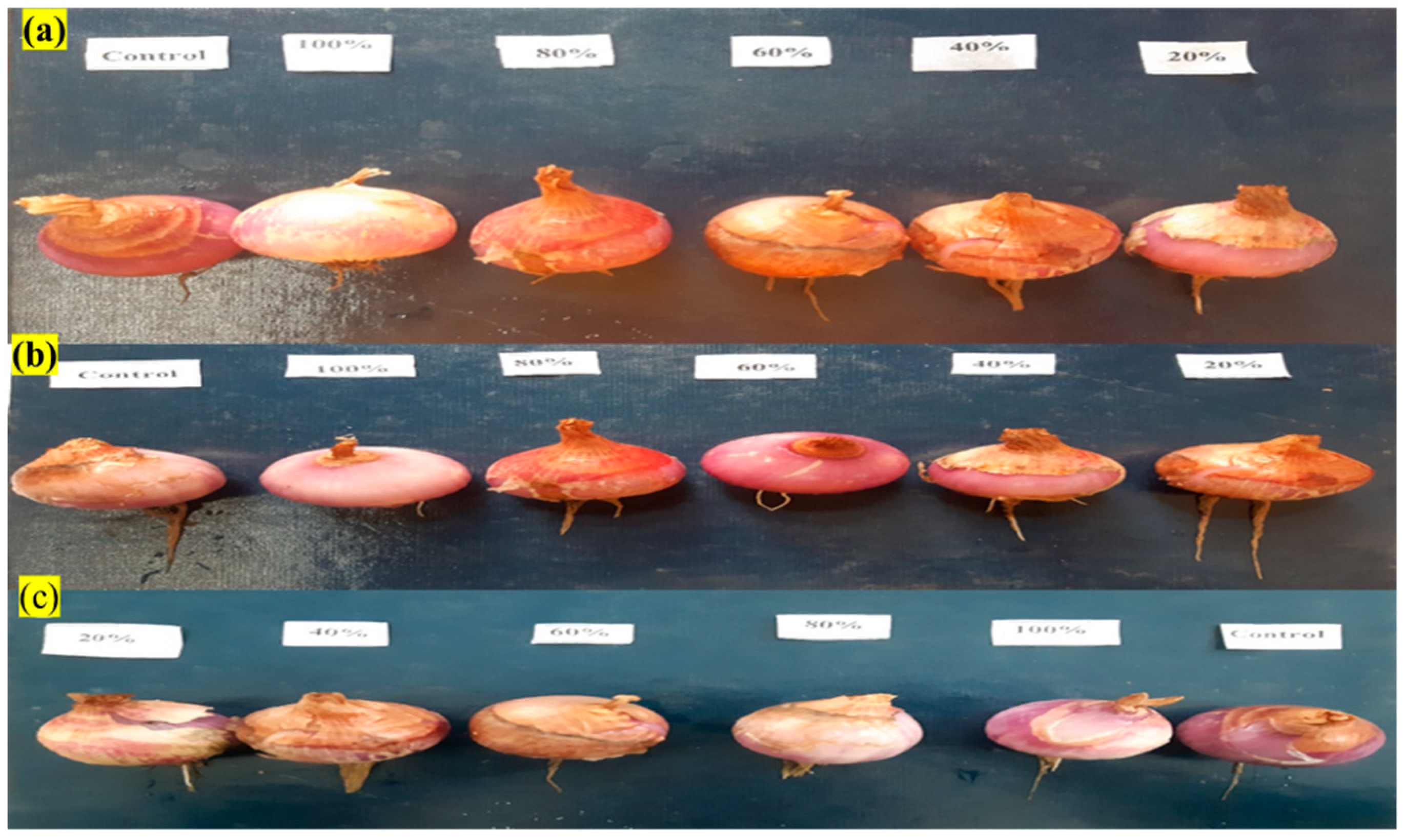
Changes in root color were clearly observed across treatments. Control roots remained whitish, while roots exposed to 20% wastewater turned yellowish. At 40% dilution, roots appeared light brown, progressing to brown and finally dark brown at 80% and 100% concentrations. These progressive discolorations reflect increasing phytotoxic stress. The morphological alterations in A. cepa root tips under food-processing industrial wastewater for day 3, 5 and 7 presented in Figure 2.

3.3.2. Root Length

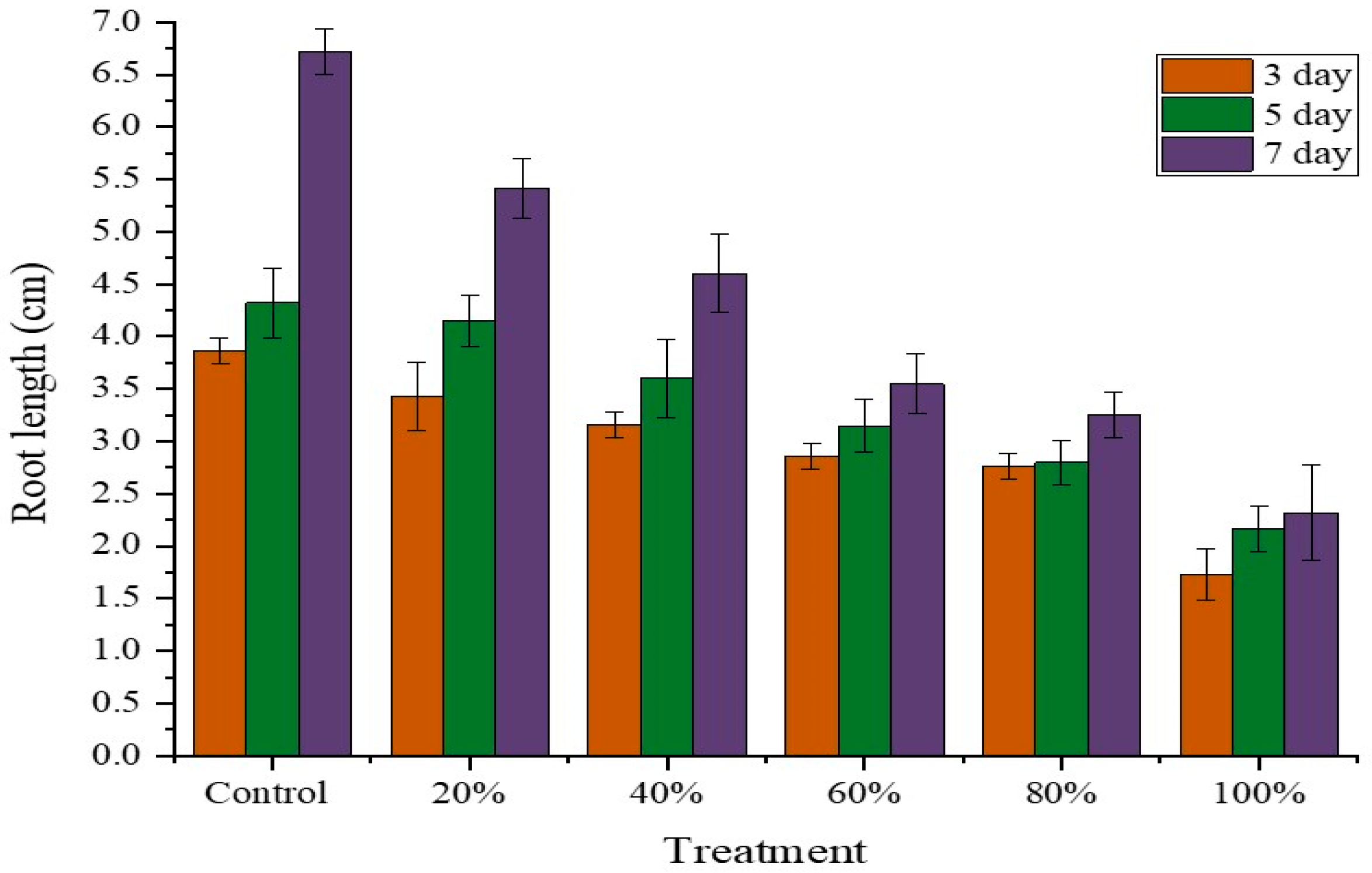
Root length was measured after 3, 5, and 7 days of exposure, and increasing wastewater concentrations progressively inhibited root growth. At 60%, 80%, and 100% dilutions, root elongation was markedly reduced, likely due to chemical constituents that interfere with cell division. On day 3, root length decreased by 1%, 18%, 26%, 28%, and 55% at 20%, 40%, 60%, 80%, and 100% dilutions, respectively, compared with the control. By day 5, the reductions were 4%, 16%, 27%, 35%, and 50%, and by day 7, they further declined to 19%, 32%, 47%, 51%, and 65%, respectively. These results clearly demonstrate a dose-dependent inhibitory effect of industrial wastewater on root development (Figure 3).

3.4. DNA Quantification and Comet Assay

3.4.1. Quantitative and Qualitative Analysis of DNA

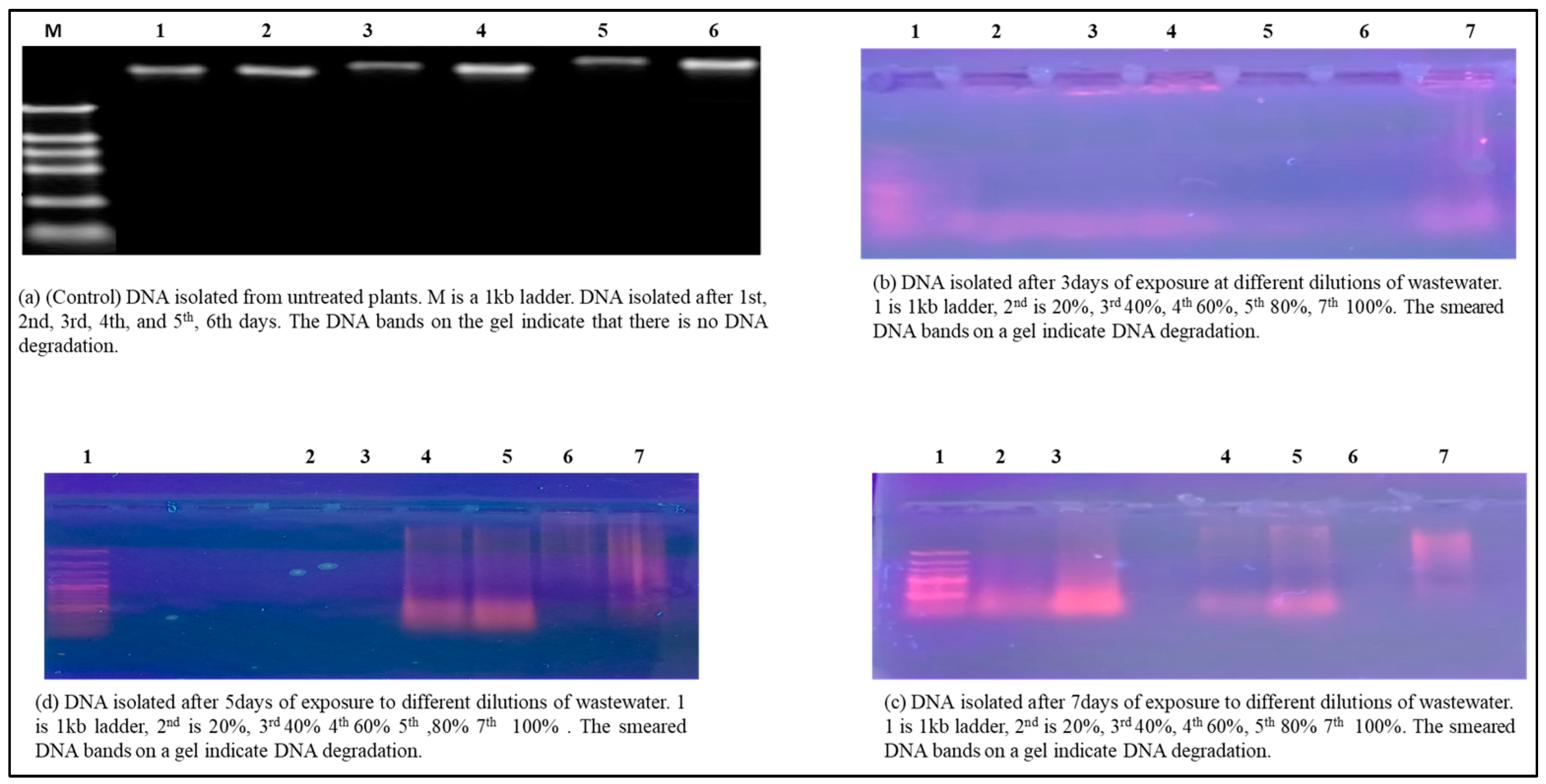
Genomic DNA was extracted using the modified CTAB method. The A260/280 ratios ranged from 1.68 to 1.89, indicating acceptable DNA purity. DNA integrity was assessed through agarose gel electrophoresis alongside a 1 kb ladder. High-molecular-weight genomic DNA bands were observed in the control and at 3, 5, and 7 days after exposure to wastewater dilution (Figure 4).

3.4.2. Damaged DNA Analysis by Comet Assay

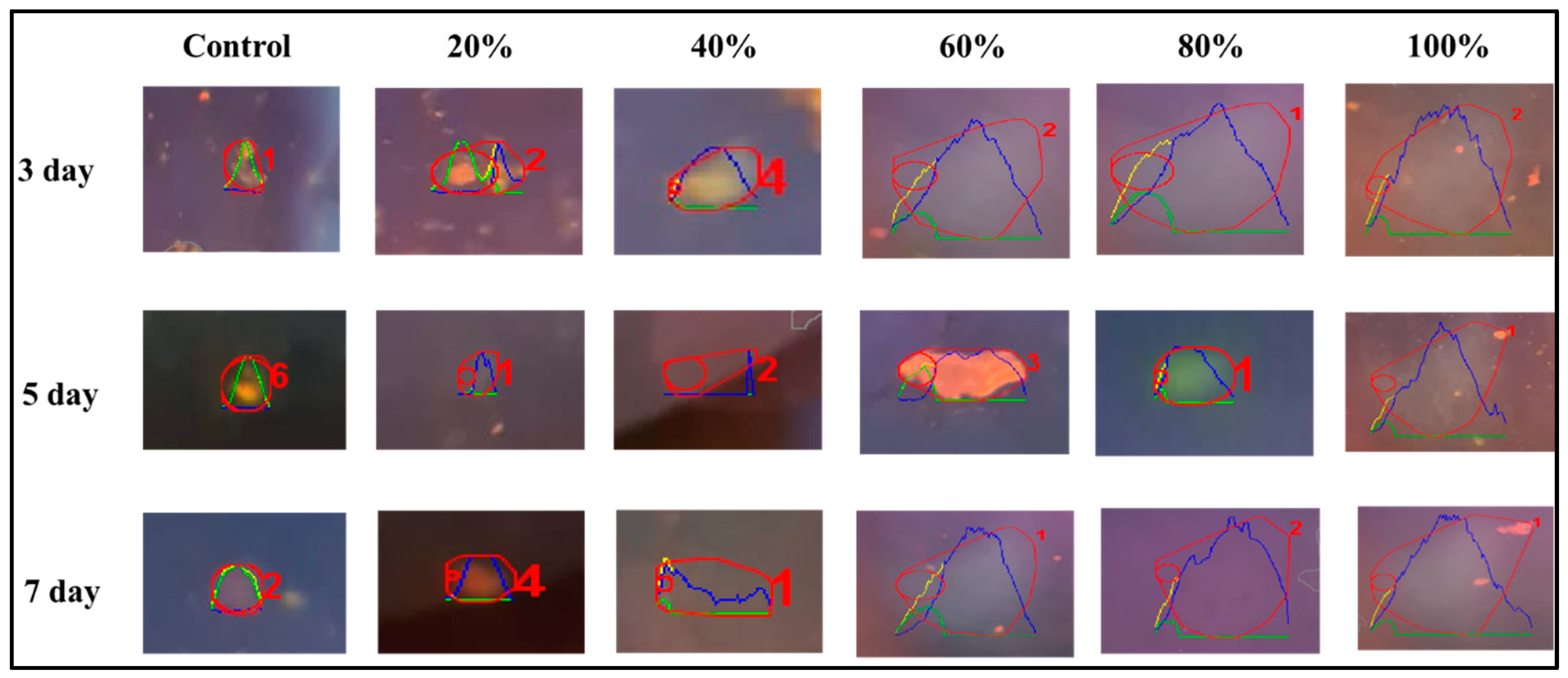
The comet assay results showed a clear dose- and time-dependent increase in DNA damage in A. cepa exposed to wastewater from food processing industries. Lower concentrations (control and 20%) showed minimal DNA damage, whereas substantial increases were observed at 60%, 80%, and 100%. DNA damage was assessed based on head and tail length, where a larger head indicates intact DNA and a longer tail reflects higher fragmentation. The time duration also affected the DNA damage. There are two points, i.e., head and tail length. The bigger head size indicates less DNA damage, and the larger tail indicates more DNA damage (Figure 5).
On day 3, the comet assay showed a clear concentration-dependent increase in DNA damage in A. cepa root cells exposed to food-processing wastewater. Control cells exhibited intact nuclei, with 99.93% of DNA in the head, negligible tail DNA (0.06%), and a tail length of zero, indicating minimal genotoxic stress. In contrast, exposure to 20% and 40% wastewater caused a sharp reduction in head DNA (2% and 0%) and a corresponding increase in tail DNA (97.99% and 100%), accompanied by increased tail length (14–29 µm) and tail moment (13.71–29 a.u.). DNA damage intensified further at higher concentrations (60–100%), where tail DNA exceeded 82% and tail length increased markedly from 73 to 112 µm. The highest genotoxic effect was observed at 100% wastewater, with 96.69% tail DNA, a tail moment of 108.3 a.u., an Olive tail moment of 58.01 a.u., and an extended comet length of 136 µm (Table 2).
On day 5, Control cells showed minimal genotoxicity, with most DNA retained in the head (96.54%), low tail DNA (3.45%), and negligible tail length and tail moment, indicating intact nuclei. In contrast, wastewater treatment resulted in a sharp decline in head DNA and a corresponding increase in tail DNA, particularly at 40–100% concentration, where tail DNA exceeded 87% and reached up to 98.42%. This shift was accompanied by substantial increases in Olive tail moment (from 5.87 to 65.24 a.u.), tail moment (4.24 to 121.72 a.u.), and tail length (13 to 125 µm), reflecting extensive DNA fragmentation. The greatest genotoxic effects were observed at 80% and 100% wastewater, with markedly elongated comet lengths (127–149 µm) (Table 3).
On day 7, Control cells largely retained intact nuclei, with most DNA remaining in the head (92.52%) and minimal tail DNA (7.47%), reflecting low genotoxic stress. In contrast, all wastewater treatments caused a dramatic shift in DNA from the head to the tail region. At concentrations of 20–100%, head DNA sharply declined to below 11%, while tail DNA increased to more than 89%, reaching a maximum of 99.86% at 20% and remaining above 97% at higher concentrations. This redistribution was accompanied by pronounced increases in Olive tail moment (8.98–74.26 a.u.), tail moment (19.9–150.48 a.u.), and tail length (20–154 µm), indicating extensive DNA strand breaks and fragmentation. Comet length also increased markedly with concentration, reaching a maximum of 182 µm at 100% wastewater (Table 4).

4. Discussion

The reuse of industrial wastewater for irrigation is a widespread global practice, with nearly one-tenth of the world’s population relying on it for agricultural purposes [25]. In regions such as Hanoi, Vietnam, wastewater irrigation supports up to 80% of vegetable production [26]. However, untreated wastewater from food-processing industries often contains synthetic additives and preservatives, posing substantial environmental hazards and genotoxic risks.
The present findings revealed that the wastewater’s physicochemical analysis showed elevated COD, BOD, EC, and TDS levels, along with an acidic pH. These conditions, particularly at higher concentrations, significantly inhibited the growth of A. cepa. The BOD (350 mg/L) and COD (499 mg/L) values exceeded permissible limits, reducing oxygen availability in the rhizosphere and restricting microbial activity and root development [27]. High EC (1170 µS/cm) and TDS (575 mg/L) further impaired seed germination and root elongation, consistent with salinity-induced stress reported in earlier studies [28]. Such physicochemical conditions may impair soil structure, salinity balance, and plant–water relations when wastewater is used for irrigation. Temperature and pH also contributed to toxicity: the recorded temperature (27–28 °C) may have enhanced ionization and increased reactive ion concentrations, while the acidic pH (4.63–5.60) is known to disrupt nutrient uptake and enzymatic processes in plants. Although some food-processing effluents exhibit neutral pH [29], the persistent acidity observed here suggests a high load of preservatives and organic acids.
The present study confirmed the presence of sorbic acid, citric acid, benzoic acid, BHA and BHT in industrial effluents through HPLC analysis. These commonly used food-processing additives are known to influence plant physiology and soil microbial activity. Benzoic acid can disrupt soil microbial communities and reduce enzymatic activity, ultimately suppressing plant growth [12]. Sorbic and citric acids have been reported to lower soil pH, inhibit biomass accumulation, and adversely affect microbial structure [30]. BHT is a synthetic antioxidant. In the present findings, onion root growth was significantly inhibited at higher effluent concentrations (80% and 100%). These results are consistent with those of [31], who demonstrated that root length sensitivity is a reliable cytogenetic marker of environmental toxicity. The inhibition is primarily due to reduced mitotic activity in meristematic zones, likely caused by the preservative-induced disruption of cell division. Another reason for the inhibition of root length might be due to chemical constituents that interfere with cell division. The root color changed from light brown to dark brown. These progressive discolorations reflect increasing phytotoxic stress.
Genotoxicity was higher on days 3, 5, and 7 at higher wastewater dilution concentrations. The current findings reveal that long comet tails at higher concentrations indicate substantial single-strand DNA breaks, thereby validating the hypothesis that food processing wastewater possesses a strong genotoxic potential. The strong correlation between tail length and effluent concentration supports the applicability of A. cepa as a bioindicator of genotoxicity. The comet assay, due to its sensitivity and reproducibility, can serve as a reliable screening tool for environmental monitoring of industrial effluents [32]. These findings align with previous studies showing DNA damage in various organisms exposed to wastewater [6]. The DNA damage caused by all wastewater concentrations was apparently different from that in the control. No DNA damage was observed in the A. cepa exposed to the control (0%). Chromosomal abnormalities, such as stickiness, laggards, and bridges, observed in A. cepa roots, are consistent with genotoxic stress induced by wastewater [33]. Furthermore, food additives and other pollutants in wastewater, such as nitrates, can be converted to nitrites, which can form methaemoglobin in humans, impairing oxygen transport and causing severe health effects [34]. The different compounds in wastewater exhibit genotoxic effects in mammalian systems, suggesting that similar mechanisms of DNA damage are present in plants. This study demonstrates that A. cepa–based assays effectively detect the genotoxic potential of industrial wastewater. Costea et al. [35] described the comet assay as a valuable monitoring tool to support Toxicity Identification and Reduction Evaluations (TIE/TRE), enabling the identification and removal of genotoxic constituents before effluent discharge.

5. Conclusions

This study reveals pronounced genotoxic and phytotoxic effects of wastewater from the food processing industry on A. cepa Physicochemical analyses indicated high contaminant loads, which impaired root growth and DNA damage in A. cepa. Comet assay results demonstrated a clear concentration- and time-dependent increase in DNA damage, highlighting the hazardous impact of untreated food industrial effluents on plant genetic integrity and root growth. These findings underscore the urgent need for stringent monitoring and effective treatment of food-processing wastewater before it is used in agriculture. Implementing appropriate remediation strategies, such as advanced filtration and bioremediation, is crucial for minimizing environmental risks and protecting ecosystems and biodiversity.

Author Contributions

Conceptualization, M.T.; writing—original draft preparation, M.L. and Z.M.; writing—review and editing. W.A. and M.I.; formal analysis. H.S. and N.S.; investigations. A.J. and S.R.; data curation, formal analysis. A.R., A.T. and A.A.; visualization and validation. I.F.A. and M.U.F.A.; supervision and review. All authors have read and agreed to the published version of the manuscript.

Funding

This research received no external funding.

Data Availability Statement

The original contributions presented in this study are included in the article. Further inquiries can be directed to the corresponding author.

Conflicts of Interest

The authors declare that they have no conflicts of interest.

Abbreviations

The following abbreviations are used in this manuscript:
HPLCHigh-performance liquid chromatography
CODChemical oxygen demand
BODBiological oxygen demand
BHAButylated hydroxyanisole
BHTButylated Hydroxytoluene
ECElectrical conductivity
TDSTotal dissolved solids
CTABCetyltrimethylammonium bromide

References

  1. Mishra, H. Environmental degradation and impacts on agricultural production: A challenge to urban sustainability. In Sustainable Urban Environment and Waste Management: Theory and Practice; Springer Nature: Singapore, 2025; pp. 53–92. [Google Scholar]
  2. Dhopte, D.N. Assessment of quality of water through physicochemical parameters—A review. Int. Res. J. Eng. Technol. 2021, 8, 945–951. [Google Scholar]
  3. Gezahegn, A.; Merga, L.B.; Mammo, S. Industrial effluents caused environmental pollution and its potential ecological and human health impacts in Ethiopia: A review. Waste Manag. Bull. 2025, 3, 100240. [Google Scholar] [CrossRef]
  4. Turkoglu, S. Genotoxicity of five food preservatives tested on root tips of Allium cepa L. Mutat. Res./Genet. Toxicol. Environ. Mutagen. 2007, 626, 4–14. [Google Scholar] [CrossRef]
  5. Mortula, M.; Shabani, S. Removal of TDS and BOD from synthetic industrial wastewater via adsorption. Int. Proc. Chem. Biol. Environ. Eng. 2012, 41, 166–170. [Google Scholar]
  6. John, A.; Luqman, M.; Muhammad, S.; Hanif, U.; Sardar, A.A.; Ali, S.; Hasnain, A.; Tufail, M.; Khan, Z.I.; Hussain, M.I. Genotoxicity of synthetic food colors on nitrogen-fixing bacteria in agricultural lands irrigated with wastewater of corresponding industries. Sustainability 2023, 15, 2897. [Google Scholar] [CrossRef]
  7. Kalsoom, S.; Abbas, W.; Luqman, M.; Mehmood, Z.; Iqbal, M.; Shah, H.; Amjad, N.S.; Hasnain, A.; Yameen, B.; Tufail, M.; et al. Analysis of Synthetic Food Colors and Food Preservatives Inducing Genotoxicity in Garlic (Allium sativum L.) Root Tip Cells. Pol. J. Environ. Stud. 2025. [Google Scholar] [CrossRef] [PubMed]
  8. Tianli, Y.; Jiangbo, Z.; Yahong, Y. Spoilage by Alicyclobacillus bacteria in juice and beverage products: Chemical, physical, and combined control methods. Compr. Rev. Food Sci. Food Saf. 2014, 13, 771–797. [Google Scholar] [CrossRef]
  9. Bajpai, V.K.; Shukla, S.; Kang, S.C. Chemical composition and antifungal activity of essential oil and various extracts of Silene armeria L. Bioresour. Technol. 2008, 99, 8903–8908. [Google Scholar]
  10. Cigerci, I.H.; Cenkci, S.; Kargıoglu, M.; Konuk, M. Genotoxicity of Thermopsis turcica on Allium cepa L. roots revealed by alkaline comet and random amplified polymorphic DNA assays. Cytotechnology 2016, 68, 829–838. [Google Scholar] [CrossRef] [PubMed]
  11. World Health Organization (WHO); Food and Agriculture Organization (FAO). Global Situation of Pesticide Management in Agriculture and Public Health: Report of a 2018 WHO–FAO Survey; FAO: Rome, Italy, 2019. [Google Scholar]
  12. Liu, J.; Li, X.; Jia, Z.; Zhang, T.; Wang, X. Effect of benzoic acid on soil microbial communities associated with soilborne peanut diseases. Appl. Soil Ecol. 2017, 110, 34–42. [Google Scholar] [CrossRef]
  13. Ren, J.; Li, Z.; Li, X.; Yang, L.; Bu, Z.; Wu, Y.; Li, Y.; Zhang, S.; Meng, X. Exploring the mechanisms of the antioxidants BHA, BHT, and TBHQ in hepatotoxicity, nephrotoxicity, and neurotoxicity from the perspective of network toxicology. Foods 2025, 14, 1095. [Google Scholar] [CrossRef] [PubMed]
  14. Bekir, S.; Zoghlami, R.I.; Boudabbous, K.; Khelil, M.N.; Moussa, M.; Ghrib, R.; Nahdi, O.; Trabelsi, E.; Bousnina, H. Soil physicochemical changes as modulated by treated wastewater after medium- and long-term irrigations: A case study from Tunisia. Agriculture 2022, 12, 2139. [Google Scholar] [CrossRef]
  15. Ashie, W.B.; Awewomom, J.; Ettey, E.N.Y.O.; Opoku, F.; Akoto, O. Assessment of irrigation water quality for vegetable farming in peri-urban Kumasi. Heliyon 2024, 10, e24913. [Google Scholar] [CrossRef]
  16. Vymazal, J. Constructed wetlands for treatment of industrial wastewaters: A review. Ecol. Eng. 2014, 73, 724–751. [Google Scholar] [CrossRef]
  17. Pandey, R.M.; Upadhyay, S.K. Food Additive; Division of Genetics, Plant Breeding & Agrotechnology, National Botanical Research Institute: Lucknow, India, 2012; p. 34455. [Google Scholar]
  18. Farheen, J.; Mansoor, S.; Abid, M. Genotoxic appraisal of widely used food colour additives on model plant Allium cepa root tip cells. Int. J. Innov. Sci. 2021, 7, 174. [Google Scholar]
  19. Pandey, H.; Kumar, V.; Roy, B.K. Assessment of genotoxicity of some common food preservatives using Allium cepa L. as a test plant. Toxicol. Rep. 2014, 1, 300–308. [Google Scholar] [CrossRef]
  20. Kumar, G.; Pandey, S.; Tiwari, N.K.; Pandey, P. Analysis of genotoxicity induced by food dyes in root meristem of Salvia hispanica L. Open J. Genet. 2022, 12, 1–10. [Google Scholar] [CrossRef]
  21. Dey, S.; Nagababu, B.H. Applications of food color and bio-preservatives in food and their effects on human health. Food Chem. Adv. 2022, 1, 100019. [Google Scholar] [CrossRef]
  22. Dutta, J.; Ahmad, A.; Singh, J. Study of industrial effluents–induced genotoxicity on Allium cepa L. Caryologia 2018, 71, 139–145. [Google Scholar] [CrossRef]
  23. Fetaw, A.S.; Haile, M.Z.; Washe, A.P. Assessing the Chemical Composition of Wastewater Released from Hawassa Castel Brewery Plant and its Impact on Groundwater. J. Waste Manag. Xenobiot. 2021, 4, 1–15. [Google Scholar]
  24. Yameen, B.; Abbas, W.; Awan, M.U.F.; Tahir, A.; Mohammad, S.; Shoib, M. rbcL marker-based identification and phylogenetic analysis of Kasuri methi (Trigonella foenum-graecum L.): A native plant of Kasur District, Punjab, Pakistan. Genet. Resour. Crop Evol. 2025, 72, 1663–1673. [Google Scholar] [CrossRef]
  25. Ungureanu, N.; Vlăduț, V.; Voicu, G. Water scarcity and wastewater reuse in crop irrigation. Sustainability 2020, 12, 9055. [Google Scholar] [CrossRef]
  26. Ensink, J.; Mahmood, T.; van der Hoek, W.; Raschid-Sally, L.; Amerasinghe, F. A nationwide assessment of wastewater use in Pakistan: An obscure activity or a vitally important one? Water Policy 2004, 6, 197–206. [Google Scholar] [CrossRef]
  27. Smagin, A.V.; Smagina, M.V.; Sadovnikova, N.B. Biological oxygen demand in soils and litters. Eurasian Soil Sci. 2018, 51, 296–308. [Google Scholar] [CrossRef]
  28. Ditzler, C.A.; Tugel, A.J. Soil quality field tools: Experiences of USDA-NRCS Soil Quality Institute. Agron. J. 2002, 94, 33–38. [Google Scholar] [CrossRef]
  29. Ohimain, E.I.; Izah, S.C.; Jenakumo, N. Physicochemical and microbial screening of palm oil mill effluents for amylase production. Greener J. Biol. Sci. 2013, 3, 307–318. [Google Scholar] [CrossRef]
  30. Ibrahim, E.A. Effect of citric acid on phytoextraction potential of Cucurbita pepo, Lagenaria siceraria, and Raphanus sativus plants exposed to multi-metal stress. Sci. Rep. 2023, 13, 13070. [Google Scholar] [CrossRef]
  31. Samuel, O.B.; Osuala, F.I.; Odeigah, P.G. Cytogenotoxicity evaluation of two industrial effluents using Allium cepa assay. Afr. J. Environ. Sci. Technol. 2010, 4, 021–027. [Google Scholar]
  32. Alias, C.; Zerbini, I.; Zani, C.; Feretti, D. The Allium cepa comet assay for environmental sample assessment: A scoping review. Mutagenesis 2024, 39, 219–237. [Google Scholar] [CrossRef] [PubMed]
  33. Yildiz, M.; Ciğerci, I.H.; Konuk, M.; Fidan, A.F.; Terzi, H. Determination of genotoxic effects of copper sulphate and cobalt chloride in Allium cepa root cells by chromosome aberration and comet assays. Chemosphere 2009, 75, 934–938. [Google Scholar] [CrossRef]
  34. Amit, S.K.; Uddin, M.M.; Rahman, R.; Islam, S.M.R. A review on mechanisms and commercial aspects of food preservation and processing. Agric. Food Secur. 2017, 6, 51. [Google Scholar] [CrossRef]
  35. Costea, M.A.; Rosan, C.A.; Laslo, V.; Agud, E.; Purcarea, C.; Vicas, S.I. The comet assay as a sustainable method for evaluating the genotoxicity caused by the soluble fraction derived from sewage sludge on diverse cell types, including lymphocytes, coelomocytes, and Allium cepa L. cells. Sustainability 2024, 16, 457. [Google Scholar] [CrossRef]
Figure 1. Standard HPLC chromatograms (a) sorbic acid, citric acid and benzoic acid, (b) BHA and BHT.
Water 18 00435 g001
Figure 2. Observation of the color of the root of A. cepa for (a) day 3, (b) day 5, and (c) day 7.
Water 18 00435 g002
Figure 3. Root length of A. cepa roots after 3, 5, and 7 days.
Water 18 00435 g003
Figure 4. Qualitative analysis of DNA through agarose gel electrophoresis compared with control samples.
Water 18 00435 g004
Figure 5. The representation of DNA damage is through the comet assay.
Water 18 00435 g005
Table 1. Physicochemical parameters of wastewater from food processing industries.
ParametersAverage
Temperature (°C)27.97 ± 0.61
pH5.20 ± 0.50
COD (mg/L)499 ± 305.03
BOD (mg/L)350.00 ± 224.76
EC (µS/cm)1170.02 ± 706.75
TDS (mg/L)575.53 ± 347.97
Table 2. Comet assay observation on day 3 of incubation.
3rd DayControl20%40%60%80%100%
Head DNA (%)99.93 ± 0.072 ± 0.280 ± 017.67 ± 0.4425.27 ± 0.383.30 ± 0.23
Tail DNA (%)0.06 ± 0.0597.99 ± 0.34100 ± 0.2382.32 ± 0.4774.72 ± 0.4796.69 ± 0.34
Olive movement (a.u.)0.006 ± 0.0017.83 ± 0.3015 ± 0.4637.87 ± 0.5629.88 ± 0.4558.01 ± 0.64
Tail moment (a.u.)0 ±013.71 ± 0.4629 ± 0.5160.09 ± 0.56 59.77 ± 0.56108.3 ± 0.80
Tail length (µm)0 ± 014 ± 0.5729 ± 0.5773 ± 1.1580 ± 1.15112 ± 1.13
Comet length (µm)31 ± 1.1324 ± 1.1437 ± 1.25103 ± 1.73104 ± 1.19136 ± 1.12
Table 3. Comet assay observation on day 5 of incubation.
5th DayControl20%40%60%80%100%
Head DNA (%)96.54 ± 0.2867.37 ± 0.571.57 ± 0.178.35 ± 0.4012.83 ± 0.402.61 ± 0.17
Tail DNA (%)3.45 ± 0.2832.62 ± 0.5998.42 ± 0.2391.64 ± 0.4687.16 ± 0.5197.38 ± 0.23
Olive movement (a.u.)0.13 ± 0.015.87 ± 0.2314.76 ± 0.3441.76 ± 0.5742.71 ± 0.5765.24 ± 0.69
Tail moment (a.u.)0 ± 04.24 ± 0.2829.52 ± 0.5774.23 ± 0.8672.34 ± 0.80121.72 ± 1.15
Tail length (µm)0 ± 013 ± 0.5730 ± 0.5781 ± 1.1583 ± 1.15125 ± 1.73
Comet length (µm)30 ± 1.1545 ± 1.7334 ± 1.15115 ± 2.30127 ± 2.30149 ± 2.88
Table 4. Comet assay observation on day 7 of incubation.
7th DayControl20%40%60%80%100%
Head DNA (%)92.52 ± 0.340.13 ± 0.015.26 ± 0.2310.81 ± 0.342.89 ± 0.172.28 ± 0.17
Tail DNA (%)7.47 ± 0.3499.86 ± 0.2894.73 ± 0.3489.18 ± 0.4697.10 ± 0.3497.71 ± 0.28
Olive movement (a.u.)0.37 ± 0.028.98 ± 0.2512.31 ± 0.3446.37 ± 0.9254.37 ± 0.6374.26 ± 0.69
Tail movement (a.u.)0 ± 019.9 ± 0.5738.8 ± 0.5777.59 ± 0.8288.36 ± 0.92150.48 ± 1.15
Tail length (µm)0 ± 020 ± 0.5741 ± 0.5487 ± 1.1591 ± 1.15154 ± 1.73
Comet length (µm)29 ± 0.5724 ± 0.5647 ± 1.15133 ± 1.72111 ± 1.73182 ± 2.30
Disclaimer/Publisher’s Note: The statements, opinions and data contained in all publications are solely those of the individual author(s) and contributor(s) and not of MDPI and/or the editor(s). MDPI and/or the editor(s) disclaim responsibility for any injury to people or property resulting from any ideas, methods, instructions or products referred to in the content.