Article

Understanding Spatiotemporal Inundation Dynamics in the Sundarbans Mangroves Through Hydrodynamic Modelling


1
Environment Research Unit, Commonwealth Scientific and Industrial Research Organisation, Canberra, ACT 2601, Australia
2
Institute of Water Modelling, Dhaka 1230, Bangladesh
*
Author to whom correspondence should be addressed.
Water 2026, 18(3), 430; https://doi.org/10.3390/w18030430
Submission received: 24 December 2025 / Revised: 2 February 2026 / Accepted: 4 February 2026 / Published: 6 February 2026

Abstract

Tidal inundation plays a critical role in maintaining the ecosystem services of the Sundarbans mangrove forest. In this study, we configured and calibrated a coupled one-dimensional (1D) river network and two-dimensional (2D) floodplain hydrodynamic model for the Sundarbans in Bangladesh. Model calibration was performed using gauged water levels, inundation maps, and Google Earth (Version 7.3.6) imagery. Using the calibrated model, we assessed potential changes in inundation extent, depth, and duration across the Sundarbans for varying freshwater inflow and tidal height scenarios. Results show variation in inundation extent, depth, and duration spatially and temporarily across the Sundarbans. Inundation is relatively less during February-March (end of the dry season) and high in July-August (mid-wet season). Approximately 3158 km2 (85.1%) of the Sundarbans experiences at least one inundation in March, increasing to about 3658 km2 (98.6%) in July. Although a large proportion of the Sundarbans inundate during daily tidal cycles, the mean inundation depth remains shallow (0.24 to 0.33 m) due to flat topography. The influence of freshwater inflow on inundations is small (<2%). In contrast, the impacts of tidal magnitude are substantial on both inundation extent and depth. These findings provide valuable insights on inundation dynamics for understanding the hydrological and ecological functioning of the Sundarbans.

1. Introduction

Mangrove forests are among the most productive and valuable ecosystems on Earth, providing a wide range of ecosystem services at both local and global scales [1,2]. They serve as natural buffers against coastal erosion, storm surges, and sea-level rise (SLR) [3,4,5]. Mangroves act as critical carbon sinks, sequestering large amounts of carbon in their biomass and waterlogged soils, thereby contributing significantly to climate change mitigation [6,7,8]. Ecologically, they support high biodiversity, offering breeding, nursery, and feeding grounds for numerous species of fish, crustaceans, and birds, many of which are vital to coastal livelihoods and global fisheries [9,10,11]. Additionally, mangroves filter pollutants, improve water quality, and stabilise sediments, maintaining the health of adjacent marine and estuarine ecosystems [12,13]. Beyond their ecological functions, mangrove forests also provide socioeconomic benefits through timber, honey, and ecotourism, underscoring their importance in sustaining both environmental integrity and human well-being worldwide [14].
The Sundarbans mangrove forest in the Ganges Delta, a UNESCO heritage site, is the world’s largest continuous mangrove forest, covering around 6000 km2 in Bangladesh and 4000 km2 in India [15,16]. The Sundarbans account for about 51% of Bangladesh’s total reserved forest area and form a transition between the freshwater of rivers originating from the Ganges and the saline water of the Bay of Bengal [17]. This unique ecosystem is home to a wide variety of plant and animal species, including 300 plant species and approximately 1760 animal species. The Sundarbans also hold significant cultural and economic importance, supporting the livelihoods of coastal residents who rely on it for agriculture, fishing, and forestry-related employment [18,19]. It provides several ecosystem services such as provisioning services (e.g., forest products, food), cultural services (e.g., tourism, worship, educational research) and supporting services (e.g., nursery ground of fish, nutrient cycling, habitat of biodiversity). The Sundarbans serve critical ecosystem functions by regulating coastal flooding and erosion, protecting communities from cyclones and tidal surges [10,20]. It also plays a significant role in carbon sequestration, helping to mitigate climate change [21].
The ecosystem services of the Sundarbans are threatened by both anthropogenic and natural factors such as SLR, rainfall extremes and an increase in the magnitude and frequency of cyclones, flooding, sedimentation and changes to the salinity regime. The Sundarbans have experienced considerable degradation and about 8507 ha of mangrove has been lost in the past 35 years [22]. With SLR, together with reduced freshwater inflows from upstream rivers, there is an apparent trend of increasing soil and water salinity in the region, adversely affecting mangrove health [23], and fish growth and productivity [24,25]. It is anticipated that global climate change and increasing economic activities will negatively impact the mangroves and ecosystem services of the Sundarbans. Climate change and SLR are projected to lead to significant habitat loss for the Bengal tiger in the Sundarbans [26]. Consequently, the livelihoods of millions of people in the Sundarbans and neighbouring areas are under threat [27].
Tidal inundation is the fundamental hydrological process governing the structure, functioning, and long-term sustainability of the Sundarbans in Bangladesh [15,17]. The periodic flooding driven by tides regulates sediment and nutrient delivery, controls salinity gradients, and underpins mangrove productivity and species zonation, thereby maintaining overall forest health. Tidal inundation also sustains critical aquatic and intertidal habitats, creating nursery grounds that support diverse fish populations and coastal fisheries [9,12,24]. Influenced by semidiurnal tides from the Bay of Bengal with tidal amplitudes ranging from 2 to 3 m [28,29], large areas of the Sundarbans experience regular flooding [30,31]. Seasonal variations in water levels further modulate inundation depth, duration, and frequency, which in turn shape mangrove distribution, growth, and resilience. Any disruption to this finely balanced inundation regime—whether through upstream freshwater diversion, sea-level rise (SLR), or climate-driven changes in hydrology—can substantially impair the ecosystem’s capacity to deliver essential services [26,32,33]. In recent decades, tidal inundation dynamics in the Sundarbans have been increasingly altered by anthropogenic interventions, including upstream flow regulation and the construction of embankments and polders. These modifications disturb natural flow pathways and sediment exchange, often intensifying salinity intrusion and reducing the adaptive capacity of the mangrove system to SLR [23,34,35]. Given the central role of inundation in sustaining ecological processes, a robust understanding of its spatial and temporal variability is essential for managing and conserving this sensitive coastal environment.
Despite its importance, quantitative studies on characterising tidal inundation dynamics across the Sundarbans are still limited [15]. Existing studies have primarily focused on potential inundation associated with SLR, subsidence, or extreme events. For example, Kanan, et al. [36] estimated inundation extent using a static comparison of land elevation and water levels, while Sakib et al. [5] and Sahana and Sajjad [37] investigated storm surge inundation using hydrodynamic modelling and elevation overlays, respectively. Payo, et al. [38] employed a conceptual sea-level-rise model to assess potential mangrove loss. However, most previous assessments rely on simplified approaches, limited field observations, or coarse-resolution satellite data, with relatively few studies employing high-resolution hydrodynamic models capable of resolving the full tidal inundation cycle at fine spatial and temporal scales. In this study, we have configured and calibrated a two-dimensional hydrodynamic model to assess inundation dynamics at fine-scale spatial and temporal resolutions. The key novelties of this study are: (i) development of a sub-daily time step hydrodynamic model using the MIKE FLOOD modelling platform, (ii) quantification of how tidal amplitude in the Bay of Bengal influences inundation extent and frequency across the Sundarbans and (iii) assessment of the impacts of altered upstream freshwater flows on inundation patterns.

2. Study Area

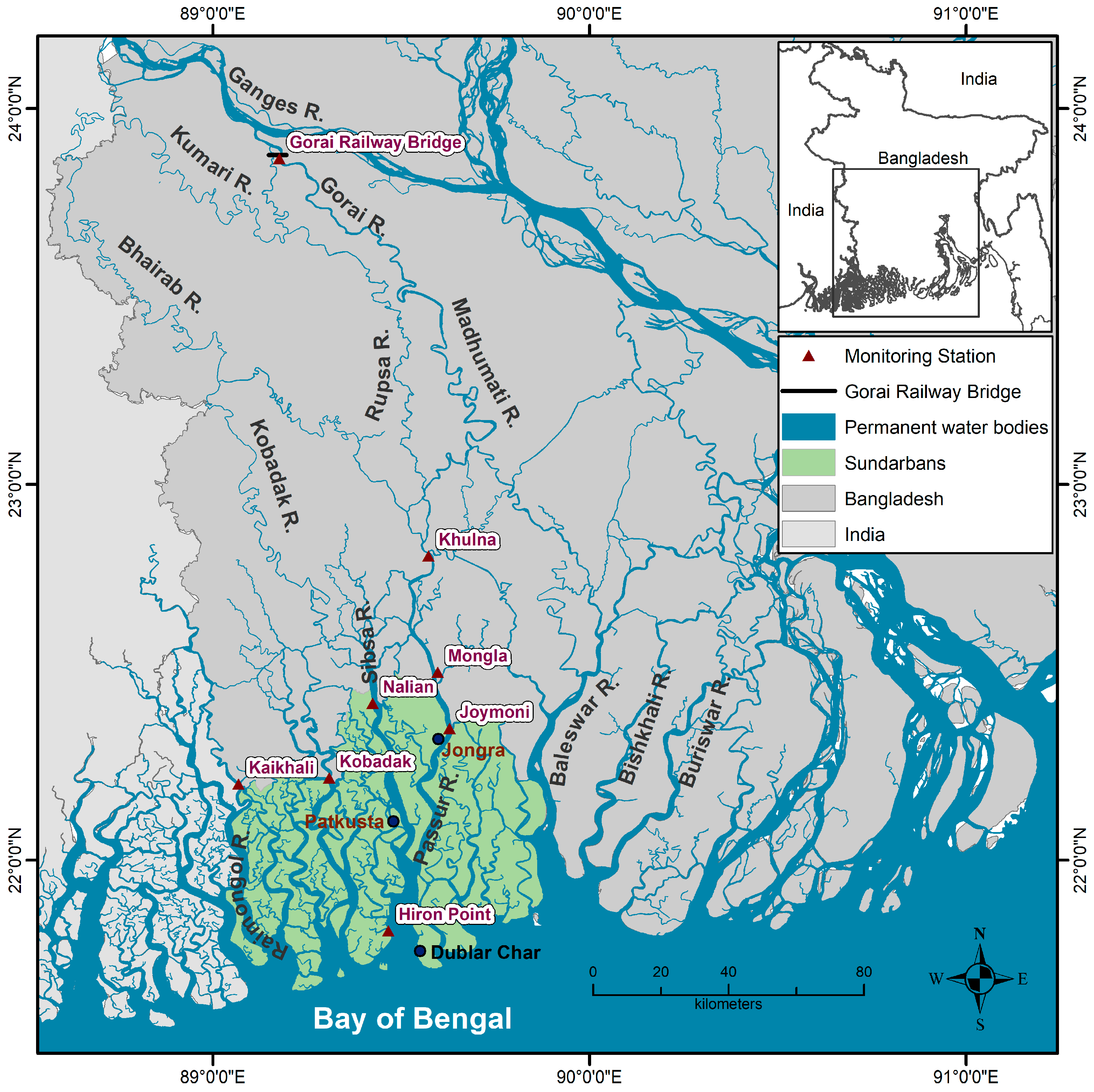
The Sundarbans is situated within the lower deltaic plains of the Ganges–Brahmaputra–Meghna (GBM) river system and spans the coastal regions of southern Bangladesh and eastern India, forming the world’s largest contiguous mangrove ecosystem [39]. Geographically, the forest extends between 21°27′30″ and 22°30′30″ N latitude and 87°55′01″ to 89°00′00″ E longitude, covering an area of approximately 10,000 km2 (Figure 1). Of this total extent, around 69% consists of land, while the remaining 31% is occupied by rivers, tidal creeks, estuaries, and other water bodies [40]. The Sundarbans exhibits a complex and dynamic geomorphology, characterised by an intricate mosaic of mudflats, coastal dunes, tidal creeks, islands, estuaries, river channels, inlets, and salt-tolerant mangrove forests, shaped by the interaction of fluvial, tidal, and marine processes [39,41].
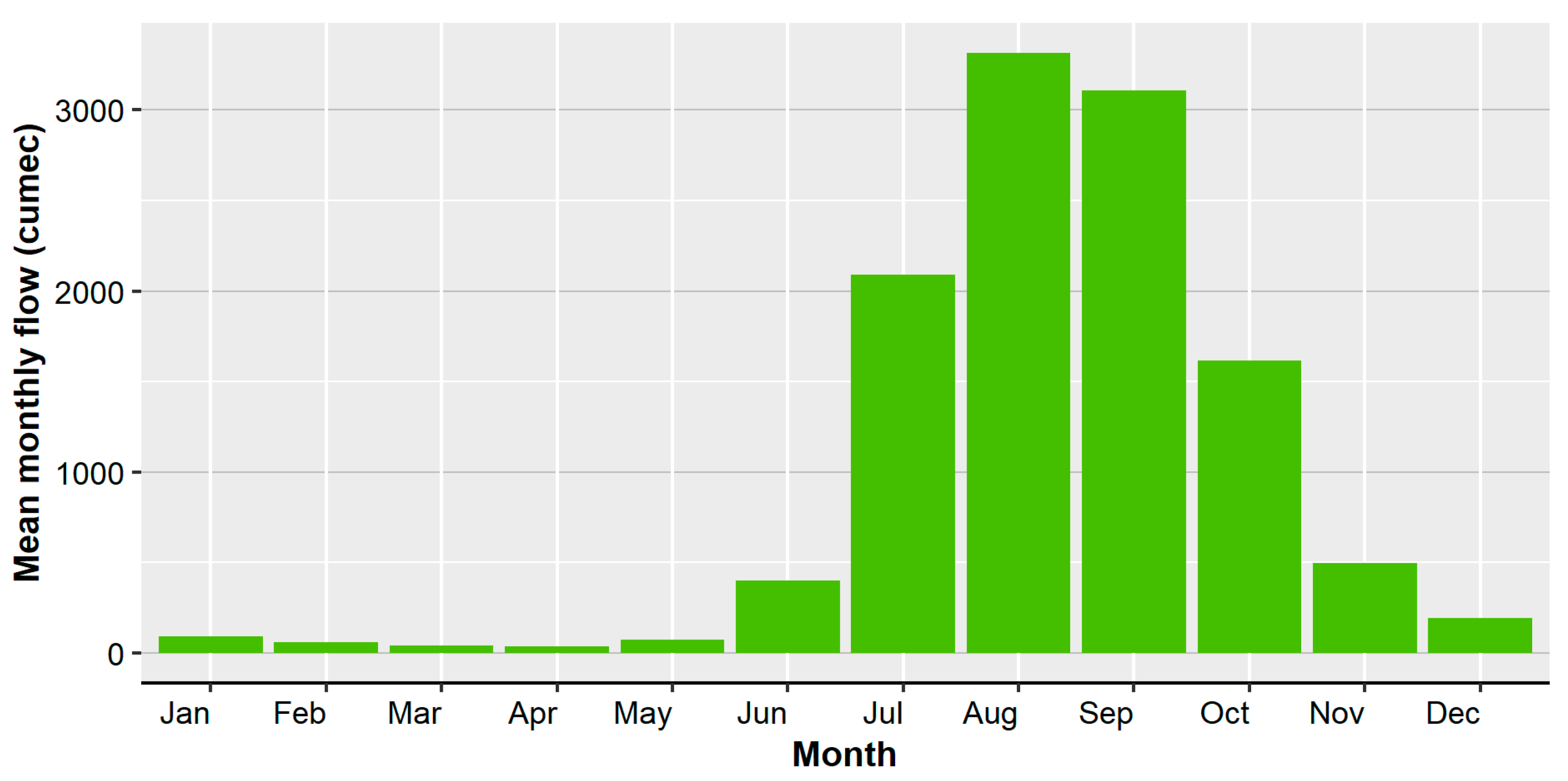
The hydrological regime of the Sundarbans is strongly governed by freshwater inflows from the Ganges River system [15,17]. The Gorai River, the principal distributary of the Ganges, serves as the most important freshwater source for the Sundarbans [42]. Gorai River discharge is highly seasonal, with approximately 88% of the annual flow occurring between July and October (Figure 2). Freshwater from the Gorai enters the Sundarbans primarily through the Passur and Sibsa Rivers, which ultimately drain into the Bay of Bengal (Figure 1). These river systems are vital for maintaining and/or enhancing ecological balance and mangrove health. Along the eastern boundary, the Baleswar River delineates the Sundarbans before discharging into the Bay of Bengal. The interaction between freshwater discharge and saline seawater generates a spatiotemporal salinity gradients, with higher salinity near the coast and progressively fresher conditions further inland [43].
Climatically, the Sundarbans experiences a tropical monsoonal climate characterised by three distinct seasons. The pre-monsoon summer (March–June) is typically hot and humid with intermittent rainfall, followed by the monsoon season (July–October), which brings intense and widespread precipitation. The winter months (November–February) are comparatively cool and dry [44,45,46]. Annual rainfall ranges from approximately 2000 mm in the eastern Sundarbans to about 1800 mm in the western region [47], with nearly 75% of total precipitation occurring during the monsoon, resulting in peak river discharge during this period. However, both the timing and intensity of monsoon rainfall have become increasingly variable, reflecting broader climatic shifts in the delta [48].
In addition to seasonal hydrological variability, the Sundarbans is highly exposed to tropical cyclones, storm surges, and tidal flooding, particularly during the pre-monsoon and post-monsoon periods. These extreme events frequently cause widespread inundation, erosion, and wind damage, exerting significant pressure on both natural ecosystems and human settlements. Over time, repeated cyclone impacts have played a major role in shaping the geomorphology and ecological resilience of the Sundarbans. Seasonal temperatures typically range from 12–24 °C during winter to 25–35 °C during summer, further influencing evapotranspiration, salinity dynamics, and mangrove productivity [49].

3. Hydrodynamic Modelling

3.1. Modelling Framework

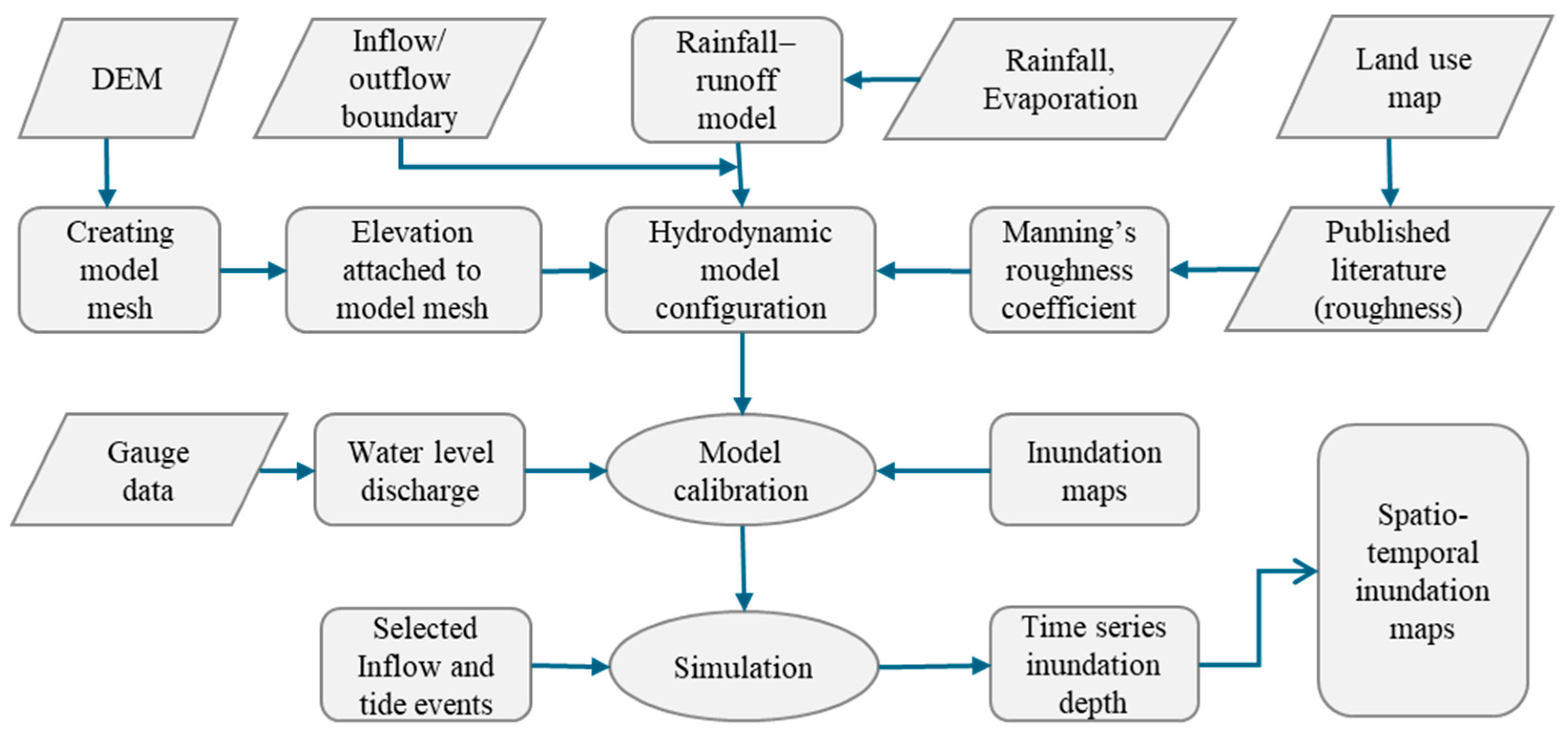
This study was conducted using a combination of a one-dimensional (1D) hydrodynamic model (MIKE 11) and a two-dimensional (2D) flexible mesh hydrodynamic model (MIKE 21 FM). The MIKE 11 model is based on Saint-Venant equations of mass and momentum and it simulates unsteady flow in rivers, channels, and floodplains [50]. MIKE 21 is based on depth-averaged Navier–Stokes equations for continuity and momentum and it simulates complex two-dimensional hydrodynamic processes such as lateral flow exchanges, floodplain inundation and tidal propagation in rivers, estuaries, coastal waters, and floodplains [51]. A conceptual rainfall–runoff model (MIKE 11 NAM) was used to estimate the sub-catchment scale runoff from rainfall and the MIKE 11 model was used to estimate the river flow by combining inflow from cross-boundary rivers and locally generated runoff. In this study, NAM model was executed separately, and the outputs were added to the MIKE 11 model as a local water source (point source as well as distributed source). The core of the hydrodynamic modelling is the 1D river network model for the entire southwest region of Bangladesh, and a 2D inundation for the Sundarbans. These two models were coupled using the MIKE FLOOD modelling platform. Figure 3 shows the overall framework of hydrodynamic model configuration and calibration. Topography, surface roughness, rainfall and river flow data are the main inputs to the model.

3.2. Model Inputs

3.2.1. Land Topography and River Bathymetry

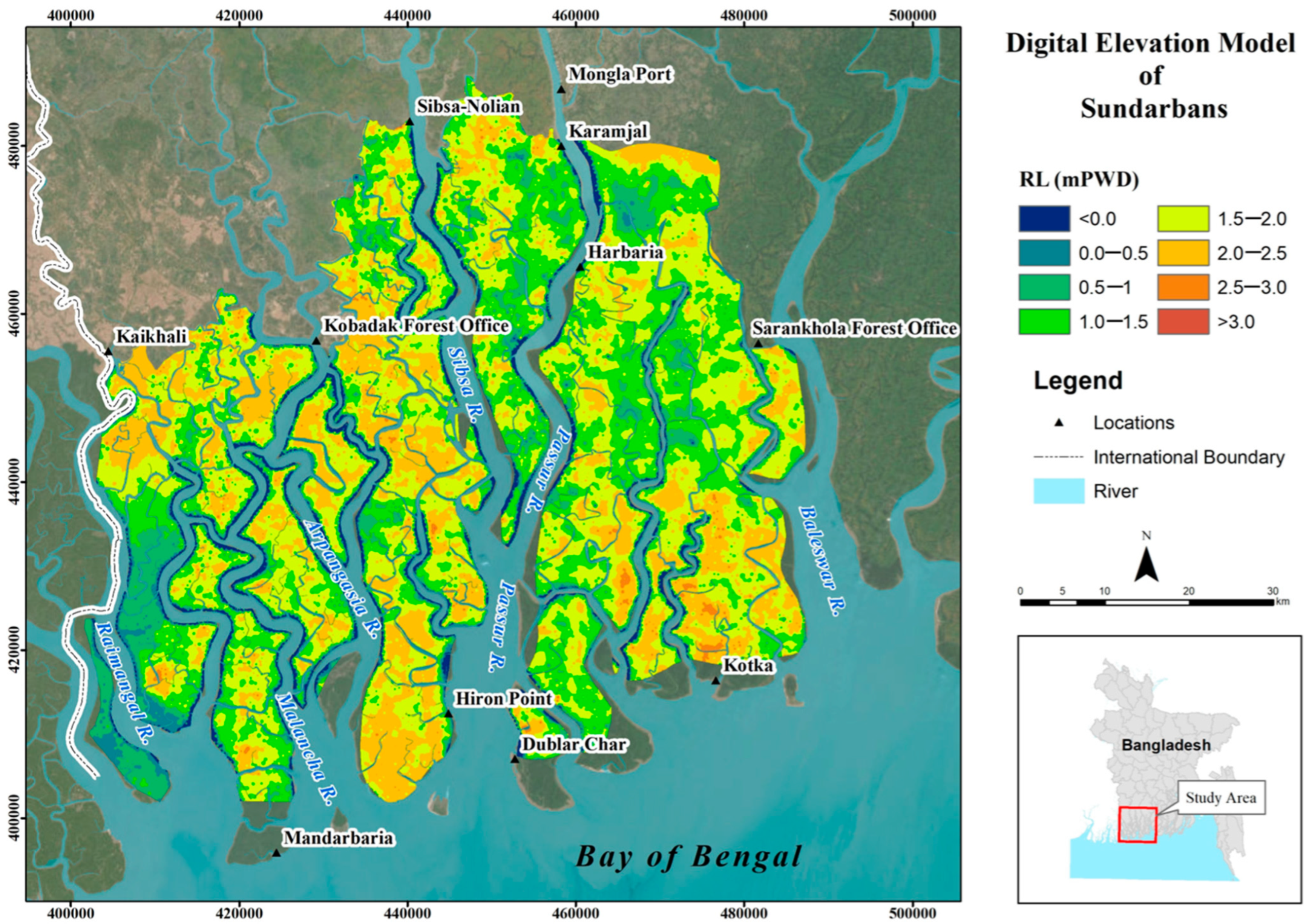
Topographic data are a critical input for any inundation modelling because accurate representation of fine-scale features such as natural levees, tidal creeks, and sandbars is essential for simulating water exchange between rivers and floodplains. However, a high-resolution DEM is still not available for the Sundarbans in Bangladesh. In this study, we employed a 30 m resolution DEM developed by the Institute of Water Modelling (IWM) using multiple data sources (Figure 4). The DEM is primarily derived from the FINNMAP land survey, conducted in 1991 by a Finnish consulting company for the Survey of Bangladesh (SOB), and was generated using 80,584 surveyed elevation points across the Sundarbans [52]. The original FINNMAP dataset was georeferenced to the mean sea level (MSL) datum of Bangladesh. Subsequently, under several coastal projects, IWM was updated the DEM using Google Earth imagery (2006–2007) and additional field survey data from selected locations. The DEM was resampled to a 30 m spatial resolution, and elevations were adjusted to the Public Works Datum (PWD), which is 0.459 m below MSL. Analysis of the DEM indicates that approximately 73% of the Sundarbans lies within an elevation range of 1.51–3.0 m relative to PWD, highlighting the region’s extremely low-lying and flood-prone nature.

3.2.2. Surface Roughness

Land surface resistance to flow is a critical parameter in hydrodynamic and inundation modelling because water depth, velocity, and inundation extent are highly sensitive to surface resistance, particularly in low-gradient and vegetated floodplains [53]. The surface resistance is commonly represented by Manning’s roughness coefficient (n) or roughness number (M, which is the inverse of n). Initial values of n for different river channels and land covers are estimated from established reference tables [53,54]. In flood inundation modelling, n is then calibrated by adjusting its value until simulated water level and velocity closely match with observed data from river gauges and/or satellite-based inundation maps [55,56]. If the water level value is less than observed data, then the n value is increased; alternatively, if simulated water level is higher than observed value then, the n value is reduced. This procedure is carried out several times until the simulated value comes close to the observed value. In this study, initial roughness coefficients for rivers and lands were estimated based on the published literature [53,54] and previous hydrodynamic studies for the region [57]. We have used n values of 0.02 to 0.04 for the rivers and 0.05 to 0.07 for the land. Large n values were used for the small rivers and creeks while smaller n values were for the large and deep rivers.

3.2.3. River Flow and Tide Data

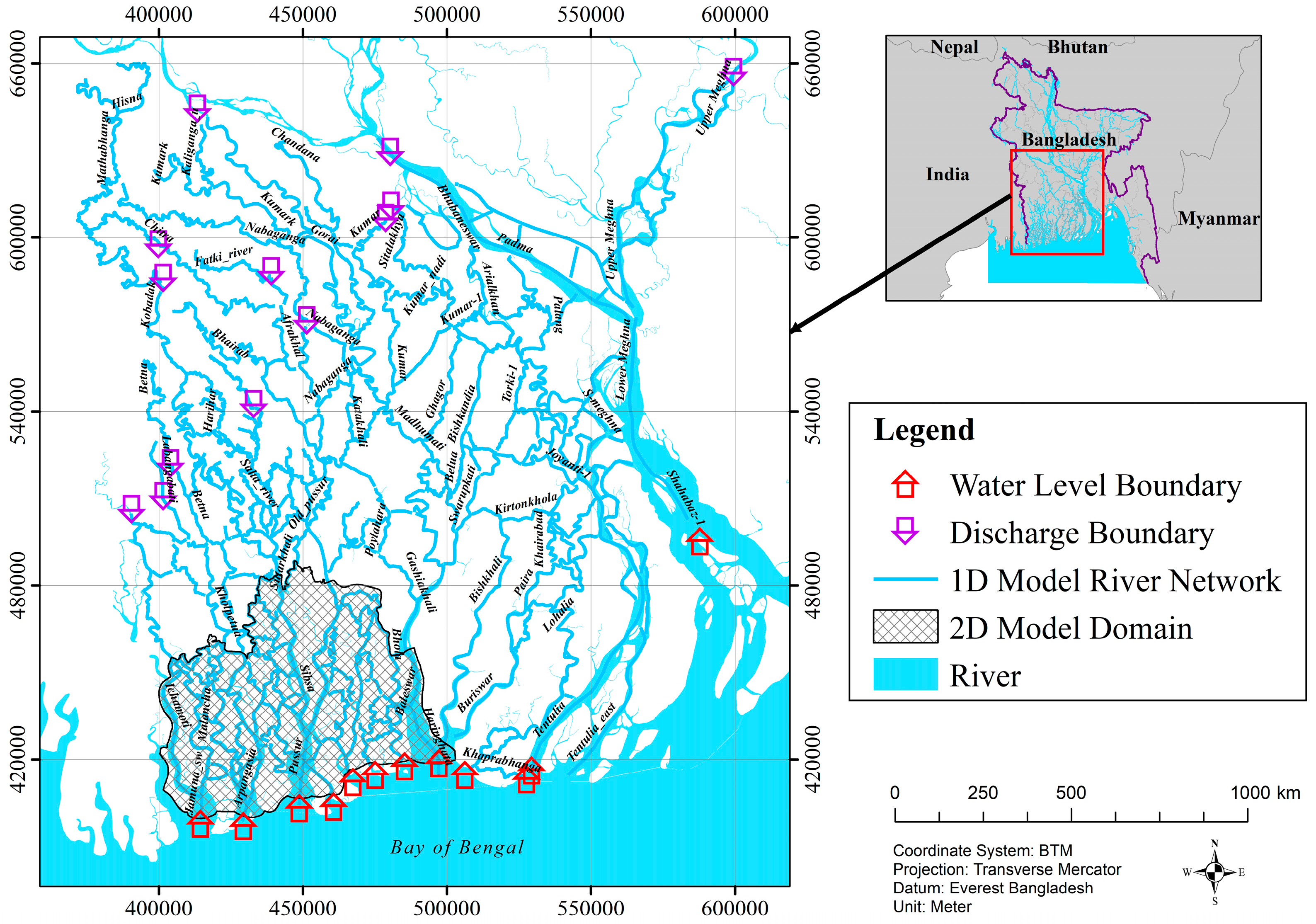
The observed hydroclimatic datasets used in this study were sourced from three national agencies in Bangladesh: the Bangladesh Water Development Board (BWDB), the Bangladesh Meteorological Department (BMD), and the Mongla Port Authority (MPA). Daily meteorological data, including air temperature and rainfall, were obtained from BMD, while hydrological data comprising daily river discharge and water level records were collected from BWDB. In addition, sub-daily tidal water level data were acquired from MPA to characterise coastal and estuarine boundary conditions. All datasets underwent rigorous quality control procedures, including checks for completeness, internal consistency, temporal continuity, and outlier detection. Where necessary, short gaps in the records were filled using the inverse distance weighting (IDW) interpolation technique to ensure continuous time series of climate and hydrological data. Figure 1 shows the locations of water level and discharge monitoring stations within and surrounding the Sundarbans region. Discharge data from the Gorai Railway Bridge station were used to represent freshwater inflow at the upstream boundary of the hydrodynamic model, which is the primary source of riverine input to the Sundarbans. Water level observations from the Hiron Point station, located near the coast, were employed as the downstream tidal boundary condition, capturing the influence of astronomical tides and coastal water level variability on the estuarine and floodplain dynamics of the Sundarbans.

3.3. 1D–2D Coupled Model Configuration

The 1D river network model consists of all major rivers of the southwest region of Bangladesh (Figure 5). Some smaller rivers were not included in the model due to the unavailability of cross-section data. In total, 231 rivers were included in the 1D river network model. Approximately 4400 cross-section data points were incorporated in the model setup that has been surveyed in different years. The oldest measurement of cross-sections was in 1990–1991 and the most recently surveyed are from 2023. Cross-section data in major rivers such as Passur, Sibsa, and Baleswar in Sundarbans were surveyed in 2019. The spacing between two cross-sections varies significantly, not only between different rivers but also within the same river. There is no consistent pattern based on river size, as distances range from approximately 250 m to several kilometres.
The geographical extent of the 2D inundation model is bounded by the Raimangal River in the west, the Baleswar River in the east, the northern boundary of the Sundarbans Reserve Forest, and the Bay of Bengal in the south (Figure 5). The model domain covers an area of approximately 5580 km2, encompassing the entire Sundarbans Reserve Forest region within Bangladesh. Of this total area, about 1436 km2 consists of waterbodies, while 4144 km2 represents land areas.
The MIKE FLOOD modelling framework was used to couple the 1D river network model and 2D inundation model, enabling flow exchange through defined linkages. There are several methods available in MIKE FLOOD to determine whether the exchange of flow between two models will occur and the specific formula to calculate the exchange of flow between 1D and 2D models. In this assessment, the lateral links method has been used to couple the 1D river model and the 2D floodplain model. The lateral links establish a connection line along the left and/or right bank of the channel, effectively defining the locations along which the exchange of flow will occur. Each lateral link line has a certain chainage correspondence to the chainage of the river branch to which it is connected. The chainage is then used to determine which 2D model grid cells/mesh elements are connected to the water level nodes of the 1D model through lateral links.
To establish linkages between the 1D river model and the 2D flood model, the configurations of both models were imported into MIKE FLOOD. Once loaded, the coupling locations were defined using the Link Definitions editor. A lateral link represents a line of 2D grid cells or mesh elements linked to a branch, or a segment of a branch, in the 1D river model. Flow through these lateral links is computed using either hydraulic structure equations or water level–discharge relationships. This type of linkage is particularly effective for simulating flood propagation from rivers onto adjacent floodplains.

3.4. Computational Mesh Generation and Simulation

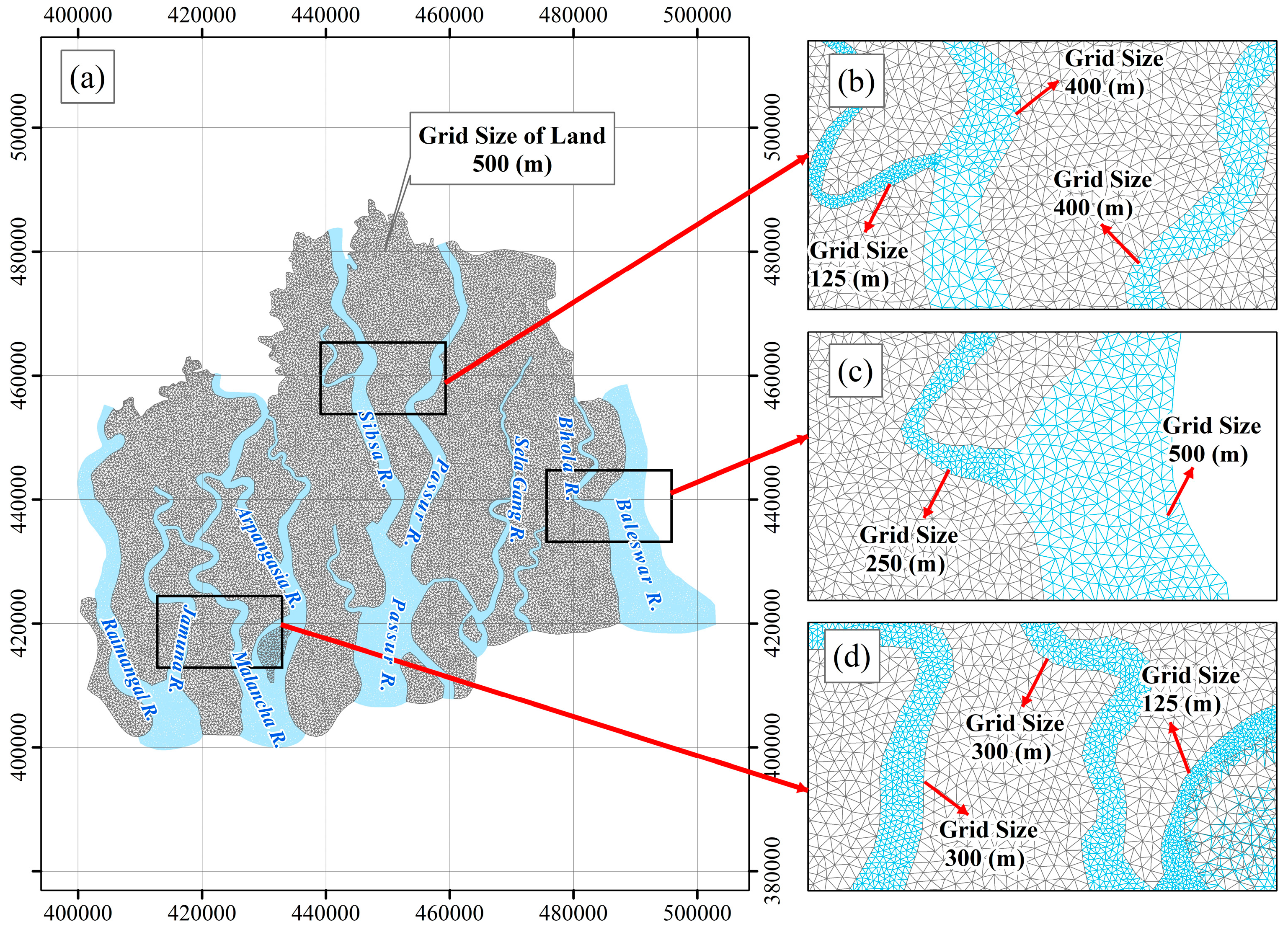
The river domain was divided into three sub-zones based on river width, with each sub-zone utilising different grid sizes and triangle areas during the mesh generation process, corresponding to the varying widths. For rivers with widths greater than or equal to 2500 m, the maximum triangle area is 200,000 m2, and the average grid size is 500 m. As the width decreases, the area of the triangle reduces (e.g., 100,000 m2 for 2000–2500 m, and 25,000 m2 for 500–1000 m), while the grid size decreases correspondingly, with the smallest average grid size of 125 m used for the narrowest rivers (500–1000 m) as shown in Figure 6. This approach ensures more refined mesh and grid sizes for smaller rivers, improving modelling accuracy and computational efficiency.
The 2D flood inundation model was developed using the MIKE21 FM hydrodynamic module of the MIKE software (Version 2023) [51]. The mesh file is the main input to the model and it defines the horizontal extent of the 2D model, and it contains the configurations of the flexible mesh, the elevations of each mesh node, and the locations of boundary conditions. In this study, a triangular mesh with varying sizes is used. Due to a lack of fine-resolution cross-section data, rivers with a width of less than 500 m are excluded from the river mesh and included in the floodplain mesh. Also, due to the homogeneity of floodplains, as the land use of the Sundarbans is a forest area, the mesh size across the entire floodplains is kept the same, with an average grid size of 500 m.
In this study, the models were run using Dell CPU machines (Dallas, TX, USA) containing 26 cores and 52 logical processors. Each run took about 1 h of computer time to simulate a 15-day tidal event.

3.5. Parameter Calibration

Hydrodynamic models require careful specification and calibration of key parameters to accurately simulate flow propagation, water levels, and inundation dynamics across riverine and floodplain systems [58,59]. Among the most influential parameters is bed roughness, commonly represented by Manning’s roughness coefficient, which controls flow resistance and varies spatially according to channel geometry, floodplain vegetation, and land use. The topography of the land surface and the bathymetry of the river network govern flow pathways, storage, and connectivity between rivers and floodplains, while mesh or grid resolution influences the model’s ability to resolve fine-scale features such as levees, channels, and overbank flow. Hydraulic parameters such as eddy viscosity, momentum diffusion, and wetting–drying thresholds regulate numerical stability and the representation of shallow-water processes. Together, the appropriate selection and calibration of these hydrodynamic parameters are essential for achieving realistic simulations of inundation extent, depth, timing, and duration, particularly in low-lying, tidally influenced floodplain environments [57,60].
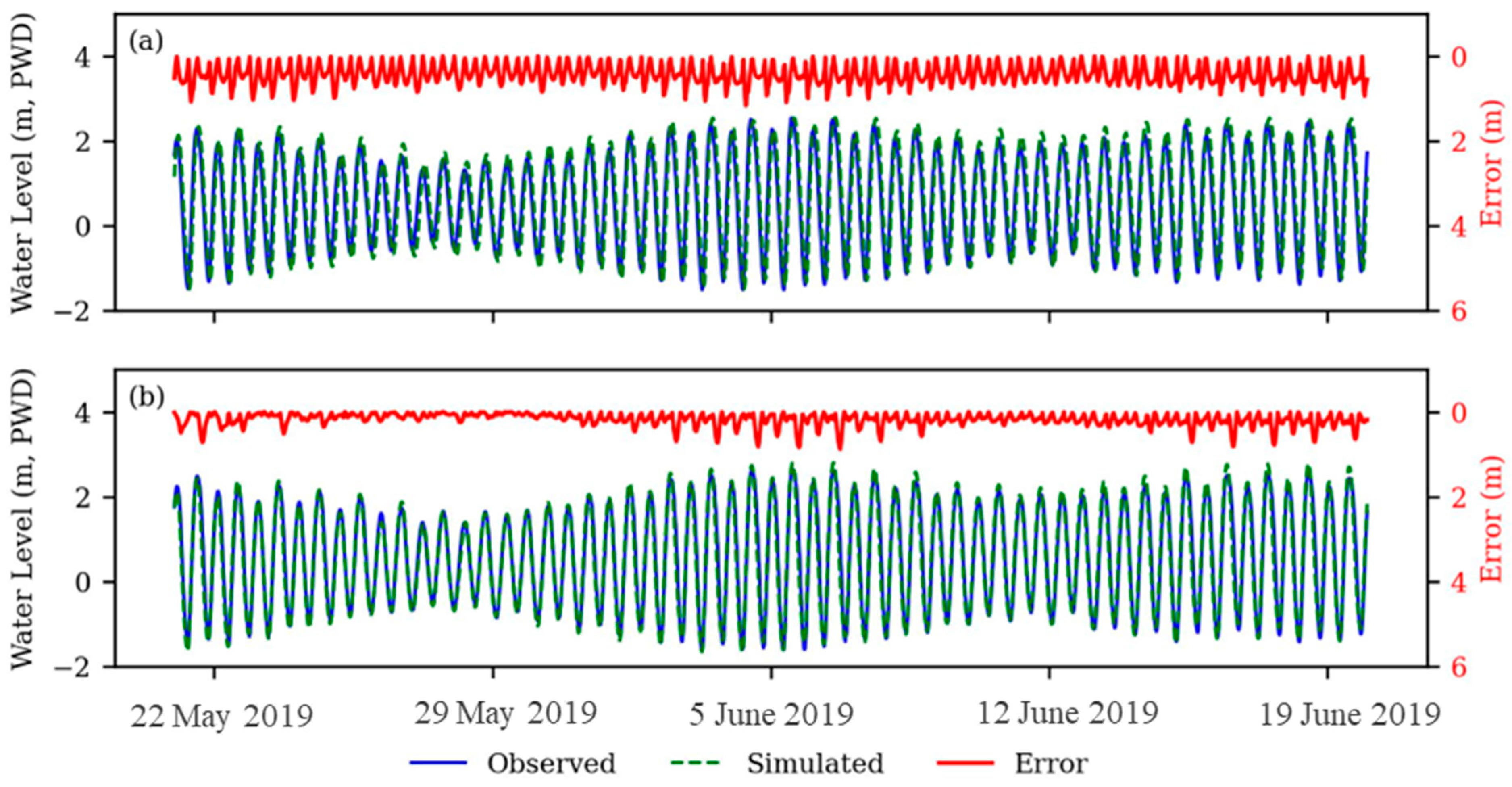
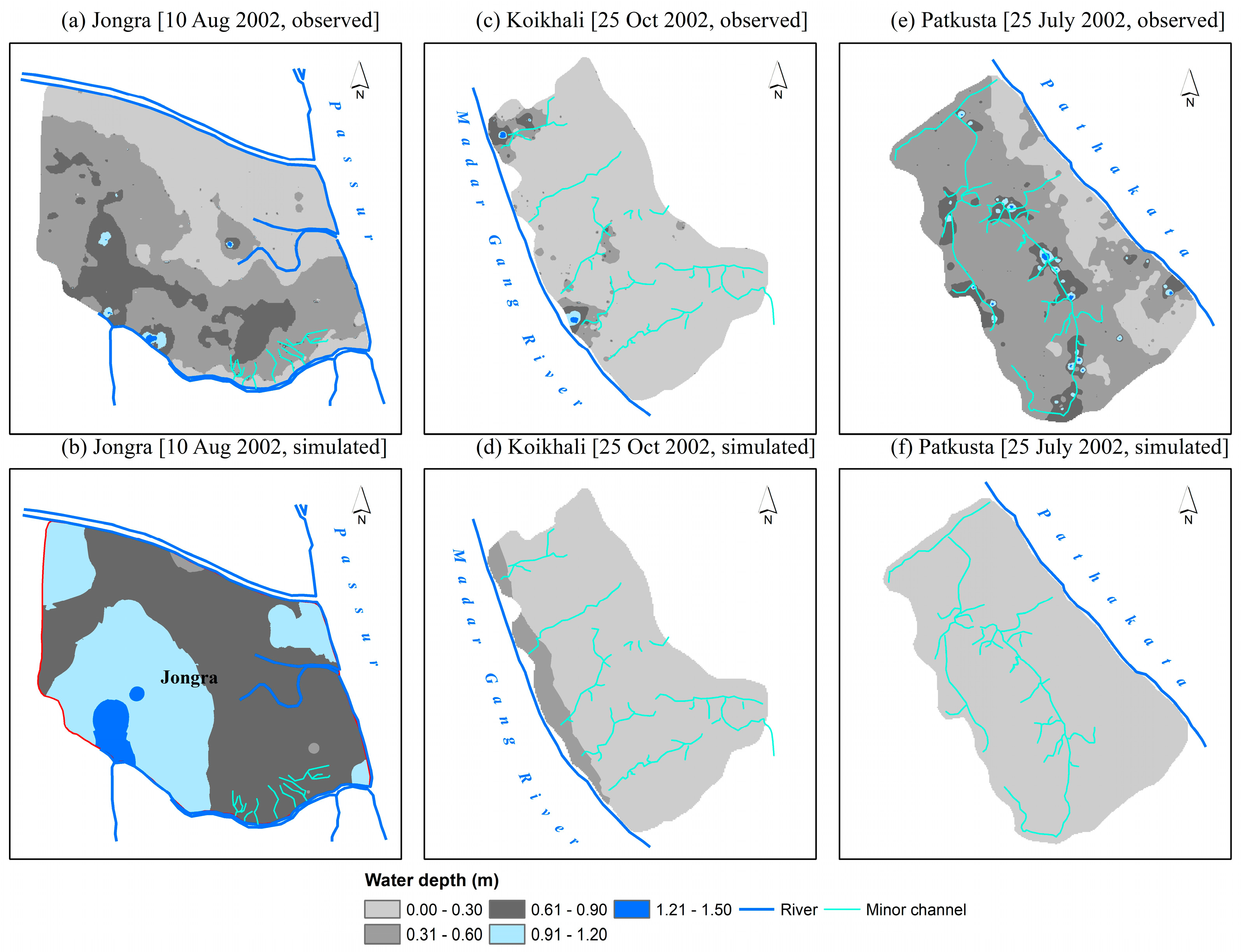
The model was calibrated by comparing simulated water levels at different locations on the Baleshwar, Buriswar, Passur, and Sibsa Rivers, and the inundation area at the selected location within the Sundarbans. A typical example of water level comparison is shown in Figure 7 for Joymoni station on the Passur River and the Nalian station on the Sibsa River. Overall, the simulated results agree well with the observations, although the model slightly overpredicted water levels on some days. These errors, however, are relatively small (Table 1). Historical inundation data are limited for the Sundarbans area. Only available inundation data for selected locations in the Sundarbans were sourced from the study of the Sundarbans biodiversity conservation project [61]. The report provides the field-measured inundation area at Jongra, Patkusta and Koikhali inside the Sundarbans. We produced inundation maps for the same period as in IWM (2003) and compared those inundation maps (Figure 8). While similar inundation patterns are seen in both datasets, a detailed comparison is not possible because of the large model grid in the simulation. Inundations at selected locations (e.g., Hiron Point, Dublar Char) were cross-verified with Google Earth imagery and local people in the area.
The calibrated Manning’s roughness number in the downstream rivers such as the Passur, Sibsa, Baleswar, Bishkhali, Buriswar, Tentulia and Lower Meghna Rivers varies from 65 to 70. The roughness number in the upstream rivers such as Gorai, Nabaganga, Arial Khan, Rupsha and Kocha Rivers varies from 40 to 60. In addition to Manning’s roughness coefficient, the dispersion coefficient is also an important calibration factor for hydrodynamic modelling. The parameter is also determined by trial-and-error simulation. The calibrated dispersion coefficients varied between 100 to 300 m2/s across the river network.

3.6. Assessing Impacts of Freshwater Flow and Tide

We have assessed the impacts of freshwater flow through the major rivers and tide in the Bay of Bengal on inundation across the Sundarbans. As a major distributary of the Ganges, the Gorai River provides a vital source of freshwater to the southwest region of Bangladesh including the Sundarbans, where tidal influence dominates the hydrological regime [15,17]. Flow through the Gorai River supports the inundation of creeks and channels that nourish mangrove ecosystems. Seasonal pulses of freshwater from the Gorai not only enhance the spatial extent of inundation but also regulate the delicate balance between saline and freshwater conditions that are essential for mangrove growth, biodiversity conservation, and ecosystem services. Any change in the Gorai’s flow, therefore, has direct implications for the health, resilience, and long-term sustainability of the Sundarbans. To examine the sensitivity of inundation to upstream freshwater supply, two flow-alteration scenarios were considered: a 20% increase and a 20% decrease in the Gorai River discharge relative to the baseline condition.
Tides in the Bay of Bengal are a key driver of both daily and seasonal inundation across the Sundarbans [15,62]. Tidal processes redistribute freshwater and saline water through the intricate network of estuaries, rivers and creeks, thereby shaping the inundation, sediment transport, and deposition patterns. The interaction between freshwater inflows from the Gorai River and tidal dynamics governs the spatial extent, frequency, and duration of flooding. Maintaining a balanced interplay between Gorai discharge and tidal forcing is therefore essential for sustaining the hydrological and ecological equilibrium of the Sundarbans. To examine the sensitivity of inundation to tidal forcing, we investigated a set of tidal boundary condition scenarios, representing variations in tidal water levels relative to the baseline condition, and evaluated their impacts on inundation extent, depth and duration across the Sundarbans. We investigated four tides ranging from 1 to 4 m, representing a maximum tide level of 2.5 m PWD.

4. Results

4.1. Monthly and Seasonal Inundation Dynamics

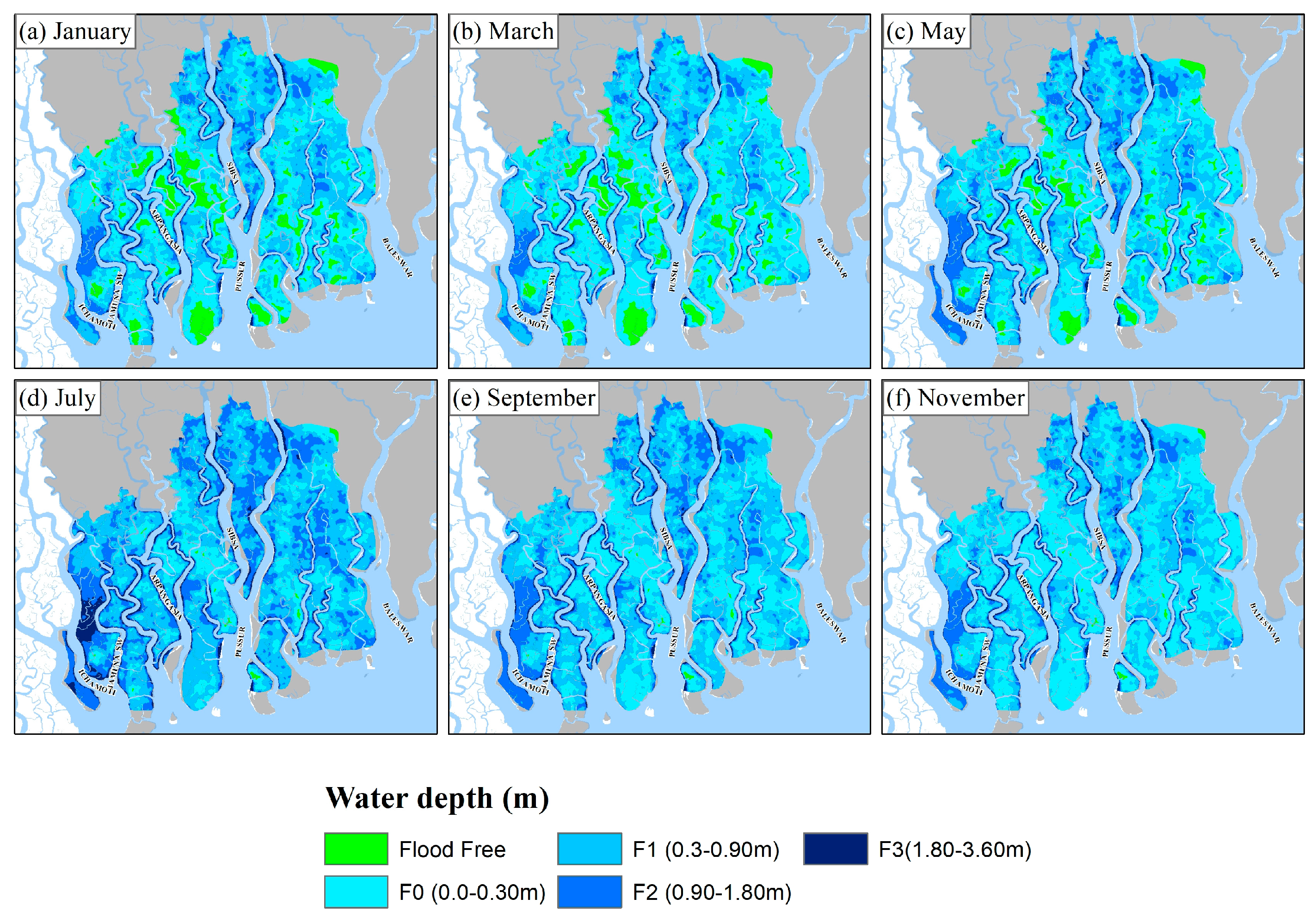
Influenced by semidiurnal tides from the Bay of Bengal, large areas of the Sundarbans experience regular inundation during high tides. However, inundation varies both spatially and temporarily based on tidal amplitudes and inflows from upstream catchments (Figure 9). Inundation is relatively low in the months of February and March (end of the dry season) and higher in July and August (mid-wet season). Excluding permanent water bodies such as rivers, estuaries, and wetlands, the area of the Bangladesh part of the Sundarbans is about 3710 km2. Of this, approximately 3238 km2 (87.3%) experiences at least one inundation in March, increasing to about 3687 km2 (99.4%) in July. Although a large proportion of the Sundarbans is inundated during regular tidal cycles, the mean inundation depth remains shallow in the range of 0.24–0.33 m due to its flat topography (Table 2). During the dry season, the mean inundated area is approximately 3185 km2, with relatively shallow mean water depths of around 0.24 m. The maximum inundated area during this period remains below 3307 km2 (89.1%). In contrast, the wet season brings a substantial increase in both inundation extent and water depth. The mean inundated area rises to around 3663 km2, with mean depths increasing to 0.30 m. Peak inundation occurs between July and September, when the maximum area reaches 3692 km2 and mean depths reach 0.30 m, reflecting the intensity of the monsoon. Both maximum and mean inundation extents are greater in the wet season than in the dry season due to the combined influence of increased inflows and higher tidal levels.

4.2. Frequency of Inundation

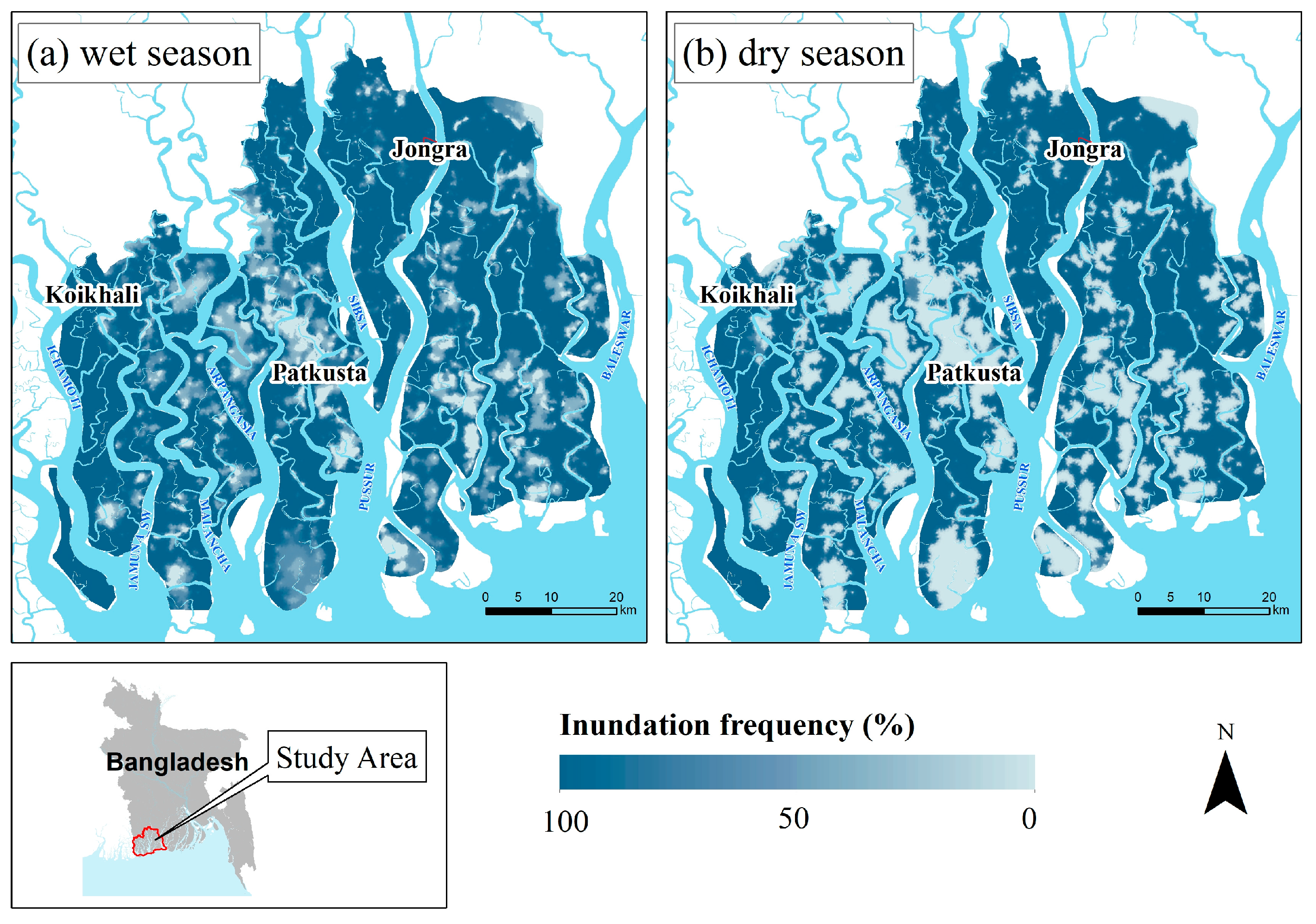
Inundation frequency was estimated as the ratio of inundated days to the total number of days in the analysis period. Similar to inundation depth, frequency of inundation also varies across the Sundarbans, ranging from 0 to 100% (Figure 10). As expected, inundation frequency is higher during the wet season compared to the dry season because of higher inundation. High-frequency inundation is observed in the northern part of Sundarbans between the Passur and Sibsa Rivers. Inundation frequency is also high in the western part of Sundarbans, next to the Raimongol River. About 75% of the Sundarbans inundates 50% of the time during the dry season and 85% of time during the wet season. It is important to note that during the wet season about 35% of the Sundarbans is inundated almost 100% but no part is inundated 100% during the dry season.

4.3. Impacts of Freshwater Flow

Direct impacts of altered freshwater flow through the Gorai River on inundation in the Sundarbans are small. Table 3 summarises the changes in inundation area and depth under scenarios of 20% reduced and 20% increased freshwater inflow to Sundarbans. Under the reduced inflow scenario, maximum and mean inundation areas are decreased by 0.3% and 1.4%, respectively, with the mean inundated depth declining by 5.8%. As expected, the increased inflow scenario resulted in slight increases in maximum and mean inundation areas. However, the changes are very small (<1%). In contrast, the increase in inundation depth is relatively high (15.23%). It should be noted that this analysis considered inflow through the Gorai River (a distributary of the Ganges River) only. Freshwater discharge through the Meghna River and subsequent changes in the water level in the Bay of Bengal were not included in this assessment.

4.4. Impacts of Tide Magnitude

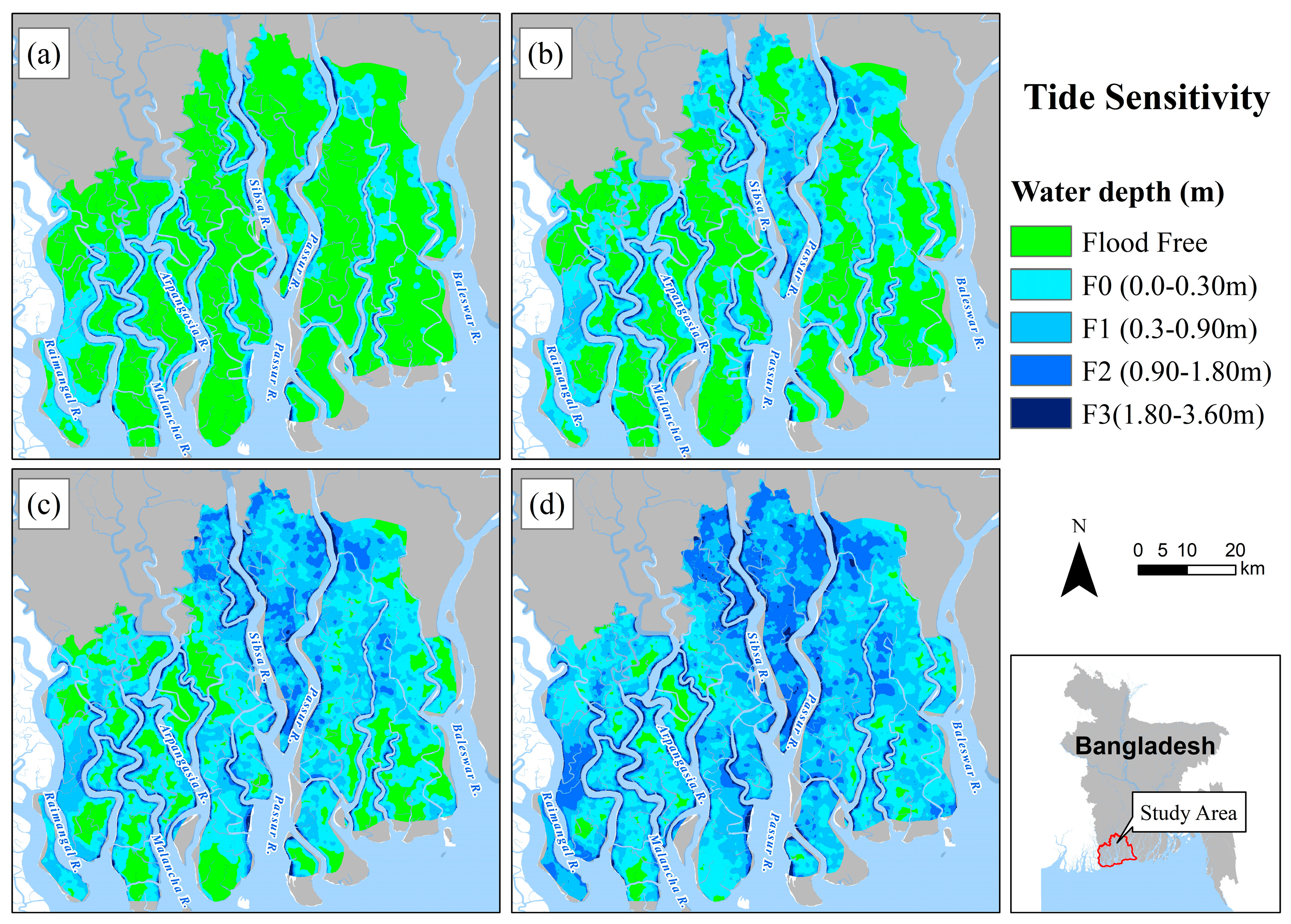
Tide levels in the Bay of Bengal significantly influence the extent and depth of inundation across the Sundarbans (Figure 11). For example, the maximum inundated area under a 2 m tide is approximately 1.94 times greater than that under a 1 m tide (Table 4). Similarly, the inundated area under a 3 m tide is approximately three times larger, and under a 4 m tide about 3.67 times greater, than that of a 1 m tide. Inundation extent increases almost linearly with tide level, reflecting the flat and relatively uniform land topography of the Sundarbans. In contrast, the mean inundation depth is higher for the 1 m tide, indicating that topographic depression across the Sundarbans is already inundated at the lower tide level.

5. Discussion

Tidal inundation is a dominant hydrological process shaping the landscape and ecology of the Sundarbans in Bangladesh. Influenced by semidiurnal tides from the Bay of Bengal, large areas of the Sundarbans experience regular inundation, with tidal amplitudes ranging from 2 to 3 m. A major proportion of the Sundarbans inundates during high tides. However, inundation varies between locations and timing. Tidal amplitudes and inflows from upstream catchments were found as influencing factors. Inundation is relatively low in the months of February and March (end of the dry season) and higher in July-August (mid-wet season). This is because of high freshwater flow during the wet season. Although a large proportion of the Sundarbans is inundated during regular tidal cycles, the mean inundation depth remains shallow due to the flat topography of the Sundarbans. This inundation pattern plays a critical role in sediment transport, nutrient distribution, and salinity dynamics, all of which affect mangrove species composition and productivity. However, tidal inundation is increasingly influenced by anthropogenic interventions such as upstream freshwater diversions and embankment construction, which alter natural flow regimes and sediment deposition. These changes can exacerbate salinity intrusion and reduce the resilience of the mangrove ecosystem to climate-induced SLR and extreme weather events. Understanding the spatial and temporal variability of tidal inundation is therefore essential for managing and conserving this sensitive coastal environment.
Inflows from the Ganges and Brahmaputra Rivers play an important role in shaping the inundation dynamics of the Sundarbans by regulating freshwater availability and the balance between tidal and riverine flooding. Under reduced upstream inflow during the dry season, the mean inundation area decreases by 1.4% and the depth of inundation declines by 5.8%. During the wet season, high discharge from these rivers contributes to extensive freshwater inundation and diluting salinity levels. These inflows also help counteract tidal surges and buffer the effects of saline water intrusion from the Bay of Bengal. However, changes in upstream water management, including damming, diversion, and irrigation withdrawals, most notably the operation of the Farakka Barrage on the Ganges, have significantly reduced freshwater inflows in recent decades. This reduction weakens the natural freshwater flushing system, leading to more pronounced tidal inundation and increased salinity, particularly in the western Sundarbans [43]. As a result, the ecological balance of the region is under growing pressure, underscoring the need for integrated transboundary water management to sustain the health of the Sundarbans.
Tide height is a primary driver of inundation dynamics in the Sundarbans, exerting strong control over the spatial extent, depth, and duration of inundation across this low-lying deltaic landscape. Higher tidal levels enable seawater to penetrate deeper into the intricate network of rivers, creeks, and tidal flats, substantially expanding the inundated area and enhancing hydrological connectivity between channels and floodplains. As tide height increases, inundation spreads laterally into higher-elevation zones, while lower tides predominantly inundate only the depressions and main channels, often resulting in greater mean water depth in these low-lying areas, as seen in Section 4.4. Seasonal variations in tidal range, particularly during spring tides and in combination with river discharge, further amplify inundation patterns, influencing sediment transport, salinity distribution, and nutrient exchange. Consequently, tide height plays a critical role in shaping the hydrological regime of the Sundarbans and directly affects mangrove zonation, ecosystem productivity, and overall resilience of this unique coastal wetland system
These results suggest that while the Sundarbans are naturally adapted to tidal inundation, future increases in inundation depth and duration due to SLR could strain ecological resilience, alter species composition, and disrupt ecosystem services. Additionally, climate change is projected to intensify cyclonic activity and storm surges in the Bay of Bengal, exacerbating tidal flooding events and accelerating coastal erosion. The combination of SLR, subsidence, and reduced freshwater inflows due to upstream water use further amplifies vulnerability to tidal inundation. The findings have important policy implications for the sustainable management and long-term conservation of the Sundarbans, highlighting the need for integrated, adaptive, and transboundary approaches. Given the dominant role of tidal inundation and its strong interaction with freshwater inflows, policies must prioritise maintaining adequate river discharges from the Ganges–Brahmaputra–Meghna system during the dry season to preserve natural salinity balances, sediment delivery, and ecosystem productivity. Furthermore, projected SLR and subsidence necessitate the integration of climate adaptation strategies into land-use planning, conservation zoning, and disaster risk reduction frameworks. Incorporating spatially explicit inundation information into policy decisions can support ecosystem-based adaptation, guide restoration and afforestation efforts, and enhance the resilience of both the Sundarbans’ biodiversity and the livelihoods of dependent communities under a changing climate
This study acknowledges several limitations related to model configuration, input data, and validation that may affect the reliability of the simulated inundation results. Although the best available DEM was used, its relatively coarse spatial resolution (~30 m) and inherent accuracy issues limited the representation of fine-scale topographical variations and small rivers. Moreover, bathymetric data for rivers and tidal creeks inside Sundarbans are not up to date except for large rivers such as Baleswar, Passur, and Sibsa. In addition, there are many tidal channels inside the Sundarbans, where bathymetric data have not been recorded until now. Consequently, those channels were not included in the current model setup. Uncertainty in inflow data further constrained the analysis, as river discharges from the Ganges–Brahmaputra–Meghna system were estimated using a basin model that could not be adequately validated in upstream regions of India. Finally, rigorous validation of model outputs was not possible because of the lack of observed water level and inundation data within the Sundarbans, with existing gauges located only along major peripheral rivers and no systematic monitoring in smaller channels or inundated lands, leaving local community knowledge as the only qualitative source of inundation information.

6. Conclusions

In this study, we configured and calibrated a coupled 1D and 2D hydrodynamic model (MIKE FLOOD) to simulate inundation dynamics in the Sundarbans. The model was calibrated and validated using gauged water level data and inundation maps from secondary sources. Inundation at selected locations was further verified using Google Earth imagery. Using the calibrated model, we simulated the extent and frequency of inundation across the Sundarbans for different freshwater flow and tide level scenarios. The results show variation in inundation extent, depth, and duration across the Sundarbans during different months and seasons. Inundations are relatively low during the February-March period (end of the dry season) when there is less freshwater flow from the upstream rivers, and the inundation is higher in July-August (mid-wet season) when freshwater flow through the Ganges is high. Although a large proportion of the Sundarbans inundates during the daily tidal cycles, the mean inundation depth remains very low due to the low-lying and flat topography of the Sundarbans. As expected, inundation frequency is higher during the wet season compared to the dry season because of higher inundation. High-frequency inundations are observed in the northwestern part of Sundarbans. The findings of this study contribute to advancing the understanding of how climate change may influence the hydrodynamics and ecological resilience of the Sundarbans, and they provide valuable insights for informing adaptation planning and sustainable management of this globally important ecosystem. The developed modelling tools is scalable for long-term climate projections. While high-resolution hydrodynamic modelling is computationally intensive, strategic trade-offs between spatial resolution and key policy indicators enable the framework to accommodate longer-term simulations. For policy-oriented applications, simulations conducted at coarser spatial resolutions or over selected time slices can substantially reduce computational demand while still capturing essential inundation dynamics.

Author Contributions

Conceptualization, F.K., M.M. and S.W.; methodology, F.K., M.M., S.N. and R.A. (Rubayat Alam); software, F.K., S.N. and R.A. (Raju Ahmmad); validation, F.K., S.N. and R.A. (Raju Ahmmad); formal analysis, F.K., S.N. and R.A. (Raju Ahmmad); investigation, S.N. and R.A. (Raju Ahmmad); resources, F.K., M.M., S.N. and R.A. (Rubayat Alam); data curation, S.N. and R.A. (Raju Ahmmad); writing—original draft preparation, F.K., S.N. and R.A. (Raju Ahmmad); writing—review and editing, F.K., M.M. and S.W.; visualization, F.K., S.N. and R.A. (Raju Ahmmad); supervision, F.K. and M.M.; project administration, F.K., M.M. and R.A. (Rubayat Alam); funding acquisition, M.M. All authors have read and agreed to the published version of the manuscript.

Funding

This research was funded by the Australian Centre for International Agricultural Research (ACIAR), grant number WAC/2022/129.

Data Availability Statement

Restrictions apply to the availability of these data. Data were obtained from the Institute of Water Modelling in Bangladesh (https://www.iwmbd.org) and are available from the authors with the permission of the Institute of Water Modelling in Bangladesh and approved for research use only.

Conflicts of Interest

The authors declare no conflicts of interest. The authors also declare that the funders had no role in the design of the study; in the collection, analyses, or interpretation of data; in the writing of the manuscript; or in the decision to publish the results.

References

  1. Alongi, D.M. Global Meta-Analysis of Mangrove Primary Production: Implications for Carbon Cycling in Mangrove and Other Coastal Ecosystems. Forests 2025, 16, 747. [Google Scholar] [CrossRef]
  2. Friess, D.A.; Rogers, K.; Lovelock, C.E.; Krauss, K.W.; Hamilton, S.E.; Lee, S.Y.; Lucas, R.; Primavera, J.; Rajkaran, A.; Shi, S. The state of the world’s mangrove forests: Past, present, and future. Annu. Rev. Environ. Resour. 2019, 44, 89–115. [Google Scholar] [CrossRef]
  3. Alongi, D.M. Mangrove forests: Resilience, protection from tsunamis, and responses to global climate change. Estuar. Coast. Shelf Sci. 2008, 76, 1–13. [Google Scholar] [CrossRef]
  4. Das, S.; Vincent, J.R. Mangroves protected villages and reduced death toll during Indian super cyclone. Proc. Natl. Acad. Sci. USA 2009, 106, 7357–7360. [Google Scholar] [CrossRef]
  5. Sakib, M.; Nihal, F.; Haque, A.; Rahman, M.; Ali, M. Sundarban as a buffer against storm surge flooding. World J. Eng. Technol. 2015, 3, 59–64. [Google Scholar] [CrossRef]
  6. Alongi, D.M. Carbon cycling and storage in mangrove forests. Annu. Rev. Mar. Sci. 2014, 6, 195–219. [Google Scholar] [CrossRef]
  7. Donato, D.C.; Kauffman, J.B.; Murdiyarso, D.; Kurnianto, S.; Stidham, M.; Kanninen, M. Mangroves among the most carbon-rich forests in the tropics. Nat. Geosci. 2011, 4, 293–297. [Google Scholar] [CrossRef]
  8. Murdiyarso, D.; Purbopuspito, J.; Kauffman, J.B.; Warren, M.W.; Sasmito, S.D.; Donato, D.C.; Manuri, S.; Krisnawati, H.; Taberima, S.; Kurnianto, S. The potential of Indonesian mangrove forests for global climate change mitigation. Nat. Clim. Change 2015, 5, 1089–1092. [Google Scholar] [CrossRef]
  9. Nagelkerken, I.; Blaber, S.; Bouillon, S.; Green, P.; Haywood, M.; Kirton, L.G.; Meynecke, J.-O.; Pawlik, J.; Penrose, H.; Sasekumar, A. The habitat function of mangroves for terrestrial and marine fauna: A review. Aquat. Bot. 2008, 89, 155–185. [Google Scholar] [CrossRef]
  10. Titumir, R.A.M.; Afrin, T.; Islam, M.S. Biodiversity Resources: Degradation, Restoration and Sustainable Conservation. In Natural Resource Degradation and Human-Nature Wellbeing; Titumir, R.A.M., Afrin, T., Islam, M.S., Eds.; Springer Nature: Singapore, 2023; pp. 75–146. [Google Scholar]
  11. Khan, W.R.; Mohamad, A.L.; Ibrahim, F.H. Biodiversity, Health, and Ecosystem Services of Mangroves. Forests 2025, 16, 1278. [Google Scholar] [CrossRef]
  12. Akram, H.; Hussain, S.; Mazumdar, P.; Chua, K.O.; Butt, T.E.; Harikrishna, J.A. Mangrove health: A review of functions, threats, and challenges associated with mangrove management practices. Forests 2023, 14, 1698. [Google Scholar] [CrossRef]
  13. Sundaramanickam, A.; Nithin, A.; Balasubramanian, T. Role of mangroves in pollution abatement. In Mangroves: Ecology, Biodiversity and Management; Springer: Berlin/Heidelberg, Germany, 2021; pp. 257–278. [Google Scholar]
  14. Al-Amin, M.A.; Islam, M.A.; Majumder, S.; Mainuddin, M. Livelihood Dependency of the Sundarbans Resources by Local Dwellers; Bangladesh Agricultural University: Mymensingh, Bangladesh, 2026; p. 29. [Google Scholar]
  15. Mojid, M.A.; Mainuddin, M.; Karim, F.; Wahid, S.M. Historical and Projected Future Hydrological Characteristics of the Mangrove Forest in the Ganges Delta—A Review. Water 2025, 17, 838. [Google Scholar] [CrossRef]
  16. Sarkar, S.K. Sundarban Mangrove Wetland (a UNESCO World Heritage Site): A Comprehensive Global Treatise; Elsevier: Amsterdam, The Netherlands, 2022. [Google Scholar]
  17. Wahid, S.M.; Babel, M.S.; Bhuiyan, A.R. Hydrologic monitoring and analysis in the Sundarbans mangrove ecosystem, Bangladesh. J. Hydrol. 2007, 332, 381–395. [Google Scholar] [CrossRef]
  18. Iqbal, M.H. Valuing ecosystem services of Sundarbans Mangrove forest: Approach of choice experiment. Glob. Ecol. Conserv. 2020, 24, e01273. [Google Scholar] [CrossRef]
  19. Titumir, R.A.M.; Shah-Paran, M. Ecosystem services and well-being in the Sundarbans of Bangladesh: A multiple evidence base trajectory. In Assessing, Mapping and Modelling of Mangrove Ecosystem Services in the Asia-Pacific Region; Dasgupta, R., Hashimoto, S., Saito, O., Eds.; Science for Sustainable Societies; Springer: Singapore, 2022; pp. 263–281. [Google Scholar]
  20. Mahmood, R.; Zhang, L.; Li, G. Assessing effectiveness of nature-based solution with big earth data: 60 years mangrove plantation program in Bangladesh coast. Ecol. Process. 2023, 12, 11. [Google Scholar] [CrossRef]
  21. Uddin, M.M.; Abdul Aziz, A.; Lovelock, C.E. Importance of mangrove plantations for climate change mitigation in Bangladesh. Glob. Change Biol. 2023, 29, 3331–3346. [Google Scholar] [CrossRef]
  22. Islam, S.M.D.-U.; Bhuiyan, M.A.H. Sundarbans mangrove forest of Bangladesh: Causes of degradation and sustainable management options. Environ. Sustain. 2018, 1, 113–131. [Google Scholar] [CrossRef]
  23. Dasgupta, S.; Sobhan, I.; Wheeler, D. The impact of climate change and aquatic salinization on mangrove species in the Bangladesh Sundarbans. Ambio 2017, 46, 680–694. [Google Scholar] [CrossRef]
  24. Sumon, K.A.; Kanok, N.J.R.; Sadat, M.A.; Mainuddin, M.; Wahid, S.M.; Karim, F. A comprehensive review on the negative impacts on Sundarbans fisheries: Insights from the hydrological changes modulated by climate change and anthropogenic activities. Mar. Pollut. Bull. 2025, 220, 118409. [Google Scholar] [CrossRef]
  25. Aziz, A.; Paul, A.R. Bangladesh Sundarbans: Present Status of the Environment and Biota. Diversity 2015, 7, 242–269. [Google Scholar] [CrossRef]
  26. Mukul, S.A.; Alamgir, M.; Sohel, M.S.I.; Pert, P.L.; Herbohn, J.; Turton, S.M.; Khan, M.S.I.; Munim, S.A.; Reza, A.A.; Laurance, W.F. Combined effects of climate change and sea-level rise project dramatic habitat loss of the globally endangered Bengal tiger in the Bangladesh Sundarbans. Sci. Total Environ. 2019, 663, 830–840. [Google Scholar] [CrossRef]
  27. Rudra, A.; Chattopadhyay, A. Environmental change of coastal Sundarbans: Impact on livelihood and standard of living status of indigenous people. Environ. Qual. Manag. 2019, 29, 77–84. [Google Scholar] [CrossRef]
  28. Sindhu, B.; Unnikrishnan, A. Characteristics of tides in the Bay of Bengal. Mar. Geod. 2013, 36, 377–407. [Google Scholar] [CrossRef]
  29. Murty, T.; Henry, R. Tides in the Bay of Bengal. J. Geophys. Res. Ocean. 1983, 88, 6069–6076. [Google Scholar] [CrossRef]
  30. Chatterjee, M.; Shankar, D.; Sen, G.; Sanyal, P.; Sundar, D.; Michael, G.; Chatterjee, A.; Amol, P.; Mukherjee, D.; Suprit, K. Tidal variations in the Sundarbans estuarine system, India. J. Earth Syst. Sci. 2013, 122, 899–933. [Google Scholar] [CrossRef]
  31. Rogers, K.G.; Goodbred, S.L. The Sundarbans and Bengal Delta: The World’s Largest Tidal Mangrove and Delta System. In Landscapes and Landforms of India; Kale, V.S., Ed.; Springer: Dordrecht, The Netherlands, 2014; pp. 181–187. [Google Scholar]
  32. Islam, S.; Gnauck, A. Threats to the Sundarbans mangrove wetland ecosystems from transboundary water allocation in the Ganges basin: A preliminary problem analysis. Int. J. Ecol. Econ. Stat. 2009, 13, 64–78. [Google Scholar]
  33. Uddin, M.S.; Shah, M.A.R.; Khanom, S.; Nesha, M.K. Climate change impacts on the Sundarbans mangrove ecosystem services and dependent livelihoods in Bangladesh. Asian J. Conserv. Biol. 2013, 2, 152–156. [Google Scholar]
  34. Gain, A.; Giupponi, C. Impact of the Farakka Dam on Thresholds of the Hydrologic Flow Regime in the Lower Ganges River Basin (Bangladesh). Water 2014, 6, 2501–2518. [Google Scholar] [CrossRef]
  35. Rahman, M.M. Impact of increased salinity on the plant community of the Sundarbans Mangrove of Bangladesh. Community Ecol. 2020, 21, 273–284. [Google Scholar] [CrossRef]
  36. Kanan, A.H.; Pirotti, F.; Masiero, M.; Rahman, M.M. Mapping inundation from sea level rise and its interaction with land cover in the Sundarbans mangrove forest. Clim. Change 2023, 176, 104. [Google Scholar] [CrossRef]
  37. Sahana, M.; Sajjad, H. Vulnerability to storm surge flood using remote sensing and GIS techniques: A study on Sundarban Biosphere Reserve, India. Remote Sens. Appl. Soc. Environ. 2019, 13, 106–120. [Google Scholar] [CrossRef]
  38. Payo, A.; Mukhopadhyay, A.; Hazra, S.; Ghosh, T.; Ghosh, S.; Brown, S.; Nicholls, R.J.; Bricheno, L.; Wolf, J.; Kay, S. Projected changes in area of the Sundarban mangrove forest in Bangladesh due to SLR by 2100. Clim. Change 2016, 139, 279–291. [Google Scholar] [CrossRef]
  39. Sarkar, S.K.; Ahmed, M.K.; Satpathy, K.K. Chapter 7—The Sundarban Delta Complex. In World Seas: An Environmental Evaluation, 2nd ed.; Sheppard, C., Ed.; Academic Press: Cambridge, MA, USA, 2019; pp. 145–168. [Google Scholar]
  40. Rahman, M.M.; Lagomasino, D.; Lee, S.; Fatoyinbo, T.; Ahmed, I.; Kanzaki, M. Improved assessment of mangrove forests in Sundarbans East Wildlife Sanctuary using WorldView 2 and TanDEM-X high resolution imagery. Remote Sens. Ecol. Conserv. 2019, 5, 136–149. [Google Scholar] [CrossRef]
  41. Hossain, M.S.; Majumder, A.K. Impact of climate change on agricultural production and food security: A review on coastal regions of Bangladesh. Int. J. Agric. Res. Innov. Technol. 2018, 8, 62–69. [Google Scholar] [CrossRef]
  42. Anwar, M.S.; Takewaka, S. Analyses on phenological and morphological variations of mangrove forests along the southwest coast of Bangladesh. J. Coast. Conserv. 2014, 18, 339–357. [Google Scholar] [CrossRef]
  43. Islam, S.N.; Gnauck, A. Water salinity investigation in the Sundarbans rivers in Bangladesh. Int. J. Water 2011, 6, 74–91. [Google Scholar] [CrossRef]
  44. Ghosh, A.; Schmidt, S.; Fickert, T.; Nüsser, M. The Indian Sundarban Mangrove Forests: History, Utilization, Conservation Strategies and Local Perception. Diversity 2015, 7, 149–169. [Google Scholar] [CrossRef]
  45. Iftekhar, M.S.; Islam, M.R. Managing mangroves in Bangladesh: A strategy analysis. J. Coast. Conserv. 2004, 10, 139–146. [Google Scholar] [CrossRef]
  46. Karim, F.; Yu, Y.; Kamruzzaman, M.; Mandal, U.K.; Zahan, T.; Paul, P.; Mainuddin, M. Assessing changes in climate extremes using CMIP6 and its implications for agriculture in the Ganges Delta. J. Indian Soc. Coast. Agric. Res. 2024, 42, 33–49. [Google Scholar] [CrossRef]
  47. Yu, Y.; Mainuddin, M.; Maniruzzaman, M.; Mandal, U.K.; Sarangi, S.K. Rainfall and Temperature Characteristics in the Coastal Zones of Bangladesh and West Bengal, India. J. Indian Soc. Coast. Agric. Res. 2019, 37, 12–23. [Google Scholar]
  48. Chowdhury, M.Q.; De Ridder, M.; Beeckman, H. Climatic signals in tree rings of Heritiera fomes Buch.-Ham. in the Sundarbans, Bangladesh. PLoS ONE 2016, 11, e0149788. [Google Scholar] [CrossRef]
  49. Ghosh, M.K.; Kumar, L.; Roy, C. Climate Variability and Mangrove Cover Dynamics at Species Level in the Sundarbans, Bangladesh. Sustainability 2017, 9, 805. [Google Scholar] [CrossRef]
  50. Havno, K.; Madsen, M.; Dorge, J. MIKE 11-a Generalized River Modelling Package; Water Resources Publications: Littleton, CO, USA, 1995; pp. 733–782. [Google Scholar]
  51. DHI. MIKE21 Flow Model FM, Hydrodynamic Module, User Guide; DHI Water and Environment Pty Ltd.: Horsholm, Denmark, 2016. [Google Scholar]
  52. Ghosh, M.K.; Kumar, L.; Langat, P.K. Geospatial modelling of the inundation levels in the Sundarbans mangrove forests due to the impact of sea level rise and identification of affected species and regions. Geomat. Nat. Hazards Risk 2019, 10, 1028–1046. [Google Scholar] [CrossRef]
  53. Chow, V.T. Open Channel Hydraulics; McGraw-Hill International Edition: Singapore, 1959; p. 680. [Google Scholar]
  54. Arcement, G.J.; Schneider, V.R. Guide for Selecting Manning’s Roughness Coefficients for Natural Channels and Flood Plains; United States Geological Survey (USGS): Denver, CO, USA, 1989; p. 38.
  55. Karim, F.; Kinsey-Henderson, A.; Wallace, J.; Arthington, A.H.; Pearson, R.G. Modelling wetland connectivity during overbank flooding in a tropical floodplain in north Queensland, Australia. Hydrol. Process. 2012, 26, 2710–2723. [Google Scholar] [CrossRef]
  56. Liu, Z.; Merwade, V.; Jafarzadegan, K. Investigating the role of model structure and surface roughness in generating flood inundation extents using one-and two-dimensional hydraulic models. J. Flood Risk Manag. 2019, 12, e12347. [Google Scholar] [CrossRef]
  57. Tingsanchali, T.; Karim, M.F. Flood hazard and risk analysis in the southwest region of Bangladesh. Hydrol. Process. 2005, 19, 2055–2069. [Google Scholar] [CrossRef]
  58. Karim, F.; Armin, M.A.; Ahmedt-Aristizabal, D.; Tychsen-Smith, L.; Petersson, L. A Review of Hydrodynamic and Machine Learning Approaches for Flood Inundation Modeling. Water 2023, 15, 566. [Google Scholar] [CrossRef]
  59. Ha, C.-Y.; Kim, B.-J.; Lee, J.-N.; Kim, B.-H. Parameter Optimization of Coupled 1D–2D Hydrodynamic Model for Urban Flood Inundation. Water 2023, 15, 2946. [Google Scholar] [CrossRef]
  60. Teng, J.; Jakeman, A.J.; Vaze, J.; Croke, B.F.W.; Dutta, D.; Kim, S. Flood inundation modelling: A review of methods, recent advances and uncertainty analysis. Environ. Model. Softw. 2017, 90, 201–216. [Google Scholar] [CrossRef]
  61. IWM. Sundarbans Biodiversity Conservation Project Surface Water Modelling, Final Report; Institute of Water Modelling (IWM): Dhaka, Bangladesh, 2003; p. 137. [Google Scholar]
  62. Chatterjee, P.; Hazra, S.; Danda, A.A.; Bhadury, P.; Chaudhuri, P.; Sarkar, S. Living Shoreline: Preliminary Observations on Nature-Based Solution for Toe-Line Protection of Estuarine Embankments and Mangrove Regeneration. Sustainability 2025, 17, 3168. [Google Scholar] [CrossRef]
Figure 1. Study area map showing the river network and hydro-meteorological stations in the Sundarbans.
Water 18 00430 g001
Figure 2. Intra-annual flow variability at Gorai Railway Bridge based on the observed data in the period of 1980–2022.
Water 18 00430 g002
Figure 3. Schematic flowchart outlining the hydrodynamic model setup and scenario modelling for different inflow and tidal conditions.
Water 18 00430 g003
Figure 4. Land elevation and permanent water bodies across the Sundarbans.
Water 18 00430 g004
Figure 5. Hydrodynamic modelling domains for the one-dimensional river network model and two-dimensional inundation model. The purple line in the top-right figure indicates the boundary of Bangladesh.
Water 18 00430 g005
Figure 6. Two-dimensional flexible mesh (variable grid size in different rivers) model configuration for the Sundarbans: (a) mesh for the entire Sundarbans region; (b) mesh in the Sibsa and Passur rivers; (c) mesh in the Baleswar and Bhola rivers; and (d) mesh in the Jamuna and Malancha rivers.
Water 18 00430 g006
Figure 7. Comparison of observed (blue) and simulated (green) water level at: (a) Joymoni on the Passur River and (b) Nalian on the Sibsa River. The red line shows the difference between observed and simulated water levels.
Water 18 00430 g007
Figure 8. Comparison of observed and simulated inundation areas at 3 sites in the Sundarbans.
Water 18 00430 g008
Figure 9. Monthly maximum inundation across the Sundarbans in 2018 (grey colour: Bangladesh, white colour: India).
Water 18 00430 g009
Figure 10. Inundation frequency across the Sundarbans: (a) during the dry season (November-April) and (b) during the wet season (May-October).
Water 18 00430 g010
Figure 11. Inundation depth across the Sundarbans for (a) 1.0 m tide, (b) 2.0 m tide, (c) 3.0 m tide and (d) 4.0 m tide.
Water 18 00430 g011
Table 1. Comparison between simulated and observed water level at selected stations.
Joymoni (Passur River)Nalian (Sibsa River)
ObservedSimulatedObservedSimulated
Max water level (m, PWD *)2.542.552.742.80
Min water level (m, PWD *)−1.52−1.50−1.62−1.66
Tidal range (m)3.863.844.254.29
Note: * Public works datum of Bangladesh for elevation.
Table 2. Inundated area and depth in the Sundarbans during dry and wet seasons.
JanMarMayJulSepNov
Maximum inundation area (km2)327932383406368736783678
Mean inundation area (km2)315931813298365836693669
Mean inundation depth (m)0.240.240.280.330.310.31
Table 3. Inundated area and depth in the Sundarbans under changed inflow scenarios compared to present flow condition.
Reduced Inflow (20%) Increased Inflow (20%)
Maximum inundation area (km2)32993696
% change (max inundation area)−0.30.1
Mean inundation area (km2)31423678
% change (mean inundation area)−1.40.4
Mean inundated depth (m)0.230.35
% change (inundation depth)−5.815.2
Table 4. Impacts of tide magnitude on inundation area and depth in the Sundarbans.
1.0 m Tide2.0 m Tide3.0 m Tide4.0 m Tide
Maximum inundation area (km2)961186828723526
Mean inundation area (km2)875171727223446
Mean inundation depth (m)0.380.270.250.28
Disclaimer/Publisher’s Note: The statements, opinions and data contained in all publications are solely those of the individual author(s) and contributor(s) and not of MDPI and/or the editor(s). MDPI and/or the editor(s) disclaim responsibility for any injury to people or property resulting from any ideas, methods, instructions or products referred to in the content.