Review

A Systematic Analysis of Factors Influencing Life Cycle Assessment Outcomes in Aquaponics

Department of Food Biotechnology and Environmental Science, Kangwon National University, 192-1 Hyoja-dong, Chuncheon-si 24341, Republic of Korea
*
Author to whom correspondence should be addressed.
Water 2026, 18(3), 301; https://doi.org/10.3390/w18030301
Submission received: 23 December 2025 / Revised: 12 January 2026 / Accepted: 22 January 2026 / Published: 23 January 2026
(This article belongs to the Special Issue Advanced Water Management for Sustainable Aquaculture)

Abstract

Aquaponic systems are the integration of aquaculture and hydroponic systems to enhance productivity, reduce land use, and improve sustainability. This review focused on commonly used life cycle assessment (LCA) methodologies, system boundaries, and functional units used in aquaponics, standard impact categories, and identified hotspots. The scope is worldwide and encompasses a variety of aquaponic designs, fish species, and crops, illustrating the diversity of the systems examined. The analysis indicates that aquaponics provides the considerable environmental advantages of decreased fertilizer consumption and water conservation in comparison with aquaculture and hydroponic system. However, aquaponics systems are characterized by high energy consumption and may produce greater greenhouse gas (GHG) emissions compared to traditional farming methods when reliant on fossil fuel energy sources. Studies show that fish feed production, system infrastructure, and electricity usage for pumps, lights, heating, and other controls are hotspots. Harmonized comparisons of previous studies show methodological differences, especially in fish–plant co-production. Despite these variations, most believe that energy efficiency, renewable energy, feed optimization, and waste reuse may make aquaponics more sustainable. The study recommends the inclusion of broader environmental and social impacts. Also, future focus might be on making a standard functional unit or specifying system boundaries which might provide different accurate outcomes.

1. Introduction

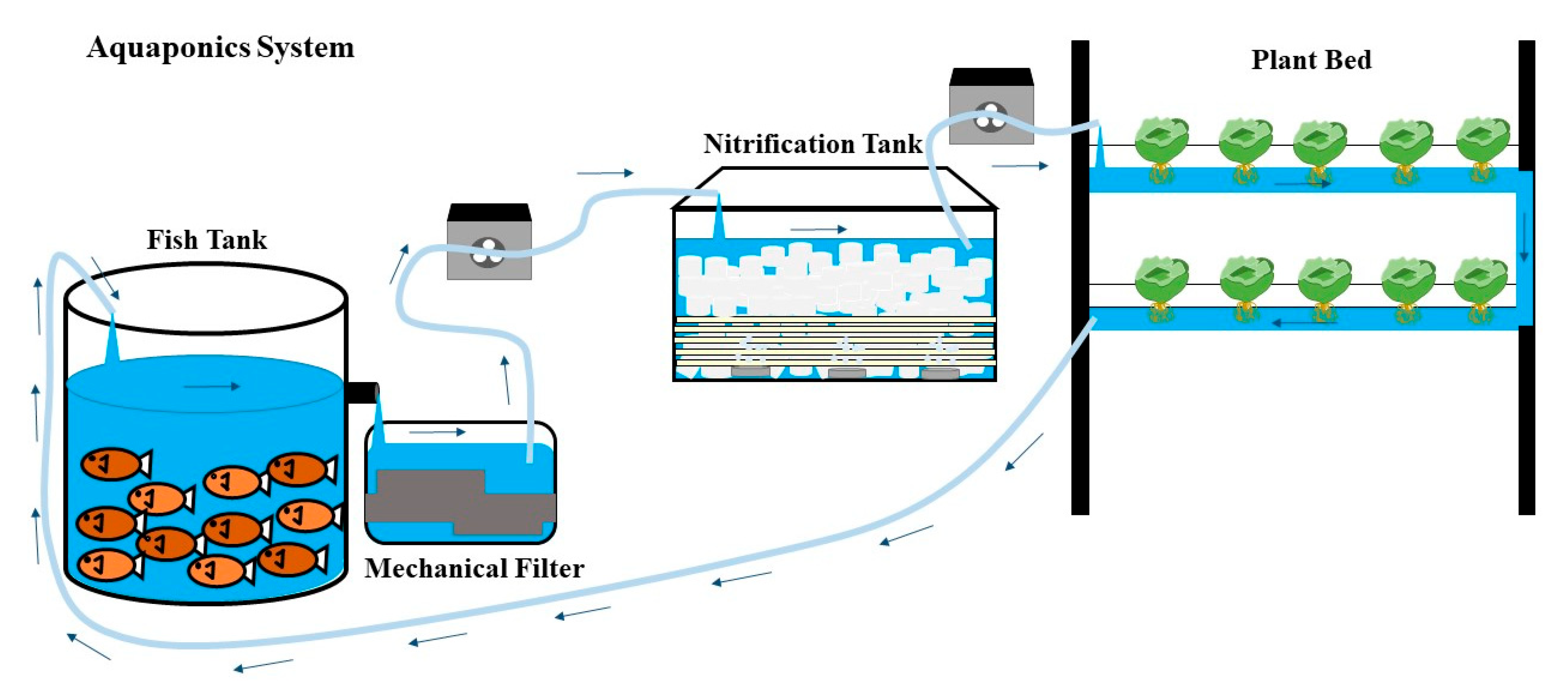
The increasing global population and rising food demand have stimulated interest in novel agricultural systems that utilize resources more sustainably [1]. Aquaponics combines recirculating aquaculture (fish farming) with hydroponics (soilless plant growing) in a closed-loop system (Figure 1). Fish waste nutrients are organically transformed into plant fertilizer, while plants assist in filtering the fish water [2]. Aquaponics embraces circular economy ideas by combining these subsystems, potentially lowering the demand for synthetic fertilizers and nutrient waste outflows [3,4]. This synergistic design offers several advantages: effective water reclamation, nutrient repurposing, and local cultivation of both protein (fish) and vegetables. Aquaponics is recognized as an environmentally beneficial technique that has garnered international interest in both academic and commercial sectors [5].
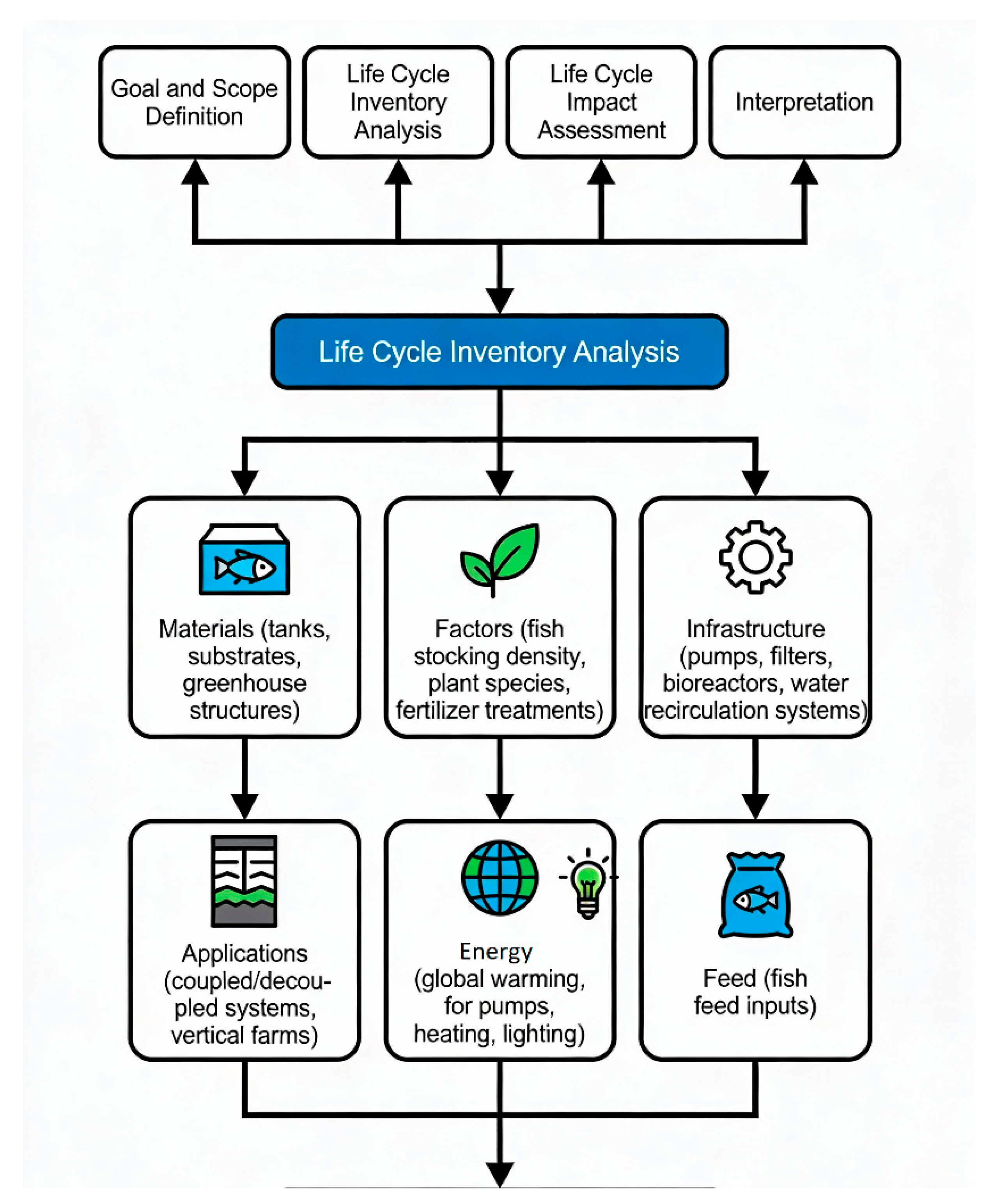
Aquaponic LCAs focus on four critical areas—energy, feed, infrastructure, and downstream logistics—shaped by factors such as electricity, heating, lighting, feed composition and sourcing, materials for greenhouses and tanks, and CO2 dosing, as well as cold-chain logistics, transport, and end-of-life considerations (Figure 2). Nonetheless, the question of whether aquaponics can surpass traditional agriculture or independent aquaculture/hydroponics in practice remains unresolved [6,7]. The environmental impact of aquaponic food must consider energy consumption (for pumping, heating, and lighting), fish feed production, the building of tanks and greenhouses, and other inputs required to sustain the regulated environment. LCA is used to measure these environmental consequences both progressively and comprehensively from “cradle-to-gate.” LCA encompasses all upstream resource extraction and processing, on-site resource utilization, and emissions linked to the production of a single product unit, offering a thorough assessment of sustainability. Researchers have utilized LCA to identify hotspots, which are significant contributors to impact, within aquaponic systems and to conduct comparisons between aquaponics and alternative production methods [8,9]. Initial LCA case studies on aquaponics focused primarily on small-scale or theoretical systems. However, in recent years, there has been a notable increase in LCA research globally encompassing commercial-scale operations [10].
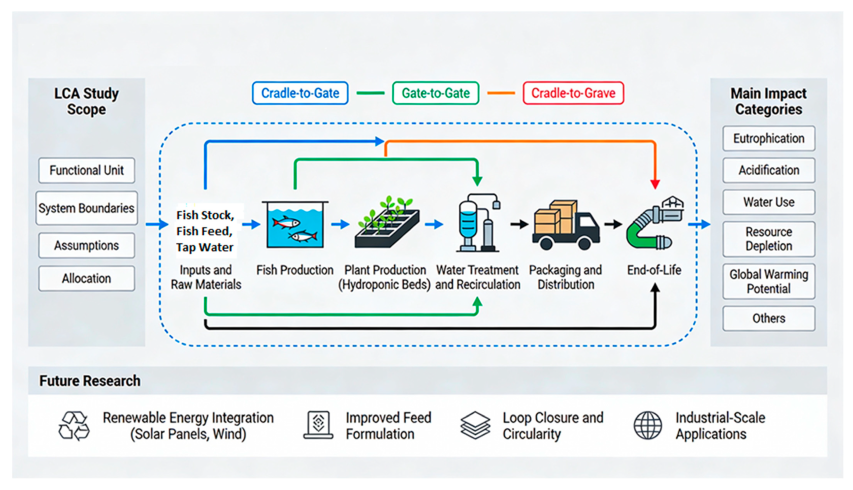
This article provides a comprehensive review of the current advancements in aquaponics LCA, emphasizing cradle-to-gate system boundaries (Figure 3). This document consolidates findings from the recent literature to examine the following: (i) prevalent LCA methodologies and functional units applied in aquaponics, (ii) standard impact categories and identified hotspots, (iii) the comparative environmental performance of aquaponics relative to conventional systems (including hydroponics, aquaculture, and soil-based farming), (iv) potential improvement opportunities to enhance the sustainability of aquaponics. The scope is worldwide and encompasses a variety of aquaponic designs, fish species, and crops, illustrating the diversity of the systems examined. Three summary tables are presented: one juxtaposing essential LCA outcomes of aquaponics against other systems and a second cataloging current LCA studies of aquaponics, including their focus points and findings, while the third table presents an actionable roadmap for different factors to include and their significance in improving LCA quality. Through the synthesis of these studies, we intend to elucidate optimal practices and guide future research in sustainable aquaponic production.

2. LCA Methodology for Aquaponics Systems

2.1. Functional Units and System Boundaries (Cradle-to-Gate)

LCA studies of aquaponics generally utilize a cradle-to-gate boundary, which includes all phases from raw material extraction (the “cradle”) through system operation, concluding at the point where products (fish and vegetables) exit the farm gate. Downstream processes such as food distribution, retail, consumption, or end-of-life are typically excluded, as the emphasis is placed on the production phase [11]. This cradle-to-gate methodology is consistent with other agricultural LCAs, facilitating reliable comparisons of on-farm production impacts. The findings indicate that numerous aquaponic LCAs focus on enhancing on-site processes and inputs before market distribution [12,13].
Aquaponics LCAs within the system boundary encompass infrastructure manufacturing, energy and water inputs, and fish feed and fry production, as well as ancillary materials such as pipes, growing media, and fertilizers or supplements added. The outputs analyzed include edible products, specifically fish and plant biomass, as well as emissions such as CO2 resulting from energy consumption, nutrient effluents, or waste materials. Certain studies exclude specific life cycle stages based on the assumption of negligible impact or insufficient data availability [14]. For instance, processes such as hatchery production of fingerlings, seed production for crops, or post-harvest processing are occasionally omitted due to previous analyses suggesting negligible impact [4]. Excluding certain stages simplifies the model; however, this may introduce uncertainty if those stages are subsequently determined to be non-trivial.
Functional unit (FU) definitions differ, reflecting the co-production of fish and plants. A popular choice is a mass-based FU, such as “1 kg of fresh product”—which may be defined independently for each output or as a combined product bundle. For example, one research project utilized 1 kg of mixed fresh products (fish and vegetables) as the FU to reflect the system’s overall production [6]. Others establish distinct FUs (e.g., per kilogram of fish or per kg of vegetables) and divide the effects between fish and plants. Aquaponics LCAs consequently confront a multifunctionality challenge: determining how to allocate total effects across the two co-products. Several allocation strategies have been used in the literature:
  • Mass allocation: Impacts are distributed according to the bulk of fish and plant production [11,15]. This is simple, but it implies equal importance per kilogram, which may not accurately reflect economic worth or environmental impact if outputs vary significantly.
  • Economic allocation: Impacts are assigned based on the relative market value of fish vs. vegetables. This technique, employed by [16], allocates a greater part of the effects to the higher-value product. It identifies economic forces, although market values may change [16].
  • Mass vs. economic allocation: Mass allocation generally reallocates a greater portion of environmental impacts towards plant production, as vegetables are cultivated in significantly larger physical volumes compared to fish, often leading to crops being perceived as more impact-intensive. Conversely, economic allocation places a heavier burden on fish due to their elevated market value, which can considerably amplify the apparent environmental footprint associated with aquaculture elements. Consequently, the perceived sustainability ranking of fish relative to plant outputs, and even among various aquaponic designs, can vary significantly based on the allocation method employed.
  • Nutrient or content allocation: These approaches are derived from specific content metrics (e.g., protein levels or nutritional nitrogen/phosphorus concentrations in outputs). Ref. [17] implemented a nutrient-based allocation for common carp and lettuce, indicating that fish and plants fulfill distinct nutritional functions [17].
  • System expansion or displacement: This strategy compensates the aquaponic system for balancing effects in different systems, rather than allocating. Ref. [18] added prevented fertilizer output (fish waste substituting synthetic plant fertilizer). System growth shows integration’s net advantage but requires the description of analogous alternatives [18].
  • Combined functional unit (no allocation): Some studies define the functional unit as a fixed bundle of fish and vegetables produced together to prevent allocation. An FU may be “production of X kg fish and Y kg vegetables”. This method was used by [11,19], a small-scale Canadian aquaponics study. This method approaches the system as a single joint service, but it complicates comparisons to single-output systems like fish farming [11,19].
Every method has its pros and cons, and the decision might affect the outcomes of the LCA. A survey of 14 aquaponics LCA studies revealed a nearly equal distribution among these techniques, highlighting a deficiency in uniformity [18,20]. To enhance comparability, several researchers advocate for a standardized functional unit or allocation convention for aquaponics LCA [21]. In fact, many recent studies show results for more than one allocation scenario (such as mass vs. economic) in order to show the sensitivity of the method [14]. Considering that aquaponic systems generate both fish and plants concurrently, the selection of an allocation method can significantly affect the assessed environmental impacts. By comparing mass-based and economic allocation via sensitivity analysis, one can determine the resilience of LCA outcomes to methodological assumptions. The integration of various allocation methods enhances transparency, facilitates comparability across studies, and bolsters the credibility of sustainability assertions in aquaponics research. Table 1 compiles the latest series of aquaponics LCA case studies, illustrating how results are influenced by boundary determinations, energy contexts, and the management of co-products. Across various systems and regions, electricity stands out as the primary factor contributing to global warming and air quality impacts, whereas fish feed plays a crucial role in determining eutrophication, toxicity, and resource utilization categories. The addition of several cradle-to-grave studies reveals that downstream processes, such as nutrient-rich discharge in decoupled systems and cold-chain logistics, can significantly alter the hotspot landscape. Collectively, this evidence emphasizes the importance of integrating operational measurements with both upstream and downstream inventories, while also broadening the set of indicators to include marine resource use and biodiversity, in order to prevent trade-offs being overlooked.
The functional unit is typically 1 kg of production, irrespective of allocation, whether it pertains to fish or crops. In studies concentrating on a specific component of the system, such as assessing fish production efficiency, researchers may utilize 1 kg of fish as the functional unit and regard plants as a by-product, or the reverse. A comparative LCA of varying fish stocking densities in a low-tech aquaponic system utilized “1 kg increase of table size rainbow trout” as the functional unit, while considering simultaneous lettuce production through allocation [23]. Precision in defining the functional unit and the allocation mechanism is essential, since it directly influences the perception of outcomes. Recommendations are to standardize the functional unit to either 1 kg of fish or 1 kg of plants produced to keep the study results comparable and relevant.
Methodology for gate-to-gate LCA in aquaponics: Research aiming to quantify real consequences imposed by day-to-day operation of aquaponic systems frequently requires a gate-to-gate system boundary (farm-operation only), while cradle-to-gate evaluations are important for capturing upstream infrastructure, inputs, and embodied burdens. Ref. [22] modeled a low-tech rainbow trout–lettuce aquaponic system under both gate-to-gate and cradle-to-gate scopes to distinguish operational burdens from embodied ones and to test sensitivity to stocking density and allocation method [22]. The work is just one example of how recent work has shown the value of reporting both perspectives. For future studies, we suggest publishing paired gate-to-gate and cradle-to-gate results (with the same FU, model, and allocation logic). This will allow designers and operators to (i) confidently target operational hotspots (such as electricity, heating/cooling, aeration/recirculation, and CO2 dosing) and (ii) compare systems fairly on a full production basis.

2.2. Impact Assessment Categories and Methods

Aquaponics LCA studies generally utilize established environmental impact assessment methodologies (e.g., CML, ReCiPe, TRACI) to convert inventory flows into impact categories.
In aquaponics, water and nutrients are transported from fish tank → bio-filter → hydroponic beds → produce, with significant effects resulting from aeration/pumping and heating within the tank, media replacement, and nitrification losses occurring in the bio-filter, as well as lighting and nutrient supplementation in the beds and packaging/cold-chain processes for the produce. Future research should aim to align functional units and allocation methods, quantify credits for nutrient recovery, evaluate low-carbon energy sources and circular/alternative feeds, create durable low-impact materials for tanks and media, and simulate dynamic, region-specific operations to minimize uncertainty and overall impacts, as presented in Figure 3. A wide range of midpoint categories is frequently examined to capture various effects; however, several impact categories have been consistently highlighted.
  • Global Warming Potential (GWP): Nearly all studies present GWP (carbon footprint) in kilograms of CO2-equivalent [2]. GWP is a crucial metric due to the energy consumption and CO2 emissions linked to aquaponics. It facilitates comparison with other food systems for climate effect objectives.
  • Energy Use/Cumulative Energy Demand (CED): Aquaponics needs ongoing energy inputs (such as pumps, aerators, and lights); hence, cumulative energy consumption or a corresponding fossil fuel depletion indicator is often evaluated [21].
  • Eutrophication Potential: Both freshwater and marine eutrophication potentials, arising from nutrient outputs such as nitrogen and phosphorus, are essential since aquaponics seeks to mitigate nutrient runoff. Numerous studies measure the extent of nutrient contamination (in phosphate or nitrogen equivalents) that is generated or mitigated [24,27].
  • Acidification Potential: Emissions like ammonia from fish or nitrate leaching can lead to acidification; several studies use this category to account for acid rain precursors [6,28].
  • Land Use: Being intense and perhaps urban/vertical, aquaponics is said to save land. While energy and water are more commonly cited as limiting factors, some studies do take land occupancy implications into account [28].
  • Water Use: Aquaponics substantially decreases water use relative to soil agriculture. An indication of water depletion is frequently presented, demonstrating the advantages of aquaponics in dry regions [29,30].
  • Ecotoxicity and Human Toxicity: These factors can be included to assess the impacts of infrastructure materials (metals, plastics) or biocide usage; however, results may vary and are occasionally given less emphasis [31,32].
  • Resource Depletion (Abiotic): Metrics for the depletion of mineral and fossil resources can be calculated when accounting for materials and energy [4].
  • Marine Resources and Biodiversity: The utilization of marine resources highlights the strain that aquaponic systems exert on ocean-sourced inputs like fishmeal, fish oil, and marine fertilizers. In contrast, the impact on biodiversity indicates the possible repercussions on ecosystems resulting from feed sourcing, land and water consumption, and indirect alterations to habitats. Incorporating these impact categories into the LCA of aquaponics is crucial to prevent burden shifting, uncover concealed trade-offs between “sustainable” food production and ecosystem preservation, and offer a more comprehensive evaluation of the genuine environmental sustainability of aquaponic systems, extending beyond metrics focused solely on climate and energy.
The impacts discussed above are particularly appropriate for aquaponic systems due to their integration of aquaculture, hydroponics, and recirculating water management, which generates various environmental interaction pathways. Metrics such as GWP, energy consumption, and CED effectively illustrate the significant electricity and infrastructure requirements of recirculating systems. In contrast, the potentials for eutrophication and acidification provide a direct representation of nutrient emissions, feed losses, and system leakages that are critical to the performance of aquaponics.
Land and water utilization are especially pertinent, as aquaponics is frequently advocated for due to its spatial efficiency and water conservation advantages over traditional agriculture. Meanwhile, ecotoxicity and human toxicity considerations highlight the risks linked to water treatment chemicals, system materials, and feed additives. Furthermore, it is vital to consider resource depletion, marine resource utilization, and biodiversity effects to address the upstream pressures stemming from fish feed production and material inputs, thereby ensuring that environmental burdens are not displaced beyond the system’s boundaries.
Because aquaponics LCAs typically examine GWP, terrestrial acidification, freshwater eutrophication, marine eutrophication, and marine ecotoxicity, and controlled environment agriculture is known for high energy use, driving impacts, these five indicators were mentioned by [33]. Impact categories might represent regional priorities (e.g., water shortage measurements in dry places) or specific research issues (e.g., aquaponics nutrient impacts) [33].
Energy-related consequences, such as GWP, acidification from NOx/SO2, and pollution, predominantly influence aquaponics LCA outcomes owing to the systems’ dependence on power and heating. Consequently, techniques like ReCiPe or CML, which offer a comprehensive range of midway indicators, are frequently utilized to guarantee these impacts are documented. Ref. [34] examined endpoint indicators (such as harm to ecosystems, human health, and resources); however, midpoint data are more frequently disclosed for the sake of transparency [34].

3. Environmental Performance and Hotspots of Aquaponics (Cradle-to-Gate)

3.1. Key Hotspots: Energy and Fish Feed

A recurrent finding in LCA research is that energy consumption is the primary contributor to environmental consequences in aquaponic systems. The electricity utilized for water pumping, fish tank aeration, temperature regulation, and artificial lighting in indoor or greenhouse environments can constitute a significant portion of the carbon footprint and other impact metrics [35]. A recent study on a commercial aquaponic system in Sweden, which produces fish, cucumbers, and tomatoes, discovered that power consumption mainly for growing and lights accounted for over 50% of the effects across virtually all categories [36]. Despite Sweden’s very low-carbon energy infrastructure, primarily composed of renewables, energy consumption persisted as the principal concern. In areas with fossil fuel-dominated electrical systems or where additional heating is necessary, the effects of energy can be significantly amplified [37].
In cold or temperate regions, heating requirements significantly increase the energy load. Both the heating of greenhouses and water for fish welfare were recognized as significant factors in fossil fuel depletion, global warming, acidification, and eutrophication in an LCA of aquaponics in the Midwest, USA [19]. Likewise, CO2 enrichment systems, which inject pure CO2 to enhance plant growth in greenhouses, can directly release CO2, thereby emerging as a significant producer of greenhouse gases [37]. A case study of an aquaponic system in a cold climate identified power, heating, and CO2 injection as the primary factors significantly influencing overall outcomes [36]. These energy-related inputs eclipse several other contributions; even if aquaponics demonstrates efficiency in water and nutrient utilization, it may transfer the environmental burden towards energy consumption.
Another significant focal point is the manufacture of fish feed. Fish feed is often a high-protein formulation, commonly comprising fishmeal, soy, grains, and other components, whose manufacturing involves upstream effects including land utilization, fertilizer application for ingredients, and the collection of wild fish for fishmeal. LCAs of aquaponics often identify feed as a primary factor contributing to issues such as eutrophication, marine ecotoxicity, and resource depletion [17]. In a walleye–vegetable aquaponic system, the generation of feed, particularly fishmeal, significantly contributed to the consumption of natural resources; it heightened the system’s reliance on marine resources (oceanic primary production for fishmeal) and consequently raised concerns regarding the net primary production use indicator [30]. Ref. [38] indicates that utilizing fish waste as fertilizer diminishes dependence on synthetic fertilizers, therefore positively influencing climate change; however, it reallocates the burden to fish feed, which may deplete more natural resources than the production of comparable plant fertilizers [38]. Ref. [35] stated that substituting chemical nutrient inputs with feed-derived nutrients reduced the impact on climate change (since feed waste is effectively “valorized”), but it augmented the overall consumption of natural resources owing to the feed’s inherent footprint [35].
The significance of feed compared to direct energy differs based on system type and fish species. In ecosystems including carnivorous fish such as trout or walleye, feeds abundant in fishmeal and fish oil possess substantial ecological footprints, rendering feed production a significant area of concern [14]. Conversely, for omnivorous fish such as tilapia or carp that are primarily given plant-based diets, the energy expenditure frequently surpasses the effects of the feed. However, for tilapia, feed production, encompassing crops such as soy and wheat, as well as processing, constitutes a significant component of GWP and eutrophication potential [14,17]. Numerous LCAs identify feed as the second most significant contribution behind energy. In a rainbow trout–lettuce system, power use was the predominant greenhouse gas contributor, while feed production accounted for around 10% of the GWP and almost 20% of water depletion consequences [19].
Infrastructure and equipment also have a role, but to a diminished degree. The materials for tanks, pipelines, greenhouse structures, pumps, etc., are classified into categories such as abiotic resource depletion, human toxicity, and metal/ecotoxicity consequences [2]. An LCA of a high-tech aquaponic greenhouse revealed that its steel-and-glass design significantly contributed to Abiotic Depletion Potential and human toxicity effects [39]. This suggests that for systems constructed with considerable materials (e.g., extensive greenhouse facilities), the one-time “embodied” consequences of construction can be high in certain impact categories. Over an extended duration, these effects are mitigated; however, they must be considered. Less complex or smaller systems (e.g., DIY or instructional units utilizing recycled materials, as demonstrated by [40]) have comparatively fewer infrastructure consequences [2]. Conversely, commercial aquaponics including advanced infrastructure (such as multi-tiered grow beds and climate control systems) would experience heightened embodied consequences.
Finally, the water footprint of aquaponics is usually good, as it consumes less water to compensate for evaporation and transpiration since water is recirculated. According to [28], a balanced aquaponics system only needs water to make up for these losses, far less than conventional irrigated farming [28]. Ref. [18] shows an over 90% water saving compared to soil cultivation of identical crops, where hydroponic lettuce uses 90% less water than field lettuce, while aquaponics, which is recirculating, eliminates nutrient runoff [18]. Aquaponics generally performs well in water shortage conditions, as water (if not rare) has minimal impact per liter; hence, water consumption is usually a modest input to most impact categories (excluding water depletion) [29]. In aquaponics LCAs, power (and heating fuel) and fish feed are the main environmental factors.

3.2. Advantages in Water and Nutrient Management

LCA shows that aquaponics conserves water and reduces nutrient contamination. Traditional agriculture is water-intensive and causes nutrient runoff, eutrophicating waterways. These concerns are much reduced in closed-loop aquaponic systems:
  • Water Use: Aquaponics often decreases water usage by 90–95% relative to soil agriculture for comparable yields [18]. Water is constantly recirculated, with just a little portion lost to evapotranspiration. For instance, hydroponic or aquaponic lettuce requires just a few liters of water per kilogram, in contrast to the tens or hundreds of liters utilized in conventional open-field agriculture. LCA studies frequently indicate that water depletion effects for aquaponics are minor, except for the limited top-up water, which has an inconsequential impact on shortage in many areas. Aquaponics is very advantageous in dry areas or locations with restricted freshwater availability. Aquaponics has been identified as a crucial factor for its potential advantages in dry and urban regions, facilitating food production with little water usage [29].
  • Eutrophication and Nutrient Emissions: In recirculating aquaponics, nutrient-rich fish water is not released into the environment; rather, nutrients are absorbed by plants. This significantly minimizes the risk of nitrate or phosphate contamination when compared to solo aquaculture. Many LCAs show that aquaponic systems have a lower eutrophication potential per unit output than comparable fish or agricultural systems that emit waste streams [41]. Aquaponics solves one of aquaculture’s most pressing environmental issues by avoiding direct wastewater discharge. Any remaining sludge or concentrate can be further handled (e.g., compost or biofertilizer), thereby ending the cycle. Aquaponics is sometimes credited with near-zero nutrient outflow, with the exception of what is embedded in the final biomass. For example, one study found that aquaponics “minimizes nutrient-loaded water effluents,” which have a detrimental impact on traditional aquaculture [42].
  • Reduced Synthetic Fertilizer Use: Aquaponics utilizes fish waste as fertilizer, hence diminishing or negating the necessity for synthetic fertilizers in the plant component. The manufacture of chemical fertilizers, particularly nitrogen through the energy-intensive Haber–Bosch process, has a considerable carbon and energy footprint. Aquaponics LCAs recognize this advantage through either a direct decrease in fertilizer usage or through system expansion credits, as demonstrated by [37]. The outcome is a reduction in fossil fuel use and greenhouse gas emissions linked to fertilizer. Ref. [25] ascribed a portion of aquaponics’ 45% reduced effect compared to hydroponics to the necessity of industrial fertilizer solutions in hydroponics, which aquaponics does not require. Ref. [11] also emphasizes nutrient recycling as a significant benefit of aquaponics in alleviating environmental pressures.
  • Land-Use Intensity: Aquaponics’ high production per unit area reduces land pressure for the same output, but not always quantifiably. If expanded up, urban and vertical aquaponics may produce food in small spaces, saving natural ecosystems from agriculture. Ref. [29] used a land occupation metric and favored aquaponics, depending on yield assumptions. High aquaponic vegetable yields reduce land occupation per kilogram (typically the greenhouse footprint is the limiting factor). Aquaponics in non-arable areas (e.g., roofs, warehouses, deserts) increases food supply without extending agricultural land.
These advantages reduce eutrophication, land usage, and freshwater ecotoxicity across the life cycle (because aquaponics uses less pesticide owing to fish sensitivity, another often-overlooked benefit). Multiple comparative studies have found that aquaponic produce has lesser environmental impacts than traditionally produced produce because of water and agro-chemical input reductions (though energy trade-offs must be considered). A case comparing local aquaponics production versus importing vegetables revealed that aquaponics avoided the large fertilizer and water inputs of the source country’s traditional farming, resulting in lower yearly GHG emissions and other consequences [23,25].

3.3. Trade-Offs: Energy and Climate Impacts

Aquaponics has drawbacks, mostly connected to energy usage and climate change. Aquaponics uses controlled environment techniques to replace natural resources like sunlight, ambient temperatures, and ecosystem services like soil nutrients and rainfall with technical inputs. Section 4.1 explains how energy use and manufacturing consequences become environmental costs. Thus, aquaponics does not always outperform alternatives in all effect categories:
  • Greenhouse Gas Emissions: Aquaponic systems may have a larger GHG effect (CO2-equivalent) per kg of yield compared to land agriculture, especially if fossil energy or heating is employed. In a Central European LCA on lettuce and fish production, open-field lettuce had a lower carbon footprint than aquaponic lettuce cultivated in a heated greenhouse, despite its water and nutritional benefits. Winter heating in hydroponic and aquaponic systems in cold areas can considerably increase CO2 emissions. Ref. [17] found that if an aquaponic greenhouse’s heating is powered by fossil fuels, its climate change effect per kg of lettuce can exceed that of outdoor farming, even if other impacts (water, eutrophication) are lower. Consequently, context is significant; in areas with temperate weather or renewable energy sources, the greenhouse gas performance of aquaponics is substantially enhanced, but in coal-dependent grids or frigid places, the greenhouse gas implications may be detrimental. Ref. [25] concisely stated, “The environmental impacts of controlled agriculture (hydroponics and aquaponics) are affected by geographic location, climate, and lighting,” indicating that tropical regions use less energy than temperate ones.
  • Acidification/Smog: Air emissions are linked to fuel combustion and electricity generation. Aquaponics may produce more acidification and pollution (NOx, SO2) than typical farms if energy is generated by coal or diesel generators. Energy-related emissions meant that hydroponic/aquaponic systems acidify the soil more than field systems in several LCAs; clean energy reduces the impact in these categories [42].
  • Manufacturing Impacts: Building elements like PVC pipelines and stainless steel tanks have industrial implications not found in soil farming. Ref. [15] shows that aquaponics can increase ecotoxicity or human toxicity. Eventually, recycling may amortize these consequences, but they are still a cost. Soil farming uses the ecosystem’s “free” infrastructure (soil, rivers) but depletes and pollutes it if not managed sustainably, which is outside the scope of conventional LCA unless land-use change or agrochemical ecotoxicity is considered.
  • Complexity and Operational Impacts: An aquaponic system is complicated and may have several points of possible effect. This complexity is not a “impact category” in and of itself, but it might indirectly increase resource consumption (redundancies, controls), which LCAs would identify as additional impacts [15].
Table 2 delineates the three primary system boundaries utilized in aquaponics LCA and highlights the reasons why achieving comparability across the literature is problematic. Gate-to-gate studies are proficient in pinpointing operational levers; however, they tend to understate embodied burdens and ought to be published in conjunction with cradle-to-gate analyses. Cradle-to-gate remains the most prevalent boundary, yet the results of these LCAs vary considerably based on the application of mass, economic, or no-allocation rules. Cradle-to-grave assessments are infrequent, but their incorporation is essential for decoupled systems, where nutrient discharge and downstream logistics alter the environmental burden profile.
Significantly, despite these trade-offs, several LCAs have determined that aquaponics is either equivalent to or superior in overall environmental performance relative to traditional systems when all categories are collectively evaluated. Ref. [11] examined aquaponics LCA and emphasized that although energy consumption is a difficulty, the environmental cost of food production in aquaponics can be lower than that of conventional techniques when systems are adjusted [11]. The prevailing view is that aquaponics is not intrinsically “zero-impact” or fundamentally superior; instead, it redistributes effects to alternative domains. The objective of sustainable design is to alleviate such altered impacts, particularly regarding energy, thereby decreasing the entire footprint.

4. Towards Sustainable Aquaponics

4.1. Synthesis of Findings

The analyzed LCA studies collectively suggest that aquaponics may serve as an ecologically sustainable food production technology when handled effectively, demonstrating distinct advantages in some impact areas (water, nutrient management) while facing obstacles in others (energy consumption, material intensity). A discernible pattern emerges: when an aquaponic system is juxtaposed with a functionally comparable amalgamation of distinct systems (aquaculture plus hydroponics or traditional agriculture), the integrated aquaponics typically demonstrates equivalent or reduced environmental consequences for the same yield [43]. This validates the intuitive assertion that resource reutilization (fish waste as fertilizer, shared water) enhances overall efficiency. Numerous comparative LCAs indicated significant reductions in GWP (15–50%) and fertilizer emissions for aquaponics compared to non-integrated systems [12].
Nonetheless, when aquaponics is compared to simpler conventional approaches, the results are more varied and contingent on circumstance. Soil-based field agriculture necessitates minimal energy use, but at the expense of substantial water use and more frequent fertilizer utilization. Aquaponics in a greenhouse within a temperate environment may have a greater carbon footprint per kilogram than field-grown produce that is carried from afar, unless the local energy sources are sustainable or the emissions from saved transportation are substantial [9]. The Swedish scenario leveraged a carbon-efficient grid and circumvented truck imports, therefore favoring the local aquaponic system [21]. In a hypothetical situation with coal-based energy and minimal transit distances, a conventional farm may produce less CO2 per kilogram than an aquaponic greenhouse, despite its greater waste of water and nutrients. Such scenarios underscore that energy infrastructure and climate are crucial in assessing the net sustainability of aquaponics.
All studies consistently identify the same critical factors in aquaponics: energy, feed, and infrastructure. This alignment indicates that the solutions are also consistent. Improvements in these areas can produce significant advantages, as demonstrated by several writers through scenario analysis.

4.2. Improvement Opportunities

Renewable Energy Integration: The most significant intervention is to provide aquaponic farms with renewable energy sources, such as solar panels and wind energy, or low-carbon alternatives. Providing renewable power can reduce GWP by around 30–50% or more for aquaponics [6]. Ref. [2] saw a 50% reduction in carbon footprint while utilizing solar energy in place of grid electricity [25]. Ref. [25] observed that hydroponics may surpass aquaponics in sustainability if it utilized 100% wind energy, suggesting that an aquaponic system powered by renewable resources would also achieve a significant advantage. Considering that energy consumption is the primary concern, transitioning to clean energy immediately mitigates the most significant sources of impact—GWP, acidification, and pollution—and frequently even long-term operational expenses. Certain urban aquaponics enterprises are currently co-locating with solar arrays or acquiring renewable energy sources. In instances when on-site renewables are impractical, enhancing energy efficiency through improved insulation of tanks and greenhouses, LED lighting, and high-efficiency pumps can result in substantial benefits. An analysis by [16] indicated that a 10% enhancement in power efficiency resulted in a similar reduction in total effects by around 10%, emphasizing a nearly direct correlation.
Optimizing Feed and Circular Feed Sources: The use of marine elements in fish feed is still a problem. One possible solution is to switch from fishmeal to diets that have less of an impact on the environment, such as plant-based proteins or insect meal. Ref. [15] saw significant improvements in specific impact areas when they investigated a fishmeal-free diet scenario. The supply of aquaponic feed could be rendered more circular through the incorporation of waste streams. For example, food waste may be utilized to cultivate insect larvae intended for fish feed. Certain aquaponic initiatives are capable of partially feeding their fish by producing black soldier fly larvae on-site, thereby diminishing the impacts associated with feed and enhancing the value of waste. Additionally, improving the Feed Conversion Ratio (FCR) serves as another strategy to alleviate feed-related effects. An elevated FCR signifies that a reduced amount of feed is required per kilogram of fish, resulting in more efficient growth. There was an effect of stocking density on feed consumption and effects per kg fish, with greater densities producing better results [15,25,44,45]. There are biological constraints on the extent to which FCR can be improved without negatively impacting fish health; however, with proper management (species selection, feeding methods), this can be mitigated. Aquaponics depends on delicate marine resources; however, this will change in the future if feeds can be obtained in a more sustainable way, for example, utilizing algae-based omega-3 rather than wild fish oil or by-products from other industries [46].
System Design and Scale: Decoupled aquaponic designs, which connect fish and plant systems while allowing for semi-independent management, represent an emerging trend aimed at enhancing control and potentially minimizing waste. Decoupled systems enable the optimization of conditions for fish and plants independently, such as temperature and pH, and typically incorporate mineralization units to convert fish waste into plant nutrients effectively [47]. This may enhance nutrient utilization efficiency, potentially decreasing the requirement for supplementary fertilizer and minimizing effluent discharge. Although not explicitly included in impact categories, such innovations enhance overall resource efficiency, resulting in a reduced impact per kilogram of output [48]. Scaling up can yield efficiencies, as larger systems frequently benefit from economies of scale in energy, resulting in increased output per unit of baseline energy use. This can also justify investments in renewable infrastructure or advanced monitoring to mitigate losses. Nonetheless, extensive scale introduces construction impacts, necessitating an evaluation of the net benefit. Ref. [49] observed that among the limited number of large commercial systems examined, electricity remained the predominant energy source, indicating that scaling alone does not address the issue without a shift in energy sources.
Resource Integration (Industrial Symbiosis): Aquaponics located in industrial or urban settings has the potential to leverage waste resources from other processes. Refs. [21,50] emphasized the importance of establishing symbiotic relationships, such as utilizing waste heat from adjacent facilities to heat greenhouses and employing CO2 from industrial emissions for plant fertilization [21,50]. This integration can transform what would otherwise be emissions or waste from one industry into inputs for aquaponics, thereby reducing the direct impact of the aquaponic system [5]. Aquaponics in urban settings can utilize organic waste through anaerobic digestion to enhance nutrient supply, employ treated wastewater as a water source, or provide fish with algae cultivated on-site, thereby minimizing reliance on virgin inputs. These concepts extend beyond existing LCA models, which generally assume isolated systems; however, future evaluations are expected to incorporate them. Integrating aquaponics within buildings, such as rooftop greenhouses, can leverage building heat and minimize the requirement for land and additional structures, thereby reducing environmental impacts [35,48].
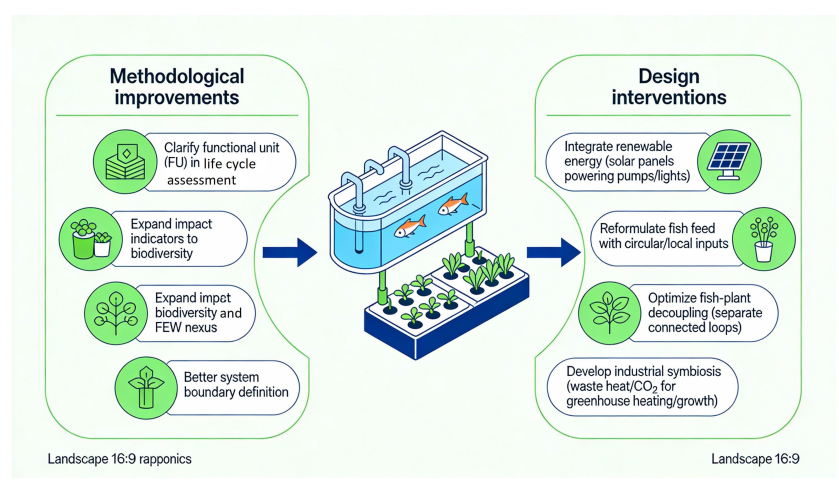
Extending Lifespan and Reuse: The infrastructural effects of aquaponics can be mitigated by prolonging system longevity and repurposing components. Selecting resilient materials with longevity and creating modular systems that are amenable to repair or repurposing can reduce the annual environmental effect. A study investigated equipment longevity and determined that extending the lifespan of certain components significantly decreased consequences in manufacturing-related categories [15]. The recycling of metal and plastic components at the end of their life cycle can recover value and mitigate environmental costs, while LCA often includes recycling credits at end-of-life if expected. Figure 4 illustrates two interrelated strategies aimed at reducing life cycle impacts in aquaponics. Research should focus on enhancing functional-unit and allocation transparency, standardizing system boundaries, and broadening indicators to encompass not only climate and energy but also biodiversity and food–energy–water (FEW) nexus effects, thereby facilitating comprehensive cross-study comparisons. Also, it should effectively address critical hotspots, including the integration of renewable energy for pumps, heating, and lighting, the reformulation of feed using circular inputs (such as by-products, insect meals, and plant proteins), optimization of decoupling to align fish and plant requirements while minimizing waste, and industrial symbiosis that repurposes waste heat and CO2.
In aquaponic systems, the recovery of nutrients and the reuse of waste are accomplished by biologically transforming fish waste and uneaten feed into nutrients that plants can utilize, through processes such as nitrification and mineralization occurring in bio-filters and solids-treatment units. Settled sludge can be further repurposed through methods like anaerobic digestion, aerobic composting, or mineralization reactors, which facilitate the release of phosphorus, potassium, and micronutrients back into the system. Moreover, the recirculation of treated effluent to hydroponic units enhances nutrient retention, diminishes the need for external fertilizers, and reinforces the circularity of aquaponic production.
This study collates the actionable levers that consistently arise from various case studies and aligns them with methodological requirements, and these are combined and presented in Table 3. The decarbonization of energy supply through the use of photovoltaics, wind energy, or the integration of heat pumps consistently reduces global warming impacts by half in scenario analyses, indicating immediate opportunities for enhancement. Reformulating feed, whether through the incorporation of insect meal, plant-based diets, or circular sourcing, also holds significant transformative potential, although it depends on more precise burden accounting. Achieving a balance between fish and plant flows in decoupled systems seems crucial for mitigating eutrophication, while industrial symbiosis, involving waste heat and CO2 streams, presents a frequently overlooked yet impactful avenue. In practical terms, implementing this roadmap can assist researchers in crafting LCAs that are not only diagnostic but also prescriptive, steering aquaponics towards credible sustainability pathways.
  • Research Gaps and Future LCA Considerations: Aquaponics is a nascent discipline, and the quantity of thorough LCA studies remains restricted; this analysis highlights various gaps and the need for further research.
  • Standardization of LCA Method: The absence of a standardized functional unit or allocation method complicates direct comparisons among research. Future research may propose a suggested approach, potentially involving the reporting of findings for both a combined follow-up and distinct assigned follow-ups, to ensure comprehensive coverage. A standardized structure, similar to Product Category Rules for other items, would enhance comparability. The harmonization research conducted by [49] advanced this objective regarding GWP. Enhancing efforts to standardize not only GWP but also additional impacts and assumptions (e.g., system longevity, co-product management) would advance the discipline.
  • Dynamic and Life Cycle Costing (LCC) Integration: The majority of LCAs conducted to date are static, with a limited number including economic analysis. The feasibility of aquaponics is closely associated with economic factors. Recent studies, such as those by [11], have quantified environmental implications, while others advocate for the integration of LCA with techno-economic analysis. Implementing a combined LCA and LCC, or even a Life Cycle Sustainability Assessment that incorporates social metrics, might yield a comprehensive perspective on the sustainability of aquaponics, revealing synergistic opportunities or trade-offs between environmental objectives and economic viability.
  • Scale and Real-World Data: Numerous early LCAs were conducted on pilot or research systems, often less than 100 m2. Data from fully running commercial farms is limited. With the emergence of further commercial aquaponics systems, it is essential to collect authentic operational data (energy consumption, yields, maintenance) to substantiate LCA models. Extensive systems may realize efficiencies absent in pilot studies or face novel challenges; hence, empirical LCA on a commercial scale (e.g., >1000 m2 facilities) is a research imperative. The research identified only a limited number of genuine commercial-scale evaluations (e.g., [51] in Florida, [21] in Sweden, and one in the UAE by [52]), highlighting a necessity for more studies.
  • Geographic Diversity: Most LCA investigations have been in Europe and North America, with a handful in Asia–Pacific. Climate, energy systems, and fish/crop choices in Africa, South Asia, and South America may affect LCA results [30]. Aquaponics might improve food security in developing nations’ cities, but these cities’ infrastructure may not sustain energy-intensive production without renewable solutions. Studying aquaponics in these environments (possibly with low-tech designs) might increase its worldwide applicability [18].
  • Impact Category Extension: The focus has been on conventional environmental consequences. Future LCAs may include biodiversity impacts (land spared, escaped non-native species, etc.), social impacts (job creation, community benefits), and nutrition-based functional units. Using new impact assessment approaches like circularity or ecosystem services might better capture aquaponics’ advantages (such avoiding polluting rivers).
  • End-of-Life and Downstream: The emphasis has been on cradle-to-gate assessment, although comprehensive cradle-to-grave analysis (including distribution, retail, consumption, and waste disposal) is necessary for a complete comparison with traditional food supply chains. If aquaponics produce is locally consumed and undergoes less spoiling because to its freshness, this might represent an additional advantage; however, energy consumption for home storage and cooking may be comparable to that of any other produce [18]. Currently, studies expressly omit downstream stages for convenience; nonetheless, a comprehensive investigation of the food system would provide valuable insights, particularly within the context of urban metabolism.

5. Conclusions

Aquaponics raises fish and plants in a closed-loop system, providing sustainable food production. Cradle-to-gate LCA studies reveal that aquaponics conserves water and recycles nutrients better than traditional farming, practically eliminating fertilizer runoff and water demand. These advantages may be outweighed by greater energy demand and infrastructural consequences, especially in fossil fuel-based electrical systems. Greenhouse gas emissions, fossil energy consumption, and pollution are sustainability hotspots. Reducing these consequences requires mitigation techniques, including integrating renewable energy, increasing system efficiency, optimizing feed, and utilizing waste heat or CO2. Well-optimized aquaponic systems, especially those driven by renewable energy and employing sustainable feed, can reduce production footprints, according to scenario simulations. Aquaponics is not a cure-all but has great promise when planned properly. Renewable power, nutrition and waste loop closure, and localization are needed in future endeavors. Standardized LCA methodologies and extended research across multiple contexts, including economic and social metrics, are needed to make aquaponics a climate-smart, resource-efficient, and sustainable food production system.

Author Contributions

S.E.H.M., and S.-E.O. were responsible for the conception, design, and editing of this work. S.E.H.M., A.S., S.S., S.P., F.H., and W.K. were responsible for data collection, analysis, and interpretation. The first draft of the manuscript was written by S.E.H.M., S.-E.O., supervised, revised and edited the manuscript. S.E.H.M., A.S., S.S., S.P., F.H., W.K., and S.-E.O., contributed to subsequent revisions of the work. All authors have read and agreed to the published version of the manuscript.

Funding

This research received no external funding.

Data Availability Statement

The original contributions presented in this study are included in the article. Further inquiries can be directed to the corresponding author.

Acknowledgments

During the preparation of this manuscript, the authors used ChatGPT 5.2 for the purpose of text editing grammar, structure, and punctuations.

Conflicts of Interest

The authors declare no conflicts of interest.

Abbreviations

LCALife cycle assessment
FUFunctional unit
GWPGlobal warming potential
FCRFeed conversion ratio
LCCLife cycle costing
CEDCumulative energy demand
GHGGreenhouse gases
LEDLight-emitting diode
FEWFood–energy–water
KgKilogram

References

  1. Department of Economic. World Population Prospects 2024: Summary of Results; United Nations Department of Economic and Social Affairs: New York, NY, USA, 2024; ISBN 978-92-1-106937-2. [Google Scholar]
  2. Ravani, M.; Chatzigeorgiou, I.; Monokrousos, N.; Giantsis, I.A.; Ntinas, G.K. Life Cycle Assessment of a High-Tech Vertical Decoupled Aquaponic System for Sustainable Greenhouse Production. Front. Sustain. 2024, 5, 1422200. [Google Scholar] [CrossRef]
  3. Campanati, C.; Willer, D.; Schubert, J.; Aldridge, D.C. Sustainable Intensification of Aquaculture through Nutrient Recycling and Circular Economies: More Fish, Less Waste, Blue Growth. Rev. Fish. Sci. Aquac. 2022, 30, 143–169. [Google Scholar] [CrossRef]
  4. Henriksson, E.F.; Elnour, M.; Martin, M. Environmental Life Cycle Assessment of a Commercial Aquaponic System. Clean. Environ. Syst. 2025, 17, 100282. [Google Scholar] [CrossRef]
  5. Delshad, A.B. Community Gardens:An Investment in Social Cohesion, Public Health, Economic Sustainability, and the Urban Environment. Urban. For. Urban. Green. 2022, 70, 127549. [Google Scholar] [CrossRef]
  6. Martin, M.; Elnour, M.; Siñol, A.C. Environmental Life Cycle Assessment of a Large-Scale Commercial Vertical Farm. Sustain. Prod. Consum. 2023, 40, 182–193. [Google Scholar] [CrossRef]
  7. Mehdi, S.E.H.; Amen, R.; Ali, A.; Anjum, H.; Mahmood, A.; Mubashir, M.; Mukhtar, A.; Ullah, S.; Al-Sehemi, A.G.; Ibrahim, M.; et al. Sources, Chemistry, Bioremediation and Social Aspects of Arsenic-Contaminated Waters: A Review. Environ. Chem. Lett. 2021, 19, 3859–3886. [Google Scholar] [CrossRef]
  8. Ertle, J.; Kubota, C. Reduced Daily Light Integral at the End of Production Can Delay Tipburn Incidence with a Yield Penalty in Indoor Lettuce Production. HortScience 2023, 58, 1217–1224. [Google Scholar] [CrossRef]
  9. Pomoni, D.I.; Koukou, M.K.; Vrachopoulos , M.G.; Vasiliadis, L. A Review of Hydroponics and Conventional Agriculture Based on Energy and Water Consumption, Environmental Impact, and Land Use. Energies 2023, 16, 1690. [Google Scholar] [CrossRef]
  10. Michiels, F.; Hubo, L.; Geeraerd, A. Why Mass Allocation with Representative Allocation Factor Is Preferential in LCA When Using Residual Livestock Products as Organic Fertilizers. J. Environ. Manag. 2021, 297, 113337. [Google Scholar] [CrossRef]
  11. Greenfeld, A.; Becker, N.; Bornman, J.F.; Spatari, S.; Angel, D.L. Monetizing Environmental Impact of Integrated Aquaponic Farming Compared to Separate Systems. Sci. Total Environ. 2021, 792, 148459. [Google Scholar] [CrossRef]
  12. Kozai, T.; Niu, G.; Masabni, J. (Eds.) Aquaponics. In Plant Factory Basics, Applications and Advances; Academic Press: Cambridge, MA, USA, 2022; pp. 167–180. [Google Scholar]
  13. Guan, Y.; Liu, L.; Chen, Y.; Liu, L. Life Cycle Assessment of an Industrial Aquaponics System in Chongqing, China: Environmental Performance and Optimization Strategies. Sustainability 2025, 17, 8254. [Google Scholar] [CrossRef]
  14. Kalvakaalva, R.; Smith, M.; Prior, S.A.; Runion, G.B.; Ayipio, E.; Blanchard, C.; Wells, D.; Blersch, D.; Adhikari, S.; Prasad, R.; et al. Life Cycle Assessment of a Decoupled Biofloc Aquaponics Facility across Seasons. J. Clean. Prod. 2023, 429, 139356. [Google Scholar] [CrossRef]
  15. Ghamkhar, R.; Hartleb, C.; Wu, F.; Hicks, A. Life Cycle Assessment of a Cold Weather Aquaponic Food Production System. J. Clean. Prod. 2020, 244, 118767. [Google Scholar] [CrossRef]
  16. Gavhane, K.P.; Hasan, M.; Singh, D.K.; Kumar, S.N.; Sahoo, R.N.; Alam, W. Determination of Optimal Daily Light Integral (DLI) for Indoor Cultivation of Iceberg Lettuce in an Indigenous Vertical Hydroponic System. Sci. Rep. 2023, 13, 10923. [Google Scholar] [CrossRef] [PubMed]
  17. Jaeger, C.; Foucard, P.; Tocqueville, A.; Nahon, S.; Aubin, J. Mass Balanced Based LCA of a Common Carp-Lettuce Aquaponics System. Aquac. Eng. 2019, 84, 29–41. [Google Scholar] [CrossRef]
  18. Behr, L.M.; Hu, A.H.; Heck, P. Assessing the Environmental Impact and Advantages of a Commercial Aquaponic System in Taiwan through Life Cycle Assessment. Aquaculture 2025, 595, 741589. [Google Scholar] [CrossRef]
  19. Valappil, G. Environmental and Economic Implications of Small-Scale Canadian Aquaponics: A Life Cycle Study. Ph.D. Thesis, University of Waterloo, Waterloo, ON, Canada, 2021. [Google Scholar]
  20. Wu, F.; Ghamkhar, R.; Ashton, W.; Hicks, A.L. Sustainable Seafood and Vegetable Production: Aquaponics as a Potential Opportunity in Urban Areas. Integr. Environ. Assess. Manag. 2019, 15, 832–843. [Google Scholar] [CrossRef]
  21. Frontiers|Life Cycle Assessment of a Retail Store Aquaponic System in a Cold-Weather Region. Available online: https://www.frontiersin.org/journals/sustainability/articles/10.3389/frsus.2022.1051091/full (accessed on 12 January 2026).
  22. Bordignon, F.; Sturaro, E.; Trocino, A.; Birolo, M.; Xiccato, G.; Berton, M. Comparative Life Cycle Assessment of Rainbow Trout (Oncorhynchus Mykiss) Farming at Two Stocking Densities in a Low-Tech Aquaponic System. Aquaculture 2022, 556, 738264. [Google Scholar] [CrossRef]
  23. Bordignon, F.; Trocino, A.; Gasco, L.; Oddon, S.B.; Xiccato, G.; Berton, M. Towards Circularity in Aquaculture Systems: Environmental Impact of Hermetia Illucens Meal Inclusion in Diets for Rainbow Trout Reared in Aquaponics. J. Clean. Prod. 2024, 466, 142901. [Google Scholar] [CrossRef]
  24. Zoli, M.; Rossi, L.; Bacenetti, J.; Aubin, J. Upscaling and Environmental Impact Assessment of an Innovative Integrated Multi-Trophic Aquaponic System. J. Environ. Manag. 2024, 369, 122327. [Google Scholar] [CrossRef]
  25. Chen, P.; Zhu, G.; Kim, H.-J.; Brown, P.B.; Huang, J.-Y. Comparative Life Cycle Assessment of Aquaponics and Hydroponics in the Midwestern United States. J. Clean. Prod. 2020, 275, 122888. [Google Scholar] [CrossRef]
  26. Subah, Z.; Ryu, J.H.; Mirkouei, A. Comparative Study on Aquaponic and Hydroponic Systems for Sustainable Hemp Production in a Controlled Environment. Horticulturae 2025, 11, 588. [Google Scholar] [CrossRef]
  27. Yang, T.; Kim, H.-J. Comparisons of Nitrogen and Phosphorus Mass Balance for Tomato-, Basil-, and Lettuce-Based Aquaponic and Hydroponic Systems. J. Clean. Prod. 2020, 274, 122619. [Google Scholar] [CrossRef]
  28. Nair, C.S.; Manoharan, R.; Nishanth, D.; Subramanian, R.; Neumann, E.; Jaleel, A. Recent Advancements in Aquaponics with Special Emphasis on Its Sustainability. J. World Aquac. Soc. 2025, 56, e13116. [Google Scholar] [CrossRef]
  29. Korbee, N.; Bautista, B.; García-Sánchez, M.; Cobos, P.; Ferres-García, J.L.; Figueroa, F.L.; Medrano, E. Evaluating Hydroponics and Aquaponics: Comparative Insights into Sustainability and Strawberry Quality. Agric. Water Manag. 2025, 312, 109412. [Google Scholar] [CrossRef]
  30. Analysis of the Aquaponic System Sustainability via System Dynamics Modelling—FEW Nexus Approach|Circular Economy and Sustainability. Available online: https://link.springer.com/article/10.1007/s43615-024-00408-z (accessed on 12 January 2026).
  31. Yang, H.; Niu, S.; Guo, M.; Xue, Y. A Critical Review of the Ecotoxic Effects of Microplastics on Aquatic, Soil and Atmospheric Ecosystems and Current Research Challenges. Environ. Res. 2025, 274, 121361. [Google Scholar] [CrossRef]
  32. Omidoyin, K.C.; Jho, E.H. Environmental Occurrence and Ecotoxicological Risks of Plastic Leachates in Aquatic and Terrestrial Environments. Sci. Total Environ. 2024, 954, 176728. [Google Scholar] [CrossRef]
  33. Arbour, A.J.; Chu, Y.-T.; Brown, P.B.; Huang, J.-Y. Life Cycle Assessment on Marine Aquaponic Production of Shrimp, Red Orache, Minutina and Okahajiki. J. Environ. Manag. 2024, 353, 120208. [Google Scholar] [CrossRef]
  34. van Zelm, R.; Hennequin, T.; Huijbregts, M.A.J. Performing Life Cycle Impact Assessment with the Midpoint and Endpoint Method ReCiPe. Nat. Protoc. 2025, 20, 3400–3411. [Google Scholar] [CrossRef]
  35. Ntinas, G.K.; Dannehl, D.; Schuch, I.; Rocksch, T.; Schmidt, U. Sustainable Greenhouse Production with Minimised Carbon Footprint by Energy Export. Biosyst. Eng. 2020, 189, 164–178. [Google Scholar] [CrossRef]
  36. Zhang, Z.; Liu, H.; Jin, J.; Zhu, X.; Han, D.; Xie, S. Towards a Low-Carbon Footprint: Current Status and Prospects for Aquaculture. Water Biol. Secur. 2024, 3, 100290. [Google Scholar] [CrossRef]
  37. Zhao, W.; Liu, C.; Li, D.; Zheng, Y. Energy-Saving Techniques in Urban Aquaponics Farms by Optimizing Equipment Operating Scheme. Aquaculture 2024, 587, 740873. [Google Scholar] [CrossRef]
  38. Bohnes, F.A.; Laurent, A. Environmental Impacts of Existing and Future Aquaculture Production: Comparison of Technologies and Feed Options in Singapore. Aquaculture 2021, 532, 736001. [Google Scholar] [CrossRef]
  39. Ianchenko, A.; Proksch, G. Urban Food Systems: Applying Life Cycle Assessment in Built Environments and Aquaponics. Build. Technol. Educ. Soc. 2019, 2019, 29. [Google Scholar] [CrossRef]
  40. Maucieri, C.; Nicoletto, C.; Junge, R.; Schmautz, Z.; Sambo, P.; Borin, M. Hydroponic Systems and Water Management in Aquaponics: A Review. Ital. J. Agron. 2018, 13, 1012. [Google Scholar] [CrossRef]
  41. Al Tawaha, A.R.; Megat Wahab, P.E.; Jaafar, H.Z. Optimizing Nutrient Availability in Decoupled Recirculating Aquaponic Systems for Enhanced Plant Productivity: A Mini Review. Nitrogen 2025, 6, 3. [Google Scholar] [CrossRef]
  42. Drogeanu, R.; Balan, M.; Petrea, S.-M.; Neculita, M.; Cristea, D. Improving the Sustainability of Blue Economy through Emerging Aquaponics Techniques and Technologies. Risk Contemp. Econ. 2021, 1, 465–474. [Google Scholar] [CrossRef]
  43. Mishra, S.J.; Rout, D.; Sahoo, D. Analysing the Economic Viability of Hydroponic Farming: A Comparative Cost-Benefit Analysis. Int. J. Progress. Res. Eng. Manag. Sci. 2024, 4, 1806–1811. [Google Scholar]
  44. Ganesan, A.R.; Mohan, K.; Kandasamy, S.; Surendran, R.P.; Kumar, R.; Rajan, D.K.; Rajarajeswaran, J. Food Waste-Derived Black Soldier Fly (Hermetia Illucens) Larval Resource Recovery: A Circular Bioeconomy Approach. Process Saf. Environ. Prot. 2024, 184, 170–189. [Google Scholar] [CrossRef]
  45. Akowuah, C.F.; Pan, Y.; Shi, Z.; Liu, X.; He, R.; Lü, P. Revolutionizing Aquaculture Feeds: Insights into Black Soldier Fly Utilization. Aquac. Eng. 2025, 111, 102612. [Google Scholar] [CrossRef]
  46. Seaweed Fly Larvae Cultivated on Macroalgae Side Streams: A Novel Marine Protein and Omega-3 Source for Rainbow Trout—Warwas—2024—Aquaculture Nutrition—Wiley Online Library. Available online: https://onlinelibrary.wiley.com/doi/full/10.1155/2024/4221883 (accessed on 12 January 2026).
  47. Aslanidou, M.; Elvanidi, A.; Mourantian, A.; Levizou, E.; Mente, E.; Katsoulas, N. Evaluation of Productivity and Efficiency of a Large-Scale Coupled or Decoupled Aquaponic System. Sci. Hortic. 2024, 337, 113552. [Google Scholar] [CrossRef]
  48. Pinho, S.; Leal, M.M.; Shaw, C.; Baganz, D.; Baganz, G.; Staaks, G.; Kloas, W.; Körner, O.; Monsees, H. Insect-Based Fish Feed in Decoupled Aquaponic Systems: Effect on Lettuce Production and Resource Use. PLoS ONE 2024, 19, e0295811. [Google Scholar] [CrossRef]
  49. Breitenstein, M.; Hicks, A. Review and Harmonization of the Life Cycle Global Warming Impact of Five United States Aquaponics Systems. Aquac. Eng. 2022, 96, 102224. [Google Scholar] [CrossRef]
  50. Ghamkhar, R.; Hartleb, C.; Rabas, Z.; Hicks, A. Evaluation of Environmental and Economic Implications of a Cold-weather Aquaponic Food Production System Using Life Cycle Assessment and Economic Analysis. J. Ind. Ecol. 2022, 26, 862–874. [Google Scholar] [CrossRef]
  51. Boxman, S.E.; Zhang, Q.; Bailey, D.; Trotz, M.A. Life Cycle Assessment of a Commercial-Scale Freshwater Aquaponic System. Environ. Eng. Sci. 2017, 34, 299–311. [Google Scholar] [CrossRef]
  52. Mohamed, A.-M.O.; Paleologos, E.K.; Howari, F. Pollution Assessment for Sustainable Practices in Applied Sciences and Engineering; Butterworth-Heinemann: Kidlington, UK, 2020; ISBN 978-0-08-101057-0. [Google Scholar]
Figure 1. Aquaponic system—an integration of aquaculture and a hydroponic system.
Water 18 00301 g001
Figure 2. System operational hierarchy in aquaponics LCA.
Water 18 00301 g002
Figure 3. Typical system boundaries, impacts, and future suggestions.
Water 18 00301 g003
Figure 4. Pathways to reduce impacts associated with aquaponics.
Water 18 00301 g004
Table 1. Recent representative aquaponic LCA studies by system boundary and their main outcomes, hotspots, and future suggestions.
Study
(Location)
System BoundarySystem/Scale
FU/Allocation
Impact MethodKey Outcomes and HotspotsFuture Suggestions Reported
[21]; SwedenCradle-to-gate (farm/retail gate)Atlantic salmon → tomato and cucumber; FU = 1 kg fresh product bundle; mass and economic allocationReCiPe 2016; 8 categoriesElectricity, CO2 enrichment, and heating dominate across categories; local aquaponics favorable vs. importing comparable volumes when waste heat/CO2 symbiosis usedIndustrial symbiosis (waste heat/CO2), renewable electricity, lighting optimization
[4]; SwedenCradle-to-gateCommercial trout–leafy greens system; FU per kg of product; scenarios include insect-based feedMulti-category (ISO-aligned)Results sensitive to electricity mix; insect-based feed scenarios reduce several categories but depend on modeling choices for food-waste burdensDecarbonize grid or add on-site PV; clarify burden assumptions for insect-feed; expand biodiversity metrics
[18]; TaiwanGate-to-gate and cradle-to-gateCommercial APS; varying fish density; FU per kg of fishCML-IA/multi-categoryHigher fish density lowered impacts per kg; electricity was dominant contributor (up to ~90% of some categories); feed relevant in GWP and water-depletionEnergy efficiency + renewables; load-factor management; feed reformulation
[22]; Italy Gate-to-gate and cradle-to-gateRainbow trout → lettuce, low-tech APS; FU = 1 kg trout gain; allocation to plantsCML-IAPower use = primary GWP hotspot; feed ≈ 10% of GWP and ≈20% of water-depletion; stocking density mattersImprove energy mix; optimize densities; report paired gate-to-gate + cradle-to-gate
[23]; ItalyCradle-to-gate (scenario/ex-ante)Trout diets with Hermetia illucens in aquaponicsCML-IAElectricity often >50% of impacts; insect meal reduces reliance on marine resources with trade-offs depending on allocationScale real-world insect-meal trials; include marine resource and biodiversity indicators
[2]; GreeceCradle-to-gateHigh-tech vertical decoupled APS; trout → baby lettuce/rocket; FU = 1 kg of vegetables; mass allocation for fishCML-IA; 11 midpointsElectricity (oxygenation pump) is top hotspot; greenhouse infrastructure drives ADP and toxicity; PV scenario cut GWP ~50% and eutrophication up to 86%Replace grid power with PV; optimize oxygenation hardware; report sensitivity to FU/allocations
[24]; ItalyCradle-to-gate (ex-ante)Marine IMTA–aquaponics (seabass/seabream → halophytes; +detritivore loop); FU = 100 kcal and 1 kg of proteinMulti-categoryElectricity > 50% of impacts; nutrient recycling mitigates eutrophication vs. conventional aquaculture; highlights scale-up uncertaintyReal-scale validation; include circularity/food–energy–water (FEW) nexus indicators; low-carbon energy
[25]; USACradle-to-gateTilapia/basil-style comparisons of APS vs. hydroponics; FU per kgReCiPe/TRACIAPS often lower than hydroponics in several midpoints; outcomes hinge on energy sourcePair LCA with energy-mix scenarios; define common FU for cross-system comparison
[14]; USACradle-to-graveDecoupled biofloc APS across seasons; FU per kg of fish; avoided burden vs. allocation testedMulti-category; includes direct GHGElectricity (∼40%), heating fuel (~22%), and feed (~24%) dominate GWP; decoupling raised eutrophication vs. coupled APS due to nutrient-rich discharge; PV could reduce GWP > 40%Balance fish/plant flows to minimize discharge; reuse post-plant effluent; switch to renewables
[13]; ChinaCradle-to-gateLarge-scale IAS (largemouth bass → mixed veg); FU = 1 kg of fish; veg credited by allocationCML-IA; 10 midpointsFeed = largest driver overall, electricity second; wind/solar scenarios markedly cut GWP/acidification; plant-forward feeds cut several categories 30–50% with land-use trade-offs
[26]; USACradle-to-gateAPS vs. hydroponics for hemp leaves; FU per kg of leavesMidpoints + endpointsAPS shows 22% lower midpoint and 15% lower endpoint impacts vs. hydroponics under test conditions
Table 2. Common system boundary inclusions/exclusions—common systems, impacts, and outcomes.
BoundaryInclusion/Exclusion Systems CoveredCommon Hotspots and ImpactsTypical Findings/OutcomesActions to Improve
Gate-to-gateDay-to-day farm ops only; excludes upstream (materials, feeds manufacturing) and downstreamOperational studies of commercial APSs; stocking-density trials; process optimization Electricity (pumps, aeration, oxygenation), heating/cooling, CO2 dosing; direct emissions if measuredPinpoints operational levers (load management, equipment efficiency); underestimates embodied burdensExact metering period and seasonality; equipment nameplate vs. measured loads; FU choice; co-product allocation and/or no-allocation bundle
Cradle-to-gateUpstream extraction → farm gate; excludes retail, cooking, end-of-lifeMost APS LCA case studies (tilapia/carp/trout with leafy greens/tomato/cucumber; coupled or decoupled) Energy dominates climate/air categories; feed drives eutrophication, toxicity, resource use; infrastructure affects ADP/HTAPSs often beat hydroponics or imports where energy is low-carbon and industrial symbiosis exists; otherwise, energy can negate benefits [21] Pair with gate-to-gate boundary; disclose electricity mix; show two allocations (mass/economic) or no-allocation bundle; include infrastructure lifetimes
Cradle-to-graveAdds distribution, retail, consumer use and wasteFewer studies; emerging for decoupled/biofloc or regional supply-chain questions Same as above plus refrigeration/transport/cooking burdens; nutrient discharge in decoupled flowsHotspots shift downstream in some food systems; for decoupled APSs, discharge can raise eutrophication if reuse is absent [14] Report cold-chain, distance, spoilage assumptions; include direct GHG (CO2/CH2/N2O) if measured; scenario analysis for local vs. imported
Table 3. Actionable roadmap (methods + design) emerging from this review.
FactorsSignificancePractical Actions
Decarbonize energyElectricity/heat are dominant in GWP, acidification, smog; PV/wind show 40–50%+ GWP cuts in scenarios [2].Add PV/heat-pump scenarios; disclose grid mix; load-shifting and oxygenation hardware optimization [2]
Feed reformulation and circular inputsFeed drives eutrophication, toxicity, resource use; insect meals and plant-forward feeds can reduce pressures with trade-offs [23].Report fishmeal/oil fractions; test insect-meal scenarios with clear burden rules for food-waste inputs [4]
Balance fish ↔ plant and close loops (esp. decoupled)Under-sized plant sinks in decoupled/biofloc systems raise nutrient discharge and eutrophication [14].Model effluent reuse/mineralization; track N and P balances; include direct GHG from unit ops [14]
Industrial symbiosisWaste heat and concentrated CO2 can flip comparisons in cold grids and reduce CO2 dosing burdens [21].Quantify heat/CO2 credits; sensitivity vs. no-symbiosis case; document distances and reliability [21]
Transparency in FU and allocationCo-product handling drives results and comparability.Always report at least two allocations (mass/economic) or fixed no-allocation bundle; keep FU constant across gate-to-gate vs. cradle-to-gate tables
Extend indicatorsBiodiversity/marine resource use and circularity are under-reported.Add marine resource, land-sparing/biodiversity, and FEW nexus metrics; cite ReCiPe 2025 endpoints for transparency
Disclaimer/Publisher’s Note: The statements, opinions and data contained in all publications are solely those of the individual author(s) and contributor(s) and not of MDPI and/or the editor(s). MDPI and/or the editor(s) disclaim responsibility for any injury to people or property resulting from any ideas, methods, instructions or products referred to in the content.