Review

Microplastics in the Marine Environment: Sources, Distribution, Transport, Ecological and Human Health Impacts and Mitigation Strategies


by
Muhammad Hubab
,
Mohammad A. Al-Ghouti
and
Mohamed Nejib Daly Yahia
*
Department of Biological and Environmental Sciences, College of Arts and Sciences, Qatar University, Doha P.O. Box 2713, Qatar
*
Author to whom correspondence should be addressed.
Water 2026, 18(17), 2082; https://doi.org/10.3390/w18172082
Submission received: 7 June 2026 / Revised: 16 July 2026 / Accepted: 30 July 2026 / Published: 24 August 2026
(This article belongs to the Section Oceans and Coastal Zones)

Abstract

Microplastics have emerged as a persistent and prevalent threat to human health and the marine environment due to their widespread use and poor management, including low recycling rates, inadequate waste management, improper disposal, and inadequate control of plastic leakage into the environment. Plastic pollution is transported to the marine ecosystem through both ocean-based and land-based pathways and can be fragmented into microplastics (<5 mm) and nanoplastics (<1 µm). The study explains the sources, distribution, mechanisms of degradation, and transport pathways to the marine environment. Land-based activities are recognized as the dominant source, causing approximately 70–80% of marine plastic pollution. Domestic greywater is highlighted as a significant and common source of microplastics due to the release of microbeads and synthetic fibers from different sources, such as laundry, washbasins, and personal care products (PCPs). Similarly, greywater release from maritime vessels and cruise ships significantly contributes to marine microplastic pollution. The study discusses the biotic and abiotic degradation mechanisms. The health and environmental effects of microplastics are measured across different trophic levels. Ingestion and bioaccumulation of microplastics can cause physiological and reproductive disturbances. Human exposure through seafood consumption and inhalation may result in skin infections, cardiovascular complications, gastrointestinal disorders, and respiratory problems. The mitigation and control measures include improvements in wastewater treatment, public awareness, policy regulations, and biodegradable alternatives to support sustainable protection of the marine environment.

1. Introduction

The modern era is frequently referred to as the “plastic age” [1]. Approximately 400 million metric tons of plastic are synthesized annually around the globe, primarily designed for single-use purposes. The word plastic is derived from the Greek word “plastikos,” meaning “the ability of being molded or shaped easily” [2]. These plastics are made from polymer-based materials, which are derived from synthetic, natural, or combined sources and have been used for the last six decades on a large scale. In the period between 1950 and 2015, total plastic production was recorded as 8300 million tons, resulting in almost 6300 million metric tons of plastic waste produced [3]. Plastics are long-lasting and have a very low recycling rate, resulting in these wastes continuing to accumulate in the environment. Almost 79% of this waste has been released into the natural environment or disposed of in landfills [4].
Over 260,000 tons of plastic pollution are submerged in marine settings, and around 10 million tons of plastic are transported to water bodies on an annual basis. Plastic has become a ubiquitous part of the modern world due to its important role in our daily lives, its large-scale production, and its unique properties. If plastic production remains at this huge scale, the expectation is that the ocean plastic around the globe could reach 33 billion tons by 2050 [5]. The aquatic and terrestrial environments are linked; therefore, any positive or negative changes in one system can influence the other system. The aquatic and coastal environment has been impacted by anthropogenic activities and other similar factors for many years, such as contamination and the physical destruction of the ecosystem. These coastal and marine habitats, including seagrass and coral reefs, serve as productive and valuable natural resources for the planet. Besides all this, a variety of resources and advantages have been offered to humans by this marine and coastal environment and have been used since ancient times. These ecosystems are the main ecological unit providing valued benefits such as services, goods, and cultural uses [6].
Plastic waste is considered one of the major threats to aquatic ecosystems, driven by unsustainable development and construction activities. Plastic pollution remains in the oceans for a long time compared to other debris, such as clothes, food particles, glass, paper, personal hygiene items, rubber, and metal, due to its long-lasting nature and ease of transportation by wind and water currents. An estimate puts the number of plastic pieces floating on the surface of the world’s waters at approximately 5 trillion, weighing over 260,000 tons [7]. Plastic is produced on land and ends up in the ocean, which serves as the final repository for this long-lasting pollution, creating significant sustainability challenges. Plastic pollution can accumulate in the oceans through various pathways, but the urban river is considered the primary route, influenced by various factors including the density of population, atmospheric deposition, and the efficacy of the waste management system. Plastics degrade and fragment gradually over time due to exposure to UV light, oxidation, and other biological processes. These degradation processes convert large plastic particles (macroplastics > 25 mm) into smaller particles (microplastics < 5 mm) and finally into nanoparticles (<1 μm) [8].
Plastic debris exists throughout the ocean now. Several studies have been performed on marine microplastics, with their scope as given in Table 1, and nearly every marine species is likely to be exposed to them. According to recent findings, at least 2141 species in marine environments have been reported to be exposed to plastic pollution in their natural environment. Microplastics are present in the daily use of commercial products like PCPs and cosmetic materials and are formed in the environment as well when macroplastics break down through biological, chemical, and physical processes. The most common synthetic polymers, such as polyvinyl chloride (PVC), polyethylene (PE), high-density polyethylene (HDPE), and polyester (PES), are used in these personal care and cosmetic products (PCCPs) on a large scale. The plastic microbeads occur in different sizes ranging from 4.1 to 1240 µm, exhibiting various shapes like thread-like, spherical, irregular forms, and elliptical shapes [9].
The microplastic distribution in water is affected by their density. The polypropylene (PP) and PE particles float on the water surface because of their low density; however, plastics with high density, including PVC, polyethylene terephthalate (PET), polyamide (PA), and polystyrene (PS), do not float on the water surface and tend to sink and settle within the water [18]. According to a study, surface waters are dominated by low-density polymers, with PE and PP accounting for 42% and 25% of microplastics, respectively, but their abundance decreases in deep-sea environments to about 3% and 2%, where high-density polymers become dominant. Polymers with high density demonstrated the opposite trends, which account for about 77% of deep-sea microplastics, and only 5% of microplastics were present on the surface [19]. Biofouling also plays a key role by modifying the transport behavior of microplastics. The surface roughness and overall density are increased, thereby promoting vertical movement through the water column. Biofouled microplastic shows an increased rate of sinking to the bottom. Even low-density PS particles (0.02 mg/mm3) can settle at the bottom after colonization by various biological organisms [20]. According to a study, biological processes play an important role in the transport of microplastics. Microplastics can combine into different organic aggregates, including marine organisms, which increase their downward flux. Furthermore, the ingestion by these marine organisms and then release through fecal pellets can transfer microplastics from surface water to the deep marine environment. This mechanism shows that the distribution of microplastics in the marine environment is controlled by the mutual effects of biological interactions and physical characteristics rather than the density of polymers alone [21].
Plastic pollution, with its small sizes, such as microplastics and nanoplastics, has been recognized as the emerging pollutants that cause a serious risk to both aquatic life and human health. These microplastics are distributed widely in each zone of the ocean (Pelagic and benthic). Microplastics are considered the most widely studied plastic waste in the aquatic environment and exist in different shapes and types in the environment. They are classified as either primary microplastics or secondary microplastics. Macroplastics are larger items of plastic pollution that are visible to the naked eye, like personal hygiene products, fishing gear, domestic appliances, trawl bags, and shipwrecks. Primary microplastics originate from microbeads, paints, scrubbers, fertilizers, cleaning agents, and detergents. Secondary microplastics are produced from the breakdown of large plastic materials [22].
Plastic pollution affects the environment at many levels, where individual organisms, groups of species, and the whole ecosystem are affected. As discussed earlier, microplastics are smaller than the food particles that are ingested by many organisms at the coastal and marine levels, are easily ingested, and can accumulate in these organisms, potentially causing harmful effects, such as fish intestinal blockage, reduction in feeding efficiency or energy intake of copepods, inflammation, and a weak immune system in other mammals. Microplastics can also target higher trophic level species and humans through the food web and food chain. As a result, the interaction between plastic pollution and hazardous chemicals like persistent organic pollutants (POPs), antibiotics, and heavy metals slowly leads to ecotoxicological effects [23].
According to a study by Plymouth University, every year, plastic waste causes the death of over 100 million organisms in oceans. Furthermore, studies demonstrated that plastic pollution in the marine environment is hazardous for coral reefs, making them most susceptible to bacterial infections. Around 89% of coral reefs are susceptible to diseases after they come in contact with plastic debris, whereas only 4% remain unaffected when they do not come into contact with plastic pollution. According to predictions by scientists, the amount of plastic pollution in the oceans will be higher than the total mass of fish by 2050 [24,25].
This review thoroughly offers an in-depth examination of plastic pollution and its distribution in marine settings. The current study focuses on the different types of plastic waste, their origin, and ecological significance. Different pathways have been discussed in the study through which plastic wastes reach the oceans. The study describes the breakdown of plastic into the different types, such as macroplastics, microplastics, and nanoplastics, through various mechanisms of degradation. Specific importance is placed on greywater as an important contributor to microplastic pollution and its ingestion by various organisms in the marine environment. Moreover, the review highlights the harmful effects of plastic exposure on human health and the marine environment. Key management and mitigation approaches also aim to reduce plastic waste and promote the sustainable protection of the marine ecosystem. Individual aspects such as distribution, sources, and mitigation strategies have been addressed generally, without providing a combined assessment of these consistent processes. The contribution of domestic and maritime greywater, an emerging source of microplastic pollution, has also received limited attention. This study aims to address such gaps. The novelty of this review article lies in the complete synthesis of major sources, pathways for transport, and greywater inputs, while linking the ecological fate with risk, possible mitigation and control measures. The integrated viewpoints provide a clear understanding of marine microplastics and support future research for strategies for management and the development of policies.

2. Types of Plastic in the Marine Ecosystem

Plastic wastes that reach the oceans mainly originate from the large use of different polymer types, and their durability and density highly influence their behavior in the marine environment. Marine plastic pollution is mainly composed of PP, PS, polyurethane (PU), PET, polyvinyl (PVC), PE, and nylon, which are the common types of plastics found in the marine environment [26]. Among these, PP and PE are common, especially in ocean litter, whereas PVC is mostly chosen for its resistance and durability to decomposition in marine environments and leads to ecological contamination. In contrast, other plastics like PA, polyurethane resin (PUR), PS, and PET exist equally in the marine environment, which originate from a range of uses both on sea and land [27]. The common plastic pollutants are present in different proportions in the marine environment, with PE at 25%, PET at 16.5%, PA at 12%, PP at 14%, PS at 8.5%, polyvinyl alcohol (PVA) at 6%, and PVC at 2%, whereas 16% consist of other diverse plastic polymers. Studies indicate that various types of plastic pollution occur widely in the marine environment. Table 2 shows the variety of plastic pollution found in marine environments. Various factors become the sources of high concentrations of plastic pollution in the aquatic ecosystem, including tourism, where human activities increase, urbanization, and other ecological pressures [28].
PE is synthesized by the polymerization of ethylene gas, resulting in highly resistant and chemically stable plastics. Its low density is approximately 0.4–0.5 g/cm3, which is why the PE floats in seawater. It is mostly found among the floating fragments of the marine ecosystem. Different types, including linear low-density PE (LLDPE), high-density PE (HDPE), and low-density PE (LDPE), are commonly used in different packaging services. Such types of plastic pollution reach the oceans due to improper disposal practices and waste handling [26].
PU is produced by the polymerization of diols, which produce foam with good shape retention and durability. Such properties make PU suitable for construction purposes and furniture. This is also utilized in paint, elastic fibers, and adhesives for textiles. Their manufacturing procedures release highly toxic hydrocyanic acid and isocyanates. PU can reach the marine environment through improper handling of products containing PU, including sponges, car seats, textile products, mattresses, and paints. It has a relatively low density and can either float on the water surface or sink in different depths [42].
PET polymer is formed through the polycondensation of ethylene glycol and terephthalic acid. It is transparent, tear-resistant, as well as chemical- and water-resistant. These properties make it suitable for water bottles and soft drinks. PET is highly persistent and contributes significantly to long-term accumulation of plastics, mainly in fragmented microplastic forms. It is used for different purposes such as food, packaging, cosmetics, bottles, mechanical components, household applications, medical implants, safety belts, etc. Similarly, PS is synthesized by the polymerization of the colorless liquid styrene. This frequently forms materials such as Styrofoam. PS appears glossy or silky. It is used in large quantities for thermal insulation. The repeated recycling and production of PS can release carcinogenic compounds, which pose health issues. PS can be used for different purposes, including food containers, jewel cases, CDs, and packaging materials [43].
Another common type of plastic pollution is PVC, produced by using vinyl chloride. The PVC becomes elastic and loses its rigidity after plasticizers are applied to it. The most commonly used plasticizers are known as phthalates, which can be used in about 70% of PVC plasticizer applications PVC is used in pipe and window manufacturing because of its durability and resistance to fire. However, under weathering conditions, the phthalate additives leach with temperature, and additive concentration highly influences their migration into the environment. This type of plastic waste reaches the water through improper management of waste and industrial discharge. Due to its high density, it sinks to the depths rather than floating on the water surface [44].
Nylon is synthesized from PA with a high molecular weight. These PAs are synthesized either by the diamine and dicarboxylic acid or through the self-condensation of an amino acid. The variation in the amines and acids used allows for the synthesis of soft or hard nylon materials. Nylon is used in tents, ropes, clothing, tires, carpets, and similar textile products on a large scale [42]. PP is produced by the polymerization of propylene gas at a temperature of 45–80 °C. It is mostly manufactured into fibers. PP floats on the water surface due to its low density and is chemically stable and resistant to heat. This pollution can reach the marine ecosystem through runoff and improper disposal, contributing to floating plastic pollution. PP can be used in food packaging, automotive parts, protective covers, carry bags, construction materials, and medical products [45].
Microplastics are more abundant in water bodies with high surface areas and water residence of a longer time because they are exposed to wind, currents, and waves. Microplastic waste poses is a high threat to coral reefs because their interaction is complex. This can cause harm through smothering, surface covering, trapping, and entanglement. This plastic pollution can affect cleaning and feeding mechanisms. The plastic pollution harming coral reefs consists mainly of fibers, fragments, granules, pellets, and films of various colors. Intensive fishing activities and coastal urban areas mostly release polymer wastes like PET, PS, PP, PU, PVC, and PE, the most commonly identified plastics in coral reefs [46]. Microplastics affect coral not only through physical damage, but also through chemical and biological mechanisms. Furthermore, particle trapping and surface coverage limit gas exchange and water flow, promoting anoxic conditions in the surrounding coral tissues. This stress can lead to tissue damage and high levels of mucus production. It may also cause necrosis and bleaching in the most severe cases [47].
Research studies have recognized the evolving plastics-derived materials in marine ecosystems, extending beyond the microplastic and macroplastic classification. According to a study, there are around eleven novel forms of plastics, including pyroplastics, plasticrust, and plastiglomerate, and other similar materials, formed by the interactions of plastic debris with geological, anthropogenic, and biological components. Such findings highlight the high complexity of marine plastic pollution and the need for broad classification methods [48]. Critical gaps in the identification of plastic sources have been highlighted by the detection of overlooked sources such as tire wear particles and road particles, showing the complications of plastic input pathways. The increase in the production of plastic globally from 1.5 to 390.7 million metric tons between the 1950 and 2021 and the poor management of waste have led to the release of macroplastics, microplastics, and nanoplastics in the marine ecosystem [13]. Despite recent advances, large knowledge gaps persist in the detection methods and characterization of plastics. The current analytical approach still faces limitations in the identification of different sources and pathways of microplastics, whereas differences in research methodologies decrease the comparability and reliability of findings. Furthermore, limited locations for sampling and geographic gaps make understanding the plastic distribution in the marine ecosystem problematic, as few studies examine the deep-sea environment and most studies give attention to coastal locations [49]. Future research should focus on the interaction of plastics with the environment, such as their pathways, changes, effects on the marine ecosystem, and movement. Standard techniques are required where both the large- and small-scale analyses are used along with highly advanced technologies for better identification and characterization of various plastic types [49].

3. Different Sources, Forms of Distribution, and Pathways of Marine Plastic Pollution

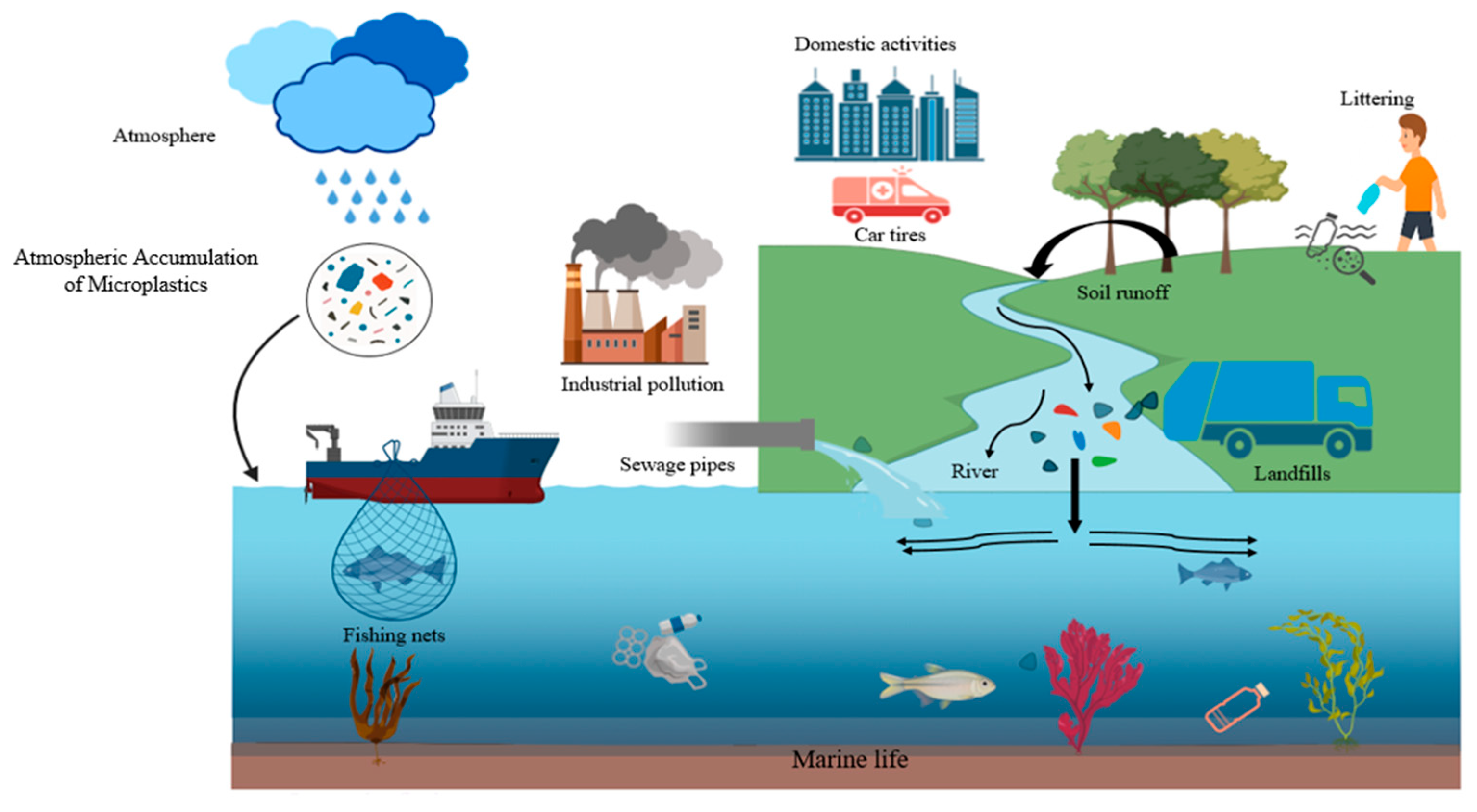
Plastic pollution enters the marine environment in different ways, such as direct and indirect pathways. In marine and coastal ecosystems, plastic pollution arises from a combination of ocean-based sources and land-based sources, transported through ex situ and in situ mechanisms. Land-derived sources, including river discharge, tourism, residential, and household activities, contribute to a major share of plastic pollution in oceans, as shown in Figure 1. A global assessment reported that more than 75% of plastic particles are found in the marine ecosystem, originating from different land-based activities [50]. Coastal zones are very industrialized, urbanized, and populated; all these make them a main hub for communities and residential settlements. Therefore, a huge portion of the population is focused in such areas. People residing near coastal zones use air blasting materials and cosmetic products, which can easily enter the coastal water through daily use and improper discharge. In most cases, such types of plastic containers are disposed of in the waste drainage system or released into the water. Studies show that a high amount of remaining plastic can pass through treatment facilities and be discharged into the environment. After that, such plastic debris accumulates in freshwater bodies like streams and rivers, then moves to groundwater and finally reaches oceans. However, other streams and rivers with high directed flow rapidly transfer the plastic pollution, which contributes significantly to its collection in the coastal zone. An example is given here: the plastic pollution from two river systems in California has accumulated in the oceans, with an estimated two billion plastic fragments reaching the marine ecosystem over three days [51].
Plastic wastes from land-based sources are diverse, including landfills, industrial operations, plastic mulches used in the agriculture sector, polymer paints, wastewater solids, and vehicle tire abrasions. Similarly, other sources include textiles, washings, plastics, burning, and atmospheric deposition. In most regions, plastics are disposed of in landfills, which may be either open or closed air facilities. Environmental issues arise when the waste is mismanaged or lost off-site, which leads to its release during collecting, transportation, disposal, and processing of municipal solid pollutants. Furthermore, landfills located near coastal regions are subject to sea level rise, erosion, and flooding, which can contribute to the increased release of plastic debris in the marine ecosystem [52]. Additionally, synthetic fiber release during textile washing has also been recognized as a potential indicator particle for monitoring wastewater discharge and the land applications of biosolids. The International Union for Conservation of Nature has recognized the synthetic fibers from greywater (laundry source) as the main source, contributing 35% of the plastic pollution in the marine ecosystem. The estimate is based on an assessment of wastewater and identifies synthetic wastewater as a major source of marine microplastic pollution. In developed countries, these types of microplastics frequently escape treatment facilities, reaching streams directly and being transported to the marine environment, where the degradation process is very slow; only 4% of PES shows breakdown under the controlled aerobic condition and neutral pH after 243 days [52]. The environmental degradation of marine plastics is a complex procedure that involves both biotic (microbial) and abiotic (chemical and physical) pathways. The processes often work together for the degradation of larger plastic particles into smaller particles such as nanoplastics and microplastics [53]. The major sources of marine microplastic pollution are mentioned in Table 3.
As discussed earlier, tire wear is another source of plastic waste in oceans from land-based activities. Modern tires are made by combining rubbers, mainly butadiene and styrene–butadiene polymers, with fillers such as additives, metallic fibers, and carbon black, and similar other polymeric materials [28]. A study was done in the US, where it was noted that tire wear produces approximately 4.7 kg of microplastic/person each year, totaling almost 1.8 million metric tons every year. The degradation of tires causes about 5–10% of plastic waste in the marine ecosystem around the globe. These particles accumulate in waterways through surface runoff, facilitated by road surface impermeability, or by passing into the sewer system, where they go through further treatment in wastewater facilities [54]. The microplastic debris can attach to the soil being irrigated with wastewater, which turns the soil into a sink where these particles eventually collect. They can transport downward or surface water through percolation, thus contaminating the entire ecosystem. Water infiltration in agricultural and soil practices has been identified as a possible source for microplastic waste because of the high usage of mulching films for agricultural practices, which is very expensive to recycle and challenging as well [59]. There has also been limited research on the release of microplastics into the marine environment through atmospheric sources. Airborne microplastics can be carried to the surface of the oceans and even reach remote regions. Certainly, a high number of airborne microplastics (365 items/m2/day) have been recorded in remote mountainous regions [60].
Studies on the primary sources of airborne microplastics point to the breakdown of larger plastics, resuspension of dust, and industrial emissions. Using in situ observation of microplastic deposition together with an atmospheric transport model to trace sources over western U.S. land areas, it was noted that atmospheric microplastics normally originate from secondary re-emission sources like agricultural soil dust 5%, roads 84% and oceans 11% [55]. After entering, the suspended microplastics are carried passively by the wind, with their transport distance projected to range from tens to thousands of kilometers. Certain oceanic areas, like the Western Pacific Ocean, can experience significant airborne microplastic deposition, but due to the limited efforts for observation, the amount of microplastics deposited in other oceanic regions remains mainly unknown [61].
Ocean-based activities also add significantly to marine plastic pollution. Fishing at commercial and recreational levels, aquaculture, tourism, and other marine operations, including oil platforms, can directly contribute to microplastic pollution in the marine ecosystem, causing high risk for the environment and marine organisms. The fishing nets used for fishing capture lead to regional and local marine plastic pollution. This gear is made up of synthetic materials, particularly composed of PP, nylon, and PE, commonly known as Abandoned, Lost, and Discarded Fishing Gear (ALDFG). The release of this fishing gear into the oceans may be accidental or deliberate. According to a report, about 29% of fishing lines and about 5.7% of fishing nets become ALDFG after their abundant use in oceans. After being released into the ocean, the components of the discarded fishing gear are broken by exposure to UV and finally break down into nanoparticles, similar to other microplastic particles [62]. Tsunamis and other extreme natural events can suddenly transport large amounts of debris into oceans, adding significantly to marine plastic pollution. For example, the Tsunami in East Japan transported about five million tons of plastic debris into the Pacific Ocean. Most of the debris produced by this event is likely to settle within the North Pacific subtropical gyre, which contributes to the increasing mass of the “Great Pacific Garbage Patch (GPGP)”. As time passes, some debris will degrade into smaller particles of plastic and can be ingested by different organisms in oceans [63].
The Great Pacific Garbage Patch (GPGP) has been identified as one of the largest areas in the ocean where plastic debris accumulates, mostly microplastics, covering about 1.6 million km2 in the North Pacific Ocean between Hawaii and California. Recent assessments show that 79 thousand tons of plastic debris are concentrated in the GPGP, covering 1.6 million km2. This is considered higher than previous reports due to better detection of the large volume of debris. More than 75% of the plastic pollution consists of large pieces (>5), and about 46% of this pollution comes from fishing nets. Microplastics make up only 8% of the mass but represent around 94% of the total plastic particles. Overall, plastic pollution in the GPGP is increasing rapidly, at faster rates than in the surrounding water [58].
Most of the terrestrial waste is supposed to reach the ocean through coastal discharge points related to major rivers. Plastic pollution in freshwater or river systems is less studied in comparison with plastic pollution in marine settings. Mainly, river sampling tends to be highly unpredictable because systematic monitoring efforts are limited, particularly in highly polluted rivers in Asia. Earlier global estimates of plastic particles transported to the ocean were mostly based on the quantity of poorly managed plastic waste that is generated on land. Most recent studies consider both climate and locations to find how plastic reaches rivers and oceans. This analysis proposed that more than a thousand rivers together release about 0.8–2.7 million metric tons of plastic pollution into the marine environment each year. The results show that rivers are the major pathways for carrying land-based plastic waste to the marine environment [64]. PCCPs mostly consist of microbeads as a part of their formulation. These PCPs are generated from nylon, PP, and PET. Approximately 10% of the microplastics enter oceans and rivers in the form of microbeads present in PCCPs. These microbeads tend to either aggregate or float on the surface of water after they reach and enter the marine environment, where they combine with other microplastic particles from different sources. Microbeads have absorptive properties that enable them to transport and gather contaminants with hydrophobic contaminants [57].
Their microscopic size enables these particles to be ingested by different organisms in the marine ecosystem, enabling them to enter the food chain, which is hazardous for both aquaculture and marine species. Although their use has been restricted in many countries, they remain a significant reason for plastic waste in the water [65]. In European rivers, most of the primary plastic pollution originates from the industrial sector, cleaning agents, and PPCPs, but secondary microplastics are commonly released as fibers from synthetic textiles [66]. Most of the studies reported an increase in the concentration of microplastics near major urban centers in Asian rivers. However, not all the studies could clearly link these concentrations to factors like industrial activity or population density. Runoff from rainwater serves as a high-transportation pathway for tire and road wear particles (TRWPs) onto water surfaces. Storms and rain cause untreated sewage carrying microplastics to overflow the wastewater system and directly enter the aquatic environment. According to recent studies, floods and storms play a key role in the transportation of microplastics to oceans and water pathways. The most common polymers recorded in stormwater runoff are PE, PS, PET, PVC, and PP [67].
As previously discussed, different kinds of marine organisms ingest microplastics, from plankton up to apex predators, which allows for them to enter and gather in the marine food web. Zooplankton and filter-feeding organisms mostly act as the key points of entry for microplastics, which move up the food chain to seabirds, marine mammals, and fish [68]. Consumption of microplastics affects the health and behavior of the organisms and promotes the transfer of POPs and attached contaminants throughout the food web. As the microplastics pass through each trophic level, they can accumulate in predators higher up the food chain, potentially affecting the transfer of energy, reproductive systems, and the functioning of the whole environmental system. The trophic transfer and food web bioaccumulation of microplastics highlights the widespread nature of plastic pollution and its potential threat to marine ecosystems, biodiversity, and eventually humans who use seafood for consumption [69]. Road paints and tire wear particles have been identified as emerging sources. As discussed earlier, poor waste management, discharge of wastewater, including domestic greywater, and road runoff are considered the major pathways, whereas ocean gyres act as a buildup area [70]. Knowledge gaps remain: insufficient information on the effectiveness of different mitigation strategies and uncertainties in the quantification of microplastics lead to a reduction in the accuracy of risk assessments. Research in the future should be focused on the standard of the analytical method, studies on the ecosystem, and evidence-based strategies of mitigation [71].

4. Plastic Effects on the Marine Ecosystem

The oceans are highly contaminated by plastic pollution at many trophic levels, which affects a large number of organisms in the ocean, from phytoplankton to zooplankton, including neuston inhabiting the seawater surface in the air–water interface of the marine environment, up to lifeforms at higher trophic levels like marine mammals, turtles, fish, and finally human beings [16]. Microplastic particles are small in size and widely present; organisms in the marine environment can ingest them very easily such that they move into the food chain, resulting in bioaccumulation, the buildup of plastics in the organism over time. Consumers of the neuston community (several fish, rays and sharks like the Whale Shark Rhincodon typus) will be particularly affected by microplastics, especially low-density polymers such as PE and PP, which tend to float and accumulate in the same zone of neuston concentration: it has been shown that Phthalates esters found in neuston samples and whale shark skin biopsies in the Gulf of California have had a significant impact [72]. Plastic pollution can affect both single-cell and multicellular organisms in the marine environment, disturbing them at their various biological stages. These effects can be shown at the organ, tissue, cellular, and even whole marine organism levels, leading to different problems like damage to cells, organ inflammation, tissue damage, and other similar physical harms. Experimental studies have also shown that plastics can disrupt the immune system as well as disturb gut microbiota. These types of disturbance lead to an imbalance in the main biological processes, including reproduction, feeding, growth, breathing, and movement. Environmental factors can also affect photosynthesis and prey–predator interactions, even altering the normal behavioral patterns of marine organisms. Experimental studies suggest that the structure and distribution of different communities of microorganisms can also be changed by microplastics in the marine ecosystem, where the function of the ecosystem is affected, mainly affecting human health and marine organisms [16]. Table 4 summarizes the microplastic effects on different organisms in the marine environment.
Plastic pollution ingestion has been reported worldwide in different species, such as fish, turtles, seabirds, and crustaceans. The ingestion of microplastics and macroplastics has hazardous effects, including intestinal blockage, altered secretion of gastric enzymes, reduction in feeding stimuli, reproductive failure, delayed ovulation, and a lowered level of steroid hormones. These effects have been reported in both field observations and laboratory exposure. Plastic pollution ingestion causes immediate mortality rarely but frequently leads to chronic or sub-lethal effects for a long time [93]. The ingestion of microplastics and macroplastics may lead to reduced food intake. An example is given here: the fitness of seabirds has been reported to decline as the total mass of plastic ingestion increases. Seabirds are the most susceptible to plastic ingestion because they rarely regurgitate indigestible food like plastic particles. The plastic particles collecting in their gastrointestinal tract lead to the disruption of feeding behavior or blockages [94]. Plastic pollution has been confirmed within the digestive systems of various fish species across several regions, like the Mediterranean Sea. The ingestion of plastic pollution primarily occurs through predation, or, unintentionally, the consumption of plastic in their prey or from the surface of the water, resulting in the accumulation of mesoplastic species such as Thunnus thynnus [95]. Experimental studies on marine microplastics have shown negative effects on mangrove ecosystems by disrupting the growth of the plants, reducing the efficiency of photosynthesis, and damaging the function of the overall ecosystem. Multiple studies show consistent results where exposure to microplastics in the long term at 5% (w/w) in soil leads to low root growth, decreased chlorophyll content, and lower photosynthesis efficiency in Kandelia obovata [96]. Microplastics are easily trapped in the mangrove root system after entering the mangrove ecosystem. Mangroves are considered a long-term reservoir for plastic pollution. The mangrove roots subsequently absorb microplastics, where the development is inhibited, epidermal root cells are deformed, and oxidative stress is induced. Microplastics also cause higher ecological risk to mangrove-associated fauna. Furthermore, microplastics also act as a toxic carrier, including pathogenic microbes and heavy metals, increasing the accumulation of contaminants in the marine environment [97].
The problem related to plastic ingestion is not only restricted to fish and seabirds; unfortunately, sea turtles are highly susceptible to plastic debris in the marine environment. This is indicated by different studies that plastic pollution ingestion by sea turtles has increased significantly in recent times. Plastic debris is mostly ingested during predation. A recent study shows an estimation that the ingestion of plastic by sea turtles increased by up to 20% from 1984 to 2012 [98]. Furthermore, it is concluded that around 48 cetacean species, including dolphins and whales, have been reported to ingest plastics between the period of 2000 and 2010, which is 11 times higher than that reported between the period from 1960 to 1970. There are several regulations protecting dolphins and whales from hunting, and plastic pollution has appeared as a major threat to them. Trichechus manatus, a West Indian manatee, died in Florida after the ingestion of large plastic pieces that blocked its digestive tract. Similar findings have been reported about the death of a sperm whale in the Mediterranean Sea; the findings show that the whale died from gastric rupture or starvation due to plastic debris ingestion [99].
Plastic pollution can also lead to physical injuries in the marine environment. Wild animals such as seals, sea lions, and turtles face serious risks by becoming entangled in plastics, which can affect them and lead to serious injuries and even become the reason for their death by strangulation. According to a study, plastics were responsible for 92% of ingestions and entanglement cases in the marine environment. It was also concluded that around 55% of plastic entanglements occur more commonly than the ingestion of plastic, that is, 31% lead to visible and direct harm to marine animals [100]. Plastic pollution ingestion by marine organisms is commonly reported. Besides the physical harm, the consumption of plastic debris also leads to chemical effects. Research has shown that marine plastic is a carrier of water-borne chemical pollutants like polychlorinated biphenyls (PCBs), pesticides such as DDT, and polycyclic aromatic hydrocarbons (PAHs) that facilitate their transfer from invertebrates to higher level organisms [101]. Plastic pollution, especially from microplastics, is mainly effective in the transportation of airborne pollutants like POPs because they are hydrophobic in nature. The concentration of PCBs in microplastics is calculated to be up to a million times higher than in nearby water. POP-contaminated plastic pollution has been reported globally [102].
According to a research study, plastic pellets release POPs under conditions simulating seawater and the gut. It was found that desorption occurred more rapidly in the presence of gut surfactants at 38 °C and pH 4 as compared to seawater at 38 °C and pH 7.5–8.4. It is concluded that different factors, such as temperature and pH, can highly influence the POP release from plastics, potentially increasing their bioavailability to the organisms present in the marine environment [103]. High concentrations of POPs like PCBs can cause serious problems such as kidney and liver toxicity, developmental abnormalities, and endocrine disruption. An example is given here, where Arctic fish are involved in endocrine disruption after being exposed to PCBs and polychlorinated dibenzo-p-dioxins (PCDDs). These toxic chemicals have also been detected in seabirds that are in the food chain. POP exposure leads to changes in prolactin levels and steroid and thyroid hormones in glaucous gulls [104].
The United Nations Development Programme (UNDP) reported that coral reefs are not visually prominent but serve as important habitats that sustain and support a large number of marine organisms. Though coral reefs cover less than 0.1% of the total global surface of oceans, they play an extra-large environmental role. All classes of life, including 25% of marine organisms, are provided by it. Coral reefs help shield coastal areas, playing a role as natural barriers, reducing the effects of storms, sea-level rise, and hurricanes [105]. To know more about the effect of plastic pollution on the coral reefs in the marine ecosystem, researchers from the U.S. and Australia investigated the level of damage caused by plastic pollution and evaluated how it increases the probability of diseases in the coral. The study concluded that coral reefs interact with plastic pollution and are more susceptible to diseases, and diseases occur up to 22 times more frequently in affected corals in comparison with healthy ones. The diseases caused by plastic pollution include white syndrome, brown band, skeletal eroding band, and black band. Most of these diseases are more hazardous and lead to the rapid death of coral. The study reported that plastic pollution also causes damage to corals by blocking the oxygen and light they require, where the tissue becomes damaged and becomes more vulnerable to bacteria that exist on the surfaces of plastic [106].
Sea turtles like the green and hawksbill species play a major role in the sustainability of the marine environment. These species consume sea sponges that grow on coral reefs. This feeding prevents the extra growth of marine sponges and protects the coral from damage and death of the sponge and maintains nutrient recycling. When the population of sea turtles disappears or declines due to plastic ingestion or entanglement, the environmental balance is disturbed. This leads to the growth of seagrass, disturbance to the food chain, and damage to coral reefs throughout the coastal food web and marine environment. Furthermore, plastic waste leads to variations in the physical nature of beaches in terms of permeability and temperature due to the existence of plastic particles. All these factors hinder egg laying, eventually lowering the reproduction rate and threatening population stability for a long time. Overall, plastic pollution leads to ecological, chemical, and physical risks to marine life, habitats, and environmental processes, with different consequences that can also affect human health [107]. Microplastics are almost too small in size, which allows for them to be taken as food mistakenly, leading to their ingestion through feeding activities or through passive water filtration. Therefore, ingestion is the main pathway of microplastic exposure to many marine organisms, including barnacles, zooplankton, bivalves like oysters and mussels, and large species such as pelagic fishes and whales. The ingestion prevalence clearly shows the key effects of microplastics on marine life [108].
According to recent studies, the effect of various microplastics on microorganisms in marine environments has been investigated, whether free-floating or attached to particles, by using methods such as 16S rRNA and 18S rRNA sequencing, analysis of gene expression, and similar other molecular techniques. The study clearly helped to understand the wide environmental and health significances of microplastics pollution by exploring their effects on the functioning, diversity, and structure of microbial communities [109]. The plastisphere is the community of different microorganisms that survive on the surfaces of the plastics. These microorganisms include algae, fungi, protozoa, bacteria, viruses, and invertebrates. Basically, the plastics floating in the oceans, lakes, or rivers act like an artificial habitat where such organisms can grow after attachment and interact. Proteobacteria are most commonly found. Other common bacteria include Bacteroidetes, Cyanobacteria, and Actinobacteria. The Oceanospirillales and Alteromonadales are included in Proteobacteria and can degrade plastics. Genera such as Photobacterium, Psychrobacter, and Pseudoalteromonas are the most common and can be identified by using plastic particles as a source of nutrients and carbon [110]. Plastic waste has become a main ecological problem affecting the services of the marine environment on a large scale. A complex threat is posed to the marine environment by microplastics, where the services of the ecosystem may be disrupted, and overall marine health is reduced, which finally affects the important advantages of such an environment provided to both the environment and human populations. The marine environment offers different kinds of advantages to the human population. These services are worth around USD 49.7 trillion each year. A huge loss is caused by plastic pollution in the marine environment, which ranges from USD 0.5 to 2.5 trillion annually, reducing the marine natural capita with a cost of around USD 3300 and 33,000 per ton of plastic [111].
The marine services are affected by plastic pollution. Normally, food services, such as shellfish and fish, are contaminated with plastic, causing risks to human health and economic loss. Microplastics in cephalopods, crustaceans, and bivalves lead to feeding, behavior, and growth impairment, leading to high health risks. According to the IUCN, plastic pollution in the marine environment is assessed to cause a losses in the economy of $6–19 billion annually across different coastal regions. These differences go beyond the direct effects on aquaculture and fisheries, affecting economics by the degradation of services for the ecosystem and reducing export profits [112]. Microplastic particles are produced by humans and have been accumulating in the oceans for over four decades. These minute, small-sized particles of plastic can be found globally, even in Antarctica. These types of plastic pollutants can be found on the water surface, which can originate from the degradation of larger plastics or other domestic pollutants [51]. Many researchers have defined the terms microplastic differently. According to a study, microplastic is well defined as a barely visible particle that can pass over a 500 µm sieve but cannot pass through a sieve with a 67 µm size. Particles larger than this size are known as mesolitter [113].
In other words, it can be defined as the smallest particles with a size less than 5 mm, and with 333 µm considered as a practical lower size when sampling with neuston nets. Plastic particles ranging from a few micrometers up to 5 mm in size normally exist in seawater [114]. Microplastics can be generated by two main sources in the marine environment: direct entry of microplastics through surface runoff and the gradual breakdown of large-sized plastic materials (mesoplastics and macroplastics). The synthesized microplastics used in consumer products can reach the marine environment through direct runoff. These micro-sized plastic materials are mostly used in cosmetic products. These materials can be transported to the ocean very easily [115]. The plastics are left exposed on beaches and pass through different weathering conditions that cause the surface to become hard and develop microcracks. The degradation process is accelerated by light-driven oxidative reactions and high temperature, where a weak outer layer is produced, marked by pits and cracks. The large-sized plastic materials break down into small fragments and generate microplastics that can be transported into the marine environment by wind, waves, or water runoff. Furthermore, these surfaces become too weak and can be easily fractured and further worn down through contact with sand, as well as leading to the release of microplastics [50].
There is a growing concern about small plastic particles. The synthesized plastic nanoparticles, whether generated post-consumer or produced through the degradation of larger particles, pose a significant challenge to the ecosystem. Nanoparticles in this size range can enter the cell through endocytosis, and their interaction with the marine biota results in being taken up internally and affecting the aquatic animals [116]. Small-sized microplastics can produce exceptional effects because of their large surface area, their capacity for crossing tissues or cellular barriers, as well as their ecological and chemical interactions. The small size enables microplastics to move across gastrointestinal membranes through endocytosis processes, which allow for them to spread into various organs and tissues [117]. The uptake of microplastics strongly depends on particle size. Nanoplastics can be easily taken up by the cells, but microplastics have limited uptake. Plastic particles with a size of 50–200 nm tend to cross intestinal epithelial cells through the process of endocytosis, whereas plastic particles less than 3 µm in size can be taken up into non-phagocytic cells through non-specific endocytosis. Microplastics (1–5 µm) are retained mostly on the surfaces of epithelial cells instead of entering cells easily [118]. Unlike inorganic particles, microplastics readily retain and attach to the surfaces of POPs. This occurs due to the very high tendency of POPs to attach to the plastic surfaces. This leads to their accumulation on plastics by different orders of magnitude in comparison to the surrounding ecosystem. As a result, these microplastic particles carry a high concentration of POPs and can be consumed by different organisms in marine settings [119].
Plastics’ effects on marine organisms are well recognized; various important knowledge gaps remain. Current studies lack standardized methods and mostly do not consider the variations in the concentration of plastics and shapes, sizes, and growth of different microbes on the surfaces of plastic particles. Studies have also highlighted emerging concerns about the novel plastic compounds in coastal environments. The effects of microplastics on the marine ecosystem and the transport of contaminants across the marine food web are still not fully understood. Future studies need to focus on improving toxicity assessment methods, evaluating ecosystem-level effects, and investigating the emerging and biodegradable plastic materials [71].

4.1. Mechanism of Plastic Degradation

As discussed previously, microplastics are considered small plastic-based pollutants. This microplastic is generated by the breakdown of a large plastic particle. The degradation processes normally occur in two ways, biotic and abiotic.

4.1.1. Biotic Degradation Pathways

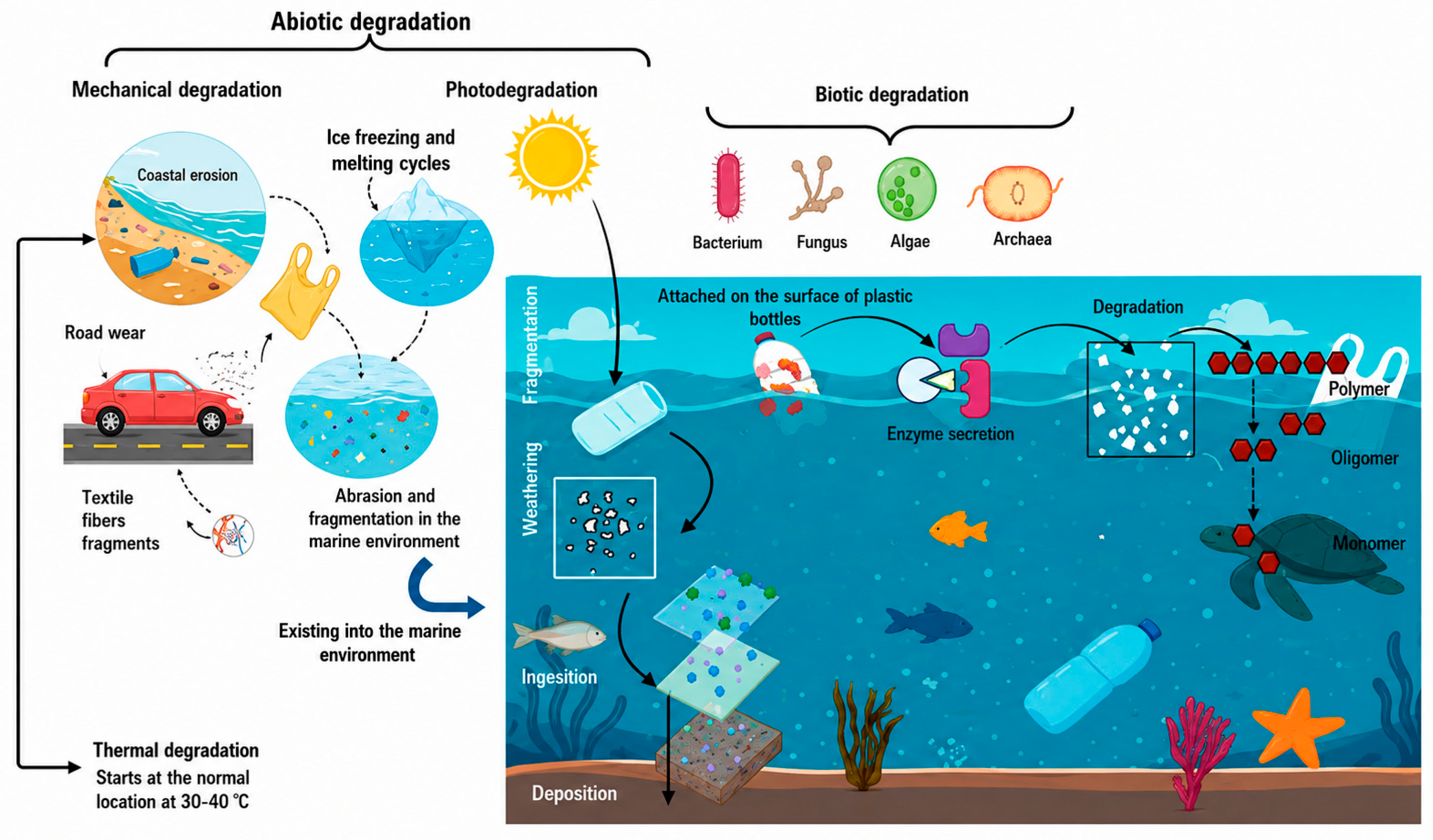
Microbial decomposition in the marine environment leads to plastic degradation. However, macroplastics, which are large plastic materials, are less suitable for microbial degradation. This is because the plastics themselves are not readily available for microbial uptake, or the enzymes produced by microorganisms are insufficient for the processes of plastic degradation [120]. In some cases of degradation, polymer-type plastics need to be degraded into small debris, like monomers, before further degradation by microorganisms like fungi, bacteria, and algae. Polymers consist of large molecules compared to the cell membrane pores of microorganisms. Therefore, the small debris of plastics produced by abiotic degradation is small enough to be broken down further by microbes through biotic processes. Algae, fungi, and bacteria are the main organisms that are responsible for the biodegradation of pollutants in the marine ecosystem. Similarly, archaea also contribute to the degradation of plastic, as shown in Figure 2 [121].
Different bacterial species play a vital role in the process of marine microplastics degradation. Bacillus cereus and Bacillus subtilis are common bacteria present in the marine environment. These bacterial species release various extracellular hydrolytic enzymes like lipase, chitinase, protease, keratinase, and xylanase, which play an important role in the degradation of plastic pollutants in marine environments [122]. The most common PVC plastic particles are reportedly degraded efficiently by the bacterium Achromobacter denitrificans. These degrading bacteria adhere to the plastic surfaces and release exopolymeric substances, which enable biofilm formation on the plastic. Consequently, the polymeric bonds in the plastics are broken down and hydrolyzed by the secreted enzymes of the bacteria. Similarly, the PE is degraded by the Rhodococcus ruber bacterial species by producing the laccase enzyme capable of degrading the PE. The Azotobacter bacterial species secretes the enzyme hydroquinone peroxidase, which is involved in the breakdown of PS [123].
Algae play an emergent role in the biodegradation of plastic materials. Different studies recommend that algae produce secondary metabolites with the capability to degrade microplastics. Evidence suggests that some algae generate secondary metabolites with the ability to break down microplastics. For example, Uronema africanum has the capability of degrading LDPE, whereas Dunaliella salina can degrade HDPE [124]. The different species of algae, including Fragilaria, Spirulina, Amphora, and Navicula, confirmed the degradation of PET, PP, and PE in the marine ecosystem. Algae develop biofilms on the plastic surfaces and use carbon as a nutrient source, thereby reducing the strength of the plastic and making it more susceptible to degradation. Furthermore, the extracellular polymeric material is created by algae, and enzymes such as PETase contribute to the breakdown of PET plastic. The research on the degradation of plastic by algae is still in its early stages and requires more investigation and study [13].
Fungi also play an important role in the biodegradation of large plastics in the marine environment. An example is given here: the fungus Aspergillus clavatus has been reported to break down LDPE. Zalerion maritimum has been reported as the most common fungus in the oceans, degrading the PE [125]. The fungi attach to the plastic surfaces for degradation, similarly to bacteria. There, they secrete the enzyme after forming a biofilm on the surface that breaks the chemical bonds of the plastics. The enzymes improve oxidation–reduction reactions, breaking down the polymers into smaller units like monomers, dimers, and oligomers. There are various marine fungi like Fusarium oxysporum, Trichoderma harzianum, and Penicillium citrinum that release enzymes, including lignin peroxidase and laccase. These enzymes have the ability to degrade of polymers like PU, PET, and PE [126].
Studies also confirmed that archaea degrade plastic by using their enzymes. The enzyme PET46, secreted by an unclassified archaeon (Candidatus Bathyarchaeota Archaeon), can degrade PET. The enzyme also performs to degrade PET-made products like bis-(2-hydroxyethyl) terephthalate) (BHET) and mono-(2-hydroxyethyl) terephthalate (MHET). The study proves that enzyme secretion by archaea has the potential for plastic recycling and degradation processes [127]. Furthermore, archaea like halophilic archaea have gained much attention for their capability to produce polyhydroxyalkanoates (PHAs) under precise growth conditions. This provides advantages such as tolerance of high salinity and reduction in risk of contamination, making them attractive candidates for the production of sustainable industrial bioplastics [128].

4.1.2. Abiotic Degradation Pathways

Abiotic degradation plays an important role. These degradation processes initiate the fragmentation of plastic waste through natural physical and chemical processes, where the materials become more susceptible to further degradation. This degradation includes various processes such as mechanical stress, chemical reactions, thermal effects, and light exposure, as mentioned in Figure 2. Sunlight, mainly the UV component, plays a major role in degrading plastic pollutants. Ultraviolet-B (UVB) rays, with wavelengths ranging from 290 to 315 nm, carry high energy and are more effective in degradation than ultraviolet-A rays (UVA), with wavelengths ranging from 315 to 400 nm, because of their higher photon energy. Both contribute to the initiation and acceleration of the photodegradation of plastic pollutants [129]. Similarly, during the thermal breakdown of plastic pollution, photodegradation starts radical formation within plastic polymers. Oxidation is promoted by these radicals, which results in further degradation into alkoxy radicals and reactive hydroxyl radicals. The chemical structure of plastic pollution affects how it influences photodegradation in the ecosystem. The sun receives different responses from different polymers. Free radical formation as well as the breakdown processes are different in various kinds of plastics. An example is given here: plastics like PVC, PP, and PE do not consist of chromophores, which makes them less susceptible to light, leading to degradation. On the other hand, PET consists of terephthalate units and conjugated ethylene glycolate that is linked by ester bonds. These features related to the structure improve their light absorption ability and produce free radicals, which facilitate the photodegradation of plastic pollutants in the marine ecosystem [130].
Similarly, mechanical breakdown of plastics is another source of degradation, which refers to the physical breakdown of plastic pollution caused by external sources from the environment, including wave actions, water runoff, wind, etc. Plastic particles on the coastline are exposed to motion produced by ocean currents and winds, which causes abrasion as the materials rub against sand and pebbles. Furthermore, in cold areas, plastic particles are normally stacked in ice, which may be fragmented into pieces because of the repeated melting and freezing cycles. Once the plastic degrades into pieces, it enters the marine environment as nanoplastics and microplastics. Wear occurs on roads as vehicles’ tires rub and tear across them, which is another example of mechanical degradation. The road surface and brake components also result in the release of plastic particles into the environment, which are transported to the marine ecosystem by various sources [131]. In simple words, mechanical degradation is considered the common source of microplastics. This force tends to be stronger on beaches than in open water areas, which leads to more pronounced physical fragmentation on beaches. This kind of degradation happens when tides and waves move the plastic particles nonstop and lead them to rub against the adjacent remaining particles and degrade them over time. Ecological erosion can change the plastic fragments’ surface and increase their polarity and surface area, which in turn improves their capacity for the adsorption of POPs [132].
Thermal degradation starts after exposure of plastic debris to high temperatures. This triggers the thermo-oxidative reactions that lead to the degradation of the materials, producing radicals that spread the degradation until the input of energy decreases or stable end products are formed. The availability of oxygen and temperature highly affects the thermal degradation [133]. However, the oxygen and temperature levels in marine water that activate the thermo-oxidative breakdown of microplastic debris are normally very low. Limited oxygen, biofouling, and cool water combination on the surface of plastics stop the accumulation of heat and reduce the processes of degradation. The situation changes when microplastic debris is stranded on beaches, especially in tropical areas where high temperatures accelerate the chemical reaction, enhancing degradation processes. Different studies show that materials such as polycarbonate and PS can undergo thermal breakdown under subtropical beach temperatures such as 30–50 °C [134].
The plastic debris along the coastlines undergoes thermo-oxidative degradation after exposure to high temperatures. Absorption of heat causes the breakdown of the polymer chain, generating reactive radicals, which interact with oxygen and form hydroperoxides (H2O2). Such hydroperoxides then decompose into alkoxy (R-O•) and hydroxyl (H-O•) radicals. This process leads to the formation of aldehydes, esters, alcohols, and ketones that contribute further to the degradation of plastic pollution. Thermal degradation of plastic debris includes both cross-linking and chain scission. In coastal and beach ecosystems, slow thermal breakdown can occur simultaneously along with photodegradation, which mutually speeds up the degradation processes of plastics [135]. Salinity is also considered a main factor influencing the chemical degradation of plastics. Consequently, coastal and marine environments with a level of salinity between 0.5 and 35 practical salinity units (PSUs) are mainly prone to microplastic formation. Therefore, studies on the persistence and distribution of microplastic pollution should concentrate on ocean basins and coastal environments to understand this emerging problem in a better way [136].
The degradation of plastics in the marine environment can result in generating secondary pollution. Reducing such impacts needs coordinated management and highly improved technologies for treatment. The degradation of plastics releases toxic additives and monomers. These compounds are more toxic and reactive than the original plastic and can persist in the environment for weeks to decades [137]. The degradation of both conventional and biodegradable plastics can result in the generation of secondary microplastic pollution. Regulatory efforts should be focused on preventing the leakage of primary and secondary microplastics in the marine environment through a coordinated system-based governance at both the national and global regional level [138]. Three parallel strategies are suggested, including removal of existing debris, reduction in new plastic release, and the protection of marine organisms. More advanced mitigation strategies include the treatment of wastewater such as electrocoagulation and membrane bioreactors, as well as regulatory interventions, but these applications are frequently limited by challenges regarding the large-scale implementation [139].

4.2. Greywater Contributes to Marine Microplastic Pollution

The wastewater generated from different domestic activities like handwashing, kitchens, bathing, and laundry is known as greywater. This water is recognized as an important source of and contributes highly to microplastic pollution in the marine ecosystem. Domestic activities increasingly release plastic debris into the wastewater stream, rivers, and canals daily. These wastewater streams eventually reach the ocean and transport microplastics into the oceans. Laundry greywater is a major source of microplastics because the synthetic fabrics release microfibers in high quantities during the laundry process. During this process, most of the particles pass into greywater, as washing machines cannot retain micro-sized plastic particles [140]. Cleaning products like exfoliating scrubs, toothpaste, detergents, and shampoo, as well as PCPs, are all sources of microplastics in greywater. Furthermore, greywater from the kitchen contributes highly by adding extra microplastics through wear and tear of plastic utensils, scouring pads, and packaging materials, and by releasing more plastic particles that are readily transported to the marine environment [141].
Greywater is commonly released without treatment or treated in limited systems, particularly in decentralized systems. In this way, a huge amount of microplastic is released into soil, irrigation, and marine habitats. Due to their slow degradation and stability, microplastics in greywater show a mostly overlooked yet important contamination source in areas where domestic wastewater is reused [140]. As discussed, microplastics are produced deliberately for different usages like PCPs and industrial cleaning agents. This may also be the result of weathering or fragmentation of large particles into small pieces because of wear, use, and exposure to the environment. These produced microplastic particles continuously enter the aquatic ecosystem through land sources such as river flows, discharge of wastewater, and surface runoff, and even atmospheric transport. Domestic greywater from different sources, in particular, has been recorded to contain high concentrations of microplastics up to the level of 7216 particles/L (250 mg/L) [142].
Although around 90% of microplastics from sewage can be eliminated by land-based wastewater treatment plants (WWTPs). The large volume of greywater produced is being recognized as a major source of marine microplastics. Land-based activities are usually considered the key contributors of microplastics to the marine environment. However, sea-based activities, including aquaculture, fisheries, and shipping, remain a limited source of marine microplastics. Plastic pollutants can be released by ships through marine coating, pellets, sewage, paints, and greywater. Recent studies report an increase in high levels of microplastic fibers in both remote marine areas and coastal areas. Cruise ships operate like floating cities, producing and releasing different types of waste along their routes, contributing to the accumulation of microplastic pollutants even in some of the remote areas of oceans. The discharge of greywater from ships has been overlooked largely as a microplastic source, resulting in limited research on the levels of microplastics across various types of vessels. However, a major study reported the concentration of microplastics ranging from 2000 to 50,000 nL−1 (particles per liter) in greywater from a cruise ship [143]. There are three main waste types generated by ships: black water, ballast water, and greywater. Sewage and medical waste are referred to as black water, whereas the water from sinks, kitchens, washbasins, showers, and laundry is referred to as greywater. This greywater is discharged into the marine environment without proper treatment [144]. An example is given here of the Baltic Sea, where 5.5 million tons of greywater is released each year. Cruise ships are considered the major contributor [145].
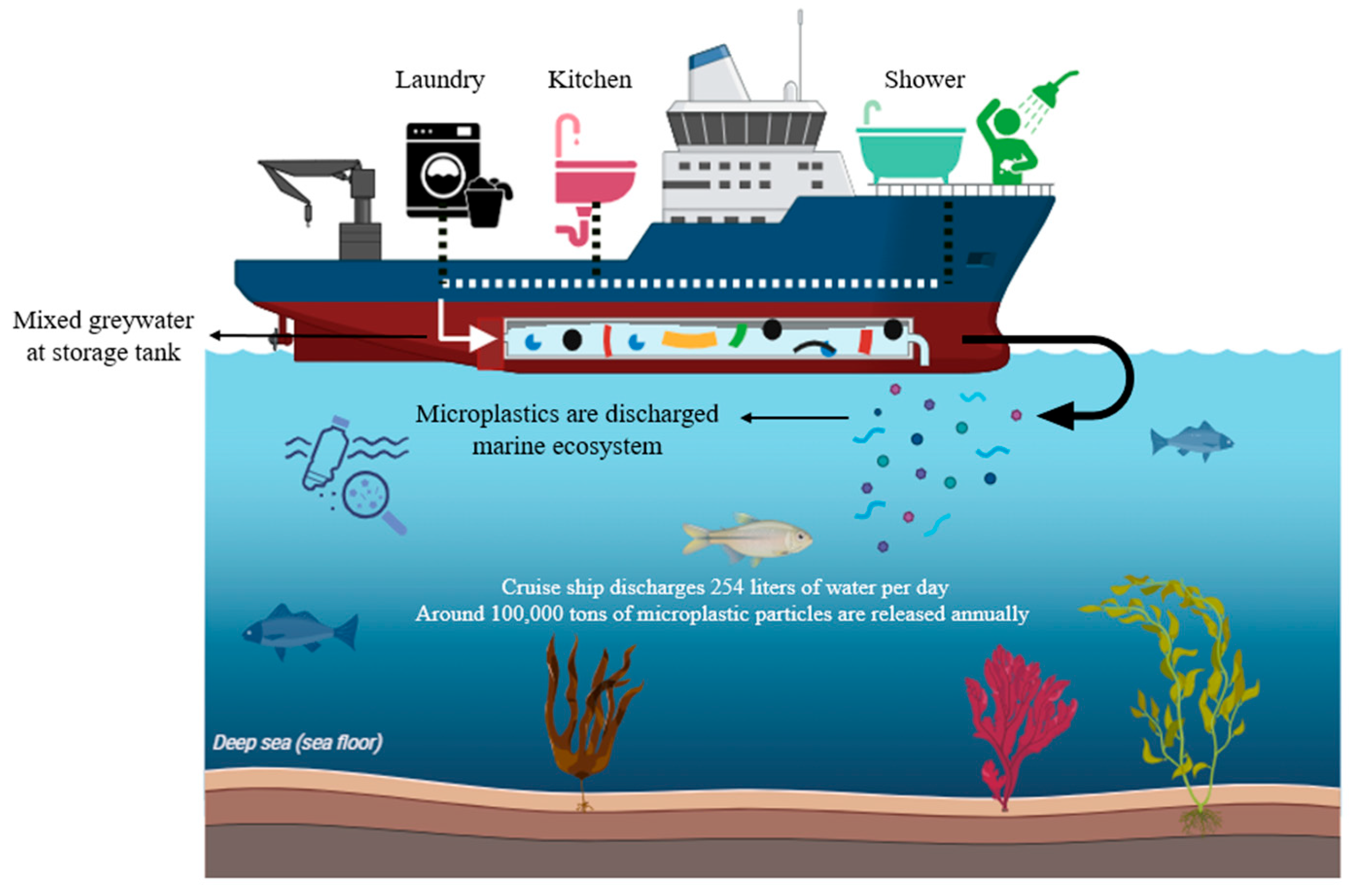
Greywater is considered the highest component of wastewater generated by cruise ships. The total production of greywater on a cruise ship is about 773 tons/ship/day; more simply put, around 254 L is generated by each person/day. The greywater produced by cruise ships does not carry only microplastics from different sources, including PCPs, laundry, kitchen sinks, washbasins, and households, but also pharmaceuticals, per- and polyfluoroalkyl compounds (PFAs), and similar other toxic substances that can cause risks to marine organisms [144]. Greywater generated by cruise ships contains a higher concentration of microplastics, as shown in Figure 3.
Common use of laundry by cruise passengers, along with fabric changing in week-long trips, use of kitchens, washbasins, and PCPs, results in high discharge of microplastic particles into greywater, which may then enter the marine environment. Alternatively, other wastewater, such as ballast water and black water, contains fewer microplastic particles in comparison to greywater. A cruise ship carrying more than 500 passengers mainly has two types of treatment systems for wastewater. Type II marine sanitation devices (MSDs), like the advanced wastewater treatment (AWT) system, use biological procedures for disinfection and treatment of both greywater and black water. The AWT system of treatment can eliminate around 95% of microplastic pollutants, but still, the high volume of wastewater production leads to a large quantity of microplastic release in the marine environment [143].
The MSDs used in Type III treatment processes keep the greywater held in storage tanks until waste can be released at sea or at port. Due to thestorage capacity of the tanks, the greywater can be stored for only up to 56 h. Thus, the storage capacity in turn affects the release of microplastics along the routes of the ships. It is estimated that about 323 cruise ships worldwide could release around 100,000 tons of microplastic particles annually [11]. Focusing on the microplastics released from greywater helps to better understand the microplastics concentration in the marine ecosystem. It is concluded that cruise ships travel through different sensitive areas and generate a huge amount of greywater, which consists of a high concentration of microplastics. Therefore, it is important to look at the toxic and ecological effects of microplastics to support safe transport of cruise ships and better management of greywater.

4.3. Impact of Microplastics on Humans

Plastic is chemically inert. Its characteristics, including shape, chemical build-up, hydrophobicity in nature, and size, can affect tissue and cellular response, thus affecting the particles’ cytotoxicity. Microplastic particles possess large surface areas related to their volume and hydrophobicity, allowing for them to carry and attract different heavy metals, POPs, and antibiotics that can be transported to the human body by ingestion. Aged or weathered microplastics exposed to sunlight, heat, and other environmental conditions have a rough and highly porous surface as compared to pristine plastics, increasing their capacity for pollutant adsorption [146].
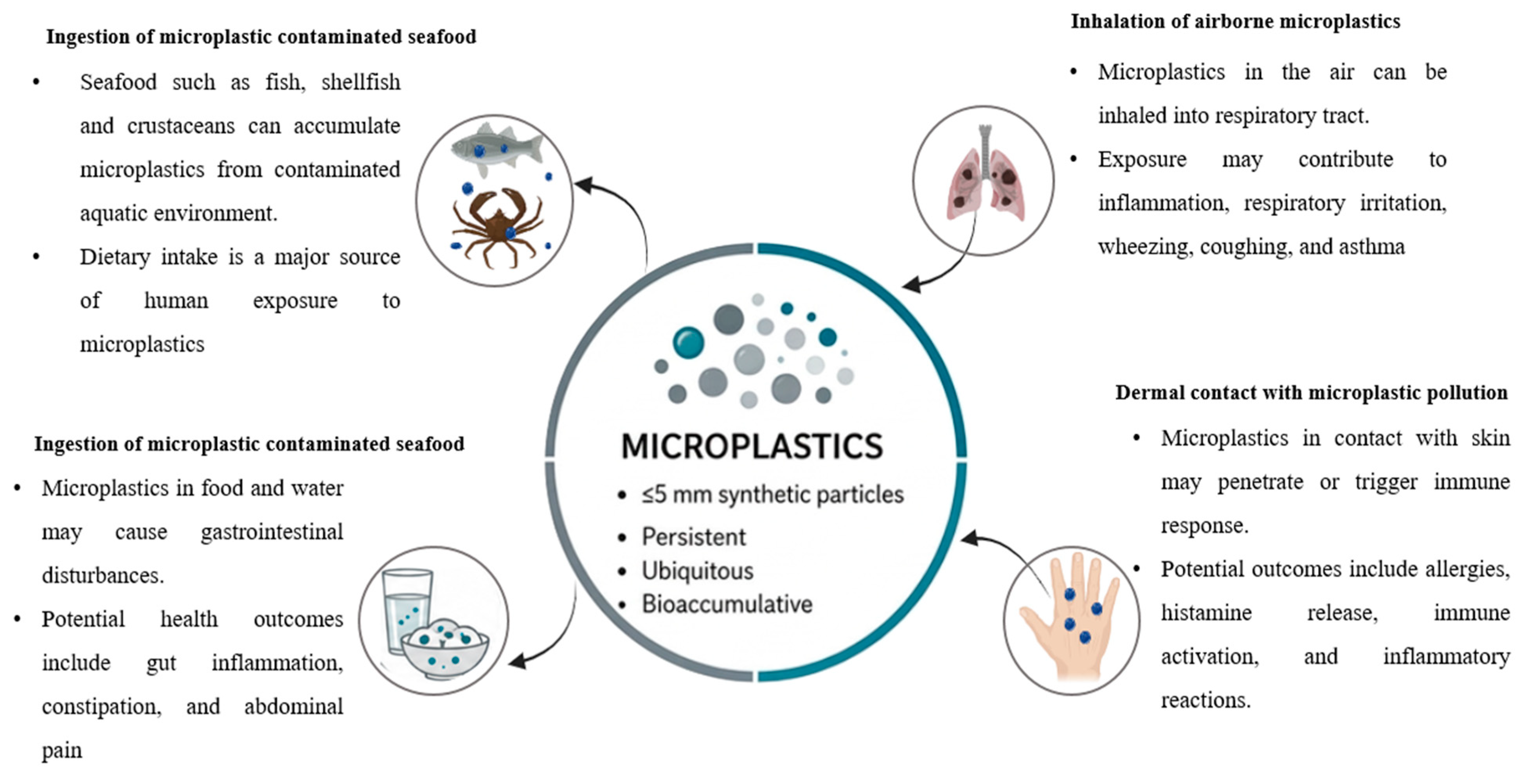
Seafood is a vital human diet component. However, the presence of microplastic waste in the marine environment raises an important concern for human health. Different studies have reported the existence of microplastics in fish, prawns, and shrimps that are used as food. Through the consumption of these marine foods, microplastics enter the human body and may accumulate through biomagnification [147]. There is a high risk from the consumption microplastics through seafood. After ingestion, they can be transported from the digestive system to other tissues and parts of the human body. Different studies reveal that synthetic polymer particles, like PS, can be transported in the body and have been reported in the human placenta [148]. An example is given here: plastic particles like PS are hazardous for cells by triggering contraction and causing structural damage to cells. PS microsphere exposure has also been shown to stimulate the generation of reactive oxygen species in the epithelial cells and brain, showing high oxidative stress. Therefore, it is concluded that marine-derived food and seafood consumption are the main reasons for microplastic entry into the human body. Current studies have confirmed the existence of microplastics in various food items ingested by humans daily. For instance, blue mussels collected along the Belgian coast were found to contain around 200–1500 µm of microplastic particles that had been ingested. The study also proves that people who consume these bivalves may have the same concentration of microplastic particles in their digestive system [149]. Ingestion of microplastic particles has been linked to different health issues like hormonal imbalance, digestive problems, toxic effects, skin infections, allergies, and cardiovascular problems, as mentioned in Figure 4 [150].
Taking in breath in an airborne microplastic environment may cause severe respiratory effects. These small particles can inflame and irritate the airways and respiratory system. Inhaling leads to severe conditions like wheezing, coughing, and difficulty in breathing, and already existing asthma may worsen. A fiber’s toxicity is extremely dependent on its size. Small-sized fibers can be inhaled easily and can reach the respiratory system, but large-sized fibers persist in the lungs for a longer duration and can lead to severe lung damage. Fibers with a size measured from 15 to 20 µm are challenging for the lungs to eliminate by normal defense procedures. Furthermore, fibers in size thinner than 0.3 µm and longer than 10 µm are considered the most carcinogenic particles. This type of health risk is mostly related to people who work in industry and those involved in manufacturing plastic materials. Workers in the textile industry have severe respiratory irritation related to the existence of synthetic fibers. According to a study, it was found that some workers in contact with nylon flock continue to develop lung diseases and a decline in lung function even after leaving the workplace. This led to secondary pulmonary hypertension and severe respiratory infections [151].
Exposure to PP is also related to respiratory problems that reduce the function of the lungs, showing the need for urgent medical attention and the need for control of exposure. Moreover, the surface of airborne fibrous microplastics is also hydrophobic, allowing for them to carry and attract pollutants from the surrounding ecosystem. In urban ecosystems, microplastics mostly exist with vehicle-related pollutants that can transport polyaromatic hydrocarbons (PAHs) and other toxic metals. The release of such toxic pollutants may lead to adverse effects on lung health, like genotoxic damage. The PAH metabolism related to fibrous microplastic particles can lead to the stable and unstable DNA lesion formation, which contributes to possible harmful biological effects [152]. Gastrointestinal (GIT) tract exposure to microplastics has become a very significant concern. This is mainly due to contaminated water and food ingestion. Different studies reported that ingestion of microplastic particles leads to different severe infections related to the GIT. For example, this can lead to gut microbiota disturbance, intestinal absorption changes, inflammation, and constipation. In a study, Osman et al. stated that accumulation of microplastics in the digestive system leads to obstruction and irritation [153].
It is predicted that the cellular effect of microplastics in the GIT is thought to arise from their adjuvant activities, meaning they can amplify the response of the immune system to biomolecules that adhere to the surfaces. Microplastic exposure can disrupt the normal symbiotic relationship between the host and the gut microbiota, a condition known as dysbiosis. An example is given here that the microplastic accumulation and toxicity in the gut of zebrafish vary depending on their shapes, like fibers, beads, and fragments. The levels of accumulation were in the following order: highest for fibers (8.0 µg/mg), followed by fragments (1.7 µg/mg), and then finally beads (0.5 µg/mg). Fibers exhibited the highest toxicity in the intestine, resulting in mucosal injury, increased gut inflammation, increased permeability, and disruption of metabolic activities [154]. The damage caused to the intestine by microplastics can cause increased permeability, known as leaky gut. The high level of permeability allows for toxins and hazardous microbes to enter the bloodstream, increasing inflammation and contributing to severe conditions like inflammatory bowel disease (IBD) and irritable bowel syndrome (IBS) [155,156].

5. Mitigation Measures and Control Measures

Worldwide initiatives progressively highlight the sustainable production and consumption of plastics, concentrating mainly on the strategies for the reduction, prevention, and management of marine plastic debris. The United Nations Environment Assembly (UNEA) in 2016–2017 considered microplastics and debris as a global problem that needed close attention on an international level. The UNEA adopted resolution 5/11 in 2022, launching negotiations for a globally binding agreement to address plastic pollution throughout the whole life cycle of plastic. This discussion has mainly focused on waste management and recycling approaches, whereas limited attention has been directed to strategies aimed at decreasing plastic pollution at its source [157].
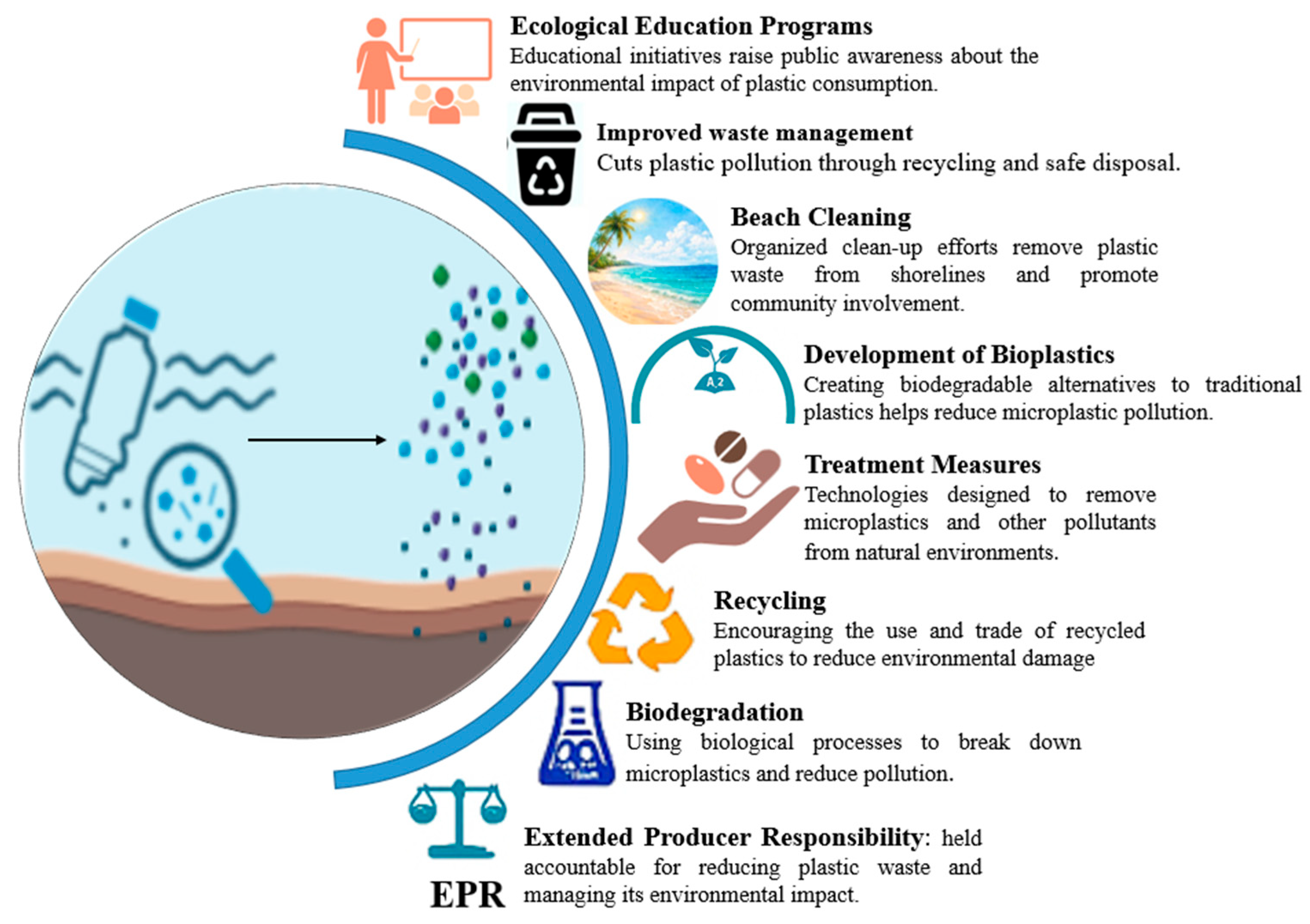
Strategies for the mitigation and control of microplastics mainly highlight minimizing the release of plastic at its origin and sources, improving the system of waste management, and fostering the adsorption and development of ecologically alternative materials, as mentioned in Figure 5. The most important ways to support the circular economy and reduction in microplastic pollution include the production of environmentally friendly plastics, as well as making rules for limited production, recycling alternative materials, the development of bioplastics and biodegradable plastics, and, most importantly, the treatment of wastewater [158].
Plastic waste release can also be reduced through the approach of extended producer responsibility (EPR) in most countries, including France, Germany, South Korea, the UK, Belgium, Austria, the USA, the Netherlands, Sweden, etc., where the producers are responsible for the mitigation of their product even after it is discarded by consumers. According to the rules of EPR, the taxes are charged on the product according to its recycling and amount [159]. Certain types of plastic that are used as a single time, have been banned in different countries as a control measure of microplastic pollution, including bags, containers, food packing materials, and bottles. The rules banning the sale of specific single-use plastics that came into effect in 2021 are still enforced in the European Union (EU), whereas some of the countries in the world have temporarily lifted the ban on single-use plastics due to the COVID-19 pandemic [160]. Encouraging the trade and use of recycled plastics is another important mitigation strategy to reduce plastic pollution. There are some ways to grow the market for recycled plastics, such as campaigns to show the ecological benefits of recycled plastics and encouraging companies to produce more recycled plastics [161].
Similarly, the development of biodegradable materials and bioplastics is seen to be an important long-term way to help in the reduction of microplastic pollution. Bioplastics are produced from renewable biological sources. The use of bioplastics has many ecological benefits, such as greenhouse gas emissions reductions, reducing the overall cost of manufacturing the products, and preservation of the fossil fuel resources [162]. However, the biodegradation of plastic depends more on their chemical structure, not on their raw materials. Bioplastics that are made up of marine green algae offer a sustainable alternative to traditional petroleum-based plastics and help in the promotion of the circular economy [163].
Besides all these mitigation measures, there are also different treatment technologies being investigated to help in the removal of microplastics and debris from the environment. These technologies are categorized into chemical, biological, and physical. The technologies, including advanced oxidation procedures, bioremediation, adsorption, filtration, coagulation, and photocatalysis, are currently being explored for their microplastic removal efficiency. However, the majority of these procedures are limited to microplastic removal only from the aquatic ecosystem, and the extracted debris and microplastics still need proper treatment to avoid reintroduction into the marine ecosystem. An example is given here: the procedures used in the WWTPs, including coagulation, filtration, and sedimentation, remove the suspended particles as sludge and can also contribute to the partial removal of microplastics [164].
Generally, the research on the technologies for the removal of microplastics remains at an early stage, with different limitations such as size and type of microplastics, challenges in quantification, and interference from the coexistence of microplastics. There are several other procedures, such as chemical, physical, and biological techniques, for the removal of microplastics [164]. Furthermore, in cleanup and remediation strategies, there are different sources to address the problem. The preventive measures mostly focus on the synthesis and transport of plastic debris into the marine ecosystem. Such strategies include reducing sources, waste recycling and reuse, waste conversion into energy, and treating debris at the discharge point before it reaches water transport sources, as well as implementing land-based waste management [165].
Besides all this, Ecolabelling is an instrument used for reducing and preventing plastic pollution in the marine environment. Ecolabelling helps in the identification of the whole performance of the environment, as well as the product preferences within a given category, which is based on life cycle considerations [166].
Plastic debris removal strategies include the cleaning of the beaches and collection of marine debris, which is an effective initiative for the reduction of marine microplastic pollution. These strategies will help in the removal of pollutants mostly considered as secondary sources of marine microplastics through fragmentation. Clean-up of community beaches and global coastal cleanup programs have effectively removed a substantial amount of plastic debris from shorelines [167].
In the modern period, biotechnology plays an important role in the reduction of microplastic pollution in the marine environment. Bioplastics, including PCL, PBA, PBAT, etc., are produced that are eco-friendly and easily degradable by using different microorganisms or their produced enzymes, including hydrolases, cutinases, peroxidases, lipases, etc. The degradation by microorganisms is highly dependent on the characteristics of the polymer and similar other ecological factors such as humidity, light, and temperature [168]. Different fungi (Zalerion maritimum) and bacteria (Pseudomonas, Agromyces, Flavobacterium, and Bervibacillus) can degrade PVC, Nylon, and PE plastic easily by using the enzymes laccase and cutinase. The total production of bioplastics is currently around 350,000 tons globally, showing less than 0.2% of conventional petrochemical-based plastics, which is approximately 260 million tons [166].
Membrane bioreactors (MBRs) can achieve the removal of microplastics up to 99.9%, showing higher performance than the conventional method of treatment. MBR integrates biological treatment and membrane filtration for microplastic removal in secondary wastewater treatment. The technique integrates the processes of activated sludge with microfiltration and ultrafiltration with a pore size ~0.4 μm [169]. A major study was conducted using an MBR equipped with 0.4 μm ultrafiltration membranes. At hydraulic retention times (HRT) of 20–100 h, the system removed microplastics on a large scale. The concentration of microplastics reduced from 6.9 ± 1.0 to 0.005 ± 0.004 particles/L, showing 99.9% removal. The procedure shows better performance than other advanced techniques, where all particle sizes are removed, including the smallest particle sizes, from 20 to 100 μm [169]. Despite its high performance, the MBR procedure has various limitations such as high operation costs, which are related mainly to membrane fouling control, and requires extensive maintenance and cleaning procedures. Furthermore, the procedure needs high energy for continuous membrane filtration and aeration [139]. Hybrid membrane systems combining MBR with other various technologies used for treatment purposes, as well as multistage membrane processes, have been developed as advanced techniques for the removal of microplastics from water. These systems achieved a high efficiency of removal through mechanisms of synergistic removal, such as the system of MBR reverse osmosis use sequential physical separation and biological degradation, where an MBR prepared with 0.4 μm polyvinylidene fluoride (PVDF) membranes provides the primary microplastic retention and biological treatment. The reverse osmosis membrane with a pore size of 0.000 μm removes the remaining microplastic particles effectively. Hybrid membrane systems have shown higher efficiency for the removal of microplastics than conventional processes of treatment. An example is given here, where MBR Anoxic oxic (MBR-A2O) achieved about 99.5% efficiency for removal. The integrated membrane system enhanced the efficiency of removal from 93.0% to 98.0 after MBR treatment following the polishing reverse osmosis [170]. The membrane-based size separation mainly affects the mechanism of removal, whereas the MBR components contribute through the processes of biological degradation. Furthermore, the surface interactions achieve retention. According to recent studies, the MBR reverse osmosis system shows higher treatment capacity (22 L/m2h). The total concentration of microplastics is reduced to below limits by the hybrid system with granular activated carbon biofilters [170]. Treatment through strategies of multistage membrane strategies has shown effective removal of microplastics, with MBR and ultrafiltration-based systems considered among the most examined configurations. These types of technologies provide more than 85% efficiency of removal and play a large role in water treatment, such as treatment of industrial wastewater and reclamation processes that require high quality effluent standards [171].
Advanced oxidation processes (AOPs) are another procedure used for the removal of microplastics from water and wastewater. The techniques use highly reactive radicals (hydroxyl radicals) for the mineralization of targeted substances. The most commonly used procedures for the treatment of microplastics include photocatalytic oxidation, electro-fenton methods, and ozonation and photo-fenton. The AOP procedure works by producing highly reactive species capturing the polymer chain. Ozone, as a potent oxidizing agent, reacts with various polymers, particularly those containing aromatic structures and unsaturated bonds. The procedure facilitates the breakdown of polymers by increasing the surface properties, including adhesion, mechanical strength, surface tension, and hydrophobicity [172]. AOP has been reported to effectively remove microplastics in the 20–190 μm size range. The procedure shows 99% efficiency of removal [173]. Besides their effectiveness, AOPs are associated with high operational costs for operation, along with environmental implications. Moreover, limited oxidation processes may induce fragmentation of large-sized macroplastics, leading to the generation of nanoplastic and microplastic particles during mineralization and degradation, which can complicate the subsequent removal and enhance the environmental dispersion [172]. Similarly, the coagulation/flocculation is a chemical procedure used to enhance the removal of microplastics by promoting aggregation of particles into larger flocs, which can be separated efficiently through filtration or sedimentation. The process includes the addition of coagulants, usually iron-based or aluminum, which neutralizes the surface charge of the microplastic particles, and their accumulation is promoted into larger flocs. Polyacrylamide (PAM) flocculants are frequently applied to increase the formation of the flocs through polymers, resulting in large aggregates that can be removed easily as suspended solids or sludge [174]. This procedure is more accessible economically but has certain limitations. Different operating conditions, including dose type, particle characteristics, and pH, can affect performance. The procedure requires mostly the extra treatment steps and produces chemical sludge that needs proper disposal [174].
Effective mitigation of marine microplastics depends on the combined efforts of key stakeholders such as policymakers, manufacturers, researchers, and consumers [175]. Manufacturers play an important role in the mitigation of microplastic pollution by assuming eco-design principles, applying extended producer responsibility for management of waste, and developing biodegradable materials. Major studies have confirmed that marine microplastic pollution can be reduced up to 15% by using biodegradable polymers [176]. Consumers can contribute to the mitigation of microplastic pollution by minimizing the use of plastic, sharing community-based initiatives, and assuming responsible disposal practices. Public participation has been increased through such efforts, leading to an increase of up to 40% in voluntary activities and about a 50% improvement in awareness related to microplastic pollution [177]. Researchers play an important role in the mitigation of microplastic pollution by long-term monitoring programs, developing advanced technologies used for detection where analytical accuracy can be improved up to 20%, and strategies for the circular economy are promoted for sustainable waste management [177]. Government authorities and policymakers play an important role in the reduction of microplastic pollution through the development of regulatory measures, applying policies such as restrictions on plastic bags, where usage is reduced up to 30%, establishing economic penalties and incentives for the control of marine plastic pollution [54].
Besides all these mitigations and control strategies, public awareness, community engagement programs, and ecological education are highly mandatory to recognize the link between their microplastic consumption and resulting ecological degradation.

6. Conclusions

Plastic pollution exists in different types, including macroplastics, mesoplastics, and microplastics; in particular, microplastics have developed as a persistent and pervasive threat to human health and marine ecosystems. This study highlights the production of plastic pollution on a large scale; their widespread use and poor management have led to the transport of this pollution to every part of the marine ecosystem, ranging from surface water to the deep sea. Large-sized plastic debris degrades into small sizes through biological, chemical, and physical degradation processes. This process enhances their effect on the environment and their bioavailability. The small size, stability, and the capability of adsorption of toxic pollutants make microplastics able to enter into food chain in an easy way, resulting in biomagnification and bioaccumulation across trophic levels. The findings indicate that both ocean-based and land-based activities greatly contribute to plastic pollution in the marine environment, with greywater evolving as a significant but undervalued pathway for the discharge of microplastics. Rivers, atmospheric deposition of greywater, discharge of wastewater, shipping, and fisheries are the main pathways through which microplastic pollution is transported to the marine environment. Among all these sources, greywater most commonly originates from domestic sources such as laundry, kitchens, washbasins, PCPs, and the activities of cruise ships. This greywater has been identified as an important and common source of marine microplastics. Although greywater is treated through wastewater treatment plants, a large quantity of untreated or poorly treated greywater still results in high concentrations of microplastics in the marine ecosystem. Microplastics cause chemical, biological, and physical effects on marine organisms, such as susceptibility to different diseases, tissue damage, immune disruption, and changed behavior. The most vulnerable organisms include coral reefs, seabirds, plankton, marine mammals, bivalves, and fish. Moreover, microplastics carry POPs, pathogenic microorganisms, and heavy metals, increasing their toxicity. Collectively, these effects are hazardous for the stability of the environment, important environmental services, and marine biodiversity. Regarding human health, which is also very significant, microplastics are transported to the human body through the consumption of seafood, inhalation, and drinking water. After inhalation, microplastics may cause oxidative stress, imbalances in gut microbiota, disruption of the endocrine system, respiratory problems, and inflammation, highlighting a possible risk from prolonged exposure. Microplastic pollution also carries important economic effects, disrupts coastal environmental services, disrupts fisheries and tourism, and leads to major economic losses globally.
Overall, this review identifies domestic and maritime greywater as important but mostly overlooked pathways for microplastics entering into marine environments. Mitigation strategies, sources, and effects are examined in different studies separately, but this work shows human and ecological impacts, sources, and transportation mitigation strategies in a single framework, emphasizing its main academic contribution.
Despite the considerable advances in microplastic research, important knowledge gaps remain. Most of the studies are short-term laboratory experimental work, where the natural marine conditions are not fully reflected. Reporting standards, analytical techniques, and unpredictable sampling limit comparison across the studies. Additionally, nanoparticles are poorly understood due to current analytical limitations in assessing their transport, environmental fate and impacts, and bioavailability. Several important scientific questions are unanswered. The ecological effects in the long term regarding chronic microplastics exposure across the marine food web are poorly understood. Microplastic toxicity from existing pollutants, including heavy metals, pathogens, antibiotics, and organic contaminants, needs further investigation. Data on the contribution of greywater to marine microplastics pollution across different treatment systems and regions are limited, highlighting the need for improved source monitoring and development of different control strategies. Future research should focus on reporting standards, analytical techniques, and consistent sampling to improve the data comparability globally. Long-term monitoring with experimental and laboratory studies is required to understand the ecological risks of microplastics in the marine environment in a better way. The development of advanced analytical techniques is also required for the improvement of plastic particle detection and characterization. Studies should also measure the effectiveness of greywater and wastewater treatment technologies, biodegradable changes, and strategies for a circular economy.
This review highlights that an integrative and preventive approach is required for microplastic pollution. Effective and key mitigation strategies involve reductions in the synthesis of plastic pollution, better management of waste, limiting the use of single-use plastics, using biodegradable materials, and enhanced and improved wastewater and greywater treatment technologies. Simultaneously, public awareness, implementation of ecolabelling, international policy coordination, and engaging communities are vital for the promotion of both systemic and behavioral change. In conclusion, marine microplastic pollution is a complicated ecological problem globally with severe effects on ecosystems, humans, and the economy. Urgent and coordinated efforts, including scientific research, policy enforcement, technological innovations, and public engagement, are essential to reduce further pollution and protect human health and the marine ecosystem for future generations.

Author Contributions

M.H.: Investigation, data curation, writing—original draft, writing—review and editing, visualization, validation. M.A.A.-G.: Conceptualization, validation, investigation, writing—review and editing, supervision, project administration. M.N.D.Y.: Conceptualization, validation, investigation, writing—review and editing, supervision. All authors have read and agreed to the published version of the manuscript.

Funding

This research received no external funding.

Data Availability Statement

No new data were created or analyzed in this study. Data sharing is not applicable to this article.

Conflicts of Interest

The authors declare no conflicts of interest.

Abbreviations

The following abbreviations are used in this manuscript:
PCPsPersonal care products
PCCPsPersonal care and cosmetic products
PEPolyethylene
PESPolyester
PETPolyethylene Terephthalate
PVCPolyvinyl Chloride
PPPolypropylene
HDPEHigh-density polyethylene
POPsPersistent organic pollutants
PVAPolyvinyl alcohol
PAPolyamide
PURPolyurethane resin
PSPolystyrene
PUPolyurethane
PSUPractical salinity unit
LDPELow-density polyethylene
LLDPELinear low-density polyethylene
PCBsPolychlorinated biphenyls
TRWPsTires and road wear particles
PMMAPolymethyl methacrylate
ALDFGAbandoned, lost and discarded fishing gear
PAHsPolycyclic aromatic hydrocarbons
GPGPGreat Pacific garbage patch
PFASsPer- and polyfluoroalkyl substances
EUEuropean Union
MSDsMarine sanitation devices
PCDDsPolychlorinated Dibenzo-p-dioxins
AWTAdvanced wastewater treatment
UNEAUnited Nations Environment Agency
WWTPsWastewater treatment plants
EPRExtended producer responsibility
PHASsPolyhydroxyalkanoates
FT-IRFourier transform infrared
MHETMono-(2-hydroxyethyl) terephthalate
BHETBis (2-hydroxyethyl) terephthalate
GITGastrointestinal tract
IUCNInternational union for conservative nature
UNDPUnited Nations Development Programme
IBSIrritable bowel syndrome
IBDInflammatory bowel disease

References

  1. Dokl, M.; Copot, A.; Krajnc, D.; Van Fan, Y.; Vujanović, A.; Aviso, K.B.; Tan, R.R.; Kravanja, Z.; Čuček, L. Global projections of plastic use, end-of-life fate and potential changes in consumption, reduction, recycling and replacement with bioplastics to 2050. Sustain. Prod. Consum. 2024, 51, 498–518. [Google Scholar] [CrossRef] [Scilit]
  2. Najahi, H.; Banni, M.; Nakad, M.; Abboud, R.; Assaf, J.C.; Operato, L.; Belhassen, M.; Gomes, L.; Hamd, W. Plastic pollution in food packaging systems: Impact on human health, socioeconomic considerations and regulatory framework. J. Hazard. Mater. Adv. 2025, 18, 100667. [Google Scholar] [CrossRef] [Scilit]
  3. Geyer, R.; Jambeck, J.R.; Law, K.L. Production, use, and fate of all plastics ever made. Sci. Adv. 2017, 3, e1700782. [Google Scholar] [CrossRef] [Scilit] [PubMed]
  4. Gilani, I.E.; Sayadi, S.; Zouari, N.; Al-Ghouti, M.A. Plastic waste impact and biotechnology: Exploring polymer degradation, microbial role, and sustainable development implications. Bioresour. Technol. Rep. 2023, 24, 101606. [Google Scholar] [CrossRef] [Scilit]
  5. Fulke, A.B.; Bhanushali, S.; Jadhav, H. Global marine plastic pollution: Sources, distribution, implications on human health and mitigation strategies. Cont. Shelf Res. 2025, 296, 105578. [Google Scholar] [CrossRef] [Scilit]
  6. Lakshmi, A. Coastal ecosystem services & human wellbeing. Indian J. Med. Res. 2021, 153, 382–387. [Google Scholar] [CrossRef] [Scilit] [PubMed]
  7. Eriksen, M.; Lebreton, L.C.; Carson, H.S.; Thiel, M.; Moore, C.J.; Borerro, J.C.; Galgani, F.; Ryan, P.G.; Reisser, J. Plastic pollution in the world’s oceans: More than 5 trillion plastic pieces weighing over 250,000 tons afloat at sea. PLoS ONE 2014, 9, e111913. [Google Scholar] [CrossRef] [Scilit] [PubMed]
  8. Kustra, A.; Maliszewska-Olejniczak, K.; Sekrecka-Belniak, A.; Kulawiak, B.; Bednarczyk, P. Polystyrene Nanoplastics in Human Gastrointestinal Models—Cellular and Molecular Mechanisms of Toxicity. Int. J. Mol. Sci. 2025, 26, 11738. [Google Scholar] [CrossRef] [Scilit] [PubMed]
  9. Ranjan, V.P.; Joseph, A.; Srivastava, S.; Sharma, H.B.; Biswas, B.; Goel, S.; Kumar, S. From cosmetics to contamination: Microplastics in personal care products as vectors for chromium in aquatic environments. Waste Manag. Bull. 2024, 2, 229–240. [Google Scholar] [CrossRef] [Scilit]
  10. Pawar, P.R.; Shirgaonkar, S.S.; Patil, R.B. Plastic marine debris: Sources, distribution and impacts on coastal and ocean biodiversity. Pencil Publ. Biol. Sci. 2016, 3, 40–54. [Google Scholar] [CrossRef] [Scilit]
  11. Peng, G.; Xu, B.; Li, D. Gray water from ships: A significant sea-based source of microplastics? Environ. Sci. Technol. 2021, 56, 4–7. [Google Scholar] [CrossRef] [Scilit] [PubMed]
  12. Siddique, A.; Hubab, M.; Rasheela, A.R.P.; Samad, R.; Al-Ghouti, M.; Sayadi, S.; Zouari, N. Microplastics and their role in the emergence of antibiotic resistance in bacteria as a threat for the environment. Environ. Chem. Ecotoxicol. 2025, 7, 614–622. [Google Scholar] [CrossRef] [Scilit]
  13. Pourebrahimi, S.; Pirooz, M. Microplastic pollution in the marine environment: A review. J. Hazard. Mater. Adv. 2023, 10, 100327. [Google Scholar] [CrossRef] [Scilit]
  14. Ajith, N.; Arumugam, S.; Parthasarathy, S.; Manupoori, S.; Janakiraman, S. Global distribution of microplastics and its impact on marine environment—A review. Environ. Sci. Pollut. Res. 2020, 27, 25970–25986. [Google Scholar] [CrossRef] [Scilit] [PubMed]
  15. Walton, M.E.; Wedinger, M.; Mason, V.; Paler, M.K.O.; Taboada, E.B.; Skov, M.W.; Hiddink, J.G. Global microplastic pollution at levels harmful to marine life. Environ. Sci. Pollut. Res. 2025, 32, 27226–27241. [Google Scholar] [CrossRef] [Scilit] [PubMed]
  16. Bel Hasssen, M.; Zouari, A.B.; Abdennadher, M.; Assaf, J.-C.; Nakad, M.; Abboud, R.; Khammeri, Y.; Banni, M.; Panzeri, A.; Gomes, L. Plastics pollution: Pathways, impacts, and regulatory challenges in marine environments. Front. Environ. Sci. 2025, 13, 1635230. [Google Scholar] [CrossRef] [Scilit]
  17. Ittisupornrat, S.; Namyuang, C.; Phetrak, A.; Sriromreun, P.; Theepharaksapan, S. Microplastic contamination and removal efficiency in greywater treatment using a membrane bioreactor. Front. Microbiol. 2025, 16, 1519230. [Google Scholar] [CrossRef] [Scilit] [PubMed]
  18. Guo, X.; Wang, J. The chemical behaviors of microplastics in marine environment: A review. Mar. Pollut. Bull. 2019, 142, 1–14. [Google Scholar] [CrossRef] [Scilit] [PubMed]
  19. Erni-Cassola, G.; Zadjelovic, V.; Gibson, M.I.; Christie-Oleza, J.A. Distribution of plastic polymer types in the marine environment; A meta-analysis. J. Hazard. Mater. 2019, 369, 691–698. [Google Scholar] [CrossRef] [Scilit] [PubMed]
  20. Liu, S.; Huang, Y.; Luo, D.; Wang, X.; Wang, Z.; Ji, X.; Chen, Z.; Dahlgren, R.A.; Zhang, M.; Shang, X. Integrated effects of polymer type, size and shape on the sinking dynamics of biofouled microplastics. Water Res. 2022, 220, 118656. [Google Scholar] [CrossRef] [Scilit] [PubMed]
  21. Li, J.; Shan, E.; Zhao, J.; Teng, J.; Wang, Q. The factors influencing the vertical transport of microplastics in marine environment: A review. Sci. Total Environ. 2023, 870, 161893. [Google Scholar] [CrossRef] [Scilit] [PubMed]
  22. Fulke, A.; Khade, K.; Sasidharan, A. Biodegradation of Low Density Polyethylene (LDPE) using marine bacteria isolated from tropical beaches of megacity Mumbai. Indian J. Geo-Mar. Sci. 2023, 52, 182–188. [Google Scholar] [CrossRef] [Scilit]
  23. Rahman, M.A.; Mojumdar, S.; Rahman, S.A.; Marimuthu, K. Plastic pollutions in the ocean: Their sources, causes, effects and control measures. J. Biol. Stud. 2023, 6, 37–52. [Google Scholar] [CrossRef] [Scilit]
  24. Hamid, M.; Mohammed, A.; Hamdi, H.; Abdulhadi, A.; Alkamil, A. Overview of effect of plastic waste pollution on marine environment. J. Asian Sci. Res. 2022, 12, 260–268. [Google Scholar] [CrossRef] [Scilit]
  25. Reddy, S. Plastic pollution affects sea life throughout the ocean. The Pew Charitable Trusts, 24 September 2018.
  26. Kothari, V. Polyester and polyamide fibres–apparel applications. In Polyesters and Polyamides; Elsevier: Amsterdam, The Netherlands, 2008; pp. 419–440. [Google Scholar]
  27. Ashrafy, A.; Liza, A.A.; Islam, M.N.; Billah, M.M.; Arafat, S.T.; Rahman, M.M.; Rahman, S.M. Microplastics pollution: A brief review of its source and abundance in different aquatic ecosystems. J. Hazard. Mater. Adv. 2023, 9, 100215. [Google Scholar] [CrossRef] [Scilit]
  28. Kole, P.J.; Löhr, A.J.; Van Belleghem, F.G.; Ragas, A.M. Wear and tear of tyres: A stealthy source of microplastics in the environment. Int. J. Environ. Res. Public Health 2017, 14, 1265. [Google Scholar] [CrossRef] [Scilit] [PubMed]
  29. Lots, F.A.; Behrens, P.; Vijver, M.G.; Horton, A.A.; Bosker, T. A large-scale investigation of microplastic contamination: Abundance and characteristics of microplastics in European beach sediment. Mar. Pollut. Bull. 2017, 123, 219–226. [Google Scholar] [CrossRef] [Scilit] [PubMed]
  30. Guerranti, C.; Cannas, S.; Scopetani, C.; Fastelli, P.; Cincinelli, A.; Renzi, M. Plastic litter in aquatic environments of Maremma Regional Park (Tyrrhenian Sea, Italy): Contribution by the Ombrone river and levels in marine sediments. Mar. Pollut. Bull. 2017, 117, 366–370. [Google Scholar] [CrossRef] [Scilit] [PubMed]
  31. Castillo, A.B.; Al-Maslamani, I.; Obbard, J.P. Prevalence of microplastics in the marine waters of Qatar. Mar. Pollut. Bull. 2016, 111, 260–267. [Google Scholar] [CrossRef] [Scilit] [PubMed]
  32. Lee, J.; Hong, S.; Song, Y.K.; Hong, S.H.; Jang, Y.C.; Jang, M.; Heo, N.W.; Han, G.M.; Lee, M.J.; Kang, D. Relationships among the abundances of plastic debris in different size classes on beaches in South Korea. Mar. Pollut. Bull. 2013, 77, 349–354. [Google Scholar] [CrossRef] [Scilit] [PubMed]
  33. Retama, I.; Jonathan, M.; Shruti, V.; Velumani, S.; Sarkar, S.; Roy, P.D.; Rodríguez-Espinosa, P. Microplastics in tourist beaches of Huatulco Bay, Pacific coast of southern Mexico. Mar. Pollut. Bull. 2016, 113, 530–535. [Google Scholar] [CrossRef] [Scilit] [PubMed]
  34. Yu, X.; Peng, J.; Wang, J.; Wang, K.; Bao, S. Occurrence of microplastics in the beach sand of the Chinese inner sea: The Bohai Sea. Environ. Pollut. 2016, 214, 722–730. [Google Scholar] [CrossRef] [Scilit] [PubMed]
  35. Gündoğdu, S.; Çevik, C.; Güzel, E.; Kilercioğlu, S. Microplastics in municipal wastewater treatment plants in Turkey: A comparison of the influent and secondary effluent concentrations. Environ. Monit. Assess. 2018, 190, 626. [Google Scholar] [CrossRef] [Scilit] [PubMed]
  36. Ryan, P.G. A simple technique for counting marine debris at sea reveals steep litter gradients between the Straits of Malacca and the Bay of Bengal. Mar. Pollut. Bull. 2013, 69, 128–136. [Google Scholar] [CrossRef] [Scilit] [PubMed]
  37. Balasubramaniam, M.; Phillott, A.D. Preliminary observations of microplastics from beaches in the Indian ocean. Indian Ocean Turt. Newsl. 2016, 23, 13–16. [Google Scholar]
  38. Tiwari, M.; Rathod, T.; Ajmal, P.; Bhangare, R.; Sahu, S. Distribution and characterization of microplastics in beach sand from three different Indian coastal environments. Mar. Pollut. Bull. 2019, 140, 262–273. [Google Scholar] [CrossRef] [Scilit] [PubMed]
  39. Stolte, A.; Forster, S.; Gerdts, G.; Schubert, H. Microplastic concentrations in beach sediments along the German Baltic coast. Mar. Pollut. Bull. 2015, 99, 216–229. [Google Scholar] [CrossRef] [Scilit] [PubMed]
  40. Dekiff, J.H.; Remy, D.; Klasmeier, J.; Fries, E. Occurrence and spatial distribution of microplastics in sediments from Norderney. Environ. Pollut. 2014, 186, 248–256. [Google Scholar] [CrossRef] [Scilit] [PubMed]
  41. Cincinelli, A.; Scopetani, C.; Chelazzi, D.; Lombardini, E.; Martellini, T.; Katsoyiannis, A.; Fossi, M.C.; Corsolini, S. Microplastic in the surface waters of the Ross Sea (Antarctica): Occurrence, distribution and characterization by FTIR. Chemosphere 2017, 175, 391–400. [Google Scholar] [CrossRef] [Scilit] [PubMed]
  42. Bhuyan, M.S.; Venkatramanan, S.; Selvam, S.; Szabo, S.; Hossain, M.M.; Rashed-Un-Nabi, M.; Paramasivam, C.; Jonathan, M.; Islam, M.S. Plastics in marine ecosystem: A review of their sources and pollution conduits. Reg. Stud. Mar. Sci. 2021, 41, 101539. [Google Scholar] [CrossRef] [Scilit]
  43. Lewanska, M.; Barczynska, R. Microplastics from food packaging: Polymer degradation pathways, environmental distribution, and effects on the human gastrointestinal tract. Polymers 2025, 17, 2923. [Google Scholar] [CrossRef] [Scilit] [PubMed]
  44. Zhang, X.; Chen, Z. Observing phthalate leaching from plasticized polymer films at the molecular level. Langmuir 2014, 30, 4933–4944. [Google Scholar] [CrossRef] [Scilit] [PubMed]
  45. Käppler, A.; Fischer, D.; Oberbeckmann, S.; Schernewski, G.; Labrenz, M.; Eichhorn, K.-J.; Voit, B. Analysis of environmental microplastics by vibrational microspectroscopy: FTIR, Raman or both? Anal. Bioanal. Chem. 2016, 408, 8377–8391. [Google Scholar] [CrossRef] [Scilit] [PubMed]
  46. Huang, Y.; Liu, Q.; Jia, W.; Yan, C.; Wang, J. Agricultural plastic mulching as a source of microplastics in the terrestrial environment. Environ. Pollut. 2020, 260, 114096. [Google Scholar] [CrossRef] [Scilit] [PubMed]
  47. Slynkova, N.; Leusch, F.D.; Pitt, K.A.; Hoogenboom, M.O.; Ziajahromi, S. A systematic review of microplastics in coral reef ecosystems: Abundance, distribution, toxicity, and future research directions. Mar. Pollut. Bull. 2026, 223, 119010. [Google Scholar] [CrossRef] [Scilit] [PubMed]
  48. Shruti, V.; Kutralam-Muniasamy, G.; Pérez-Guevara, F. New forms of particulate plastics in the anthropocene. Earth-Sci. Rev. 2023, 246, 104601. [Google Scholar] [CrossRef] [Scilit]
  49. Signa, G.; Cilluffo, G.; Srivastava, N.; Andolina, C.; Tomasello, A.; Vizzini, S. Marine life under plastic threat: A systematic review of systematic reviews. Mar. Pollut. Bull. 2026, 225, 119242. [Google Scholar] [CrossRef] [Scilit] [PubMed]
  50. Andrady, A.L. Microplastics in the marine environment. Mar. Pollut. Bull. 2011, 62, 1596–1605. [Google Scholar] [CrossRef] [Scilit] [PubMed]
  51. Moore, C.J. Synthetic polymers in the marine environment: A rapidly increasing, long-term threat. Environ. Res. 2008, 108, 131–139. [Google Scholar] [CrossRef] [Scilit] [PubMed]
  52. Hale, R.C.; Seeley, M.E.; La Guardia, M.J.; Mai, L.; Zeng, E.Y. A global perspective on microplastics. J. Geophys. Res. Oceans 2020, 125, e2018JC014719. [Google Scholar] [CrossRef] [Scilit]
  53. Sutkar, P.R.; Gadewar, R.D.; Dhulap, V.P. Recent trends in degradation of microplastics in the environment: A state-of-the-art review. J. Hazard. Mater. Adv. 2023, 11, 100343. [Google Scholar] [CrossRef] [Scilit]
  54. Jolaosho, T.L.; Rasaq, M.F.; Omotoye, E.V.; Araomo, O.V.; Adekoya, O.S.; Abolaji, O.Y.; Hungbo, J.J. Microplastics in freshwater and marine ecosystems: Occurrence, characterization, sources, distribution dynamics, fate, transport processes, potential mitigation strategies, and policy interventions. Ecotoxicol. Environ. Saf. 2025, 294, 118036. [Google Scholar] [CrossRef] [Scilit] [PubMed]
  55. Brahney, J.; Mahowald, N.; Prank, M.; Cornwell, G.; Klimont, Z.; Matsui, H.; Prather, K.A. Constraining the atmospheric limb of the plastic cycle. Proc. Natl. Acad. Sci. India Sect. B Biol. Sci. 2021, 118, e2020719118. [Google Scholar] [CrossRef] [Scilit] [PubMed]
  56. Galgani, F.; Hanke, G.; Maes, T. Global distribution, composition and abundance of marine litter. In Marine Anthropogenic Litter; Springer International Publishing: Cham, Switzerland, 2015; pp. 29–56. [Google Scholar]
  57. Teuten, E.L.; Rowland, S.J.; Galloway, T.S.; Thompson, R.C. Potential for plastics to transport hydrophobic contaminants. Environ. Sci. Technol. 2007, 41, 7759–7764. [Google Scholar] [CrossRef] [Scilit] [PubMed]
  58. Lebreton, L.; Slat, B.; Ferrari, F.; Sainte-Rose, B.; Aitken, J.; Marthouse, R.; Hajbane, S.; Cunsolo, S.; Schwarz, A.; Levivier, A. Evidence that the Great Pacific Garbage Patch is rapidly accumulating plastic. Sci. Rep. 2018, 8, 4666. [Google Scholar] [CrossRef] [Scilit] [PubMed]
  59. Petersen, F.; Hubbart, J.A. The occurrence and transport of microplastics: The state of the science. Sci. Total Environ. 2021, 758, 143936. [Google Scholar] [CrossRef] [Scilit] [PubMed]
  60. Allen, S.; Allen, D.; Phoenix, V.R.; Le Roux, G.; Durántez Jiménez, P.; Simonneau, A.; Binet, S.; Galop, D. Atmospheric transport and deposition of microplastics in a remote mountain catchment. Nat. Geosci. 2019, 12, 339–344. [Google Scholar] [CrossRef] [Scilit]
  61. Nafea, T.H.; Chan, F.K.S.; Xu, Y.; Wang, C.; Wang, X.; Zhao, W.; Ji, D.; Xiao, H.; He, J. Microplastics Aloft: A comprehensive exploration of sources, transport, variations, interactions and their implications on human health in the atmospheric realm. Earth Sci. Rev. 2024, 255, 104864. [Google Scholar] [CrossRef] [Scilit]
  62. Apete, L.; Martin, O.V.; Iacovidou, E. Fishing plastic waste: Knowns and known unknowns. Mar. Pollut. Bull. 2024, 205, 116530. [Google Scholar] [CrossRef] [Scilit] [PubMed]
  63. Lebreton, L.C.-M.; Borrero, J.C. Modeling the transport and accumulation floating debris generated by the 11 March 2011 Tohoku tsunami. Mar. Pollut. Bull. 2013, 66, 53–58. [Google Scholar] [CrossRef] [Scilit] [PubMed]
  64. Meijer, L.J.; Van Emmerik, T.; Van Der Ent, R.; Schmidt, C.; Lebreton, L. More than 1000 rivers account for 80% of global riverine plastic emissions into the ocean. Sci. Adv. 2021, 7, eaaz5803. [Google Scholar] [CrossRef] [Scilit] [PubMed]
  65. Cheung, P.K.; Fok, L. Characterisation of plastic microbeads in facial scrubs and their estimated emissions in Mainland China. Water Res. 2017, 122, 53–61. [Google Scholar] [CrossRef] [Scilit] [PubMed]
  66. Gao, S.; Orlowski, N.; Bopf, F.K.; Breuer, L. A review on microplastics in major European rivers. Wiley Interdiscip. Rev. Water 2024, 11, e1713. [Google Scholar] [CrossRef] [Scilit]
  67. Yano, K.A.; Geronimo, F.K.; Reyes, N.J.; Kim, L.H. Characterization and comparison of microplastic occurrence in point and non-point pollution sources. Sci. Total Environ. 2021, 797, 148939. [Google Scholar] [CrossRef] [Scilit] [PubMed]
  68. Rochman, C.M.; Tahir, A.; Williams, S.L.; Baxa, D.V.; Lam, R.; Miller, J.T.; Teh, F.-C.; Werorilangi, S.; Teh, S.J. Anthropogenic debris in seafood: Plastic debris and fibers from textiles in fish and bivalves sold for human consumption. Sci. Rep. 2015, 5, 14340. [Google Scholar] [CrossRef] [Scilit] [PubMed]
  69. Kershaw, P.J.; Rochman, C.M. Sources, Fate and Effects of Microplastics in the Marine Environment: Part 2 of a Global Assessment; Reports and Studies-IMO/FAO/Unesco-IOC/WMO/IAEA/UN/UNEP Joint Group of Experts on the Scientific Aspects of Marine Environmental Protection (GESAMP) Eng No. 93; GESAMP: London, UK, 2015. [Google Scholar]
  70. Watt, E.; Picard, M.; Maldonado, B.; Abdelwahab, M.A.; Mielewski, D.F.; Drzal, L.T.; Misra, M.; Mohanty, A.K. Ocean plastics: Environmental implications and potential routes for mitigation–a perspective. RSC Adv. 2021, 11, 21447–21462. [Google Scholar] [CrossRef] [Scilit] [PubMed]
  71. Salomone, V.N.; Passucci, V.; Areco, M.M. Microplastic pollution in marine environments: Exploring sources, sinks, and consequences with a focus on algal interactions. Reg. Stud. Mar. Sci. 2023, 68, 103270. [Google Scholar] [CrossRef] [Scilit]
  72. Galli, M.; Garcia, T.O.; Baini, M.; Urbán, J.; Ramírez-Macías, D.; Viloria-Gómora, L.; Panti, C.; Martellini, T.; Cincinelli, A.; Fossi, M.C. Microplastic occurrence and phthalate ester levels in neuston samples and skin biopsies of filter-feeding megafauna from La Paz Bay (Mexico). Mar. Pollut. Bull. 2023, 192, 115086. [Google Scholar] [CrossRef] [Scilit] [PubMed]
  73. Cole, M.; Lindeque, P.; Fileman, E.; Halsband, C.; Galloway, T.S. The impact of polystyrene microplastics on feeding, function and fecundity in the marine copepod Calanus helgolandicus. Environ. Sci. Technol. 2015, 49, 1130–1137. [Google Scholar] [CrossRef] [Scilit] [PubMed]
  74. Beiras, R.; Muniategui-Lorenzo, S.; Rodil, R.; Tato, T.; Montes, R.; López-Ibáñez, S.; Concha-Graña, E.; Campoy-López, P.; Salgueiro-González, N.; Quintana, J.B. Polyethylene microplastics do not increase bioaccumulation or toxicity of nonylphenol and 4-MBC to marine zooplankton. Sci. Total Environ. 2019, 692, 1–9. [Google Scholar] [CrossRef] [Scilit] [PubMed]
  75. Besseling, E.; Wang, B.; Lurling, M.; Koelmans, A.A. Nanoplastic affects growth of S. obliquus and reproduction of D. magna. Environ. Sci. Technol. 2014, 48, 12336–12343. [Google Scholar] [CrossRef] [Scilit] [PubMed]
  76. Desforges, J.-P.W.; Galbraith, M.; Ross, P.S. Ingestion of microplastics by zooplankton in the Northeast Pacific Ocean. Arch. Environ. Contam. Toxicol. 2015, 69, 320–330. [Google Scholar] [CrossRef] [Scilit] [PubMed]
  77. Merrill, G.B.; Hermabessiere, L.; Rochman, C.M.; Nowacek, D.P. Microplastics in marine mammal blubber, melon, & other tissues: Evidence of translocation. Environ. Pollut. 2023, 335, 122252. [Google Scholar] [CrossRef] [Scilit] [PubMed]
  78. Hitchcock, J.N. Microplastics can alter phytoplankton community composition. Sci. Total Environ. 2022, 819, 153074. [Google Scholar] [CrossRef] [Scilit] [PubMed]
  79. Kiki, C.; Adéoyé, A.B.E.; Li, X.; Yan, X.; Feng, J.; Yu, C.-P.; Sun, Q. Contrasting effects of phytoplankton aging on microplastic antibiotic adsorption depending on species tolerance, and biofouling level. Water Res. 2023, 237, 119992. [Google Scholar] [CrossRef] [Scilit] [PubMed]
  80. Bhattacharya, P.; Lin, S.; Turner, J.P.; Ke, P.C. Physical adsorption of charged plastic nanoparticles affects algal photosynthesis. J. Phys. Chem. C 2010, 114, 16556–16561. [Google Scholar] [CrossRef] [Scilit]
  81. Prata, J.C.; Da Costa, J.P.; Lopes, I.; Duarte, A.C.; Rocha-Santos, T. Effects of microplastics on microalgae populations: A critical review. Sci. Total Environ. 2019, 665, 400–405. [Google Scholar] [CrossRef] [Scilit] [PubMed]
  82. Pencik, O.; Molnarova, K.; Durdakova, M.; Kolackova, M.; Klofac, D.; Kucsera, A.; Capal, P.; Svec, P.; Bytesnikova, Z.; Richtera, L. Not so dangerous? PET microplastics toxicity on freshwater microalgae and cyanobacteria. Environ. Pollut. 2023, 329, 121628. [Google Scholar] [CrossRef] [Scilit] [PubMed]
  83. Urban-Malinga, B.; Jakubowska, M.; Białowąs, M. Response of sediment-dwelling bivalves to microplastics and its potential implications for benthic processes. Sci. Total Environ. 2021, 769, 144302. [Google Scholar] [CrossRef] [Scilit] [PubMed]
  84. Li, L.-L.; Amara, R.; Souissi, S.; Dehaut, A.; Duflos, G.; Monchy, S. Impacts of microplastics exposure on mussel (Mytilus edulis) gut microbiota. Sci. Total Environ. 2020, 745, 141018. [Google Scholar] [CrossRef] [Scilit] [PubMed]
  85. Sussarellu, R.; Suquet, M.; Thomas, Y.; Lambert, C.; Fabioux, C.; Pernet, M.E.J.; Le Goïc, N.; Quillien, V.; Mingant, C.; Epelboin, Y. Oyster reproduction is affected by exposure to polystyrene microplastics. Proc. Natl. Acad. Sci. USA 2016, 113, 2430–2435. [Google Scholar] [CrossRef] [Scilit] [PubMed]
  86. Shiu, R.-F.; Vazquez, C.I.; Chiang, C.-Y.; Chiu, M.-H.; Chen, C.-S.; Ni, C.-W.; Gong, G.-C.; Quigg, A.; Santschi, P.H.; Chin, W.-C. Nano-and microplastics trigger secretion of protein-rich extracellular polymeric substances from phytoplankton. Sci. Total Environ. 2020, 748, 141469. [Google Scholar] [CrossRef] [Scilit] [PubMed]
  87. Hankins, C.; Moso, E.; Lasseigne, D. Microplastics impair growth in two atlantic scleractinian coral species, Pseudodiploria clivosa and Acropora cervicornis. Environ. Pollut. 2021, 275, 116649. [Google Scholar] [CrossRef] [Scilit] [PubMed]
  88. Mouchi, V.; Chapron, L.; Peru, E.; Pruski, A.M.; Meistertzheim, A.-L.; Vétion, G.; Galand, P.E.; Lartaud, F. Long-term aquaria study suggests species-specific responses of two cold-water corals to macro-and microplastics exposure. Environ. Pollut. 2019, 253, 322–329. [Google Scholar] [CrossRef] [Scilit] [PubMed]
  89. Tamura, Y.; Takai, Y.; Miyamoto, H.; Lee, S.; Liu, Y.; Qiu, X.; Simasaki, Y.; Shindo, C.; Suda, W.; Ohno, H. Alteration of shoaling behavior and dysbiosis in the gut of medaka (Oryzias latipes) exposed to 2-μm polystyrene microplastics. Chemosphere 2024, 353, 141643. [Google Scholar] [CrossRef] [Scilit] [PubMed]
  90. Brandts, I.; Teles, M.; Tvarijonaviciute, A.; Pereira, M.; Martins, M.; Tort, L.; Oliveira, M. Effects of polymethylmethacrylate nanoplastics on Dicentrarchus labrax. Genomics 2018, 110, 435–441. [Google Scholar] [CrossRef] [Scilit] [PubMed]
  91. Usman, S.; Razis, A.F.A.; Shaari, K.; Azmai, M.N.A.; Saad, M.Z.; Isa, N.M.; Nazarudin, M.F. Polystyrene microplastics induce gut microbiome and metabolome changes in Javanese medaka fish (Oryzias javanicus Bleeker, 1854). Toxicol. Rep. 2022, 9, 1369–1379. [Google Scholar] [CrossRef] [Scilit] [PubMed]
  92. Peda, C.; Caccamo, L.; Fossi, M.C.; Gai, F.; Andaloro, F.; Genovese, L.; Perdichizzi, A.; Romeo, T.; Maricchiolo, G. Intestinal alterations in European sea bass Dicentrarchus labrax (Linnaeus, 1758) exposed to microplastics: Preliminary results. Environ. Pollut. 2016, 212, 251–256. [Google Scholar] [CrossRef] [Scilit] [PubMed]
  93. Wright, S.L.; Rowe, D.; Thompson, R.C.; Galloway, T.S. Microplastic ingestion decreases energy reserves in marine worms. Curr. Biol. 2013, 23, R1031–R1033. [Google Scholar] [CrossRef] [Scilit] [PubMed]
  94. Derraik, J.G. The pollution of the marine environment by plastic debris: A review. Mar. Pollut. Bull. 2002, 44, 842–852. [Google Scholar] [CrossRef] [Scilit] [PubMed]
  95. Battaglia, P.; Andaloro, F.; Consoli, P.; Esposito, V.; Malara, D.; Musolino, S.; Pedà, C.; Romeo, T. Feeding habits of the Atlantic bluefin tuna, Thunnus thynnus (L. 1758), in the central Mediterranean Sea (Strait of Messina). Helgol. Mar. Res. 2013, 67, 97–107. [Google Scholar] [CrossRef] [Scilit]
  96. Chai, M.; Li, R.; Li, B.; Wu, H.; Yu, L. Responses of mangrove (Kandelia obovata) growth, photosynthesis, and rhizosphere soil properties to microplastic pollution. Mar. Pollut. Bull. 2023, 189, 114827. [Google Scholar] [CrossRef] [Scilit] [PubMed]
  97. Primus, A.; Hadibarata, T.; Jusoh, M.N.H. Accumulation of microplastics in mangrove ecosystem: Source, properties, and impacts for conservation. Environ. Sustain. 2026, 9, 711–728. [Google Scholar] [CrossRef] [Scilit]
  98. Schuyler, Q.; Hardesty, B.D.; Wilcox, C.; Townsend, K. Global analysis of anthropogenic debris ingestion by sea turtles. Conserv. Biol. 2014, 28, 129–139. [Google Scholar] [CrossRef] [Scilit] [PubMed]
  99. Li, W.C.; Tse, H.F.; Fok, L. Plastic waste in the marine environment: A review of sources, occurrence and effects. Sci. Total Environ. 2016, 566, 333–349. [Google Scholar] [CrossRef] [Scilit] [PubMed]
  100. Gall, S.C.; Thompson, R.C. The impact of debris on marine life. Mar. Pollut. Bull. 2015, 92, 170–179. [Google Scholar] [CrossRef] [Scilit] [PubMed]
  101. do Sul, J.A.I.; Costa, M.F. The present and future of microplastic pollution in the marine environment. Environ. Pollut. 2014, 185, 352–364. [Google Scholar] [CrossRef] [Scilit] [PubMed]
  102. Ogata, Y.; Takada, H.; Mizukawa, K.; Hirai, H.; Iwasa, S.; Endo, S.; Mato, Y.; Saha, M.; Okuda, K.; Nakashima, A. International Pellet Watch: Global monitoring of persistent organic pollutants (POPs) in coastal waters. 1. Initial phase data on PCBs, DDTs, and HCHs. Mar. Pollut. Bull. 2009, 58, 1437–1446. [Google Scholar] [CrossRef] [Scilit] [PubMed]
  103. Bakir, A.; Rowland, S.J.; Thompson, R.C. Enhanced desorption of persistent organic pollutants from microplastics under simulated physiological conditions. Environ. Pollut. 2014, 185, 16–23. [Google Scholar] [CrossRef] [Scilit] [PubMed]
  104. Verboven, N.; Verreault, J.; Letcher, R.J.; Gabrielsen, G.W.; Evans, N.P. Maternally derived testosterone and 17β-estradiol in the eggs of Arctic-breeding glaucous gulls in relation to persistent organic pollutants. Comp. Biochem. Physiol. C Toxicol. Pharmacol. 2008, 148, 143–151. [Google Scholar] [CrossRef] [Scilit] [PubMed]
  105. Hoegh-Guldberg, O.; Poloczanska, E.S.; Skirving, W.; Dove, S. Coral reef ecosystems under climate change and ocean acidification. Front. Mar. Sci. 2017, 4, 252954. [Google Scholar] [CrossRef] [Scilit]
  106. Lamb, J.; Willis, B.; Fiorenza, E.; Couch, C.; Howard, R.; Rader, D.; True, J.; Kelly, L.; Ahmad, A.; Jompa, J. Plastic waste associated with disease on coral reefs. Science 2018, 359, 460–462. [Google Scholar] [CrossRef] [Scilit] [PubMed]
  107. Duncan, E.M.; Broderick, A.C.; Fuller, W.J.; Galloway, T.S.; Godfrey, M.H.; Hamann, M.; Limpus, C.J.; Lindeque, P.K.; Mayes, A.G.; Omeyer, L.C. Microplastic ingestion ubiquitous in marine turtles. Glob. Change Biol. 2019, 25, 744–752. [Google Scholar] [CrossRef] [Scilit] [PubMed]
  108. Pappoe, C.; Palm, L.M.N.-D.; Denutsui, D.; Boateng, C.M.; Danso-Abbeam, H.; Serfor-Armah, Y. Occurrence of microplastics in gastrointestinal tract of fish from the Gulf of Guinea, Ghana. Mar. Pollut. Bull. 2022, 182, 113955. [Google Scholar] [CrossRef] [Scilit] [PubMed]
  109. Carson, H.S.; Nerheim, M.S.; Carroll, K.A.; Eriksen, M. The plastic-associated microorganisms of the North Pacific Gyre. Mar. Pollut. Bull. 2013, 75, 126–132. [Google Scholar] [CrossRef] [Scilit] [PubMed]
  110. Wright, R.J.; Langille, M.G.; Walker, T.R. Food or just a free ride? A meta-analysis reveals the global diversity of the Plastisphere. ISME J. 2021, 15, 789–806. [Google Scholar] [CrossRef] [Scilit] [PubMed]
  111. Beaumont, N.J.; Aanesen, M.; Austen, M.C.; Börger, T.; Clark, J.R.; Cole, M.; Hooper, T.; Lindeque, P.K.; Pascoe, C.; Wyles, K.J. Global ecological, social and economic impacts of marine plastic. Mar. Pollut. Bull. 2019, 142, 189–195. [Google Scholar] [CrossRef] [Scilit] [PubMed]
  112. Raes, L.; Mittempergher, D.; Jain, A. The Economic Impact of Plastic Pollution, and the Benefits of Reducing Mismanaged Waste; IUCN: Gland, Switzerland, 2023. [Google Scholar]
  113. Gregory, M.R.; Andrady, A.L. Plastics in the marine environment. In Plastics and the Environment; John Wiley & Sons, Inc.: Hoboken, NJ, USA, 2003; pp. 379–401. [Google Scholar]
  114. Barnes, D.K.; Galgani, F.; Thompson, R.C.; Barlaz, M. Accumulation and fragmentation of plastic debris in global environments. Phil. Trans. R. Soc. B 2009, 364, 1985–1998. [Google Scholar] [CrossRef] [Scilit] [PubMed]
  115. Reddy, M.S.; Basha, S.; Adimurthy, S.; Ramachandraiah, G. Description of the small plastics fragments in marine sediments along the Alang-Sosiya ship-breaking yard, India. Estuar. Coast. Shelf Sci. 2006, 68, 656–660. [Google Scholar] [CrossRef] [Scilit]
  116. Oberdörster, E. Manufactured nanomaterials (fullerenes, C60) induce oxidative stress in the brain of juvenile largemouth bass. Environ. Health Perspect. 2004, 112, 1058–1062. [Google Scholar] [CrossRef] [Scilit] [PubMed]
  117. Alimba, C.G.; Faggio, C. Microplastics in the marine environment: Current trends in environmental pollution and mechanisms of toxicological profile. Environ. Toxicol. Pharmacol. 2019, 68, 61–74. [Google Scholar] [CrossRef] [Scilit] [PubMed]
  118. Zhou, L.; Ran, L.; He, Y.; Huang, Y. Mechanisms of microplastics on gastrointestinal injury and liver metabolism disorder. Mol. Med. Rep. 2025, 31, 98. [Google Scholar] [CrossRef] [Scilit] [PubMed]
  119. Wurl, O.; Obbard, J.P. A review of pollutants in the sea-surface microlayer (SML): A unique habitat for marine organisms. Mar. Pollut. Bull. 2004, 48, 1016–1030. [Google Scholar] [CrossRef] [Scilit] [PubMed]
  120. Jadaun, J.S.; Bansal, S.; Sonthalia, A.; Rai, A.K.; Singh, S.P. Biodegradation of plastics for sustainable environment. Bioresour. Technol. 2022, 347, 126697. [Google Scholar] [CrossRef] [Scilit] [PubMed]
  121. Debroy, A.; George, N.; Mukherjee, G. Role of biofilms in the degradation of microplastics in aquatic environments. J. Chem. Technol. Biotechnol. 2022, 97, 3271–3282. [Google Scholar] [CrossRef] [Scilit]
  122. Singh, S.P.; Sharma, P.; Bano, A.; Nadda, A.K.; Varjani, S. Microbial communities in plastisphere and free-living microbes for microplastic degradation: A comprehensive review. Green Anal. Chem. 2022, 3, 100030. [Google Scholar] [CrossRef] [Scilit]
  123. Zhang, N.; Ding, M.; Yuan, Y. Current advances in biodegradation of polyolefins. Microorganisms 2022, 10, 1537. [Google Scholar] [CrossRef] [Scilit] [PubMed]
  124. Hadiyanto, H.; Khoironi, A.; Dianratri, I.; Huda, K.; Suherman, S.; Muhammad, F. Biodegradation of oxidized high-density polyethylene and oxo-degradable plastic using microalgae Dunaliella salina. Environ. Pollut. Bioavailab. 2022, 34, 469–481. [Google Scholar] [CrossRef] [Scilit]
  125. Nabi, I.; Zaheer, M.; Jin, W.; Yang, L. Biodegradation of macro-and micro-plastics in environment: A review on mechanism, toxicity, and future perspectives. Sci. Total Environ. 2023, 858, 160108. [Google Scholar] [CrossRef] [Scilit] [PubMed]
  126. Temporiti, M.E.E.; Nicola, L.; Nielsen, E.; Tosi, S. Fungal enzymes involved in plastics biodegradation. Microorganisms 2022, 10, 1180. [Google Scholar] [CrossRef] [Scilit] [PubMed]
  127. Perez-Garcia, P.; Chow, J.; Costanzi, E.; Gurschke, M.; Dittrich, J.; Dierkes, R.F.; Molitor, R.; Applegate, V.; Feuerriegel, G.; Tete, P. An archaeal lid-containing feruloyl esterase degrades polyethylene terephthalate. Commun. Chem. 2023, 6, 193. [Google Scholar] [CrossRef] [Scilit] [PubMed]
  128. Simó-Cabrera, L.; García-Chumillas, S.; Hagagy, N.; Saddiq, A.; Tag, H.; Selim, S.; AbdElgawad, H.; Arribas Agüero, A.; Monzó Sánchez, F.; Cánovas, V. Haloarchaea as cell factories to produce bioplastics. Mar. Drugs 2021, 19, 159. [Google Scholar] [CrossRef] [Scilit] [PubMed]
  129. Pashaei, R.; Dzingelevičienė, R.; Abbasi, S.; Szultka-Młyńska, M.; Buszewski, B. Determination of the pharmaceuticals–nano/microplastics in aquatic systems by analytical and instrumental methods. Environ. Monit. Assess. 2022, 194, 93. [Google Scholar] [CrossRef] [Scilit] [PubMed]
  130. Nabi, I.; Ahmad, F.; Zhang, L. Application of titanium dioxide for the photocatalytic degradation of macro-and micro-plastics: A review. J. Environ. Chem. Eng. 2021, 9, 105964. [Google Scholar] [CrossRef] [Scilit]
  131. Koutnik, V.S.; Leonard, J.; Brar, J.; Cao, S.; Glasman, J.B.; Cowger, W.; Ravi, S.; Mohanty, S.K. Transport of microplastics in stormwater treatment systems under freeze-thaw cycles: Critical role of plastic density. Water Res. 2022, 222, 118950. [Google Scholar] [CrossRef] [Scilit] [PubMed]
  132. Fotopoulou, K.N.; Karapanagioti, H.K. Surface properties of beached plastic pellets. Mar. Environ. Res. 2012, 81, 70–77. [Google Scholar] [CrossRef] [Scilit] [PubMed]
  133. Crawford, C.B.; Quinn, B. Microplastic Pollutants; Elsevier Limited: Amsterdam, The Netherlands, 2016. [Google Scholar]
  134. Sato, H.; Saido, K.; Okabe, A.; Akiyama, T.; Nishino, A. Study on Chemical Contamination in Japanese Coastal Area Derived from Marine Debris Plastics. In Proceedings of the ISOPE International Ocean and Polar Engineering Conference, Anchorage, AK, USA, 30 June–5 July 2013; p. ISOPE–I–13-133. [Google Scholar]
  135. Bacha, A.-U.-R.; Nabi, I.; Zhang, L. Mechanisms and the engineering approaches for the degradation of microplastics. ACS ES T Eng. 2021, 1, 1481–1501. [Google Scholar] [CrossRef] [Scilit]
  136. Thushari, G.G.N.; Senevirathna, J.D.M. Plastic pollution in the marine environment. Heliyon 2020, 6, e04709. [Google Scholar] [CrossRef] [Scilit] [PubMed]
  137. Wechselberger, C.; Lang, T.; Popadić, S.; Lipp, A.-M. Environmental Impacts of Plastic Degradation: Toxic Byproducts, Environmental Risks, and Eco-Friendly Alternatives. Microplastics 2026, 5, 40. [Google Scholar] [CrossRef] [Scilit]
  138. Stoll, T.; Stoett, P.; Vince, J.; Hardesty, B.D. Governance and measures for the prevention of marine debris. In Handbook of Microplastics in the Environment; Springer: Cham, Switzerland, 2020; pp. 1–23. [Google Scholar]
  139. Ibrahim, N.; Rahman, A.M.N.A.A.; Shafiq, M.D.; Lockman, Z.; Jaafar, M.; Kameda, Y. Microplastic pollution: Sources, degradation mechanisms, analytical advances, and mitigation strategies for environmental sustainability. Rev. Environ. Contam. Toxicol. 2025, 263, 27. [Google Scholar] [CrossRef] [Scilit]
  140. Galvão, A.; Aleixo, M.; De Pablo, H.; Lopes, C.; Raimundo, J. Microplastics in wastewater: Microfiber emissions from common household laundry. Environ. Sci. Pollut. Res. 2020, 27, 26643–26649. [Google Scholar] [CrossRef] [Scilit] [PubMed]
  141. Alhalili, Z. Metal oxides nanoparticles: General structural description, chemical, physical, and biological synthesis methods, role in pesticides and heavy metal removal through wastewater treatment. Molecules 2023, 28, 3086. [Google Scholar] [CrossRef] [Scilit] [PubMed]
  142. Simon, M.; van Alst, N.; Vollertsen, J. Quantification of microplastic mass and removal rates at wastewater treatment plants applying Focal Plane Array (FPA)-based Fourier Transform Infrared (FT-IR) imaging. Water Res. 2018, 142, 1–9. [Google Scholar] [CrossRef] [Scilit] [PubMed]
  143. Mikkola, O. Estimating Microplastic Concentrations and Loads in Cruise Ship Grey Waters. Master’s Thesis, Aalto University, Espoo, Finland, 2020. [Google Scholar]
  144. EPA US. Cruise Ship Discharge Assessment Report; EPA US: Washington, DC, USA, 2008.
  145. Ytreberg, E.; Eriksson, M.; Maljutenko, I.; Jalkanen, J.-P.; Johansson, L.; Hassellöv, I.-M.; Granhag, L. Environmental impacts of grey water discharge from ships in the Baltic Sea. Mar. Pollut. Bull. 2020, 152, 110891. [Google Scholar] [CrossRef] [Scilit] [PubMed]
  146. Campanale, C.; Massarelli, C.; Savino, I.; Locaputo, V.; Uricchio, V.F. A detailed review study on potential effects of microplastics and additives of concern on human health. Int. J. Environ. Res. Public Health 2020, 17, 1212. [Google Scholar] [CrossRef] [Scilit] [PubMed]
  147. Devriese, L.I.; Van der Meulen, M.D.; Maes, T.; Bekaert, K.; Paul-Pont, I.; Frère, L.; Robbens, J.; Vethaak, A.D. Microplastic contamination in brown shrimp (Crangon crangon, Linnaeus 1758) from coastal waters of the Southern North Sea and Channel area. Mar. Pollut. Bull. 2015, 98, 179–187. [Google Scholar] [CrossRef] [Scilit] [PubMed]
  148. Wick, P.; Malek, A.; Manser, P.; Meili, D.; Maeder-Althaus, X.; Diener, L.; Diener, P.-A.; Zisch, A.; Krug, H.F.; Von Mandach, U. Barrier capacity of human placenta for nanosized materials. Environ. Health Perspect. 2010, 118, 432–436. [Google Scholar] [CrossRef] [Scilit] [PubMed]
  149. De Witte, B.; Devriese, L.; Bekaert, K.; Hoffman, S.; Vandermeersch, G.; Cooreman, K.; Robbens, J. Quality assessment of the blue mussel (Mytilus edulis): Comparison between commercial and wild types. Mar. Pollut. Bull. 2014, 85, 146–155. [Google Scholar] [CrossRef] [Scilit] [PubMed]
  150. Emenike, E.C.; Okorie, C.J.; Ojeyemi, T.; Egbemhenghe, A.; Iwuozor, K.O.; Saliu, O.D.; Okoro, H.K.; Adeniyi, A.G. From oceans to dinner plates: The impact of microplastics on human health. Heliyon 2023, 9, e20440. [Google Scholar] [CrossRef] [Scilit] [PubMed]
  151. Turcotte, S.E.; Chee, A.; Walsh, R.; Grant, F.C.; Liss, G.M.; Boag, A.; Forkert, L.; Munt, P.W.; Lougheed, M.D. Flock worker’s lung disease: Natural history of cases and exposed workers in Kingston, Ontario. Chest 2013, 143, 1642–1648. [Google Scholar] [CrossRef] [Scilit] [PubMed]
  152. Gasperi, J.; Wright, S.L.; Dris, R.; Collard, F.; Mandin, C.; Guerrouache, M.; Langlois, V.; Kelly, F.J.; Tassin, B. Microplastics in air: Are we breathing it in? Curr. Opin. Environ. Sci. Health 2018, 1, 1–5. [Google Scholar] [CrossRef] [Scilit]
  153. Osman, A.I.; Hosny, M.; Eltaweil, A.S.; Omar, S.; Elgarahy, A.M.; Farghali, M.; Yap, P.-S.; Wu, Y.-S.; Nagandran, S.; Batumalaie, K. Microplastic sources, formation, toxicity and remediation: A review. Environ. Chem. Lett. 2023, 21, 2129–2169. [Google Scholar] [CrossRef] [Scilit] [PubMed]
  154. Qiao, R.; Deng, Y.; Zhang, S.; Wolosker, M.B.; Zhu, Q.; Ren, H.; Zhang, Y. Accumulation of different shapes of microplastics initiates intestinal injury and gut microbiota dysbiosis in the gut of zebrafish. Chemosphere 2019, 236, 124334. [Google Scholar] [CrossRef] [Scilit] [PubMed]
  155. Shum, T.-F.; Wang, L.; Chiou, J. Impact of plasticizer on the intestinal epithelial integrity and tissue-repairing ability within cells in the proximity of the human gut microbiome. Int. J. Environ. Res. Public Health 2023, 20, 2152. [Google Scholar] [CrossRef] [Scilit] [PubMed]
  156. Aleman, R.S.; Moncada, M.; Aryana, K.J. Leaky gut and the ingredients that help treat it: A review. Molecules 2023, 28, 619. [Google Scholar] [CrossRef] [Scilit] [PubMed]
  157. Dreyer, E.; Hansen, T.; Holmberg, K.; Olsen, T.; Stripple, J. Towards a Global Plastics Treaty: Tracing the UN Negotiations; Lund University: Lund, Sweden, 2024; p. 36. [Google Scholar]
  158. Venkatachalam, V.; Spierling, S.; Endres, H.-J.; Siebert-Raths, A. Integrating life cycle assessment and eco-design strategies for a sustainable production of bio-based plastics. In Designing Sustainable Technologies, Products and Policies: From Science to Innovation; Springer International Publishing: Cham, Switzerland, 2018; pp. 487–497. [Google Scholar]
  159. Tumu, K.; Vorst, K.; Curtzwiler, G. Global plastic waste recycling and extended producer responsibility laws. J. Environ. Manag. 2023, 348, 119242. [Google Scholar] [CrossRef] [Scilit] [PubMed]
  160. Vanapalli, K.R.; Sharma, H.B.; Ranjan, V.P.; Samal, B.; Bhattacharya, J.; Dubey, B.K.; Goel, S. Challenges and strategies for effective plastic waste management during and post COVID-19 pandemic. Sci. Total Environ. 2021, 750, 141514. [Google Scholar] [CrossRef] [Scilit] [PubMed]
  161. Gu, F.; Wang, J.; Guo, J.; Fan, Y. Dynamic linkages between international oil price, plastic stock index and recycle plastic markets in China. Int. Rev. Econ. Financ. 2020, 68, 167–179. [Google Scholar] [CrossRef] [Scilit]
  162. Muthuraj, R.; Mekonnen, T. Recent progress in carbon dioxide (CO2) as feedstock for sustainable materials development: Co-polymers and polymer blends. Polymer 2018, 145, 348–373. [Google Scholar] [CrossRef] [Scilit]
  163. Thushari, G.; Thilakarathne, E.; de Zoysa, H.; Senevirathna, J. Utilisation of Marine Green Algae for Development of Bioplastics: Challenges and Future Prospects. In Biomass Valorization; Springer: Singapore, 2025; pp. 147–185. [Google Scholar]
  164. Nafea, T.H.; Chan, F.K.S.; Xu, H.; Wang, C.; Xiao, H.; He, J. Status of management and mitigation of microplastic pollution. Crit. Rev. Environ. Sci. Technol. 2024, 54, 1734–1756. [Google Scholar] [CrossRef] [Scilit]
  165. Bergmann, M.; Gutow, L.; Klages, M. Marine Anthropogenic Litter; Springer Nature: Berlin/Heidelberg, Germany, 2015. [Google Scholar]
  166. Ogunola, O.S.; Onada, O.A.; Falaye, A.E. Mitigation measures to avert the impacts of plastics and microplastics in the marine environment (a review). Environ. Sci. Pollut. Res. 2018, 25, 9293–9310. [Google Scholar] [CrossRef] [Scilit] [PubMed]
  167. de Carvalho, D.G.; Neto, J.A.B. Microplastic pollution of the beaches of Guanabara Bay, Southeast Brazil. Ocean Coast. Manag. 2016, 128, 10–17. [Google Scholar] [CrossRef] [Scilit]
  168. Shah, A.A.; Hasan, F.; Hameed, A.; Ahmed, S. Biological degradation of plastics: A comprehensive review. Biotechnol. Adv. 2008, 26, 246–265. [Google Scholar] [CrossRef] [Scilit] [PubMed]
  169. Talvitie, J.; Mikola, A.; Koistinen, A.; Setälä, O. Solutions to microplastic pollution–Removal of microplastics from wastewater effluent with advanced wastewater treatment technologies. Water Res. 2017, 123, 401–407. [Google Scholar] [CrossRef] [Scilit] [PubMed]
  170. Bodzek, M.; Bodzek, P. Remediation of micro-and nanoplastics by membrane technologies. Membranes 2025, 15, 82. [Google Scholar] [CrossRef] [Scilit] [PubMed]
  171. Ramos, R.L.; dos Santos, C.R.; Drumond, G.P.; de Souza Santos, L.V.; Amaral, M.C.S. Critical review of microplastic in membrane treatment plant: Removal efficiency, environmental risk assessment, membrane fouling, and MP release. Chem. Eng. J. 2024, 480, 148052. [Google Scholar] [CrossRef] [Scilit]
  172. Bodzek, M.; Pohl, A. Removal of microplastics in unit processes used in water and wastewater treatment: A review. Arch. Environ. Prot. 2022, 48, 102–128. [Google Scholar] [CrossRef] [Scilit]
  173. Krishnan, R.Y.; Manikandan, S.; Subbaiya, R.; Karmegam, N.; Kim, W.; Govarthanan, M. Recent approaches and advanced wastewater treatment technologies for mitigating emerging microplastics contamination—A critical review. Sci. Total Environ. 2023, 858, 159681. [Google Scholar] [CrossRef] [Scilit] [PubMed]
  174. Chorghe, D.; Sari, M.A.; Chellam, S. Boron removal from hydraulic fracturing wastewater by aluminum and iron coagulation: Mechanisms and limitations. Water Res. 2017, 126, 481–487. [Google Scholar] [CrossRef] [Scilit] [PubMed]
  175. Brennholt, N.; Heß, M.; Reifferscheid, G. Freshwater microplastics: Challenges for regulation and management. In Freshwater Microplastics: Emerging Environmental Contaminants? Springer: Cham, Switzerland, 2017; pp. 239–272. [Google Scholar]
  176. Prata, J.C.; Silva, A.L.P.; Da Costa, J.P.; Mouneyrac, C.; Walker, T.R.; Duarte, A.C.; Rocha-Santos, T. Solutions and integrated strategies for the control and mitigation of plastic and microplastic pollution. Int. J. Environ. Res. Public Health 2019, 16, 2411. [Google Scholar] [CrossRef] [Scilit] [PubMed]
  177. Goh, K.C.; Kurniawan, T.A.; Sarpin, N.; Masrom, M.A.N.; Othman, M.H.D.; Anouzla, A.; Aziz, F.; Ali, I.; Casila, J.C.; Khan, M.I. Combating microplastic pollution in Malaysia’s marine ecosystems using technological solutions, policy instruments, and public participation: A review. J. Hazard. Mater. Adv. 2025, 17, 100542. [Google Scholar] [CrossRef] [Scilit]
Figure 1. Different sources and pathways of plastic pollution in oceans. BioRender was used for figure creation. BioRender: Scientific Figure and Illustration Software.
Water 18 02082 g001
Figure 2. Showing the biotic and abiotic factors involved in the degradation of microplastics. BioRender was used for figure creation. BioRender: Scientific Figure and Illustration Software.
Water 18 02082 g002
Figure 3. Greywater discharges from different sources in a cruise ship transporting microplastics into the marine environment. BioRender was used for figure creation. BioRender: Scientific Figure and Illustration Software.
Water 18 02082 g003
Figure 4. Different toxic effects of microplastics on human health. BioRender was used for figure creation. BioRender: Scientific Figure and Illustration Software.
Water 18 02082 g004
Figure 5. Various mitigation and control measures. BioRender was used for figure creation. BioRender: Scientific Figure and Illustration Software.
Water 18 02082 g005
Table 1. Different studies on marine microplastic pollution.
S. NoTitleStudy ScopeRef.
1Plastic marine debris: Sources, distribution, and impacts on coastal and ocean biodiversityThe study focuses sources, types, distribution, and biodiversity impacts.[10]
2Greywater from Ships: A Significant Sea-Based Source of Microplastics?The study explains ship greywater as a source of marine microplastics.[11]
3Microplastics and their role in the emergence of antibiotic resistance in bacteria as a threat to the environmentThe review highlights the interaction between antibiotic-resistant bacteria and microplastics.[12]
4Global marine plastic pollution: Sources, distribution, implications on human health, and mitigation strategiesDistribution, sources, human health, and mitigation are discussed here in the study.[5]
5Microplastic pollution in the marine environment: A reviewThe study focuses on various types of microplastic pollution, sources, degradation mechanism, and their toxic effects on marine life.[13]
6Global distribution of microplastics and its impact on the marine environment—A reviewThe study explains the distribution of microplastics, environmental fate, and their effects on marine organisms, shows global research gaps, and the need for further study.[14]
7Global microplastic pollution is at levels harmful to marine lifeThe research study measures the global abundance, distribution pattern, and ecological effects of microplastics.[15]
8Plastics pollution: pathways, impacts, and regulatory challenges in marine environmentsThe study highlights the distribution, ecological effects, and regulatory challenges of marine plastic pollution.[16]
9Microplastic contamination and removal efficiency in greywater treatment using a membrane bioreactor, Suda IttisupornraThe effectiveness of membrane bioreactor technology for the removal of microplastic pollution from greywater and characteristics of particles.[17]
10Microplastics in the marine environment: sources, distribution, transport, ecological and human health impacts, and mitigation strategiesThe study uniquely describes different facets of plastic pollution, including sources, distribution, pathways, mechanisms of degradation, and effects on human health and marine organisms. Current study
Table 2. Different plastic pollution types in the marine ecosystem.
Sample TypesMajor Plastic TypesSize of PlasticsPlastic Concentration/Density in Different Marine Compartments)Ref.
SedimentsFibers<1 mm72–1512 kg per dry sediment[29]
SedimentsFragments < 9% and Filaments > 88% in each sample5–10 mm42 to 1069 items/kg[30]
WaterPPFibrous 0.15–15.98 mm and microplastics 0.125–1.82 mm.0.71 particles.m−3[31]
WaterPlastics contained unbroken plastics, Styrofoam, and fragments.-For large particles, 27,606 particles/m2 [32]
SedimentFibrous microplastics0.000004266–0.004491 mm48–69 MPs/30 g sediment[33]
Beach sandLow-density polyethylene (LDPE), Polyethylene vinyl acetate, and PS>0.001 mm102.9–163.3 mg/kg sediment[34]
WaterPE, PP, and PET -86.3 kg/km2 [35]
Floating particles in the marine environmentPS and microplastics<50 mmPS (76.1%)[36]
SedimentMicrofibers>0.001 mm520 MP/kg[37]
PET and PE>1 mm220 ± 50 MP/kg sediment[38]
PS and PE>1 mm45 ± 12 MP/kg sediment
SedimentGranules (25%) and Fibers (59%)>0.0055 mm41.7–532.2 MP kg−1 sediment[39]
SedimentPA, PVC, PP, PET, PS and PE<1 mm2.3 MP per kg−1[40]
WaterCommonly, fragments and fibers, PP and PE-0.0032–1.18 particles/m3[41]
Table 3. Different sources of microplastics and their contribution to marine pollution.
Pathways/SourcesContribution to Marine PollutionCharcaterisaitcsRef.
Ocean-based sources20–30%Tourism, offshore, shipping, and fishing activities are included.[16]
Land-based sources70–80%Rivers, wastewater, landfills, and urban runoff are the largest sources of marine plastic pollution.
Textile fibers (greywater/laundry)35% Primary microplasticsWashing synthetic textiles and their discharge into marine ecosystems.[52]
Tire wear debris5–10%Produced from vehicle tire wear and transported through water runoff.[54]
Atmospheric sourcesAgriculture 5%, oceans 11%, and roads 84%Airborne microplastics that are finally deposited into marine ecosystems.[55]
(ALDFG) Fishing gear)≈10%Lost fishing gear contributes significantly to marine plastic pollution.[56]
PCPs≈10%Microplastic sources deposited into the marine environment through wastewater.[57]
GPGPLarge plastic particles 75%, fishing nets 46%, and microplastic particles 94%Shows the composition of the largest marine plastic accumulation zones in the world.[58]
Table 4. Plastic pollution effects on the different marine organisms.
Targeted OrganismsSize and Type of Plastic ParticlePlastic Debris ConcentrationEffects on Marine EnvironmentReferences
Zooplankton
Calanus helgolandicusPS beads (20 μm)75 mL−1Decrease in reproduction, ingestion, and survival.[73]
Acartia clausiPE
(4–6 µm)
-Reduction in algal ingestion.[74]
Daphnia magnaNano-PS aged0.22–103 mg nano-PSL−1Reduction in body size with severe reproductive changes along with neonatal malformation.[75]
Marine mammals
Blue whalePE and PP
(1000 µm to several thousand µm)
-Blockages of the digestive system and toxin exposure.[76]
Marine mammals24.4–1387 μm in tissue-Disruption of the important procedure of blubber.[77]
Measured at 65.5–436 μm-Inhibition of the important function of the acoustic pad.
Algae
Phytoplankton Microplastics in
higher concentration
Important alteration in the community structure of phytoplankton.[78]
Chlorella vulgarisPE, PVC, and PA10 to 100 mg L−1Disturb the growth rate and performance of photosynthesis, and reduce the levels of chlorophyll-a.[79]
Chlorella spp.PS beads
(0.02 μm)
1.8 to 6.5 mg L−1Decline in the activities of photosynthesis.[80]
Microalgae<5000 μm-Morphology changes, Growth inhibition, Reduction in photosynthesis processes, nutritional values, and chlorophyll.[81]
Chlorella vulgarisPET (4.7 μm)5 to 80 mg L−1Growth inhibition, damages in cell, changes in composition of chlorophyll-a.[82]
Scenedesmus obliquus(0.07 μm) PS beads1 gL−1Decline in chlorophyll concentration and growth population.[75]
Bivalves
Limicola balthicaPE microplastics in different sizes (63–75 μm, 150–180 μm, and 250–300 µm)0.1–0.5% sedimentDecline in the frequency of emergencies near surface dwellings.[83]
Cerastoderma glaucum
Mytilus edulisHDPE
(20–25 μm and 4–6 μm)
0.2 mg L−1 and 20 mg L−1Increase in the level of human pathogens and changes in gut microbiota. [84]
Crassostrea gigasPS beads (2–6 µm)0.023 mg L−1Reduction in the number and size of oocytes, motility of sperm, and reduced larval growth and number.[85]
Corals
Pacillopora cf. damicornisPAC and Nylon
(101 to 200 µm)
2.28 ± 0.12 particles per gram
Changes in the community composition of coral reefs and a decline in the whole environment’s flexibility.[86]
Platygyra sinensis
Porites lutea
Acropora cervicornisPE (2425–500 μm, and 850–1000 µm)10 mg/L for each category of sizeReduced the rate of growth, reduced the surface area of tissues.[87]
Lophelia pertusaPE particles
(500 μm)
350 particles/LReduced the growth of septa and skeleton.[88]
Fish
Oryzias latipesPS
(2 μm)
0.1 mg/LGut microbiota dysbiosis, functional bacterial species reduction, and decreased shoaling behavior.[89]
Dicentrarchus labraxPMMA and PVC (0.045 μm)-Reduced the enzyme level, changed the lipid genes. Tissue changes in the intestine.[90]
Oryzias javanicusPS
(0.5 µm)
100, 500 and 1000 μg/LReduced the gut microbial diversity and disturbed the processes of metabolism.[91]
Zebrafish (Daniorerio)PP and PS
(≤12 μm)
100 and 1000 μg/LDecreased larval swimming, hatching, and survival. Increased the expression of oxidative stress genes, apoptosis in blood cells, and damage to the liver.[92]
Shark Whale
(Rhincodon typus)
330–5000 μm
Mostly filaments, fragments, PP, PE, and polymers
0–0.24 items/m3 in water; expected ingestion: 547–3286Ingestion occurs during filter feeding; exposure to toxic chemicals like phthalates and lead can cause endocrine disruption, immune toxic effects, and oxidative stress; contamination in the food web and bioaccumulation in tissues.[72]
PAC = PolyaceToluene; PMMA = Polymethylmethacrylate.
Disclaimer/Publisher’s Note: The statements, opinions and data contained in all publications are solely those of the individual author(s) and contributor(s) and not of MDPI and/or the editor(s). MDPI and/or the editor(s) disclaim responsibility for any injury to people or property resulting from any ideas, methods, instructions or products referred to in the content.