Density-Driven Mixing and Stratified Flow Dynamics in Paldang Reservoir Under Variable Hydraulic Conditions


Abstract
1. Introduction
2. Materials and Methods
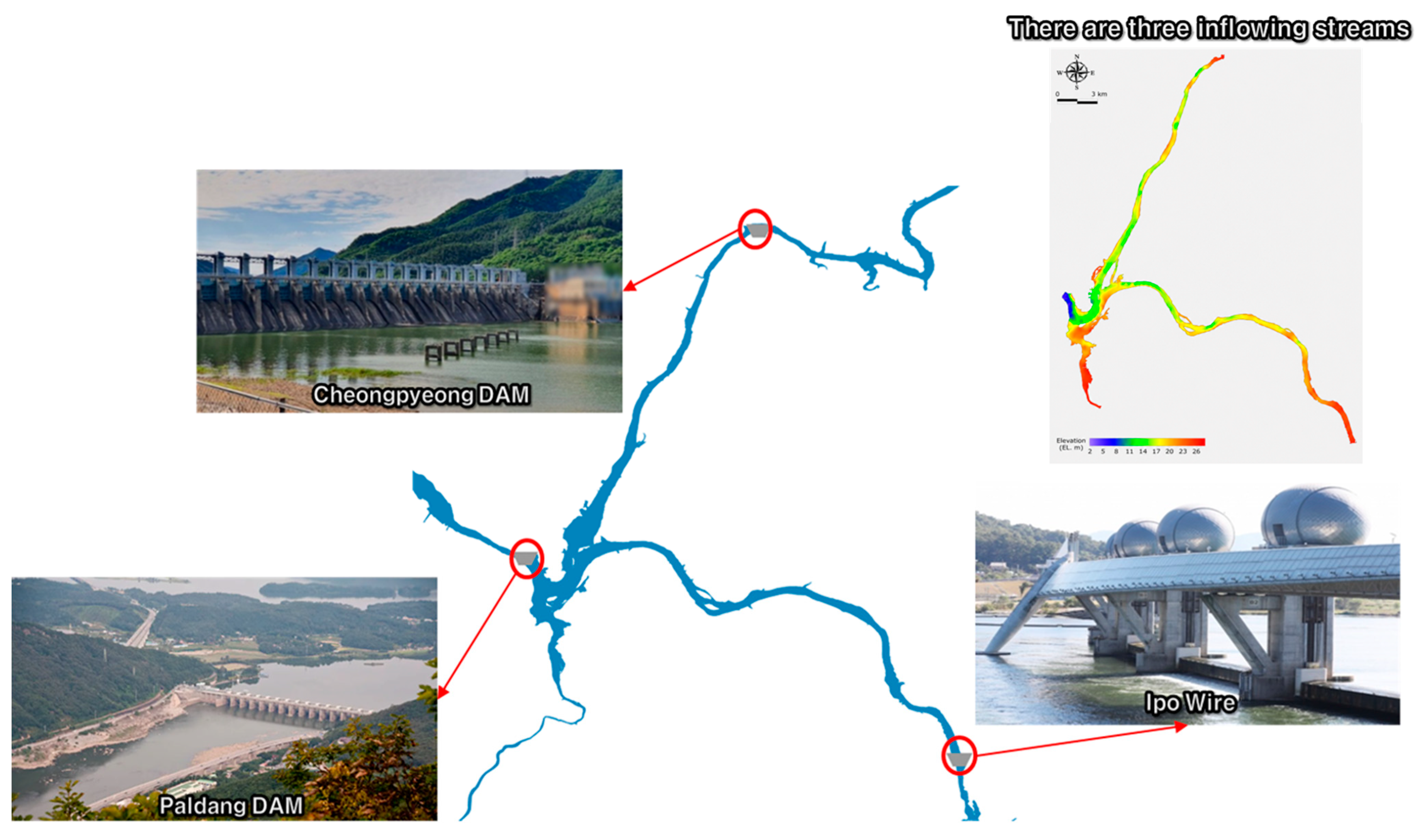
2.1. Study Area and Monitoring Strategy
2.2. Spatial Interpolation and Data Processing
2.3. Data Analysis and Quantitative Mixing Metrics
3. Results
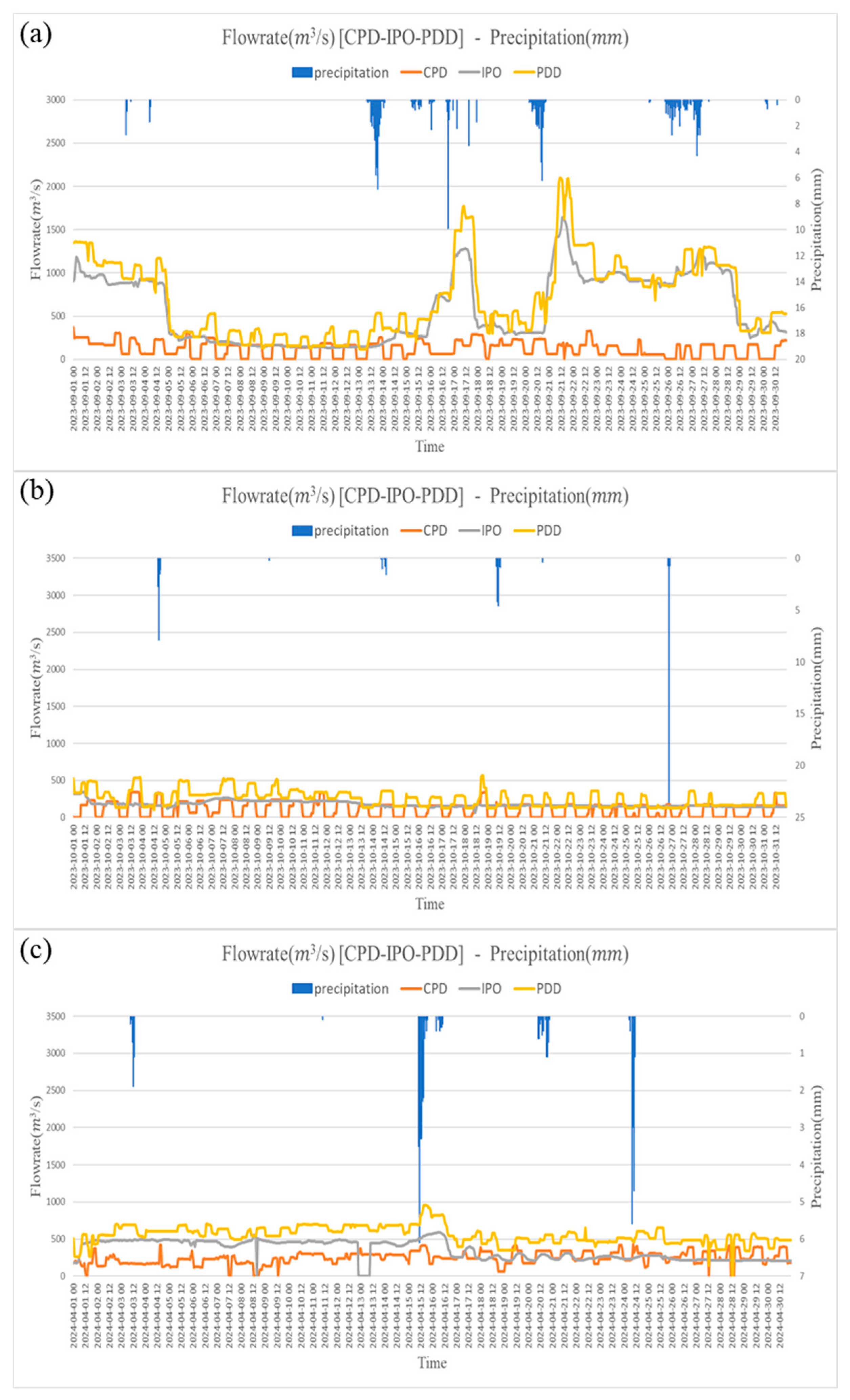
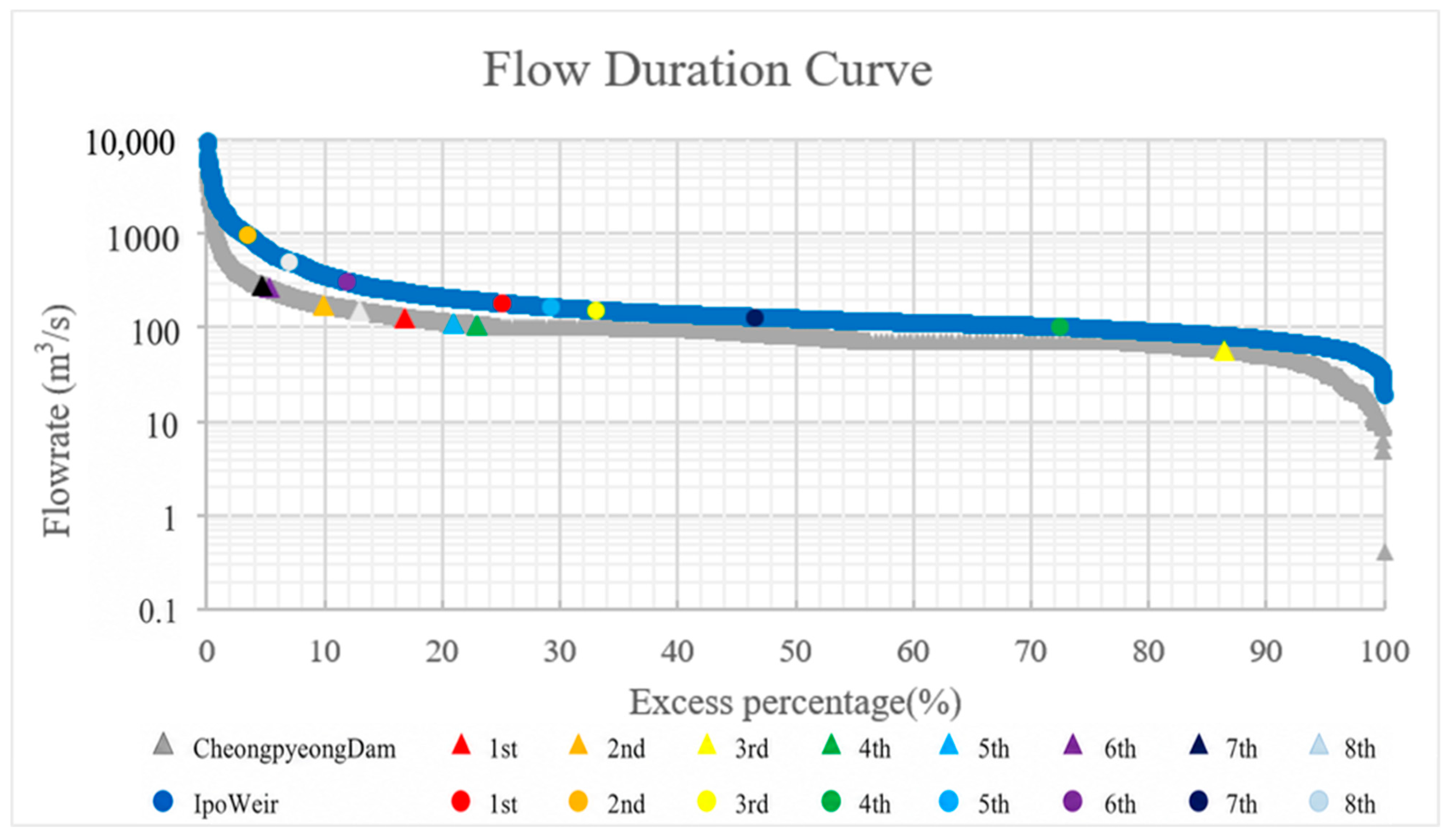
3.1. Hydrologic Conditions and Flow Regime Characteristics
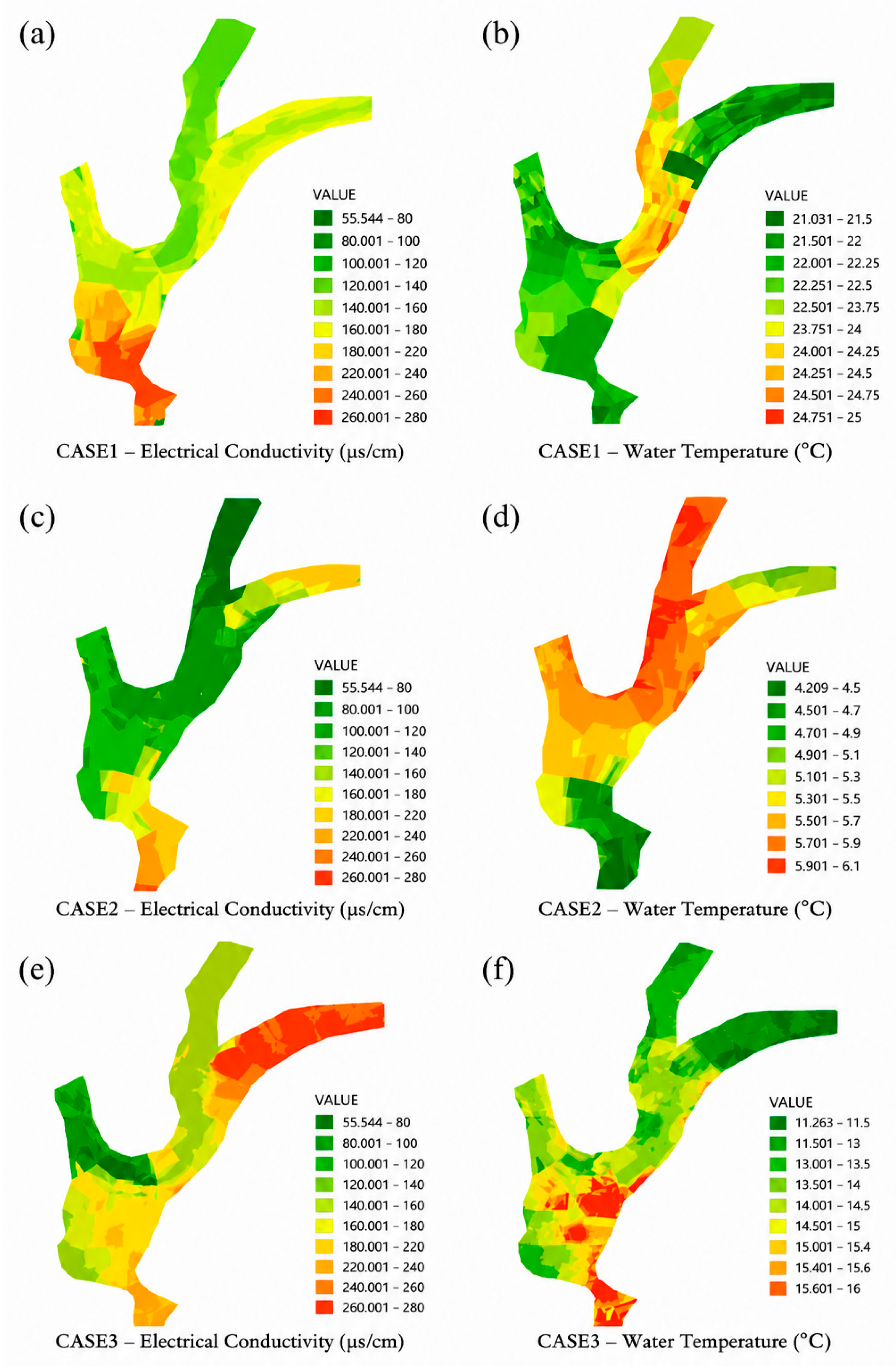
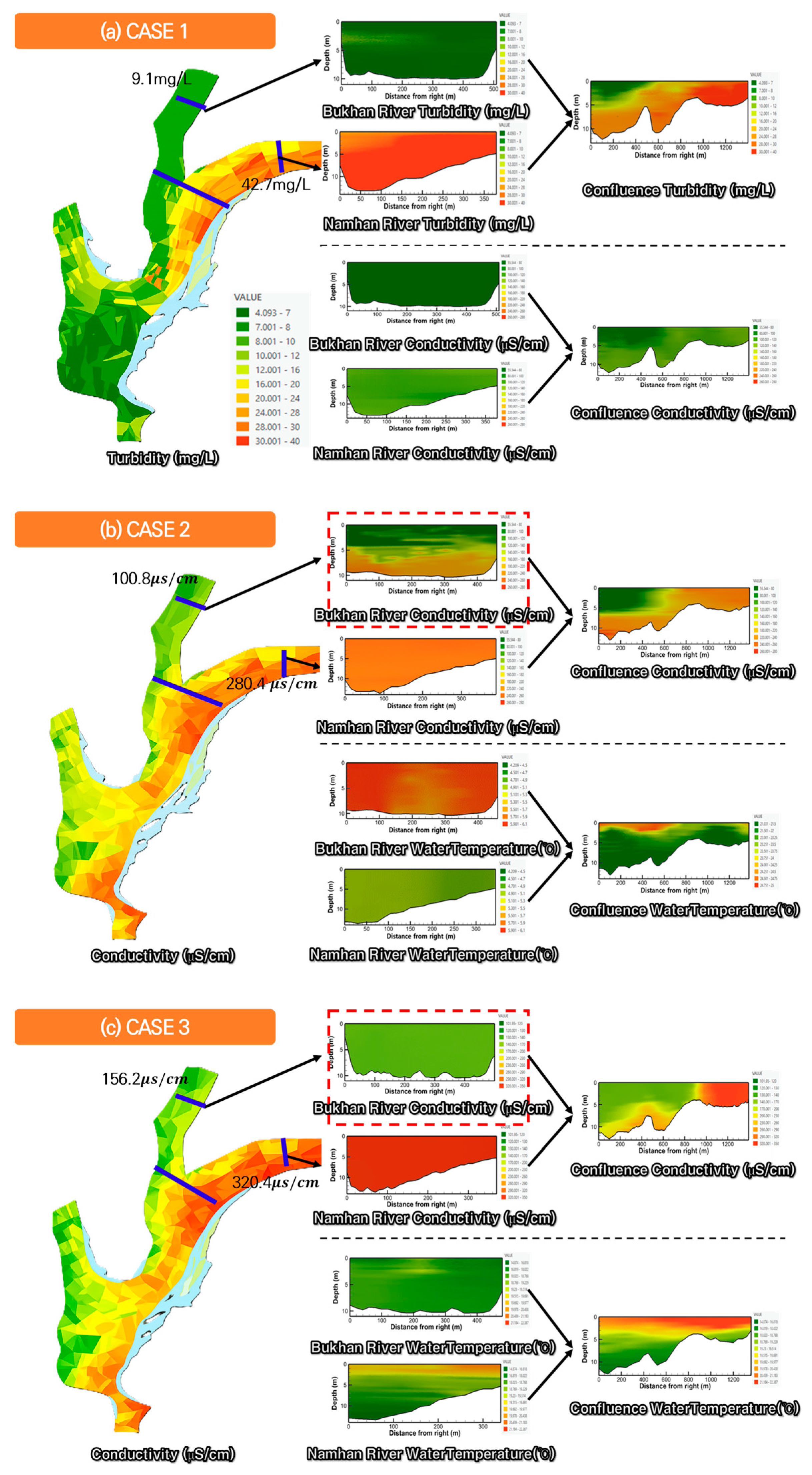
3.2. Spatial Mixing Behavior Based on Water Temperature and EC Distributions
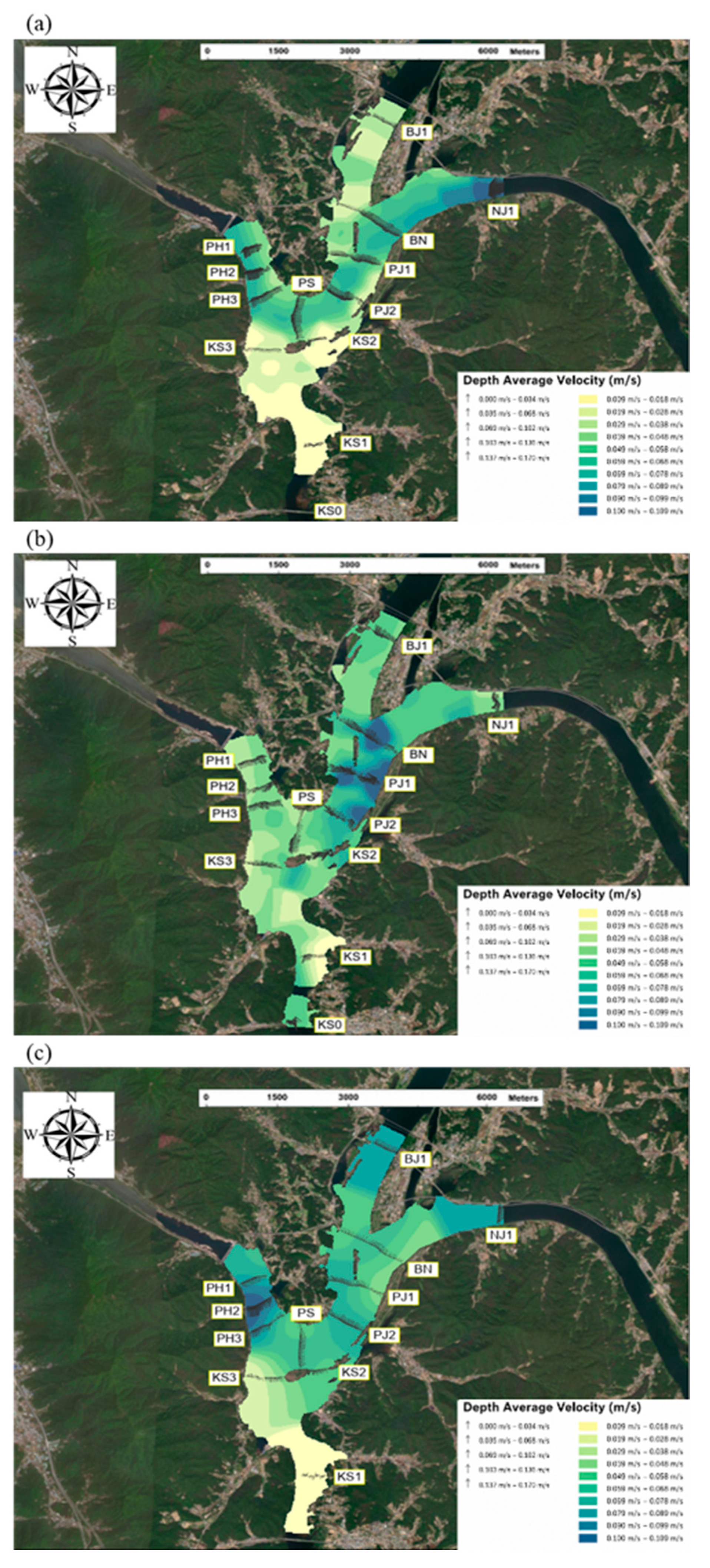
3.3. Spatial Flow-Velocity Structure and Hydraulic Interaction
3.4. Cross-Sectional Stratification and Mixing Structure
4. Discussion
5. Conclusions
Author Contributions
Funding
Data Availability Statement
Acknowledgments
Conflicts of Interest
References
- Choi, H.; Ryu, I.; Park, M.; Song, Y.; Yu, S.; Kim, S. Analysis of the Water Circulation Structure in the Paldang Reservoir, South Korea. Appl. Sci. 2020, 10, 6822. [Google Scholar] [CrossRef]
- Finotello, A.; Ghinassi, M.; Carniello, L.; Belluco, E.; Pivato, M.; Tommasini, L.; D’Alpaos, A. Three-Dimensional Flow Structures and Morphodynamic Evolution of Microtidal Meandering Channels. Water Resour. Res. 2020, 56, e2020WR027822. [Google Scholar] [CrossRef]
- Herrero, H.S.; Díaz Lozada, J.M.; García, C.M.; Szupiany, R.N.; Best, J.; Pagot, M. The influence of tributary flow density differences on the hydrodynamic behavior of a confluent meander bend and implications for flow mixing. Geomorphology 2018, 304, 99–112. [Google Scholar] [CrossRef]
- Parsons, D.R.; Best, J.L.; Lane, S.N.; Orfeo, O.; Hardy, R.J.; Kostaschuk, R. Form roughness and the absence of secondary flow in a large confluence–diffluence, Rio Paraná, Argentina. Earth Surf. Process. Landf. 2006, 32, 155–162. [Google Scholar] [CrossRef]
- Neary, V.S.; Odgaard, A.J. Three-Dimensional Flow Structure at Open-Channel Diversions. J. Hydraul. Eng. 1993, 119, 1223–1230. [Google Scholar] [CrossRef]
- Laraque, A.; Guyot, J.L.; Filizola, N. Mixing processes in the Amazon River at the confluences of the Negro and Solimões Rivers, Encontro das Águas, Manaus, Brazil. Hydrol. Process. 2009, 23, 3131–3140. [Google Scholar] [CrossRef]
- Shields, F.D., Jr.; Rigby, J.R. River Habitat Quality from River Velocities Measured Using Acoustic Doppler Current Profiler. Environ. Manag. 2005, 36, 565–575. [Google Scholar] [CrossRef] [PubMed]
- Riley, J.D.; Rhoads, B.L.; Parsons, D.R.; Johnson, K.K. Influence of junction angle on three-dimensional flow structure and bed morphology at confluent meander bends during different hydrological conditions. Earth Surf. Process. Landf. 2014, 40, 252–271. [Google Scholar] [CrossRef]
- Kim, D.-S.; Kang, B.-S. Validation of Assessment for Mean Flow Field Using Spatial Averaging of Instantaneous ADCP Velocity Measurements. J. Environ. Sci. 2011, 20, 107–118. [Google Scholar] [CrossRef]
- Szupiany, R.N.; Amsler, M.L.; Parsons, D.R.; Best, J.L. Morphology, flow structure, and suspended bed sediment transport at two large braid-bar confluences. Water Resour. Res. 2009, 45, W05415. [Google Scholar] [CrossRef]
- Hwang, K.S.; Park, D.S.; Jung, W.S. Spatial Reservoir Temperature Monitoring using Thermal Line Sensor. In Proceedings of the Korea Water Resources Association Conference; Korea Water Resources Association: Seoul, Republic of Korea, 2006; pp. 1002–1006. [Google Scholar]
- Lee, H.E.; Lee, C.J.; Kim, Y.J.; Kim, W. Analysis of vertical velocity distribution in natural rivers with ADCPs. In Proceedings of the Korea Water Resources Association Conference; Korea Water Resources Association: Seoul, Republic of Korea, 2009; pp. 1865–1869. [Google Scholar]
- Lewis, Q.W.; Rhoads, B.L. LSPIV Measurements of Two-Dimensional Flow Structure in Streams Using Small Unmanned Aerial Systems: 2. Hydrodynamic Mapping at River Confluences. Water Resour. Res. 2018, 54, 7981–7999. [Google Scholar] [CrossRef]
- Song, E.S.; Cho, K.A.; Shin, Y.S. Exploring the Dynamics of Dissolved Oxygen and Vertical Density Structure of Water Column in the Youngsan Lake. J. Environ. Sci. Int. 2015, 24, 163–174. [Google Scholar] [CrossRef]
- Lee, J.O.; Park, U.Y.; Yang, Y.B.; Kim, Y.S. 3D modelling shape embodiment and efficiency analysis of reservoir using RTK-GPS and E/S. J. Korean Soc. Geospat. Inf. Sci. 2005, 13, 11–17. [Google Scholar]
- Le, N.; Tran, D.; Sturgill, R. Content Analysis of Three-Dimensional Model Technologies and Applications for Construction: Current Trends and Future Directions. Sensors 2024, 24, 3838. [Google Scholar] [CrossRef] [PubMed]
- Dixon, S.J.; Sambrook Smith, G.H.; Best, J.L.; Nicholas, A.P.; Bull, J.M.; Vardy, M.E.; Sarker, M.H.; Goodbred, S. The planform mobility of river channel confluences: Insights from analysis of remotely sensed imagery. Earth-Sci. Rev. 2018, 176, 1–18. [Google Scholar] [CrossRef]
- Jang, H.S.; Kang, N.R.; Noh, H.S.; Lee, D.R.; Choi, C.H.; Kim, H.S. Applicability of Spatial Interpolation Methods for the Estimation of Rainfall Field. J. Wetl. Res. 2015, 17, 370–379. [Google Scholar] [CrossRef]
- Lee, D.C.; Bae, K.H.; Ryu, K.H. Geospatial data modeling for 3D digital mapping. J. Korean Soc. Surv. Geod. Photogramm. Cartogr. 2009, 27, 393–400. [Google Scholar]
- Lee, H.S.; Chung, S.W.; Choi, J.K.; Oh, D.G.; Heo, T.Y. Analysis of Spatial Water Quality Variation in Daechung Reservoir. J. Korean Soc. Water Environ. 2011, 27, 699–709. [Google Scholar] [CrossRef]
- Jeong, C. A Study on Three Dimensional Expression of River Bed Cross Section Considering Surrounding Topography. J. Korean Soc. Hazard Mitig. 2013, 13, 185–190. [Google Scholar] [CrossRef]
- Park, S.; Yang, A.R.; Kim, E.; Lim, J. Model development to estimate site index values for six major tree species in North Korea. J. For. Res. 2022, 34, 387–400. [Google Scholar] [CrossRef]
- Hwang, S.W.; Park, S.W.; Jang, M.W.; Cho, Y.K. Spatial Distribution Modeling of Daily Rainfall Using Co-Kriging Method. J. Korea Water Resour. Assoc. 2006, 39, 669–676. [Google Scholar] [CrossRef]
- Bakhtiari, V.; Piadeh, F.; Behzadian, K.; Kapelan, Z. A critical review for the application of cutting-edge digital visualisation technologies for effective urban flood risk management. Sustain. Cities Soc. 2023, 99, 104958. [Google Scholar] [CrossRef]
- Kim, D.H.; Ryu, D.W.; Choi, Y.M.; Lee, W.J. Application of Kriging and Inverse Distance Weighting Method for the Estimation of Geo-Layer of Songdo Area in Incheon. J. Korean Geotech. Soc. 2010, 26, 5–19. [Google Scholar] [CrossRef]
- Woo, K.S.; Park, J.H.; Lee, H.J. Sensitivity Analysis of Ordinary Kriging Interpolation According to Different Variogram Models. J. Comput. Struct. Eng. Inst. Korea 2008, 21, 295–304. [Google Scholar]
- Cheng, Z.; Constantinescu, G. Stratification Effects on Flow Hydrodynamics and Mixing at a Confluence with a Highly Discordant Bed and a Relatively Low Velocity Ratio. Water Resour. Res. 2018, 54, 4537–4562. [Google Scholar] [CrossRef]
- Constantinescu, G.; Miyawaki, S.; Rhoads, B.; Sukhodolov, A. Numerical analysis of the effect of momentum ratio on the dynamics and sediment-entrainment capacity of coherent flow structures at a stream confluence. J. Geophys. Res. Earth Surf. 2012, 117, F04028. [Google Scholar] [CrossRef]
- Kirkil, G.; Constantinescu, G. Nature of flow and turbulence structure around an in-stream vertical plate in a shallow channel and the implications for sediment erosion. Water Resour. Res. 2009, 45, W06412. [Google Scholar] [CrossRef]
- Zeng, J.; Constantinescu, G.; Weber, L. 3D Calculations of Equilibrium Conditions in Loose-Bed Open Channels with Significant Suspended Sediment Load. J. Hydraul. Eng. 2010, 136, 557–571. [Google Scholar] [CrossRef]
- Kim, D.; Winkler, M.; Muste, M. A GIS-based Computational Tool for Multidimensional Flow Velocity by Acoustic Doppler Current Profilers. J. Phys. Conf. Ser. 2015, 622, 012024. [Google Scholar] [CrossRef]
- SonTek, a Xylem Brand. RiverSurveyor S5/M9 System Manual, Firmware Version 4.20; Xylem Inc.: Washington, DC, USA, 2022. [Google Scholar]
- SonTek, a Xylem Brand. SonTek-M9 Specifications; Xylem Inc.: Washington, DC, USA; Available online: https://www.ysi.com/sontek-m9 (accessed on 22 May 2026).
- YSI, a Xylem Brand. EXO2 Multiparameter Water Quality Sonde Specifications; Xylem Inc.: Washington, DC, USA; Available online: https://www.ysi.com/exo2 (accessed on 22 May 2026).
- ISO 25377:2020; Hydrometric Uncertainty Guidance (HUG). International Organization for Standardization: Geneva, Switzerland, 2020.

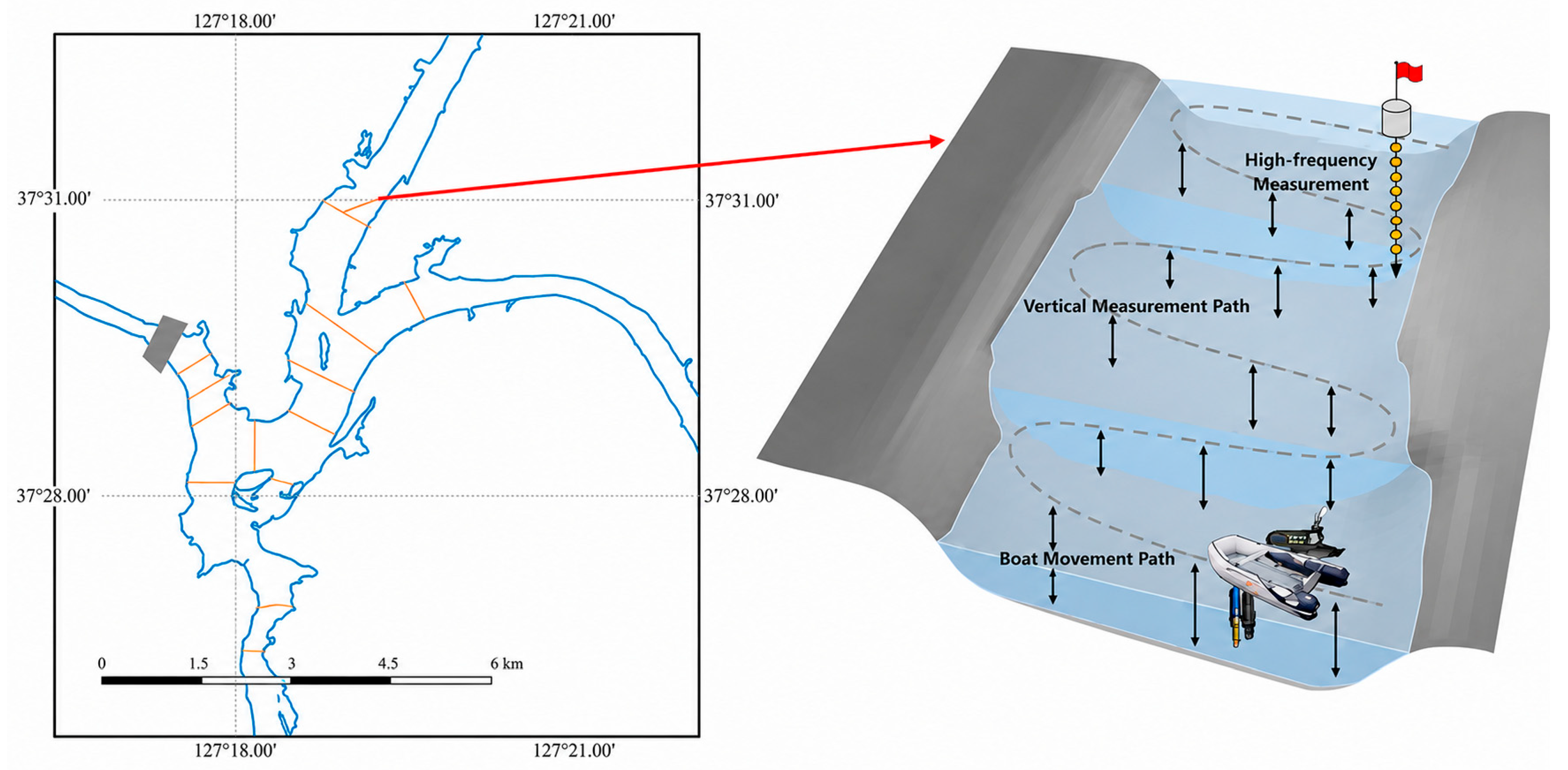



| Section | BJ1 | NJ1 | BN | PJ1 | PJ2 | PS | PH3 | PH2 | PH1 | KS1 | KS2 | KS3 |
|---|---|---|---|---|---|---|---|---|---|---|---|---|
| Horizontal averaging interval (m) | 20 | 20 | 40 | 30 | 20 | 30 | 25 | 20 | 25 | 20 | 15 | 25 |
| Vertical ADCP cell interval (m) | 0.6 | 0.7 | 0.7 | 0.8 | 0.8 | 0.8 | 1.0 | 1.0 | 1.0 | 0.3 | 0.3 | 0.4 |
| Transect distance (m) | 500 | 400 | 1400 | 1100 | 650 | 1000 | 750 | 500 | 700 | 500 | 400 | 750 |
| Mean depth (m) | 10 | 13 | 13 | 17 | 16 | 15 | 21 | 21 | 22 | 4 | 4 | 6 |
| Instrument | Variable | Accuracy |
|---|---|---|
| ADCP | Velocity | ±0.25% of measured velocity ±2 mm/s |
| Depth | ±1% of measured depth | |
| EXO2 | Temperature | ±0.2 °C |
| Conductivity | ±1% of reading or 2 µS/cm | |
| Turbidity | ±2% of reading or 0.3 FNU% | |
| pH | ±0.1 pH unit | |
| Dissolved oxygen | ±0.1 mg/L or ±1% of reading | |
| Chlorophyll-a | relative fluorescence measurement; used as auxiliary water-quality indicator |
| Case | Hydrologic Condition | Survey Day Precipitation (mm) | Air Temperature (°C) | North Han River Discharge (m3/s) | South Han River Discharge (m3/s) | Gyeongan Stream Discharge (m3/s) |
|---|---|---|---|---|---|---|
| CASE1 (23.09.22) | Flood-season condition | 0 | 18.40 | 175.3 | 962.2 | 16.61 |
| CASE2 (23.10.27) | Normal-flow condition | 0 | 13.85 | 57.13 | 153.2 | 2.33 |
| CASE3 (24.04.17) | Normal-flow condition | 0 | 14.56 | 263.63 | 306.6 | 2.77 |
| Case | BJ1 Ri | NJ1 Ri | PH1 Ri | Dominant Condition | Interpretation |
|---|---|---|---|---|---|
| CASE1 | 0.02 | 4.58 | 0.53 | Mixing-prone | Low BJ1 Ri indicates localized shear-driven mixing, whereas higher NJ1 and PH1 Ri values indicate relatively stable stratification. |
| CASE2 | 0.16 | 1.40 | 2.41 | Mostly stratified | High NJ1 and PH1 Ri values indicate stable stratification; the low BJ1 value indicates localized mixing. |
| CASE3 | 0.05 | 0.09 | 0.35 | Stratified | The PH1 value indicates relatively stable stratification, whereas low BJ1 and NJ1 values indicate localized mixing near the inflow sections. |
Disclaimer/Publisher’s Note: The statements, opinions and data contained in all publications are solely those of the individual author(s) and contributor(s) and not of MDPI and/or the editor(s). MDPI and/or the editor(s) disclaim responsibility for any injury to people or property resulting from any ideas, methods, instructions or products referred to in the content. |
© 2026 by the authors. Licensee MDPI, Basel, Switzerland. This article is an open access article distributed under the terms and conditions of the Creative Commons Attribution (CC BY) license.
Share and Cite
Lee, C.H.; Yoon, S.B.; Kang, Y.; Kim, Y.D. Density-Driven Mixing and Stratified Flow Dynamics in Paldang Reservoir Under Variable Hydraulic Conditions. Water 2026, 18, 1625. https://doi.org/10.3390/w18131625
Lee CH, Yoon SB, Kang Y, Kim YD. Density-Driven Mixing and Stratified Flow Dynamics in Paldang Reservoir Under Variable Hydraulic Conditions. Water. 2026; 18(13):1625. https://doi.org/10.3390/w18131625
Chicago/Turabian StyleLee, Chang Hyun, Soo Bin Yoon, Yongmuk Kang, and Young Do Kim. 2026. "Density-Driven Mixing and Stratified Flow Dynamics in Paldang Reservoir Under Variable Hydraulic Conditions" Water 18, no. 13: 1625. https://doi.org/10.3390/w18131625
APA StyleLee, C. H., Yoon, S. B., Kang, Y., & Kim, Y. D. (2026). Density-Driven Mixing and Stratified Flow Dynamics in Paldang Reservoir Under Variable Hydraulic Conditions. Water, 18(13), 1625. https://doi.org/10.3390/w18131625