1. Introduction
Urban sewer network systems, as critical infrastructure within urban water environment governance, serve as key carriers for wastewater collection, conveyance, and treatment [
1,
2]. With the acceleration of urbanization, their construction scale has expanded rapidly worldwide. In China, the total length of urban sewer pipelines has grown significantly over the past decade, with an average annual growth rate of approximately 7–10%, exceeding 800,000 km by 2020 [
3]. In the US, the total length of sewer networks has reached approximately 1.2 million miles (about 1.93 million km) [
4], while developed countries such as Japan have established highly extensive wastewater collection systems, with thousands of systems serving large urban populations [
5]. The rapid expansion of global sewer networks has led to increasingly complex operating environments. Under such conditions, risks such as structural aging, pipe damage, and sediment blockage may occur [
6]. These issues not only reduce system conveyance efficiency but can also trigger overflow pollution, public health risks, and secondary environmental hazards, posing significant threats to urban ecosystems and socio-economic systems [
7]. As many sewer networks approach the end of their service life, the financial burden associated with their operation and maintenance is expected to increase substantially [
8]. Therefore, conducting systematic and scientifically grounded risk assessments of urban sewer network systems is of great importance for enhancing operational safety and improving management precision.
Existing studies on urban sewer network risk assessment have primarily focused on two dimensions: Health and Failure [
9,
10]. System health assessment mainly emphasizes the physical condition and operational performance of the network. It is typically evaluated using indicators such as structural integrity [
11,
12] and hydraulic performance [
13]. Common methods include the Analytic Hierarchy Process (AHP) and fuzzy comprehensive evaluation [
14]. Ennaouri and Fuamba quantified structural and functional defects in sewer pipelines using closed-circuit television (CCTV) inspection data; however, the results are highly dependent on operator experience, skills, and subjective bias, which can significantly influence inspection reports [
15]. To address this limitation, digital approaches have been integrated with traditional methods, employing deep learning models—such as deep convolutional neural networks—for automated defect classification in sewer CCTV inspections [
16,
17]. In contrast, Failure assessment focuses on the potential impacts and severity of system Failures, commonly considering environmental impacts (e.g., pollutant dispersion) [
18], social impacts (e.g., sewer overflows affecting residents’ daily life) [
19], and economic losses (e.g., infrastructure damage and repair costs) [
20], often quantified using risk matrices and probabilistic models. Abuhishmeh et al. [
21] categorized the Failure system into three dimensions: economic, environmental, and social. These dimensions include factors such as repair costs, greenhouse gas emissions, and traffic disruption. Bayesian regression and Monte Carlo simulation were then applied to quantify both direct and indirect consequences. However, with the advancement of smart water management and information technologies, the operational risk of urban sewer networks is no longer determined solely by Health and Failure. The role of management in mitigating overall system risk has become increasingly prominent, particularly in terms of monitoring and early warning capabilities [
22,
23,
24], response and scheduling capacity [
25,
26], and management mechanisms [
27,
28]. Some countries have already highlighted the importance of management capacity; for example, China has actively promoted integrated operation and maintenance and coordinated management approaches to ensure system integrity and coordination. Outside China, countries such as South Korea and Indonesia have also conducted pilot evaluations of “smart water cities” [
29]. Nevertheless, few studies have explicitly incorporated management capacity into risk assessment frameworks. However, existing risk assessment frameworks largely overlook management-related indicators. As a result, they may fail to capture how operations and governance affect overall system risk, limiting their practical value for proactive risk mitigation. Therefore, incorporating management factors into system-level analysis has become an important extension of current research. This approach enables a comprehensive evaluation of monitoring, early warning, and response capabilities.
It is noteworthy that HFM systems are not independent but exhibit significant interdependent and mutually constrained relationships. Health subsystem influences failure probability, failure subsystems are regulated by management capacity, and the management level depends on the healthy operation status of the system and the information feedback. In practice, a high level of Health subsystem does not necessarily correspond to low risk, while high-risk areas often rely on enhanced management to maintain stable operation. However, existing studies have predominantly adopted single-system or simple additive evaluation approaches, lacking quantitative characterization of the coordination among these three subsystems, and thus failing to capture the overall level of coordinated development. Therefore, this study introduces the CCD model based on the HFM evaluation framework to quantify the interactions and coordinated development among multiple systems. For instance, Zhang et al. [
30] developed a three-system model encompassing water resource carrying capacity, urbanization, and economic development, revealing the co-evolutionary dynamics among systems and highlighting the importance of coordination for regional sustainability. Wan et al. [
31] applied the CCD model to examine the relationship between urbanization and water environment systems, identifying significant spatial heterogeneity and clustering patterns across regions. Similarly, Yuan et al. [
32] employed the model to analyze the coupling relationship between aquatic ecosystems and urban water systems, demonstrating the dynamic transition from imbalance to coordination among systems. These studies show that the CCD model can effectively capture interactions and spatial differences within complex systems. However, few studies have used CCD to simultaneously assess the coordinated development of HFM subsystems. CCD is suitable for this purpose because it measures both the interaction strength among subsystems and the overall level of coordination. However, its application to the coordinated development of HFM in urban sewer networks remains largely unexplored.
Although existing studies have made progress in assessing the Health and Failure of urban sewer networks, several limitations remain. First, most studies focus primarily on structural attributes or socio-environmental factors, with insufficient consideration of management capacity, making it difficult to fully capture system risks under real operating conditions. Second, current weighting methods often rely on either subjective or objective approaches alone, lacking effective integration mechanisms. Third, few studies incorporate Health, Failure, and Management into a unified analytical framework, and the coordination relationships and spatial interactions among these subsystems remain insufficiently quantified.
To systematically evaluate the coordination among health, failure, and management in urban sewer systems, this study introduces the CCD model into sewer network risk assessment and develops an integrated HFM evaluation framework. The main contributions are as follows:
- (1)
A multidimensional indicator system integrating system Health, Failure, and Management is established;
- (2)
A hybrid weighting method combining AHP, CRITIC, and game theory is adopted, together with fuzzy comprehensive evaluation, to improve the rationality of the results;
- (3)
The CCD model is applied to quantify coordination among subsystems, and the obstacle degree model is used to identify key limiting factors.
Ultimately, this study reveals the spatial heterogeneity and interaction mechanisms among HFM subsystems, evaluates sewer network risk from a holistic perspective, and identifies uncoordinated areas and optimization pathways for management. The findings provide a new analytical perspective for sustainable urban infrastructure management and smart city governance.
2. Materials and Methods
2.1. Study Area
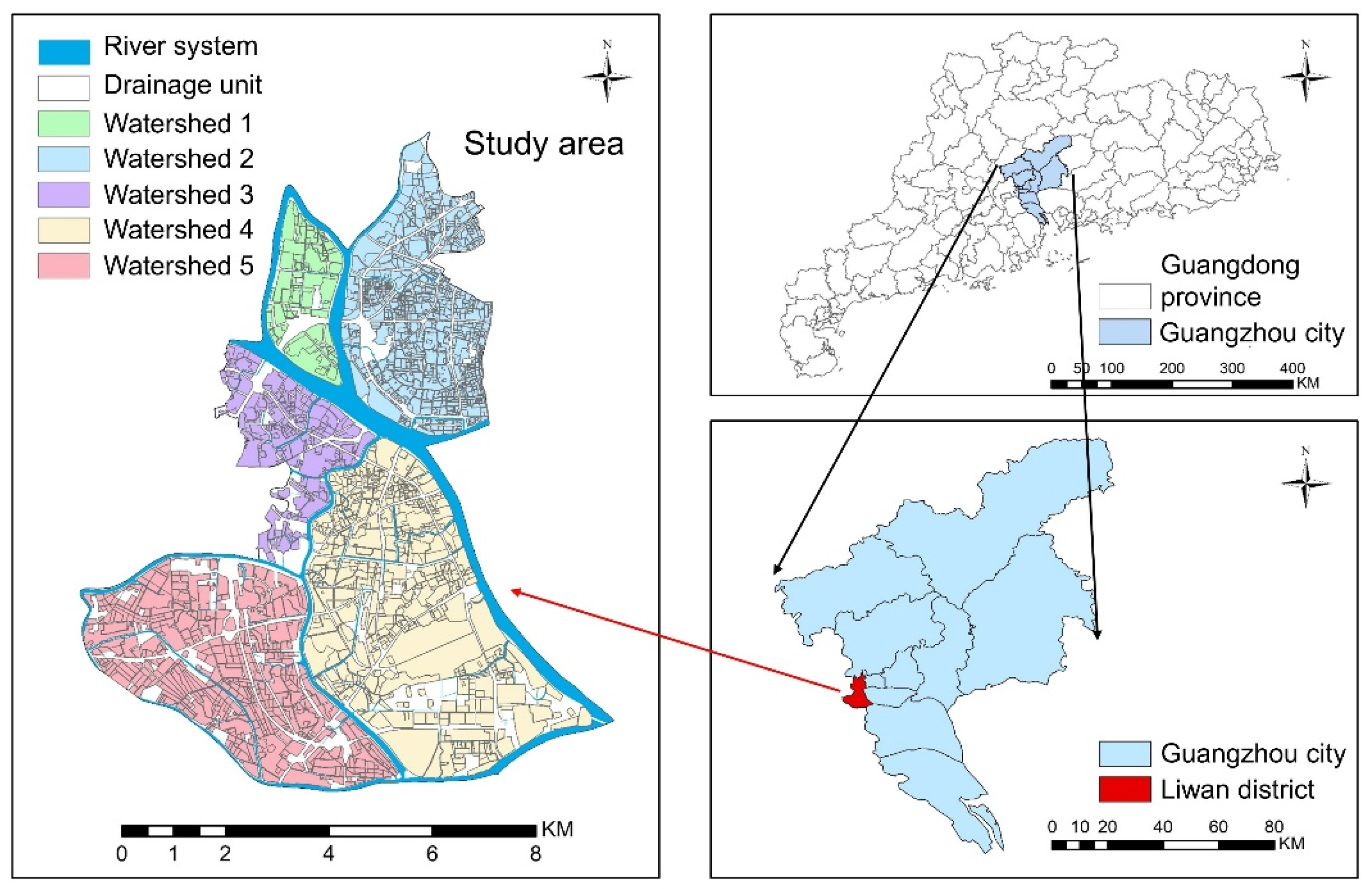
This study selects Liwan District in Guangzhou as the study area (
Figure 1). The area is divided into five watersheds based on the river system, comprising a total of 2575 drainage units. Located in western Guangzhou, Liwan District is part of the core area of a national central city and a key hub within the Guangdong–Hong Kong–Macao Greater Bay Area. Situated in the northern Pearl River Delta, the district features a topography that is higher in the north and lower in the south, with the Pearl River flowing through the city. The area is characterized by a dense and well-developed river network. While abundant water resources support urban drainage functions, they also impose higher demands on water environment governance and sewer system management. As one of the traditional old urban districts of Guangzhou, Liwan contains a large number of aging residential communities, where underground sewer networks have experienced significant deterioration, with prominent issues such as pipeline damage and sediment accumulation. In terms of population and economic development, by the end of 2024, the permanent resident population reached 1.135 million. The district achieved a gross domestic product (GDP) of CNY 131.636 billion in 2024, representing a year-on-year growth of 2.3% [
33], exceeding the average growth rate of Guangzhou. The high population density and active commercial activities have continuously increased the operational load on the sewer system, posing significant challenges to the capacity of drainage infrastructure. In response, Liwan District has, in recent years, actively promoted the standardization of drainage units and the improvement of supporting public sewer networks.
2.2. Development of the HFM Indicator Framework
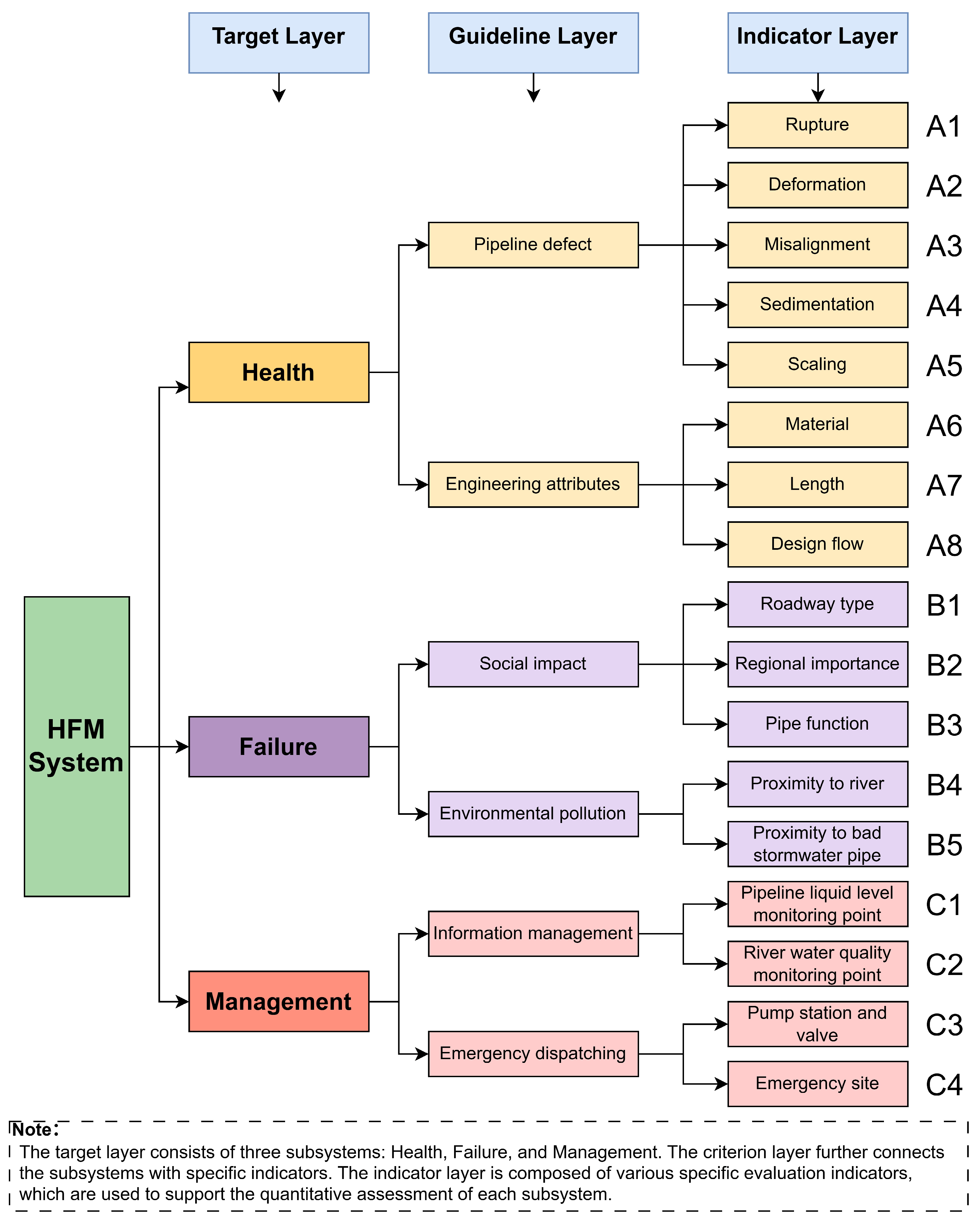
This study comprehensively considers HFM system in urban sewer networks to construct the HFM indicator framework (
Figure 2). The three subsystems are evaluated separately in the assessment process. This study assumes that the sewer network data for the study area are complete and accurate, and that all monitoring data are consistent with the existing operational infrastructure.
The Health subsystem of urban sewer networks reflects their ability to maintain normal urban operations and indicates the overall condition of the system. Over time, structural and morphological changes occur in pipelines, leading to a decline in conveyance capacity and potentially threatening overall system stability. The Health subsystem’s indicator framework mainly comprises two aspects: pipeline defects and engineering attributes. Pipeline defects are primarily identified using professional techniques such as closed-circuit television (CCTV) inspection, which detect both structural and functional defects [
34,
35,
36]. These include five key indicators affecting hydraulic capacity: rupture, deformation, misalignment, sedimentation, and scaling. All the defects were inspected and rectified by the urban drainage management department in 2022, and the subsequent indicators were also provided by them. Rupture refers to fractures or damage caused when external forces exceed the structural resistance of the pipeline; deformation denotes shape changes due to ground settlement or external pressure; misalignment describes the misalignment between adjacent pipe sections; sedimentation refers to the accumulation of sand and other debris at the bottom of the pipe; and scaling indicates the deposition or adhesion of substances such as grease and iron salts on the inner pipe surface, forming soft or hard deposits. Engineering attributes reflect the capacity of pipeline design parameters to accommodate increasing wastewater discharge, including indicators such as pipe material, pipe length, and design flow. Design flow and pipe material show high variability and information content because they directly reflect hydraulic capacity and structural durability, which are strongly influenced by historical design standards, construction periods, and operational conditions.
Failure of sewer pipelines refers to the extent of social and environmental impacts resulting from system failures, such as reduced conveyance capacity. Higher Failure can significantly affect residents’ quality of life and disrupt normal production and daily activities, thereby constraining sustainable urban development. Social impacts refer to the effects of sewer network failures in areas with high population density and active commercial activities, including traffic disruption and economic losses. These are characterized by three indicators: roadway type, regional importance, and pipe function. Roadway type represents the functional classification of the road where the sewer pipeline is located, reflecting the potential impact of network failure on traffic interruption. Regional importance describes the category of land where the pipeline is situated, indicating the extent to which economic activities, daily life, and environmental conditions are affected. Pipe function refers to the classification of sewer pipelines (e.g., trunk, secondary trunk, and branch lines), with higher-level pipelines associated with more severe Failure. Environment pollution mainly refers to the indirect effects of sewer failures on urban water resources. Sewer overflows may discharge into rivers and lakes or contaminate nearby stormwater outlets, leading to deterioration of the water environment [
18]. In this study, the distances between sewer pipelines and rivers as well as degraded stormwater pipelines are calculated using the neighborhood analysis tools in ArcGIS 10.8.
To extend the service life of urban sewer networks, reduce failure risks, and minimize resource waste, management departments typically implement measures such as deploying monitoring points along pipelines and rivers, regulating pump stations and valves, and establishing emergency response facilities. Information management refers to the capability of collecting, transmitting, and intelligently analyzing system data through sensor devices, thereby enhancing early warning efficiency. This includes indicators such as liquid level monitoring points within the sewer network and water quality monitoring points in rivers. Emergency dispatching is characterized by two main indicators. First, pump stations and valves enable remote regulation of flow, water levels, and flow direction within the network, thereby maintaining hydraulic balance and preventing sewer-related incidents. Second, the distribution of emergency sites reflects the capacity for rapid response by professional personnel and equipment during the early stages of system failure, helping to prevent the continued overflow of wastewater.
All indicator definitions, selection criteria, and grading criteria are provided in
Tables S1–S3. The selected indicators can comprehensively reflect the risks of the urban sewage network from aspects such as network health, failure impact and management response.
2.3. Game-Theoretic Weighting-Based HFM Evaluation Method
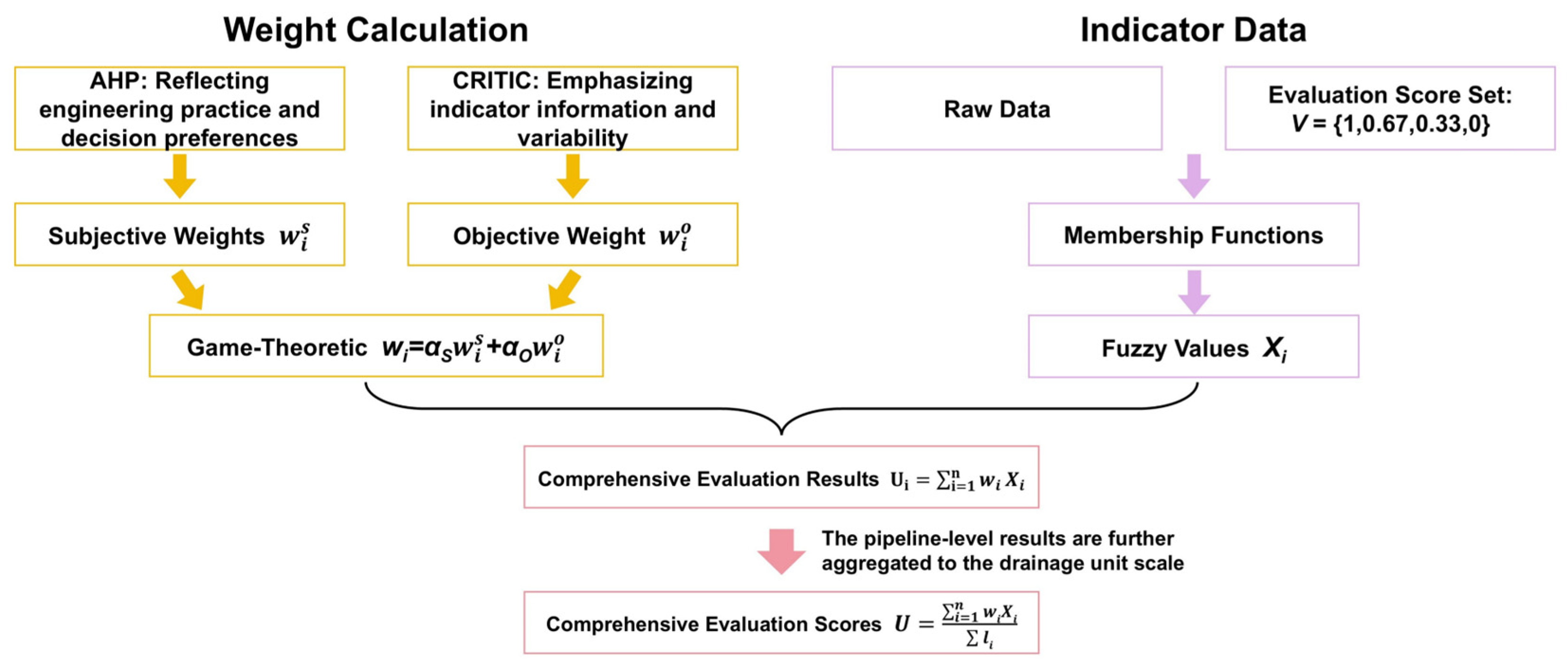
After establishing the HFM indicator system for urban sewer networks, the evaluation results need to be transformed into comparable scores to enable coordinated quantitative analysis and support decision-making. The methodological process is shown in
Figure 3. Due to the large number of indicators, complex data types, and strong interconnections among evaluation dimensions, the relative importance of each indicator must be quantified through weighting.
Existing indicator weighting methods can generally be classified into subjective and objective approaches. Subjective methods, such as the AHP, rely on expert knowledge and experience, reflecting practical engineering management considerations and decision-making preferences. In contrast, objective methods, including the entropy weight method and CRITIC, are based on the statistical characteristics of the data itself, emphasizing information content and variability among indicators. A single weighting method is insufficient to comprehensively capture indicator importance. Sole reliance on subjective weighting may introduce bias due to human judgment, particularly in large and complex indicator systems, potentially leading to deviations from actual data characteristics. Conversely, relying only on objective weighting may overlook practical management considerations in urban sewer networks. Therefore, this study adopts a game theory-based combination weighting approach, which reconciles differences between subjective and objective weights to achieve an optimal balance among multiple weighting schemes, thereby enhancing the scientific rigor and stability of the weighting results.
First, the subjective weights of the HFM system are determined using the AHP. Experts conduct pairwise comparisons of indicators within each system using the 1–9 scale method, thereby constructing the judgment matrices
(Equation (1)). To ensure the reliability of the subjective weights, a consistency test is performed, requiring that the consistency ratio (CR) be less than 0.1 (Equations (2) and (3)). The subjective weights of the indicators, denoted as
, are then calculated using the eigenvector method (Equation (4)). To ensure the reliability of the AHP weighting process, the expertise and management experience of the participating experts are crucial. In this study, fifteen experts with professional qualifications, practical experience, and a thorough familiarity with urban sewer networks were invited to score the indicators. Details of the experts are presented in
Table 1.
In the equations, denotes the number of indicators in the system; represents the maximum eigenvalue of the judgment matrix; is the random consistency index; and denotes the relative importance of element compared to element with respect to matrix .
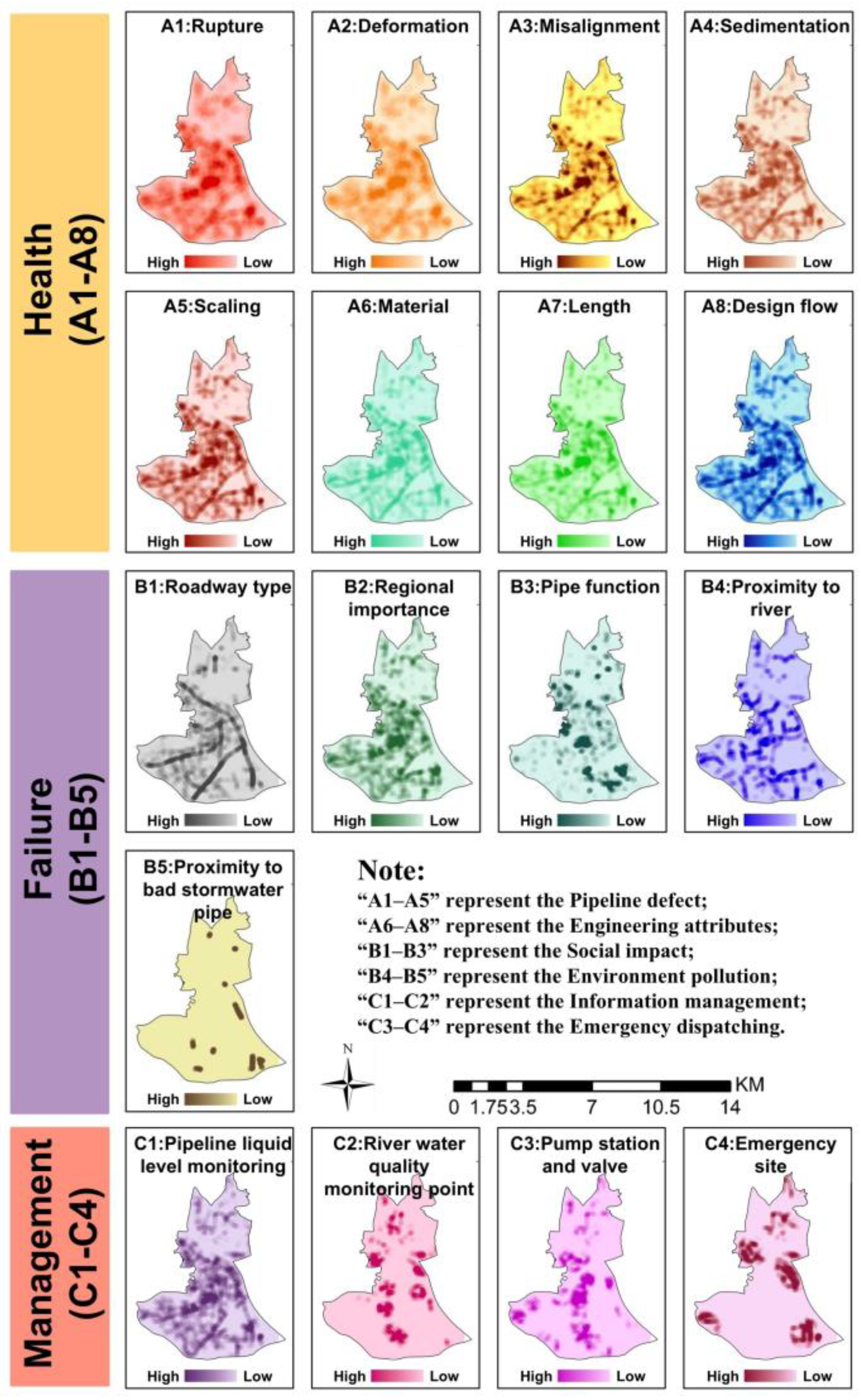
Subsequently, the CRITIC method is employed to determine the objective weights of indicators from a data-driven perspective. All indicators in the HFM system are first normalized to eliminate the influence of differing units. Given that the indicator system includes both qualitative variables (e.g., material) and quantitative variables (e.g., length), inherent fuzziness exists within the evaluation framework. To address this, fuzzy logic methods—such as membership functions—are applied to transform the original data into normalized fuzzy values
within the range of 0 to 1. Kernel density estimation is used to illustrate the spatial distribution characteristics of indicators in the HFM system (
Figure 4), while the classification criteria for indicator grading are provided in
Table 2. The corresponding evaluation score set is defined as V = {1, 0.67, 0.33, 0}. The standard deviation
of each indicator is then calculated to reflect its degree of variability (Equation (5)), and the correlation coefficient is used to represent the degree of conflict
among indicators (Equation (6)), thereby assessing information redundancy. Based on these, the information content
of each indicator is computed (Equation (7)), and the objective weight
is subsequently determined (Equation (8)).
In the equations, denotes the number of evaluation samples in the original sewer system dataset; represents the standardized value of an indicator; denotes the mean value of the standardized indicator iii across all sewer pipelines; and represents the correlation coefficient between indicators and , ; represents the sample.
Furthermore, to enhance the rationality of weight allocation, a game theory-based approach is employed to integrate and optimize the subjective weights derived from AHP and the objective weights obtained from the CRITIC method. This approach overcomes the instability of traditional hybrid weighting methods, which are often influenced by individual experts or data fluctuations, thereby enhancing the reliability and stability of sewer network assessment. By constructing a combination weighting model, the final combined weight
is determined (Equations (9) and (10)), minimizing the deviation among different weighting schemes and thereby achieving coordination and balance between subjective and objective weights.
In the equations, denotes the transpose of ; represents the proportional coefficient of the subjective weight vector; and represents the proportional coefficient of the objective weight vector.
Finally, the combined weights
are applied to calculate the weighted scores of all indicators in the HFM system (Equation (11)), yielding the comprehensive evaluation results of the three subsystems denoted as
/
, respectively, at the pipeline level. Considering that the drainage management in the study area adopts drainage units as the smallest management entities, which are directly responsible for operation, maintenance, and emergency response, the pipeline-level results are further aggregated to the drainage unit scale using Equation (12). This produces the HFM comprehensive evaluation scores
. Pipeline length reflects the coverage of the network within each drainage unit. Therefore, weighting by length ensures the aggregation is reasonable and provides a solid basis for subsequent coupling coordination analysis.
In the equations, denotes the combined weight of indicator within a given HFM system; represents the fuzzy value of indicator in that system; denotes the total number of sewer pipelines within a drainage unit (); represents the evaluation score of the -th pipeline; and denotes the length of the -th pipeline.
2.4. Development of the CCD Model
The operational state of urban sewer networks is not determined by a single factor but rather results from the combined effects of HFM system. Therefore, it is necessary to analyze the interactions among these three subsystems from a holistic perspective. The CCD model can effectively characterize the interaction intensity and coordinated development level among multiple systems, making it a valuable tool for analyzing the synergistic relationships within complex systems.
The coupling degree reflects the interaction intensity among the HFM systems, where a higher coupling degree indicates smaller differences among systems. However, the traditional coupling degree function tends to produce values concentrated in the higher range during calculation, thereby reducing its discriminative capability. To improve the model’s sensitivity, this study adopts an improved coupling degree function (Equation (13)) based on Li et al. [
37], incorporating system heterogeneity and proportional relationships to reconstruct the coupling formulation. Notably, since the Failure system is characterized by negative indicators—where larger values indicate higher system risk—while the CCD model requires all system indicators to be positively oriented (i.e., higher values indicate better development levels), the failure-related indicators are normalized to a positive direction prior to calculation.
In the equations, represents the comprehensive evaluation result of the -th system, where , and . A lower value of C indicates greater disparity among the HFM systems, whereas a higher value of C reflects lower system dispersion and a higher degree of similarity among systems.
The coupling coordination degree is used to measure the level of coordination among the HFM systems, thereby avoiding the issue of “high coupling but low development,” often referred to as pseudo-coordination. Accordingly, this study introduces the CCD model. The composite evaluation index T of the HFM system is calculated (Equation (14)), where
,
, and
represent the weighting coefficients of the three subsystems. The HFM subsystems reflect three essential and distinct aspects of sewer system sustainability: structural integrity, risk control, and management efficiency. Since all three aspects are indispensable for sustainable operation, and no sufficient empirical evidence or expert consensus suggests that one subsystem is more important than the others, equal weighting (
) is adopted. This ensures a transparent and unbiased evaluation. Based on Equation (14), the coordination degree of resource allocation among three subsystems within the study area is quantified and classified into three macro categories—dysfunction/decline, transitional, and coordinated development—along with ten detailed coordination levels (
Table 3) [
38].
2.5. Development of the Obstacle Degree Model
To further identify the key constraining factors affecting the risk level of the HFM system, this study introduces the obstacle degree model to quantitatively analyze the inhibiting effects of individual indicators. The obstacle degree model evaluates the extent to which different indicators hinder the development of urban sewer networks at the indicator level. Its core principle is to assess both the deviation of each indicator from its ideal state and its corresponding weight contribution, and to identify the factors that exert significant inhibitory effects on the overall system performance through ranking based on obstacle degree (i.e., higher obstacle degree indicates stronger inhibition). Given that indicators within the HFM system exert varying levels of influence on urban sewer networks, identifying key obstacle factors that restrict positive system development is of critical importance.
First, the deviation degree
between the fuzzy value of each indicator and its optimal state is calculated (Equation (15)). Subsequently, the contribution degree
of each indicator is determined by incorporating the combined weights (Equation (16)). Finally, the obstacle degree function
(Equation (17)) is applied to quantify the extent to which each indicator constrains system development, followed by ranking analysis.
In the equations, represents the weight proportion of each system, which is set to 1/3.
4. Discussion
4.1. Evaluation Bias Analysis of the HFM System
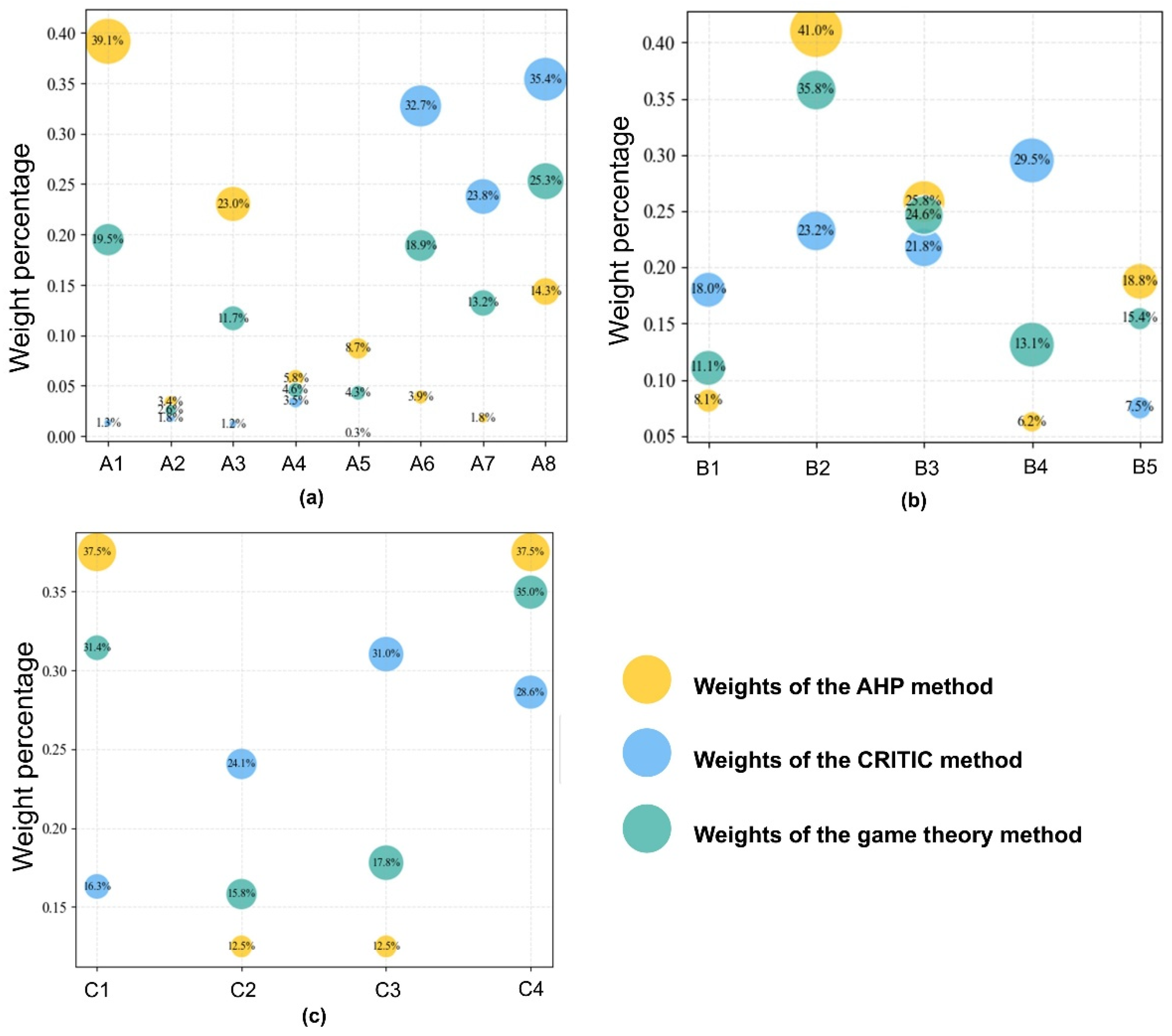
To ensure the safety of urban sewer networks, this study constructs an HFM evaluation framework comprising Health–Failure–Management subsystems. The weighting results of the HFM system not only reflect the differences between subjective and objective weighting methods, but also reveal key characteristics of the risk formation mechanisms in urban sewer networks.
In the subjective weighting results of the Health subsystem, rupture and misalignment dominate, reflecting experts’ strong concern regarding functional degradation in aging sewer networks. This is closely related to the actual conditions of Liwan District, a typical old urban area in Guangzhou, where parts of the sewer network were constructed decades ago and exhibit prominent structural defects. Consequently, pipeline defects are widely regarded, based on expert experience, as the primary source of system risk. However, the objective weighting results significantly increase the contributions of indicators such as design flow and pipe material in the final combined weights. This indicates that, according to actual operational data, system conveyance capacity and fundamental engineering attributes also play a crucial role in determining Health subsystem. From an engineering perspective, higher weights assigned to design flow and pipe material indicate their critical roles in determining system capacity, failure likelihood, and maintenance requirements.
The weighting structure of the Failure subsystem shows a clear preference toward expert judgment, primarily due to the strong spatial characteristics and context dependency of failure risk. For example, regional importance has the highest weight, reflecting significant differences in wastewater discharge and risk exposure among different functional zones (e.g., residential, commercial, and industrial areas). Meanwhile, the relatively high weight assigned to the “proximity to river” indicator in the objective results highlights the important role of proximity to water bodies in influencing pollutant dispersion and environmental impacts.
The weighting structure of the Management subsystem also shows a preference toward subjective weighting, with a game-theoretic coefficient of 0.714. This is because management capacity—such as emergency response and monitoring deployment—is difficult to fully quantify through data alone, and its effectiveness relies more heavily on management experience and institutional design. In the combined weighting results, emergency site and the number of monitoring points remain dominant indicators, indicating that emergency response capacity and monitoring capability are the core elements of the Management subsystem within the current evaluation framework. This reflects that, in complex urban environments, rapid response and efficient information acquisition are critical for mitigating system risk.
4.2. Analysis of HFM Evaluation Results
The HFM evaluation results not only reflect spatial variations in the operational conditions of the sewer network across different units in Liwan District, but also reveal the influences of regional development history, infrastructure conditions, population and economic activities, and the water environment on system performance [
33].
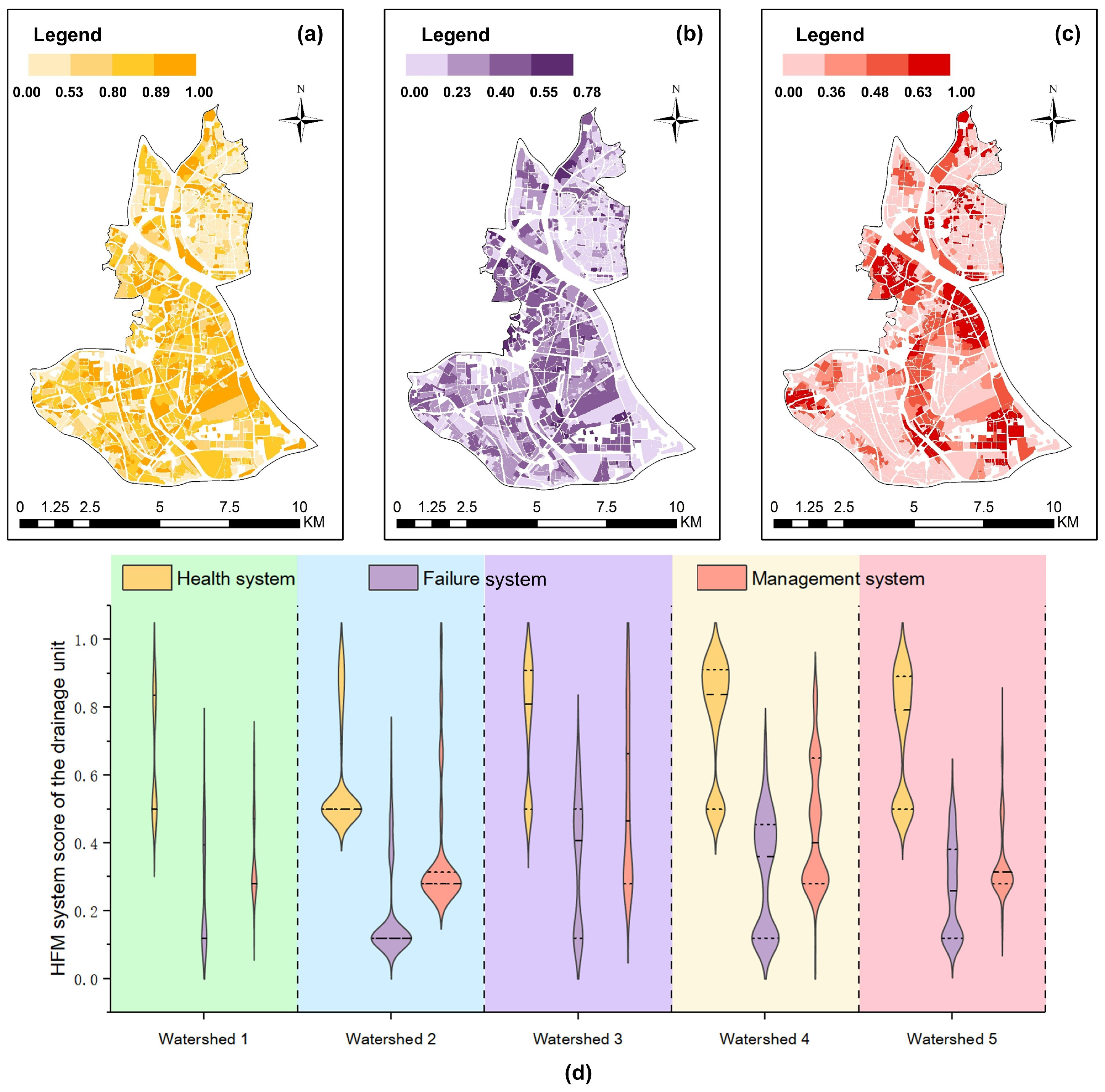
From the perspective of Health subsystem, Watersheds 3, 4, and 5 generally exhibit higher scores, largely benefiting from recent initiatives such as standardized drainage unit development and sewer network rehabilitation, which have effectively mitigated structural defects. In contrast, Watershed 2, as a typical old urban area, shows relatively lower health levels due to aging infrastructure and insufficient design capacity.
The Failure subsystem does not display a simple inverse relationship with Health subsystem, but is jointly influenced by regional load and usage intensity. Watersheds 3, 4, and 5 exhibit moderate failure levels despite high health scores, mainly due to high population density, intensive commercial activities, and proximity to water bodies. These factors increase operational load and environmental sensitivity, amplifying failure impacts even when structural conditions are relatively sound. In comparison, Watershed 2, with lower population density and greater distance from water bodies, shows relatively limited failure impacts.
The Management subsystem demonstrates significant spatial imbalance, with high-value areas primarily distributed along river systems and key drainage corridors, particularly in Watersheds 3 and 4. This reflects the tendency of management authorities to strengthen monitoring and emergency resource allocation in high-risk areas. Given the dense river network and high environmental sensitivity in these regions, sewer overflows can easily affect water quality, prompting intensified management investment in critical zones.
In Watershed 2, areas with low failure generally exhibit high Health subsystem but low levels of management. The operational load of the sewer network in these areas is relatively low, and the system remains in a stable state with limited dependence on management resources. To some extent, this reflects a rational allocation of resources. However, it may also conceal potential risks: once system load increases or unexpected events occur, the lack of sufficient management capacity may lead to rapid risk escalation. Therefore, such areas require attention to the potential accumulation of latent risks.
4.3. Analysis of Coupling Coordination and Obstacle Factors in the HFM System
The results of coupling coordination and obstacle analysis reveal underlying issues in the coordinated development of urban sewer networks within the study area.
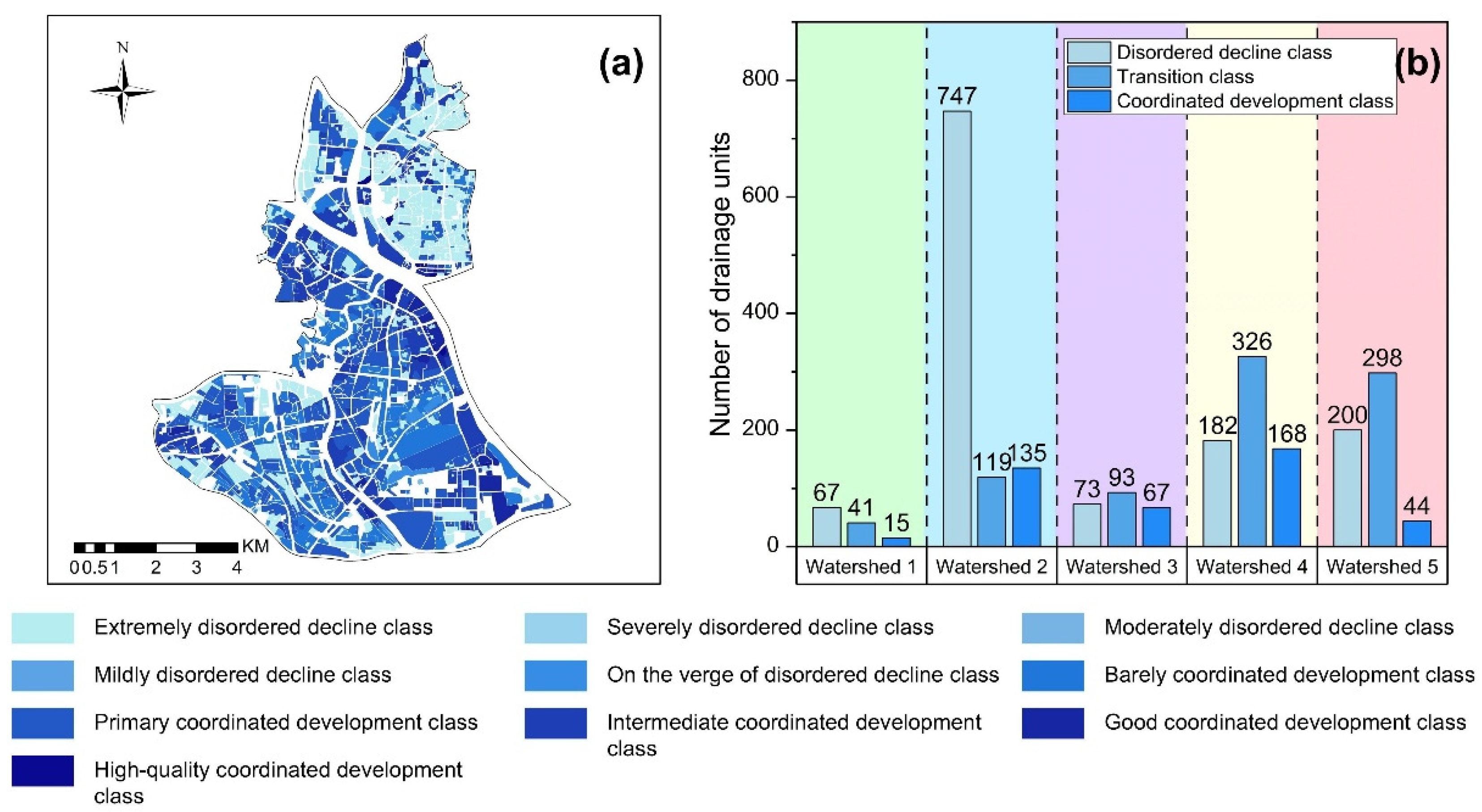
From the perspective of both the CCD and obstacle factors, the Failure subsystem plays a dominant role in the coupling relationships among the HFM systems [
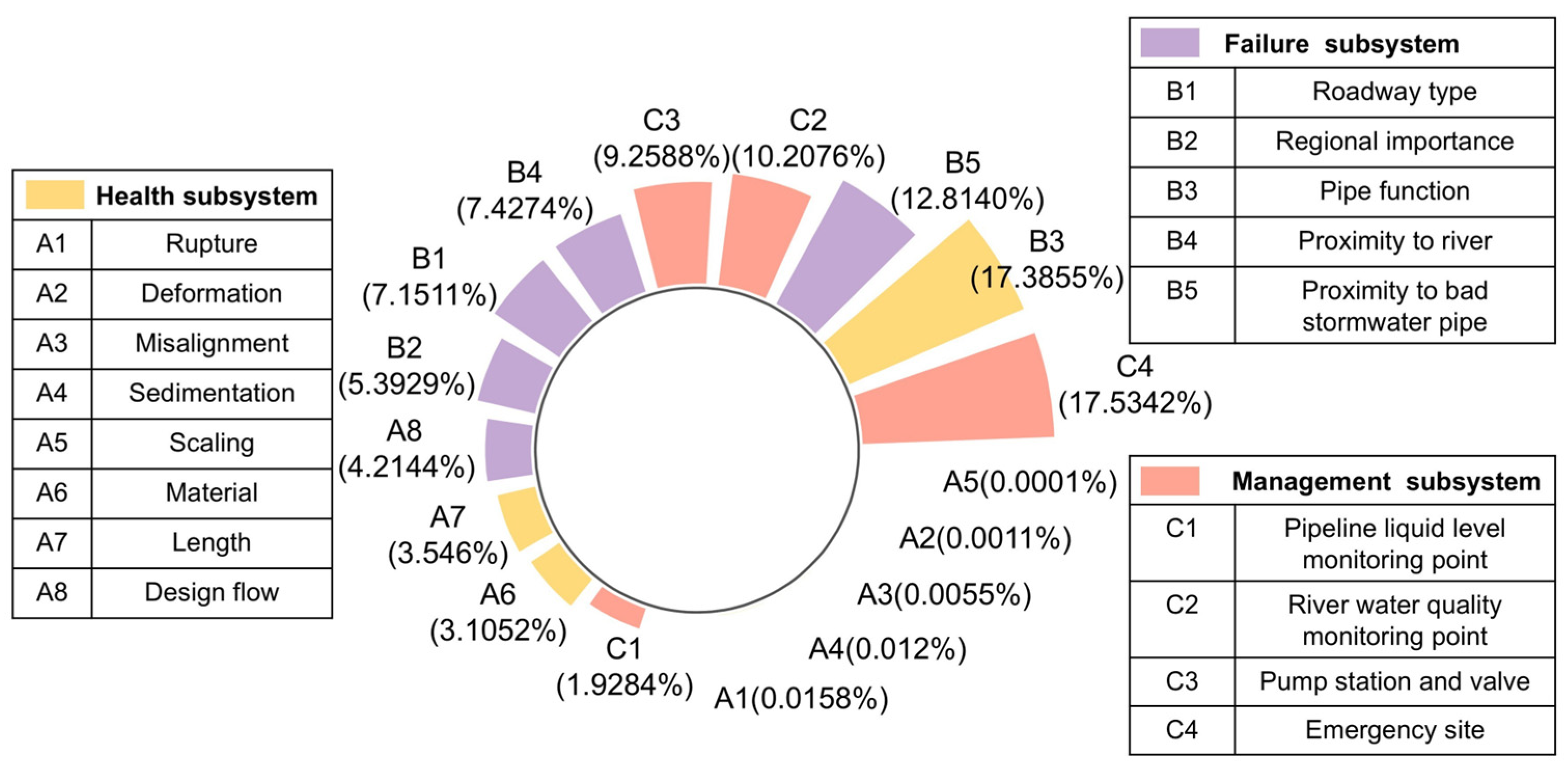
18]. In high-risk areas, the sensitivity of potential impacts on socio-economic activities and the environment prompts management authorities to allocate more resources, such as concentrated deployment of emergency site and liquid level monitoring points. This forms a response pathway characterized by “high failure-high management-relatively high coordination”. Watersheds 3 and 4, as commercial centers and areas with dense river networks, face extremely high environmental costs in the event of sewer overflows. The prioritized investment in these areas reflects a rational risk-based management strategy, indicating that in complex urban infrastructure systems, failure often plays a more direct role than structural conditions in determining overall system performance. The main obstacle factors in the study area are concentrated in the Failure subsystem (e.g., Pipe function) and the Management subsystem (e.g., emergency site), while the Health subsystem exerts a relatively weaker constraining effect. This suggests that the key limitation to coordinated system development lies not in structural deficiencies alone, but in the mismatch between spatial-functional attributes and management resource allocation. This finding differs from conventional perspectives that emphasize improving Health subsystem to reduce risk, and instead highlights the amplifying effect of land use patterns and water environmental sensitivity on system risk in high-density urban areas.
In contrast, Watershed 2 and the peripheral areas of other watersheds exhibit low coordination levels, indicating that relying solely on infrastructure upgrades is insufficient to comprehensively enhance system coordination. Instead, it is necessary to simultaneously optimize the allocation of management resources, particularly through targeted and refined management in high-risk areas. The obstacle degree results show that emergency site (17.53%) and monitoring points (10.21%) contribute substantially to the overall obstacle degree, further confirming that even when the Health subsystem is relatively adequate, insufficient emergency response capacity can hinder the achievement of high coordination. Moreover, for areas currently characterized by low failure but limited management, attention should be given to the accumulation of latent risks, preventing these areas from evolving into new points of imbalance under future urban development or climate change pressures.
It should be noted that the CCD model reflects the degree of coordination among subsystems, rather than the absolute safety level of the sewer network. Therefore, a high coordination level does not necessarily imply low risk. In some areas, “high coordination but high risk” is observed. This is primarily because regions with high population density, intensive economic activities, and strong environmental sensitivity—characterized by potentially severe failure consequences—often receive more management resources, such as denser monitoring networks and enhanced emergency response capacity. These measures improve the coordination among HFM subsystems, thereby increasing the CCD. However, the underlying risk drivers in these areas are not fundamentally eliminated. As a result, even with high coordination, risk levels can remain elevated. Therefore, CCD should be understood as an indicator of system interactions and resource allocation efficiency, rather than a direct measure of safety. Higher coordination may result from intensified management responses to high risk, rather than better system conditions. Therefore, such “high coordination” should be viewed as a management-driven adaptive outcome, not as evidence of low risk. This indicates a feedback mechanism in which risk drives management input, and management in turn shapes system coordination.
Compared with studies that focus only on sewer network condition [
15] or failure risk [
21], the results indicate that evaluating a single subsystem may lead to incomplete or even misleading conclusions. By integrating Health, Failure, and Management, the HFM–CCD framework reveals the interaction between risk pressure and management response, which cannot be captured by single-dimensional assessment approaches.
4.4. Implications for Urban Sewer Network Management
Based on the above analysis, this study not only reveals the operational characteristics of the sewer network in Liwan District but also provides generalizable insights for highly urbanized cities.
First, a transition toward risk-based management is necessary. The results show that management capacity, especially in emergency response and monitoring, plays a key role in improving system coordination. Rather than relying solely on infrastructure upgrades, cities can benefit from enhanced real-time monitoring and early warning systems. The integration of technologies such as GIS, IoT-based monitoring networks, smart sensors, and AI-driven models can support more adaptive and data-driven sewer management.
Second, differentiated and hierarchical management strategies should be adopted. Interventions should be tailored to local risk levels. High-risk areas require enhanced monitoring, dynamic scheduling, and emergency preparedness, while low-risk areas can adopt more cost-effective and preventive approaches. In resource-limited cities, financial feasibility and implementation capacity should also be considered to ensure practicality.
Third, strengthening climate adaptability and urban flood resilience is increasingly important. With the growing impacts of climate change, including extreme rainfall and urban flooding, sewer systems face greater uncertainty and pressure. The proposed framework helps identify vulnerable areas and supports adaptive strategies, such as increasing drainage capacity, improving system redundancy, and integrating sewer management with broader flood control systems.
Fourth, from the perspective of infrastructure resilience and sustainable urban management, the interaction among Health, Failure, and Management indicates that system performance depends not only on engineering conditions but also on resource allocation and institutional capacity. Sewer management typically involves multiple stakeholders, including municipal authorities, operators, and local communities. Enhancing institutional coordination, data sharing, and stakeholder participation can improve overall management efficiency. The proposed framework thus provides a useful perspective for understanding how system coordination influences urban infrastructure resilience and sustainability.
Despite these contributions, some limitations remain. This study focuses on Liwan District, a highly developed urban area, and may not fully represent cities with different development levels. In addition, the analysis is based on single-year data and does not consider temporal dynamics. In cities where data are incomplete or management systems are less developed, the applicability of the framework may be constrained. Furthermore, multiple sources of uncertainty exist in the framework, including expert-based weighting, entropy weighting, classification thresholds, and coupling coordination calculation, which have not been explicitly quantified. Future research could extend the framework to multiple cities, incorporate long-term monitoring data, explore its applicability under different socio-economic and climate conditions (including developing and climate-sensitive urban systems), and adopt uncertainty or sensitivity analysis methods such as Monte Carlo simulation to examine the robustness of the results under alternative assumptions.