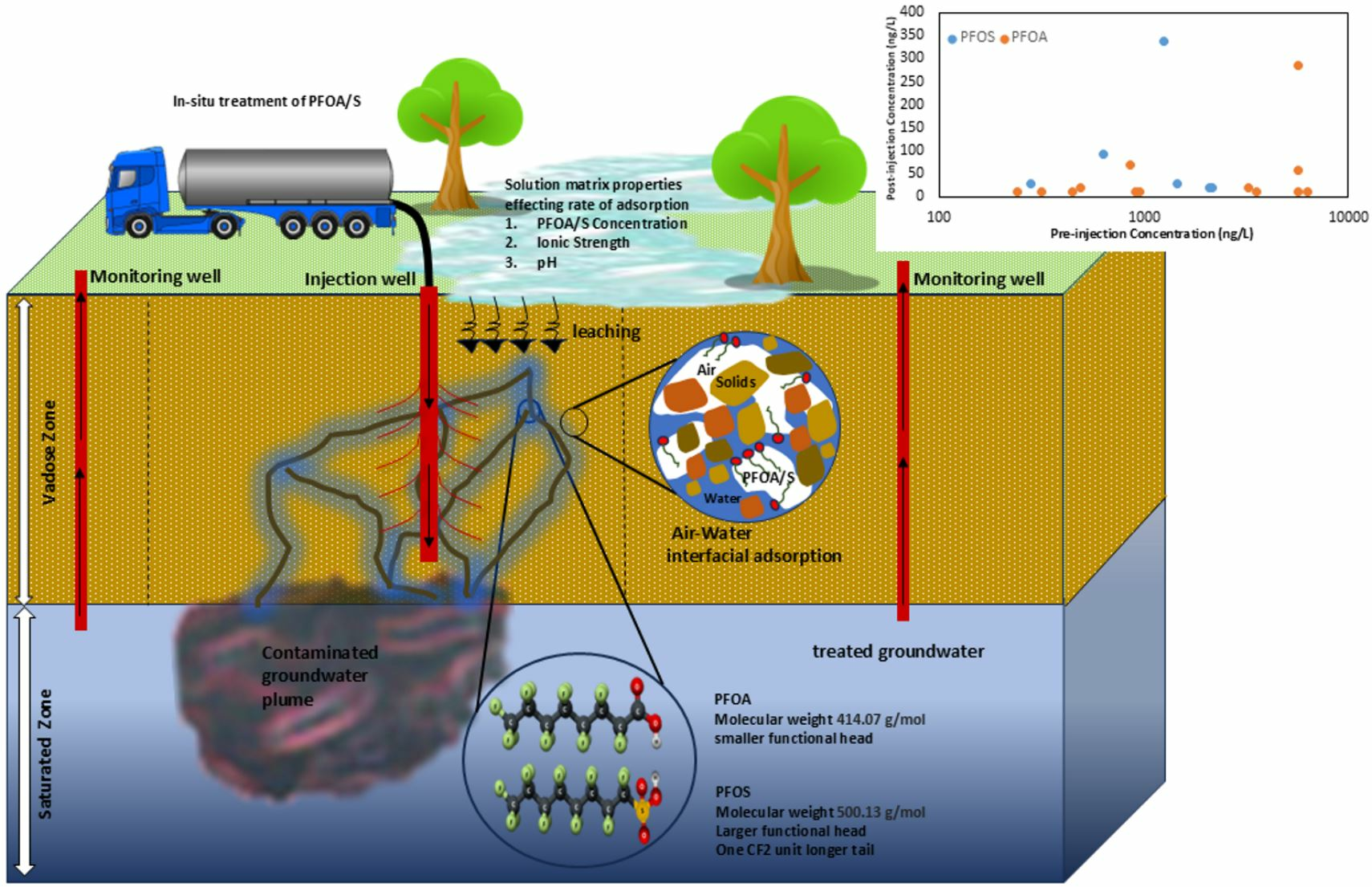
Perfluorooctanoic Acid (PFOA) and Perfluorooctanesulfonic Acid (PFOS) Adsorption onto Different Adsorbents: A Critical Review of the Impact of Their Chemical Structure and Retention Mechanisms in Soil and Groundwater



Highlights
- PFOA/S sorption depends on pH, ionic strength, and co-existing ions in solution.
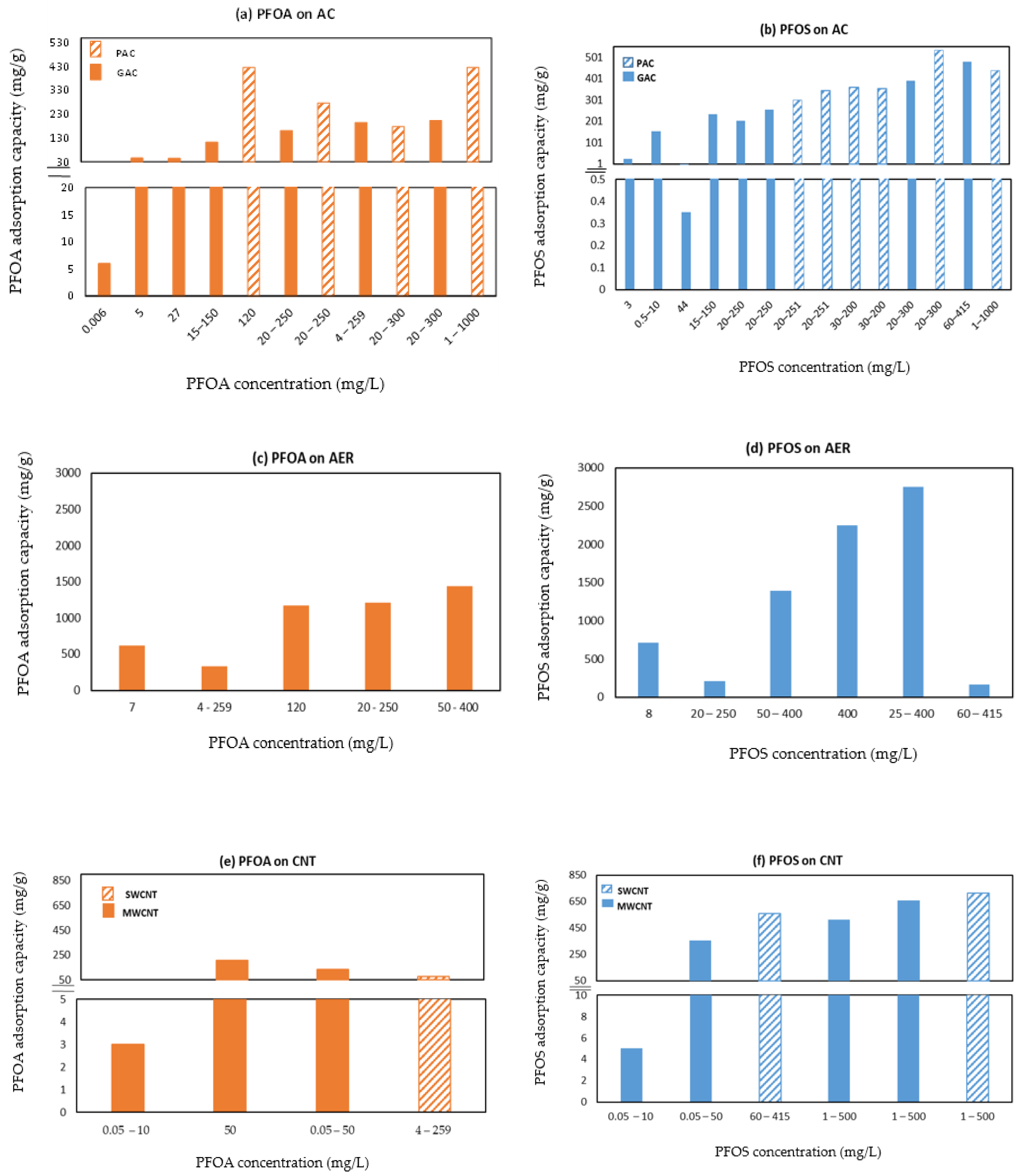
- PFOS consistently showed higher adsorption than PFOA on all adsorbents.
- PFOA/S adsorption occurs in the following order: AER> single-walled CNTs> AC.
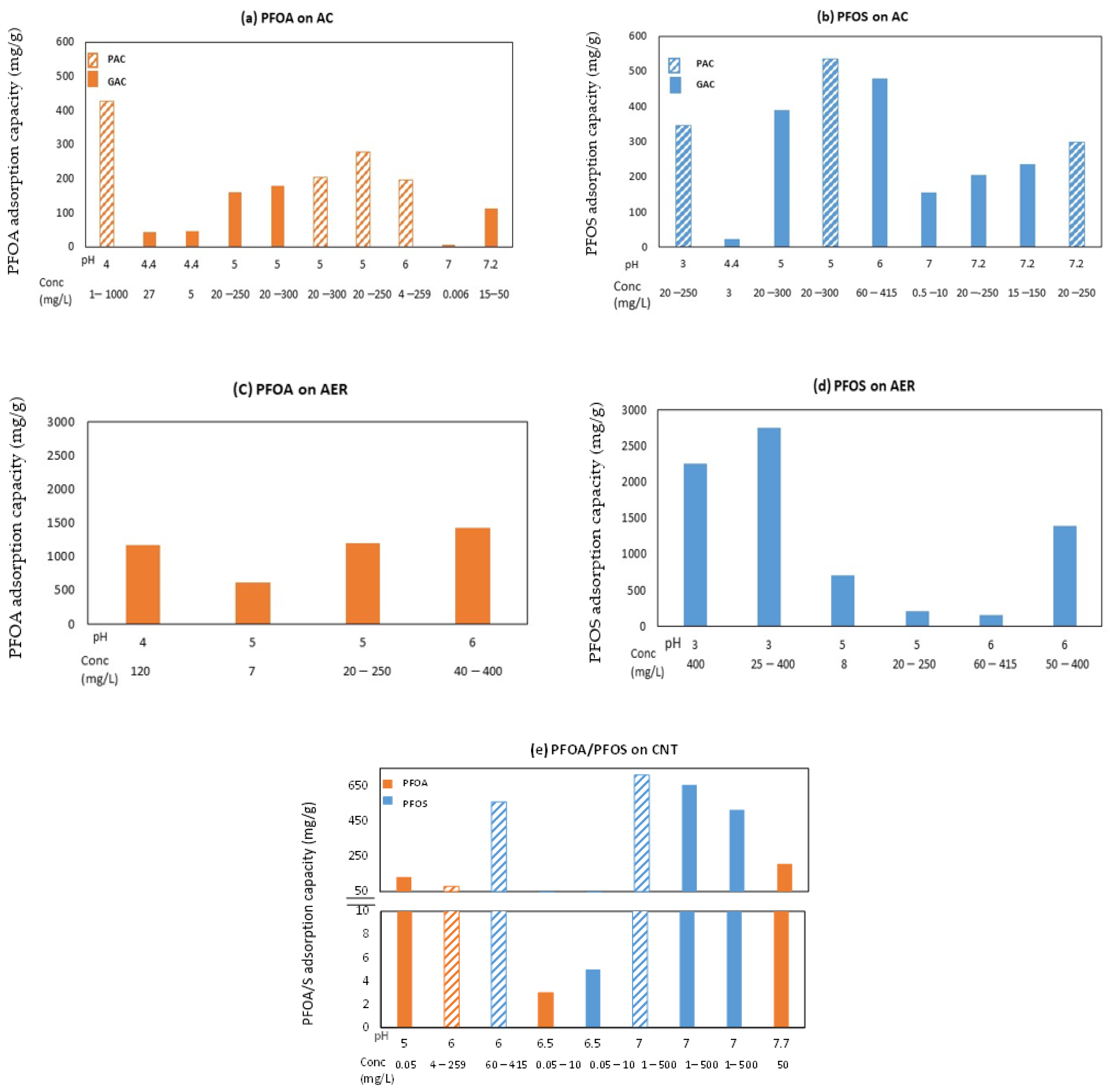
- Sorption capacities for PFOA/S on all adsorbents decreased above pH 5.
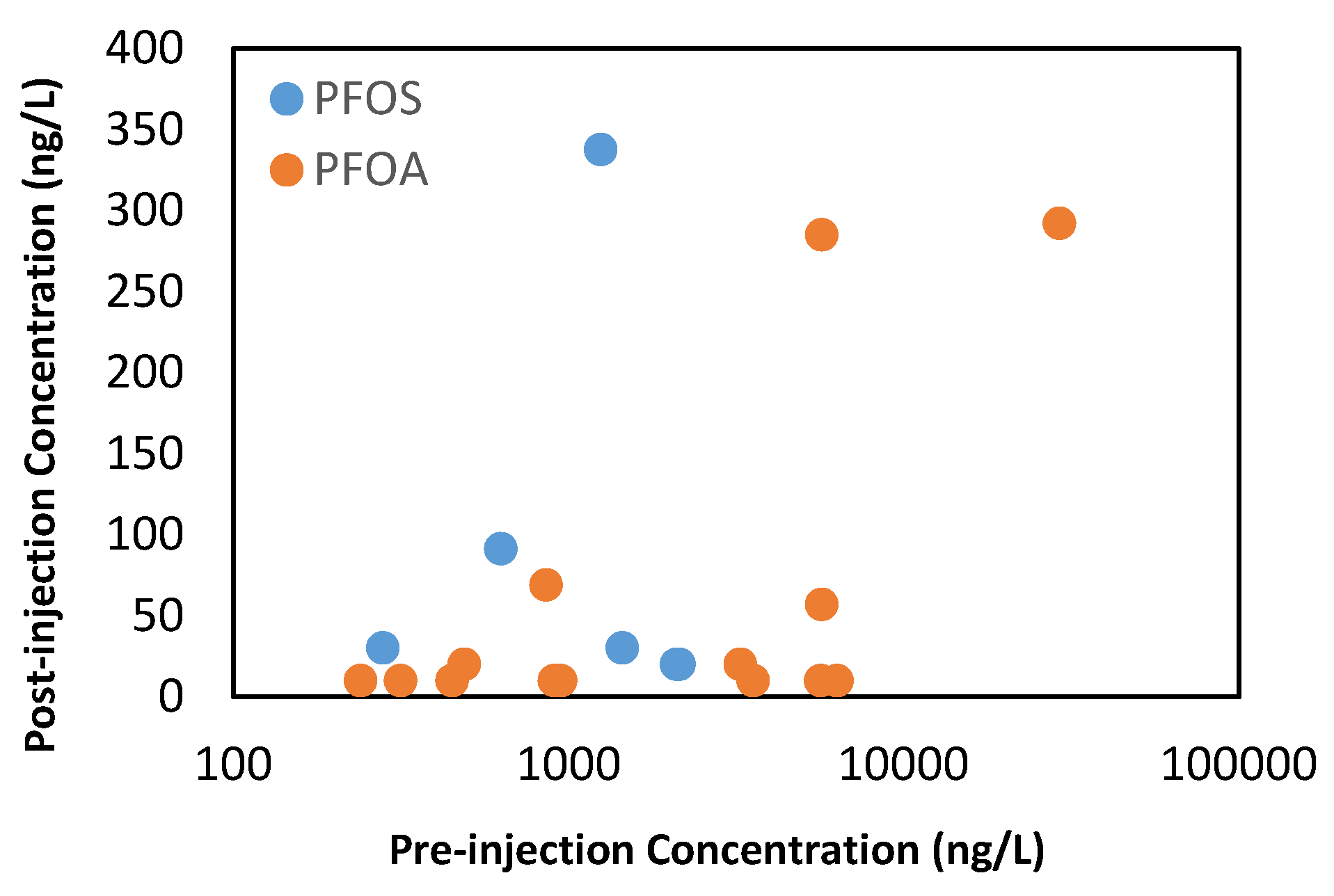
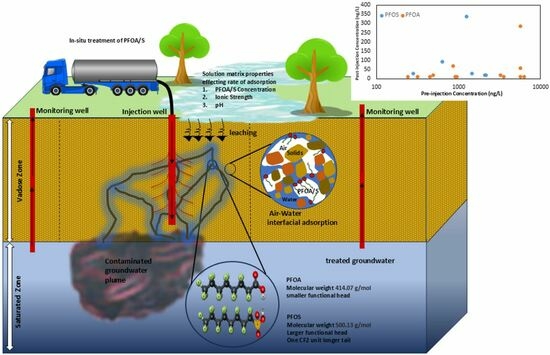
- 1-2 year of in situ treatment adequately reduces PFOA/S concentrations in groundwater.
Abstract
Share and Cite
Fatima, M.; Kelso, C.; Hai, F. Perfluorooctanoic Acid (PFOA) and Perfluorooctanesulfonic Acid (PFOS) Adsorption onto Different Adsorbents: A Critical Review of the Impact of Their Chemical Structure and Retention Mechanisms in Soil and Groundwater. Water 2025, 17, 1401. https://doi.org/10.3390/w17091401
Fatima M, Kelso C, Hai F. Perfluorooctanoic Acid (PFOA) and Perfluorooctanesulfonic Acid (PFOS) Adsorption onto Different Adsorbents: A Critical Review of the Impact of Their Chemical Structure and Retention Mechanisms in Soil and Groundwater. Water. 2025; 17(9):1401. https://doi.org/10.3390/w17091401
Chicago/Turabian StyleFatima, Mehak, Celine Kelso, and Faisal Hai. 2025. "Perfluorooctanoic Acid (PFOA) and Perfluorooctanesulfonic Acid (PFOS) Adsorption onto Different Adsorbents: A Critical Review of the Impact of Their Chemical Structure and Retention Mechanisms in Soil and Groundwater" Water 17, no. 9: 1401. https://doi.org/10.3390/w17091401
APA StyleFatima, M., Kelso, C., & Hai, F. (2025). Perfluorooctanoic Acid (PFOA) and Perfluorooctanesulfonic Acid (PFOS) Adsorption onto Different Adsorbents: A Critical Review of the Impact of Their Chemical Structure and Retention Mechanisms in Soil and Groundwater. Water, 17(9), 1401. https://doi.org/10.3390/w17091401