Review

Unraveling the Potential of Microbial Flocculants: Preparation, Performance, and Applications in Wastewater Treatment

1
Henan Institute of Advanced Technology, Zhengzhou University, Zhengzhou 450000, China
2
Research Center for Eco-Environmental Sciences, Chinese Academy of Sciences, Beijing 100085, China
3
College of Resources and Environment, University of Chinese Academy of Sciences, Beijing 100049, China
4
School of Life Sciences, Division of Life Sciences and Medicine, University of Science and Technology of China, Hefei 230027, China
5
The Institute of International Rivers and Eco-Security, Yunnan University, Kunming 650500, China
6
State Key Laboratory of Tibetan Plateau Earth System, Environment and Resources (TPESER), Institute of Tibetan Plateau Research, Chinese Academy of Sciences, Beijing 100101, China
*
Authors to whom correspondence should be addressed.
Water 2024, 16(14), 1995; https://doi.org/10.3390/w16141995
Submission received: 14 June 2024 / Revised: 10 July 2024 / Accepted: 12 July 2024 / Published: 14 July 2024
(This article belongs to the Special Issue Water Quality Engineering and Wastewater Treatment III)

Abstract

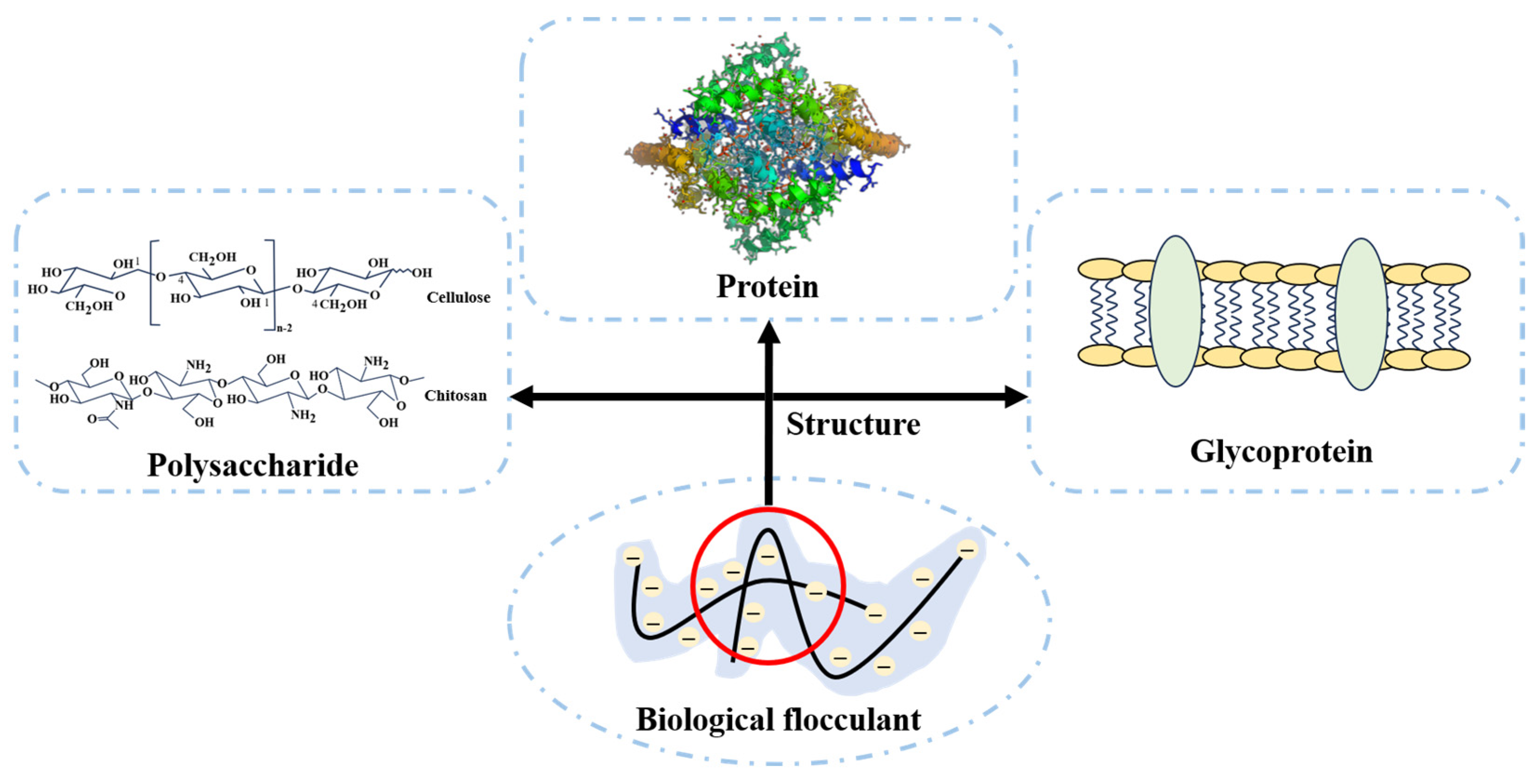
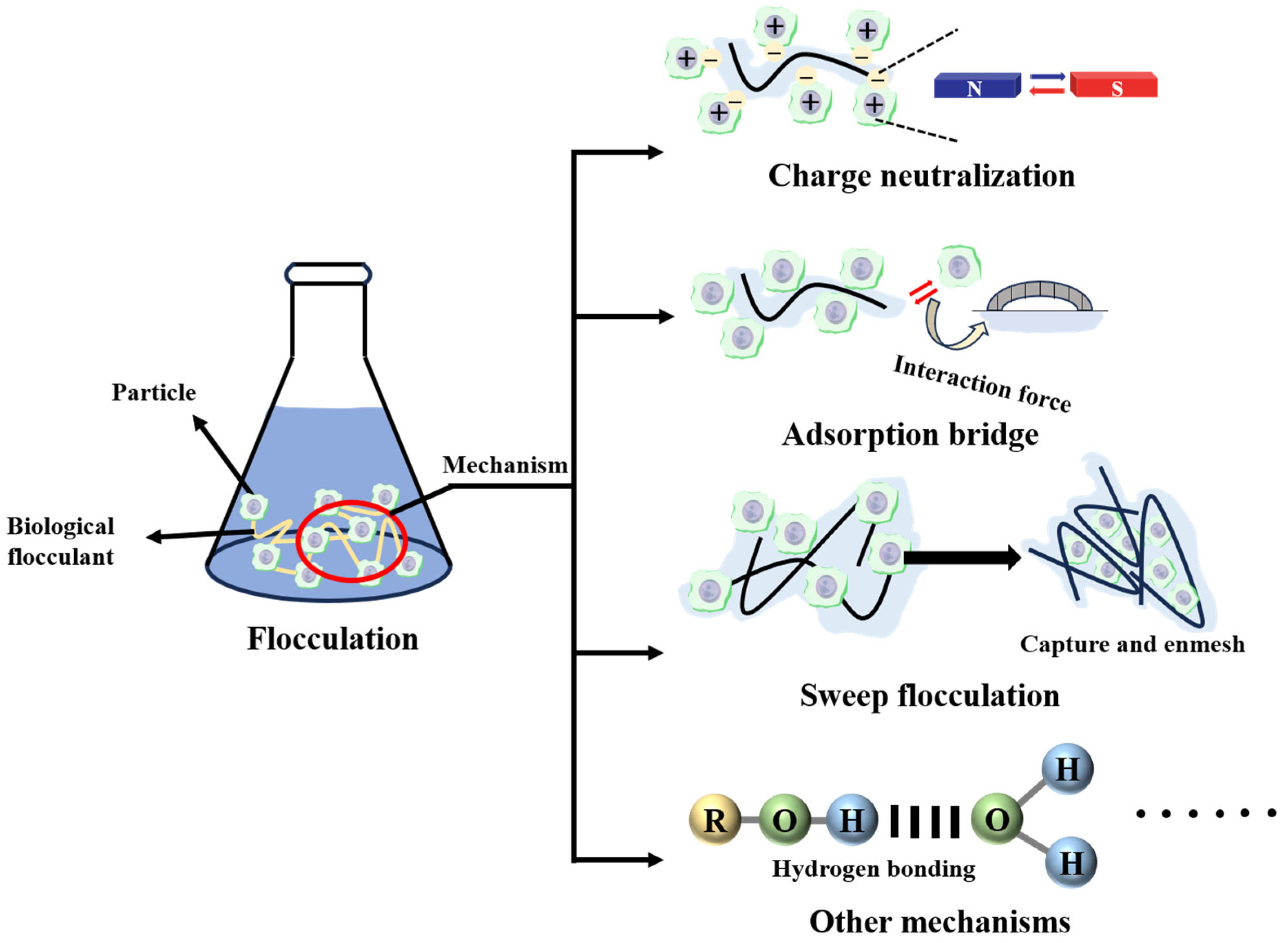
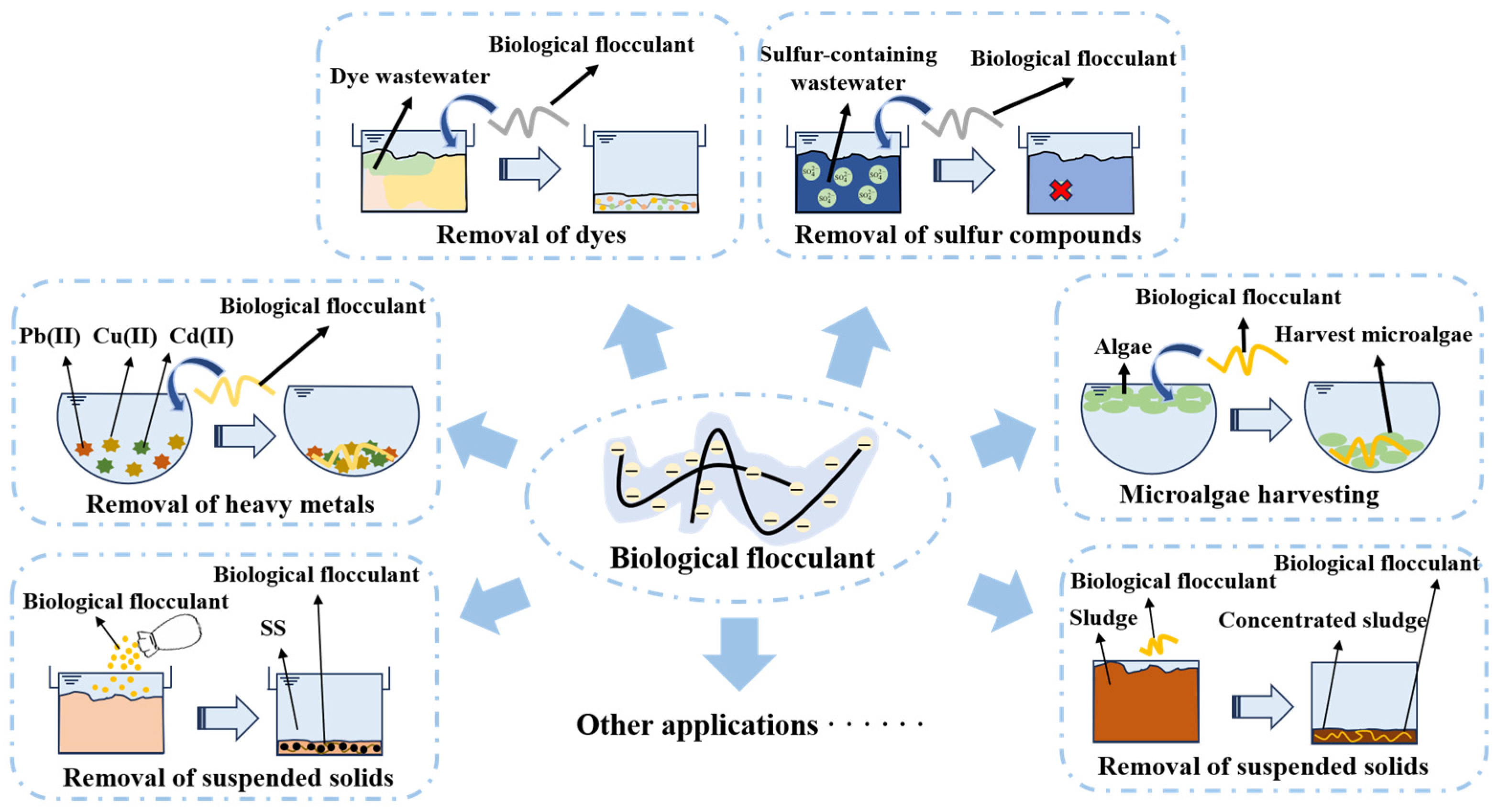
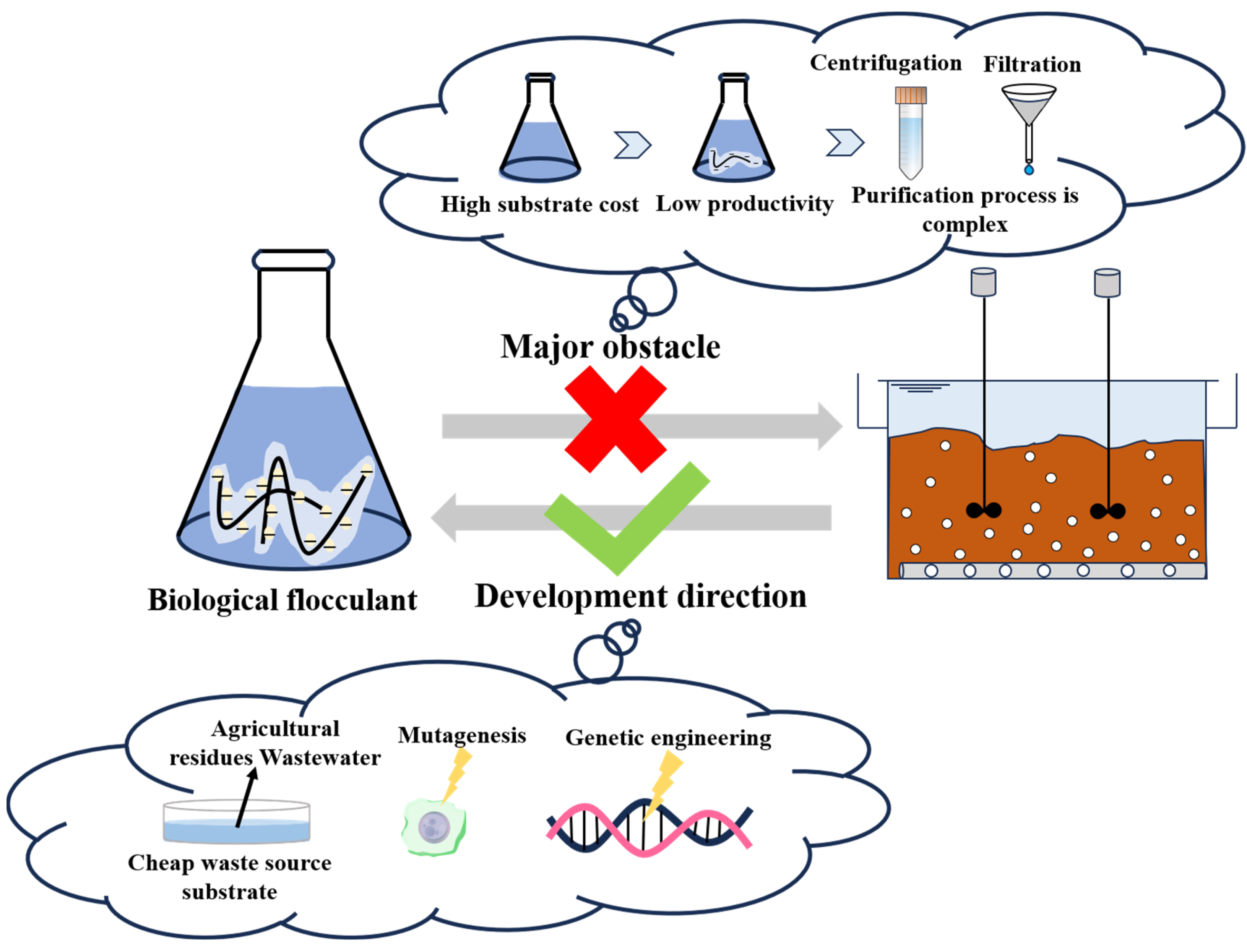
Microbial flocculants (MBFs), a class of eco-friendly and biodegradable biopolymers produced by various microorganisms, have gained increasing attention as promising alternatives to conventional chemical flocculants in wastewater treatment and pollutant removal. This review presents a comprehensive overview of the current state of MBF research, encompassing their diverse sources (bacteria, fungi, and algae), major categories (polysaccharides, proteins, and glycoproteins), production processes, and flocculation performance and mechanisms. The wide-ranging applications of MBFs in removing suspended solids, heavy metals, dyes, and other pollutants from industrial and municipal wastewater are critically examined, highlighting their superior efficiency, selectivity, and environmental compatibility compared to traditional flocculants. Nonetheless, bioflocculants face significant challenges including high substrate costs, low production yields, and intricate purification methodologies, factors that impede their industrial scalability. Moreover, the risk of microbial contamination and the attendant health implications associated with the use of microbial flocculants (MBFs) necessitate thorough evaluation. To address the challenges of high production costs and variable product quality, strategies such as waste valorization, strain improvement, process optimization, and biosafety evaluation are discussed. Moreover, the development of multifunctional MBF-based flocculants and their synergistic use with other treatment technologies are identified as emerging trends for enhanced wastewater treatment and resource recovery. Future research directions are outlined, emphasizing the need for in-depth mechanistic studies, advanced characterization techniques, pilot-scale demonstrations to accelerate the industrial adoption of MBF, and moreover, integration with novel wastewater treatment processes, such as partial nitrification and the anammox process. This review is intended to inspire and guide further research and development efforts aimed at unlocking the full potential of MBFs as sustainable, high-performance, and cost-effective bioflocculants for addressing the escalating challenges in wastewater management and environmental conservation.
Keywords: microbial flocculant; wastewater treatment; pollutant removal; flocculation mechanism; resource recovery microbial flocculant; wastewater treatment; pollutant removal; flocculation mechanism; resource recovery