Article

Characterizing Compost Rate Effects on Stormwater Runoff and Vegetation Establishment
by
Christina N. Kranz
,
Richard A. McLaughlin
and
Joshua L. Heitman
*
Department of Crop and Soil Sciences, North Carolina State University, Raleigh, NC 27607, USA
*
Author to whom correspondence should be addressed.
Water 2022, 14(5), 696; https://doi.org/10.3390/w14050696
Submission received: 24 January 2022 / Revised: 16 February 2022 / Accepted: 18 February 2022 / Published: 23 February 2022

Abstract

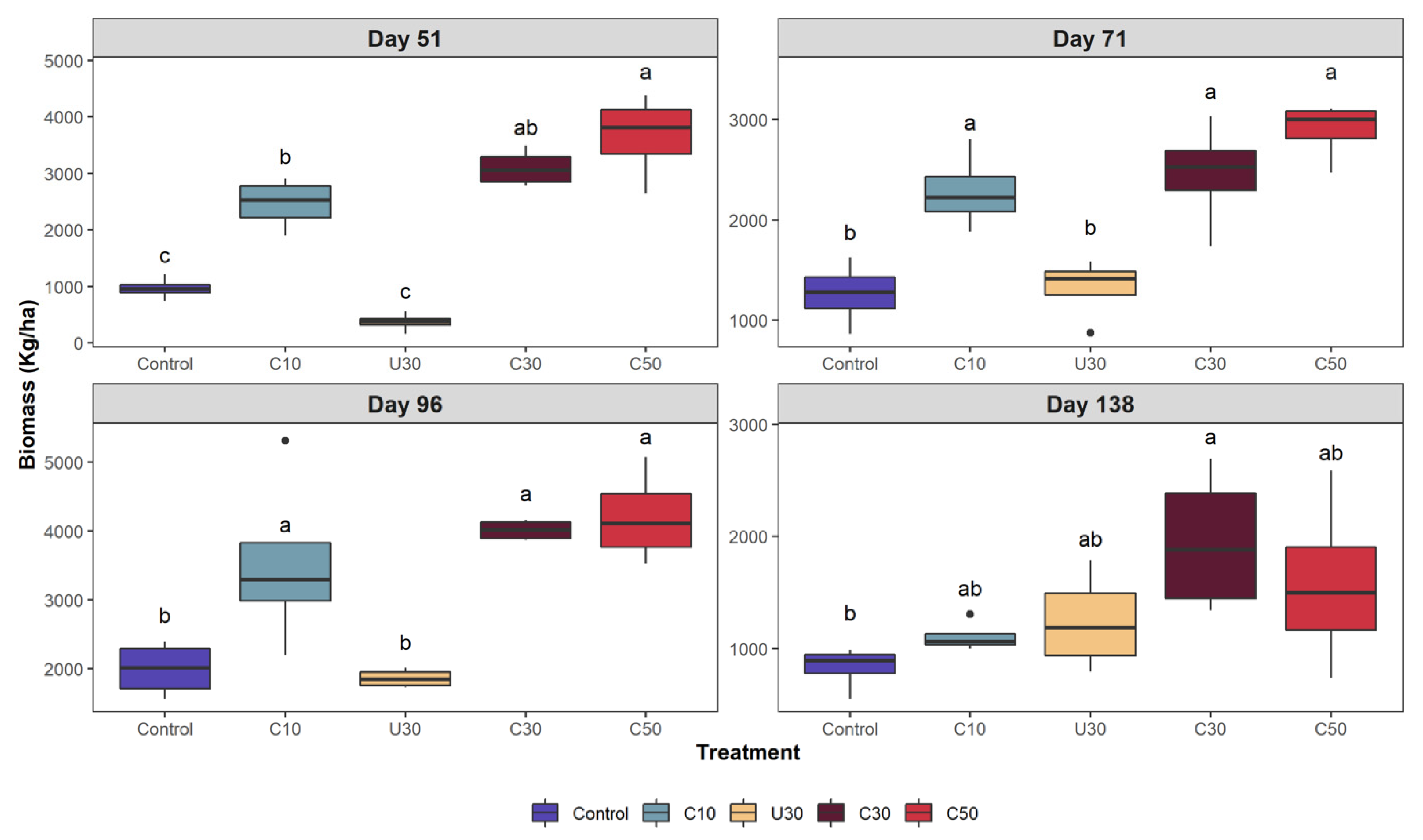
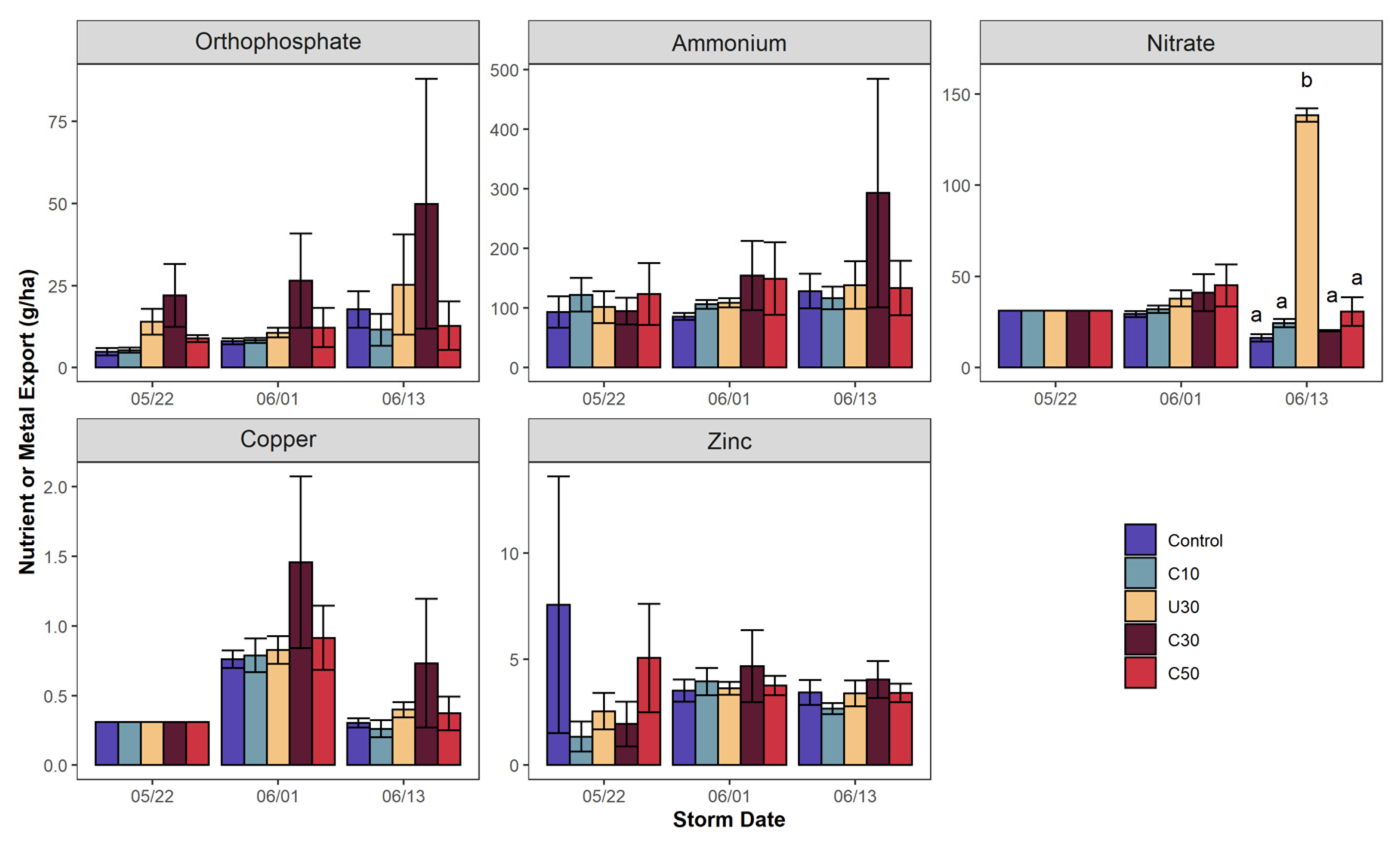
Urban development exposes and compacts the subsoil, resulting in reduced infiltration, which often leads to problems with establishing vegetation, increased erosion, and increased runoff volumes. Compost incorporation into these soils can potentially enhance soil physical properties, vegetation establishment, and pollutant removal. The goal of this field study was to determine the efficacy of compost as a soil improvement measure to reduce runoff volume, improve runoff quality, and increase vegetation establishment on a disturbed sandy clay subsoil representing post-development conditions. Two sources of compost were tested: (1) a certified yard waste product at 10%, 30%, and 50% by volume, and (2) an uncertified yard waste product at 30% by volume, both compared to a tilled, no-compost control. Treatment plots were established at Lake Wheeler Road Field Laboratory in Raleigh, NC, and observed for one year. Tilling alone may have been sufficient to reduce runoff quantity as few differences were found between tilled and compost amended plots. Runoff water quality also did not differ according to compost addition. However, the certified compost increased biomass production proportionally to the amount added and compared to the uncertified compost at the same rate. The improved vegetation establishment with compost is important for long-term erosion control and ecosystem services. The results of this study suggest (1) tilling is a viable option to achieve high infiltration rates and reduce runoff volumes, (2) compost incorporation does not reduce nor improve water quality, and (3) compost may yield more robust vegetation establishment.
Keywords: stormwater; compost; urban soils; infiltration rate; compacted stormwater; compost; urban soils; infiltration rate; compacted