Article

Study of Comprehensive Utilization of Water Resources of Urban Water Distribution Network
1
Changjiang Survey, Planning, Design and Research Co., Ltd., Jiefang Avenue No. 1863, Wuhan 430010, China
2
Key Laboratory of Changjiang Regulation and Protection of Ministry of Water Resources, Jiefang Avenue No. 1863, Wuhan 430010, China
3
Changjiang River Scientific Research Institute, Huangpu Street No. 23, Wuhan 430010, China
*
Author to whom correspondence should be addressed.
Water 2021, 13(19), 2791; https://doi.org/10.3390/w13192791
Submission received: 17 July 2021 / Revised: 28 September 2021 / Accepted: 29 September 2021 / Published: 8 October 2021
(This article belongs to the Special Issue Efficient Use of Water and Soil Resources)

Abstract

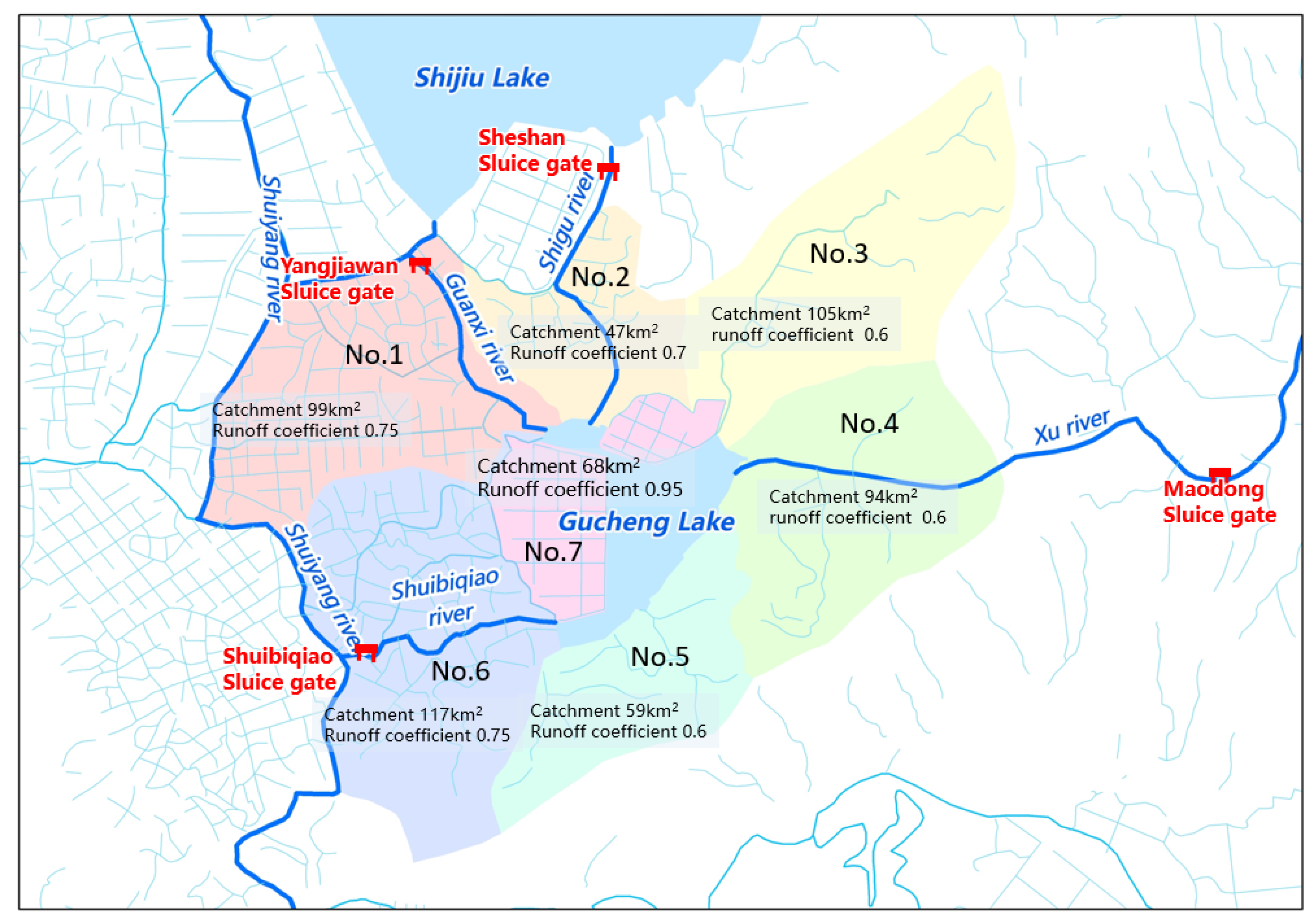
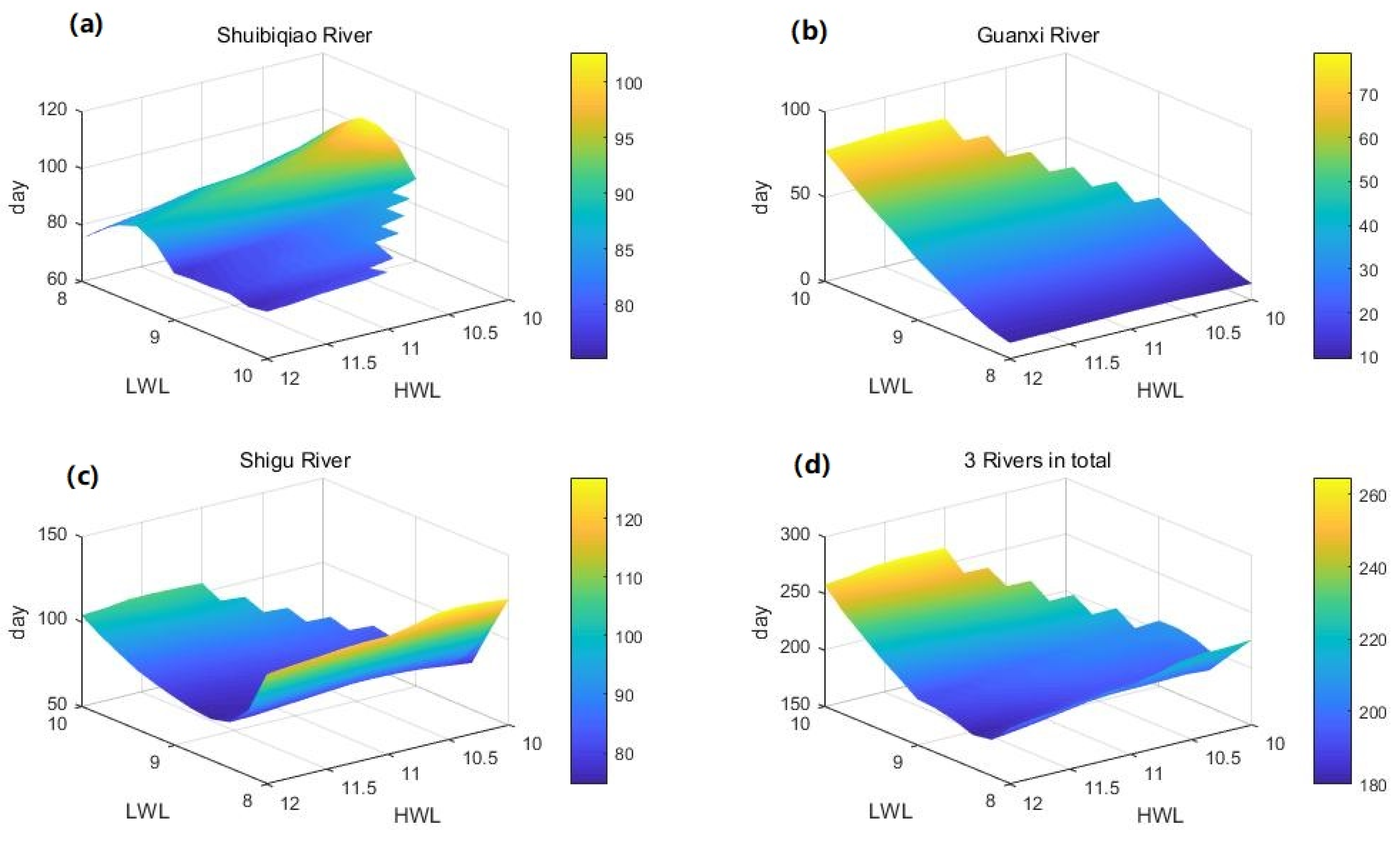
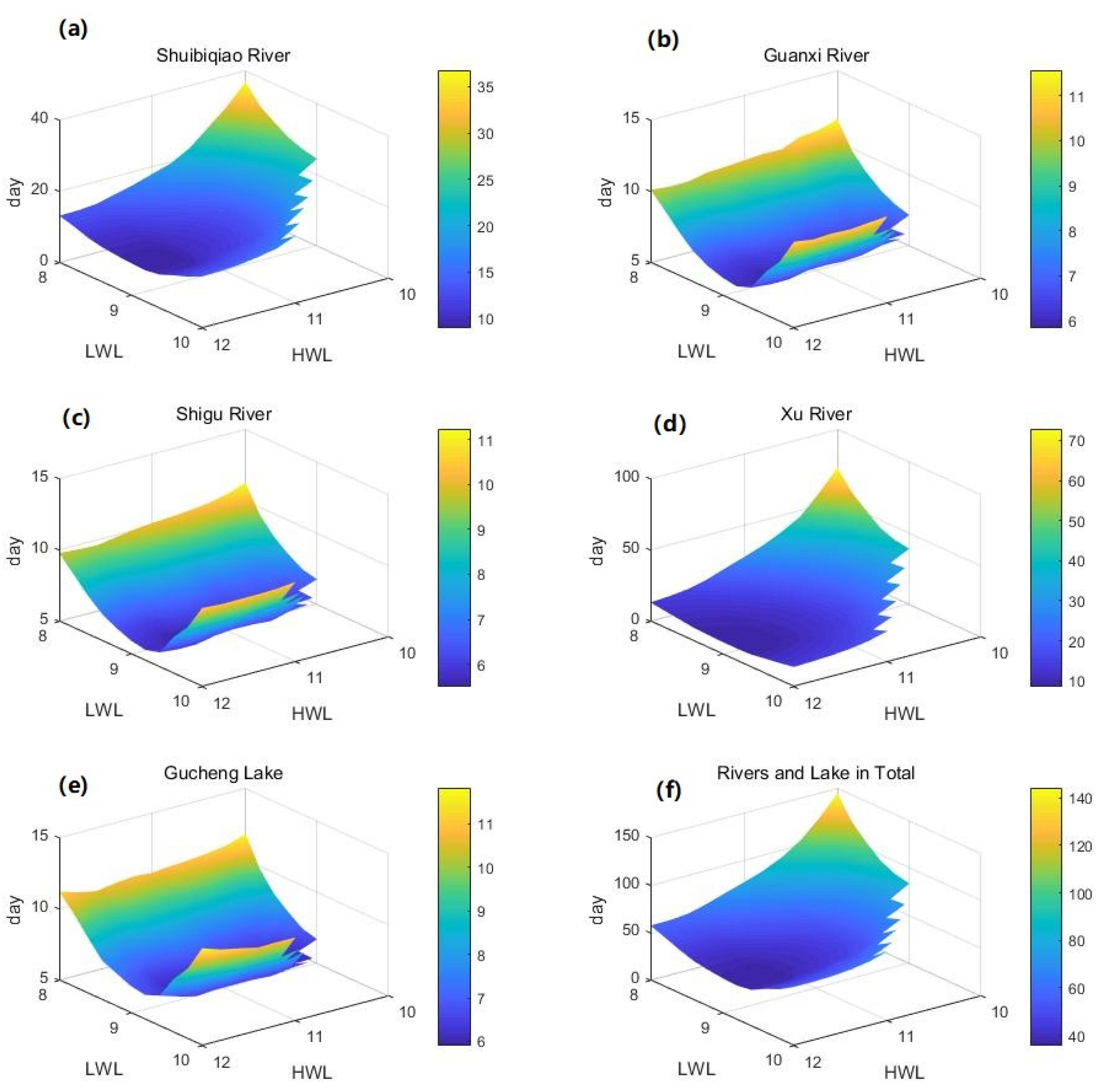
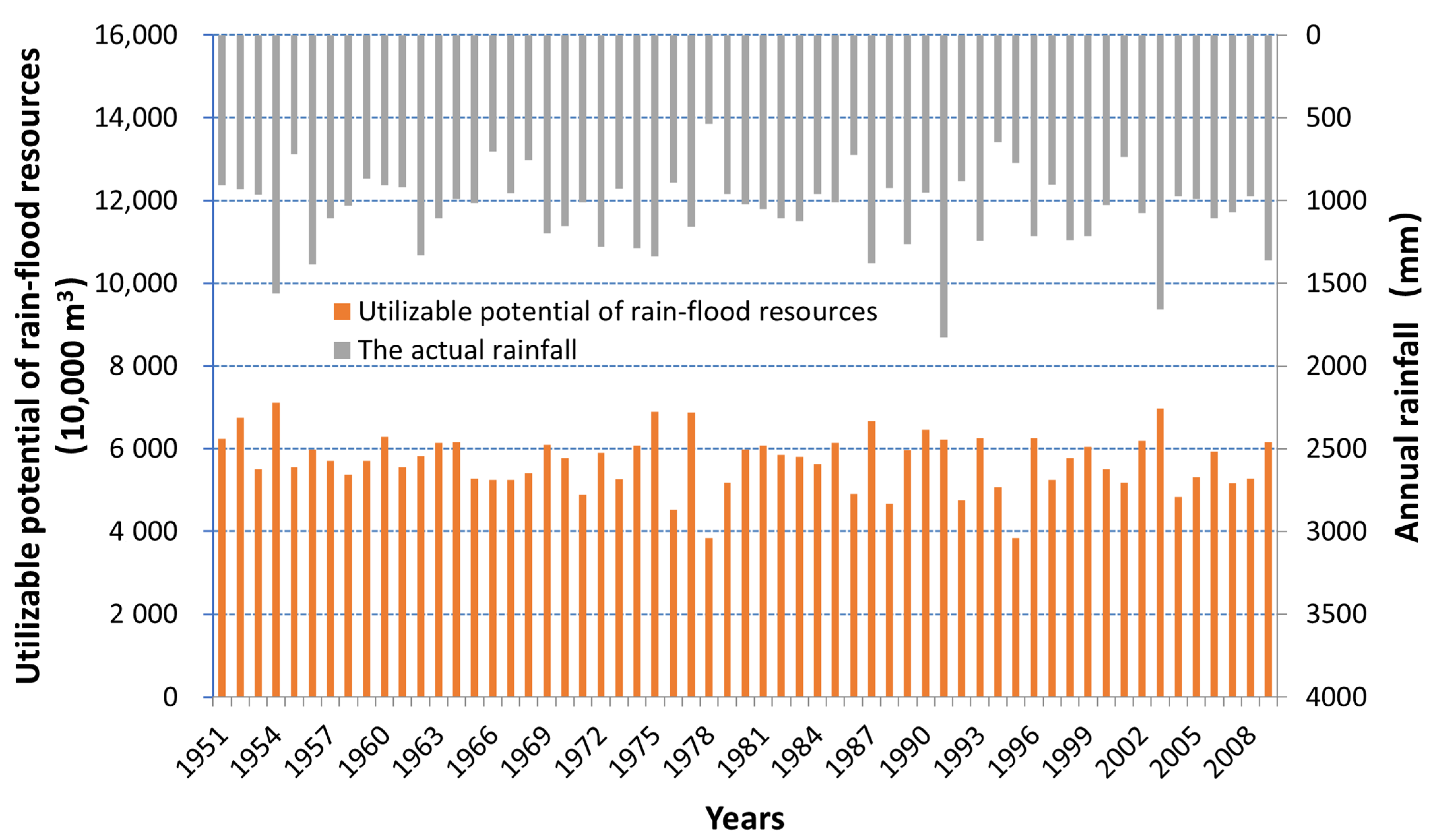
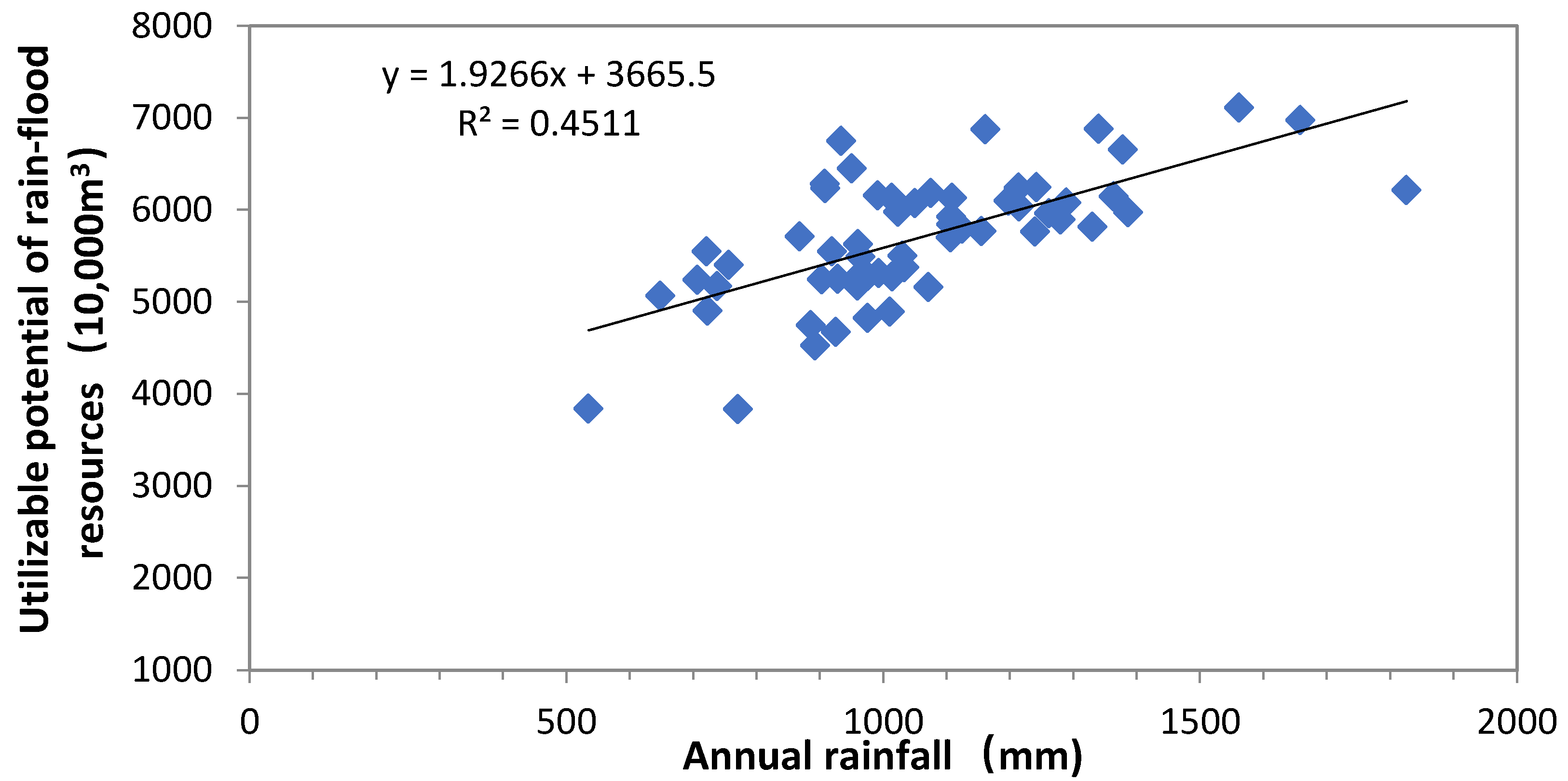
China is a country where the levels of water resources per capita are extremely low. With the rapid development of urbanization, water resource shortages have become a bottleneck existing in more and more cities. This study considers the comprehensive management of urban flood control, water supply, water and the ecological environment, catches the main contradiction between “water deficient” and “water rich” in cities, puts forward a comprehensive utilization pattern for urban water resources by emphasizing the utilization of rain–flood resources. After a simulation study, a better regulation pattern is brought out and achieve multiple benefits based on the river system of Gucheng Lake, which is located in Nanjing, Gaochun district, by optimizing conventional regulation. The results show that two parameters, the low water level (LWL) below which Gucheng Lake stops supplying ecological water, and the high water level (HWL) where Gucheng Lake stops importing water from rivers, are the key parameters to decide the regulation benefits, and the LWL of 9 m and HWL of 12 m is the best combination in river network regulation, the annual potential utilizable of rain–flood resources of Gucheng Lake river system can reach 57 million m3 per year, through the comprehensive utilization of the rain–flood resources, the negative effect of flood is effectively reduced and the disaster is controlled on one hand; and the water demand of urban and rural water supply, 100,000 m3/day, is effectively guaranteed as well as the regional ecological environment is improved on the other hand.
Keywords: rain–flood resources; urban water distribution network; comprehensive utilization pattern; river system of Gucheng Lake rain–flood resources; urban water distribution network; comprehensive utilization pattern; river system of Gucheng Lake