1. Introduction
Solar radiation is the primary driver of Earth’s climate system, governing energy balance, atmospheric circulation, hydrological cycles, and ecosystem productivity [
1,
2]. The amount of solar radiation reaching the Earth’s surface—commonly referred to as global horizontal irradiance (GHI) or shortwave radiation—is modulated by a complex interplay of atmospheric constituents including aerosols, clouds, water vapor, and greenhouse gases [
3,
4]. Over recent decades, mounting evidence has confirmed that anthropogenic climate change is altering the distribution, intensity, and variability of surface solar radiation, creating feedback mechanisms that further amplify global warming [
3,
4]. Understanding these interactions is therefore critical not only for climate science but also for energy systems, agriculture, ecology, and public health.
The phenomenon of global dimming and brightening—characterized by long-term decreases and subsequent recoveries in surface solar radiation—has been one of the most significant discoveries in climate science over the past three decades [
5,
6]. Wild et al. [
5] demonstrated that surface solar radiation declined by approximately 4–6 W/m
2 per decade from the 1950s to the 1980s, primarily driven by increasing anthropogenic aerosol emissions, before partially recovering in many regions from the 1980s onward. These changes have profound implications for surface energy budgets, evapotranspiration rates, and crop yields, making the solar radiation–climate change nexus an area of intense scientific inquiry [
7,
8].
In parallel with observational studies, solar geoengineering—particularly stratospheric aerosol injection (SAI) and marine cloud brightening (MCB)—has emerged as a controversial yet increasingly studied approach to deliberately modify solar radiation to counter global warming [
9,
10]. The growing interest in solar radiation modification (SRM) strategies has generated a distinct and rapidly expanding body of literature, reflecting urgent societal concerns about the pace of climate change and the limitations of mitigation-only approaches [
11]. At the same time, advances in remote sensing, climate modeling (e.g., CMIP6), and machine learning have transformed the methodological landscape of solar radiation research, enabling more precise quantification of radiation–climate feedback at regional and global scales [
12,
13].
Given the breadth and complexity of this research domain, bibliometric analysis offers a powerful and objective methodology to systematically map the intellectual structure, identify key contributors, and track the temporal evolution of scientific knowledge [
14,
15]. Bibliometrics employs quantitative methods—including publication and citation analysis, co-authorship networks, keyword co-occurrence mapping, and thematic clustering—to provide a panoramic view of a research field that would be impossible to obtain through traditional narrative reviews [
16,
17]. Several bibliometric studies have examined adjacent topics, such as general climate change research [
18], solar energy [
19], renewable energy [
20], and climate change impacts on specific sectors [
21,
22]. However, to the best of the author’s knowledge, no comprehensive bibliometric analysis has specifically focused on the intersection of solar radiation and climate change as a unified research domain.
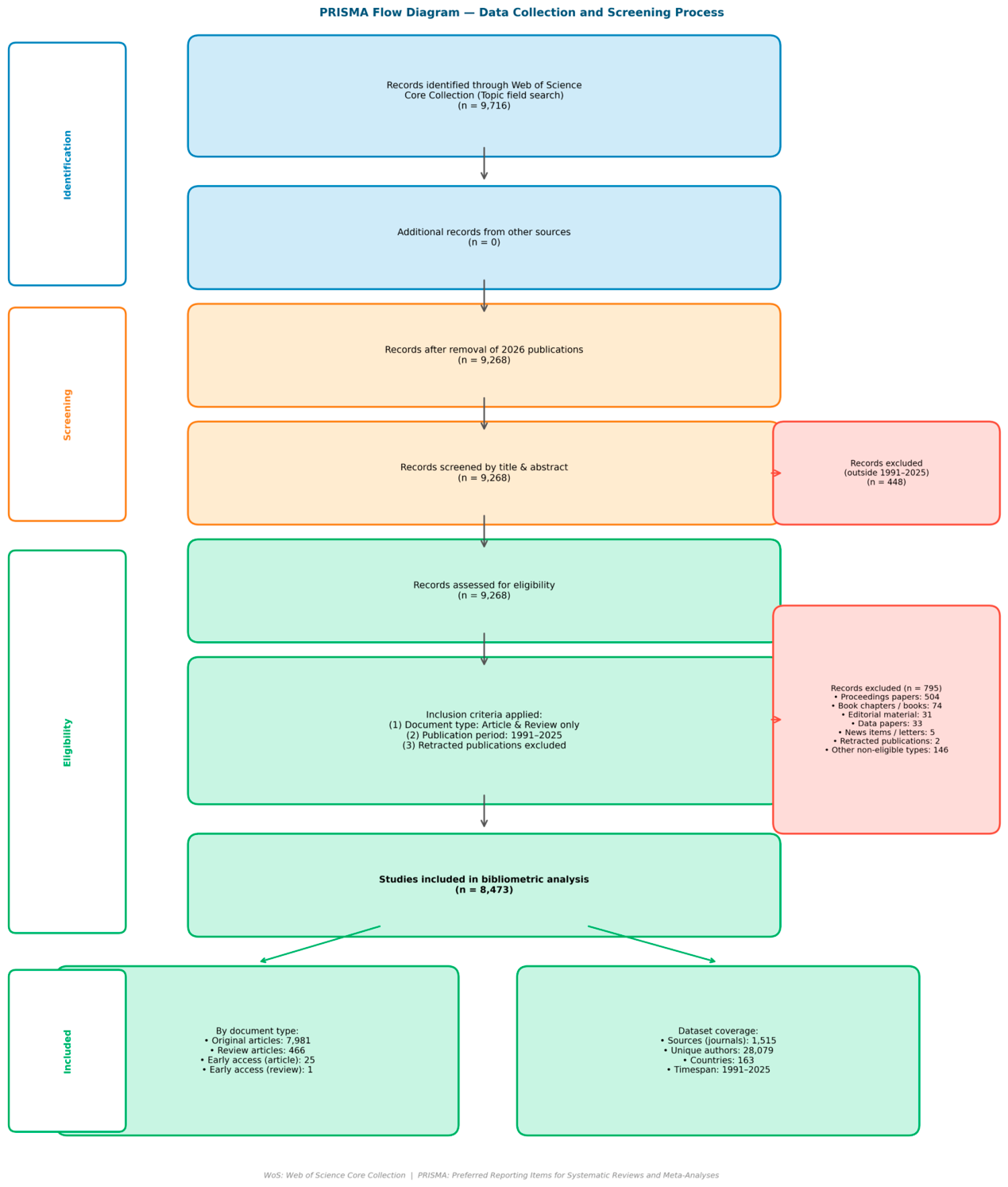
This study aims to fill this gap by conducting the first large-scale bibliometric analysis of the global scientific literature on solar radiation and climate change, covering 8473 publications from the Web of Science (WoS) Core Collection spanning 1991 to 2025. Specifically, this study addresses the following research questions (RQs):
RQ1: What are the overall publication trends and growth patterns in solar radiation–climate change research between 1991 and 2025?
RQ2: Which countries, institutions, authors, and journals have made the most considerable contributions to this field?
RQ3: What are the major thematic clusters and research frontiers in solar radiation–climate change research?
RQ4: How have research topics and keywords evolved over time, and what emerging themes are gaining momentum?
The remainder of this paper is organized as follows.
Section 2 describes the data sources, search strategy, inclusion/exclusion criteria, and bibliometric methods employed.
Section 3 presents the results of the bibliometric analyses, including publication trends, key contributors, bibliometric laws, network analyses, and thematic mapping.
Section 4 discusses the findings in the context of existing literature, highlights knowledge gaps, and outlines future research directions.
Section 5 concludes the study by summarizing the key findings and their implications.
3. Results
3.1. General Overview of the Dataset
The final dataset comprised 8473 publications (7981 original articles, 25 early access articles, and 467 review articles) from 1515 journals, published between 1991 and 2025.
Table 2 presents the main bibliometric characteristics of the dataset. The corpus includes 28,079 unique authors, with an average of 5.65 co-authors per document and an international co-authorship rate of 35.87%, indicating a high degree of global collaboration in this research domain. The average number of citations per document was 40.16, reflecting the considerable scientific impact of the literature. The document’s average age was 8.08 years, suggesting a relatively recent and dynamic field.
3.2. Annual Publication Trends
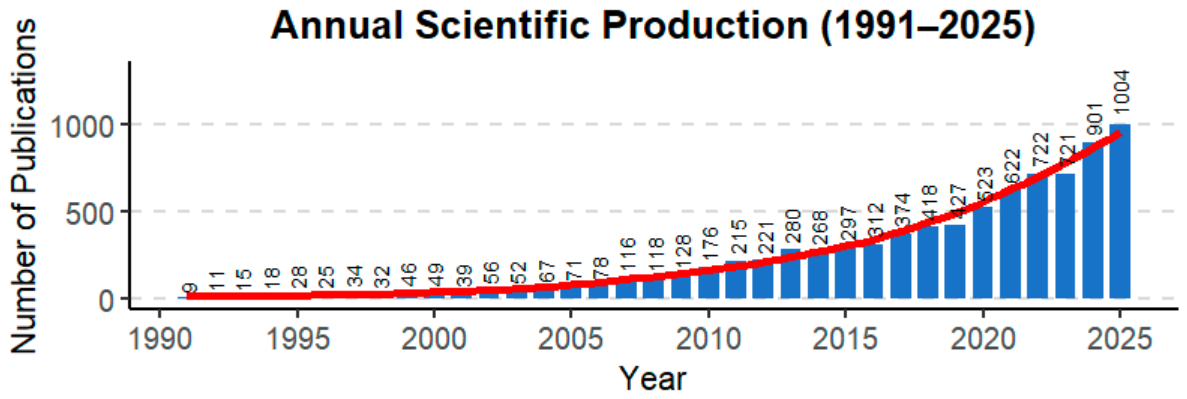
Figure 2 illustrates the annual scientific production in the solar radiation–climate change research domain from 1991 to 2025. The field exhibited a consistent and remarkable growth trajectory over the study period, with annual publications increasing from 9 in 1991 to 1004 in 2025—a more than 111-fold increase over 35 years. The annual growth rate was calculated at 14.87%, reflecting the exponential expansion of research interest in this domain.
Three distinct growth phases can be identified. The first phase (1991–2006) represents the early development stage, characterized by relatively slow and steady growth, with annual publications remaining below 100. The second phase (2007–2019) marks an acceleration period, during which annual output increased from 116 to 427 documents, driven by growing global awareness of climate change, the publication of IPCC Assessment Reports, and advances in remote sensing technology. The third and most rapid phase (2020–2025) reflects an exponential surge in publications, with annual output exceeding 500 documents in 2020 and reaching 1004 in 2025. This acceleration coincides with increased international climate commitments following the Paris Agreement, the release of CMIP6 model outputs, and the growing scientific and policy interest in solar geoengineering as a potential climate intervention strategy.
3.3. Most Productive and Most Cited Countries
Table 3 presents the top 10 most productive countries in terms of publication output. China dominated the global research landscape with 2356 publications (28.00% of total output), followed by the USA (1473; 17.51%), the United Kingdom (379; 4.50%), Germany (319; 3.79%), and India (291; 3.46%). Notably, Germany exhibited the highest multiple-country publication (MCP) ratio (0.502), indicating that more than half of its publications involved international collaborators, reflecting its strong integration into global research networks.
Table 4 presents citation impact by country. Despite ranking second in publication volume, the USA led all countries in total citations (113,039) and average citations per article (76.74), underscoring the high quality and influence of American research in this field. Switzerland, despite a relatively modest publication output, ranked second in average citations per article (71.56), reflecting its role as a hub for high-impact climate research institutions. Conversely, China’s high publication volume was accompanied by a comparatively lower average citation rate (27.07), indicating that publication productivity and citation impact do not necessarily increase proportionally, a pattern frequently reported in bibliometric studies across rapidly expanding research systems [
31]. This divergence between publication volume and citation impact reflects a well-documented pattern in bibliometric research: high-volume research outputs do not necessarily translate into high scientific influence, as citation rates are shaped by factors including research quality, journal prestige, international visibility, and the maturity of a country’s research culture in a given field [
31,
32].
3.4. Most Productive Institutions
The top 10 most productive institutions are presented in
Table 5. The analysis revealed strong dominance by Chinese research institutions, with 9 of the top 10 institutions affiliated with China. The University of California, San Diego, ranked 10th with 41 publications, the only non-Chinese institution in the top 10. The Institute of Geographic Sciences and Natural Resources Research, Chinese Academy of Sciences (CAS) ranked first with 129 publications, followed by Beijing Normal University (112) and the Institute of Atmospheric Physics, CAS (75). The prevalence of CAS-affiliated institutes in the top rankings reflects China’s strategic investment in climate and environmental research over the past two decades.
3.5. Most Productive Authors
Table 6 presents the top 10 most productive authors. Zhang Y led the ranking with 176 publications, followed by Wang Y (163) and Li Y (127). It should be noted that these are relatively common Chinese name abbreviations, and the rankings may reflect contributions from multiple authors sharing the same name format rather than a single individual. The fractionalized author count—which distributes credit proportionally among co-authors—provides a more nuanced picture of individual contributions, with Zhang Y (29.5), Wang Y (24.6), and Li Y (20.1) maintaining their leading positions.
3.6. Most Relevant Sources and Bradford’s Law
The 8473 publications were distributed across 1515 journals, reflecting the multidisciplinary nature of solar radiation–climate change research.
Table 7 presents the top 10 most productive journals. The Journal of Geophysical Research–Atmospheres ranked first with 215 publications, followed by Remote Sensing (194), Agricultural and Forest Meteorology (192), and Journal of Climate (192). The diversity of journals—spanning atmospheric sciences, remote sensing, ecology, hydrology, and energy—confirms the inherently interdisciplinary character of this research field.
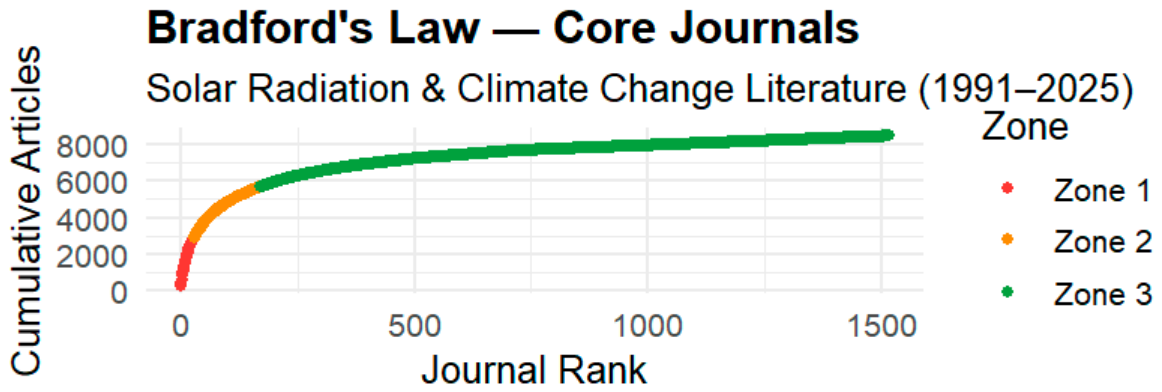
Bradford’s Law analysis identified 27 core journals (Zone 1) that collectively accounted for approximately one-third of all publications (2801 documents), consistent with Bradford’s theoretical predictions. The remaining publications were distributed across 144 Zone 2 journals and 1344 Zone 3 journals, confirming the highly dispersed nature of the literature across peripheral sources.
Figure 3 presents the Bradford’s Law distribution curve, illustrating the typical S-shaped cumulative publication pattern. The Bradford multiplier for this dataset was calculated as
n ≈ 5.3 (Zone 2/Zone 1 = 144/27), indicating that each successive zone requires approximately 5.3 times more journals to produce an equivalent volume of publications, consistent with the log-linear Bradford model applied by the Bibliometrix package [
26].
3.7. Author Productivity: Lotka’s Law
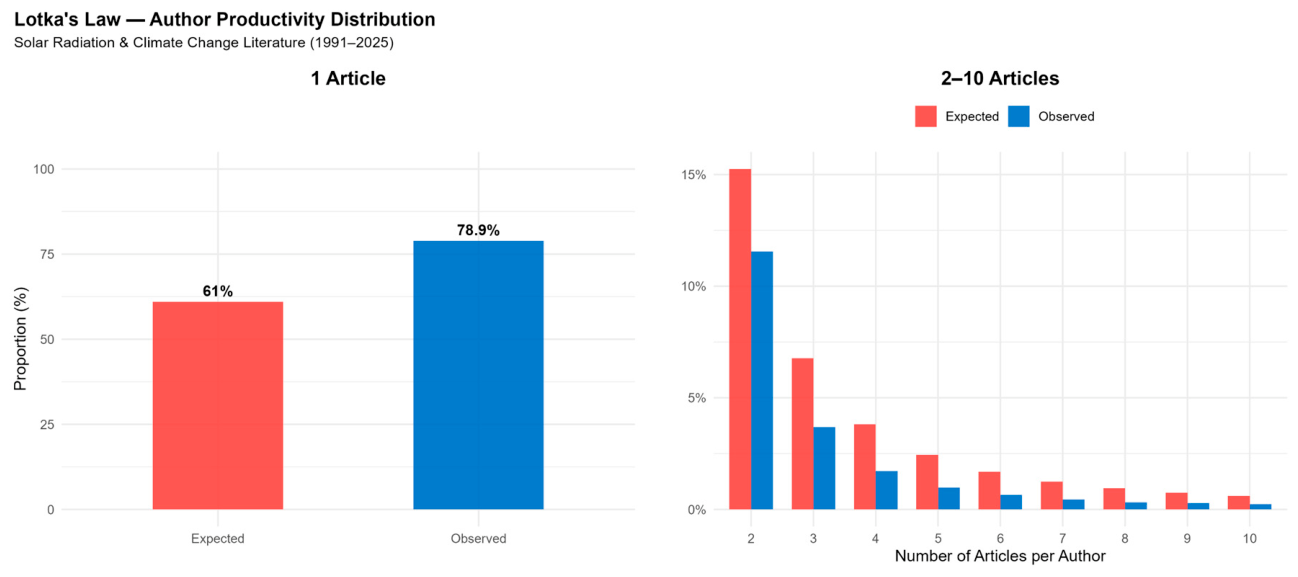
Lotka’s Law analysis was applied to examine the distribution of author productivity across the 28,079 unique authors identified in the dataset. The results revealed that 78.9% of authors contributed only a single publication to the solar radiation–climate change literature, substantially exceeding the theoretical expectation of approximately 61% under the classical Lotka’s Law model. Authors contributing two publications accounted for 11.6% of the total, while those with three or more publications represented a progressively smaller proportion.
The observed deviation from the theoretical distribution—particularly the higher proportion of single-publication authors—suggests a broad but dispersed scientific community, in which many researchers contribute occasionally to this interdisciplinary field without sustained engagement. This pattern is characteristic of multidisciplinary research domains that draw contributions from scientists across diverse disciplines, including atmospheric physics, ecology, agronomy, hydrology, and energy engineering.
Figure 4 presents the comparison between observed and expected author productivity distributions.
3.8. Most Cited Publications and Thematic Scope
Among the most frequently cited works in the dataset were studies on biogenic volatile organic compound emissions [
33], direct radiative forcing of anthropogenic sulfate aerosols [
4], and the climate impacts of black carbon aerosols [
3]—reflecting the centrality of atmospheric radiative processes in the field. Studies on terrestrial ecosystem production [
34], volcanic forcing and climate [
35], and millennial-scale climate variability [
36,
37] also ranked among the frequently cited works, underscoring the field’s deep connections to paleoclimate science and the carbon cycle.
3.9. Keyword Co-Occurrence Network and Research Clusters
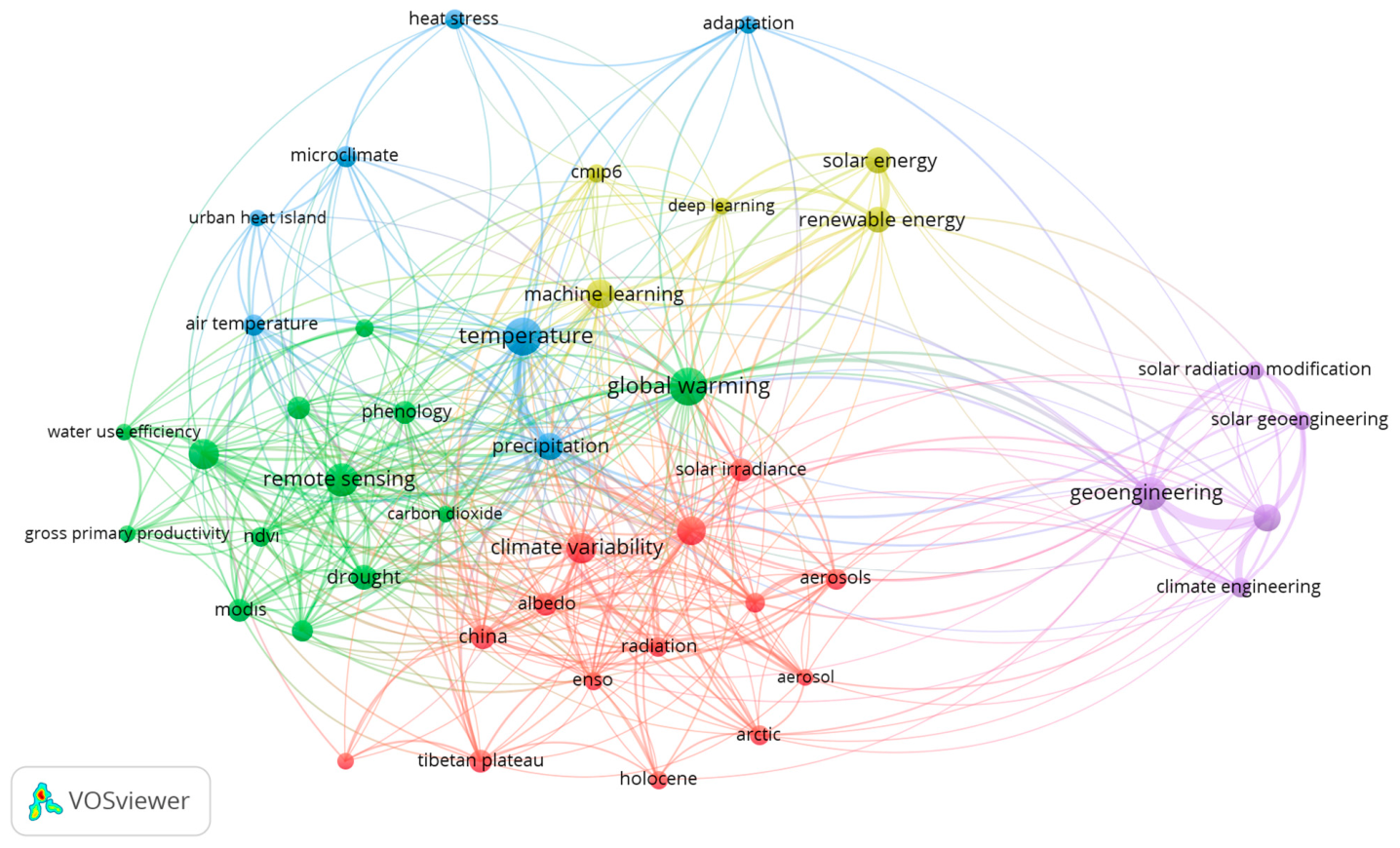
The keyword co-occurrence network was constructed using 46 author keywords that appeared in at least 50 publications, resulting in a network of interconnected research themes. Core search terms (‘solar radiation’, ‘climate change’) were excluded from the visualization following standard practice in keyword co-occurrence analysis [
16,
26]. VOSviewer identified five major thematic clusters using its built-in modularity-based clustering algorithm (normalization method: association strength; resolution = 1.0; attraction = 2), each representing a distinct research focus area (
Figure 5).
The first cluster (green) encompasses ecological and biosphere impact studies, centered on keywords such as ‘remote sensing’, ‘phenology’, ‘drought’, ‘gross primary productivity’, ‘NDVI’, ‘MODIS’, ‘water use efficiency’, and ‘carbon dioxide’. This cluster reflects the extensive body of research examining how changes in solar radiation availability affect plant productivity, ecosystem carbon fluxes, and water cycles. The second cluster (red) groups climate dynamics and natural variability studies, including ‘climate variability’, ‘solar irradiance’, ‘albedo’, ‘ENSO’, ‘aerosol’, ‘arctic’, ‘holocene’, and ‘tibetan plateau’, capturing paleo-climate investigations and natural modes of solar-driven climate variability. The third cluster (blue) represents atmospheric processes and climate monitoring research, featuring ‘precipitation’, ‘temperature’, ‘heat stress’, ‘microclimate’, ‘urban heat island’, ‘air temperature’, and ‘adaptation’, reflecting observational and modeling approaches to quantify solar radiation dynamics and regional climate patterns. The fourth cluster (purple) encompasses solar geoengineering research, including ‘geoengineering’, ‘solar geoengineering’, ‘climate engineering’, and ‘solar radiation modification’, representing the growing field of deliberate climate intervention research. The fifth cluster (yellow) covers energy and data-driven applications, including ‘solar energy’, ‘renewable energy’, ‘deep learning’, ‘machine learning’, and ‘CMIP6’, illustrating the convergence of solar radiation research with artificial intelligence, climate modeling outputs, and renewable energy systems.
3.10. Country Collaboration Network
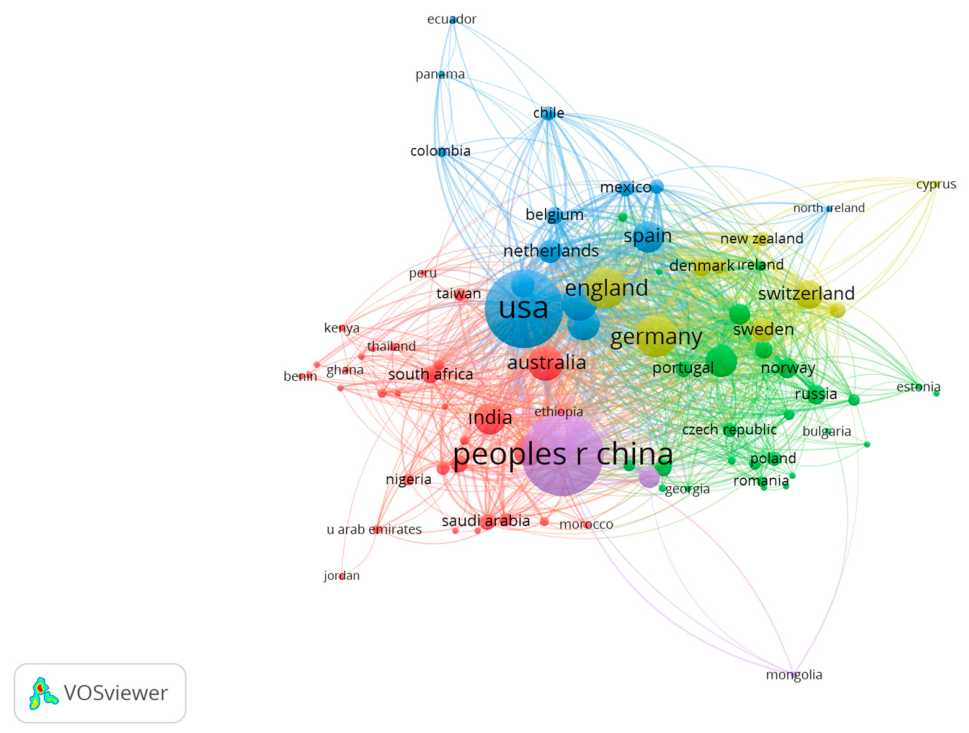
The country collaboration network was constructed based on co-authorship data from 85 countries that met the minimum threshold of 10 documents. The network revealed five distinct collaboration clusters (
Figure 6). The most prominent cluster (red) is centered on China and includes India, South Africa, Saudi Arabia, and several African nations, suggesting a South-South and China-led collaboration bloc. The second cluster (blue) is anchored by the USA and includes several Western European and Latin American countries (Spain, the Netherlands, Belgium, Mexico, Colombia, Chile), reflecting Atlantic-centered research partnerships. The third cluster (yellow) groups Northern and Central European countries, including Switzerland, Denmark, Ireland, and New Zealand, characterized by high citation impact despite relatively modest publication volumes. The fourth cluster (green) connects Central and Eastern European nations, including Germany, Sweden, Norway, Russia, and Poland. The fifth cluster (purple) centers on Australia with connections to Georgia and Mongolia.
The USA occupied the most central position in the network, demonstrating broad connectivity across multiple clusters and confirming its role as the global hub of international scientific collaboration in this field. China, despite its dominant publication output, showed a relatively lower international collaboration ratio (MCP ratio: 0.297) than Germany (0.502) and the United Kingdom (0.464), suggesting a higher degree of domestic clustering in its collaboration network. It should be noted that VOSviewer’s visualization displays only countries with at least one collaboration link to another country in the network; isolated nodes (countries with documents but no international co-authorship links meeting the threshold) are not displayed, which accounts for the difference between the 85 countries meeting the minimum document threshold and the number of visible nodes in
Figure 6.
3.11. Author Co-Authorship Network
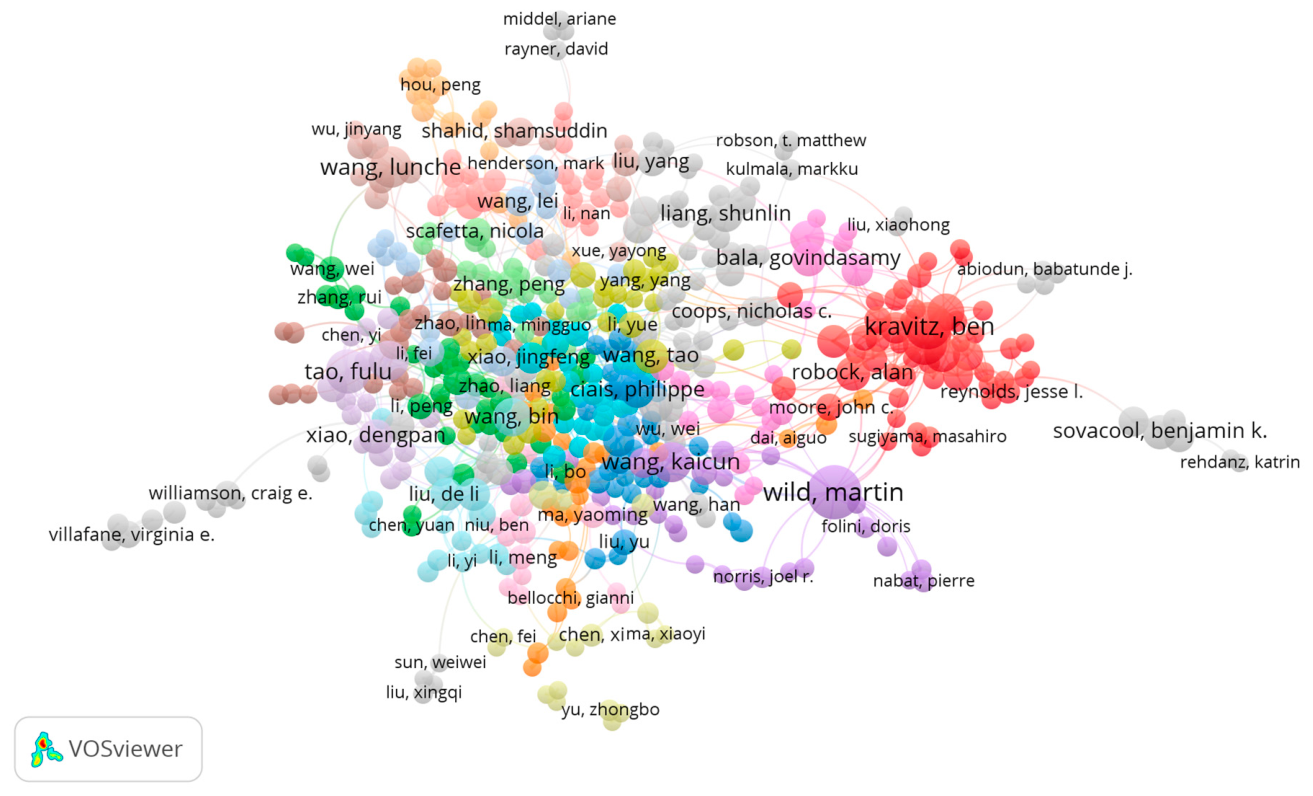
The author co-authorship network included 626 authors who met the minimum threshold of five publications, revealing distinct research communities organized around key scientific leaders (
Figure 7). The most prominent cluster (red) is led by Kravitz, Ben and includes Robock, Alan; Reynolds, Jesse L.; Moore, John C.; Sugiyama, Masahiro; and Dai, Aiguo—a group concentrated on solar geoengineering, particularly stratospheric aerosol injection (SAI) and its climatic consequences. Wild, Martin anchors a dedicated cluster (purple) focused on global dimming and brightening phenomena, collaborating with Folini, Doris, Norris, Joel R., and Nabat, Pierre—representing the core scientific community studying long-term surface solar radiation trends. Wang, Kaicun and Ciais, Philippe lead a large central cluster focused on carbon cycling, ecosystem productivity, and solar radiation–vegetation interactions, reflecting the strong Chinese contribution to this research area. The co-authorship network confirms the fragmented but interconnected nature of the scientific community, with clearly identifiable research groups specializing in distinct sub-domains of solar radiation–climate change science.
3.12. Thematic Map Analysis
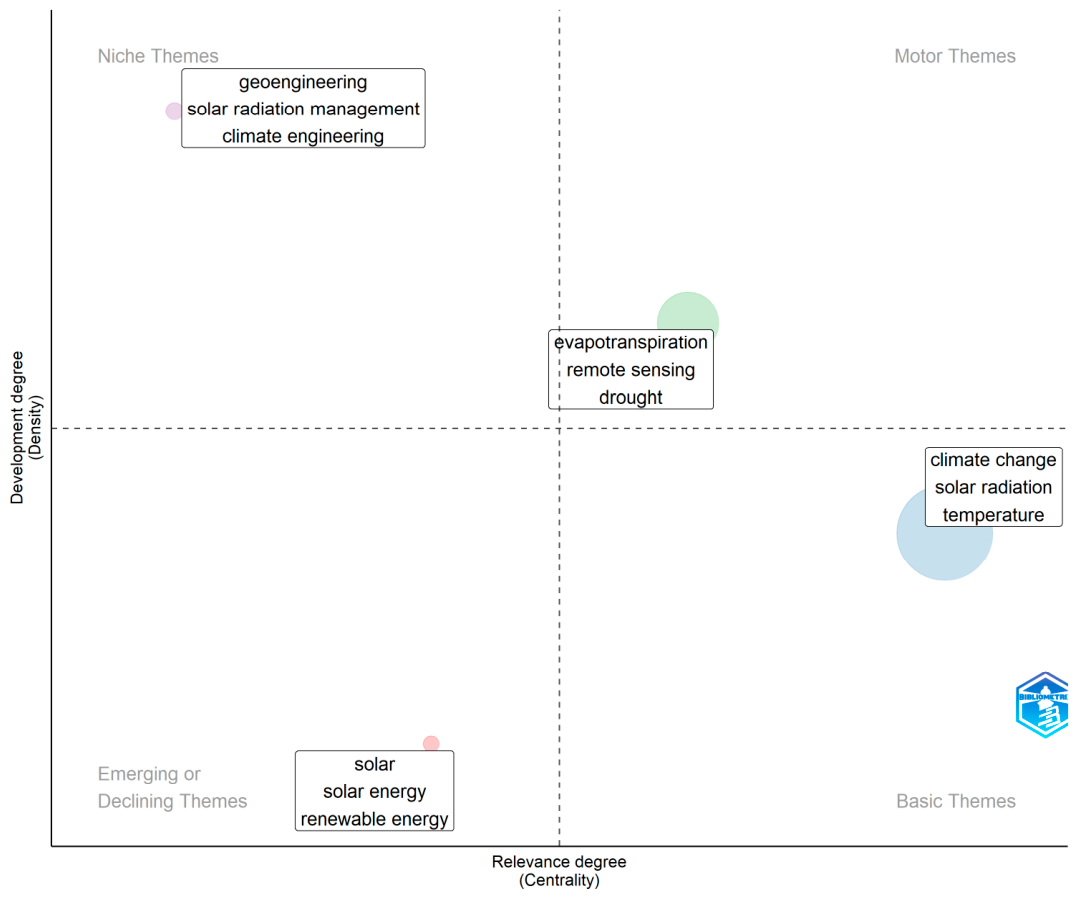
The thematic map, constructed based on keyword density (development degree) and centrality (relevance degree), classified the research themes into four quadrants (
Figure 8). The Basic Themes quadrant (high centrality, low density) contained the cluster of ‘climate change’, ‘solar radiation’, and ‘temperature’—confirming their role as the field’s fundamental intellectual backbone. These themes are well-developed and closely connected to other topics but have not yet reached full maturity, indicating continued growth potential. The Niche Themes quadrant (low centrality, high density) was occupied by ‘geoengineering’, ‘solar radiation modification’, and ‘climate engineering’—a specialized, internally cohesive research front with limited connections to the broader literature, suggesting an emerging yet isolated sub-discipline. The cluster of ‘evapotranspiration’, ‘remote sensing’, and ‘drought’ appeared near the Motor Themes boundary (high centrality, high density), indicating that these applied water-cycle and land-surface themes are becoming increasingly central and well-developed in the field. The Emerging or Declining Themes quadrant (low centrality, low density) contained ‘solar energy’, ‘solar’, and ‘renewable energy’, suggesting that the energy-application dimension of solar radiation research remains peripheral to the main climate science discourse, though it is gaining traction.
3.13. Trend Topic Analysis
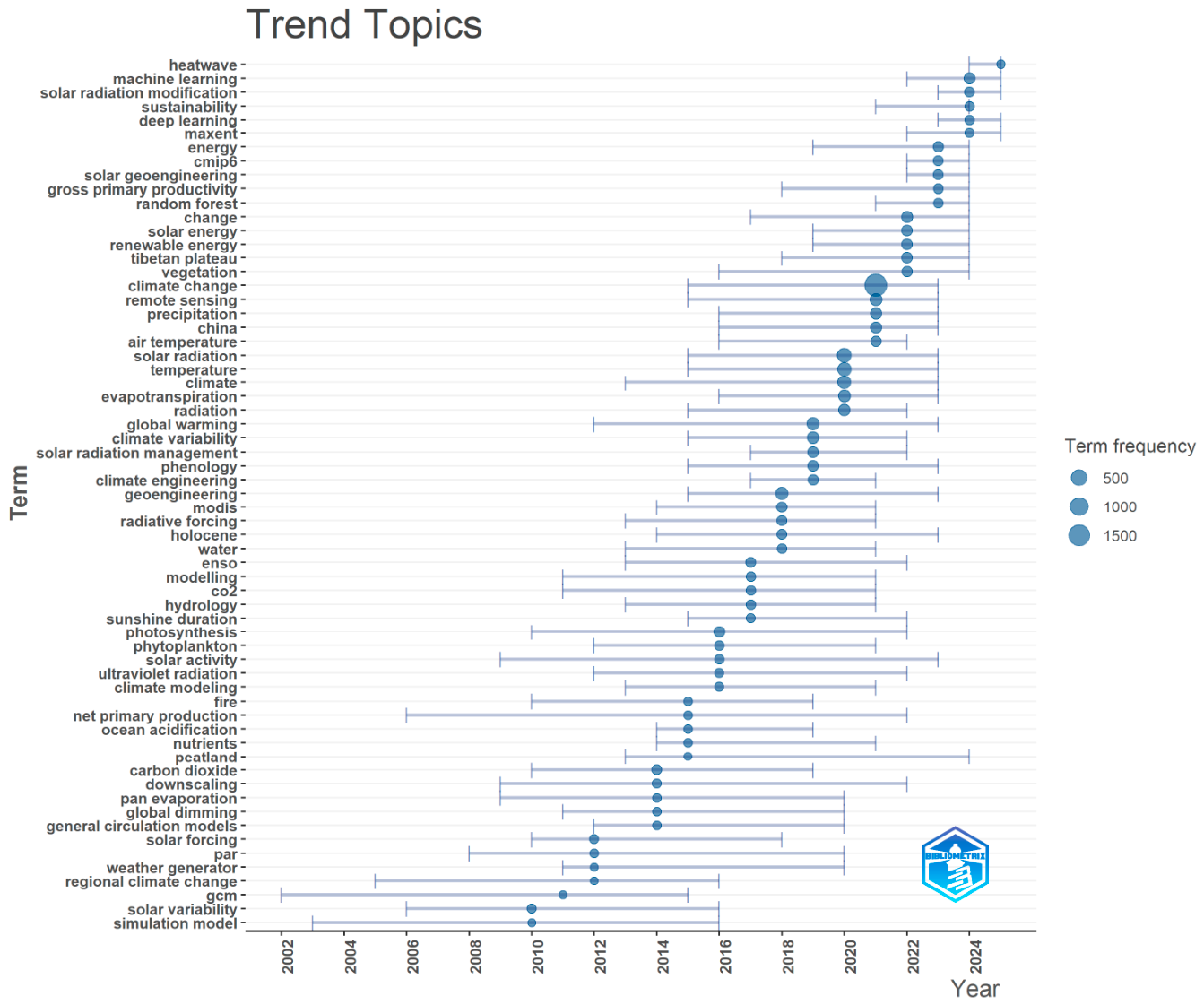
The trend topic analysis revealed a clear temporal stratification of research priorities across the study period (
Figure 9). Topics with the earliest mean publication years (pre-2012) include ‘simulation model’, ‘solar variability’, ‘GCM’, ‘regional climate change’, ‘weather generator’, and ‘PAR’, reflecting the foundational period of the field dominated by climate modeling and basic solar radiation measurements. Topics from the intermediate period (2012–2017) include ‘global dimming’, ‘pan evaporation’, ‘carbon dioxide’, ‘ocean acidification’, ‘radiative forcing’, and ‘sunshine duration’, indicating a shift toward observational and process-based research linking solar radiation to biogeochemical cycles. It is important to note that the temporal bars in
Figure 9 represent the span of years in which each keyword appeared in the dataset—not the absolute frequency of use in each year. A keyword such as ‘simulation model’ appearing to end before 2016 indicates that its mean publication year falls within that period and that its frequency declined relative to newer, emerging terms, not that publications on this topic ceased entirely. The trend topic visualization is designed to highlight the relative emergence and decline of research themes, not absolute publication volumes.
The most recently emerging topics (post-2020) include ‘heatwave’, ‘machine learning’, ‘solar radiation modification’, ‘deep learning’, ‘CMIP6’, ‘solar geoengineering’, ‘gross primary productivity’, ‘random forest’, and ‘reference evapotranspiration’. The emergence of machine learning and deep learning as research keywords signals a paradigm shift toward data-driven approaches in solar radiation modeling and climate impact assessment. The rapid rise of ‘solar radiation modification’, ‘solar geoengineering’, and ‘CMIP6’ reflects the growing scientific and policy attention to climate intervention strategies and the adoption of next-generation climate model outputs. The appearance of ‘heatwave’ as the most recent emerging keyword underscores the increasing urgency of understanding extreme heat events within the solar radiation–climate change nexus. Although absolute keyword frequencies were used in this analysis, the trend topic method accounts for temporal bias through the use of mean publication year as the primary sorting criterion, which anchors each keyword’s temporal position to its central period of use rather than its raw count, effectively correcting for the exponential growth in total publications observed after 2020.
4. Discussion
4.1. Exponential Growth and Drivers of Scientific Output
The exponential growth in solar radiation–climate change publications over the 1991–2025 period (annual growth rate: 14.87%) mirrors the broader acceleration observed in climate science literature and reflects a convergence of scientific, political, and technological drivers. The identification of three distinct growth phases—early development (1991–2006), acceleration (2007–2019), and exponential expansion (2020–2025)—is consistent with patterns documented in bibliometric analyses of adjacent fields such as renewable energy [
19], climate change adaptation [
21], and atmospheric aerosol research [
38].
The first acceleration phase (2007 onwards) closely coincides with the publication of the IPCC Fourth Assessment Report (AR4) in 2007, which significantly elevated global scientific and policy attention to climate change [
39]. The continued growth through 2013–2015 aligns with the IPCC Fifth Assessment Report (AR5) and the negotiation of the Paris Agreement, which established quantitative climate targets and stimulated research on the radiative forcing components—including solar radiation—needed to achieve them [
40]. The most recent acceleration phase (2020–2025) appears linked to the release of CMIP6 model outputs, growing interest in solar geoengineering as a potential climate intervention, and the post-COVID resurgence of research productivity.
4.2. Geographic Patterns: Quantity, Quality, and Collaboration
China’s dominance in publication volume (28.00% of total output) reflects its broader rise in global scientific productivity [
41]. This growth has been driven by substantial government investment in research and development, rapid university expansion, and targeted funding for climate and environmental sciences. However, the notable gap between China’s publication output and its average citation impact (27.07 citations/article)—compared to the USA (76.74), Switzerland (71.56), and the United Kingdom (56.56)—suggests a persistent quality differential, a pattern widely documented in bibliometric literature [
31,
32]. This disparity may reflect differences in research culture, publication strategies, citation behavior, or the relative novelty of China’s large-scale entry into high-impact climate research.
The country collaboration network revealed that the USA functions as the central hub of international scientific cooperation in this field, connecting multiple regional clusters across Europe, Asia, Oceania, and the Americas. This finding aligns with the USA’s historical leadership in climate research infrastructure, including major funding agencies (NSF, DOE, NASA), world-class research institutions, and its role in establishing foundational climate modeling frameworks [
42]. The China-centered cluster reflects China’s dominant publication output and its strategic investments in international research partnerships, with collaboration links extending across multiple regions. A separate South-South collaboration cluster, anchored by India, encompasses several African nations—including South Africa, Nigeria, Ghana, and Kenya—as well as Middle Eastern countries such as Saudi Arabia and the UAE, reflecting the growing importance of emerging economy research networks [
43].”
4.3. Institutional Concentration and the Role of the Chinese Academy of Sciences
Nine of the top 10 most productive institutions are Chinese affiliates. This near-exclusive dominance reflects the centralized and well-funded nature of China’s climate research enterprise. Chinese Academy of Sciences (CAS)-affiliated institutes occupied three of the top four positions, with the Institute of Geographic Sciences and Natural Resources Research (129 publications) and the Institute of Atmospheric Physics (75 publications) representing China’s flagship institutions for land surface and atmospheric radiation research, respectively. The University of California, San Diego (41 publications) was the only non-Chinese institution to appear in the top 10, ranking 10th and reflecting the strong American presence in solar radiation research despite its relatively modest representation at the institutional level.
The presence of major international research centers such as NOAA, ECMWF, and the Max Planck Institute for Meteorology outside the top 10 is noteworthy, given their globally recognized leadership in solar radiation and climate science. This may reflect differences in publication strategies, the aggregation of output across affiliated units in the WoS database, or the specific focus of the search query employed in this study.
4.4. Bibliometric Laws: Implications for the Field’s Structure
The application of Bradford’s Law revealed that only 27 journals (1.78% of 1515 total sources) account for approximately one-third of all publications in the field. The broad distribution of the remaining publications across 1488 peripheral journals confirms the multidisciplinary nature of solar radiation–climate change science [
44]. The presence of Atmosphere (MDPI) among the Zone 1 core journals (rank 14, 95 publications) is particularly relevant for the present study, as this journal has rapidly established itself as a significant publication venue for atmospheric and climate research since its founding in 2010.
The Lotka’s Law analysis showed that 78.9% of authors contributed only a single publication—compared to the theoretical expectation of 61%—indicating that the field is characterized by a large periphery of occasional contributors. This pattern is consistent with the multidisciplinary nature of the research domain, which attracts scientists from adjacent fields without necessarily establishing sustained research programs. The high average co-authorship rate (5.65 authors/document) and international co-authorship proportion (35.87%) underscore the importance of collaboration as a mechanism for integrating expertise across disciplines.
4.5. Research Themes and Knowledge Frontiers
The 35-year period under investigation (1991–2025) witnessed remarkable scientific progress across multiple dimensions of solar radiation–climate change research. In the early 1990s, the field was dominated by foundational questions about the magnitude and drivers of surface solar radiation variability, with key studies establishing the radiative forcing of anthropogenic aerosols [
4] and the climate impacts of black carbon [
3]. The discovery and quantification of the global dimming and brightening phenomenon—characterized by multi-decadal declines and partial recoveries in surface solar radiation—represented one of the field’s most transformative contributions to climate science during this period [
5,
6,
45]. By the 2000s, the integration of satellite remote sensing enabled a paradigm shift from station-based to spatially continuous radiation monitoring, facilitating the first global-scale assessments of solar radiation–ecosystem interactions and land surface energy balance [
46,
47]. The 2010s saw the consolidation of solar geoengineering as a legitimate scientific research frontier, with the establishment of coordinated modeling frameworks such as the Geoengineering Model Intercomparison Project (GeoMIP) [
48] enabling systematic evaluation of stratospheric aerosol injection and marine cloud brightening scenarios. The release of CMIP6 model outputs from 2019 onwards provided an unprecedented multi-model framework for projecting future changes in surface solar radiation under a range of socioeconomic pathways [
49]. Most recently, the post-2020 period has been characterized by the rapid adoption of machine learning and deep learning methods, marking a fundamental shift toward data-driven approaches in solar radiation modeling and climate impact assessment [
50,
51,
52].
The keyword co-occurrence network analysis identified five major thematic clusters. The Ecological and Biosphere Impacts cluster (green) reflects the substantial body of research examining how the availability of solar radiation mediates ecosystem responses to climate change, including shifts in phenology, gross primary productivity, and land surface energy balance [
53,
54]. The Climate Dynamics and Variability cluster (red) represents foundational research on natural modes of solar-driven climate variability and their interaction with anthropogenic forcing, including paleoclimate reconstructions and ENSO dynamics [
36,
55]. The Atmospheric Processes and Climate Monitoring cluster (blue) encompasses observational and modeling research on surface solar radiation, temperature dynamics, and regional climate patterns, including urban heat island effects and heat stress analyses [
49]. The Solar Geoengineering cluster (purple) represents a specialized and rapidly growing research frontier focused on deliberate solar radiation modification strategies, including stratospheric aerosol injection and marine cloud brightening [
9,
10]. The Energy and Data-driven Applications cluster (yellow) highlights the convergence of solar energy research with machine learning, deep learning, and CMIP6 climate model outputs, encompassing solar energy systems optimization and AI-based irradiance forecasting [
50,
52]. It should be noted that cross-cluster thematic connections exist below the visualization threshold and are discussed qualitatively in this section.
The prominence of researchers such as Kravitz and Robock—leaders of the Geoengineering Model Intercomparison Project (GeoMIP)—within the Solar Geoengineering cluster confirms that a well-organized scientific community has coalesced around this controversial research frontier [
48].
4.6. Temporal Evolution and Emerging Research Frontiers
The trend topic analysis reveals a clear paradigm shift in solar radiation–climate change research. The field originated in foundational observational and modeling studies of solar variability and basic radiation budgets during the 1990s. Over time, satellite remote sensing enabled unprecedented spatial coverage of solar radiation–ecosystem interactions, driving sustained growth in evapotranspiration, NDVI, and phenology literature throughout the 2010s [
46,
47].
The most significant emerging frontier—and arguably the most transformative methodological development in the field—is the rapid convergence of machine learning (ML), deep learning (DL), and solar radiation science. The appearance of ‘machine learning’, ‘deep learning’, and ‘random forest’ among the most recently emerging keywords (post-2020 mean publication year) signals a fundamental shift away from traditional physics-based and statistical approaches toward data-driven modeling paradigms [
13,
50]. Early applications of ML in solar radiation research focused primarily on short-term solar irradiance forecasting for photovoltaic energy systems, employing algorithms such as artificial neural networks (ANN), support vector regression (SVR), and gradient boosting to predict hourly or daily GHI [
50]. More recently, deep learning architectures—particularly long short-term memory (LSTM) networks, convolutional neural networks (CNNs), and hybrid deep ensemble models—have demonstrated superior performance in probabilistic solar irradiance forecasting, capturing complex spatio-temporal dependencies in atmospheric and meteorological data [
52].
Beyond energy applications, ML and DL methods are increasingly being deployed in broader solar radiation–climate change contexts. Reichstein et al. [
12] argued that deep learning can serve as a powerful tool for process understanding in Earth system science, enabling hybrid modeling approaches that combine physical process models with data-driven machine learning. The integration of ML with CMIP6 climate model outputs has opened new pathways for bias correction, statistical downscaling, and detection of solar radiation trends in future climate projections [
49]. Furthermore, ensemble ML methods such as random forests and gradient boosting have been applied to attribute observed changes in surface solar radiation to specific drivers—including aerosol loading, cloud cover variability, and greenhouse gas concentrations—with greater precision than traditional regression techniques [
51]. Explainable AI (XAI) frameworks—such as SHAP (SHapley Additive exPlanations) values—are particularly promising for solar radiation research. These tools allow researchers to quantify the contributions of individual atmospheric variables to ML model predictions, bridging the gap between black-box models and physical understanding.
The bibliometric evidence presented here strongly suggests a fundamental methodological transformation in the field. Machine learning and deep learning emerged as the fastest-growing keyword cluster in the post-2020 period—a shift comparable in scale to the remote sensing revolution of the 1990s. Future research should prioritize the development of physics-informed machine learning (PIML) models that integrate domain knowledge from atmospheric radiative transfer theory with the pattern-recognition capabilities of deep neural networks [
12]. Such hybrid approaches are expected to improve both the accuracy and physical interpretability of solar radiation forecasts and climate impact assessments, particularly for extreme events such as heatwaves and compound drought–radiation deficit episodes [
56].
In parallel with the ML/AI transformation, the rapid emergence of ‘CMIP6’ and ‘solar geoengineering’ as high-growth keywords reflects two additional convergent frontiers. The release of CMIP6 model outputs has provided an unprecedented multi-model framework for evaluating solar radiation feedbacks under Shared Socioeconomic Pathway (SSP) scenarios, enabling more robust uncertainty quantification of future surface radiation trends [
49]. Simultaneously, the growing scientific and policy attention to solar radiation modification (SRM) strategies—particularly stratospheric aerosol injection and marine cloud brightening—has generated a rapidly expanding literature examining the climatic, ecological, and societal consequences of deliberate solar forcing [
57,
58]. The co-emergence of ‘heatwave’ as the most recent keyword underscores the increasing urgency of linking solar radiation variability to compound extreme heat events, which are intensifying under anthropogenic climate change and represent one of the most pressing challenges for climate adaptation science [
56].
4.7. Thematic Gaps and Future Research Directions
The thematic map analysis identified several important gaps. The position of solar energy and renewable energy in the Emerging or Declining quadrant likely reflects, at least in part, the terminological boundaries of the search query employed, as applied solar energy research frequently uses field-specific terminology (e.g., ‘photovoltaic’, ‘PV performance’) outside the scope of the present search strategy. Nevertheless, this finding also suggests that the solar radiation–climate change research community has not yet fully integrated the feedback between climate change-driven alterations in solar resource availability and the performance of solar energy infrastructure [
59,
60]. As climate change modifies cloud cover, aerosol loading, and atmospheric transparency, solar irradiance reaching photovoltaic panels will change in ways that are highly relevant for energy planning but remain understudied.
The niche status of geoengineering themes indicates that solar radiation modification research remains largely disconnected from mainstream climate impact and adaptation science. Bridging this gap is critical for evaluating the potential co-benefits and risks of SRM interventions on agricultural productivity, water availability, and ecosystem functioning [
58]. The limited representation of developing-country perspectives in the high-impact literature also represents a significant equity gap [
61]. Future research should prioritize the integration of solar radiation changes into compound extreme-event analysis, the development of high-resolution solar radiation datasets for data-sparse regions, and the application of explainable AI methods to improve the interpretability of machine learning models in solar radiation–climate science.
4.8. Limitations of This Study
Several limitations of this study should be acknowledged when interpreting the findings. First, the study was based exclusively on the Web of Science Core Collection, which, despite being the most widely used database for bibliometric research, may underrepresent publications in non-English languages, regional journals not indexed in WoS, and gray literature such as technical reports and conference proceedings. Future studies could complement WoS data with Scopus or Google Scholar databases for more comprehensive coverage of the global literature.
Second, cited reference analysis was limited by the absence of cited reference data in the BibTeX export format used for data retrieval, which precluded co-citation analysis and historiographic mapping. These techniques—particularly document co-citation analysis (DCA) and co-citation coupling (CBC)—would have provided additional insights into the field’s intellectual foundations. Future studies are encouraged to incorporate co-citation analysis using WoS full data export formats or dedicated bibliometric platforms.
Third, and most critically, author name disambiguation represents a significant methodological limitation in this study. The top-ranked authors in
Table 6 (e.g., Zhang Y, Wang Y, Li Y, Liu Y) are common Chinese surname-initial combinations that may aggregate the contributions of multiple distinct researchers who happen to share the same abbreviated name format as indexed in WoS. Although the fractionalized author count provides a partial correction by distributing publication credit proportionally among co-authors, it does not resolve the fundamental disambiguation problem. Full author disambiguation using ORCID ID or Scopus Author ID was not performed. Such disambiguation is not feasible at scale using automated methods alone, and manual verification of 28,079 author records was beyond the scope of this study [
26]. Accordingly, the author productivity rankings in
Table 6 and the co-authorship network in
Figure 7 should be interpreted with caution, and individual author counts should not be used to draw definitive conclusions about the productivity of specific researchers.
Fourth, all bibliometric results should be interpreted as a snapshot of the indexed literature retrieved on 30 April 2026, rather than a definitive representation of the field’s long-term dynamics. The most recently published documents (particularly those from 2024 to 2025) are likely to be underrepresented in citation counts, as the average citation lag in climate science literature typically ranges from 1 to 3 years. As a consequence, the trend topic analysis in
Figure 9 should be regarded as provisional indicators for the most recent time periods.
Fifth, the breadth of the search query employed in this study—which included general climate change terms such as ‘greenhouse effect’ and ‘climate trend’ alongside more specific solar radiation descriptors—may have led to the inclusion of publications only tangentially related to solar radiation science. As evidenced by the presence of Guenther et al. [
33]—a study primarily focused on biogenic volatile organic compound emissions rather than solar radiation per se—among the most highly cited documents, the dataset inevitably contains publications that reflect the broad overlap between solar radiation and general climate change research. This limitation is inherent to all large-scale bibliometric analyses employing broad search queries and reflects the interconnected nature of the field; however, future studies may consider using more restrictive search strings or supplementary manual screening to increase the dataset’s thematic precision.
Sixth, no comprehensive synonym standardization was performed prior to keyword co-occurrence network construction. Conceptually related terms such as ‘solar irradiance’ and ‘global horizontal irradiance’, or ‘geoengineering’ and ‘climate engineering’, were retained as separate keywords. This may have led to the splitting of single themes into discrete nodes, potentially biasing the clustering results and thematic interpretation. Future studies should apply a systematic synonym thesaurus prior to network construction and compare clustering results before and after standardization.
Seventh, the search query did not include applied solar energy terms such as ‘solar photovoltaic’, ‘PV performance’, or ‘solar albedo effect’. This may have contributed to the underrepresentation of applied solar energy research in the dataset and its classification in the Emerging or Declining quadrant of the thematic map. Future studies should consider including these terms for more comprehensive coverage of the solar energy–climate change interface.
5. Conclusions
This study presents the first comprehensive bibliometric analysis of the global scientific literature on solar radiation and climate change, encompassing 8473 publications from the Web of Science Core Collection spanning the period 1991–2025. By employing a multi-method bibliometric approach—including performance analysis, Bradford’s and Lotka’s laws, keyword co-occurrence network analysis, country and author collaboration mapping, thematic analysis, and trend topic identification—this study provides a systematic and data-driven panorama of the field’s structure, key contributors, and evolving research frontiers. The main findings and conclusions are summarized as follows:
The solar radiation–climate change literature has grown exponentially over the study period, with an annual growth rate of 14.87% and a more than 111-fold increase in annual publications from 1991 (9 documents) to 2025 (1004 documents). Three distinct growth phases were identified, with the most recent acceleration (2020–2025) driven by CMIP6 model outputs, solar geoengineering debates, and post-COVID research resurgence.
China dominated global publication output (28.00% of total), but the USA led in citation impact (average 76.74 citations/article), revealing a persistent quantity-quality gap in Chinese scientific contributions to this field. Germany exhibited the highest international collaboration ratio (MCP: 0.502), highlighting the importance of cross-border partnerships for research impact.
Bradford’s Law identified 27 core journals accounting for approximately one-third of all publications, with the Journal of Geophysical Research–Atmospheres, Remote Sensing, and Agricultural and Forest Meteorology emerging as the most productive venues. Atmosphere ranked 14th among core journals, confirming its growing significance as a publication outlet for this domain.
Lotka’s Law analysis revealed that 78.9% of authors contributed only a single publication—exceeding the theoretical expectation of 61%—indicating a broad but dispersed scientific community characteristic of multidisciplinary research fields.
Keyword co-occurrence analysis identified five major research clusters: (1) Ecological and Biosphere Impacts, (2) Climate Dynamics and Variability, (3) Atmospheric Processes and Climate Monitoring, (4) Solar Geoengineering, and (5) Energy and Data-driven Applications. These clusters reflect the diverse disciplinary perspectives contributing to solar radiation–climate change science.
The country collaboration network confirmed the USA as the central hub of global scientific cooperation. The co-authorship network identified distinct research communities led by key figures in solar geoengineering (Kravitz, Robock) and global dimming/brightening (Wild).
Thematic map analysis classified ‘climate change’, ‘solar radiation’, and ‘temperature’ as Basic Themes—the intellectual backbone of the field—while ‘geoengineering’ and ‘solar radiation modification’ occupy the Niche quadrant, indicating an internally coherent but peripherally connected research frontier.
Trend topic analysis revealed a clear paradigm shift toward data-driven approaches, with machine learning, deep learning, CMIP6, solar radiation modification, and heatwaves emerging as the most rapidly growing research topics in the post-2020 period.
These findings carry important implications for researchers, funding agencies, and policymakers. The identification of solar energy–climate change feedbacks, solar geoengineering governance, compound extreme events (particularly heatwaves), and machine learning applications as critical knowledge gaps suggests priority areas for future research investment. The underrepresentation of developing country institutions in the high-impact literature also calls for targeted efforts to enhance the participation of scientists from climate-vulnerable regions in the global solar radiation–climate change research agenda.
This bibliometric analysis provides a foundational roadmap for navigating the rapidly expanding solar radiation–climate change literature and offers a transparent, reproducible methodological framework that can be applied to monitor the field’s evolution in future studies. Researchers entering this domain are encouraged to leverage the thematic clusters, key journals, and emerging topics identified here as a guide for positioning their work within the global scientific discourse.