Article

Factors Influencing Inversion Layers and Subsequent Dust Transport in Deep Open-Pit Mines

1
School of Resources and Safety Engineering, University of Science and Technology Beijing, Beijing 100083, China
2
School of Mechanical Engineering, University of Science and Technology Beijing, Beijing 100083, China
*
Author to whom correspondence should be addressed.
Atmosphere 2026, 17(5), 524; https://doi.org/10.3390/atmos17050524
Submission received: 8 April 2026 / Revised: 15 May 2026 / Accepted: 15 May 2026 / Published: 20 May 2026
(This article belongs to the Collection Measurement of Exposure to Air Pollution)

Abstract

Due to their unique topography, deep open-pit coal mines are prone to temperature inversions, which, in turn, exacerbate dust pollution. To characterize this phenomenon, we combined field measurements with FLUENT-based numerical simulations to analyze how inversion layer properties and dust transport patterns respond to varying conditions. The results show that the temperature contrast between the pit walls is positively correlated with the inversion layer’s temperature difference, thickness, and strength. In contrast, ambient wind speed is negatively correlated with the layer’s temperature difference and strength, yet positively correlated with its thickness. Surface temperature has no significant effect on the inversion layer’s temperature difference or thickness and exhibits only a weak correlation with its strength. Furthermore, higher wall temperature contrasts lead to increased dust concentration, whereas stronger winds promote dispersion and lower concentrations. These findings confirm that temperature inversion intensifies pollution, with stronger inversions causing more severe contamination. Therefore, mitigating the formation of inversion layers is crucial for effective dust control in deep pits. Unlike previous phenomenological observations, this study provides novel quantitative data on the thermal-aerodynamic coupling within deep open pits. Specifically, it establishes exact mathematical correlations between discrete rock wall temperature differentials and inversion layer thickness, providing critical thresholds for predicting severe dust retention.

1. Introduction

Open-pit mining is a primary method for coal resource development, offering advantages such as high recovery rates, large production capacity, and a stable supply. Consequently, these mines are critical platforms for technological innovation and the green transformation of the mining industry. However, dust pollution poses a significant environmental challenge during their operation [1]. This dust primarily originates from key processes such as blasting, stripping, loading, transportation, and storage [2,3]. This pollution not only damages the ecological environment but also poses direct risks to human health and operational safety [4,5].
When geological conditions permit, open-pit coal mining can create large, deep pits by increasing the mining depth and scale. The planform and spatial morphology of these pits evolve rapidly over short time scales. The topography of deep pits significantly alters the local temperature and wind flow fields. This disruption modifies the airflow interactions between the pit and its surrounding environment. Consequently, temperature inversion layers frequently form within these pits.
The formation, evolution, and dissipation of temperature inversions are significantly correlated with the local topography, regional meteorological conditions, and human production activities within the mining area [6,7]. Their fundamental nature is a stable atmospheric stratification caused by a deviation of the vertical air temperature profile from the normal adiabatic lapse rate. The structure of a temperature inversion is characterized by three parameters: the temperature difference across the layer, its thickness, and its strength [8,9]. Surface-based inversions are primarily governed by topography, surface temperature, and near-surface wind speed [10]. However, research on the occurrence patterns and dynamic evolution mechanisms of surface-based inversions remains limited [11], particularly in areas with complex, small-scale topography, such as deep open-pit mines. Consequently, studies on the triggering mechanisms and influencing factors of these inversion phenomena under such specific topographic conditions are scarce, warranting further in-depth investigation.
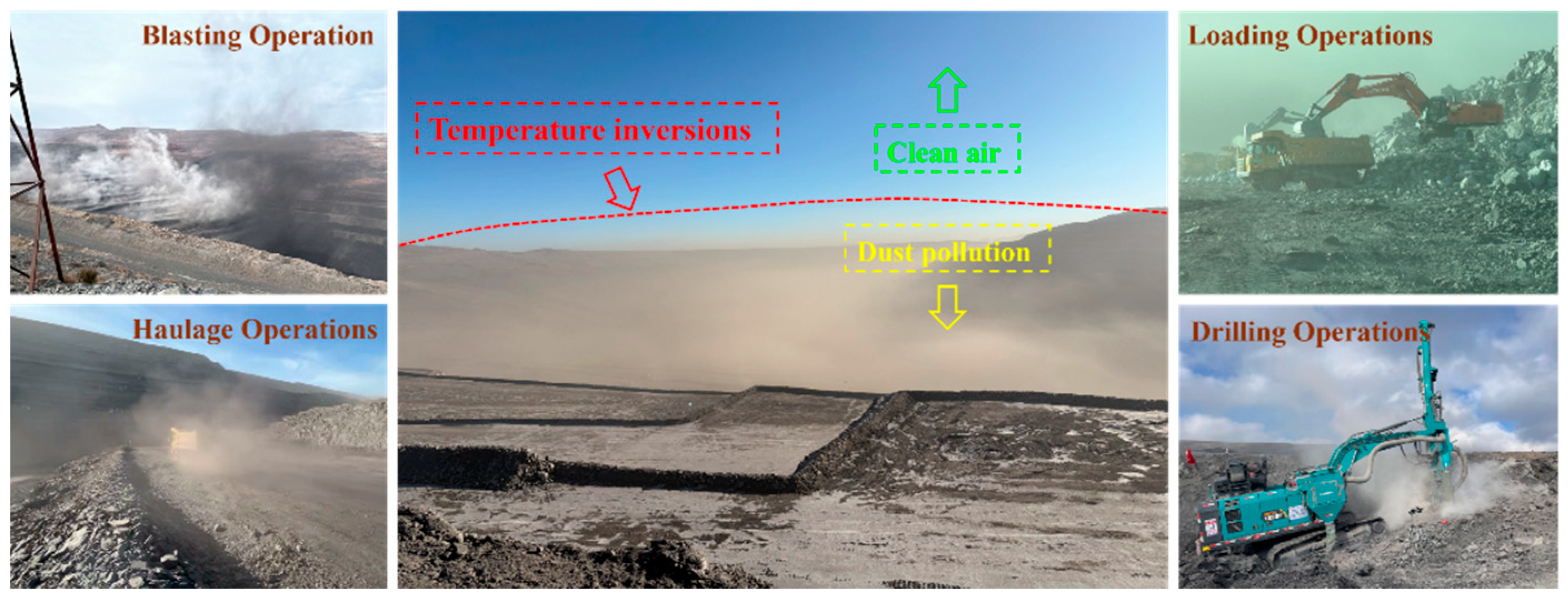
The presence of temperature inversions significantly impacts regional air quality by distinctly influencing aerosol distribution and regulation [12,13]. Pollutant concentrations in urban areas are typically higher during temperature inversions and lower in their absence [14]. Temperature inversions form under stable atmospheric conditions, which are characterized by reduced vertical mixing and thus lower ventilation efficiency. This stability inhibits the vertical dispersion of pollutants, thereby exacerbating pollution within the inversion layer [15]. Furthermore, aerosols can amplify the inversion effect; increased pollutant concentrations can lead to a higher frequency of surface-based inversions [16]. Open-pit mining operations generate substantial dust, which poses a significant pollution challenge. The presence of an inversion layer impedes the dispersion of dust into the upper atmosphere, thereby intensifying dust pollution within the confines of the open-pit mine. As shown in Figure 1, dust pollution from open-pit operations presents severe hazards not only to the professional groups working within the mining sites but also to the general population in surrounding communities exposed to the emitted dust [17,18]. The widespread environmental and public health impacts of this issue have prompted extensive studies globally, particularly in countries such as Brazil, Russia, and China [19,20,21,22,23]. Furthermore, the inherent toxicity of the emitted dust—especially coal and mineral particulate matter, which is strongly linked to severe respiratory diseases—significantly amplifies the urgency of understanding its dispersion mechanisms [24,25]. This intersection of micro-meteorology, environmental science, and public health highlights the profound interdisciplinary breadth of the open-pit dust problem.
In summary, existing research has extensively analyzed the mechanisms and influencing factors of urban temperature inversions and has undertaken preliminary studies on the interactions between inversion layers and particulate matter pollution. Findings indicate that temperature inversions are highly complex phenomena with multifactorial causes, often resulting from the synergistic effects of various elements. However, research on the occurrence and underlying mechanisms of temperature inversions in deep open-pit mines remains insufficient. Furthermore, studies examining the impact of dust pollution under these inversion conditions are particularly scarce. Therefore, this paper employs numerical simulation to examine the relationship between the characteristics of inversion layers in open-pit mines and their influencing factors. In parallel, it aims to characterize the distribution patterns of dust pollution within these mines under the influence of such inversion layers.
While the presence of inversion layers in negative landforms is a long-known meteorological phenomenon, previous studies have primarily focused on macro-scale observations. Quantitative research exploring the micro-scale coupling effects of specific rock wall temperature differentials and ambient wind speeds on the internal aerodynamic structure remains scarce. Therefore, the novelty of this study lies in its provision of high-resolution numerical data that explicitly maps the dynamic evolution of inversion thickness and its direct constraint on dust dispersion trajectories under precise thermal-aerodynamic boundary conditions.
It is important to note that this paper presents a site-specific case study based on field measurements from one specific pit on one particular day. While the empirical data are highly localized, they serve to calibrate a parametric numerical model designed to explore the broader fluid dynamic mechanisms of inversion-induced dust accumulation.

2. Materials and Methods

2.1. Field Measurement of Inversion Layers in Deep Open-Pit Mines

This study was conducted at a deep open-pit coal mine in Xinjiang, China. The field measurements were carried out during the winter season, specifically in December 2025. This period was deliberately selected because winter meteorological conditions—characterized by low surface temperatures and weak solar radiation—are highly conducive to the frequent occurrence and robust development of temperature inversion layers in this region. During the field measurements, the weather outside the quarry was clear and stable with no precipitation, providing optimal conditions for strong surface radiative cooling and inversion development. Given the clear skies and low wind conditions, the phenomenon observed within the pit is fundamentally classified as a topographically enhanced radiative inversion, which is primarily driven by strong outgoing longwave radiation from the pit surfaces.
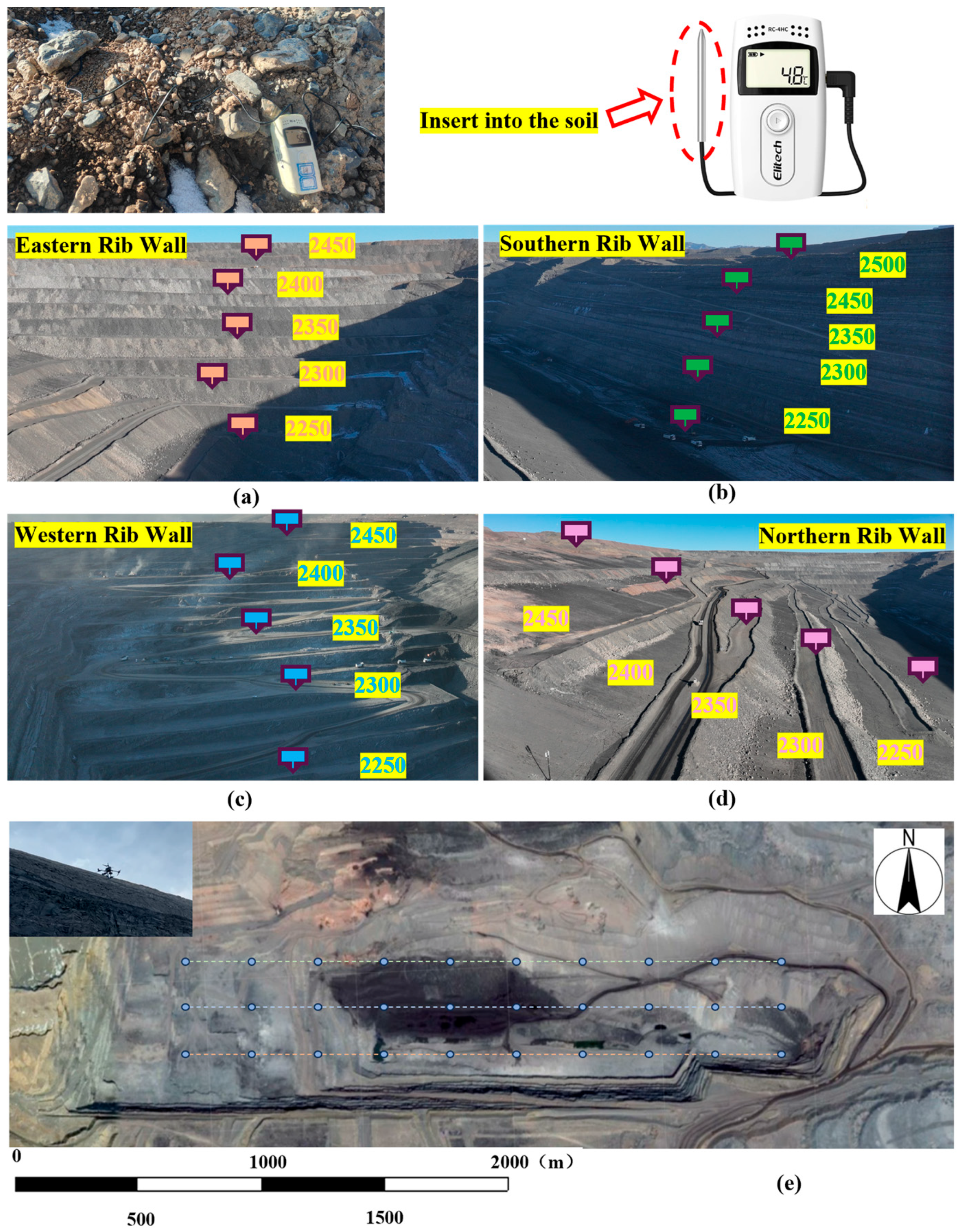
Field measurements were designed to investigate the causes and characteristics of temperature inversion layers. Specifically, we monitored rock-wall temperature variations and the spatial temperature distribution within the pit. Figure 2a–d shows the monitoring points on the eastern, southern, western, and northern rib walls of the mine pit, respectively. Monitors were installed at 50 m vertical intervals to record temperature variations at different elevations. Figure 2e illustrates the layout of survey points at different elevations within the mine pit. Concurrently, wind speed sensors were deployed on the ground surface surrounding the mine to measure ambient wind conditions.
To prevent measurement errors induced by direct solar heating, the front-end probes of the temperature instruments were embedded directly in the soil and rock mass, as illustrated in Figure 2. This buried configuration naturally shields the sensing elements from direct sunlight, ensuring the accurate measurement of the true surface medium temperature. The field measurements were conducted using industrial-grade temperature sensors RC-4. These robust instruments feature a calibrated accuracy of ±0.5 °C and a resolution of 0.1 °C. This level of accuracy is standard for complex, dust-laden open-pit environments and is fully sufficient to reliably capture the macroscopic thermodynamic gradients and the developmental trends of the inversion layer.

2.2. Airflow Equation

Airflow within open-pit mines is modeled as a turbulent flow. The Reynolds-averaged Navier–Stokes (RANS) equations are employed for the simulation, utilizing the standard realizable k-ε model for turbulence closure. The SIMPLEC algorithm is used to resolve the pressure-velocity coupling in the airflow field. For the two-phase flow coupling, a Discrete Phase Model (DPM) is implemented to simulate the trajectories of particle groups [26].
The continuity equation is as follows:
x i ρ u i = 0
The equation of motion is as follows:
x i ρ u i u j = p x i + x i ( μ + μ i ) u j x i + u i x j
The κ ε equation is as follows:
x i ( ρ u i k ) = x i μ + μ t σ k k x i + G k ρ ε
x i ( ρ u i ε ) = x i μ + μ t σ ε k x i + ε C ε 1 k G k ρ ε 2 k C ε 2
In the formula, G k represents the turbulent kinetic energy generated by shear stress changes; μ , μ t are the laminar and turbulent viscosity coefficients, respectively, with units of Pa s ; u i is the velocity component of the fluid in the x , y , z direction, with units of Pa ; k is the turbulent kinetic energy, with units of J ; ε is the turbulent kinetic energy dissipation rate, with units of m 2 / s 3 ; C ε 1 , C ε 2 , C μ , σ ε , σ k are model constants, with values of 1.44, 1.92, 0.09, 1.3, and 1.0, respectively.

2.3. Dust Transport

Within the open-pit mine, the presence of a temperature inversion layer implies that dust particles are influenced by gravity, aerodynamic drag, and thermophoretic forces. According to Newton’s second law, the trajectory of a dust particle in the Lagrangian framework is governed by the following equation of motion [27,28]:
d V p d t = F D V V p + g + F t h
Based on the definition of velocity in physics, the equation describing the motion trajectory of dust particles is expressed as follows:
d x p d t = V p
In the equation, V is the velocity vector of the gas, with units of m/s; V p is the velocity vector of the dust particles, with units of m/s; F D V V p is the resistance per unit mass of dust particles, with units of N.
The aforementioned governing equations constitute the core mathematical framework for the numerical simulation conducted in this study. Specifically, these coupled equations were solved using the Fluent CFD solver. The continuity and momentum equations were utilized to resolve the complex aerodynamic airflow field within the open-pit geometry. Crucially, the energy equation was activated to capture the thermal buoyancy effects and the thermodynamic stratification of the inversion layer, coupling the temperature field with the airflow. Furthermore, the DPM was integrated into the continuous fluid phase to explicitly trace the spatial-temporal dispersion trajectories of the dust particles under these specific thermal-aerodynamic boundary conditions.

2.4. Numerical Simulation Physical Model Establishment and Analysis Methods

The physical model was constructed incorporating site-specific operating conditions of the open-pit mine. During mesh generation, the number of cells must be optimized; excessively large meshes increase computational cost, while overly coarse meshes compromise accuracy. Prior to simulation, the mesh quality and independence must be verified.
(1)
Physical models and mesh partitioning
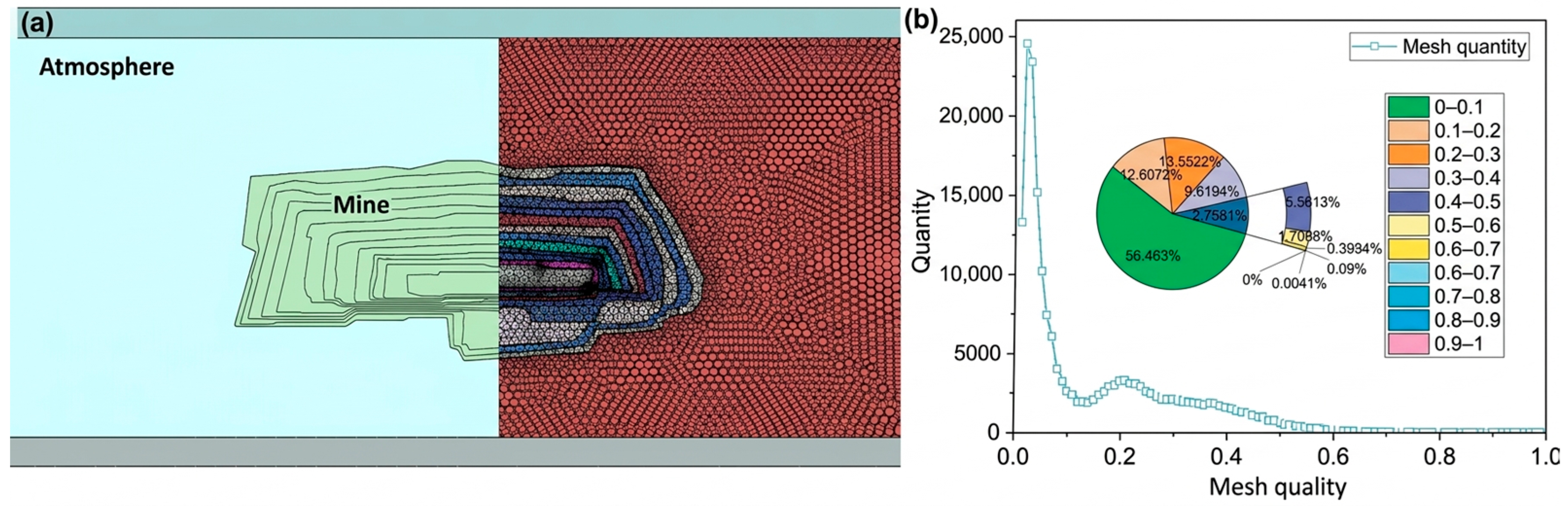
This integrated model was discretized into a computational mesh, as systematically illustrated in Figure 3. Specifically, Figure 3a presents the complete computational domain, explicitly dividing the overarching atmospheric region from the complex internal geometry of the deep pit. To accurately capture the severe aerodynamic interactions and thermal gradients along the pit boundaries, localized mesh refinement was implemented near the rock walls. Furthermore, a rigorous mesh quality evaluation was conducted, as demonstrated in Figure 3b. The quantitative distribution indicates that a substantial proportion of the mesh elements met high-quality standards, thereby eliminating grid-induced computational errors and confirming the overall robustness of the mesh generation process for the ensuing multi-phase simulations.
To ensure the aerodynamic accuracy of the numerical simulation, a 1:1 physical structure model of the open-pit mine was constructed based on actual topographical data. The quarry presents a typical deep open-pit morphology, with a surface opening length of approximately 3800 m, a width of 1700 m, and a maximum vertical depth of 260 m. The overall slope angle is approximately 30°. These specific geometric and morphological parameters are crucial, as they define the spatial boundaries that govern the internal airflow field and the subsequent development of the inversion layer.
Specifically, the mine is located at a latitude of approximately 44° N. The field measurements were conducted during the winter season in December on a day characterized by clear, sunny skies and calm wind conditions. Given the high latitude and winter timing, the maximum solar elevation angle was low (approximately 25°). This low solar angle, interacting with the immense depth of the pit, caused highly uneven direct sunlight exposure across the rock walls, thereby driving strong thermal contrasts. Furthermore, while continuous multi-day vertical profiling is practically unfeasible due to the severe safety constraints of an actively producing mine, this specific day was carefully selected to represent a typical “worst-case” inversion scenario. This empirical data successfully served to calibrate our CFD-DPM model, allowing the subsequent parametric simulations to be generalized to other deep open-pit environments.
(2)
Parameter and boundary condition settings
The parameters and boundary conditions used in the Fluent simulations, which were defined based on the specific operating conditions of the open-pit mine and relevant field measurement data, are summarized in Table 1.
The Realizable k-ε model was selected for this study due to its robust performance in predicting flows involving strong streamline curvature, flow separation, and large recirculation zones, which are characteristic of wind passing over deep open-pit topographies. Compared to the standard k-ε model, it provides a more physically realistic resolution of the turbulent viscosity and the spreading rate of separated flows. Furthermore, when coupled with the energy equation, it effectively captures the thermal stratification and atmospheric stability conditions (i.e., inversion layers) within the highly confined pit environment.
(3)
Set temperature analysis line
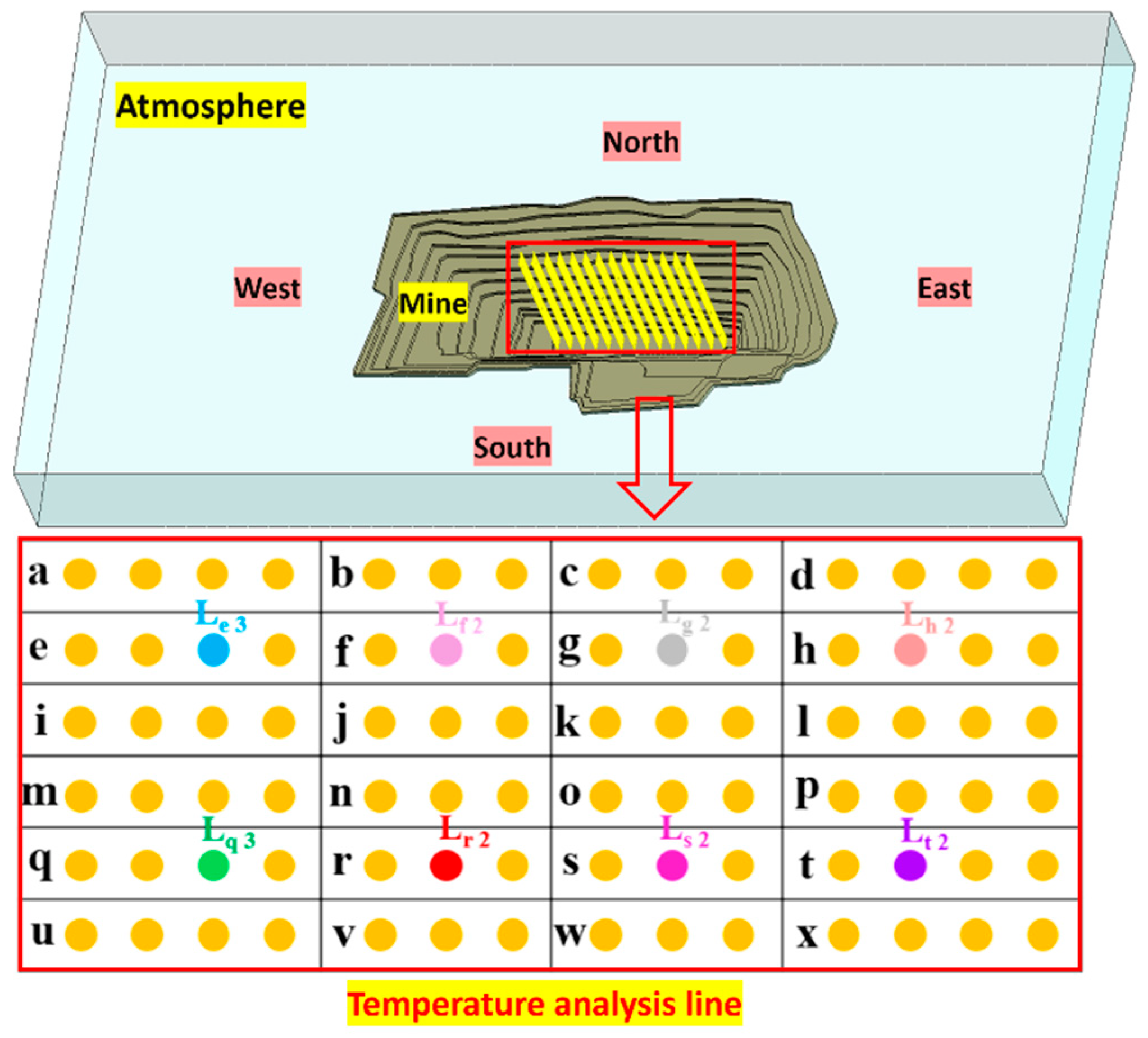
To systematically analyze the pit, a grid of sampling lines was established over its central area. This grid comprised six north–south sections spaced 10 m apart and fourteen east–west sections spaced 50 m apart. The intersection of these perpendicular sections created a total of 84 cross-lines, as shown in Figure 4. Based on this grid, the mining area was subdivided into 24 smaller zones, which were further grouped into 8 larger zones. A central analysis line was selected from each larger zone to serve as its representative. These eight representative lines (Le3, Lf2, Lg2, Lh2, Lq3, Lr2, Ls2, and Lt2) were used to calculate the spatially averaged temperature difference, thickness, and strength of the inversion layer. The resulting averages characterize the inversion layer features for the entire open-pit mine.
(4)
Formula for calculating inversion layer characteristics
The characteristics of a temperature inversion layer are typically characterized by three key parameters: thickness, temperature difference, and intensity [4].
The formula for calculating the thickness of the inversion layer is as follows:
Δ H = H 2 H 1
The formula for calculating the temperature difference in the inversion layer is as follows:
Δ T = T 2 T 1
The strength of an inversion layer is characterized by the average rate of change in temperature with height. The greater the increase in temperature with height, the stronger the inversion. The formula for calculating the strength of an inversion layer is
I = Δ T Δ H = T 2 T 1 H 2 H 1
In the formula, Δ H is the thickness of the inversion layer, with units of m; H 1 is the height of the bottom of the inversion layer, with units of m; H 2 is the height of the top of the inversion layer, with units of m; Δ T is the temperature difference of the inversion layer, with units of °C; T 1 is the temperature at the bottom of the inversion layer, with units of °C; T 2 is the temperature at the top of the inversion layer, with units of °C.

3. Results and Discussion

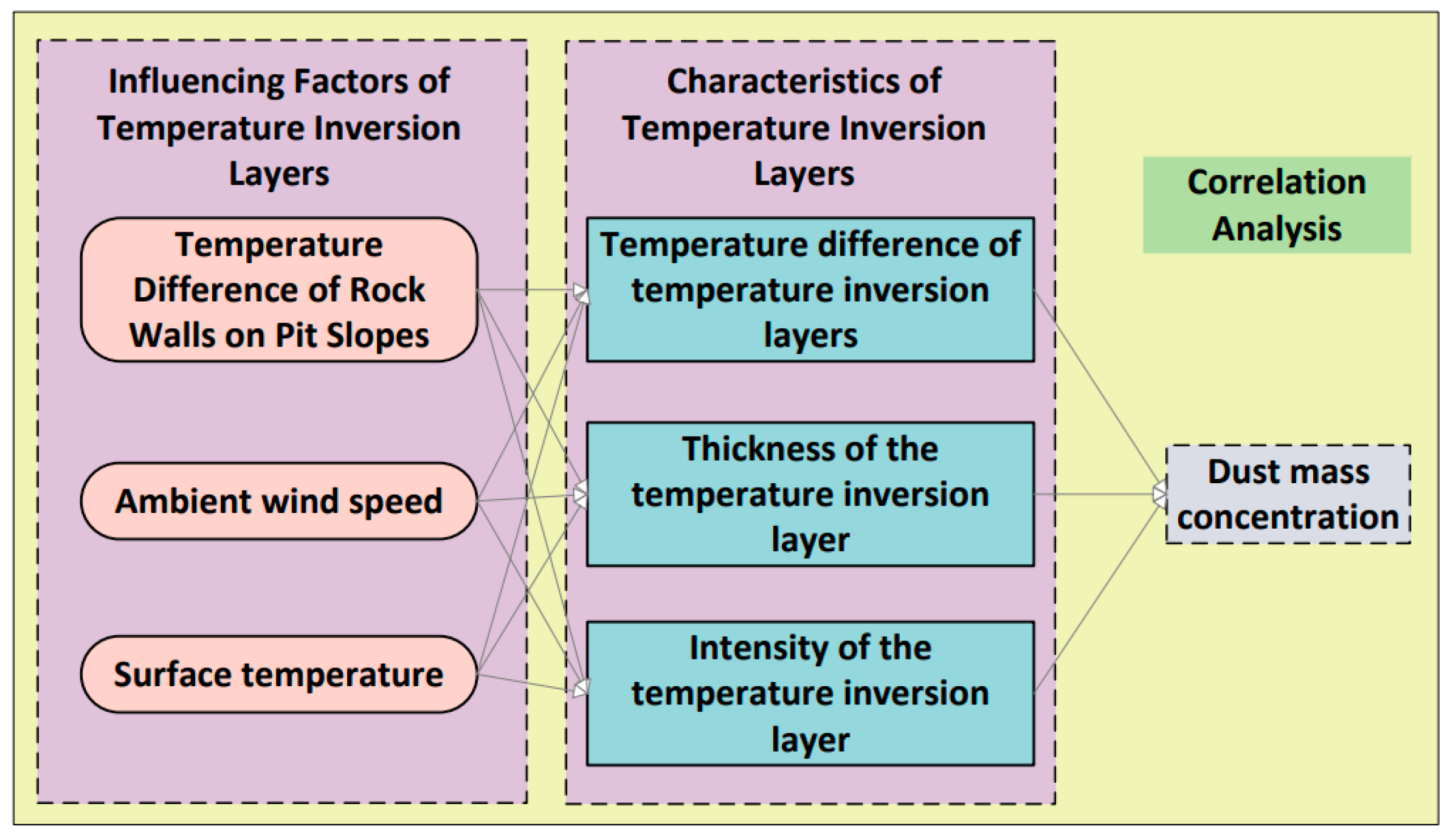
The key characteristics of a temperature inversion layer are its temperature difference (ΔT), thickness, and intensity. Field measurements indicate that the inversion layer characteristics are governed by three primary factors: the temperature difference of the rock wall, the ambient wind speed, and the surface temperature, as shown in Figure 5. Inversion layers resulting from different combinations of these factors consequently exhibit distinct effects on dust dispersion patterns. Correlation analysis was employed to quantify the relationships among the influencing factors, the resulting inversion layer characteristics, and the dust concentration.

3.1. Field Measurement Results

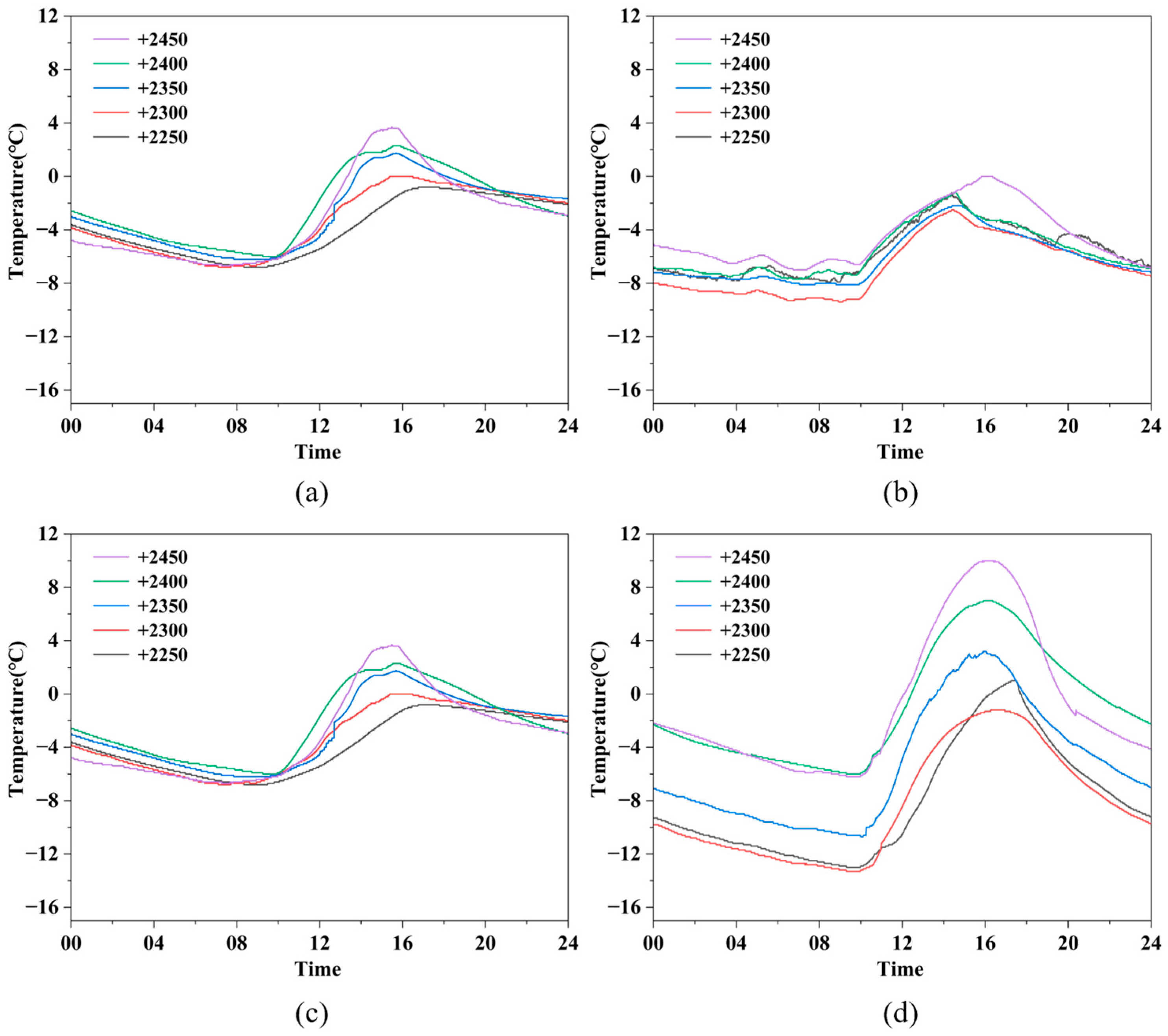
The temperature data recorded at 5-min intervals over a full day are plotted in Figure 6, revealing the temporal patterns at various heights along the pit perimeter. The primary results derived from this dataset are as follows.
(1) Analysis of Figure 6a–d reveals that identical diurnal temperature patterns occurred on all four slopes (east, south, west, and north). Throughout the observation period, temperature consistently increased with elevation, definitively indicating the formation of temperature inversions along the pit walls.
(2) The smallest temperature difference across the pit walls occurs between 9:00 and 10:00 (coinciding with local sunrise), with the western flank showing a minimum of merely 0.8 °C. In contrast, the largest difference emerges around midday (14:00), when the eastern flank reaches a maximum of 15.9 °C. These temporal fluctuations in wall temperature are closely linked to variations in solar radiation intensity.
(3) Contrary to expectations, the lowest temperature on the pit walls does not consistently occur at the bottom. As shown in Figure 6, the coldest levels are location-specific and time-dependent. On the eastern side (Figure 6a), the temperature at the 2250 m level remains persistently lower than at other elevations, while on the western side (Figure 6c), the 2300 m level is consistently the coldest. In contrast, the elevation of the minimum temperature on the southern and northern walls (Figure 6b,d) varies over time. This atypical vertical profile can be attributed to site-specific conditions. In the fully mined eastern area, the lack of internal heat sources allows temperatures to follow a more atmospheric-driven profile. In other areas, heat release from coal seams elevates the temperature at the very bottom, creating a profile where temperature initially decreases with height before increasing again. Furthermore, at certain times, the temperature at the 2400 m level can exceed that at the 2450 m level. This inversion between closely spaced levels occurs because the 2450 m level, being closer to the pit surface, is more directly influenced by the external atmospheric environment.
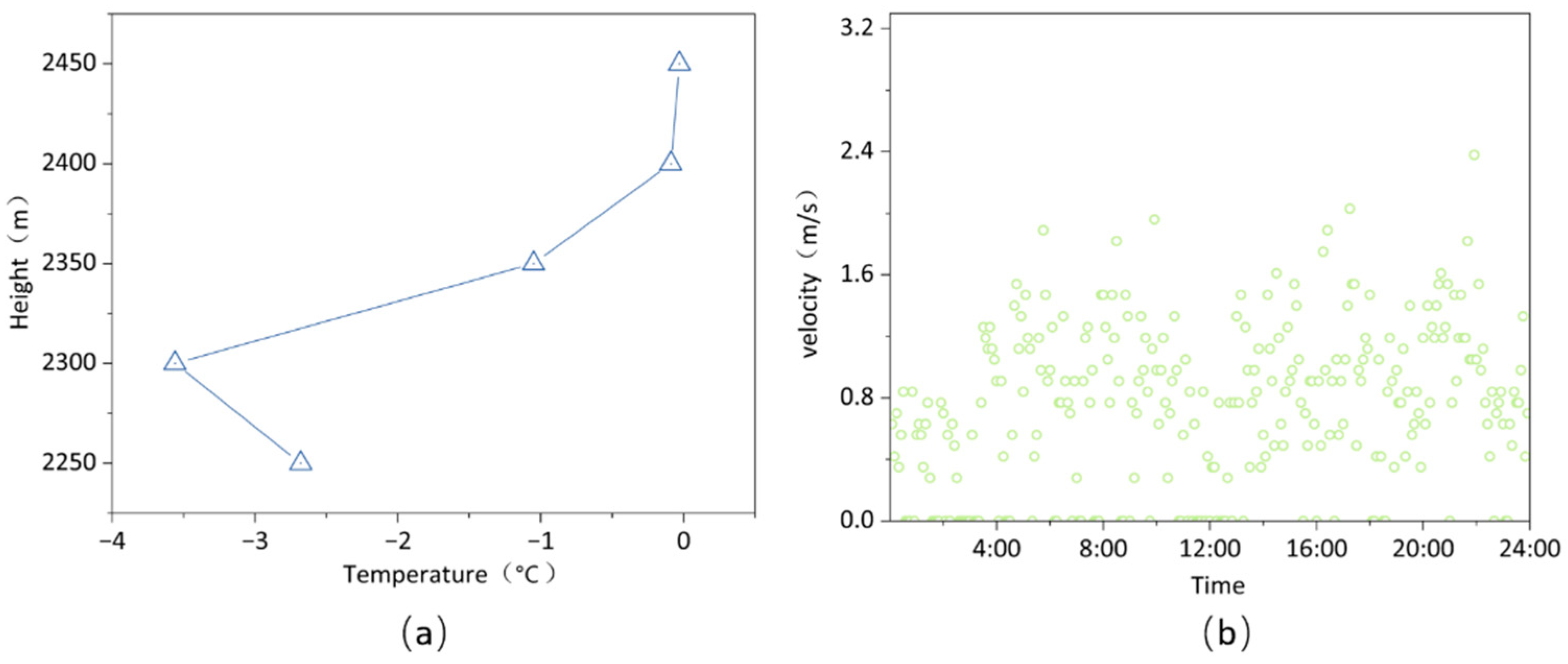
Figure 7a presents the measured internal temperature profile within the open-pit mine. The temperature exhibits a non-monotonic vertical trend, initially decreasing and then increasing with elevation, which is consistent with the pattern observed on the pit walls. Specifically, the temperature decreased from −2.68 °C at the 2250 m level to −3.65 °C at the 2300 m level, before rising gradually to −0.03 °C at the 2450 m level. Concurrently, measurements of the external ambient wind speed are shown in Figure 7b. The wind speed distribution reveals that speeds exceeding 1.6 m/s occurred infrequently, with the majority of readings below this threshold. The 24-h average wind speed was low, at 0.74 m/s. Such calm ambient conditions inhibit atmospheric mixing, thereby favoring the development and persistence of temperature inversions within the confined geometry of the pit.
The temperature variation of the pit wall corresponds directly to changes in the overlying inversion layer, indicating that the rock wall temperature is a primary driver of inversion layer characteristics. Building on this relationship, this study quantitatively analyzes the influence of rock wall temperature fluctuations on key inversion layer properties. The analysis also incorporates the effects of ambient wind speed and temperature. This multi-factor approach aims to identify the principal factors controlling the inversion layer and to elucidate the patterns dictating its variability.

3.2. Results of Temperature Difference Changes on the Side Walls of Open-Pit Mines

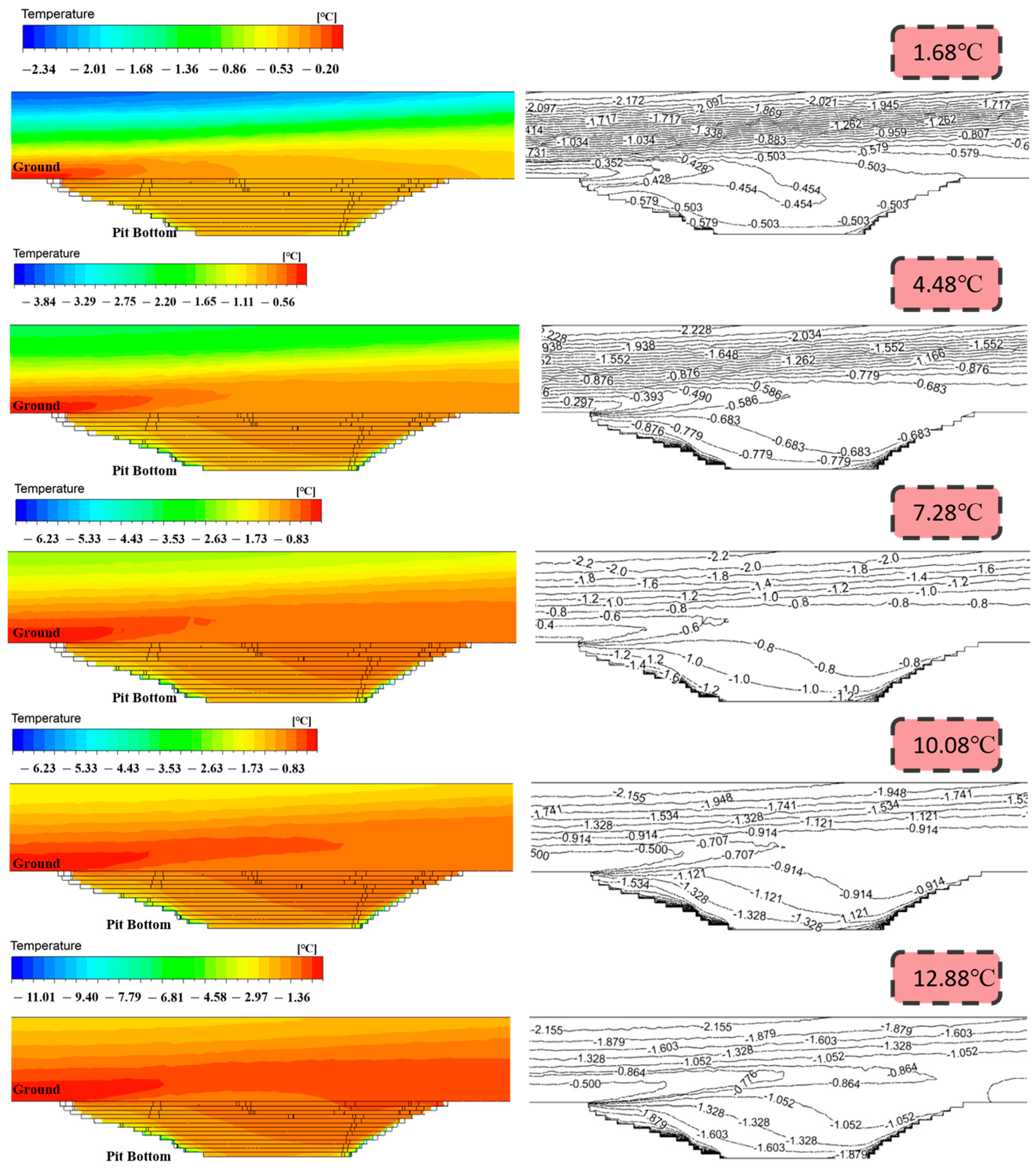
Field measurements identified the temperature difference across the pit walls as a key factor influencing inversion layer characteristics. To systematically investigate this relationship, five discrete wall temperature differentials were established in the numerical model: 1.68 °C, 4.48 °C, 7.28 °C, 10.08 °C, and 12.88 °C. These five discrete wall temperature differentials were systematically selected based on the extreme values observed during our field measurements. As indicated by the field data, the wall temperature difference ranged from a minimum of 1.68 °C to a maximum of 12.88 °C. Therefore, a parametric sweep representing this realistic statistical range was established in the numerical model to isolate and evaluate the impact of thermal gradients. Ambient wind speed and surface temperature were held constant at 0.6 m/s and 0 °C, respectively, to isolate the effect of wall temperature variation.
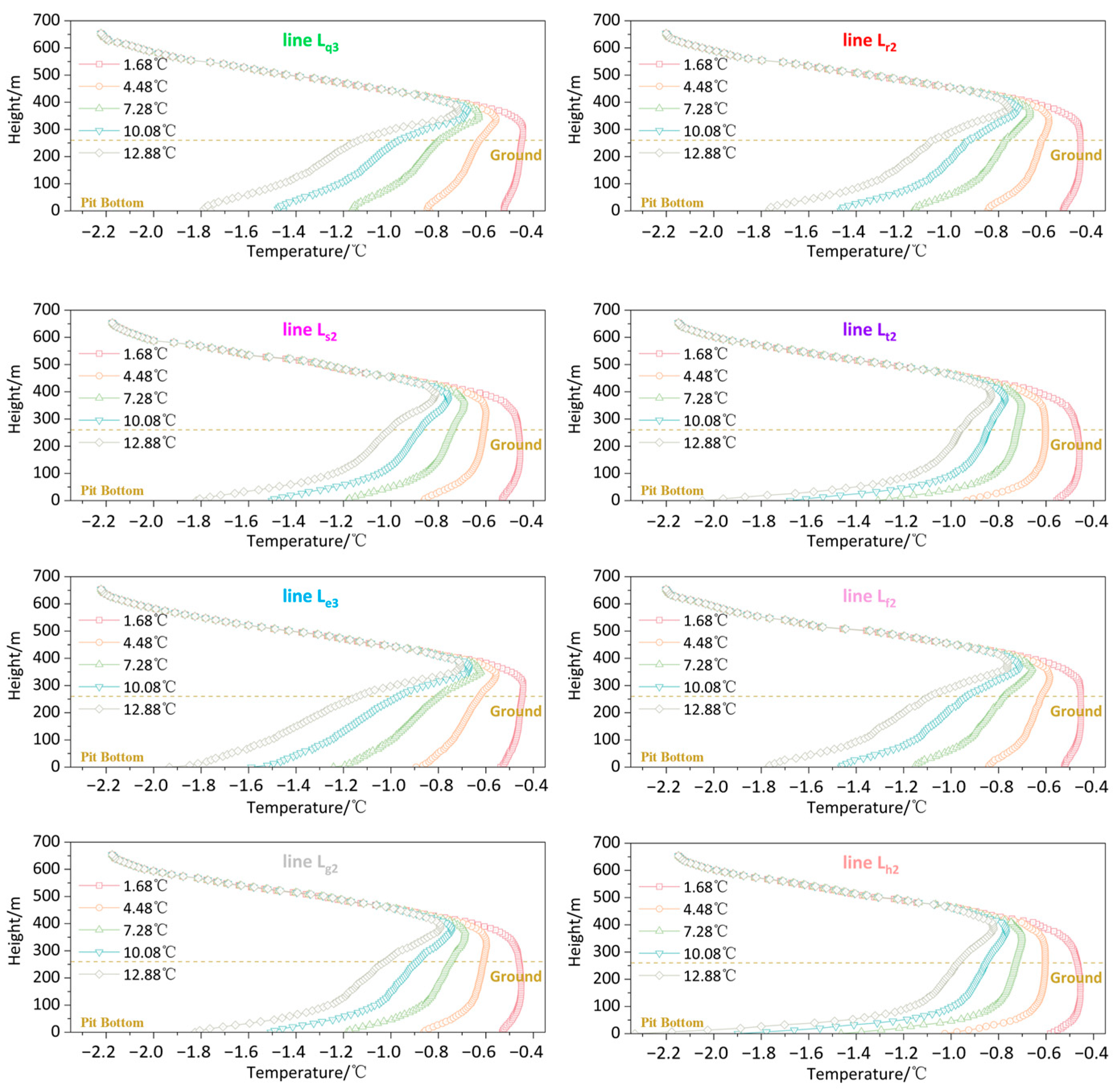
As shown in Figure 8, a distinct temperature inversion develops within each modeled pit under varying rock wall temperature differentials. The vertical temperature profile follows a characteristic pattern: temperature increases with height at a gradually diminishing rate until reaching a maximum. This peak temperature is sustained over a certain vertical distance before beginning to decrease. Notably, the vertical extent of the inversion layer exceeds the topographic depth of the pit itself.
Figure 9 reveals a key spatial pattern: while all analysis lines share the same “rise-then-fall” temperature trend, their specific temperature values differ at identical heights for a given wall temperature difference. This indicates a non-uniform distribution of the inversion layer within the pit. The influence of rock wall temperature difference on the inversion layer’s thermal structure is evident: At a high rock wall temperature difference of 12.88 °C, the temperatures at both the bottom and the top of the inversion layer are relatively low, resulting in a large overall temperature range across the layer. As the rock wall temperature difference increases, the temperatures at the bottom and top of the layer gradually rise, while the temperature range concurrently contracts. Consequently, the inversion layer formed under the smallest rock wall temperature difference of 1.68 °C exhibits the most subdued temperature variation, or the smallest range. This relationship is quantified at location Lq3. As the wall temperature difference drops (from 12.88 °C to 1.68 °C), the inversion temperature difference actually decreases from 1.04 °C to 0.10 °C. This data sequence clearly demonstrates the narrowing of the thermal range with decreasing wall temperature difference.
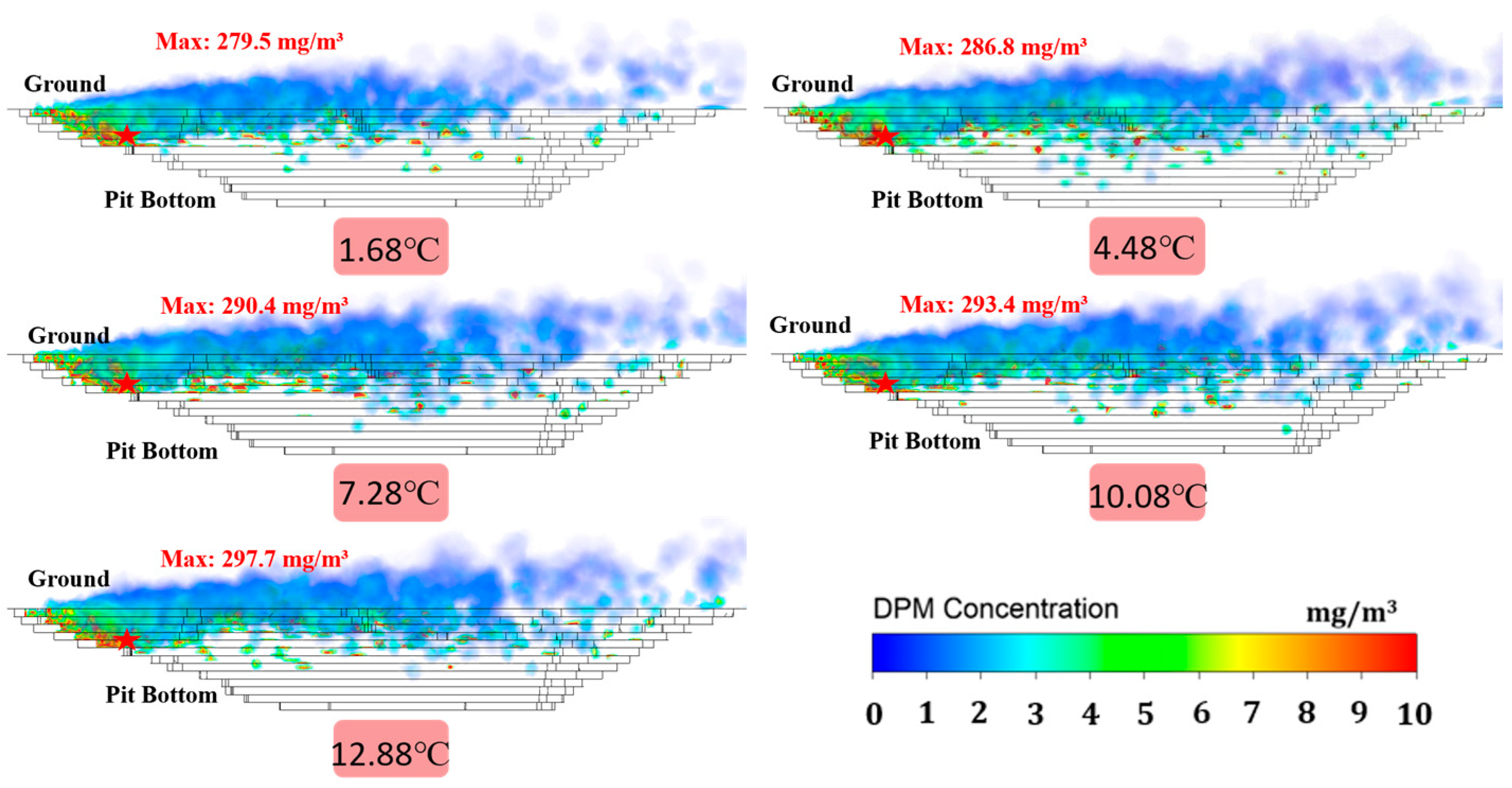
Figure 10 illustrates the dust dispersion pattern under an established inversion layer. Dust particles are predominantly trapped and diffuse within the pit, with only a limited fraction reaching upper regions. The inversion layer stabilizes the internal flow field, resulting in low wind speeds that significantly retard dust dispersion. Consequently, dust accumulates substantially in and around the source area, hindering rapid clearance. Quantitatively, the influence of rock wall temperature difference on dust concentration is evident. At a height of 1.5 m above the dust source, the simulated concentration calculated by DPM reached 279.5 mg/m3 under a rock wall temperature difference of 1.68 °C. This value increased to 297.7 mg/m3 when the temperature difference was raised to 12.88 °C, demonstrating a positive correlation between wall temperature contrast and near-ground dust accumulation.
As shown in Figure 11, an increase in the temperature difference across the pit wall systematically enhances all key characteristics of the inversion layer. Specifically, the temperature gradient within the layer rises from 0.09 °C/m to 1.13 °C/m, its thickness expands from 214 m to 381.2 m, and its strength increases from 0.425 °C km−1 to 2.963 °C km−1. This demonstrates that a greater wall temperature contrast not only intensifies the existing inversion layer but also promotes its vertical development. Concurrently, the analysis reveals a strong positive correlation between these enhanced inversion layer characteristics and dust concentration: The correlation coefficient with the inversion layer temperature difference is 0.974. The correlation coefficient with the inversion layer thickness is 0.960. The correlation coefficient with the inversion layer strength is 0.976. These near-unity coefficients confirm that as the inversion layer becomes more pronounced (with greater temperature difference, thickness, and strength), the dust concentration exhibits a corresponding and significant increasing trend, underscoring the inversion layer’s controlling role in dust accumulation.

3.3. Results of Changes in Ambient Wind Speed

To complement the field investigation, this study specifically examines the influence of ambient wind speed on the properties of the temperature inversion layer through controlled numerical simulations. A range of five wind speeds was modeled: 0.4, 0.6, 0.8, 1.0, and 1.2 m/s. To isolate the effect of wind speed, the rock wall temperature difference and ground surface temperature were held constant at 12.88 °C and 0 °C, respectively.
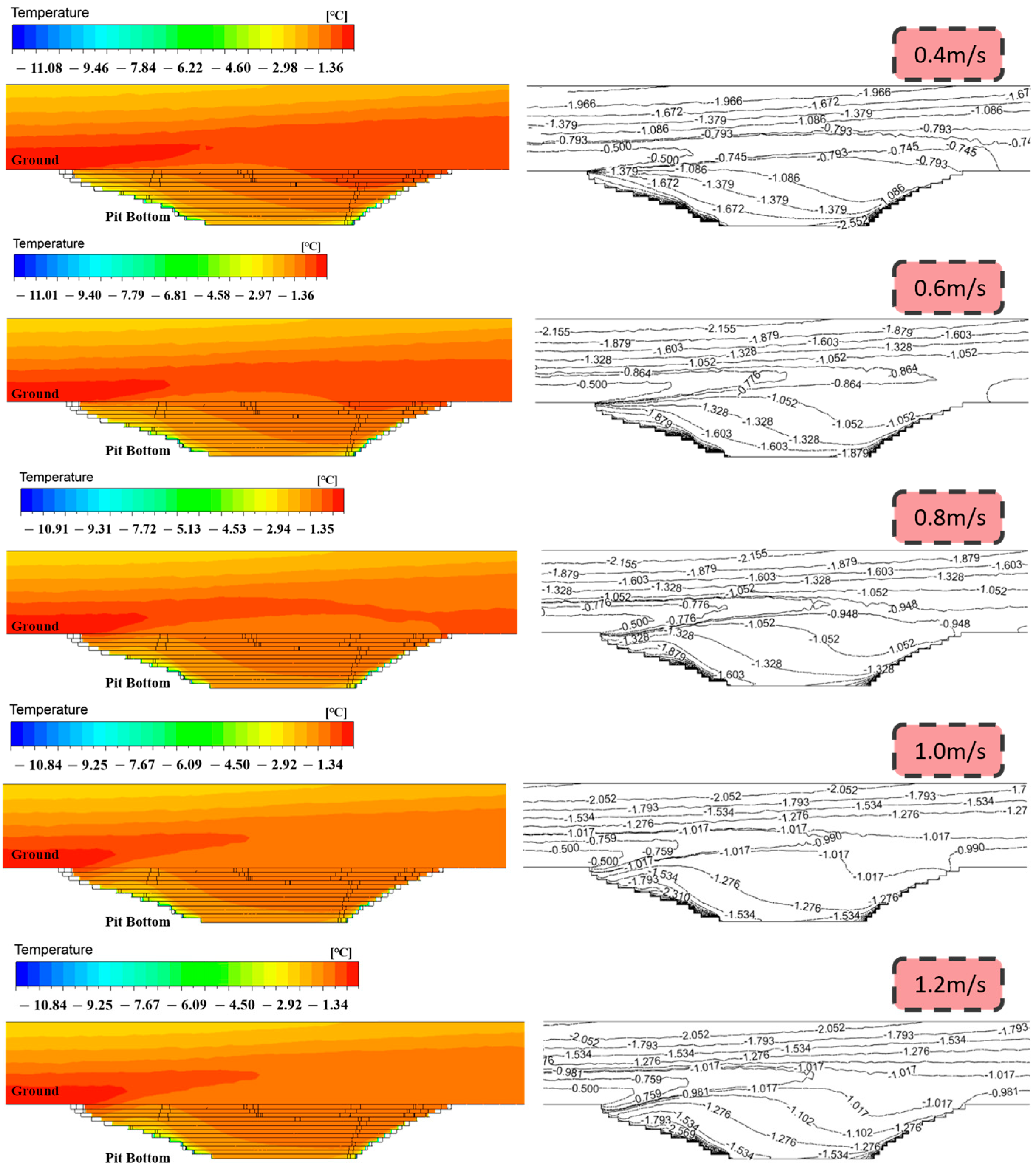
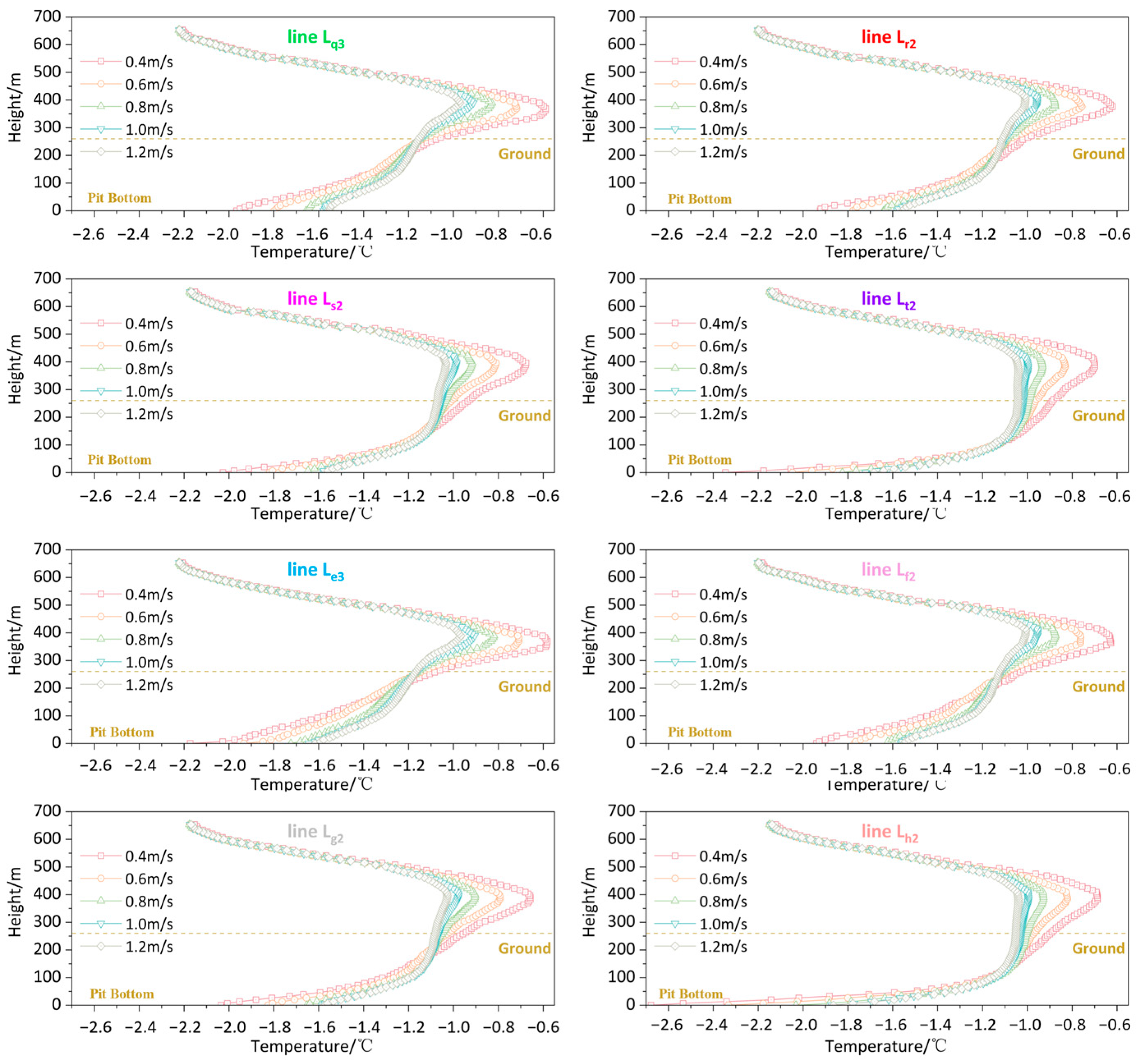
Figure 12 confirms that the temperature profile within the pit maintains the characteristic inversion pattern (rise-then-fall) across all tested wind speeds. However, the specific attributes of this inversion layer vary significantly with ambient wind speed.
Figure 13 details these variations by plotting temperatures along each analysis line. While all lines share the consistent rise-then-fall trend under any given wind speed, their absolute temperature values differ at fixed elevations when wind speed changes. This results in a spatially uneven inversion layer structure that is modulated by wind speed. The data reveal a systematic influence of wind speed on the inversion layer’s thermal bounds: At low wind speeds, the bottom of the inversion layer is colder, and its top is warmer. Increased wind speed causes the temperature at the base of the inversion to rise (become less negative) while the temperature at the top falls (becomes more negative). This convergent trend reduces the vertical temperature difference within the inversion layer at higher wind speeds, indicating a weakening of the inversion intensity. For instance, at analysis line Lr2, as wind speed increased from 0.4 m/s to 1.2 m/s, the temperature at the layer base rose from −2.13 °C to −1.59 °C. Conversely, the temperature at the layer top decreased from −0.64 °C to −1.65 °C. This opposing movement visually demonstrates how increased wind speed compresses the thermal range of the inversion layer.
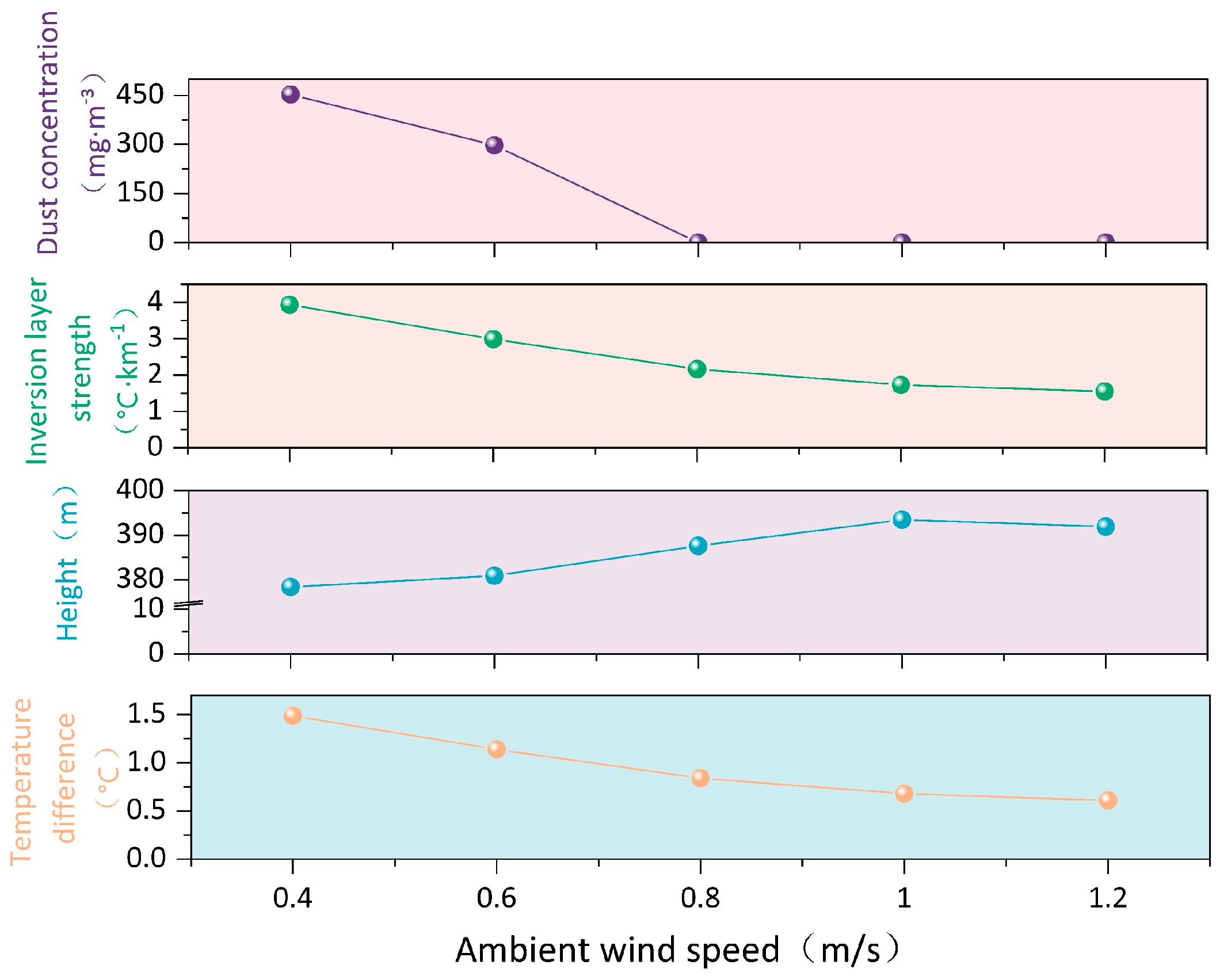
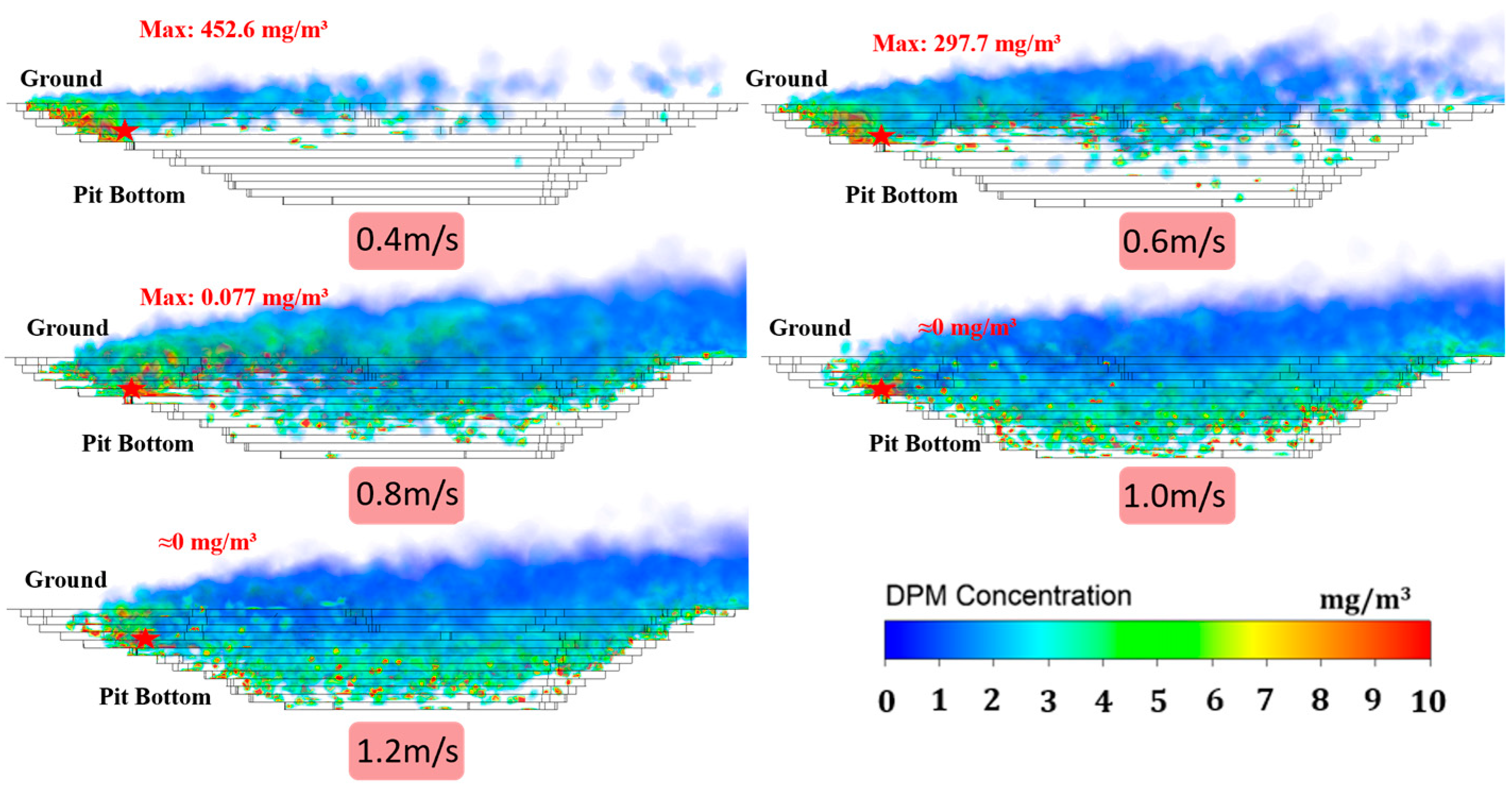
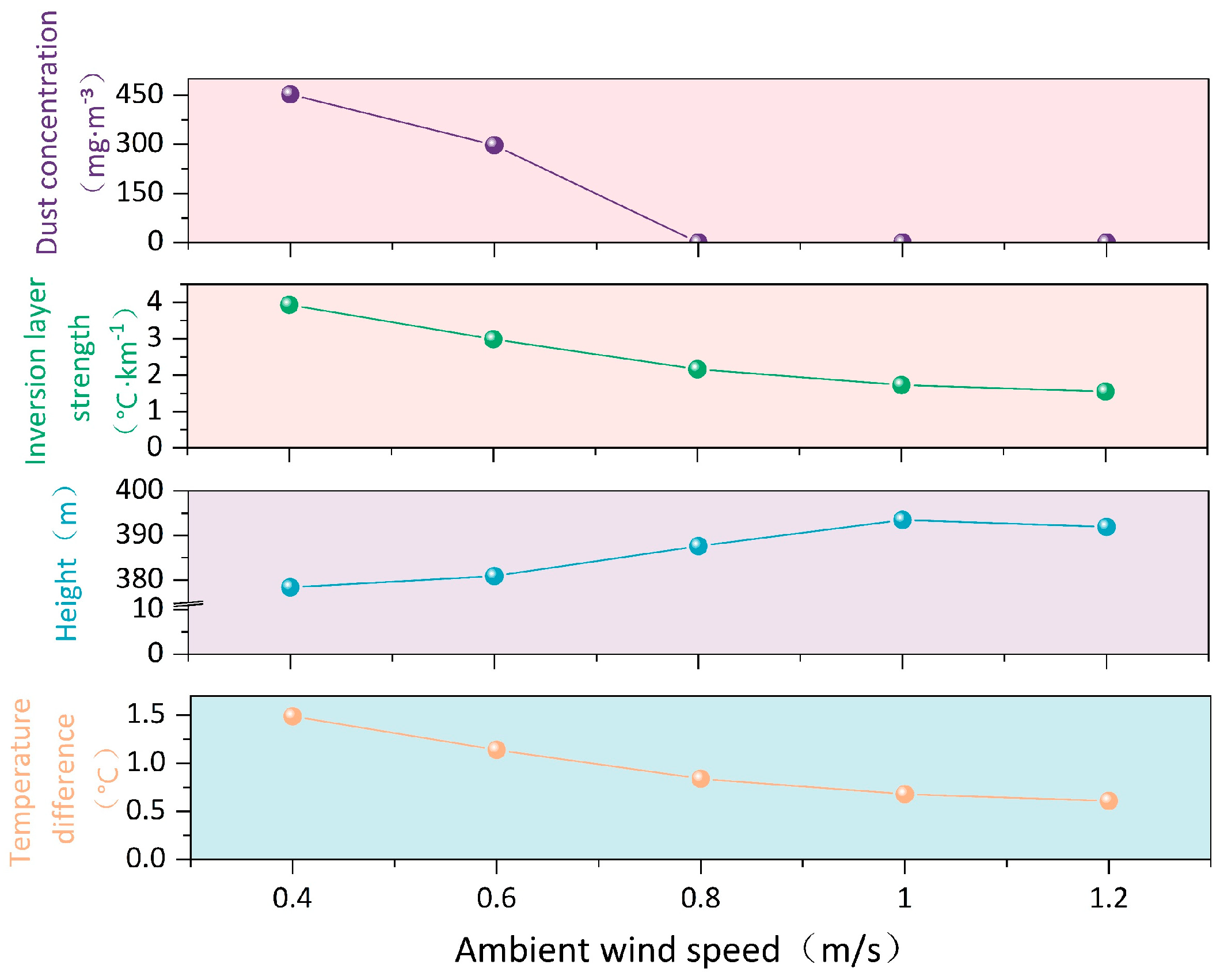
Figure 14 demonstrates the competing roles of the inversion layer and wind in dust dispersion. The inversion layer acts as a cap, trapping dust within the pit. Conversely, wind promotes dispersion; as its speed increases, the area of dust dispersion expands. At wind speeds exceeding 1.2 m/s, dust disperses throughout the entire pit volume, leading to a marked reduction in local concentration. Quantifying this relationship, Figure 15 reveals how increasing wind speed systematically alters the inversion layer and dust levels. As ambient wind speed rises, the temperature difference within the inversion layer decreases from 1.49 °C to 0.61 °C. The inversion layer thickness increases slightly from 378.4 m to 391.9 m. The inversion layer strength declines significantly from 3.936 °C km−1 to 1.553 °C km−1. This shows that while higher wind speeds may mechanically stretch the inversion layer (increasing thickness), they fundamentally weaken its thermal intensity (reducing temperature difference and strength), thereby suppressing its overall stability and dust-trapping capability. Consequently, dust concentration at 1.5 m above the source exhibits a dramatic decrease with increasing wind speed. It drops from 452.6 mg/m3 at 0.4 m/s to merely 0.077 mg/m3 at 0.8 m/s, and eventually approaches zero at higher speeds. This evidence conclusively shows that increased wind speed mitigates the inversion layer, leading to effective dust dispersion and clearance.

3.4. Results of Surface Temperature Changes

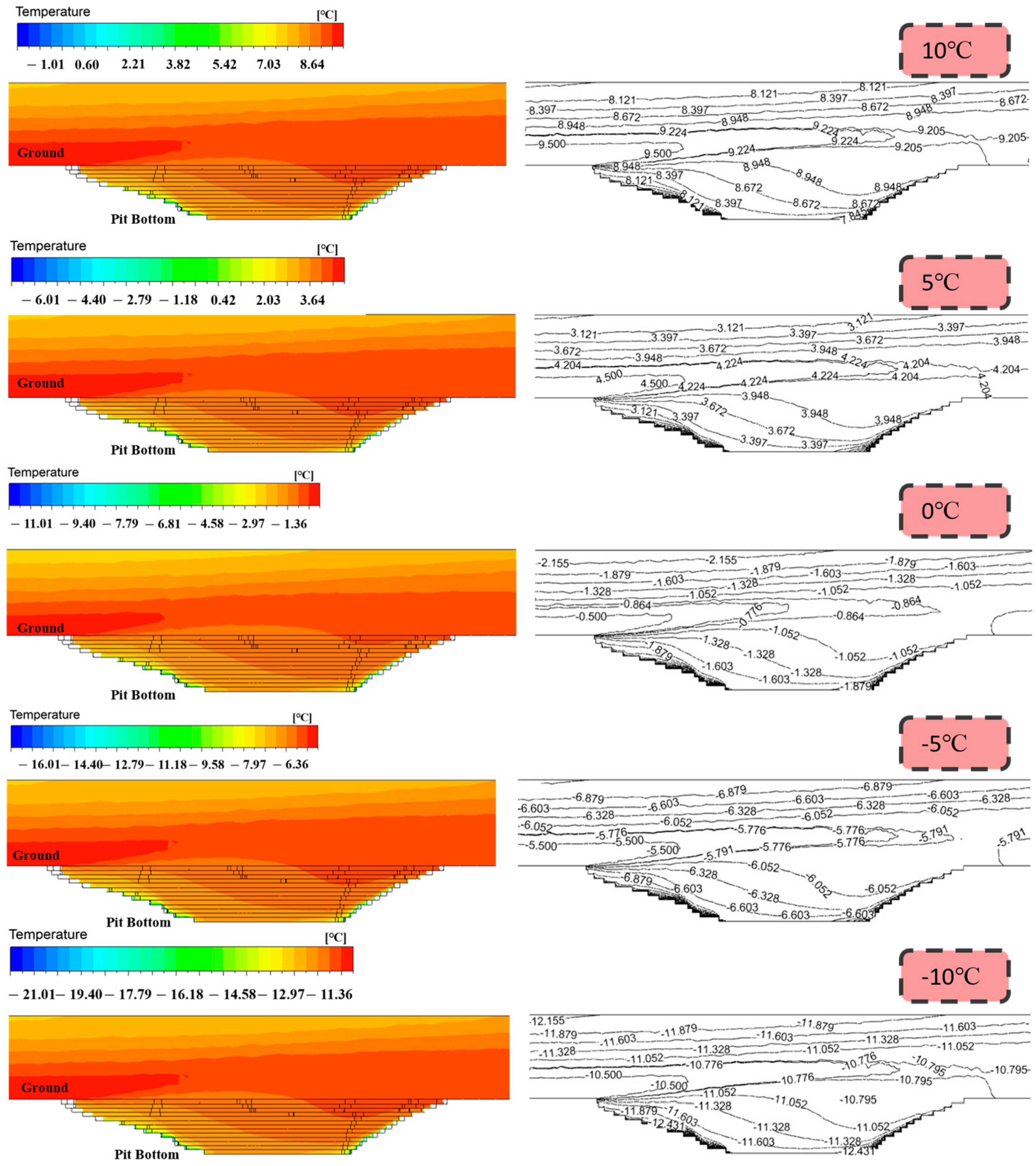
To assess the effect of surface temperature, this study extends the analysis by modeling its impact on the inversion layer. A series of five surface temperatures was simulated: −10 °C, −5 °C, 0 °C, 5 °C, and 10 °C. To isolate this variable’s influence, the rock wall temperature difference and ambient wind speed were held constant at 12.88 °C and 0.6 m/s, respectively.
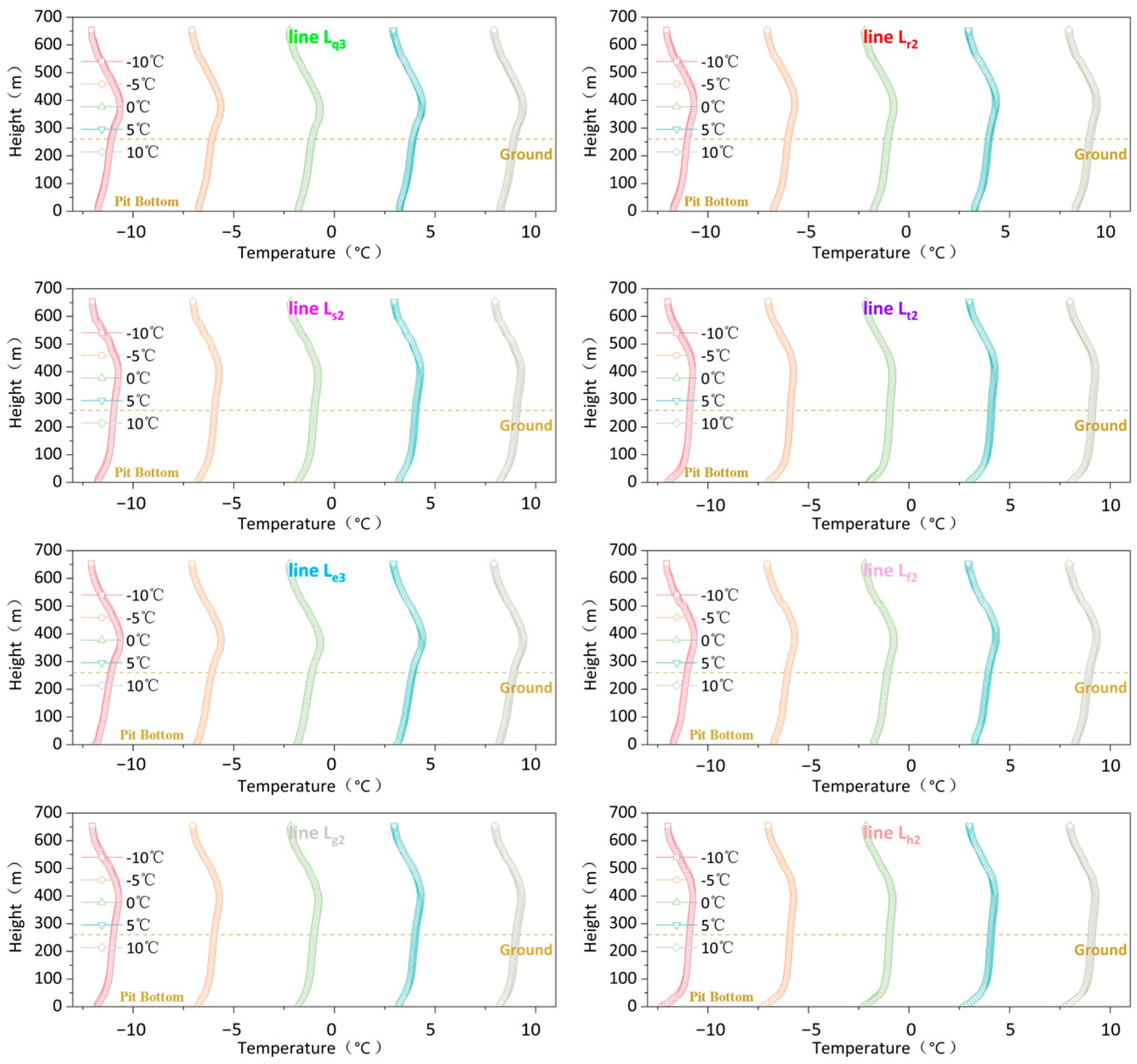
Figure 16 confirms that the characteristic inversion-layer temperature profile (rise-then-fall) persists across all tested surface temperatures. However, the absolute thermal structure of this layer is modulated by changes in surface temperature. Figure 17 details this relationship, showing that while the inversion pattern is consistent, its specific manifestation varies spatially, resulting in an uneven distribution of the layer within the pit. At a fixed elevation, temperature values differ across analysis lines for a given surface temperature. The data reveal a direct coupling between surface temperature and the thermal bounds of the inversion layer: lower surface temperatures lead to proportionally lower temperatures at both the base and top of the inversion layer. Notably, the thickness of the inversion layer remains essentially constant despite these thermal shifts. This relationship is quantified at the analysis line Le3. As the surface temperature increased from −10 °C to 10 °C, the temperature at the inversion layer base rose from −12.24 °C to 8.14 °C. Concurrently, the temperature at the layer top rose from −11.23 °C to 8.65 °C. This parallel increase demonstrates how surface temperature uniformly shifts the entire thermal profile of the inversion layer vertically without altering its geometric thickness.
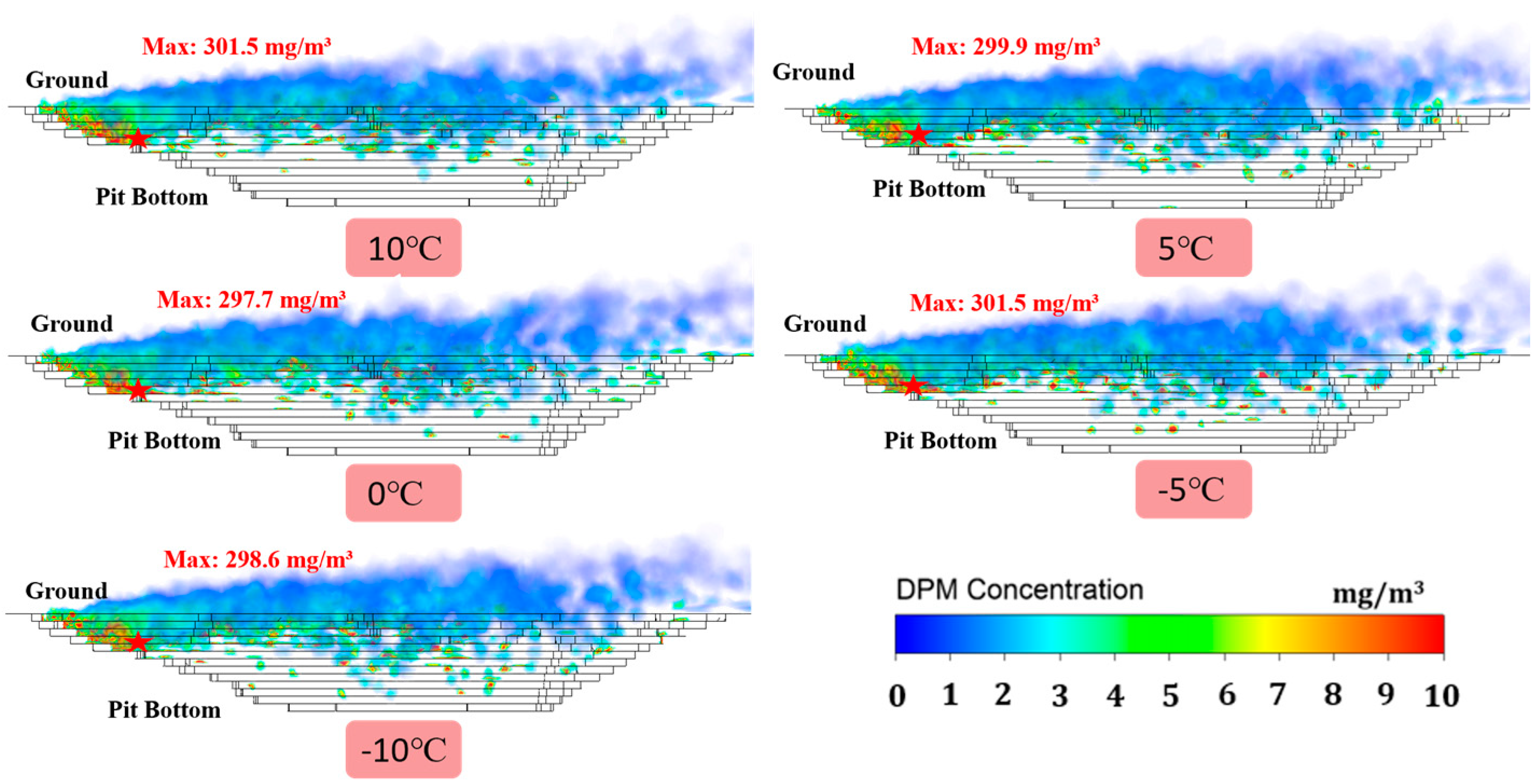
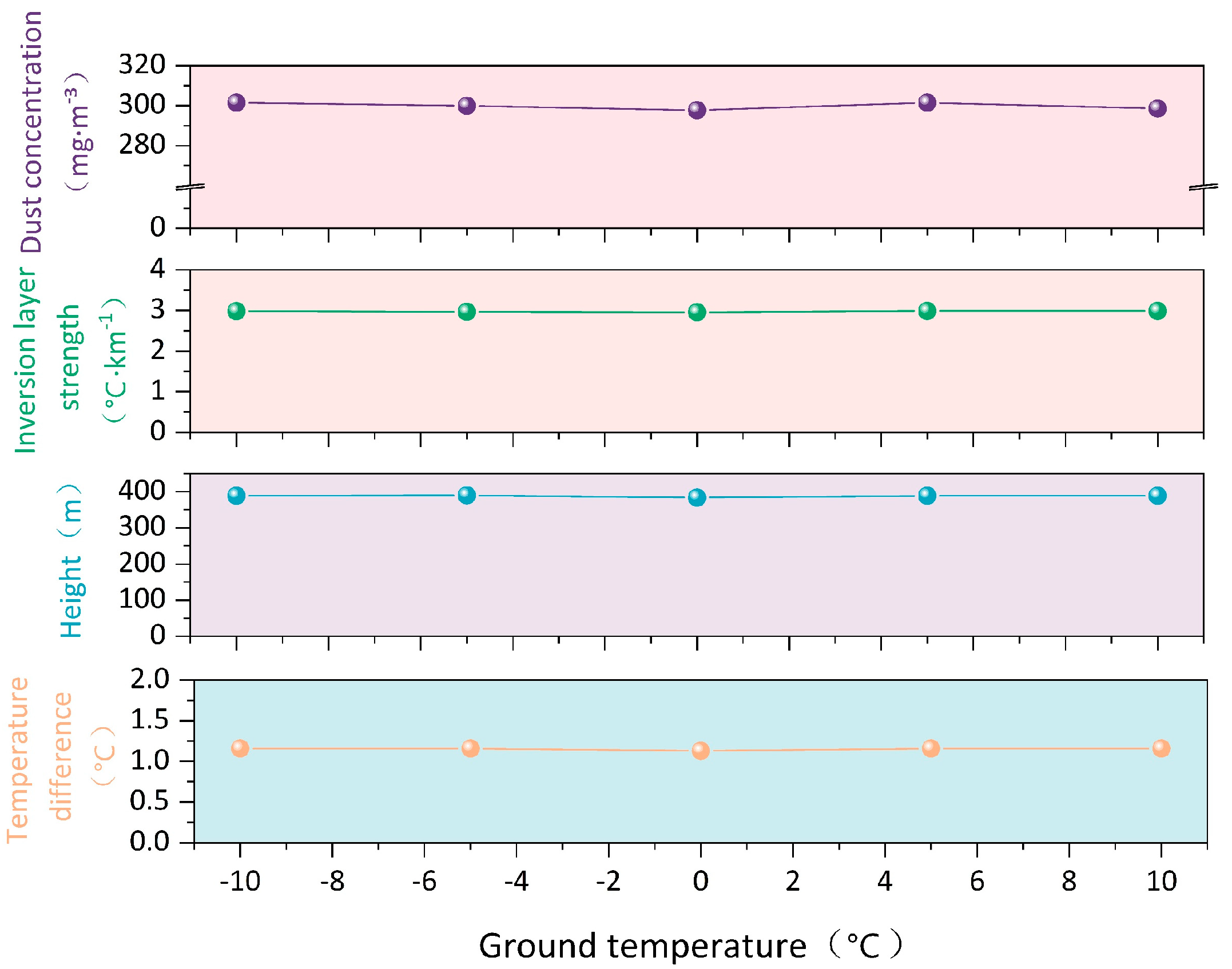
As shown in Figure 18 and Figure 19, variations in surface temperature have a negligible impact on dust dispersion within the pit. The dust dispersion area, concentration distribution, and the specific concentration at 1.5 m above the source (consistently around 300 mg/m3) remained virtually unchanged across all tested conditions. This is because the inversion layer effectively persists, continuing to suppress the outward diffusion of dust regardless of surface temperature fluctuations. Correspondingly, the key characteristics of the inversion layer itself remain stable under varying surface temperatures. As quantified, the layer maintains a near-constant temperature difference of approximately 1.16 °C, a thickness of about 390 m, and a strength of around 2.96 °C km−1. Therefore, within the studied range, changes in surface temperature do not significantly alter the structure or intensity of the inversion layer, explaining the absence of an effect on dust dispersion patterns.

3.5. Analysis of the Proportion of Factors Affecting the Inversion Layer

To identify the dominant factors controlling temperature inversion layer formation, a multiple linear regression analysis was conducted using IBM SPSS Statistics 26. The rock wall temperature difference, ambient wind speed, and surface temperature were set as independent variables against the inversion layer characteristics, and their relative importance was evaluated by comparing their standardized coefficients (β). Furthermore, to quantify the relationship between inversion layer characteristics and dust concentration, a Pearson correlation analysis was employed. Prior to this, the Shapiro–Wilk test was conducted to confirm the normal distribution of the data, thereby statistically justifying the use of the Pearson method for these continuous variables.
As shown in Table 2, for the temperature difference across the inversion layer, regression analysis yielded standardized coefficients (β) of 0.934 for the rock wall temperature difference, −0.548 for the ambient wind speed, and 0 for the ground surface temperature. Consequently, the temperature difference was primarily controlled by the rock wall temperature difference, followed secondarily by ambient wind speed, and was unaffected by ground surface temperature. For layer thickness, the coefficients were β = 0.929 for the rock wall temperature difference, 0.038 for ambient wind speed, and 0.0002 for ground surface temperature. Thus, layer thickness was dominated by the rock wall temperature difference, while ambient wind speed and ground surface temperature had negligible effects. Similarly, for inversion layer intensity, the coefficients were β = 0.908 (rock wall temperature difference), −0.595 (ambient wind speed), and 0.002 (ground surface temperature). Therefore, the rock wall temperature difference was the dominant control on intensity. Ambient wind speed had a moderate secondary influence, whereas ground surface temperature had a negligible effect.

4. Conclusions

Numerical simulations examined how inversion layer conditions affect their properties and the resulting dust dispersion patterns. The principal conclusions are as follows:
(1) Increased thermal differentials on the mine walls enhance the temperature gradient, thickness, and intensity of the inversion layer. These enhanced thermal conditions strengthen the inversion, which suppresses dust dispersion. Consequently, near-source dust concentrations rise with the intensification of these inversion layer properties.
(2) Increasing ambient wind speed enhances inversion layer thickness but reduces its internal temperature gradient and strength. This suppression of the inversion layer enhances dust dispersion. Consequently, the dust dispersion area expands, and near-source dust concentrations decrease.
(3) Variations in surface temperature did not alter the key characteristics (e.g., thickness, intensity) of the inversion layer; however, they did influence its minimum and maximum temperatures. Consequently, the dust dispersion range and concentration remained largely unchanged.
(4) In summary, the thermal gradient along the rock wall is the dominant factor governing inversion layer characteristics. Ambient wind speed exerts a secondary influence, whereas surface temperature has a negligible effect.
Research has shown that temperature differences on rock surfaces and wind speeds primarily influence the characteristics of the temperature inversion layer, thereby affecting dust dispersion and aerosol formation. Specifically, larger rock wall temperature differences promote inversion formation, whereas higher ambient wind speeds suppress it. This study characterized temperature inversions and dust dispersion in a typical small-scale open-pit mine. A key limitation of this study is that the field measurements were conducted in one specific pit on one particular day. Consequently, the empirical findings are inherently site-specific. However, by coupling these measurements with a comprehensive parametric CFD study—which evaluated a wide spectrum of temperature and wind variations—this case study successfully elucidates the fundamental physical mechanisms governing dust transport under inversion conditions, providing essential theoretical references for similar deep open-pit operations. Future work should integrate field measurements and laboratory experiments to expand the dataset for numerical simulation validation and scaling. This enriched data will be critical for establishing robust predictive models of temperature inversion dynamics in open-pit mines.
While this study primarily focused on the dominant impacts of surface wind speed and wall temperature differentials on the inversion layer, it is important to acknowledge that real-world deep open-pit environments are subjected to a complex interplay of multiple meteorological factors. For instance, air humidity can influence the specific heat capacity and density of air; high moisture content may alter thermal stratification through latent heat exchange, potentially affecting the stability of the inversion layer. Additionally, variations in atmospheric pressure, often associated with large-scale synoptic weather systems (e.g., high-pressure ridges that favor subsidence and strengthen inversions), can play a significant role. Future research should incorporate additional meteorological variables, such as humidity and pressure gradients, to develop a more comprehensive multi-physics-coupled model for open-pit atmospheric environments.
Our numerical results strongly support our initial hypothesis and align with previous boundary-layer meteorological studies in deep open-pit mines [4,5]. Specifically, the topographically enhanced radiative inversion layer acts as an aerodynamic “lid,” restricting vertical turbulence and trapping dust at the pit floor. Based on these validated mechanisms, practical dust mitigation for mine operators should include optimizing schedules to avoid high-emission activities (e.g., blasting) during severe inversion periods. Additionally, active dust suppression systems should be strategically concentrated at the pit bottom rather than uniformly distributed throughout the pit.

Author Contributions

Conceptualization, Z.J.; software, Z.J.; validation, M.S.; writing—original draft preparation, X.Y.; writing—review and editing, Z.Z.; supervision, Y.C.; funding acquisition, Y.C. All authors have read and agreed to the published version of the manuscript.

Funding

This work was supported by the National Natural Science Foundation of China (No. 62303042).

Institutional Review Board Statement

Not applicable.

Informed Consent Statement

Not applicable.

Data Availability Statement

Data available on request.

Conflicts of Interest

The authors declare no conflicts of interest.

References

  1. Bourne, S.M.; Bhatt, U.S.; Zhang, J.; Thoman, R. Surface-based temperature inversions in Alaska from a climate perspective. Atmos. Res. 2010, 95, 353–366. [Google Scholar] [CrossRef]
  2. Chen, H.; Li, L.; Lei, Y.; Wu, S.; Yan, D.; Dong, Z. Public health effect and its economics loss of PM2.5 pollution from coal consumption in China. Sci. Total Environ. 2020, 732, 138973. [Google Scholar] [CrossRef] [PubMed]
  3. Chen, T.; Guo, J.; Tong, B.; Cohen, J.B.; Chen, X.; Yun, Y.; Lv, M.; Guo, X.; Lee, S.S. Elucidating the impact of high- and low-pressure systems on temperature inversion from nine years of radiosonde observations in Beijing. Atmos. Res. 2022, 271, 106115. [Google Scholar] [CrossRef]
  4. Feng, X.; Wang, S.; Guo, J. Temperature inversions in the lower troposphere over the Sichuan Basin, China: Seasonal feature and relation with regional atmospheric circulations. Atmos. Res. 2022, 271, 106097. [Google Scholar] [CrossRef]
  5. Hua, Y.; Nie, W.; Wei, W.; Liu, Q.; Liu, Y.; Peng, H. Research on multi-radial swirling flow for optimal control of dust dispersion and pollution at a fully mechanized tunnelling face. Tunn. Undergr. Space Technol. 2018, 79, 293–303. [Google Scholar] [CrossRef]
  6. Janhall, S.; Olofson, K.F.G.; Andersson, P.U.; Pettersson, J.B.C.; Hallquist, M. Evolution of the urban aerosol during winter temperature inversion episodes. Atmos. Environ. 2006, 40, 5355–5366. [Google Scholar] [CrossRef]
  7. Kahraman, M.M.; Erkayaoglu, M. A Data-Driven Approach to Control Fugitive Dust in Mine Operations. Min. Metall. Explor. 2021, 38, 549–558. [Google Scholar] [CrossRef]
  8. Olofson, K.F.G.; Andersson, P.U.; Hallquist, M.; Ljungström, E.; Tang, L.; Chen, D.; Pettersson, J.B.C. Urban aerosol evolution and particle formation during wintertime temperature inversions. Atmos. Environ. 2009, 43, 340–346. [Google Scholar] [CrossRef]
  9. Patra, A.K.; Gautam, S.; Kumar, P. Emissions and human health impact of particulate matter from surface mining operation—A review. Environ. Technol. Innov. 2016, 5, 233–249. [Google Scholar] [CrossRef]
  10. Shao, M.; Xu, X.; Lu, Y.; Dai, Q. Spatio-temporally differentiated impacts of temperature inversion on surface PM2.5 in eastern China. Sci. Total Environ. 2023, 855, 158785. [Google Scholar] [CrossRef]
  11. Wallace, J.; Corr, D.; Kanaroglou, P. Topographic and spatial impacts of temperature inversions on air quality using mobile air pollution surveys. Sci. Total Environ. 2010, 408, 5086–5096. [Google Scholar] [CrossRef]
  12. Wang, J.; Luo, Z.; Zhang, G.; Chen, J.; Du, C.; Wang, Y.; Ding, X. Experimental and numerical simulation of road dust distribution and transport characteristics under disturbance of automobile tire in open-pit mine. J. Wind. Eng. Ind. Aerodyn. 2025, 266, 106214. [Google Scholar] [CrossRef]
  13. Wang, Z.; Zhou, W.; Jiskani, I.M.; Luo, H.; Ao, Z.; Mvula, E.M. Annual dust pollution characteristics and its prevention and control for environmental protection in surface mines. Sci. Total Environ. 2022, 825, 153949. [Google Scholar] [CrossRef]
  14. Yang, X.; Jiang, Z.; Chen, J.; Chen, Y.; Yang, B. Numerical Simulation Study on Dust Diffusion Law of Single Bucket Truck Loading in Open-Pit Mine Under the Action of Airflow. Min. Metall. Explor. 2024, 41, 3357–3380. [Google Scholar] [CrossRef]
  15. Yang, Y.; Ni, C.; Jiang, M.; Chen, Q. Effects of aerosols on the atmospheric boundary layer temperature inversion over the Sichuan Basin, China. Atmos. Environ. 2021, 262, 118647. [Google Scholar] [CrossRef]
  16. Zang, Z.; Wang, W.; You, W.; Li, Y.; Ye, F.; Wang, C. Estimating ground-level PM2.5 concentrations in Beijing, China using aerosol optical depth and parameters of the temperature inversion layer. Sci. Total Environ. 2017, 575, 1219–1227. [Google Scholar] [CrossRef]
  17. Yu, H.; Zahidi, I. Environmental Hazards Posed by Mine Dust, and Monitoring Method of Mine Dust Pollution Using Remote Sensing Technologies: An Overview. Sci. Total Environ. 2023, 864, 161135. [Google Scholar] [CrossRef]
  18. Herrera, R.; Radon, K.; von Ehrenstein, O.S.; Cifuentes, S.; Moraga Muñoz, D.; Berger, U. Proximity to Mining Industry and Respiratory Diseases in Children in a Community in Northern Chile: A Cross-Sectional Study. Environ. Health 2016, 15, 66. [Google Scholar] [CrossRef]
  19. Freitas, A.C.V.; Belardi, R.-M.; Barbosa, H.d.M.J. Characterization of Particulate Matter in the Iron Ore Mining Region of Itabira, Minas Gerais, Brazil. Atmósfera 2022, 35, 781–802. [Google Scholar] [CrossRef]
  20. Morozesk, M.; Souza, I.d.C.; Fernandes, M.N.; Soares, D.C.F. Airborne Particulate Matter in an Iron Mining City: Characterization, Cell Uptake and Cytotoxicity Effects of Nanoparticles from PM2.5, PM10 and PM20 on Human Lung Cells. Environ. Adv. 2021, 6, 100125. [Google Scholar] [CrossRef]
  21. Leshukov, T.; Legoshchin, K.; Yakovenko, O.; Bach, S.; Russakov, D.; Dimakova, D.; Vdovina, E.; Baranova, E.; Avdeev, K.; Kolpina, E.; et al. Fractional Composition and Toxicity Coal–Rock of PM10–PM0.1 Dust near an Opencast Coal Mining Area and Coal-Fired Power Station. Sustainability 2022, 14, 16594. [Google Scholar] [CrossRef]
  22. Luo, H.; Zhou, W.; Jiskani, I.M.; Wang, Z. Analyzing Characteristics of Particulate Matter Pollution in Open-Pit Coal Mines: Implications for Green Mining. Energies 2021, 14, 2680. [Google Scholar] [CrossRef]
  23. Tian, D.; Wu, X.; Yao, J.; Qu, W.; Shi, J.; Yang, K.; Wang, J. Study on Dust Distribution Law in Open-Pit Coal Mines Based on Depth Variation. Atmosphere 2025, 16, 771. [Google Scholar] [CrossRef]
  24. Laney, A.S.; Weissman, D.N. Respiratory Diseases Caused by Coal Mine Dust. J. Occup. Environ. Med. 2014, 56, S18–S22. [Google Scholar] [CrossRef] [PubMed]
  25. Vanka, K.S.; Shukla, S.; Gomez, H.M.; James, C.; Palanisamy, K.; Williams, K.; Chambers, C.D.; Britton, W.J.; Ilic, D.; Hansbro, P.M.; et al. Understanding the Pathogenesis of Occupational Coal and Silica Dust-Associated Lung Disease. Eur. Respir. Rev. 2022, 31, 210250. [Google Scholar] [CrossRef]
  26. Zhang, G.; Jiang, Z.; Li, X.; Chen, Y.; Yang, B.; Si, M.; Feng, R.; Wang, M. Impact of high-altitude environments on the motion and settling characteristics of wet-mix shotcrete dust in tunnels. Tunn. Undergr. Space Technol. 2024, 149, 105807. [Google Scholar] [CrossRef]
  27. Zhang, J.; Zheng, Y.; Li, Z.; Xia, X.; Chen, H. A 17-year climatology of temperature inversions above clouds over the ARM SGP site: The roles of cloud radiative effects. Atmos. Res. 2020, 237, 104810. [Google Scholar] [CrossRef]
  28. Zhu, Z.; Li, H.; Fan, S.; Xu, W.; Fang, R.; Liu, B.; Gong, W. The covariability between temperature inversions and aerosol vertical distribution over China. Atmos. Pollut. Res. 2024, 15, 101959. [Google Scholar] [CrossRef]
Figure 1. Dust pollution exacerbated by temperature inversion in industrial areas. Note: All photographs were taken by the authors at the study site, illustrating actual operating conditions.
Atmosphere 17 00524 g001
Figure 2. (a) Monitoring points on the eastern rib wall of the mine pit; (b) monitoring points on the southern rib wall of the mine pit; (c) monitoring points on the western rib wall of the mine pit; (d) monitoring points on the northern rib wall of the mine pit; (e) layout of survey points at different elevations within the mine pit.
Atmosphere 17 00524 g002
Figure 3. Open-pit mine physical model and grid division: (a) the 3D computational domain distinguishing the upper atmosphere boundary from the mine pit; (b) the mesh generation details and the quantitative distribution of mesh quality.
Atmosphere 17 00524 g003
Figure 4. Temperature analysis line.
Atmosphere 17 00524 g004
Figure 5. Factors affecting the inversion layer.
Atmosphere 17 00524 g005
Figure 6. Temperature measurement results of the edge rock wall: (a) east edge; (b) south edge; (c) west edge; (d) north edge.
Atmosphere 17 00524 g006
Figure 7. (a) Field measurement results of temperature variation in the temperature inversion layer; (b) field monitoring results of ambient wind speed variation.
Atmosphere 17 00524 g007
Figure 8. Results of temperature differences in open-pit rock walls and inversion layers. The left panels display the colored thermal contours, and the right panels present the corresponding temperature gradient lines (isotherms). The spatial boundaries of the open pit are indicated by the ‘Pit Bottom’ and ‘Ground’ labels.
Atmosphere 17 00524 g008
Figure 9. Vertical temperature profiles under varying rock wall temperature differentials. The eight sub-panels represent the simulation results at eight distinct spatial analysis lines (Le3, Lf2, Lg2, Lh2, Lq3, Lr2, Ls2, and Lt2) distributed across the open-pit mine. The 0 m mark on the y-axis corresponds to the pit bottom.
Atmosphere 17 00524 g009
Figure 10. Cross-sectional views of simulated dust dispersion concentration (unit: mg/m3) within the open-pit mine for five rock-wall temperature differentials. The five-pointed star indicates the location of the dust source.
Atmosphere 17 00524 g010
Figure 11. Effects of rock-wall temperature difference on inversion-layer characteristics and dust concentration.
Atmosphere 17 00524 g011
Figure 12. Temperature distributions of the inversion layer under varying ambient wind speeds.
Atmosphere 17 00524 g012
Figure 13. Vertical temperature profiles under varying ambient wind speeds.
Atmosphere 17 00524 g013
Figure 14. Dust dispersion within the inversion layer under varying ambient wind speeds. The five-pointed star indicates the location of the dust source.
Atmosphere 17 00524 g014
Figure 15. Effects of ambient wind speed on inversion-layer characteristics and dust concentration.
Atmosphere 17 00524 g015
Figure 16. Temperature distributions of the inversion layer under varying surface temperatures.
Atmosphere 17 00524 g016
Figure 17. Vertical temperature profiles under varying surface temperatures.
Atmosphere 17 00524 g017
Figure 18. Dust dispersion within the inversion layer under varying surface temperatures. The five-pointed star indicates the location of the dust source.
Atmosphere 17 00524 g018
Figure 19. Effects of surface temperature on inversion-layer characteristics and dust concentration.
Atmosphere 17 00524 g019
Table 1. Parameter settings.
Boundary ConditionsDefine
ViscousRealizable k-ε
SolverPressure-based
EnergyOn
Inlet Boundary TypeVelocity -inlet
Hydraulic Diameter1.0 m
Turbulent Intensity5.0%
Outlet Boundary TypeOutflow
Wall Thermal (Convection)Coefficient (10 W (m·K)−1)
Table 2. Standardized coefficient of factors affecting the inversion layer.
Temperature Difference on Rock Walls (°C)Ambient Wind Speed (m/s)Surface Temperature (°C)
temperature difference in the inversion layer (°C)0.934−0.5480
Inversion layer thickness (m)0.9290.0380.0002
The strength of the inversion layer (°C·km−1)0.908−0.5950.002
temperature difference in the inversion layer (°C)0.934−0.5480
Disclaimer/Publisher’s Note: The statements, opinions and data contained in all publications are solely those of the individual author(s) and contributor(s) and not of MDPI and/or the editor(s). MDPI and/or the editor(s) disclaim responsibility for any injury to people or property resulting from any ideas, methods, instructions or products referred to in the content.