Review

Recent Advances in the Evolution of Pollutants and Their Interactions with Oxygen Carriers During Coal Chemical Looping


1
School of Environmental and Chemical Engineering, Jiangmen Key Laboratory of Synthetic Chemistry and Cleaner Production, Wuyi University, Jiangmen 529020, China
2
Shizuishan Bank Co., Ltd., Shizuishan 753000, China
3
Key Laboratory of Plant Nutrition and the Agri-Environment in Northwest China, Ministry of Agriculture, College of Natural Resources and Environment, Northwest A&F University, Yangling 712100, China
*
Authors to whom correspondence should be addressed.
These authors contributed equally to this work.
Atmosphere 2026, 17(5), 512; https://doi.org/10.3390/atmos17050512
Submission received: 18 March 2026 / Revised: 15 May 2026 / Accepted: 15 May 2026 / Published: 18 May 2026
(This article belongs to the Section Air Pollution Control)

Abstract

Chemical looping is a clean, energy-efficient, and economically viable route for coal utilization. However, the pyrolysis and gasification of raw coal in chemical looping generate gaseous pollutants (SOX, NOX, and Hg) and ash that affect both reactor performance and the environment. This review synthesizes the current understanding of the formation, transformation, migration, and release of these pollutants in chemical looping, alongside the behavior of coal ash. It further assesses how these species interact with oxygen carriers, influencing reactivity, redox stability, sintering, agglomeration, attrition, and deactivation. Based on these insights, the review proposes research priorities for pollutant management and oxygen-carrier design, and for elucidating the coupled dynamics of the coal/oxygen-carrier/ash three-component particle system in fuel reactors.

1. Introduction

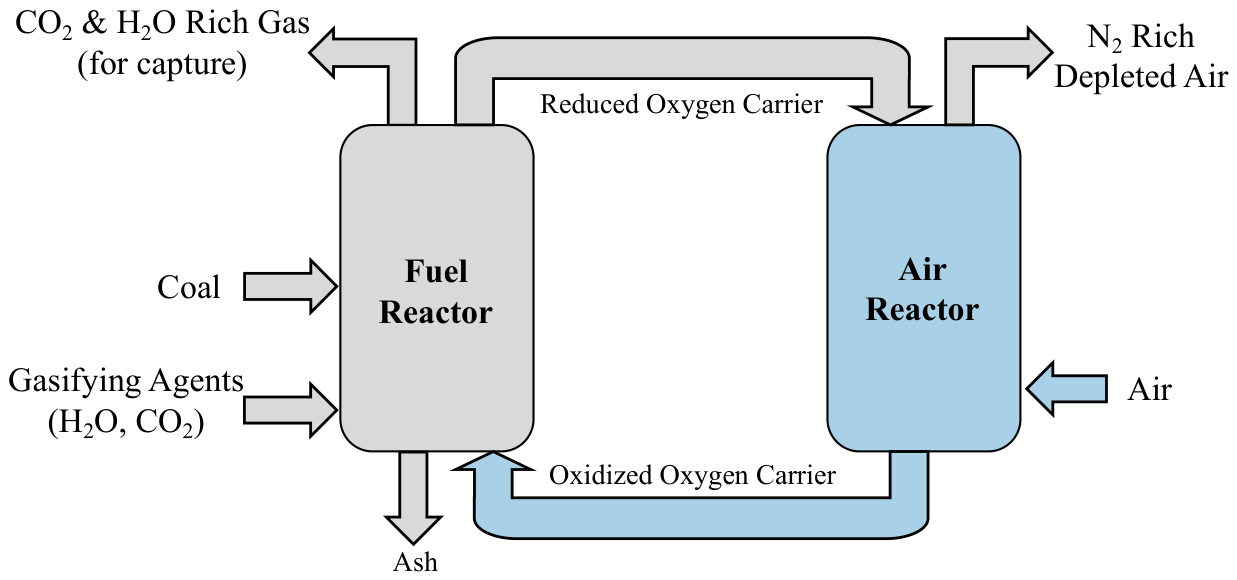
Amid rising energy demands, fossil fuels remain dominant due to their abundance and entrenched use. Under the twin pressures of resource constraints and environmental degradation, their utilization must achieve higher efficiency, lower pollution, and reduced CO2 emissions. Developing energy-saving, environmentally benign, efficient, and economical technologies is urgent. At present, the most widely applied configuration for coal chemical looping technology is the dual-fluidized bed reaction system, which realizes the spatial decoupling of the coal pyrolysis–gasification process and the oxidative regeneration process of the oxygen carrier through a closed-loop circulation of the oxygen carrier. Its core process flow is illustrated in Figure 1 [1,2,3].
Coal pyrolysis/gasification under the framework of chemical looping technology is the core process for clean and stepwise conversion of coal, which is deeply coupled with the redox cycle mediated by the lattice oxygen of oxygen carriers. Based on the innovative chemical looping process design with separated pyrolysis and gasification/reforming sections, raw coal first undergoes pyrolysis under low-temperature heating, and simultaneously generates three products, including pyrolysis gas, tar and char, after the completion of devolatilization. Among them, the pyrolysis gas and tar are fed into the reforming reactor to react with oxygen carriers for the directional production of high-quality syngas, while the char can either be further converted into syngas through the gasification reaction under the action of a gasifying agent, or directly recycled as a solid carbon product in a targeted manner according to product regulation requirements. This process enables independent control of the coal pyrolysis and gasification sections, flexible adjustment of the H2/CO ratio of syngas and the yield of the solid carbon product, and simultaneously achieves the technical characteristic of negative carbon emissions. The carbon, hydrogen, and oxygen in coal are converted to CO2, CO, and H2, while heteroatoms such as N, S, and Hg, together with associated minerals, produce harmful gases and ash through pyrolysis and gasification. Compared with conventional pyrolysis–gasification, the co-presence of coal, steam/reducing gases, and the oxygen carrier in the fuel reactor, together with the dual gas streams of the fuel and air reactors, complicates the transformation, migration, and release of these harmful species. In addition to coal type and operating conditions, the oxygen carrier can alter the transformation pathways of S-, N-, and Hg-containing species. Unconverted char may be transported with the circulating oxygen carrier to the air reactor, where it can release pollutants into the flue gas. In contrast, pollutant release in the fuel reactor may reduce the purity of target products, such as CO2 or syngas, and may affect downstream purification and utilization [4]. Coal ash forms through complex physicochemical evolution of primary and extraneous minerals and deposits on oxygen-carrier surfaces under the operating hydrodynamics, atmospheres, and temperatures. Its effects are twofold. Some components react with carriers to form inert phases that hinder chemical looping, whereas others provide oxygen-transfer and catalytic functions that enhance fuel conversion and benefit the system.
The chemical looping enables efficient utilization of coal’s energy and elements, with heteroatoms (S, N, Hg) posing environmental and operational risks and ash from associated minerals interacting with the oxygen carrier. To understand and advance clean coal conversion, an in-depth study of coal pyrolysis/gasification is needed, focusing on the transformation, migration, and redistribution of S, N, and Hg from both environmental and efficiency perspectives, alongside elucidation of ash–oxygen-carrier interaction mechanisms. Quantitative characterization of harmful gas releases at the air- and fuel-reactor outlets is essential for accurate evaluation and effective control.
Previous reviews have extensively discussed chemical-looping reactor configurations, oxygen-carrier development, carbon capture performance, and the general conversion of solid fuels [5,6,7,8]. Other reviews have addressed individual aspects such as mercury behavior, sulfur chemistry, or ash-related oxygen-carrier degradation. However, these topics have usually been treated separately. The present review focuses specifically on the coupled evolution of coal-derived S-, N-, and Hg-containing pollutants and coal ash in coal chemical-looping systems. Particular attention is given to how these species migrate between the fuel and air reactors, how oxygen carriers modify their chemical pathways, and how pollutant/ash interactions affect carrier reactivity, durability, agglomeration, and product-gas quality. By integrating pollutant release, ash chemistry, and oxygen-carrier deactivation within a unified framework, this review aims to identify the key mechanistic gaps that currently limit the scale-up and environmental assessment of coal chemical-looping technologies. To clarify the novelty of this review, Table 1 compares the scope of representative recent reviews with that of the present work. Unlike reviews focusing primarily on oxygen-carrier synthesis, reactor engineering, or single-pollutant behavior, this work emphasizes the coupled pollutant–ash–oxygen carrier interactions that are unique to coal chemical looping.

2. Harmful Gases S, N, and Hg Generated from Coal Pyrolysis/Gasification in Chemical Looping

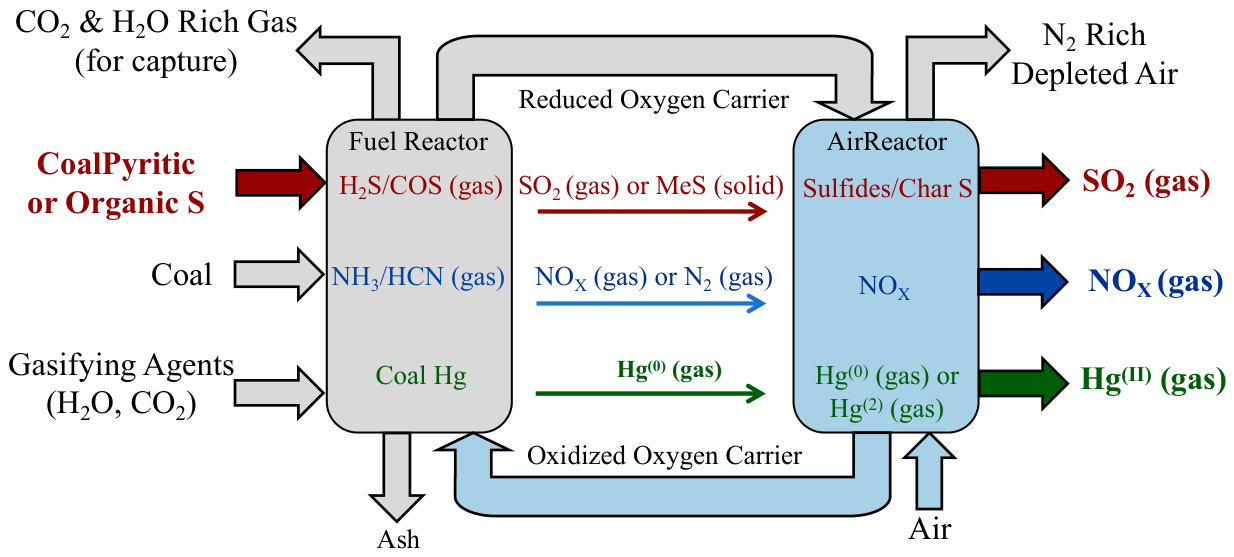
Chemical looping technology has broken through the technical bottlenecks of conventional coal conversion technologies, namely high carbon emissions and exorbitant costs of end-of-pipe pollutant treatment. With its core advantages of in situ inherent CO2 separation, ultra-low NOX emissions, and high energy conversion efficiency, it is widely recognized by both academic and industrial communities as one of the most promising clean and low-carbon coal conversion technologies for industrial-scale application. However, during the core stages of coal chemical looping conversion, i.e., pyrolysis and gasification, hazardous elements, such as sulfur (S), nitrogen (N), and mercury (Hg), inherently present in coal undergo multi-path migration and speciation evolution along with processes including coal matrix pyrolysis, volatile matter conversion, and char gasification, and are ultimately released as hazardous gaseous species, including H2S, COS, NOX, NH3, and elemental mercury (Hg). Therefore, accurate elucidation of the speciation evolution, release characteristics of gaseous products, and multi-interface migration and transformation mechanisms of S, N, Hg and other hazardous elements throughout the entire process of coal chemical looping conversion can not only provide a comprehensive and objective theoretical basis for the comprehensive performance evaluation of this technology, but also enable efficient full-chain control of hazardous gases from the source to the migration process. Ultimately, this will facilitate the efficient, clean, and low-carbon conversion and utilization of coal resources. The detailed transformation and migration pathways of S, N, and Hg pollutants in the coal chemical looping system are illustrated in Figure 2. The speciation evolution and migration behavior of hazardous elements run through the core coal pyrolysis/gasification stage in the fuel reactor and the oxygen carrier regeneration stage in the air reactor, forming a complete multiphase reaction and multi-interface migration system.

2.1. Sulfur Transformation, Migration, and Release Characteristics

Sulfur in coal exists mainly as pyritic sulfur, organic sulfur and sulfate sulfur. During coal chemical looping, these sulfur forms undergo decomposition, gasification, oxidation, reduction and solid-phase retention. Under reducing atmospheres in the fuel reactor, H2S and COS are generally the dominant gaseous sulfur species, whereas SO2 formation becomes more favorable under locally oxidizing conditions or in the air reactor. The distribution of sulfur species is controlled by coal sulfur occurrence mode, temperature, steam/CO2 ratio, oxygen carrier composition, and the availability of lattice oxygen. The pyrolysis temperature primarily governs coal pyrolysis product distributions and sulfur transformation/migration. Coal sulfur is typically classified as sulfide sulfur, sulfate sulfur, and organic sulfur, each with distinct thermal stabilities. As the temperature rises, organic sulfur decomposes rapidly at approximately 300 °C, releasing H2S and carbonyl sulfide (COS). Pyrite further decomposes with H2S formation, sulfate sulfur begins decomposing near 540 °C, and sulfur product distributions stabilize at about 900 °C. Wang et al. used thermogravimetric analysis (TGA) under N2 to compare sulfur transformation with and without an oxygen carrier and showed that, in the presence of a carrier, H2S and COS formed during pyrolysis are oxidized to SO2 [9,10,11]. The interaction between sulfur species and oxygen carriers is one of the key mechanisms determining both sulfur emission and carrier stability. H2S can react with metal oxides to form metal sulfides, while SO2 may lead to sulfate formation under oxidizing conditions. For Fe-based oxygen carriers, sulfur may be temporarily retained through the formation of FeS, FeS2 or iron sulfate species, although these phases may be reoxidized during air regeneration. Cu-based carriers tend to show strong interactions with sulfur species and may form Cu2S, CuS or CuSO4, which can alter redox kinetics and promote agglomeration under certain conditions. Ni-based carriers are particularly sensitive to sulfur poisoning because sulfur species can occupy active sites and inhibit catalytic reforming reactions. Therefore, sulfur tolerance is an essential criterion for oxygen carrier design in coal chemical looping. To clarify carrier–sulfur interactions, Mendiara et al. applied X-ray photoelectron spectroscopy (XPS) to track migration and redistribution of sulfur species, identifying solid sulfur forms, including CuS produced by the reaction of H2S with reduced carriers, FeS from pyrite decomposition, and thermally stable organic sulfur (e.g., thiophenes), whose potential environmental risks merit attention [11]. Mendiara et al. found that about 75% of sulfur is released as gas, while the remaining ~25% migrates and redistributes as sulfates formed with CaO in ash, as pyrite within ash, or fixed within the carrier in a 500 kWth titaniferous iron-ore carrier fluidized bed during the in situ chemical looping combustion (CLC) of lignite [12]. Adánez-Rubio et al. concluded that in the Cu-based Chemical Looping with Oxygen Uncoupling (CLOU) process operated at 900–935 °C using a highly active 60 wt.% CuO/MgAl2O4 oxygen carrier, SO2 is rapidly released during the devolatilization stage within the first few minutes of lignite feeding. The dry-basis SO2 concentration at the fuel reactor outlet ranges from 2400 ppmv at 910 °C to 3000 ppmv at 935 °C. At 935 °C, 87.9 wt.% of the total sulfur fed is emitted as SO2 from the fuel reactor, and the total sulfur release rate (including 10–15 wt.% sulfur self-retention by coal ash via CaSO4 formation) can exceed 95% [13]. Although pyrolysis atmosphere and carrier type vary, sulfur in coal is largely released with volatiles and during char gasification, with residual sulfur retained in ash and pyrite. The impacts of coal sulfur on oxygen carriers are significant.
Wang et al. used thermogravimetric analysis and XPS to elucidate sulfur transformation and migration during coal pyrolysis under chemical looping [9,10,11]. Mendiara et al. and Adánez-Rubio et al. confirmed that, due to the presence of oxygen carriers, sulfur migration in chemical looping pyrolysis exhibits patterns distinct from conventional pyrolysis [12,13]. Based on practical operation, besides intrinsic factors such as coal rank and sulfur speciation, extrinsic conditions, including pyrolysis temperature, atmosphere, heating rate, pressure, and oxygen carrier type, also influence sulfur transformation and migration. Therefore, further in-depth research is required.
Several strategies have been proposed to mitigate sulfur-related problems. The first strategy is the use of sulfur-tolerant oxygen carriers, such as Fe-based natural ores, modified ilmenite, or composite carriers containing Ca-, Mg- or Al-based supports. The second strategy is in situ sulfur capture by adding CaO, limestone, dolomite or other alkaline sorbents, which can convert gaseous sulfur species into stable calcium sulfide or sulfate under suitable conditions. The third strategy is reactor operation optimization, including control of fuel reactor atmosphere, oxygen carrier-to-fuel ratio, and regeneration conditions, to avoid irreversible sulfidation or sulfation. However, the long-term cyclic behavior of sulfur-retaining phases and their influence on CO2 purity and oxygen carrier attrition still require further investigation. Sulfur conversion and migration during coal pyrolysis in chemical looping differ from conventional pyrolysis, altering release characteristics. In 1.5 kWth CLOU tests with copper-based carriers, Adánez-Rubio et al. and Zhou et al. found that most coal sulfur exited the fuel reactor as SO2. An oxygen-rich atmosphere promotes H2S oxidation to SO2, explaining SO2 without detectable H2S, whereas under more reducing conditions, H2S concentrations were higher [13,14]. Mendiara et al. and Coppola et al. further investigated that the air-reactor temperature and atmosphere modulate sulfur speciation were consistent with enhanced H2S-to-SO2 conversion at greater oxygen availability [12,15]. No agglomeration or sintering of the oxygen carrier was observed under these operating conditions.

2.2. Examination of the Conversion, Migration, and Release Characteristics of Nitrogen

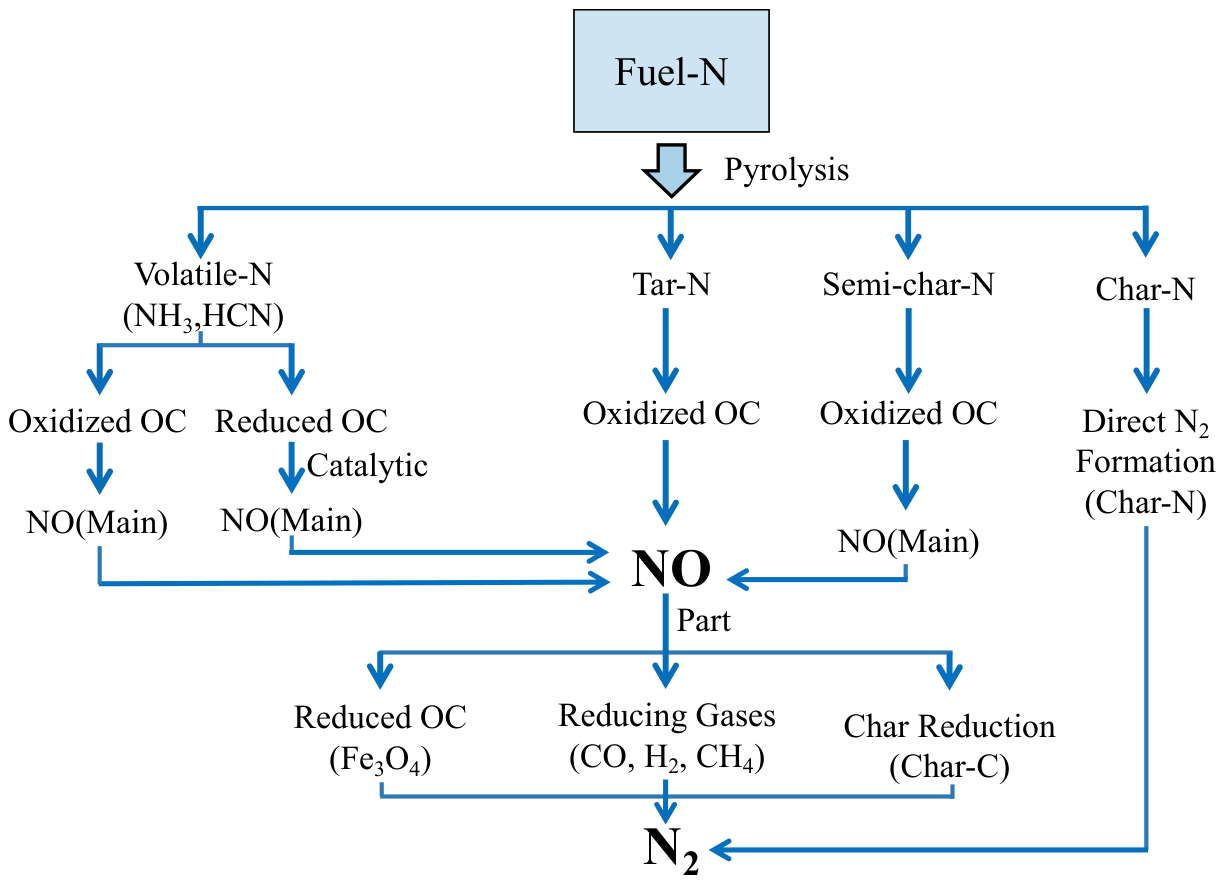
Nitrogen-containing pollutants in coal chemical looping mainly originate from fuel-bound nitrogen rather than thermal-NOX, because the direct contact between fuel and air is avoided. During coal pyrolysis and gasification, fuel-N is released as volatile-N, tar-N, NH3, HCN, and char-N. These intermediates can be further converted into NO, N2O or N2 depending on reaction atmosphere, oxygen carrier activity, and residence time. Compared with conventional combustion, the oxygen-deficient environment in the fuel reactor may suppress direct NOX formation, but the catalytic surfaces of oxygen carriers can significantly alter nitrogen conversion pathways. During CLC, oxygen carriers alter the transformation and migration of fuel nitrogen relative to conventional pyrolysis/gasification. To clarify the nitrogen transformation pathways in the fuel reactor, a reaction network for NOX formation and reduction during coal pyrolysis/gasification in chemical looping systems is summarized in Figure 3. Fuel-N is initially partitioned into volatile-N and char-N during devolatilization. Volatile-N, mainly including HCN and NH3, is further converted through a series of nitrogen-containing radicals and intermediates, whereas char-N is oxidized on or near the oxygen carrier surface. The final distribution of NO, N2O, and N2 is controlled by the competition between oxidation by lattice oxygen from the oxygen carrier and reduction by unconverted char, CO, H2, and the reduced oxygen carrier. The formation of NOX is deeply coupled with the radical pool in the system. Volatile-N (mainly HCN and NH3) undergoes stepwise oxidation via intermediate radicals (such as NH2, NH, and N) upon collision with the oxygen carrier surface, ultimately forming NO and N2O. Conversely, char-N is directly oxidized to NO. It is worth noting that the unconverted char and intermediate CO in the fuel reactor can act as reductants, partially reducing the newly formed NO back to environmentally benign N2. This in situ NOX reduction mechanism provides chemical looping combustion with a natural advantage in ultra-low nitrogen oxide emissions [16,17,18].
Compared with CLC, CLOU more closely resembles conventional coal combustion because both use O2 as the oxidant. They differ in that CLOU supplies O2 from the oxygen carrier at a limited release rate and typically operates at lower fuel-reactor temperatures, which can reduce coal conversion. The presence of the carrier also alters fuel-N conversion, migration, and release. In a small single fluidized bed with a copper-based carrier, Liu et al. found that most NOX at the reactor outlet formed during volatile combustion and consisted mainly of NO and NO2. The fraction of carbonyl-N converted to NOX increased with the carbon conversion rate, and no N2O was detected because it decomposes to N2 at the high temperatures employed [19]. Mechanistically, NO arises via radical-mediated oxidation of HCN and NH3, while N2O can originate from HCN reacting with O radicals to form NCO, which then reacts with NO. Under the tested conditions, N2O decomposed and was not observed. The NO2 formation pathway differed from conventional fluidized-bed combustion in that NO was heterogeneously oxidized on oxygen-carrier surfaces bearing active oxygen to form NO2. In a 1.5 kWth fluidized-bed CLOU unit using a CuO–Fe2O3 carrier with brown coal, Zhou et al. detected nitrogen oxides at both reactor outlets. In the fuel reactor, the nitrogen species were approximately 80% N2 and 20% NO, while both NO and NO2 were observed at the air-reactor outlet [14].
Different coal types differ in volatile content and fuel-N speciation, leading to distinct conversion and migration behaviors of fuel nitrogen in chemical-chain combustion. Gu et al. found that NOX from a high-volatile bituminous coal is produced by carrier-mediated oxidation of NH3 and HCN released during devolatilization, whereas NOX from low-volatile petroleum coke arises from reactions involving reduced iron oxides (e.g., FeO/Fe3O4) formed upon carrier reduction in a fluidized-bed CLC system with hematite [20]. Liu et al. observed that NOX from bituminous coal mainly originates from devolatilization, while NO from low-volatile subbituminous and anthracite derives predominantly from coke/char in CLOU. As coal rank increases, H-radical formation during pyrolysis declines and nitrogen-containing ring structures grow larger, which limits the conversion of fuel-N to NH3 and HCN. Consequently, low-volatility coals release less HCN and NH3 [19]. Gupta and De reported similar findings for anthracite in a small, single fluidized-bed reactor [21]. NH3 and HCN are generally considered the most important gaseous precursors of nitrogen pollutants. NH3 can be oxidized to NO or N2O over reactive oxygen carrier surfaces, but it can also be selectively converted to N2 under moderately reducing conditions. HCN may undergo hydrolysis, reforming, oxidation or reduction, generating NH3, NO, N2O or N2. The relative contribution of these pathways depends on temperature, lattice oxygen availability, and the catalytic nature of the oxygen carrier. High lattice oxygen activity may promote complete oxidation of nitrogen intermediates to NO, whereas insufficient oxygen availability may favor the formation of NH3, HCN or char-N retention. Therefore, the regulation of oxygen carrier reactivity is critical for improving N2 selectivity.
Coal pyrolysis is complex, with fuel-N conversion and migration controlled by both coal properties and operating conditions, including temperature, atmosphere, heating rate, and pressure. Mendiara et al. and Zhou et al. observed that HCN and NH3 release generally increase with temperature. They also found that unconverted char from the fuel reactor can travel with the circulating oxygen carrier to the air reactor, where its combustion contributes to NO formation. Raising the fuel-reactor temperature reduces char carryover and thus lowers NO in the air reactor [12,14]. Gu et al. further found that both the gasifying agent and the temperature in the fuel reactor affect NO levels in CLC, with higher temperatures and the use of steam as the gasifying agent simultaneously reducing NO concentrations at both the fuel- and air-reactor outlets [20]. To suppress nitrogen-containing pollutants, future oxygen carrier designs should aim at balancing fuel conversion efficiency and N2 selectivity. Excessively strong oxidation ability may increase NOX formation, whereas insufficient oxidation ability can reduce carbon conversion efficiency and increase tar or NH3 emissions. A promising strategy is to develop multifunctional oxygen carriers that provide moderate lattice oxygen activity, catalytic NO reduction capability, and resistance to sulfur and ash poisoning. In addition, staged operation of the fuel reactor, optimized steam/CO2 ratio, and extended residence time for reducing gases may further promote the conversion of NO and N2O to N2 [21].

2.3. Research on the Transformation, Migration, and Release Characteristics of Mercury

Mercury is a highly volatile trace element in coal and can be released during devolatilization and char conversion. In coal chemical looping, mercury may exist as elemental mercury (Hg(0)), oxidized mercury (Hg(II)) and particle-bound mercury (Hg-p). Hg(0) is difficult to capture because of its high volatility and low solubility, whereas Hg(II) and Hg-p are more easily removed by wet scrubbing, sorbents or particulate control devices. Therefore, promoting the oxidation or adsorption of Hg(0) is essential for mercury control.
Although mercury accounts for only a trace fraction of coal, elemental mercury Hg(0) is difficult to control due to its high volatility and low water solubility. Once emitted, it persists in the atmosphere, bioaccumulates through the food chain, and can impair CO2 transport and storage by contaminating the CO2 stream. Therefore, clarifying the release characteristics of Hg from coal during chemical looping combustion is essential. At present, related studies are limited, likely due to the difficulty of capturing mercury species and constraints of detection technologies.
Mercury in coal occurs as organic and inorganic forms, and its emissions during combustion are governed by both the coal’s Hg content/speciation and the combustion temperature and atmosphere. Mendiara et al. and Gupta et al. found that temperature primarily controls Hg volatilization and that SO2 in the fuel reactor suppresses the formation of oxidized Hg species in in situ gasification chemical looping combustion (iG-CLC) [12,21]. Temperature and coal type determine the Hg(0)/Hg(II) ratio, with Hg(0) predominating in the fuel reactor and Hg(II) in the air reactor. The speciation of mercury (Hg(0) or Hg(II)) is critical for its downstream capture. Recent advancements have highlighted the catalytic role of oxygen carriers in mercury oxidation. As comprehensively analyzed by Liu et al., transition metal-based carriers, particularly Fe-based and Cu-based materials, exhibit strong catalytic promotion for the oxidation of Hg(0) to Hg(II) in the presence of halogens (e.g., HCl derived from coal). The multivalent state transitions of the active metals (e.g., Fe2O3→Fe3O4) facilitate electron transfer, significantly enhancing the mercury capture efficiency in the subsequent flue gas cleaning units. In contrast, inert materials or severely sintered carriers show negligible effects on mercury speciation. Recent operando and in situ diffuse reflectance infrared fourier transform spectroscopy (DRIFTS) analyses have revealed that this catalytic oxidation follows a Mars–van Krevelen mechanism: Hg(0) chemically adsorbs onto the surface oxygen vacancies of the carrier, transfers electrons to the reducible metal cations (e.g., Fe3+→Fe2+), and subsequently reacts with active chlorine species to desorb as HgCl2 [22].
From an environmental perspective, SO2, NOX, and Hg emitted from the air reactor in chemical-chain combustion can cause acid rain and harm human health. Therefore, emissions must comply with applicable EU air-pollutant standards or China’s “Emission standard of air pollutants for boiler” (GB 13271-2014) [23]. From a process perspective, gases from the fuel reactor must meet CO2 transport and storage quality specifications. Meanwhile, sulfur-containing gases react with the active components of the oxygen carrier to form sulfides or sulfates, reducing carrier activity and oxygen-carrying capacity. As research on pollutant elements in chemical looping combustion remains at an early stage, further study is needed on the transformation, migration, and release characteristics of sulfur, nitrogen, and mercury. Future work should develop source-level and in-process control measures to limit pollutant concentrations and manage migration pathways under real operating conditions, thereby ensuring compliant emissions. Based on reported studies, Table 2 summarizes the release and partitioning characteristics of S-, N-, and Hg-containing species during coal-fueled chemical looping processes, providing a reference for subsequent pollutant control and low-emission process design.

3. Interaction Between Coal Pyrolysis/Gasification Products and Oxygen Carriers in the Chemical Looping

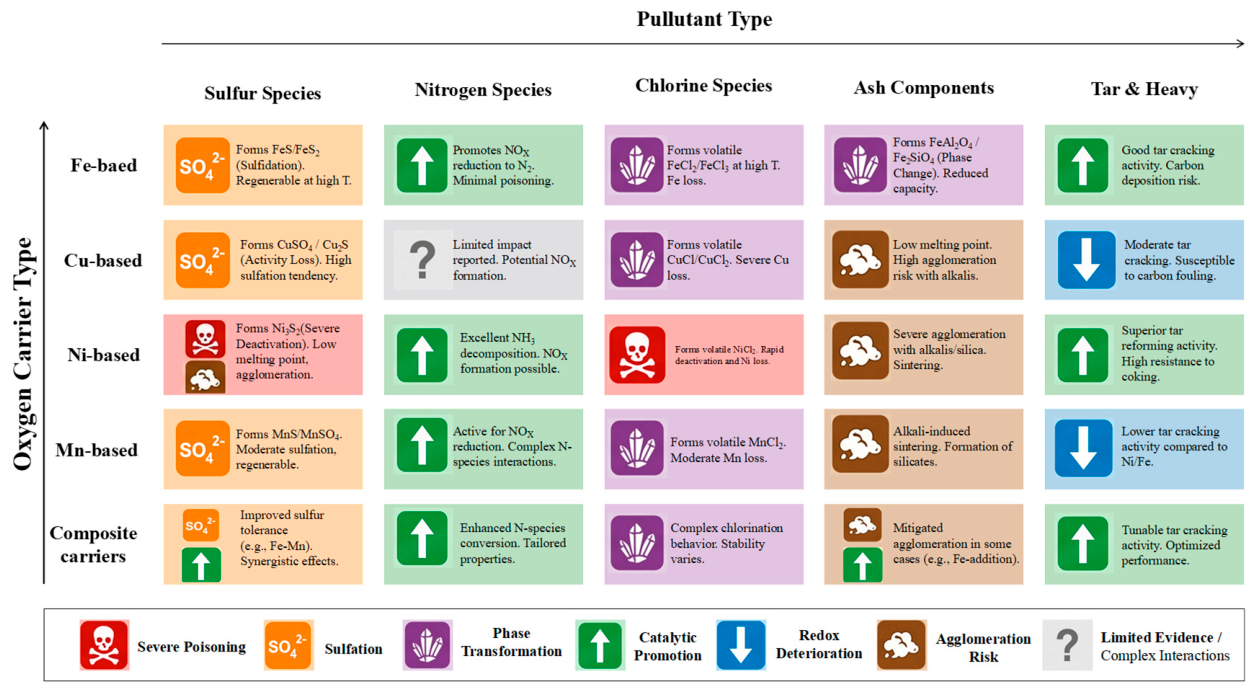
The coal pyrolysis/gasification process in chemical-chain systems involves multiphase interactions among solids (oxygen carriers, coal, coal ash), gases (syngas, hydrocarbons CXHY, water vapor, CO2), and harmful components (S- and N-containing species) [24]. Oxygen carriers provide oxygen transfer, heat transport, and catalytic functions within the reaction system [25,26]. Their physicochemical properties govern the efficiency of heat and oxygen transfer and storage, thereby influencing product distributions. Harmful gases and coal ash generated during coal pyrolysis are inevitable by-products that accumulate and come into contact with the oxygen carrier as the reaction proceeds, and their impacts on the carrier cannot be overlooked. Consequently, numerous studies have examined these interactions. Fe-based carriers generally show moderate sulfur tolerance but may form iron sulfides, silicates, and aluminates. Cu-based carriers provide high oxidation activity and oxygen uncoupling ability but are prone to sulfation, chlorination, and low-melting compound formation. Ni-based carriers exhibit strong reforming activity but suffer severe sulfur poisoning. Mn-based and composite carriers offer tunable oxygen mobility but may undergo phase instability. Oxygen carrier selection strongly affects pollutant evolution because the carrier is not only an oxygen donor but also a reactive surface for heterogeneous pollutant transformation. As summarized in Figure 4, Fe-, Cu-, Ni- and Mn-based oxygen carriers display different affinities toward sulfur species, nitrogen intermediates, chlorine-containing species, tar compounds, and ash-forming minerals. These interactions can either promote pollutant conversion, such as tar reforming or NO reduction, or induce carrier degradation through sulfidation, sulfation, chlorination, agglomeration, and the formation of stable silicates or aluminates.

3.1. Interaction Between Harmful Gases and Oxygen Carriers

The harmful gases S, N, and Hg produced during chemical-chain pyrolysis interact with oxygen carriers to different degrees because their reactivities differ. Therefore, this section focuses on sulfur-containing compounds. In the early stages, the relatively high sulfur content of gaseous fuels prompted extensive studies on their effects in chemical-chain systems. Leion et al. summarized sulfur release from gaseous fuels and showed that sulfide impacts depend on oxygen-carrier type, and that thermodynamic/kinetic calculations alone cannot reliably predict effects on carriers, the environment, or CO2 quality under real operation—necessitating integration of theory with operational data [27]. Compared with gaseous fuels, sulfides in solid coal impose greater complexity because chemical-looping coal pyrolysis is a multiphase system: released sulfide gases can react with carriers, reduce active phases, and lower fuel conversion [28]. Güleç and Okolie observed high reactivity of Ni-based carriers with low-sulfur coal but poor performance with high-sulfur petroleum coke, attributing this to the formation of low-melting nickel sulfides (e.g., Ni3S2) that cause bed agglomeration and reduced conversion in laboratory fluidized beds [29]. Hu et al. reported the same in a 1 kWth pilot [30]. Wang et al., using thermogravimetry, confirmed that H2S released from coal reacts with Ni to form Ni3S2, the primary cause of Ni-carrier deactivation, and subsequent work showed that coal-derived sulfides also impact Cu- and Co-based carriers [9,10]. Beyond direct reactions with carriers, sulfur-containing gases can participate in carrier–matrix reactions and shift system equilibria, especially in Ca-based chemical-chain applications: Wang et al. found that coal sulfides help suppress side reactions of CaSO4 carriers but cannot fundamentally prevent sulfur release [31]. Abuelgasim and Wang co-fed coal and CaCO3 to the fuel reactor, where CaCO3 was calcined to CaO that captured sulfur as CaS. In the air reactor, CaS was regenerated to CaSO4, which then served as the oxygen carrier and enabled oxygen cycling for coal chemical-chain conversion [32]. Although sulfur-containing gases generally cause the most severe oxygen-carrier deactivation, nitrogen- and mercury-containing species also interact with carrier surfaces. NH3 and HCN may be catalytically decomposed or oxidized on Fe-, Ni-, Cu-, or Mn-based carriers, affecting NOX and N2 selectivity. Hg(0) may be oxidized on transition-metal oxides, especially in the presence of chlorine species, whereas sintered or ash-covered carriers show lower Hg oxidation activity. Therefore, harmful-gas–carrier interactions should be understood as a coupled process involving poisoning, catalytic conversion, and surface reconstruction. Quantitatively, long-term cyclic tests indicate that Ni-based carriers can lose 20–30% of their reforming activity within 10–20 redox cycles due to irreversible Ni3S2 formation when exposed to >500 ppm H2S, whereas Fe-based natural ores exhibit a much lower chemical degradation rate (loss of <2% oxygen transfer capacity per hour) despite potential physical attrition [24,28,33,34].
Furthermore, recent studies highlight the synergistic and competitive effects among multiple pollutants. For instance, the coexistence of SO2 and NO in the fuel reactor can lead to competitive adsorption for active lattice oxygen sites. While SO2 tends to aggressively form stable sulfates that block surface pores, it can inadvertently suppress the heterogeneous catalytic reduction of NO to N2, indicating that multi-pollutant coupling requires comprehensive operando characterization to fully map the dynamic surface reactions [24,35,36,37].

3.2. Interaction Between Coal Ash and Oxygen Carriers

In chemical looping operation, coal ash and oxygen carriers are separated by cyclones [38] or by non-mechanical structural control [39,40], yet a fraction of ash remains in the reactor. With continuous coal feeding, this residual ash accumulates, and its influence on the carrier shifts from marginal to significant, affecting reaction performance (redox rate, oxygen-transfer capacity), physical properties (resistance to sintering, agglomeration, wear, and breakage), and fluidization behavior, thereby impacting system carbon conversion and reaction stability. Therefore, a precise understanding of ash–oxygen-carrier interactions is essential for coal pyrolysis/gasification in chemical looping systems.

3.2.1. Effects of Coal Ash on Oxygen Carriers

Oxygen carriers are essential in coal chemical-chain gasification and typically comprise active phases, additives, and inert supports. The reported active phases are NiO, Fe2O3, CuO, and CaSO4. Common supports and additives are Al2O3, SiO2, TiO2, MgAl2O4, NiAl2O4, ZrO2, bentonite, and cement. Key performance metrics are oxygen-carrying capacity, anti-agglomeration behavior, and sintering resistance. Fly ash is the noncombustible mineral fraction of solid coal fuels. Its chemistry and mineralogy vary with coal type. The oxide composition is dominated by SiO2, Al2O3, Fe2O3, and CaO, while the mineral assemblage typically includes clays, quartz, sulfides, carbonates, and sulfates.
Fly ash and oxygen carriers form mixed systems that interact via physical and chemical pathways. Wu et al. analyzed thermodynamic interactions between SiO2/Al2O3 in fly ash and carrier active phases, showing that ash–carrier reactions are thermodynamically feasible but kinetically slow [41]. TGA indicates that when Fe2O3 is reduced to Fe3O4, it reacts with ash Al2O3 to form inert hercynite (FeAl2O4), NiO, CuO, and Mn2O3, which react with Al2O3 and SiO2 in ash to yield inert aluminates and silicates. Abuelgasim et al. and Niu et al. showed that coal ash consumes active carrier phases, forming inert products that lower carrier reactivity and degrade performance by TGA. Because cycling stability tests were not conducted, agglomeration or sintering of the carriers was not observed [32,42].
Fly ash is a mixed product formed via complex physicochemical transformations of coal minerals during drying, pyrolysis, gasification, and combustion in chemical looping. Liu et al. mixed power-plant ash with iron-based carriers and, using TG-MS, observed enhanced conversion of combustible gases and coal coke, attributed to increased gas–active-site contact and to oxygen-carrying components in ash (Fe2O3 and sulfates) [43]. No adverse changes in the carrier’s physical structure were detected. By contrast, Wu et al. and Abuelgasim et al. indicated ash–carrier reactions that consume active phases and impair carrier reactivity [32,41]. This apparent discrepancy likely reflects coal-type dependence: ash chemistry and mineralogy vary and thus affect both carriers and fuel conversion differently. Liu et al. also examined ashes from four coal ranks with distinct compositions/mineralogy and found that only lignite ash enhanced conversion, whereas three bituminous ashes reduced carrier reactivity. Analysis showed lignite ash contains oxygen-carrying components absent in the others [43]. These results underline the dual nature of ash effects: some constituents form inert compounds with carriers, lowering activity, while specific oxygen-carrying constituents can promote fuel conversion. Furthermore, Bao et al. reported that Fe-rich bituminous ash and Ca-rich lignite ash improved conversion without harming the carrier structure or stability. Abuelgasim et al. found that, except for CaO-rich ash, four bituminous ashes caused sintering of iron-based carrier particles—more severe for smaller particles—likely due to the formation of low-melting Fe2SiO4, which increases surface viscosity and induces agglomeration [32,44].
Extensive studies show that Fe2O3 and CaSO4 in coal ash can provide auxiliary oxygen-carrying capacity and modestly enhance fuel conversion, whereas SiO2 and Al2O3 tend to react with carrier active phases to form inert silicates/aluminates and low-melting compounds, depleting active components and promoting sintering. Nonetheless, important questions remain. For instance, Bao et al. observed two ashes that increased conversion due to catalytic contributions from Fe and Ca in the ash, suggesting that ash may exhibit catalytic functions in addition to oxygen transfer and warranting further study [44]. Moreover, in practical chemical looping, ash–carrier effects arise from the coupled influences of hydrodynamics, temperature fields, and multicomponent atmospheres, yielding different impact patterns. These mechanisms require a systematic, in-depth investigation.
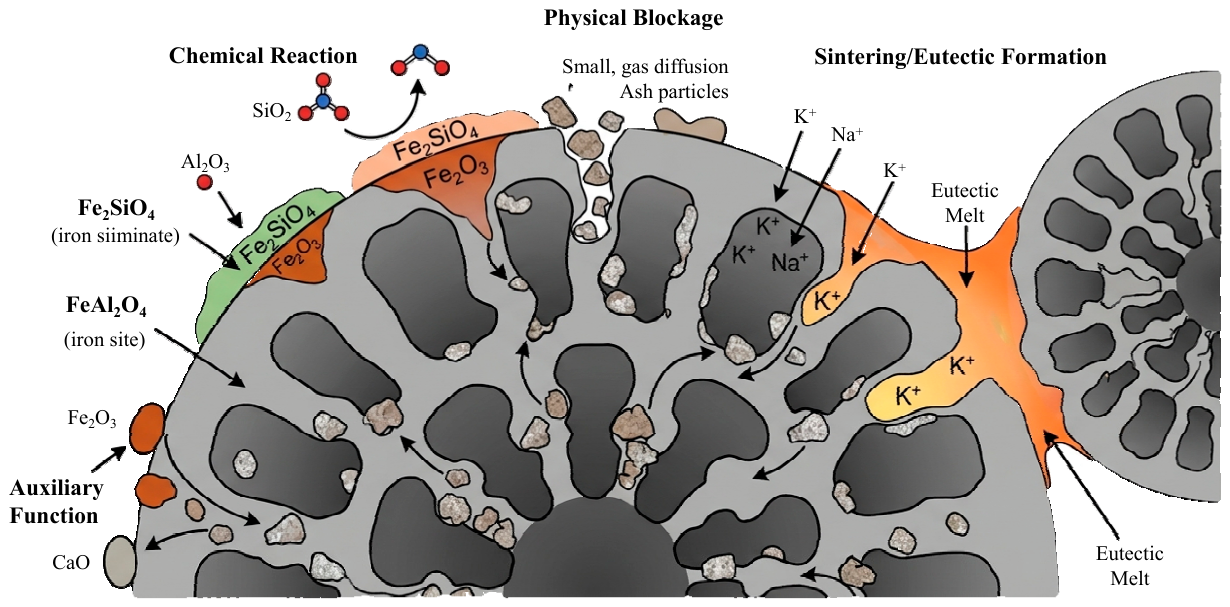
The apparently contradictory effects of coal ash can be understood using a composition-dependent “promotion–deactivation” framework. Ash rich in Fe2O3, CaSO4, CaO, or alkali/alkaline-earth metals may promote char gasification, oxygen transfer, or sulfur capture. In contrast, ash rich in SiO2 and Al2O3 tends to consume active carrier phases through silicate, aluminate, or spinel formation. The net effect depends on ash composition, particle size, deposition mode, temperature, residence time, and the oxygen-carrier formulation. Therefore, coal ash should not be classified simply as beneficial or harmful; instead, its effect changes from catalytic/oxygen-transfer promotion to irreversible deactivation when deposition, eutectic melting, or active-phase consumption becomes dominant. Figure 5 illustrates the major microscopic mechanisms of coal ash–oxygen carrier interactions.

3.2.2. Influence of Coal Mineral Components on Oxygen Carriers

Most fundamental studies of ash–oxygen-carrier interactions isolate single elements or oxides and report their individual effects. Coal ash is a heterogeneous mineral assemblage formed by the physicochemical transformations of primary, secondary, and extraneous minerals, and it persists as mineral phases regardless of coal origin. Therefore, examining ash–carrier interactions from a mineralogical perspective—resolving phase identity, abundance, morphology, and reactivity—provides a more fundamental basis for identifying the factors that govern their mutual interactions.
Yadav and Mondal examined coal mineral effects on oxygen carriers and found that pyrite exerts the strongest impact: its sulfur reacts with carriers to form sulfides that deactivate active phases, whereas sulfates and clays are far less reactive [45]. They also reported carrier-dependent reactivity, with iron-ore carriers exhibiting superior stability to copper- and manganese-based carriers. Cao et al. showed that in CLC of high-sodium Qundong coal, Na-bearing vapors from mineral evaporation react with hematite: at moderate Na levels, they enhance carrier activity and cycling stability, but higher Na concentrations promote surface sintering [46]. Therefore, it is necessary to summarize these effects from the perspective of the oxygen-carrier type. Table 3 summarizes the typical interactions between representative oxygen carriers and pollutant/ash species in coal chemical looping processes, providing a reference for oxygen-carrier selection, material modification, and reactor operation optimization.
Given substantial inter- and intra-rank variability in coal mineralogy, Mei et al. examined two mineral fractions of brown-coal fly ash and their effects on Fe-based oxygen carriers [47]. Scanning electron microscopy/electron probe microanalysis (SEM/EPMA) and X-ray diffraction (XRD) revealed that ash adheres to and deposits on the carrier, reconstructing the surface and forming silicoaluminates, magnesioferrite spinels, and low-melting ferrites. These phase changes alter reactivity in a mineralogy-dependent manner: silica-rich ash reduces the carrier’s specific surface area, whereas iron- and magnesium-rich ash increases its redox rate.

4. Conclusions and Outlook

Since chemical looping was introduced to coal conversion, extensive global research has yet to yield commercialization, with multiple constraints—especially feedstock coal properties—limiting progress. In such systems, coal pyrolysis/gasification supplies the energy and reactive elements for conversion, but the accompanying harmful gases and ash degrade efficiency, environmental performance, and economics. Achieving energy-saving, low-emission, clean, and efficient utilization requires elucidating the transformation and migration of SOX, NOX, and Hg during pyrolysis and gasification, and developing control technologies. It also calls for clarifying the interaction mechanisms among harmful gases, coal ash, and oxygen carriers, and for intensifying transport and reaction within the three-particle system of coal, oxygen carrier, and ash in the fuel reactor.
The transformation, migration, and control of SOX, NOX, and Hg during coal pyrolysis in chemical looping occur in a gas–solid multiphase system and are governed by two factor classes—internal (coal type/rank, occurrence forms of S/N/Hg, oxygen-carrier chemistry) and external (pyrolysis temperature, heating rate, atmosphere, pressure)—four substance sets (ambient gas, oxygen carrier, coal ash, in-coal constituents), and three interaction modes (gas–solid interfacial reactions, gas-mediated solid–solid associations, direct solid–solid reactions). A comprehensive grasp of these behaviors enables objective environmental performance evaluation and targeted control of pollutant sources and pathways to realize clean coal conversion. Based on the current state of research, in-depth studies should focus on: (1) Elucidating how different oxygen carriers govern S/N/Hg transformation and migration in CLC, CLOU, and CLG via chemical-kinetic and quantum-chemical approaches. (2) Quantifying S/N/Hg release under practical operation, establishing carbon conversion pollutant-release relationships, and rigorously assessing emission compliance in chemical-looping coal conversion. (3) Implementing mechanism-based source control and process suppression to curb pollutant release, and developing multifunctional oxygen carriers capable of sulfur fixation and selective NOX conversion. Interaction patterns between coal ash and oxygen carriers can be summarized as follows: (1) Chemical reaction: ash reacts with carrier active phases to form inert compounds (e.g., silicates, aluminates, sulfides), depleting active oxygen and lowering carrier activity and reaction performance. (2) Surface modification: ash deposition alters the carrier surface and pore structure (reduced specific surface area and pore volume, higher mass-transfer resistance, increased surface viscosity), elevating agglomeration and sintering risks. (3) Eutectic formation: ash–carrier low-melting eutectics (e.g., fayalite, ferrites) induce agglomeration/sintering, reducing fuel conversion efficiency and cycling stability. (4) Auxiliary functions: oxygen-bearing and catalytically active ash components (e.g., Fe2O3, CaSO4, alkali/alkaline-earths) can supply lattice oxygen and catalytic sites, modestly enhancing fuel conversion and syngas yield. These conclusions stem mainly from TGA and small fixed or fluidized bed studies. In practical coal chemical-looping gasification/pyrolysis, ash effects arise from coupled hydrodynamics, temperature fields, and multicomponent atmospheres, leading to both synergistic and competing interactions. Net impacts on carriers and system performance require holistic evaluation, and ash–carrier interaction patterns in fluidized-bed and pilot-scale units warrant further investigation.
Future studies on coal chemical looping should focus on the integration of pollutant control, oxygen carrier stability and reactor-scale operation. To guide research resource allocation, the following four priorities are ranked by a combination of short-term urgency and long-term technical feasibility: First (Priority 1: urgent fundamental mechanisms), fundamental mechanisms of pollutant evolution need to be clarified under realistic coal chemical looping conditions. In particular, the transformation pathways of fuel-S, fuel-N and coal-bound Hg should be connected with lattice oxygen transfer, gasification reactions and oxygen carrier surface chemistry. Advanced in situ and operando techniques, such as online mass spectrometry, synchrotron-based characterization, in situ XRD, XPS and mercury speciation analysis, can provide direct evidence for transient intermediates and surface species. Second (Priority 2: mid-term material innovation), oxygen carrier design should shift from single-function oxygen transfer materials to multifunctional materials with pollutant-control capability. Ideal oxygen carriers for coal-derived fuels should possess high oxygen transport capacity, suitable redox kinetics, resistance to sulfur poisoning, tolerance to ash-induced phase transformation, and adequate mechanical strength. Composite oxygen carriers containing Fe, Mn, Ca, Mg, Al or natural ore components may provide a practical balance between cost, reactivity and stability. In particular, sulfur-resistant and ash-tolerant oxygen carriers are urgently needed for long-term operation with high-sulfur or high-ash coals. Third (Priority 3: feasible pilot-scale barrier), more attention should be paid to coal ash behavior and oxygen carrier deactivation. The formation of silicates, aluminates, spinels and low-melting eutectics should be quantified under cyclic redox conditions. The interaction between ash deposition, pore blockage, particle agglomeration and oxygen carrier attrition should be investigated in fluidized-bed reactors rather than only in thermogravimetric or fixed-bed systems. Moreover, the potential beneficial effects of ash-derived Ca-, Fe- and alkali-species on gasification, sulfur capture or catalytic conversion should be distinguished from harmful deactivation effects. Currently, a significant gap remains between lab-scale fundamentals and industrial deployment. To achieve commercial viability, oxygen carriers must maintain a minimum lifetime of 500–1000 h for synthetic materials and over 4000 h for natural ores to keep the make-up cost below the economic threshold of ~$20–30 per ton of CO2 captured [30]. Moreover, the reactor effluent must strictly meet industrial ultra-low emission standards (e.g., SO2 < 35 mg/Nm3, NOX < 50 mg/Nm3) and pipeline specifications for CO2 transport [23,24]. Fourth (Priority 4: ultimate long-term milestone), reactor-scale validation and system integration are essential for practical application. Long-term tests in bubbling or circulating fluidized-bed reactors are required to evaluate pollutant emissions, oxygen carrier lifetime, char conversion, ash separation efficiency and CO2 purity. The migration of pollutants between the fuel reactor and air reactor should be quantified, especially for sulfur species, nitrogen intermediates, mercury and fine ash particles. Finally, techno-economic analysis and life-cycle assessment should be combined with experimental studies to evaluate whether pollutant control strategies improve the overall environmental and economic performance of coal chemical looping systems.

Author Contributions

Y.P.: Conceptualization; Formal analysis; Roles/Writing -original draft. S.L.: Investigation; Methodology; Investigation; C.L.: Methodology; Conceptualization; Supervision; Visualization. G.Z.: Project administration; Methodology. M.A.: Funding acquisition; Supervision; Writing—review and editing. All authors have read and agreed to the published version of the manuscript.

Funding

This work was supported financially by the Natural Science Foundation Project of Ningxia (Grant No. 2024AAC05103), the Academy-Local Cooperation Project of the Chinese Academy of Engineering (CAE) (Grant No. 2025BEL01003).

Data Availability Statement

No new data were created or analyzed in this study.

Conflicts of Interest

Mr. Shien Liu is affiliated with Shizuishan Bank Co., Ltd.; however, this affiliation is unrelated to the subject matter of the submitted manuscript. The company did not fund, sponsor, or influence this work in any way. No proprietary data, patents, or commercial interests of the company are involved in this study. Therefore, we confirm that there is no conflict of interest.

References

  1. Li, Q. The view of technological innovation in coal industry under the vision of carbon neutralization. Int. J. Coal Sci. Technol. 2021, 8, 1197–1207. [Google Scholar] [CrossRef]
  2. Stenina, I.; Yaroslavtsev, A. Modern technologies of hydrogen production. Processes 2022, 11, 56. [Google Scholar] [CrossRef]
  3. El-Araby, R. Biofuel production: Exploring renewable energy solutions for a greener future. Biotechnol. Biofuels Bioprod. 2024, 17, 129. [Google Scholar] [CrossRef] [PubMed]
  4. Leonzio, G.; Zondervan, E.; Foscolo, P.U. Methanol production by CO2 hydrogenation: Analysis and simulation of reactor performance. Int. J. Hydrogen Energy 2019, 44, 7915–7933. [Google Scholar] [CrossRef]
  5. Zhang, X.; Pei, C.; Zhao, Z.J.; Gong, J. Towards green and efficient chemical looping ammonia synthesis: Design principles and advanced redox catalysts. Energy Environ. Sci. 2024, 17, 2381–2405. [Google Scholar] [CrossRef]
  6. Chu, H.; Huang, Z.; Zhang, Z.; Yan, X.; Qiu, B.; Xu, N. Integration of carbon emission reduction policies and technologies: Research progress on carbon capture, utilization and storage technologies. Sep. Purif. Technol. 2024, 343, 127153. [Google Scholar] [CrossRef]
  7. Nemitallah, M.A.; Alnazha, A.A.; Ahmed, U.; Ei-Adawy, M.; Habib, M.A. Review on techno-economics of hydrogen production using current and emerging processes: Status and perspectives. Results Eng. 2024, 21, 101890. [Google Scholar] [CrossRef]
  8. Lyngfelt, A. Chemical-looping combustion of solid fuels—Status of development. Appl. Energy 2014, 113, 1869–1873. [Google Scholar] [CrossRef]
  9. Wang, B.; Xiao, G.; Song, X.; Zhao, H.; Zheng, C. Chemical looping combustion of high-sulfur coal with NiFe2O4-combined oxygen carrier. J. Therm. Anal. Calorim. 2014, 118, 1593–1602. [Google Scholar] [CrossRef]
  10. Wang, B.; Cao, Y.; Li, J.; Wang, W.; Zhao, H.; Zheng, C. Migration and redistribution of sulfur species during chemical looping combustion of coal with CuFe2O4 combined oxygen carrier. Energy Fuels 2016, 30, 8499–8510. [Google Scholar] [CrossRef]
  11. Wang, B.; Gao, C.; Wang, W.; Kong, F.; Zheng, C. TGA-FTIR investigation of chemical looping combustion by coal with CoFe2O4 combined oxygen carrier. J. Anal. Appl. Pyrolysis 2014, 105, 369–378. [Google Scholar] [CrossRef]
  12. Mendiara, T.; Izquierdo, M.T.; Abad, A.; de Diego, L.F.; García-Labiano, F.; Gayán, P.; Adánez, J. Release of pollutant components in CLC of lignite. Int. J. Greenh. Gas Control. 2014, 22, 15–24. [Google Scholar] [CrossRef]
  13. Adánez-Rubio, I.; Gayán, P.; Abad, A.; García-Labiano, F.; de Diego, L.F.; Adánez, J. The fate of Sulphur in the Cu-based Chemical Looping with Oxygen Uncoupling (CLOU) Process. Appl. Energy 2014, 113, 1855–1862. [Google Scholar] [CrossRef]
  14. Zhou, C.; Liu, D.; Feng, Y.; Dou, B.; Ma, J.; Ma, J. Structure design and performance of coal-fired chemical looping combustion systems: A review. Chem. Eng. J. 2025, 519, 165125. [Google Scholar] [CrossRef]
  15. Coppola, A.; Scala, F. Chemical looping for combustion of solid biomass: A review. Energy Fuels 2021, 35, 19248–19265. [Google Scholar] [CrossRef]
  16. Pachler, R.F.; Penthor, S.; Mayer, K.; Hofbauer, H. Investigation of the fate of nitrogen in chemical looping combustion of gaseous fuels using two different oxygen carriers. Energy 2020, 195, 116997. [Google Scholar] [CrossRef]
  17. Ma, J.; Tian, X.; Wang, C.; Zhao, H.; Liu, Z.; Zheng, C. Fate of fuel-nitrogen during in situ gasification chemical looping combustion of coal. Fuel Process. Technol. 2021, 215, 106710. [Google Scholar] [CrossRef]
  18. Li, L.; Sun, G.; Lu, D.; Liu, H.; Liu, C.; Jin, B.; Duan, L. Volatile-N Behavior in Oxygen Carrier Aided Solid Waste Combustion Using a Two-Stage Fluidized Bed Reactor. Energy Fuels 2024, 38, 21322–21332. [Google Scholar] [CrossRef]
  19. Liu, D.; Wang, C.; Fan, Y.; Liu, Q.; Wang, X.; Xu, K.; Jin, J.; Ma, J.; Ma, J. Mercury transformation and removal in chemical looping combustion of coal: A review. Fuel 2023, 347, 128440. [Google Scholar] [CrossRef]
  20. Gu, H.; Shen, L.; Zhong, Z.; Niu, X.; Ge, H.; Zhou, Y.; Xiao, S.; Jiang, S. NO release during chemical looping combustion with iron ore as an oxygen carrier. Chem. Eng. J. 2015, 264, 211–220. [Google Scholar] [CrossRef]
  21. Gupta, S.; De, S. An experimental investigation of high-ash coal gasification in a pilot-scale bubbling fluidized bed reactor. Energy 2022, 244, 122868. [Google Scholar] [CrossRef]
  22. Song, T.; Shen, L.; Xiao, J.; Chen, D.; Gu, H.; Zhang, S. Nitrogen transfer of fuel-N in chemical looping combustion. Combust. Flame 2012, 159, 1286–1295. [Google Scholar] [CrossRef]
  23. GB 13271-2014; Emission Standard of Air Pollutants for Boiler. Ministry of Ecology and Environment of the People’s Republic of China. China Environment Publishing Group: Beijing, China, 2014.
  24. Adánez, J.; Abad, A.; Mendiara, T.; Gayán, P.; de Diego, L.F.; García-Labiano, F. Chemical looping combustion of solid fuels. Prog. Energy Combust. Sci. 2018, 65, 6–66. [Google Scholar] [CrossRef]
  25. Yan, B.; Li, Z.; Li, J.; Liu, B.; Chan, G. Research progress of oxygen carrier in biomass chemical looping gasification. Chem. Ind. Eng. Prog. 2020, 39, 3956. [Google Scholar]
  26. Chen, S.; Chang, X.; Sun, G.; Zhang, T.; Xu, Y.; Wang, Y.; Pei, C.; Gong, J. Propane dehydrogenation: Catalyst development, new chemistry, and emerging technologies. Chem. Soc. Rev. 2021, 50, 3315–3354. [Google Scholar] [CrossRef]
  27. Leion, H.; Lyngfelt, A.; Mattisson, T. Solid fuels in chemical-looping combustion using a NiO-based oxygen carrier. Chem. Eng. Res. Des. 2009, 87, 1543–1550. [Google Scholar] [CrossRef]
  28. Dziejarski, B.; Krzyżyńska, R.; Andersson, K. Current status of carbon capture, utilization, and storage technologies in the global economy: A survey of technical assessment. Fuel 2023, 342, 127776. [Google Scholar] [CrossRef]
  29. Güleç, F.; Okolie, J.A. Decarbonising bioenergy through biomass utilisation in chemical looping combustion and gasification: A review. Environ. Chem. Lett. 2024, 22, 121–147. [Google Scholar] [CrossRef]
  30. Hu, B.; Wang, S.; Yan, J.; Zhang, H.; Qiu, L.; Liu, W.; Guo, Y.; Shen, J.; Chen, B.; Shi, C.; et al. Review of waste plastics treatment and utilization: Efficient conversion and high value utilization. Process Saf. Environ. Prot. 2024, 183, 378–398. [Google Scholar]
  31. Wang, J.; Liu, D.; Deng, Y.; Xu, J.; Ma, X.; Xu, L. Research progress of oxygen carriers in chemical looping reforming reaction of methane. Chem. Ind. Eng. Prog. 2024, 43, 2235. [Google Scholar]
  32. Abuelgasim, S.; Wang, W.; Abdalazeez, A. A brief review for chemical looping combustion as a promising CO2 capture technology: Fundamentals and progress. Sci. Total Environ. 2021, 764, 142892. [Google Scholar] [CrossRef]
  33. García-Labiano, F.; de Diego, L.F.; Gayán, P.; Adánez, J.; Abad, A.; Dueso, C. Effect of Fuel Gas Composition in Chemical-Looping Combustion with Ni-Based Oxygen Carriers. 1. Fate of Sulfur. Ind. Eng. Chem. Res. 2009, 48, 2499–2508. [Google Scholar] [CrossRef]
  34. Liu, Z.; Zhou, J.; Zhou, L.; Li, B.; Wang, T.; Liu, H. A review on mercury removal in chemical looping combustion of coal. Sep. Purif. Technol. 2024, 337, 126352. [Google Scholar] [CrossRef]
  35. Shen, L.; Wu, J.; Gao, Z.; Xiao, J.; Song, Q.; Xiao, R. Reactivity deterioration of NiO/Al2O3 oxygen carrier for chemical looping combustion of coal in a 10 kWth reactor. Combust. Flame. 2009, 156, 1377–1385. [Google Scholar] [CrossRef]
  36. Sun, L.N.; Ning, P.; Zhao, X.M.; Song, X.; Li, K.; Wang, C.; Sun, X.; Jia, L.J. Competitive adsorption and reaction mechanism on simultaneous catalytic removal of SO2, NO and Hg(0) over CuO: Experimental and theoretical studies. Chem. Eng. J. 2021, 412, 128752. [Google Scholar] [CrossRef]
  37. Chen, Y.L.; Ku, Y.; Chang, Y.C. Sulfurization-Desulfurization of Iron-Calcium Oxygen Carriers during Chemical Looping Combustion of Syngas. Aerosol Air Qual. Res. 2024, 24, 220398. [Google Scholar] [CrossRef]
  38. Gür, T.M. Carbon dioxide emissions, capture, storage and utilization: Review of materials, processes and technologies. Prog. Energy Combust. Sci. 2022, 89, 100965. [Google Scholar] [CrossRef]
  39. Guan, Y.; Liu, Y.; Lin, X.; Wang, B.; Lyu, Q. Research progress and perspectives of solid fuels chemical looping reaction with Fe-based oxygen carriers. Energy Fuels 2022, 36, 13956–13984. [Google Scholar] [CrossRef]
  40. Zhang, Z.; Zheng, Y.; Qian, L.; Luo, D.; Dou, H.; Wen, G.; Yu, A.; Chen, Z. Emerging trends in sustainable CO2-management materials. Adv. Mater. 2022, 34, 2201547. [Google Scholar] [CrossRef]
  41. Wu, C.; Huang, Q.; Xu, Z.; Sipra, A.T.; Gao, N.; Vandenberghe, L.P.d.S.; Vieira, S.; Soccol, C.R.; Zhao, R.; Deng, S.; et al. A comprehensive review of carbon capture science and technologies. Carbon Capture Sci. Technol. 2024, 11, 100178. [Google Scholar] [CrossRef]
  42. Niu, P.; Ma, Y.; Tian, X.; Ma, J.C.; Zhao, H. Chemical looping gasification of biomass: Part I. screening Cu-Fe metal oxides as oxygen carrier and optimizing experimental conditions. Biomass Bioenergy 2018, 108, 146–156. [Google Scholar] [CrossRef]
  43. Liu, Y.; Yin, K.; Wu, J.; Mei, D.; Konttinen, J.; Joronen, T.; Hu, Z.; He, C. Ash chemistry in chemical looping process for biomass valorization: A review. Chem. Eng. J. 2023, 478, 147429. [Google Scholar] [CrossRef]
  44. Bao, J.; Li, Z.; Cai, N. Interaction between iron-based oxygen carrier and four coal ashes during chemical looping combustion. Appl. Energy 2014, 115, 549–558. [Google Scholar] [CrossRef]
  45. Yadav, S.; Mondal, S.S. A review on the progress and prospects of oxy-fuel carbon capture and sequestration (CCS) technology. Fuel 2022, 308, 122057. [Google Scholar] [CrossRef]
  46. Cao, Z.; Zhang, J.; Pan, W. A review on release and transformation behavior of alkali metals during high-alkali coal combustion. Sustain. Energy Technol. Assess. 2024, 70, 103966. [Google Scholar] [CrossRef]
  47. Mei, D.; Lyngfelt, A.; Leion, H.; Mattisson, T. Study of the interaction between a Mn ore and alkali chlorides in chemical looping combustion. Fuel 2023, 344, 128090. [Google Scholar] [CrossRef]
Figure 1. Schematic diagram of the dual-reactor circulation system for coal chemical looping technology Note: gray area: fuel reactor process; blue area: air reactor process.
Atmosphere 17 00512 g001
Figure 2. Detailed transformation and migration pathways of sulfur (S), nitrogen (N), and mercury (Hg) pollutants in a coal chemical looping system Note: the red arrows in the figure represent the migration pathway of sulfur, the blue arrows represent the migration pathway of nitrogen, and the green arrows represent the migration pathway of mercury. The gray area denotes the fuel reactor process, and the blue area denotes the air reactor process. MeS refers to metal sulfides, Hg0 refers to elemental mercury, and Hg(II) refers to oxidized mercury.
Atmosphere 17 00512 g002
Figure 3. Schematic reaction network of NOX formation and reduction from fuel-N during coal pyrolysis/gasification in chemical looping systems. Volatile-N, mainly HCN and NH3, is converted through radical intermediates, such as NH2, NH, N, CN, NCO, and HNCO, and can be oxidized by lattice oxygen from the oxygen carrier to form NO and N2O. Char-N may be directly oxidized to NO via surface C–N/O complexes. In parallel, NO and N2O can be reduced to N2 by char, CO, H2, and reduced oxygen carrier surfaces, resulting in inherently low NOX emissions in the fuel reactor.
Atmosphere 17 00512 g003
Figure 4. Oxygen-carrier-dependent interactions with pollutant precursors and ash components in coal chemical looping. Different oxygen carriers exhibit distinct tendencies toward sulfidation, sulfation, chlorination, ash-induced phase transformation, catalytic tar reforming, and nitrogen-species conversion. Fe-based carriers generally show moderate sulfur tolerance, but may form silicates and aluminates with ash components. Cu-based carriers are prone to sulfation and chlorination, whereas Ni-based carriers exhibit strong tar reforming activity but may suffer from sulfur poisoning. Mn-based and composite carriers provide tunable redox and catalytic properties, but their long-term stability requires further validation.
Atmosphere 17 00512 g004
Figure 5. Microscopic mechanisms of coal ash–oxygen carrier interactions during coal chemical looping.
Atmosphere 17 00512 g005
Table 1. Comparison between previous reviews and the present review.
Review FocusMain Topics CoveredLimitations Relative to This WorkContribution of This Review
General chemical-looping reviewsReactor design, oxygen carriers, CO2 captureLimited discussion of coal-derived pollutantsThis review focuses on S/N/Hg and ash evolution in coal chemical looping
This review focuses on S/N/Hg and ash evolution in coal chemical loopingReactivity, redox stability, material designPollutant-induced deactivation often not systematically comparedThis review links pollutant chemistry with carrier deactivation
Mercury-specific reviewsHg speciation, release, controlLimited integration with S/N chemistry and ash–carrier interactionsThis review evaluates Hg together with S, N, ash, and reactor partitioning
Ash–oxygen carrier studiesAsh deposition, agglomeration, mineral reactionsOften separated from gas pollutant releaseOften separated from gas pollutant release
Table 2. Reported release and partitioning of S-, N-, and Hg-containing species in coal chemical looping.
ElementMain Precursors in CoalMajor Gas SpeciesInfluencing FactorsReported Observation
SPyrite, sulfate, organic sulfurH2S, COS, SO2Temperature, carrier type, oxygen availability, Ca contentH2S/COS may be oxidized to SO2 by oxygen carriers
NVolatile-N, char-N, heterocyclic NHCN, NH3, NO, NO2, N2O, N2Coal rank, volatile content, char carryover, OC surface oxygenVolatile-N dominates NO formation for high-volatile coal; char-N dominates for low-volatile coal
HgOrganic Hg, pyrite-associated Hg, mineral-bound HgHg(0),Hg(II), particle-bound HgTemperature, Cl/S content, ash adsorption, OC oxidation abilityHg(0) dominates under reducing conditions; Hg(II) increases under oxidizing conditions
Table 3. Typical interactions between oxygen carriers and pollutant/ash species in coal chemical looping.
Oxygen Carrier TypeMain AdvantagesMain Interactions with PollutantsMain Degradation Risks
Fe-basedLow cost, environmentally benign, moderate sulfur toleranceH2S/COS conversion, temporary sulfur retention, NO reduction by CO/H2/charFormation of FeS/FeS2, iron silicates, iron aluminates, spinels, sintering
Cu-basedHigh reactivity, oxygen uncoupling abilityStrong oxidation of reduced gases, possible Hg(0) oxidation, SO2/SO3 interactionCu sulfation, chlorination, low-melting compounds, agglomeration
Ni-basedStrong catalytic reforming activityTar cracking, CH4 reforming, nitrogen intermediate conversionSevere sulfur poisoning, carbon deposition, toxicity concerns
Mn-basedTunable oxygen mobility, mixed-valence redox behaviorPossible promotion of NO/N2O conversion and Hg0 oxidationPhase instability, ash-induced transformation, attrition
Ca/Fe or Ca/Mn compositesCombined oxygen transfer and sulfur captureIn situ sulfur retention, gasification promotionCaSO4/CaS cycling instability, sintering, reduced mechanical strength
Natural oresLow cost, suitable for large-scale useModerate pollutant conversion and ash compatibilityVariable composition, lower reactivity, gradual deactivation
Disclaimer/Publisher’s Note: The statements, opinions and data contained in all publications are solely those of the individual author(s) and contributor(s) and not of MDPI and/or the editor(s). MDPI and/or the editor(s) disclaim responsibility for any injury to people or property resulting from any ideas, methods, instructions or products referred to in the content.