Review

Evolution of Understanding of COVID-19 Transmission

by
Stephanie J. Dancer
1,2
1
Department of Microbiology, Hairmyres Hospital, NHS Lanarkshire, East Kilbride G75 8RG, UK
2
School of Applied Sciences, Edinburgh Napier University, Edinburgh EH11 4BN, UK
Atmosphere 2026, 17(5), 484; https://doi.org/10.3390/atmos17050484
Submission received: 30 March 2026 / Revised: 29 April 2026 / Accepted: 6 May 2026 / Published: 8 May 2026
(This article belongs to the Special Issue Ventilation and Indoor Air Quality)

Abstract

In early 2020, a respiratory virus swept across the world. The World Health Organization (WHO) confirmed pandemic status and the virus was identified as a coronavirus with superlative transmission properties. Using work from the 1950s, the WHO declared that the virus was transmitted through respiratory ‘droplets’, which were expelled by infected persons through coughing/sneezing. These would fall to the ground within 1–2 m. Scientists investigating viral transmission questioned this premise because recent work had shown that viruses populate the smallest respiratory particles, remaining airborne for much longer than larger ‘droplets’ and capable of spreading throughout the indoor environment. Advice such as handwashing, surface disinfection and social distancing was not as important as face masks and adequate indoor ventilation. People needed to know that poor ventilation constituted the highest risk for contracting the virus. Instead, homes and surfaces were disinfected and social distancing was maintained in community settings. The scientists formed a consortium named Group 36 in order to contest the WHO over airborne transmission but they could not present definitive evidence in the short term to reverse initial guidance. This account details the evolution of understanding of COVID-19 transmission and the role of Group 36 and others in challenging WHO-based policies based on dated physical science.

Graphical Abstract

1. Introduction

During the first few months of 2020, the World Health Organization (WHO) acknowledged the COVID-19 pandemic and the coronavirus causing it (SARS-CoV-2) but applied outdated science to the mechanism of spread [1]. This occurred because airborne transmission was not thought to be important for major respiratory diseases during the 20th century [2]. Most infections were assumed to be transmitted between people through close contact and/or droplet contamination. Despite robust evidence supporting airborne spread of tuberculosis in 1962, the contact/droplet paradigm remained dominant and only a few diseases were widely accepted as airborne before COVID-19.
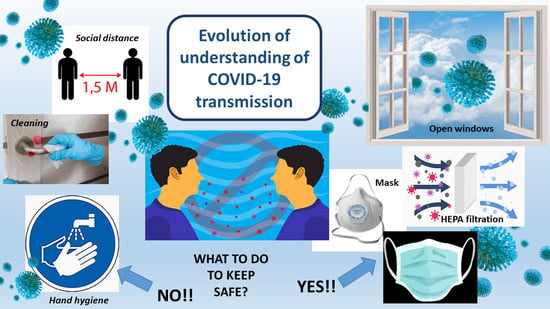
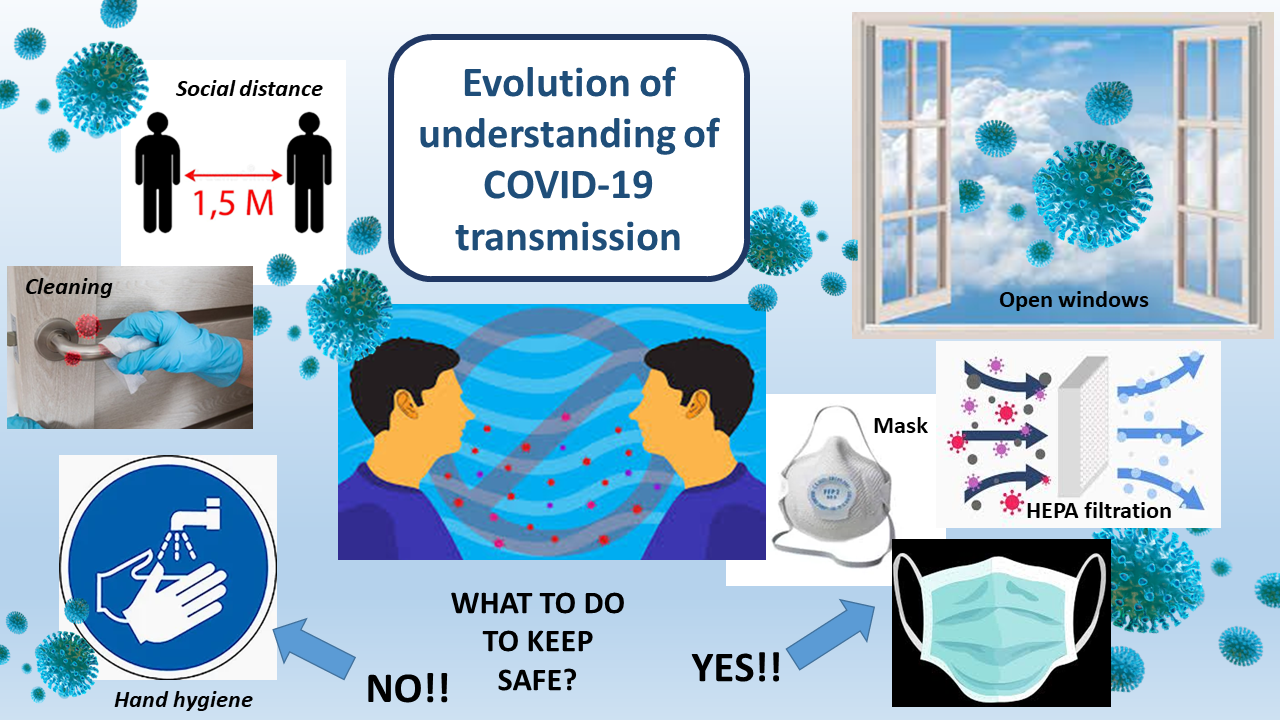
A group of scientists challenged the WHO regarding airborne spread of SARS-CoV-2. Many had studied viral transmission for years and had already questioned the validity of the contact/droplet paradigm [3]. The distinction is important because close contact and droplet spread demand protective measures such as handwashing, surface disinfection and social distancing, whereas airborne viruses may be prevented through mask wearing and adequate ventilation. Ignoring airborne transmission thereby dictated incorrect policies for pandemic management, which would impact infection risk across the world.
Public health clinicians argued with academics over particle definitions, dimensions, dynamics and spread during the remainder of 2020, given that neither camp understood each other’s specialist knowledge or language, including terms such as ‘aerosol’ and ‘droplets’ [4]. The WHO required evidence from randomised clinical trials to confirm airborne rather than droplet spread or close contact, but this was clearly impossible in the midst of a pandemic or even in the longer term. Viral transmission studies are notoriously difficult to perform for a variety of reasons, including airborne capture of live viruses, their fragility and appropriate tissue culture [5]. Furthermore, along with other infection control and outbreak studies, viral transmission cannot necessarily be controlled, randomised, or blinded, thereby creating an evidence deficit [6].
This chronological narrative charts the detailed progression of scientific thinking on the transmission of SARS-CoV-2 among a group of 36 scientists, the so-called ‘Group 36′. The article is not systematic, but merely a historical account of the struggle to confirm the nature of spread of the pandemic virus, alongside actions needed to reduce the risk of COVID-19 infection.

1.1. March 2020: Formation of Group 36

Group 36 was formed on 31 March 2020, following the publication of a statement on virus transmission from the WHO two days earlier [1]. The WHO emphatically declared that SARS-CoV-2 was not airborne, except in the case of very specific “aerosol-generating medical procedures”. The statement focused on presumed short-range droplet and close-contact transmission of the virus, thus justifying guidance for social distancing and surface disinfection. A number of scientists in aerosol physics, ventilation, engineering, chemistry, clinical medicine, microbiology and virology communicated their unease over this statement. Led by Lidia Morawska, a particle physicist from Australia, they organised a petition to explain the reasons for their concern.
The petition was submitted on 1 April (Supplementary Materials S1). It summarised the risk of airborne transmission and the reasons for the lack of evidence for infectious airborne particles, and offered some basic protective measures for people indoors. These measures were:
  • Ventilation should be increased;
  • Air should not be recirculated;
  • Individuals should avoid staying directly in the flow of air from another person;
  • The number of people sharing the same indoor environment should be reduced.
Prior to this, on 7 February, Junji Cao and Lidia Morawska had already noted the lack of support for airborne transmission from the Chinese authorities. They collaborated on a commentary entitled, “Airborne transmission of SARS-CoV-2: the world should face the reality” [7]. This paper was rejected by two top journals before eventually being published by Environment International on 7 April. It offered a direct response to the WHO statement on 29 March 2020 and formed the basis of the petition submitted to the WHO.

1.2. April 2020: Why It Was Necessary to Challenge Initial WHO Statements

From 2002 to 2019, three deadly human coronaviruses, severe acute respiratory syndrome coronavirus (SARS-CoV), Middle Eastern respiratory syndrome coronavirus (MERS-CoV) and severe acute respiratory syndrome coronavirus-2 (SARS-CoV-2), emerged to produce outbreaks of SARS, MERS and coronavirus disease 2019 (COVID-19), respectively [8]. The scientists believed that SARS-CoV-2 was contained within all sizes of respiratory particles exhaled by infected people when they breathed or spoke, whether symptomatic or not. Coughing, sneezing, shouting and singing would propel even more infectious respiratory particles of all sizes into the air. There was a profound difference in understanding between the scientists and WHO. The scientists knew that smaller respiratory particles would not necessarily fall to the ground within a metre or two of the infected person over a short time interval (seconds or minutes); they would linger in the air, subject to heat sources and air currents, and remain floating in indoor air for hours, potentially reaching distances far greater than 2 m from the point source [9,10]. They also knew that the smallest respiratory particles would carry more virions than larger particles, including so-called droplets [11].
The WHO believed that the virus was mostly contained in larger respiratory particles (droplets) expelled by an infectious person, which would fall onto surfaces, objects or the ground within 2 m. Close contact and the potential role of fomites (contaminated objects) in transmission justified advice such as social distancing, hand hygiene, and cleaning surfaces. The scientists argued for better ventilation indoors, reduced indoor occupancy rates, and respiratory masks, in order to stop people inhaling infectious particles. It was already known that the virus was able to survive in air for hours [12].
Neither the WHO nor the scientists understood each other’s definitions of respiratory particles, notably ‘aerosol’ and ‘droplet’ and their sizes and physical properties. Most people assume that ‘aerosol’ comes out of a spray can [13]. However, an “aerosol” is technically a suspension of solid or liquid particles in a gas without inferring particle size [14]. This is clear to physicists but not to non-scientists, including clinicians. Group 36 scientists appreciated the definition understood by WHO clinicians, but what they did not initially realise was the impact of the 5 µm division between ‘aerosols’ and ‘droplets’. Particles smaller than 5 µm were termed ‘aerosol’, whereas those >5 µm were ‘droplets’. This distinction dictated long-standing infection control policy and practices in hospitals. There was also confusion over what was meant by ‘short-range’ and ‘long-range’.

1.3. April 2020: WHO Response to Petition

Assembled experts alongside the WHO overruled the science presented during a teleconference. The Group attempted to justify the reasoning but their arguments were not accepted. The WHO would not endorse the possibility of airborne transmission. On 16 April, the WHO stated, “We recognize that this is a complex and evolving area. Supported by many independent international experts, we maintain our view… that the role of airborne transmission for SARS-CoV-2 is predominantly opportunistic and mainly limited to aerosol generating procedures.” The Group replied on 17 April: “As you may have seen in the initial reactions from colleagues who signed the petition, we are disappointed that WHO will not consider airborne spread of SARS-CoV-2 as one of the routes of infection transmission and will not recommend measures to mitigate this. We are keen to continue the discussion and look forward to possible collaboration on this crucial topic. At the same time, we believe that the matter is so important and urgent that we have to consider any avenues available to bring it to the attention of the general public, the medical community and authorities in charge of public health.”
In response, the WHO commented: “I’m afraid that you have misunderstood. We have always considered the possibility of airborne transmission in the context of healthcare settings where aerosol generating procedures are conducted. Our guidance clearly reflects this, and has included this since the first version that was published on 10 January. We will let the IPC team respond directly to the questions from the group.”
‘Airborne-generating procedures’ (AGPs) are a range of clinical interventions performed on patients in hospital, usually with the aim of helping the patient to breathe, or to improve breathing. The WHO was only accepting potential airborne spread for people in the vicinity of patients receiving AGPs but not necessarily outside these artificial manoeuvres. At this time, protective respirator masks were only made available to staff engaged in conducting so-called ‘aerosol-generating procedures’.

1.4. Summer 2020: What to Do After Rejection of the Science by WHO

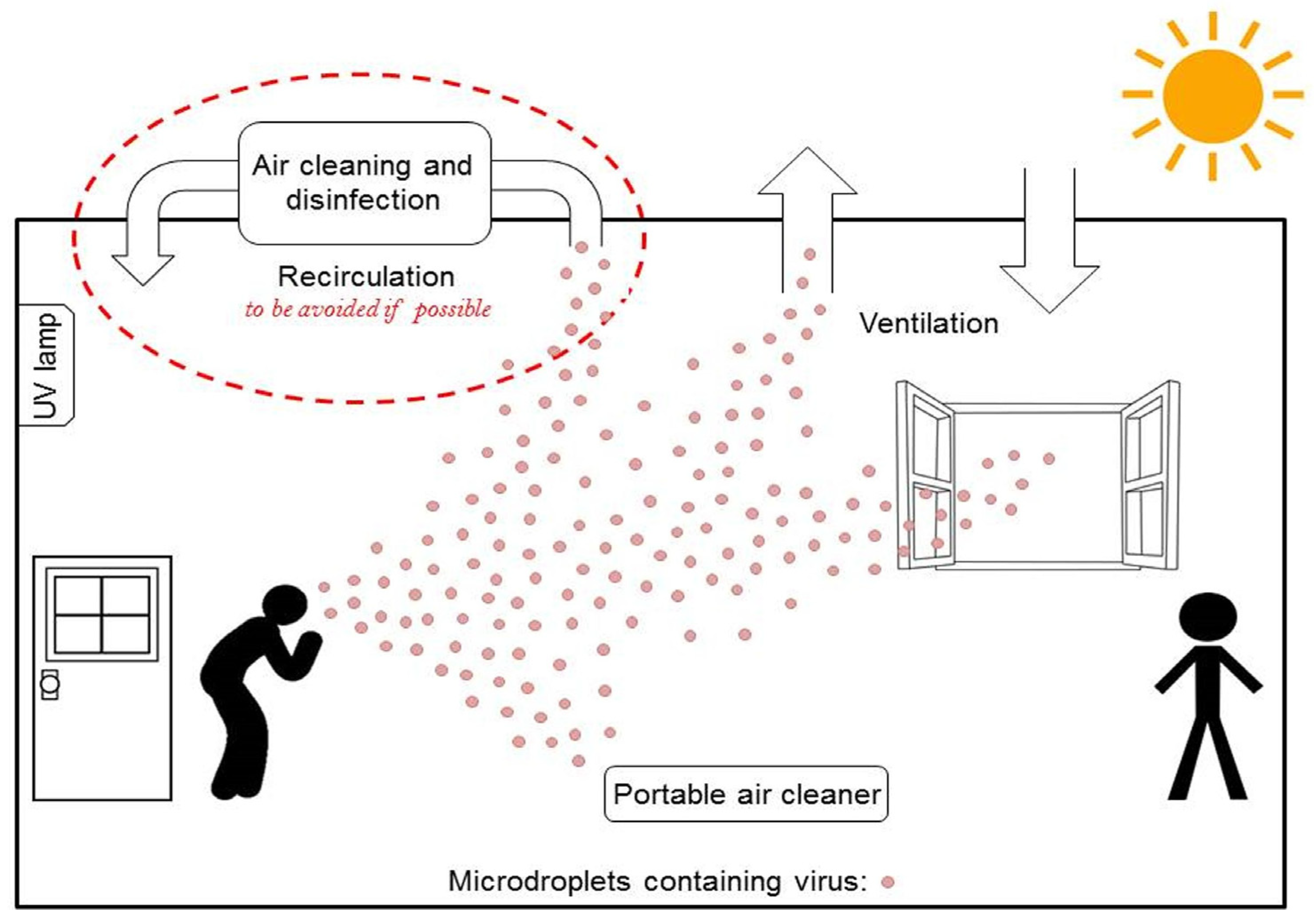
In response, Group 36 planned a rapid review containing practical advice on preventing indoor airborne transmission in a range of different environments [15]. This was to be a multi-authored collaboration, summarising all the knowledge volunteered from members. The paper explained airborne spread of the virus and offered both simple and more complex strategies to improve ventilation in healthcare and community buildings (Figure 1). It was agreed that enhanced ventilation is key to limit the spread of the SARS-CoV-2 virus. Below are listed the main recommendations:
  • To remind building managers, hospital administrators and infection control teams that engineering controls are effective for controlling and reducing the risks of airborne infection, since SARS-CoV-2 has the potential to cause infection by this route.
  • To increase the existing ventilation rates (outdoor air change rate) and enhance ventilation effectiveness using existing systems.
  • To eliminate any air recirculation within the ventilation system in order to prioritise the supply of fresh (outdoor) air.
  • To supplement existing ventilation with portable air cleaners (with mechanical filtration systems that capture airborne particles), where there are areas of known air stagnation (which are not well-ventilated with the existing system), or isolate high patient-exhaled airborne viral loads (e.g., on COVID-19 cohort patient bays or wards). Adequate replacement of the filters in the air cleaners and their maintenance are crucial.
  • To avoid over-crowding, e.g., pupils sitting at every other desk in school classrooms, customers at every other table in restaurants, or every other seat in public transport, cinemas, etc.
This paper was originally submitted to Environment International on 22 April, and after revision, published in September 2020.

1.5. May 2020: The Next Move

Group 36 recast their original petition as an open letter with the aim of approaching international scientific journals for publication [16]. It was suggested that other scientists could be invited as co-authors. Members identified additional internationally acclaimed experts and an online platform was established through which these experts could sign. There was an immediate and overwhelming response to support an open letter, which aptly demonstrated consensus on the topic within the global expert community.
The letter, signed by 241 individuals, was rejected on 28 May by a leading journal following review. It was then submitted to a second international journal on 5 June, and rejected again on 17 June. The paper was finally sent to Clinical Infectious Diseases on 26 June, accepted on 1 July and published on 6 July [16]. This was 3 months after the first petition had been sent to the WHO.

1.6. July 2020: WHO Response to the Open Letter

The letter attracted a global media blitz after an initial embargo was lifted. Just before publication, the Group approached the WHO saying, “We appeal again for WHO to join scientists and national healthcare organizations to acknowledge the new data and update their stance, by accepting that airborne spread is one of the main modes of transmission of SARS-CoV-2. This will provide urgent and much needed global leadership to unify the multiple and varied approaches required to control the spread of SARS-CoV-2, as new clusters continue to break out across the world.”
The WHO reacted during a media conference on 7 July, appearing to accept airborne transmission: “The World Health Organization acknowledges ‘evidence emerging’ of the airborne spread of the novel coronavirus, after a group of scientists urged the global body to update its guidance on how the respiratory disease passes between people” [16]. But two days later on 9 July 2020, WHO modified its brief: “This section briefly describes possible modes of transmission for SARS-CoV-2, including contact, droplet, airborne, fomite, faecal-oral, blood-borne, mother-to-child, and animal-to-human transmission”; and “Airborne transmission is defined as the spread of an infectious agent caused by the dissemination of droplet nuclei (aerosols) that remain infectious when suspended in air over long distances and time.” [17].

1.7. July 2020: The Problem with the WHO Brief

The brief did not define the terms droplets or droplet nuclei (what is left of respiratory particles after the water evaporates) and seemed to equate droplet nuclei with aerosols. Indeed, this terminology had been adopted by governments, public health and policy makers all around the world. It was already integrated into IPC frameworks before the pandemic and WHO stance. There was, and remains, an (almost) arbitrarily designated size-based distinction between ‘aerosol’ and ‘droplet’. The upper limit for particles to be able to float in the air for varying lengths of time is 100 µm, not 5 µm, as originally thought [18]. A micron (µm) is a unit of measurement equal to one-millionth of a metre. The incorrect 5 µm claim emerged because earlier scientists conflated the size at which respiratory particles could reach the lower respiratory tract (important for studying tuberculosis) with the size at which they remain suspended in the air. The traditional view also makes it easier (and less costly) to designate protective policy. For example, infectious diseases transmitted by aerosol require more stringent precautions, including pressurised isolation rooms and fitted respirator masks in hospitals. Patients emitting infectious droplets can be cared for by staff wearing surgical (paper) masks and accommodated in multi-bedded bays. So any infection deemed to spread through droplets receives one package of infection control precautions, and another labelled as aerosol or airborne receives another.
Infection control guidance recognises a small and select group of diseases as truly airborne; these include tuberculosis, measles, and chicken pox. They do not include respiratory viruses causing influenza or respiratory syncytial virus (RSV). Exemption of the latter two viruses from the airborne definition had already provoked much debate between clinicians and scientists years before the pandemic [3]. Earlier papers published by Group members argued that these viruses also spread through the air via tiny (<5 µm) airborne respiratory particles rather than ‘droplet’ particles of >100 µm [19,20].
The WHO continued to reject any possibility that airborne transmission was almost certainly the predominant mode of spread of SARS-CoV-2 indoors. The Group and others responded to the brief in order to try to explain and improve the science [21,22]. The suggested changes for the WHO’s scientific briefing on 9 July 2020 were submitted to the WHO on 27 August 2020. A response was received on 1 September 2020 but again, failed to endorse any of the science presented.

1.8. 2020: Consequences of WHO’s Stance on SARS-CoV-2 Transmission

As the WHO is regarded as a global leader, people, organisations and governments all over the world were misinformed over the potential airborne transmission of SARS-CoV-2. If this transmission mode had been accepted earlier, people would have known that it was much safer outdoors, where airborne particles disperse more easily. The greatest risk for acquiring the virus was being indoors with other people. Therefore, indoor ventilation was key, with air filtered, replaced or ‘cleaned’ as necessary. Indeed, the marked difference between rates of indoor and outdoor transmission can only be explained by airborne transmission, because large respiratory particles (>100 µm), whose trajectories are affected by gravitational settling but not ventilation, behave identically in both settings [22]. Instead of banning gatherings, there could have been interventions to reduce the risk of superspreading events, such as opening windows and doors. Mask wearing could have been encouraged, with individual fit testing for people at risk needing respirator masks. There would have been less focus on cleaning surfaces. Across the world, there was widespread disinfection of public spaces in the belief that chemical spraying would reduce the risk of contact with the virus. Unfortunately, this meant unleashing a huge chemical burden into the environment, which resulted in significant ecological damage as well as costing a great deal of money. This disinfection strategy would have had little or no impact on COVID-19 transmission [23].

1.9. Summer 2020: Investigating Transmission Using a Real-Life Outbreak

The first opportunity for the Group to apply collective principles on airborne transmission came in the form of a well-documented outbreak that occurred in March 2020 [24,25]. Initial reporting of the tragic Skagit choir outbreak ignited interest among members, who decided to investigate the incident in order to see whether it fitted the proposed model for airborne transmission. Consequently, outbreak data was collected from choir members after requesting permission. The outbreak occurred following attendance of a symptomatic index case at a weekly rehearsal of the Skagit Valley Chorale on 10 March 2020. After that rehearsal, 53 members of the choir among 61 in attendance were confirmed, or strongly suspected, to have contracted COVID-19 and two died. Transmission by the airborne route was thought likely, because neither fomite nor ballistic droplet transmission could explain the substantial case numbers. Not everyone could have touched the same contaminated surface or object during the rehearsal; only a handful used the toilets; and all participants applied hand sanitiser at first entry to the rehearsal hall. A bird’s-eye view of the rehearsal seating plan, showing who became infected and when, was constructed. Cases occurred throughout the room without clustering around the index case (Supplementary Materials S2). The latter would have been expected if the index case had been emitting larger infectious particles (>100 µm), rapidly settling within the 1–2 m zone. Scientific modelling using all available parameters supported airborne transmission across the hall, subject to considered ventilation variables. There were some practical learning points:
  • During respiratory disease pandemics, group singing indoors should be carefully managed as singing can generate large amounts of airborne virus if any of the singers are infected;
  • Ventilation requirements for spaces that are used for singing should be reconsidered in light of the potential for airborne transmission of infectious diseases;
  • Mechanical systems that combine thermal and ventilator functions should be accompanied with a disclaimer saying, “Do not shut this system off when people are using the room; turning off the system will also shut down outdoor air supply, which can lead to the spread of airborne infections.”
This study proved pivotal in confirming the nature of SARS-CoV-2 transmission in an indoor environment and in particular, a potential superspreading event. The latter occurs when a large number of secondary transmissions are produced early in an outbreak and transmission is sustained in the later stages. Some people release a lot more respiratory particles than their peers and can be termed ‘superspreaders’. The broad range of viral loads in respiratory fluids may also be an important factor influencing superspreading events. Reports of similar outbreaks among choristers quickly followed, with superspreading events occurring in other indoor venues, such as restaurants, public transport, offices and sports halls. Large-scale studies have shown that more than 70% of infected people do not transmit to other people, while as few as 5% may be responsible for 80% of transmissions through superspreading events [26].
Despite databases documenting thousands of indoor superspreader incidents, there has not yet been a confirmed outdoor-only case of superspreading. Superspreading events can ONLY occur with airborne transmission of the infectious agent.

1.10. Summer 2020: Challenging Incorrect or Misconstrued Publications on Viral Transmission

During this time, Group 36 and others noted a constant flow of pre-published and published letters and papers containing incorrect findings, poor science and misconceptions [27]. Some were better ignored but others deserved editorial challenge [28]. One example was widespread critique aimed at van Doremalen N et al., 2020, who examined survival of SARS-CoV-2 in air compared with SARS-CoV-1 [12]. Critics said that the experimental setup did not mirror real-life events, among other concerns. The original study showed that, “SARS-CoV-2 remained viable in aerosols throughout the duration of (the) experiment (3 h), with a reduction in infectious titre from 103.5 to 102.7 TCID50 per litre of air. This reduction was similar to that observed with SARS-CoV-1” [12].
The pro-droplet/short-range spread protagonists, including the WHO, might have been concerned by the inference of prolonged survival of airborne virus picked up by mainstream media. One letter concluded that, ‘WHO and infection prevention specialists continue to support assertion that transmission of SARS-CoV-2 is primarily through droplets and contact (including indirect contact with contaminated surfaces). Aerosols are likely to be generated through a small number of clinical procedures, but these are not the main way the virus spreads in the community’ [29]. This letter overlooked previous work on SARS-CoV-1 and other respiratory viruses. One of the references used to cite support for droplets stated that Collison nebulisers (used in the van Doremalen study) create “very small droplets that can hold viruses far longer than other types of nebulizers.” This tries to justify the seemingly ‘prolonged’ survival of the virus in air. But the study examining Collison nebulisers actually used a bacterium, E. coli, not a virus [29].
The Group penned a response describing reported outbreaks, where airborne transmission could not be ruled out as a significant pathway for SARS-CoV-2 transmission [30]. The response also tackled the erroneous distinction between droplets and aerosol: “The traditionally accepted size parameters (<5 μm for aerosol; >5 μm for droplets) are not consistent with a modern understanding of aerosols. Droplets in a cough or sneeze can travel much farther than 2 m, and, even without the momentum of a respiratory jet, droplets as large as 30 μm can travel at least 2 m in indoor air currents, before falling to the ground” [20,31]. By what mechanism would intact virions encased in a 5 μm particle be deemed non-infectious, when current guidance assumes that those in larger droplets, say, 30 μm, are infectious? Viruses have been shown to survive equally well, if not better, in suspended aerosols compared with large stationary droplets [32]. Indeed, the latter explains how asymptomatic SARS-CoV-2 patients are able to transmit the virus efficiently despite the absence of coughing and/or sneezing.

1.11. Autumn 2020: Dismantling the Myths

Given the confusion over terminology of different-sized particles, it was decided to write a paper explaining the terminology and debunking some long-held myths, particularly those believed by public health and other clinicians. Specific ‘myths’ were volunteered, which could be presented, explained and ultimately rescinded, while aiming the whole at clinicians, not academic scientists [13]. As already mentioned, most people assume that pressing the plunger on a can produces ‘aerosol’. Clinicians say that it is a particle <5 µm, which is produced during an ‘aerosol-generating procedure’ (e.g., putting a tube down a patient’s throat). Scientists say that an aerosol is a collection of solid or liquid particles, of any size, suspended in a gas.
In total, seven myths were selected for examination and rebuttal. These were:
  • Myth 1: ‘aerosols are droplets with a diameter of 5 μm or less’;
  • Myth 2: ‘all particles larger than 5 μm fall within 1–2 m of the source’;
  • Myth 3: ‘if it is short range, it cannot be airborne’;
  • Myth 4: ‘if the basic reproductive number, R0, is not as large as for measles, then it cannot be airborne’;
  • Myth 5a. ‘If it is airborne, surgical masks (or cloth face coverings) will not work’;
  • Myth 5b: ‘the virus is only 100 nm (0.1 μm) in size so filters and masks will not work’;
  • Myth 6: ‘unless it grows in tissue culture, it is not infectious’.
The paper concluded, ‘… the existing evidence is sufficiently strong to warrant engineering controls targeting airborne transmission in order to limit the risk of infection indoors. These would include sufficient ventilation, possibly enhanced by particle filtration and air disinfection; and the avoidance of systems that recirculate or mix air. Opening windows, subject to thermal comfort and security, would provide more than a gesture towards reducing the risk of infection from lingering viral particles’ [13].

1.12. Work Elsewhere During 2020

Many scientists across the world worked on the pandemic virus during 2020. Key findings published or pre-published at this time included a study by Santarpia et al., 2020, which showed that when the distance between isolated patients and air sampling was maintained at greater than 6 ft, two of three air samples were positive for viral RNA [33]. Another study demonstrated that SARS-CoV-2 can be shed from a patient into the air in particles sized between 1 and 4 µm [34], and yet another quantitated airborne virus, with 0.02 RNA copies/L air in a toilet area and 0.02–0.04 copies/L air in a room used to remove personal protective equipment (PPE) [35]. More than half the viral RNA in these samples was associated with particles <2.5 µm.
Other authors showed that viable SARS-CoV-2 could be isolated from air samples collected 2 to 4.8 m away from patients [36]. The genome sequence of the SARS-CoV-2 strain isolated from air collected by samplers was identical to that isolated from a newly admitted patient. Stadnytskyi et al., 2020, and Ma et al., 2020, showed that normal speaking leads to airborne virus transmission in confined environments [37,38] and one of several outbreak studies suggested that airborne transmission due to poor ventilation played a role in a two-bus outbreak of COVID-19 [39].
While these early papers did not refute airborne transmission, none actually proved beyond doubt that the main vector of transmission occurred via the tiniest airborne respiratory particles.

1.13. 2020: What Proof Was Needed and Why It Was Not Available

a.
No genomic data available
Despite ongoing work during summer 2020, there was little, if any, conclusive evidence for the transmission of SARS-CoV-2 via any specific pathway. This applied equally to all sizes of respiratory particles, whether transmitted through air, or from surfaces and objects via direct contact between hands and mucous membranes. In fact, transmission through large particles >100 µm has never been demonstrated for any respiratory virus infection. The proof required to elicit these routes of transmission requires genomic sequencing and matching of the target pathogen at the source (e.g., on surfaces, objects or hands) alongside a sample of the same virus causing subsequent disease in the recipient, together with sufficient proof to exclude any other source of the pathogen strain before or during the study. However, genomic studies tracking a single virus are difficult and expensive to perform and they tend to fail [40].
b.
Proving that the virus is alive in air
When investigating transmission pathways, it is necessary to show that the virus is present in air and on surfaces, and that it is alive or ‘viable’ (able to replicate in host cells). This illustrates the first challenge because SARS-CoV-2 is an enveloped virus, which means, paradoxically, that it is more vulnerable to external conditions including physical handling. Air sampling equipment used to capture airborne viruses draws in huge amounts of air at speed which impinges upon special types of gel or liquid media. These are then inoculated into tissue cultures, which will, if the virus has survived, produce a visible cytopathic (killing) effect after being incubated. Early papers describe successful attempts at cultivating the virus, but only in very small amounts, representing only a small fraction of the quantity of the virus present in the first place. It is relatively easy to cultivate virus and see cytopathic effects with 105 infectious virions, but sporadic sampling may not be able to collect this amount, probably because so much virus is damaged during the collection process. Unfortunately, the few reports able to demonstrate viable airborne virus were not sufficient to convince those who thought that it was transmitted through larger particles (>100 µm) close to the source [36].
c.
Tracking the transmission pathway of an invisible pathogen
Trying to establish the transmission route of a virus is exceedingly difficult. We cannot see it; we can only culture it with difficulty; we do not know how long it survives outside the human body; we do not know how much virus is needed to infect us; and finally, there is confusion over the definitions of the respiratory particles that are expelled from an individual. Both tiny (<5 μm) and larger (>100 μm) particles may be produced during expiration, with one expired breath potentially containing the whole spectrum of sizes from <5 μm–>100 μm. Different-sized particles have different physical properties. All may carry infectious virus (except those smaller than the actual size of the virus), with <5 µm particles carrying more virus than the larger ones (>100 µm) [9].
The crux of the problem is that the same conditions which lead to a person contracting a virus from respiratory particles (<5 μm) also apply to someone contracting it through larger particles (>100 μm) at short range (<1 m). Tiny particles could be transmitted at short range equally as well as those larger. In fact, an airborne cloud of particles containing lots of infective virus would be more successful at initiating infection within a metre or so. But that same cloud could also initiate infection over a much longer distance, provided the virus is present in sufficient concentration. This contradicts the traditional view long held by clinicians that proximity to the index case is only associated with transmission due to droplet spread and longer distances are only associated with aerosol spread. Short-range transmission has long been considered a proxy for ‘droplets’. This is now an archaic dogma. We know that both situations can occur. Indeed, larger respiratory particles equating to droplets can be expelled more than 6 m after a sneeze [41].
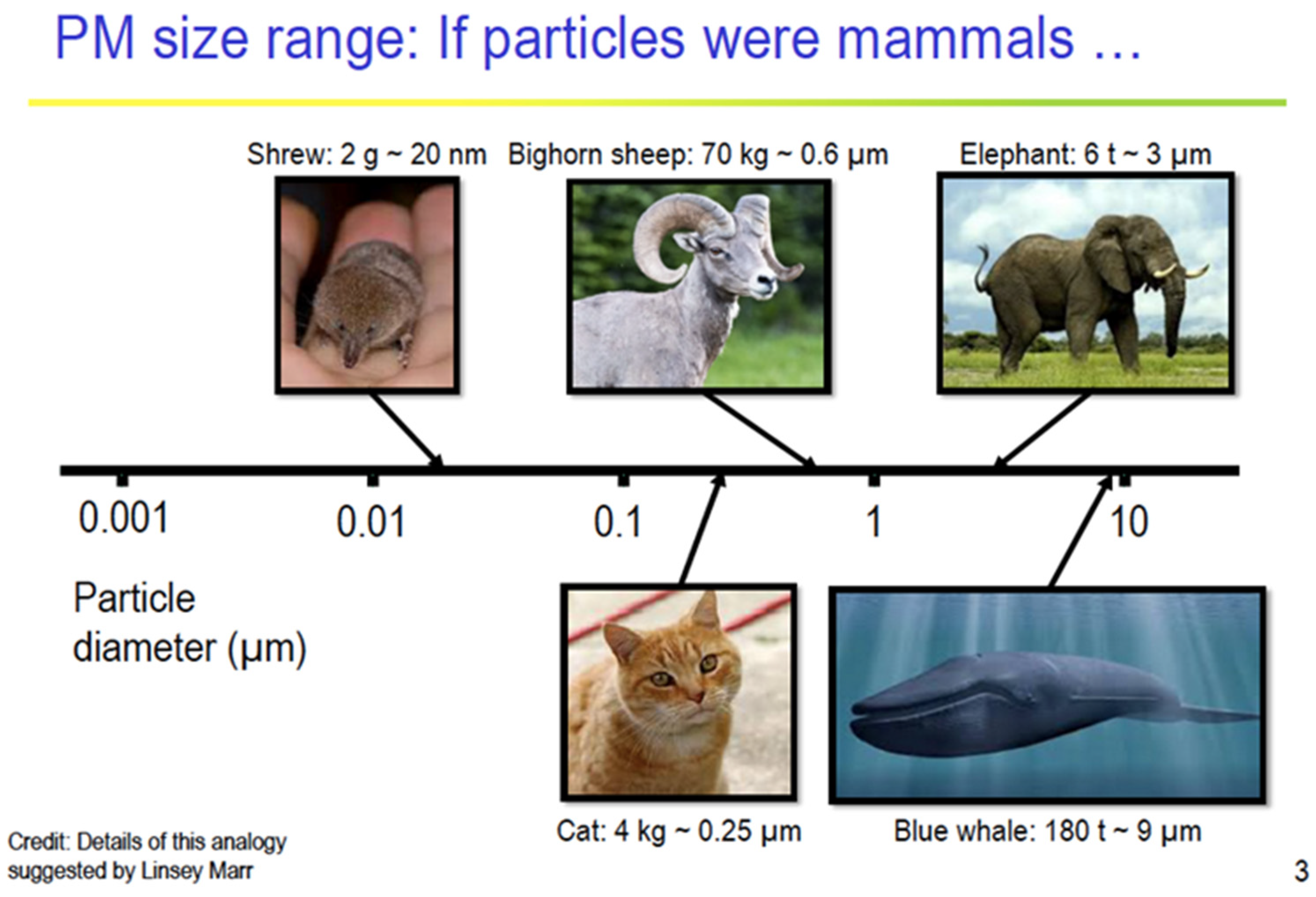
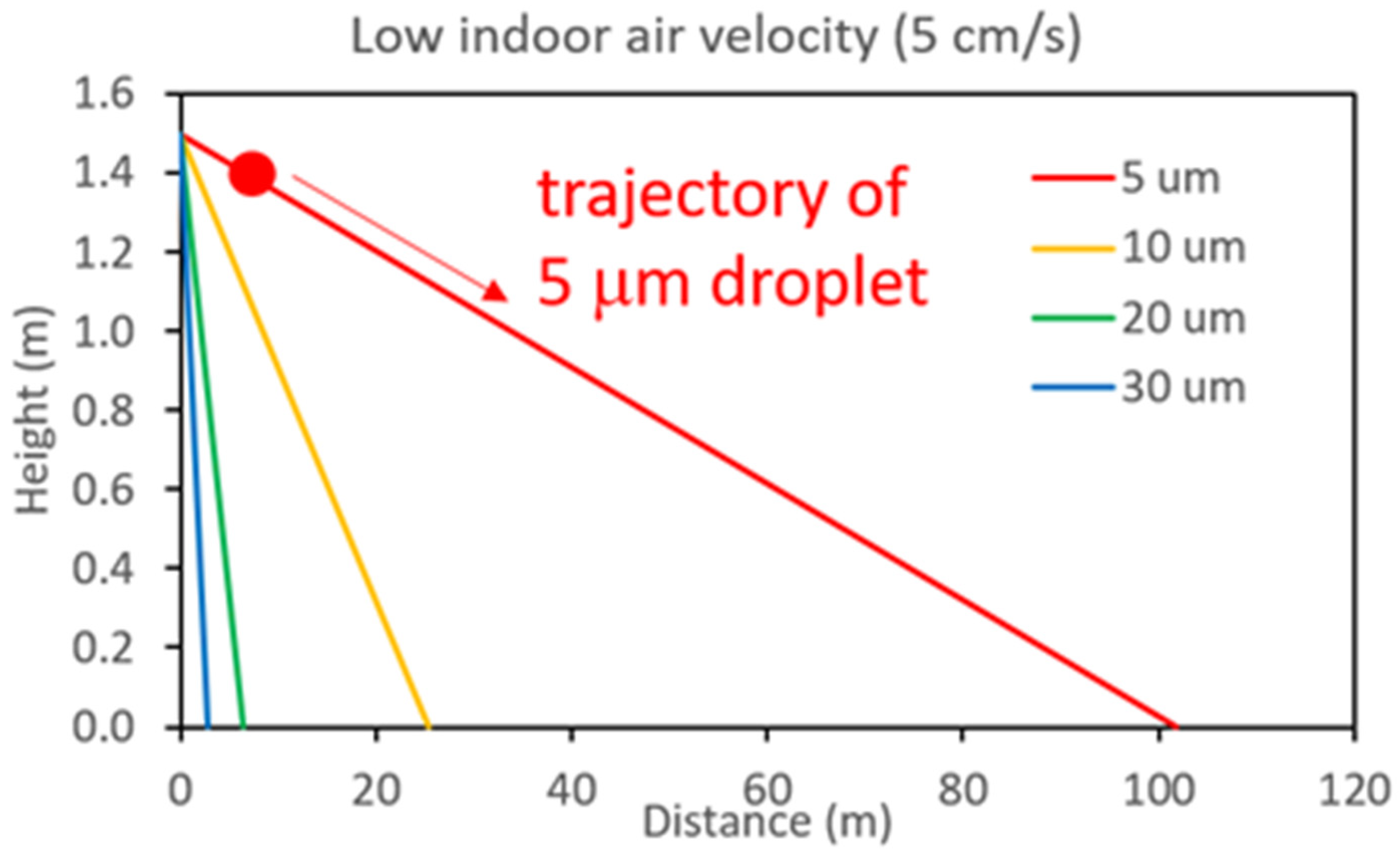
Particle size is the most important determinant of behaviour in the air [10] (Figure 2). Particles that are 5 μm or smaller remain airborne indefinitely under most indoor conditions unless they are removed via air currents or dilution ventilation. These tiny particles (i.e., <5 μm) gain access to the lower respiratory tract in humans. Particles sized 6–12 μm deposit in the upper airways of the head and neck. Particles of 100 μm and larger fall to the ground a few seconds after expiration and do not easily gain access to the respiratory tract, although they could potentially land on the mouth, nose or eyes. So, if a virus is thought to transmit primarily through large-particle spread, initial protective measures would be physical distancing; if the virus transmits through <5 µm particle spread, then masks are indicated, alongside an indoor ventilation system that replaces contaminated air. Figure 3 shows the relative size of respiratory particles compared with mammals in order to highlight the difference between the tiniest particles.
Respiratory particles of around half a micron or so can remain airborne almost indefinitely and can therefore penetrate human lungs. These are the most prevalent in carrying SARS-CoV-2. Particles over 10 µm might reach the upper respiratory tract but are more vulnerable to gravitational forces and will deposit on the floor at a speed relative to size.
The traditional view of transmission pathways also includes contact spread, along with airborne particles. It is almost impossible to determine whether an individual touched a contaminated surface or object (fomite) in the environment and then transferred viable virus to their own mouth, nose or eyes. People continually touch their faces. How can it be proven whether the infected person acquired the virus from particles hanging in the air, or handled a contaminated fomite and rubbed their eyes? If the virus transmits through direct contact, then hand hygiene and surface cleaning become the priority. This would also be true for larger respiratory particles landing on surfaces, provided the virus survives environmental deposition in sufficient quantities to be acquired and inoculated through mucosal sites.
Using human volunteers to investigate transmission pathways, as with colds and influenza, is difficult to set up for COVID-19, given study ethics [42]. It is easier to perform transmission experiments on animals, and indeed, it was the 1960s animal studies that finally convinced clinicians that tuberculosis was primarily contracted through the air [43]. This is despite the fact that tuberculosis bacteria have never been cultured from the air, nor has another airborne virus, measles. There are now a number of studies that have been performed which offer robust evidence for airborne transmission of SARS-CoV-2 for certain types of animals. For example, one study placed hamsters in an experimental setup involving two cages connected in such a way that only particles less than 10 µm in diameter could be transferred between cages [44]. Infected hamsters were able to produce sufficient airborne particles (mostly <5 µm) to transmit SARS-CoV-2 through the connecting tubing to uninfected hamsters. Infection of the latter was established by seroconversion and virus shedding in recipient animals.
d.
Comparison with other airborne viruses
What about other viruses whose transmission type is accepted as ‘airborne’? The sizes of measles, chicken pox, influenza and COVID-19 viruses all lie within 100–150 nm. The process of any forcible expiration, particularly sneezing and coughing, will be the same for these viruses, i.e., respiratory particles in the same size range and number are generated. Are the infection sites in the respiratory tract different for these viruses? If not, why then is airborne cross-infection possible with measles, chicken pox and influenza, but not for COVID-19? This is a question for those who still oppose airborne transmission of COVID-19.
e.
The evidence-based medicine doctrine
Clinical professionals abide by the requirement for ‘evidence-based medicine’, which has flourished over the past few years [6]. This grades the quality of evidence for a particular medicine or procedure, in order to inform practitioners of the best management, as well as protecting patients from potential harm. Policy makers demand the highest grades of evidence to support mandatory guidance and this means using recommendations from multi-authored reviews presenting data from multiple randomised blinded controlled trials (RCTs). The WHO, as an international body responsible for producing guidance, also abides by this standard but therein lies the problem that in the face of a sudden and burgeoning pandemic, there simply was not enough high-quality evidence on a novel virus, with which to construct evidence-based policy. Then the WHO decided to impose a higher standard of proof for theories that challenge conventional wisdom than for those that support it.
There is, of course, a fundamental problem with obtaining high-quality evidence in the form of RCTs for an outbreak pathogen. It is difficult to set up a study examining transmission during an outbreak; an outbreak cannot necessarily be controlled, and any interventions or outcomes cannot be blinded to those taking part. There are clear ethical considerations for observing patients in a hospital ward with open windows during a COVID-19 outbreak rather than a ward with no windows. Luckily, there were opportunistic instances where patients were fortuitously accommodated in rooms receiving outside air through natural ventilation, while others were placed in areas receiving recycled or mixed air mechanical ventilation. The number of infections acquired shows that natural ventilation provides better protection against COVID-19 [45,46]. But these opportunistic or anecdotal reports do not constitute the highest grade of evidence. Setting up a classic RCT to provide irrefutable evidence on transmission of SARS-CoV-2 is almost impossible. It is laudable to seek solid scientific evidence, but during a global pandemic, we should not have to wait for randomised evidence that might never materialise (courtesy of Y. Li, in [47]).
However, evidence was accumulating for airborne transmission of SARS-CoV-2, whatever the size of the respiratory particles involved (but probably those <5 µm). In essence, SARS-CoV-2 joins SARS-1, MERS, influenza, measles, tuberculosis and chicken pox as pathogens transmitted through the air [48]. Smallpox is another, now eradicated [49].

1.14. 2020–2021: Practical Indicators for Airborne Transmission Risk in Shared Indoor Environments

Given the risk from airborne transmission, it became necessary to decide which parameter(s) is/are the best to quantify how ventilation and other conditions impact infection risk. Those who accept airborne transmission might appreciate some practical help on assessing the risk indoors. It was thought that a paper considering key ventilatory parameters might be helpful in defining quantitative infection risk criteria for different spaces and types of events to reduce the infection risk [50,51].
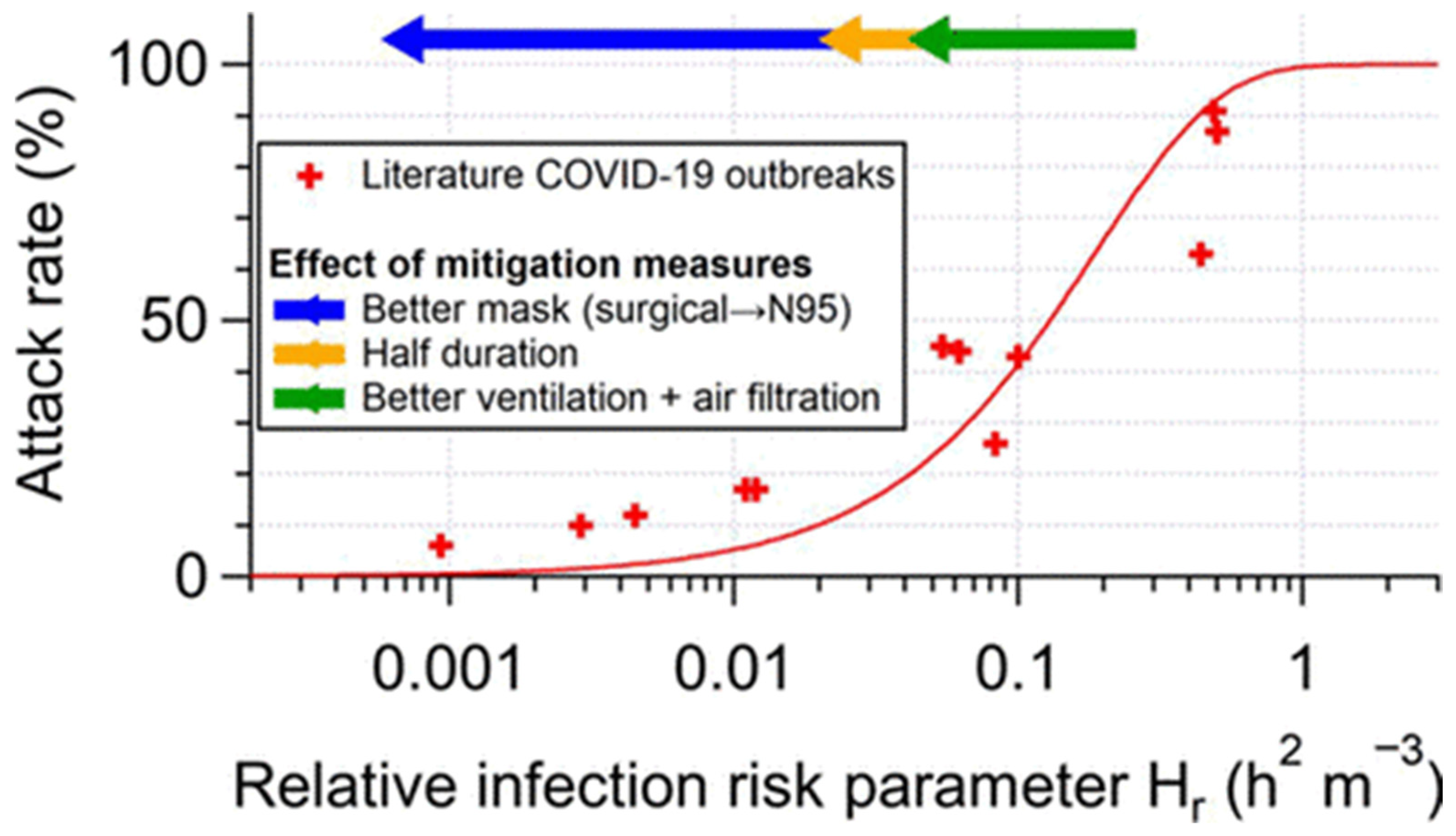
Group members devised a model to calculate relative risk (Hr) of acquiring SARS-CoV-2 from indoor air, depending upon all the variables that could be factored into the model. It included the effect on the risk if specific protective measures were implemented. An important advantage of the simple risk parameters used was that their values could be calculated for outbreaks that were already documented in the scientific literature. These COVID-19 outbreaks could be fitted to a trend line, seen in Figure 4, showing that as the relative risk increases, so does the attack rate [50].
The relative risk of COVID-19 infection Hr has a unit of h2 m−3, which specifies the increase in risk over time (h), the inverse of the ventilation rate expressed as air changes per hour (1/h−1 = h), and the inverse of the volume of the space (1/m3). Hr falls between that of two well-known airborne diseases: the more transmissible measles and the less transmissible tuberculosis. But even though COVID-19 is less transmissible than measles, it does not rule out airborne transmission. Plus, it is still more contagious than tuberculosis. For a novel disease that is as transmissible as measles, it would be very difficult to make any indoor activities safe aside from highly effective/protective vaccination.
Mitigation measures to limit shared-room airborne transmission would be needed for indoor spaces whenever COVID-19 was spreading in a community. Among effective measures are reducing vocalisation (if possible), avoiding intense physical activities, shortening the duration of occupancy, reducing the number of occupants, wearing high-quality well-fitting masks, increasing ventilation, improving ventilation effectiveness, and applying additional virus removal measures, such as air-cleaning strategies like HEPA filtration and/or ultraviolet light disinfection. Even simple window-opening would help. The use of multiple “layers of protection” would be needed in many situations, because a single measure (e.g., masking) would not necessarily reduce the risk to the lowest level.
Combinations of some or all of these measures are able to lower the risk parameter H close to 0.01 person h2 m−3, so that the expected number of secondary cases is substantially lower than 1 even in the presence of an infectious person. These measures would help avoid major outbreaks.
A letter supporting this paper was published in the BMJ, after it became clear that the people who would benefit most from these estimates were hospital staff [52].

1.15. Autumn 2020: The World Needs a Paradigm Shift in Managing Transmission of Respiratory Infections

With dismissal of the revised WHO brief on 1 September, it was clear that a new approach was required. It was agreed to target public health professionals with a paper explaining the need for clean indoor air, just as we need clean food and water [53]. Airborne infection provides an equitable risk to public health, similar to salmonella in foodstuffs or faecal coliforms in drinking water. In contrast, airborne pathogens and respiratory infections, whether influenza, colds or COVID-19, are generally ignored, in terms of regulations, standards, building design and operation. The reasons for this are due to the fact that airborne studies are much more difficult to conduct than those on foods, milks or waters. Air as a contagion medium is nebulous, widespread, not owned by anybody, and uncontained. Buildings and their airflows are complicated, and measurement methods for such studies are complex and not currently standardised [54].
For decades, architects and building engineers have prioritised thermal comfort, odour control, perceived air quality, initial investment cost, energy use, and other performance issues, whereas infection control is overlooked. This could in part be based on the lack of supposed risk, or on the assumption that there are more important ways to control infectious disease, despite evidence that healthy indoor environments are essential for health. Prior to COVID-19, almost no engineering-based measures to limit community respiratory infection transmission were employed in public buildings (excluding healthcare facilities) or transport infrastructure anywhere in the world, despite the frequency of such infections and the health burden and economic losses they cause [55]. Getting everyone to accept the need for clean air would mean no less than a paradigm shift in public health expectations. Yet, potential benefits extend beyond infectious disease transmission [4]. An improvement in indoor air quality might reduce absenteeism in the workplace from other, non-infectious causes, such as sick building syndrome and allergic reactions, to the extent that the reduction in productivity losses would likely cover the cost of upgraded ventilation [56,57,58].
A series of critical steps were proposed to support the need, construction and implementation of indoor air quality (IAQ) standards. The extent of the paradigm shift required can be compared with that of Chadwick’s Sanitary Report in 1842, which led the British government to encourage cities to organise clean water supplies and centralise sewage systems. The public have a right to expect clean indoor air, just as they expect clean water from taps [53].

1.16. 2021: Relative Infection Risk Applied Indoors: Bathrooms and Toilets

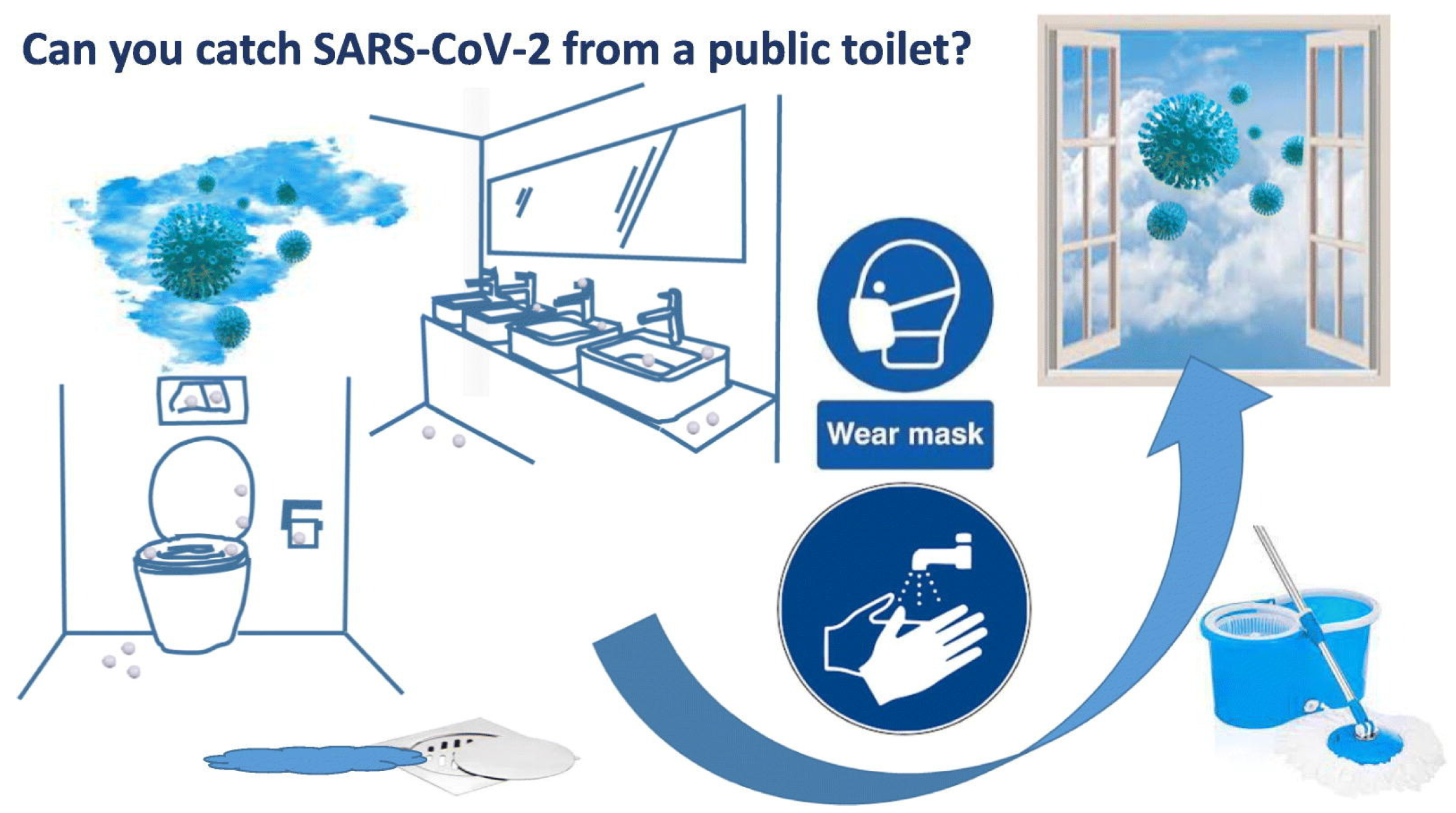
While on the subject of sewage, members of the Group speculated that the risk of indoor transmission could potentially be enhanced in toilets, since infectious respiratory particles could remain suspended for hours in the air in indoor bathrooms [35]. This followed evidence suggesting that the virus could be dispersed through urinary and faecal particles [59,60]. Public toilets might act as a contact hub point whereby community transmission of SARS-CoV-2 occurs between users (Figure 5).
The mechanism of spread would arise through three mechanisms:
  • Firstly, inhalation of faecal and/or urinary particles from an individual shedding SARS-CoV-2;
  • Secondly, airborne transmission of respiratory particles between users face-to-face or after use;
  • Thirdly, fomite transmission via frequent touch sites such as door handles, sink taps or the toilet roll dispenser.
Toilets present a risk comparable with other high-throughput enclosed spaces such as public transport, shopping centres and restaurants. They are often compact, inadequately ventilated, heavily used and subject to maintenance and cleaning issues. In the UK, there was an outcry following relaxation of lockdown during summer 2020 when people crowded onto beaches. This was not necessarily due to close proximity while sunbathing (in the sunshine-filled open air), but rather more the need for public toilets in the nearest car park, café or pub.
Since the risk of SARS-CoV-2 from toilets was first proposed, further studies have been published supporting the role of toilets in transmission [61]. It appears that the risk is doubled in households, whereby family members sharing a toilet with an infected individual are twice as likely to acquire COVID-19 [62], and people in high-rise flats are also at increased risk of contracting COVID-19 from infected persons in flats with connecting drains [63]. The latter is reminiscent of the Amoy Gardens outbreak during the spread of SARS-CoV-1 [64].
The problem with proving the role of toilets is self-evident; scientists and funders alike are unlikely to investigate or support studies on toilets. There are more palatable studies to choose from when investigating a SARS-CoV-2 transmission pathway. Yet, everyone needs toilets, and given the potential transmission risk of COVID-19 alongside other pathogens, the smallest room we visit deserves a great deal more attention than it has thus far received [65].

1.17. January 2021: The Story of One Scottish Hospital

Hospital-acquired COVID-19 infection rates were particularly severe in a Scottish healthboard during December 2020, with increasing mortality among patients not necessarily admitted with COVID-19 [66]. One hospital experienced an outbreak of COVID-19 so severe that over half the wards in the hospital were affected. At the time, the healthboard was already under pressure from orthopaedic referrals following a spell of freezing weather. An infection control committee was convened, with a raft of preventive measures that included window-opening. The time interval required for opening windows in a standard four-bedded bay in order to elicit a complete air change was calculated. Consequently, an ‘Open The Window’ policy was launched on 25 January 2021, requesting staff to open all windows in clinical areas for 15 min three times per day [25,67,68]. This policy emanated from amalgamated guidelines published by the European Centre of Disease Control (ECDC) [69].
Windows in corridors and canteens were also opened in order to improve air change rates throughout the hospitals [70]. Window-opening in winter, when the outside air is colder than the indoor air, encourages the flow of contaminated air towards the window due to thermal buoyancy effects [19].
From 1 October 2020 to 25 January 2021, there were 17 clusters of COVID-19 in the study hospital compared with just two clusters after the window-opening policy until 31 March 2021. There was a corresponding decrease in hospital-acquired COVID-19 mortality rates during February and March 2021. This was thought to be due to less severe infection from dilution of infectious particles on the wards following the regular ingress of fresh air [66].
Most hospitals in the UK NHS rely upon natural ventilation for general wards. Only operating theatres, immunocompromised units and critical care benefit from mechanical ventilation, with the requisite air changes (c. 12 AC/h). There are additional strategies for improving ventilation in wards, bathrooms, offices and other areas in the hospital, but these amendments rely upon the understanding, knowledge and motivation of managers and estate staff [71]. They also require funding. Without strident direction from government and/or public health, such strategies will not be implemented [54].

1.18. June 2021: Examining the History of Airborne Transmission

Despite cursory mention in some infection control guidelines [72,73], the role and importance of airborne transmission for SARS-CoV-2 remained contentious more than a year into the pandemic, particularly among clinicians. In June 2021, the Group decided to review the history of airborne transmission over the past century [2]. The objective was to explain why traditional beliefs dictated infection control policy, despite mounting evidence against these beliefs from even before the COVID-19 pandemic [20].
For centuries, it was thought that many diseases were carried by the air, often over long distances and in a phantasmagorical way. This was challenged in the mid to late 19th century with the rise of germ theory (contact transmission), and because diseases such as cholera (ingesting contaminated food and drink), puerperal fever (poor hand hygiene), and malaria (biting mosquitoes) were found to spread in other ways. In 1910, public health official Charles Chapin stated that airborne transmission was most unlikely. He also thought that belief in airborne transmission, which he associated with miasma theories, would make people feel helpless and drop their guard against contact transmission. This was a mistake that would haunt infection control for the next century and more. For the next five decades, airborne transmission was considered of negligible or minor importance for all major respiratory diseases, until a convincing demonstration of airborne transmission of tuberculosis (which had been mistakenly thought to be transmitted by droplets) in 1962 [43]. The contact/droplet paradigm prevailed, however, with only a few diseases accepted as truly airborne before COVID-19; these diseases, e.g., measles, were those that were clearly transmitted to people over significant distances.
So why did the droplet paradigm persist? And why did scientists, clinicians, public health and policy makers alike fail to accept critical new knowledge that would have helped ameliorate viral transmission? There are several reasons for continued support for droplets. Even if droplet spread is incorrect, protective measures against droplets reaching someone still work reasonably well to reduce infection from airborne diseases, especially less contagious ones that mostly transmit in close proximity [2,74]. Distance from an infectious person will always enhance the dilution of exhaled air and reduce the risk of transmission.
Spray-borne droplets are relatively easy to protect against; just keep your distance and wash your hands. Droplet spread thus provides simple rules to communicate to healthcare workers and the general population. It also removes the intense fear that airborne transmission might engender. This fear appears to be rooted in the miasmic conception of airborne transmission, i.e., infected air can reach a person anywhere, and there is little you can do about it. Either people just give up, or extreme measures are implemented, such as treating tuberculosis patients like lepers or making healthcare staff wear protective garb resembling astronauts [2].
Since strict airborne transmission prevention measures can be costly or unavailable at a large scale in healthcare facilities (e.g., negative pressure rooms in hospitals), public health organisations are reluctant to declare SARS-CoV-2 as an airborne virus, due to potential budgetary, legal, and labour consequences. Governments prefer to promote measures that focus on personal responsibility, such as handwashing and cleaning. They are disinclined to embrace airborne transmission, since it would require costly actions on their part to improve ventilation and filtration in public buildings.
Finally, a desire to save face by some authorities may have also played a role. Both individuals and public bodies had emphatically declared airborne transmission of SARS-CoV-2 to be “misinformation”. It would be embarrassing to subsequently acknowledge such an important mistake, which may well qualify as an important error in the history of public health. In the private words of one public health advisor to a national government, “an approach is needed that will allow [us] to save face [2].”

1.19. December 2021: WHO Brief Update

On 23 December 2021, the WHO posted another update on the brief originally published on 9 July 2020 [75]. The update made the wording more complicated by separating ‘inhalation of the virus in close proximity to a source (i.e., short-range aerosol or short-range airborne transmission)’, and ‘inhalation from elsewhere in the room’ (i.e., long-range aerosol or long-range airborne transmission). This created even more challenges around terminology. Airborne transmission might well occur following inhalation of airborne pathogens, but the mechanism is the same regardless of the location of a susceptible person in relation to the infectious person. However, the word “airborne” is typically reserved for transmission over longer distances, leading to an incorrect assumption that close-range transmission is only by large respiratory particles. Intervention opportunities to control airborne transmission overlap, but are not coincident between the short-range and longer-range transmission paths. While the WHO still did not support the science as understood by Group 36 and others, it was positive to see some mention of ‘airborne transmission’ in this update.

1.20. February 2023: Can We Not Do Better?

During the summer of 2022, Group 36 recorded their struggle against misconceptions and misinformation over airborne transmission of SARS-CoV-2 [76]. By doing this, they raised awareness of the importance of interdisciplinary collaboration and the need to be open to new evidence, in order to prevent such confusion from happening again. Acknowledging an issue, and the emergence of new evidence related to it, is the first step towards finding an effective solution.
The account was made public to illustrate what happens when scientific evidence is rejected in favour of beliefs that have become dogma without a firm evidence base [2]. While these disturbing events are now in the past, the consequence of this “past” was the loss of many lives, along with huge economic consequences. Equally important is safeguarding society in situations when those in power, with responsibility for our health and well-being, opt to base their decisions on embedded beliefs or narrow ways of interpreting evidence that seriously misdirect policy-making.

1.21. Future Aspirations: Standards for Indoor Air Quality

Given the growing awareness over IAQ, it was deemed necessary to propose some practical standards [77]. Aside from protecting people against airborne infection, these standards are justified because people in urban societies spend more than 90% of their time indoors. It is reasonable to expect that this air is conducive to good health, as well as ensuring air quality in public spaces. But most countries do not have any legislated IAQ standards for public spaces, despite internationally accepted guidance for outdoor air. The latter guidance is mostly concerned with the concentration of air pollutants [78,79]. While building codes are typically in place for new buildings, few of them address IAQ, and most do not cover airborne disease transmission at all.
The 2021 WHO Global Air Quality Guidelines provide recommendations for concentration levels of six pollutants (PM2.5, PM10, NO2, SO2, CO and O3) plus averaging times, and these apply to both outdoor and indoor air [80]. The WHO has also published Guidelines for Indoor Air Quality, which include recommendations for benzene, CO, formaldehyde, naphthalene, NO2, polycyclic aromatic hydrocarbons, radon, trichloroethylene and tetrachloroethylene [81]. While this guidance could form the basis for an internationally agreed set of recommendations for IAQ, this has not yet occurred, probably because such standards are always the result of a compromise between scientific knowledge and political will [82]. However, the COVID-19 pandemic has forced all levels of society to realise the importance of IAQ for human health, well-being, productivity and learning. There is a real necessity for a science-based and technologically feasible IAQ legislation that addresses the quality of the air that we breathe.
There are challenges to producing IAQ standards. Aside from final legislation, and the difficulties with this, agreement is required on what we should actually monitor as well as how it is done. Every room in a building could be different, so surveillance of IAQ parameters in buildings would depend on the size, cost, calibration, reliability and silent operation of the sensor/monitor, alongside ease of interpreting data. Furthermore, there may be continuous or sporadic ingress of outdoor pollutants into buildings, which could complicate remedial action. As for respiratory (and other) indoor pathogens, routine real-time monitoring of such microorganisms is technically impossible at present. So, when unable to measure pathogen presence or quantity, a proxy parameter/pollutant must be found as a basis for any legislation targeting the risk of airborne transmission [77].
Introducing standards is complex, not just because the scientific parameters may be contested or technically difficult to achieve, but also because human stakeholders have different values and goals. Standards may have cultural or political implications [83,84]. Some interest groups would classify IAQ standards as a public good; others might see them as government interference. In addition, a particular standard may—for various reasons—be impossible in some settings. It may be unaffordable or it might be blocked by powerful individuals or groups, so compromises must be made.
The most helpful IAQ parameters are particulate matter, carbon monoxide, and carbon dioxide (CO2). The latter is of particular interest to those intent on reducing the risk of airborne transmission, because CO2 is emitted by breathing humans and therefore relates to the number of people in an enclosed space tempered by ventilation efficacy. While there is a direct relationship between the release of pathogens and infection risk, each specific case can only be assessed through complex models where all parameters of interest are quantified. These include current emission rates of pathogens from infected people in the room, susceptibility of exposed people, and information about the space and its ventilation [85]. Many of these parameters are unknown and difficult to measure, such as current pathogen emission rates, and they can vary hugely.
Particulate matter and CO2 are probably the best proxies for monitoring IAQ and tangible figures have been offered that would indicate the level of air quality and subsequent infection risk indoors [77].

1.22. Transmission Science in the Future

Work continues on establishing transmission of viral particles through the air. Back in 2021, short-range airborne transmission was subjected to a numerical model, where it was concluded that particular attention must be paid to (speaking) exposures longer than 1 min within social distances (of about 1 m) [86]. The same authors then verified their hypothetical model by measuring the viral load of SARS-CoV-2 from an infected subject in a hospital room (using oral and nasopharyngeal swabs), as well as ascertaining the airborne SARS-CoV-2 concentration from the patient breathing and speaking [51]. It was found that airborne SARS-CoV-2 concentration was directly related to the SARS-CoV-2 emitted by the patient.
More recently, another study confirmed that SARS-CoV-2 particles can persist in hospital air for hours, retaining the capacity to infect others long after the original emitter has left the area [87]. A previous study had already quantified emission rates of SARS-CoV-2 in exhaled aerosol from individuals within the first days after symptom onset [88]. The source strength was highest during singing, whereby three individuals exhaled 4, 36, or 127 TCID50/s, respectively. Calculations with an indoor air transmission model showed that if an infected individual with this emission rate entered a room, a susceptible person would inhale an infectious dose within 6 to 37 min in a room with normal ventilation. Therefore, exhaled aerosols from a single person can transmit COVID-19 to others within minutes at normal indoor conditions. These studies will help to estimate the transmission risk more accurately, and in different situations, in the future.
Future studies of the role of viral evolution (e.g., the higher transmissibility of Delta and Omicron) would also be beneficial for examining transmission. Indeed, it should be asked whether the scientific shift in understanding was driven purely by better physics or if the sheer infectiousness of later variants has made the airborne nature of the virus impossible to deny even for the “protagonists” of the droplet theory [50].
In spring 2023, the CDC indicated five ACHs for indoor environments based on the paper from Buonanno, Ricolfi et al., 2022, investigating the effect of increasing ventilation rates in schools [89]. This intervention was shown to reduce the transmission of SARS-CoV-2 among pupils. The study is now considered by both medical and engineering communities to be a particularly significant epidemiological verification of the benefits of ventilation in reducing the risk of airborne infection. The findings are even more notable because there have been sequential waves of infections (Delta and Omicron) as well as different levels of ventilation in school classrooms [89].

2. Discussion

Nothing has saddened me so much in life as the hardness of heart of educated people.”
—Mahatma Gandhi
When advisory authorities, governments and policy makers fail to accept a scientific paradigm, the scientists concerned seek to find additional evidence to justify their position. This is precisely what Group 36 did, after the failure of their original petition to the WHO in early 2020. They wanted to ‘… provide an ingredient that scientists seldom mention: a mission to convince unbelievers [90].’
Scientists in the Group and elsewhere promoted and performed studies to prove airborne transmission as well as writing letters, reviews, and commentaries, and collaborating on media-style reports including magazines and newspapers. It was necessary to do this, according to Donald Milton, a Group 36 member: “You need to empower people with knowledge. People can come up with creative ways to solve problems given the resources they have, but you are not empowering people to do what they can do by not telling them what the situation is [91].”
As 2021 drew to a close, Group 36 hailed a development that had seemed as though it might never arrive. On 23 December 2021, the World Health Organization uttered the one word it had previously seemed incapable of applying to SARS-CoV-2: ‘airborne’ [47,75]. Why did this not happen earlier in the pandemic? With echoes of public health influencer Chapin in 1910, were the WHO worried that proposing airborne infection would foster panic and discourage personal responsibility? [2] Or was it the economic consequences of implementing clean air strategies in healthcare and community? Mechanical ventilation and air cleaners are expensive, and retrofitting systems would have caused enormous upheaval. Or was it the possibility of depleting PPE stocks in hospitals, in particular respirator masks, thereby putting healthcare organisations at risk of liability and consequent litigation? Perhaps the WHO, as a global leader, and with a huge responsibility for pandemic leadership, was constrained in accepting airborne transmission simply due to inflexible policies embedded within their organisational structure. History has already warned us that entrenched health paradigms and the failure to consider challenging data lead to a lack of accurate health guidance with serious consequences for public health [2].
Whatever the reason, a page titled ‘Coronavirus disease (COVID-19): How is it transmitted?’ was quietly edited on a WHO website to state that a person can be infected, “when infectious particles that pass through the air are inhaled at short range”, a process otherwise known as “short-range aerosol or short-range airborne transmission” [75]. The website also stated that transmission can occur through “long-range airborne transmission” in poorly ventilated or crowded indoor settings, “because aerosols can remain suspended in the air or travel farther than conversational distance”.
Without doubt, the slow and haphazard acceptance of the evidence for airborne transmission of SARS-CoV-2 by major public health organisations contributed towards suboptimal control of the pandemic, even though the benefits of protection measures against airborne transmission are well recognised [92,93,94]. Quicker acceptance of this evidence would have encouraged guidelines that distinguished rules for indoors and outdoors, greater focus on outdoor activities, earlier recommendation for masks, more and earlier emphasis on ventilation and filtration, better mask fit and rules for mask-wearing indoors even when social distancing could be maintained [2]. Earlier acceptance would have reduced the excessive time and money wasted on measures like surface disinfection and plexiglass barriers, which are ineffective for airborne transmission and, in the case of the latter, may even be counterproductive [95,96].
From the start of the pandemic, Group 36 members firmly agreed on one thing: the primary mode of transmission of SARS-CoV-2 was through the air. Their collective expertise was initially disregarded, and even ridiculed. They refused to give up. They retained dignity and respect for each other and colleagues throughout the pandemic period and beyond, and tried to convince public bodies, media and individuals with their understanding of the scientific facts regarding the movement of airborne respiratory particles. This work continues, with members now publishing their own original studies and collaborating and advising authorities across the world [97,98,99,100]. Some members have suggested a blueprint for future pandemic preparedness, alongside actions aimed at governments, policy makers, healthcare managers and clinicians in the event of another pandemic (see Box 1, ‘Key Recommendations for Future Pandemic Preparedness’) [101].
Box 1. Key recommendations for future pandemic preparedness [101].
A. 
Pre-Pandemic Preparation
  • Rapid development of diagnostic testing capability;
  • Creation of additional capacity and resources in hospitals;
  • Plan for purpose-built ‘Nightingale’ hospitals and community isolation/quarantine facilities;
  • Maintenance (>6 months) of a stockpile of personal protective equipment;
  • Capacity to set up mobile/fixed-point (e.g., ‘drive-thru’) community sampling stations within days;
  • Development and maintenance of a national test-track-trace team;
  • Supportive government funding.
B. 
Actions during Pandemic
  • Rapid creation of tiered, legally enforceable social distancing, isolation and quarantine measures;
  • Refocusing/repurposing of existing public health and epidemiological modelling teams;
  • Refocusing/repurposing existing laboratory-based surveillance systems;
  • Refocusing/repurposing of existing anti-microbial therapies and vaccine development programmes;
  • Clear and concise messaging to the public from the government throughout the pandemic.
Although evidence for airborne transmission is limited and some uncertainty remains, there is no doubt that adequate preventive measures to control indoor air quality are required. This underpins the much-advised precautionary principle, because COVID-19 caused such serious global damage to public health, community, and global economy. Specific standards for indoor air quality control have been proposed, but these need universal agreement. Once working standards are accepted, they should be cemented into global policy, public health and building design. Methods for improving indoor air should be categorised, assessed and developed for all types of indoor venues. This includes simply opening windows, whenever it is safe to do so.
The last word should come from Lidia Morawska, the leader of Group 36. “If water is contaminated, we can purchase bottled water,’’ she says. “But we have absolutely no choice on the air that we breathe. And we breathe continuously. If we stopped breathing for 3 min, we’ll die. That’s the importance of indoor air quality.”
Galileo is said to have murmured, “And yet it moves,” after he was forced to recant his theory that the earth moved around the sun. Scientists who studied bioaerosols could only say, “And yet it floats…” [23].

Supplementary Materials

The following supporting information can be downloaded at: https://www.mdpi.com/article/10.3390/atmos17050484/s1, Supplementary Materials S1. Morawska L, WHO petition, 31 March 2020. Supplementary Materials S2. Dancer SJ. Random and reported seat positions for choir members at the Skagit Chorale rehearsal, March 2020.

Funding

This research received no external funding.

Institutional Review Board Statement

Not applicable.

Data Availability Statement

Further information on quotes and personal correspondence may be obtained directly from the author.

Acknowledgments

The author remains a current member of Group 36+ and wishes to acknowledge the advice, support, practical help, friendship and expertise freely and unselfishly shared among members. This includes the kind donation of two figures from Linsey Marr (Figure 2) and Bill Nazaroff (Figure 3). It has been my privilege to document the progression of understanding SARS-CoV-2 transmission as recorded among Group members. Any errors in the science or reporting are mine alone.

Conflicts of Interest

The authors declare no conflict of interest.

References

  1. World Health Organization. March 2020. Available online: https://www.who.int/news-room/commentaries/detail/modes-of-transmission-of-virus-causing-covid-19-implications-for-ipc-precaution-recommendations (accessed on 23 April 2025).
  2. Jimenez, J.L.; Marr, L.C.; Randall, K.; Ewing, E.T.; Tufekci, Z.; Greenhalgh, T.; Tellier, R.; Tang, J.W.; Li, Y.; Morawska, L.; et al. What were the historical reasons for the resistance to recognizing airborne transmission during the COVID-19 pandemic? Indoor Air 2022, 32, e13070. [Google Scholar] [CrossRef]
  3. Tellier, R. Aerosol transmission of influenza A virus: A review of new studies. J. R. Soc. Interface 2009, 6, S783–S790. [Google Scholar] [CrossRef] [PubMed]
  4. Tang, J.W.; Marr, L.C.; Li, Y.; Dancer, S.J. COVID-19 has redefined airborne transmission. BMJ 2021, 373, n913. [Google Scholar] [CrossRef] [PubMed]
  5. Pan, M.; Lednicky, J.A.; Wu, C.Y. Collection, particle sizing and detection of airborne viruses. J. Appl. Microbiol. 2019, 127, 1596–1611. [Google Scholar] [CrossRef]
  6. Cooper, B.S.; Cookson, B.D.; Davey, P.G.; Stone, S.P. Introducing the ORION Statement, a CONSORT equivalent for infection control studies. J. Hosp. Infect. 2007, 65, 85–87. [Google Scholar] [CrossRef]
  7. Morawska, L.; Cao, J. Airborne transmission of SARS-CoV-2: The world should face the reality. Environ. Int. 2020, 139, 105730. [Google Scholar] [CrossRef]
  8. Chen, B.; Tian, E.K.; He, B.; Tian, L.; Han, R.; Wang, S.; Xiang, Q.; Zhang, S.; El Arnaout, T.; Cheng, W. Overview of lethal human coronaviruses. Signal Transduct. Target. Ther. 2020, 5, 89. [Google Scholar] [CrossRef]
  9. Gralton, J.; Tovey, E.R.; McLaws, M.-L.; Rawlinson, W.D. Respiratory virus RNA is detectable in airborne and droplet particles. J. Med. Virol. 2013, 85, 2151–2159. [Google Scholar] [CrossRef]
  10. Fennelly, K.P. Particle sizes of infectious aerosols: Implications for infection control. Lancet Respir. Med. 2020, 8, 914–924. [Google Scholar] [CrossRef]
  11. Wang, C.C.; Prather, K.A.; Sznitman, J.; Jimenez, J.L.; Lakdawala, S.S.; Tufekci, Z.; Marr, L.C. Airborne transmission of respiratory viruses. Science 2021, 373, eabd9149. [Google Scholar] [CrossRef] [PubMed]
  12. van Doremalen, N.; Bushmaker, T.; Morris, D.H.; Holbrook, M.G.; Gamble, A.; Williamson, B.N.; Tamin, A.; Harcourt, J.L.; Thornburg, N.J.; Gerber, S.I.; et al. Aerosol and surface stability of SARS-CoV-2 as compared with SARS-CoV-1. N. Engl. J. Med. 2020, 382, 1564–1567. [Google Scholar] [CrossRef]
  13. Tang, J.W.; Bahnfleth, W.P.; Bluyssen, P.M.; Buonanno, G.; Jimenez, J.L.; Kurnitski, J.; Li, Y.; Miller, S.; Sekhar, C.; Morawska, L.; et al. Dismantling myths on the airborne transmission of severe acute respiratory syndrome coronavirus-2 (SARS-CoV-2). J. Hosp. Infect. 2021, 110, 89–96. [Google Scholar] [CrossRef]
  14. Hinds, W.C. Aerosol Technology: Properties, Behavior, and Measurement of Airborne Particles, 2nd ed.; John Wiley & Sons, Inc.: New York, NY, USA, 1999. [Google Scholar]
  15. Morawska, L.; Tang, J.W.; Bahnfleth, W.; Bluyssen, P.M.; Boerstra, A.; Buonanno, G.; Cao, J.; Dancer, S.; Floto, A.; Franchimon, F.; et al. How can airborne transmission of COVID-19 indoors be minimised? Environ. Int. 2020, 142, 105832. [Google Scholar] [CrossRef] [PubMed]
  16. Morawska, L.; Milton, D.K. It Is Time to Address Airborne Transmission of Coronavirus Disease 2019 (COVID-19). Clin. Infect. Dis. 2020, 71, 2311–2313. [Google Scholar] [CrossRef]
  17. WHO Situation Report—172. 10th July 2020. Coronavirus Disease 2019 (COVID-19). Available online: https://www.who.int/publications/m/item/situation-report---172 (accessed on 23 April 2026).
  18. Molteni, M. The 60-Year-Old Scientific Screw-Up That Helped Covid Kill. Wired, 13 May 2021. Available online: https://www.wired.com/story/the-teeny-tiny-scientific-screwup-that-helped-covid-kill/ (accessed on 23 April 2026).
  19. Tang, J.W.; Li, Y.; Eames, I.; Chan, P.K.; Ridgway, G.L. Factors involved in the aerosol transmission of infection and control of ventilation in healthcare premises. J. Hosp. Infect. 2006, 64, 100–114. [Google Scholar] [CrossRef]
  20. Tellier, R.; Li, Y.; Cowling, B.J.; Tang, J.W. Recognition of aerosol transmission of infectious agents: A commentary. BMC Infect. Dis. 2019, 19, 101. [Google Scholar] [CrossRef]
  21. Wilson, N.; Corbett, S.; Tovey, E. Airborne transmission of COVID-19. BMJ 2020, 370, m3206. [Google Scholar] [CrossRef]
  22. Greenhalgh, T.; Jimenez, J.L.; Prather, K.A.; Tufekci, Z.; Fisman, D.; Schooley, R. Ten scientific reasons in support of airborne transmission of SARS-CoV-2. Lancet 2021, 397, 1603–1605. [Google Scholar] [CrossRef]
  23. Tufekci, Z. Why Did It Take So Long to Accept the Facts About COVID? New York Times, 7 May 2021. Available online: https://www.nytimes.com/2021/05/07/opinion/coronavirus-airborne-transmission.html (accessed on 23 April 2026).
  24. Miller, S.L.; Nazaroff, W.W.; Jimenez, J.L.; Boerstra, A.; Buonanno, G.; Dancer, S.J.; Kurnitski, J.; Marr, L.C.; Morawska, L.; Noakes, C. Transmission of SARS-CoV-2 by inhalation of respiratory aerosol in the Skagit Valley Chorale superspreading event. Indoor Air 2021, 31, 314–323. [Google Scholar] [CrossRef] [PubMed]
  25. Buonanno, G.; Stabile, L.; Morawska, L. Estimation of airborne viral emission: Quanta emission rate of SARS-CoV-2 for infection risk assessment. Environ. Int. 2020, 141, 105794. [Google Scholar] [CrossRef] [PubMed]
  26. Cha, A.E. ‘Superspreading’ Events, Triggered by People Who May Not Even Know They Are Infected, Propel Coronavirus Pandemic. Washington Post, 18 July 2020. Available online: https://www.washingtonpost.com/health/2020/07/18/coronavirus-superspreading-events-drive-pandemic/ (accessed on 23 April 2026).
  27. Klompas, M.; Baker, M.A.; Rhee, C. Airborne Transmission of SARS-CoV-2: Theoretical considerations and available evidence. JAMA 2020, 324, 441–442. [Google Scholar] [CrossRef] [PubMed]
  28. Tang, J.W.; Tellier, R.; Dancer, S.J. Aerosol transmission—Out with the Old, In with the New. Comment in: Klompas, M.; Baker, M.A.; Rhee, C. Airborne Transmission of SARS-CoV-2: Theoretical Considerations and Available Evidence. JAMA 2020, 324, 441–442. 20 July 2020. Available online: https://jamanetwork.com/journals/jama/fullarticle/2768396 (accessed on 23 April 2026).
  29. Peters, A.; Parneix, P.; Otter, J.; Pittet, D. Putting some context to the aerosolization debate around SARS-CoV-2. J. Hosp. Infect. 2020, 105, 381–382. [Google Scholar] [CrossRef]
  30. Dancer, S.J.; Tang, J.W.; Marr, L.C.; Miller, S.; Morawska, L.; Jimenez, J.L. Putting a balance on the aerosolization debate around SARS-CoV-2. J. Hosp. Infect. 2020, 105, 569–570. [Google Scholar] [CrossRef]
  31. Bahl, P.; Doolan, C.; de Silva, C.; Chughtai, A.A.; Bourouiba, L.; MacIntyre, C.R. Airborne or droplet precautions for health workers treating COVID-19? J. Infect. Dis. 2022, 225, 1561–1568. [Google Scholar] [CrossRef]
  32. Lin, K.; Marr, L.C. Humidity-dependent decay of viruses, but not bacteria, in aerosols and droplets follows disinfection kinetics. Environ. Sci. Technol. 2020, 54, 1024–1032. [Google Scholar] [CrossRef]
  33. Santarpia, J.L.; Rivera, D.N.; Herrera, V.L.; Morwitzer, M.J.; Creager, H.M.; Santarpia, G.W.; Crown, K.K.; Brett-Major, D.M.; Schnaubelt, E.R.; Broadhurst, M.J.; et al. Aerosol and surface contamination of SARS-CoV-2 observed in quarantine and isolation care. Sci. Rep. 2020, 10, 12732. [Google Scholar] [CrossRef]
  34. Chia, P.Y.; Coleman, K.K.; Tan, Y.K.; Ong, S.W.X.; Gum, M.; Lau, S.K.; Lim, X.F.; Lim, A.S.; Sutjipto, S.; Lee, P.H.; et al. Detection of air and surface contamination by SARS-CoV-2 in hospital rooms of infected patients. Nat. Commun. 2020, 11, 2800. [Google Scholar] [CrossRef] [PubMed]
  35. Liu, Y.; Ning, Z.; Chen, Y.; Guo, M.; Liu, Y.; Gali, N.K.; Sun, L.; Duan, Y.; Cai, J.; Westerdahl, D.; et al. Aerodynamic analysis of SARS-CoV-2 in two Wuhan hospitals. Nature 2020, 582, 557–560. [Google Scholar] [CrossRef]
  36. Lednicky, J.A.; Lauzard, M.; Fan, Z.H.; Jutla, A.; Tilly, T.B.; Gangwar, M.; Usmani, M.; Shankar, S.N.; Mohamed, K.; Eiguren-Fernandez, A.; et al. Viable SARS-CoV-2 in the air of a hospital room with COVID-19 patients. Int. J. Infect. Dis. 2020, 100, 476–482. [Google Scholar] [CrossRef]
  37. Stadnytskyi, V.; Bax, C.E.; Bax, A.; Anfinrud, P. The airborne lifetime of small speech droplets and their potential importance in SARS-CoV-2 transmission. Proc. Natl. Acad. Sci. USA 2020, 117, 11875–11877. [Google Scholar] [CrossRef] [PubMed]
  38. Ma, J.; Qi, X.; Chen, H.; Li, X.; Zhang, Z.; Wang, H.; Sun, L.; Zhang, L.; Guo, J.; Morawska, L.; et al. COVID-19 patients in earlier stages exhaled millions of SARS-CoV-2 per hour. Clin. Infect. Dis. 2021, 72, e652–e654. [Google Scholar] [CrossRef]
  39. Ou, C.; Hu, S.; Luo, K.; Yang, H.; Hang, J.; Cheng, P.; Hai, Z.; Xiao, S.; Qian, H.; Xiao, S.; et al. Insufficient ventilation led to a probable long-range airborne transmission of SARS-CoV-2 on two buses. Build. Environ. 2022, 207, 108414. [Google Scholar] [CrossRef]
  40. Nguyen-Van-Tam, J.S.; Killingley, B.; Enstone, J.; Hewitt, M.; Pantelic, J.; Grantham, M.L.; Bueno de Mesquita, P.J.; Lambkin-Williams, R.; Gilbert, A.; Mann, A.; et al. Minimal transmission in an influenza A (H3N2) human challenge-transmission model within a controlled exposure environment. PLoS Pathog. 2020, 16, e1008704. [Google Scholar] [CrossRef]
  41. Xie, X.; Li, Y.; Chwang, A.T.; Ho, P.L.; Seto, W.H. How far droplets can move in indoor environments–revisiting the Wells evaporation-falling curve. Indoor Air 2007, 17, 211–225. [Google Scholar] [CrossRef]
  42. Killingley, B.; Mann, A.J.; Kalinova, M.; Boyers, A.; Goonawardane, N.; Zhou, J.; Lindsell, K.; Hare, S.S.; Brown, J.; Frise, R.; et al. Safety, tolerability and viral kinetics during SARS-CoV-2 human challenge in young adults. Nat. Med. 2022, 28, 1031–1041. [Google Scholar] [CrossRef]
  43. Riley, R.L.; Mills, C.C.; O’Grady, F.; Sultan, L.U.; Wittstadt, F.; Shivpuri, D.N. Infectiousness of air from a tuberculosis ward. Ultraviolet irradiation of infected air: Comparative infectiousness of different patients. Am. Rev. Respir. Dis. 1962, 85, 511–525. [Google Scholar]
  44. Port, J.R.; Yinda, C.K.; Avanzato, V.A.; Schulz, J.E.; Holbrook, M.G.; van Doremalen, N.; Shaia, C.; Fischer, R.J.; Munster, V.J. Increased small particle aerosol transmission of B.1.1.7 compared with SARS-CoV-2 lineage A in vivo. Nat. Microbiol. 2022, 7, 213–223. [Google Scholar] [CrossRef] [PubMed]
  45. Houben, F.; den Heijer, C.D.J.; Dukers-Muijrers, N.H.T.M.; Daamen, A.M.J.; Groeneveld, N.S.; Vijgen, G.C.M.; Martens, M.J.M.; Heijnen, R.W.H.; Hoebe, C.J.P.A. Facility- and ward-level factors associated with SARS-CoV-2 outbreaks among residents in long-term care facilities: A retrospective cohort study. Int. J. Infect. Dis. 2023, 130, 166–175. [Google Scholar] [CrossRef] [PubMed]
  46. de Man, P.; Paltansing, S.; Ong, D.S.Y.; Vaessen, N.; van Nielen, G.; Koeleman, J.G.M. Outbreak of coronavirus disease 2019 (COVID-19) in a nursing home associated with aerosol transmission as a result of inadequate ventilation. Clin. Infect. Dis. 2021, 73, 170–171. [Google Scholar] [CrossRef] [PubMed]
  47. Lewis, D. Why the WHO took two years to say COVID is airborne. Nature 2022, 604, 26–31. [Google Scholar] [CrossRef]
  48. Tellier, R. COVID-19: The case for aerosol transmission. Interface Focus 2022, 12, 20210072. [Google Scholar] [CrossRef]
  49. Millard, C.K. Aerial Convection from Smallpox Hospitals. BMJ 1944, 1, 628–629. [Google Scholar] [CrossRef] [PubMed]
  50. Peng, Z.; Rojas, A.L.P.; Kropff, E.; Bahnfleth, W.; Buonanno, G.; Dancer, S.J.; Kurnitski, J.; Li, Y.; Loomans, M.G.L.C.; Marr, L.C.; et al. Practical indicators for risk of airborne transmission in shared indoor environments and their application to COVID-19 outbreaks. Environ. Sci. Technol. 2022, 56, 1125–1137. [Google Scholar] [CrossRef]
  51. Buonanno, G.; Robotto, A.; Brizio, E.; Morawska, L.; Civra, A.; Corino, F.; Lembo, D.; Ficco, G.; Stabile, L. Link between SARS-CoV-2 emissions and airborne concentrations: Closing the gap in understanding. J. Hazard. Mater. 2022, 428, 128279. [Google Scholar] [CrossRef]
  52. Greenhalgh, T.; Peng, Z.; Jimenez, J.L.; Bahnfleth, W.; Dancer, S.J.; Bourouiba, L.; On behalf of the 22 authors of the technical paper in Environmental Science and Technology. Quantifying transmission risk of SARS-CoV-2 in different situations. BMJ 2022, 376, o106. [Google Scholar] [CrossRef]
  53. Morawska, L.; Allen, J.; Bahnfleth, W.; Bluyssen, P.M.; Boerstra, A.; Buonanno, G.; Cao, J.; Dancer, S.J.; Floto, A.; Franchimon, F.; et al. A paradigm shift to combat indoor respiratory infection. Science 2021, 372, 689–691. [Google Scholar] [CrossRef] [PubMed]
  54. Marr, L.C.; Samet, J.M. Reducing Transmission of Airborne Respiratory Pathogens: A New Beginning as the COVID-19 Emergency Ends. Environ. Health Perspect. 2024, 132, 55001. [Google Scholar] [CrossRef] [PubMed]
  55. Fisk, W.J.; Rosenfeld, A.H. Estimates of Improved Productivity and Health from Better Indoor Environments. Indoor Air 1997, 7, 158–172. [Google Scholar] [CrossRef]
  56. Laumbach, R.J.; Kipen, H.M. Bioaerosols and sick building syndrome: Particles, inflammation, and allergy. Curr. Opin. Allergy Clin. Immunol. 2005, 5, 135–139. [Google Scholar] [CrossRef]
  57. Sundell, J.; Levin, H.; Nazaroff, W.W.; Cain, W.S.; Fisk, W.J.; Grimsrud, D.T.; Gyntelberg, F.; Li, Y.; Persily, A.K.; Pickering, A.C.; et al. Ventilation rates and health: Multidisciplinary review of the scientific literature. Indoor Air 2011, 21, 191–204. [Google Scholar] [CrossRef]
  58. Bramley, T.J.; Lerner, D.; Sames, M. Productivity losses related to the common cold. J. Occup. Environ. Med. 2002, 44, 822–829. [Google Scholar] [CrossRef]
  59. Amoah, I.D.; Pillay, L.; Deepnarian, N.; Awolusi, O.; Pillay, K.; Ramlal, P.; Kumari, S.; Bux, F. Detection of SARS-CoV-2 RNA on contact surfaces within shared sanitation facilities. Int. J. Hyg. Environ. Health 2021, 236, 113807. [Google Scholar] [CrossRef] [PubMed]
  60. Dancer, S.J.; Li, Y.; Hart, A.; Tang, J.W.; Jones, D.L. What is the risk of acquiring SARS-CoV-2 from the use of public toilets? Sci. Total Environ. 2021, 792, 148341. [Google Scholar] [CrossRef]
  61. Denpetkul, T.; Pumkaew, M.; Sittipunsakda, O.; Leaungwutiwong, P.; Mongkolsuk, S.; Sirikanchana, K. Effects of face masks and ventilation on the risk of SARS-CoV-2 respiratory transmission in public toilets: A quantitative microbial risk assessment. J. Water Health 2022, 20, 300–313. [Google Scholar] [CrossRef]
  62. Yadav, K.; Subhashini, K.J.; Meena, S.; Kumar, R.; Kaur, R.; Bairwa, M.; Kant, S.; Misra, P.; Rai, S.K.; Ahmad, M.; et al. Household transmission investigation for Coronavirus Disease 2019 (COVID-19) in a rural and urban population of north India. PLoS ONE 2023, 18, e0287048. [Google Scholar] [CrossRef] [PubMed]
  63. Wang, Q.; Lin, Z.; Niu, J.; Choi, G.K.; Fung, J.C.H.; Lau, A.K.H.; Louie, P.; Leung, K.K.M.; Huang, J.; Cheng, P.; et al. Spread of SARS-CoV-2 aerosols via two connected drainage stacks in a high-rise housing outbreak of COVID-19. J. Hazard. Mater. 2022, 430, 128475. [Google Scholar] [CrossRef]
  64. Yu, I.T.; Li, Y.; Wong, T.W.; Tam, W.; Chan, A.T.; Lee, J.H.; Leung, D.Y.; Ho, T. Evidence of airborne transmission of the severe acute respiratory syndrome virus. N. Engl. J. Med. 2004, 350, 1731–1739. [Google Scholar] [CrossRef] [PubMed]
  65. Gerba, C.P.; Wallis, C.; Melnick, J.L. Microbiological hazards of household toilets: Droplet production and the fate of residual organisms. Appl. Microbiol. 1975, 30, 229–237. [Google Scholar] [CrossRef]
  66. Dancer, S.J.; Cormack, K.; Loh, M.; Coulombe, C.; Thomas, L.; Pravinkumar, S.J.; Kasengele, K.; King, M.F.; Keaney, J. Healthcare-acquired clusters of COVID-19 across multiple wards in a Scottish health board. J. Hosp. Infect. 2022, 120, 23–30. [Google Scholar] [CrossRef]
  67. Stockwell, R.E.; Ballard, E.L.; O’Rourke, P.; Knibbs, L.D.; Morawska, L.; Bell, S.C. Indoor hospital air and the impact of ventilation on bioaerosols: A systematic review. J. Hosp. Infect. 2019, 103, 175–184. [Google Scholar] [CrossRef]
  68. Nejatian, A.; Sadabad, F.E.; Shirazi, F.M.; Nejati, S.F.; Nakhaee, S.; Mehrpour, O. How much natural ventilation rate can suppress COVID-19 transmission in occupancy zones? J. Res. Med. Sci. 2024, 28, 84. [Google Scholar] [CrossRef]
  69. European Centre of Disease Control. Heating, Ventilation and Air-Conditioning Systems in the Context of COVID-19: First Update. 11 November 2020. Available online: https://www.ecdc.europa.eu/en/publications-data/heating-ventilation-air-conditioning-systems-covid-19 (accessed on 23 April 2026).
  70. Park, S.Y.; Yu, J.; Bae, S.; Song, J.S.; Lee, S.Y.; Kim, J.H.; Jeong, Y.S.; Oh, S.M.; Kim, T.H.; Lee, E. Ventilation strategies based on an aerodynamic analysis during a large-scale SARS-CoV-2 outbreak in an acute-care hospital. J. Clin. Virol. 2023, 165, 105502. [Google Scholar] [CrossRef]
  71. Dancer, S.J. Reducing the risk of COVID-19 transmission in hospitals: Focus on additional infection control strategies. Surgery 2021, 39, 752–758. [Google Scholar] [CrossRef]
  72. World Health Organization. Transmission of SARS-CoV-2: Implications for Infection Prevention Precautions. 9 July 2020. Available online: https://www.who.int/news-room/commentaries/detail/transmission-of-sars-cov-2-implications-for-infection-prevention-precautions (accessed on 23 April 2026).
  73. Centers for Disease Control and Prevention (CDC). How COVID-19 Spreads. Updated 28 October 2020. Available online: https://www.cdc.gov/coronavirus/2019-ncov/prevent-getting-sick/how-covid-spreads.html (accessed on 23 April 2026).
  74. Li, Y.; Cheng, P.; Jia, W. Poor ventilation worsens short-range airborne transmission of respiratory infection. Indoor Air 2022, 32, e12946. [Google Scholar] [CrossRef]
  75. World Health Organization. Coronavirus Disease (COVID-19): How Is It Transmitted? 23 December 2021. Available online: https://www.who.int/news-room/questions-and-answers/item/coronavirus-disease-covid-19-how-is-it-transmitted (accessed on 23 April 2026).
  76. Morawska, L.; Bahnfleth, W.; Bluyssen, P.M.; Boerstra, A.; Buonanno, G.; Dancer, S.J.; Floto, A.; Franchimon, F.; Haworth, C.; Hogeling, J.; et al. Coronavirus Disease 2019 and airborne transmission: Science rejected, lives lost. Can society do better? Clin. Infect. Dis. 2023, 76, 1854–1859. [Google Scholar] [CrossRef] [PubMed]
  77. Morawska, L.; Allen, J.; Bahnfleth, W.; Bennett, B.; Bluyssen, P.M.; Boerstra, A.; Buonanno, G.; Cao, J.; Dancer, S.J.; Floto, A.; et al. Making indoor air quality standards the reality. Science 2024, 383, 1418–1420. [Google Scholar] [CrossRef]
  78. Morawska, L.; Huang, W. Handbook of Indoor Air Quality; Zhang, Y., Hopke, P., Mandin, C., Eds.; Springer: Singapore, 2022. [Google Scholar]
  79. UN Environmental Program. Regulating Air Quality: The First Global Assessment of Air Pollution Legislation; Air Pollution Series; UN Environmental Program (UN-EP): Nairobi, Kenya, 2021. [Google Scholar]
  80. World Health Organization. WHO Global Air Quality Guidelines: Particulate Matter (PM2.5 and PM10), Ozone, Nitrogen Dioxide, Sulfur Dioxide and Carbon Monoxide; World Health Organization: Geneva, Switzerland, 2021. [Google Scholar]
  81. World Health Organization. Guidelines for Indoor Air Quality, Selected Pollutants; World Health Organization: Geneva, Switzerland, 2010. [Google Scholar]
  82. Salthammer, T. Critical evaluation of approaches in setting indoor air quality guidelines and reference values. Chemosphere 2011, 82, 1507–1517. [Google Scholar] [CrossRef]
  83. Lampland, M.; Star, S.L. Standards and Their Stories: How Quantifying, Classifying, and Formalizing Practices Shape Everyday Life; Cornell University Press: Ithaca, NY, USA, 2009. [Google Scholar]
  84. Timmermans, S.; Epstein, S. A world of standards but not a standard world: Toward a sociology of standards and standardization. Ann. Rev. Sociol. 2010, 36, 69–89. [Google Scholar] [CrossRef]
  85. Alsved, M.; Nygren, D.; Thuresson, S.; Fraenkel, C.J.; Medstrand, P.; Löndahl, J. Size distribution of exhaled aerosol particles containing SARS-CoV-2 RNA. Infect. Dis. 2023, 55, 158–163. [Google Scholar] [CrossRef]
  86. Cortellessa, G.; Stabile, L.; Arpino, F.; Faleiros, D.E.; van den Bos, W.; Morawska, L.; Buonanno, G. Close proximity risk assessment for SARS-CoV-2 infection. Sci. Total Environ. 2021, 794, 148749. [Google Scholar] [CrossRef] [PubMed]
  87. Charness, M.E.; Gupta, K.; Linsenmeyer, K.; Strymish, J.; Madjarov, R.; Stack, G. Evidence from whole genome sequencing of aerosol transmission of SARS-CoV-2 almost 5 hours after hospital room turnover. Am. J. Infect. Control 2024, 52, 849–851. [Google Scholar] [CrossRef]
  88. Alsved, M.; Nyström, K.; Thuresson, S.; Nygren, D.; Patzi-Churqui, M.; Hussein, T.; Fraenkel, C.J.; Medstrand, P.; Löndahl, J. Infectivity of exhaled SARS-CoV-2 aerosols is sufficient to transmit covid-19 within minutes. Sci. Rep. 2023, 13, 21245. [Google Scholar] [CrossRef]
  89. Buonanno, G.; Ricolfi, L.; Morawska, L.; Stabile, L. Increasing ventilation reduces SARS-CoV-2 airborne transmission in schools: A retrospective cohort study in Italy’s Marche region. Front. Public Health 2022, 10, 1087087. [Google Scholar] [CrossRef] [PubMed]
  90. Riley, R.L. What nobody needs to know about airborne infection. Am. J. Respir. Crit. Care Med. 2001, 163, 7–8. [Google Scholar] [CrossRef] [PubMed]
  91. Rincón Uribe, F.A.; Godinho, R.C.S.; Machado, M.A.S.; Oliveira, K.R.D.S.G.; Neira Espejo, C.A.; de Sousa, N.C.V.; de Sousa, L.L.; Barbalho, M.V.M.; Piani, P.P.F.; Pedroso, J.D.S. Health knowledge, health behaviors and attitudes during pandemic emergencies: A systematic review. PLoS ONE 2021, 16, e0256731. [Google Scholar] [CrossRef]
  92. Ferris, M.; Ferris, R.; Workman, C.; O’Connor, E.; Enoch, D.A.; Goldesgeyme, E.; Quinnell, N.; Patel, P.; Wright, J.; Martell, G.; et al. Efficacy of FFP3 respirators for prevention of SARS-CoV-2 infection in healthcare workers. eLife 2021, 10, e71131. [Google Scholar] [CrossRef]
  93. Gettings, J. Mask use and ventilation improvements to reduce COVID-19 incidence in elementary schools—Georgia, November 16–December 11, 2020. MMWR Morb. Mortal. Wkly. Rep. 2021, 70, 779–784. [Google Scholar] [CrossRef]
  94. Cheng, Y.; Ma, N.; Witt, C.; Rapp, S.; Wild, P.S.; Andreae, M.O.; Pöschl, U.; Su, H. Face masks effectively limit the probability of SARS-CoV-2 transmission. Science 2021, 372, eabg6296. [Google Scholar] [CrossRef] [PubMed]
  95. Lessler, J.; Grabowski, M.K.; Grantz, K.H.; Badillo-Goicoechea, E.; Metcalf, C.J.E.; Lupton-Smith, C.; Azman, A.S.; Stuart, E.A. Household COVID-19 risk and in-person schooling. Science 2021, 372, 1092–1097. [Google Scholar] [CrossRef]
  96. Zhang, C.; Nielsen, P.V.; Liu, L.; Sigmer, E.T.; Mikkelsen, S.G.; Jensen, R.L. The source control effect of personal protection equipment and physical barrier on short-range airborne transmission. Build. Environ. 2022, 211, 108751. [Google Scholar] [CrossRef]
  97. Duval, D.; Palmer, J.C.; Tudge, I.; Pearce-Smith, N.; O’Connell, E.; Bennett, A.; Clark, R. Long distance airborne transmission of SARS-CoV-2: Rapid systematic review. BMJ 2022, 377, e068743. [Google Scholar] [CrossRef]
  98. Landry, S.A.; Jamriska, M.; Menon, V.J.; Lee, L.Y.Y.; Magnin-Bougma, I.; Subedi, D.; Barr, J.J.; Monty, J.; Kevin, K.; Gunatilaka, A.; et al. Ultraviolet radiation vs air filtration to mitigate virus laden aerosol in an occupied clinical room. J. Hazard. Mater. 2025, 487, 137211. [Google Scholar] [CrossRef] [PubMed]
  99. Tang, J.W. The landscape of aerosol transmission after COVID-19. Curr. Opin. Pulm. Med. 2026, 32, 182–187. [Google Scholar] [CrossRef]
  100. Dancer, S.J. Another Important Lesson Unlearned Post-COVID-19. J. Hosp. Infect. 2026; in press. [CrossRef] [PubMed]
  101. Tang, J.W.; Kwok, K.O.; Loh, T.P.; Lee, C.K.; Heraud, J.M.; Dancer, S.J. Can we do better? A guide to pandemics—Some Dos and Don’ts for the next one. J. Infect. 2021, 83, 119–145. [Google Scholar] [CrossRef] [PubMed]
Figure 1. Engineering strategies to reduce airborne transmission [15]. Red dashed circle highlights the importance of eliminating any air recirculation within the ventilation system so as to supply only fresh (outdoor) air.
Atmosphere 17 00484 g001
Figure 2. Particle size dictates gravitational deposition (courtesy of Marr L).
Atmosphere 17 00484 g002
Figure 3. Relative size of respiratory particles compared to mammals (courtesy of Nazaroff W).
Atmosphere 17 00484 g003
Figure 4. Attack rate of SARS-CoV-2 increases according to the modelled risk based on ventilation and other parameters [50].
Atmosphere 17 00484 g004
Figure 5. Routes of transmission and mitigation measures for SARS-CoV-2 in bathrooms [60].
Atmosphere 17 00484 g005
Disclaimer/Publisher’s Note: The statements, opinions and data contained in all publications are solely those of the individual author(s) and contributor(s) and not of MDPI and/or the editor(s). MDPI and/or the editor(s) disclaim responsibility for any injury to people or property resulting from any ideas, methods, instructions or products referred to in the content.