


Abstract
The Jiangsu Provincial Judicial Commissioner’s Office, a significant official yamen and regional judicial-administrative center during the Ming and Qing dynasties, exemplifies one of the rare remaining instances of official architecture in Suzhou. Notwithstanding its historical continuity, the thermal and hygrothermal performance of its high and large historical building areas is unable to meet modern thermal comfort standards. Due to the concept of heritage conservation, “restoring the original state”, changing the thermal properties of the building envelope is difficult. Therefore, this study adopts a combined simulation method using DesignBuilder and Fluent to explore the potential to improve the indoor thermal climate by optimizing the HVAC air supply system. Various situations with differing supply air angles, velocities, and outlet configurations are assessed, utilizing temperature fields, velocity fields, and PMV-PPD indices as the primary evaluation criteria. The study’s findings demonstrate that air supply configurations have a substantial impact on the distribution of comfortable zones. The judicious selection of supply angles, velocities, and outlet arrangements can effectively mitigate vertical temperature stratification and enhance thermal comfort in the primary activity areas. The results offer technical guidance for optimizing HVAC operations in high and large historical buildings while preserving their original architectural characteristics.
1. Introduction
Yamen architecture, as an essential type of official architecture in ancient China, reflects distinctive institutional culture and social order. These structures, shaped by hierarchical systems and ritual norms, feature expansive, majestic main halls that represent governmental authority and spatial order, thereby possessing considerable cultural heritage significance [1]. Nevertheless, historical shifts and societal upheavals have resulted in a limited number of surviving examples, underscoring the necessity for systematic investigation and research [2].
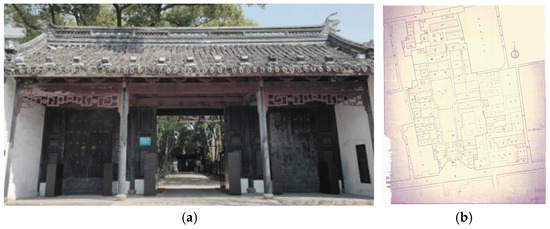
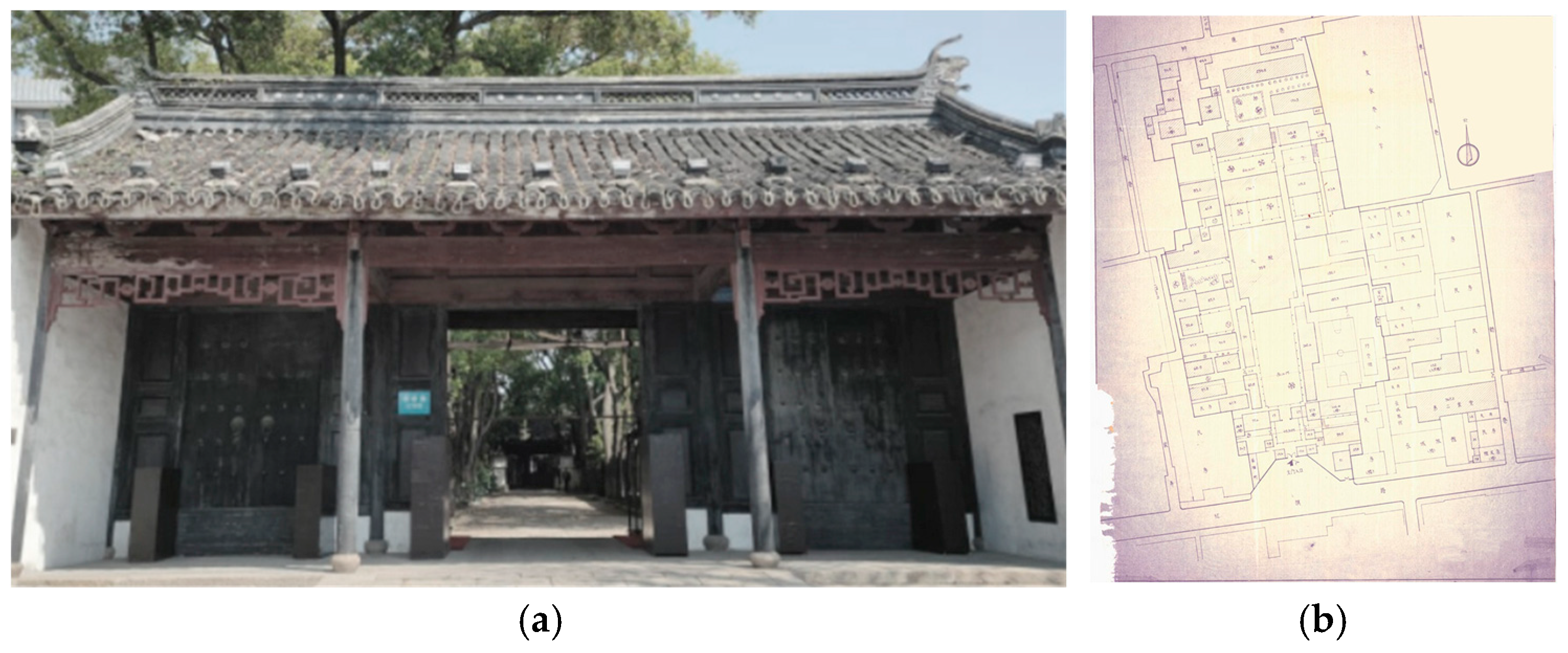
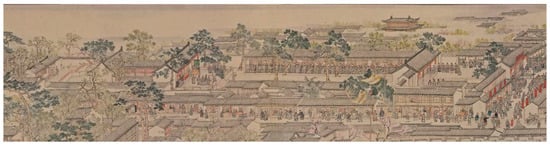
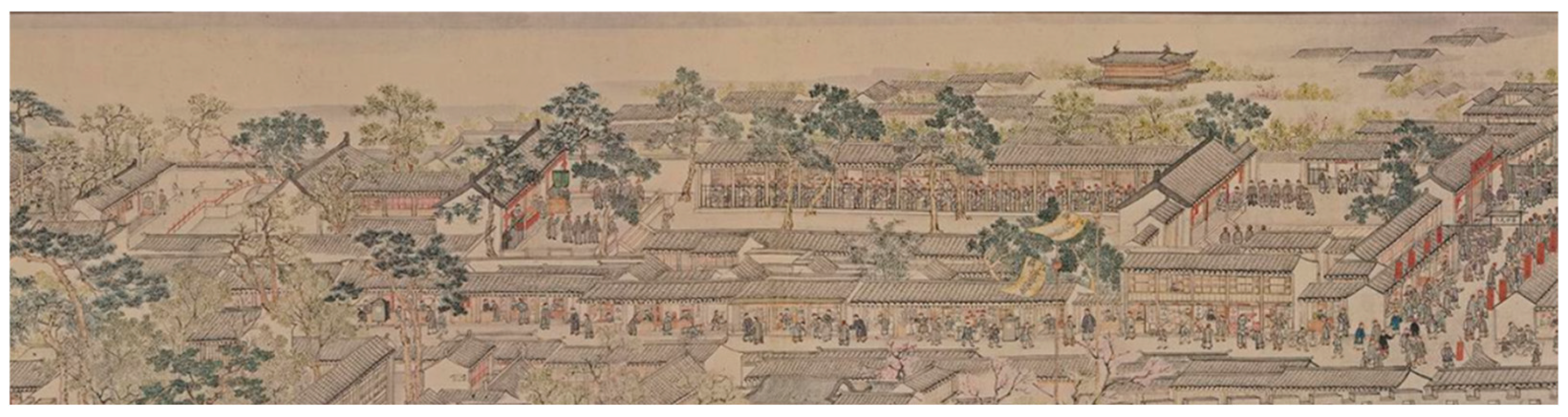
The Jiangsu Provincial Judicial Commissioner’s Office (Suzhou Ancha Shishu) represents a significant surviving example of official architecture in Suzhou (Figure 1). Its origin can be traced back to the Water Conservancy Branch Office established in the early Ming dynasty, which was reorganized into the Prefectural Surveillance Branch in the 14th year of the Hongzhi reign (1501). It was subsequently designated as the Military Defense Circuit Office, specializing in military affairs. During the Yongzheng period, the Military Defense Office was relocated to Taicang, while the Prefectural Surveillance Office was transferred from Jiangning to Suzhou and reestablished as the Prefectural Judicial Surveillance Office, thereby consolidating the typical spatial configuration of Ming–Qing official yamen. The complex follows the layout pattern of “front court and rear residence,” adhering to the architectural principle of yamen design, characterized by axial symmetry (Figure 2) [3].
Figure 1.
(a) The former site of the Jiangsu Provincial Judicial Commissioner’s Office, the ceremonial gate; (b) Surveying and mapping map of the Jiangsu Provincial Judicial Commissioner’s Office in 1979.
Figure 2.
The scene of the office of the Jiangsu Provincial Judicial Commissioner’s Office as depicted in the “Prosperous Picture of Gusu” in 1759.
The Jiangsu Provincial Judicial Commissioner’s Office, a significant official yamen from the Ming and Qing dynasties to the Republican period, served as both a regional judicial and administrative center and the headquarters of a provincial supervisory authority, embodying substantial historical and cultural importance (Figure 2). Nonetheless, despite its architectural continuity with the present, the thermal and hygrothermal performance of its large-scale spaces no longer meets contemporary requirements for indoor comfort. Some studies have explored improvements in the indoor thermal environment of historic buildings through passive strategies, such as enhancing envelope thermal performance, optimizing spatial layout, and adjusting the window-to-wall ratio [4,5,6,7]. However, constrained by heritage conservation principles such as “minimum intervention” and “preservation of original appearance,” the practical application of these measures remains limited. Consequently, active measures, such as HVAC systems, remain essential for improving indoor environmental quality.
It is noteworthy that in high and large historic buildings, such as yamen complexes, due to the large spatial volume, relatively weak thermal and airtight performance of the building envelope, and the combined effects of buoyancy-driven heat stratification under winter heating conditions, the operation of air-conditioning systems in winter often leads to issues, including vertical temperature stratification and difficulty heating the lower occupied zone, thereby resulting in insufficient thermal comfort and increased heating energy consumption [8].
With respect to airflow organization optimization in high and large spaces, existing studies have predominantly focused on stratified air-conditioning systems as a representative approach, emphasizing the characteristics of thermal stratification interfaces, vertical temperature distributions, and their impacts on cooling and heating loads. These studies have commonly adopted combined experimental and CFD-based methods to investigate the underlying mechanisms. For example, Yang et al. examined heat exchange processes and vertical temperature distributions between occupied and non-occupied zones under sidewall near-floor air supply conditions [9]. Cai Ning et al. proposed a simultaneous solution model for stratified air-conditioning systems in large spaces to analyze cooling loads [10], and further investigated vertical air temperature distributions under jet-based air supply conditions during summer cooling operation [11]. In addition, ASME (2020) specifically addressed the relationship between vertical temperature profiles and stratified air-conditioning loads in large spaces [12]. Under summer cooling conditions, stratified air supply strategies such as sidewall jet ventilation can effectively concentrate cooling capacity within the occupied zone, thereby maintaining acceptable thermal conditions for occupants while reducing unnecessary conditioning of upper non-occupied zones. This conclusion has also been confirmed by numerical simulation studies [13,14,15].
However, under winter heating conditions, warm air jets are more susceptible to buoyancy-induced upward deflection, leading to heat accumulation in the upper zones of high and large spaces. When the thermal condition of the occupied zone is taken as the control target, increased heating capacity is often required, which consequently results in higher energy consumption. As a result, mitigation strategies for winter heating conditions are inherently more complex. Existing studies have primarily proposed two categories of solutions [16]. The first involves lowering the air supply height or reducing the distance between the supply outlets and the occupied zone, thereby allowing warm air to act more directly on the activity area, as exemplified by underfloor air distribution and impinging jet ventilation systems [17,18]. The second focuses on optimizing diffuser configurations or utilizing wall-attachment effects to slow down jet momentum decay, enabling warm airflows to maintain sufficient coverage under heating mode and thus suppress vertical temperature stratification [19,20,21]. In addition, specific measures such as composite diffusers [22], radiant floor heating or localized heating strategies [23], as well as optimization of supply air parameters and diffuser placement [24,25], have been proposed and validated across various high and large space scenarios.
Overall, the aforementioned studies have predominantly focused on specific contemporary public buildings or laboratory spaces, whose boundary conditions and spatial configurations differ substantially from those of yamen-type historic buildings. As a result, their conclusions are difficult to apply directly to such heritage contexts. For yamen-type high and large historic spaces, which are constrained by existing spatial configurations and heritage conservation requirements, where equipment placement and air supply modes are more restricted, and where relatively “light-intervention” low-level air supply terminals (e.g., floor-standing split air-conditioning systems) are commonly adopted, quantitative evidence regarding airflow organization and thermal comfort tailored to these scenarios remains scarce. Therefore, it is necessary to conduct targeted analyses of airflow patterns and thermal comfort under winter heating air supply strategies for floor-standing split air-conditioning systems within specific high and large historic yamen spaces.
Due to limitations in on-site measurements, current research on the thermal environment of historic buildings primarily relies on numerical simulations, with different software offering distinct advantages for calculating building thermal loads, analyzing airflow, and evaluating thermal comfort. To enhance the accuracy of simulation results, some studies have adopted coupled simulation approaches, enabling more refined modeling of indoor thermal environments. For instance, Chen et al. [26] developed a coupled simulation model integrating Modelica, EnergyPlus, and Fast Fluid Dynamics (FFD). They applied a dynamic simulation strategy to assess thermal comfort in an ample office space in Wuhan and subsequently proposed improvements to the HVAC system design to enhance indoor comfort. Similarly, Li et al. [27] employed an EnergyPlus–CFD coupling strategy to simulate a large gymnasium in a hot-summer–cold-winter region, using EnergyPlus surface temperature data as boundary conditions for the CFD calculations. In contrast, the convective heat transfer coefficients and indoor air temperature fields derived from CFD were fed back into EnergyPlus for energy consumption analysis, thereby improving the accuracy of energy performance simulations.
Building on this, the present study adheres to the comprehensive theoretical framework and methodological system proposed in the Washington Charter and the Burra Charter, encompassing the entire process from value assessment and planning management to technical implementation. While ensuring that the historical character and architectural integrity of the building remain unaffected, this study explores strategies to improve the thermal and hygrothermal environment of the North Flower Hall and the Rear Hall, two key high and large spaces within the architectural complex. In terms of methodology, the present study proposes a coupled simulation approach that integrates DesignBuilder and Fluent. DesignBuilder offers the advantages of intuitive modeling and efficient thermal load calculations. At the same time, Fluent facilitates accurate airflow simulation, together providing a more accurate representation of the impact of different air supply strategies on airflow organization and indoor thermal conditions in high and large spaces. Taking the Jiangsu Provincial Judicial Commissioner’s Office as the primary case study, this research applies a multi-software-coupled simulation to examine the effects of various supply air scenarios on temperature and velocity fields, and on thermal comfort. The aim is to explore the indoor thermal environment of historic high and large spaces during winter HVAC operation and to propose effective optimization strategies for air-supply design in such heritage buildings.
2. Materials and Methods
2.1. Research Methods
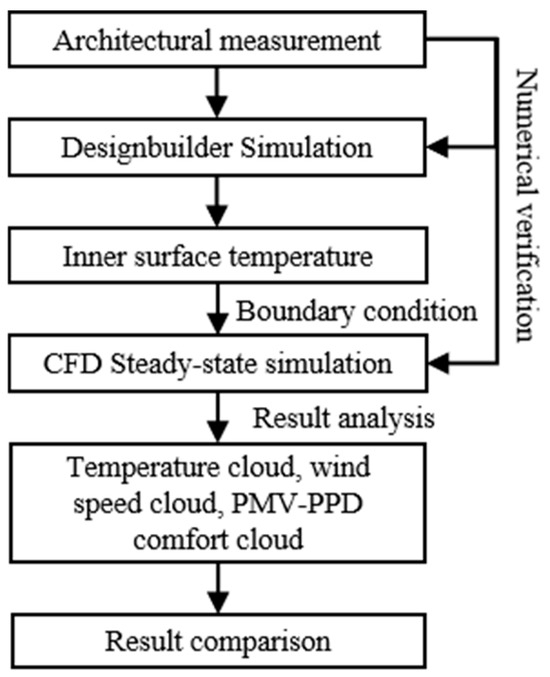
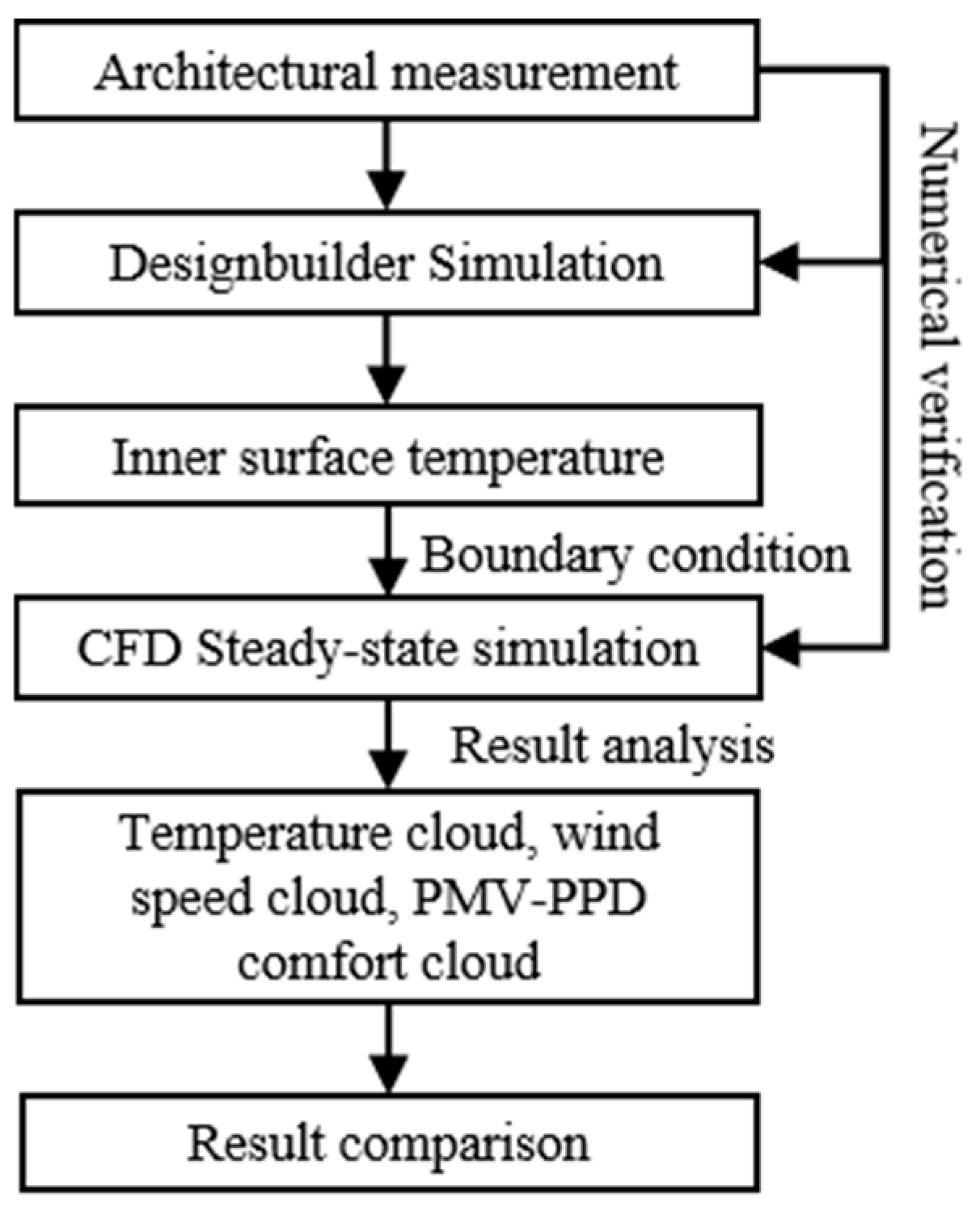
This work employs a linked simulation methodology, combining field-measurement data with DesignBuilder and Fluent to conduct an accurate assessment of thermal comfort in high and large historic spaces during air-conditioning operation. The overall simulation workflow is illustrated in Figure 3. Within this framework, the DesignBuilder model is first calibrated based on on-site measurement data, and the calibrated model is used to calculate parameters such as the inner surface temperatures of the building envelope, which are subsequently imported into Fluent as boundary conditions for CFD simulations. Various scenarios integrating distinct supply air angles, velocities, and outlet locations are then evaluated, facilitating a more intuitive and accurate analysis of temperature fields, velocity distributions, and thermal comfort metrics (PMV–PPD) under different air supply conditions. This approach establishes a complete workflow for simulating the thermal environment in large historic spaces.
Figure 3.
Research flowchart.
2.2. Field Measurement of the Building
2.2.1. Measured Building
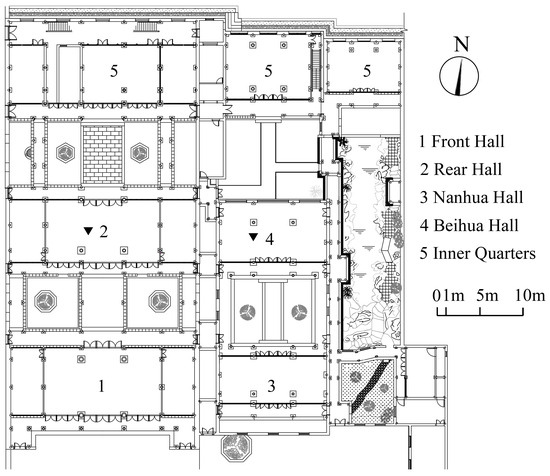
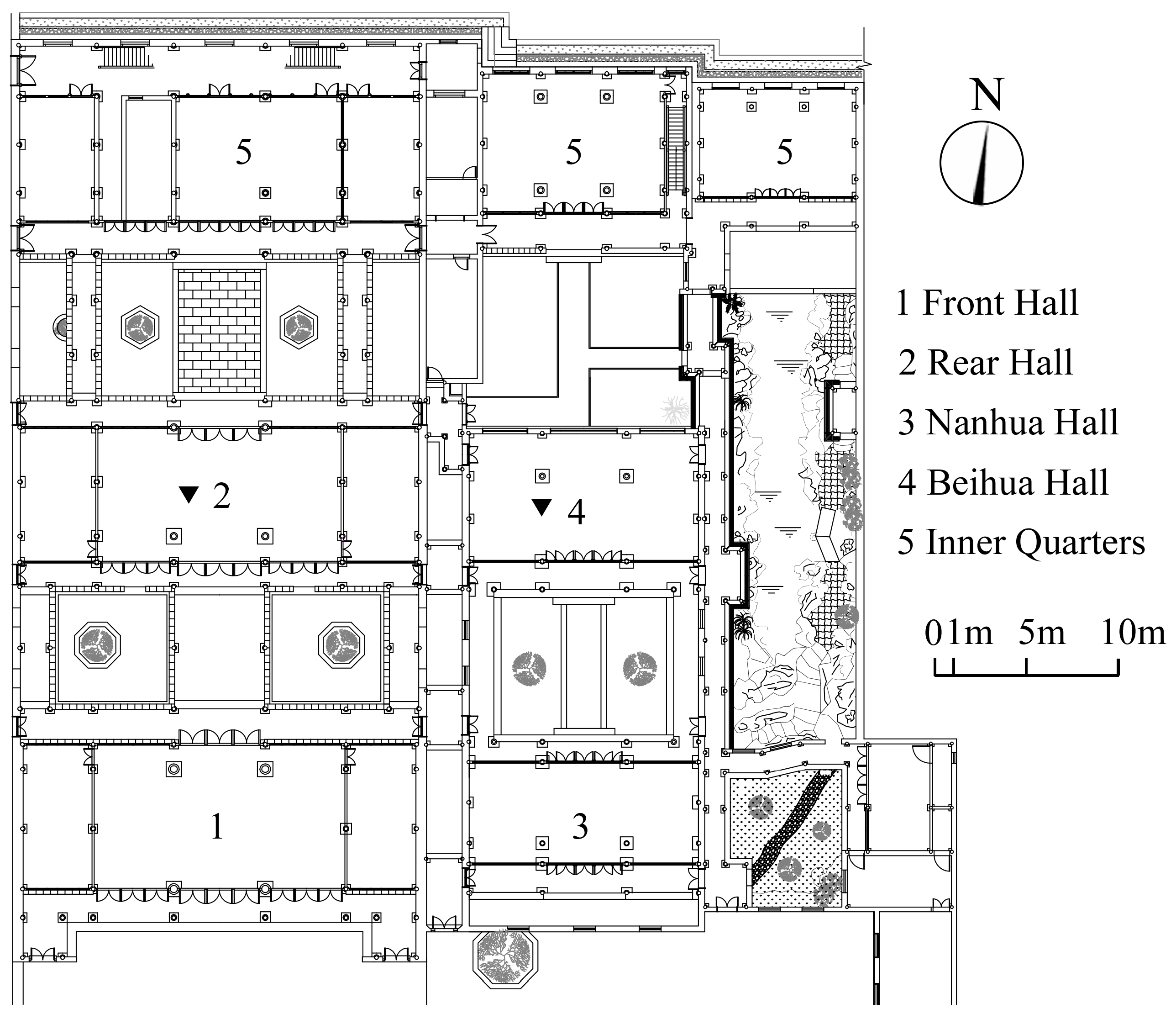
The Beihua Hall of the Jiangsu Provincial Judicial Commissioner’s Office was selected as the measurement site to collect reference field data on the thermal environment in high and large buildings (Figure 4). A CFD model was developed using measured data from Beihua Hall for calibration and parameter validation. After validating the simulation methods, a CFD model of the Rear Hall was developed to examine several operational situations. This method guarantees the verifiability and technical soundness of the simulations.
Figure 4.
The general layout plan of the Jiangsu Provincial Judicial Commissioner’s Office.
Beihua Hall features a brick–timber structure with a Chinese-style hard-gable roof and faces south. The interior has a clear height of approximately 6.2 m, a width of about 12.7 m, and a depth of roughly 7 m. Wooden lattice doors and windows are located on the north and south sides, while brick walls delineate the eastern and western boundaries. The building envelope exhibits poor airtightness and thermal insulation, and the interior features a floor-standing air-conditioning system.
2.2.2. Measurement Methods
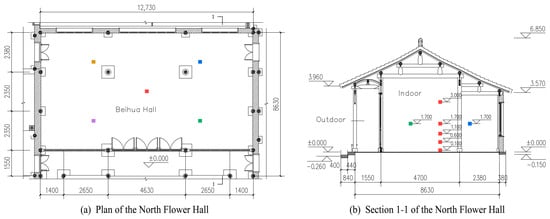
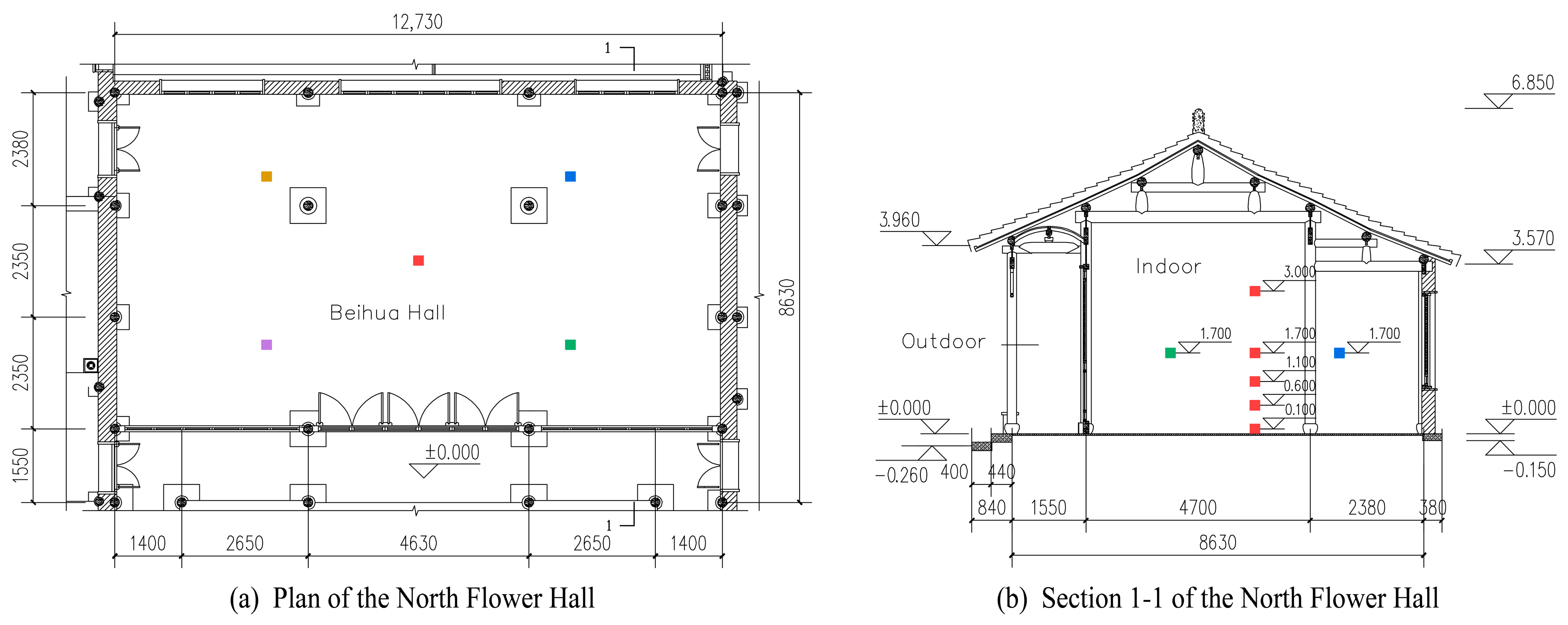
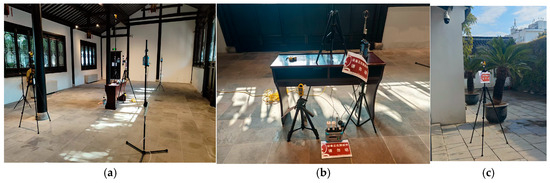
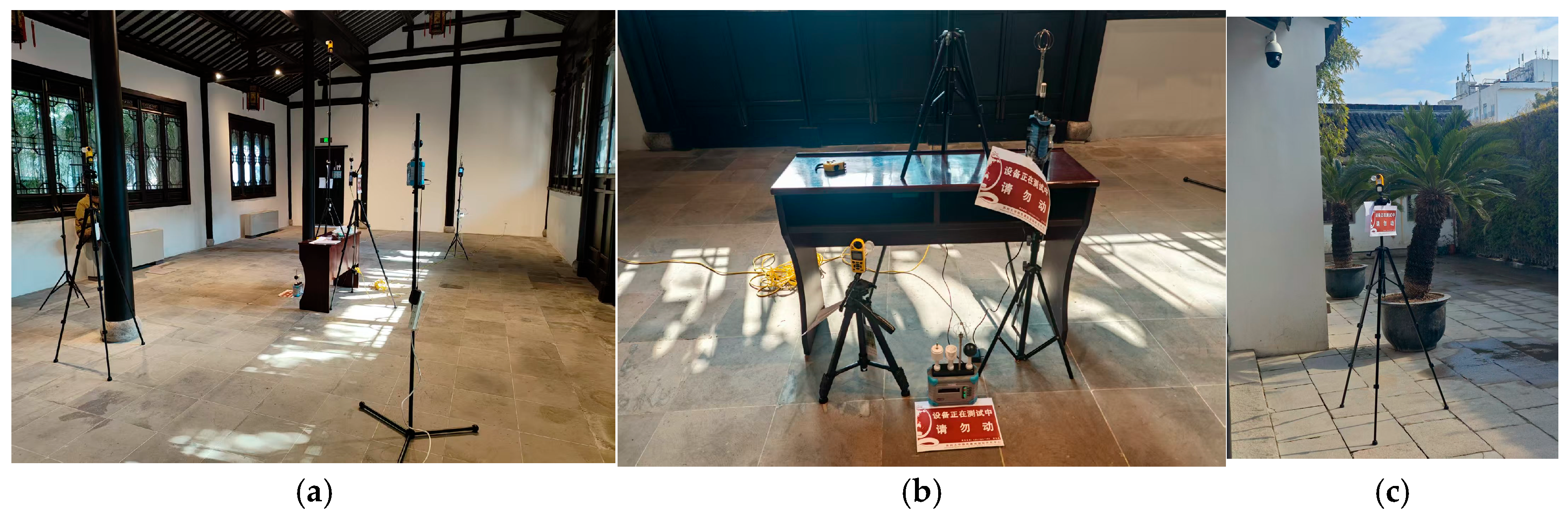
Field measurements were performed on standard winter heating days (2–4 January 2024). All indoor air-conditioning units were set to 32 °C, and doors and windows were closed to simulate typical usage conditions. Indoor measurement points were organized in accordance with the Standard for Testing Methods of Building Thermal Environment (JGJ/T 347—2014) [28], featuring five equally spaced points along the two diagonal lines of the testing area. The central measurement point was monitored at five heights (0.1 m, 0.6 m, 1.1 m, 1.7 m, and 3 m), whereas the other points were measured at a height of 1.7 m (Figure 5). The measurement instruments were used to collect key thermal environmental parameters. Air temperature and relative humidity were measured using the JT-IAQ-50 thermal environment and comfort monitoring system and the JT2020 multifunctional testing instrument, while globe temperature was measured concurrently to account for radiative effects in the thermal environment assessment. Both instruments were manufactured by Beijing Century Jiantong Technology Co., Ltd. (Rooms 2311–2315, Times Fortune Building, No. 1 Hangfeng Road, Fengtai District, Beijing 100070, China). A weather station was installed in an open outdoor location, where a Kestrel 5500 portable weather meter manufactured by Nielsen-Kellerman (Boothwyn, PA, USA) was used to capture real-time environmental data (Figure 6). All equipment documented readings at 5 min intervals for a continuous 48 h duration to guarantee data stability.
Figure 5.
The schematic representation of the measurement locations in Beihua Hall: (a) Plan of the Beihua Hall; (b) Section 1-1 of the Beihua Hall. Different colors represent the locations of measurement points on the plane; the same color indicates the corresponding points at different heights in the sectional view.
Figure 6.
Measured layout diagram: (a) Real test photos of the Beihua Hall; (b) Layout map of central measurement points; (c) Outdoor weather station.
2.3. Simulation Model Establishment
2.3.1. Thermal Environment Simulation Model Establishment
A thermal model of the target building was created in DesignBuilder (version 7.3), with the building envelope’s physical characteristics defined from on-site measurements and historical records. Relevant thermal performance parameters are summarized in Table 1. Outdoor weather conditions were represented using typical meteorological year data for Suzhou, and simulations were conducted for a typical winter day. The occupant activity was set to light activity (MET = 1.2), corresponding to visitors’ slow walking and short-term standing in the exhibition space, with a clothing insulation of clo = 1.0, representing typical indoor clothing levels under winter heating conditions. The HVAC system was calibrated to reflect actual operating conditions. Considering the poor airtightness of doors and windows in historic buildings, an infiltration rate of 5 ach was applied [29]. The simulation produced full-day temperature and humidity profiles, providing essential data for defining boundary conditions and validating results in subsequent CFD simulations.
Table 1.
Thermal performance of the building envelope of Beihua Hall.
2.3.2. CFD Model Construction
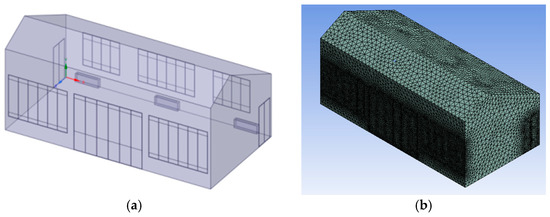
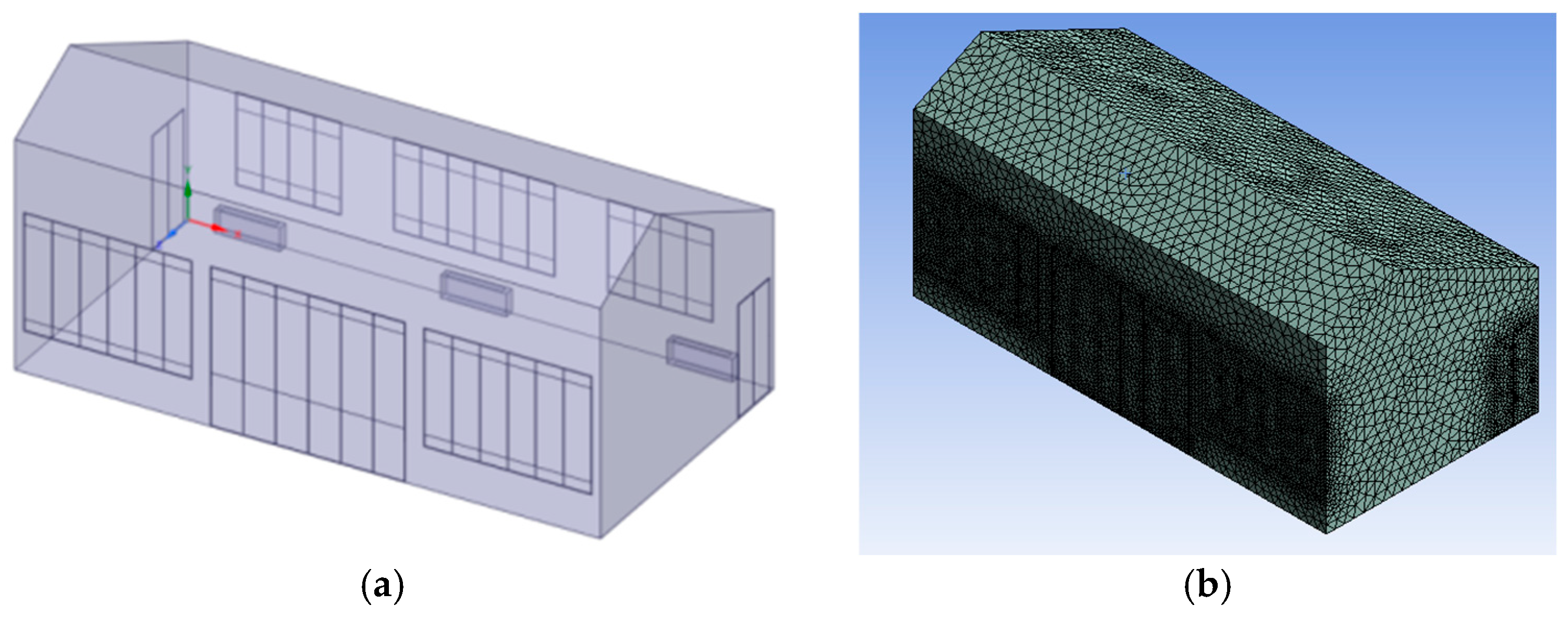
Based on the DesignBuilder simulation results, steady-state simulations in Fluent were conducted to investigate the effects of different winter HVAC air-supply strategies on indoor airflow patterns, vertical temperature stratification, and thermal comfort. The simulations were performed using ANSYS Fluent included in ANSYS Student 2022 R1. To balance computational efficiency and simulation accuracy, the Beihua Hall was moderately simplified while preserving its overall geometric form. Gaps were retained at door and window joints to simulate cold air infiltration through the building envelope. The air-conditioning system comprises three floor-mounted indoor units arranged along the north wall. Each unit has a supply air outlet located at the top, 0.6 m above the floor, with dimensions of 120 mm × 900 mm. The return air inlet is positioned at the bottom of each unit and has the exact same dimensions. The simplified geometric model of Beihua Hall is shown in Figure 7. Subsequently, the model was meshed using unstructured tetrahedral elements, with five boundary-layer prism layers and a growth rate of 1.2 to meet the wall-function criteria of the turbulence model. The final mesh consisted of approximately 200,000 cells.
Figure 7.
CFD Model construction for the Beihua Hall: (a) Geometric model; (b) Grid division.
This study employed steady-state CFD simulations using the Reynolds-Averaged Navier–Stokes (RANS) equations, with the energy equation enabled and gravity set to 9.81 m/s2 to model indoor natural convection. To enhance numerical convergence, the Boussinesq approximation was adopted, accounting for temperature-dependent density only in the buoyancy term. The SST k-ω turbulence model was selected, combining the near-wall accuracy of the standard k-ω model with the robustness of the k-ε model in the outer flow region, thereby providing a more accurate simulation of complex boundary layer development. Previous studies have indicated that, compared with three commonly used k-ε models, the SST k-ω model achieves higher accuracy in predicting vertical temperature stratification in high and large indoor spaces [30]. For wall treatment, the standard wall function method was adopted to enhance computational efficiency and stability.
The air supply inlets were defined as velocity inlets, with a supply velocity of 2.5 m/s and a total airflow rate of 2916 m3/h. Taking into account heat loss during the indoor unit’s actual operation, the air will experience some temperature attenuation before reaching the indoor space. In the simulation, the supply air temperature is set at 30 °C, which is slightly lower than the actual set value. This is done to ignore the air conditioner’s actual shutdown and defrost times during operation and better approximate its operating conditions. Return air outlets were defined as pressure outlets to simulate natural indoor air recirculation. To account for cold air infiltration through doors and windows, gaps were represented as velocity inlets. The infiltration airflow rate was calculated based on an average air change rate of 5 ach and the building’s total adequate volume to determine the infiltration volume, which, combined with the gap area, yielded an average infiltration velocity of 0.25 m/s. The temperature of the infiltrating air was set to 10.56 °C based on measurements from the outdoor weather station.
Since steady-state simulations were performed, the interior surface temperatures of the building envelope at 16:30 on 3 January, when the measured data had stabilized, were selected as wall boundary conditions (Table 2). The wall material properties were kept consistent with those defined in DesignBuilder.
Table 2.
Wall Boundary Conditions for the Beihua Hall.
2.4. Thermal Comfort Simulation of Typical Spaces in the Yamen Building
2.4.1. Development of the Baseline Model
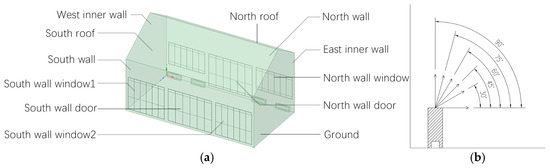
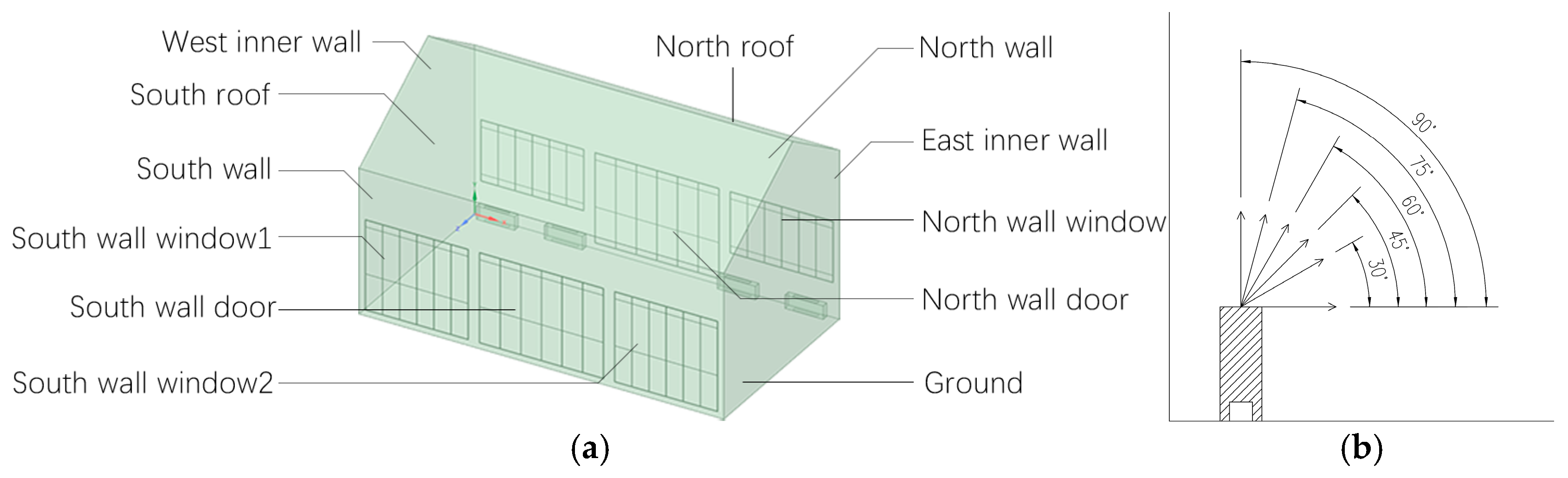
The Rear Hall of the Jiangsu Provincial Judicial Commissioner’s Office is the core functional space of the yamen building. It features a brick–timber structure with a Chinese-style hard-gable roof and faces south. The hall consists of three bays, with the central bay designated as the simulation target. The interior features a clear height of approximately 8.2 m, a width of about 13.5 m, a depth of roughly 7.4 m, and a length-to-width ratio of approximately 1.8, representing a typical high and large space in historic buildings. Wooden lattice doors and windows are located on the northern and southern facades, while the east and west walls are brick and uninsulated. The overall airtightness and thermal insulation of the building envelope are poor, and the interior is equipped with floor-standing air-conditioning units. A simplified geometric model of the Rear Hall was constructed based on its actual layout (Figure 8), with four indoor units arranged along the north wall according to the on-site configuration. The thermal boundary conditions for the walls were established based on the DesignBuilder simulation results (Table 3). At the same time, all other model settings were kept consistent with those of Beihua Hall to ensure the simulation results were feasible.
Figure 8.
CFD Model construction for the Rear Hall: (a) Geometric model; (b) Schematic representation of air supply angle.
Table 3.
Table of Boundary Conditions for the Rear Hall.
2.4.2. Simulation Scenario Setup
To investigate the effects of different air supply parameters and configurations on thermal comfort in high and large buildings, this study used a simulation model of the Rear Hall of the Jiangsu Provincial Judicial Commissioner’s Office to examine indoor comfort at seven supply air angles (Figure 8) and six supply air velocities (Table 4). Since variations in supply velocity affect the total heat delivered to the indoor space, the size of the supply outlet was adjusted to maintain a consistent heat load (Table 4). In addition, the positioning of the air-conditioning units was altered for comparative simulation, and four different supply air temperatures were tested to further optimize the air distribution strategy.
Table 4.
The area of the supply air outlet at different supply air velocities.
2.4.3. Evaluation Criteria
Using the simulated data from the central line of the central vertical plane of the baseline model and the central line of the supply air outlet plane as examples, this study analyzed temperature differences and airflow velocities under different supply air angles and velocities to more intuitively and accurately characterize the distribution of indoor temperature and velocity fields under varying supply conditions. In accordance with relevant thermal comfort standards, a vertical temperature difference of no more than 4 °C within the height range of 0.1 m to 1.7 m for a standing occupant [31], and air velocities in the occupied zone controlled within 0.15–0.25 m/s [32] to avoid draft discomfort, were used as criteria to assess thermal comfort under different operating conditions.
Building on this, the study further employed the PMV (Predicted Mean Vote) and PPD (Predicted Percentage of Dissatisfied) indices to evaluate the overall indoor thermal environment comprehensively. PMV and PPD are internationally recognized indicators of thermal comfort. PMV incorporates air temperature, humidity, air velocity, mean radiant temperature, metabolic rate, and clothing insulation to forecast human thermal feeling in a specific setting. In contrast, PPD assesses the percentage of occupants expected to be displeased with that environment. According to ISO 7730 [32], an indoor environment can be considered thermally comfortable when −0.5 ≤ PMV ≤ 0.5 and PPD ≤ 10%. Using this criterion, PMV and PPD values were calculated for each operating condition based on Fluent simulation results, and the percentage of space meeting the thermal comfort standard was quantified. To ensure the accuracy of the assessment, the analysis focused on the occupied zone, particularly within 1.5 m of floor level, corresponding to the breathing zone, thereby providing a realistic evaluation of how supply air parameters affect occupant comfort.
3. Results
3.1. Measurement Results
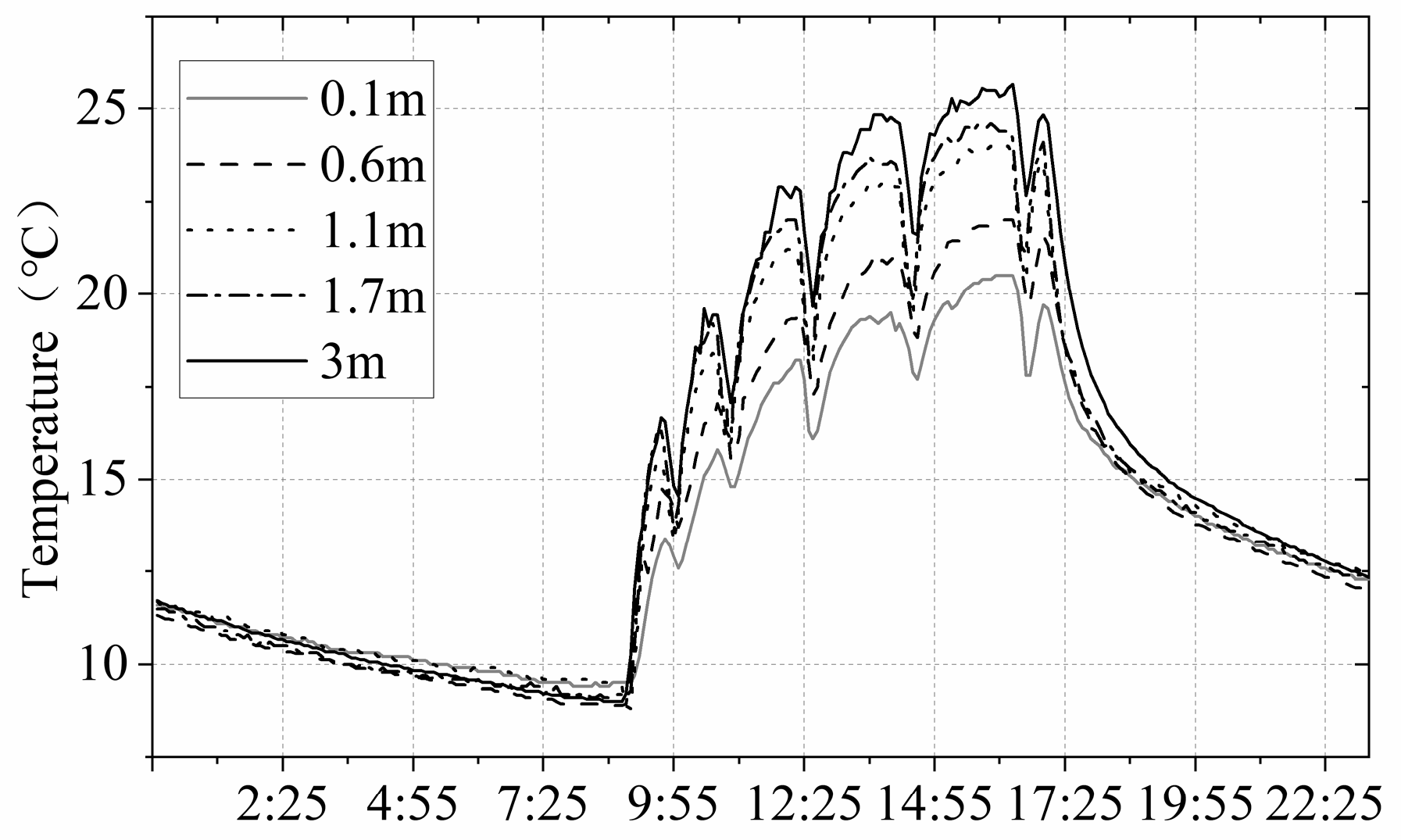
The measurement data from 3 January, which indicate relatively stable operational conditions, were chosen for the study. The results indicate temperature fluctuations at the central measurement point at five heights (0.1 m, 0.6 m, 1.1 m, 1.7 m, and 3 m) (Figure 9). Analysis of Figure 7 reveals that temperature variations increase with height: higher measurement points exhibit larger fluctuations, faster heating rates, and higher overall temperatures. This phenomenon is attributed to buoyancy-driven airflow driven by density differences between warm and cool air [33]. The temperature differential between the 0.1 m and 3 m stations reached 4.73 °C at 16:30, when indoor temperatures had equilibrated, indicating pronounced vertical temperature stratification in Beihua Hall under heating conditions.
Figure 9.
The chart depicting temperature fluctuations recorded on 3 January.
These field measurements confirm the objective existence of vertical thermal stratification in high and large historic buildings [34] and provide essential boundary condition parameters and model validation data for future numerical simulations [8].
3.2. Simulation Validation
3.2.1. Thermal Environment Simulation Validation
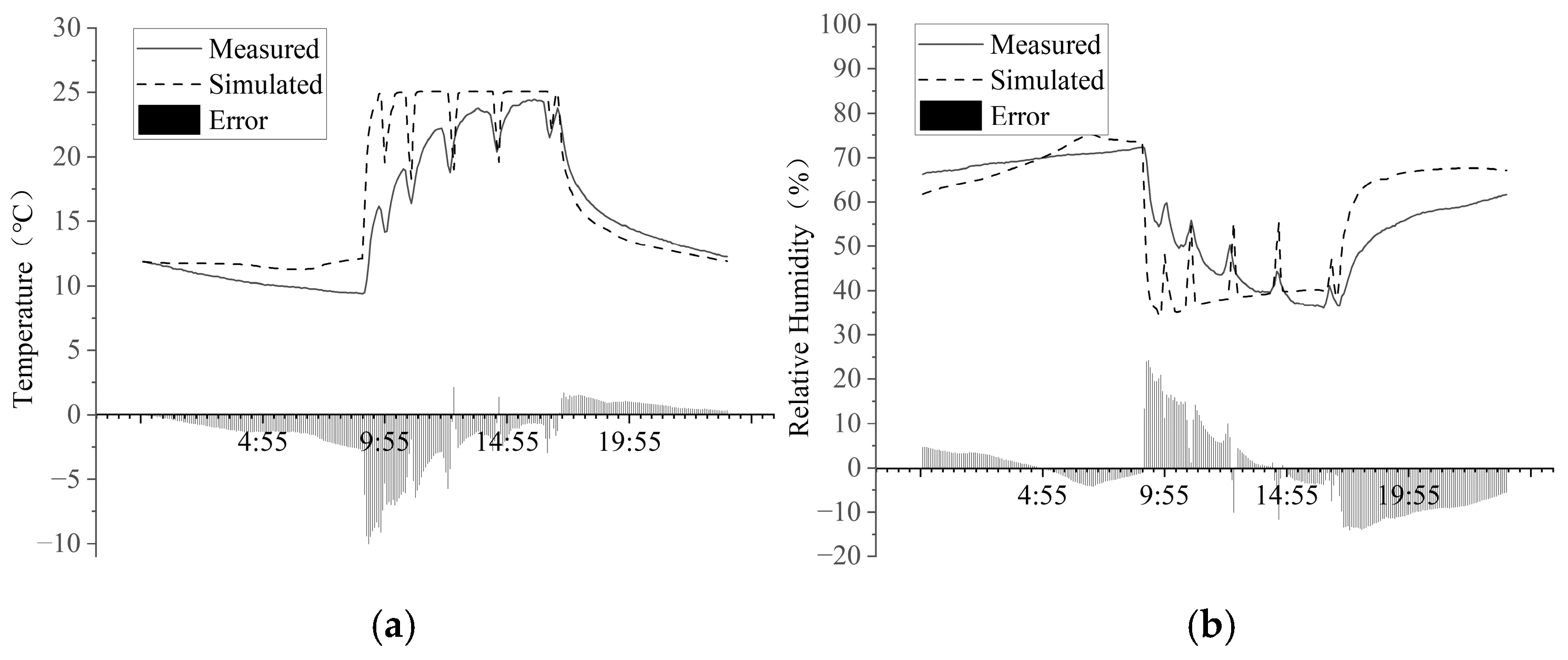
To evaluate the accuracy of the DesignBuilder simulation results, indoor temperature and humidity measurements from 00:00 to 24:00 on 3 January were compared with the simulated values (Figure 10). The assessment of deviations was performed using the Normalized Mean Bias Error (NMBE) and the Coefficient of Variation of the Root-mean-square Error (CV[RMSE]) [35], calculated using the following formulas:
Figure 10.
Calibration diagram for temperature and humidity of Beihua Hall: (a) Temperature Comparison; (b) Relative Humidity Comparison.
Here, and represent the measured and simulated values at the i-th time step, respectively, n signifies the total number of samples, p represents the number of parameters or terms in the baseline model, as developed by a mathematical analysis of the baseline data, here p = 1.
The results indicate that the NMBE and CV(RMSE) for indoor temperature are −6.27% and 19.25%, respectively, while those for relative humidity are −5.07% and 16.29%. The error mainly resulted from the cold and humid environment at the site, which caused the air conditioner to frequently shut down for defrosting, thereby causing errors in the data points. Even so, the errors fall within an acceptable range, demonstrating that the simulation model effectively captures the temporal variations in the indoor thermal and hygrothermal environment.
3.2.2. CFD Simulation Validation
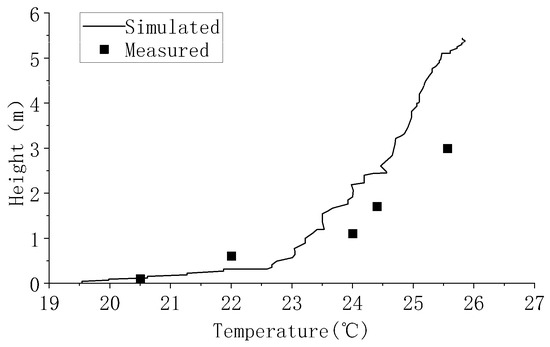
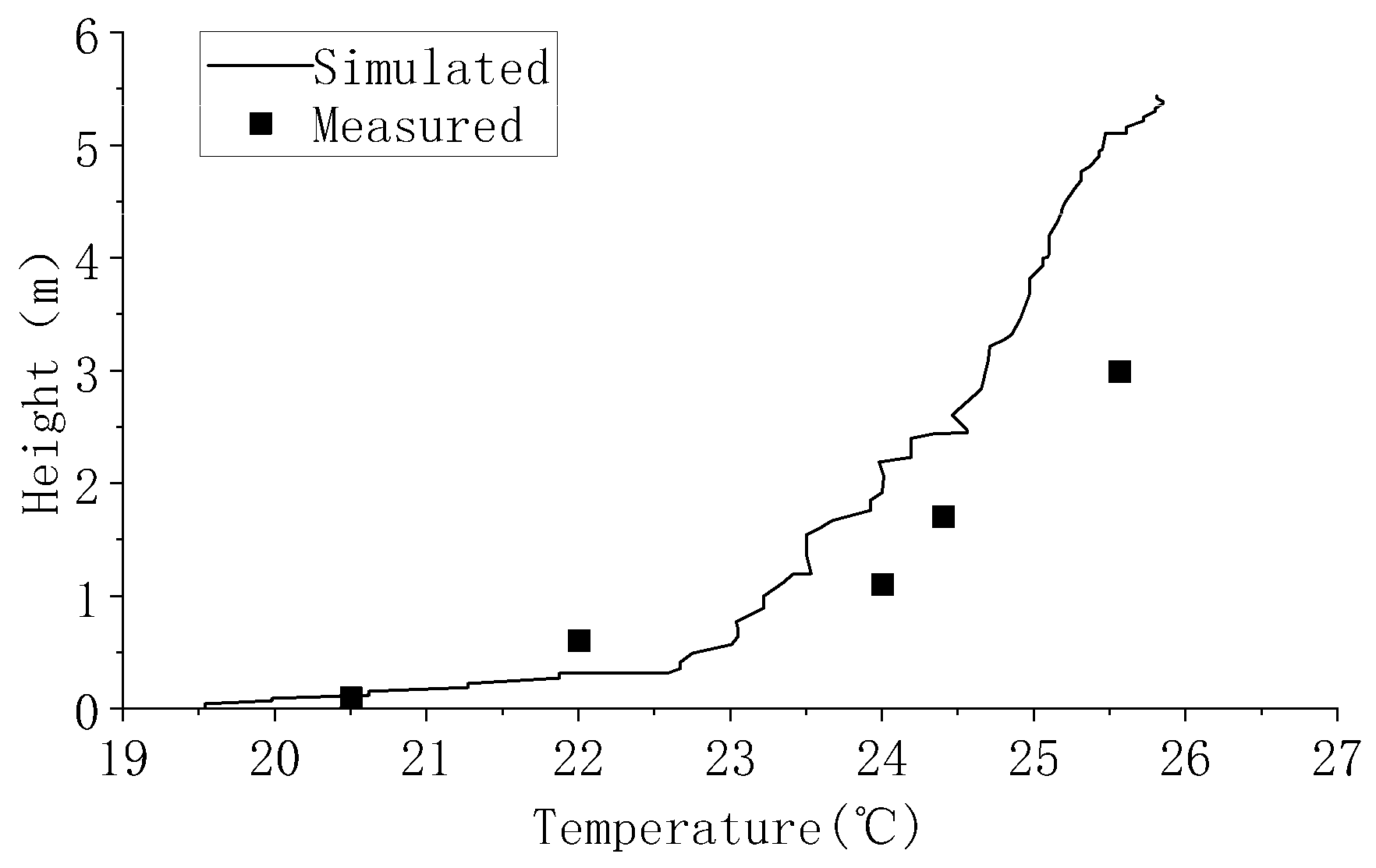
To validate the simulation results, five measurement heights corresponding to the field measurements were selected, and the simulated temperatures were compared with the measured data (Figure 11) using relative error (), Root Mean Square Error (RMSE), and the Coefficient of Variation of the Root-Mean-Square Error (CV[RMSE]) [36]. The calculation formulas are as follows:
Figure 11.
The actual measurement simulation calibration diagram of the Beihua Hall.
In this context, n signifies the quantity of measurement points with p = 1, while and denote the measured and simulated values at the i-th height, respectively.
The results indicate that the relative errors at all measurement points were within ±5%, showing substantial agreement between simulated and measured values across all heights (Table 5). The RMSE was 0.77 °C, and the CV(RMSE) was 3.31%, meeting the calibration criteria for hourly data specified in the ASHRAE [37]. These findings demonstrate that the absolute deviations in the simulated temperatures are minor, confirming the model’s validity.
Table 5.
The actual measurement simulation calibration table of the Beihua Hall.
3.2.3. Grid Independence Verification
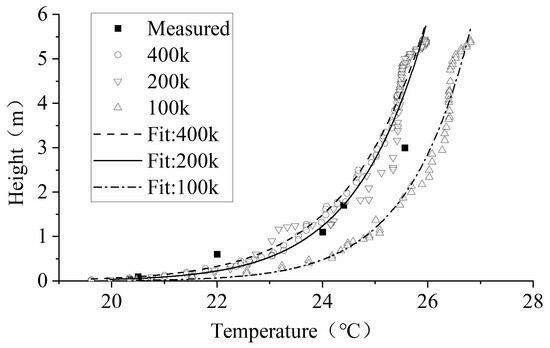
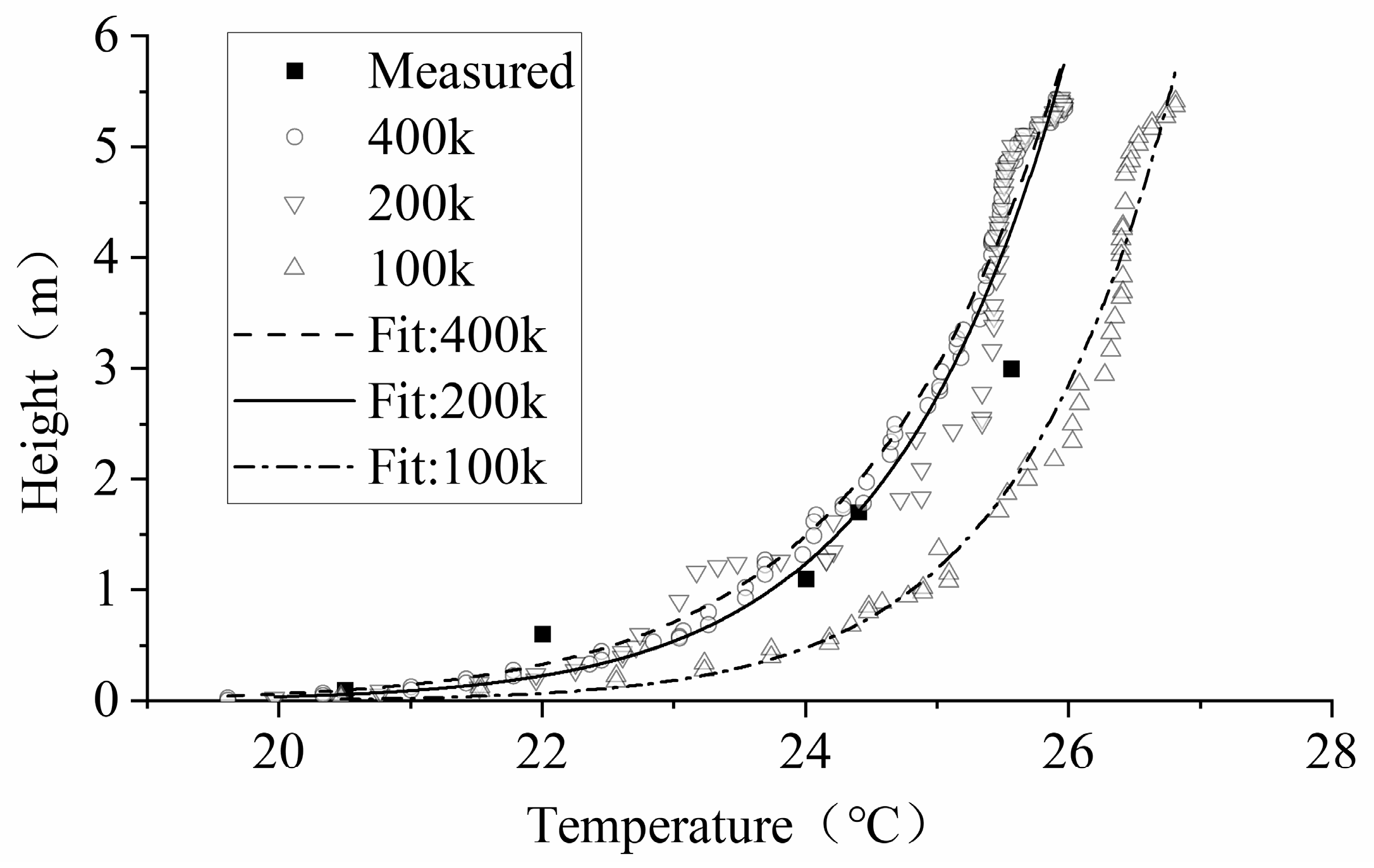
To verify the grid independence of the simulation results, three mesh configurations with 100,000, 200,000, and 400,000 cells were tested, as shown in Figure 12. The temperature gradient profiles along the central vertical line were compared for the three meshes. Table 6 presents the average errors between simulated and measured temperatures for the 5.48%, 0.2%, and 0.53% mesh configurations. The differences between adjacent mesh configurations were within 5–10%, indicating that the influence of mesh resolution on the results is acceptable and confirming the simulation’s grid independence.
Figure 12.
Grid independence verification: Comparison of measured and simulated temperatures.
Table 6.
Verification of grid independence: Comparison of measured simulation error values.
3.2.4. Simulation Validation Results
Comprehensive validation results confirm that the constructed model achieves strong consistency between simulated and measured data, while the mesh independence test verifies the adequacy of the grid. These results collectively demonstrate the feasibility and reliability of the proposed coupled simulation method, laying a robust foundation for future investigations into airflow organization and thermal environment simulations in high and large spaces of historic yamen buildings.
3.3. Main Simulation Results of Thermal Comfort in the Rear Hall
3.3.1. Comparison of PMV–PPD Comfort Zone Percentages
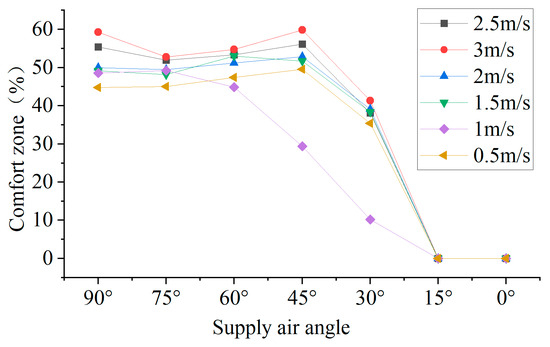
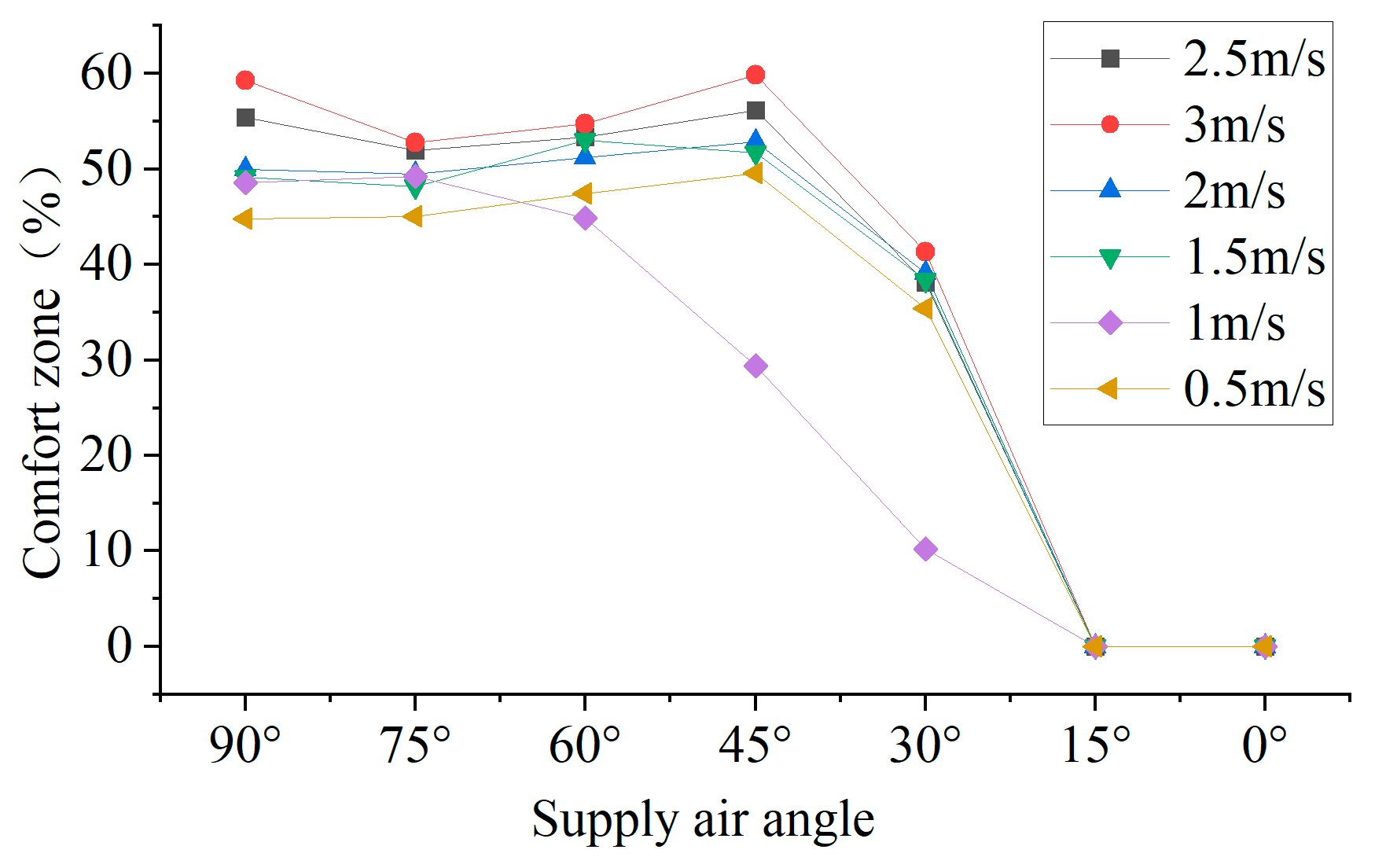
Figure 13 illustrates the variation in the percentage of thermally comfortable space under different supply air angles and velocities. The analysis indicates that supply air velocity significantly affects thermal comfort within the occupied zone, with higher velocities corresponding to a larger proportion of comfortable space. This can be attributed to the enhanced jet momentum associated with increased supply air velocity, which promotes indoor air mixing and alleviates vertical temperature stratification, thereby improving the thermal environment and comfort level in the occupied zone. In contrast, variations in supply air angle exert a relatively limited effect on jet momentum and thus have a less pronounced impact on the proportion of comfortable space. When the supply air angle is reduced to 30° or lower, the influence of supply air velocity decreases markedly, and the proportion of comfortable space declines substantially. This is because the airflow transitions from a wall-attached jet to a free jet, weakening the wall-attachment effect and hindering the formation of a stable vertical circulation pattern. Consequently, the heating airflow fails to adequately cover the lower occupied zone and is accompanied by localized draft discomfort.
Figure 13.
The percentage of the comfort zone at different angles and speeds.
These findings indicate that, under winter heating conditions, the airflow organization of low-level air supply systems is governed by the combined effects of jet momentum and thermal buoyancy. Higher supply air velocities enhance jet penetration, reduce heat accumulation in the upper zone, and mitigate vertical temperature gradients. In contrast, at excessively small supply air angles, the wall-attachment effect weakens, and effective airflow circulation is difficult to establish, thereby limiting heating performance.
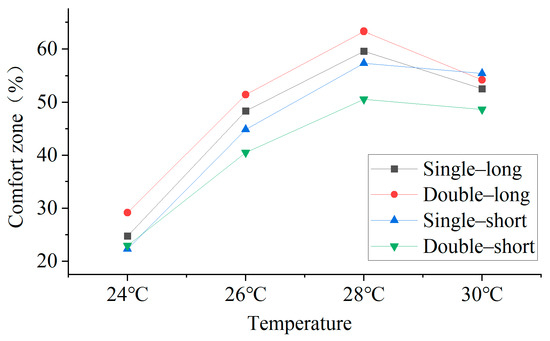
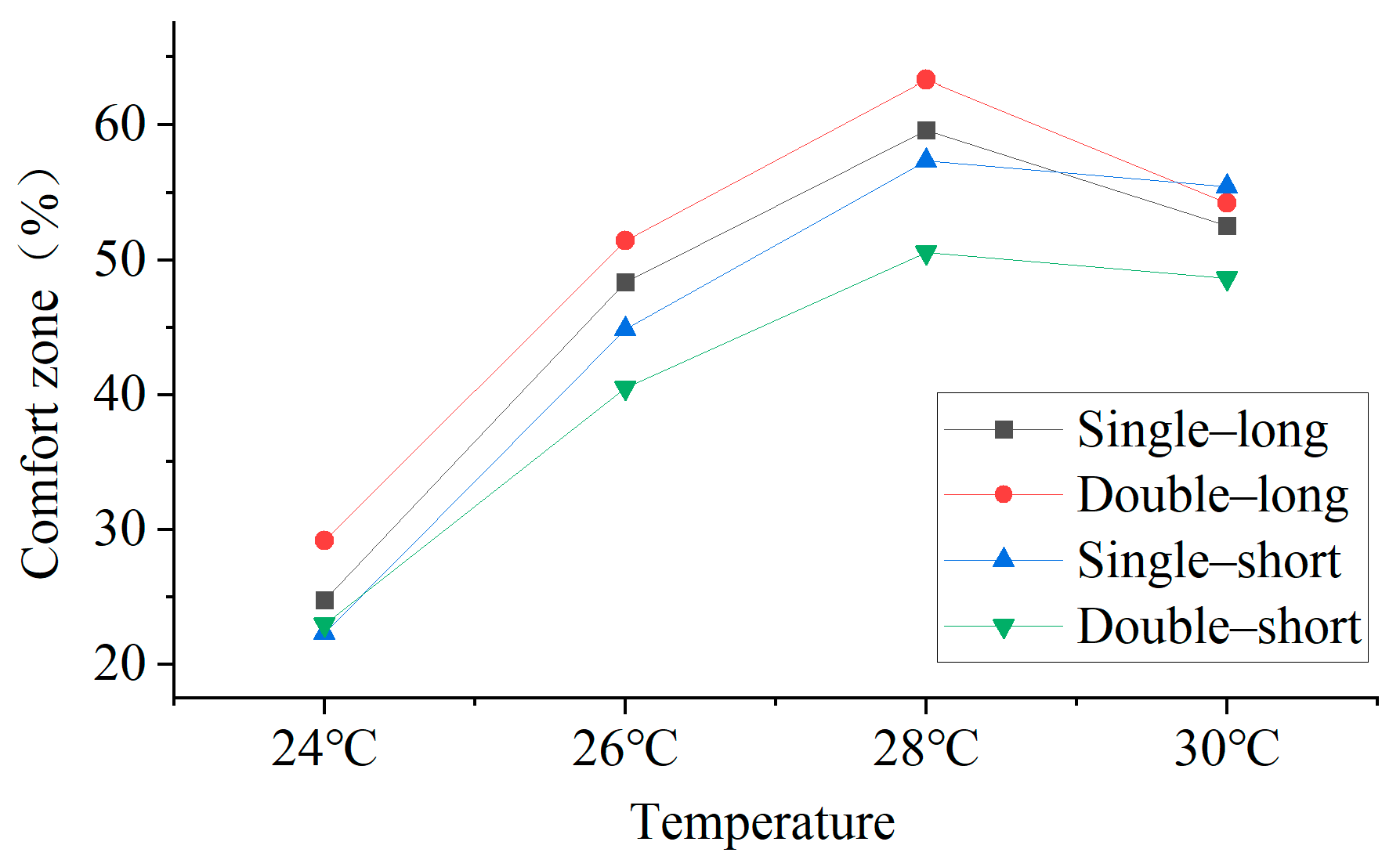
Utilizing a supply air velocity of 2.5 m/s at an angle of 90°, the positioning of the air-conditioning units was modified, and four distinct supply air temperatures (24 °C, 26 °C, 28 °C, and 30 °C) were evaluated to investigate the optimization of the air distribution strategy. As shown in Figure 14, indoor thermal comfort varies slightly with different outlet layouts, with dual-side supply along the long sides yielding slightly higher comfort than other configurations. However, the overall effect is relatively limited. These results suggest that, during winter heating in yamen-type high and large historic spaces, operational parameters exert a stronger influence on thermal environment regulation than diffuser placement. Fine-tuning operational settings, such as supply air temperature and velocity, may therefore be more effective than making substantial modifications to ductwork or diffuser locations, while being considerably less intrusive. This approach is consistent with heritage conservation principles that emphasize minimal physical intervention.
Figure 14.
The percentage of comfortable zones at different air supply positions.
It was also observed that, regardless of the supply configuration, setting the supply air temperature to 28 °C resulted in the highest proportion of comfortable space, indicating a relatively optimal indoor thermal environment. However, the universality of this specific temperature value should be interpreted with caution, as it is likely dependent on spatial geometry, outdoor conditions, and thermal loads. A more general and transferable conclusion is methodological in nature: identifying optimal operational settings through parametric simulations represents an effective strategy for optimizing air supply parameters in constrained heritage buildings.
3.3.2. Effect of Supply Air Angle on the Distribution of Indoor Comfort Zones
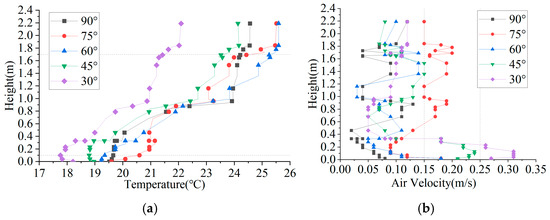
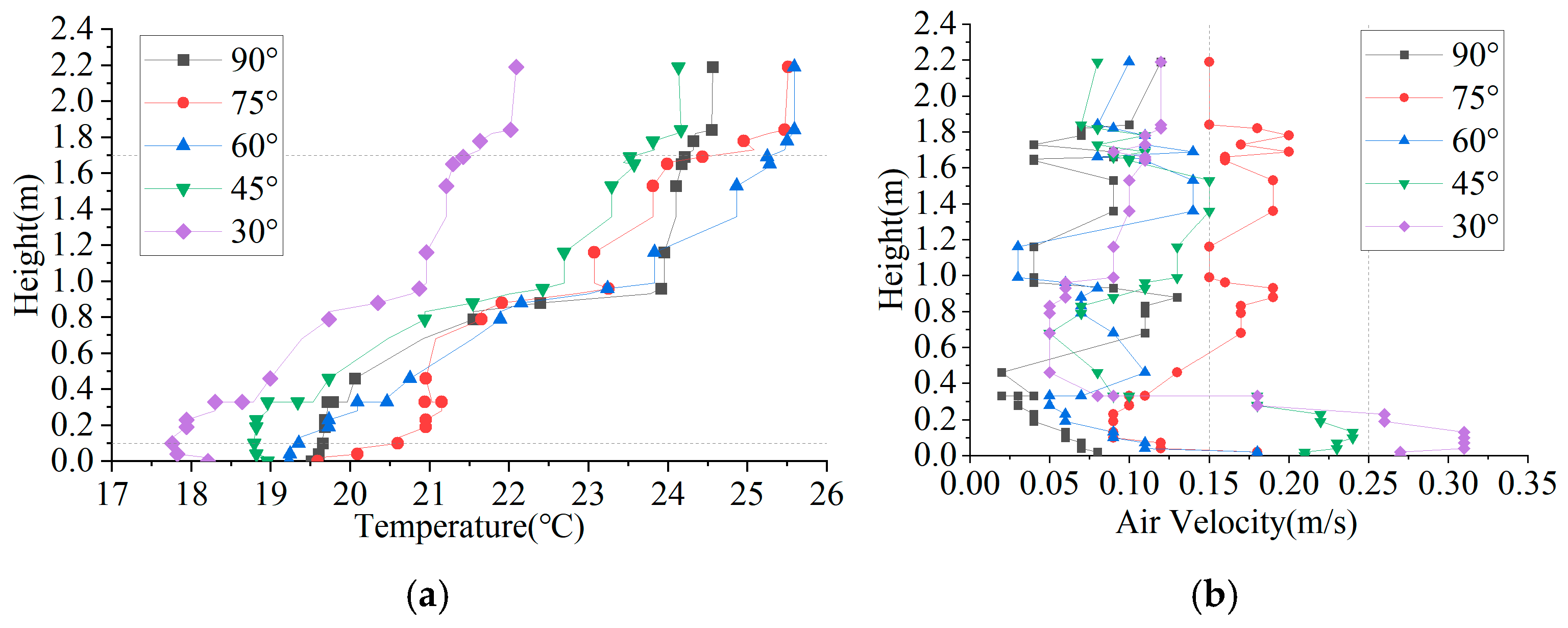
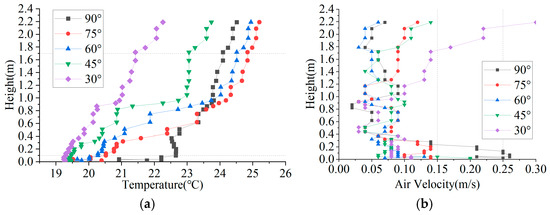
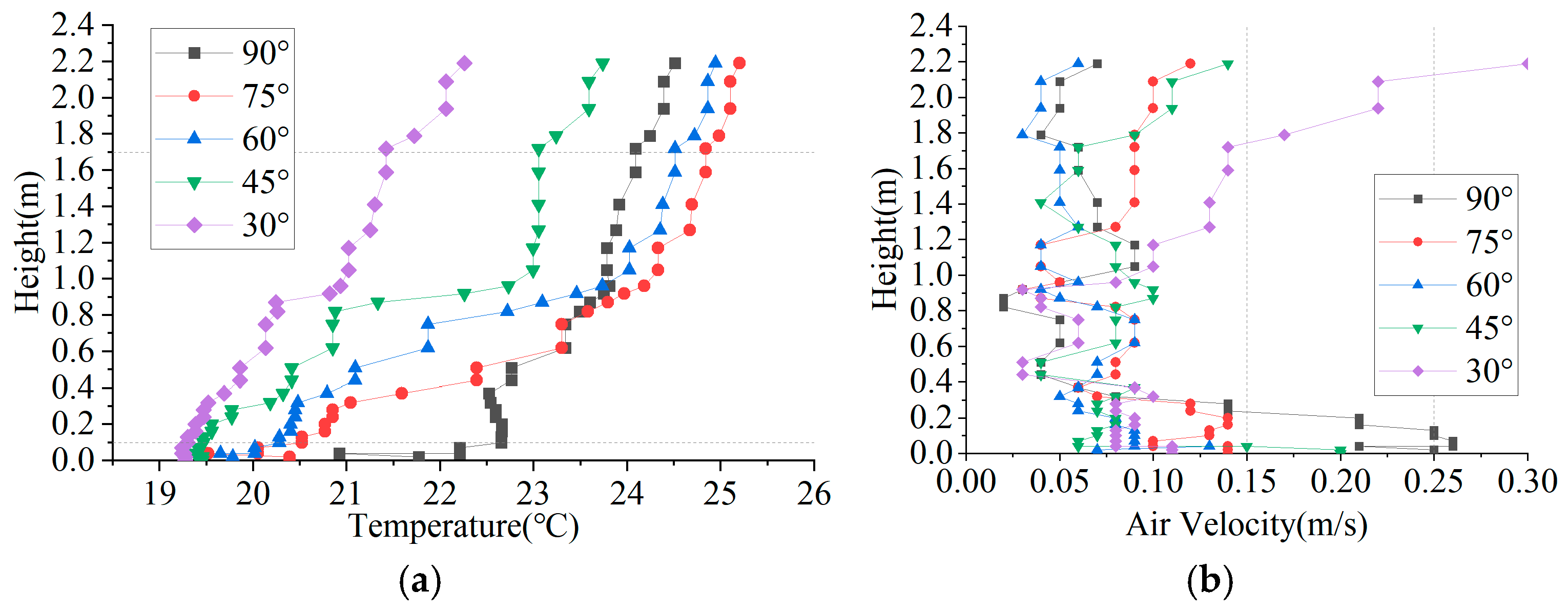
Utilizing the 30 °C, 2.5 m/s supply air condition as the baseline, the supply air angle was adjusted to analyze the distribution of indoor temperature and velocity fields, as illustrated in Figure 15 and Figure 16. Regarding vertical temperature differences, the 30° supply condition exhibited the smallest overall ΔT, with values along both the central vertical plane and the plane perpendicular to the supply outlet remaining below the 4 °C limit specified by relevant standards (Table 7). This indicates that low-angle supply can help mitigate vertical temperature stratification in the indoor space. From the perspective of airflow organization mechanisms, smaller supply air angles cause the heating jet to develop along the lower part of the space, which enhances air mixing within the occupied zone. This, in turn, weakens the buoyancy-driven upward motion and reduces vertical temperature stratification.
Figure 15.
Effect of Supply Air Angle on the Vertical Centerline of the Central Section: (a) Temperature variation with height; (b) Air velocity variation with height.
Figure 16.
Effect of Supply Air Angle on the Vertical Centerline of the Supply Air Outlet Section: (a) Temperature variation with height; (b) Air velocity variation with height.
Table 7.
Vertical Temperature Difference in the Height Range of 0.1 m to 1.7 m at Different Supply Air Angles.
However, concerning airflow velocity, the near-floor region under the 30° supply condition exceeded the standard limits, and this trend became more pronounced as the supply angle decreased. This indicates that while low-angle supply can improve temperature uniformity, it may also produce direct draft effects, potentially causing localized discomfort. Therefore, for yamen-type high and large historic spaces, relying solely on reducing the supply air angle is insufficient to simultaneously achieve temperature uniformity and airflow comfort. Coordinated optimization of both supply air angle and velocity is required to mitigate thermal stratification while avoiding localized draft discomfort.
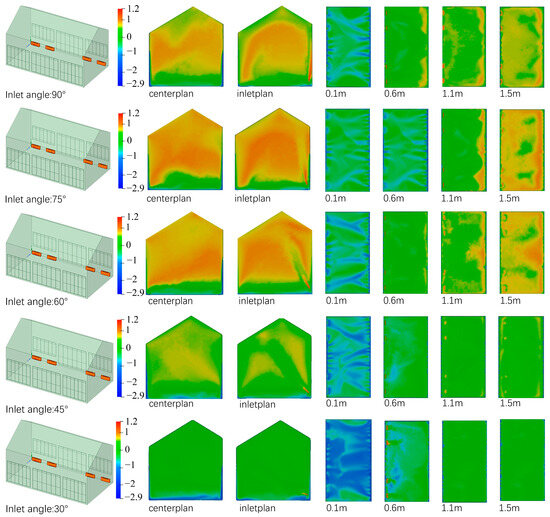
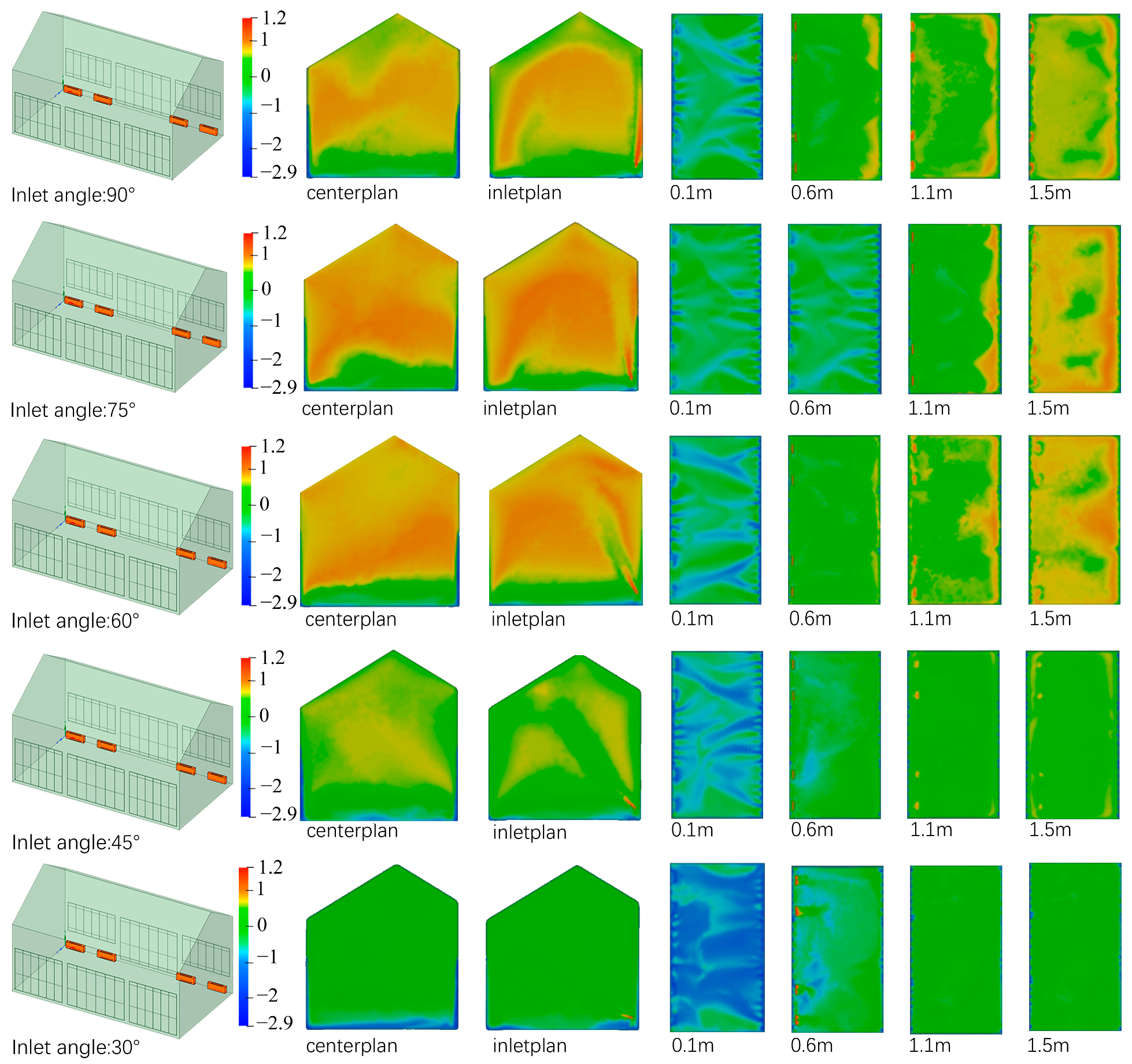
Using the 30 °C, 2.5 m/s supply air condition as the baseline, the impact of altering the supply air angle on the distribution of indoor thermal comfort was analyzed. The contour plots (Figure 17) show that reducing the supply angle decreased indoor temperature. The underlying mechanism lies in the fact that excessively low supply air angles weaken the wall-attachment effect of the jet, causing the supplied heat to be rapidly carried away by the airflow rather than being effectively accumulated. This highlights the central role of supply air angle: by altering the directional components of jet momentum, it regulates the degree of competition between jet momentum and thermal buoyancy, thereby governing whether heat is distributed horizontally or transported vertically within high and large spaces.
Figure 17.
Cloud maps of comfort levels at different air supply angles.
Low-angle air supply (e.g., 30°) tends to result in insufficient vertical airflow circulation, leading to localized overcooling near the floor (0.1 m) and consequently reducing the overall thermal comfort within the occupied zone. Conversely, a 75° supply produced a more favorable temperature distribution within the occupied zone (1.1–1.5 m in height), reducing chilly patches, although sporadic localized overheating was observed at 1.5 m. A 90° supply provided a relatively balanced comfort zone within the occupied area, without significant overcooling or overheating, but notable heat accumulation near the ceiling indicated potential energy waste. Overall, the supply air angle regulates the spatial distribution of heat within the space, and the actual operation of yamen-type historic buildings should adopt angles that are matched to specific functional requirements. When rapid temperature rise or improved heating efficiency is prioritized, lower supply air angles may be employed under appropriately controlled air velocities. Conversely, when emphasis is placed on static thermal comfort or heritage conservation, higher supply air angles—with weaker perceived airflow and more stable temperature fields—should be preferentially considered. These findings provide a basis for regulating the indoor thermal environment of historic buildings under conservation constraints.
3.3.3. Effect of Supply Air Velocity on the Distribution of Indoor Comfort Zones
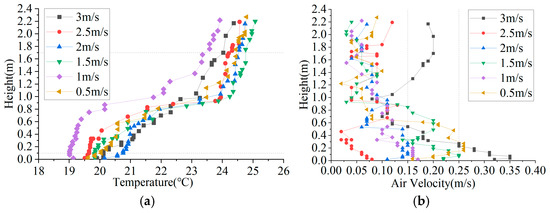
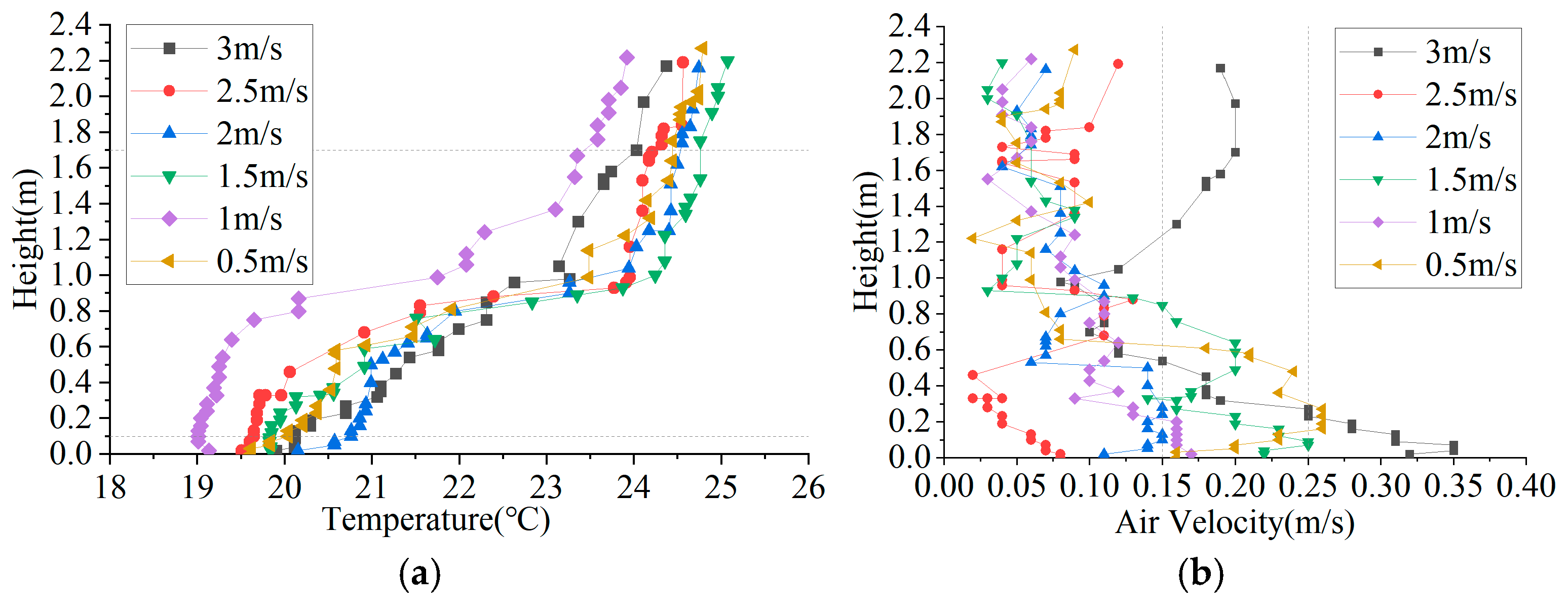
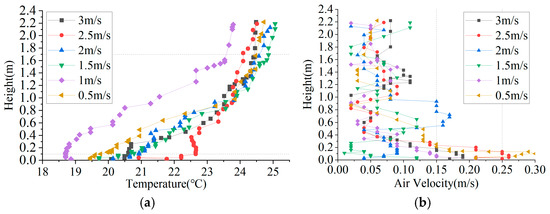
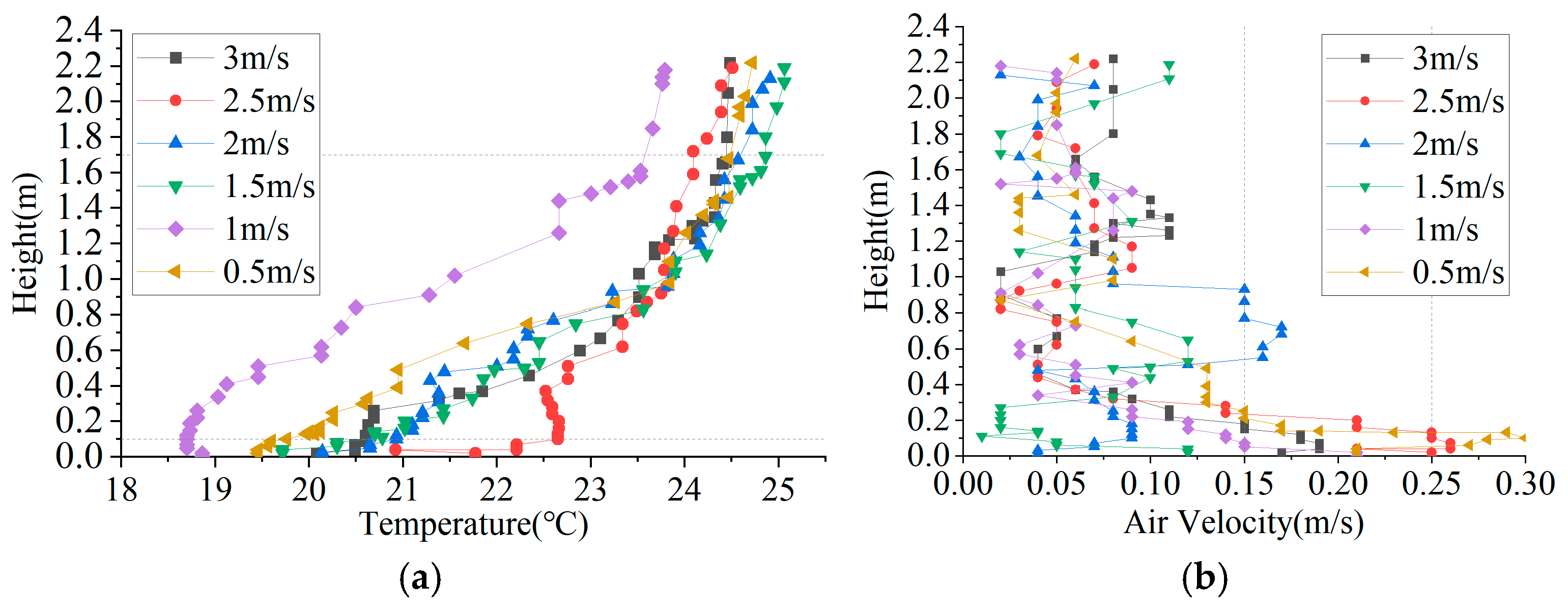
Using the 30 °C, 90° supply air condition as the baseline, the effect of varying supply air velocity on the indoor temperature and velocity fields was investigated. The results are shown in Figure 18 and Figure 19. Regarding vertical temperature differences, when the supply velocity was maintained between 2 and 3 m/s, the vertical ΔT remained within 4 °C (Table 8), indicating that higher air velocities can significantly enhance indoor air circulation and heat exchange efficiency, thereby improving temperature uniformity and mitigating vertical temperature stratification.
Figure 18.
Effect of Supply Air Velocity on the Vertical Centerline of the Central Section: (a) Temperature variation with height; (b) Air velocity variation with height.
Figure 19.
Effect of Supply Air Velocity on the Vertical Centerline of the Supply Air Outlet Section: (a) Temperature variation with height; (b) Air velocity variation with height.
Table 8.
Vertical Temperature Difference in the Height Range of 0.1 m to 1.7 m at Different Supply AirVelocities.
Regarding airflow velocity, the 3 m/s, 2.5 m/s, and 0.5 m/s cases all exceeded the standard limits in the near-floor region. High supply velocities can enhance air circulation but may also create direct drafts toward the lower limbs of occupants, causing discomfort. Conversely, low velocities may lead to insufficient indoor airflow organization, allowing cold air to accumulate near the floor and locally increase airspeed. Overall, a moderate supply velocity, such as 2 m/s, is more favorable for maintaining temperature uniformity while minimizing the risk of direct drafts at foot level.
Therefore, supply air velocity is a key parameter governing airflow organization in high and large spaces under winter heating conditions. Moderate air velocities tend to perform better because their momentum is sufficient to overcome near-floor cold air stagnation while remaining below the threshold that would induce strong draft effects, thereby establishing a relatively stable circulation pattern.
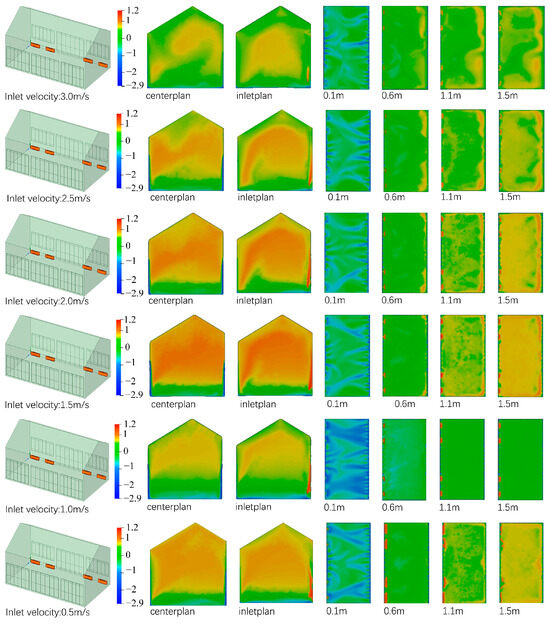
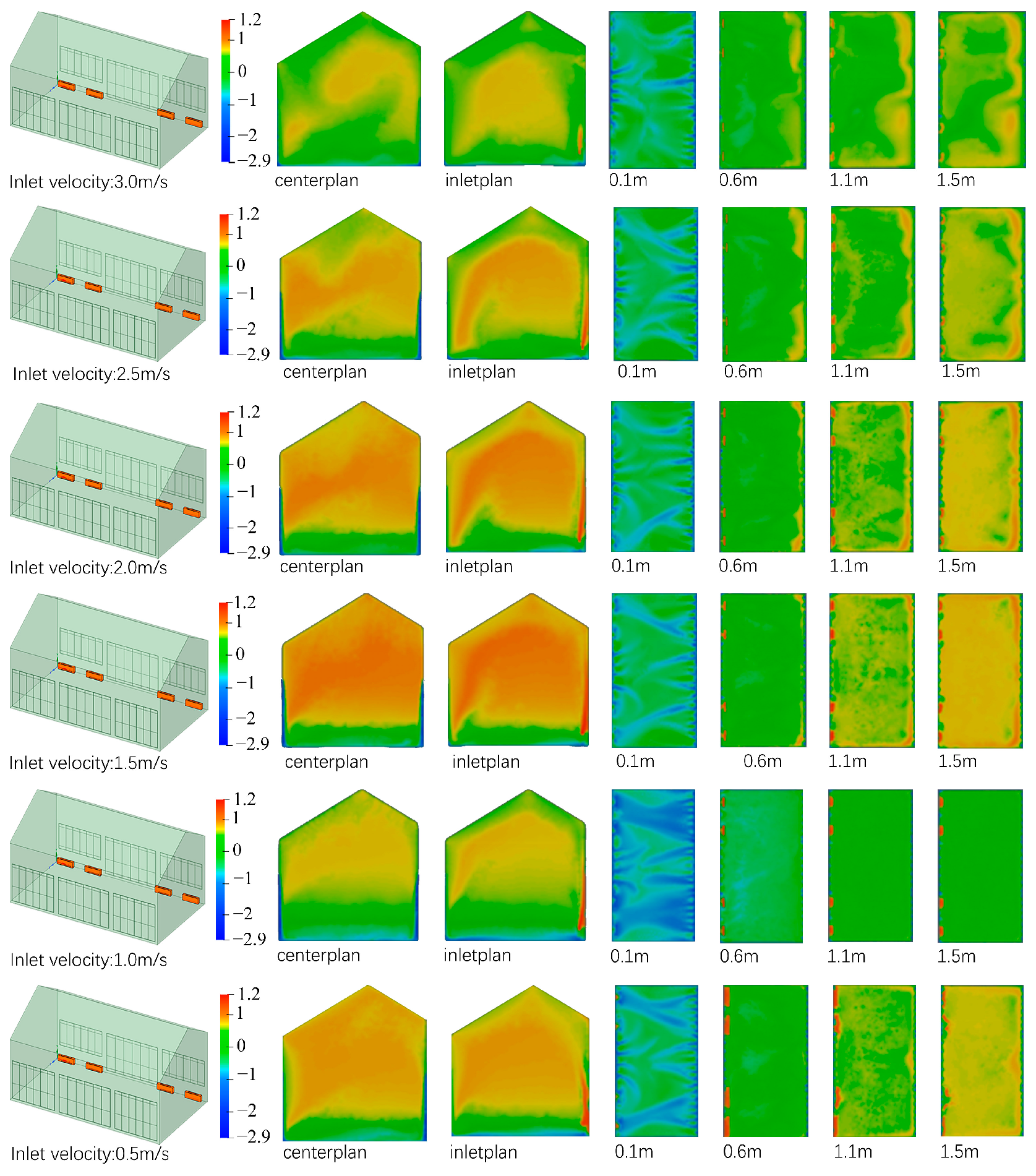
Using the 30 °C, 90° supply air condition as the baseline, the effect of varying supply air velocity on indoor thermal comfort distribution was analyzed. The contour plots (Figure 20) illustrate that decreasing the supply velocity from 3.0 m/s to 1.5 m/s significantly expanded the thermally uncomfortable areas within the occupied zone (1.1–1.5 m). As discussed in the previous section, higher supply air velocities provide sufficient jet momentum to effectively deliver warm air to the occupied zone and facilitate indoor air circulation, thereby reducing heat accumulation near the ceiling and improving the vertical temperature gradient. In contrast, at lower velocities (below 1.5 m/s), the jet diffusion capacity is markedly insufficient, the airflow coverage is limited, and an effective jet-driven circulation pathway is difficult to establish, allowing warm air to stagnate near the top, resulting in elevated PMV values and thermal discomfort in the upper space. Furthermore, excessively low velocities (below 1.0 m/s) reduce overall thermal sensation, as insufficient supply momentum allows cold air to remain near the floor, creating noticeable cold discomfort zones at 0.1–0.6 m.
Figure 20.
Cloud maps of comfort levels at different air supply velocities.
These results indicate that, when using a floor-mounted upward supply, moderately increasing the supply velocity can optimize the vertical thermal environment in high and large spaces and enhance thermal comfort within the occupied zone. Conversely, excessively low supply velocities weaken jet coverage, exacerbate heat stratification near the ceiling and cold air stagnation near the floor, and are therefore detrimental to thermal comfort.
3.3.4. Effect of Supply Air Location on the Distribution of Indoor Comfort Zones
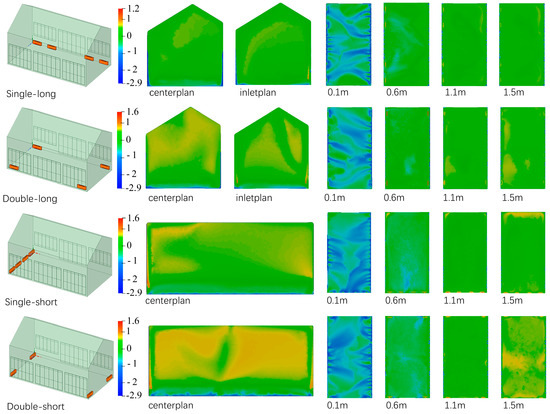
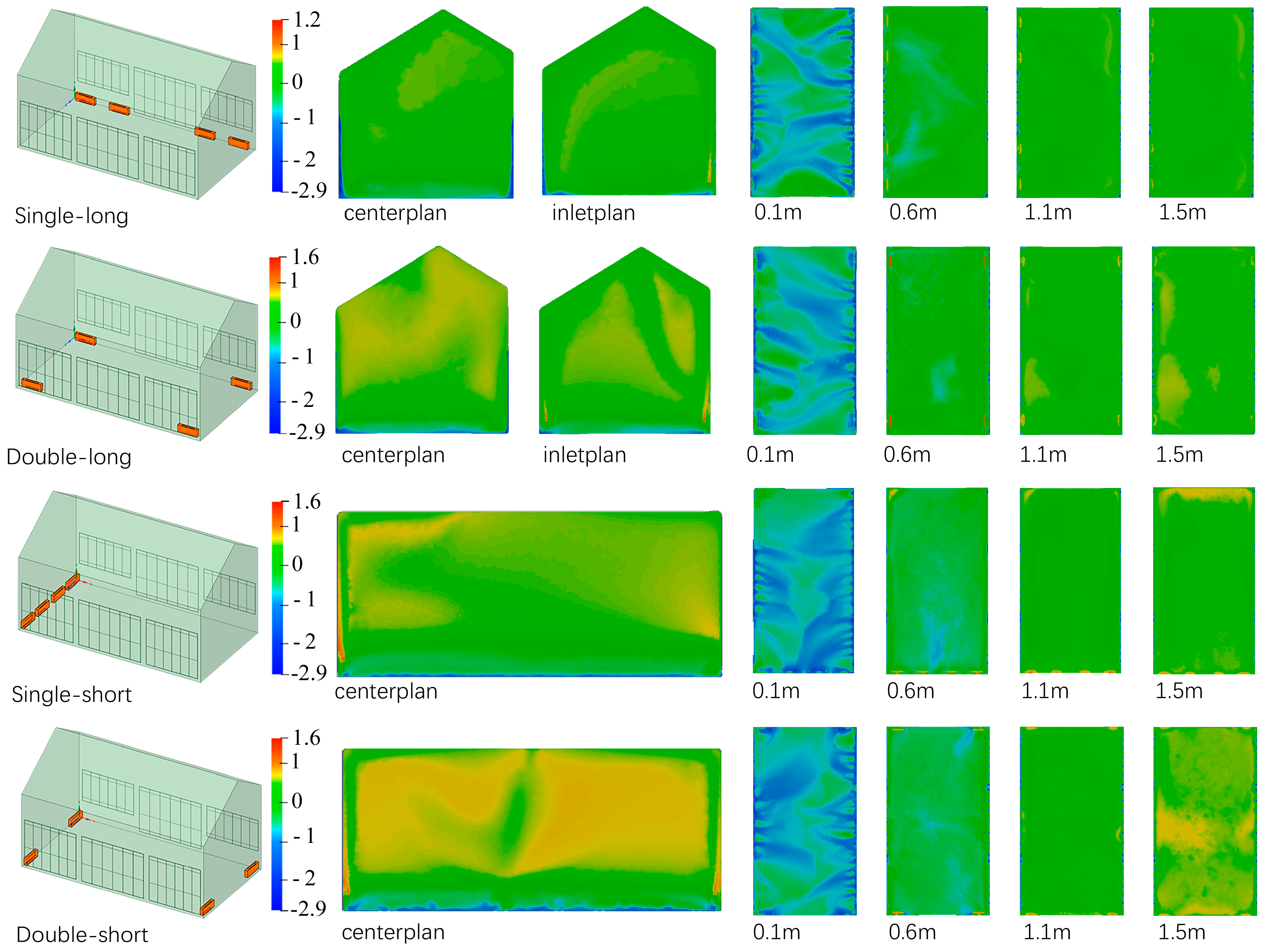
Using a supply air temperature of 28 °C as the baseline, the effect of different air-conditioning unit placements on indoor thermal comfort distribution was further investigated (Figure 21). The results show that double-sided air supply tends to induce heat accumulation in the upper zone, whereas single-sided air supply produces a more uniform temperature distribution. Moreover, higher thermal comfort is achieved when the supply outlet is located along the long side of the space rather than the short side. This can be mainly attributed to the fact that single-sided air supply along the long side establishes a shorter and more stable primary circulation path with lower jet momentum loss, which facilitates the delivery of heating energy to the lower occupied zone. In contrast, short-side placement or double-sided air supply leads to accelerated momentum decay due to jet interaction or elongated circulation paths, causing warm air to stagnate in the upper zone and thereby reducing heating efficiency and exacerbating heat accumulation.
Figure 21.
Cloud maps of comfort levels at different air supply positions.
From a design and application perspective, optimization of air supply location essentially involves reconfiguring the dominant airflow pathways within the space. For yamen-type historic spaces characterized by elongated floor plans and large heights, single-sided air supply along the long side can effectively enhance heating performance under limited-intervention conditions due to its higher circulation efficiency. For similar spaces in the future, HVAC design should rely on simulation-based evaluations of circulation pathway efficiency for different layouts in order to improve winter thermal performance of historic buildings while minimizing physical intervention.
4. Discussion
This study developed simulation models based on the North Flower Hall and the Rear Hall of the Jiangsu Provincial Judicial Commissioner’s Office, revealing a prevalent dual problem in high and large historic spaces under conventional air supply modes, namely the coexistence of heat accumulation near the ceiling and overcooling in the lower zone. The effects of key parameters—including supply air velocity, supply air angle, supply air temperature, and air supply location—on the winter thermal comfort distribution in high and large historic spaces were systematically investigated. While strictly adhering to the heritage conservation principle of “minimal intervention” and without altering the original architectural form or construction, this study provides quantitative evidence and practical insights for the operation adjustment and optimization of HVAC systems in similar heritage buildings.
From a mechanistic perspective, improvements in thermal comfort during winter heating in high and large spaces do not rely solely on increasing indoor air temperature, but are primarily governed by whether the heating jet can maintain effective coverage and circulation under the influence of thermal buoyancy. Supply air velocity exhibits a stronger dominant effect on the proportion of the comfort zone because it directly determines the level of jet momentum, thereby influencing air mixing intensity and the ability of heat to penetrate the occupied zone and mitigate heat stagnation near the ceiling. This pattern is consistent with findings from previous studies on heating in large spaces, which indicate that insufficient momentum tends to exacerbate temperature stratification, whereas enhanced jet momentum contributes to improved thermal conditions in the occupied zone [38,39]. In contrast, the supply air angle mainly affects the establishment and stability of circulation paths by altering wall-attachment characteristics and the directional components of jet momentum. This also explains the pronounced reduction in thermal comfort accompanied by localized draft sensations under small-angle conditions: when the wall-attachment effect weakens and vertical circulation cannot be sustained, heat fails to descend and adequately cover the lower occupied zone, and increasing air velocity alone is unlikely to yield the expected benefits. Similar conclusions have been reported in previous studies on wall-attached jets, which show that variations in supply air angle influence jet attachment behavior and momentum direction distribution, thereby modifying the stability of circulation pathways [20].
Furthermore, the distinctiveness of this study lies in the fact that yamen-type high and large historic spaces are constrained by the principles of preservation of original condition and minimal intervention, which limit equipment placement and retrofit options. Consequently, optimization relies more heavily on the detailed calibration of operational parameters for existing low-level air supply systems. Affected by elongated spatial configurations and deficiencies in envelope thermal performance, the influence of supply air angle on thermal comfort in such spaces depends primarily on whether a stable circulation pattern can be established and whether near-floor airflow sensations remain within acceptable limits. Compared with empirically derived parameters developed for modern large public buildings under more ideal boundary conditions, yamen-type spaces require the determination of applicable operational ranges through parametric scenario analysis, rather than the direct adoption of fixed “optimal” angles or velocities [24].
The influence of air supply location is likewise manifested in its control over the dominant circulation pathways [21,40]. However, in the present study, heritage element avoidance and layout feasibility must also be taken into account. Therefore, adjustments were limited to the planar placement of the air-conditioning units and the combinations of supply air directions. The results indicate that configurations with shorter circulation paths and reduced jet interference are more conducive to delivering heat to the lower occupied zone while mitigating heat stagnation in the upper region. Accordingly, under the premise of minimal intervention, single-sided air supply along the long side of the space can be considered a more favorable layout option.
It should be noted that this study has several limitations. First, this study focuses exclusively on winter heating conditions and does not address airflow organization or thermal performance during summer cooling; therefore, it does not fully capture the year-round thermal comfort characteristics of historic buildings. Second, the analysis is based on steady-state simulations and lacks transient analyses; as a result, the time required for the indoor environment to reach thermal comfort and the associated dynamic response characteristics were not evaluated. Furthermore, the evaluation primarily relies on temperature, airflow velocity, and PMV–PPD indices, without incorporating auxiliary indicators such as CO2 concentration, air age, or local thermal discomfort metrics, leading to a relatively limited assessment framework. Finally, the layout of the indoor units and the applicability of the corresponding conclusions are constrained by the specific spatial configuration of the Rear Hall (e.g., its length-to-width ratio), and the generalizability of the findings requires validation through additional case studies.
Future research will build upon the present work by extending the analysis to summer operating conditions and transient simulations. In addition, multidimensional evaluation indicators—such as indoor air quality, air age, and local thermal discomfort—will be incorporated to establish a more comprehensive framework for indoor thermal environment assessment. On this basis, subsequent studies may conduct a series of field measurements to examine the practical performance of air supply strategies, or further explore other combined control strategies, such as low-temperature, low-velocity side air supply coupled with radiant floor heating, to investigate their coordinated operation under different control logics and systematically evaluate their overall potential for improving thermal comfort and energy efficiency.
5. Conclusions
This study used the Rear Hall of the Jiangsu Provincial Judicial Commissioner’s Office as a case study to systematically evaluate the effects of different supply air velocities, supply angles, and supply layouts on the thermal comfort in high and large spaces of historical buildings. The primary conclusions are summarized as follows:
- For yamen-type high and large historic spaces, the key to winter heating lies in achieving a dynamic balance between jet momentum and thermal buoyancy. Compared with structural modifications to air supply outlets, fine-tuning operational parameters—such as supply air velocity and angle—can improve the thermal environment more efficiently under the premise of minimal intervention and is therefore more consistent with heritage conservation requirements. In addition, parametric simulations enable the identification of suitable operational ranges, providing a practical and quantitative basis for the commissioning and optimization of heating systems in heritage buildings subject to conservation constraints;
- Supply air velocity is the dominant parameter for improving indoor thermal comfort. Increasing the air velocity enhances jet momentum and air mixing, thereby reducing heat accumulation near the ceiling, alleviating vertical temperature stratification, and increasing the proportion of the comfort zone. However, excessively high velocities (≥2.5 m/s) tend to induce draft discomfort near the floor, whereas excessively low velocities (<1.5 m/s) provide insufficient momentum, leading to the coexistence of heat stagnation in the upper zone and cold air stagnation near the floor. Overall, a moderate supply air velocity of approximately 2 m/s achieves a balance between temperature uniformity and airflow comfort, representing a more favorable operational range;
- The supply air angle influences circulation stability and heat distribution by regulating the wall-attachment effect and the directional components of jet momentum. A low angle (30°) can reduce vertical temperature gradients; however, the weakened wall-attachment effect may cause the jet to transition to a free jet, leading to local overcooling and draft discomfort near the floor. A high angle (90°) provides a more stable and comfortable environment in the occupied zone but is associated with pronounced heat accumulation near the ceiling. An intermediate angle (75°) represents a compromise, balancing temperature uniformity, airflow sensation, and heat utilization. Accordingly, for yamen-type historic buildings, differentiated supply air angles may be selected based on functional requirements: lower angles for rapid warming of occupied areas (with appropriate velocity control), higher angles (90°) for static comfort and heritage conservation priorities, and intermediate angles (75°) for integrated performance;
- The influence of air supply layout on thermal comfort is relatively limited, whereas the supply air temperature exhibits a clearly identifiable optimum. When the supply air temperature is set to 28 °C, all layout configurations achieve the highest comfort level; however, this value is dependent on spatial geometry, outdoor conditions, and thermal loads. The key role of air supply location lies in establishing a short and stable dominant circulation pathway: single-sided air supply along the long side reduces jet interference and momentum decay, thereby facilitating downward heat transport and mitigating heat accumulation in the upper zone, which is well suited to elongated yamen-type spaces.
Author Contributions
Conceptualization, J.W.; methodology, J.W. and Y.D.; software, Y.C.; validation, J.W.; formal analysis, Y.C.; investigation, J.W., Y.C. and Y.D.; resources, J.W.; data curation, J.W. and Y.C.; writing—original draft preparation, Y.C.; writing—review and editing, J.W.; visualization, Y.C.; supervision, J.W.; project administration, Y.D. and Y.C.; funding acquisition, J.W. and Y.D. All authors have read and agreed to the published version of the manuscript.
Funding
This research received no external funding.
Institutional Review Board Statement
Not applicable.
Informed Consent Statement
Not applicable.
Data Availability Statement
The original contributions presented in this study are included in the article. Further inquiries can be directed to the corresponding author.
Acknowledgments
This work was supported by Suzhou Social Sciences Foundation Project, SZX2025LX005; Jiangsu Construction System Science and Technology Project, 2023ZD029 and The Youth Cross-Disciplinary Research Team of Humanities and Social Sciences of Soochow University, 5033720523. The on-site research and testing assistance was also supported by Suzhou Historic City Group and Suzhou Mingcheng Renewal and Development Co., Ltd.
Conflicts of Interest
Yi Deng is an employee of Suzhou Mingcheng Renewal and Development Co., LTD. The paper reflects the views of the scientists and not the company. Suzhou Mingcheng Renewal and Development Co., LTD had no role in the design of the study; in the collection, analyses, or interpretation of data; in writing of the manuscript, or in the decision to publish results.
Abbreviations
The following abbreviations are used in this manuscript:
| PMV | Predicted Mean Vote |
| PPD | Predicted Percentage of Dissatisfied |
| CFD | Computational Fluid Dynamics |
| HVAC | Heating, Ventilation and Air Conditioning |
References
- Liu, D.; Xu, Z. Discussion on the Spatial Layout and Value of Yamen Buildings from the Perspective of Traditional Construction: A Case Study of the Yamen in Neixiang County, Henan. Art Educ. 2023, 237, 237–240. [Google Scholar]
- Li, X. General Commander’s Office during the Ming and Qing Dynasties under Hierarchy. Anhui Archit. 2012, 19, 12,38. [Google Scholar] [CrossRef]
- Jiangsu Provincial Database of Immovable Cultural Relics. The Jiangsu Provincial Judicial Commissioner’s Office [DB/OL]. Available online: https://www.jslib.org.cn/trsnjapp/zjzy/bkydsjk.html (accessed on 23 September 2025).
- Bi, X.; Li, C.; Chen, W.; Cao, D.; Ma, Y. Study on Thermal Environment Analysis and Passive Optimization Strategy of Traditional Brick and Wood Dwellings in Mountainous Area of Southern Henan Province. Build. Sci. 2022, 38, 23–30. [Google Scholar]
- Qi, Z.; Xiao, X.; Gao, X. A Comparative Study on Indoor Thermal Environment of Traditional Dwellings in Multi-cultural Interleaving Area: A case study of Ulanqab Area. Build. Energy 2024, 52, 85–93,106. [Google Scholar]
- Zhu, Y.; Liu, L.; Sang, G.; Cui, X. Effect of advanced insulation materials and passive optimization strategies on interior thermal comfort of traditional houses in winter. Građevinar 2024, 76, 633–646. [Google Scholar] [CrossRef] [Scilit]
- Kakouei, M.; Sutrisna, M.; Rasheed, E.; Feng, Z. Enhancing the Energy Performance of Historic Buildings Using Heritage Building Information Modelling: A Case Study. Sustainability 2025, 17, 6655. [Google Scholar] [CrossRef] [Scilit]
- Kang, Y.; Yuk, H.; Jo, H.H.; Kim, S. Indoor thermal environment assessment of a historic building for a thermal and energy retrofit scenario using a CFD model. Case Stud. Therm. Eng. 2024, 63, 105330. [Google Scholar] [CrossRef] [Scilit]
- Yang, X.; Wang, H.; Su, C.; Wang, X.; Wang, Y. Heat transfer between occupied and unoccupied zone in large space building with floor-level side wall air-supply system. Build. Simul. 2020, 13, 1221–1233. [Google Scholar] [CrossRef] [Scilit]
- Cai, N.; Huang, C.; Cao, W. Study on a Simultaneously Solving Model for Stratified Air Conditioning under Low Sidewall Air Supply System in a Large Space Building. J. Refrig. 2011, 32, 42–47. [Google Scholar]
- Cai, N.; Wang, M.; Li, Z.; Zhang, D.; Huang, C. Experimental study on vertical temperature distribution of indoor air in large space buildings under nozzle air supply conditions in summer. J. Nanjing Univ. Sci. Technol. 2019, 43, 600–606. [Google Scholar]
- Xu, Y.; Wang, X.; Shi, C.; Huai, X.; Wang, F. Vertical temperature profiles and cooling load in large spaces ventilated by stratified air-conditioning systems: Scale-model experiment and nodal modeling. J. Therm. Sci. Eng. Appl. 2020, 12, 051008. [Google Scholar] [CrossRef] [Scilit]
- Cheng, Y.; Lin, Z.; Wu, W.; Yao, T. Performance evaluation of stratum ventilation with slot diffusers using CFD. In Proceedings of the Indoor Air 2014, Hong Kong, China, 7–12 July 2014. [Google Scholar]
- Cheng, Y.; Lin, Z.; Yao, T.; Wu, W. Numerical comparison of indoor air quality and local thermal comfort in a classroom with three ventilation methods. In Proceedings of the Indoor Air 2014, Hong Kong, China, 7–12 July 2014. [Google Scholar]
- Lin, Z.; Chow, T.T.; Tsang, C.F.; Fong, K.F.; Chan, L.S. Stratum ventilation for a workshop under elevated indoor temperature. Int. J. Vent. 2010, 9, 47–57. [Google Scholar] [CrossRef] [Scilit]
- Cheng, F.; Li, Y.; Wu, Y.; Cheng, Y.; Lin, Z. Experimental study of air distribution and heating performances of deflection ventilation. Energy Build. 2023, 282, 112800. [Google Scholar] [CrossRef] [Scilit]
- Cheng, F.; Wu, Y.; Gao, S.; Liao, C.; Cheng, Y. Experimental study of thermal comfort in a field environment chamber with stratum ventilation system in winter. Build. Environ. 2022, 207, 108445. [Google Scholar] [CrossRef] [Scilit]
- Karimipanah, T.; Awbi, H.B. Theoretical and experimental investigation of impinging jet ventilation and comparison with wall displacement ventilation. Build. Environ. 2002, 37, 1329–1342. [Google Scholar] [CrossRef] [Scilit]
- Chen, H.; Janbakhsh, S.; Larsson, U.; Moshfegh, B. Numerical investigation of ventilation performance of different air supply devices in an office environment. Build. Environ. 2015, 90, 37–50. [Google Scholar] [CrossRef] [Scilit]
- Tan, D.; Li, B.; Cheng, Y.; Liu, H.; Chen, J. Airflow pattern and performance of wall confluent jets ventilation for heating in a typical office space. Indoor Built Environ. 2020, 29, 67–83. [Google Scholar] [CrossRef] [Scilit]
- Yin, H.; Huo, Y.; Wang, Y.; Ji, D.; Wang, J.; Ma, Z.; Li, A. Numerical investigation on mechanisms and performance of column attachment ventilation for winter heating. Build. Environ. 2021, 202, 108025. [Google Scholar] [CrossRef] [Scilit]
- Xu, L.; Zhang, J.; Liu, Y.; Zeng, S. Study on a Air Supply Heating Mode Using Coupled Airflow in Large Space. Refrig. Air Cond. 2023, 37, 180–186. [Google Scholar]
- Wu, J.; Xu, L.; Shen, J. Research on the cross-contamination in the confined conference room with the radiant floor heating system integrated with the down-supply ventilation. Heliyon 2023, 9, e14389. [Google Scholar] [CrossRef] [Scilit]
- Gao, R.; Zhang, H.; Li, A.; Wen, S.; Du, W.; Deng, B. Research on optimization and design methods for air distribution system based on target values. Build. Simul. 2021, 14, 721–735. [Google Scholar] [CrossRef] [Scilit]
- Dong, Z.; Zhang, L.; Yang, Y.; Li, Q.; Huang, H. Numerical study on coupled operation of stratified air distribution system and natural ventilation under multi-variable factors in large space buildings. Energies 2021, 14, 8130. [Google Scholar] [CrossRef] [Scilit]
- Chen, H.; Wu, Y.; Wang, Y.; Zhang, S.; Lei, X. Simulation on Indoor Thermal Comfort of High and Large Space Buildings Based on Modelica and CFD. Build. Energy 2025, 53, 76–84,110. [Google Scholar]
- Li, Z.; Lu, J.; Li, Y.; Cao, S.; Li, Z. Analysis of Large Space Building Energy Consumption Based on EnergyPlus and CFD Coupling Strategy. Build. Energy 2019, 47, 76–81. [Google Scholar]
- JGJ/T 347–2014; Standard for Test Methods of Building Thermal Environment. Ministry of Housing and Urban-Rural Development of the People’s Republic of China: Beijing, China, 2014.
- ASHRAE. ASHRAE Handbook—Fundamentals; American Society of Heating, Refrigerating and Air-Conditioning Engineers: Atlanta, GA, USA, 2021. [Google Scholar]
- Gilani, S.; Montazeri, H.; Blocken, B. CFD simulation of stratified indoor environment in displacement ventilation: Validation and sensitivity analysis. Build. Environ. 2016, 95, 299–313. [Google Scholar] [CrossRef] [Scilit]
- ANSI/ASHRAE Standard 55-2023; Thermal Environmental Conditions for Human Occupancy. ASHRAE: Atlanta, GA, USA, 2023.
- ISO 7730:2005; Ergonomics of the Thermal Environment: Analytical Determination and Interpretation of Thermal Comfort Using Calculation of the PMV and PPD Indices and Local Thermal Comfort Criteria. ISO: Geneva, Switzerland, 2005.
- Awbi, H.B. Ventilation of Buildings; Routledge: London, UK, 2002. [Google Scholar]
- Wang, X.; Yang, Y.; Xu, Y.; Wang, F.; Zhang, Q.; Huang, C.; Shi, C. Prediction of vertical thermal stratification of large space buildings based on Block-Gebhart model: Case studies of three typical hybrid ventilation scenarios. J. Build. Eng. 2021, 41, 102452. [Google Scholar] [CrossRef] [Scilit]
- Royapoor, M.; Roskilly, T. Building model calibration using energy and environmental data. Energy Build. 2015, 94, 109–120. [Google Scholar] [CrossRef] [Scilit]
- Palaić, D.; Štajduhar, I.; Ljubic, S.; Wolf, I. Development, calibration, and validation of a simulation model for indoor temperature prediction and HVAC system fault detection. Buildings 2023, 13, 1388. [Google Scholar] [CrossRef] [Scilit]
- ASHRAE Guideline 14-2023; Measurement of Energy, Demand, and Water Savings. ASHRAE: Atlanta, GA, USA, 2023.
- Zhang, S.; Lin, Z.; Ai, Z.; Wang, F.; Cheng, Y.; Huang, C. Effects of operation parameters on performances of stratum ventilation for heating mode. Build. Environ. 2019, 148, 55–66. [Google Scholar] [CrossRef] [Scilit]
- Ye, X.; Zhu, H.; Kang, Y.; Zhong, K. Heating energy consumption of impinging jet ventilation and mixing ventilation in large-height spaces: A comparison study. Energy Build. 2016, 130, 697–708. [Google Scholar] [CrossRef] [Scilit]
- Yang, X.; Ye, X.; Zuo, B.; Zhong, K.; Kang, Y. Analysis of the factors influencing the airflow behavior in an impinging jet ventilation room. In Proceedings of the Building Simulation, Bruges, Belgium, 1–3 September 2021; pp. 749–762. [Google Scholar]

Disclaimer/Publisher’s Note: The statements, opinions and data contained in all publications are solely those of the individual author(s) and contributor(s) and not of MDPI and/or the editor(s). MDPI and/or the editor(s) disclaim responsibility for any injury to people or property resulting from any ideas, methods, instructions or products referred to in the content. |
© 2025 by the authors. Licensee MDPI, Basel, Switzerland. This article is an open access article distributed under the terms and conditions of the Creative Commons Attribution (CC BY) license.