Article

Simulation Study on Dispersion Patterns of Construction PM10 in Highway Projects
1
School of Aeronautical Manufacturing and Vehicle Engineering, Xihang University, Xi’an 710077, China
2
The Key Laboratory of Intelligent Construction and Maintenance of CAAC (Civil Aviation Administration of China), Chang’an University, Xi’an 710064, China
3
Inner Mongolia Research Institute of Transportation Science Development, Hohhot 010051, China
4
School of Highway, Chang’an University, Xi’an 710064, China
5
Shaanxi Transportation Holding Group Co., Ltd., Xifu Branch, Xi’an 713700, China
*
Author to whom correspondence should be addressed.
Atmosphere 2026, 17(3), 286; https://doi.org/10.3390/atmos17030286
Submission received: 19 January 2026 / Revised: 1 March 2026 / Accepted: 7 March 2026 / Published: 12 March 2026
(This article belongs to the Section Air Quality)

Abstract

To address the challenges posed by strong environmental disturbance during field observations of dust dispersion at highway construction sites, this study investigates the transport and diffusion patterns of construction dust (PM10) by integrating numerical simulation with on-site measurements. Based on particle sampling parameters and wind conditions obtained from the target project, a construction PM10 dispersion model was established using computational fluid dynamics (CFD). The wind direction that best matched the measured field data was selected as the reference condition, and the dispersion behavior of construction dust was simulated under different wind speeds and particle mass flow rates. The results indicate that larger wind-direction angles facilitate vertical dispersion of particulate matter, and higher wind speeds enhance long-distance transport while reducing near-source concentrations. Dust-suppression performance increases with barrier height, and under a low wind speed of 2 m·s−1, a 3 m barrier achieves a PM10 suppression efficiency of 73.6%. These findings provide quantitative evidence and technical support for PM10 control in highway construction environments.

1. Introduction

In recent years, large-scale haze events have severely affected the health of residents and the ecological environment in northern China [1]. Dust emissions from construction sites are among the key contributors to declining air quality [2,3]. Dust pollution at construction sites not only increases the risk of occupational respiratory diseases among workers [4] but also degrades atmospheric environmental quality and intensifies regional ecological pollution. Studies have shown that for every 10 μg·m−3 increase in PM10 concentration, the likelihood of developing lung cancer rises by approximately 22% [5].
Highway construction projects are characterized by wide spatial influence, long construction periods, and complex environmental impacts. Construction sites are susceptible to natural wind, mechanical operations, and the movement of construction vehicles, all of which can generate substantial amounts of dust.
Therefore, investigating the transport and diffusion patterns of construction dust at highway sites is essential for formulating effective dust-control measures. The transport and dispersion of PM10 at construction sites involve a gas–solid two-phase flow process governed by multiple factors, including particle characteristics, gravitational settling, wind conditions, and airflow disturbances induced by construction machinery [6]. Due to their small particle size and prolonged suspension in the air, PM10 fractions are susceptible to resuspension caused by localized airflow from construction activities. The coupled interaction of these factors makes it difficult for traditional empirical models and Gaussian models to accurately describe the dispersion behavior [7,8]. In contrast, CFD numerical simulation enables the modeling of flow fields and particle trajectories under multi-factor coupling, and, thus, represents the most appropriate technical approach for this study.
Existing research focuses primarily on dust diffusion patterns within building construction sites [9,10], emission characteristics of construction dust [11,12,13], and dust control measures. For example, Ruan Shunling [14] used a Gaussian model to simulate the spatiotemporal variation of dust diffusion, reporting that when wind speed or atmospheric stability increases by one order of magnitude, dust diffusion rates increase by 2–3 times. Han Jincao [15] combined computational fluid dynamics (CFD) simulations with field observations to analyze dust diffusion caused by construction vehicles on highway work sites. Chen Jian [16] simulated the diffusion of dust particles with various sizes under different enclosure heights and found that barriers effectively modify the internal wind environment and reduce wind-driven dust dispersion. Wu Shuyuan [17] validated a gas–solid two-phase flow model using field data from an open stockyard and employed Fluent to study dust dispersion from multiple stockpiles under low, medium, and high wind speeds. Common dust-control measures at open-air construction sites include water spraying [18], dust suppressants [19], and windbreak nets [20,21]. However, existing studies on construction particulate matter dispersion have mostly focused on building construction sites, with several studies having applied CFD models to simulate dust diffusion in enclosed building construction areas [6,7,16]. For linear highway construction projects, only a few studies have preliminarily explored the application of CFD models [15], but there are still obvious research limitations. On the one hand, existing studies have not fully clarified the influence mechanism of wind direction angle on the vertical and horizontal dispersion of highway construction PM10; on the other hand, there is a lack of quantitative research on the dust suppression efficiency of barriers with different heights under actual meteorological conditions in the study area. Therefore, systematic research specific to highway construction PM10 dispersion remains insufficient.
Given that PM10 is the primary focus of dust prevention and control in Xi’an, this study selects PM10 as the research subject (hereafter, “dust” specifically refers to PM10). This study aims to investigate the diffusion patterns of highway construction dust through CFD simulations and field observations and provides a scientific basis for dust-control strategies. In this study, the field-measured wind speed, wind direction and PM10 concentration data are used to validate the reliability of the CFD simulation model: the measured meteorological parameters are used as the inlet boundary conditions of the model, and the measured PM10 concentration at the monitoring points is used to verify the accuracy of the simulated concentration field. A CFD simulation model for highway construction dust diffusion was established to analyze the effects of wind direction, wind speed, and barrier height on dust dispersion and to develop dust-mitigation recommendations based on simulation results.

2. Numerical Model for PM10 Dispersion

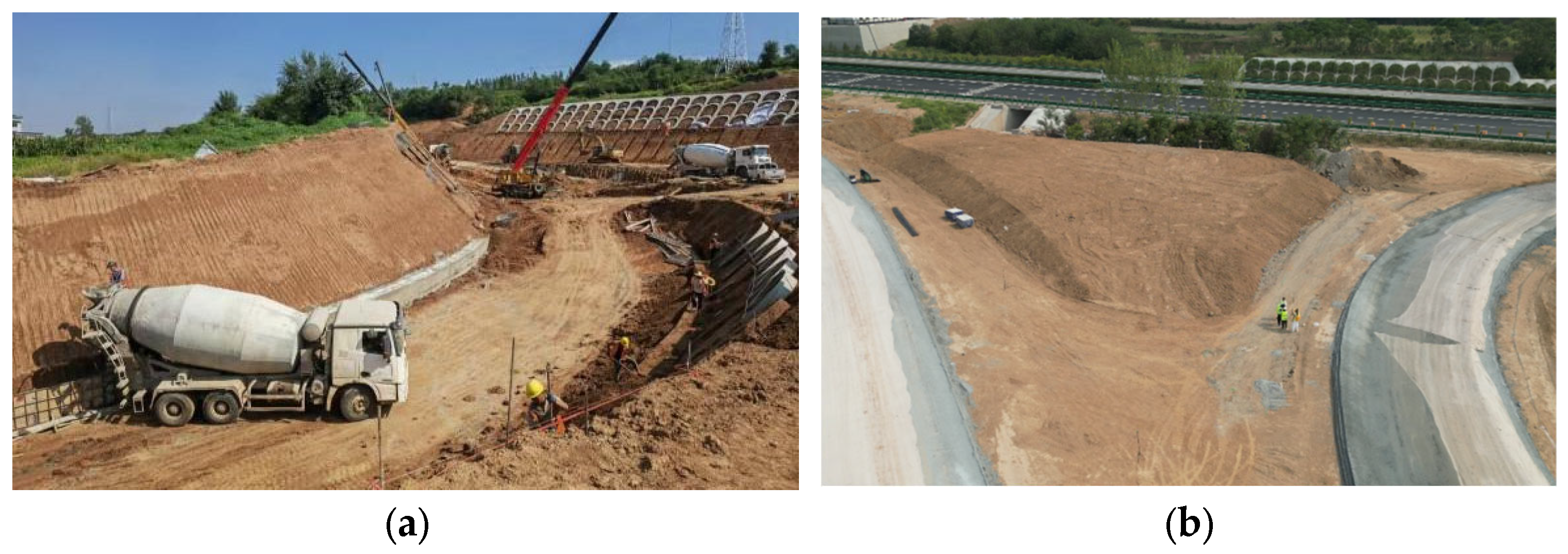
Previous studies have often evaluated dust pollution at construction sites using field measurements or derived spatial diffusion patterns through regression analysis of measured concentration data. However, field experiments at highway construction sites are significantly affected by highly variable environmental conditions such as wind direction and wind speed. Moreover, measurement point arrangement often relies on empirical judgment, which limits the ability to accurately investigate dust transport mechanisms. In recent years, numerical simulation methods have been increasingly applied to studies of dust dispersion at building sites, with many adopting gas–solid two-phase flow discrete phase models (DPMs) to analyze dust diffusion. In this study, ANSYS Fluent 19.0 (widely used commercial CFD (computational fluid dynamics) software) is employed to simulate the airflow field in and around a construction site and to model the transport and diffusion of dust particles generated during construction. Simulation reliability was verified using field data collected at a highway construction site in Xi’an. Additionally, PM10 concentration distribution is analyzed to explore diffusion patterns. The actual open operation surface of the target highway construction site is shown in Figure 1, which provides a realistic basis for the simplification and establishment of the numerical simulation model.

2.1. Numerical Model of Airflow

This study adopts the discrete phase model [22], in which the particle phase is treated as discrete and the gas phase as continuous. The Lagrangian method is used to predict particle trajectories in the DPM. For the gas-phase flow field, the widely used k-ε two-equation turbulence model is selected. This model is solved using the SIMPLE (Semi-Implicit Method for Pressure-Linked Equations) algorithm, a semi-implicit method used to solve the mass, momentum, and energy transfer equations of pressure coupling. The standard k-ε model equations are as follows:
( ρ k ) t + ( ρ k u i ) x i = x j μ + μ t σ k k x j + G k ρ ε
( ρ ε ) t + ( ρ ε u i ) x i = x j ( μ + μ t σ ε ) ε x j + C 1 ε k ε G k C 2 ε ρ ε 2 k
where ρ is the density of air (continuous phase), kg·m−3; t is time, s; ui and uj are the time-averaged velocity components of the fluid in the i and j directions, m·s−1; xi and xj are the spatial coordinate components, m; μ is the molecular dynamic viscosity of air, Pa·s; μt is the turbulent eddy viscosity, Pa·s; k is the turbulent kinetic energy, m2·s−2; ε is the turbulent dissipation rate, unit: m2·s−3; Gk is the generation term of turbulent kinetic energy caused by the mean velocity gradient; σk and σε are the turbulent Prandtl numbers corresponding to k and ε, respectively; C1ε, C2ε, and are empirical constants of the standard k-ε model.

2.2. Field Observation Scheme

To validate the accuracy of the simulated dust dispersion patterns, on-site measurements were conducted at a highway construction project. To minimize environmental interference, field experiments were conducted under clear weather conditions with stable wind direction and low wind speeds. The selected site was a 200 m long construction access road aligned north–south, enclosed on one side. On the experimental day, weather conditions were sunny to partly cloudy, with a predominantly southerly wind of 2–3.5 m·s−1. The average soil moisture content at the ground surface was 7%, and both wind direction and wind speed remained stable during measurements.
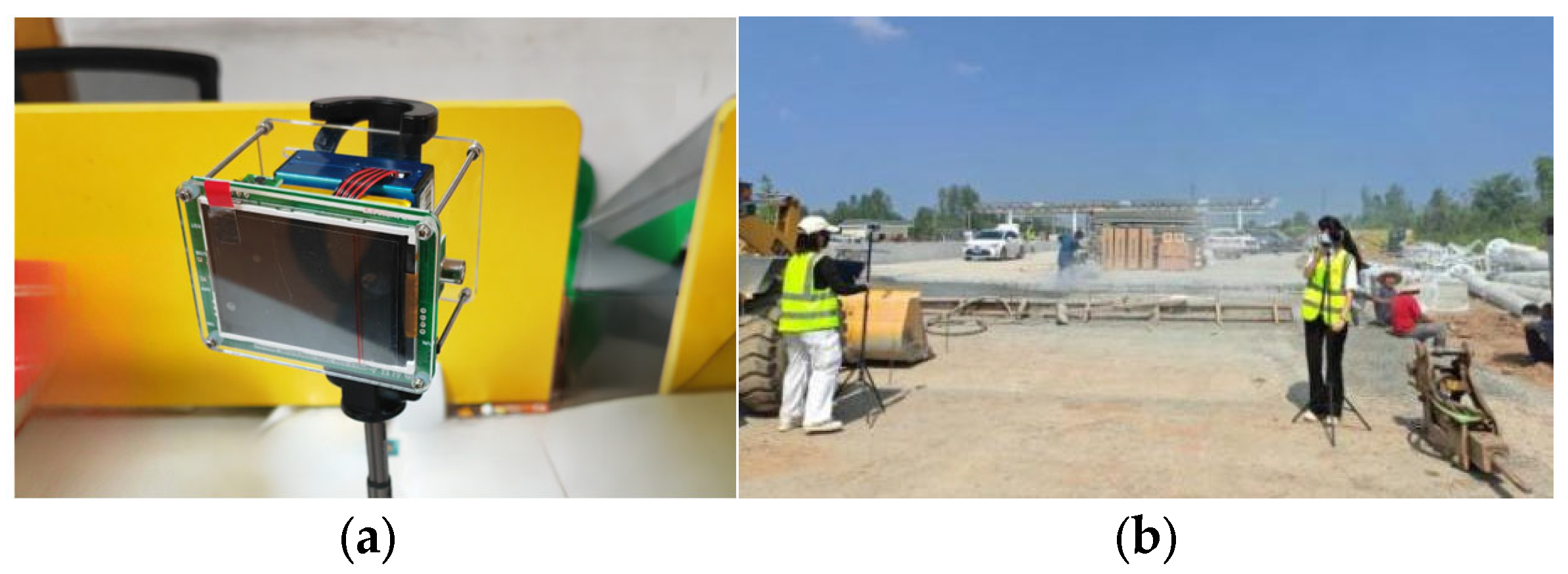
A total of ten PM10 concentration detectors (model: M5S) were deployed for field measurement. The detector adopts the light scattering method for PM10 concentration measurement, with a measurement range of 0~3000 μg·m−3, sensitivity of 1 μg·m−3, and relative measurement uncertainty of ≤±10%. Along the construction access road, one monitoring point was placed every 10 m from south to north, with detectors fixed at a height of 1.5 m above ground (human breathing height). Each monitoring point was measured 3 times in parallel and the relative standard deviation of the parallel measurement data was controlled within 5%. This monitoring point layout focuses on capturing the longitudinal transport characteristics of PM10 along the prevailing wind direction, which can provide core data for the validation of the model’s main pollution plume prediction. It should be noted that this single-axis sampling scheme has certain limitations: it cannot fully capture the lateral dispersion characteristics of PM10, nor can it comprehensively characterize the influence of small-scale turbulent eddies on the spatial concentration distribution. The PM10 detectors and field monitoring setup are shown in Figure 2.

3. Physical Model and Basic Parameter Settings

3.1. Physical Model for Simulation and Mesh Generation

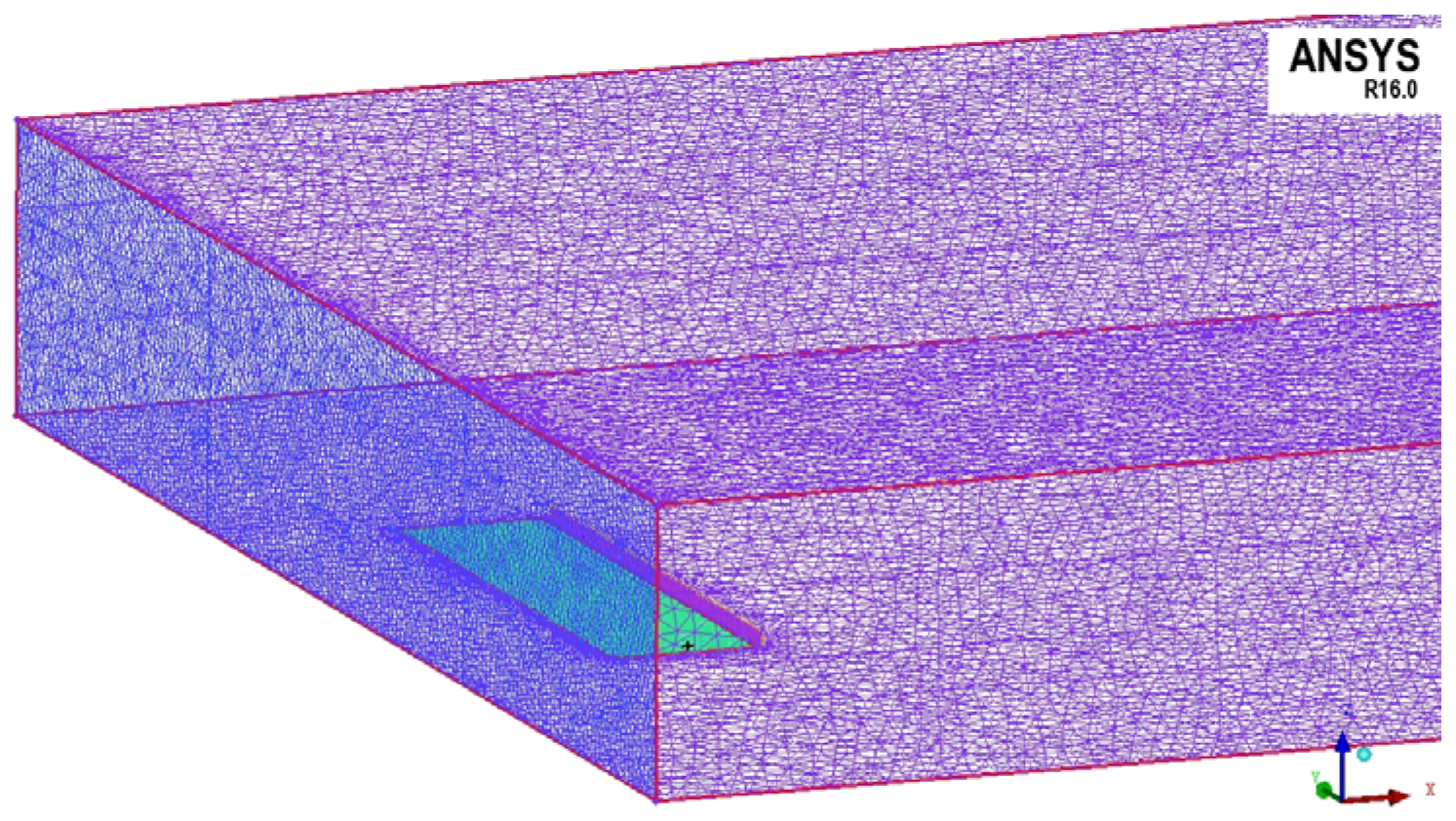
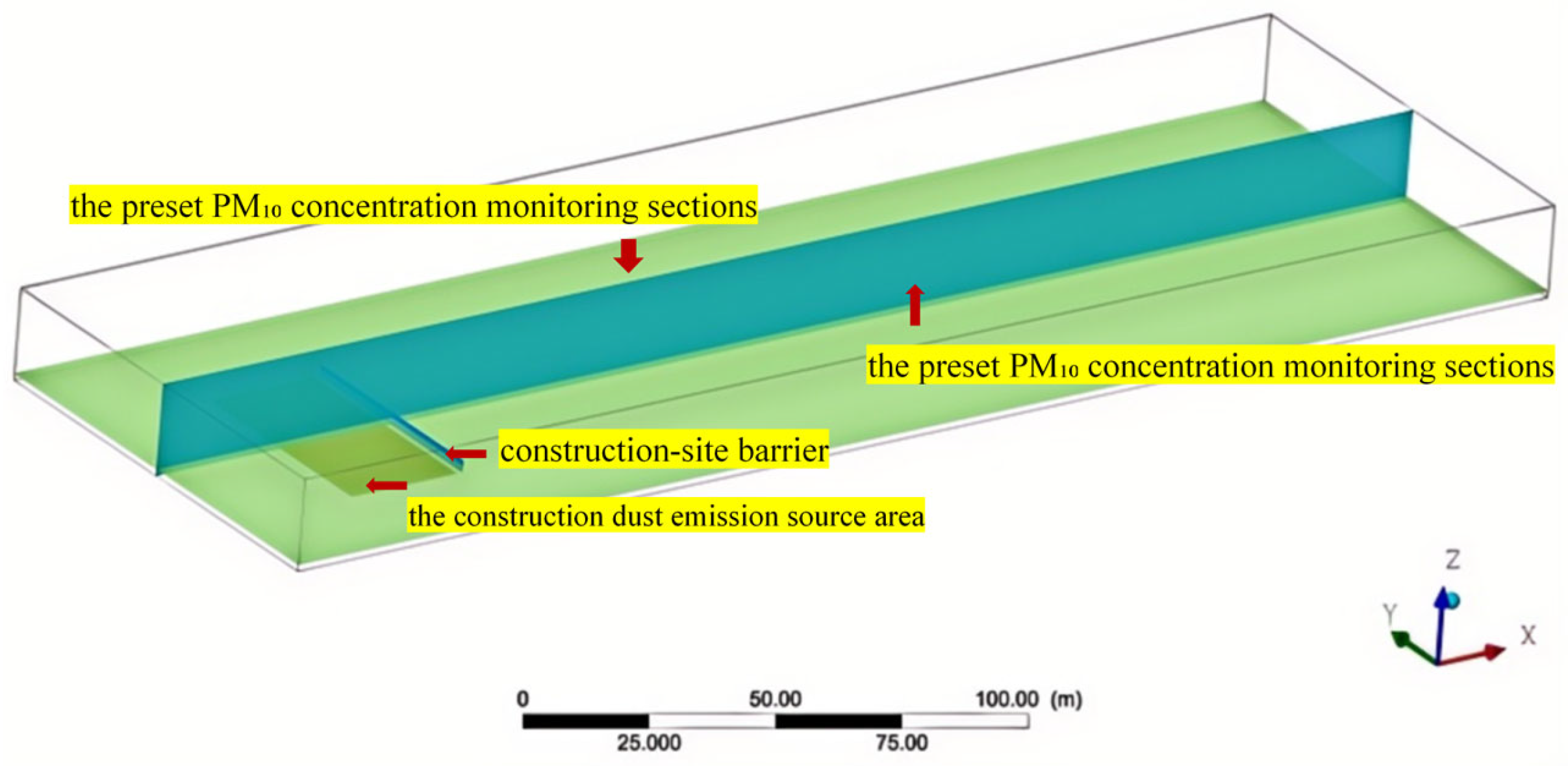
Considering computational efficiency, the numerical model in this study is reasonably simplified by neglecting the influence of surrounding buildings on the airflow field. The computational domain of the flow field is constructed using SolidWorks 2018 3D modeling software. The computational domain of the flow field is 300 m (downwind direction, X-axis) × 100 m (lateral direction, Y-axis) × 70 m (vertical direction, Z-axis). The downwind PM10 concentration is evaluated within 250 m from the construction source boundary, covering the main affected area of the pollution plume. In accordance with the Regulations of Xi’an Municipality on Dust Pollution Control, enclosure barriers are placed on the downstream side of the construction zone with heights of 2 m, 2.5 m, and 3 m. Dust particles are generated over the entire ground surface of the construction area and transported toward the residential area under airflow action. The computational model is shown in Figure 3.

3.2. Basic Parameter Settings

In the simulation, the continuous phase is air, with a density of 1.225 kg·m−3. Gravity is considered in the discrete phase calculations, with a gravitational acceleration of 9.81 m·s−2. In the discrete phase model, the particle phase is set as inert spherical particles, and the particle–wall interaction follows the reflectance boundary condition. The particle phase in this study comprehensively represents the total PM10 emission from the construction site, including wind-eroded dust from the open surface, and dust generated by construction vehicle movement and mechanical operations. The detailed physical properties of the particles, including particle size, density, shape factor and emission rate, are determined based on the field measured data of the target project, and the specific settings are shown in Table 1.

3.3. Working Conditions and Monitoring Section Setup

Based on ecological monitoring results for Xi’an from 2020 to 2024 and meteorological parameters from the Special Meteorological Data Set for Building Thermal Environment Analysis in China, the literature review and data analysis show that Xi’an’s prevailing annual wind direction is northeast (NE), with a secondary prevailing direction of southwest (SW). The annual average wind speed is relatively low. Therefore, this study focuses on low and medium wind-speed conditions, which can represent the most common meteorological scenarios in the study area, and the conclusions have the strongest engineering guidance value. The detailed study of extreme high-wind-speed scenarios is an important supplement to this research, and we will carry out in-depth research in the follow-up work. This study focuses on examining PM10 dust dispersion under low and medium wind-speed conditions. The simulation first investigates dust dispersion without an enclosure, followed by cases with enclosure barriers of different heights to evaluate their dust-control performance. The typical monitoring sections used in the simulations are illustrated in Figure 4.

4. Simulation Results Under No-Enclosure Barrier Conditions

4.1. PM10 Dispersion Under Different Wind Directions

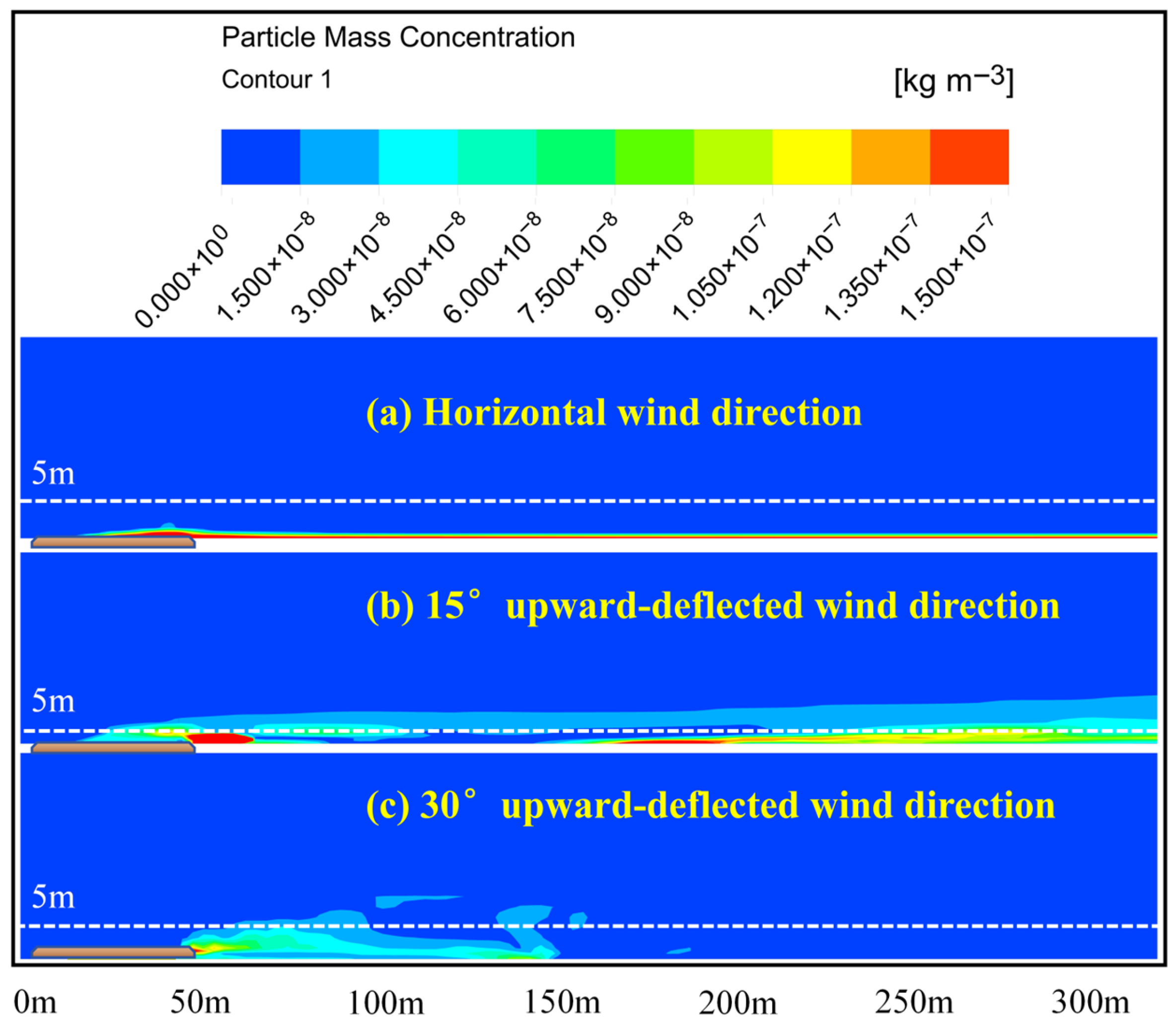
Different wind directions alter the airflow field and consequently influence dust dispersion. Three wind direction conditions are simulated: horizontal wind, 15° upward deflection, and 30° upward deflection. These conditions are set based on the validated framework of Chen [16], thus representing the actual wind field at the site. The inlet wind speed is set to 2 m·s−1, and the mass flow rate of PM10 particles is 10−5 kg·s−1. The inlet wind speed of 2 m·s−1 selected in this study is determined based on the annual surface meteorological observation data of Xi’an published by the Shaanxi Meteorological Bureau. The annual average wind speed in Xi’an is 1.8–2.2 m·s−1, among which 2 m·s−1 is the most representative long-term annual average wind speed for this region. The PM10 mass flow rate of 10−5 kg·s−1 is back-calculated from on-site measured PM10 concentration and emission intensity of the target site for CFD surface source parameterization.
This study adopts steady-state simulation, which can effectively obtain the time-averaged dispersion characteristics of PM10 under constant meteorological conditions. We acknowledge that the actual wind speed and direction have random fluctuations over time, which will enhance the turbulent diffusion of particles, and may lead to differences between the instantaneous concentration and the steady-state simulation results. The steady-state PM10 concentration distribution under the three wind directions is shown in Figure 5.
From Figure 5, it can be observed that under horizontal wind (Figure 5a), high-concentration regions of PM10 are mainly concentrated near the ground, and the horizontal diffusion range remains relatively limited. Vertical dispersion is weak, leading to particle accumulation at low heights and resulting in strong local pollution. This indicates that dust is more likely to accumulate in the near-ground area under this wind direction. When the wind direction is deflected upward by 15° (Figure 5b), the high-concentration zone expands, and the particles disperse more uniformly, indicating enhanced dust diffusion along the vertical direction. Such vertical diffusion leads to a dispersion pattern more aligned with real open-air construction environments. At a wind direction of 30° (Figure 5c), the dispersion range of dust further increases, particularly in the vertical direction, indicating that larger wind-direction angles enhance the vertical transport of particles. The high-concentration zones become more scattered, and particles remain suspended at higher altitudes for longer periods, while near-ground concentrations decrease correspondingly. The dispersion and deposition patterns under the three wind directions show that the diffusion range of PM10 increases with wind-direction angle. A larger wind-direction angle promotes particle transport into higher atmospheric layers, resulting in greater transport heights and reduced deposition. Consequently, a broader spatial dilution of particle concentration is observed.
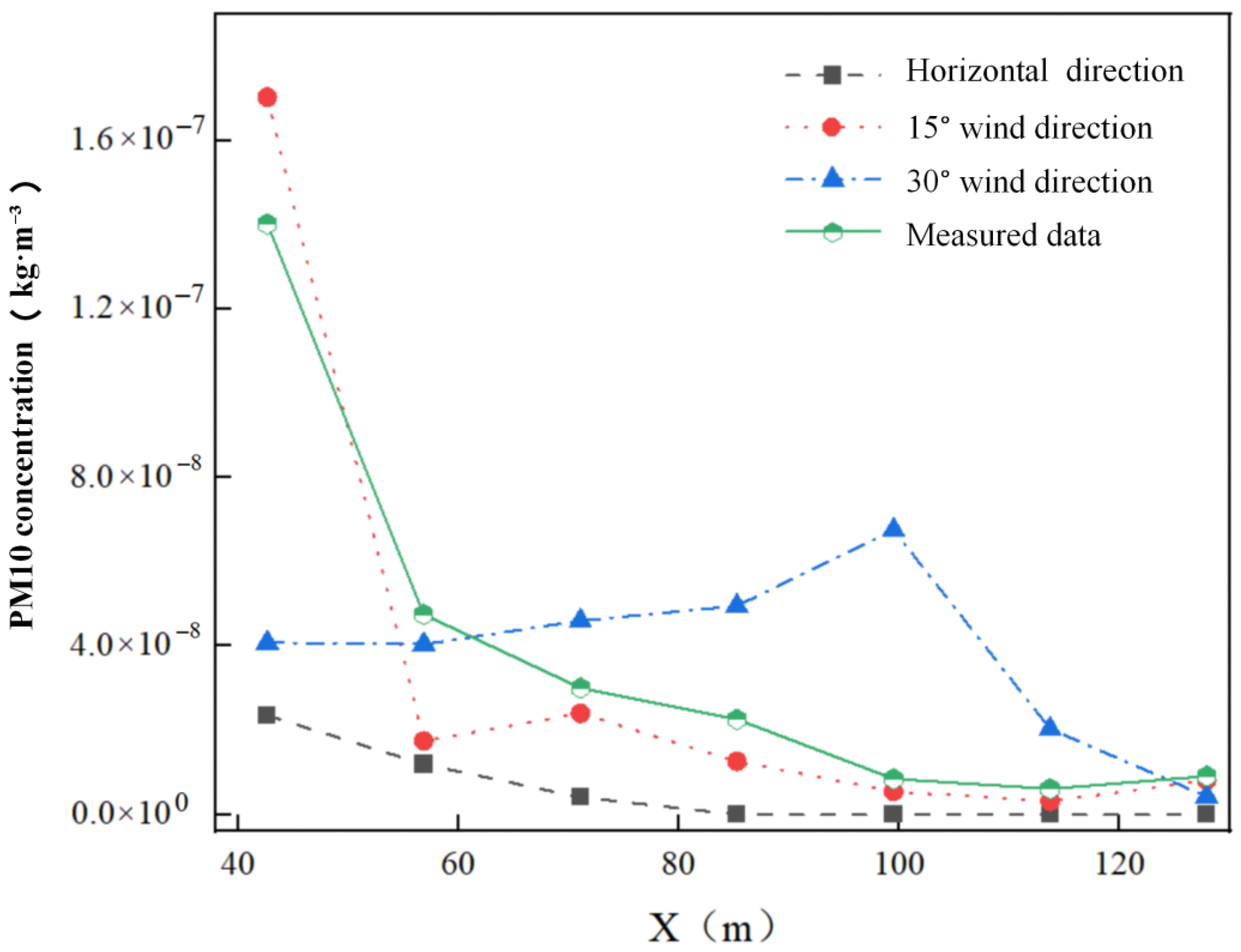
To validate the simulation accuracy, on-site monitoring data are compared with simulation results. PM10 concentrations at Z = 1.5 m were selected for quantitative comparison. Using the distance from the construction zone boundary as the horizontal axis, PM10 concentrations within 100 m downwind are plotted for the three wind directions, as shown in Figure 6.
Based on the comparative analysis, the 15° upward wind direction is selected for further simulations under different wind speeds for the following reasons. The dispersion pattern is more balanced at a wind direction of 15°, capturing both near-surface pollution and elevated particle transport. The concentration distribution better matches actual field observations. It avoids excessive accumulation near the source while maintaining realistic particle transport behavior. Therefore, the 15° wind direction provides optimal engineering relevance.

4.2. PM10 Dispersion Under Different Wind Speeds

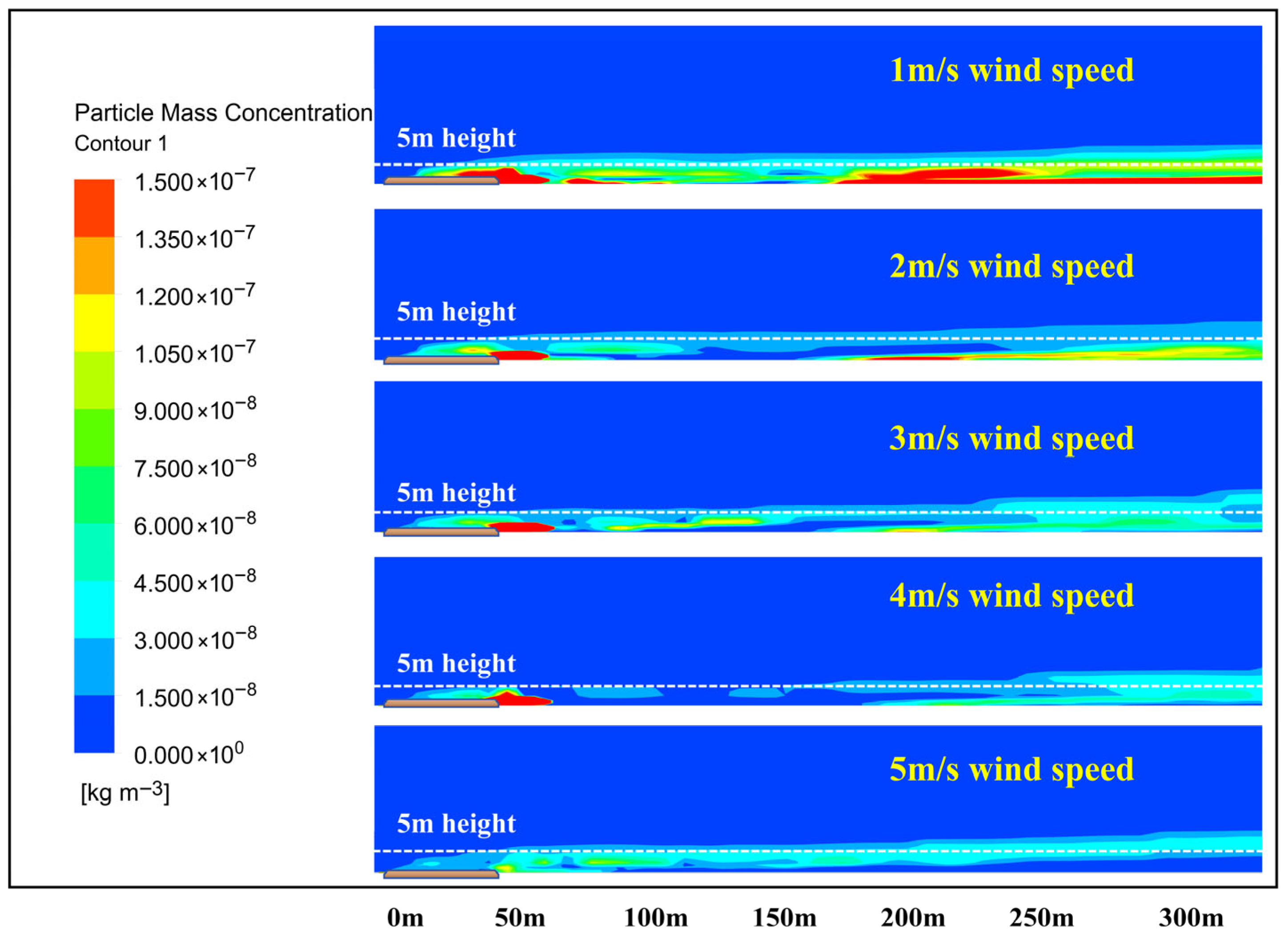
According to the Xi’an Dust Pollution Prevention and Control Regulations, excluding dust storm conditions, when the PM10 hourly concentration is above 150 μg·m−3 for three consecutive hours, construction sites with emissions exceeding environmental limits by 2.5 times shall suspend operations. Therefore, 150 μg·m−3 (i.e., 1.5 × 10⁻⁷ kg·m−3, and this value serves as a reference threshold in the simulation diagram mentioned earlier) is defined as the PM10 hazard concentration, and the location where this value is reached is defined as the hazard distance. Using the 15° wind direction and a PM10 mass flow rate of 10−5 kg·s−1, dispersion characteristics of PM10 at five different wind speeds are analyzed. The PM10 steady-state concentration contours for these wind speeds are shown in Figure 7.
As shown in Figure 7, under low wind speeds (1–2 m·s−1), PM10 accumulates near the construction area, and the hazard distance is within 50 m downwind from the construction site. Limited turbulent diffusion makes it difficult for PM10 particles to be rapidly diluted, resulting in continuous accumulation of pollutants near the dust source. As wind speed increases to 3–4 m·s−1, enhanced turbulence promotes mixing between particles and air. Consequently, high concentrations are difficult to maintain near the source. Under high wind speed (5 m·s−1), turbulent mixing of particles and air is strong, significantly reducing PM10 concentrations near the source. Although the PM10 concentration near the construction area is reduced due to dilution, a larger quantity of suspended dust is transported farther downwind, expanding the affected region. As can be seen from the concentration distribution map, when the wind speed is low, a high PM10 concentration area is more likely to occur within 50 m downstream of the construction site. In such cases, timely water sprinkling and other control measures are needed.

4.3. PM10 Dispersion Under Different Surface Dust Levels

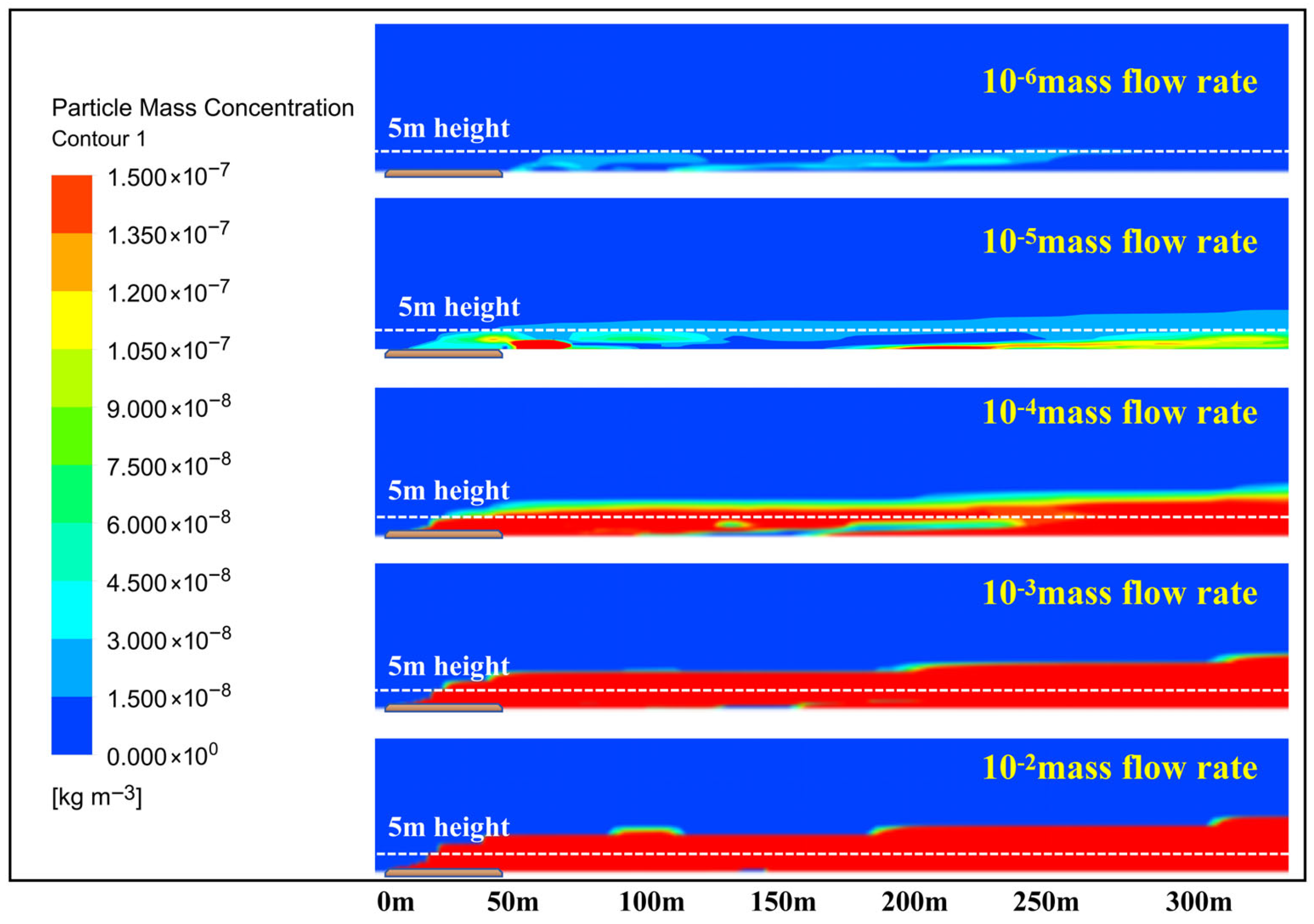
Surface moisture content significantly affects PM10 emissions during construction. Dry ground surfaces increase the likelihood of dust release, resulting in higher particulate concentrations. In this study, mass flow rate is used as the parameter representing dust emission intensity. Simulations are performed using a 15° wind direction and a 2 m·s−1 wind speed, with five different mass flow rates to analyze how road-surface dust levels affect PM10 dispersion. The five mass flow rates (10−6, 10−5, 10−4, 10−3, 10−2 kg·s−1) are set based on the field measured PM10 emission intensity under different construction operation intensities and surface soil moisture contents of the target project, covering the full range from low-emission non-excavation operations to high-emission earthwork operations. The resulting steady-state concentration contours are presented in Figure 8.
From Figure 8, it is evident that increasing the mass flow rate causes persistent emission of dust particles, forming high-concentration zones within a short downwind distance from the construction site.
At low mass flow rate (≤10−5 kg·s−1), particles entering the flow field are quickly diluted, making it difficult to form sustained high-concentration regions. At medium mass flow rate (10−4 kg·s−1), a pronounced concentration gradient emerges, with a moderate dispersion range. When the mass flow rate is high (≥10−3 kg·s−1), peak concentrations near the source rise sharply, and continuous emission leads to sustained high-concentration regions even at relatively long downwind distances. To ensure compliance with air-quality standards during construction, it is recommended to implement dust-suppression measures such as water spraying, misting, or dust-proof net coverage to keep the PM10 mass flow rate below 10−5 kg·s−1, thereby reducing the risk of construction shutdown due to excessive PM10 concentrations. This threshold is also consistent with the field-measured emission intensity under compliant construction operations with dust suppression measures, and has a clear regulatory and practical basis.

5. Simulation Results Under Enclosure Barrier

5.1. Influence of Enclosure Barrier on Particle Dispersion

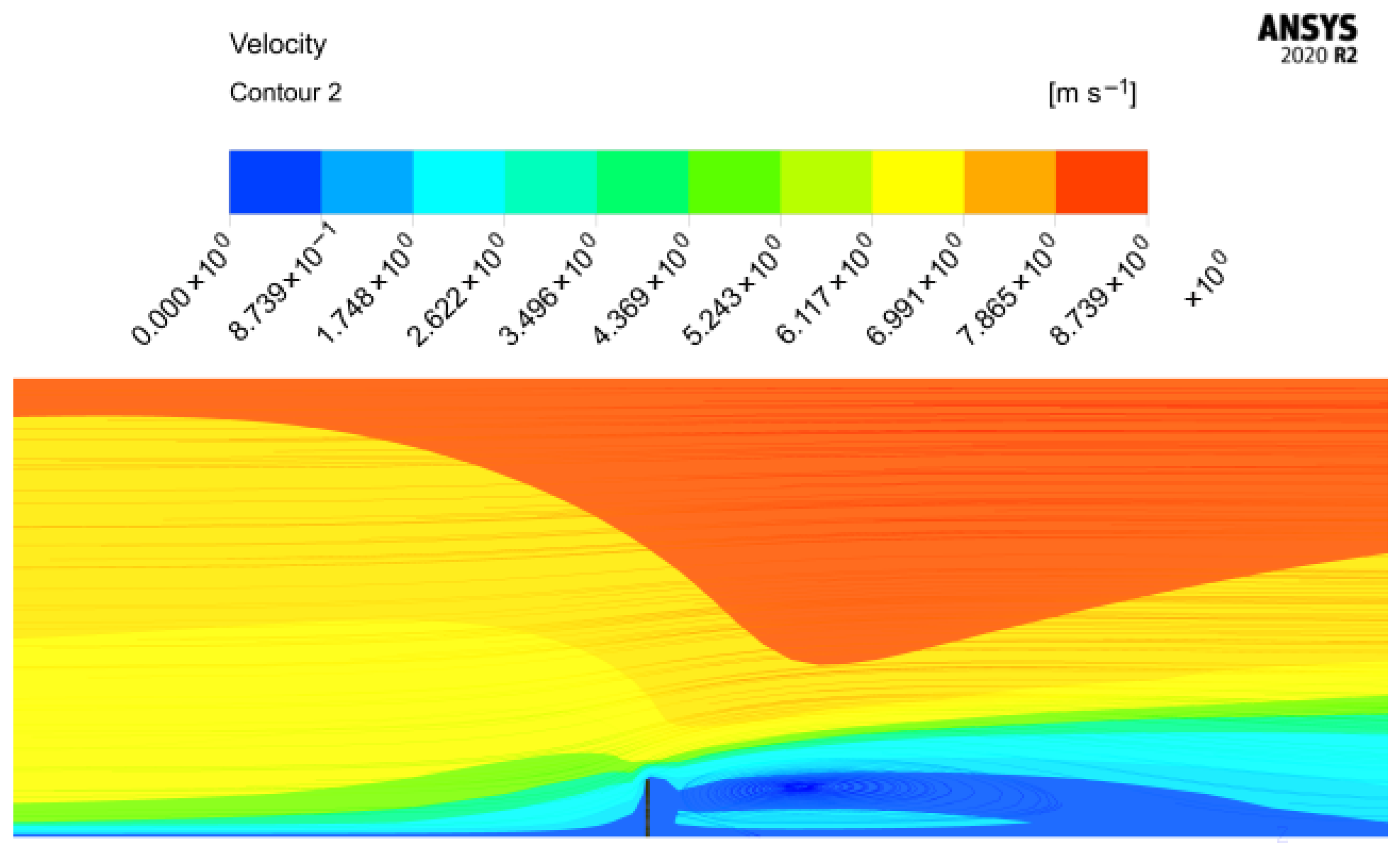
A wind direction of 15° and a wind speed of 2 m·s−1 were selected to simulate the spatial distribution of PM10 dust within the computational domain. Field investigations show that construction-site barriers typically range from 2 to 3 m in height; therefore, barrier heights of 2 m, 2.5 m, and 3 m were chosen for analysis. This setting covers the minimum regulatory requirement, the conventional height, and the enhanced height, and can fully analyze the sensitivity of the dust suppression effect to the barrier height, so the findings have strong practical engineering relevance. After installing the barrier, wind-speed contour plots along the monitoring sections were extracted to examine the basic characteristics of the airflow around the barrier, as shown in Figure 9.
Observations of the wind-speed contour map and velocity vectors reveal that the barrier obstructs the incoming airflow, resulting in the formation of vortices in the downstream region. A large low-wind-speed zone develops behind the barrier, causing suspended dust to accumulate in this area.

5.2. Influence of Barrier Height on Particle Dispersion

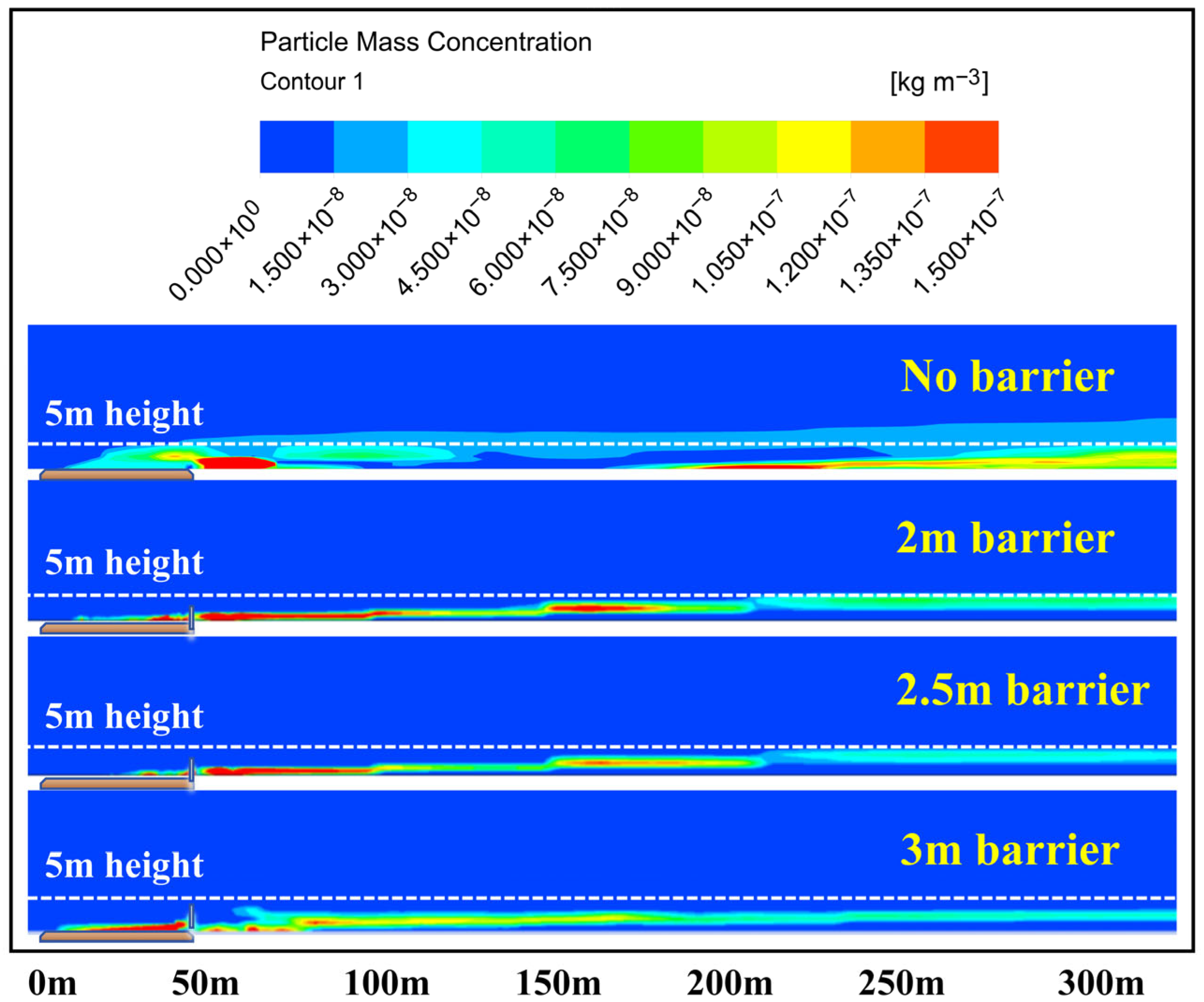
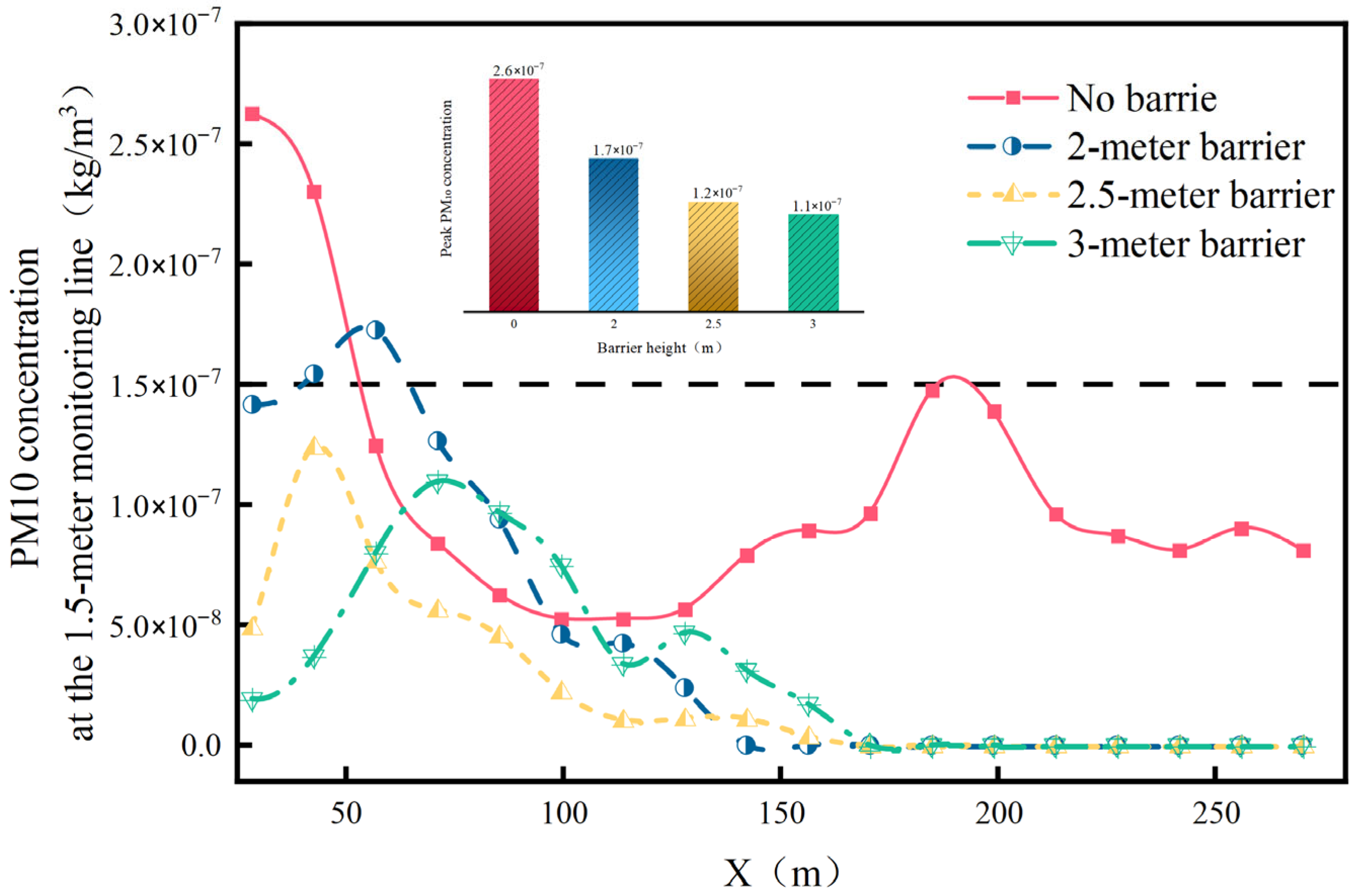
To analyze the influence of barrier height on the mass concentration distribution of PM10 particles, the wind speed was set to 2 m·s−1 and the dust mass flow rate to 10−5 kg·s−1. Cloud maps of PM10 concentration under different barrier heights (2 m, 2.5 m, 3 m) were obtained for representative monitoring sections (Figure 10). In addition, PM10 concentration distributions were analyzed along monitoring lines at 1.5 m and 5 m heights (Figure 11).
As illustrated in Figure 11, along the 1.5 m monitoring line, the PM10 concentration rapidly increases to over 2.5 × 10⁻⁷ kg·m−3 near the construction site when no barrier is installed, before gradually decaying with distance. At approximately X ≈ 180 m, a secondary concentration peak appears due to resuspension of deposited dust. After installing barriers, the near-source PM10 concentration is significantly reduced, and the decay rate increases with barrier height. Additionally, the secondary downstream peak diminishes in both intensity and spatial extent, and becomes almost imperceptible when the barrier height reaches 3 m. Along the 1.5 m monitoring line, the peak PM10 concentration without a barrier is 2.96 × 10⁻⁷ kg·m−3. As barrier height increases, the peak concentration decreases sequentially to 1.7 × 10⁻⁷ kg·m−3 (2 m), 1.2 × 10⁻⁷ kg·m−3 (2.5 m), 1.1 × 10⁻⁷ kg·m−3 (3 m). This indicates that taller barriers exert stronger suppression on both near-source dust release and long-range dispersion.
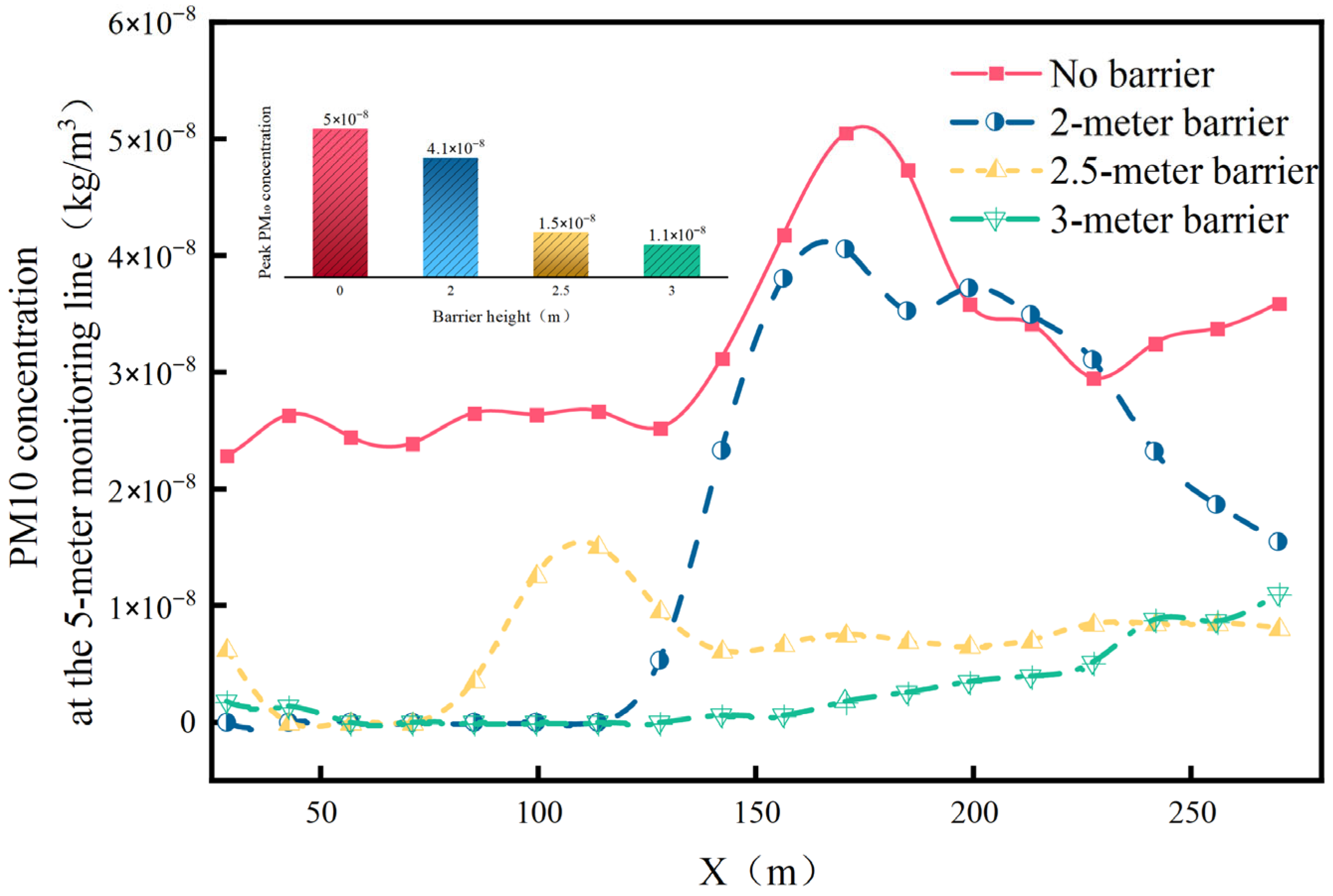
As shown in Figure 12, along the 5 m monitoring line, a pronounced PM10 concentration peak appears in the 160–200 m downstream region when no barrier is installed. This is attributed to vertical dispersion of dust and subsequent aggregation under turbulent flow. When the barrier height is 2 m, the peak PM10 concentration decreases, although the downwind decay remains relatively slow. At a barrier height of 2.5 m, concentration levels exhibit a more gradual attenuation. With a 3 m barrier, PM10 concentrations remain consistently low throughout the monitored downwind section. Without a barrier, the PM10 peak concentration reaches 5.8 × 10⁻⁸ kg·m−3, whereas increasing the barrier height sequentially reduces the peak values to 4.1 × 10⁻⁸, 1.5 × 10⁻⁸, and 1.1 × 10⁻⁸ kg·m−3, respectively. These results demonstrate a clear negative correlation between barrier height and PM10 concentration along the 5 m monitoring line. Notably, the 3 m barrier provides the strongest suppression of vertical PM10 diffusion and mid- to long-distance accumulation, highlighting its critical role in controlling high-altitude dust transport.
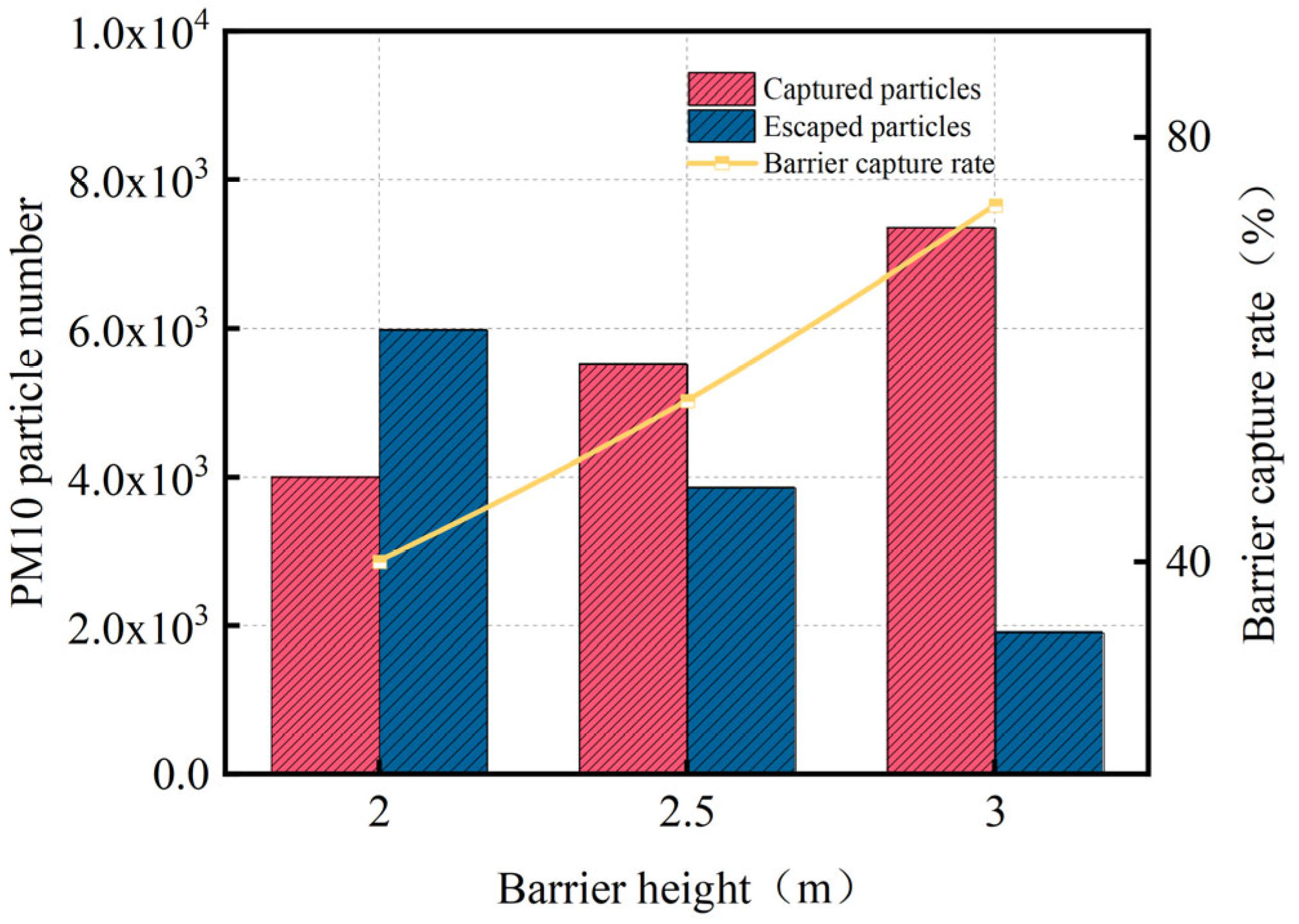
To further quantify the effectiveness of different barrier heights, the dust escape rate was calculated based on the simulated PM10 particle quantity outside the barrier, as shown in Figure 13. The analysis reveals that dust suppression efficiency is strongly positively correlated with barrier height, achieving 40.1% for a 2 m barrier, 55.2% for a 2.5 m barrier, and 73.6% for a 3 m barrier. Therefore, to ensure effective dust suppression during construction, a 3 m barrier height is recommended for construction sites. The trend in which the peak PM10 concentration decreases with increasing barrier height exhibits a consistent pattern under the low-wind-speed conditions most common in Xi’an. Future work will extend the analysis to high-wind-speed environments.

6. Conclusions

This study employed numerical simulation to investigate the dispersion characteristics of PM10 under different wind speeds and dust emission levels, as well as the effects of barrier heights (0 m, 2 m, 2.5 m, 3 m) on PM10 concentration distribution and peak behavior at two elevations—1.5 m (near-ground breathing height) and 5 m (elevated layer). The results clarify both the core mechanisms and optimal parameters of barrier-based dust control. The main conclusions are as follows:
(1) Increasing wind speed enhances long-distance dust transport but reduces near-source dust concentrations. Under low wind speeds, dust tends to accumulate within the near-source region, whereas higher wind speeds lead to large-scale dispersion and a broader pollution impact area. The concentration of road-surface dust strongly influences dispersion behavior: as the dust mass flow rate increases, a high-concentration plume forms in the short downstream region of the construction area. It is, therefore, recommended that the PM10 mass flow rate be controlled within 10−5 kg·s−1.
(2) Barrier installation significantly suppresses the spatial dispersion of construction dust, with suppression performance positively correlated with barrier height. At the 1.5 m near-ground height, barriers effectively reduce PM10 concentrations near the source, accelerate concentration decay, and suppress secondary resuspension events. A 3 m barrier lowers the near-source peak PM10 concentration by approximately one order of magnitude relative to no barrier. At the 5 m height, barriers block vertical dispersion pathways and reduce mid- to long-range PM10 accumulation. Simulation results at both heights demonstrate that the 3 m barrier performs best in reducing peak concentrations and limiting spatial spread, providing quantitative support for three-dimensional dust control at construction sites.
This study only conducts a conservative assessment of the off-site environmental impacts of PM10 based on the worst-case dispersion scenario of single-side barriers under prevailing wind directions, without considering the actual working conditions of variable wind directions and double-side barrier configurations in highway construction—such conditions may trigger PM10 accumulation inside enclosures and street canyon effects under parallel winds, leading to an incomplete evaluation of the environmental benefits and potential adverse effects of barrier systems. In terms of field observation, the single-axis longitudinal monitoring scheme has spatial sampling limitations, and fails to fully characterize the lateral dispersion of PM10 and the influence of turbulent eddies, thus restricting the comprehensive validation of the model’s three-dimensional simulation performance. Additionally, the numerical framework has two key uncertainties that may affect the absolute values of PM10 concentration simulations: the standard k-ε turbulence model is limited in capturing small-scale turbulent eddies, and the simplified particle–wall interaction model neglects particle adhesion and resuspension phenomena. Future research will expand the established numerical simulation framework by incorporating multi-directional wind input and double-side barrier configurations, carry out multi-dimensional and comprehensive field monitoring, and adopt advanced turbulence models, refined boundary conditions and transient particle emission simulation methods to address the above limitations, so as to realize a more comprehensive and quantitative assessment of the effectiveness of highway construction PM10 control measures. This study reveals the differentiated PM10 control mechanisms of barriers of various heights and fills a research gap by quantifying coordinated control effects at both near-ground and elevated levels. It also improves the numerical simulation framework for construction PM10 dispersion. The generalizability of the findings is reflected in two aspects: (1) The core physical mechanism and qualitative law, including the influence of wind direction angle on vertical dispersion, wind speed on long-distance transport, and barrier height on dust suppression efficiency, are universal and applicable to highway construction projects in different regions; (2) the quantitative dust suppression efficiency and the recommended 3 m barrier height are obtained based on the meteorological conditions, site layout and regulatory requirements of Xi’an. For other regions, it is recommended to adjust the barrier height and dust control strategy based on the local prevailing wind direction, average wind speed and regulatory standards, using the simulation method established in this study. The findings can be directly applied to unorganized dust-emission scenarios such as building sites, road construction, and port operations, offering technical guidance for developing compliant and efficient PM10 control strategies. The results hold important practical significance for mitigating health risks associated with dust pollution and improving urban air quality.

Author Contributions

Conceptualization, J.Y. and Y.L.; methodology, J.Y.; software, J.Z.; validation, J.Y., Y.L. and L.L.; formal analysis, J.Z.; investigation, J.Z. and L.L.; resources, Y.L.; data curation, L.L.; writing—original draft preparation, J.Z.; writing—review and editing, J.Y. and Y.L.; visualization, L.L.; supervision, Y.L.; project administration, Y.L.; funding acquisition, Y.L. All authors have read and agreed to the published version of the manuscript.

Funding

This research was supported by the Scientific Research Program Funded by Education Department of Shaanxi Provincial Government (Program No. 24JK0502, No. 23JK04942), Natural Science Basic Research Program of Shaanxi (Program No. 2024JC-YBMS-301), Natural Science Foundation of Shaanxi Province of China (grant number 2024JC-YBQN-0429), and Fundamental Research Funds for the Central Universities, CHD (Program No. 300102214504).

Institutional Review Board Statement

Not applicable.

Informed Consent Statement

Not applicable.

Data Availability Statement

The data used to support the findings of this study are included within the article.

Conflicts of Interest

Author Jie Zhang was employed by Shaanxi Transportation Holding Group Co., Ltd. Xifu Branch. Author Lei Liu was employed by Inner Mongolia Research Institute of Transportation Science Development. The remaining authors declare that the research was conducted in the absence of any commercial or financial relationships that could be construed as a potential conflict of interest.

References

  1. Li, Y.; Liao, Q.; Zhao, X.G.; Zhang, L.L.; Wang, C.Y.; Wang, X.Y. Impact of PM2.5 Pollution on Health Burden and Economic Loss in China. Environ. Sci. 2021, 42, 1688–1695. (In Chinese) [Google Scholar]
  2. Wu, Z.Z.; Zhang, X.L.; Wu, M. Mitigating Construction Dust Pollution: State of the Art and the Way Forward. J. Clean. Prod. 2016, 112, 1658–1666. [Google Scholar] [CrossRef]
  3. Cheriyan, D.; Choi, J.H. A Review of Research on Particulate Matter Pollution in the Construction Industry. J. Clean. Prod. 2020, 254, 120077. [Google Scholar] [CrossRef]
  4. Zhao, C.Y. Monitoring and Hazard Assessment of Construction Dust. Master’s Thesis, Capital University of Economics and Business, Beijing, China, 2015. (In Chinese) [Google Scholar]
  5. Jiang, N.; Lü, B.L. Control and Treatment of Dust Pollution in Xi’an. In Proceedings of the 2014 Annual Academic Conference of Chinese Society for Environmental Sciences, Chengdu, China, 22–23 August 2014; pp. 1–11. (In Chinese) [Google Scholar]
  6. Assefa, F.G.; Xiang, L.; Yang, Z.; Gebretsadik, A.; Wahab, A.; Fissha, Y.; Cheepurupalli, N.R.; Sazid, M. Research on Dust Concentration and Migration Mechanisms on Open-Pit Coal Mining Roads: Effects of Meteorological Conditions and Haul Truck Movements. Mining 2025, 5, 43. [Google Scholar] [CrossRef]
  7. Luo, H.; Zhou, W.; Jiskani, I.M.; Wang, Z. Analyzing Characteristics of Particulate Matter Pollution in Open-Pit Coal Mines: Implications for Green Mining. Energies 2021, 14, 2680. [Google Scholar] [CrossRef]
  8. Wang, Z.; Zhou, W.; Jiskani, I.M.; Luo, H.; Ao, Z.; Mvula, E.M. Annual dust pollution characteristics and its prevention and control for environmental protection in surface mines. Sci. Total Environ. 2022, 825, 153949. [Google Scholar] [CrossRef] [PubMed]
  9. Shan, X.Y.; Ren, G.F. Research on Emission and Transport Characteristics of Dust from Construction Sites. Ind. Saf. Environ. Prot. 2019, 45, 56–61. (In Chinese) [Google Scholar]
  10. Deng, J.T.; Huang, Y.D.; Zhang, Q. Numerical Simulation Study on the Influence of Fence Height on the Migration and Diffusion of Construction Dust. Environ. Eng. 2014, 32, 83–86. (In Chinese) [Google Scholar]
  11. Liu, J.M.; Di, Y.H.; Mei, Y.; Li, H.Y.; Zhang, W.Z. Analysis on Emission Characteristics of Construction Dust from Night Earthwork in Xi’an. Refrig. Air Cond. 2019, 33, 332–336. (In Chinese) [Google Scholar]
  12. Wang, R. Research on Emission Characteristics of Construction Dust from a Construction Site in Chengdu. Green Technol. 2017, 20, 41–42. (In Chinese) [Google Scholar]
  13. Xiao, H.; Yang, X.C.; Wu, Q.Z.; Li, L.; Cao, S.L. Model Estimation of Construction Dust Emissions from Construction Sites in Xi’an. Acta Sci. Circumstantiae 2019, 39, 222–228. (In Chinese) [Google Scholar]
  14. Ruan, S.L.; Jin, Y.; Li, L.Y.; Zhang, M. Simulation Analysis on Diffusion Characteristics of Point Source Dust at Construction Sites. Environ. Sci. Technol. 2019, 42, 275. (In Chinese) [Google Scholar]
  15. Han, J.C.; Zhao, H.Y.; Zhang, C.L.; Wang, S.S.; Ma, M.M. Simulation Study on the Propagation and Diffusion Law of Highway Construction Dust. J. Xi’an Technol. Univ. 2024, 44, 635–646. (In Chinese) [Google Scholar]
  16. Chen, J.; Zhang, H.P.; Nie, Z.T.; Wang, C. Simulation Study on the Influence of Different Hoarding Heights on Highway Construction Dust Based on FLUENT. Mech. Eng. 2023, 3, 48–51+54. (In Chinese) [Google Scholar]
  17. Wu, S.Y. Study on Dust Diffusion Law and Control of Open-Air Stockyards. Master’s Thesis, Central South University, Changsha, China, 2023. (In Chinese) [Google Scholar]
  18. Wu, L.; Song, Z.L. Dust Arising Mechanism and Dust Reduction Technology of Open-pit Coal Mine Using Water and Sediment Reduction Effect. Desalination Water Treat. 2021, 241, 263–268. [Google Scholar] [CrossRef]
  19. Jin, H.; Nie, W.; Zhang, Y.S.; Wang, C.; Song, Z.P. Development of Environmental Friendly Dust Suppressant Based on the Modification of Soybean Protein Isolate. Processes 2019, 7, 165. [Google Scholar] [CrossRef]
  20. Ferreira, A.D.; Lambert, R.J. Numerical and Wind Tunnel Modeling on the Windbreak Effectiveness to Control the Aeolian Erosion of Conical Stockpiles. Environ. Fluid Mech. 2011, 11, 61–76. [Google Scholar] [CrossRef]
  21. Duan, Z.Y.; Liu, Y.Z.; Wang, K.; Li, J.; Zhang, K.L. Research Progress on Dust Diffusion Law of Large-scale Open-air Stockyards. J. Earth Environ. 2017, 8, 307–319. (In Chinese) [Google Scholar]
  22. Bolio, E.J.; Yasuna, J.A.; Sinclair, J.L. Dilute Turbulent Gas-solid Flow in Risers with Particle-particle Interactions. Int. J. Multiph. Flow 1995, 41, 1375–1388. [Google Scholar] [CrossRef]
Figure 1. Actual open operation surface of the target highway construction site. (a) Panoramic view of the construction access road. (b) Local view of the open operation area.
Atmosphere 17 00286 g001
Figure 2. PM10 monitoring equipment and field monitoring setup. (a) PM10 concentration detector used in the field experiment. (b) Layout of monitoring points at the construction site.
Atmosphere 17 00286 g002
Figure 3. Simulation calculation model. The green area represents the construction dust emission source area.
Atmosphere 17 00286 g003
Figure 4. Schematic diagram of monitoring section setting.
Atmosphere 17 00286 g004
Figure 5. Comparison of PM10 mass concentration distribution under different wind directions.
Atmosphere 17 00286 g005
Figure 6. Comparison between measured data and simulations.
Atmosphere 17 00286 g006
Figure 7. Comparison of PM10 mass concentration distribution under different wind speeds.
Atmosphere 17 00286 g007
Figure 8. Comparison of mass concentration distribution of PM10 under different mass flow rates.
Atmosphere 17 00286 g008
Figure 9. Wind-speed cloud map under barrier installation.
Atmosphere 17 00286 g009
Figure 10. Comparison of PM10 mass-concentration cloud maps under different barrier heights.
Atmosphere 17 00286 g010
Figure 11. PM10 mass-concentration distribution along the 1.5 m monitoring line.
Atmosphere 17 00286 g011
Figure 12. PM10 mass-concentration distribution along the 5 m monitoring line.
Atmosphere 17 00286 g012
Figure 13. 1.5 m monitoring line PM10 capture rate.
Atmosphere 17 00286 g013
Table 1. Parameter setting for discrete phase (PM10 particles).
Discrete Phase Parameters (Dust Particles)SettingSelection Basis
Particle density/(g·cm−3)2.11Measured density of the surface soil at the target construction site.
Particle diameter/μm10Aerodynamic diameter of PM10, the core control target of dust pollution in the study area.
Initial dust emission velocity/(m·s−1)0.5Common initial speed of surface dust on construction site.
Starting location of particle injectionEntire construction sectionSurface source setting, consistent with the actual dust emission characteristics of the open construction site.
Disclaimer/Publisher’s Note: The statements, opinions and data contained in all publications are solely those of the individual author(s) and contributor(s) and not of MDPI and/or the editor(s). MDPI and/or the editor(s) disclaim responsibility for any injury to people or property resulting from any ideas, methods, instructions or products referred to in the content.