Text Correction
There was an error in the original publication [
1].
In Section 3.1, EarthCARE and ATLID Data, we described the ATLID products used (belonging to the baseline AC). However, after publication, we were alerted that the baseline AC included preliminary data (not fully calibrated/validated and not yet publicly released) of the EarthCARE mission, which is being developed by the European Space Agency (ESA) and the Japan Aerospace Exploration Agency (JAXA). The publicly released operational ATLID Level 2A products from baseline AE onwards have benefitted from improved corrections at levels 1 and 2, particularly for radiation noise effects, hot-pixel corrections, the removal of the 20 km spike feature, and improved depolarization measurements, among others. Therefore, we must update all data, considering the baseline BA (publicly released operational ATLID Level 2A products). The analysis in this work was performed within the context of the EarthCARE Validation Team.
Therefore, the last paragraph in Section 3.1 must be rewritten as follows:
“ESA automatically processes the ATLID products [31]. They are generated under specific data processing algorithms—the baselines—which are constantly being improved and updated. The ATLID products are available on the EarthCARE Online Dissemination Service [28], where EarthCARE data collections are accessible to various user communities. For this study, the ATLID Level 2A Extinction, Backscatter, and Depolarization Product (ATL_EBD_2A) was selected to obtain vertical profiles of backscatter, extinction, lidar ratio, and AOD [24]. At the same time, the ATLID Level 2A Target Classification Product (ATL_TC_2A) was used for aerosol classification and characterization [24]. The ATL_EBD_2A and ATL_TC_2A data used in this work were filtered considering the quality status flag “0” (0 for best quality and 4 for worst quality). Both products belong to the baseline BA (publicly released operational ATLID Level 2A products).”
Text Correction
The Abstract must be rewritten as follows, due to the change in the presented AOD and LR values:
“In 2024, Brazil experienced record-breaking wildfire activity, underscoring the escalating influence of climate change. This study examines the long-range transport of wildfire-generated aerosol plumes to São Paulo, combining multi-platform observations to trace their origin and properties. During August and September—a period marked by intense fire outbreaks in Pará and Mato Grosso do Sul—lidar measurements performed at São Paulo detected pronounced aerosol plumes. To investigate their source and characteristics, we integrated data from the Earth Cloud Aerosol and Radiation Explorer (EarthCARE) satellite, HYSPLIT back-trajectory modeling, and ground-based AERONET and Raman lidar measurements. Aerosol properties were derived from aerosol optical depth (AOD), Ångström exponent, and lidar ratio (LR) retrievals. Back-trajectory analysis identified three transport pathways originating from active fire zones, with coinciding AOD values (~0.50–0.75 and ~1.0) and elevated LR (~50 sr to ~75 sr), indicative of dense smoke plumes. Compositional analysis revealed a significant black carbon component, implicating wildfires near Corumbá (Mato Grosso do Sul) and São Félix do Xingu (Pará) as probable emission sources. These findings highlight the efficacy of satellite-based lidar systems, such as Atmospheric Lidar (ATLID) onboard EarthCARE, in atmospheric monitoring, particularly in data-sparse regions where ground instrumentation is limited.”
Text Correction
The fourth paragraph of Section 4.1, Comparison Between ATLID and SPU Lidar Station Data, must be rewritten as follows, due to the change in the R2 coefficient value:
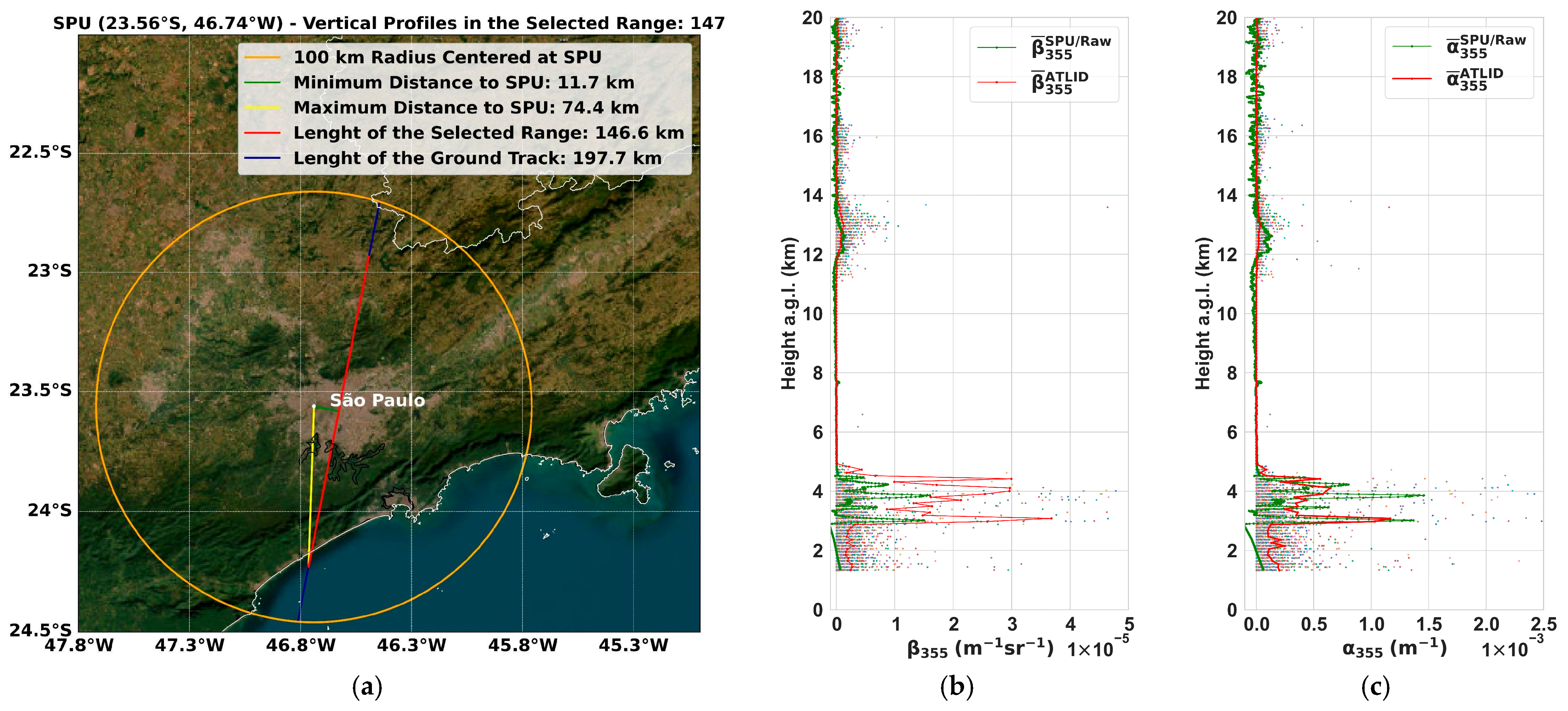
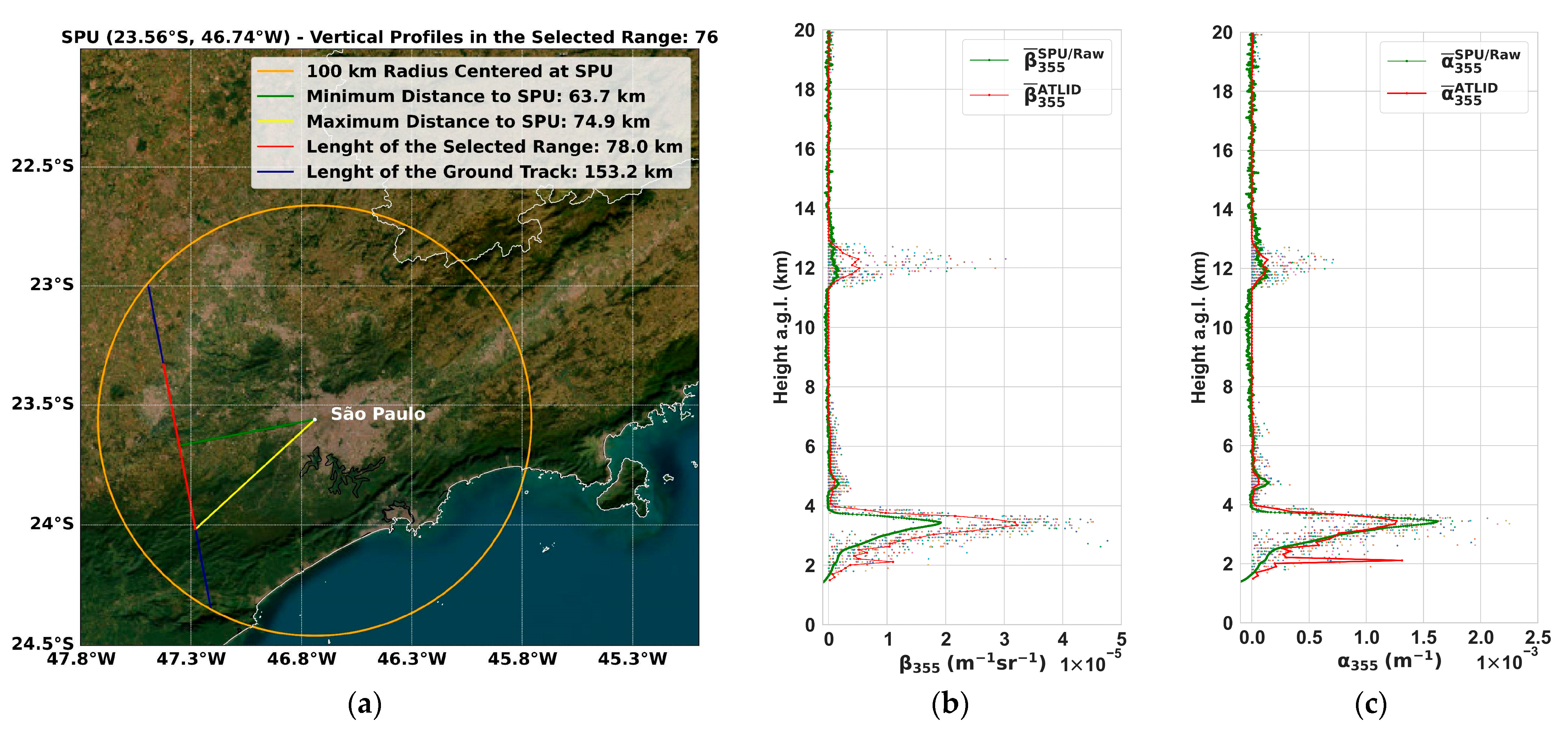
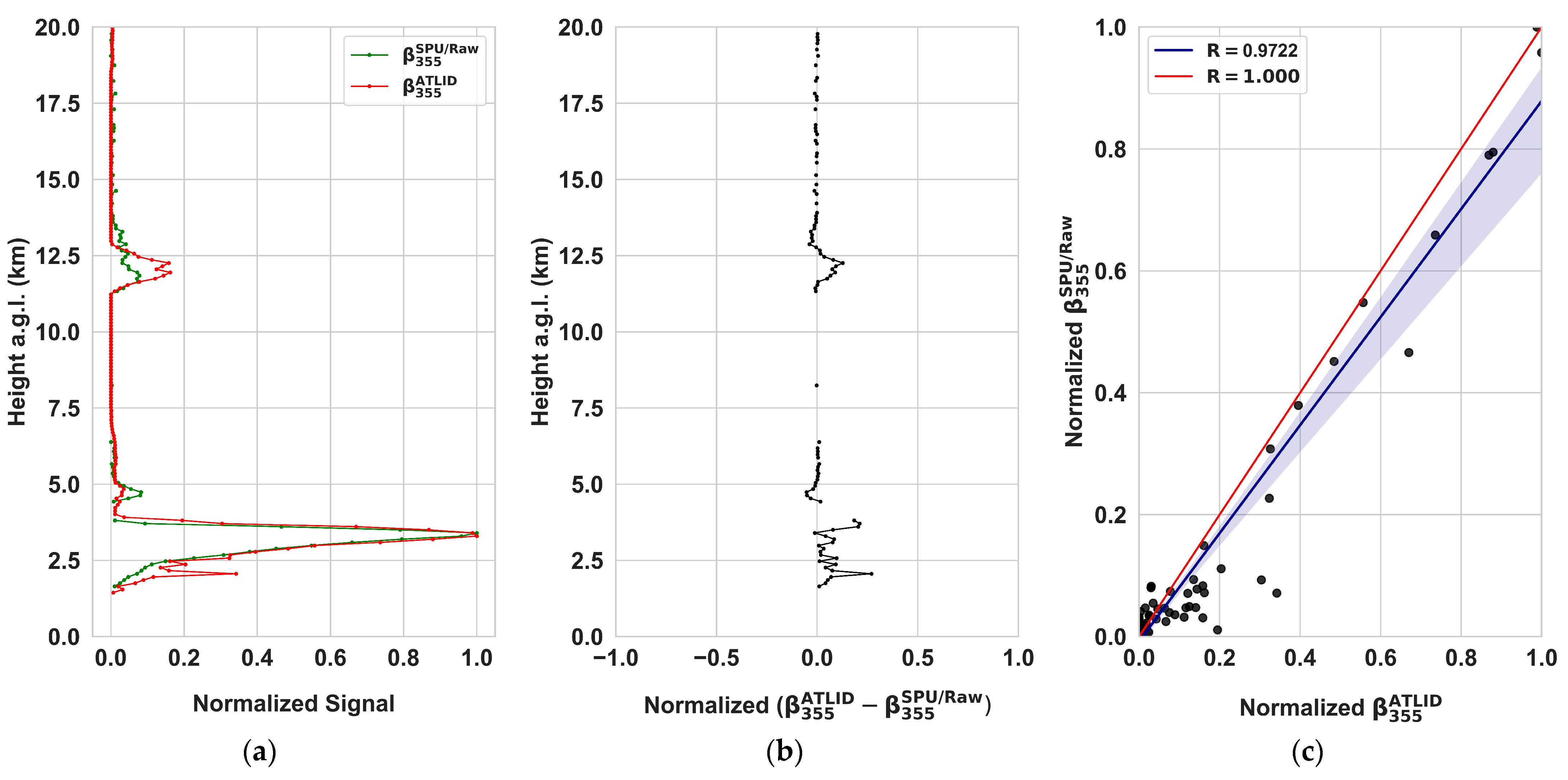
“To compare the ATLID and SPU Lidar Station vertical profiles from 2 September 2024, we proceeded with the normalization of the data (Figure 4a), demonstrating that both systems exhibit maximum and minimum signal values at the same altitudes. Figure 4b shows the relative difference between the profiles, which is less than 15% at all points between 0 and 20 km. Finally, Figure 4c shows the correlation between the ATLID and SPU Lidar Station profiles, which has a significant agreement (R2~0.97).”
Text Correction
The sixth paragraph of Section 4.1, Comparison Between ATLID and SPU Lidar Station Data, must be rewritten as follows, due to the change in the R2 coefficient value:
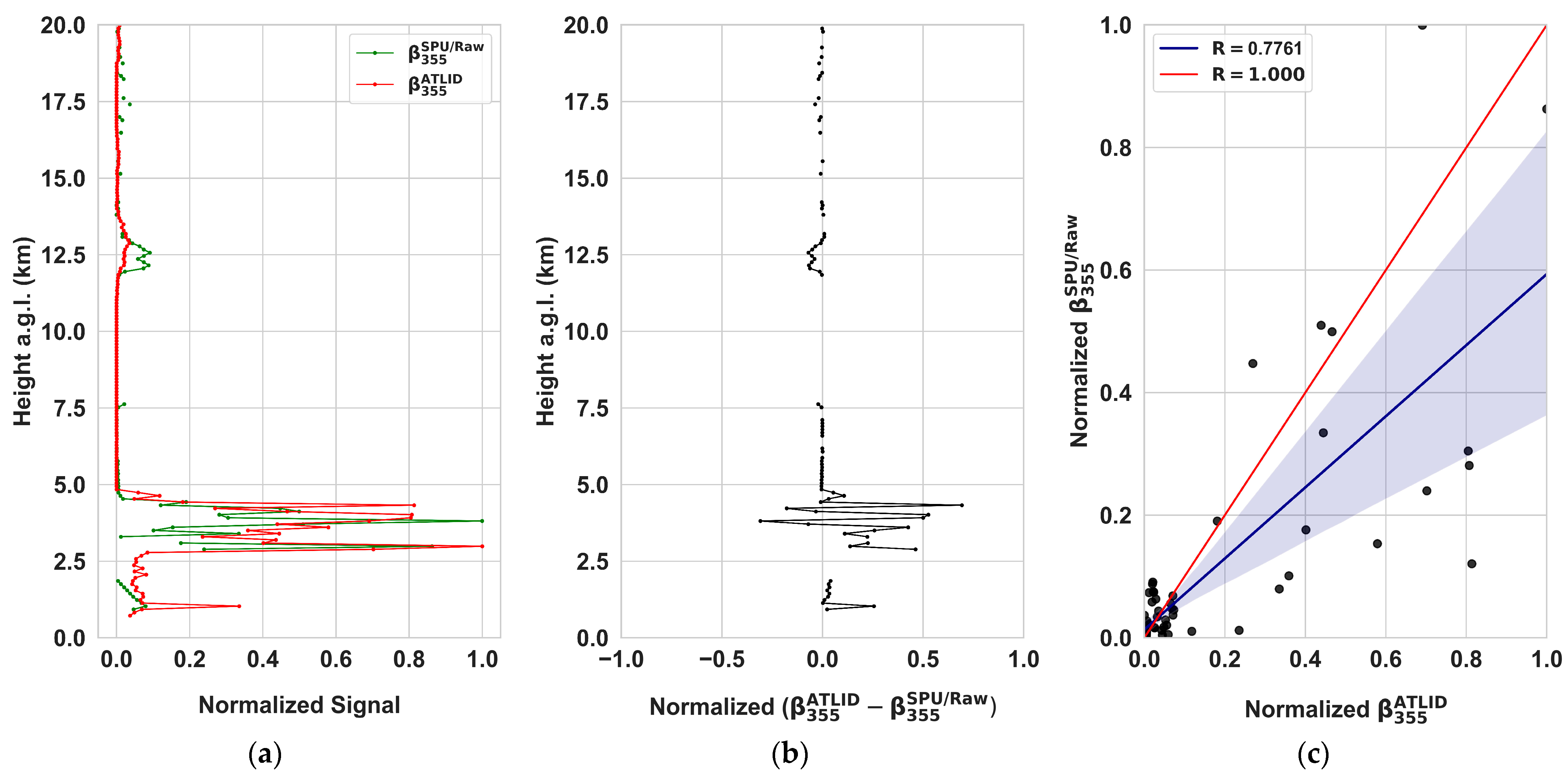
“On the other hand, a comparison between the profiles from 27 November 2024 shows that the normalized profiles present considerable differences in the positions of the maximum and minimum values (Figure 6a), resulting in significant differences (Figure 6b), especially below 5 km. The correlation (Figure 6c) also presents a value (R2~0.78) lower than that observed the previous day, demonstrating a disagreement between the ATLID and SPU Lidar Station profiles.”
Text Correction
The first paragraph in Section 4.2.5, EarthCARE Data for Corumbá and São Félix do Xingu, must be rewritten as follows:
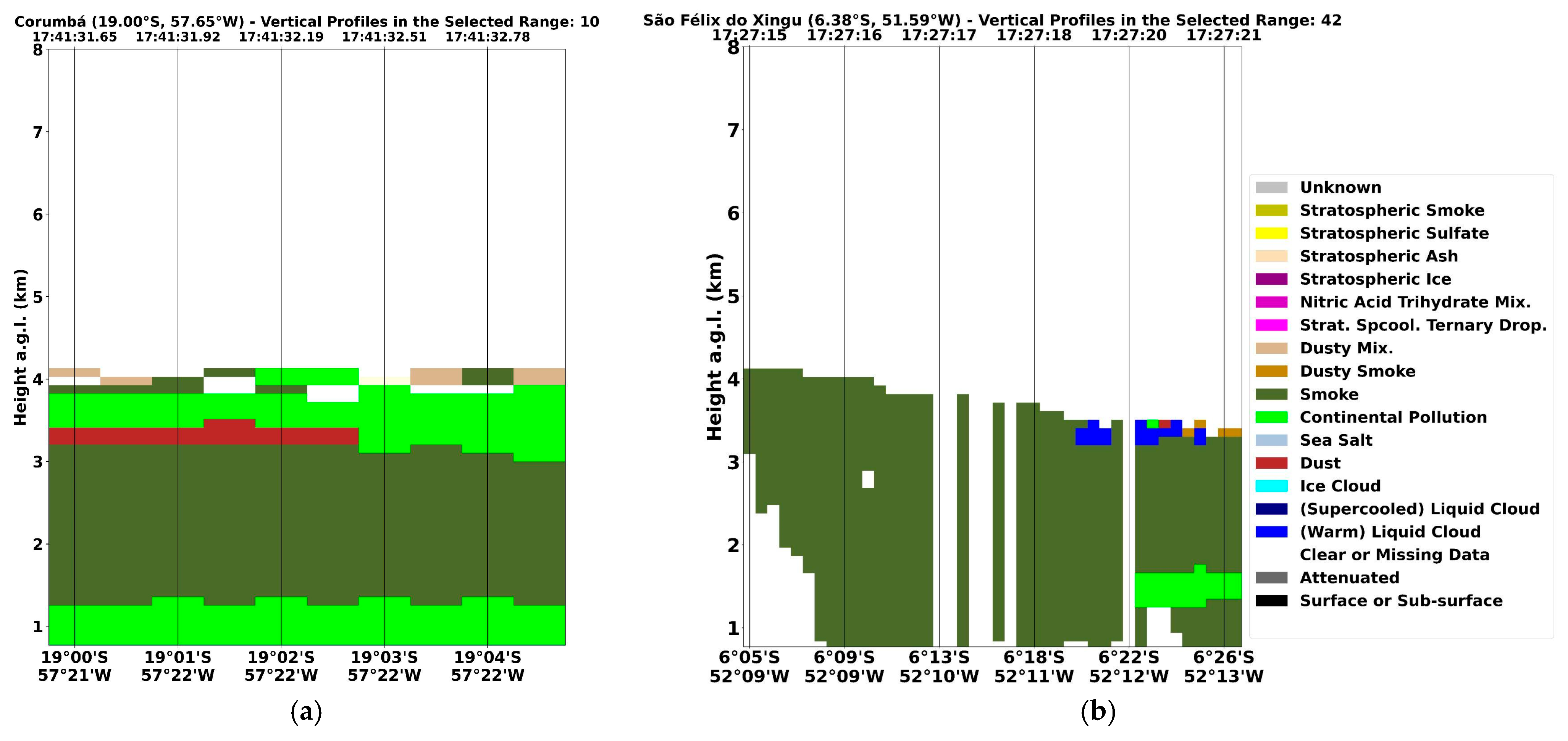
“Based on the aforementioned selected regions, three distinct overpasses of EarthCARE were identified. The overpasses occurred on 27 August, 29 August, and 2 September 2024, with the satellite passing within a 100 km radius of Corumbá, São Félix do Xingu, and São Paulo, respectively. The precise spatiotemporal coverage of these overpasses is detailed in Table 1, and the ATL_TC_2A product (baseline BA) for the region of Corumbá is illustrated in Figure 13a, with the same in Figure 13b for São Félix do Xingu.”
The third paragraph in Section 4.2.5, EarthCARE Data for Corumbá and São Félix do Xingu, must be rewritten as follows, due to the change in the presented AOD and LR values:
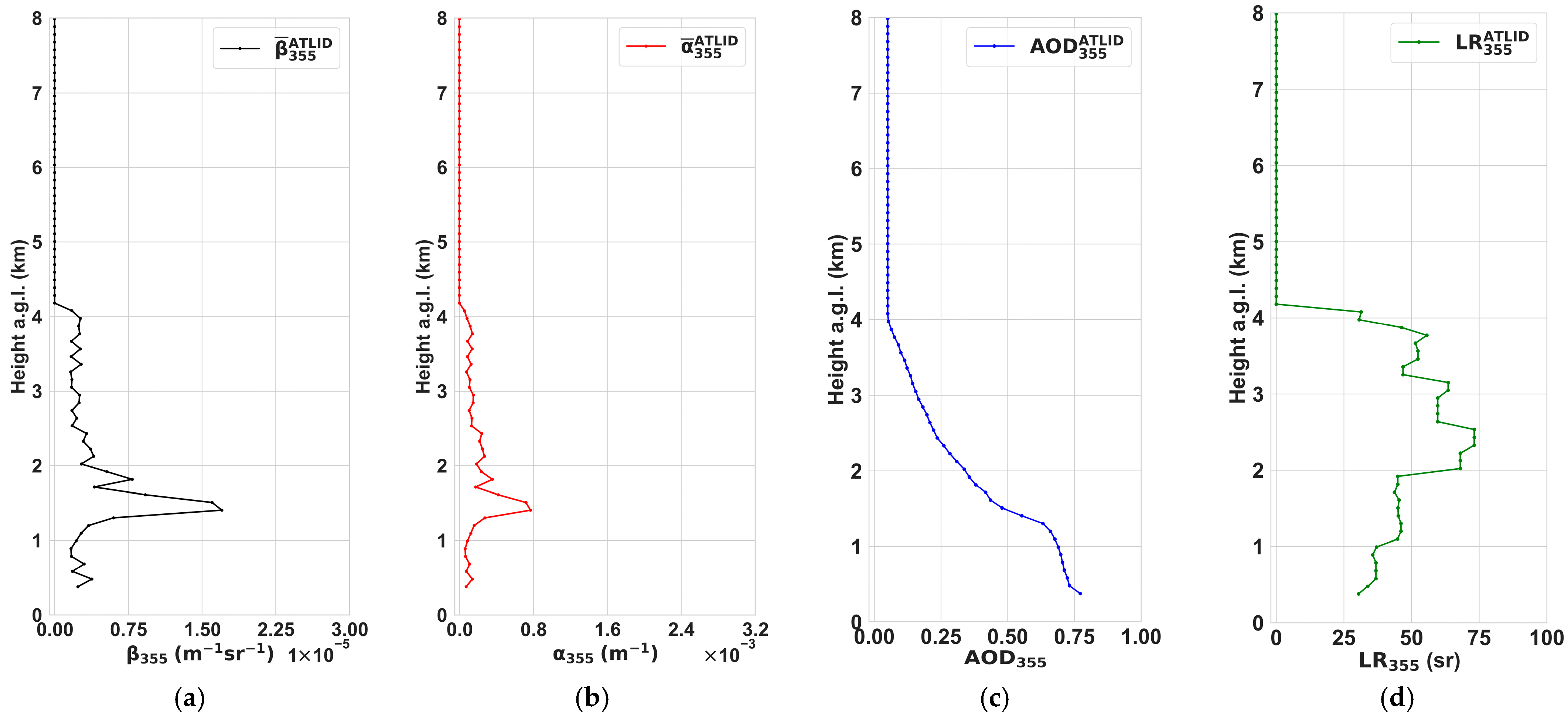
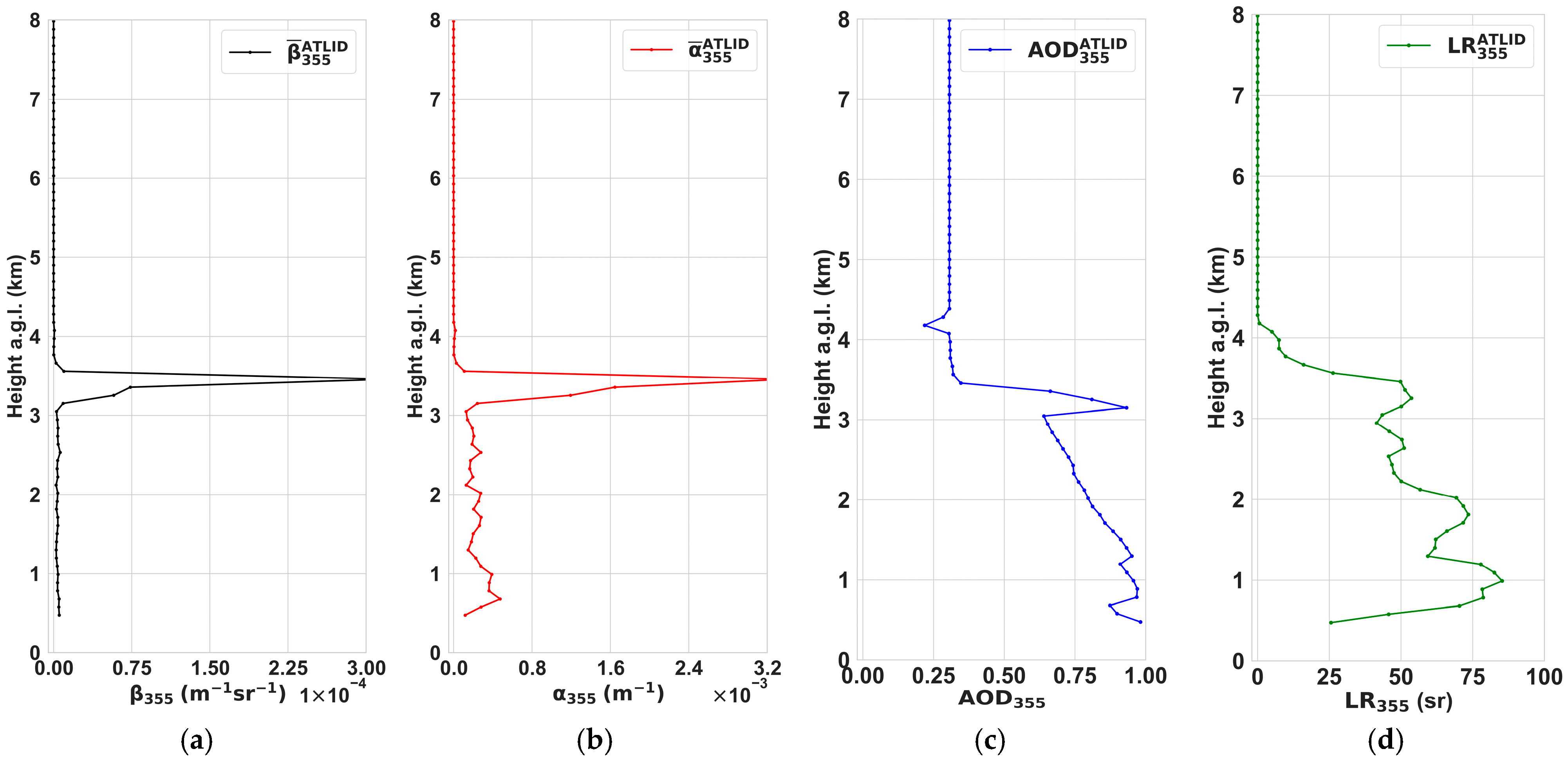
“Figures 15a,b and 16a,b show the vertical distribution of aerosols, with distinct concentration peaks at 1.6 km and 3.5 km altitude, respectively. This observation aligns with the findings of [46], who reported that biomass burning plumes in the Amazon region typically extend to altitudes of up to 3 km, accompanied by a mean aerosol optical depth (AOD) of ~0.5. Furthermore, AOD values in the range of 0.5–1.0 are recognized as characteristic of biomass burning conditions in the Pantanal region [2]. The ATLID-retrieved AOD values (product ATL_EBD_2A) exhibited higher magnitudes: ~0.50–0.75 (Figure 15c) and ~1.0 (Figure 16c), consistent with the elevated fire activity observed in Pará and Mato Grosso do Sul during August—a period historically associated with intensified biomass burning. This enhancement in AOD correlates with a marked increase in fire hotspot counts across these regions. Finally, the aerosol profiles are consistent with the characteristics of the plumes detected by the SPU Lidar Station, indicating LR values ranging from ~50 sr to ~75 sr (Figures 15d and 16d), typical of smoke particles [47–49].”
Text Correction
The first paragraph in Section 5, Conclusions, must be rewritten as follows, due to the change in the presented R2 coefficient values:
“The BDQueimadas platform data reveal that 2024 set unprecedented records for biomass burning events, with August and September exhibiting peak activity in Brazil’s Pantanal and Amazon regions. Despite being hotspots for wildfire occurrences, the North and Central-West regions of Brazil currently lack adequate atmospheric monitoring infrastructure. This study highlights the important role of ATLID data in addressing this observational gap, demonstrating its effectiveness in monitoring atmospheric conditions associated with biomass burning events. Firstly, ATLID and SPU Lidar Station data were compared for clear sky days and low cloud days. The results show that in the absence of low clouds, the data present considerable agreement (R2~0.97), while on low cloud days, this agreement no longer obtains the same relevance (R2~0.78). Then, measurements taken by the SPU Lidar Station on 2 September 2024 indicated the presence of aerosol layers and atypical peaks in the backscatter and extinction vertical profiles. After the synergistic use of the HYSPLIT model and BDQueimadas data, it was found that air currents had passed through Corumbá and São Félix do Xingu, reaching São Paulo on 2 September 2024. The classification of the aerosol plume over São Paulo was determined using the Ångström Matrix and AOD values for 1 and 2 September 2024, indicating the presence of black carbon aerosols.”
The authors state that the scientific conclusions are unaffected. This correction was approved by the Academic Editor. The original publication has also been updated.



 ,
,