Article

Features of Linear Convective Windstorms That Determine Their Impact on Northern Eurasian Forests


by
Andrey Shikhov
1,
Alexander Chernokulsky
2,3,*,
Alexey Bugrimov
2,
Yulia Yarinich
2,4 and
Sergey Davletshin
5
1
Faculty of Geography, Perm State University, 614068 Perm, Russia
2
A.M. Obukhov Institute of Atmospheric Physics, Russian Academy of Sciences, 119017 Moscow, Russia
3
Institute of Geography, Russian Academy of Sciences, 119017 Moscow, Russia
4
Faculty of Geography, Lomonosov Moscow State University, 119991 Moscow, Russia
5
All-Russian Research Institute of Hydrometeorological Information-World Data Centre (RIHMI-WDC), 249035 Obninsk, Russia
*
Author to whom correspondence should be addressed.
Atmosphere 2026, 17(2), 192; https://doi.org/10.3390/atmos17020192
Submission received: 29 December 2025 / Revised: 7 February 2026 / Accepted: 10 February 2026 / Published: 12 February 2026
(This article belongs to the Section Climatology)

Abstract

Severe linear convective windstorms (SLCWs) account for 66% of the total windthrow area in Northern Eurasian forests. However, in many cases, these events do not result in forest damage. The aim of this study is to reveal the features of storms that determine whether or not they cause forest damage. The study examines the relationship between windthrow occurrence and the characteristics of SLCW (seasonality, wind gusts and accompanying rainfall), as well as their formation environments. The sample includes 351 SLCW events that occurred in Northern Eurasian forests between 1986 and 2024. These are subdivided into two subsamples: 181 SLCW events with wind gusts of ≥25 m s−1, but without substantial damage to forests (SRND), and 170 SLCW events associated with windthrow (SRWD). Since the subsamples are similar in terms of forest stand characteristics, their differences are likely linked to differences in the characteristics of the SLCWs themselves. In general, SRWD events are accompanied by stronger wind gusts and rainfall than SRND events. The difference in rainfall amounts is more pronounced in the Integrated Multi-satellitE Retrievals for Global Precipitation Monitoring (GPM IMERG) satellite-derived data than in the data from weather stations. Springtime events contribute substantially more to SRND (26%) than to SRWD (12%). According to the ERA5 reanalysis, SRWD events form in conditions of greater thermodynamic instability and stronger wind shear than SRND events, i.e., under conditions that are generally more favorable for more severe windstorms. Obtained results can be further used to assess probable changes in forest damage caused by SLCW events based on projections of rainfall intensity and convective variables in a changing climate.

1. Introduction

Severe winds are among the most destructive abiotic disturbance agents affecting boreal and temperate forests worldwide [1,2,3]. Large-scale stand-replacing windthrow events have long-lasting consequences for forest ecosystems and society [4]. Windthrow events are typically induced by cold-season extratropical cyclones, severe convective storms, tropical cyclones, orographic winds [3,5] or the combined impact of windstorms and wet snow accumulation [6].
In Russia, convective winds, especially long-lived straight-line windstorms, are the primary cause of forest damage. Windthrow events caused by non-tornadic convective winds account for 66% of the total area of windthrow associated with all types of weather events [7,8,9]. Other convective events, such as microbursts [10] and tornadoes [11,12], also cause windthrow, but they are less damaging to forests due to their more localized nature.
An important research question is why some severe linear convective windstorms (SLCWs) cause widespread damage to forests while others with similar wind speeds only result in very local windthrow or no damage at all. Xi et al. [13] showed that wind speed and precipitation explain forest damage variation at the regional scale, while topographic, site and stand factors have key importance at the landscape scale. Numerous studies have considered the factors that predict forest vulnerability to the impact of wind, including the properties of forest stands themselves, as well as site characteristics and soil properties, by employing statistical approaches [14,15,16,17,18,19] or individual tree models [20,21]. In particular, it has been found that the age of stands and the amount of growing stock are the most important predictors of forest damage [19]. The probability of damage increases with a higher percentage of conifers and greater stand height [14]. Stand fragmentation can also affect the extent of the damage caused [22], e.g., it substantially increases the damage to trees growing near newly cleared forest areas [18]. Terrain properties, like slope exposure, windward/leeward index, convexity and valley depth, modify the wind flow by either increasing or decreasing the wind speed [5,19,23]. Soil properties like depth, texture, bulk density, moisture content, and organic matter content also influence the ability of forests to withstand wind disturbances [15,24].
Several studies have examined the contribution of atmospheric characteristics to the occurrence and degree of forest damage. A strong correlation was found between the degree of forest damage and the maximum observed wind gusts for non-convective storms [7,25]. In general, the total destruction of forest stands is associated with wind gusts exceeding 35 m s−1 [26] or 40 m s−1 [27]. According to the International Fujita Scale [28], total destruction of a forest canopy indicates the impact of hurricane-force winds (>33 m s−1) or IF1+ damage in the case of convective storms.
The characteristics of precipitation that accompanies a windstorm, or the soil moisture that forms in the preceding days, may also influence windthrow occurrence. Indeed, heavy rainfall associated with storms can rapidly increase soil moisture, making trees more prone to windthrow [7,29,30]. Gardiner et al. [31] found that trees are most susceptible to wind damage immediately after heavy rainfall. A correlation between extreme rainfall and windthrow occurrence has been established in tropical forests [32,33,34] but is less studied in temperate and boreal forests.
In Northern Eurasia, the relationship between storm event characteristics events (wind gusts and precipitation) and windthrow occurrence has only been analyzed in a few areas, including the Central Forest Reserve [35], the Middle Ural [36], and the Perm Region [37]. These studies were performed over substantially different time intervals and were based on non-standardized data collection methodologies. Overall, the meteorological characteristics of SLCW events that determine whether they cause forest damage in Northern Eurasia remain largely unexplored. However, the availability of information about windthrow-causing weather events in the Russian forest zone [8,9] opens up opportunities for identifying relationships between storm event characteristics (and their formation environments) and related forest damage.
This study examines the characteristics of SLCW events that determine whether they cause forest damage. Our focus is primarily on meteorological variables, which have not been analyzed in previous studies in terms of their contribution to windthrow occurrence. For this reason, the storm reports considered were selected to minimize differences in the characteristics of the impacted forest stands.
In Section 2, we present information on the data collection and categorization of SLCW events into two groups: those with and without windthrow (SRWD and SRND respectively). We then describe the characteristics of these groups, which were obtained using various data sources, including ground-based and satellite observations, as well as the ERA5 reanalysis data. Section 3 presents the main results of the study, including an analysis of the differences between the two groups of SLCW events and their interpretation. Section 4 discusses and summarizes the obtained results.

2. Materials and Methods

2.1. Compilation of SLCW Events Sample

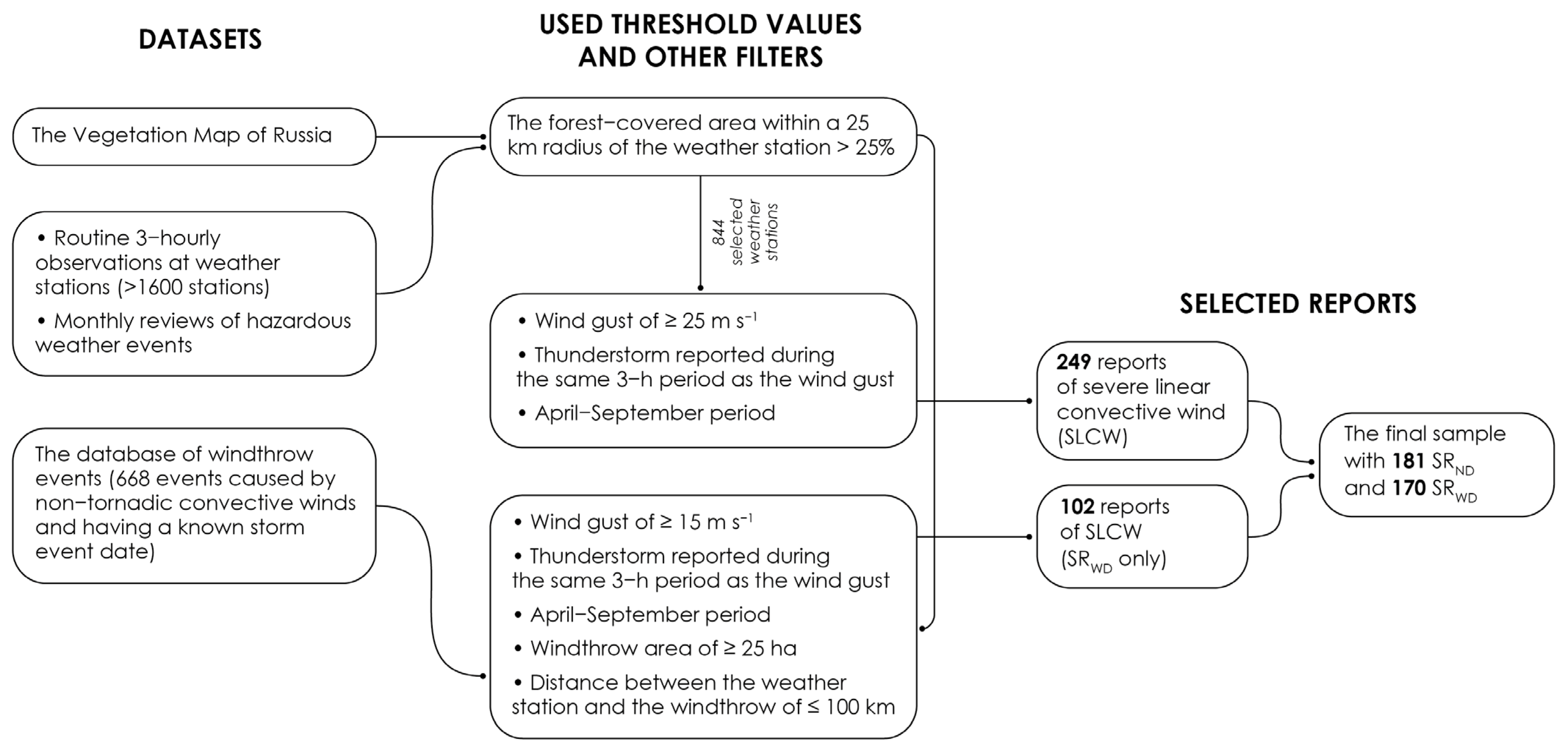
We compiled a dataset of SLCWs in the Northern Eurasian forest zone based on reports from Russian weather stations and a previously compiled database of windthrow events [8,9] for the period from 1986 to 2024 (Figure 1).
In the first step, we selected the weather stations located within the forest zone. In particular, the proportion of forest-covered area within a 25 km and 100 km radius around each weather station was calculated according to the Vegetation Map of Russia [38], and a 25% threshold value (for 25 km radius) was used. A total of 844 weather stations in Russia’s forest zone (out of more than 1600 weather stations) meet this criterion and were considered in the subsequent analysis (Figure 1).
Next, we selected storm reports from these 844 weather stations based on routine 3-hourly observations provided by the All-Russian Research Institute of Hydrometeorological Information—World Data Center (RIHMI-WDC) [39]. In particular, we considered the variables ‘maximum wind gust over a three-hour period between observations’. The cases with wind gusts ≥ 25 m s−1 were selected as storm reports in line with criteria of the Russian weather service (Roshydromet) for a hazardous wind event. To exclude non-convective winds, only warm-season reports (April–September) accompanied by thunderstorms were selected (Figure 1). It should be noted that routine 3-hourly observations from only about 200 of 844 selected weather stations were available for the entire period from 1986 to 2024. Other stations provided a complete data archive for the period 2011–2024 only. For these stations, we also compiled SLCW events from the monthly hazardous weather event reviews published in the Russian Meteorology and Hydrology journal (http://mig-journal.ru/en/archive-eng, last access: 15 December 2025). These reviews mention numerous convective windstorms reported at weather stations, along with additional information about whether the storm was convective or non-convective.
In this paper, we interpret individual observations at stations as separate SLCWs, even if these observations are associated with one large, long-lived windstorm, such as a derecho. Combining reports into a single event would contradict our objectives, since a single long-lived event may be associated with SLCWs that may or may not be accompanied by windthrow. For instance, such a situation was observed in southern Siberia in May 2020 [40]. In this paper, therefore, we will treat a report from one weather station as a single SLCW event. If a weather station reported wind gusts in two consecutive 3 h periods, only the report with the highest value (and its corresponding time) is treated as an SLCW event. Therefore, the terms ‘SLCW reports’ and ‘SLCW events’ are used interchangeably throughout this paper.
In total, we compiled a dataset of 249 SLCW events with observed wind gusts ≥ 25 m s−1 in the forest zone. The timing of these events is known to within three hours, except in cases where the exact time of occurrence is known from the aforementioned monthly reviews.
Then, we considered the windthrow event database [8,9] to select SLCWs that were both reported by weather stations and caused forest damage. The database currently includes 2777 stand-replacing windthrow events. Of these, we considered 668 windthrow events that were caused by SLCWs with a known storm event date. Next, we retained only the 540 windthrows for which there was at least one weather station within a 100 km radius. We then analyzed wind gust observations at these weather stations on the dates of windthrow occurrence. We only retained observations with wind gusts ≥ 15 m s−1, since the Russian Weather Service defines this as the threshold for an adverse meteorological phenomenon. Images from meteorological satellites (MVIRI and SEVIRI/Meteosat, AVHRR/NOAA and MODIS/Terra and Aqua) and weather radar data were used to clarify the timing of windthrow events and verify whether the wind reports from weather stations were related to the same convective storm (mesoscale convective system) that caused forest damage [8,9]. If several stations located near windthrow reported wind gusts between 15 m s−1 and 25 m s−1, we only kept the report of the strongest wind gust as one SLCW event. Conversely, if two or more stations reported wind gusts of ≥25 m s−1, all these reports were included in the analysis as separate SLCW events (Table 1).
In total, we selected 170 reports with wind gusts ≥ 15 m s−1 associated with windthrow events (SRWD) for further analysis. Of these, 68 reports with wind gusts ≥ 25 m s−1 were selected at the previous stage (Figure 1).
The resulting compiled dataset consisted of 181 SRND events and 170 SRWD events. These 351 SLCW events occurred between 3 June 1986 and 5 July 2024 at 227 different weather stations in the Russian forest zone. A total of 142 weather stations reported one event, 57 stations reported two events, 21 stations reported three events, 5 stations reported four events, and 2 stations reported five and seven events, respectively. Weather stations that reported multiple events may report strong winds more frequently because they are located on a hill or in an open area (away from buildings or trees).
Figure 1. The workflow showing the compilation of the SLCW events sample. The data sources are [38] for the Vegetation Map of Russia; refs. [39,41] for the coordinates of weather stations’ routine 3-hourly observations; refs. [8,9] for the database of windthrow events.
Atmosphere 17 00192 g001

2.2. Determination of Forest Stand Characteristics for SLCW Events

The vulnerability of forests to the impact of wind is determined by several forest stand characteristics, primarily forest species composition, stands age and volume [2,14,15,16,17,18,19]. In this study, we estimated the percentage of forest-covered area, percentage of main forest types and the average growing stock averaged within a 25 km and 100 km radius around each weather station that reported storm events, based on satellite-derived products (Table 1). We compared their values for SRWD and SRND to find the differences between these subsamples and assess their statistical significance.
Assessing the characteristics of forest stands has several limitations. In particular, dominating forest species and growing stock were defined for a fixed year (the growing stock was determined for 2010, while the dominant species were determined for 2023), whereas the storm events occurred in different years. However, high-resolution data for each analyzed year is currently unavailable. In addition, data on the age of forest stands, which determines vulnerability alongside species composition and growing stock, is also unavailable for the entire study region.
Since many of the considered SLCWs events occurred in spring, we also estimated the contribution of the seasonal state of vegetation (particularly deciduous trees) to windthrow. We estimated the average value of the Leaf Area Index (LAI) for high vegetation based on the ERA5-Land reanalysis data (0.1° cell size) [42]. LAI values were obtained for each date of SLCW occurrence, averaged over a 25 km radius around each weather station that reported severe wind, and compared for the SRWD and SRND subsamples and for events occurring in different months of the year.

2.3. Determination of SLCW Event Features

2.3.1. Wind Gusts

Characteristics of storm events (Table 1) were determined with ground-based and satellite observations, as well as the ERA5 reanalysis data, to identify the differences between SRND and SRWD in terms of wind gusts, precipitation and convective variables.
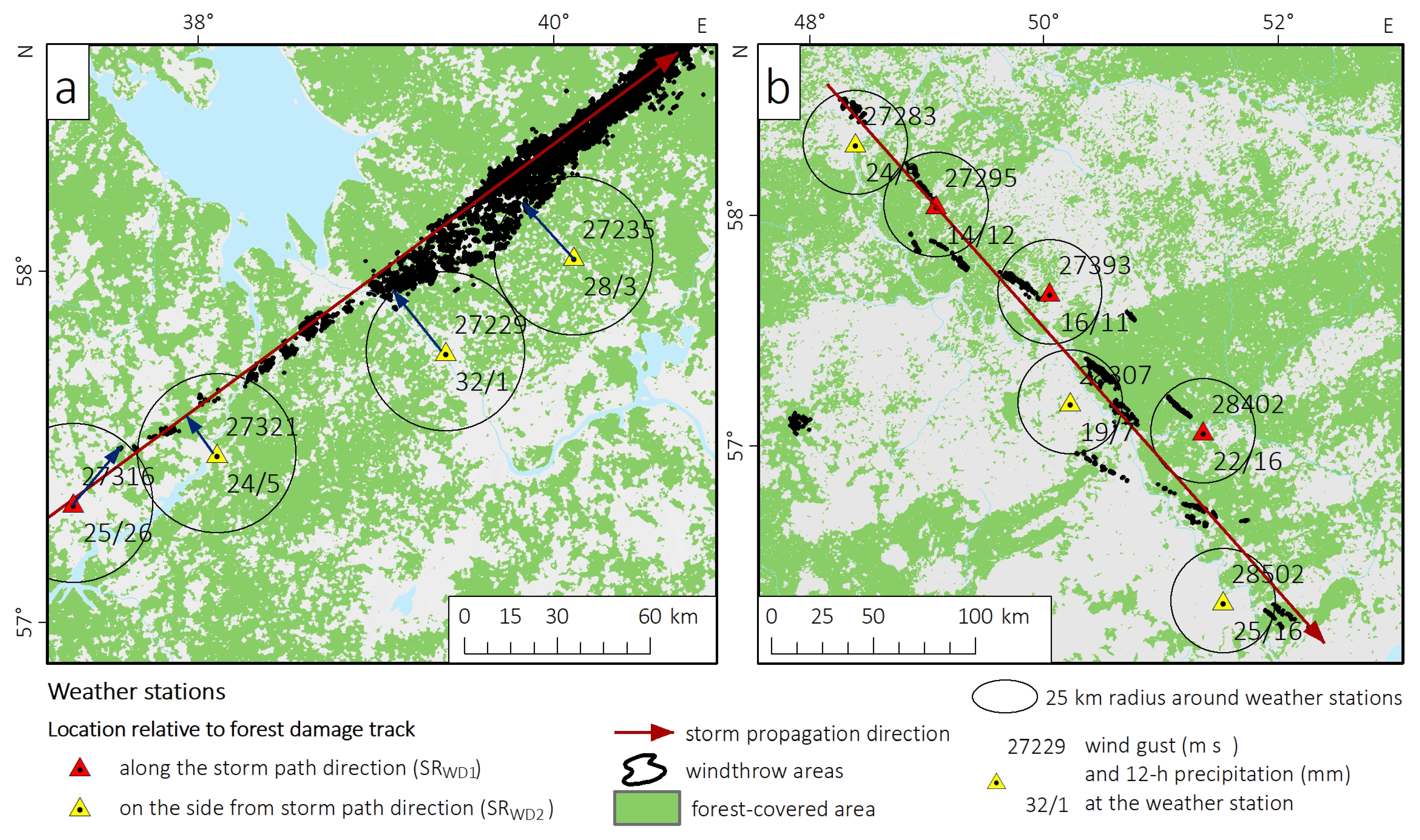
Both for SRND and SRWD, observed maximum wind gusts were determined. For SRWD, the location of the weather station in relation to the windthrow area determined the probability that the storm was reported or missed at the weather station. There were only 15 events where the distance between the weather station and the windthrow area was <2 km. However, observations can still be representative at a greater distance if a weather station was located in the path of the storm (i.e., behind or in front of a forest damage track; see Figure 2).
The SRWD reports were subdivided into two subsamples, given the location of weather stations related to the windthrow and general storm propagation direction. The storm propagation direction was determined using a time series of satellite images (mainly MVIRI and SEVIRI/Meteosat) if the direction of the windthrow itself was not evident, in line with [43]. Storm reports from weather stations located near a windthrow area are referred to as SRWD1 if the angle between the direction of storm propagation and the direction from the nearest points in the windthrow area to the weather station did not exceed 30° (red triangles at Figure 2). On the contrary, the reports from weather stations located on the side of a storm path—that is, where the angle between the direction of the storm path and the direction from the nearest points of the windthrow area to the weather station exceeded 30°—are referred to as SRWD2 (yellow triangles at Figure 2). SRWD2 events are generally less representative than SRWD1 events, especially with regard to local events. The 30° angle criterion used to distinguish between SRWD1 and SRWD2 was primarily chosen to balance the number of cases in the two subsamples. In fact, most cases are characterized by an angle of up to 20° for SRWD1 or close to 60° for SRWD2 (Figure 2). Therefore, adjusting this threshold by 10–15° would not significantly impact the ratio of cases in the subsamples.
Note that we initially considered the reports from weather stations located at a distance ≤ 100 km from the windthrow area (Figure 1). This threshold value was determined empirically, based on the available data and scientific literature. For long-lived SLCWs (derechos), the length of the damage path can exceed 500 km, the maximum width can reach 50–70 km, and the length of the parent storm path can exceed 1000 km [43,44,45,46]. This highlights the importance of considering wind and precipitation reports from weather stations located a substantial distance from areas affected by windthrow for SRWD1 reports. The maximum gap between the station and the windthrow area was 80 km for SRWD1 and 37 km for SRWD1. The mean values were 22 km and 14.6 km respectively for SRWD1 and SRWD2, and in only 7% of cases, the distance between the station and the windthrow area exceeded 50 km.
Table 1. Attributes determined for each storm report.
NameData Source
Storm event characteristics
Date and time of the storm report (UTC)Routine observations at weather stations with 3 h and 12 h time steps, provided by RIHMI-WDC [39], and monthly reviews of hazardous weather events
Maximum observed wind gust, m s−1
Observed 12 h precipitation amount, mm
Satellite-derived daily precipitation amount (mm) in the grid cell corresponding to the location of the weather station (1998–2024 only)GPM IMERG v.07 dataset [47] with 0.1° pixel size
Values of 16 convective instability indices (dynamical and thermodynamic), associated with SLCWs that were calculated 1 h before the event and extracted from the nearest point and found as the maximum within a 100 km radius of the weather stationERA5-based dataset of convective variables
for Northern Eurasia [43,48] with 0.25° pixel size
Forest cover characteristics
Percentage of forest-covered area and percentage of main forest types (dark coniferous, pine, deciduous and mixed) within a 25 km and 100 km radius of the weather stationVegetation Map of Russia [38] with 230 m pixel size
Average growing stock (m3 ha−1) within a 25 km and 100 km radius of the weather stationGlobBiomass dataset [48] with 100 m pixel size
Daily mean Leaf Area Index (LAI) for high vegetation in 25 km radius around weather stationERA5-Land reanalysis [42] with 0.1° pixel size
Forest damage characteristics
Distance between weather station and windthrow area (for SEWD only)GIS database of windthrow events [8,9]
Location relative to windthrow area (SEWD1 or SEWD2)
Windthrow track length and area (can be the same for several SEWD reports related to a single windthrow event)

2.3.2. Rainfall Amount

We paid special attention to precipitation, since, alongside wind speed, it determines wind-related damage to forests [29,30,31,32]. Initially, we compiled the 12 h rainfall amounts from routine observations for each of the 351 considered SLCW events (for the corresponding days), recorded twice daily during the main observation periods closest to 08:00 and 20:00 local time (according to the Guide for Weather Observations at Stations). However, in dozens of cases, the rainfall amount associated with a storm event was divided between two consecutive 12 h observations. In such cases, we considered 24 h precipitation amounts.
Because of the sparsity of ground-based observation networks, weather reports may erroneously reflect the spatial distribution of convective wind gusts and precipitation [49,50,51]. Convective rainfall estimates at high spatial and temporal resolutions can be provided by weather radars [51] and satellite-based precipitation products. Although weather radar data has a higher spatial resolution of about 1 km, it does not cover most of Russia’s forest zone and has only been available for the last few years. On the contrary, satellite-based precipitation products provide near-global data coverage [52]. Among these, GPM IMERG (Integrated Multi-satellitE Retrievals for Global Precipitation Monitoring) provides precipitation estimates with relatively high spatial (0.1° × 0.1°) and temporal (30 min) resolution [53]. Furthermore, GPM IMERG outperforms other satellite-based products in reproducing spatio-temporal patterns and variability of extreme precipitation [54].
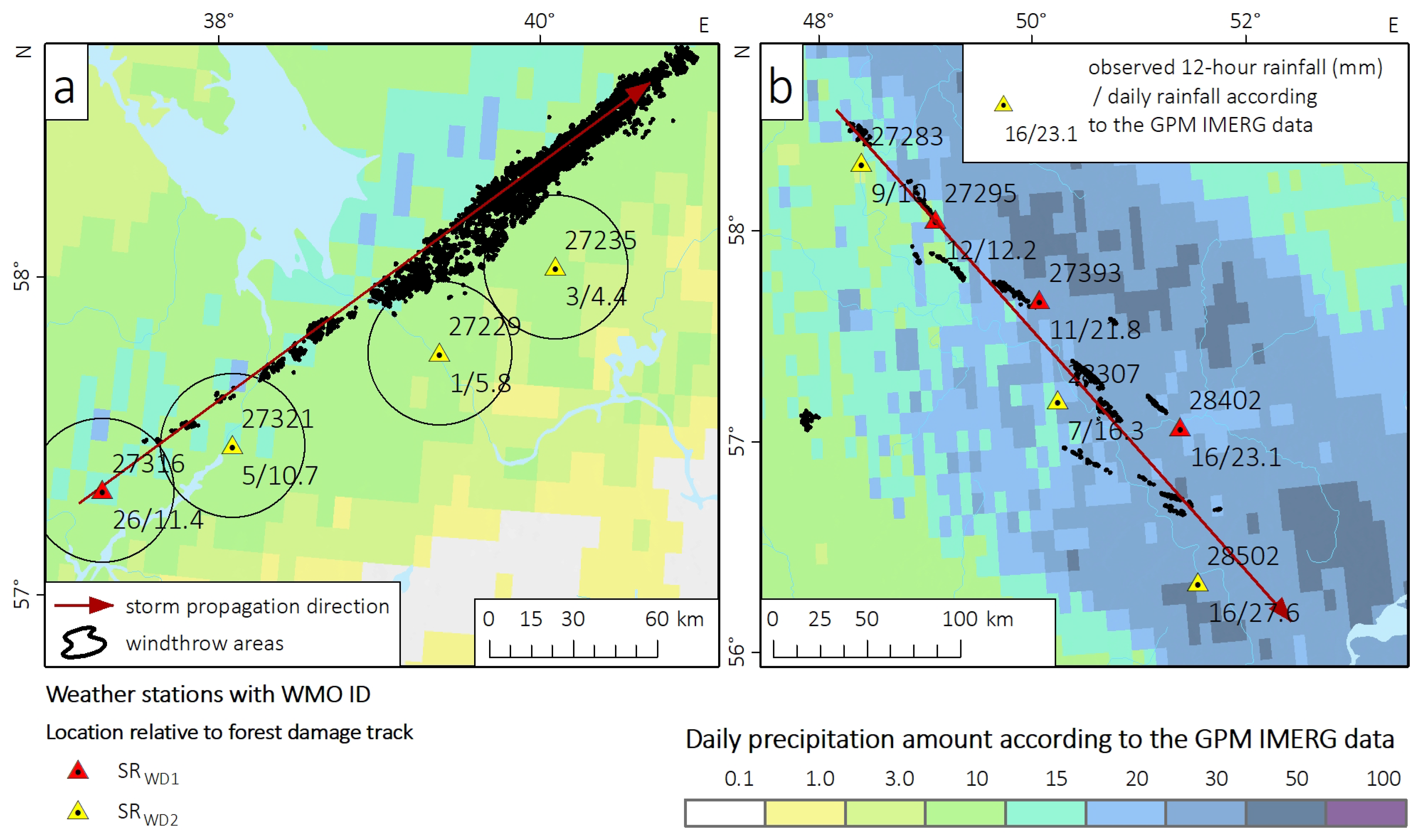
In this study, we used daily precipitation data from the GPM IMERG v.07 [47] alongside ground-based observations to estimate the amount of precipitation associated with SLCWs. We opted for daily data rather than half-hourly data, as previous studies [7,29,31] have demonstrated that heavy precipitation in the hours preceding a storm can increase the vulnerability of tree stands to wind impact by wetting the soil and crowns. In particular, we used the GPM_3IMERGDF (Final Precipitation L3, 1-day, 0.1-degree x 0.1-degree, V07) product for all the days in our sample that fell within the 1998–2024 period (201 days in total). Values were extracted from the grid cell nearest to the location of the weather stations and assigned to each storm report for further analysis (Figure 3).
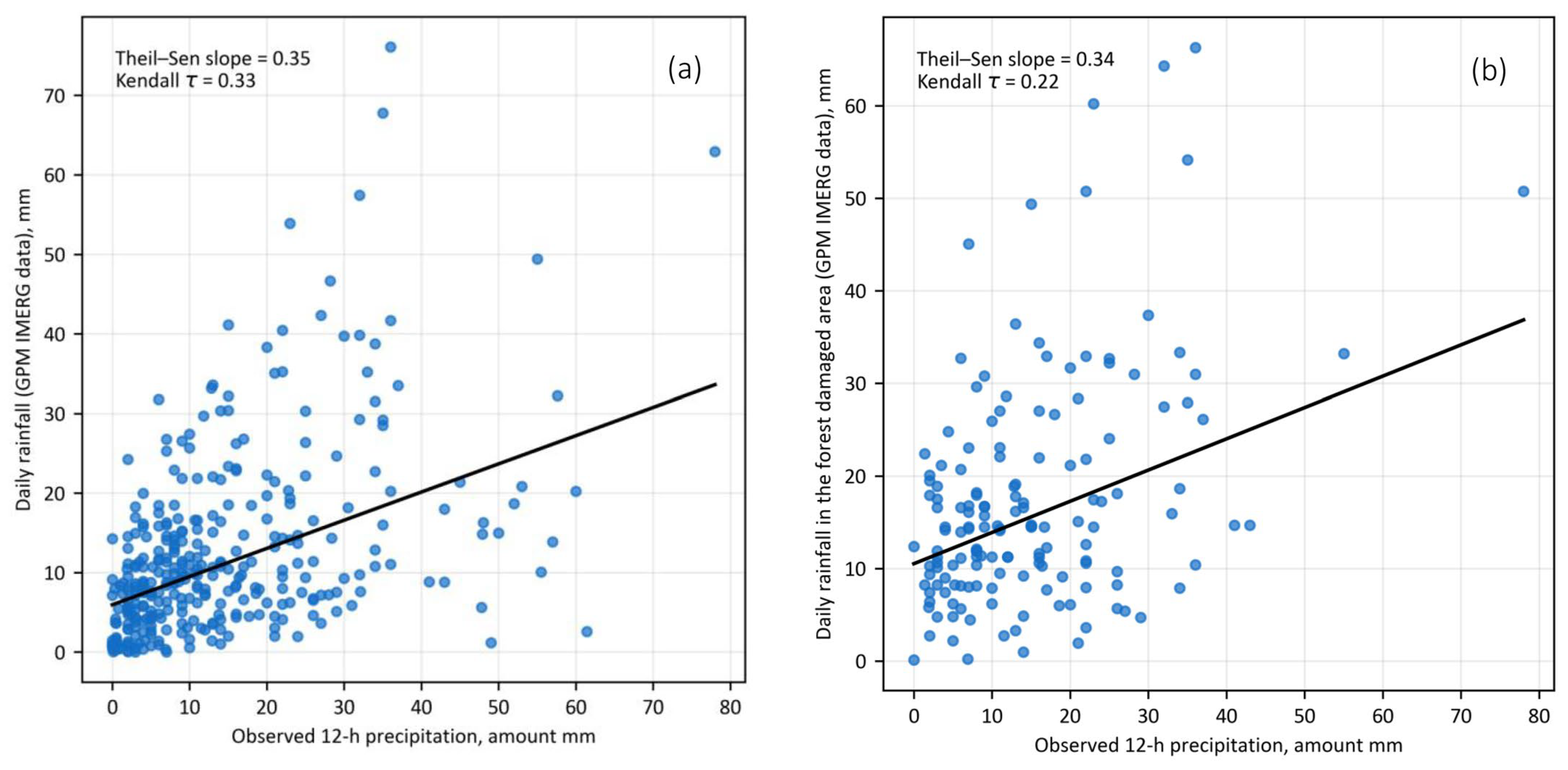
For 333 out of 351 considered storm reports (occurring between 1998 and 2024), both observed precipitation and estimates according to the GPM IMERG L3 data were obtained. There is a moderate correlation between the two (Figure 4). The average and median observed precipitation (14.2 mm and 10.0 mm, respectively) is slightly higher than that estimated using GPM IMERG data (12.6 mm and 9.5 mm, respectively).
There are five cases in which the GPM IMERG underestimated the amount of precipitation several times (the observed 12 h precipitation exceeded 40 mm, while the GPM IMERG estimate was less than 10 mm). According to satellite images (MVIRI and SEVIRI/Meteosat-8), these cases were produced by local convective storms (meso-β scale). The underestimation of precipitation according to GPM IMERG data can be attributed to its low spatial resolution. Conversely, cases in which GPM IMERG substantially overestimated precipitation were associated with mesoscale convective systems (MCSs) of meso-α scale, particularly when two or three MCSs passed over the weather station in succession.
We calculated the average precipitation amount in forest-damaged areas according to the GPM-IMERG data and compared it with the observed values from nearby weather stations (see Figure 4b). As expected, the average precipitation in the damaged forest areas was higher than that observed at the nearest weather station, by an average of 3.3 mm. Windthrow events typically occur when storms intensify, producing heavy precipitation and severe downdrafts [55,56]. However, as weather stations are often located on the periphery of storm-affected areas, they may not always provide an accurate representation of storms. The correlation between the observed precipitation and the GPM IMERG data for these 151 cases is also moderate and statistically significant.

2.3.3. ERA5-Based Convective Variables

SRWD and SRND events may form in differing convective environments. To estimate this difference, we analyzed so-called convective instability indices from a previously developed dataset for Northern Eurasia, covering the period 1979–2023 [43,57]. This dataset consists of 50 variables, calculated based on ERA5 reanalysis surface data and 20 standard vertical levels from 1000 to 300 hPa. The fields of convective variables have a spatial resolution of 0.25° and time steps of 1 h, as in the initial ERA5 data [58]. Indices for the dates and times of the formation of SRWD and SRND were extracted from this dataset for further comparison.
In this study, we analyzed 16 variables that characterize the main ingredients of the development of a deep moist convection, which can produce SLCWs [59,60]. These include convective available potential energy (CAPE), convective inhibition (CIN) and lifted condensation level (LCL), which were calculated for the mixed layer (ML) from 0 to 1000 m above ground level (AGL); total precipitable water content (PW); wind shear for the 0–1 km (LLS), 0–3 km (MLS) and 0–6 km (DLS) layers; storm-relative helicity for the 0–1 km and 0–3 km layers (SRH); and five composite parameters: supercell composite parameter (SCP); significant hail parameter (SHIP); significant tornado parameter (STP); severe weather threat (SWEAT); energy–helicity index (EHI), which was calculated for the 0–1 km and 0–3 km layers. Additionally, ML WMAXSHEAR was calculated as the product of the DLS and the square root of doubled ML CAPE.
The values of the convective variables were calculated for the nearest ERA5 grid cell to the locations of the weather stations that reported severe winds (for both SRWD and SRND). Additionally, the maximum values (excluding ML LCL and ML CIN) were extracted within a 100 km radius of the weather stations, in line with Chernokulsky et al. [43]. To estimate pre-convective environments, we used the values of the indices obtained one hour prior to the time of the storm report. In several cases, images from meteorological satellites (MVIRI and SEVIRI/Meteosat) were used to clarify the timing of the passage of a storm-producing MCS over a weather station.

2.4. Analysis of Differences Between Samples

We examined the differences in the above meteorological and forest stand characteristics (Table 2) between two groups of storm reports (SRND and SRWD), and between three groups (SRND, SRWD1 and SRWD2). In particular, intergroup differences in wind gusts, precipitation amounts (based on ground-based observations and GPM IMERG data) and storm occurrence dates were estimated to establish whether these factors could account for the presence or absence of forest damage. We used the Kolmogorov–Smirnov (K–S) test to estimate the significance of differences, considering a p-value of 0.05 to be the significant level. In addition, we examined the relationships between various attributes (Table 2) using both Spearman’s rank correlation and Pearson’s linear correlation.
Table 2. The mean (numerator) and median (denominator) values of forest cover characteristics for the SLCW events (SRND, SRWD1 and SRWD2), calculated within a 25 km and 100 km radius around each weather station. Statistically significant differences are highlighted in bold.
Report Type (Number
of Reports)
Forest Characteristics Around Each Weather Station
Forest-
Covered Area,
% of Total Area
Proportion of the Main Forest Types (% of Total Area)Growing Stock (m3 ha−1)LAI for High Vegetation
Dark-
Coniferous
PineDeciduousMixed
Within 25 km radius
SRND (181)64.8/
65.2
3.8/
1.2
12.6/
10.0
22.0/
22.4
23.5/
21.2
132.5/
128.2
3.40/
3.37
SEWD
(170)
61.5/
65.0
3.7/
0.6
10.3/
7.4
20.8/
21.4
24.6/
22.0
133.8/
132.6
3.50/
3.58
Within 100 km radius
SRND
(181)
66.2/
65.6
5.5/
2.1
11.3/
10.0
23.0/
24.4
24.2/
22.0
139.1/
139.9
SEWD
(170)
64.5/
63.8
4.6/
0.7
8.9/
7.2
24.4/
26.3
25.5/
24.4
142.3/
142.4
Table 3. The mean values of the storm report characteristics (mean dates, wind gusts and precipitation amounts) for the SRND, SRWD1 and SRWD2 reports. Statistically significant differences are highlighted in bold.
Report Type (Number
of Reports)
Storm Event DateWind Gust, m s−iObserved 12 h Rainfall AmountDaily
Rainfall Amount (GPM-IMERG)
SRND/SRWD25.06/01.0727.0/23.613.7/14.48.9/16.8
SRWD1/SRWD230.06/03.0724.1/22.716.2/11.018.1/14.5

3. Results

3.1. Wind and Precipitation Characteristics of the SLCW

The compiled dataset includes a total of 351 SLCW events from 227 different weather stations in the Russian forest zone between 3 June 1986 and 5 July 2024. Of these, there are 181 SRND and 170 SRWD reports, the latter of which include 112 SRWD1 reports and 58 SRWD2 reports.
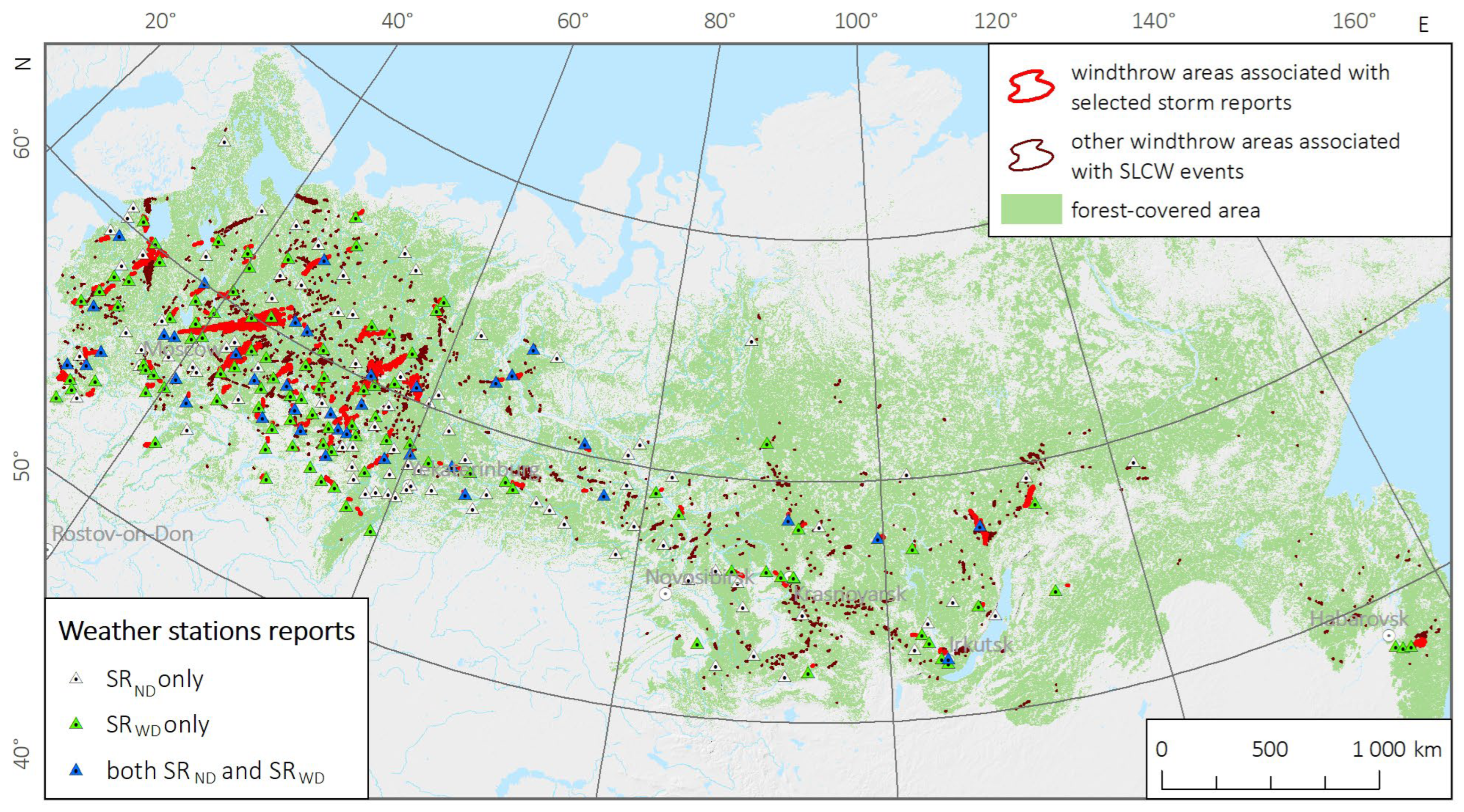
Of the 351 analyzed SLCW events that occurred in the Russian forest zone between 3 June 1986 and 5 July 2024, wind gusts ranged from 15 m s−1 to 36 m s−1. For 249 reports, wind gusts were ≥25 m s−1. It should be noted that over 30% of weather stations in the forest zone did not record any wind gusts of ≥25 m s−1 during the study period. This indicates a relatively low frequency of these events in Russia’s forest zone, which can be explained by large distances between weather stations, and their locations in wind-sheltered areas. Most of the considered storm events occurred in the ER (Figure 5), mainly due to the higher density of weather stations compared to Siberia. This is also partly because the windthrow data series for the forest zone of the ER is longer than that for Siberia [8,9].
Of the 351 SLCW events, 181 were SRND events and 170 were SRWD events. The latter included 112 SRWD1 events and 58 SRWD2 events. SRND events predominantly occurred on the eastern slope of the Ural Mountains, while SRWD events were prevalent in the central part of the forest zone of the ER. These regions differ significantly in terms of storm characteristics, forest stands and climate. For example, the proportion of forest area on the eastern slope of the Ural Mountains is lower than in the ER forest zone, as is the proportion of weather stations located in wind-sheltered areas. While deciduous and pine forests dominate the eastern slope of the Urals, mixed and dark coniferous forests (which are more vulnerable to wind impact) are widely distributed in the ER forest zone [38]. Additionally, a significant proportion of SLCW events on the eastern slope of the Urals were accompanied by low precipitation, particularly in spring, whereas in the ER forest zone, most SLCW events occurred in summer and were accompanied by moderate or heavy rainfall. Finally, the annual precipitation amount in the central part of the ER forest zone was 40% greater than on the eastern slope of the Urals, determining differences in soil moisture.

3.2. The Main Characteristics of SRND and SRWD and Their Difference

3.2.1. Forest Stands Characteristics for SRND and SRWD

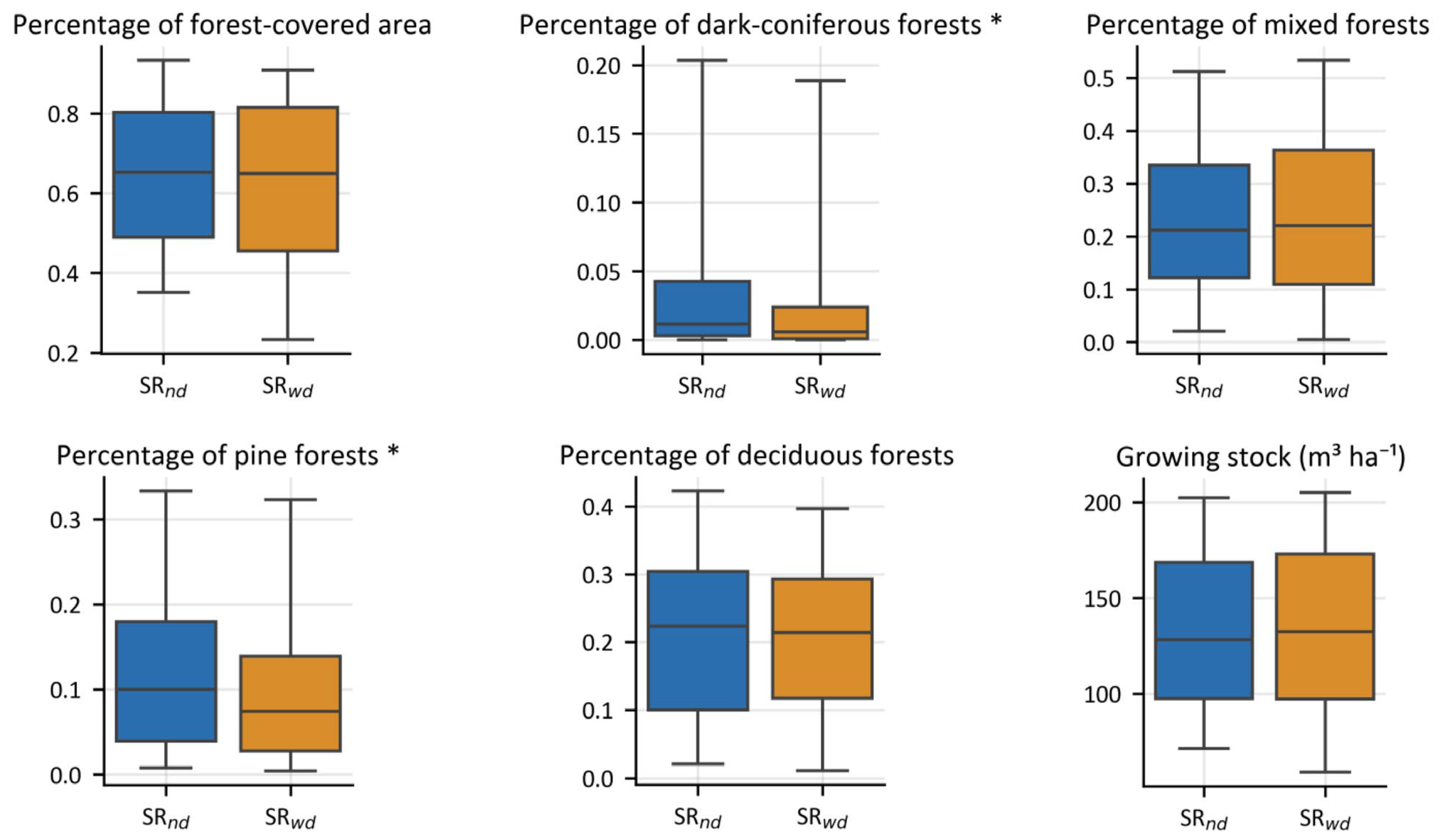
Table 2 and Figure 6 show the mean and median values of forest stand characteristics calculated within the 25 km and 100 km radii around each weather station reporting SLCW events. Based on the K-S test, no statistically significant differences were found between SRND and SRWD for most characteristics that determine forest vulnerability to wind impact (forest-covered area, growing stock, percentage of mixed forests). Moreover, the proportion of dark coniferous and pine forests within a 100 km radius around weather stations for SRND is higher than for SRWD. Therefore, we can hypothesize that differences in storm characteristics, rather than differences in forest stand vulnerability, determine whether or not wind-related forest damage occurs.

3.2.2. Wind Gusts

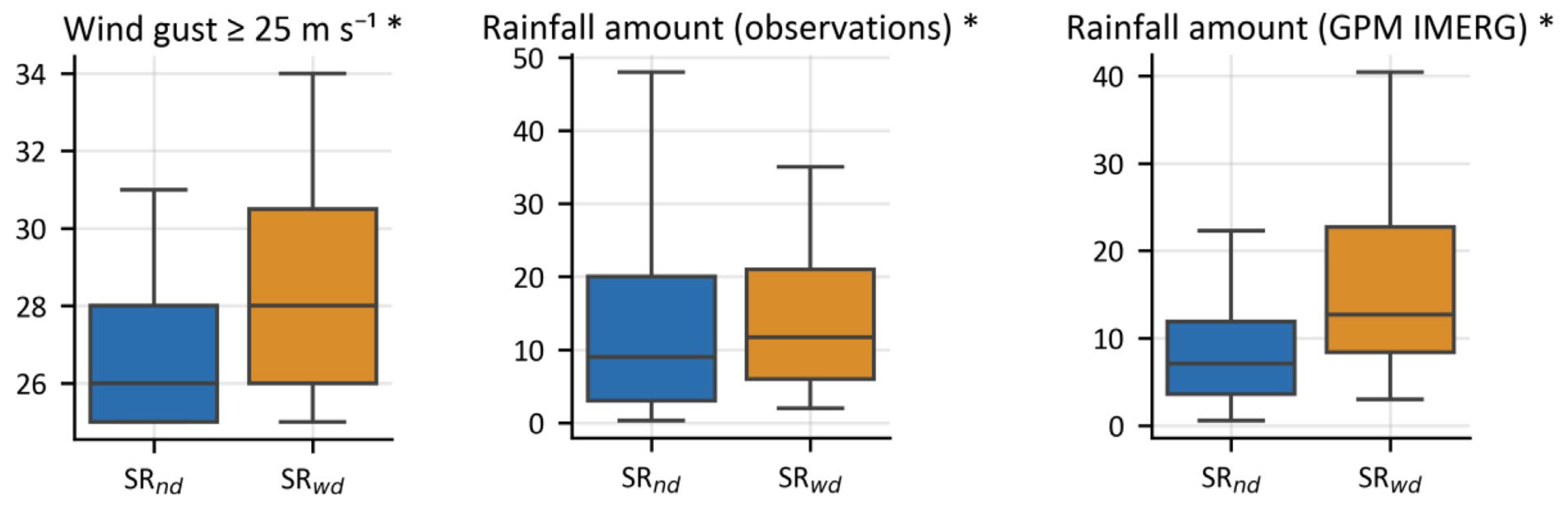
SRWD gusts were significantly stronger than SRND gusts (on average, 28.5 m s−1 vs. 27.0 m s−1) when considering reports of ≥25 m s−1 (181 SRND and 68 SRWD; Figure 7). The full sample of SLCW reports contains 196 cases of hurricane-force winds (≥33 m s−1), 12 of which caused forest damage. There were no significant differences in wind gusts between SRWD1 and SRWD2 (Table 3).
There is no significant correlation between windthrow characteristics (length and damaged area) and wind gusts reported by the nearest weather station. The weather stations reported hurricane-force winds, which caused both local (<100 ha) and large-scale (>10,000 ha) forest damage. The different scales of windthrow can be explained by the nature of the events. Although local downbursts and long-lived derecho-like storms may have similar peak intensities, their spatial footprints differ by tens of times. The number of stations reporting severe winds is a more informative predictor of the area affected by windthrow than peak wind gust. However, limitations in the observation network, such as low density and weather stations located in wind-sheltered environments, significantly undermine this relationship. In this study, we did not examine the relationship between the number of SLCW reports and windthrow characteristics since we considered each SLCW report separately, without grouping them by storm track.

3.2.3. Precipitation Amount

The difference between the SRND and SRWD reports in terms of observed precipitation amounts is statistically significant, although the average value differs by only 0.7 mm (Table 2). But there is a much stronger difference between SRWD1 and SRWD2, as well as between SRND and SRWD1. The median observed rainfall for SRWD1 is 5 mm higher than for SRND. SRWD1 reports characterize more intense rainfall associated with the central part of the storm’s path. In contrast, SRWD2 events were located on the storm’s periphery or outside the precipitation zone.
The standard deviation of observed precipitation differs substantially between SRND and SRWD (14.5 mm vs. 11.5 mm), reflecting differences in their distributions. The proportion of cases with light precipitation (≤3 mm) was 25% for SRND and 15% for SRWD. Conversely, the proportion of cases with heavy precipitation (≥30 mm) was 13.8% for SRND and 10% for SRWD (Figure 7). According to the weather station data, there was a total of 42 SLCW events with heavy rainfall (≥30 mm 12 h−1), of which only 17 were SRWD.
According to the GPM IMERG data (Figure 7, right panel), SRWD events were accompanied by significantly heavier rainfall than SRND events. Unlike the observational data, the GPM IMERG data show that SLCW events with heavy rainfall were also mainly SRWD. Of the 28 SLCW events with heavy rainfall (≥30 mm 12 h−1) reported by the GPM IMERG data, 75% were SRWD.
The differences in precipitation amounts between SRND and SRWD, according to observations and especially GPM IMERG data, generally indicate that heavy rainfall substantially increases the probability of windthrow. This is particularly relevant for the SRWD1 subsample, which more accurately characterizes the precipitation that accompanied windthrow events. These findings are consistent with previous studies indicating that heavy rainfall, when occurring before or during a windstorm, increases forest stand vulnerability to wind impact [29,30,31].
More interestingly, most of the windstorms accompanied by particularly heavy rainfall (8 out of 10 cases with an observed rainfall amount ≥ 50 mm/12 h, and 14 out of 18 cases with an observed rainfall amount ≥ 40 mm/12 h) did not cause damage to forests. Furthermore, none of the eight compound wind and rainfall extremes in our sample (events with wind gusts ≥ 25 m s−1 and precipitation ≥ 50 mm/12 h) caused damage to forests. An explanation of this feature requires additional information about the characteristics of these storm events and their formation environments. In particular, the lack of windthrow can be associated with the localized nature of these storms and the limited area in which they impact forests. A similar feature was previously found in the Perm Region (eastern European Russia), where numerous local downbursts generally did not cause large-scale forest damage [37].

3.2.4. Convective Variables According to the ERA5 Data

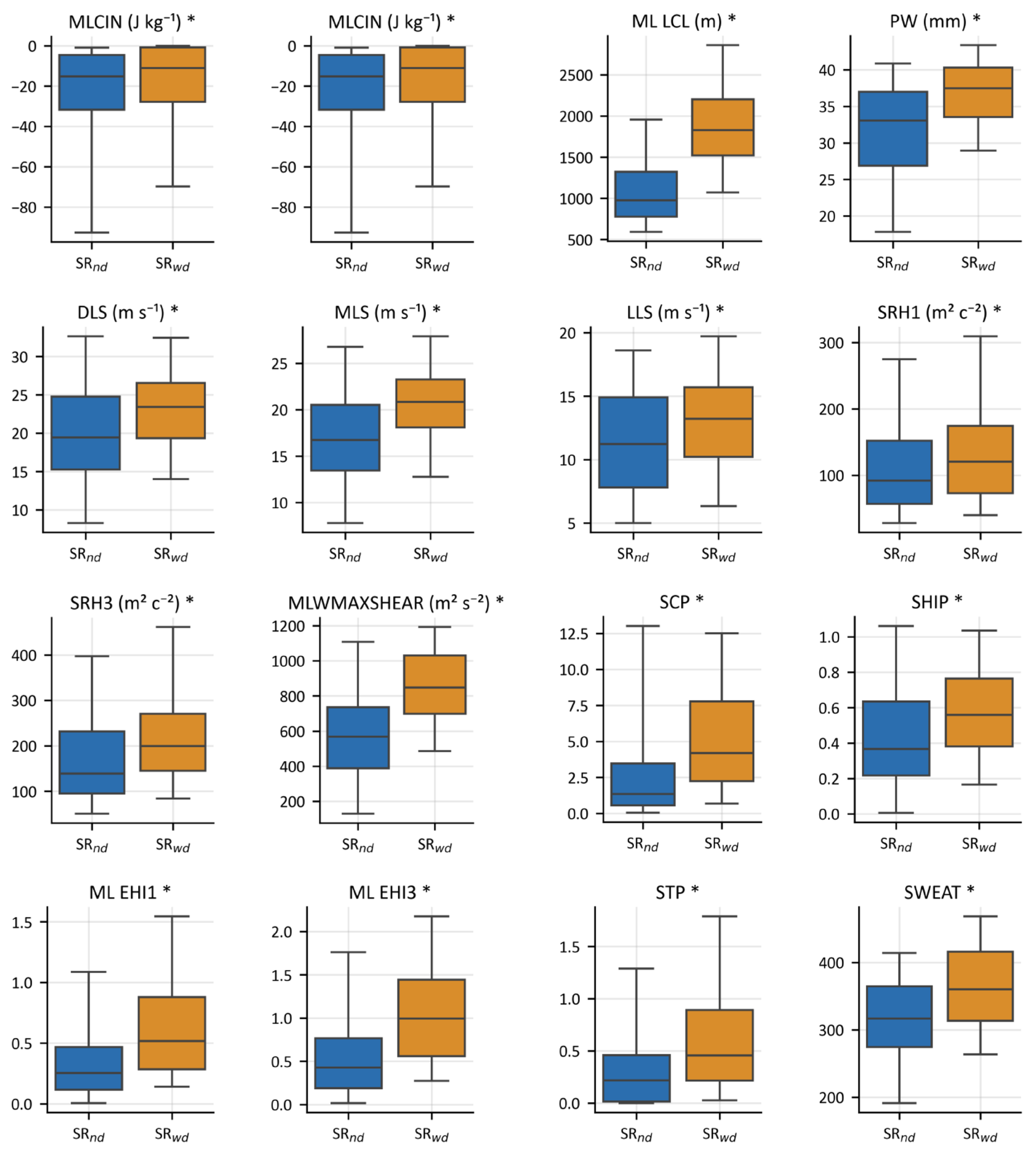
Convective environments are significantly different between SRND and SRWD, both at the weather station locations and within a 100 km radius of each location. In general, SRWD events formed in environments that are more favorable for the development of SLCWs than SRND events in terms of convective instability, wind shear, storm-relative helicity, and composite variables (Figure 8). The average differences in ML CAPE and PW between SRWD and SRND are approximately 257 J kg−1 and 4.9 mm, respectively (Figure 8). Both SEWD and SRND predominantly formed in environments with high ML CAPE (>500 J kg−1). Low-CAPE events were quite rare, accounting for only 17.9% of events, 73% of which were SRND. More than half of the low-CAPE events occurred in April and May, whereas about 80% of the events in the entire sample occurred in the summer. The ML CAPE and PW values for the SRWD reports are slightly higher than those for a sample of SLCW events that damaged forests from 2006 to 2021 [43]. However, regional studies based on small samples may show insignificant differences in ML CAPE and PW between SRND and SRWD (e.g., [37]).
Most SLCW events (both SRND and SRWD) were associated with DLS > 20 m s−1 (59%), but stronger wind shear was generally more characteristic of SRWD than for SRND, which aligns with previous results [37]. The proportion of weak-shear events (DLS < 15 m s−1) 24.3% for SRND and just 6.0% for SRWD. All of these events were associated with high CAPE, with an average ML CAPE of 1048 J kg−1. The mean observed 12 h precipitation amount associated with such events was 24.9 mm, which is 1.75 times higher than the average for the entire sample. Four of the eight compound wind-precipitation extremes occurred under conditions of high CAPE and weak DLS. Since weak shear contributes to the formation of only slow-moving and often short-lived storms [56,60], the associated SLCWs were very localized and most likely can be classified as microbursts.
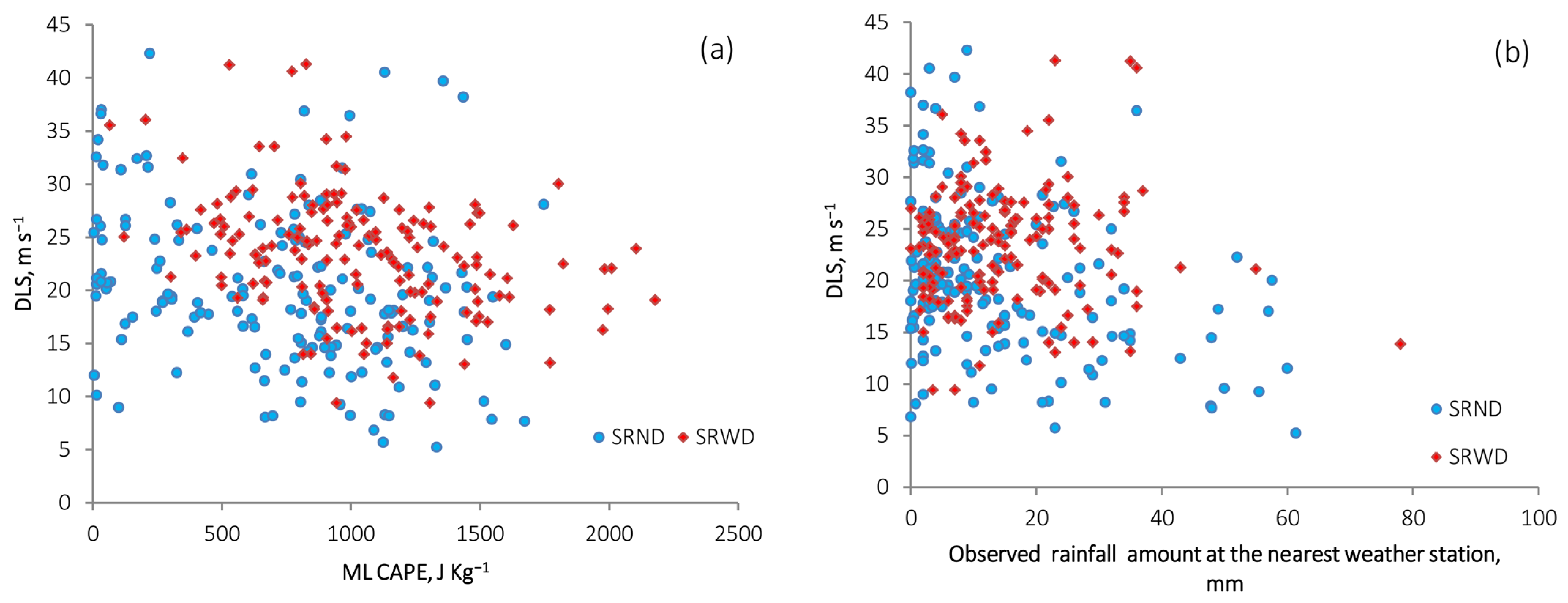
In the two-dimensional CAPE-DLS space, SRND produced two clusters (Figure 9a). One cluster occurred in the spring and had high shear and low CAPE. The other cluster occurred only in the summer and had weak shear and high CAPE. SRWD formed a cluster with moderate to high ML CAPE (≥500 J kg−1) and moderate to high DLS (≥15 m/s). It is noteworthy that the events with the highest ML CAPE (≥1500 J kg−1) were mainly SRWD.
In the precipitation-DLS space (Figure 9b), SRND also formed two clusters: events with weak precipitation (<10 mm) and very strong DLS (≥30 m s−1), and events with weak or moderate DLS (<20 m s−1) and very heavy rainfall (≥40 mm). For the first group, the lack of forest damage can be explained by weak precipitation and/or the seasonal state of vegetation, specifically the absence of leaves on trees in the spring. For the second group, the lack of forest damage is associated with their local impact on the forest canopy. Thus, the formation environments of SLCWs substantially affect forest damage.
Composite convective variables are generally higher for SRWD than for SRND. On average, the EHI and SCP show the strongest differences, which are more than 1.6 times larger for SRWD than for SRND. The average values of the composite variables for SRWD are similar to those for the SLCW sample in the European Russia and the Urals [43], as well as for strong (≥32 m s−1) warm-season SLCW events in Europe [60]. However, SRND also formed in areas with high composite variable values. In particular, ML WMAXSHEAR was >1000 m2 s−2 in 14 cases. In three of these cases, forest damage was caused by tornadoes, which were not considered in this study. In another six cases, windthrow events occurred more than 100 km away from weather stations that reported severe wind gusts.

3.2.5. Temporal Distribution of Storm Events

The vast majority of SLCWs have been reported in the afternoon or evening, according to local time. This is consistent with previous studies of convective windstorms in northern Eurasian forests [9,37,43]. No statistically significant differences in timing were found between SRND and SRWD events.
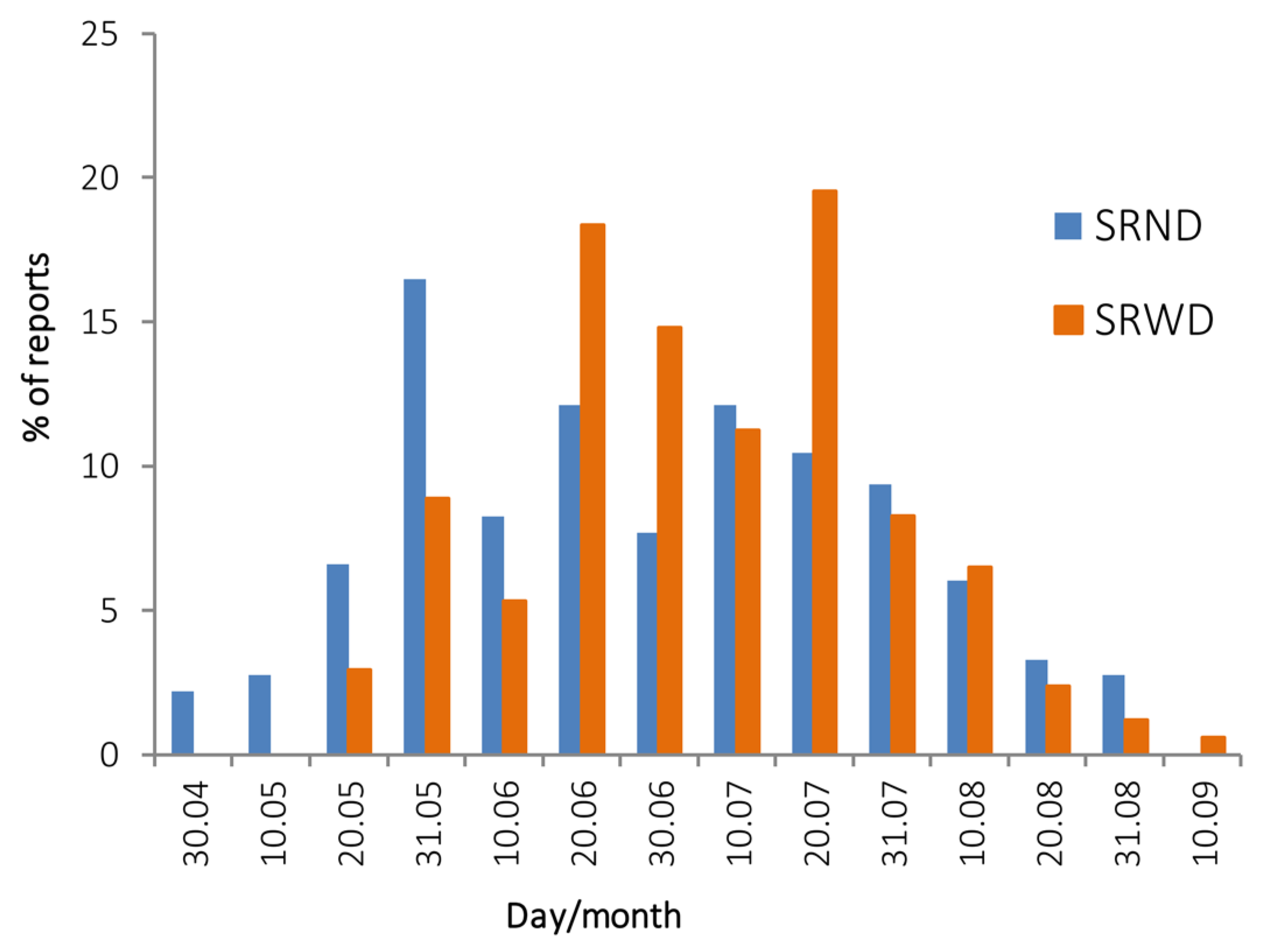
The seasonal distribution differs significantly between SRND and SRWD (Figure 10), reflecting their distinct formation environments. The largest number of SRND events occurred in late May, with a secondary peak between mid-June and mid-July, which corresponds to the annual maximum in the development of a deep convection [11]. In contrast, the seasonal distribution of SRWD only peaks in the summer, consistent with the general distribution of windthrow events in Russia [8,9].
The conditions in May differ from those in midsummer in terms of both forest vulnerability to wind impact and atmospheric conditions favorable to storm formation. In particular, vulnerability increases in summer compared to spring due to the growth of foliage on deciduous trees [2,23]. But on the other hand, soil moisture can decrease in summer compared to spring, which can lead to a decrease in vulnerability [30].
In this study, we evaluated seasonal changes in woody vegetation using LAI, calculated according to the ERA5-Land reanalysis, for each storm event date. There are no significant differences in LAI between SRND and SRWD (Table 2), though the seasonal difference is significant (mean LAI values are 2.82 and 3.59 for spring and summer events, respectively). Therefore, differences in LAI may partially explain the seasonal distribution patterns of SRWD and SRND.
Seasonal differences in the formation environments of SLCWs in Russian boreal forests are similar with to those in Europe [60]. Summertime events form predominantly in warm, moist air masses and are accompanied by stronger rainfall. Springtime events form in colder air masses with lower moisture content and are accompanied by weaker rainfall. In our sample, springtime events are characterized by slightly stronger wind gusts (an average of 26.5 m s−1) and light precipitation (an average of 8.0 mm). Summertime events have slightly weaker gusts (an average of 25.1 m s−1) but almost twice the precipitation (an average of 15.6 mm). Thus, seasonal differences in air mass characteristics determine the difference in rainfall amount associated with SLCWs, thereby explaining the increasing proportion of SRWD in summer.

4. Discussion

In this study, we examined for the first time the characteristics of severe linear convective windstorm (SLCW) events to determine whether they lead to damage to temperate and boreal forests in Russia. We selected 351 SLCW events that occurred in the forest zone of Russia using routine meteorological observations and the previously compiled database of windthrow events [8,9]. We divided the sample into two subsamples: one with windthrow (SRWD, 170 events) and one without (SRND, 181 events). As shown in previous studies [2,4,14,15,16,17,18,19], the occurrence of windthrow is determined by the characteristics of the windstorm itself and the characteristics of the forest stand and sites (in particular, terrain and soil).
As our goal was to determine the differences in the characteristics of windstorms between SRWD and SRND subsamples, events were selected to minimize differences in other predictors of windthrow occurrence, primarily the characteristics of forest stands. When calculated within a 25 km radius around weather stations, there are no significant differences between the SRWD and SRND subsamples in terms of the proportion of forest-covered area, the contribution of different tree species, growing stock volume and LAI.
The study’s approach and the data used have several limitations that should be taken into account. Firstly, the available land cover and land use maps do not provide data on forest age, one of the main predictors of windthrow occurrence [13,14,15,16,17,18,19]. Secondly, the vegetation map of Russia used in this study shows the dominant tree species in 2018, whereas the windthrow event data were obtained from 1986 to 2014. Thirdly, soil characteristics (thickness, moisture and texture), which are also important predictors of windthrow occurrence, were not considered due to a lack of data with the required spatial resolution for Russia. However, the impact of soil characteristics on windthrow occurrence is weaker than that of forest stand characteristics [18,19]. Growing stock data [48] was used instead of data on forest stand age.
The next limitation relates to the data used from weather stations. Firstly, the distances between weather stations, particularly in Siberia, exceed the typical spatial footprint of an SLCW event (except for long-lived ones). In the forest zone of European Russia, for example, the average distance between stations is about 47 km, whereas in Siberia, it is around 59 km. Observation density also affects the spatial distribution of identified cases (there are more cases in European Russia than in Siberia). Another issue that could affect the results is that some weather stations in the forest zone are located in sheltered areas and are therefore not well suited to observing SLCWs. This leads to a significant underestimation of wind gusts for SRWD compared to SRND. In turn, SRND events were reported four to five times at the same stations, which are located in areas where strong winds are more likely to be reported.
The actual amount of precipitation in windthrow areas cannot be accurately determined from weather station data, as the spatial distribution of convective precipitation is highly uneven [61]. High-resolution weather radar data is better suited to assessing differences in precipitation intensity within and outside windthrow areas, but it is still very limited in Russia [62]. As weather radar data accumulates and becomes more accessible, this could be a focus for future research.
The GPM IMERG rainfall data, which were used alongside ground-based observations, have several limitations that have been highlighted in previous studies [63,64,65]. In particular, the resolution may not be accurate enough to adequately consider spatial variations in the intensity of convective precipitation. A time step of 30 min is insufficient to observe short-term peaks in precipitation intensity, which reduces the accuracy of total precipitation calculations. This results in only a moderate correlation between ground-based precipitation data and GPM IMERG satellite data, as was also highlighted for other regions [63,64,65]. However, such limitations are equally typical of both SRND and SRWD events, meaning that the significant differences identified between the two types of event can be considered meaningful.
The approach used to select and classify SRWD events into SRWD1 and SRWD2 also has limitations, primarily due to the large distance between the areas of windthrow and the weather stations. This distance may exceed the characteristic scale of the spatial variability of convective gusts and precipitation [66,67]. However, using a lower maximum distance threshold for weather stations and windthrow events (rather than using the value of 100 km) could have substantially reduced the sample size and led to SRWD reports being misclassified as SRND. We consider the used thresholds to be the most optimal for the analyzed data. An analysis of the sensitivity of such threshold values could be performed in the future, once more detailed data (e.g., radar data) is available. The lack of open access to weather radar data generally limits many studies of severe convective events in Russia.
As a result, we do not consider the aforementioned limitations to be critical when drawing conclusions about the differences between the storms in the SRWD and SRND subsamples. However, addressing these limitations leaves room for future research.

5. Conclusions

The main findings resulting from this study are listed below:
  • SRWD events are characterized by stronger wind gusts than SRND events (28.5 m s−1 and 27.0 m s−1, respectively), when comparing SRWD and SRND events for SLCW reports obtained using the observed wind gust threshold (≥25 m s−1).
  • There is no correlation between observed wind gusts and forest damage characteristics, e.g., track length and area. This differs from previous studies [5,7], which focused on windthrow events caused by non-convective winds.
  • The SRWD and SRND samples differ significantly for precipitation amounts obtained from both station observations and satellite data. Heavy rainfall accompanying SLCWs generally contributes substantially to forest damage. According to the GPM IMERG satellite-derived precipitation estimate, the daily rainfall associated with SRWD is 1.5 times greater than that associated with SRND. Based on station data, this difference is smaller, at around 5%, but still significant. This is consistent with the findings of previous studies on both temperate [7,31] and tropical [32,33] forests. However, this is the first time that the relationship between the amount of rainfall during a storm and the occurrence of windthrow has been considered for convective windstorms in boreal and temperate forests.
  • The amount of rainfall observed depends significantly on the location of the weather station in relation to the storm’s path. The amount of rainfall associated with cases where weather stations are located along the path of the storm is significantly higher (by 47%) than for cases where weather stations are located to the side of the storm’s path. The sensitivity of windthrow occurrence to precipitation explains the significant difference in the seasonality of SRND and SRWD events. Specifically, SRND occurred at two peak frequencies: one in the second half of May and one in summer, while SRWD events mainly occurred in summer. The most significant differences between SRND and SRWD were found in the convective environments, estimated based on the ERA5 reanalysis. On average, SRWD cases formed in conditions of stronger wind shear, as well as in more unstable air masses with a higher moisture content. Therefore, SRWD cases tend to occur in environments that are more favorable for the development of severe convective storms.
  • In line with this general pattern and in confirmation of previous estimates [37], there are several notable features in the distribution of convective variables for SRND alone. There are two types of SRND events: those that occur under low CAPE and high shear, and those that occur under weak shear and high CAPE. The low-CAPE SRND events often formed in spring, in air masses with a relatively low moisture content. These events were accompanied by low precipitation (<10 mm), which may explain the lack of forest damage. The high-CAPE and low shear SRND events only occurred in summer and were associated with heavy rainfall. The lack of forest damage can be explained by the localized nature of these events and the small area of forest impacted.
  • In turn, 64% of SRWD formed under conditions of high DLS (>20 m s−1) and high CAPE (>500 J kg−1), which are especially favorable for the development of severe and long-lived SLCW events, including derecho-like storms that cause large-scale damage [43,44,45,46].
Our analysis reveals that the occurrence or non-occurrence of windthrow events caused by SLCWs, alongside forest stand vulnerability, is determined by the combined effects of wind and rainfall, storm longevity and spatial footprint. These characteristics are closely related to the environments in which storms form. In the Russian forest zone, where SLCWs account for 66% of the total windthrow area, the highest probability of windthrow events occurs in environments with high CAPE and strong wind shear. This can inform assessments of probable changes in forest damage caused by SLCW events based on projections of rainfall intensity and convective variables in a changing climate [68,69].
The features that were identified as determining the impact of linear convective windstorms on boreal and temperate forests in Northern Eurasia—including wind gusts, rainfall amounts, and convective environments—can be used alongside previously obtained climatologies of tornadoes [11] and windthrow events [8] to assess the climate risks to forests under climate change. The results may particularly help to refine previous assessments of climate risks in Russia [70], as well as being used to refine regional plans and strategies for adapting to climate change, particularly in forestry.

Author Contributions

Conceptualization, A.C. and A.S.; methodology, A.C. and A.S.; data curation A.S., Y.Y., S.D. and A.B.; investigation, A.S.; validation, A.C. and A.S.; resources, A.C.; writing—original draft preparation, A.S.; writing—review and editing, A.C. and A.S.; visualization, A.C., A.B. and A.S.; supervision, A.C.; project administration, A.C.; funding acquisition, A.C. All authors have read and agreed to the published version of the manuscript.

Funding

This study was funded by the Ministry of Science and Higher Education of Russian Federation (agreement No 075-15-2024-554, by 24 April 2024).

Institutional Review Board Statement

Not applicable.

Informed Consent Statement

Not applicable.

Data Availability Statement

The raw data supporting the conclusions of this article will be made available by the authors on request due to privacy.

Conflicts of Interest

The authors declare no conflicts of interest.

Abbreviations

The following abbreviations are used in this manuscript:
SRNDStorm report not associated with windthrow
SRWDStorm report associated with windthrow
SLCWSevere linear convective wind
GPM IMERGIntegrated Multi-satellitE Retrievals for Global Precipitation Monitoring
DLSDeep-layer shear
ML CAPEMixed-layer convective available potential energy
LAILeaf area index
PWPrecipitable water
LCLLifted condensation level
EHIEnergy–helicity index
SCPSupercell composite parameter

References

  1. Schelhaas, M.-J.; Nabuurs, G.-J.; Schuck, A. Natural disturbances in the european forests in the 19th and 20th centuries. Glob. Change Biol. 2003, 9, 1620–1633. [Google Scholar] [CrossRef]
  2. Mitchell, S. Wind as a natural disturbance agent in forests: A synthesis. Forestry 2013, 86, 147–157. [Google Scholar] [CrossRef]
  3. Pettit, J.L.; Pettit, J.M.; Janda, P.; Rydval, M.; Čada, V.; Schurman, J.S.; Nagel, T.A.; Bače, R.; Saulnier, M.; Hofmeister, J.; et al. Both cyclone-induced and convective storms drive disturbance patterns in European primary beech forests. J. Geophys. Res. Atmos. 2021, 126, e2020JD033929. [Google Scholar] [CrossRef]
  4. Gardiner, B.; Blennow, K.; Carnus, J.M.; Fleischner, P.; Ingemarson, F.; Landmann, G.; Lindner, M.; Marzano, M.; Nicoll, B.; Orazio, C.; et al. Destructive Storms in European Forests: Past and Forthcoming Impacts, Final Report to European Commission—DG Environment, Joensuu, European Forest Institute, Finland. 2010. Available online: https://ec.europa.eu/environment/forests/pdf/STORMS%20Final_Report.pdf (accessed on 28 December 2025).
  5. Xi, W.; Peet, R.K. The Complexity of Catastrophic Wind Impacts on Temperate Forests. In Recent Hurricane Research. Climate, Dynamics, and Societal Impacts; Lupo, A., Ed.; IntechOpen: London, UK, 2011; pp. 503–534. [Google Scholar] [CrossRef]
  6. Fridman, J.; Valinger, E. Modelling probability of snow and wind damage using tree, stand, and site characteristics from Pinus sylvestris sample plots. Scand. J. For. Res. 1998, 13, 348–356. [Google Scholar] [CrossRef]
  7. Gliksman, D.; Averbeck, P.; Becker, N.; Gardiner, B.; Goldberg, V.; Grieger, J.; Handorf, D.; Haustein, K.; Karwat, A.; Knutzen, F.; et al. Review article: A European perspective on wind and storm damage—From the meteorological background to index-based approaches to assess impacts. Nat. Hazards Earth Syst. Sci. 2023, 23, 2171–2201. [Google Scholar] [CrossRef]
  8. Shikhov, A.N.; Chernokulsky, A.V.; Azhigov, I.O.; Semakina, A.V. A satellite-derived database for stand-replacing windthrow events in boreal forests of European Russia in 1986–2017. Earth Syst. Sci. Data 2020, 12, 3489–3513. [Google Scholar] [CrossRef]
  9. Shikhov, A.N.; Yarinich, Y.I.; Chernokulsky, A.V. Association of Spatial and Temporal Windthrow Distribution with Convective Parameters and Lightning Density in Russia. Geogr. Environ. Sustain. 2025, 18, 75–88. [Google Scholar] [CrossRef]
  10. Battles, J.J.; Cleavitt, N.L.; Saah, D.S.; Poling, B.T.; Fahey, T.J. Ecological impact of a microburst windstorm in a northern hardwood forest. Can. J. For. Res. 2017, 47, 1695–1701. [Google Scholar] [CrossRef]
  11. Chernokulsky, A.; Kurgansky, M.; Mokhov, I.; Shikhov, A.; Azhigov, I.; Selezneva, E.; Zakharchenko, D.; Antonescu, B.; Kühne, T. Tornadoes in Northern Eurasia: From the Middle Age to the Information Era. Mon. Weather Rev. 2020, 148, 3081–3111. [Google Scholar] [CrossRef]
  12. Sills, D.M.L.; Kopp, G.A.; Elliott, L.; Jaffe, A.L.; Sutherland, L.; Miller, C.S.; Kunkel, J.M.; Hong, E.; Stevenson, S.A.; Wang, W. The Northern Tornadoes Project: Uncovering Canada’s True Tornado Climatology. Bull. Amer. Meteor. Soc. 2020, 101, E2113–E2132. [Google Scholar] [CrossRef]
  13. Xi, W.M.; Peet, R.K.; Decoster, J.K.; Urban, D.L. Tree damage risk factors associated with large, infrequent wind disturbances of Carolina forests. Forestry 2008, 81, 317–334. [Google Scholar] [CrossRef]
  14. Dobbertin, M. Influence of stand structure, site factors on wind damage comparing the storms Vivian and Lothar. For. Snow Landsc. Res. 2002, 77, 187–205. [Google Scholar]
  15. Hanewinkel, M.; Kuhn, T.; Bugmann, H.; Lanz, A.; Brang, P. Vulnerability of uneven-aged forests to storm damage. Forestry 2014, 87, 525–534. [Google Scholar] [CrossRef]
  16. Albrecht, A.T.; Jung, C.; Schindler, D. Improving empirical storm damage models by coupling with high-resolution gust speed data. Agricult. For. Meteorol. 2019, 268, 23–31. [Google Scholar] [CrossRef]
  17. Hart, E.; Sim, K.; Kamimura, K.; Meredieu, C.; Guyon, D.; Gardiner, B. Use of machine learning techniques to model wind damage to forests. Agricult. For. Meteorol. 2019, 265, 16–29. [Google Scholar] [CrossRef]
  18. Suvanto, S.; Peltoniemi, M.; Tuominen, S.; Strandström, M.; Lehtonen, A. High-resolution mapping of forest vulnerability to wind for disturbance-aware forestry. For. Ecol. Manag. 2019, 453, 117619. [Google Scholar] [CrossRef]
  19. Pawlik, L.; Harrison, S.P. Modelling and prediction of wind damage in forest ecosystems of the Sudety Mountains, SW Poland. Sci. Total Environ. 2022, 815, 151972. [Google Scholar] [CrossRef]
  20. Peltola, H.; Kellomäki, S.; Väisänen, H.; Ikonen, V.P. A mechanistic model for assessing the risk of wind, snow damage to single trees and stands of Scots pine, Norway spruce and birch. Can. J. For. Res. 1999, 29, 647–661. [Google Scholar] [CrossRef]
  21. Hale, S.; Gardiner, B.; Peace, A.; Nicoll, B.; Taylor, P.; Pizzirani, S. Comparison and validation of three versions of a forest wind risk model. Environ. Model. Softw. 2015, 68, 27–41. [Google Scholar] [CrossRef]
  22. Coates, K.D.; Hall, E.C.; Canham, C.D. Susceptibility of trees to windthrow storm damage in partially harvested complex-structured multi-species forests. Forests 2018, 9, 199. [Google Scholar] [CrossRef]
  23. Everham, E.M.; Brokaw, N.V.L. Forest damage and recovery from catastrophic wind. Bot. Rev. 1996, 62, 113–185. [Google Scholar] [CrossRef]
  24. Schaetzl, R.J.; Johnson, D.L.; Burns, S.F.; Small, T.W. Tree uprooting: Review of terminology, process, and environmental implications. Can. J. For. Res. 1989, 19, 1–11. [Google Scholar] [CrossRef]
  25. Schindler, D.; Bauhus, J.; Mayer, H. Wind effects on trees. Eur. J. For. Res. 2012, 131, 159–163. [Google Scholar] [CrossRef]
  26. Usbeck, T.; Wohlgemuth, T.; Pfister, C.; Volz, R.; Beniston, M. Wind speed measurements and forest damage in Canton Zurich [Central Europe] from 1891 to winter 2007. Int. J. Climatol. 2010, 30, 347–358. [Google Scholar] [CrossRef]
  27. Gardiner, B.; Byrne, K.; Hale, S.; Kamimura, K.; Mitchell, S.J.; Peltola, H.; Ruel, J.C. A review of mechanistic modelling of wind damage risk to forests. Forestry 2008, 81, 447–463. [Google Scholar] [CrossRef]
  28. The International Fujita (IF) Scale. Tornado and Wind Damage Assessment Guide. Draft Version 0.1 of 15 October 2018. Available online: https://www.essl.org/media/publications/IF-scale_v0.10.pdf (accessed on 15 October 2025).
  29. Kamimura, K.; Kitagawa, K.; Saito, S.; Mizunaga, H. Root anchorage of hinoki [Chamaecyparis obtuse [Sieb. Et Zucc.] Endl.] under the combined loading of wind and rapidly supplied water on soil: Analyses based on tree-pulling experiments. Eur. J. For. Res. 2012, 131, 219–227. [Google Scholar] [CrossRef]
  30. Manning, C.; Wilkinson, S.; Fowler, H.J.; Kendon, E.J. Antecedent rainfall, wind direction and seasonal effects may amplify the risk of wind-driven power outages in the UK. Commun. Earth Environ. 2017, 6, 217. [Google Scholar] [CrossRef]
  31. Gardiner, B.; Peltola, H.; Kellomäki, S. Comparison of two models for predicting the critical wind speeds required to damage coniferous trees. Ecol. Model. 2000, 129, 1–23. [Google Scholar] [CrossRef]
  32. Hall, J.; Muscarella, R.; Quebbeman, A.; Arellano, G.; Thompson, J.; Zimmerman, J.K.; Uriarte, M. Hurricane-Induced Rainfall is a Stronger Predictor of Tropical Forest Damage in Puerto Rico Than Maximum Wind Speeds. Sci. Rep. 2020, 10, 4318. [Google Scholar] [CrossRef]
  33. Negron-Juarez, R.; Magnabosco-Marra, D.; Feng, Y.; Urquiza-Munoz, J.D.; Riley, W.J.; Chambers, J.Q. Windthrow characteristics and their regional association with rainfall, soil, and surface elevation in the Amazon. Environ. Res. Lett. 2023, 18, 014030. [Google Scholar] [CrossRef]
  34. Feng, Y.; Negrón-Juárez, R.I.; Chiang, J.C.H.; Chambers, J.Q. Case studies of forest windthrows and mesoscale convective systems in Amazonia. Geophys. Res. Lett. 2023, 50, e2023GL104395. [Google Scholar] [CrossRef]
  35. Ulanova, N.G. The effects of windthrow on forests at different spatial scales: A review. For. Ecol. Manag. 2000, 135, 155–167. [Google Scholar] [CrossRef]
  36. Lassig, R.; Mocalov, S.A. Frequency and characteristics of severe storms in the Urals and their influence on the development, structure and management of the boreal forests. For. Ecol. Manag. 2000, 135, 179–194. [Google Scholar] [CrossRef]
  37. Shikhov, A.; Chernokulsky, A.; Kalinin, N.; Bykov, A.; Pischalnikova, E. Climatology and Formation Environments of Severe Convective Windstorms and Tornadoes in the Perm Region (Russia) in 1984–2020. Atmosphere 2021, 12, 1407. [Google Scholar] [CrossRef]
  38. Bartalev, S.A.; Egorov, V.A.; Zharko, V.O.; Lupyan, E.A.; Plotnikov, D.E.; Khvostikov, S.A.; Shabanov, N.V. Satellite-Based Mapping of the Vegetation Cover of Russia; Space Research Institute of RAS: Moscow, Russia, 2016. (In Russian) [Google Scholar]
  39. Bulygina, O.N.; Veselov, V.M.; Razuvaev, V.N.; Aleksandrova, T.M. Description of the Dataset of Observational Data on Major Meteorological Parameters from Russian Weather Stations. 2014. Available online: http://meteo.ru/data/163-basicparameters (accessed on 15 October 2025). (In Russian)
  40. Shikhov, A.; Antokhina, O.; Gochakov, A.; Azhigov, I.; Blinov, D.; Gazimov, T.; Kolker, A.; Tarabukina, L.; Yarinich, Y.; Chernokulsky, A. Severe convective outbreak in Siberia in May 2020: Event analysis and high-resolution simulation. Atmos. Res. 2024, 298, 107139. [Google Scholar] [CrossRef]
  41. Operating Meteorological Stations of the Roshydromet Network. 2025. Available online: http://portal.esimo.ru/dataview/viewresource?resourceId=RU_RIHMI-WDC_2667 (accessed on 15 October 2025).
  42. Muñoz-Sabater, J.; Dutra, E.; Agustí-Panareda, A.; Albergel, C.; Arduini, G.; Balsamo, G.; Boussetta, S.; Choulga, M.; Harrigan, S.; Hersbach, H.; et al. ERA5-land: A state-of-the-art global reanalysis dataset for land applications. Earth Syst. Sci. Data 2021, 13, 4349–4383. [Google Scholar] [CrossRef]
  43. Chernokulsky, A.; Shikhov, A.; Yarinich, Y.; Sprygin, A. An Empirical Relationship among Characteristics of Severe Convective Storms, Their Cloud-Top Properties and Environmental Parameters in Northern Eurasia. Atmosphere 2023, 14, 174. [Google Scholar] [CrossRef]
  44. Taszarek, M.; Pilguj, N.; Orlikowski, J.; Surowiecki, A.; Walczakiewicz, S.; Pilorz, W.; Piasecki, K.; Pajurek, L.; Połrolniczak, M. Derecho evolving from a Mesocyclone-A Study of 11 August 2017 severe weather outbreak in Poland: Event analysis and high-resolution simulation. Mon. Weather Rev. 2019, 147, 2283–2306. [Google Scholar] [CrossRef]
  45. Chernokulsky, A.; Shikhov, A.; Bykov, A.; Kalinin, N.; Kurgansky, M.; Sherstyukov, B.; Yarinich, Y. Diagnosis and modelling of two destructive derecho events in European Russia in the summer of 2010. Atmos. Res. 2022, 267, 105928. [Google Scholar] [CrossRef]
  46. Chernokulsky, A.V.; Shikhov, A.N.; Azhigov, I.O.; Eroshkina, N.A.; Korenev, D.P.; Bykov, A.V.; Kalinin, N.A.; Kurgansky, M.V.; Pavlyukov, Y.B.; Sprygin, A.A.; et al. Squalls and Tornadoes in the European Part of Russia on 15 May 2021: Diagnostics and Modeling. Russ. Meteorol. Hydrol. 2022, 47, 867–881. [Google Scholar] [CrossRef]
  47. Huffman, G.J.; Stocker, E.F.; Bolvin, D.T.; Nelkin, E.J.; Tan, J. GPM IMERG Final Precipitation L3 1 Day 0.1 Degree × 0.1 Degree V07. In Research Data Archive at the National Center for Atmospheric Research, Computational and Information Systems Laboratory; NSF National Center for Atmospheric Research: Boulder, CO, USA, 2024. [Google Scholar] [CrossRef]
  48. Santoro, M.; Cartus, O.; Mermoz, S.; Bouvet, A.; Le Toan, T.; Carvalhais, N.; Rozendaal, D.; Herold, M.; Avitabile, V.; Quegan, S.; et al. A detailed portrait of the forest aboveground biomass pool for the year 2010 obtained from multiple remote sensing observations. Geophys. Res. Abstr. 2018, 20, EGU2018–EGU18932. Available online: https://meetingorganizer.copernicus.org/EGU2018/EGU2018-18932.pdf (accessed on 28 December 2025).
  49. McCollum, J.R.; Krajewski, W.F. Investigations of error sources of the Global Precipitation Climatology Project emission algorithm. J. Geophys. Res. 1998, 103, 28711–28719. [Google Scholar] [CrossRef]
  50. Tustison, B.; Harris, D.; Foufoula-Georgiou, E. Scale issues in verification of precipitation forecasts. J. Geophys. Res. 2001, 106, 11775–11784. [Google Scholar] [CrossRef]
  51. Sokol, Z.; Szturc, J.; Orellana-Alvear, J.; Popová, J.; Jurczyk, A.; Célleri, R. The Role of Weather Radar in Rainfall Estimation and Its Application in Meteorological and Hydrological Modelling—A Review. Remote Sens. 2021, 13, 351. [Google Scholar] [CrossRef]
  52. Kidd, C.; Becker, A.; Huffman, G.J.; Muller, C.L.; Joe, P.; Skofronick-Jackson, G.; Kirschbaum, D.B. So, How Much of the Earth’s Surface Is Covered by Rain Gauges? Bull. Amer. Meteorol. Soc. 2017, 98, 69–78. [Google Scholar] [CrossRef]
  53. Huffman, G.J.; Bolvin, D.T.; Braithwaite, D.; Hsu, K.; Joyce, R.; Kidd, C.; Nelkin, E.J.; Sorooshian, S.; Stocker, E.F.; Tan, J.; et al. Integrated Multi-satellitE Retrievals for the Global Precipitation Measurement (GPM) Mission (IMERG). In Satellite Precipitation Measurement; Levizzani, V., Kidd, C., Kirschbaum, D.B., Kummerow, C.D., Nakamura, K., Turk, F.J., Eds.; Springer Nature: Cham, Switzerland, 2020; pp. 343–353. [Google Scholar] [CrossRef]
  54. Pradhan, R.K.; Markonis, Y.; Vargas Godoy, M.R.; Villalba-Pradas, A.; Andreadis, K.M.; Nikolopoulos, E.I.; Papalexiou, S.M.; Rahim, A.; Tapiador, F.J.; Hanel, M. Review of GPM IMERG performance: A global perspective. Remote Sens. Environ. 2022, 268, 112754. [Google Scholar] [CrossRef]
  55. Garstang, M.; White, S.; Shugart, H.H.; Halverson, J. Convective cloud downdrafts as the cause of large blowdowns in the Amazon rainforest. Meteorol. Atmos. Phys. 1998, 67, 199–212. [Google Scholar] [CrossRef]
  56. Dupilka, M.L.; Reuter, G.W. Forecasting Tornadic Thunderstorm Potential in Alberta Using Environmental Sounding Data. Part I: Wind Shear and Buoyancy. Weather Forecast. 2006, 21, 325–335. [Google Scholar] [CrossRef]
  57. Chernokulsky, A.V.; Eliseev, A.V.; Kozlov, F.A.; Korshunova, N.N.; Kurgansky, M.V.; Mokhov, I.I.; Semenov, V.A.; Shvets’, N.V.; Shikhov, A.N.; Yarinich, Y.I. Atmospheric severe convective events in Russia: Changes observed from different data. Russ. Meteorol. Hydrol. 2022, 47, 343–354. [Google Scholar] [CrossRef]
  58. Hersbach, H.; Bell, B.; Berrisford, P.; Hirahara, S.; Horányi, A.; Muñoz-Sabater, J.; Nicolas, J.; Peubey, C.; Radu, R.; Schepers, D.; et al. The ERA5 global reanalysis. Q. J. R. Meteorol. Soc. 2020, 146, 1999–2049. [Google Scholar] [CrossRef]
  59. Taszarek, M.; Brooks, H.E.; CzerneckiB. Sounding-derived parameters associated with convective hazards in Europe. Mon. Weather Rev. 2017, 145, 1511–1528. [Google Scholar] [CrossRef]
  60. Taszarek, M.; Allen, J.T.; Púcik, T.; Hoogewind, K.A.; Brooks, H.E. Severe convective storms across Europe and the United States. Part II: ERA5 environments associated with lightning, large hail, severe wind, and tornadoes. J. Clim. 2020, 33, 10263–10286. [Google Scholar] [CrossRef]
  61. Chernokulsky, A.V.; Kozlov, F.A.; Zolina, O.G.; Bulygina, O.N.; Semenov, V.A. Climatology of precipitation of different genesis in Northern Eurasia. Russ. Meteorol. Hydrol. 2018, 43, 425–435. [Google Scholar] [CrossRef]
  62. Dyaduchenko, V.; Pavlyukov, Y.B.; Vylegzhanin, I. Doppler weather radars in Russia. Sci. Russ. 2014, 1, 23–27. (In Russian) [Google Scholar]
  63. Sharifi, E.; Steinacker, R.; Saghafian, B. Assessment of GPM-IMERG and Other Precipitation Products against Gauge Data under Different Topographic and Climatic Conditions in Iran: Preliminary Results. Remote Sens. 2016, 8, 135. [Google Scholar] [CrossRef]
  64. Yu, L.; Leng, G.; Python, A. A comprehensive validation for GPM IMERG precipitation products to detect extremes and drought over mainland China. Weather Clim. Extrem. 2022, 36, 100458. [Google Scholar] [CrossRef]
  65. Lv, P.; Wu, G. The Performance of GPM IMERG Product Validated on Hourly Observations over Land Areas of Northern Hemisphere. Remote Sens. 2024, 16, 4334. [Google Scholar] [CrossRef]
  66. Wakimoto, R.M. Convectively Driven High Wind Events. In Severe Convective Storms; American Meteorological Society: Boston, MA, USA; pp. 255–298.
  67. Markowski, P.; Richardson, Y. Mesoscale Meteorology in Midlatitudes; John Wiley & Sons: Hoboken, NJ, USA, 2010. [Google Scholar]
  68. Brooks, H.E. Severe thunderstorms and climate change. Atmos. Res. 2013, 123, 129–138. [Google Scholar] [CrossRef]
  69. Lepore, C.; Abernathey, R.; Henderson, N.; Allen, J.T.; Tippett, M.K. Future global convective environments in CMIP6 models. Earth’s Future 2021, 9, e2021EF002277. [Google Scholar] [CrossRef]
  70. Chernokulsky, A.V.; Makarov, I.A.; Aniskina, T.A.; Chistikov, M.N.; Kraev, G.N.; Kurichev, N.K.; Sheludkov, A.V.; Smolovik, E.V.; Vinogradova, V.V.; Yudova, O.A. Heuristic relative assessment of climate risks in Russian regions. Sci. Total Environ. 2025, 982, 179721. [Google Scholar] [CrossRef]
Figure 2. Windthrow events on 27.06.2010 (a) and 27.06.2020 (b), maximum wind gusts and 12 h precipitation amounts reported by the nearest weather stations, as well as their location relative to the windthrow area (SRWD1 and SRWD2). The direction from the weather station to the nearest windthrow area is shown by dark blue arrows.
Atmosphere 17 00192 g002
Figure 3. Windthrow events on 27.06.2010 (a) and 27.06.2020 (b), alongside the 12 h precipitation amount reported by the nearest weather stations and the daily precipitation amount according to the GPM IMERG data.
Atmosphere 17 00192 g003
Figure 4. The relationship between the observed 12 h precipitation and the daily precipitation estimate according to the GPM IMERG data: (a) for the grid cell directly corresponding to the weather station location (333 reports), and (b) averaged over the forest-damaged area compared with the nearest weather stations (151 reports).
Atmosphere 17 00192 g004
Figure 5. The spatial distribution of weather stations that reported SLCWs in the forest zone of the ER in the 1986–2024 period (both SRND and SRWD reports) and windthrow events associated with SLCWs.
Atmosphere 17 00192 g005
Figure 6. The distribution of forest cover characteristics calculated separately for SRND and SRWD. The median is represented by the horizontal line inside the box, the edges of the box represent the 25th and 75th percentiles, and the whiskers represent the 5th and 95th percentiles. Statistically significant differences between SRND and SRWD are shown by asterisks.
Atmosphere 17 00192 g006
Figure 7. Distribution of the observed wind gusts and rainfall amounts according to the weather stations and the GPM IMERG data for SRND and SRWD reports (for wind gust, only the reports with ≥25 m s−1 were used). Statistically significant differences between SRND and SRWD are shown by asterisks.
Atmosphere 17 00192 g007
Figure 8. Distribution of the environmental variables according to the ERA5 data, calculated separately for SRND and SRWD reports. The median is represented by the horizontal line inside the box, the edges of the box represent the 25th and 75th percentiles, and the whiskers represent the 5th and 95th percentiles. The statistically significant difference between SRND and SRWD is highlighted. ML EHI and SRH were calculated for the 0–1 km (ML EHI1, SRH1) and for 0–3 km (ML EHI3, SRH3) layers, respectively. Statistically significant differences between SRND and SRWD are shown by asterisks.
Atmosphere 17 00192 g008
Figure 9. Scatter plots of SRND and SRWD events in (a) ML CAPE and DLS two-dimensional space, and (b) ML CAPE and DLS two-dimensional space.
Atmosphere 17 00192 g009
Figure 10. Seasonal distribution of SRND and SRWD reports.
Atmosphere 17 00192 g010
Disclaimer/Publisher’s Note: The statements, opinions and data contained in all publications are solely those of the individual author(s) and contributor(s) and not of MDPI and/or the editor(s). MDPI and/or the editor(s) disclaim responsibility for any injury to people or property resulting from any ideas, methods, instructions or products referred to in the content.