
Article

Radar-Based Insights into Seasonal Warm Cloud Dynamics in Northern Thailand: Properties, Kinematics and Occurrence

by
Pakdee Chantraket
* and
Parinya Intaracharoen
Department of Royal Rainmaking and Agricultural Aviation, Bangkok 10900, Thailand
*
Author to whom correspondence should be addressed.
Atmosphere 2026, 17(1), 113; https://doi.org/10.3390/atmos17010113
Submission received: 27 November 2025 / Revised: 16 January 2026 / Accepted: 16 January 2026 / Published: 21 January 2026

Abstract

This study presents a four-year (2021–2024) radar-based analysis of warm cloud (non-glaciated) dynamics across northern Thailand, specifically characterizing their properties, kinematics, and occurrence. Utilizing high-resolution S-band dual-polarization weather radar data, a total of 20,493 warm cloud events were tracked and analyzed, with identification based on a maximum reflectivity (≥35 dBZ) and a cloud top height below the seasonal 0 °C isotherm. Occurrence exhibited a profound seasonal disparity, with the rainy season (82.68% of events) dominating due to the influence of the moist Southwest Monsoon (SWM), while the spatial distribution confirmed that convective initiation is exclusively concentrated over mountainous terrain, underscoring orographic lifting as the essential mechanical trigger. Regarding properties, while vertical development and mass are greater in the warm seasons, microphysical intensity and Duration (mean ~26 min) remain highly uniform, suggesting a constrained, efficient warm rain process. In kinematics, clouds move fastest in winter (mean WSPD ~18.38 km/h), yet pervasive directional chaos (SD > 112°) highlights the strong influence of terrain-induced local circulations. In conclusion, while topography dictates where warm clouds form, the monsoon dictates when and how robustly they develop, creating intense, short-lived events that pose significant operational constraints for localized precipitation enhancement strategies.

1. Introduction

Northern Thailand, characterized by its distinct wet and dry seasons influenced by the monsoon, and situated near the tropical zone, experiences a complex interplay of atmospheric processes that significantly impact its hydrology, agriculture, and overall socio-economic well-being [1,2,3,4]. Within this system, the dynamics of warm clouds are particularly vital, yet often under-examined. Defined by temperatures entirely above 0 °C, these clouds are fundamental to precipitation formation via the collision-coalescence process [5,6], and are of immense importance for water resource management and targeted weather modification efforts, such as cloud seeding. Understanding their dynamic evolution is not merely an academic pursuit; it carries immense practical significance. The Department of Royal Rainmaking and Agricultural Aviation (DRRAA) notably leverages warm cloud operations for over 90% of its cloud seeding programs, aiming to enhance rainfall for agriculture and replenish reservoirs [7]. Thus, accurate comprehension of warm cloud lifecycles—from formation to dissipation—is crucial for improving weather prediction models, refining climate change projections, and optimizing water resource management strategies.
Despite the importance of these clouds, comprehensive, high-resolution analyses focusing on their seasonal variability in properties, occurrence frequency, and evolutionary characteristics remain limited. Traditional observational methods, such as ground-based rain gauges and conventional radiosondes, provide valuable point-based or infrequent profile data but lack the spatial and temporal continuity needed to fully capture cloud system intricacies [8]. This challenge is compounded by northern Thailand’s complex mountainous topography, which further hinders comprehensive atmospheric monitoring [9,10]. Fortunately, recent advancements in remote sensing, particularly weather radar systems, offer an unparalleled opportunity to bridge these observational gaps [11,12,13]. Weather radars provide continuous, high-resolution measurements of reflectivity, radial velocity, and increasingly, polarimetric variables. These capabilities enable detailed, three-dimensional insights into cloud structure, liquid precipitation detection, and inferences about microphysical processes [14]—all vital for understanding warm cloud dynamics. In Thailand, radar systems have been extensively utilized for various meteorological and hydrological applications, including high-resolution quantitative precipitation estimation (QPE) and uncertainty assessment [15], the analysis of severe weather events like hailstorms, which exhibit distinct spatiotemporal and diurnal patterns [10,16,17], and the detailed characterization of rainstorm properties [13] and their optimization for prediction using machine learning [18]. By analyzing extensive radar datasets, we can move beyond simple rainfall accumulation to truly characterize the internal workings and behavior of warm clouds across seasons. While previous radar studies in Thailand have successfully addressed quantitative precipitation estimation (QPE), the spatiotemporal patterns of hailstorms, and machine learning-based rainfall prediction, a high-resolution, multi-year climatology specifically dedicated to the kinematics and properties of non-glaciated warm clouds remains a significant gap in the literature. This study contributes to the field by providing a systematic characterization of these transient systems, which are the primary targets for over 90% of weather modification operations in Northern Thailand.
This paper aims to address these critical knowledge gaps by leveraging extensive radar observations over northern Thailand to provide unprecedented insights into seasonal warm cloud dynamics. We will systematically investigate their properties (e.g., reflectivity characteristics, shape, duration), occurrence (e.g., diurnal and seasonal frequencies), and kinematics (e.g., speed, movement). This research specifically focuses on the temporal dynamics of warm clouds, exploring how their observable characteristics—height and intensity—evolve over varying timescales. The remainder of this paper is organized as follows: Section 2 details the study area and methodology, including radar data analysis techniques and warm cloud selection criteria. Section 3 then analyzes and discusses warm cloud characteristics, occurrence, and evolution based on radar data, presenting their key radar-derived features, spatial distribution, frequency of occurrence, and development patterns. Finally, Section 4 presents the conclusions of these findings and discusses implications for future research.

2. Materials and Methods

2.1. Study Area and Meteorological Conditions

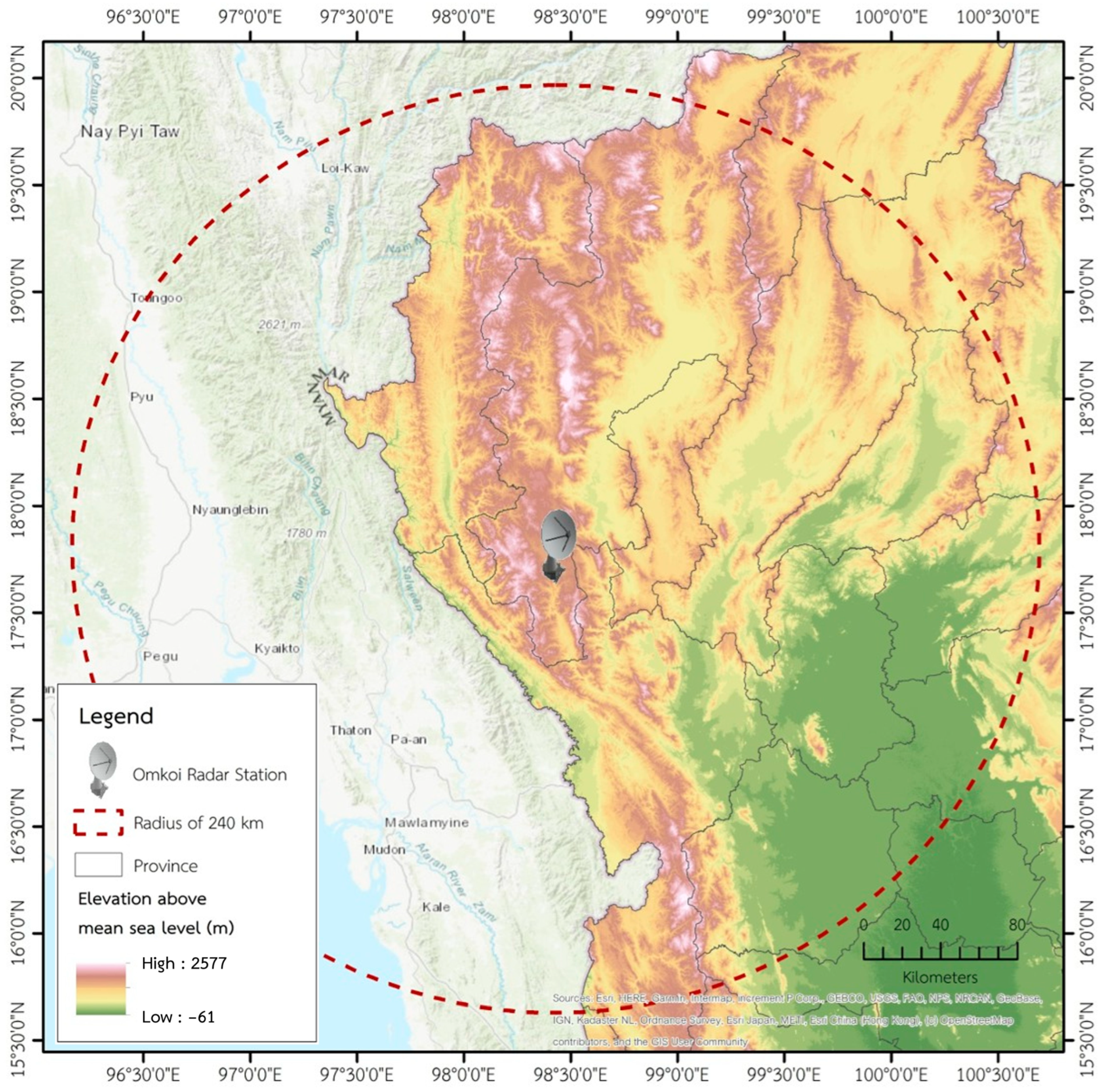
Northern Thailand is a geographically distinct region characterized by mountainous terrain and a well-defined tropical climate. Geographically, it is approximately bounded by the latitudinal range of 17° N to 20.5° N and the longitudinal range of 97° E to 102° E. Its northern extent borders eastern Myanmar, and its southern limit merges with the central plain of Thailand. The specific study area is defined by the effective coverage of the Omkoi weather radar, encompassing the western side of northern Thailand and adjacent areas in eastern Myanmar (Figure 1). This region is critically affected by the onset and progression of the SWM.
The region experiences three well-defined seasons throughout the year, each with distinct meteorological characteristics and precipitation patterns [20]:
  • Winter season (November–February): Influenced by the northeast monsoon (NEM), this period is characterized by cooler temperatures, particularly in the mornings and at higher altitudes, with low humidity. Rainfall is minimal, with an average accumulated precipitation of approximately 20–50 mm (or 0.8–2 inches) for the entire season.
  • Summer season (March–May): Temperatures significantly increase, often reaching their peak in April and May, accompanied by higher humidity. This is typically the driest part of the year before the main monsoon onset, with average accumulated precipitation ranging from approximately 80–150 mm (or 3–6 inches) for the entire season, often occurring as isolated pre-monsoon thunderstorms and hailstorm occurrences.
  • Rainy season (June–October): Dominated by the SWM, this period brings the majority of the region’s annual precipitation. While typically characterized by heavy, but often brief, afternoon showers and thunderstorms rather than continuous rain, the average accumulated precipitation for this season is substantial, ranging from approximately 900–1200 mm (or 35–47 inches).
These distinct seasonal patterns play a crucial role in dictating the formation, characteristics, and evolution of warm clouds in northern Thailand, which is the focus of this investigation.

2.2. Data Acquisition and Derived Parameters

This four-year analysis (2021–2024) of warm cloud events in northern Thailand utilizes S-band radar reflectivity data compiled by the Department of Royal Rainmaking and Agricultural Aviation (DRRAA). The data were collected using a dual-polarization S-band weather radar situated at Omkoi station in Chiang Mai province (1173 m MSL). The S-band Doppler radar was selected for its optimal balance between range and reflectivity sensitivity, enabling the effective detection of rain clouds up to a 240 km radius. The continuous radar observations were instrumental in analyzing warm cloud properties, specifically their formation, evolution, and rainfall characteristics across the northern region of Thailand. The Omkoi radar station is situated at 1173 m MSL on a prominent mountain peak. This high-elevation siting is critical as it minimizes beam blockage and the ‘shadow cone’ effect commonly associated with complex orography. The radar maintains clear lines of sight across the western side of northern Thailand and eastern Myanmar. Any minor localized blockage in deep valleys is mitigated by the TITAN algorithm’s requirement for vertical and temporal continuity across volume scans; cells that cannot be tracked in three dimensions are automatically filtered, ensuring the final dataset (N = 20,493) represents fully observable cloud lifecycles.
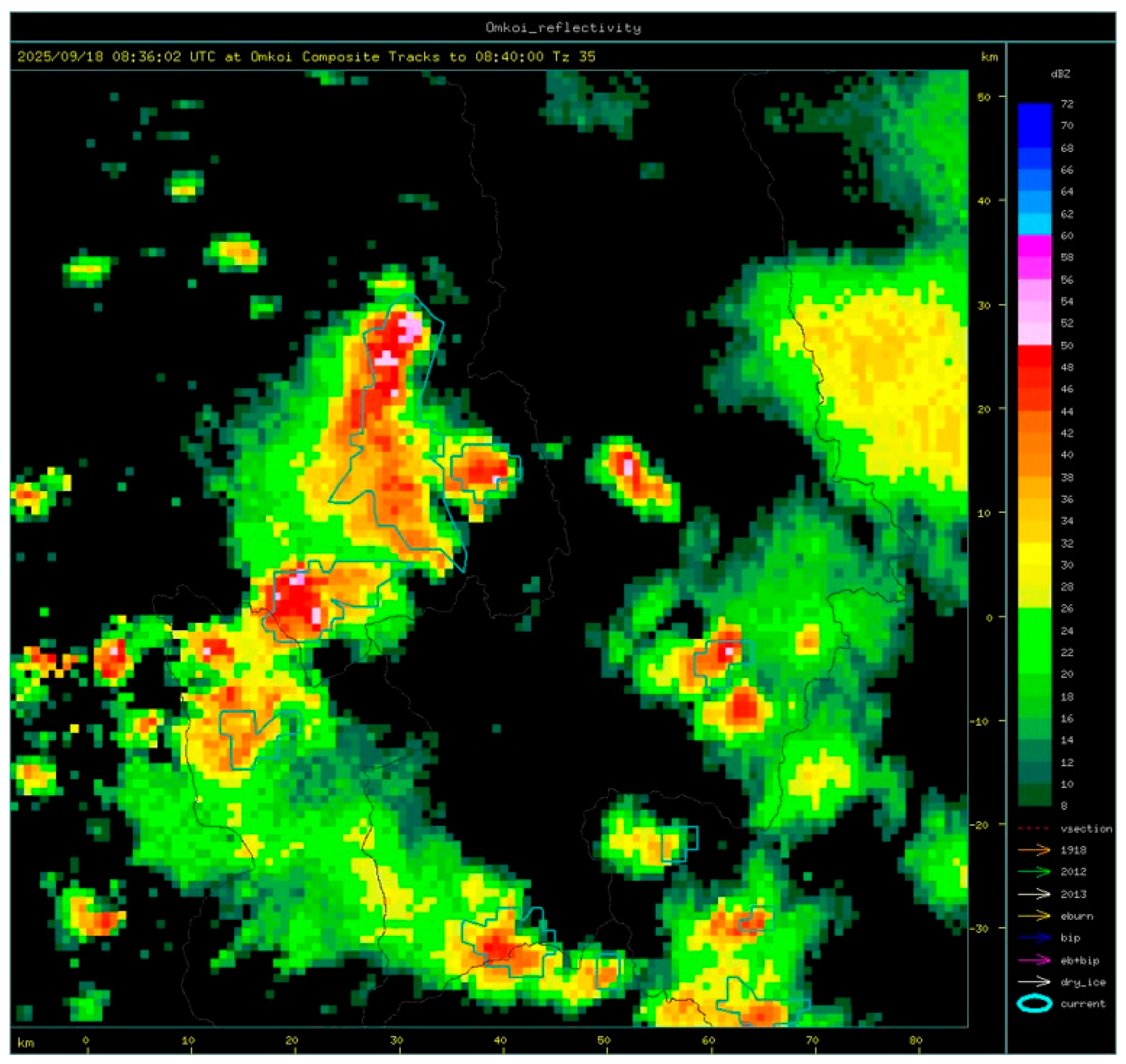
The radar, operating with Rainbow5 software, executed volume scans every six min. Each scan comprised 14 elevation angles (0.5°, 1.5°, 2.4°, 3.3°, 4.2°, 5.2°, 6.2°, 7.5°, 8.7°, 10.0°, 12.0°, 14.0°, 16.7°, and 19.5°), achieving a maximum altitude of 20 km. To ensure high data quality, raw data underwent rigorous preprocessing: ground clutter and fixed echoes were meticulously removed through standard radar data calibration and Doppler filtering techniques. Standard radar calibration was performed to ensure reflectivity accuracy within ±1 dBZ. For beam-blockage treatment, the radar’s elevation at 1173 m MSL helps avoid major terrain obstacles at the lowest scan angle (0.5°). Remaining partial blockage was addressed using the TITAN software [21]’s interpolation algorithms, and any cloud event with a tracking gap exceeding 6 min was excluded to ensure track continuity. The DRRAA utilizes these dual-polarization S-band weather radars as an operational component of Thailand’s cloud seeding program. The continuous volume scans provide the necessary temporal and spatial data for assessing cloud strength, vertical profiles, and time-dependent variations. Cloud characteristics were subsequently derived using the Rainbow and TITAN software packages (Figure 2). Specifically, the TITAN tracking and analysis were performed using the lrose-core-20250811 release, which is part of the LROSE (Lidar Radar Open Software Environment) framework (available at https://github.com/NCAR/lrose-core (accessed on 15 January 2026)). Parameter extraction adhered to the established criteria for dual-polarization radar data as outlined by Chantraket, Detyothin [13]. Twelve key parameters were extracted from the TITAN’s storm track analysis to characterize each observed warm cloud event, as detailed in Table 1. To ensure methodological consistency across the 20,493 events analyzed, we utilized a fixed configuration of the TITAN tracking algorithm. By applying a singular, standardized 3D-tracking logic, the observed seasonal and kinematic differences are guaranteed to be products of atmospheric variability rather than methodological bias. The 6-min scan interval is specifically optimized to capture the rapid lifecycle of tropical warm clouds, providing high temporal reliability for this region.

2.3. Warm Cloud Event Data Selection

For the analysis of warm cloud events spanning the 2021–2024 period, data were meticulously selected from extensive radar observations and balloon soundings conducted by the Department of Royal Rainmaking and Agricultural Aviation (DRRAA) at Omkoi station in northern Thailand. The comprehensive dataset covered 1461 days from 2021 to 2024 and included daily balloon sounding data collected specifically at 00 UTC. To ensure the accurate identification and suitability of data for in-depth warm cloud analysis, events were chosen from complete storm tracks generated by TITAN analysis based on the following primary criteria:
  • Warm cloud identification: For the purpose of this climatological analysis, a warm cloud event was tracked and selected once its radar reflectivity reached a threshold of 35 dBZ [22]. This threshold was utilized as an objective criterion to identify convective systems that had reached a mature stage characterized by developed precipitation-sized hydrometeors, which is a critical operational benchmark for Royal Rainmaking (DRRAA) cloud seeding activities. Crucially, for an event to be classified as a warm cloud, its maximum cloud top height could not exceed the seasonal average height of the 0 °C isotherm (melting level) for the 2021–2024 period. These melting levels, determined from the Omkoi balloon sounding data, were established as 5.4 km for summer, 5.2 km for the rainy season, and 5.0 km for winter.
  • Data coverage: The cloud’s entire development period, from its initiation to its final dissipation, had to be continuously observed and wholly contained within the operational range of the Omkoi weather radar.
These rigorous criteria ensured the precise identification of warm cloud characteristics, providing a robust foundation for studying their properties and behavior within the northern Thailand context. A total of 20,493 warm cloud events were successfully selected from the TITAN analysis. To improve readability, the relative frequency of these events is provided as follows: the rainy season contributed the vast majority of cases (16,943 events; 82.68%), followed by the summer season (3168 events; 15.46%), and the winter season (382 events; 1.86%) (Table 2).

Sensitivity Analysis of Selection Threshold

The 35 dBZ reflectivity threshold and seasonal melting-level cutoffs (5.4 km summer, 5.2 km rainy, 5.0 km winter) were established based on established criteria for precipitation-sized hydrometeor detection in tropical warm clouds. To assess methodological robustness, a sensitivity analysis was conducted on a subset of the data. Lowering the threshold to 30 dBZ increased event counts (N) by ~15% by capturing weaker, pre-precipitation cells, while raising it to 40 dBZ reduced the sample size by ~21%. However, the core findings—specifically the uniformity of mean duration (~26 min) and microphysical intensity—remained statistically stable, confirming the 35 dBZ criterion as a reliable climatological benchmark.

3. Warm Cloud Analysis and Discussion

This section presents the detailed data and statistical analysis (Appendix A, Table A1) of warm cloud events observed over northern Thailand from 2021 to 2024. The objective is to characterize warm clouds based on their properties (vertical, size, duration), kinematics (speed, movement), and occurrence (frequency and seasonal distribution). The parameters derived from the S-band dual-polarization radar data used for this characterization are summarized in Table 1.

3.1. Properties and Characteristics of Warm Clouds

This section analyzes the fundamental properties and characteristics of warm clouds in northern Thailand, examining key attributes such as their vertical structure, microphysical intensity, and size across the three distinct seasons (summer, rainy, and winter). The statistical data and seasonal frequency distribution demonstrate that the properties of these clouds are significantly modulated by the characteristic tropical monsoonal climate of Thailand. Observed differences in cloud size, vertical development, and movement are intrinsically linked to the seasonal shifts in atmospheric instability and the large-scale wind patterns associated with the SWM and NEM.

3.1.1. Vertical Development and Cloud Size

The vertical and volumetric characteristics of warm clouds show a clear dependence on the seasonal thermodynamic profiles typical of monsoonal influence on convective instability in Thailand [13].
Cloud Top and Base Heights (WTOP, WBAS)
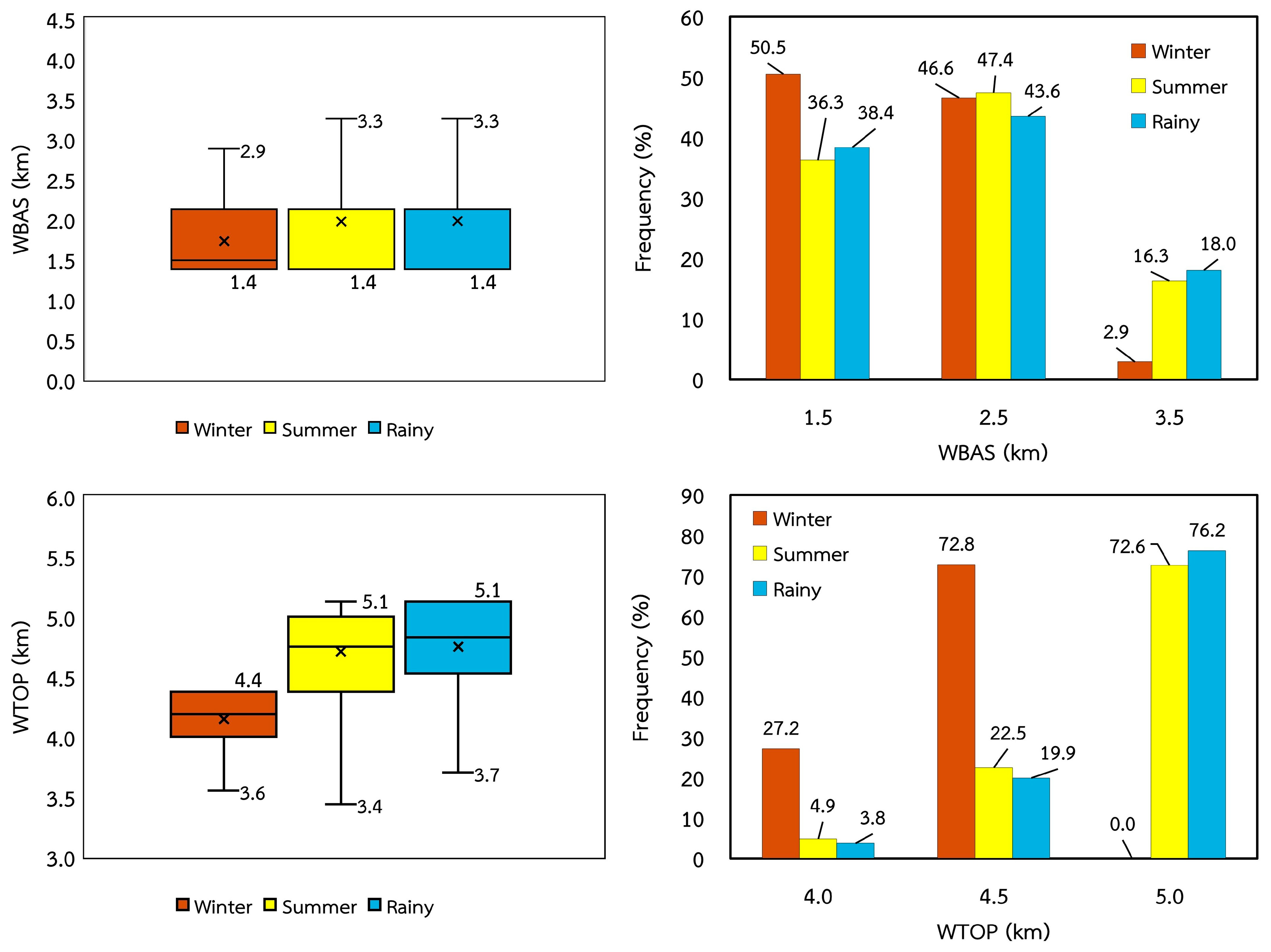
The mean WTOP and WBAS are distinctly greater in the summer and rainy seasons compared to winter (Figure 3). This seasonal contrast primarily reflects the influence of the Southwest Monsoon (SWM), which transports warm, moist air into the region, thereby facilitating deeper convection. The frequency distribution confirms this pattern, showing that over 72.57% of summer events reach a top height above 5 km, whereas this percentage is notably lower in winter, highlighting the seasonal suppression of deep convection. Furthermore, the comparatively slower cloud movement observed in summer suggests a plausible physical interpretation where deeper convective columns are subject to greater vertical wind shear, potentially influencing the net steering speed.
Conversely, the significantly lower heights observed in winter (November to February) are consistent with the drier, cooler air mass brought by the NEM, which limits the potential for deep convection [23]. The analysis of the WBAS distribution (Figure 3) shows that the percentage of clouds with bases in the highest bin (≥3.5 km) is remarkably high in winter (48.82%) compared to the warmer seasons, confirming the influence of drier air in increasing the Lifting Condensation Level (LCL).
Volume and Mass (WVOL, WMAS) and Horizontal Extent (WARE)
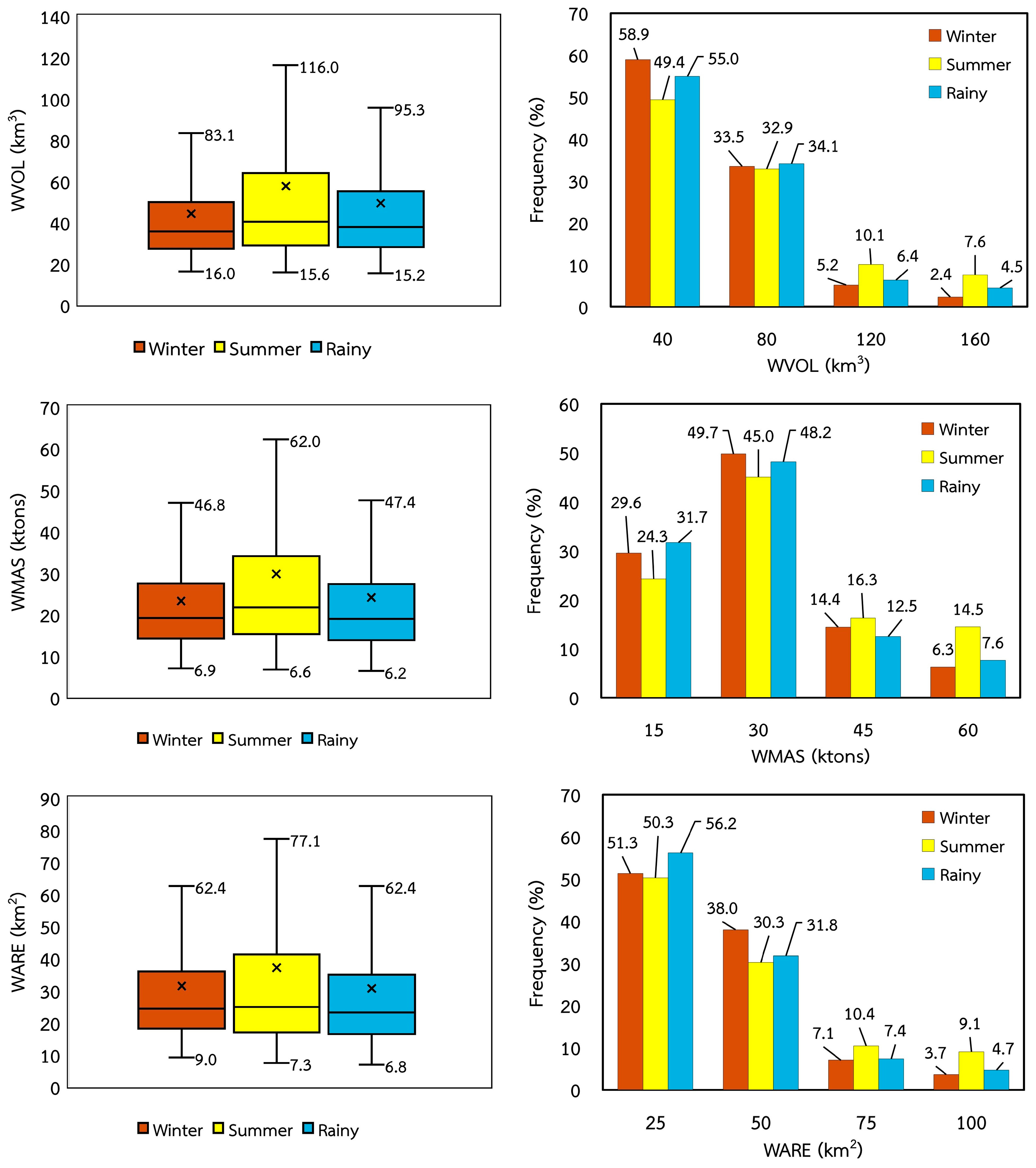
The maximal mean WVOL (57.47 km3) and WMAS (29.66 ktons) occur during the summer seasons, reflecting the enhanced vertical development and higher atmospheric moisture content during the pre-monsoon and monsoon periods (Figure 4). The mean WVOL (49.11 km3) and WMAS (24 ktons) in the rainy season show values between the summer and winter seasons. This dominance is a direct consequence of the enhanced vertical development and higher atmospheric moisture content during these wet periods, supporting the accumulation of larger cloud water masses. The reduced WVOL and WMAS in winter (mean WVOL = 40.59 km3; mean WMAS = 20.68 ktons) are indicative of shallower boundary layers and weaker updrafts, which fundamentally limit the overall accumulated water mass [5]. The maximum observed WMAS in winter (67.37 ktons) is substantially lower than the extremes recorded in summer (718.63 ktons), demonstrating the limited potential for high liquid water content during the cool season. It should be noted that these peak winter values represent rare meteorological outliers occurring during isolated moisture incursions, as the vast majority of winter events remain significantly closer to the seasonal mean of 20.68 ktons. This finding is consistent with regional studies indicating that warm clouds in northern Thailand contain a larger cloud droplet effective radius during the wet season [23].
In contrast, the mean WARE shows a high degree of seasonal stability, varying narrowly from 27.28 km2 (winter) to 37.04 km2 (summer). This small variation suggests that the horizontal scale of the convection-triggering mechanism in the boundary layer is relatively invariant across seasons. The stability of WARE and the consistently short WDUR reinforce the identification of these events as localized, short-lived convective cells typical of tropical environments [24].

3.1.2. Cloud Intensity and Duration

The internal intensity and temporal properties of the clouds are remarkably uniform across all seasons, suggesting that the underlying microphysical efficiency remains stable once a convective cell is established.
Maximum Reflectivity (WREF)
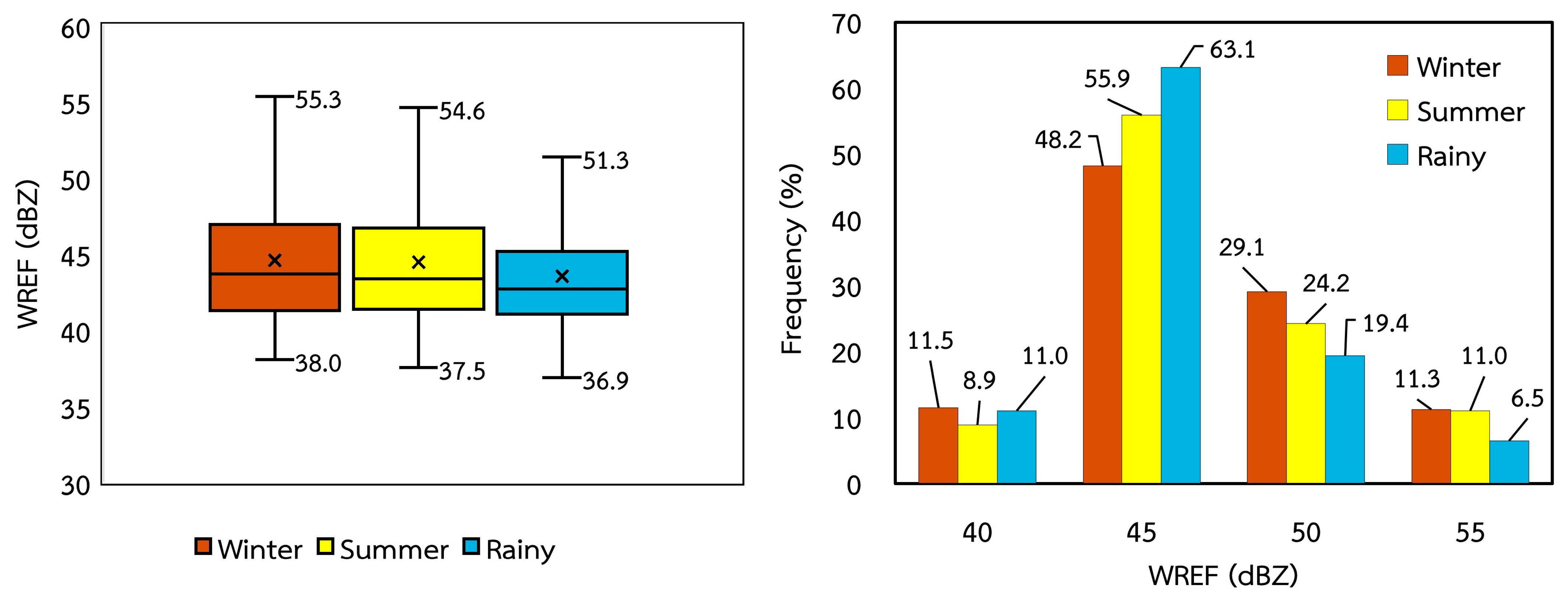
The WREF, a robust proxy for the concentration and size of precipitation-sized hydrometeors [11], shows negligible seasonal variation (Figure 5). Mean values range narrowly from 43.51 dBZ (rainy) to 44.43 dBZ (summer). This stability implies that the coalescence-accretion process, which dominates warm rain formation, reaches a similar peak efficiency across all seasons. The high frequency of observations within the 40 dBZ to 50 dBZ bins (over 80% of cases in all seasons) confirms the consistency of intense precipitation cores. The remarkable seasonal stability of WREF (43.51–44.43 dBZ) suggests that the convective updraft strength required to produce precipitation-sized droplets is a threshold consistently met in this tropical environment. This highlights a ‘highly efficient’ warm-rain process, where collision-coalescence dynamics rapidly reach peak reflectivity regardless of the large-scale monsoonal phase, provided the cloud top remains below the 0 °C isotherm. This stability suggests that the microphysical engine of warm rain is highly efficient and largely unconstrained by the seasonal shifts in the background atmosphere.
Duration (WDUR)
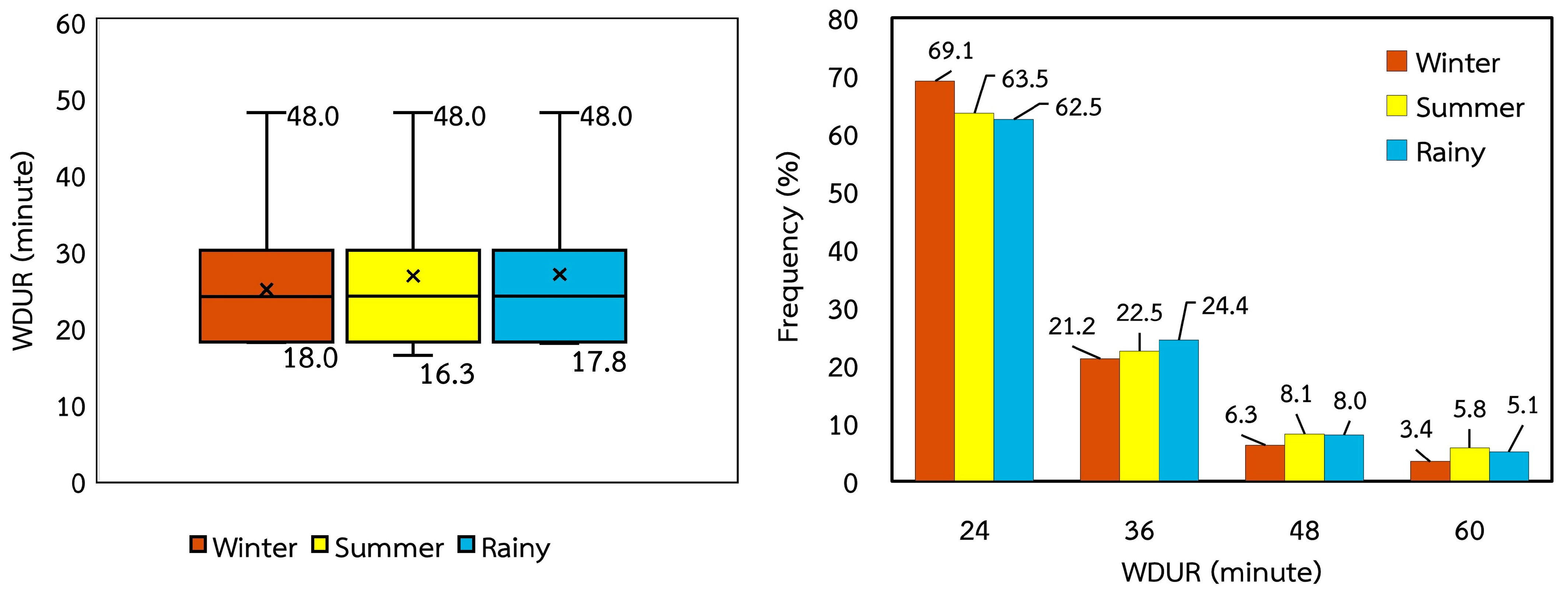
The mean WDUR is consistently short, approximately 0.44 h (or 26 min) in the warmer seasons and slightly less in winter (Figure 6). The distribution confirms that over 90% of events in winter, and over 80% in summer/rainy, last 0.6 h or less. This characteristic of warm, non-glaciated clouds often reflects their relatively brief life cycle, which is typically terminated by rapid precipitation fallout and the subsequent dissipation of the convective element. The short duration and high WREF are signatures of high-intensity, short-pulse precipitation common in tropical convection [24].

3.2. Kinematics: Cloud Movement

Cloud kinematics—the study of motion irrespective of mass or force—is the aspect of warm cloud dynamics that demonstrates the clearest seasonal differentiation, directly reflecting the modulation of atmospheric flow by both large-scale monsoonal patterns and local topographical effects [25]. The movement characteristics, including speed and direction, define the evolutionary pathway of these transient convective systems across the domain.

3.2.1. Mean Speed (WSPD)

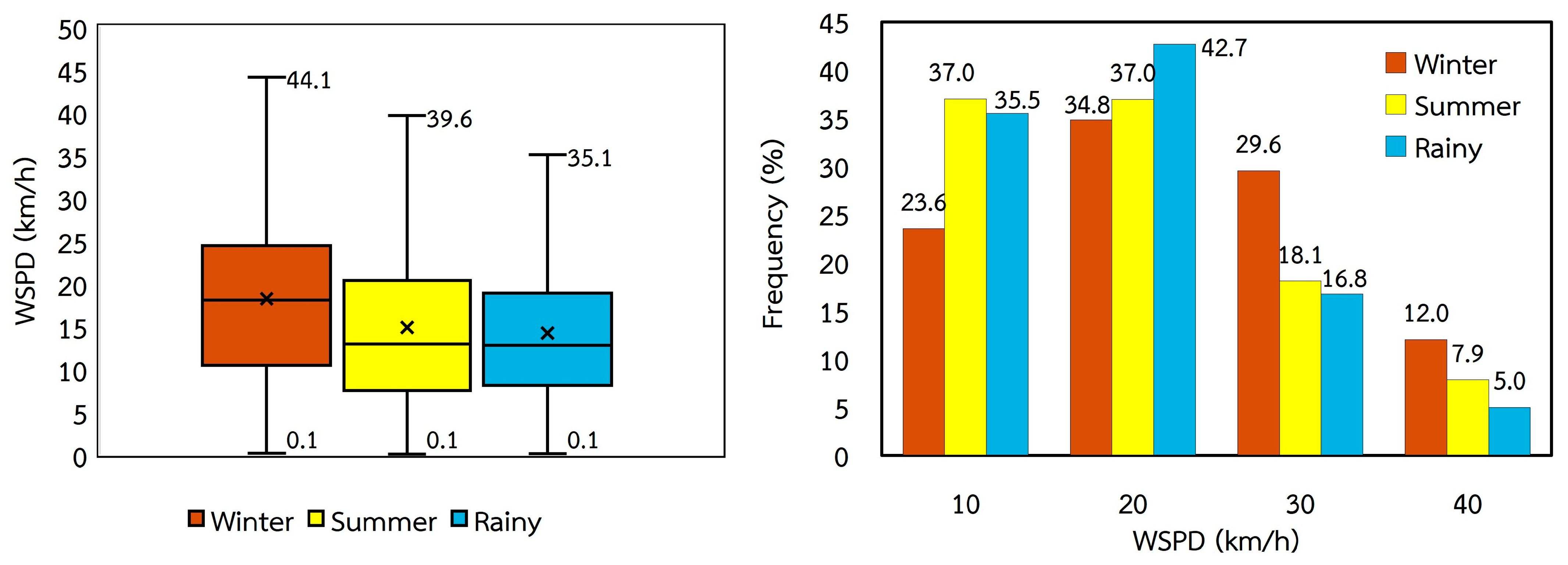
The mean WSPD shows a significant seasonal variance. Clouds move fastest during winter (mean WSPD = 18.38 km/h), a speed substantially higher than the mean speeds recorded in the rainy (14.20 km/h) and summer (14.86 km/h) seasons. This acceleration in the cool, dry season is primarily attributed to a stronger and more uniform lower-tropospheric flow associated with the continental NEM. The frequency distribution of mean speeds (Figure 7) corroborates the seasonal variance, with winter events showing a distinct shift toward the fastest bin (>40 km/h at 12.04%). This kinematic behavior may be inferred as the result of winter clouds remaining within a more uniform, lower-tropospheric flow. Furthermore, the reduced vertical development characteristic of winter clouds limits their interaction with potentially weaker, slower winds aloft, ensuring the lower-tropospheric steering mechanism remains dominant and less attenuated. Conversely, the comparatively slower speeds observed in the warmer months suggest that the deeper convection is subjected to greater vertical wind shear, which effectively reduces the net steering speed across the cloud column.

3.2.2. Direction (WDIR) and Lifetime Constraints

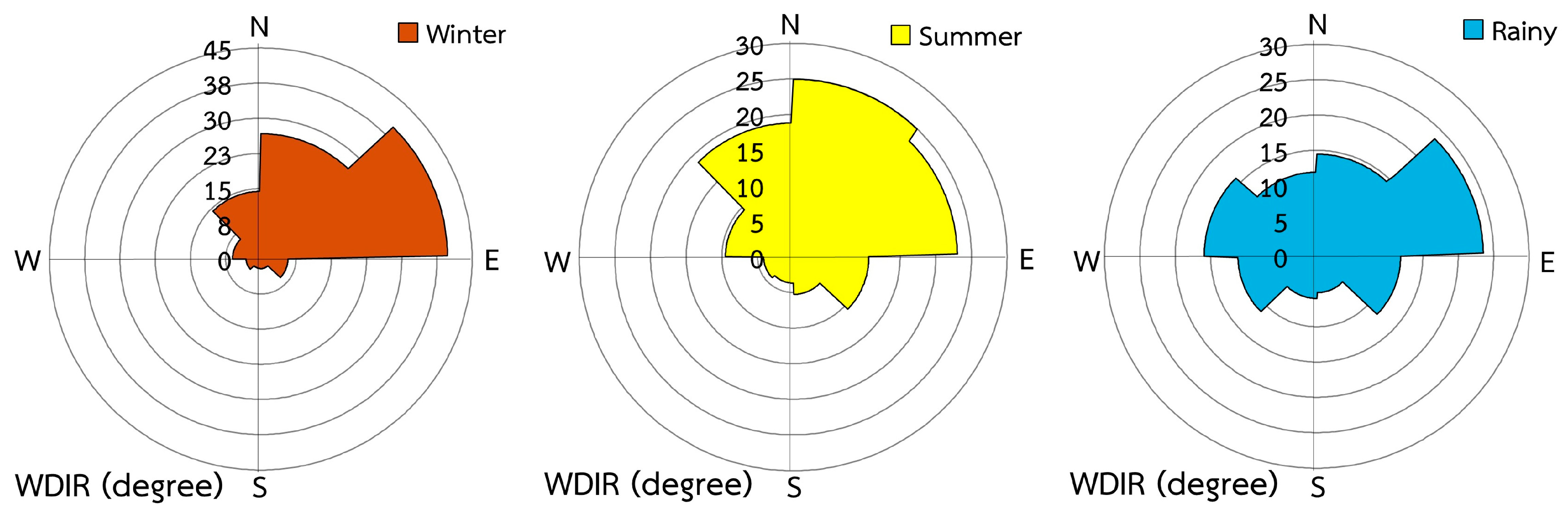
The spatial orientation of cloud movement, illustrated in the seasonal direction clusters of Figure 8, reveals significant variability. The winter flow exhibits the highest organizational coherence, with over two-thirds of events (66.49%) concentrated in the northerly to northeasterly quadrants (0–90°), which aligns with the synoptic influence of the NEM. The most significant kinematic finding is the pervasive directional chaos evident across all seasons, quantified by the high standard deviation (SD) in mean WDIR (exceeding 112° in all seasons), which indicates highly variable and non-uniform steering. The high standard deviation (SD > 112°) across all seasons indicates that steering is non-uniform. As detailed in Table A2, the substantial differences between mean and median directions—particularly in summer (54.61°) and winter (77.93°)—further quantify this directional chaos. In winter, while the median flow aligns with the NE Monsoon (78.06°), the high SD and scattered mean suggest that local mountain-valley winds frequently override the synoptic steering during the clouds’ short lifetimes. In summer, the maximal scattering (SD = 123.78°) is likely a result of intense diurnal thermal forcing on the boundary layer, which prevents a consistent steering pattern from dominating. This directional chaos, particularly evident in the large difference between the mean and median directions, likely reflects the frequent influence of local, terrain-induced circulations (e.g., sea breezes, mountain/valley winds) common in northern Thailand. These local circulations modulate the larger-scale monsoonal flow, preventing a single, consistent steering pattern from dominating the cloud movement [26]. The most scattered directions are observed in summer (SD = 124.82°), potentially due to the greatest influence of diurnal thermal forcing and local effects on the boundary layer during the hottest months. The seasonal direction clusters (Figure 8) are highly relevant:
  • The winter flow exhibits the highest organizational coherence, with over two-thirds of events (66.49%) concentrated in the northerly to northeasterly quadrants (0–90°), confirming the dominant influence of the NEM.
  • In the rainy season, directions are more widely distributed but still cluster around two main axes: 23.54% in the northeasterly sector (45.1–90°) and 15.92% in the northwesterly sector (270.1–315°), reflecting a complex dynamic interaction between the prevailing Southwesterly Monsoon and local flow channels.
  • Summer, with the highest SD (124.82), the movement is concentrated in the northerly quadrants (0–90° at 47.98%), shows maximum scattering, likely due to the greatest influence of diurnal thermal forcing on the boundary layer.
This kinematic instability is amplified by the inherent evolutionary characteristic of a short lifetime. The consistently short mean duration (WDUR ~0.44 h) of these events is a crucial evolutionary constraint; the entire process from initiation to dissipation occurs within a short time window. This transience, coupled with the high directional variability, poses a critical operational challenge for cloud modification strategies, as it severely limits the time available for both forecasting the cloud’s trajectory and effectively delivering and tracking seeding agents over a target area. The radar-based quantification of this kinematic uncertainty is thus vital for refining localized precipitation models and optimizing strategic intervention windows.

3.3. Occurrence: Spatial Distribution and Frequency of Warm Clouds

This section systematically analyzes the temporal distribution of warm cloud events, elucidating the critical role of regional climate dynamics in modulating their formation and prevalence. By examining the seasonal and monthly occurrence frequencies, as well as the diurnal distribution, we gain essential insights for regional climate and precipitation modeling. The analysis conclusively establishes the monsoonal climate as the primary thermodynamic modulator for warm cloud occurrence.

3.3.1. Seasonal and Monthly Occurrence Frequency

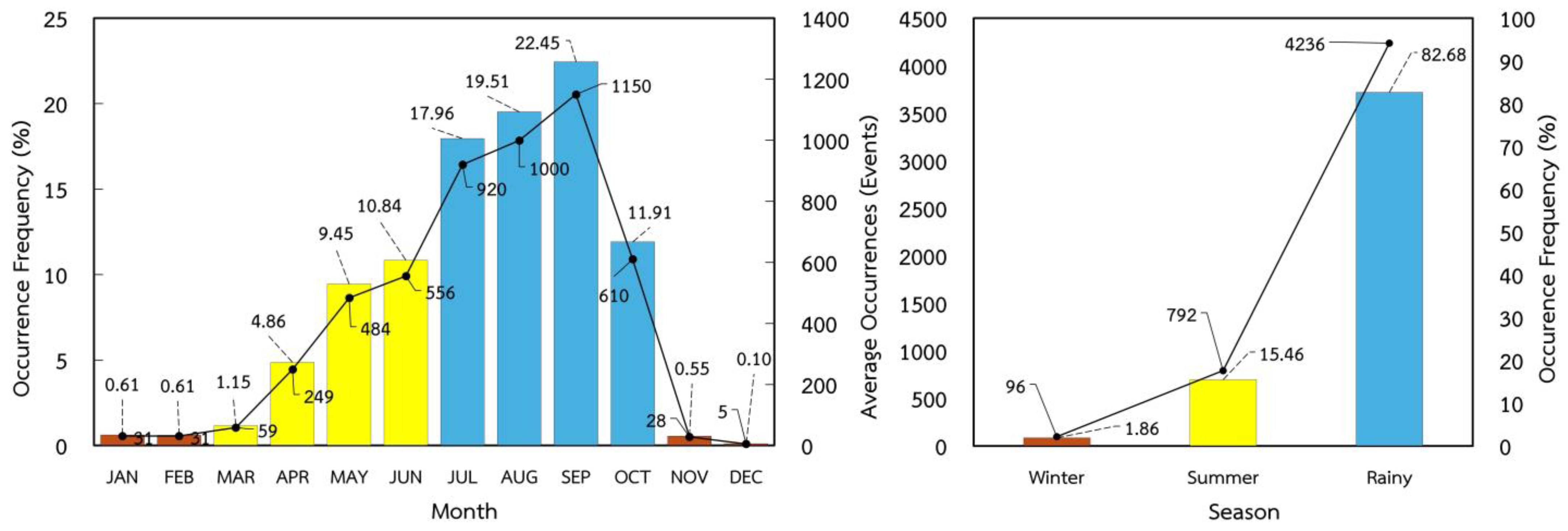
This section analyzes the temporal distribution of warm cloud events, establishing the regional monsoonal cycle as the primary driver behind their frequency and seasonality. The data confirm a pronounced seasonal and monthly disparity in warm cloud event frequency, driven unequivocally by the regional monsoonal cycle (Table 2 and Figure 9).
The rainy season accounts for the vast majority of observations, contributing an overwhelming 82.68% of the total events. This dominance is directly attributable to the persistent influence of the Southwest (SW) Monsoon, which sustains a deep layer of warm, moist air and maximizes atmospheric instability, satisfying the necessary thermodynamic criteria for the vigorous initiation and persistence of non-glaciated (warm) convection. Conversely, the winter season records the lowest frequency (1.86%), consistent with the stable, dry, and cool air mass associated with the NEM. This winter air mass effectively suppresses convective initiation, rendering the atmosphere unfavorable for widespread warm cloud formation. The summer season exhibits an intermediate frequency (15.46%), indicating that while the full monsoonal influence is absent, localized daytime heating and other pre-monsoon convective mechanisms play a significant role during this transitional period.
The monthly progression reveals a clear alignment with the core monsoonal phase. Peak activity occurs during the three-month period of September (22.45%), August (19.51%), and July (17.96%), which aligns precisely with the core phase of the SWM. This period provides the maximum supply of atmospheric moisture and instability, driving the highest frequency of warm cloud events. The fact that the maximum warm cloud frequency occurs in September, rather than the heart of the monsoon in July/August, underscores the dominance of monsoonal flow dynamics and local effects over a simplified Intertropical Convergence Zone (ITCZ) position. While the ITCZ—the global belt of atmospheric convergence—is the planetary-scale mechanism that drives the monsoon’s seasonality, the SWM is the operational system of influence over Thailand [3]. The ITCZ often migrates to Southern China during mid-summer (late June to mid-July), temporarily reducing rainfall over parts of Thailand (the “rain break”). The high September frequency reflects the powerful return of the deep monsoonal flow, its sustained moisture, and its interaction with local topography after the ITCZ has retreated south of its northernmost limit, demonstrating that these regional monsoonal dynamics are the most relevant mechanisms explaining the high frequency of warm clouds [3]. The rapid increase in frequency from April to June and the sharp decline from October to December clearly trace the onset and retreat of the monsoonal flow, transitioning between the dry, stable conditions of winter and the convectively active rainy season. Conversely, the lowest frequencies are concentrated in the established winter months (December, November, January, and February), underscoring the severe convective suppression during the dry season.

3.3.2. Diurnal (Daytime vs. Nighttime) Distribution

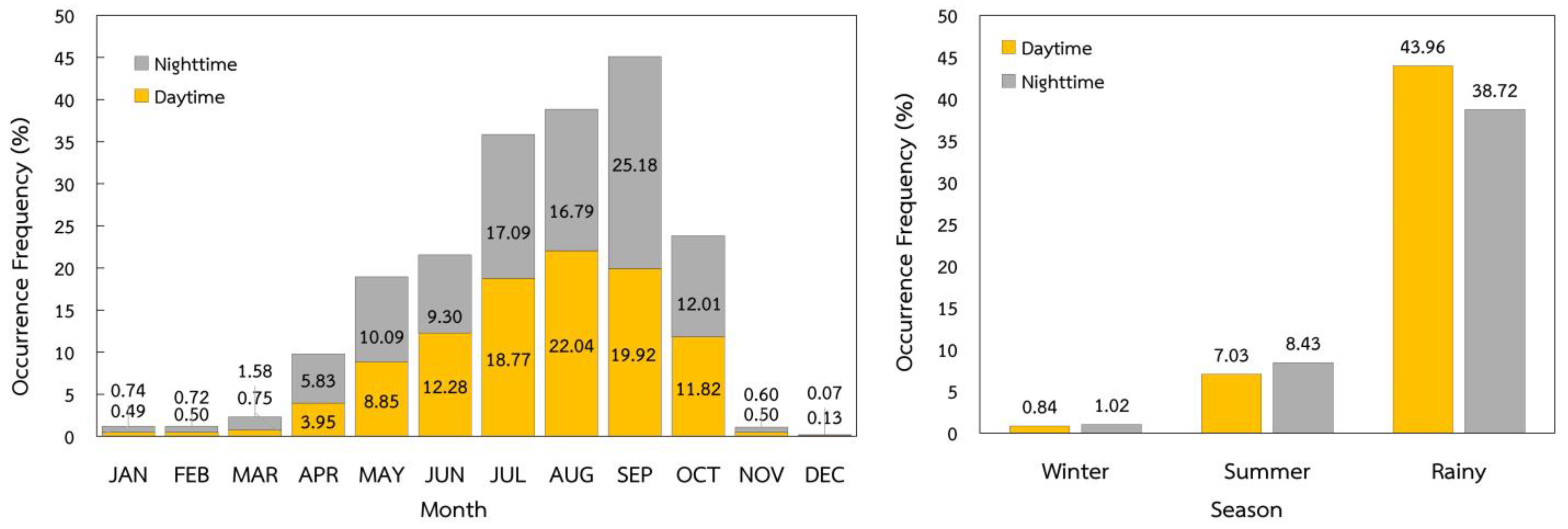
Analyzing the distribution between day and night (Figure 10) provides crucial insights into the relative influence of local surface heating versus larger-scale dynamic forcing.
Overall, warm cloud events show a slightly higher, yet near-equal, occurrence during the Daytime (51.81%) compared to the Nighttime (48.19%). This near-balance suggests that both solar heating (convective forcing) and mesoscale or synoptic forcing (e.g., convergence zones, nocturnal low-level jets) are significant drivers of warm cloud formation. Within the rainy season, the minimal difference between day (43.95%) and night (38.73%) suggests that the strong, persistent synoptic forcing of the SWM is sufficiently powerful to generate warm clouds even in the absence of insolation-driven boundary layer heating. Conversely, both the summer and winter seasons exhibit a slightly, but distinctly, higher Nighttime frequency (winter: 1.02% vs. 0.84%; summer: 8.44% vs. 7.02%). This is a critical finding, indicating that during periods of weak convective activity, nocturnal forcing mechanisms, such as elevated instability from low-level jets or radiative cooling over cloud tops, may become the dominant triggers for the few warm cloud events that form.
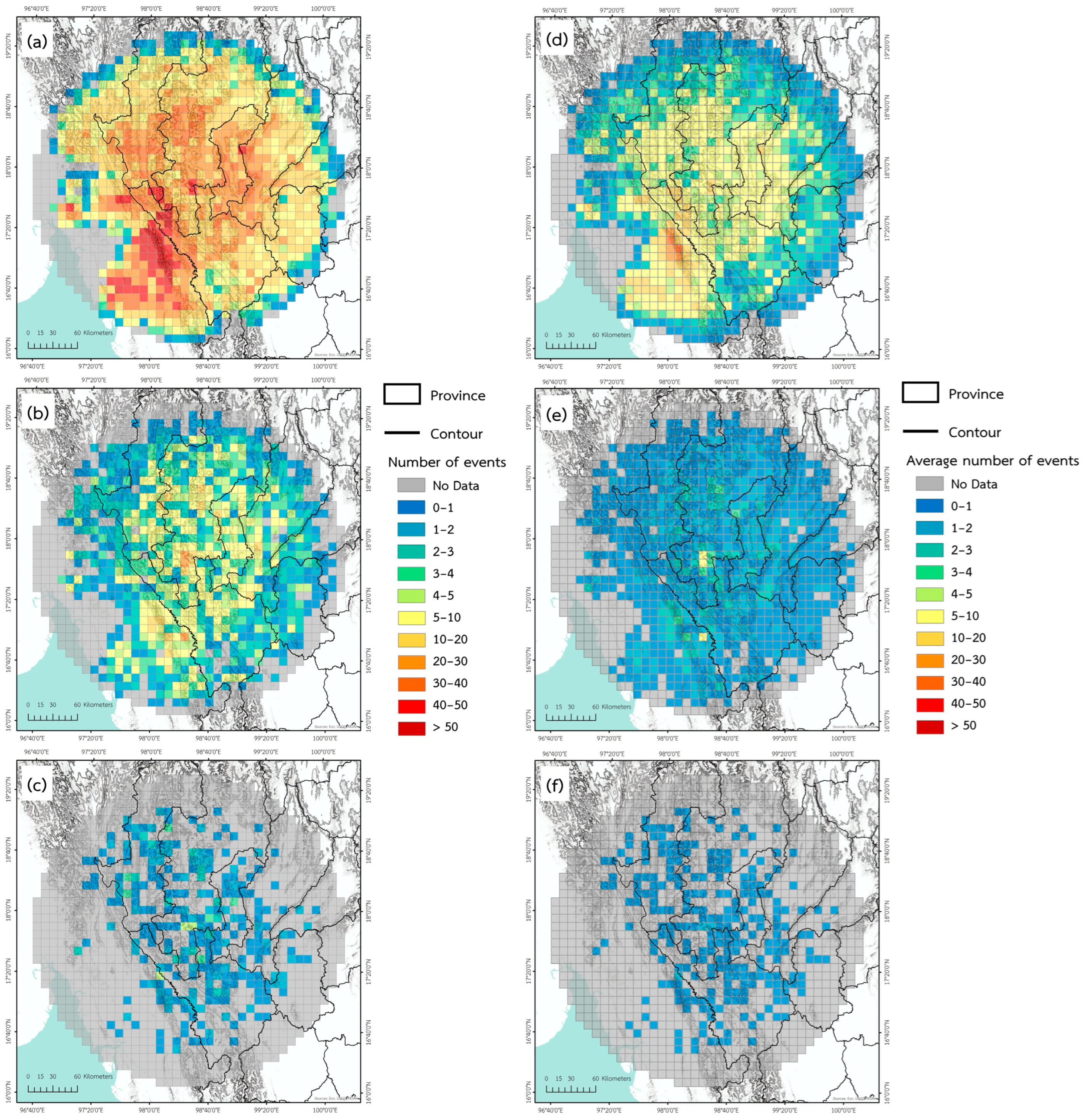
However, the density and breadth of these initiation centers are intrinsically modulated by the seasonal shifts in background atmospheric conditions (Figure 11). During the rainy Season, the high atmospheric moisture and instability associated with the SWM allow for widespread coupling with topography, resulting in the highest density and broadest geographical spread of events across multiple mountain ranges. The summer pattern, while still terrain-locked, shows more distinct, localized maxima, reflecting the need for intense, localized diurnal thermal forcing to break the stability cap during the hottest months. In sharp contrast, the winter distribution shows minimal overall event frequency, with occurrences strictly limited to the major mountain barriers, indicating that only the strongest sustained mechanical lifting is sufficient to overcome the suppression imposed by the stable, dry air mass of the NEM. This stratification confirms that while topography dictates where clouds form, the monsoon dictates how many events occur and how robustly they develop [27,28,29,30].

4. Conclusions

This study provided a comprehensive, four-year (2021–2024) analysis of warm cloud characteristics in northern Thailand, leveraging dual-polarization S-band radar data to quantify the influence of the region’s monsoonal climate and complex topography. The key findings offer critical insights into the regional meteorology by addressing the clouds’ properties, kinematics, and occurrence:
  • Warm cloud properties (size, intensity, and duration): Despite massive seasonal shifts in frequency and cloud size, the clouds’ internal microphysical intensity (maximum reflectivity) and mean duration (~26 min) show minimal seasonal variation. This consistency confirms that the warm rain process is highly efficient but short-lived, characterizing the events as high-intensity, short-pulse convection.
  • Warm cloud kinematics (speed and direction): Cloud movement speed is notably highest in the winter (WSPD ~18.38 km/h), correlating with the stronger, more uniform NEM flow. Crucially, the high directional chaos across all seasons underscores the prevalent role of local, terrain-induced circulations (like mountain/valley winds) that complicate trajectory forecasting.
  • Warm cloud occurrence (temporal and spatial distribution): The rainy season is overwhelmingly dominant (82.68% of events), directly reflecting the maximized instability and moisture supply from the SWM. The spatial distribution confirms that warm cloud initiation is inextricably linked to elevated, mountainous terrain, establishing orographic lifting as the mandatory mechanical mechanism for triggering convection.
These findings offer direct strategic value for cloud seeding operations managed by the DRRAA. Given the short mean duration (~26 min) and high kinematic uncertainty (SD > 112°), successful intervention requires a pre-positioning strategy. Seeding aircraft should be deployed to target orographic initiation centers—identified here as persistent topographical maxima—prior to peak diurnal heating to maximize the limited intervention window of these transient systems. In summary, the research concludes that topography provides the mandatory mechanical trigger, but the monsoon dictates the thermodynamic potential, thereby controlling the overall scale, frequency, and kinematic pathways of warm cloud development. The short mean duration and high kinematic uncertainty of these intense, localized events present a significant operational challenge for cloud modification and localized forecasting, highlighting the critical need for future research that couples high-resolution radar data with advanced numerical weather prediction models to resolve local flow dynamics and optimize the time-critical window for intervention.

Author Contributions

Conceptualization, P.C. and P.I.; methodology, P.C.; software, P.I.; validation, P.I. and P.C.; formal analysis, P.C.; investigation, P.I.; resources, P.C. and P.I.; data curation, P.C. and P.I.; writing—original draft preparation, P.C.; writing—review and editing, P.I.; visualization, P.I.; supervision, P.C.; project administration, P.C. All authors have read and agreed to the published version of the manuscript.

Funding

This research received no external funding. The data and facilities were provided by the Department of Royal Rainmaking and Agricultural Aviation (DRRAA), Thailand.

Institutional Review Board Statement

Not applicable.

Informed Consent Statement

Not applicable.

Data Availability Statement

The radar and sounding data used in this study are the property of the Department of Royal Rainmaking and Agricultural Aviation (DRRAA). The raw datasets are not publicly available due to institutional data policies but may be requested from the corresponding author for academic purposes with permission from the DRRAA.

Acknowledgments

The authors gratefully acknowledge the Department of Royal Rainmaking and Agricultural Aviation (DRRAA) for providing the radar and upper-air balloon sounding data used in this research. We also thank Rungthip Nuangtawee for her assistance in geospatial data processing.

Conflicts of Interest

The authors declare no conflicts of interest.

Appendix A

Appendix A.1. Detailed Seasonal Statistical Summary of Warm Cloud Parameters (2021–2024)

Table A1. Comprehensive seasonal statistical summary of warm cloud properties and kinematics in Northern Thailand (2021–2024).
ParametersSeasonMeanMedianSDMinMax
WTOP (km)Summer (N = 3168)4.714.750.372.885.13
Rainy
(N = 16,943)
4.754.830.362.885.13
Winter
(N = 382)
4.194.230.213.634.38
WBAS (km)Summer (N = 3168)1.972.130.571.384.38
Rainy
(N = 16,943)
1.972.130.601.384.38
Winter
(N = 382)
1.681.380.401.382.88
WVOL (km3)Summer (N = 3168)29.6621.6129.786.59718.63
Rainy
(N = 16,943)
24.0018.8120.166.24445.62
Winter
(N = 382)
20.6818.2910.577.2267.37
WMAS (ktons)Summer (N = 3168)29.6621.6129.786.59718.63
Rainy
(N = 16,943)
24.0018.8120.166.24445.62
Winter
(N = 382)
20.6818.2910.577.2267.37
WARE (km2)Summer (N = 3168)37.0424.7542.467.311220.62
Rainy
(N = 16,943)
30.5523.0627.366.75718.88
Winter
(N = 382)
27.2824.1914.639.00102.38
WDUR (hour)Summer (N = 3168)0.440.400.210.271.90
Rainy
(N = 16,943)
0.450.400.200.301.91
Winter
(N = 382)
0.420.400.160.301.20
WREF (dBZ)Summer (N = 3168)44.4343.354.2137.5064.14
Rainy
(N = 16,943)
43.5142.683.4836.8761.83
Winter
(N = 382)
44.0142.174.8738.1258.32
WSPD (km/hr)Summer (N = 3168)14.8612.939.660.0558.51
Rainy
(N = 16,943)
14.2012.778.250.0958.41
Winter
(N = 382)
18.3818.029.570.8951.09
WDIR (degree)Summer (N = 3168)150.3795.76123.780.04359.97
Rainy
(N = 16,943)
167.38136.40112.370.01359.97
Winter
(N = 382)
155.9978.06131.620.79359.49

Appendix A.2. Statistical Analysis of Directional Variability

Table A2. Comparison of Mean and Median Cloud Directions by Season (2021–2024).
SeasonMean
WDIR (°)
Median
WDIR (°)
Difference (°)SDPrimary Steering Influence
Summer150.3795.7654.61123.78Diurnal thermal forcing & Orography
Rainy167.38136.4030.9811.37SW Monsoon &
Local flow channels
Winter155.9978.0677.93131.62NE Monsoon &
Strong mechanical lifting

References

  1. Buathong, K.; Moonchai, S.; Saenton, S.; Supapakorn, T.; Rojsiraphisal, T. Predictive Model for Northern Thailand Rainfall Using Niño Indexes and Sea Surface Height Anomalies in the South China Sea. J. Mar. Sci. Eng. 2024, 12, 35. [Google Scholar] [CrossRef]
  2. Satriagasa, M.C.; Tongdeenok, P.; Kaewjampa, N. Assessing the Implication of Climate Change to Forecast Future Flood Using SWAT and HEC-RAS Model under CMIP5 Climate Projection in Upper Nan Watershed, Thailand. Sustainability 2023, 15, 5276. [Google Scholar] [CrossRef]
  3. Chaiwino, W.; Chaisee, K.; Oonariya, C.; Wongsaijai, B. Analysis of long-term rainfall trend and extreme in upper northern Thailand. Sci. Rep. 2025, 15, 33380. [Google Scholar] [CrossRef] [PubMed]
  4. Lapyai, D.; Chotamonsak, C.; Chantara, S.; Limsakul, A. Developing a Composite Hydrological Drought Index Using the VIC Model: Case Study in Northern Thailand. Water 2025, 17, 2732. [Google Scholar] [CrossRef]
  5. Yau, M.K.; Rogers, R.R. A Short Course in Cloud Physics; Butterworth-Heinemann: Oxford, UK, 1996. [Google Scholar]
  6. Pruppacher, H.R.; Klett, J.D. Microphysics of Clouds and Precipitation; Springer: Dordrecht, The Netherlands, 1996. [Google Scholar]
  7. Silverman, B.A.; Sukarnjanaset, W. Results of the Thailand Warm-Cloud Hygroscopic Particle Seeding Experiment. J. Appl. Meteorol. 2000, 39, 1160–1175. [Google Scholar] [CrossRef]
  8. Battan, L.J. Radar Observation of the Atmosphere; University of Chicago Press: Chicago, IL, USA, 1973. [Google Scholar]
  9. Petpongpan, C.; Ekkawatpanit, C.; Kositgittiwong, D. Landslide risk assessment using hydrological model in the Upper Yom River Basin, Thailand. Catena 2021, 204, 105402. [Google Scholar] [CrossRef]
  10. Chantraket, P. Analysis of Pre-Hailstorm Parameters Using Radiosonde Data and Hailstorm Characteristics Based on Radar Data in Thailand. In Advancing Rainfall Science from Observational Frontiers to AI-Driven Technology; Ma, L.-M., Ed.; IntechOpen: London, UK, 2025. [Google Scholar]
  11. Bringi, V.N.; Chandrasekar, V. Polarimetric Doppler Weather Radar: Principles and Applications; Cambridge University Press: Cambridge, UK, 2001. [Google Scholar]
  12. Doviak, R.J.; Zrnić, D.S. Doppler Radar and Weather Observations, 2nd ed.; Doviak, R.J., Zrnić, D.S., Eds.; Academic Press: San Diego, CA, USA, 1993; pp. 30–63. [Google Scholar]
  13. Chantraket, P.; Detyothin, C.; Suknarin, A. Radar Reflectivity Derived Rain-storm Characteristics over Northern Thailand. EnvironmentAsia 2013, 6, 24–33. [Google Scholar]
  14. Kumjian, M.R. Principles and applications of dual-polarization weather radar. Part I: Description of the polarimetric radar variables. J. Oper. Meteorol. 2013, 1, 226–242. [Google Scholar] [CrossRef]
  15. Intaracharoen, P.; Klongvessa, P.; Kirtsaeng, S. Estimation of radar-rainfall and assessment of its uncertainty in upper Yom basin, Thailand. Hydrol. Res. Lett. 2025, 19, 65–71. [Google Scholar] [CrossRef]
  16. Mahavik, N.; Kangerd, A.; Kunwilai, J.; Arthayakun, S. Spatiotemporal characteristics and diurnal patterns of pre-monsoon hailstorms in northern Thailand. Nat. Hazards 2025, 121, 18057–18089. [Google Scholar] [CrossRef]
  17. Chantraket, P.; Kirtsaeng, S.; Detyothin, C.; Nakburee, A.; Mongkala, K. Characteristics of Hailstorm over Northern Thailand during Summer Season. EnvironmentalAsia 2015, 8, 101–114. [Google Scholar]
  18. Mahavik, N.; Kangerd, A.; Masthawee, F.; Arthayakun, S.; Tantanee, S. Optimizing rainfall prediction in central thailand with weather radar and machine learning during the monsoon. Environ. Earth Sci. 2025, 84, 137. [Google Scholar] [CrossRef]
  19. Esri. ArcGIS Online World Topographic Map. Data Sources: Esri, HERE, Garmin, Intermap, Increment P Corp., GEBCO, USGS, FAO, NPS, NRCAN, GeoBase, IGN, Kadaster NL, Ordnance Survey, Esri Japan, METI, Esri China (Hong Kong), (c) OpenStreetMap Contributors, and the GIS User Community. Available online: https://www.arcgis.com/home/item.html?id=7dc6cea0b1764a1f9af2e679f642f0f5 (accessed on 15 January 2026).
  20. Torsri, K.; Octaviani, M.; Manomaiphiboon, K.; Towprayoon, S. Regional mean and variability characteristics of temperature and precipitation over Thailand in 1961–2000 by a regional climate model and their evaluation. Theor. Appl. Climatol. 2013, 113, 289–304. [Google Scholar] [CrossRef]
  21. Dixon, M.; Wiener, G. TITAN: Thunderstorm Identification, Tracking, Analysis, and Nowcasting—A Radar-based Methodology. J. Atmos. Ocean. Technol. 1993, 10, 785–797. [Google Scholar] [CrossRef]
  22. Han, L.; Fu, S.; Zhao, L.; Zheng, Y.; Wang, H.; Lin, Y. 3D Convective Storm Identification, Tracking, and Forecasting—An Enhanced TITAN Algorithm. J. Atmos. Ocean. Technol. 2009, 26, 719–732. [Google Scholar] [CrossRef]
  23. Emanuel, K.A. Atmospheric Convection; Oxford University Press: Oxford, UK, 1994. [Google Scholar]
  24. Nimnuan, P.; Janjai, S.; Nunez, M.; Pratummasoot, N.; Buntoung, S.; Charuchittipan, D.; Chanyatham, T.; Chantraket, P.; Tantiplubthong, N. Determination of effective droplet radius and optical depth of liquid water clouds over a tropical site in northern Thailand using passive microwave soundings, aircraft measurements and spectral irradiance data. J. Atmos. Sol.-Terr. Phys. 2017, 161, 8–18. [Google Scholar] [CrossRef]
  25. Cotton, W.R.; Pielke, S.R.A. Human Impacts on Weather and Climate, 2nd ed.; Cambridge University Press: Cambridge, UK, 2007. [Google Scholar]
  26. Holton, J.R.; Hakim, G.J. Chapter 4—Circulation, Vorticity, and Potential Vorticity. In An Introduction to Dynamic Meteorology, 5th ed.; Holton, J.R., Hakim, G.J., Eds.; Academic Press: Cambridge, MA, USA, 2013; pp. 95–125. [Google Scholar]
  27. Wongnim, P.; Wang, M.; Nakajima, T.Y. Investigation of characteristics of warm clouds in Thailand under different climate patterns with contoured frequency by optical depth diagrams and ground-based meteorological data. J. Meteorol. Soc. Japan. Ser. II 2024, 102, 665–676. [Google Scholar] [CrossRef]
  28. Houze, R.A., Jr. Orographic effects on precipitating clouds. Rev. Geophys. 2012, 50, 1001. [Google Scholar] [CrossRef]
  29. Stuart, S.J.; Dean, S.M.; Mackintosh, A.N.; Sood, A.; Gibson, P.B.; Moore, S.; Kendon, E.J. Precipitation Over Complex Mountain Terrain in a Convection-Permitting Regional Climate Model. J. Geophys. Res. Atmos. 2025, 130, e2024JD042773. [Google Scholar] [CrossRef]
  30. Houze, R.A., Jr. Cloud Dynamics; Academic Press: Cambridge, MA, USA, 2014; Volume 104. [Google Scholar]
Figure 1. Topographical map of the study area in Northern Thailand centered on the Omkoi weather radar station (1173 m MSL). The dashed circle delineates the 240 km effective coverage radius. The region is characterized by complex mountainous terrain, with the northern extent bordering Myanmar and the southern limit merging with the central plain (Basemap data sources: [19]). These elevated geographical features serve as the primary mechanical triggers for orographic lifting and subsequent warm cloud convective initiation.
Atmosphere 17 00113 g001
Figure 2. Example of the TITAN software display showing radar reflectivity at the Omkoi weather radar station. The blue polygons delineate identified convective cells that meet the mature-stage threshold of 35 dBZ, following the established criteria for storm tracking and identification.
Atmosphere 17 00113 g002
Figure 3. Seasonal Box plot and frequency distribution of WBAS and WTOP (Rainy: N = 16,943; Summer: N = 3168; Winter: N = 382). The ‘×’ symbol within the box plots represents the mean value.
Atmosphere 17 00113 g003
Figure 4. Seasonal Box plot and frequency distribution of WVOL, WMAS and WARE (Rainy: N = 16,943; Summer: N = 3168; Winter: N = 382). The ‘×’ symbol within the box plots represents the mean value.
Atmosphere 17 00113 g004
Figure 5. Seasonal Box plot and frequency distribution of WREF (Rainy: N = 16,943; Summer: N = 3168; Winter: N = 382). The ‘×’ symbol within the box plots represents the mean value.
Atmosphere 17 00113 g005
Figure 6. Seasonal Box plot and frequency distribution of WDUR (Rainy: N = 16,943; Summer: N = 3168; Winter: N = 382). The ‘×’ symbol within the box plots represents the mean value.
Atmosphere 17 00113 g006
Figure 7. Seasonal Box plot and frequency distribution of WSPD (Rainy: N = 16,943; Summer: N = 3168; Winter: N = 382). The ‘×’ symbol within the box plots represents the mean value.
Atmosphere 17 00113 g007
Figure 8. Seasonal frequency distribution along the cloud movement direction of WDIR (Rainy: N = 16,943; Summer: N = 3168; Winter: N = 382).
Atmosphere 17 00113 g008
Figure 9. Seasonal and monthly frequency and average of warm cloud occurrences (Rainy: N = 16,943; Summer: N = 3168; Winter: N = 382).
Atmosphere 17 00113 g009
Figure 10. Seasonal diurnal (daytime vs. nighttime) distribution of warm cloud occurrences (2021–2014) (Rainy: N = 16,943; Summer: N = 3168; Winter: N = 382).
Atmosphere 17 00113 g010
Figure 11. Spatial grid maps (resolution 10 km × 10 km) illustrating the frequency of seasonal warm cloud event initiation (occurrences per unit area) across northern Thailand. The panels are structured as follows: (Left) Cumulative frequency of all events recorded during the 2021–2024 study period, and (Right) Average annual event frequency, stratified by season (rainy (a,d), summer (b,e), and winter (c,f)). Note the consistent concentration of initiation over elevated terrain and the distinct seasonal variation in event density.
Atmosphere 17 00113 g011
Table 1. Parameters for characterizing warm cloud events.
Warm Cloud ParameterAcronymUnit
Properties(1) DurationWDURh
(2) Maximum Reflectivity WREFdBZ
(3) Maximum AreaWAREkm2
(4) Maximum VolumeWVOLkm3
(5) Maximum MassWMASktons
(6) Maximum HeightWTOPkm
(7) Maximum Base HeightWBASkm
Kinematics(8) Mean VelocityWSPDkm/h
(9) Cloud DirectionWDIRdegree
Occurrences(10) Cloud OccurrencesWCOCEvents
(11) Cloud Initiative Location (Lat, Lon)WCILdegree
(12) Cloud Initiative timeWCITDate and time in UTC
Table 2. Seasonal distribution and controlling mechanisms of warm cloud events (2021–2024).
SeasonContribution to Total EventsControlling MechanismConvective Condition
Rainy82.68%Persistent Southwest (SW) Monsoon flowMaximized Instability
Summer15.46%Localized solar heating, pre-monsoon transitionIntermediate Frequency
Winter1.86%Stable, dry Northeast (NE) Monsoon air massConvective Suppression
Disclaimer/Publisher’s Note: The statements, opinions and data contained in all publications are solely those of the individual author(s) and contributor(s) and not of MDPI and/or the editor(s). MDPI and/or the editor(s) disclaim responsibility for any injury to people or property resulting from any ideas, methods, instructions or products referred to in the content.