Article

Evaluating Machine Learning Models for Particulate Matter Prediction Under Climate Change Scenarios in Brazilian Capitals


by
Alicia da Silva Bonifácio
1,*,
Ronan Adler Tavella
2,3,*,
Rodrigo de Lima Brum
1,
Gustavo de Oliveira Silveira
1,
Ronabson Cardoso Fernandes
1,
Gabriel Fuscald Scursone
1,
Ricardo Arend Machado
4,
Diana Francisca Adamatti
4 and
Flavio Manoel Rodrigues da Silva Júnior
5,*
1
Faculty of Medicine, Federal University of Rio Grande, Rio Grande 96200-190, Brazil
2
Institute of Environmental, Chemical and Pharmaceutical Sciences, Federal University of São Paulo, Diadema 09972-270, Brazil
3
ARIES, Antimicrobial Resistance Institute of São Paulo, São Paulo 04039-001, Brazil
4
Center for Computational Science, University of Rio Grande, Rio Grande 996201-900, Brazil
5
Institute of Biological and Health Sciences, Federal University of Alagoas, Maceió 57073-620, Brazil
*
Authors to whom correspondence should be addressed.
Atmosphere 2025, 16(9), 1052; https://doi.org/10.3390/atmos16091052
Submission received: 31 July 2025 / Revised: 29 August 2025 / Accepted: 3 September 2025 / Published: 5 September 2025
(This article belongs to the Special Issue Modeling and Monitoring of Air Quality: From Data to Predictions)

Abstract

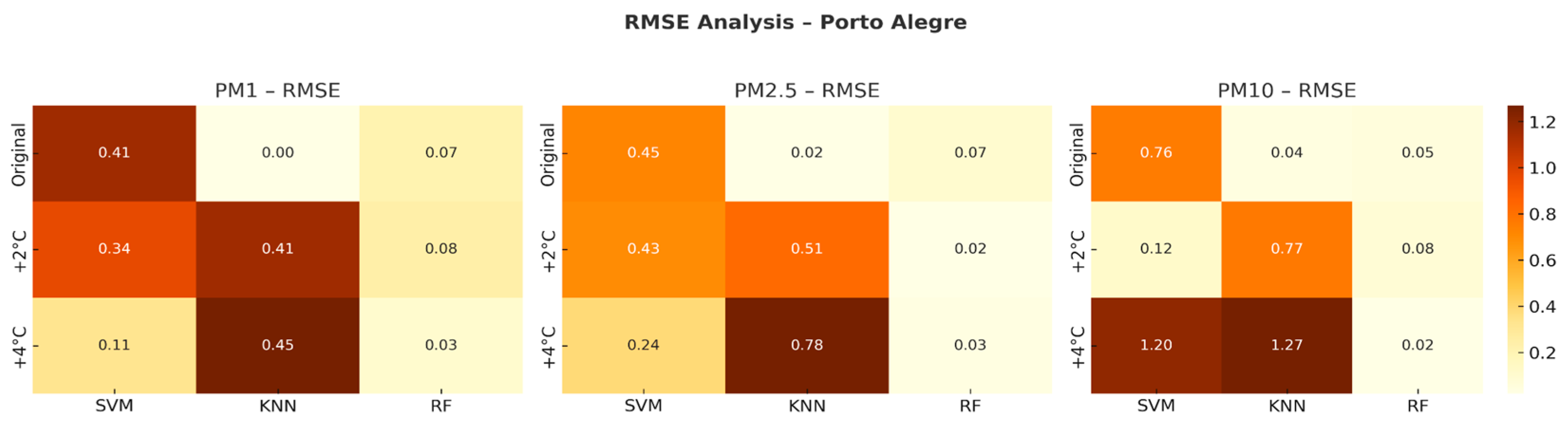
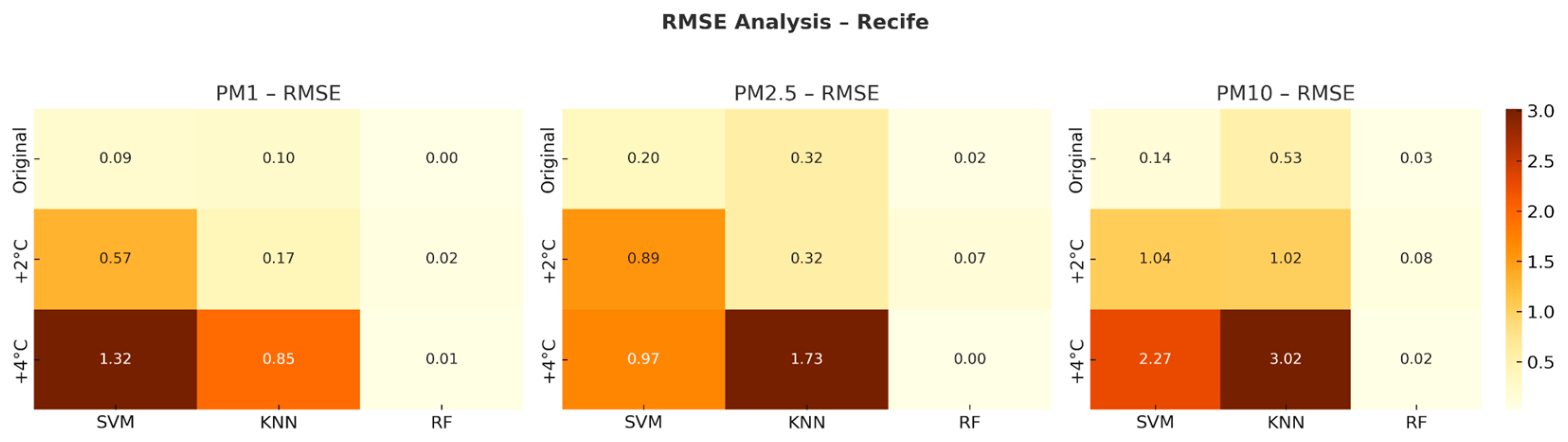
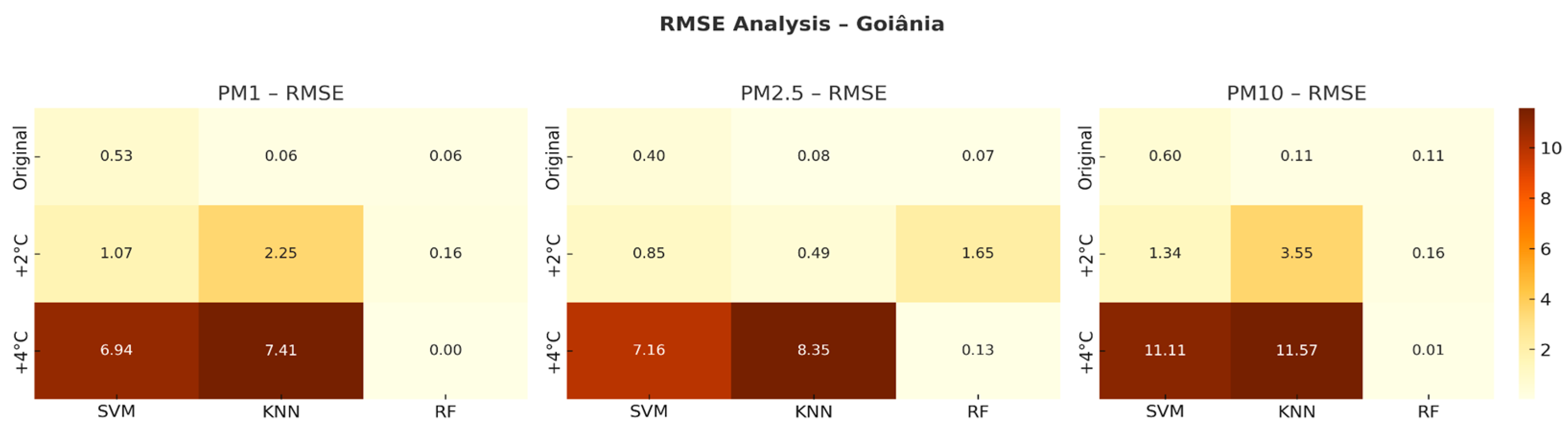
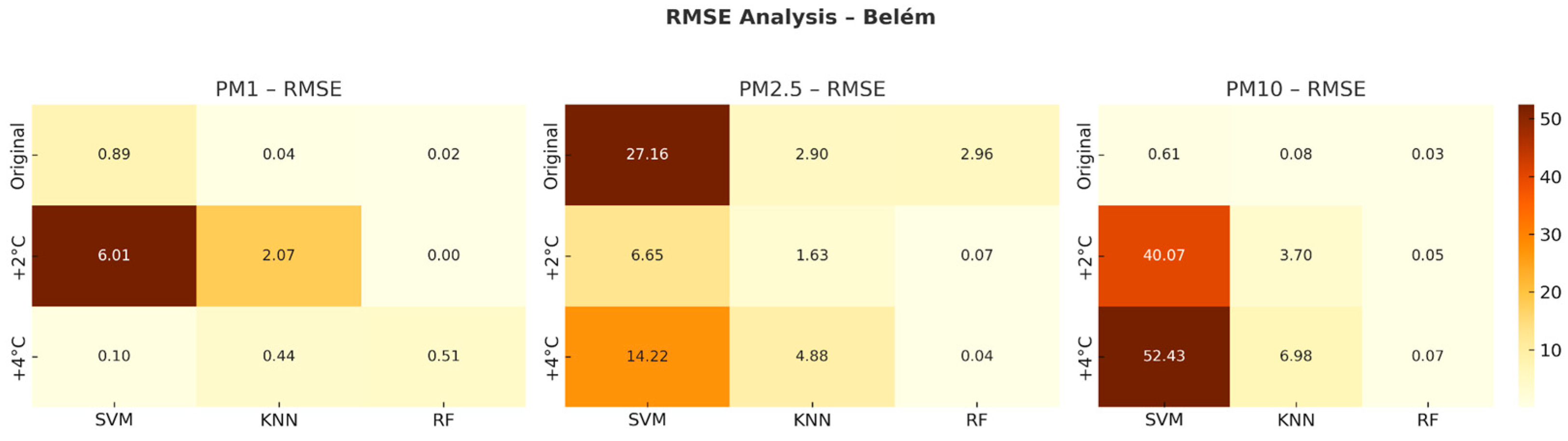
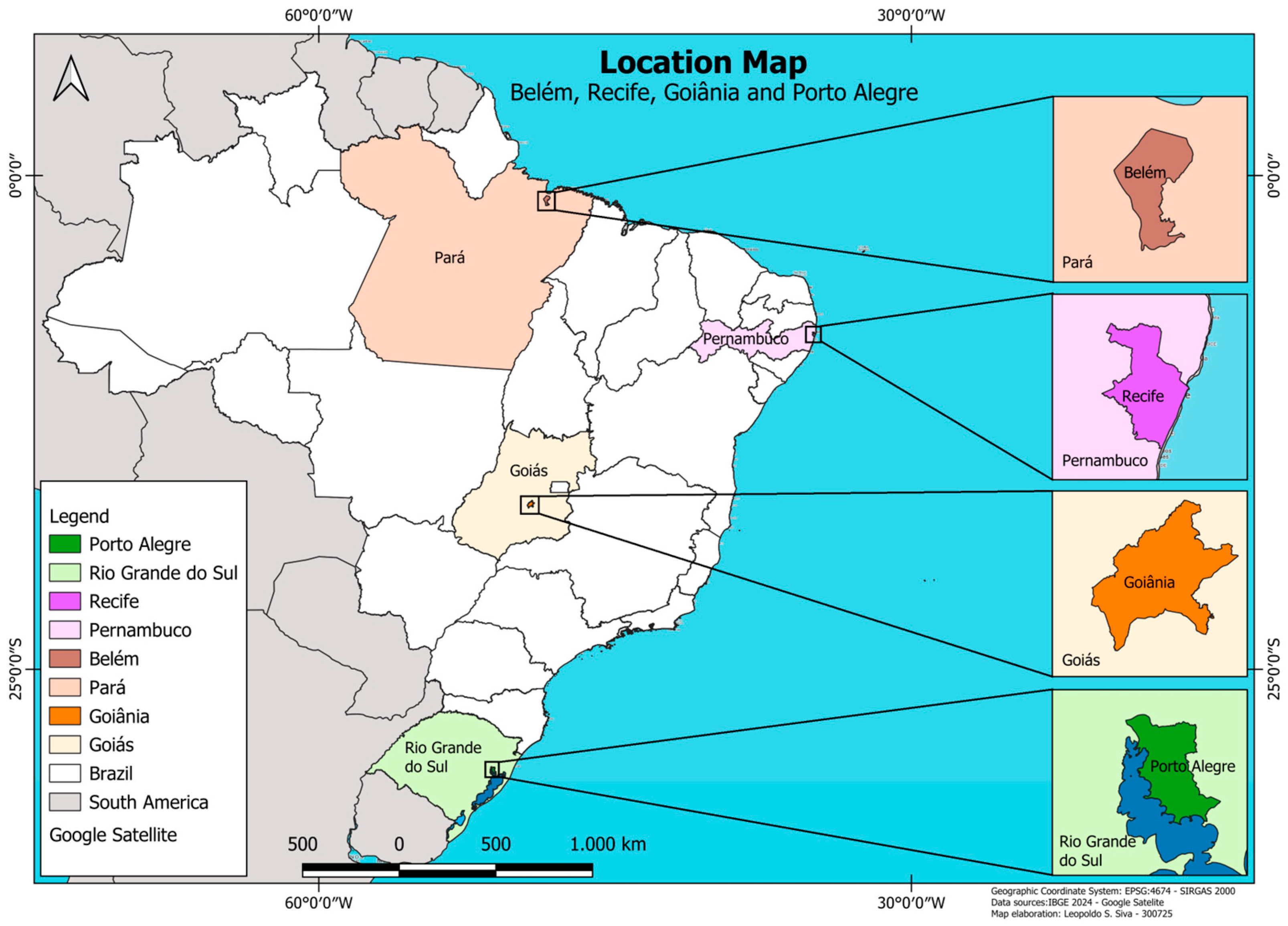
Air pollution, particularly particulate matter (PM1, PM2.5, and PM10), poses a significant environmental health risk globally. This study evaluates the predictive performance of three machine learning algorithms, Support Vector Machine (SVM), K-Nearest Neighbors (KNN), and Random Forest (RF), for forecasting particulate matter concentrations in four Brazilian cities (Porto Alegre, Recife, Goiânia, and Belém), which share similar demographic and urbanization characteristics but differ in geographic and climatic conditions. Using data from the Copernicus Atmosphere Monitoring Service, daily concentrations of PM1, PM2.5, and PM10 were modeled based on meteorological variables, including air temperature, relative humidity, wind speed, atmospheric pressure, and accumulated precipitation. The models were tested under two climate change scenarios (+2 °C and +4 °C temperature increases). The results indicate that RF consistently outperformed the other models, achieving low RMSE values, around 0.3 µg/m3, across all cities, regardless of their geographic and climatic differences. KNN showed stable performance under moderate temperature increases (+2 °C) but exhibited higher errors under more extreme warming, while SVM demonstrated higher sensitivity to temperature changes, leading to greater variability in bivariate contexts. However, in multivariate contexts, SVM adjusted better, improving its predictive performance by accounting for the combined influence of multiple meteorological variables. These findings underscore the importance of selecting suitable machine learning models, with RF proving to be the most robust approach for particulate matter prediction across diverse environmental contexts. This study contributes valuable insights for the development of region-specific air quality management strategies in the face of climate change.
Keywords: air pollution; air quality; Brazil; climate change; machine learning; meteorological variables; particulate matter; predictive modeling air pollution; air quality; Brazil; climate change; machine learning; meteorological variables; particulate matter; predictive modeling