Article

Research on the Detection Model of Kernel Anomalies in Ionospheric Space Electric Fields

1
Institute of Intelligent Emergency Information Processing, Institute of Disaster Prevention, Langfang 065201, China
2
School of Information Engineering, Institute of Disaster Prevention, Langfang 065201, China
3
School of Emergency Management, Institute of Disaster Prevention, Langfang 065201, China
4
National Institute of Natural Hazards, Ministry of Emergency Management of China, Beijing 100085, China
*
Authors to whom correspondence should be addressed.
Atmosphere 2025, 16(2), 160; https://doi.org/10.3390/atmos16020160
Submission received: 27 November 2024 / Revised: 20 January 2025 / Accepted: 25 January 2025 / Published: 31 January 2025
(This article belongs to the Special Issue Ionospheric Sounding for Identification of Pre-seismic Activity)

Abstract

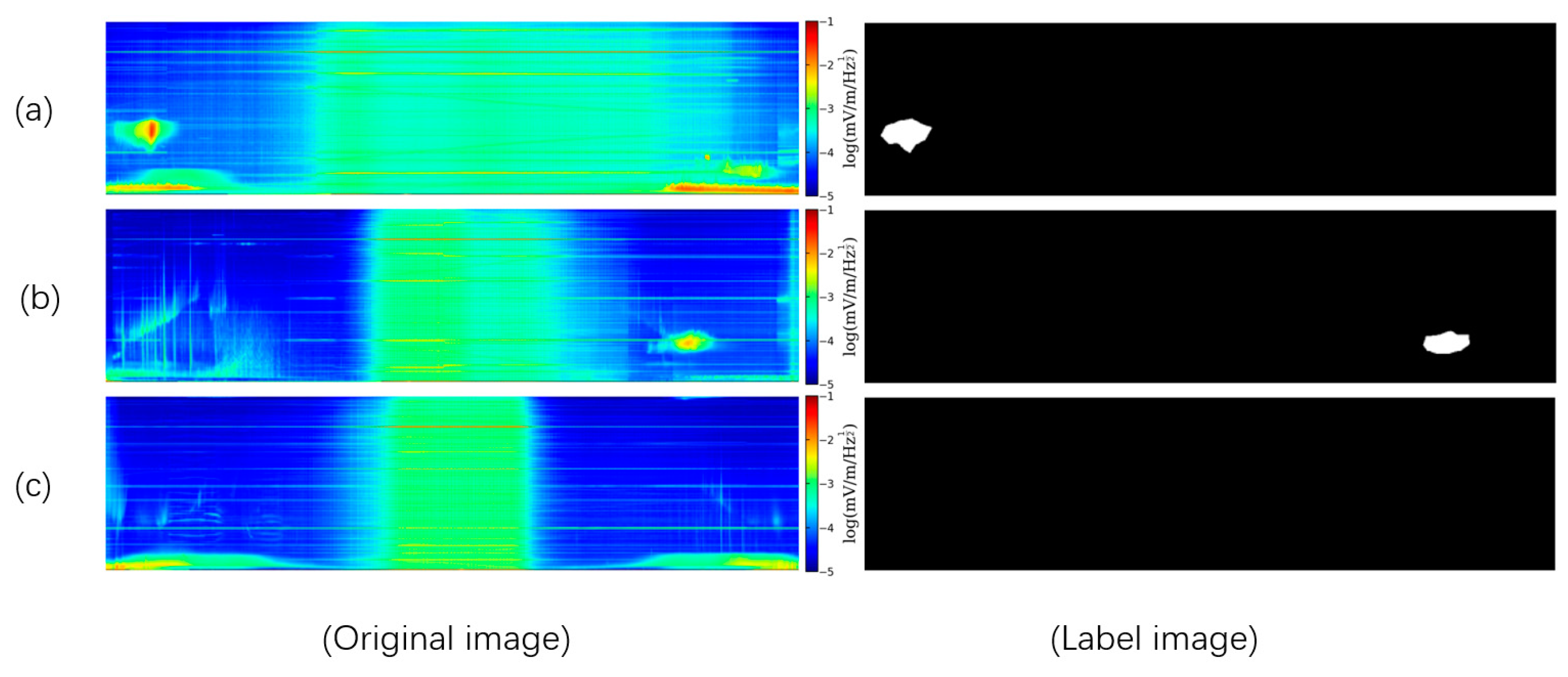
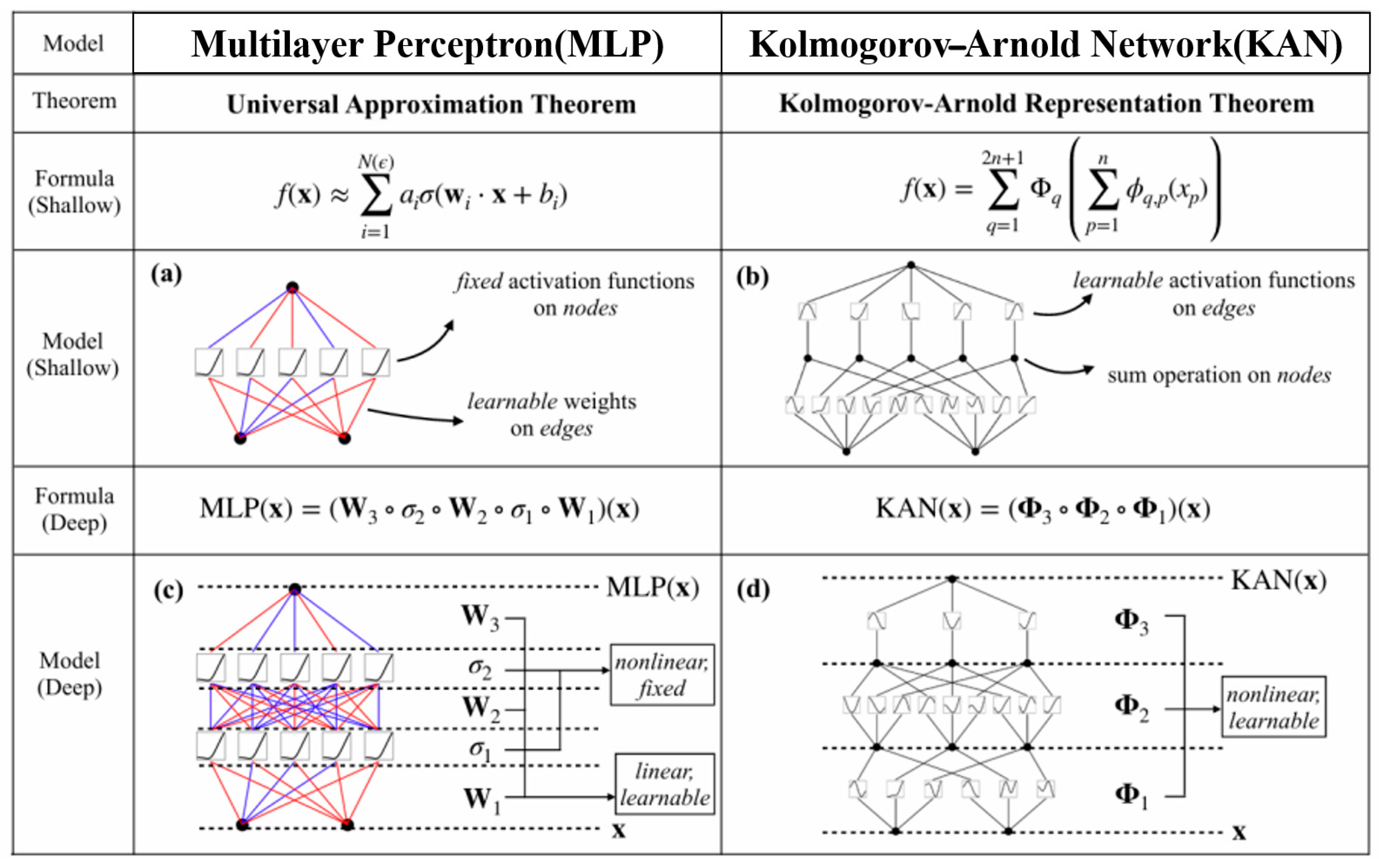
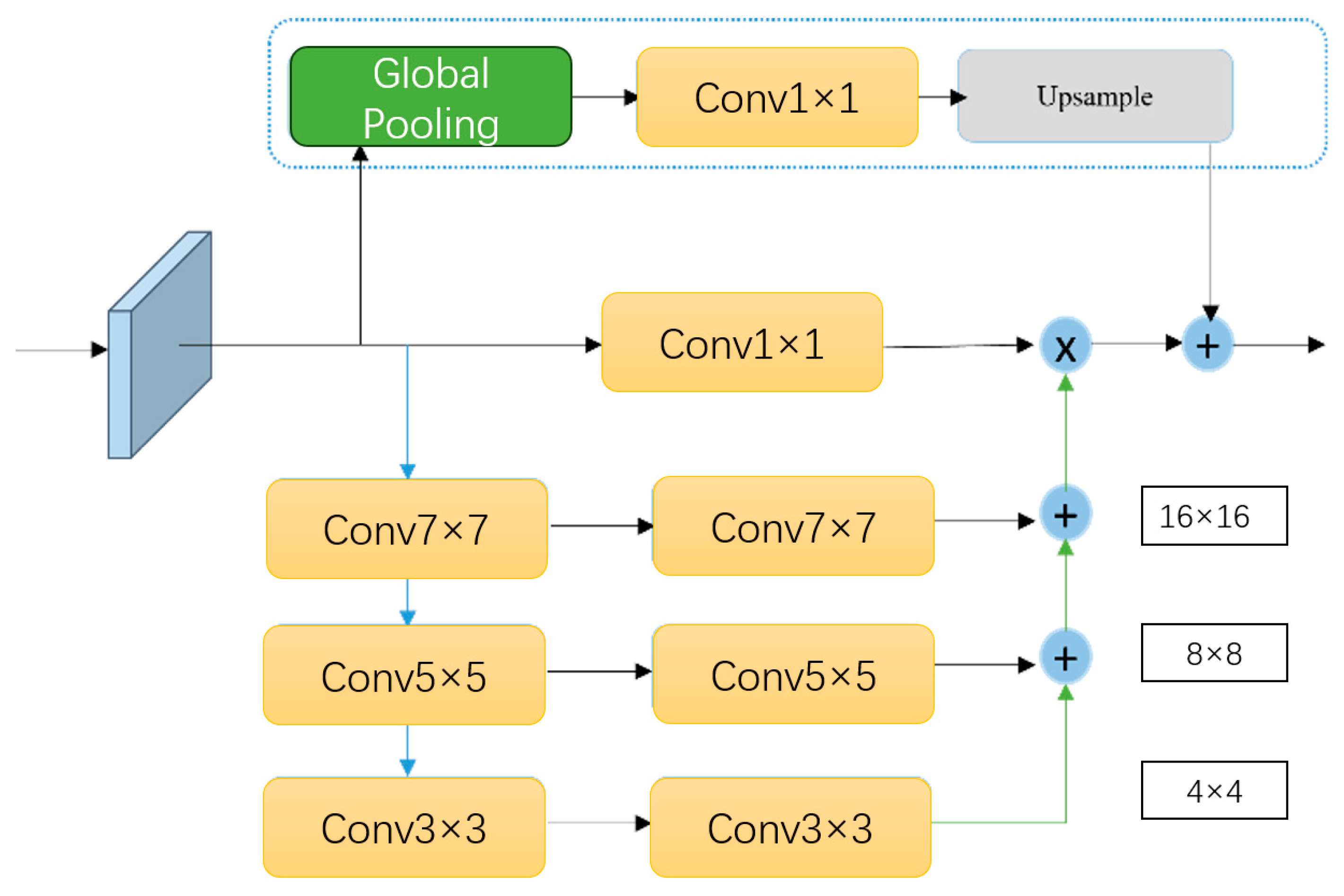
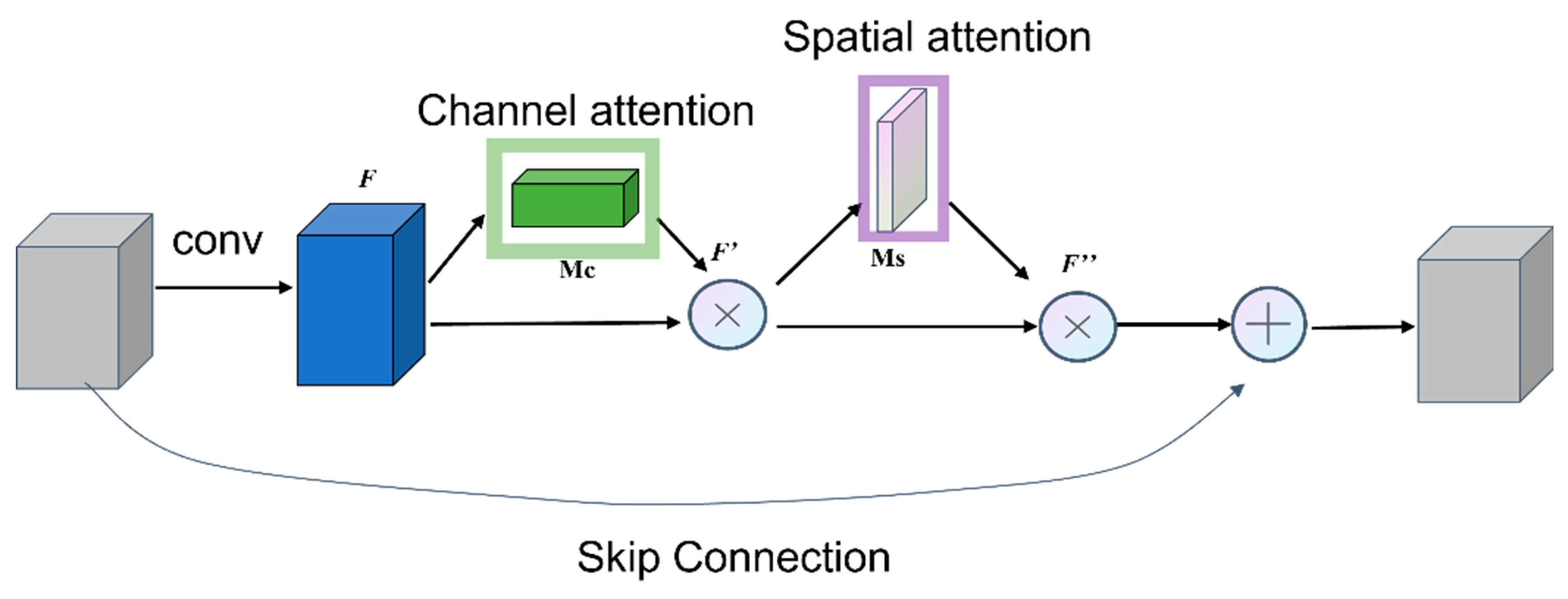
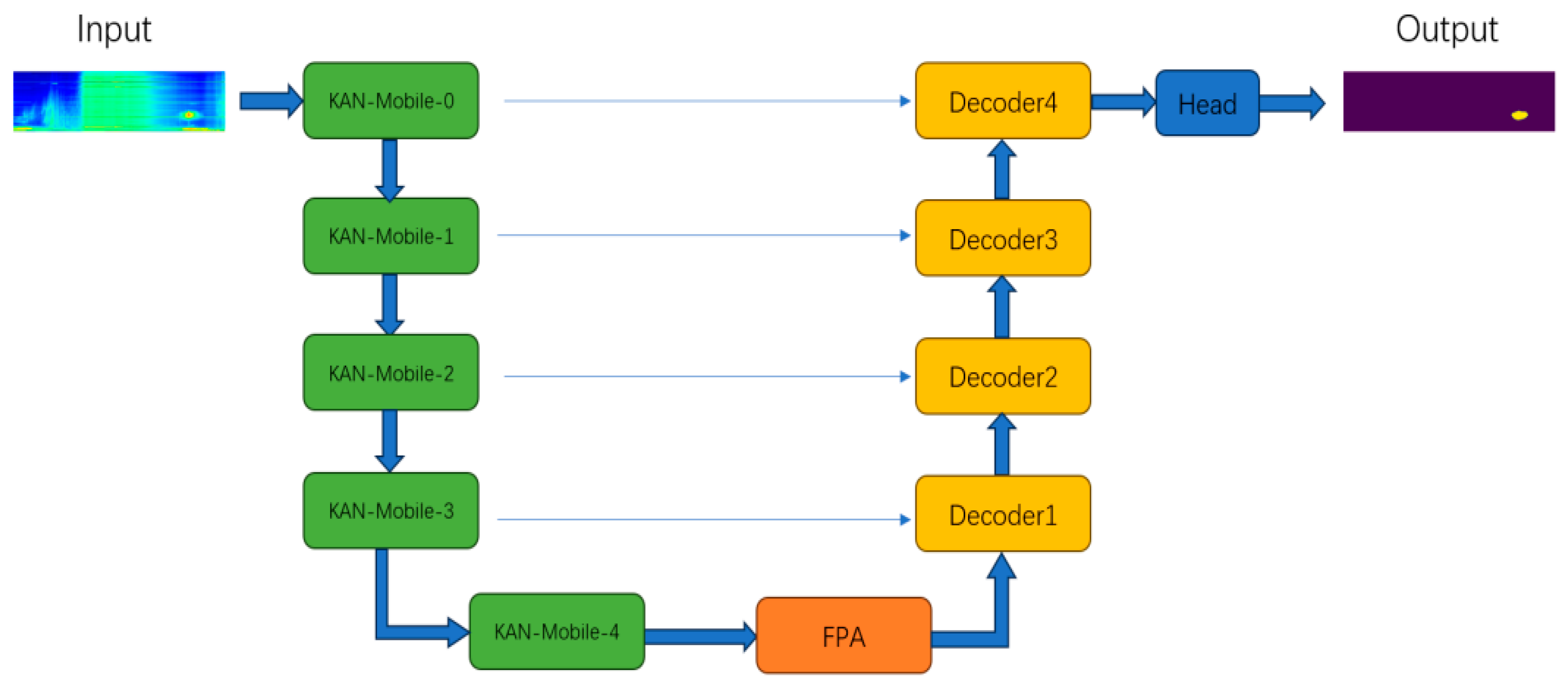
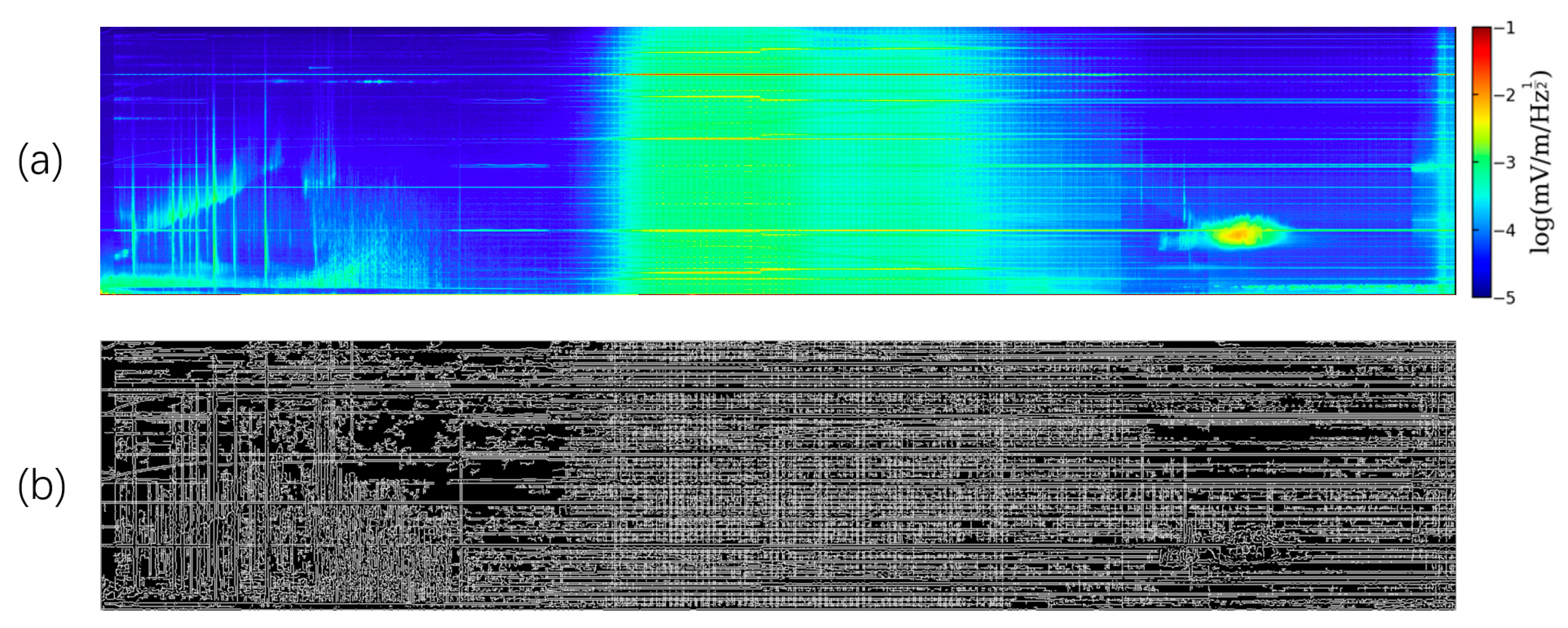
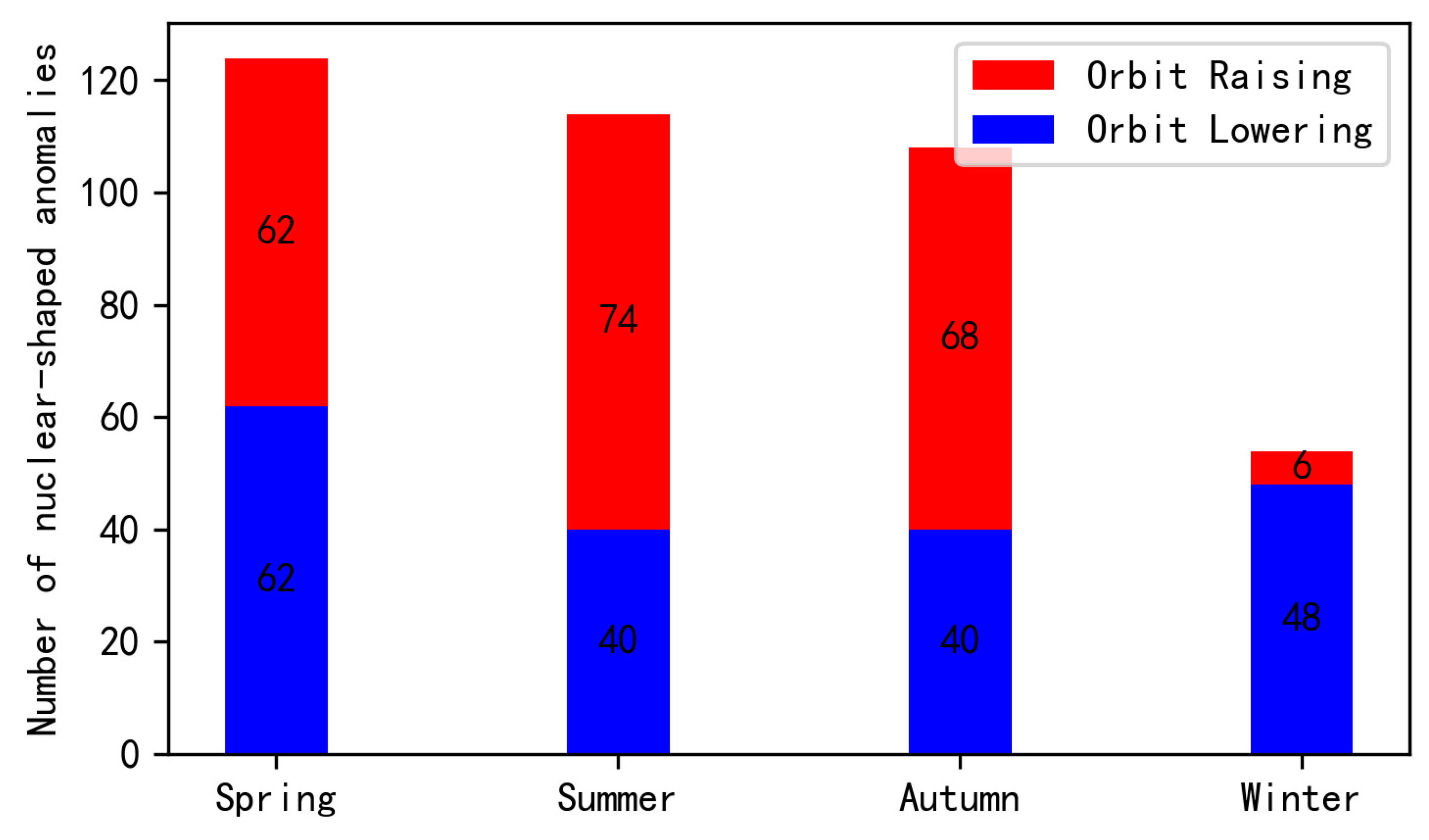
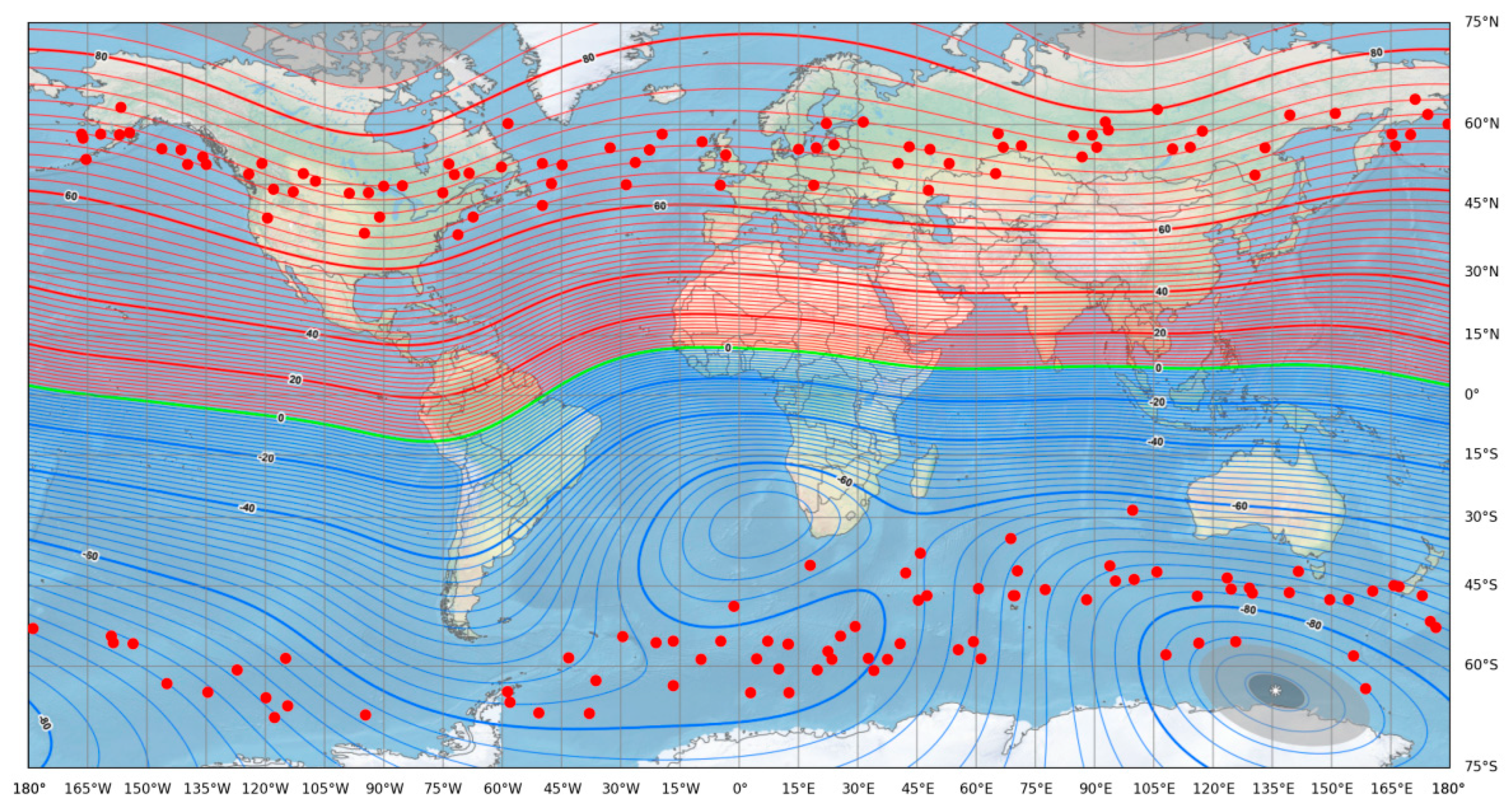
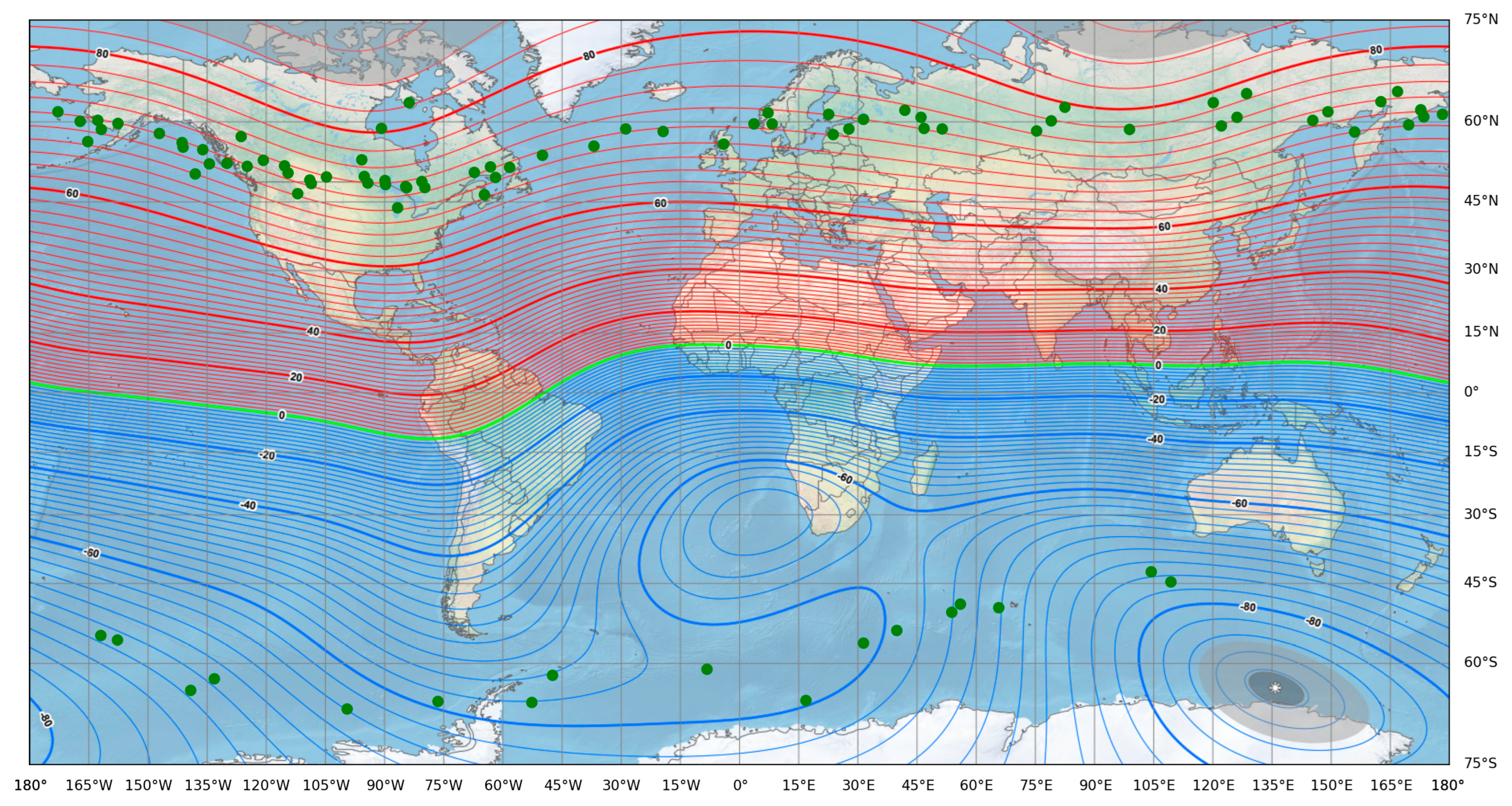
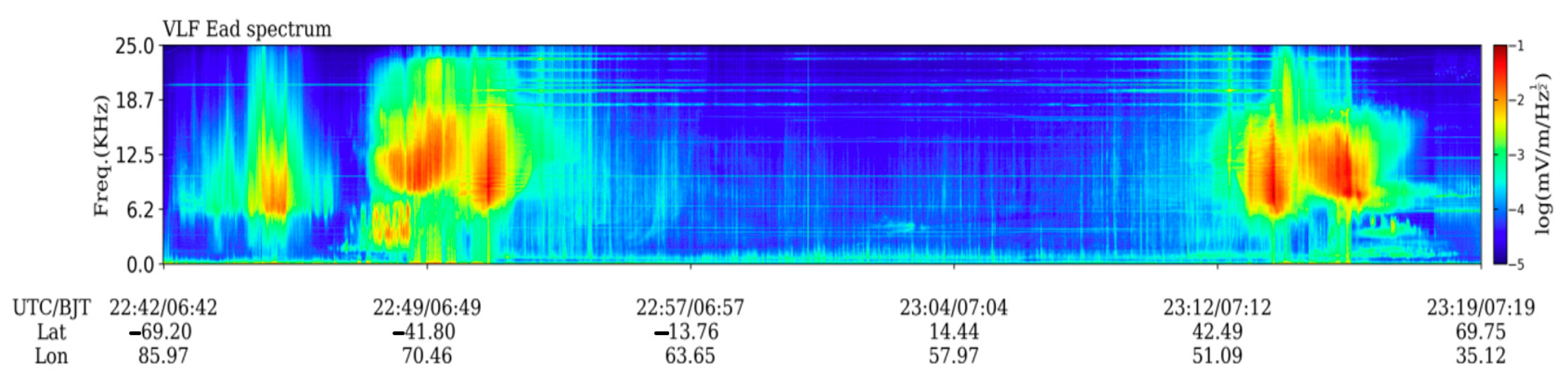
Research has found kernel anomaly regions in the power spectrum images of ionospheric electric fields in space, which are widely distributed. To effectively detect these kernel abnormal regions, this paper proposes a new kernel abnormal region detection method, KANs-Unet, based on KANs and U-net networks. The model embeds the KAN-Conv convolutional module based on KANs in the encoder section, introduces the feature pyramid attention module (FPA) at the junction of the encoder and decoder, and introduces the CBAM attention mechanism module in the decoder section. The experimental results show that the improved KANs-Unet model has a mIoU improvement of about 10% compared to the PSPNet algorithm and an improvement of about 7.8% compared to the PAN algorithm. It has better detection performance than the currently popular semantic segmentation algorithms. A higher evaluation index represents that the detected abnormal area is closer to the label value (i.e., the detected abnormal area is more complete), indicating better detection performance. To further investigate the characteristics of kernel anomaly areas and the differences in features during magnetic storms, the author studied the characteristics of kernel anomaly areas during two different intensities of magnetic storms: from November 2021 to October 2022 and from 1 May 2024 to 13 May 2024 (large magnetic storm), and from 11 October 2023 to 23 October 2023 (moderate magnetic storm). During a major geomagnetic storm, the overall distribution of kernel anomaly areas shows a parallel trend with a band-like distribution. The spatial distribution of magnetic latitudes is relatively scattered, especially in the southern hemisphere, where the magnetic latitudes are wider. Additionally, the number of orbits with kernel anomaly areas during ascending increases, especially during peak periods of major geomagnetic storms. The overall spatial distribution of moderate geomagnetic storms does not change significantly, but the global magnetic latitude distribution is relatively concentrated.
Keywords: China Seismo-Electromagnetic Satellite; semantic segmentation algorithm; Kolmogorov–Arnold U-shaped network; power spectrum; great geomagnetic storm China Seismo-Electromagnetic Satellite; semantic segmentation algorithm; Kolmogorov–Arnold U-shaped network; power spectrum; great geomagnetic storm