Article

Inversion of Aerosol Chemical Composition in the Beijing–Tianjin–Hebei Region Using a Machine Learning Algorithm


1
School of Geoscience and Technology, Zhengzhou University, Zhengzhou 450001, China
2
School of Computer and Artificial Intelligence, Zhengzhou University, Zhengzhou 450001, China
3
Institute of Atmospheric Physics, Chinese Academy of Sciences, Beijing 100029, China
4
Inner Mongolia Autonomous Region Environmental Monitoring Center, Wuhai Branch, Wuhai 016000, China
5
Henan Provincial Climate Center, Zhengzhou 450003, China
6
Weather Modification Center of Henan Province, Zhengzhou 450001, China
7
Hebi Meteorological Bureau, Hebi 458000, China
*
Author to whom correspondence should be addressed.
Atmosphere 2025, 16(2), 114; https://doi.org/10.3390/atmos16020114
Submission received: 20 November 2024 / Revised: 26 December 2024 / Accepted: 16 January 2025 / Published: 21 January 2025
(This article belongs to the Special Issue Atmospheric Pollution in Highly Polluted Areas)

Abstract

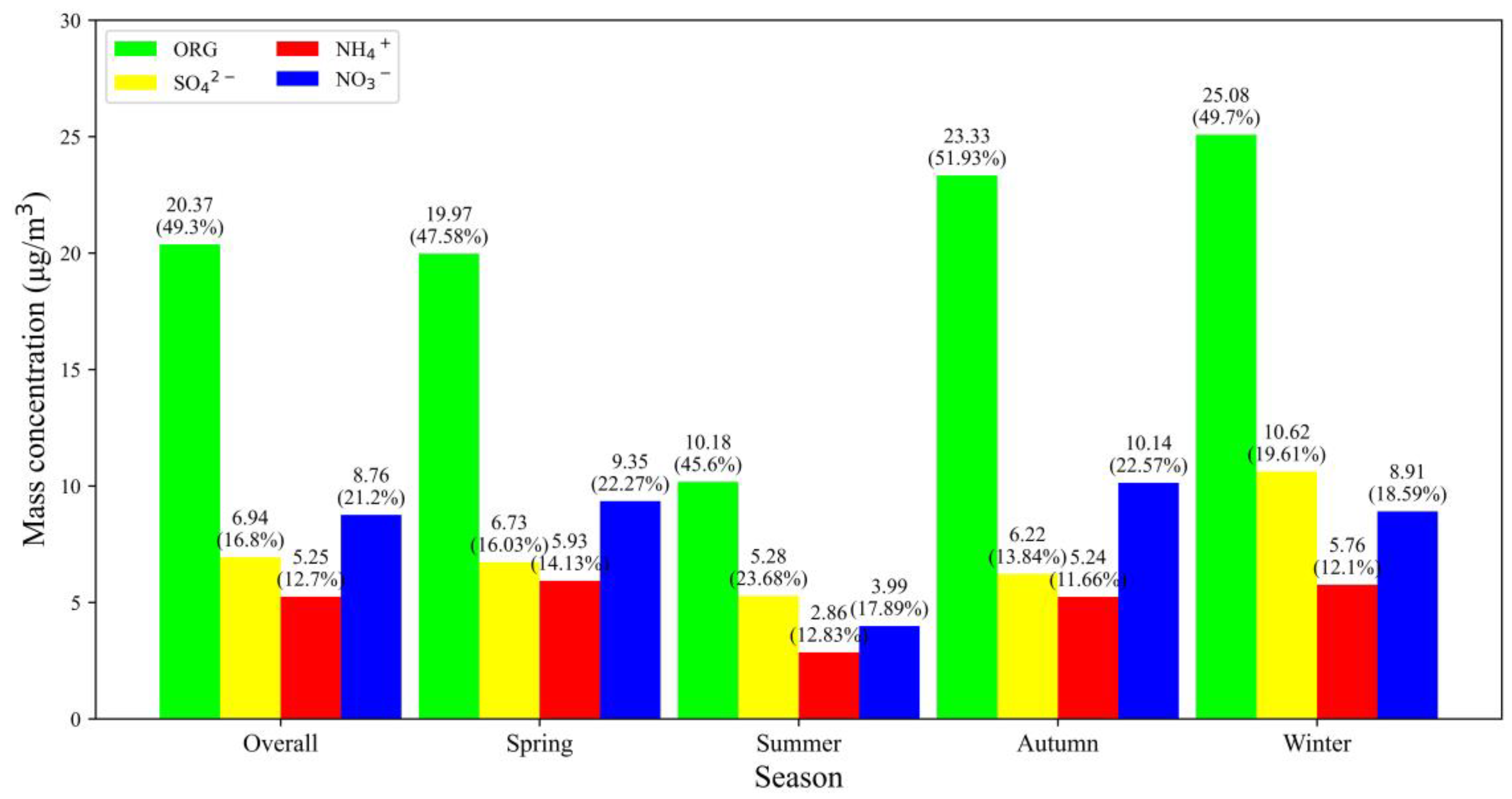
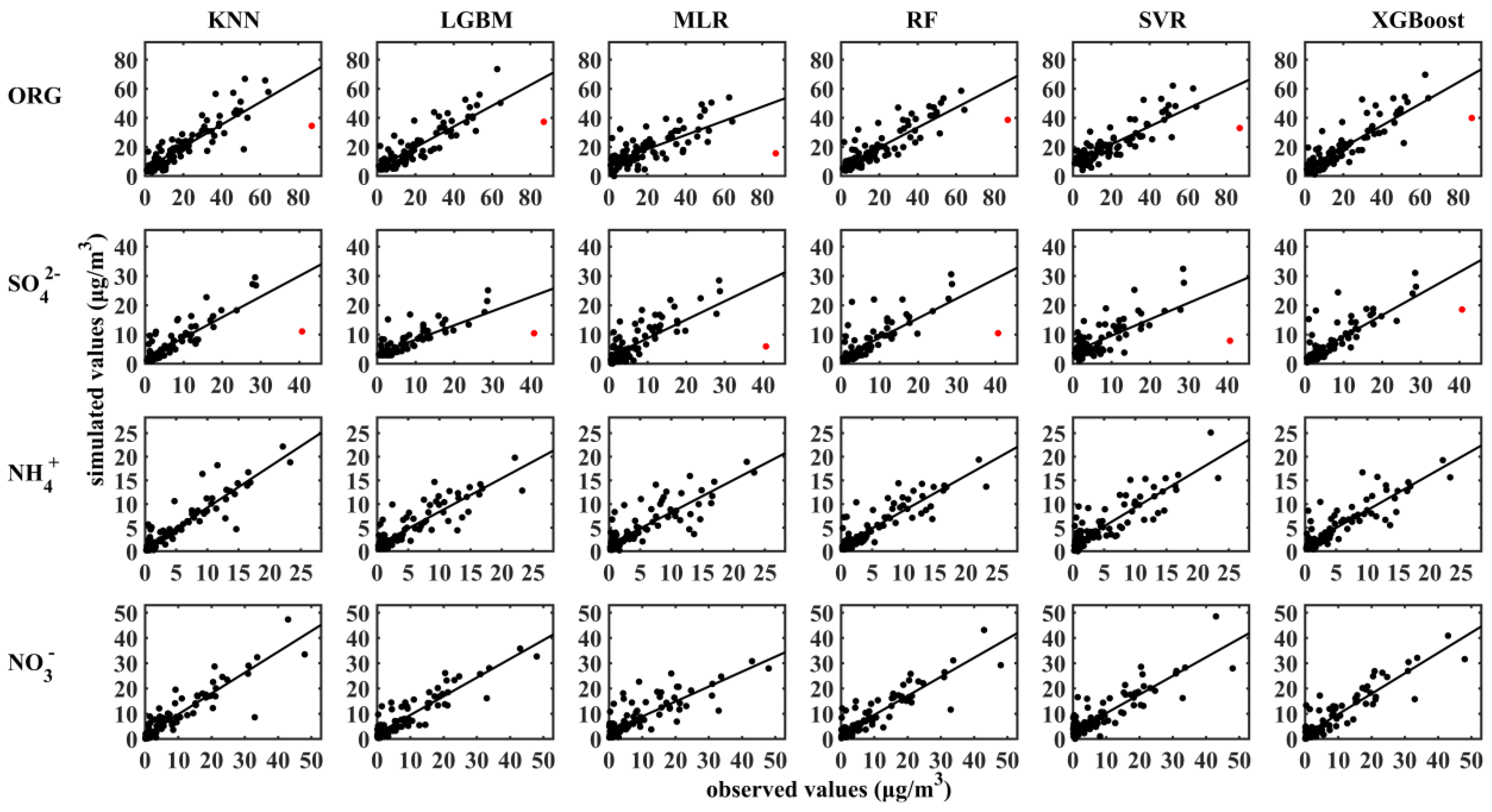
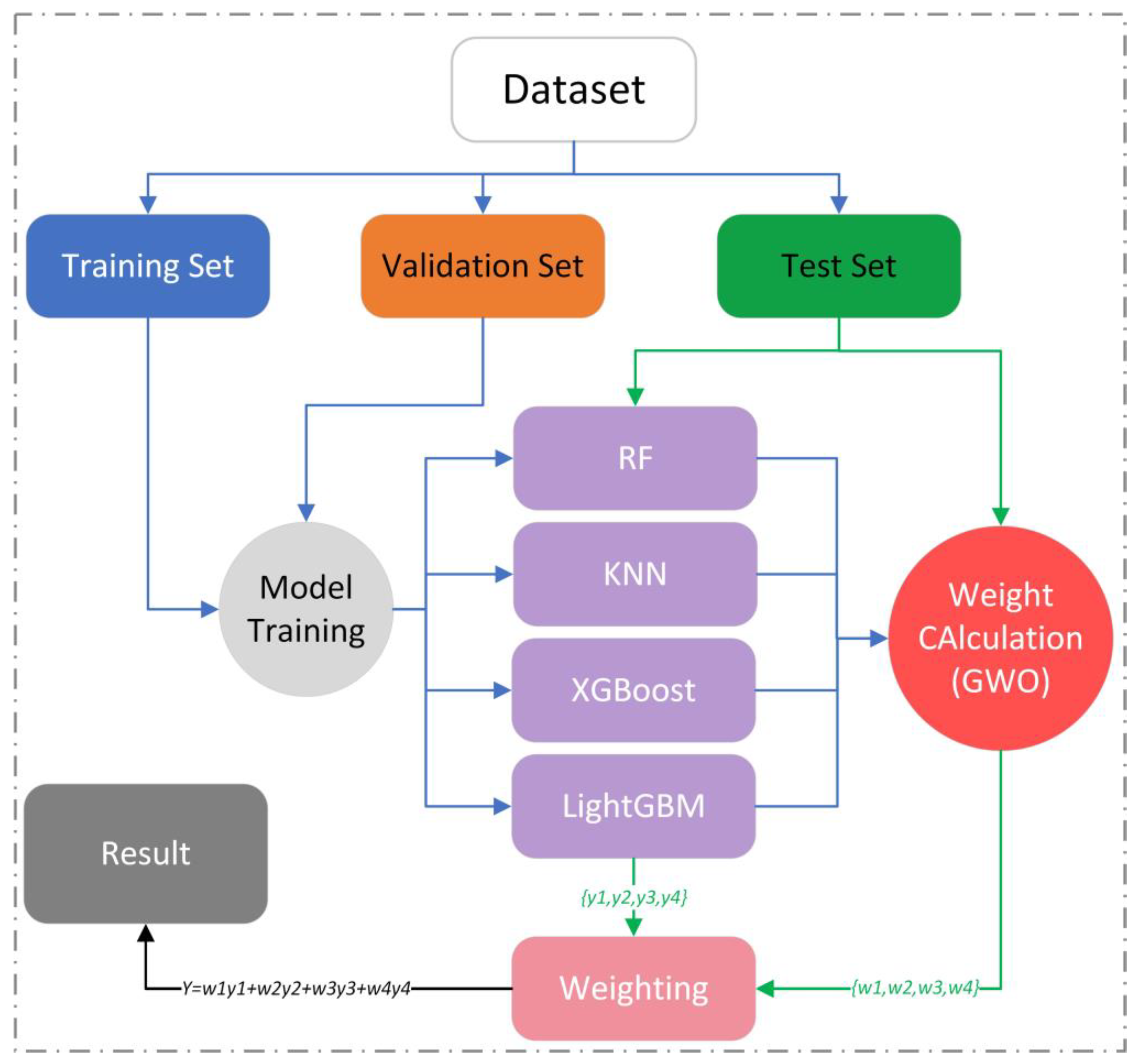
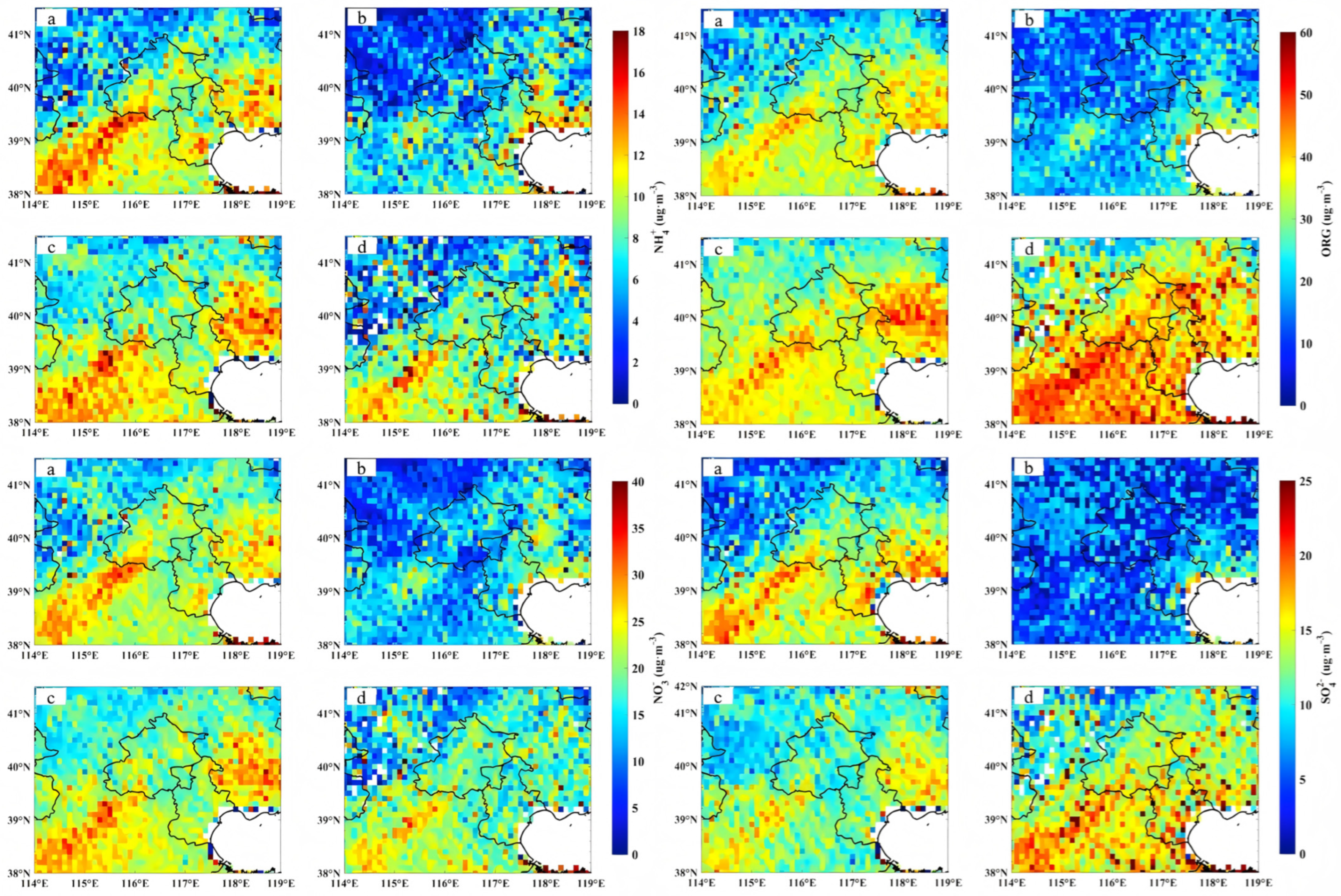
Aerosols and their chemical composition exert an influence on the atmospheric environment, global climate, and human health. However, obtaining the chemical composition of aerosols with high spatial and temporal resolution remains a challenging issue. In this study, using the NR-PM1 collected in the Beijing area from 2012 to 2013, we found that the annual average concentration was 41.32 μg·m−3, with the largest percentage of organics accounting for 49.3% of NR-PM1, followed by nitrates, sulfates, and ammonium. We then established models of aerosol chemical composition based on a machine learning algorithm. By comparing the inversion accuracies of single models—namely MLR (Multivariable Linear Regression) model, SVR (Support Vector Regression) model, RF (Random Forest) model, KNN (K-Nearest Neighbor) model, and LightGBM (Light Gradient Boosting Machine)—with that of the combined model (CM) after selecting the optimal model, we found that although the accuracy of the KNN model was the highest among the other single models, the accuracy of the CM model was higher. By employing the CM model to the spatially and temporally matched AOD (aerosol optical depth) data and meteorological data of the Beijing–Tianjin–Hebei region, the spatial distribution of the annual average concentrations of the four components was obtained. The areas with higher concentrations are mainly situated in the southwest of Beijing, and the annual average concentrations of the four components in Beijing’s southwest are 28 μg·m−3, 7 μg·m−3, 8 μg·m−3, and 15 μg·m−3 for organics, sulfates, ammonium, and nitrates, respectively. This study not only provides new methodological ideas for obtaining aerosol chemical composition concentrations based on satellite remote sensing data but also provides a data foundation and theoretical support for the formulation of atmospheric pollution prevention and control policies.
Keywords: machine learning; combined model; AOD; Beijing–Tianjin–Hebei region; aerosol chemical composition machine learning; combined model; AOD; Beijing–Tianjin–Hebei region; aerosol chemical composition