Article

Assessing the COVID-19 Lockdown Impact on Global Air Quality: A Transportation Perspective

1
School of Modern Posts, Nanjing University of Posts and Telecommunications, Nanjing 210003, China
2
School of Economics and Management, Nanjing University of Science and Technology, Nanjing 210094, China
3
Wu Jinglian School of Economics, Changzhou University, Changzhou 213164, China
*
Author to whom correspondence should be addressed.
Atmosphere 2025, 16(1), 113; https://doi.org/10.3390/atmos16010113
Submission received: 16 December 2024 / Revised: 6 January 2025 / Accepted: 17 January 2025 / Published: 20 January 2025
(This article belongs to the Section Air Quality and Health)

Abstract

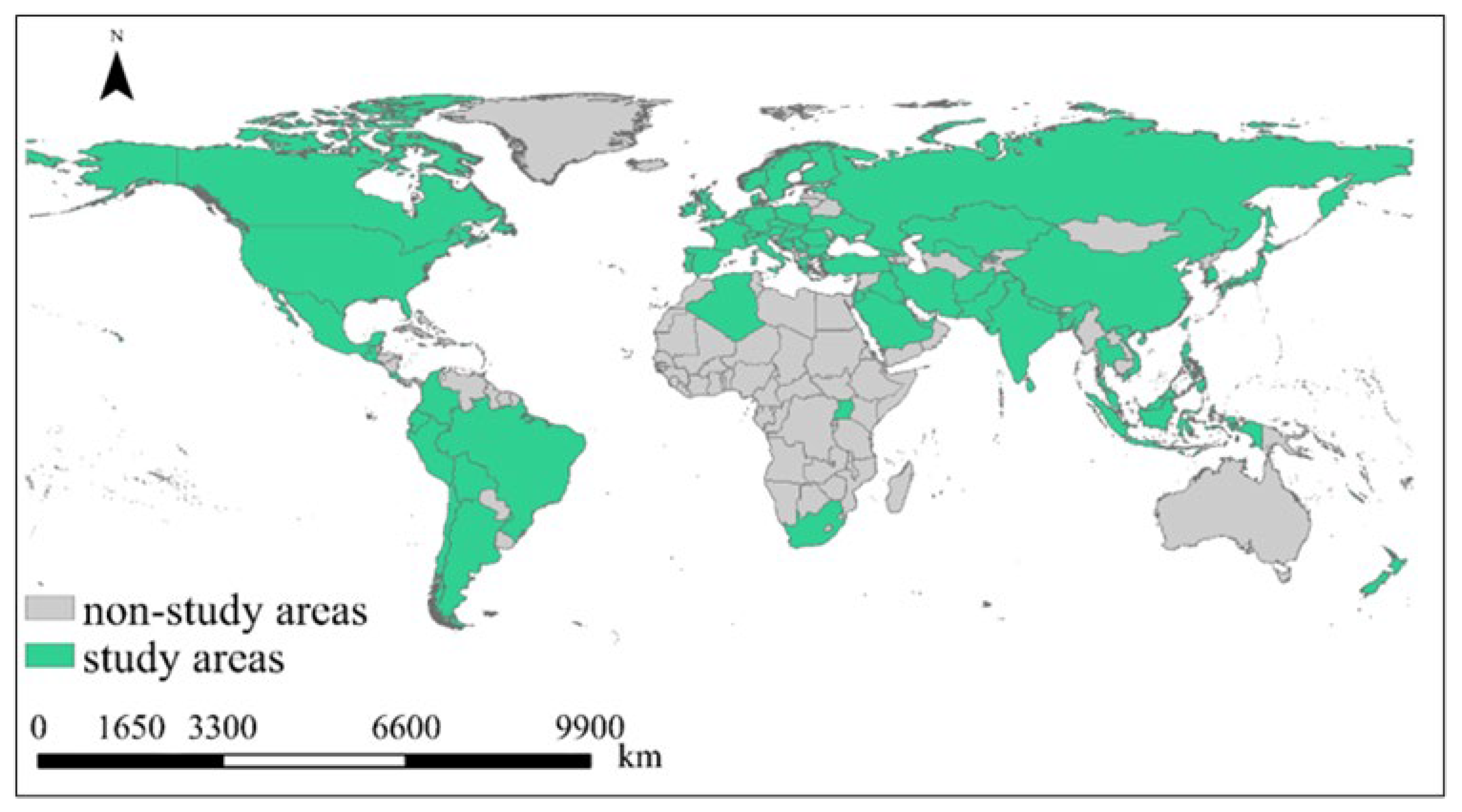
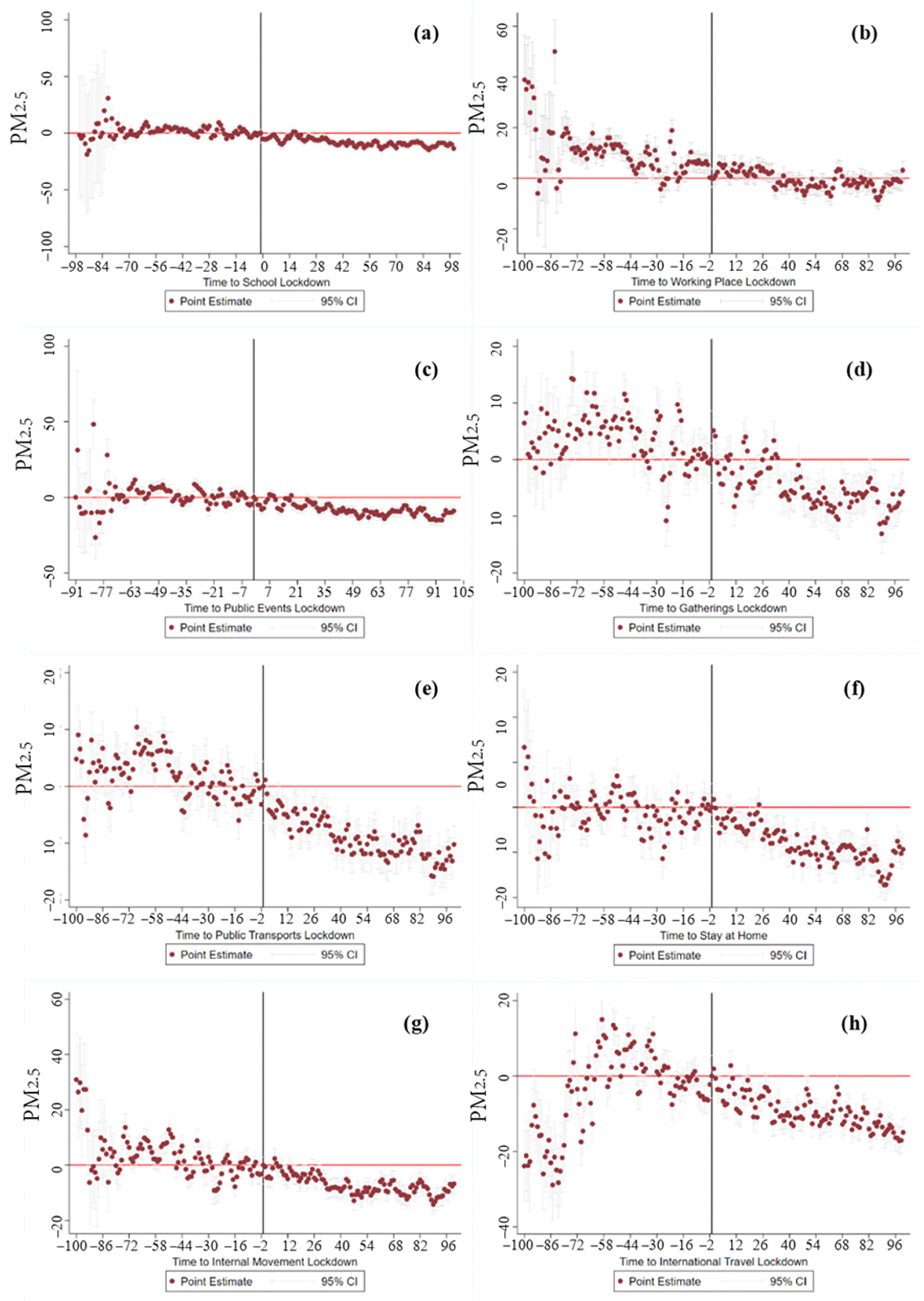
To address the COVID-19 pandemic, governments worldwide implemented mandatory restrictions. As an unintended consequence of these responses, significant air pollution reductions have been recorded across the world. We provide cross-national evidence on the causal impact of pandemic-induced lockdowns on air quality. Using daily air pollution data between 1 January and 31 December 2020, covering 596 major cities in 77 countries, we analyzed the data with a generalized difference-in-differences approach. The results show that lockdown restrictions reduced global concentrations of NO2 by 21~35%, PM10 by 14~26%, PM2.5 by 9~18%, CO by 6~16%, and SO2 by 5~16%, while the O3 concentrations increased by 15~29% under eight specific lockdown measures. Furthermore, a simultaneous equations model suggests that reductions in public and private mobility, measured by changes in public transportation and car ridership, partly explain the observed decreases in air pollution. These findings have significant implications for ongoing global efforts to mitigate air pollution and underscore the pivotal role of public transit in achieving this goal.
Keywords: air quality; COVID-19; lockdowns; transportation; simultaneous equations model air quality; COVID-19; lockdowns; transportation; simultaneous equations model