Article

Assessment of Landfill Gas Dispersion and Health Risks Using AERMOD and TROPOMI Satellite Data: A Case Study of the Thohoyandou Landfill, South Africa

by
Prince Obinna Njoku
1,*,
Joshua N. Edokpayi
2 and
Rachel Makungo
3
1
Department of Geography, Environmental Management and Energy Studies, University of Johannesburg, Corner Ditton and University Avenue, Auckland Park, Johannesburg 2006, South Africa
2
Water and Environmental Management Research Group, Faculty of Science, Engineering and Agriculture, University of Venda, Private Bag X5050, Thohoyandou 0950, South Africa
3
Department of Earth Sciences, Faculty of Science, Engineering and Agriculture, University of Venda, Thohoyandou 0950, South Africa
*
Author to whom correspondence should be addressed.
Atmosphere 2025, 16(12), 1402; https://doi.org/10.3390/atmos16121402
Submission received: 23 October 2025 / Revised: 25 November 2025 / Accepted: 29 November 2025 / Published: 13 December 2025
(This article belongs to the Special Issue Air Pollution Exposure and Health Impact Assessment (3rd Edition))

Abstract

Landfills are vital waste management techniques in South Africa but are significant sources of greenhouse gases (GHGs) and air pollutants that can threaten nearby communities. This study provides a novel integrated assessment approach by combining high-resolution TROPOMI satellite observations with AERMOD dispersion modelling. This study investigates the dispersion characteristics and potential health impacts of landfill gas (LFG) emissions from the Thohoyandou landfill. Unlike previous studies that rely solely on modelling or field measurements, this work offers the first satellite-validated landfill gas dispersion analysis in South Africa. The modelling results indicated that the highest hourly concentrations reached 456,056 µg/m3 for CH4 and 735,108 µg/m3 for CO2, while annual maximum concentrations were 15,699 µg/m3 and 30,590 µg/m3, respectively. Health risk assessments were performed for 26 volatile organic compounds and hazardous air pollutants (VOCs/HAPs) using the USEPA methodology. Most individual hazard quotient (HQ) values were below 1, except for 1,1,2-trichloroethane (HQ = 1.27). The cumulative HQ of 1.86 suggested a potential non-carcinogenic risk for nearby residents. Carcinogenic risk analysis identified 13 compounds, with hydrogen sulphide posing the highest probability of cancer risk. The findings reveal that LFG emissions may adversely affect air quality and present both non-carcinogenic and carcinogenic health risks to populations living or working near the landfill.

1. Introduction

Landfills play a crucial role in modern waste management systems, providing a means to dispose of various waste materials; however, their operation can have significant environmental consequences, particularly concerning air quality [1]. Landfill sites release a wide range of pollutants into the surrounding atmosphere, leading to concerns about potential adverse effects on both air quality and human health. It is therefore essential to understand how these emissions disperse and their potential impacts [2]. The dispersion of airborne pollutants from sources like landfills is influenced by a complex interplay of factors, including atmospheric dynamics, emission rates, meteorological conditions, and local topography. Of particular concern are pollutants like methane (CH4) and carbon dioxide (CO2) and Non-Methanic Organic Compounds (NMOC); these emissions raise questions about the potential health risks for landfill workers, nearby residents, and passers-by. Furthermore, the continuous release of these pollutants into the environment significantly contributes to South Africa’s growing greenhouse gas (GHG) emissions [3]; hence, it is crucial to address these environmental challenges and find sustainable solutions to minimise their impact.
Methane (CH4) has a direct influence on climate change, as well as an indirect effect on human health, plant yield, and productivity due to its role as a significant contributor to ground-level ozone formation. CH4 is colourless, odourless, tasteless, and a major component of natural gas. CH4 becomes highly flammable at very elevated concentrations, typically ranging from 50,000 to 150,000 ppm (5% to 15%) [4]. The National Institute for Occupational Safety and Health (NIOSH) recommends a maximum safe CH4 concentration, expressed as a Threshold Limit Value (TLV), for workers for an 8 h workday, set at 1000 ppm (0.1%), due to potential health concerns [5]. Extremely high concentrations, around 500,000 ppm, can render CH4 an asphyxiant and displace oxygen in the blood.
Carbon dioxide (CO2) similarly is a colourless, odourless, but non-flammable gas naturally occurring in the atmosphere. The Occupational Safety and Health Administration (OSHA) has established a Permissible Exposure Limit (PEL) for CO2 at 5000 ppm (0.5% CO2 in air) averaged over an 8 h workday time-weighted average (TWA) [6]. The American Conference of Governmental Industrial Hygienists (ACGIH) recommends a TLV of 5000 ppm for an 8 h TWA and sets a ceiling exposure limit of 30,000 ppm for 10 min. Any value surpassing 40,000 ppm is considered extremely dangerous to life and health (IDLH value). These TLVs aim to minimise the potential for asphyxiation and undue metabolic stress as supported by long-term exposure studies [7]. NMOCs constitute a range of gases, including volatile organic compounds (VOCs), hazardous air pollutants (HAPs), and odorous compounds such as hydrogen sulphide. Specific VOCs and HAPs have been identified as contributors to both carcinogenic and non-carcinogenic adverse health effects. VOC emissions significantly contribute to the formation of ozone, a known respiratory irritant upon inhalation, thereby exacerbating respiratory problems [8].
The concerns from LFG emissions necessitate the use of accurate assessment tools capable of modelling the dispersion and concentration of pollutants originating from the Thohoyandou landfill concerning the ambient air. Such tools are essential for evaluating the potential environmental impact of pollutant emissions. Additionally, almost all countries and regions have established air quality standards and regulations [9,10]. Precise modelling ensures that emissions from sources like landfills conform to these regulations, and dispersion modelling aids in identifying potential health risks associated with pollutant exposure, particularly for nearby residents vulnerable to deteriorating air quality stemming from emissions. Despite several studies exploring LFG emissions globally, there is currently limited work in South Africa that integrates satellite-based atmospheric observations with ground-level dispersion modelling. Most previous studies relied on either AERMOD simulations alone or field-based flux measurements. This study fills a critical gap by combining TROPOMI satellite CH4 data with AERMOD model outputs to provide the first satellite validated dispersion assessment of LFG in a South African context. This integrated approach enhances the reliability of model predictions and offers new insights into spatial and temporal emission behaviour.
The main objective of this study is to utilise the AERMOD dispersion model, coupled with TROPOMI satellite data, to simulate and analyse CH4 and CO2 concentrations from the Thohoyandou landfill. Furthermore, this study will quantify the public health risks associated with inhalation exposure to LFGs of the residents living close to the landfill.

2. Materials and Methods

2.1. Study Area

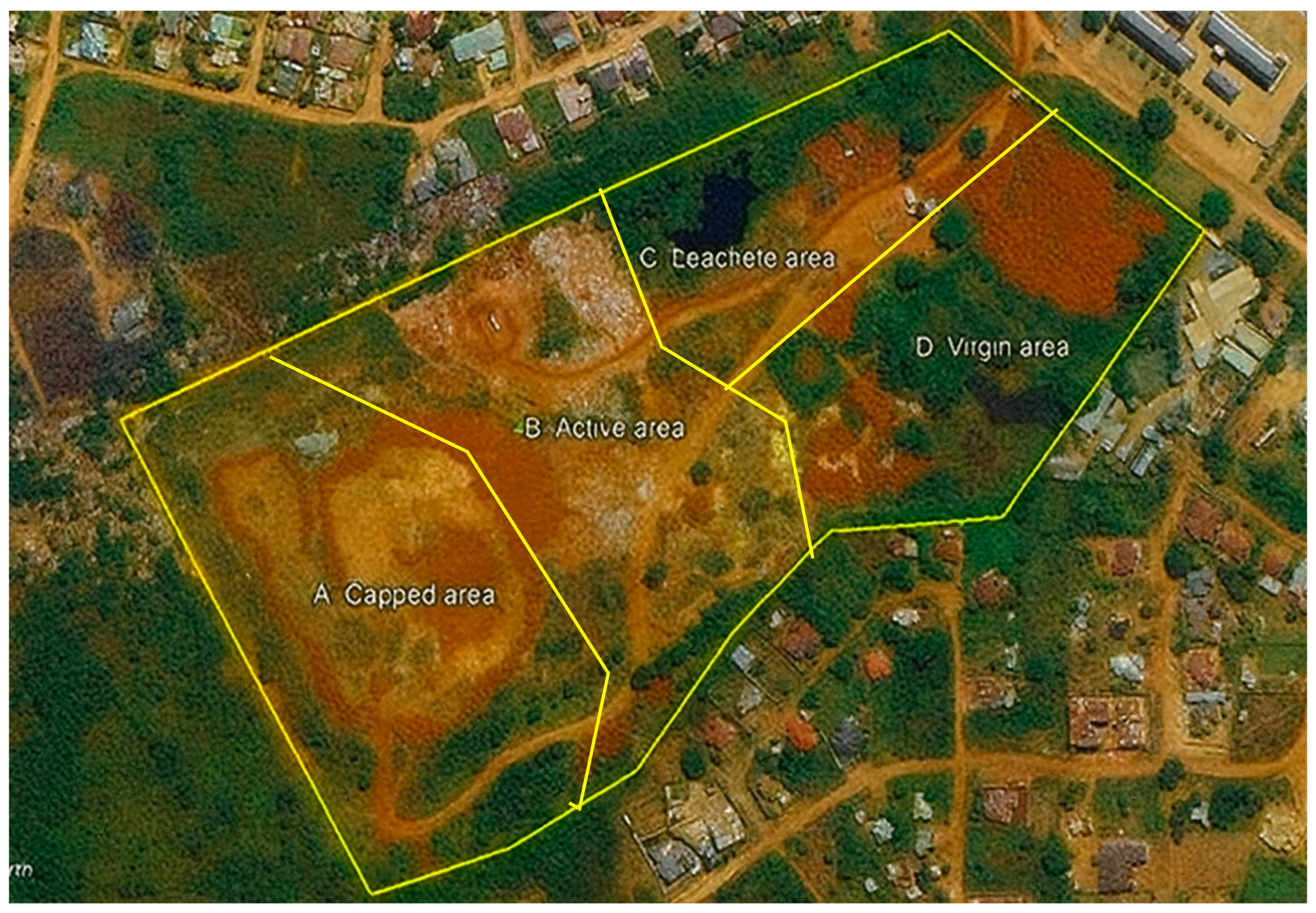
The study was conducted in Thohoyandou landfill, which is the primary waste management facility for Thulamela Municipality in the Limpopo Province of South Africa. The study area was sub-divided into four areas—A (capped areas), B (active area), C (leachate) and D (virgin areas) as shown in Figure 1.
Sample area A (capped area)—the capped area of the landfill refers to a section of the landfill that has been covered with topsoil (clay and construction rubbles) permanently. This is because the cells in that area are full and no longer receive waste. The topsoil is designed to create a barrier that minimises the migration of gases vertically.
Sample area B (active area)—the active area in the landfill refers to the area that has not yet been covered with a final topsoil, unlike sample area A. This area is typically still active and receiving new waste material daily.
Sample area C (leachate area)—The leachate area of the landfill refers to the portion of the landfill where liquid waste (leachate) is stored, collected, and managed.
Sample area D (virgin Area)—This is a section of the landfill that has not yet been used for waste disposal, therefore, exhibits no waste accumulation or disposal activity.

2.2. AERMOD Dispersion Model

The AERMOD model, developed collaboratively by the American Meteorological Society (AMS) and the U.S. Environmental Protection Agency (EPA), was employed in this study through a commercial interface known as ISC-AERMOD View (Version 11.0.1) [11]. This model played a pivotal role in predicting the dispersion of CH4, CO2, and VOC/HAP pollutants in the Thohoyandou landfill area. Simulations for these gases were conducted over distances of up to 5 km in both the horizontal (x and y) directions, originating from the landfill site, which served as the pollutant source. To execute the AERMOD simulations, data like the meteorological data, which include the wind speed, wind direction, cloud cover, humidity, temperature, and hourly precipitation, were utilised. Additionally, the data on land use, coordinates, and the altitude of the meteorological station above sea level were input into the software. The meteorological data used for model input were purchased from the Lakes Environment dataset at a coverage of 50 km from the Thohoyandou landfill [12]. The meteorological data were from the period of January 2019 to December 2022. Upper air meteorological observations and hourly surface monitoring are two important parameters for the AERMET input.
The topographical effects of the site were addressed by using the elevated terrain option in the software, whereby contour lines with a resolution of approximately 90 m are obtained from the Shuttle Radar Topography Mission (SRTM3) database maintained by the U.S. National Geospatial-Intelligence Agency (NGA) and the U.S. National Aeronautics and Space Administration (NASA). The terrain data were pre-processed with AERMAP before modelling in AERMOD. The modelling results were captured in average time intervals of 1 h, 8 h, 24 h, and an annual statistical period. For this study, a comprehensive cartesian receptor grid of about 441 receptor points gave a comprehensive gaseous emission of the study area. The focus ambient area of concern for this study extends to 5 km from the Thohoyandou landfill, which is the emission source. Seven discrete receptors located within a 2–5 km radius of the landfill were set in the modelling domain. The receptors were in different shapes and were randomly located to represent sensitive sites, such as residential areas, school hostels, and hotels. The meteorological data and AERMAP data acquired gave credence to the results obtained.
The emission rates for CO2 and CH4 were derived from a previous study conducted alongside this study titled—Njoku, P. O., Piketh, S., Makungo, R. & Edokpayi, J. N. (2025) [13]. “Quantification and modelling of methane and carbon dioxide surface emissions from a South African landfill.” Environmental Science: Advances, 4(4), 648–662. CH4 and CO2 samples were collected from the surface of the Thohoyandou landfill using the static flux chamber method. The samples were then analysed with gas chromatography (GC) to determine the gas concentrations. These concentrations were subsequently used to calculate the emission rates.
To derive the emission rate of the VOC/HAPs from the landfill, using the LandGEM model. The model calibration and sensitivity analysis were conducted in [13]. Table 1 provides the summary of the input parameters input into the AERMOD model software, during the model run, for easy replicability.
AERMOD was selected for this study because it is the regulatory air-dispersion model recommended by the U.S. Environmental Protection Agency (USEPA) and is widely applied for evaluating short- and long-term pollutant concentrations from ground-level emission sources such as landfills. AERMOD incorporates advanced planetary boundary-layer physics, surface characteristics, stability classes, and terrain adjustments, enabling more realistic simulations than traditional Gaussian plume models. Its compatibility with site-specific meteorological data, moderate data requirements, and its strong performance in near-field (<50 km) pollutant dispersion make it well suited for landfill gas applications. It is important to note that AERMOD was used in its standard non-reactive mode, which does not simulate chemical reactions of VOCs/HAPs; therefore, the modelled concentrations represent primary (inert) emissions only.

2.3. TROPOMI

TROPOMI, a spaceborne spectrometer, has been meticulously engineered for the precise measurement of air quality and atmospheric chemistry. This cutting-edge instrument offers remarkable spatial resolution and sensitivity, making it an indispensable tool for monitoring air pollution and pinpointing its origins. The TROPOMI explorer is an application used to visualise and easily download air pollutant time series from the Sentinel-5P Data (European Commission/ESA/Copernicus). The process of gathering gaseous data through TROPOMI involves a seamless combination of satellite imagery, data processing, and ground-based validation [14,15]. The TROPOMI data were downloaded from the TROPOMI Explorer, Earth Engine App. The time series data were downloaded in CSV format for easy visualisation and analysis. Level 2 calibrated and georeferenced processed data for the TROPOMI were used for this study. At this level 2, comprehensive CH4 data were derived at a resolution of 5.5 × 7.7 km2 [15]. The CH4 data derived from the TROPOMI were used to add another layer of precision, comparison, and confirmation to the CH4 data derived from the AERMOD. The data can be downloaded from this link:

2.4. Model Evaluation

TROPOMI satellite data were used to assess whether AERMOD captured the general temporal variability of CH4 and CO2 from the landfill. Because TROPOMI provides column-averaged mixing ratios (~7 × 7 km) and AERMOD predicts surface concentrations, the two datasets are not directly comparable in magnitude. The comparison was therefore used only as a qualitative trend assessment, not a quantitative validation. AERMOD hourly outputs were averaged over the 5 km domain and smoothed with a 9-day rolling mean to match the temporal resolution of TROPOMI retrievals. TROPOMI data were processed similarly. The aligned time series were then compared to evaluate whether both datasets exhibited similar temporal patterns, recognising that they represent different physical quantities.
To assess the performance of the dispersion pattern model using AERMOD and data derived from TROPOMI, Fractional Bias (FB) and Normalised Mean Squared Error (NMSE) were used [16]. FB is a key metric, which can be defined as follows in Equation (1).
F B = 2 ( C ¯ 0 C ¯ p ) ( C ¯ 0 + C ¯ p )
The NMSE is given by Equation (2).
N M S E = ( C 0 C P ) 2 ¯ C ¯ 0 C ¯ P ,
where the Cp and Co are the predicted and observed concentrations, respectively. Overbars indicate averages over the sample. The FB serves as a measure of the mean bias, where a FB value of 0.6 signifies an approximate twofold under-prediction by the model, while a negative value indicates over-prediction. The FB varied between −2 and +2, with a negative value indicating overprediction, and good performance is indicated by a value close to zero. In contrast, the NMSE reflects variance, with a value of 1.0 suggesting that the typical difference between predictions and observations aligns with the mean. These metrics, as outlined in [17], are well-suited for assessing model performance when the dataset exhibits a relatively low range of values, typically spanning from 0.01 to 100, and when the typical difference between predictions and observations is around twofold. For this study, however, the minimum to maximum CH4 concentrations ranged from 1210.23 to 50,273 µg/m3 for the AERMOD software (Version 11.0.1). The TROPOMI results ranged from 1,165,828 µg/m3 to 1,224,638 µg/m3; hence, we used the log-transformed approach to mitigate errors between observations and predictions. In these scenarios, the more balanced log-transformed dataset was used to compute the geometric mean bias (MG) and the geometric mean variance (VG) as shown in Equations (3) and (4), respectively [18,19]. This offers a more appropriate evaluation of the model performance given the broader concentration range in this study’s dataset.
M G = e x p ( ln C 0 ¯ ( ln C P ¯ ) ,
V G = exp [ ( ln C O ln C p ) 2 ] ¯ ,
where the Cp and Co are the predicted and observed concentrations, respectively. Overbars indicate averages over the sample.
A geometric mean (MG) bias value of 0.5 suggests that the model tends to over-predict by a factor of two, while a value of 2.0 indicates an under-prediction by the same factor. Similarly, a VG value of 1.6 signifies that there is approximately a twofold difference between the predicted and observed data pairs.
In the context of model evaluation, ideal performance would yield FB and NMSE values of 0, indicating no bias and perfect accuracy. Similarly, MG, and VG values of 1.0 would reflect a perfect match between predicted and observed data. The MG and VG are more appropriate as they normalise the data sets by log transformation; MG and VG values also ensure a balance between the data sets.

2.5. Health Risk Assessment

The assessment of inhalation exposure risks associated with carcinogenic and non-carcinogenic VOCs/HAPs followed the methodology recommended by the United States Environmental Protection Agency (USEPA) [20]. For this study, all pollutant concentrations in this study are expressed in mass units (µg/m3), which correspond to the output of the TROP0MI and Aermod models and align with the South African National Ambient Air Quality Standards and WHO guidelines. Although certain toxicological reference values such as RfCs are provided in volumetric units (ppm), these were converted to mass concentrations using the standard USEPA ideal-gas relationship based on a molar volume of 24.45 L/mol at 25 °C and 1 atm. This ensured that all exposure and risk calculations were performed in a consistent unit system. The concentration of exposure (EC) for individuals exposed to VOCs/HAP through inhalation was determined using Equation (5).
E C i = C i × E T × E F × E D A T × 365 × 24 ,
where ECi is the EC of compound i, µg/m3; Ci is the concentration of compound i in the air, µg/m3; ET is the exposure time, h/d; EF is the exposure frequency, day/year; ED is the exposure duration, year; AT is the average time that humans are impacted by the non-carcinogenic/carcinogenic effects, year. For non-carcinogenic risk, AT is equal to the exposure time, while for carcinogenic risk, AT is equal to the average life expectancy of the population. The individual and cumulative non-carcinogenic health risks were expressed as the hazard index (HI), which can be calculated using Equations (6) and (7) as follows:
H I i = E C i R f C i ,
H I T = i = 1 n H I i ,
where H I i is the individual non-carcinogenic health risk of compound I; R f C i is the reference concentration of compound i, µg/m3; and HIT is the cumulative non-carcinogenic health risk of compounds. If HI ≤ 1, the non-carcinogenic health risk is deemed acceptable. The individual and cumulative carcinogenic health risks were defined as the probability of developing cancer during a lifetime, which can be calculated using Equations (8) and (9), respectively.
R i = E C i × I U R i ,
R T = i = 1 n R i ,
where Ri is the individual carcinogenic health risk of compound i; I U R i is the inhalation unit risk of compound i, (µg/m3)−1; and RT is the cumulative carcinogenic health risk of compounds. Following the criteria established in prior research [21,22], this study applied the following classification for carcinogenic risk assessment: R ≤ 1 × 10⁻⁶ implies negligible carcinogenic risk; 1 × 10⁻⁶ < 1 × 10⁻³ suggests a moderate carcinogenic risk, and R ≥ 1 × 10⁻³ indicates a significant carcinogenic risk. The values for RfC and Inhalation Unit Risk (IUR) were sourced from the Integrated Risk Information System (IRIS, https://www.epa.gov/iris (accessed on 22 October 2025)) and Risk Assessment Information System (RAIS, https://rais.ornl.gov (accessed on 22 October 2025)). Details of the default and site-specific parameters are shown in Table 2.

3. Results and Discussion

3.1. Results for Emission Rates of CH4 and CO2

The emission rate for LFGs served as an important input variable for the AERMOD model, playing a pivotal role in predicting the dispersion of pollutants in the Thohoyandou landfill area. Table 3 and Table 4 present the results of the emission rates for CH4 and CO2, as determined in [13]. The data include concentrations and emission rates for CH4 and CO2, during both the wet and dry seasons of 2022.
The emissions inventory of VOCs/HAP is detailed in Table 5, which showed that carbon monoxide and toluene have the highest emission rate of 4.80 and 4.39 Mg/year, respectively. Similarly, benzene and xylenes stand out with emission rates of 1.054, and 1.56 Mg/year, respectively, and a considerable amount was present in the LFG samples. Chloroform and mercury at 0.0044 and 0.000071 Mg/year, respectively, had relatively lower individual contributions, to the LFGs’ emissions.

3.2. Assessment of LFGs Dispersion in the Surrounding Atmosphere Through the TROPOMI and AERMOD Models

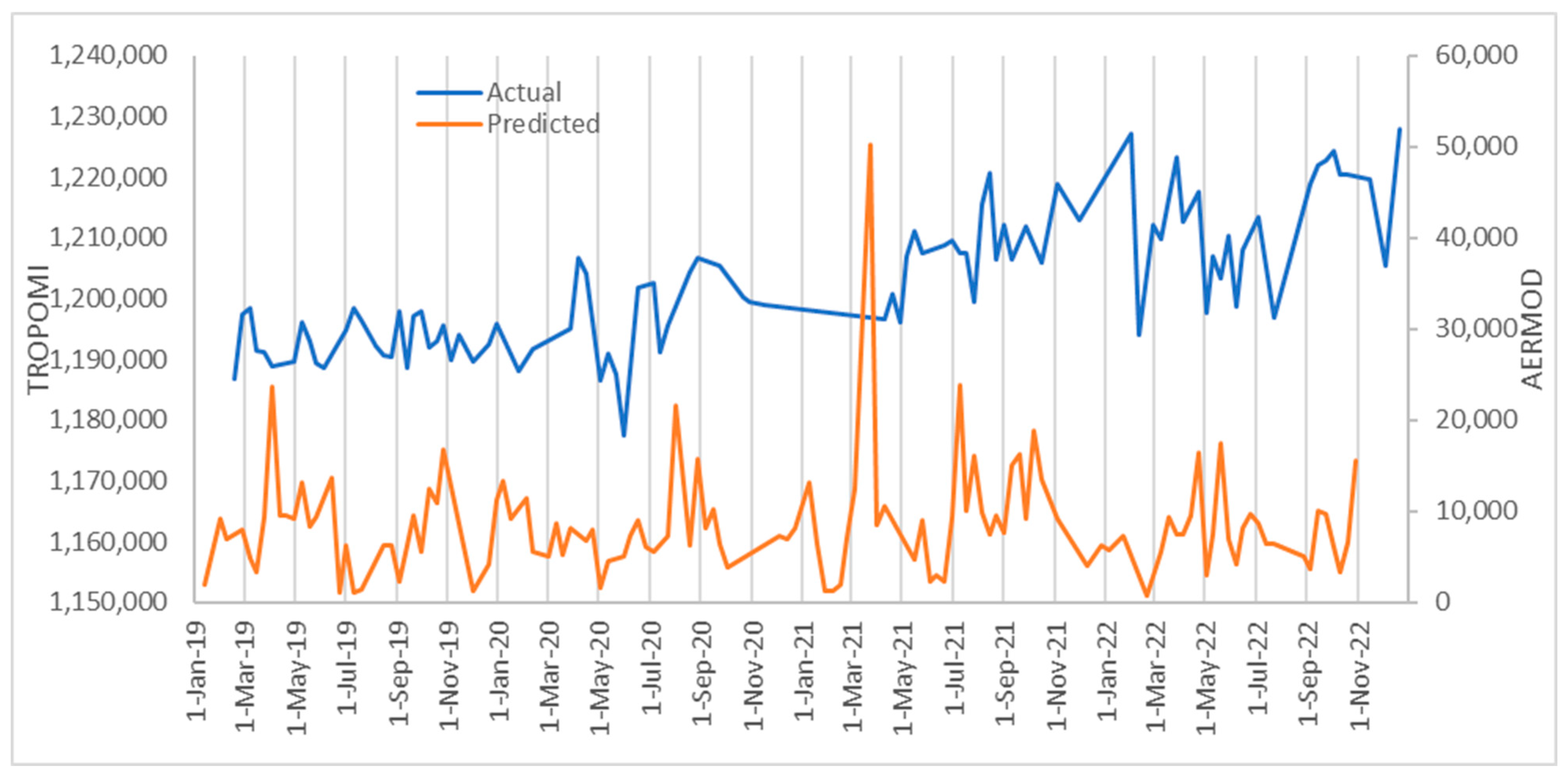
The TROPOMI and AERMOD models were used to evaluate the dispersion of LFGs within the ambient air in the vicinity of the Thohoyandou landfill. A 24-hourly modelled CH4 concentration was obtained using the AERMOD software and compared with the real time satellite data extracted from the TROPOMI satellite. The results from the AERMOD and TROPOMI were captured over the same land area to make sure the data were from the same domain and covered the same surface area. Figure 2 shows the time series comparison of the AERMOD CH4 concentration with results from the TROPOMI satellite. The temporal data for the comparison were from 1 January 2019 to 31 December 2022, the period of the study. The data from both the AERMOD and the TROPOMI satellite were converted into time series of 9-day intervals during the data cleaning. This was due to missing data from the TROPOMI satellite because of high cloud cover in the atmosphere. The data cleaning helped to give a consistent result across the modelled and real-time data of CH4 concentration.
The results showed that the real-time measured CH4 concentrations were higher than the modelled CH4 concentrations (Figure 2). This is because the AERMOD model results do not consider the CH4 emissions from other sources around the study area site. The modelled results only considered the CH4 emissions from the Thohoyandou landfill site as the only source, unlike the CH4 concentration results from the TROPOMI satellite. The TROPOMI results considered all sources of CH4 emissions within the study area site; therefore, the concentration of pollutants obtained from modelling was lower than the amount of the measured concentrations in the study area [23].
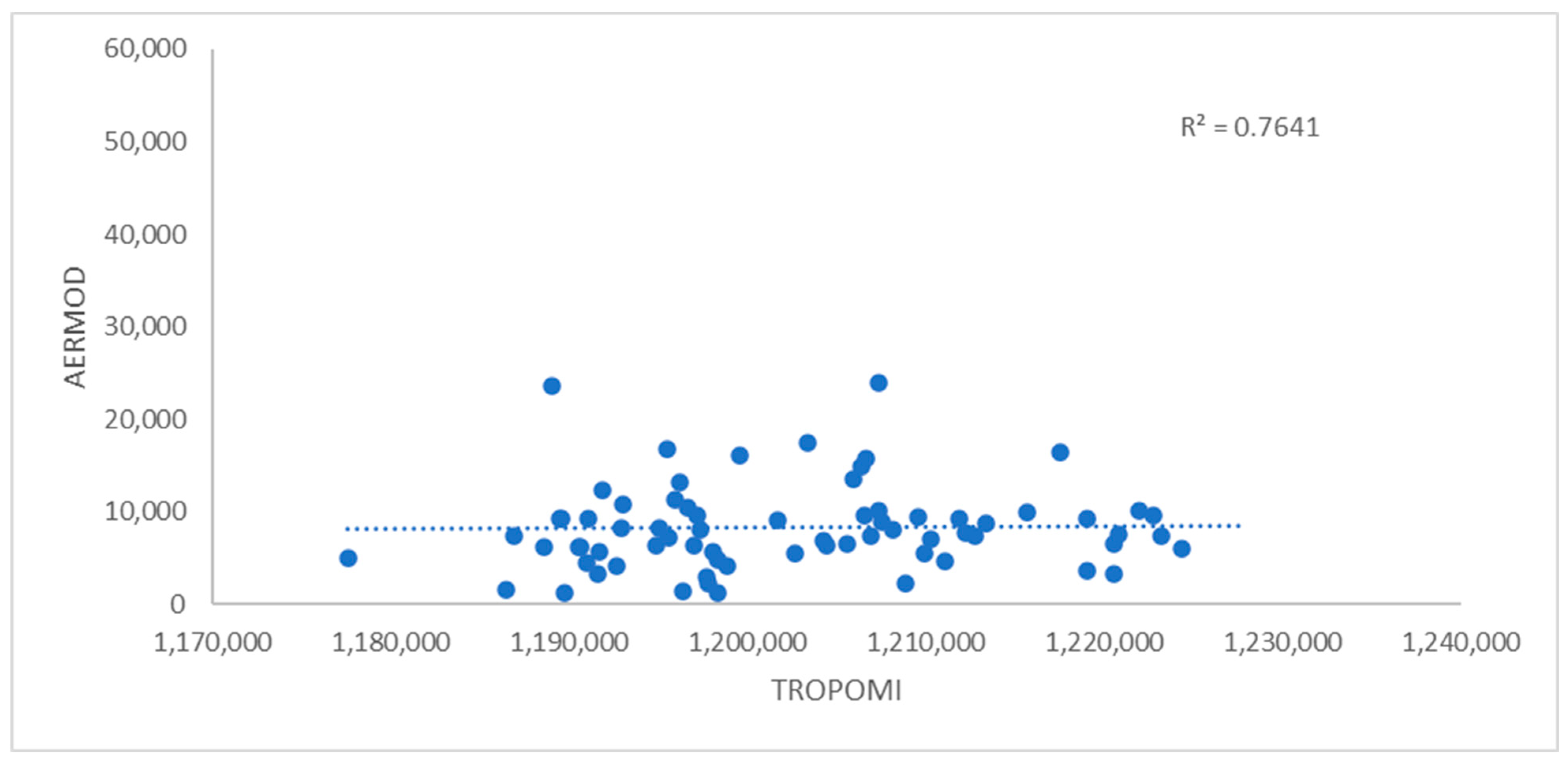
With the help of statistical indicators, the accuracies and reliabilities of the predicted AERMOD daily CH4 concentrations were assessed within the TROPOMI satellite-measured concentrations. This study employed four statistical indicators to validate the model performances through USEPA guidelines—FB, MG, VG and the R2 value—from the scatter plot.
There was a visual pattern observed in the plot of the AERMOD model and TROPOMI results; despite this, it was imperative to evaluate the performance of the models statistically in order to determine their reliability and accuracy with the real-time values. The FB value of 1.009 represented a moderate positive bias, indicating that the model is, on average, moderately overestimating pollutant concentrations (Table 6). The positive bias could be because of uncertainties in the emission inventory particularly the CH4 flux estimates derived from LandGEM. This is a common source of bias in landfill dispersion studies. LandGEM relies on default decay constants, methane generation potential values, and generalised waste composition assumptions, all of which can produce overestimated landfill CH4 emission rates when site-specific field measurements are unavailable [24]. AERMOD does not explicitly incorporate the background CH4. Thus, any regional, agricultural, biogenic, or anthropogenic CH4 emissions captured by TROPOMI (which measures column-averaged concentrations from all sources) but excluded from the model setup can distort the comparison. In this case, the absence of background CH4 in the dispersion simulations may artificially inflate the apparent model-to-satellite difference, resulting in an FB bias. Furthermore, AERMOD is sensitive to meteorological inputs such as planetary boundary layer (PBL) height, mixing height, surface roughness, and stability classes. Errors or coarse temporal resolution in meteorological fields may lead to overestimated plume retention near the surface [11]. Despite the positive FB, the value remains within a range commonly reported for landfill dispersion modelling. The magnitude of 1.009, while indicating bias, does not invalidate the modelling results but instead highlights areas where inventory refinement and background concentration adjustments could improve future simulations. This means that the model results can be considered reliable for many practical purposes, such as regulatory compliance assessments or trend analyses.
The VG value of 1.4 for the AERMOD to TROPOMI log-transformed data, spanning a range of 0 to 14, indicates that the data are quite variable (Table 6). This suggests that the concentrations of the air pollutants being measured can vary considerably across the study area or time. It also implies the presence of local hotspots with significantly higher pollutant concentrations compared to the average. These hotspots can be of concern for public health and may require targeted mitigation measures [19].
The R2 is a statistic that measures how well a regression model fits the data. In the context of modelled and real-time concentrations, the R2 (0.8) suggests that 80% of the variability in the real-time concentrations can be explained by the model’s predictions (Figure 3); that is, the model is quite effective at capturing the underlying patterns and relationships between the independent and dependent variables, indicating that the model is a good fit for the data and provides accurate predictions. In addition, the R2 value indicates a strong correlation between the AERMOD predicted concentrations and TROPOMI actual concentrations.

3.3. Wind Rose Analysis

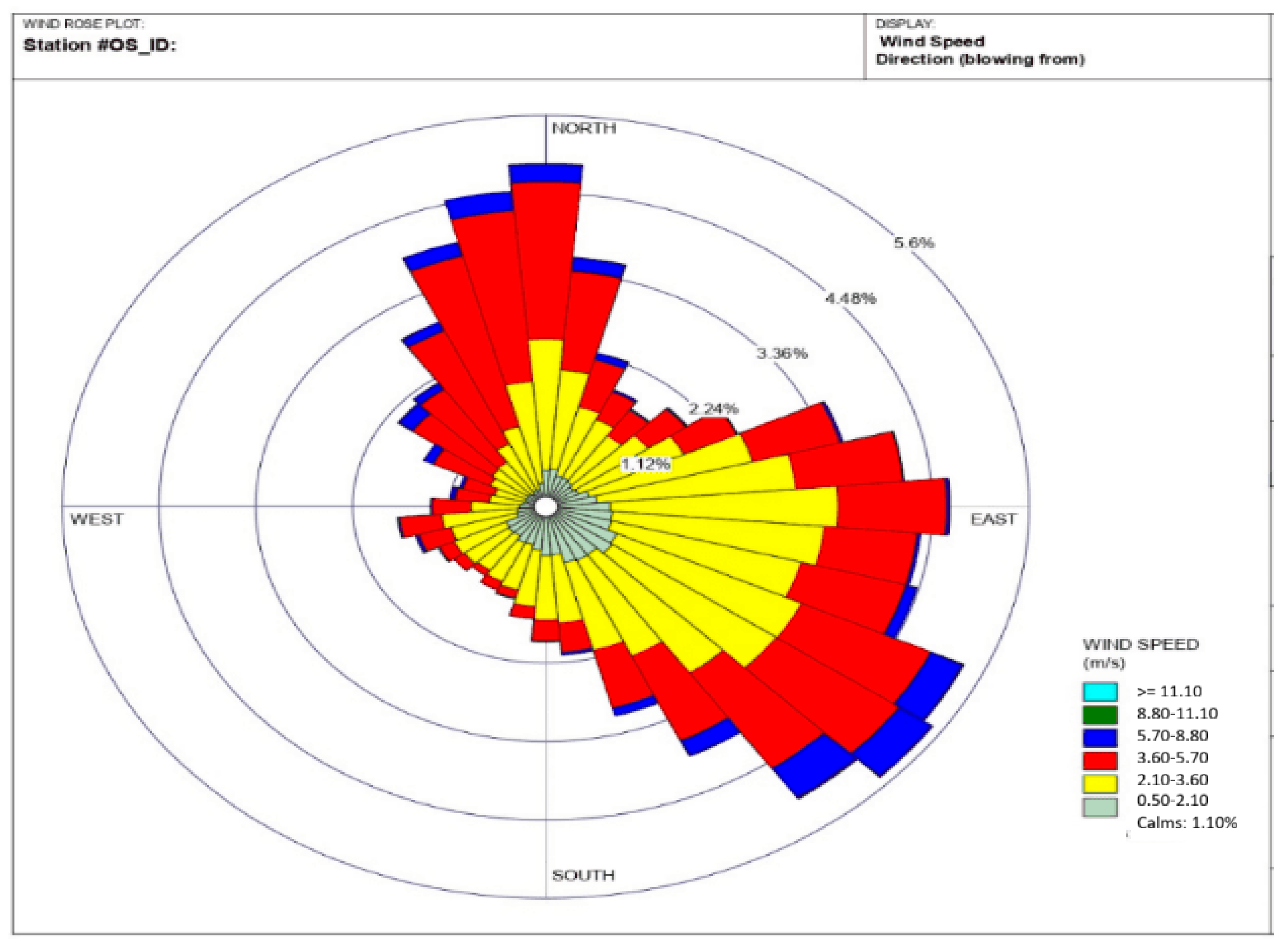
The meteorological data obtained from the Lakes environment dataset, as indicated by [25], covering the period between 2019 and 2022, revealed a complex wind pattern influenced by various factors. These included large scale sea circulations and daily mountain valley effects, with local topography playing a role in modifying wind characteristics. The daily climate in this region was notably shaped by seasonal winds and interactions in the area [26]. Analysing the wind rose diagram, it becomes evident that the prevailing wind direction predominantly originated from the southeast, often accompanied by high wind velocities, as shown in Figure 4. This wind pattern was crucial in assessing the model’s ability to describe the dispersion of CH4 and CO2 emissions from the Thohoyandou landfill site [27]. Based on the wind rose, 1.01% of recorded winds in this area were calm, while a significant 94.9% exhibited notable direction and speed. There were notably fast winds observed, both from the southeast and the north. These winds played a crucial role in dispersing the pollutants emitted from the landfill site. On average, the prevailing wind direction in the study area was southwest, occasionally accompanied by winds from the north, with an average wind speed of 3.23 m/s.

3.4. Evaluation of CH4 and CO2 Emissions Using the AERMOD Model

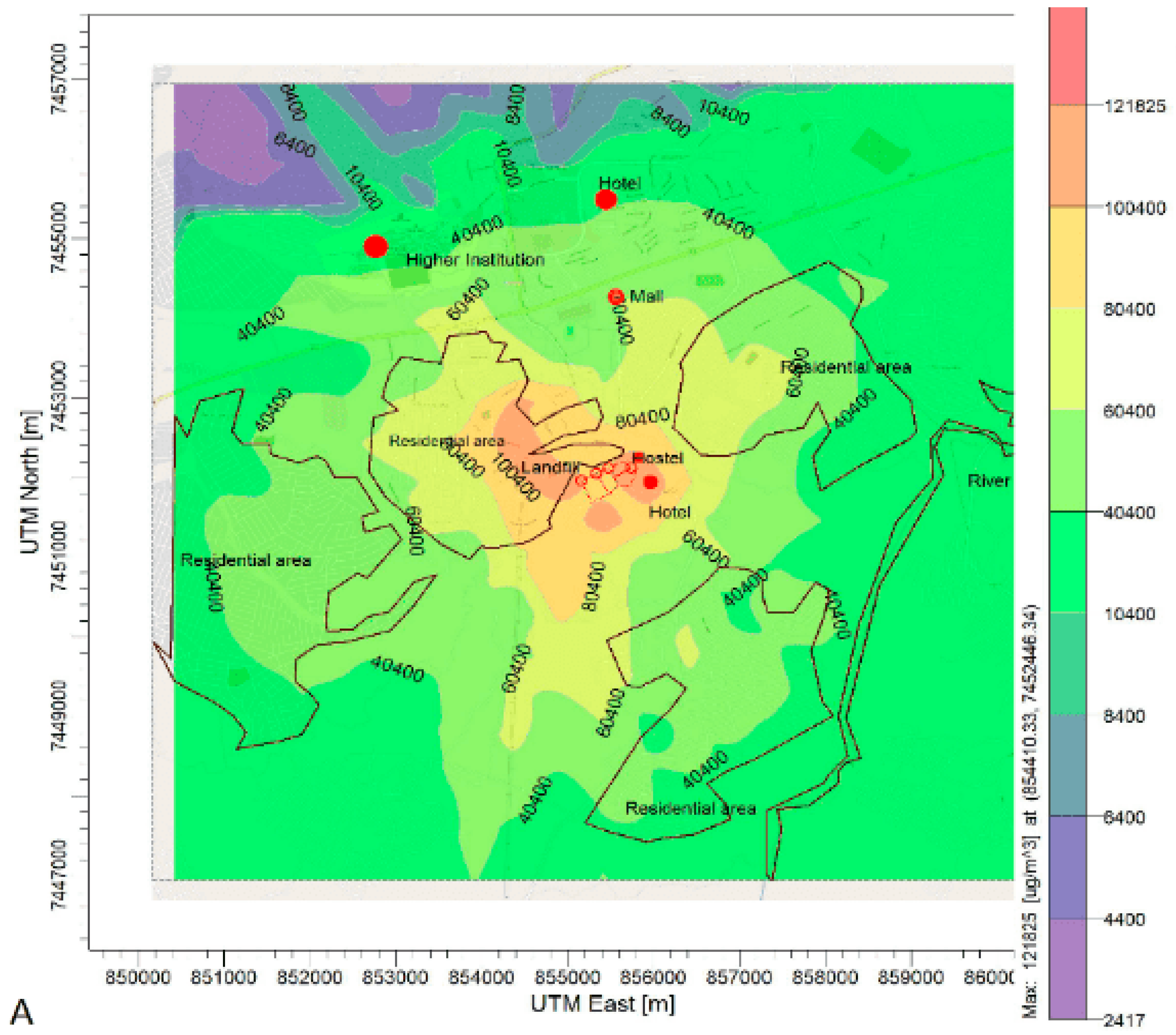
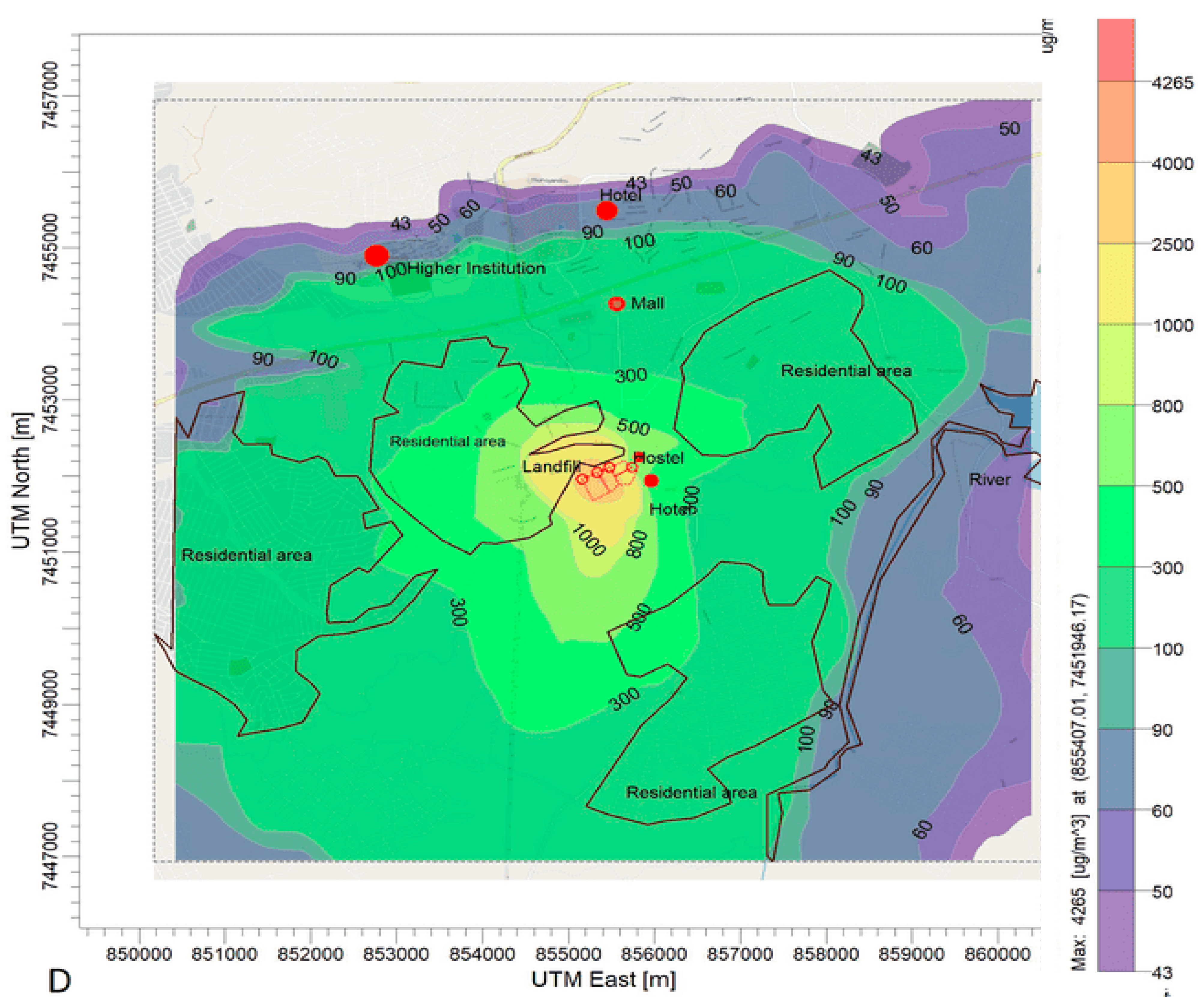
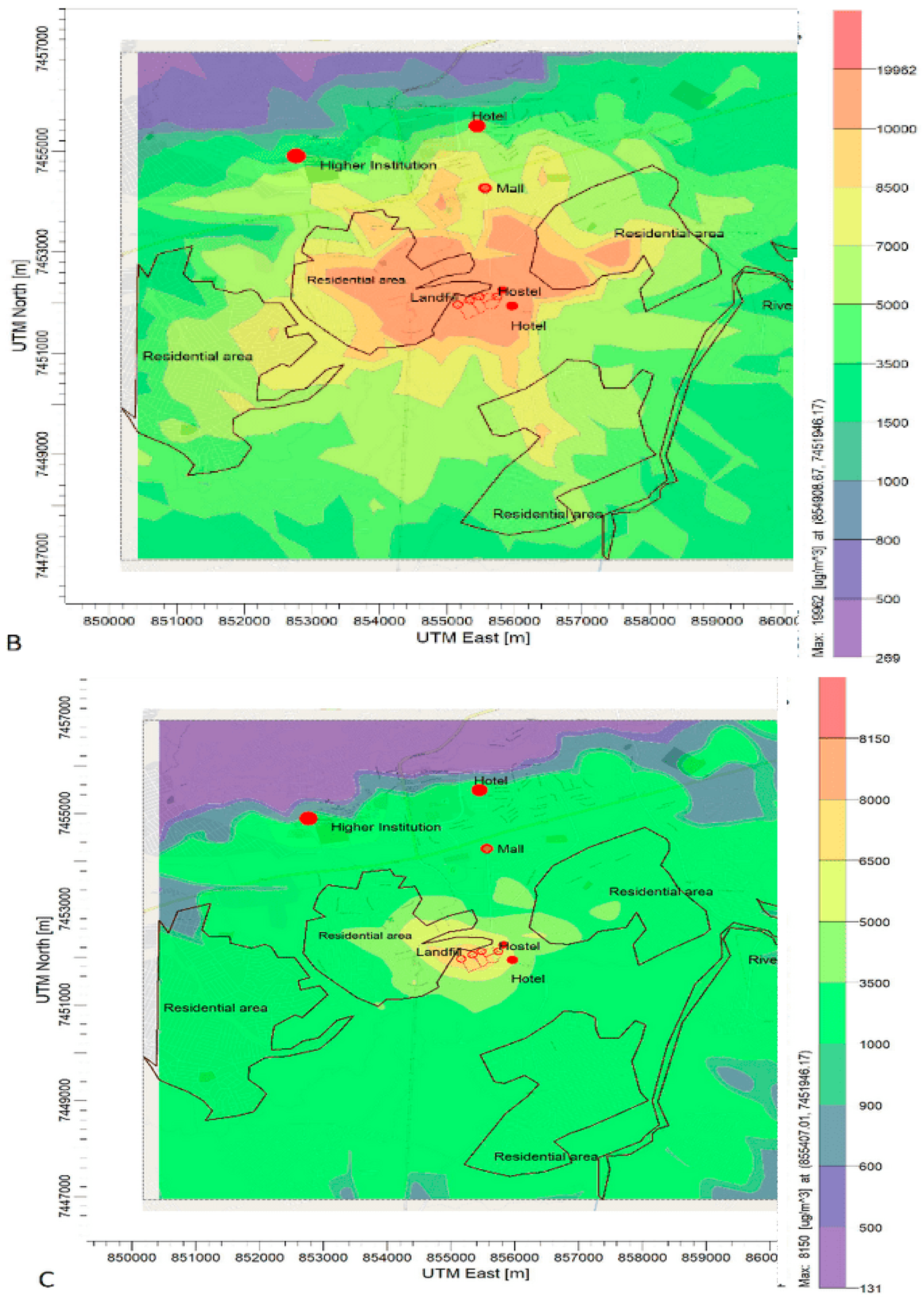
The spatial data map of the study area, within 5 km away from the landfill site, was first converted into a reference land map using global mapper software and loaded with coordinates in the AERMOD model. Figure 5A–D illustrate the dispersion modelling of CH4 emission for 1 h, 8 h, 24 h, and annual emissions, respectively. It was observed that the 1 h maximum concentration of CH4 was 4.6 × 10⁵ µg/m3, while the annual rate was 1.6 × 10⁴ µg/m3. The maximum CH4 8 h concentration for CH4 was 1.2 × 10⁵ µg/m3, and the areas closest to the landfill experienced the highest concentration of CH4 emissions.
When these findings are compared with previous AERMOD based studies, a similar spatial pattern emerges, where short-term peaks remain concentrated at the landfill boundary. However, the actual CH4 concentration levels reported across studies differ substantially, and these differences can be attributed to several interacting factors related to landfill like the landfill operations, type of waste deposited, or climate of the area.
In a similar study, the authors of [28] assessed CH4 emissions from the Sarimukti landfill using AERMOD. The results showed peak CH4 concentrations of 8.9 × 10⁴ µg/m3 (1-h), 1.6 × 10⁴ µg/m3 (24-h), and 1.7 × 10³ µg/m3 (1-year) at UTM coordinates of 9.6 × 10⁴ m, 9.2 × 10⁶ m. High concentrations were near the landfill on open land with minimal impact on the surrounding vegetation. These differences in CH4 emission between the two landfills could be because of differences in waste composition, operational management, and the type of waste disposed between the two sites. In addition, ref. [8] identified a maximum CH4 concentration of 3.0 × 10⁴ µg/m3 near the landfill, with variations between 1.0 × 10³ and 2.5 × 10³ µg/m3 in different Shahrekord areas. Talaiekhozani et al.’s (2018) [29] study of the Borujerd landfill observed the highest CH4 1 h concentrations ranging from 1.2 × 10⁵ to 1.0 × 10⁵ µg/m3 near the landfill.
Several interacting factors help explain the contrasting magnitudes. The landfill operational status, whether waste is actively deposited, compacted, or covered, strongly influences the CH4 generation rates and thus affects the emission fluxes fed into AERMOD. The age and decomposition stage of waste also play a role, as older stabilised waste generally emits less methane than newer deposits. Local meteorology, including wind speed, mixing height, and atmospheric stability, governs the plume dilution and therefore shapes the short-term concentration peaks observed across studies. Even differences in terrain characteristics, receptor placement, or the specification of the surface roughness and land-use parameters can influence the model’s dispersion efficiency. Consequently, the variations in reported concentration levels are consistent with the expected sensitivity of AERMOD to site-specific emission dynamics and environmental conditions.
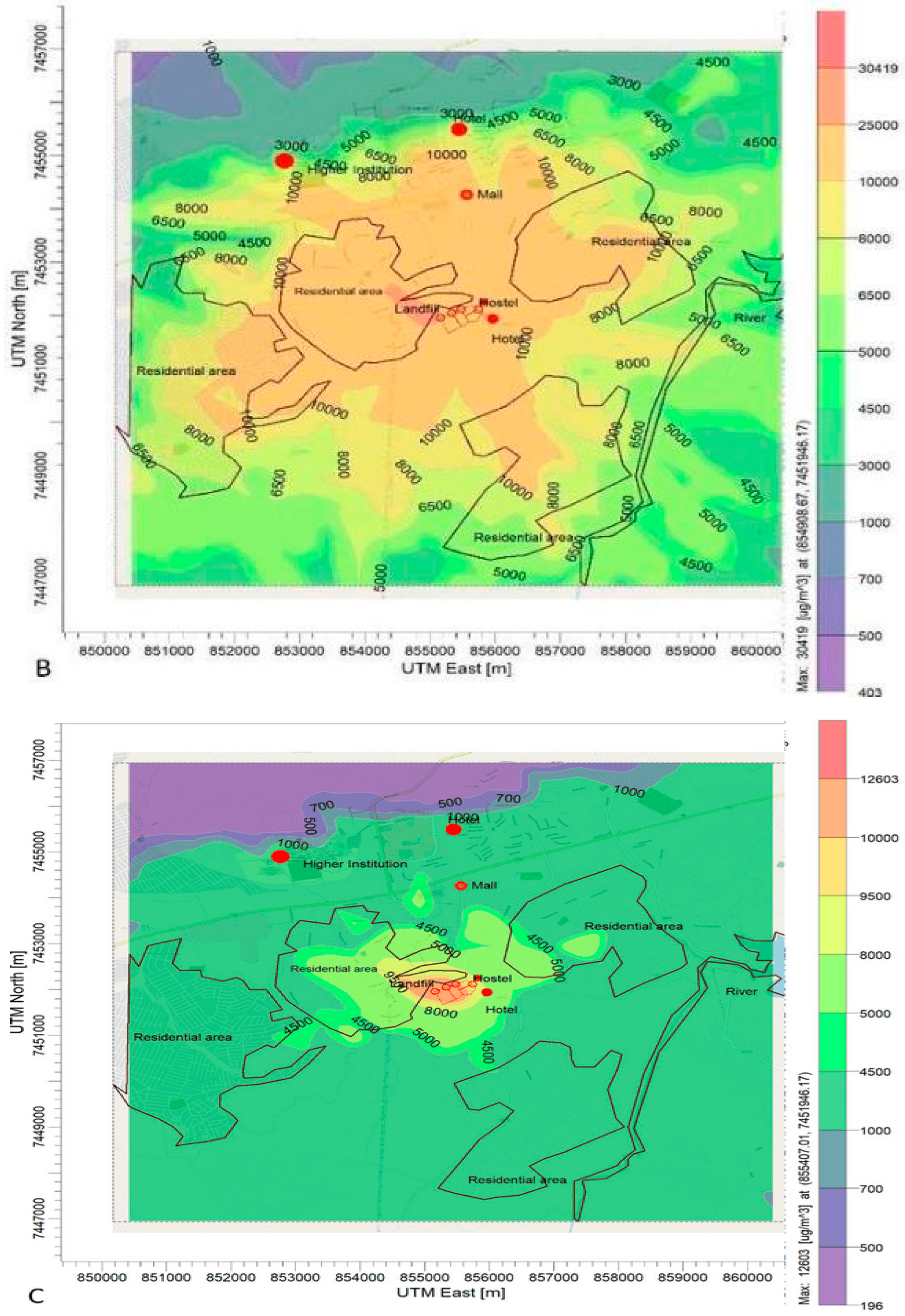
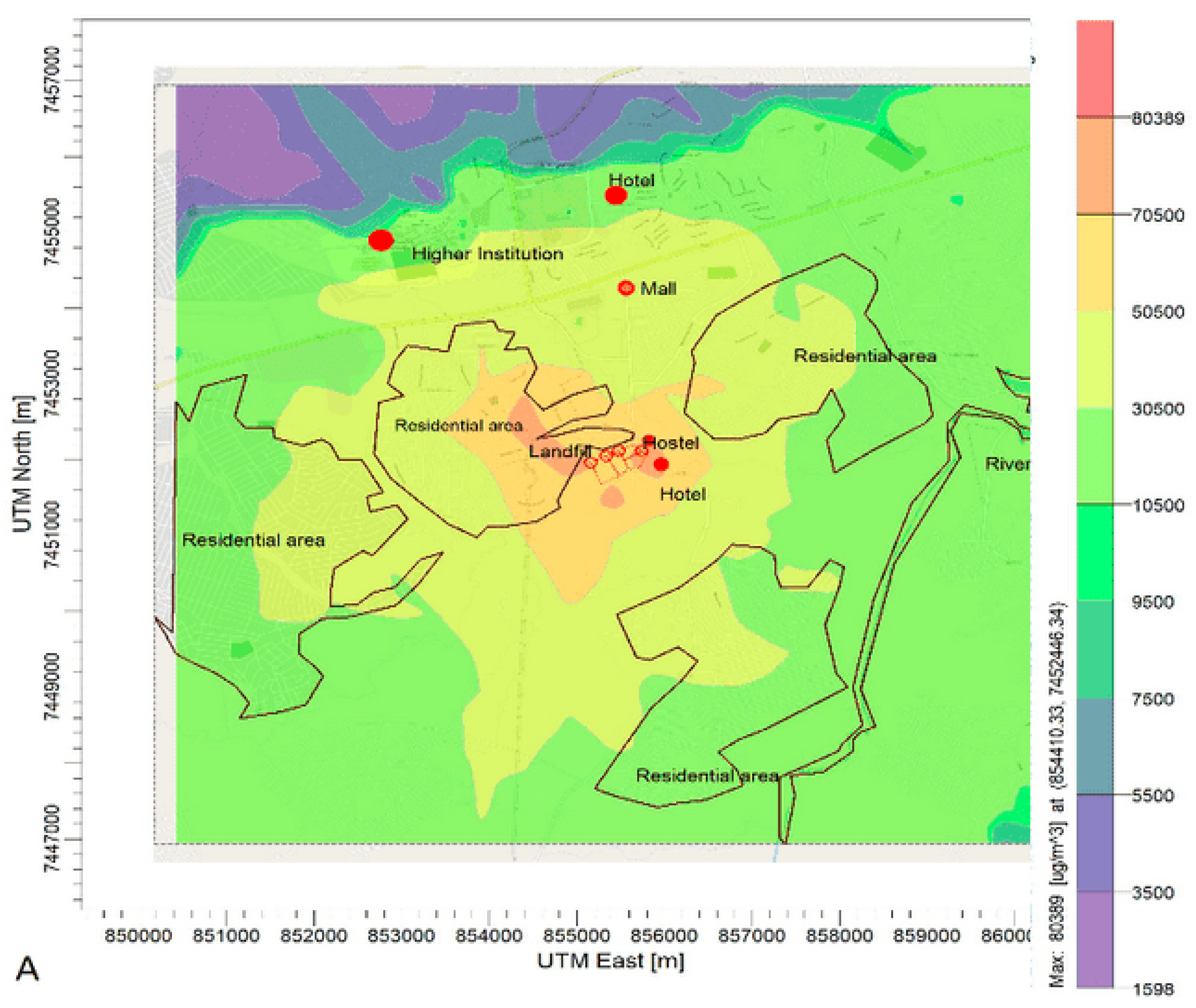
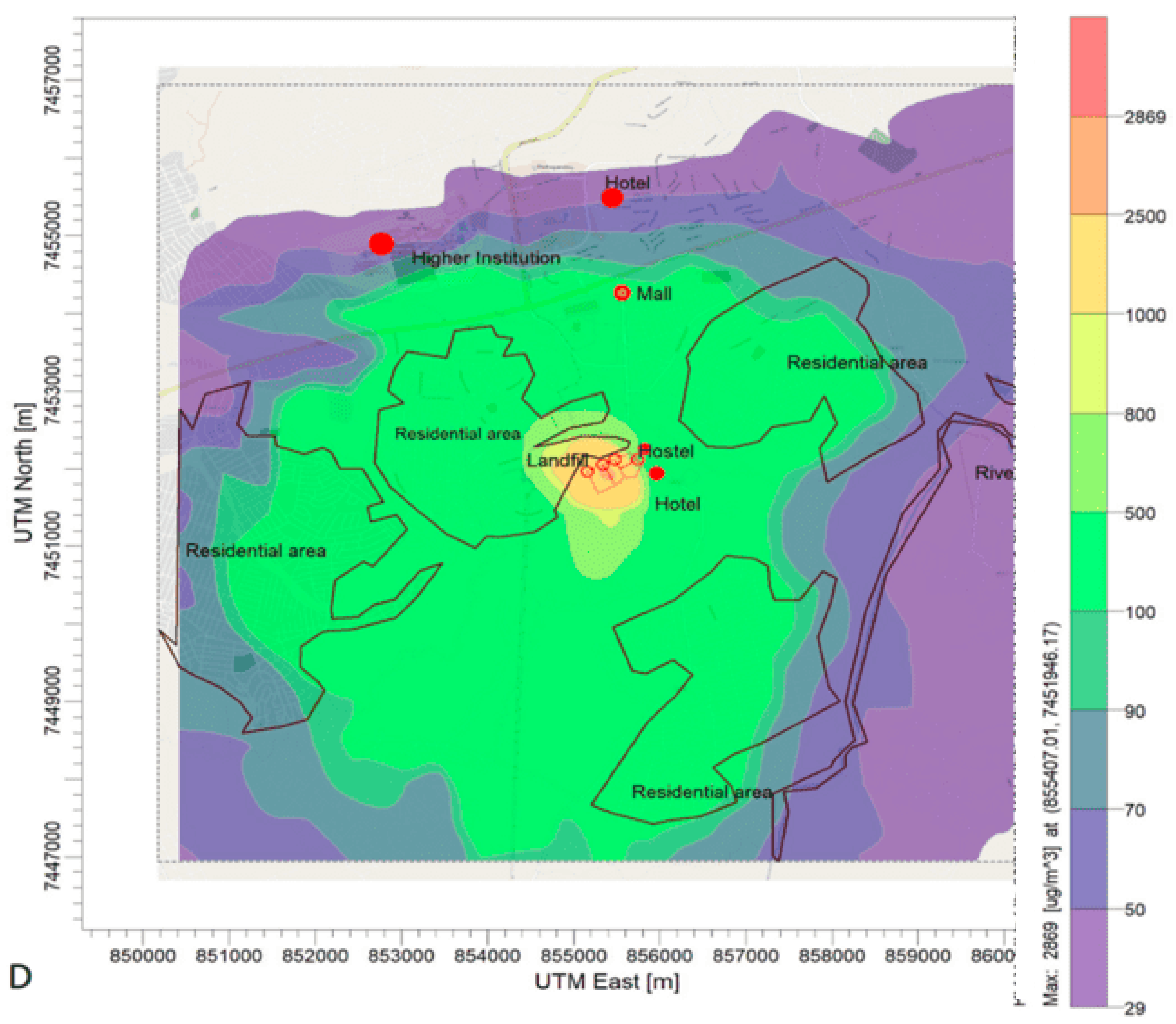
This pattern of near source concentration dominance observed for CH4 is also evident in the behaviour of CO2 in the present study. Although CO2 is produced through different biochemical pathways and typically exhibits higher background levels than CH4, its modelled concentrations similarly show strong spatial confinement, with peak values occurring closest to the landfill. As with CH4, the magnitude of these CO2 concentrations reflects the interplay between landfill emission intensity, local meteorological conditions, and the model configuration parameters. Figure 6A–D show the CO2 dispersion simulation for different time periods: 1 h, 8 h, 24 h, and the entire year (2019–2022). The simulation revealed that the highest 1 h concentration of CO2 recorded was 7.4 × 10⁵ µg/m3 and the annual maximum concentration of CO2 reached 3.1 × 10⁴ µg/m3. The maximum 8 h concentration of CO2 was 4.6 × 10⁵ µg/m3, whilst the highest concentrations were found in areas closest to the landfill. Similarly, the annual CO2 emissions from the Borujerd landfill, ranged from 8.2 × 10² to 3.5 × 10³ µg/m3 in various parts of the landfill. These emissions were independent of CO2 from other sources, like vehicles and industries.
The prevailing wind in the study area is from the southeast, with occasional wind from the northwest. Figure 5 and Figure 6 show CH4 and CO2 dispersion on a 1 h and annual average basis. For the 1 h dispersion, the maximum ground level concentration (GLC) occurred approximately 1 km south of the emission source, whereas the influence of the southeast wind direction was obvious in all the dispersion results. Among the discrete receptors, the residential area experienced the highest concentration in all cases due to its proximity to the emission source. Focusing on the annual average, the comparison of the ambient concentration of LFGs emitted along the regulatory standards of CH4 and CO2 showed that the discrete receptors, mostly those within 5 km north of the landfill were exposed to a very low concentrations of CH4 and CO2 gaseous pollutants. Similar results were observed in [30], when they examined CO2 pollutants; the modelled results revealed that the maximum 8 h concentration of CO2 during the warm season was 2.9 × 10⁵ µg/m3, and during the cold season, it reached 8.1 × 10⁵ µg/m3.

3.5. Evaluation of VOCs/HAP Emissions Using the AERMOD Model

Table 7 presents the concentrations of VOCs/HAP emitted from the Thohoyandou landfill, indicating their formation through the decomposition of organic MSW. Toluene, with a peak concentration of 94.3 µg/m3, suggests potential sources such as paints, adhesives, or industrial processes contributing to ambient air pollution [31]. Carbon monoxide follows with the second-highest concentration at 23.6 µg/m3, indicating an incomplete combustion process during MSW decomposition [29]. Dichlorodifluoromethane, ranking third with a concentration of 11.6 µg/m3, historically used as a refrigerant, may have originated from waste disposal practices, posing environmental concerns due to it facilitating ozone layer depletion [32]. Ethanol and methylene chloride exhibit concentrations of 7.49 µg/m3 and 7.16 µg/m3, respectively, both of which are commonly associated with industrial processes [33]. Xylenes, presenting a concentration of 7.67 µg/m3, represent a group of isomeric compounds found in various industrial products, indicating the presence of industrial waste as potential sources of pollution [34]. Certain compounds, such as chloroform (0.022 µg/m3) and mercury (0.00035 µg/m3), demonstrate relatively low concentrations, suggesting effective containment measures or reduced emissions from the landfill.

3.6. Potential Health and Environmental Risk from the Inhalation of VOCs/HAP

Due to the proximity of residents to the landfill, possible exposure to atmosphere-borne toxic VOCs/HAP prompted an assessment of the potential chronic health effects, encompassing both non-cancer and cancer risks, through inhalation. The evaluation of non-carcinogenic risk considered all 26 detected and quantified species of toxic VOCs/HAP, while the assessment of cancer risk specifically focused on the 13 identified species.

3.6.1. Non-Carcinogenic Health Risk Effects

The health risk assessment in terms of non-carcinogenic aspects focused on the potential adverse health effects not related to cancer development. Table 8 provides a comprehensive summary of non-carcinogenic compounds and their corresponding health risk parameters. Only compounds with known RfC values or Inhalation Unit Risk IUR factors were included in the calculation of individual HQ, cumulative HI, and carcinogenic risk. Compounds such as carbon monoxide, dichlorobenzene, and other compounds that lack USEPA approved RfC or IUR values cannot be quantitatively incorporated into non-cancer or cancer risk calculations (Table 8). Their absence from the HI calculation does not imply zero risk; rather, it reflects insufficient toxicological data for regulatory approved risk quantification The assessment of human health risk involves evaluating the nature and extent of adverse health effects in individuals exposed to LFG emissions. In this study, exposure and risk assessments following the USEPA methodology, specifically considered human exposure to LFG, primarily through inhalation. The toxicity of LFG to human health is directly linked to daily inhalation exposure. Obtaining results for a non-carcinogenic analysis involve calculating the non-carcinogenic CDI values, as presented in Table 8.
From Table 8, All the studied LFGs had total HQs below 1 except for 1,1,2-Trichloroethane with a value of 1.27. Accordingly, the health-risk estimation of the identified LFGs revealed the mean HQs, suggesting a non-acceptable level of non-carcinogenic harmful health risk in all LFGs from Thohoyandou landfill. A total HQ of 1.86, which is above 1, therefore poses a health risk to the residents living close to the Thohoyandou landfill. Specifically, 1,1,2-Trichloroethane (HQ = 1.27) is the dominant contributor to the non-cancer risk, accounting for more than two-thirds of the cumulative hazard. This dominance aligns with previous landfill studies, where chlorinated aliphatic hydrocarbons were also leading contributors to cumulative inhalation risk [35]. Its high HQ reflects both the measured concentration and inherent toxicity. The compound’s moderate volatility, density greater than air, limited soil adsorption (log Koc ~1.8–2.0), and atmospheric persistence (half-life ~49 days) favour accumulation near emission sources, sustaining exposure potential [35,36]. Toxicologically, 1,1,2-Trichloroethane affects the liver, kidney, and central nervous system and is classified as a possible human carcinogen [36]. Secondary contributors include acrylonitrile (HQ = 0.23), trichloroethylene (HQ = 0.25), dichlorodifluoromethane (HQ = 0.027), tetrachloroethylene (HQ = 0.021), and xylene (HQ = 0.018). Although many remaining species have relatively low HQ values individually (<0.1), their combined effect adds to the overall HI.
The residents are likely to suffer from cardiovascular diseases (such as heart disease and stroke), respiratory diseases (such as asthma and chronic obstructive pulmonary disease), diabetes, arthritis, and many others. From the summation of the total HQs, it can be concluded that the contribution of the LFGs to the carcinogenic health risk was from chlorodifluoromethane < 1,1,1- trichloroethane< ethyl chloride < chloroform< methyl isobutyl ketone (4-methyl-2-pentanone) < carbon disulfide < methyl ethyl ketone (2-butanone) < mercury (elemental) < pentane, n-< carbonyl sulphide < chlorobenzene < chloromethane < hexane, n- < methylene chloride < toluene < vinyl chloride > benzene < 1,2- di chloropropane < 1,2-dichloroethane < trans-1,2-dichloroethylene < xylenes < tetrachloroethylene < dichlorodifluoromethane < trichloroethylene < acrylonitrile < 1,1,2-trichloroethane (Table 8). These results corroborate those obtained from [37]; this strengthens the validity and reliability of the results derived in both studies.

3.6.2. Carcinogenic Health Risk

Some LFGs can potentially enhance the risk of cancer in humans. Long-term exposure to low amounts of these toxic LFGs could, therefore, result in many types of cancers. The total exposure of the residents was assessed based on the mean carcinogenic CDI values given in Table 8. The carcinogenic risk assessment for residents living close to the landfill is also given in Table 8.
Among the studied VOCs/HAPs compounds, hydrogen sulphide presents the highest potential for cancer risk (2.95 × 10⁻³), while tetrachloroethylene exhibits the lowest cancer risk probability (7.82 × 10⁻⁸) (Table 8). The current investigation identified an elevated risk of cancer associated with the inhalation of these LFGs. The findings suggest that residents residing near the Thohoyandou landfill sites may experience an increased risk of developing cancer due to the emission of LFGs. Additionally, workers in landfill sites are also at a heightened risk of cancer. The study also assessed other compounds such as benzene, trichloroethane, 1,1,2-, trichloroethylene, and vinyl chloride. Each of these compounds was evaluated for their carcinogenic risk based on their respective CDI values. Benzene showed a carcinogenic risk of 5.7 × 10⁻⁷, indicating a moderate risk and suggesting a higher probability of cancer compared to tetrachloroethylene but lower than hydrogen sulphide. Trichloroethane, 1,1,2-, trichloroethylene, and vinyl chloride had a carcinogenic risk of 1.5 × 10⁻⁶; 2.8 × 10⁻⁶, 1.3 × 10⁻⁵, and 9.23 × 10⁻⁵, respectively, indicating a moderate risk and highlighting their noticeable impact on cancer risk. Acrylonitrile exhibited a moderate carcinogenic risk with a probability of 1.1 × 10⁻⁵, highlighting it as another substantial contributor to cancer risk.
These findings are consistent with previous research that identifies LFGs as sources of carcinogenic risk. For instance, a study by [20] indicated that VOCs and HAPs emitted from landfills significantly contribute to cancer risks in nearby populations. Similarly, the authors of [22] highlighted the carcinogenic potential of hydrogen sulphide and other landfill gases, further supporting our findings. These findings suggest that residents residing near the Thohoyandou landfill sites may experience an increased risk of developing cancer due to the emission of LFGs.
This study applied the following classification for carcinogenic risk assessment: IR ≤ 1 × 10⁻⁶ implies negligible carcinogenic risk, 1 × 10⁻⁶ < 1 × 10⁻³ suggests a moderate carcinogenic risk, and IR ≥ 1 × 10⁻³ indicates a significant carcinogenic risk.

4. Conclusions

In this study, a thorough analysis was conducted on the dispersion of LFG emissions from the Thohoyandou landfill site, spanning the period 2019 to 2022. The investigation incorporated a complex interplay of meteorological factors influencing wind patterns in the region, with a focus on understanding how these emissions disperse into the surrounding environment. The meteorological data obtained from the LAKES environment dataset provided crucial insights into the intricate wind patterns affecting the study area. Notably, prevailing winds predominantly originated from the southeast, often accompanied by high wind velocities. These wind patterns played a pivotal role in assessing the model’s ability to describe the dispersion of LFG emissions from the Thohoyandou landfill site.
These intricate wind patterns provided the backdrop for the evaluation of LFG emissions using the AERMOD model. The results of the dispersion modelling for CH4 emissions across different time periods—1 h, 8 h, 24 h, and annually—revealed that the highest hourly concentration of CH4 was 456,056 μg/m3, while the annual maximum concentration was 15,699 μg/m3.
For CO2 emissions, the dispersion modelling showed a maximum 1-hour concentration of 735,108 µg/m3, an annual maximum concentration of 30,590 µg/m3, and an 8 h maximum concentration of 456,840 μg/m3. Crucially, these findings have revealed the role of wind direction in pollutant dispersion. Prevailing winds from the southeast and occasional winds from the northwest have a substantial impact on the distribution of emissions. This was particularly evident in the higher concentrations observed in the residential area due to its proximity to the emission source.
The AERMOD model results were compared with data from the TROPOMI satellite. The comparison showed that the measured CH4 concentrations were generally higher than those predicted by the model. This discrepancy was attributed to the fact that the TROPOMI measurements considered all sources of CH4, unlike the AERMOD model that only simulates CH4 emissions from the landfill area. Consequently, the concentrations predicted by the model were lower than the measured concentrations in the study area, and despite this positive bias in the model’s predictions, the assessment indicated that the AERMOD model remains a reliable tool for various practical purposes, such as regulatory compliance assessments and trend analyses.
For non-cancer health risks, the analysis considered 26 identified toxic VOCs/HAPs. The assessment followed USEPA methodology, focusing on inhalation exposure. The calculated HQs for most compounds were below 1, indicating generally acceptable non-carcinogenic risks; however, 1,1,2-trichloroethane exceeded this threshold with a value of 1.27, suggesting a potential health risk. The total HQ for all compounds was 1.86, indicating an overall non-acceptable level of non-carcinogenic health risks for residents near the landfill.
In terms of carcinogenic health risk, the study identified 13 specific compounds. Hydrogen sulphide resented the highest potential for cancer risk, while tetrachloroethylene exhibited the lowest cancer-risk probability. The investigation concluded that residents near the landfill and workers employed in the landfill sites may face an increased risk of developing cancer due to exposure to LFGs.
It is important to note that these LFGs remain in high concentration in some areas, especially those close to the Thohoyandou landfill. As stated earlier, the continuous negligence of emissions of the LFG into the atmosphere can contribute significantly to South African air pollution. It is therefore imperative for there to be a form of LFG-collection system in these landfills. The municipality should also consider moving towards improving reuse and recycling to reduce the waste going into the landfill, thereby ultimately reducing the gases emitted from the landfills. Improving recycling and waste reduction efforts, adopting sustainable landfill practices, and engaging the public in environmental initiatives are actions that will not only reduce the environmental impact of landfills but also contribute to a more sustainable and healthier future for communities near landfill sites.

Author Contributions

Conceptualisation, P.O.N. and J.N.E.; methodology, P.O.N.; software, P.O.N.; validation, P.O.N., J.N.E., and R.M.; formal analysis, P.O.N.; investigation, P.O.N.; resources, J.N.E.; data curation, P.O.N.; writing—original draft preparation, P.O.N.; writing—review and editing, J.N.E. and R.M.; visualisation, P.O.N.; supervision, J.N.E.; project administration, R.M.; funding acquisition, J.N.E. and R.M. All authors have read and agreed to the published version of the manuscript.

Funding

This research was funded by Eskom, grant number E349.

Institutional Review Board Statement

Not applicable. The study did not involve humans or animals.

Informed Consent Statement

Not applicable.

Data Availability Statement

The data presented in this study are available on request from the corresponding author. The data are not publicly available due to institutional confidentiality restrictions.

Acknowledgments

The authors would like to acknowledge the technical support provided by the laboratory staff at the Department of Ecology and Resource Management, University of Venda, as well as the access to landfill site data provided by the Thohoyandou municipality. During the preparation of this manuscript, the authors used ChatGPT (GPT-5-mini) for assistance in refining the text. The authors have reviewed and edited the output and take full responsibility for the content of this publication.

Conflicts of Interest

The authors declare no conflicts of interest. The funders had no role in the design of the study; in the collection, analyses, or interpretation of data; in the writing of the manuscript; or in the decision to publish the results.

Abbreviations

The following abbreviations are used in this manuscript:
AERMODAmerican Meteorological Society/Environmental Protection Agency Regulatory Model
AERMAP–AERMODTerrain Pre-processor
AERMET–AERMODMeteorological Pre-processor
ACGIHAmerican Conference of Governmental Industrial Hygienists
CH4Methane
CO2Carbon Dioxide
EPAEnvironmental Protection Agency
GHGGreenhouse Gas
HAPHazardous Air Pollutant
HQHazard Quotient
HIHazard Index
IURInhalation Unit Risk
LFGLandfill Gas
LandGEMLandfill Gas Emission Model
MGGeometric Mean Bias
NMOCNon-Methanic Organic Compounds
NMSENormalised Mean Squared Error
OSHAOccupational Safety and Health Administration
RfCReference Concentration
TROPOMITROPOspheric Monitoring Instrument
VOCVolatile Organic Compound
VGGeometric Mean Variance

References

  1. Dave, P.N.; Sahu, L.K.; Tripathi, N.; Bajaj, S.; Yadav, R.; Patel, K. Emissions of non-methane volatile organic compounds from a landfill site in a major city of India: Impact on local air quality. Heliyon 2020, 6, e04379. [Google Scholar] [CrossRef] [PubMed]
  2. Elmi, A.; Al-Harbi, M.; Yassin, M.F.; Al-Awadhi, M.M. Modeling gaseous emissions and dispersion of two major greenhouse gases from landfill sites in arid hot environments. Environ. Sci. Pollut. Res. 2021, 28, 15424–15434. [Google Scholar] [CrossRef] [PubMed]
  3. Nisbet, E.G.; Fisher, R.E.; Lowry, D.; France, J.L.; Allen, G.; Bakkaloglu, S.; Zazzeri, G. Methane mitigation: Methods to reduce emissions, on the path to the Paris Agreement. Rev. Geophys. 2020, 58, e2019RG000675. [Google Scholar] [CrossRef]
  4. Berisha, A.; Osmanaj, L. Determination of Methane Explosion Level in the Velekince Municipal Solid Waste. Ecol. Eng. Environ. Technol. 2021, 22, 108–114. [Google Scholar] [CrossRef]
  5. Homayoonnia, S.; Phani, A.; Kim, S. MOF/MWCNT–Nanocomposite Manipulates High Selectivity to Gas via Different Adsorption Sites with Varying Electron Affinity: A Study in Methane Detection in Parts-per-Billion. ACS Sens. 2022, 7, 3846–3856. [Google Scholar] [CrossRef]
  6. Eftekhari, A.; Won, Y.; Morrison, G.; Ng, N.L. Chemistry of Indoor Air Pollution. ACS Symp. Ser. 2023, 1440, 1–34. [Google Scholar] [CrossRef]
  7. López, L.R.; Dessì, P.; Cabrera-Codony, A.; Rocha-Melogno, L.; Kraakman, B.; Naddeo, V.; Balaguer, M.D.; Puig, S. CO2 in indoor environments: From environmental and health risk to potential renewable carbon source. Sci. Total Environ. 2023, 856, 159088. [Google Scholar]
  8. Talaiekhozani, A.; Nematzadeh, S.; Eskandari, Z.; Dehkordi, A.A.; Rezania, S. Gaseous emissions of landfill and modeling of their dispersion in the atmosphere of Shahrekord, Iran. Urban Clim. 2018, 24, 852–862. [Google Scholar] [CrossRef]
  9. Al-Zboon, K.; Matalqah, W.; Al Qodah, Z. Health risk assessment of desalination plant using AERMOD dispersion model. Jordan J. Civ. Eng. 2022, 16, 386–398. [Google Scholar]
  10. Hesami Arani, M.; Jaafarzadeh, N.; Moslemzadeh, M.; Rezvani Ghalhari, M.; Bagheri Arani, S.; Mohammadzadeh, M. Dispersion of NO2 and SO2 pollutants in the rolling industry with AERMOD model: A case study to assess human health risk. J. Environ. Health Sci. Eng. 2021, 19, 1287–1298. [Google Scholar] [CrossRef]
  11. Cimorelli, A.J.; Perry, S.G.; Venkatram, A.; Weil, J.C.; Paine, R.J.; Wilson, R.B.; Brode, R.W. AERMOD: A dispersion model for industrial source applications. Part I: General model formulation and boundary layer characterization. J. Appl. Meteorol. 2005, 44, 682–693. [Google Scholar] [CrossRef]
  12. Lakes Environment. LAKES Software. Available online: https://www.weblakes.com/met-data/order-met-data/ (accessed on 6 July 2024).
  13. Njoku, P.O.; Piketh, S.; Makungo, R.; Edokpayi, J.N. Quantification and modelling of methane and carbon dioxide surface emissions from a South African landfill. Environ. Sci. Adv. 2025, 4, 648–662. [Google Scholar] [CrossRef]
  14. Ialongo, I.; Virta, H.; Eskes, H.; Hovila, J.; Douros, J. Comparison of TROPOMI/Sentinel-5 Precursor NO2 observations with ground-based measurements in Helsinki. Atmos. Meas. Tech. 2020, 13, 205–218. [Google Scholar] [CrossRef]
  15. Magro, C.; Nunes, L.; Gonçalves, O.C.; Neng, N.R.; Nogueira, J.M.F.; Rego, F.C.; Vieira, P.C. Atmospheric trends of CO and CH4 from extreme wildfires in Portugal using Sentinel-5P TROPOMI level-2 data. Fire 2021, 4, 25. [Google Scholar] [CrossRef]
  16. Vijay, P.; Nagendra, S.M.S.; Gulia, S.; Khare, M.; Bell, M.; Namdeo, A. Performance evaluation of UK ADMS-Urban and AERMOD models to predict PM10 concentration for different scenarios at urban roads. In Urban Air Quality Monitoring, Modelling and Human Exposure Assessment; Springer: Singapore, 2021; pp. 169–181. [Google Scholar] [CrossRef]
  17. Ruggeri, M.F.; Lana, N.B.; Altamirano, J.C.; Puliafito, S.E. Spatial distribution, patterns and source contributions of POPs in the atmosphere of Great Mendoza using the WRF/CALMET/CALPUFF modelling system. Emerg. Contam. 2020, 6, 103–113. [Google Scholar] [CrossRef]
  18. Yang, Z.; Evans, M.N.; Buser, M.D.; Hapeman, C.J.; Torrents, A.; Whitelock, D.P. Improving modeling of low altitude particulate matter emission and dispersion: A cotton gin case study. J. Environ. Sci. 2023, 133, 8–22. [Google Scholar] [CrossRef] [PubMed]
  19. Madiraju, S.V.H.; Kumar, A. Examination of the Performance of a Three-Phase Atmospheric Turbulence Model for Line-Source Dispersion Modeling Using Multiple Air Quality Datasets. J 2022, 5, 198–213. [Google Scholar]
  20. Lin, C.C.; Yen, G.W.; Cheng, Y.H.; Shie, R.H. Exposure levels of volatile organic compounds and potential health risks for passengers and workers at an intercity bus terminal. Atmos. Pollut. Res. 2020, 11, 1820–1828. [Google Scholar] [CrossRef]
  21. Cheng, Z.; Sun, Z.; Zhu, S.; Lou, Z.; Zhu, N.; Feng, L. Identification and health risk assessment of odor emissions from wastelandfilling and composting. Sci. Total Environ. 2019, 649, 1038–1044. [Google Scholar] [CrossRef]
  22. Petrovic, M.; Sremacki, M.; Radonic, J.; Mihajlovic, I.; Obrovski, B.; Miloradov, M.V. Health risk assessment of PAHs, PCBs and OCPs in atmospheric air of municipal solid waste landfill in Novi Sad, Serbia. Sci. Total Environ. 2018, 644, 1201–1206. [Google Scholar] [CrossRef]
  23. Langner, C.; Klemm, O. A comparison of model performance between AERMOD and AUSTAL2000. J. Air Waste Manag. Assoc. 2011, 61, 640–646. [Google Scholar] [CrossRef]
  24. Scheutz, C.; Fredenslund, A.M.; Chanton, J.; Pedersen, G.B.; Kjeldsen, P. Mitigation of methane emission from Fakse landfill using a biowindow system. Waste Manag. 2011, 31, 1018–1028. [Google Scholar] [CrossRef] [PubMed]
  25. Tran, Q.A.; Nguyen, N.H.T.; Nguyen, P.Q.; Nguyen, A.M. Simulation of thermal power plant source contribution to ambient air concentration in Cam Pha City, Quang Ninh province using AERMOD dispersion model. J. Min. Earth Sci. 2022, 63, 35–42. [Google Scholar] [CrossRef]
  26. Pandey, G.; Sharan, M. Accountability of wind variability in AERMOD for computing concentrations in low wind conditions. Atmos. Environ. 2019, 202, 105–116. [Google Scholar] [CrossRef]
  27. de Melo, A.M.V.; Santos, J.M.; Mavroidis, I.; Junior, N.C.R. Modelling of odour dispersion around a pig farm building complex using AERMOD and CALPUFF. Comparison with wind tunnel results. Build. Environ. 2012, 56, 8–20. [Google Scholar] [CrossRef]
  28. Wijaya, S.P.; Ainun, S.; Permadi, D.A. Methane emission estimation and dispersion modeling for a landfill in West Java, Indonesia. J. Civ. Eng. Forum 2021, 7, 441607. [Google Scholar] [CrossRef]
  29. Talaiekhozani, A.; Dokhani, M.; Dehkordi, A.A.; Eskandari, Z.; Rezania, S. Evaluation of emission inventory for the emitted pollutants from landfill of Borujerd and modeling of dispersion in the atmosphere. Urban Clim. 2018, 25, 82–98. [Google Scholar] [CrossRef]
  30. Mousavi, S.S.; Goudarzi, G.; Sabzalipour, S.; Rouzbahani, M.M.; Mobarak Hassan, E. An evaluation of CO, CO2, and SO2 emissions during continuous and non-continuous operation in a gas refinery using AERMOD. Environ. Sci. Pollut. Res. 2021, 28, 56996–57008. [Google Scholar] [CrossRef] [PubMed]
  31. Su, Y.; Xia, F.F.; Tian, B.H.; Li, W.; He, R. Microbial community and function of enrichment cultures with methane and toluene. Appl. Microbiol. Biotechnol. 2014, 98, 3121–3131. [Google Scholar] [CrossRef] [PubMed]
  32. Khan, S.A.; Habib, S.; Khan, M.Y.A.; Chauhdary, S.T.; Ali, A.; Kamel, S.; Elnaggar, M.F. Dichlorodifluoromethane–carbon dioxide: A dielectric mixture as a sustainable alternative to SF6 in high voltage applications. Front. Mater. 2023, 10, 1129739. [Google Scholar] [CrossRef]
  33. Yogesh, R.; Srivastava, N.; Mulik, B.M. Efforts to Replace Methylene Chloride in Pharmaceutical Process Chemistry. Macromol. Symp. 2023, 407, 2100502. [Google Scholar] [CrossRef]
  34. Przybyla, J.; Klotzbach, J.M.; Salinas, K.; Citra, M.; Crisman, J.S. Toxicological Profile for 1,1,2-Trichloroethane; U.S. Department of Health and Human Services: Atlanta, GA, USA, 2021.
  35. USEPA. Final Scope of the Risk Evaluation for 1,1,2-Trichloroethane. 2020. Available online: https://www.epa.gov/sites/default/files/2020-09/documents/casrn_79-00-5_112-trichloroethane_finalscope.pdf?utm_source=chatgpt.com (accessed on 22 October 2025).
  36. Demikhova, N.R.; Rubtsova, M.I.; Vinokurov, V.A.; Glotov, A.P. Isomerization of xylenes: A review. Pet. Chem. 2021, 61, 1158–1177. [Google Scholar] [CrossRef]
  37. Njoku, P.O.; Edokpayi, J.N.; Odiyo, J.O. Health and environmental risks of residents living close to a landfill: A case study of Thohoyandou Landfill, Limpopo Province, South Africa. Int. J. Environ. Res. Public Health 2019, 16, 2125. [Google Scholar] [CrossRef] [PubMed]
Figure 1. Map of Thohoyandou showing the sampling sections. Source: Google Earth Pro.
Atmosphere 16 01402 g001
Figure 2. Time series data showing the comparison of the AERMOD model and TROPOMI software in µg/m3.
Atmosphere 16 01402 g002
Figure 3. Scatter plot showing the predicted and actual concentrations.
Atmosphere 16 01402 g003
Figure 4. Wind rose for the surface area during from (2019 to 2022).
Atmosphere 16 01402 g004
Figure 5. CH4 dispersion emissions using the AERMOD model: (A) 1 h, (B) 8 h, (C) 24 h, and (D) annual average concentration in the study area. Red dots indicate the locations of key facilities, including the hotel, mall, hostel, higher institution, and landfill.
Atmosphere 16 01402 g005aAtmosphere 16 01402 g005bAtmosphere 16 01402 g005c
Figure 6. CO2 dispersion emissions using the AERMOD model, showing the (A) 1 h, (B) 8 h, (C) 24 h, and (D) annual dispersion in the study area. Red dots indicate the locations of key facilities, including the hotel, mall, hostel, higher institution, and landfill.
Atmosphere 16 01402 g006aAtmosphere 16 01402 g006bAtmosphere 16 01402 g006c
Table 1. Summary of the input parameters for the AERMOD model software.
Input ParameterImplications
Averaging time options1 h, 8 h, 24 h, and annual
Source input
Source typeArea poly source
X, Y coordinates855,155.37 m; 7,451,963.16 m
Base elevation562.77 m
Release height20 m
Emission rate for CH4 and CO2Refer to Ref. [13]
Emission rate for VOCs/HAP (was derived using the LandGEM)Sensitivity analysis and LandGEM calibration was conducted in [13]; therefore, the calibrated input data for k and L0 were used to calculate the chapter’s VOC/HAP emission rates using the LandGEM model
Receptor pathway
Discrete receptors (5 km away from the source)Comprehensive cartesian receptor grid with 441 receptor points. Some discrete receptors included residential areas, malls, higher institution, hotels and student hostels
Meteorological data (2019–2022)Purchased from the Lakes environment
AERMAPAn elevated terrain with contours lines with resolution of approximately 90 m was obtained from the SRTM3 database
Table 2. EPA default and site-specific values used in the exposure assessment calculations.
VariableResident Ambient Air Default ValueSite-Specific Value
EDres (exposure duration) years2625
EFres (exposure frequency) days/year350250
ETres (exposure time) hours/day248
AT (carcinogenic)365 days/year × 70 years if365 days/year × 70 years if
AT (non-carcinogenic)Same as EDSame as ED
Table 3. Average CH4 emission rate (g/m2/day) and standard deviation for the year 2022.
Wet SeasonDry Season
Sample AreasAverage Emission Rate
g/m2/Day
Annual CH4
Mg/Year
Average Emission Rate
g/m2/Day
Annual CH4
Mg/Year
A433.00 ± 219.556363.43 ± 3226.48354.28 ± 90.225206.44 ± 1325.81
B503.86 ± 73.737031.57 ± 1028.93393.64 ± 132.045493.41 ± 1842.73
C141.71 ± 2.871301.23 ± 26.4078.73 ± 5.88722.91 ± 54.78
D55.11 ± 1.50605.72 ± 16.5039.36 ± 1.35432.66 ± 14.79
Table 4. Average CO2 emission rate (g/m2/day) and standard deviation for the year 2022.
Wet SeasonDry Season
Sample AreasAverage Emission Rate
g/m2/Day
Annual CO2
Mg/Year
Average Emissions Rate
g/m2/Day
Annual CO2
Mg/Year
A691.24 ± 79.0510,158.46 ± 1161.67669.64 ± 28.229841.03 ± 414.78
B756.04 ± 73.0810,550.85 ± 1019.83712.84 ± 69.679947.97 ± 972.26
C194.41 ± 7.791785.13 ± 71.49151.21 ± 7.821388.46 ± 71.78
D108.01 ± 648.061187.16 ± 7122.9864.80 ± 1.57712.23 ± 17.24
Table 5. Emissions inventory of VOC/HAP were determined using the LandGEM for the year 2022.
Gas PollutantEmission Rate
(Mg/Year)
Acetone0.50
Acrylonitrile0.41
Benzene1.054
Bromodichloromethane0.62
Carbon Disulfide0.054
Carbon Monoxide4.80
Carbonyl Sulphide0.036
Chlorobenzene0.034
Chlorodifluoromethane0.14
Chloroform0.0044
Chloromethane0.10
Dichlorobenzene0.038
Dichlorodifluoromethane2.37
Dichloroethane, 1,2-0.050
Dichloroethylene, trans-1,2-0.33
Di chloropropane, 1,2-0.025
Dimethyl Sulphide0.59
Ethanol1.52
Ethyl Chloride0.10
Ethyl mercaptan0.17
Hexane, N-0.63
Hydrogen Sulphide1.50
Mercury (elemental)0.000071
Methyl Ethyl Ketone (2-Butanone)0.63
Methyl Isobutyl Ketone (4-methyl-2-pentanone)0.23
Methyl Mercaptan0.15
Methylene Chloride1.46
Pentane, n-0.29
Tetrachloroethylene0.45
Toluene4.39
Trichloroethane, 1,1,1-0.078
Trichloroethane, 1,1,2-0.23
Trichloroethylene0.45
Vinyl Chloride0.56
Xylenes1.56
Table 6. Model evaluation using several statistical tools.
FB R2 MG VG
Value 1.0090.80.21.4
Range Varies between −2 and +2R2 = 1, best fit for the model prediction0.75 ≤ MG ≤ +1.25Best fit model at value of 1
Table 7. Concentrations (µg/m3) of VOCs/HAP emitted from the Thohoyandou landfill.
VOCs/HAPMaximum Concentration
(µg/m3)
Average Concentration
(µg/m3)
Standard Deviation
Acetone2.451.650.92
Acrylonitrile2.011.610.49
Benzene0.890.600.32
Bromodichloromethane3.062.0561.38
Carbon Disulfide0.270.0950.11
Carbon Monoxide23.617.525.01
Carbonyl Sulphide0.180.0980.064
Chlorobenzene0.170.110.065
Chlorodifluoromethane0.680.460.20
Chloroform0.020.00490.0096
Chloromethane0.370.240.10
Dichlorobenzene0.190.0600.084
Dichlorodifluoromethane11.607.124.33
Dichloroethane, 1,2-0.240.110.11
Dichloroethylene, trans-1,2-1.630.810.58
Di chloropropane, 1,2-0.120.0680.054
Dimethyl Sulphide2.921.960.95
Ethanol7.495.701.79
Ethyl Chloride0.510.300.16
Ethyl mercaptan0.860.330.35
Hexane, N-3.432.910.54
Hydrazine Sulphate7.395.162.39
Mercury (elemental)0.000350.000140.00014
Methyl Ethyl Ketone (2-Butanone)3.082.460.78
Methyl Isobutyl Ketone (4-methyl-2-pentanone)1.150.880.38
Methyl Mercaptan0.720.380.26
Methylene Chloride7.165.212.02
Pentane, n-1.430.940.49
Tetrachloroethylene3.693.080.67
Toluene94.357.8634.93
Trichloroethane, 1,1,1-0.390.240.11
Trichloroethane, 1,1,2-1.110.810.33
Trichloroethylene2.221.790.53
Vinyl Chloride2.751.680.77
Xylenes7.676.870.81
Table 8. A comprehensive overview of non-carcinogenic and carcinogenic compounds and their associated health risk parameters.
ChemicalIUR
(µg/m3)−1
RfC (mg/m3)Maximum Air
Concentration
(µg/m3)
Inhalation
Non-Carcinogenic
CDI
(mg/m3)
Inhalation
Carcinogenic
CDI
(µg/m3)
Inhalation
HQ
Inhalation Risk
Acetone--2.455.6 × 10−42.0 × 10⁻¹--
Acrylonitrile6.8 × 10−52.0 × 10−32.014.6 × 10−41.6 × 10−12.3 × 10−11.1 × 10⁻⁵ **
Benzene7.8 × 10−63.0 × 10−20.892.0 × 10−47.3 × 10−26.8 × 10−35.7 × 10⁻⁷
Bromodichloromethane3.7 × 10−5-3.066.9 × 10−42.5 × 10⁻¹-9.2 × 10⁻⁶ **
Carbon Disulfide-7.0 × 10−10.276.2 × 10−52.2 × 10−28.8 × 10−5-
Carbon Monoxide--0.245.4 × 10−31.92 × 101--
Carbonyl Sulphide-1.0 × 10−10.184.1 × 10−51.6 × 10−24.1 × 10−4-
Chlorobenzene-5.0 × 10−20.173.9 × 10−51.4 × 10−27.8 × 10−4-
Chlorodifluoromethane-5.0 × 10−10.681.6 × 10−45.5 × 10−23.1 × 10−6-
Chloroform2.3 × 10−59.8 × 10−22.2 × 10−25.0 × 10−61.8 × 10−35.1 × 10−54.1 × 10−8
Chloromethane1.8 × 10−69.0 × 10−23.7 × 10−18.5 × 10−53.0 × 10−29.4 × 10−45.4 × 10−8
Dichlorobenzene--1.9 × 10−14.3 × 10−51.6 × 10⁻²--
Dichlorodifluoromethane-1.0 × 10−11.2 × 1012.7 × 10−39.5 × 10−12.7 × 10−2-
Dichloroethane, 1,2-2.6 × 10−57.0 × 10−32.4 × 10−15.5 × 10−51.9 × 10−27.8 × 10−35.1 × 10⁻⁷
Dichloroethylene, trans-1,2--4.0 × 10−21.633.7 × 10−41.3 × 10−19.3 × 10−3-
Di chloropropane, 1,2-3.7 × 10−64.0 × 10−31.2 × 10−12.7 × 10−59.8 × 10−36.9 × 10−33.6 × 10⁻⁸
Dimethyl Sulphide--2.926.7 × 10−42.4 × 10⁻¹--
Ethanol--7.491.7 × 10−36.1 × 10⁻¹--
Ethyl Chloride-4.005.1 × 10−11.2 × 10−44.2 × 10−22.9 × 10⁻⁵-
Ethyl mercaptan--8.6 × 10−11.9 × 10−47.0 × 10⁻²--
Hexane, N--7.0 × 10−13.437.8 × 10−42.8 × 10−11.1 × 10−3-
Hydrogen Sulphide4.9 × 10−3-7.391.7 × 10−36.0 × 10⁻¹-2.9 × 10⁻³ ***
Mercury (elemental)-3.0 × 10−43.5 × 10−47.9 × 10−82.9 × 10−52.7 × 10⁻⁴-
Methyl Ethyl Ketone (2-Butanone)-5.003.087.0 × 10−42.5 × 10−11.4 × 10−4-
Methyl Isobutyl Ketone (4methyl-2-pentanone)-3.001.152.6 × 10−49.4 × 10−28.8 × 10−5-
Methyl Mercaptan--7.2 × 10−11.6 × 10−45.9 × 10⁻²--
Methylene Chloride1.0 × 10−76.0 × 10−17.161.6 × 10−37.062.7 × 10−37.1 × 10⁻⁸
Pentane, n--1.001.433.3 × 10−41.2 × 10−13.3 × 10−4-
Tetrachloroethylene2.6 × 10−74.0 × 10−23.698.4 × 10−43.0 × 10−12.1 × 10−27.8 × 10⁻⁸
Toluene-5.009.4 × 10−12.2 × 10−27.694.3 × 10−3-
Trichloroethane, 1,1,1--5.003.9 × 10−18.8 × 10−53.2 × 10−21.8 × 10⁻⁵-
Trichloroethane, 1,1,2-1.6 × 10−52.0 × 10−41.112.5 × 10−49.1 × 10−21.271.5 × 10−6 **
Trichloroethylene4.1 × 10−62.0 × 10−32.225.1 × 10−46.7 × 10−12.5 × 10−12.8 × 10⁻⁶ **
Vinyl Chloride4.4 × 10−61.0 × 10−12.756.3 × 10−42.976.3 × 10−31.3 × 10⁻⁵ **
Xylenes-1.0 × 10−17.671.8 × 10−36.3 × 10−11.8 × 10−2-
Total Risk/HI - - - - - 1.863.0 × 10−3
Note: ** moderate carcinogenic risk; *** significant carcinogenic risk.
Disclaimer/Publisher’s Note: The statements, opinions and data contained in all publications are solely those of the individual author(s) and contributor(s) and not of MDPI and/or the editor(s). MDPI and/or the editor(s) disclaim responsibility for any injury to people or property resulting from any ideas, methods, instructions or products referred to in the content.