
Spatiotemporal Dynamics and Climate–Human Drivers of Vegetation NPP in Northern Xinjiang, China, from 2001 to 2022

Abstract
1. Introduction
2. Material and Methods
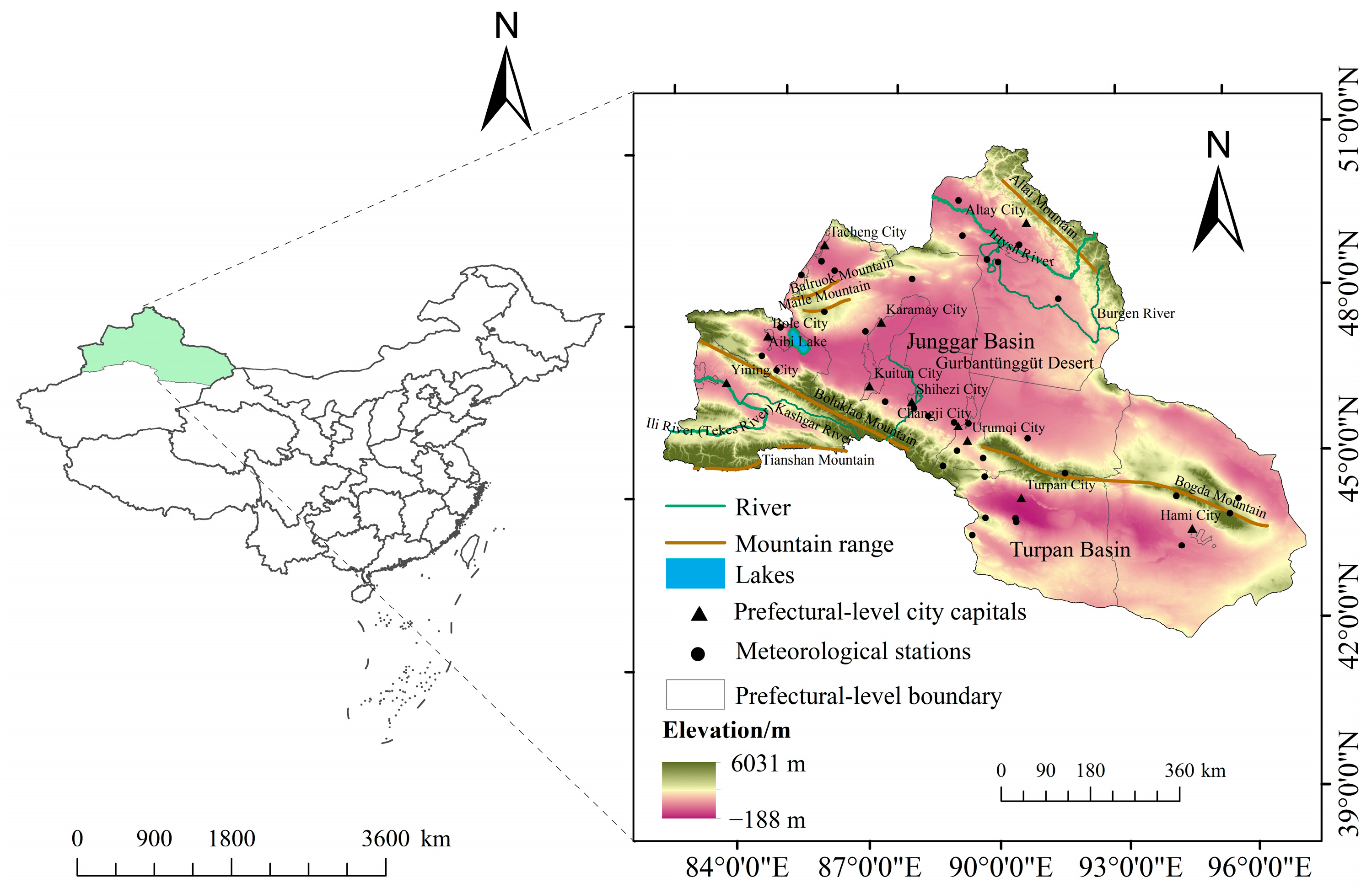
2.1. Overview of the Study Area
2.2. Data and Preprocessing
2.3. Method
2.3.1. CASA Model
2.3.2. Trend Analysis and Significance Tests
2.3.3. Correlation Analysis
2.3.4. Multiple Regression Residual Analysis
2.3.5. Evaluation Methodology
3. Results
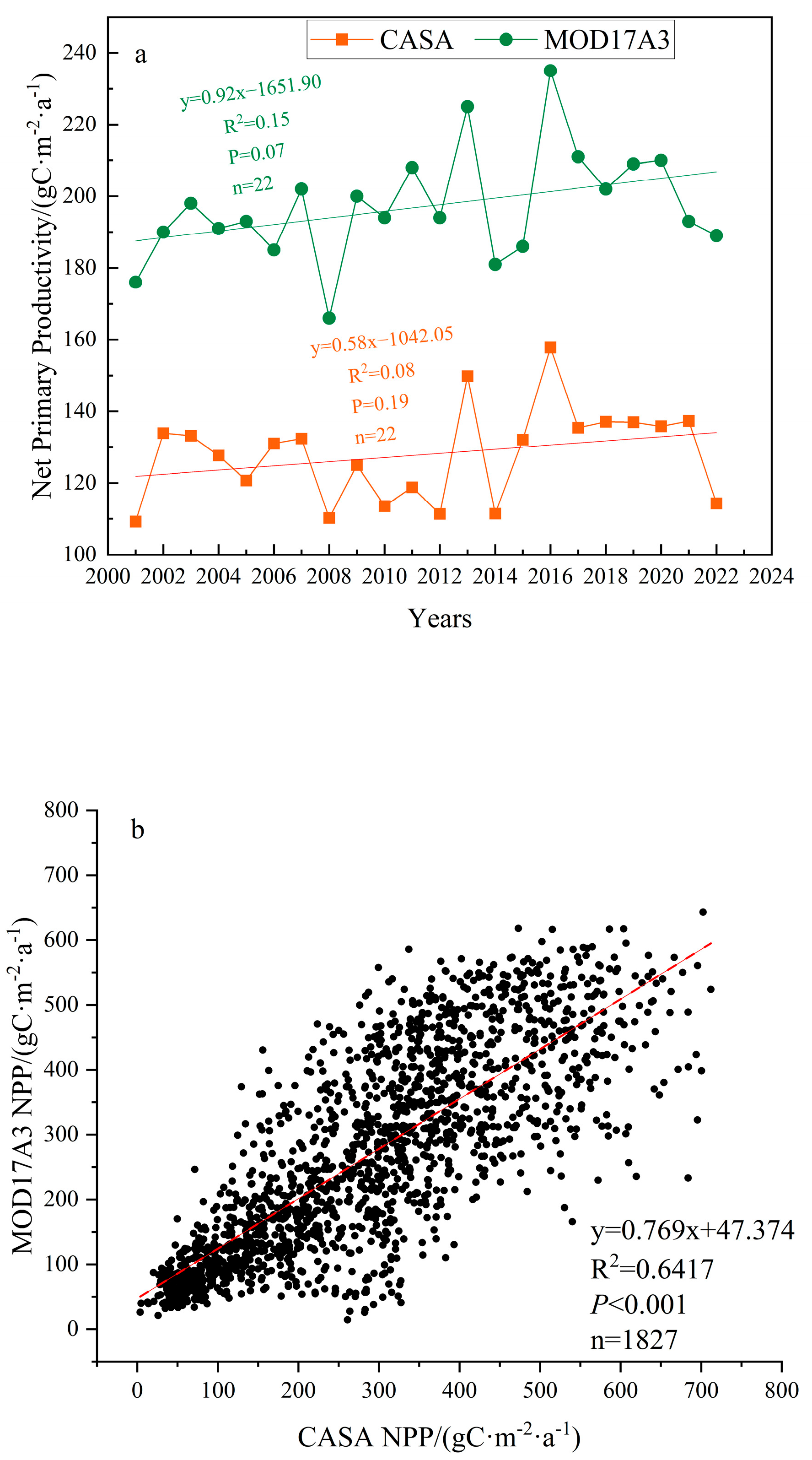
3.1. Accuracy of Simulated Values of Vegetation NPP
3.2. Spatiotemporal Distribution and Variation in NPP
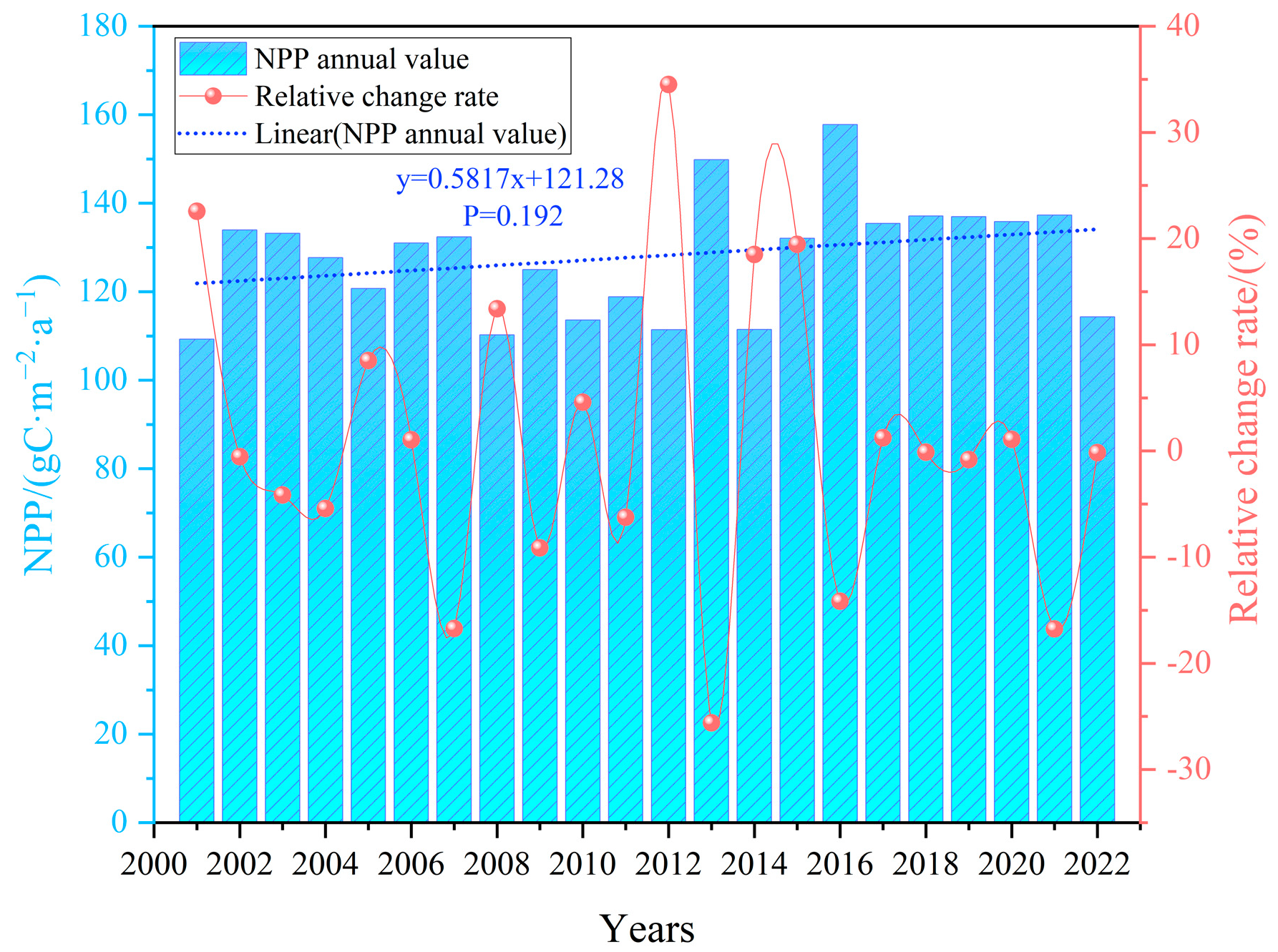
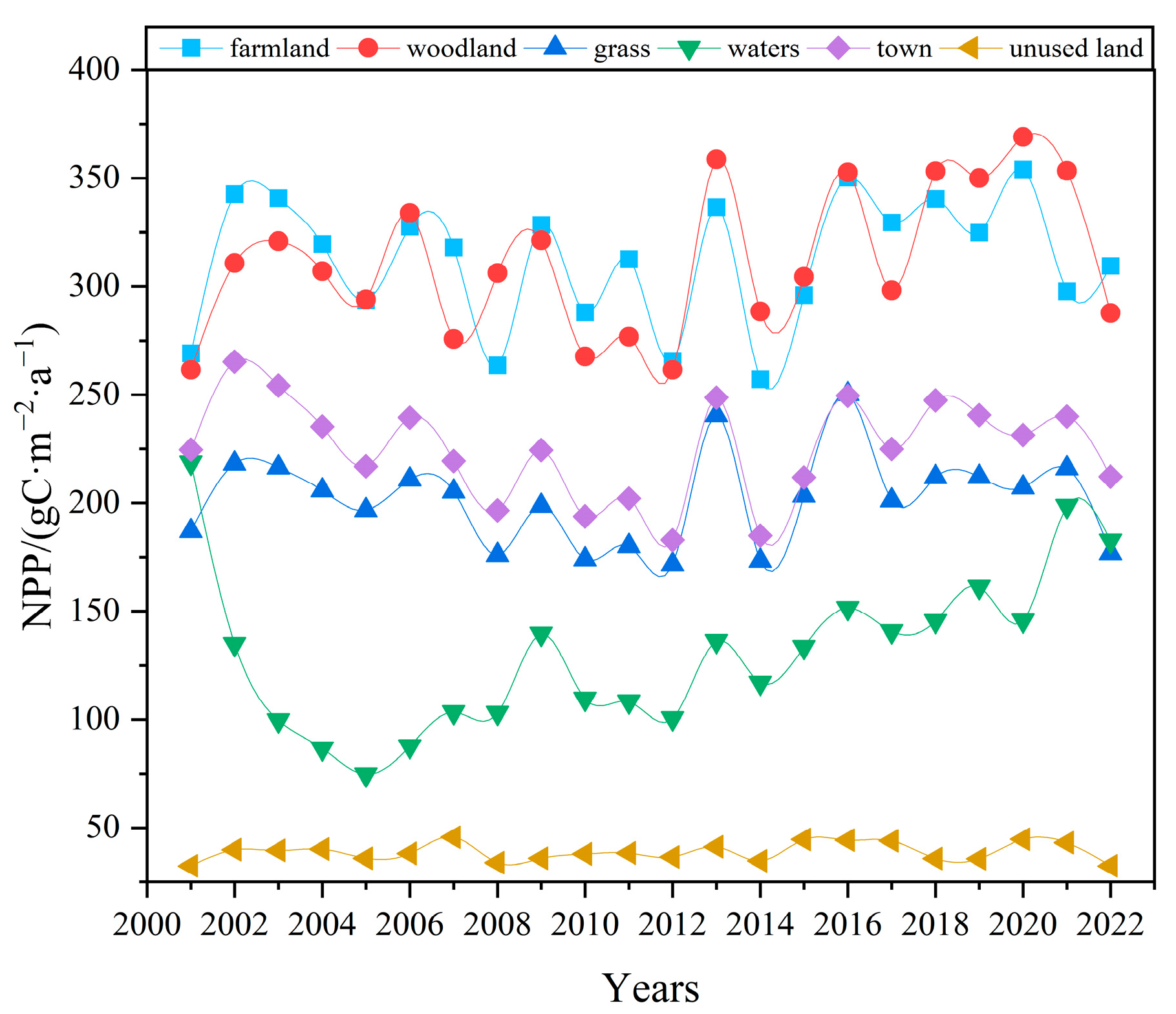
3.2.1. Temporal Variation Characteristics of NPP
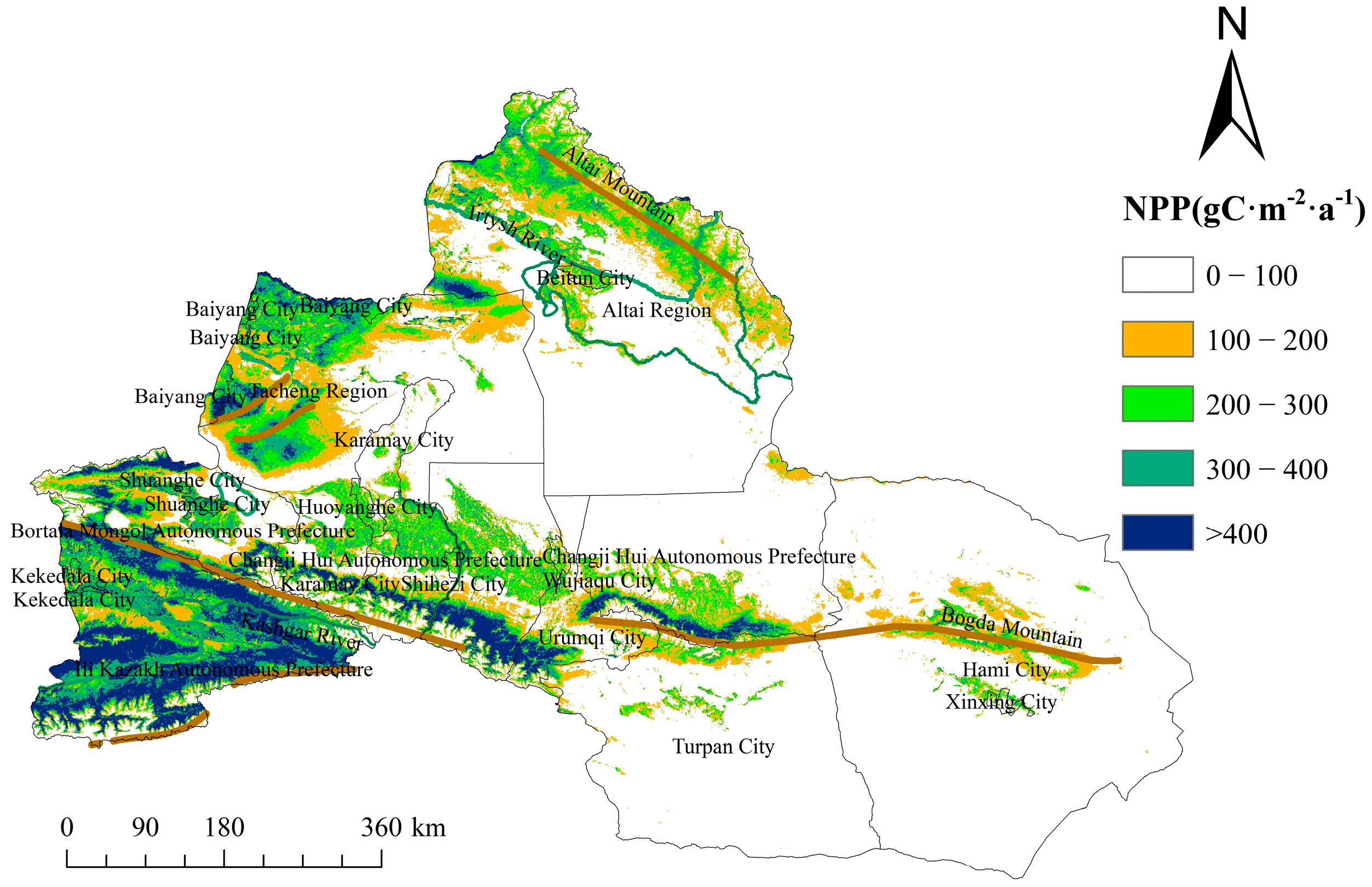
3.2.2. Spatial Distribution Characteristics of NPP
3.2.3. Vegetation NPP Change Trend and Its Significance Test in Northern Xinjiang
3.3. Analysis of the Driving Mechanism of Vegetation NPP Change in Northern Xinjiang
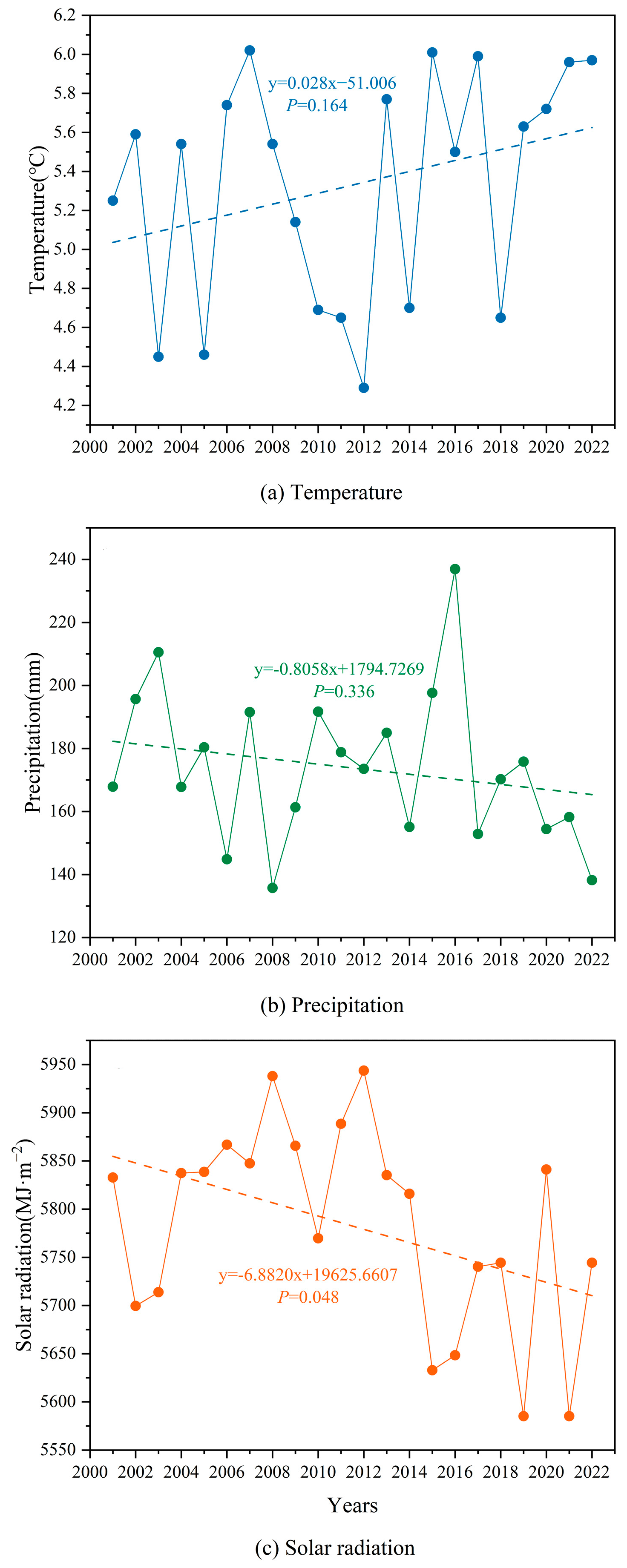
3.3.1. Characteristics of Interannual Variation in Climatic Factors
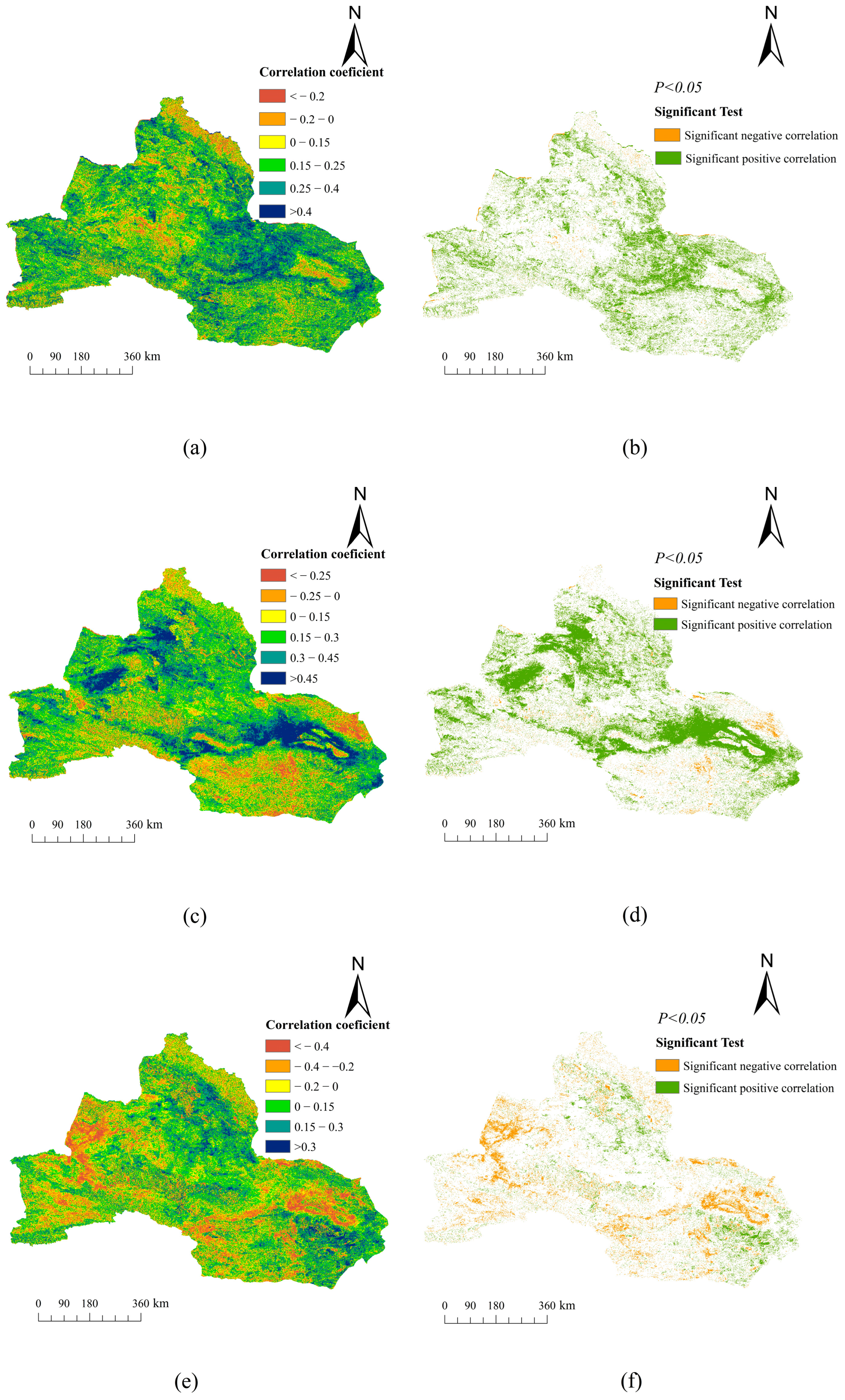
3.3.2. Correlation Analysis Between NPP and Climate Factors
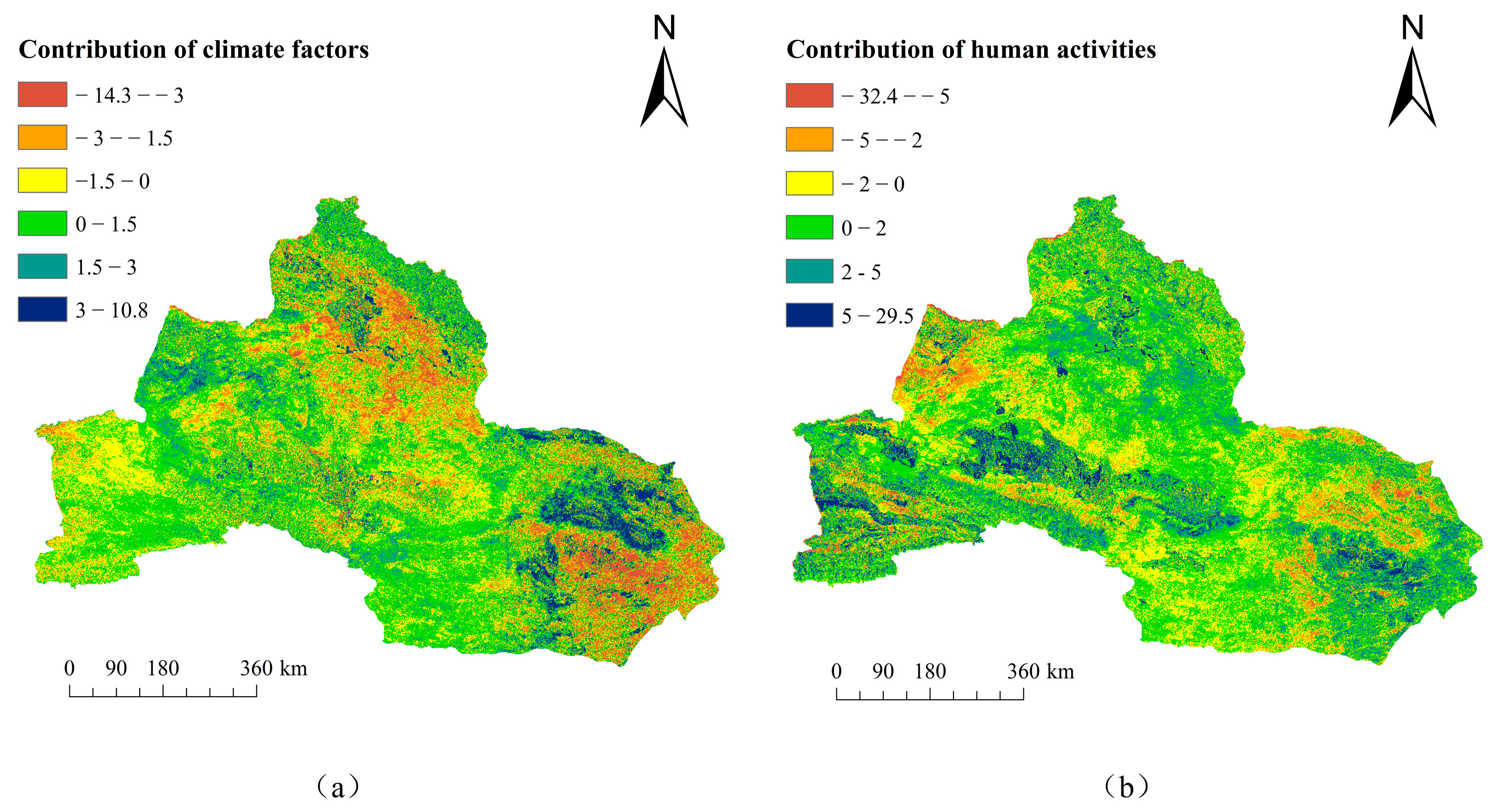
3.3.3. Contribution of Climate Change and Human Activities to Vegetation NPP in Northern Xinjiang
3.3.4. The Dominant Driving Factors Influencing the NPP Change of Vegetation in Northern Xinjiang
4. Discussion
4.1. Temporal and Spatial Variation Characteristics and Driving Forces of Vegetation NPP
4.2. The Influence of Climate Change on Vegetation NPP
4.3. The Contribution of Human Activities to the Changes in NPP
5. Limitations and Future Research Directions
6. Conclusions
- (1)
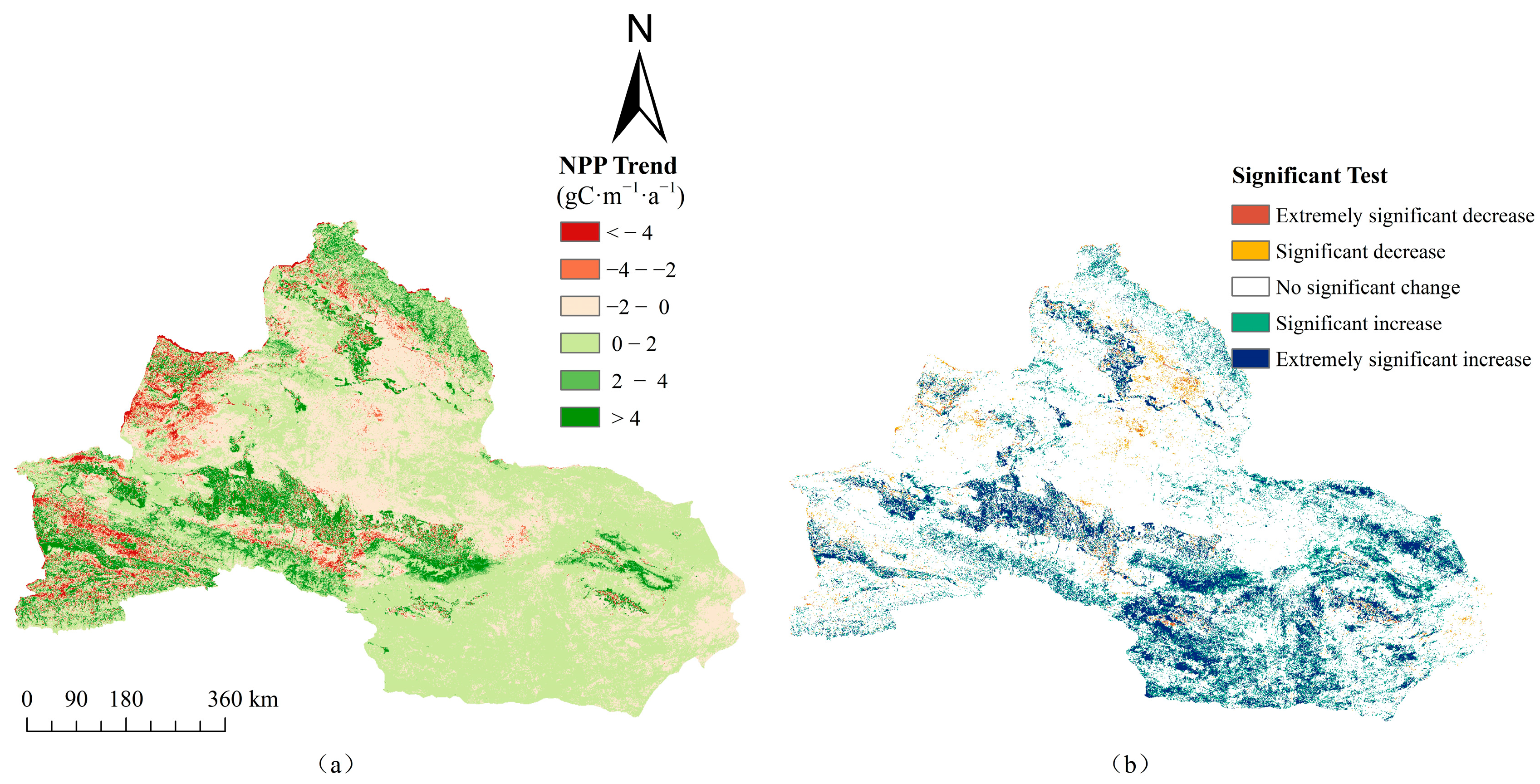
- On the temporal scale, the annual variation in vegetation NPP in Northern Xinjiang from 2001–2022 demonstrated a fluctuating upward trend, with an average annual growth rate of 0.58 gC·m−2·a−1. This indicates an overall enhancement in vegetation health during this period. Spatially, the distribution of vegetation NPP generally exhibited higher values in the western region compared to the eastern region and in mountainous areas relative to desert regions. High NPP values are primarily concentrated in the Ili River Valley and its surrounding mountainous areas, including eastern and southwestern Ili Prefecture, the northern slopes of the Tianshan Mountains, the Balq Mountains, and the southern foothills of the Borokunu Mountains. These regions exhibit relatively favorable hydrological and thermal conditions. Regions with increasing vegetation NPP (β > 0) constituted 63.57% of the total study area, while areas with decreasing NPP (β < 0) accounted for 36.43%. Notably, areas with a highly significant increase (10.70%) and a significant increase (10.21%) were primarily distributed across the Altai Mountains, the Irtysh River Basin, the Ulungur River Basin, the Ili River Basin, the Tianshan Mountains, Bogda Mountain, Turpan, and parts of northern and western Hami. Conversely, the percentage of areas with a highly significant decrease and a significant decrease in NPP was relatively small, comprising 0.66% and 1.44%, respectively.
- (2)
- In the past 22 years, Northern Xinjiang’s mean temperature has shown a fluctuating but rising trend, while precipitation has shown a fluctuating downward trend, and solar radiation has significantly declined. Vegetation NPP demonstrated a significant positive correlation with the annual average temperature and total annual precipitation, whereas its correlation with annual solar radiation was predominantly negative, though both positive and negative correlations coexisted. Partial correlation analysis revealed that precipitation exerted a stronger impact on vegetation NPP in Northern Xinjiang than temperature and solar radiation.
- (3)
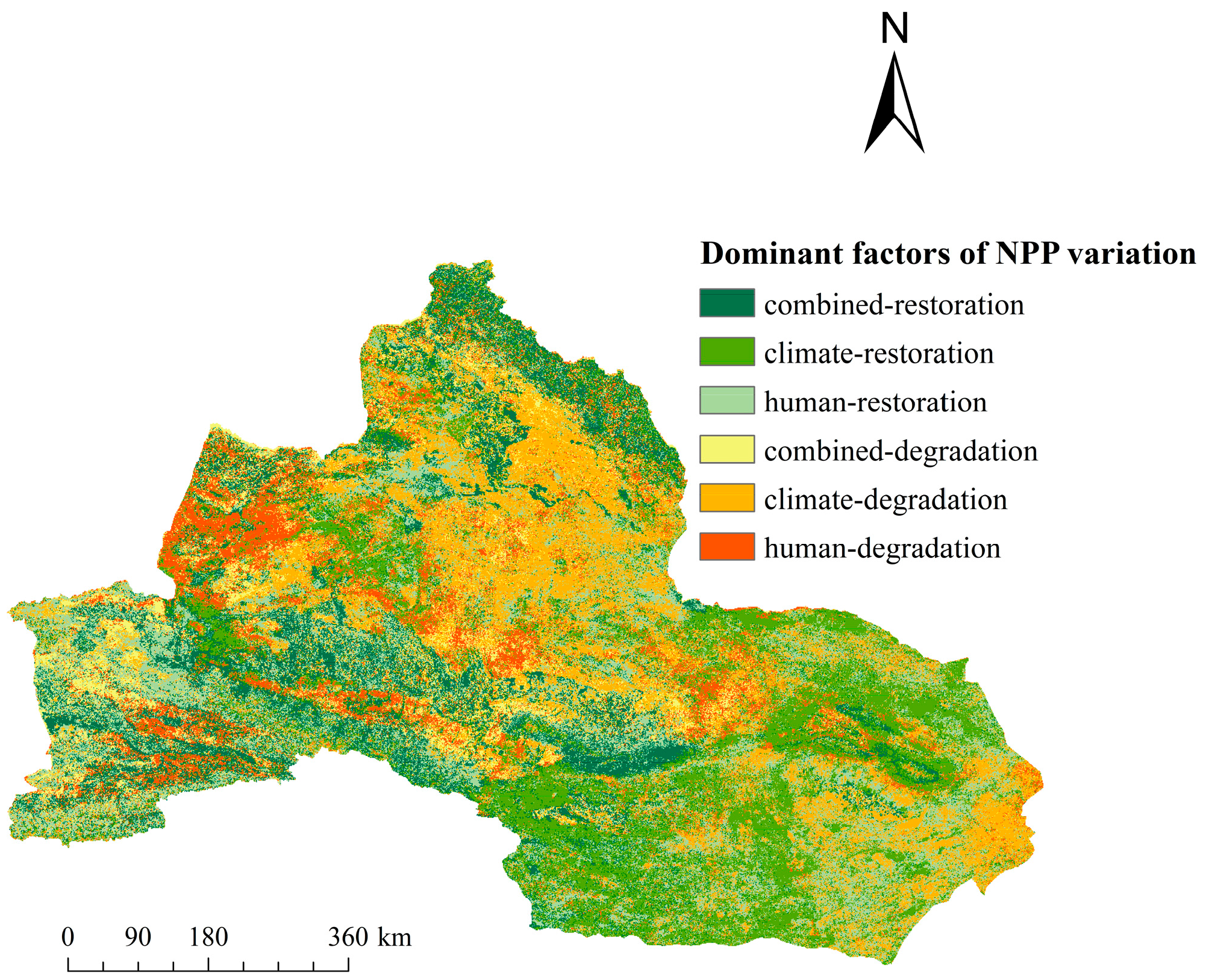
- Vegetation NPP variations in Northern Xinjiang stem from both climatic shifts and human actions, with climate factors explaining 49.48% of the impact and human activities contributing slightly more, at 50.52%. In regions where vegetation NPP is recovering, human activities dominate as the primary driver, covering 23.58% of the area, with climatic factors playing a secondary role. Conversely, in areas experiencing degradation of vegetation NPP, the impact of climatic changes significantly surpasses that of human activities, underscoring the substantial challenges posed by climate change to ecological stability in Northern Xinjiang. To enhance vegetation productivity and ecosystem restoration capacity, it is recommended to prioritize water-saving and integrated water-resource management in low-NPP basins, to focus on ecological restoration and sustainable grazing or land use practices in areas where human activity drives recovery, and to monitor and evaluate restoration projects through remote sensing in order to scale successful interventions.
Author Contributions
Funding
Institutional Review Board Statement
Informed Consent Statement
Data Availability Statement
Conflicts of Interest
References
- Chi, D.; Wang, H.; Li, X.; Liu, H.; Li, X. Assessing the effects of grazing on variations of vegetation NPP in the Xilingol Grassland, China, using a grazing pressure index. Ecol. Indic. 2018, 88, 372–383. [Google Scholar] [CrossRef]
- Shan, Z.; Liu, D.; Luo, H.; Liu, J.; Zhang, L.; Wei, Y. Impacts of human activities on the net primary productivity of vegetation in Chengde’s transitional region from plateau to plain in the context of climate change. Environ. Sci. 2023, 44, 6215–6225. [Google Scholar] [CrossRef]
- Chen, S.-T.; Guo, B.; Zhang, R.; Zang, W.-Q.; Wei, C.-X.; Wu, H.-W.; Yang, X.; Zhen, X.-Y.; Li, X.; Zhang, D.-F.; et al. Quantitatively determine the dominant driving factors of the spatial—Temporal changes of vegetation NPP in the Hengduan Mountain area during 2000–2015. J. Mt. Sci. 2021, 18, 427–445. [Google Scholar] [CrossRef]
- Liu, H.; Jia, J.; Lin, Z.; Wang, Z.; Gong, H. Relationship between net primary production and climate change in different vegetation zones based on EEMD detrending–A case study of Northwest China. Ecol. Indic. 2020, 122, 107276. [Google Scholar] [CrossRef]
- Linger, E.; Hogan, J.A.; Cao, M.; Zhang, W.-F.; Yang, X.-F.; Hu, Y.-H. Precipitation influences on the net primary productivity of a tropical seasonal rainforest in Southwest China: A 9-year case study. For. Ecol. Manag. 2020, 467, 118153. [Google Scholar] [CrossRef]
- Alton, P.B. Representativeness of global climate and vegetation by carbon-monitoring networks; implications for estimates of gross and net primary productivity at biome and global levels. Agric. For. Meteorol. 2020, 290, 108017. [Google Scholar] [CrossRef]
- Zhu, W.; Pan, Y.; Zhang, J. Estimation of net primary productivity of Chinese terrestrial vegetation based on remote sensing. J. Plant Ecol. 2007, 31, 413–424. [Google Scholar] [CrossRef]
- Ren, H.; Shang, Y.; Zhang, S. Measuring the spatiotemporal variations of vegetation net primary productivity in Inner Mongolia using spatial autocorrelation. Ecol. Indic. 2020, 112, 106108. [Google Scholar] [CrossRef]
- Ji, Y.; Zhou, G.; Luo, T.; Dan, Y.; Zhou, L.; Lv, X. Variation of net primary productivity and its drivers in China’s forests during 2000–2018. For. Ecosyst. 2020, 7, 15. [Google Scholar] [CrossRef]
- Tripathi, P.; Behera, M.D.; Behera, S.K.; Sahu, N. Investigating the contribution of climate variables to estimates of net primary productivity in a tropical deciduous forest in India. Environ. Monit. Environ. Monit. Assess. 2019, 191, 798. [Google Scholar] [CrossRef]
- Guo, B.; Zang, W.; Luo, W. Spatial-temporal shifts of ecological vulnerability of Karst Mountain ecosystem—Impacts of global change and anthropogenic interference. Sci. Total. Environ. 2020, 741, 140256. [Google Scholar] [CrossRef] [PubMed]
- Madani, N.; Kimball, J.S.; Ballantyne, A.P.; Affleck, D.L.R.; van Bodegom, P.M.; Reich, P.B.; Kattge, J.; Sala, A.; Nazeri, M.; Jones, M.O.; et al. Future global productivity will be affected by plant trait response to climate. Sci. Rep. 2018, 8, 2870. [Google Scholar] [CrossRef]
- Zhu, W.; Pan, Y.; Yang, X.; Song, G. Comprehensive analysis of the impact of climatic changes on Chinese terrestrial net primary productivity. Chin. Sci. Bull. 2007, 52, 3253–3260. [Google Scholar] [CrossRef]
- Potter, C.; Pass, S. Changes in the net primary production of ecosystems across Western Europe from 2015 to 2022 in response to historic drought events. Carbon Balance Manag. 2024, 19, 32. [Google Scholar] [CrossRef] [PubMed]
- Yang, H.; Mu, S.; Li, J. Effects of ecological restoration projects on land use and land cover change and its influences on territorial NPP in Xinjiang, China. CATENA 2013, 115, 85–95. [Google Scholar] [CrossRef]
- Zhang, R.; Liang, T.; Guo, J.; Xie, H.; Feng, Q.; Aimaiti, Y. Grassland dynamics in response to climate change and human activities in Xinjiang from 2000 to 2014. Sci. Rep. 2018, 8, 2888. [Google Scholar] [CrossRef]
- Liu, Y.Y.; Zhang, Z.Y.; Tong, L.J.; Wang, Q.; Zhou, W.; Wang, Z.Q.; Li, J.L. Spatiotemporal dynamics of China’s grassland NPP and its driving factors. Chin. J. Ecol. 2020, 39, 349. [Google Scholar] [CrossRef]
- Li, Z.; Pan, J. Spatiotemporal changes in vegetation net primary productivity in the arid region of Northwest China, 2001 to 2012. Front. Earth Sci. 2018, 12, 108–124. [Google Scholar] [CrossRef]
- Jiao, W.; Chen, Y.; Li, W.; Zhu, C.; Li, Z. Estimation of net primary productivity and its driving factors in the Ili River Valley, China. J. Arid. Land 2018, 10, 781–793. [Google Scholar] [CrossRef]
- Cui, B.; Zheng, J.; Tuerxun, H.; Duan, S.; Du, M. Spatio-temporal characteristics of grassland net primary productivity (NPP) in the Tarim River basin. Acta Prataculturae Sin. 2020, 29, 1–13. [Google Scholar] [CrossRef]
- Xie, C.; Wu, S.; Zhuang, Q.; Zhang, Z.; Hou, G.; Luo, G.; Hu, Z. Where anthropogenic activity occurs, anthropogenic activity dominates vegetation net primary productivity change. Remote. Sens. 2022, 14, 1092. [Google Scholar] [CrossRef]
- Jiang, Y.; Guo, J.; Peng, Q.; Guan, Y.; Zhang, Y.; Zhang, R. The effects of climate factors and human activities on net primary productivity in Xinjiang. Int. J. Biometeorol. 2020, 64, 765–777. [Google Scholar] [CrossRef] [PubMed]
- Yang, H.; Yao, L.; Wang, Y.; Li, J. Relative contribution of climate change and human activities to vegetation degradation and restoration in North Xinjiang, China. Rangel. J. 2017, 39, 289–302. [Google Scholar] [CrossRef]
- Hou, G.; Wu, S.; Long, W.; Chen, C.; Zhang, Z.; Fang, Y.; Zhang, Y.; Luo, G. Quantitative analysis of the impact of climate change and oasification on changes in net primary productivity variation in mid-Tianshan Mountains from 2001 to 2020. Ecol. Indic. 2023, 154, 110820. [Google Scholar] [CrossRef]
- Potter, C.S.; Randerson, J.T.; Field, C.B.; Matson, P.A.; Vitousek, P.M.; Mooney, H.A.; Klooster, S.A. Terrestrial ecosystem production: A process model based on global satellite and surface data. Global Biogeochem. Cycles 1993, 7, 811–841. [Google Scholar] [CrossRef]
- Zhu, W.; Pan, Y.; He, H.; Yu, D.; Hu, H. Simulation of maximum light use efficiency for some typical vegetation types in China. Chin. Sci. Bull. 2006, 51, 457–463. [Google Scholar] [CrossRef]
- Jiang, W.; Yuan, L.; Wang, W.; Cao, R.; Zhang, Y.; Shen, W. Spatio-temporal analysis of vegetation variation in the Yellow River Basin. Ecol. Indic. 2014, 51, 117–126. [Google Scholar] [CrossRef]
- Zhang, Q.; Gu, L.; Liu, Y.; Zhang, Y. Spatio-Temporal Dynamics of Normalized Difference Vegetation Index and Its Response to Climate Change in Xinjiang, 2000–2022. Forests 2024, 15, 370. [Google Scholar] [CrossRef]
- Li, X.; Zhang, G.; Chen, Y. Vegetation cover change and driving factors in the agro-pastoral ecotone of Liaohe River Basin of China from 2010 to 2019. Trans. Chin. Soc. Agric. Eng. 2022, 38, 63–72. [Google Scholar] [CrossRef]
- Baba, K.; Shibata, R.; Sibuya, M. Partial correlation and conditional correlation as measures of conditional independence. Aust. N. Z. J. Stat. 2004, 46, 657–664. [Google Scholar] [CrossRef]
- Liu, P.; Rao, L.; Li, S. Spatiotemporal evolution of vegetation and its response to climate change and human activities in the Haihe River Basin. Environ. Sci. 2025, 1, 1–16. [Google Scholar] [CrossRef]
- Zhang, H.; Ali, S.; Ma, Q.; Sun, L.; Jiang, N.; Jia, Q.; Hou, F. Remote sensing strategies to characterization of drought, vegetation dynamics in relation to climate change from 1983 to 2016 in Tibet and Xinjiang Province, China. Environ. Sci. Pollut. Res. 2021, 28, 21085–21100. [Google Scholar] [CrossRef] [PubMed]
- Chen, C.; Jing, C.-Q.; Xing, W.-Y.; Deng, X.-J.; Fu, H.-Y.; Guo, W.-Z. Desert grassland dynamics in the last 20 years and its response to climate change in Xinjiang. Acta Pratacult. Sin. 2021, 30, 1–14. [Google Scholar] [CrossRef]
- Qin, J.; Hao, X.; Zhang, Y.; Hua, D. Effects of climate change and human activities on vegetation productivity in arid regions. Arid Land Geogr. 2020, 43, 117–125. [Google Scholar] [CrossRef]
- Zhang, W.; Zhao, X.; Li, H.; Fang, Y.; Shi, W.; Zhao, S.; Guo, Y. Dynamic analysis and risk assessment of vegetation net primary productivity in Xinjiang, China. Remote. Sens. 2024, 16, 3604. [Google Scholar] [CrossRef]
- Chen, C.; Li, G.; Peng, J. Spatiotemporal analysis of natural grassland NPP in Xinjiang over the past 20 years. Arid Land Geogr. 2022, 45, 522–534. [Google Scholar] [CrossRef]
- Hou, Z.; Jing, C.; Chen, C.; Wang, G.; Guo, W.; Zhao, W. Spatiotemporal variation of vegetation coverage in natural grasslands in Northern Xinjiang over the past 20 years and its relationship with meteorological factors. Xinjiang Agric. Sci. 2023, 60, 464–471. [Google Scholar] [CrossRef]
- Gao, W.; Zheng, C.; Liu, X.; Lu, Y.; Chen, Y.; Wei, Y.; Ma, Y. NDVI-based vegetation dynamics and their responses to climate change and human activities from 1982 to 2020: A case study in the Mu Us Sandy Land, China. Ecol. Indic. 2022, 137, 108745. [Google Scholar] [CrossRef]
- Yang, J.; Zhang, X.C.; Luo, Z.H.; Yu, X.J. Nonlinear variations of net primary productivity and its relationship with climate and vegetation phenology, China. Forests 2017, 8, 361. [Google Scholar] [CrossRef]
- Jiang, H.; Xu, X.; Guan, M.; Wang, L.; Huang, Y.; Jiang, Y. Determining the contributions of climate change and human activities to vegetation dynamics in agro-pastural transitional zone of northern China from 2000 to 2015. Sci. Total. Environ. 2019, 718, 134871. [Google Scholar] [CrossRef]
- Zhang, Q.; Yang, J.; Wang, W.; Ma, P.; Lu, G.; Liu, X.; Yu, H.; Fang, F. Climatic warming and humidification in the arid region of Northwest China: Multi-scale characteristics and impacts on ecological vegetation. J. Meteorol. Res. 2021, 35, 113–127. [Google Scholar] [CrossRef]
- Wang, J.; Dong, J.; Yi, Y.; Lu, G.; Oyler, J.; Smith, W.; Zhao, M.; Liu, J.; Running, S. Decreasing net primary production due to drought and slight decreases in solar radiation in China from 2000 to 2012. J. Geophys. Res. Biogeosci. 2017, 122, 261–278. [Google Scholar] [CrossRef]
- Peng, D.L.; Huang, J.F.; Cai, C.X.; Deng, R.; Xu, J.F. Assessing the response of seasonal variation of net primary productivity to climate using remote sensing data and geographic information system techniques in Xinjiang. J. Integr. Plant Biol. 2008, 50, 1580–1588. [Google Scholar] [CrossRef] [PubMed]
- Xu, Q.; Li, J.; Zhang, S.; Yuan, Q.; Ren, P. Spatio-temporal changes and driving mechanisms of vegetation net primary productivity in Xinjiang, China from 2001 to 2022. Land 2024, 13, 1305. [Google Scholar] [CrossRef]
- Yisilayili, G.; He, B.; Song, Y.; Luo, X.; Yang, W.; Chen, Y. Simulation of vegetation NPP in typical arid regions based on the CASA model and quantification of its driving factors. Land 2025, 14, 371. [Google Scholar] [CrossRef]
- Wan, Y.; Huang, D.; Tang, L.T.; Huang, Z.H.; You, M.H. Spatiotemporal variation of vegetation net primary productivity and its response to climate change and human activities in Xinjiang. Environ. Sci. 2025, 1–13. [Google Scholar] [CrossRef]
- Chen, H.; Zheng, L.J.; Zheng, G.; Wang, L.Y.; Zhang, Y.; Mu, Z.X. Evaluation of the implementation effects of the recent comprehensive management plan for the Tarim River Basin in the Tarim River Basin. Water Resour. Plan. 2023, 6–10. [Google Scholar] [CrossRef]
- Zhou, C.; Zhao, C.; Yang, Z. Strategies for environmentally friendly development in the Northern Tianshan Mountain Economic Zone based on scenario analysis. J. Clean. Prod. 2017, 156, 74–82. [Google Scholar] [CrossRef]
- Hao, Y.; Zhou, X.; Shiyao, S.L.; Tao, W. Land use change and its impact on ecosystem service value in Xinjiang. Environ. Res. Commun. 2024, 7, 055025. [Google Scholar] [CrossRef]
- Guan, J.; Yao, J.; Li, M.; Zheng, J. Assessing the spatiotemporal evolution of anthropogenic impacts on remotely sensed vegetation dynamics in Xinjiang, China. Remote. Sens. 2021, 13, 4651. [Google Scholar] [CrossRef]
- Lu, C.; Zhao, T.; Shi, X.; Cao, S. Ecological restoration by afforestation may increase groundwater depth and create potentially large ecological and water opportunity costs in arid and semiarid China. J. Clean. Prod. 2018, 176, 1213–1222. [Google Scholar] [CrossRef]
- Zhang, J.; Zhao, T.; Jiang, C.; Cao, S. Opportunity cost of water allocation to afforestation rather than conservation of natural vegetation in China. Land Use Policy 2016, 50, 67–73. [Google Scholar] [CrossRef]
- Zhai, Y.; Qu, Z.; Hao, L. Land cover classification using integrated spectral, temporal, and spatial features derived from remotely sensed images. Remote. Sens. 2018, 10, 383. [Google Scholar] [CrossRef]
- Zhai, Y.; Wang, N.; Zhang, L.; Hao, L.; Hao, C. Automatic crop classification in Northeastern China by improved nonlinear dimensionality reduction for satellite image time series. Remote. Sens. 2020, 12, 2726. [Google Scholar] [CrossRef]





| Product | Type | Unit | Temporal Resolution | Spatial Resolution | Data Resources |
|---|---|---|---|---|---|
| MOD13Q1 | NDVI | / | 16 d | 250 m | https://data.tpdc.ac.cn/, (accessed on 3 December 2024) |
| MCD12Q1 | Land Cover | Class | year | 500 m | https://search.earthdata.nasa.gov/, (accessed on 3 December 2024) |
| Temperature | TEM | °C | month | 1 km | http://data.tpdc.ac.cn/, (accessed on 29 November 2024 ) |
| Precipitation | PRE | mm | month | 1 km | http://data.tpdc.ac.cn/, (accessed on 29 November 2024 ) |
| Sunshine Duration | SD | h | day | 1 km | https://data.cma.cn/, (accessed on 3 December 2024) |
| SRTM | DEM | m | / | 90 m | https://www.resdc.cn/, (accessed on 3 December 2024) |
| MOD17A3HGF | NPP | gC·m−2·a−1 | year | 500 m | https://ladsweb.modaps.eosdis.nasa.gov/, (accessed on 3 December 2024) |
| Serial Number | Vegetation Type | εmax |
|---|---|---|
| 1 | Cropland | 0.542 |
| 2 | Forest land | 0.475 |
| 3 | Grassland | 0.542 |
| 4 | Water bodies | 0.542 |
| 5 | Urban areas | 0.542 |
| 6 | Unused land | 0.542 |
| β | Z | Trend Characteristics |
|---|---|---|
| β > 0 | 2.58 < Z | Extremely significant increase |
| 1.96 < Z ≤ 2.58 | Significant increase | |
| |Z| ≤ 1.96 | There were no significant changes | |
| β < 0 | 1.96 < |Z| ≤ 2.58 | Significantly reduced |
| 2.58 < |Z| | Dramatically reduced |
| Contribute (%) | |||||
|---|---|---|---|---|---|
| Slope (NPPobs) a | Slope (NPPCC) b | Slope (NPPHA) c | Climatic Change | Human Activity | Dominant Factor |
| >0 | >0 | Co-dominates elevated NPP | |||
| >0 | >0 | <0 | 100 | 0 | Climate-dominated NPP increases |
| <0 | >0 | 0 | 100 | Human activities predominate for the increase in NPP | |
| <0 | <0 | <0 | Co-lead NPP reduction | ||
| <0 | >0 | 100 | 0 | Climate-led NPP declines | |
| >0 | <0 | 0 | 100 | Human activities lead to a decrease in NPP | |
Disclaimer/Publisher’s Note: The statements, opinions and data contained in all publications are solely those of the individual author(s) and contributor(s) and not of MDPI and/or the editor(s). MDPI and/or the editor(s) disclaim responsibility for any injury to people or property resulting from any ideas, methods, instructions or products referred to in the content. |
© 2025 by the authors. Licensee MDPI, Basel, Switzerland. This article is an open access article distributed under the terms and conditions of the Creative Commons Attribution (CC BY) license (https://creativecommons.org/licenses/by/4.0/).
Share and Cite
Wen, M.; Cui, D.; Jiang, Z.; Liu, W.; Yang, H.; Liu, Z.; Wang, Y. Spatiotemporal Dynamics and Climate–Human Drivers of Vegetation NPP in Northern Xinjiang, China, from 2001 to 2022. Atmosphere 2025, 16, 1393. https://doi.org/10.3390/atmos16121393
Wen M, Cui D, Jiang Z, Liu W, Yang H, Liu Z, Wang Y. Spatiotemporal Dynamics and Climate–Human Drivers of Vegetation NPP in Northern Xinjiang, China, from 2001 to 2022. Atmosphere. 2025; 16(12):1393. https://doi.org/10.3390/atmos16121393
Chicago/Turabian StyleWen, Mengdie, Dong Cui, Zhicheng Jiang, Wenxin Liu, Haijun Yang, Zezheng Liu, and Ying Wang. 2025. "Spatiotemporal Dynamics and Climate–Human Drivers of Vegetation NPP in Northern Xinjiang, China, from 2001 to 2022" Atmosphere 16, no. 12: 1393. https://doi.org/10.3390/atmos16121393
APA StyleWen, M., Cui, D., Jiang, Z., Liu, W., Yang, H., Liu, Z., & Wang, Y. (2025). Spatiotemporal Dynamics and Climate–Human Drivers of Vegetation NPP in Northern Xinjiang, China, from 2001 to 2022. Atmosphere, 16(12), 1393. https://doi.org/10.3390/atmos16121393