1. Introduction
The ionospheric plasma of the Earth strongly depends on the ionisation of atmospheric oxygen, O
2, NO, and other molecules by the extreme ultraviolet (EUV) radiation of the Sun. Temporal variations of EUV are partly mirrored in the variability of the electron density of the ionosphere. One of the most pronounced variations of the EUV radiation is the 27-day oscillation, which is related to the mean solar rotation period of about 27.3 days. Active regions of the Sun are associated with the occurrence of faculae and limb brightening. The active regions rotate within a period of about 27 days and induce a periodic increase and decrease of EUV. Over the past few decades, the total electron content (TEC) of the Earth’s ionosphere has been monitored by the worldwide network of ground-based receivers for radio signals of the Global Navigation Satellite System (GNSS). Afraimovich et al. [
1] introduced the parameter global electron content (GEC) in order to track the solar activity in EUV. They found that the 11-year and 27-day oscillations of GEC are closely related to those of EUV. The variations of GEC usually lag 2 days after those of solar radio flux F10.7 cm or EUV (e.g., estimated by the solar activity proxy MgII index). Other studies indicated that the electron content of the ionosphere not only depends on the Sun but also on transport processes, dynamic and electrodynamic processes, atmospheric composition changes, and geomagnetic activity of the Earth’s system [
2,
3].
Simulations of Ren et al. [
3] show that the time delay between the EUV variation and the associated TEC variation is between 0.5 and 0.8 days. The time delay of the TEC response to solar EUV variation is mainly due to the time delays of the thermospheric temperature and the composition ratio of O to N
2, which influence the loss of ions by recombination. There is a tendency for the time delay to be a bit larger at higher geographic latitudes. The authors also obtained a good agreement with observations from the CHAMP satellite with time delays between 0.8 and 1.0 days. Observational time delays in the past literature are from 0.15 days to 4 days [
3]. A new observational study [
4] reported a time delay of 1 day for the 27-day oscillation of TEC with respect to the EUV variation. Another observational study by [
5] mostly show time delays between 1 and 2 days. However, the time delays observed for the electron density variation in the Southern Hemisphere is 1 day larger compared to those of the Northern Hemisphere. Such a large asymmetry between the time lag of the hemispheres was not simulated by [
3]. A new study of [
6] emphasised that the time delays of the thermospheric parameter temperature and N
2 is larger by half a day and longer compared to the response of O. Since the ionospheric electron density also depends on the ratio between O and N
2, the response of the ionosphere–thermosphere system to EUV variations requires a detailed study, as conducted by [
6].
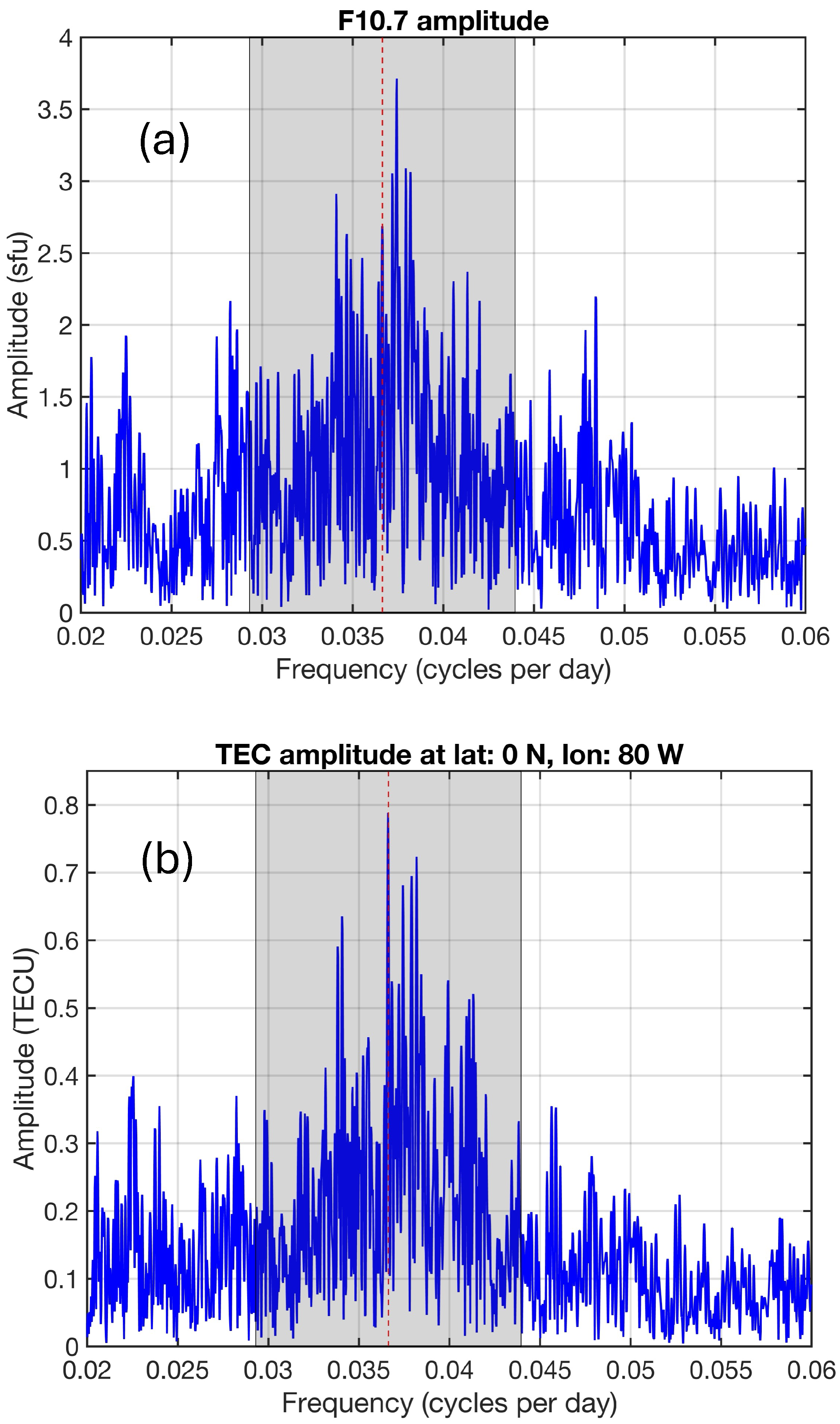
The past observational studies of the time delay of TEC gave different results and some of the results such as the asymmetric response of the ionosphere in the Northern and Southern Hemispheres have not been understood yet. Thus, it is important to conduct more data analyses of the observations in order to be sure which effects are real and which effects might be due to limited accuracies of observation or data analysis. In the present study, the worldwide TEC observations from 1998 to 2024 are evaluated. The correlations and time delays are derived with respect to F10.7 and the MgII index. The characteristics of the 27-day oscillation in TEC are derived for the time interval from 1998 to 2024. Besides the cross-correlation technique, we also apply the composite analysis in order to find the peak response of TEC with respect to EUV enhancements. For comparison, the peak response of TEC to geomagnetic storms is derived.
Section 2 describes the datasets and data analysis methods which are used in the present study.
Section 3 presents the results about correlation, time delay, and characteristics of the 27-day oscillations in TEC and EUV as well as the results of the composite analysis.
Section 4 contains the discussion of the results. Conclusions are given in
Section 5.
4. Discussion
The 26-years long time series of TEC from IGS is valuable for determining the time delay between the 27-day oscillations of solar EUV (as represented by the proxies F10.7 and the MgII index) and the ionospheric TEC. Past observations and cross-correlation indicated that the TEC response can be delayed by 0 to 4 days [
3]. There is a tendency that most observations indicate a time delay of 1 to 2 days [
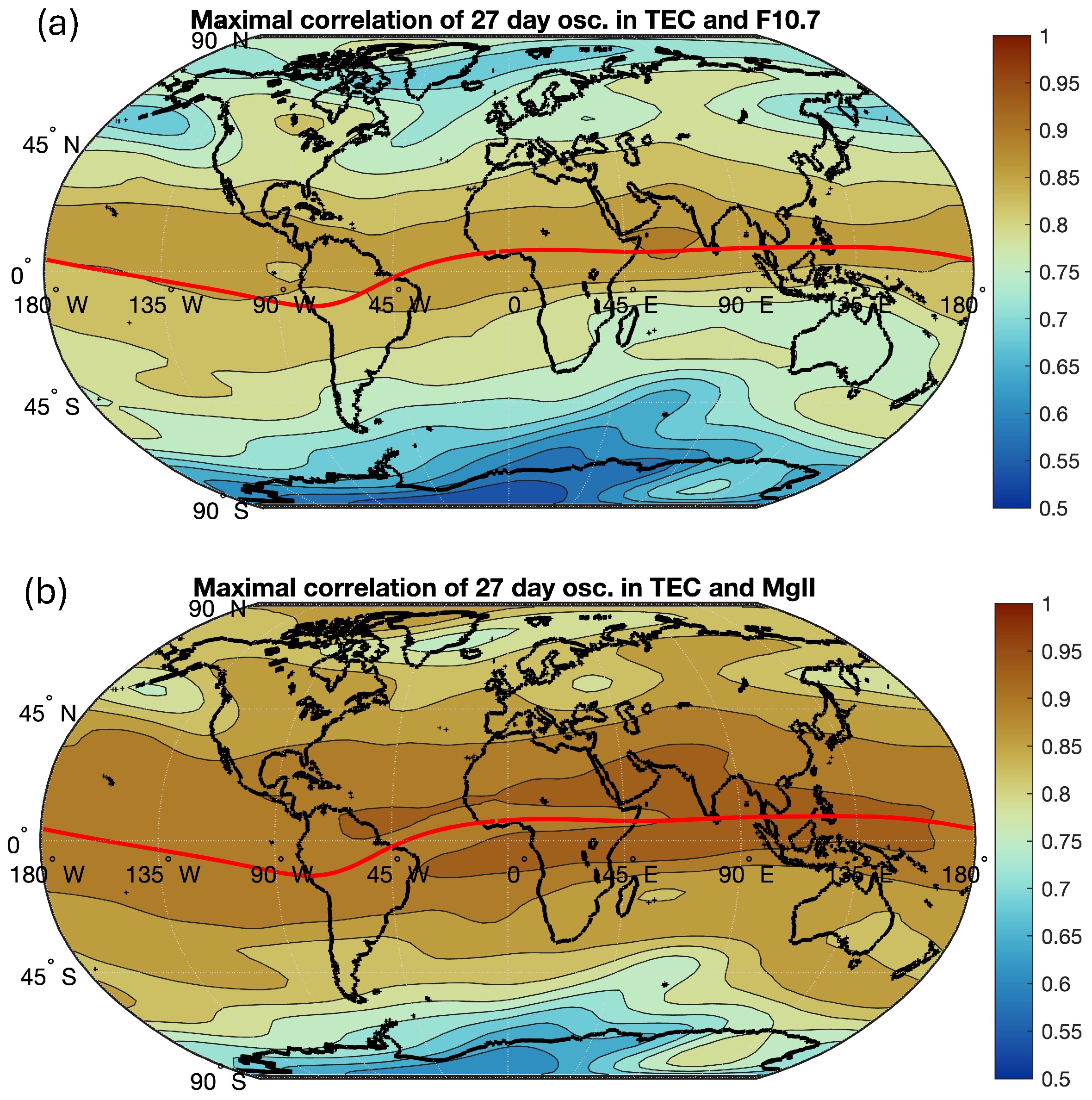
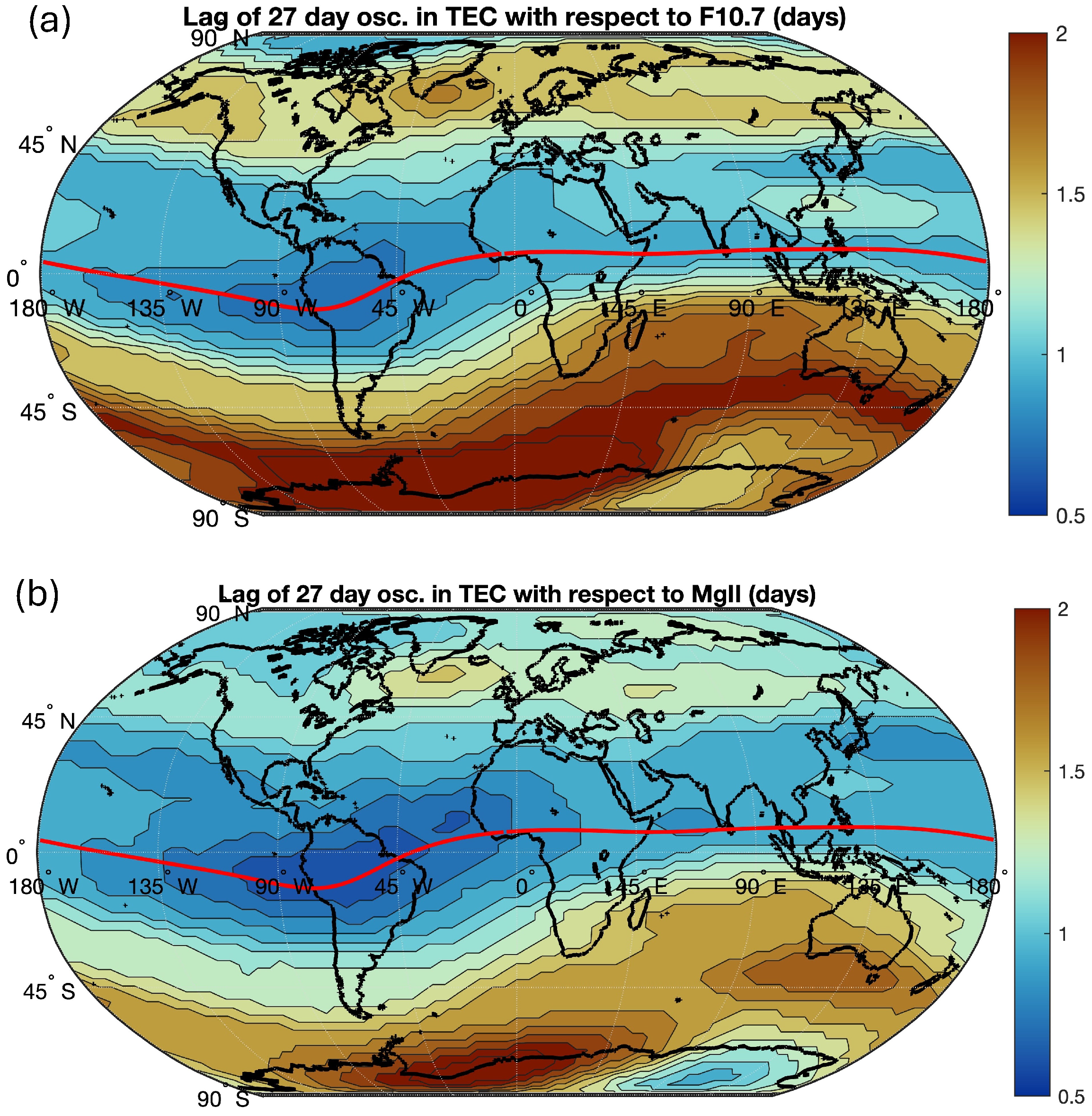
4]. However, simulations and observations by the CHAMP satellite favoured time delays of about 0.5 to 1 day. The present study shows that the time delay varies from 0.7 to 2.5 days depending on latitude and hemisphere. The global average of the time delay is 1.3 days for correlation with F10.7 and 1.1 days for correlation with the MgII index from SORCE. These results show that at some locations, the time delay is less than 1 day, as indicated by [
3]. The global averages of the time delays (1.1 to 1.3 days) of the present study are in agreement with the observational study of [
4]. A smaller time delay of about 1 day was reported by [
12] for the 27-day variations of solar EUV and global mean TEC while a time delay of 2 days was reported by [
1] for global mean TEC.
It is an open question why at some locations time delays of up to 2.1 (MgII) to 2.5 days (F10.7) can be reached. The simulations of [
3] also showed an increase in the time delay with latitude and possible reasons such as solar zenith angle change, geomagnetic activity, and change in thermospheric circulation and O/N
2 ratio were considered. In agreement with the observations by [
5], we observed that the time delay is larger in the Southern Hemisphere than in the Northern Hemisphere. While Lee et al. reported an increase in the time delay by 1 day in the Southern Hemisphere, the present study finds that the time delay in the Southern Hemisphere is about 0.3 to 0.4 days greater than in the Northern Hemisphere. The simulations of [
3] show a weaker asymmetry of the time delay in the hemispheres but with 0.1–0.2 days more time delay in the Southern Hemisphere (
Figure 6e in [
3]). However, Ren et al. [
3] did not discuss this small difference of the time delays in the two hemispheres. In the present study, the interhemispheric asymmetry is particularly strong in the American longitude sector and the Asian–Australian sector (
Figure 3). In both sectors, there are enough GNSS receivers in both hemispheres to ensure reliable TEC estimations. Thus, it would be worth considering an understanding of the observed asymmetry effect. One reason could be that geomagnetic activity effects are stronger in the Southern Hemisphere than in the Northern Hemisphere. Han et al. [
13] found that large-scale travelling ionospheric disturbances were stronger in the Southern Hemisphere than in the Northern Hemisphere during the geomagnetic superstorm of May 2024. They also reported that during the geomagnetic storm, the O/N
2 ratio in the Asian–Australian sector increased significantly, intensifying the hemispherical disparities, while the American sector exhibited a weaker asymmetry.
In agreement with past observational studies, we find that the correlation coefficient of TEC with F10.7 is a bit weaker than for TEC with the MgII index. This confirms the statement that the MgII index is a better proxy for solar EUV variations than F10.7 [
14]. However, the MgII index series of SORCE is limited in time and also has a data gap. In spite of this, we took the SORCE series since the universal times of the MgII data are clearly given for SORCE and the time resolution is about 1.3 h. The hours of the universal times of the MgII composite of the University of Bremen are not or somehow unclearly documented in the daily values at
https://www.iup.uni-bremen.de/UVSAT/data/ (accessed on 1 December 2025). However, we observed a time delay of 1.2 days for the MgII composite of the University of Bremen, which is close to the time delay of 1.1 days for the SORCE data. The correlation coefficient is 0.87 for TEC and Bremen data, which is a bit greater than for SORCE (0.85).
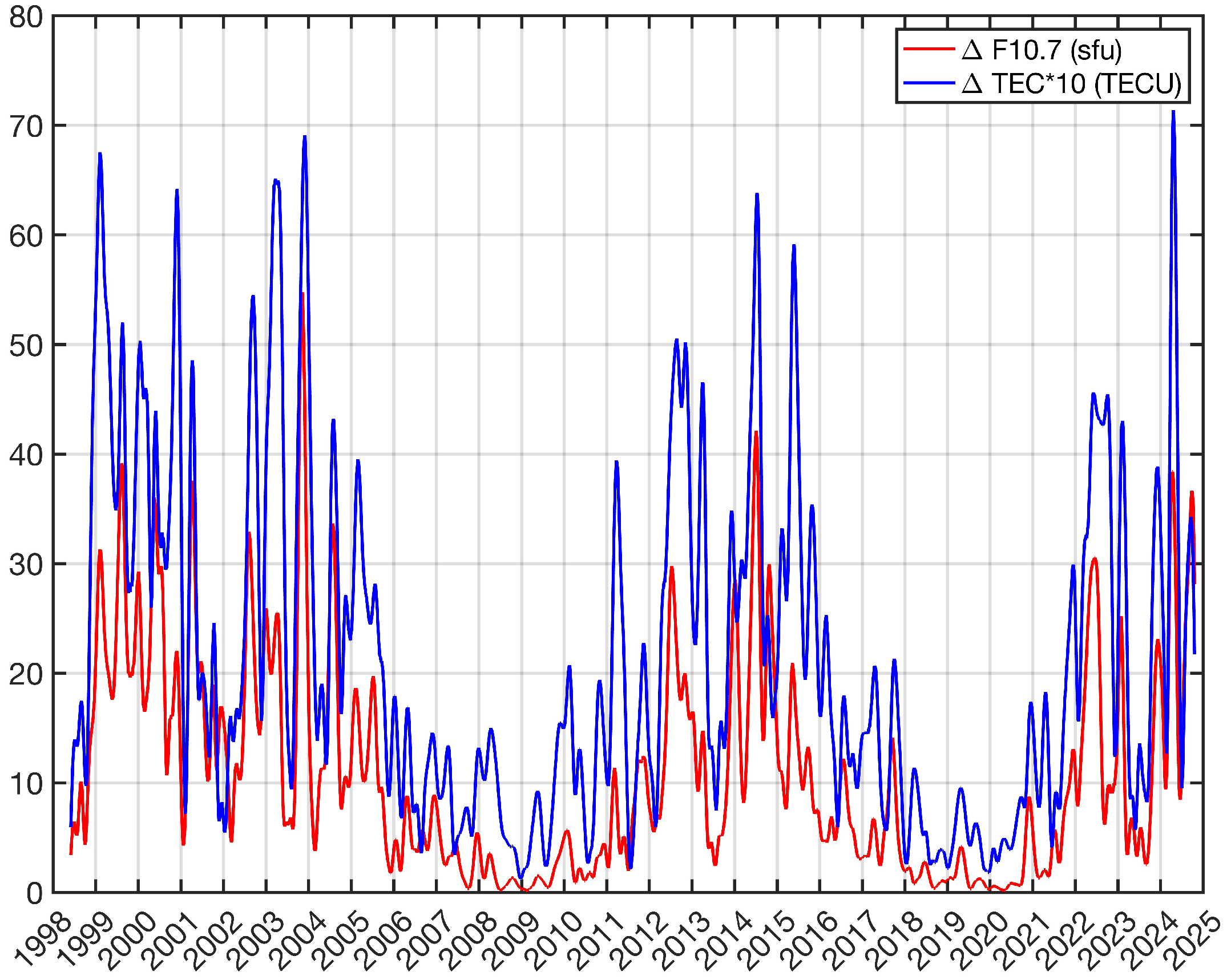
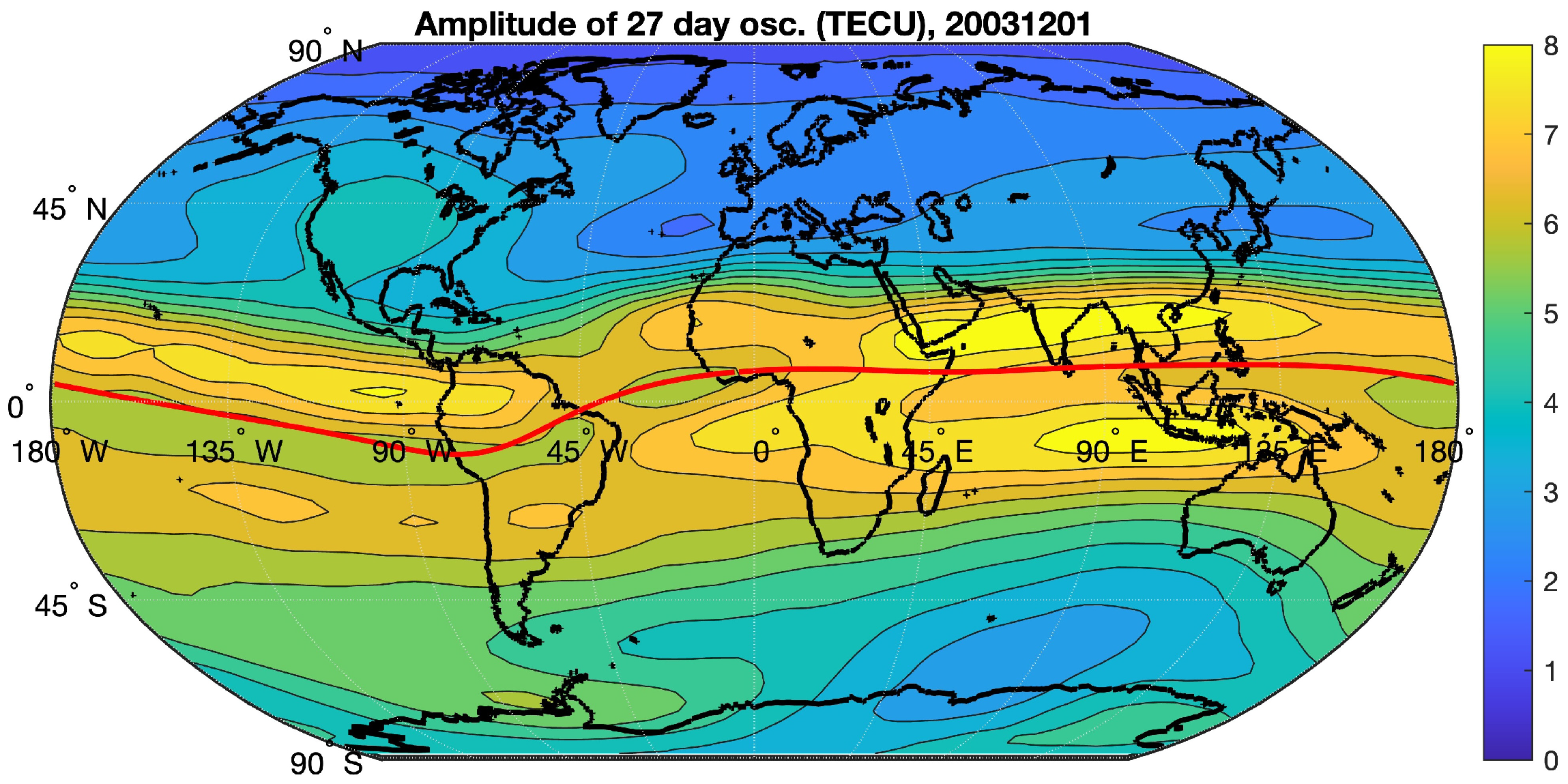
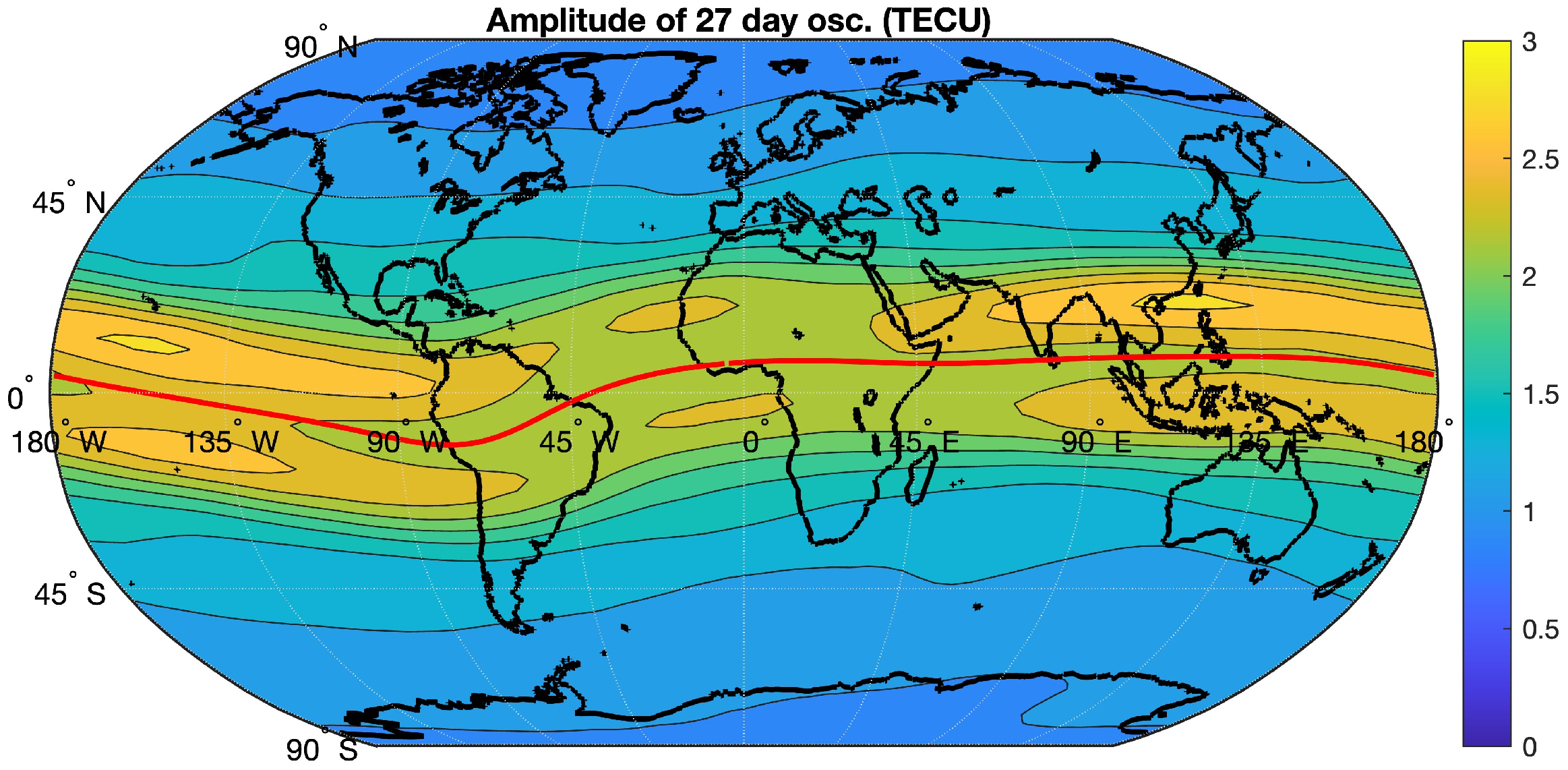
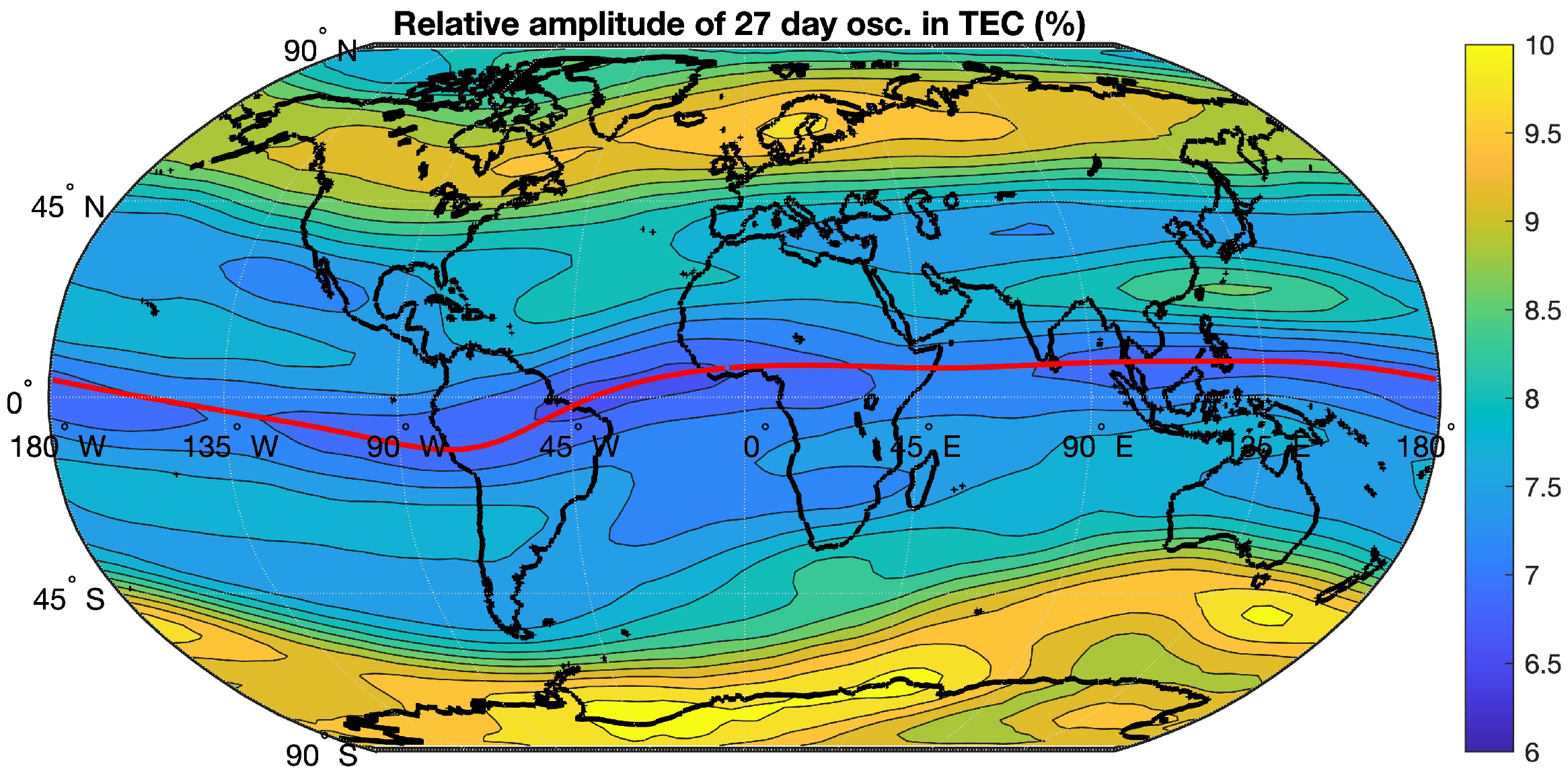
A second aim of the present study is the characterisation of the 27-day oscillation in TEC. We show that the amplitude can vary between 1 and 8 TECU. This variation can happen within half a year. The absolute variation of the TEC amplitude is largest at low latitudes. The mean amplitude of the 27-day oscillation is between 0.5 and 3 TECU over the globe with maxima at low geomagnetic latitudes at the place of the EIA. The amplitude is larger over Asia and Pacific ocean and a bit smaller above Africa and the Atlantic ocean. The relative mean amplitude of the 27-day oscillation in TEC is largest at high latitudes where it reaches mean values of up to 10% in both polar regions. To our limited knowledge, there are no reports in the literature yet about these characteristics of the 27-day oscillation in TEC.
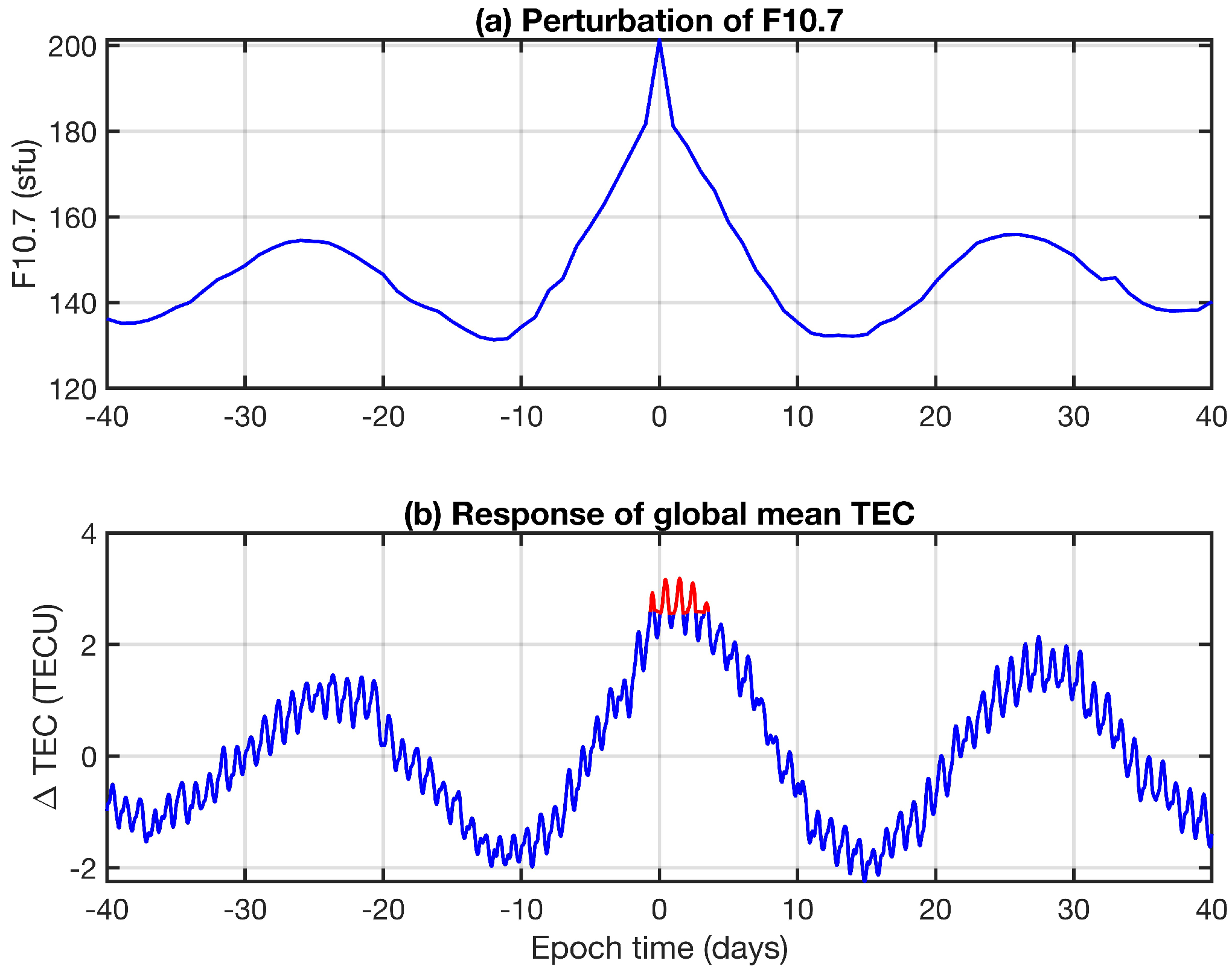
Finally, we performed a composite analysis in order to study the TEC response with respect to solar EUV enhancements and to geomagnetic storms. The mean TEC response (
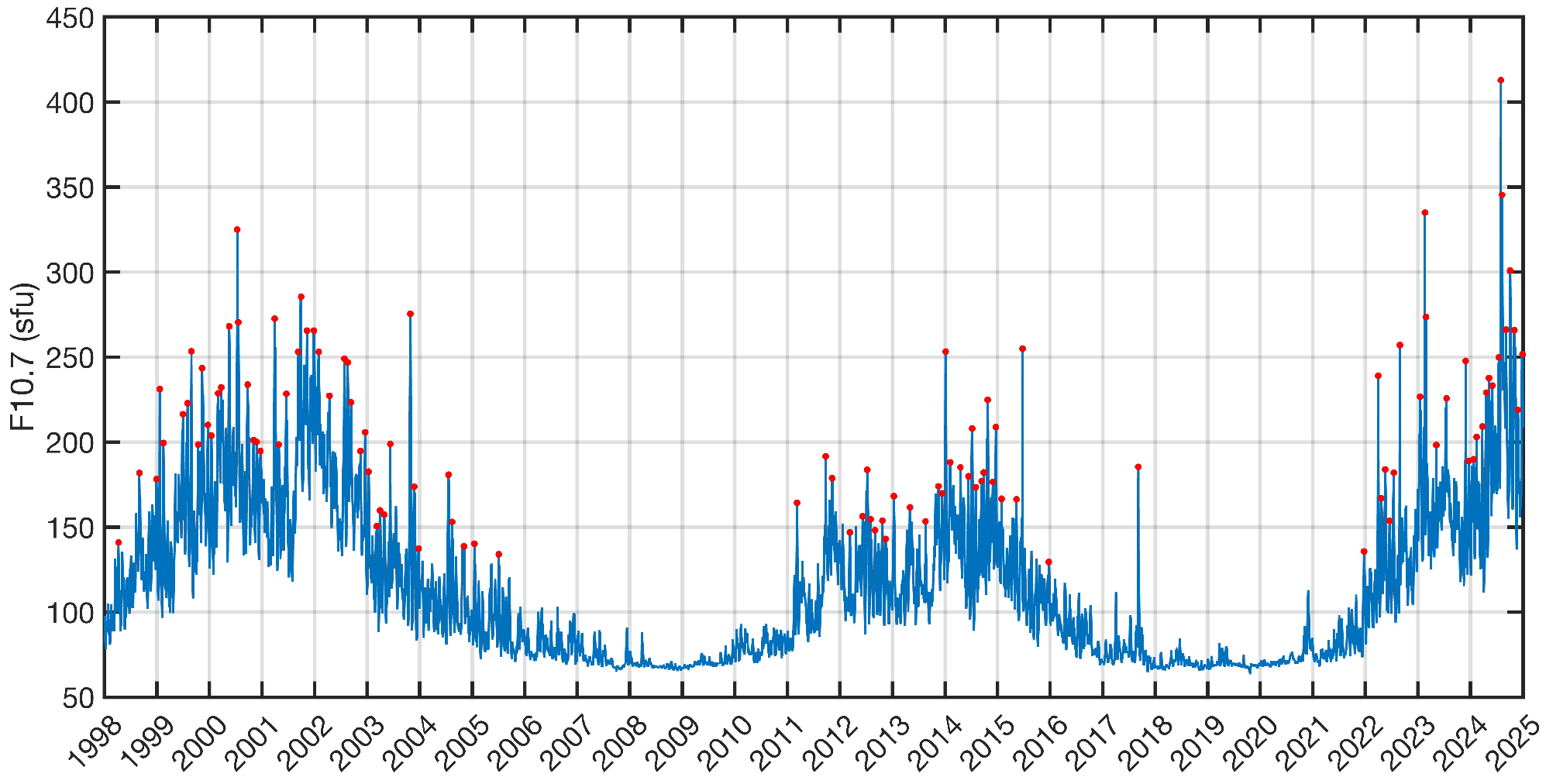
Figure 9) is rather broad and relatively small (<3 TECU) with respect to the large spike in F10.7. With some effort, we can identify a time delay of 1.4 days for the TEC response but this value is not well defined because of the broad peak in TEC. Simulations of the TEC response to large spikes in F10.7 are not present in the literature. At the moment, one can only speculate that there are ionospheric–thermospheric processes which suppress a strong reaction of TEC to a strong solar EUV peak (from 140 to 200 sfu).
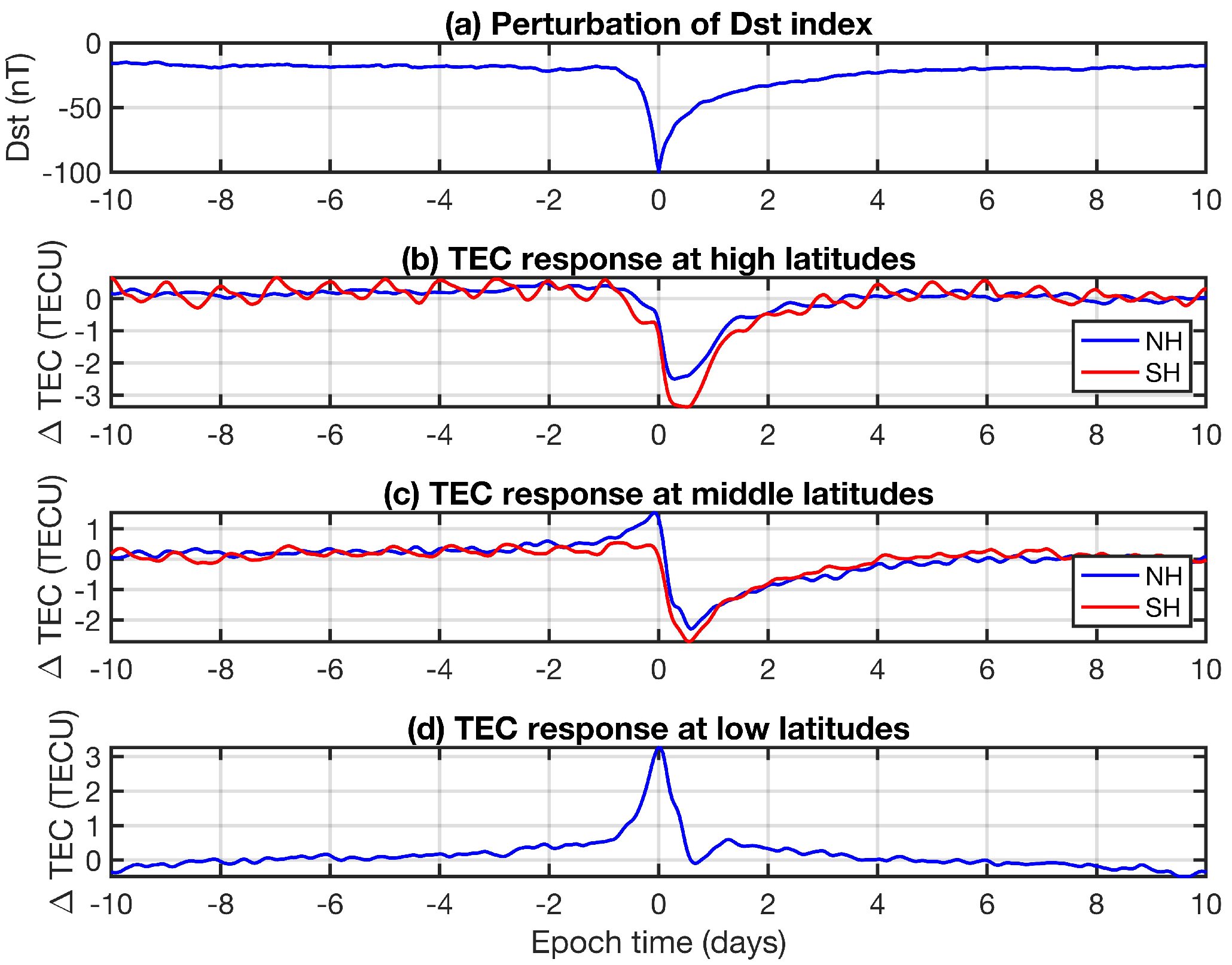
In order to quantify the mean TEC response with respect to geomagnetic storms, composite analysis was performed.
Figure 10 shows that the TEC response can range from
TECU (low magnetic latitudes) to
TECU (high and middle magnetic latitudes). The positive TEC response at low latitudes is due to the prompt penetration electric field (PPEF), which is induced by the solar wind perturbation during the main phase of the geomagnetic storm. Buonsanto [
15] divided ionospheric storms into positive storms and negative storms. The positive TEC change can be due to the upwelling of the ionospheric plasma to higher altitudes where the recombination rate is smaller. The negative TEC change can be due to a change in the O/N
2 ratio, for example, when molecule-rich air from the lower thermosphere is transported into the middle and upper thermosphere. TEC will decrease in this case since the recombination is much faster for molecular ions than for atomic ions [
16]. An extended composite analysis of the TEC response was performed by [
17] who separated the dataset for seasons and degree of the geomagnetic storm.
Since the magnitude of the TEC response to geomagnetic storms is of the same order as those for solar EUV enhancements, it cannot be excluded that geomagnetic activity sometimes affects the correlation results of the solar EUV and TEC series. The correlation between solar EUV and geomagnetic activity is small but there is a relation between solar flares and solar wind speed. The solar wind speed near the Earth peaks about 2.5 days after the solar X-ray burst [
18], and the solar wind speed closely correlates with geomagnetic activity.
5. Conclusions
We found time delays between TEC and the solar EUV proxy range from 0.7 to 2.5 days. The global average of the time delay was between 1.1 days (SORCE) and 1.3 days (F10.7). The time delay in the Southern Hemisphere was about 0.3 to 0.4 days longer than in the Northern Hemisphere. This agrees qualitatively with a former study by [
5]. The reason of this hemispheric asymmetry of the TEC response is not clear yet. The simulation study by [
3] shows a smaller difference between the time delays in both hemispheres (Figure 6e in [
3]) but also with a greater time delay in the Southern Hemisphere. However, Ren et al. [
3] did not discuss this effect.
The present study also shows the mean characteristics and the variability of the 27-day oscillation in TEC as a function of latitude and longitude. The mean amplitude of the 27-day oscillation is between 0.5 and 3 TECU over the globe with maxima at low geomagnetic latitudes at the place of the EIA. The relative mean amplitude of the 27-day oscillation in TEC reaches highest values of up to 10% in both polar regions.
The composite analysis provided the surprising result that a F10.7 peak of about 60 sfu just induces a broad TEC peak of about 3 TECU. The magnitude of this TEC perturbation is comparable to the TEC response to geomagnetic storms, but in the case of geomagnetic storms, the induced TEC peaks are much sharper.