Article

Characteristics of Hazardous Air Pollutants in Atmosphere for Complex Industrial Area at Southern Taiwan

1
Department of Environmental Engineering, National Cheng Kung University, Tainan 70101, Taiwan
2
Research Center for Climate Change and Environment Quality, National Cheng Kung University, Tainan 70101, Taiwan
3
Department of Safety Health and Environmental Engineering, National Yunlin University of Science and Technology, Yunlin 64002, Taiwan
*
Author to whom correspondence should be addressed.
Atmosphere 2025, 16(12), 1369; https://doi.org/10.3390/atmos16121369
Submission received: 13 October 2025 / Revised: 24 November 2025 / Accepted: 26 November 2025 / Published: 2 December 2025
(This article belongs to the Section Air Quality)

Abstract

Using the Ministry of Environment’s fixed-site air quality monitoring network, we analyzed multiple hazardous air pollutants (HAPs)—including volatile organic compounds (VOCs), polycyclic aromatic hydrocarbons (PAHs), and heavy metals—during 2021–2024 and compared their concentrations with internationally reported levels. Pronounced spatial heterogeneity was observed across stations, particularly for VOCs and heavy metals. Stations A, E, and F were dominated by alkanes, whereas stations B, C, and D exhibited higher proportions of oxygenated VOCs (mainly aldehydes and ketones). Across the network, formaldehyde (0.015 μg/m3), dichloromethane (2.60 μg/m3), toluene (2.53 μg/m3), and acetaldehyde (0.004 μg/m3) were identified as the most abundant species. Stations A and E served as VOC hotspots—formaldehyde peaked at station A and toluene at station E—likely due to nearby industrial and port activities. Concentrations of BTEX generally decreased throughout the study period, with a minor rebound at station C in 2022. Regarding heavy metals, elevated concentrations of lead (16.83 ng/m3), nickel (4.71 ng/m3), and arsenic (1.29 ng/m3) were observed at station A, again suggesting influences from industrial or port-related emissions. Overall, formaldehyde, benzene, and 1,2-dichloroethane were identified as key pollutants of concern, with station A representing the most critical hotspot in the monitoring network.

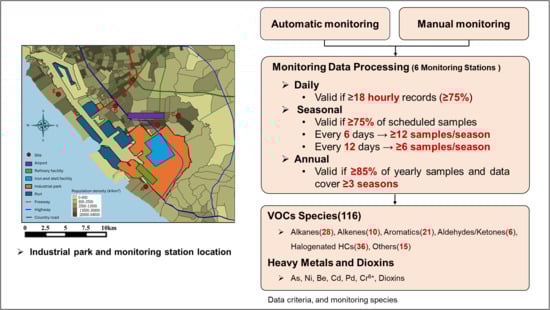
Graphical Abstract

1. Introduction

Kaohsiung City, located in southern Taiwan, is one of the nation’s most prominent industrial centers. The Linhai Industrial Park (formerly the Linhai Industrial Zone) spans the Xiaogang and Qianzhen Districts. Geographically, it is bordered by Kaohsiung County to the east, situated approximately 10 km west of the urban core, and directly adjacent to the southern gateway of Kaohsiung Port. The park lies about 500 m north of Kaohsiung International Airport and roughly 3 km from the terminal interchange of the national highway. This strategically advantageous location has made Linhai a key site for large-scale industrial development and operations.
Established in 1977 under the administration of the Industrial Development Bureau, Ministry of Economic Affairs, the park covers a total area of 1560 ha. It contributes an annual production value of NT$853.2 billion and provides employment for more than 36,000 workers, ranking among the largest and most economically significant industrial complexes in Taiwan.
Currently, Linhai Industrial Park hosts more than 500 enterprises across over twenty industrial sectors. These sectors include electricity generation and supply; iron and steel smelting and manufacturing; petroleum and coal product manufacturing; fabricated metal production; machinery and equipment manufacturing and repair; and chemical production. The park thus serves as both a cornerstone of Taiwan’s industrial growth and a major hub for the nation’s economic and commercial activities.
According to the Taiwan Emission Data System (TEDS 12.0) [1], the Linhai Industrial Park represents a major stationary emission source. Its annual emissions are estimated at 1837 tons of particulate matter (PM), 7566 tons of sulfur oxides (SOx), 11,541 tons of nitrogen oxides (NOx), and 2940 tons of non-methane hydrocarbons (NMHC), underscoring the park’s substantial contribution to regional air pollutant burdens.
To evaluate the environmental impacts attributable to Linhai Industrial Park, the Ministry of Environment established a network of ten fixed-site air-quality monitoring stations in and around the park. These include Fenglin Junior High School, Zhongshan Junior High School, Taiping Elementary School, Mingzhen Community Center, Qijin Junior High School, Linyuan Village, Xincuo Community Center, Dapingding, and Dingcuo Village. Among them, the stations located at Fenglin Junior High School, Zhongshan Junior High School, Taiping Elementary School, Mingzhen Community Center, and Qijin Junior High School are predominantly influenced by industrial emissions from the Linhai area. Continuous monitoring has been conducted since 2016, encompassing an extensive range of target pollutants such as 54 photochemical precursors, 52 hazardous air pollutants (HAPs), sulfides, five categories of inorganic acids, heavy metals, and dioxins [2].
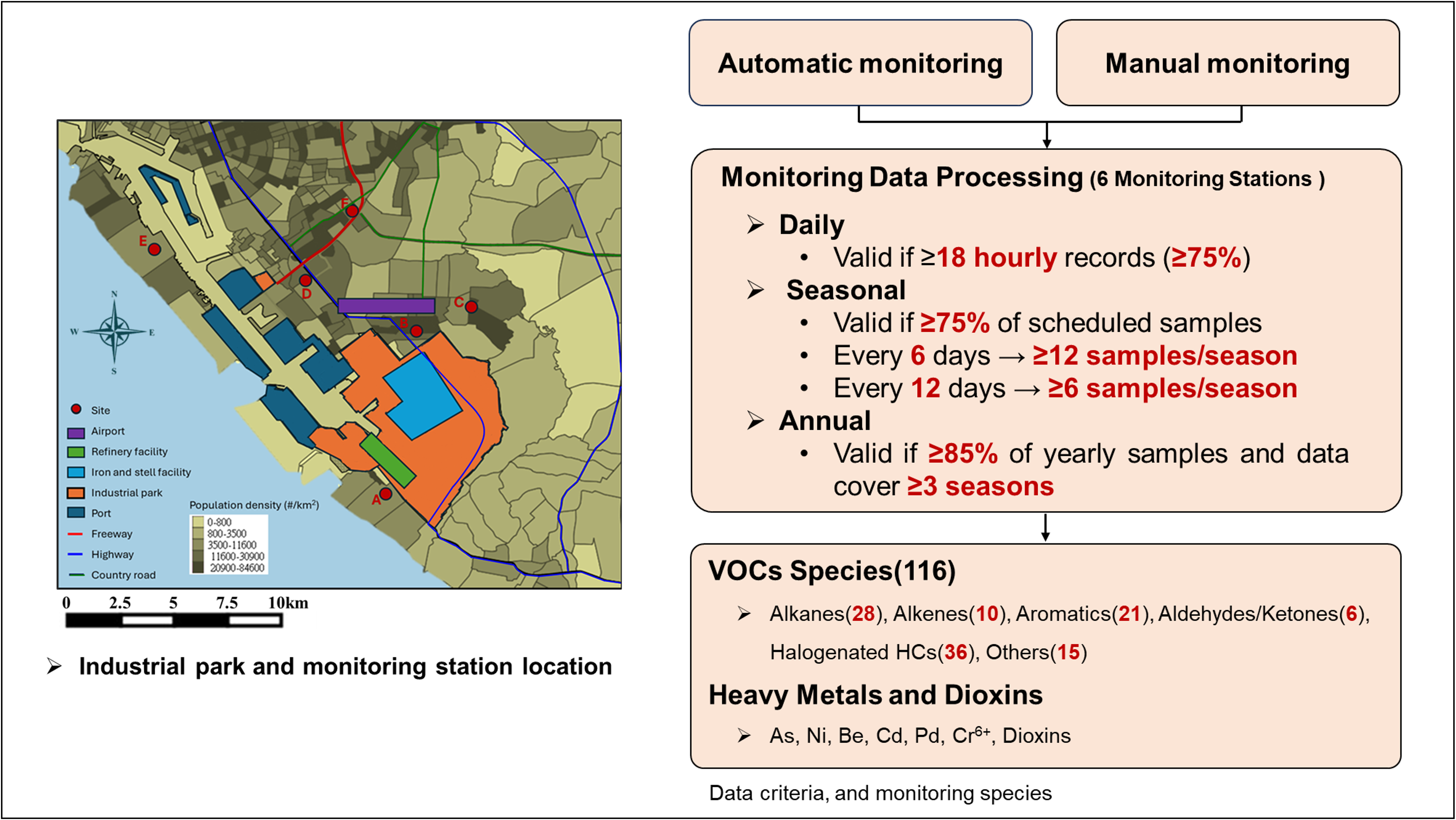
To characterize atmospheric concentration patterns and identify key HAP species associated with emissions from Linhai Industrial Park, data-processing approaches consistent with international monitoring protocols were employed. As shown in Figure 1, six monitoring stations were established in accordance with the Regulation of Special Industrial District to determine atmospheric HAP species. Measurements of HAPs collected between 2021 and 2024—including volatile organic compounds (VOCs), polycyclic aromatic hydrocarbons (PAHs), and heavy metals—were analyzed to examine concentration distributions across stations, assess BTEX (benzene, toluene, ethylbenzene, and xylenes) ratios, and benchmark the results against international reference values.

2. Experimental

2.1. Monitoring Methods and Data Sources

Ambient monitoring was conducted in accordance with the Taiwan NIEA standard methods. Hazardous volatile organic compounds (VOCs, excluding aldehydes) were analyzed following USEPA Method TO-15 (“Determination of Volatile Organic Compounds in Ambient Air—Stainless-Steel Canister Sampling/GC–MS”). Air samples were collected using pre-cleaned stainless-steel canisters and analyzed by gas chromatography–mass spectrometry (GC–MS). Aldehydes (formaldehyde and acetaldehyde) were quantified in accordance with USEPA Method TO-11A (“Determination of Gaseous Aldehydes in Ambient Air—High-Performance Liquid Chromatography with DNPH Derivatization”). Sampling was performed with DNPH-coated absorption bottles, and subsequent analyses were carried out using high-performance liquid chromatography (HPLC).
Trace elements in particulate matter (heavy metals) were determined following USEPA Method IO-3.5 (“Determination of Trace Elements in Particulate Pollutants in Ambient Air—Inductively Coupled Plasma Mass Spectrometry”). Particulate samples were collected on quartz-fiber filters and analyzed using inductively coupled plasma mass spectrometry (ICP–MS). Hexavalent chromium [Cr(VI)] was determined based on USEPA Method 7199/TO-13A (“Determination of Hexavalent Chromium in Ambient Air”). Sampling was performed using acid-washed sodium-bicarbonate ashless fiber filters, and extracts were analyzed by UV/visible spectrophotometry. Dioxins and furans were analyzed according to USEPA Method TO-9A (“Determination of Dioxins and Furans in Ambient Air”), with sampling conducted using quartz-fiber filters and polyurethane foam (PUF). The collected samples were subsequently analyzed by high-resolution gas chromatography/high-resolution mass spectrometry (HRGC/HRMS).
Ambient data for this study were obtained from the Ministry of Environment’s Air Quality Monitoring and Control Information Network for Special Industrial Zones, covering the period 2021–2024. Monitoring sites consisted of both manual and automatic stations, with the former collecting one sample every six days and the latter recording hourly measurements. In total, 35 pollutant species were analyzed, including six heavy metals, 23 VOCs measured at manual stations, five VOCs measured at automatic stations, and dioxin isomers.
Quality assurance and quality control (QA/QC) procedures were implemented in accordance with the standardized protocols established by the Ministry of Environment. For automatic gaseous monitoring, daily zero and span checks were conducted and recorded, biweekly precision checks were performed, and multipoint calibrations were carried out at least once per quarter. For open-path automatic monitoring systems, single-point precision checks were conducted on a biweekly basis. Following new installation, relocation, post-maintenance, or downtime exceeding three consecutive days, instruments were recalibrated using three to five concentration standards whenever zero or span drift exceeded the limits specified in the relevant standard methods. The management unit of each monitoring facility was also responsible for implementing preventive and corrective maintenance programs tailored to the instrument type and its operating conditions.
For automatic particulate matter monitoring systems, flow-rate calibrations were conducted quarterly. In cases of new installation, relocation, post-maintenance, or downtime exceeding three consecutive days, recalibration of flow rate was required and appropriately documented. For manual monitoring stations, single-point calibrations were performed monthly and multipoint calibrations quarterly, with all results recorded in accordance with the prescribed procedures.
For meteorological monitoring instruments, the management unit was required to establish specific quality control (QC) protocols and define their implementation frequency based on instrument type while also formulating preventive and corrective maintenance schedules that reflected actual field operating conditions.
Table 1 summarizes the key characteristics of the air-quality monitoring stations included in this study, including their monitoring heights, proximity to industrial zones and major roads, and the types of monitoring performed. As official records of monitoring heights were unavailable, these values were estimated based on the floor level of the buildings in which the stations were located. Pollutants was determined by six automatic monitoring stations are shown as Table S1.
The six monitoring stations—Fonglin (A), Zhongshan (B), Taiping (C), Mingzheng (D), Cijin (E), and Erjia Village (F)—are located at heights ranging from 6 to 12 m and are situated approximately 380 to 7880 m from the nearest industrial zones. Pollutant monitoring at these sites employs both automatic instruments and manual sampling techniques. Automatic systems are used to measure criteria air pollutants, meteorological parameters, and photochemical precursors, while manual sampling targets hazardous air pollutants and other specific compounds that are not captured by the automatic monitoring systems.

2.2. Data Selection Criteria

2.2.1. Data Processing Principles

Monitoring data at each station complied with the 24 h measurement protocol specified in the National Environmental Research Institute’s standard methods. Data processing was conducted at daily, seasonal, and annual aggregation levels, following explicit validity criteria as outlined below. Reference values of long-term atmospheric concentrations of target air pollutants abroad are shown as Table S2.
  • Daily averages (automatic stations in special industrial zones): To maintain 24 h resolution, hourly observations were aggregated into daily means. A daily average was considered valid when at least 75% of the hourly data were available, corresponding to a minimum of 18 valid hourly measurements per day. Days not meeting this requirement were excluded from the daily mean calculation.
  • Seasonal averages: A seasonal mean was calculated only when at least 75% of the scheduled samples within a season were valid. For example, under a sampling frequency of once every six days, a minimum of 12 valid samples per season was required; under a frequency of once every twelve days, at least 6 valid samples were necessary. Stations that failed to meet these thresholds were excluded from seasonal average computation.
  • Annual averages: An annual mean was reported only when at least 85% of the scheduled yearly samples were valid and the data coverage extended across a minimum of three seasons. Stations that did not satisfy both criteria were excluded from annual average reporting.

2.2.2. Data Analysis

For each special industrial zone, pollutant comparisons followed a predefined hierarchy of international benchmarks: WHO [3,4], EC [3], Japan’s Ministry of the Environment [5,6], and TCEQ [7]. In practice, when a pollutant of concern had an available WHO guideline value, the annual mean concentration was compared directly with the WHO benchmark; if unavailable, the next applicable value in the hierarchy was adopted. (NEPC reference values were also compiled for completeness and applied where relevant.)
The comparison metric was expressed as a ratio (C_anl/C_ref), where C_anl represents the annual average concentration measured at a given station and C_ref denotes the corresponding atmospheric reference concentration. A ratio <1 indicates that, relative to the selected benchmark, chronic exposure at the observed annual mean level is unlikely to exceed the associated health-based guideline. In addition, the sum of ratios across all pollutant species at each station was computed as a conservative screening indicator to identify priority stations and pollutants requiring further assessment within each special industrial zone.

3. Results and Discussion

3.1. Analysis of TVOC (116 Compounds) Monitoring Data

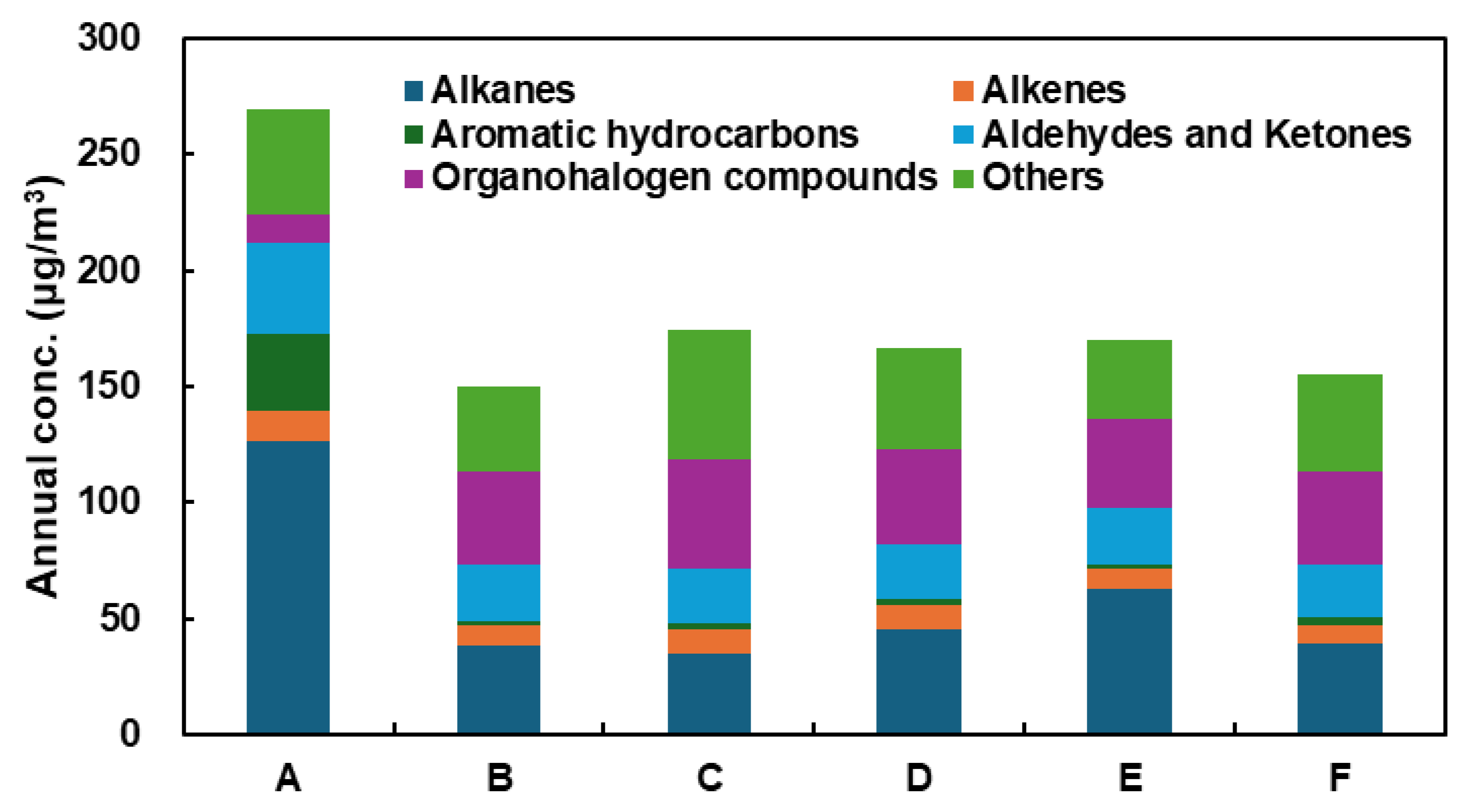
Figure 2 presents the distribution of 116 monitored VOC species across six monitoring stations, encompassing both automatic and manual sites. The VOC species were categorized into six chemical groups: 28 alkanes, 10 alkenes, 21 aromatics, 6 aldehydes/ketones, 36 halogenated hydrocarbons, and 15 other compounds. According to the monitoring results, alkanes represented the dominant VOC class at stations A and E, with total concentrations of 215.61 μg/m3 and 103.79 μg/m3, respectively.
Across the six monitoring stations, the aggregate VOC composition was as follows: alkanes 32%, halogenated hydrocarbons 20%, aldehydes/ketones 15%, alkenes 5%, aromatics 4%, and others 24%. Stations A, D, and E exhibited the highest relative contributions from alkanes, whereas stations B, C, and F were dominated by halogenated hydrocarbons.
Station-specific compositions are summarized in Table 2 as follows:
  • A—alkanes 47%, aldehydes/ketones 14%, aromatics 12%, alkenes 5%, halogenated hydrocarbons 5%, others 17%
  • B—halogenated hydrocarbons 27%, alkanes 26%, aldehydes/ketones 16%, alkenes 6%, aromatics 1%, others 25%
  • C—halogenated hydrocarbons 27%, alkanes 20%, aldehydes/ketones 14%, alkenes 6%, aromatics 2%, others 32%
  • D—alkanes 27%, halogenated hydrocarbons 25%, aldehydes/ketones 14%, alkenes 6%, aromatics 2%, others 26%
  • E—alkanes 37%, halogenated hydrocarbons 22%, aldehydes/ketones 15%, alkenes 5%, aromatics 1%, others 20%
  • F—halogenated hydrocarbons 26%, alkanes 25%, aldehydes/ketones 15%, alkenes 5%, aromatics 2%, others 27%.

Considering both the VOC concentrations and the prevailing wind directions (NW and N), the elevated VOC levels observed at stations A and C can be attributed to their downwind locations relative to the major industrial emission sources.
Table 2. Volatile organic compound composition of six monitoring stations.
Compound (%)ABCDEF
Alkanes472620273725
Alkenes566655
Aromatic hydrocarbons1212212
Aldehydes and Ketones141614141515
Organohalogen compounds52727252226
Others172532262027
Total abundant (μg/m3)269.2 ± 15.4157.0 ± 13.6174.4 ± 18.6166.6 ± 19.4169.7 ± 12.5154.8 ± 14.5
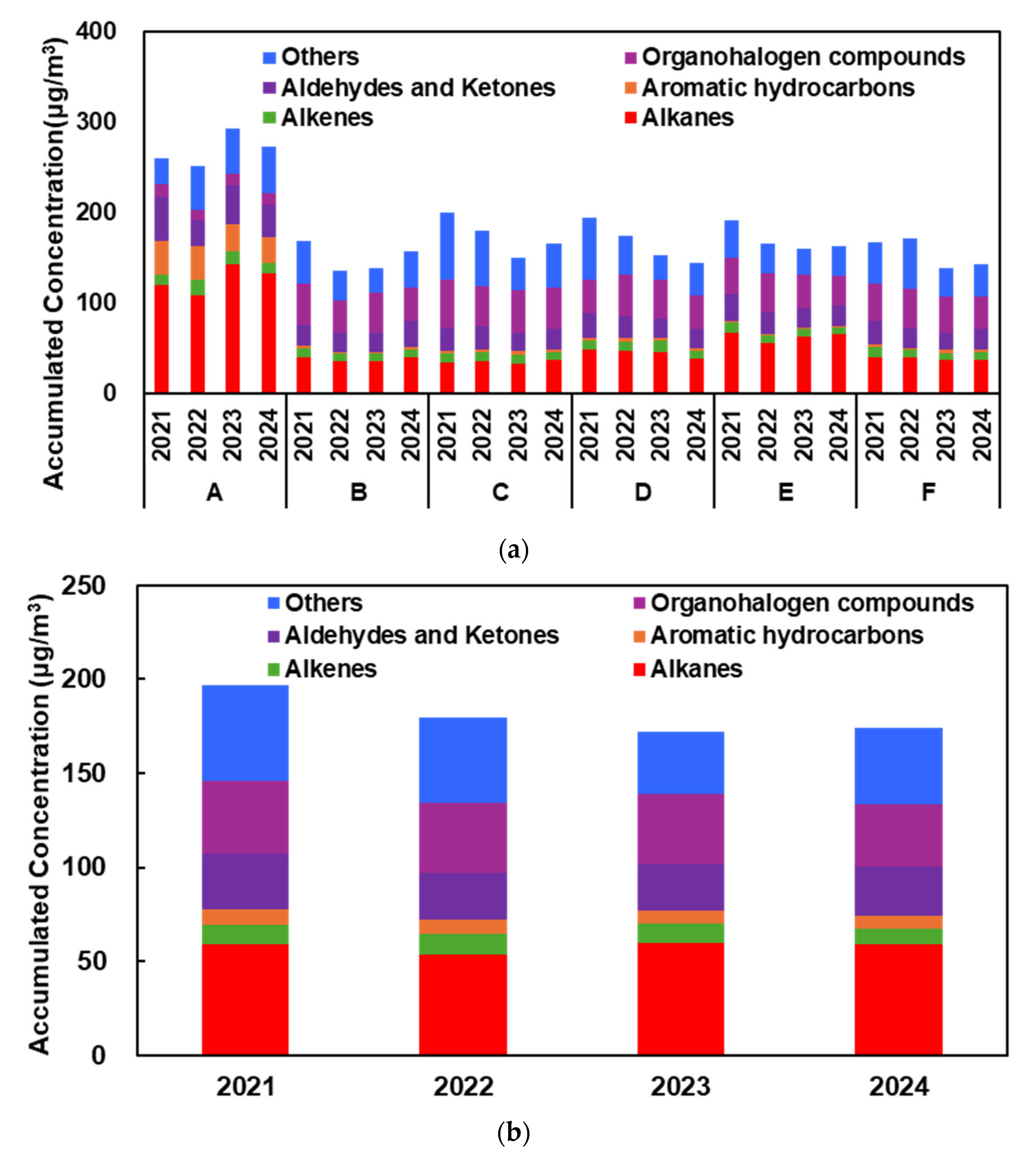
Figure 3a illustrates the interannual variations in VOC class proportions at each monitoring station. At station A, the proportions of alkanes, halogenated hydrocarbons, and the “others” category exhibited slight increases in 2023, whereas the remaining classes showed a gradual decline throughout the study period. At station B, the proportions of alkanes, alkenes, and aromatics decreased in 2022 and then gradually increased in subsequent years, while aldehydes/ketones, halogenated hydrocarbons, and others displayed a year-on-year decrease.
Furthermore, the sequence of annual average VOC concentrations across the six monitoring stations followed the trend 2021 > 2022 > 2023 ≈ 2024 (as shown in Figure 3b), indicating a general downward trend in VOC levels over the study period, with relative stabilization observed after 2023.

3.2. Analysis of Hazardous VOCs

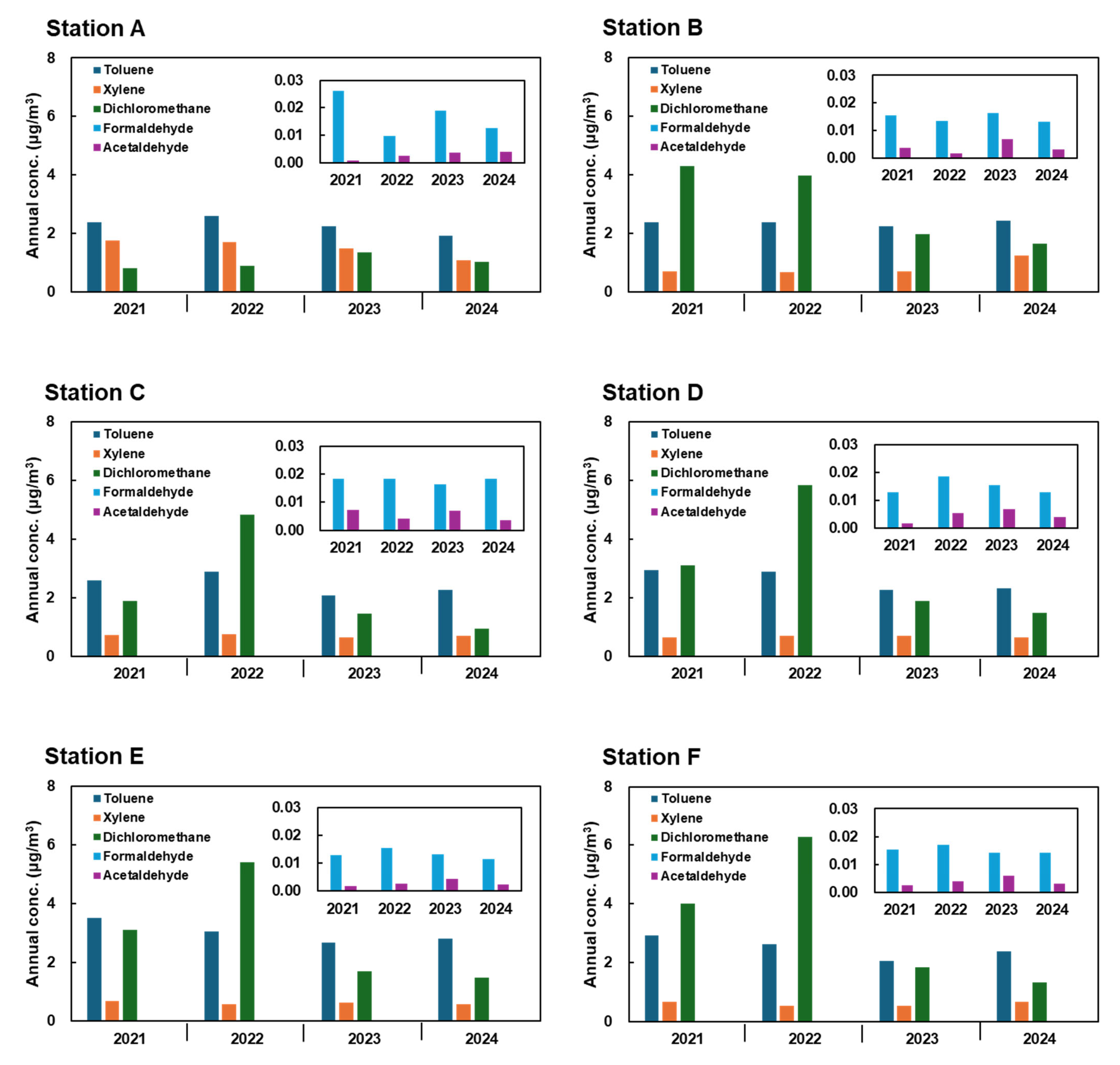
Figure 4 presents the four-year average concentrations of 28 regulated VOC species at each monitoring station. The analysis identified formaldehyde, acetaldehyde, toluene, xylene, and dichloromethane as the major pollutants of concern across the monitoring network. At station A, toluene exhibited the highest average concentration, while at the remaining stations, toluene and dichloromethane were the predominant species. Table S3 lists the frequency of VOCs > 1 µg/m3. Table S4 counts the years (2021–2024) in which annual levels surpassed the four-year mean.
Table 3 summarizes BTEX (benzene, toluene, ethylbenzene, and xylene) concentrations measured at the six monitoring stations from 2021 to 2024. Benzene ranged from 1.59 to 2.64 µg/m3, whereas toluene was the most abundant compound (8.60–11.28 µg/m3). Network-wide total BTEX concentrations ranged from 14.06 to 18.34 µg/m3, with the highest levels observed at station A. Table S5 summarizes 2021–2024 exceedance rates, highlighting significant spatiotemporal variations. Figure S1 illustrates the ratios of annual mean concentrations to reference values for target hazardous VOCs.
In an international context, total BTEX concentrations in the study area exceeded those reported for Canada (3.74–6.17 µg/m3) and Japan (13.42 µg/m3), but remained lower than those in South Korea (40.00 µg/m3) and China (57.21 µg/m3). The elevated concentrations observed in South Korea and China are consistent with strong petrochemical and solvent-related emissions reported for those regions. By comparison, the study area exhibited moderate BTEX levels, plausibly influenced by steel manufacturing, oil refining, and on-road traffic.
Compound-specific patterns further support these interpretations. Toluene dominated the BTEX mixture, suggesting notable contributions from solvent use and vehicular exhaust. The toluene/benzene (T/B) ratio (range: 3.26–6.36; mean: 5.07) was comparable to values reported for China (5.25) [11], South Korea (6.25) [8], and Japan (6.51) [10], indicating similar source characteristics associated with traffic and solvent applications. In contrast, the ethylbenzene/benzene (E/B) ratio (0.66–0.82) was markedly lower than that in South Korea (6.14) [8] and China (1.79) [11]. The xylene/benzene (X/B) ratio (1.38–2.25) was close to that of China (1.20) [11] but substantially lower than South Korea (17.38) [8], implying a relatively weaker petrochemical influence on xylene in the study area. Finally, the toluene/xylene (T/X) and xylene/ethylbenzene (X/E) ratios (1.45–4.61 and 2.09–2.89, respectively) fell within typical ranges for Asian industrial regions, indicating a mixed industrial–traffic emission profile [8,10,11].

3.3. Analysis of Particulate Matter Heavy Metals and Dioxin Monitoring Data

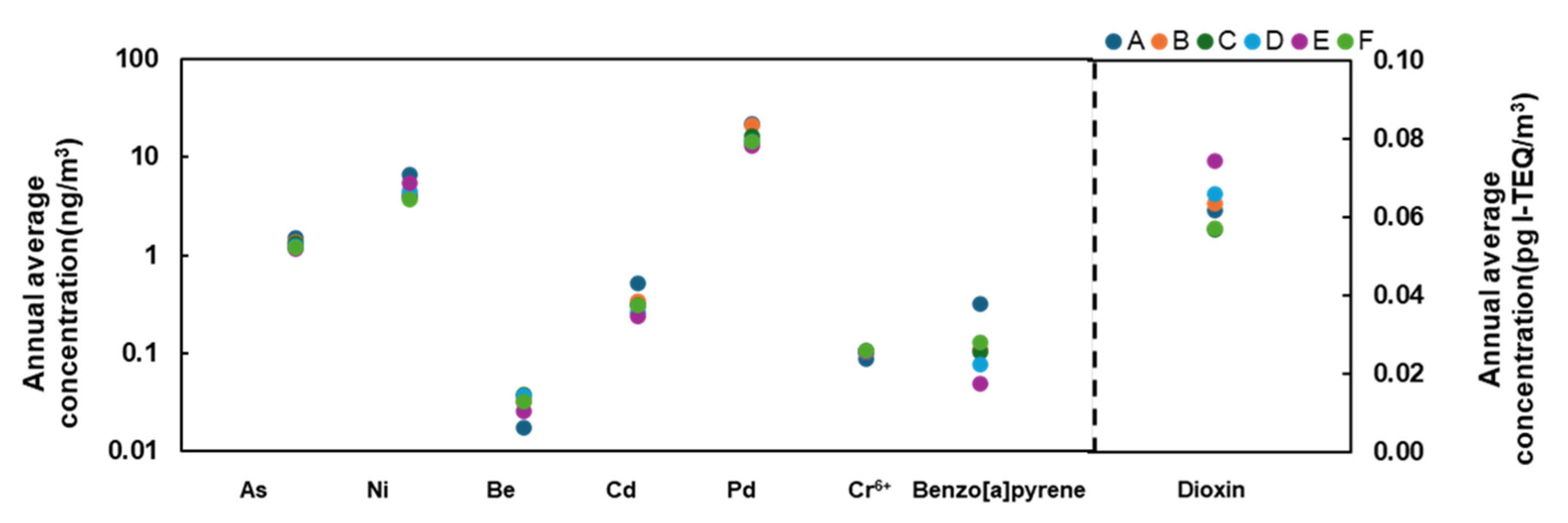
Figure 5 illustrates the concentrations of heavy metals, benzo[a]pyrene (BaP), and dioxins measured at the six monitoring stations from 2021 to 2024. Among the analyzed metals, lead (Pb) was the most abundant, with concentrations ranging from approximately 14 to 21 ng/m3, and was therefore identified as the primary metallic pollutant of concern. Nickel (Ni) and arsenic (As) exhibited moderate levels, averaging about 4–6 ng/m3 and 1–2 ng/m3, respectively. In contrast, cadmium (Cd), beryllium (Be), and hexavalent chromium [Cr(VI)] were generally low, often approaching the method detection limits.
For organic pollutants, BaP concentrations remained consistently below 1 ng/m3 across all monitoring stations. Dioxin concentrations ranged from approximately 0.06 to 0.09 pg I-TEQ/m3. Notably, station D exhibited slightly elevated dioxin levels relative to the network average, warranting closer examination of local industrial activities and operational practices. Overall, Pb and dioxins emerged as the primary pollutants of concern within the study area during the observation period.
As summarized in Table 4, lead (Pb) was the most prevalent of the analyzed metals, with a maximum concentration of 21.8 ng/m3, thereby identifying Pb as the principal metallic pollutant of concern. This pattern is consistent with emission profiles typically associated with steel manufacturing and oil refining. In an international context, the Pb concentration observed in this study (21.8 ng/m3) is comparable to those reported for France (18.2 ng/m3) and China (approximately 20 ng/m3), yet remains below the maximum levels reported for Italy (up to 53.8 ng/m3). Other metals, including nickel (Ni) at 6.59 ± 0.71 ng/m3 and arsenic (As) at 1.49 ± 0.19 ng/m3, occurred at moderate concentrations, aligning with values observed in European steel-producing regions (e.g., Ni = 5.36 ng/m3 in France, 2020). By contrast, cadmium (Cd) (0.51 ± 0.13 ng/m3) and hexavalent chromium [Cr(VI)] (0.09 ± 0.02 ng/m3) were relatively low and often approached background levels.
Regarding organic pollutants, dioxins (1.49 pg I-TEQ/m3) and benzo[a]pyrene (B(a)P) (0.32 ng/m3) were within the ranges reported in the international literature. The B(a)P concentration observed in this study was comparable to that measured in the Taichung Industrial Park (0.23 ng/m3) but was substantially lower than levels documented in Italian industrial zones characterized by oil refining and steel manufacturing activities (6.26 ng/m3).
Table 5 presents the temporal variation in annual average concentrations of six specific volatile organic compounds (VOCs) from 2021 to 2024. The selected target compounds—benzene, vinyl chloride, 1,2-dichloroethane, formaldehyde, acrylonitrile, and chloroform—were identified based on their carcinogenic classifications by the International Agency for Research on Cancer (IARC) [20], encompassing Group 1 (carcinogenic to humans), Group 2A (probably carcinogenic to humans), and Group 2B (possibly carcinogenic to humans). Among these, formaldehyde exhibited the highest concentrations, with a four-year average of 18.96 µg/m3, thereby identifying it as the predominant VOC pollutant in the study region. Its concentrations remained relatively stable throughout the observation period, ranging from 16.84 to 20.65 µg/m3. Ratios of annual mean concentrations to reference values for controlled harmful VOCs, heavy metals and Dioxin are shown as Figures S1–S5. Table S6 is shown important species ratio (mean annual concentration/international reference value) of six stations.
Benzene, with a four-year average concentration of 1.89 µg/m3, was the second most prevalent VOC, exhibiting a slight downward trend between 2021 and 2024. Despite this decline, benzene remains a pollutant of significant concern due to its well-documented carcinogenicity. In contrast, vinyl chloride and 1,2-dichloroethane showed comparatively low concentrations, averaging 0.51 µg/m3 and 0.64 µg/m3, respectively. The least abundant compounds were acrylonitrile (0.02 ± 0.02 µg/m3) and chloroform (0.12 ± 0.06 µg/m3).
Overall, formaldehyde and benzene were consistently identified as the VOC species warranting the greatest regulatory and public health attention within the study area. Table 6 details the concentrations and ranges of the six selected VOCs across the six monitoring stations (A–F), revealing pronounced spatial variations. Among the analyzed compounds, formaldehyde was the most abundant, with concentrations ranging from 16.23 to 21.91 µg/m3. The peak concentration occurred at station C, likely due to its proximity to industrial or traffic-related emission sources, whereas the lowest concentration was observed at station E. Benzene was the second most prevalent VOC, ranging from 1.59 to 2.64 µg/m3 and peaking at station A. Despite its lower concentrations relative to formaldehyde, benzene remains a pollutant of major concern owing to its established carcinogenic properties.
Vinyl chloride and 1,2-dichloroethane were present at moderate levels and exhibited distinct spatial distributions: vinyl chloride was highest at station E (1.022 ± 0.48 µg/m3), while 1,2-dichloroethane reached its maximum at station A (1.34 ± 0.86 µg/m3). Acrylonitrile concentrations remained consistently low across all monitoring sites (0.01–0.07 µg/m3). Chloroform concentrations were also generally low, although a slightly elevated level was observed at station C (0.17 ± 0.1 µg/m3).
Overall, the dataset reveals clear spatial heterogeneity in VOC concentrations among the six monitoring stations. Formaldehyde and benzene emerged as the predominant pollutants, whereas the patterns of the remaining VOCs likely reflect the influence of localized and/or secondary emission sources.
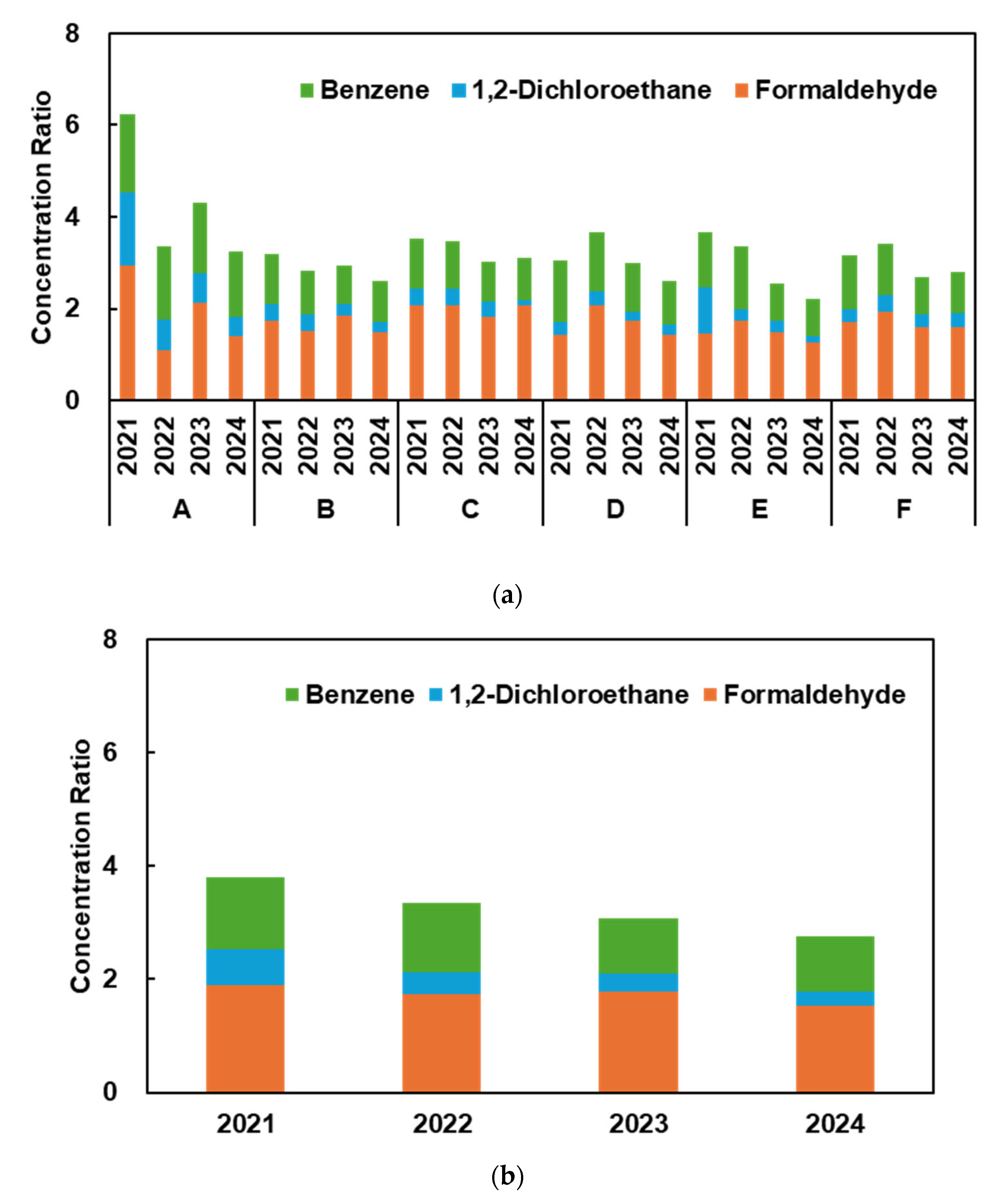
Figure 6 presents the cumulative concentration ratios of key hazardous pollutant species across the monitoring stations, highlighting those with concentration ratios exceeding 1. Among these, formaldehyde exhibited a particularly significant influence at all stations. Notably, the cumulative concentration ratio at station A was substantially higher than those at other locations, indicating that station A serves as a critical observation site for regional air-quality assessment and control efforts.
In the previous work, stationary sources and port activities were identified as the dominant emission contributors for benzene. Approximately 60% of formaldehyde emissions originated from port activities, while about 30% were attributed to stationary sources. Nearly 80% of 1,3-butadiene emissions were associated with port operations, whereas most vinyl chloride and arsenic emissions were derived from stationary sources [21]. The smelting and refining of iron and steel, the petroleum and coal products manufacturing industry, and the production of coatings, dyes, and pigments were identified as major industrial sources of benzene, formaldehyde, 1,3-butadiene, and vinyl chloride. In contrast, the power generation industry represented the primary source of arsenic emissions.
IBM SPSS (Statistical Product and Service Solutions, Version 25) was conducted to determine principal component analysis. The pollution data included VOC species classes (alkanes, alkenes, alkynes, aromatics, aldehydes and ketones, halogenated compounds, and esters) and metal species (As, Ni, Be, Cd, Pb, and Cr6+) that were conducted to determine their emission sources (shown as Table 7).
Results indicated that factor 1 was alkanes, esters, Ni and Cd that could be from the petrochemical industry, factor 2 was Be and Cr6+ that could be from metal refinery, special in iron and steel industry, and factor 3 was aromatics that could be from the chemical industry and port activities. In total, three factors can explain about 74% of the factor variances.

4. Conclusions

A network-wide synthesis identified formaldehyde, benzene, and 1,2-dichloroethane as the predominant volatile organic compounds (VOCs). Formaldehyde was particularly notable for its ubiquity, exhibiting a 100% detection frequency across all monitoring sites, indicative of a consistently elevated presence throughout the network. Benzene showed the highest exceedance frequency at stations E and F (75%), suggesting a comparatively greater influence from localized traffic and/or industrial activities in those areas. In contrast, 1,2-dichloroethane occurred only sporadically, reflecting site-specific rather than regionally pervasive sources.
Analysis of concentration ratios and interannual patterns indicated that formaldehyde levels remained persistently high throughout the study period, consistent with stable emission inputs and/or secondary formation processes. This persistence suggests that current control measures may be insufficient for mitigating formaldehyde emissions. Benzene displayed concentration ratios persistently greater than 1.0 at several stations, underscoring the need for continued surveillance of emissions plausibly associated with industrial operations, port activities, and on-road traffic. In contrast, other VOCs—such as chloroform, acrylonitrile, and vinyl chloride—had minimal influence on overall network air quality, with concentrations often below detection limits or exhibiting very low detection frequencies.
Ambient air quality in the vicinity of the industrial zone was most strongly influenced by formaldehyde and benzene. Accordingly, emission control efforts should prioritize oxygenated and aromatic VOC sources, including industrial processes, solvent use, and traffic-related activities, to reduce potential public health risks. Continued long-term monitoring—coupled with targeted source investigations (e.g., process audits, port and traffic activity profiling) and periodic evaluations of control effectiveness—will be essential to guide evidence-based policy and refine abatement strategies.

Supplementary Materials

The following supporting information can be downloaded at: https://www.mdpi.com/article/10.3390/atmos16121369/s1, Figure S1. Concentration ratio of the annual average reference value of controlled harmful VOCs; Figure S2. the concentration ratio of the annual average reference value of controlled harmful VOC (station by station comparison); Figure S3. Concentration ratios of the annual average reference values of 6c, benzene, 1,2 dichloroethane and formaldehyde (station-by-station comparison); Figure S4. vinyl chloride 1,3 butadiene, dichloromethane, and the concentration ratio of the annual average reference value of acetaldehyde (compared by station); Figure S5. the concentration ratio of heavy metals controlled by manual stations and the annual average reference value of Dioxin; Table S1. 6 stations monitoring projects; Table S2. Reference values of long-term atmospheric environmental concentrations of target air pollutants abroad, Table S3. Frequency greater than 1 (%); Table S4. The concentration ratio is greater than 1 year; Table S5. 6 stations should pay attention to the frequency of the annual average concentration of species and the environmental reference value ratio > 1 (%); Table S6. 6 Stations Key Species Ratio (mean annual concentration/international reference value).

Author Contributions

Conceptualization, J.-H.T. and H.-L.C.; methodology, P.-C.Y.; software, P.-C.Y.; validation, P.-C.Y., S.-Y.L. and H.-L.C.; formal analysis, P.-C.Y. and S.-Y.L.; investigation, P.-C.Y.; resources, J.-H.T.; data curation, P.-C.Y.; writing—original draft preparation, P.-C.Y. and S.-Y.L.; writing—review and editing, H.-L.C.; visualization, P.-C.Y., S.-Y.L. and H.-L.C.; supervision, J.-H.T. and H.-L.C.; project administration, J.-H.T. and H.-L.C.; funding acquisition, P.-C.Y. and H.-L.C. All authors have read and agreed to the published version of the manuscript.

Funding

This research was funded by [National Science and Technology Council, Taiwan] grant number [MOST-111-2221-E-006-024-MY2, 107-2221-E-006-005-MY3, 107-2221-E-006-006-MY3 and 104-2221-E-006-020-MY3].

Institutional Review Board Statement

Not applicable.

Informed Consent Statement

Not applicable.

Data Availability Statement

The raw data supporting the conclusions of this article will be made available by the authors on request.

Acknowledgments

The authors express their sincere thanks to the National Science and Technology Council, Taiwan.

Conflicts of Interest

The authors declare no conflicts of interest.

References

  1. Ministry of Environment. Taiwan Emission Data System, TEDS 12.0. 2024. Available online: https://air.moenv.gov.tw/EnvTopics/AirQuality_6.aspx (accessed on 5 June 2025).
  2. Ministry of Environment. Special Industrial Zone Monitoring Network. 2025. Available online: https://aqmsopen.moenv.gov.tw/Default_EN.aspx#gsc.tab=0 (accessed on 5 June 2025).
  3. World Health Organization (WHO). Air Quality Guidelines for Europe World Health Organization Regional Office for Europe Copenhagen WHO Regional Publications, 2nd ed.; European Series, No. 91; World Health Organization: Geneva, Switzerland, 2000.
  4. World Health Organization (WHO). WHO Global Air Quality Guidelines: Particulate Matter (PM2.5 and PM10), Ozone, Nitrogen Dioxide, Sulfur Dioxide and Carbon Monoxide; World Health Organization: Geneva, Switzerland, 2021.
  5. Ministry of the Environment of Japan. Guideline Values for Hazardous Air Pollutants to Reduce Health Risks; Ministry of the Environment of Japan: Tokyo, Japan, 2006. [Google Scholar]
  6. Ministry of the Environment of Japan. Manual on Determination of Dioxins in Ambient Air; Ministry of the Environment of Japan: Tokyo, Japan, 2001. [Google Scholar]
  7. Texas Commission on Environmental Quality (TCEQ). Air Monitoring Comparison Values for Long-Term Health (AMCVs). 2017. Available online: https://www.tceq.texas.gov/cgi-bin/compliance/monops/agc_amcvs.pl (accessed on 5 June 2025).
  8. Lee, J.; Lee, S.J.; Kim, S.J.; Kim, S.H.; Lee, G.; Chang, L.S.; Choi, S.D. Pollution characteristics and secondary formation potential of volatile organic compounds in the multi-industrial city of Ulsan, Korea. Atmos. Environ. 2024, 319, 120313. [Google Scholar] [CrossRef]
  9. Xiong, Y.; Bari, M.A.; Xing, Z.; Du, K. Ambient volatile organic compounds (VOCs) in two coastal cities in western Canada: Spatiotemporal variation, source apportionment, and health risk assessment. Sci. Total Environ. 2020, 706, 135970. [Google Scholar] [CrossRef] [PubMed]
  10. Fukusaki, Y.; Kousa, Y.; Umehara, M.; Ishida, M.; Sato, R.; Otagiri, K.; Hoshi, J.; Nudejima, C.; Takahashi, K.; Nakai, S. Source region identification and source apportionment of volatile organic compounds in the Tokyo Bay coastal area. Jpn. Atmos. Environ. 2021, 9, 100103. [Google Scholar] [CrossRef]
  11. Zhang, Y.; Li, R.; Fu, H.; Zhou, D.; Chen, J. Observation and analysis of atmospheric volatile organic compounds in a typical petrochemical area in Yangtze River Delta, China. J. Environ. Sci. 2018, 71, 233–248. [Google Scholar] [CrossRef] [PubMed]
  12. Ledoux, F.; Kfoury, A.; Delmaire, G.; Roussel, G.; El Zein, A.; Courcot, D. Contributions of local and regional anthropogenic sources of metals in PM2.5 at an urban site in northern France. Chemosphere 2017, 181, 713–724. [Google Scholar] [CrossRef] [PubMed]
  13. Maestas, M.; Epstein, S.A.; Schulte, N.; Li, X.; Zhang, X.; Lee, S.M.; Polidori, A.; Low, J.; Ghosh, J.K. Trends in air toxics cancer risk in Southern California, 1998–2018. Environ. Res. Health 2024, 2, 025005. [Google Scholar] [CrossRef]
  14. Seibert, R.; Nikolova, I.; Volná, V.; Krejčí, B.; Hladký, D. Air pollution sources’ contribution to PM2.5 concentration in the northeastern part of the Czech Republic. Atmosphere 2020, 11, 522. [Google Scholar] [CrossRef]
  15. Alves, C.; Evtyugina, M.; Vicente, E.; Vicente, A.; Rienda, I.C.; de la Campa, A.S.; Duarte, I. PM2.5 chemical composition and health risks by inhalation near a chemical complex. J. Environ. Sci. 2023, 124, 860–874. [Google Scholar] [CrossRef] [PubMed]
  16. Taiwo, A.M.; Beddows, D.C.S.; Calzolai, G.; Harrison, R.M.; Lucarelli, F.; Nava, S.; Vecchi, R. Receptor modelling of airborne particulate matter in the vicinity of a major steelworks site. Sci. Total Environ. 2014, 490, 488–500. [Google Scholar] [CrossRef] [PubMed]
  17. Palmisani, J.; Di Gilio, A.; Franchini, S.A.; Cotugno, P.; Miniero, D.V.; D’Ambruoso, P.; de Gennaro, G. Particle-bound PAHs and elements in a highly industrialized city in Southern Italy: PM2.5 chemical characterization and source apportionment after the implementation of governmental measures for air pollution mitigation and control. Int. J. Environ. Res. Public Health 2020, 17, 4843. [Google Scholar] [CrossRef]
  18. Koukoulakis, K.G.; Kanellopoulos, P.G.; Chrysochou, E.; Costopoulou, D.; Vassiliadou, I.; Leondiadis, L.; Bakeas, E. Atmospheric concentrations and health implications of PAHs, PCBs and PCDD/Fs in the vicinity of a heavily industrialized site in Greece. Appl. Sci. 2020, 10, 9023. [Google Scholar] [CrossRef]
  19. Zhu, J.; Hsu, C.Y.; Chou, W.C.; Chen, M.J.; Chen, J.L.; Yang, T.T.; Chen, Y.C. PM2.5-and PM10-bound polycyclic aromatic hydrocarbons (PAHs) in the residential area near coal-fired power and steelmaking plants of Taichung City, Taiwan: In vitro-based health risk and source identification. Sci. Total Environ. 2019, 670, 439–447. [Google Scholar] [CrossRef] [PubMed]
  20. International Agency for Research on Cancer (IARC). List of Classifications. 2025. Available online: https://monographs.iarc.who.int/list-of-classifications/ (accessed on 5 November 2025).
  21. Tsai, J.-H.; Yeh, P.-C.; Huang, J.-J.; Chiang, H.-L. Characteristics of Air Toxics from Multiple Sources in the Kaohsiung Coastal Industrial Complex and Port Area. Atmosphere 2024, 15, 1547. [Google Scholar] [CrossRef]
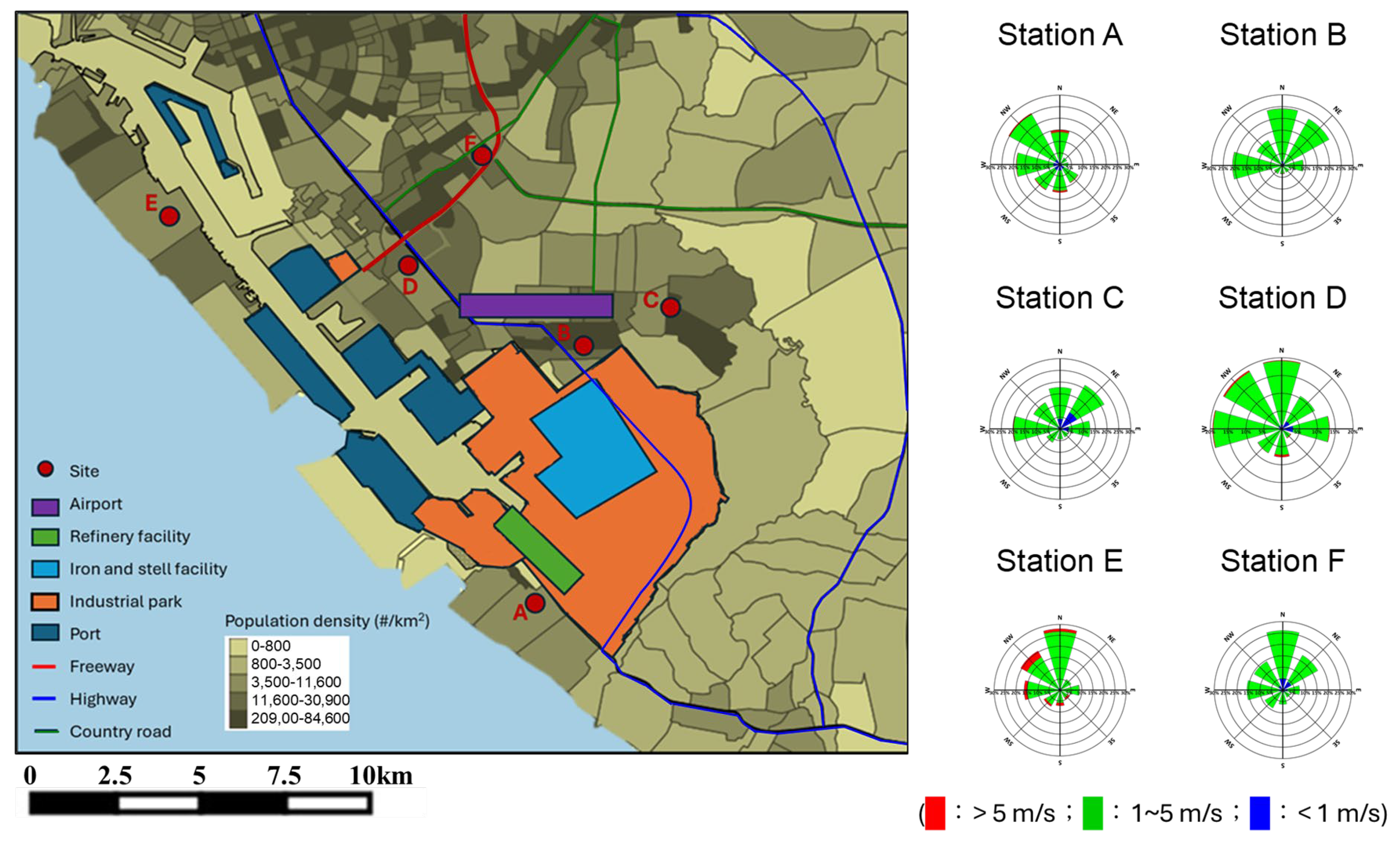
Figure 1. Locations of pollution sources and monitoring stations in the study area (left), and four-year average wind rose plots at the six monitoring stations (right).
Atmosphere 16 01369 g001
Figure 2. Four-year (2021–2024) average concentrations of VOCs (μg/m3) at six monitoring stations.
Atmosphere 16 01369 g002
Figure 3. Average concentrations of VOC concentration (μg/m3) at six monitoring stations during 2021–2024. (a) Average VOC group concentrations of six stations during 2021–2024. (b) Overall average VOC concentrations for 2021–2024.
Atmosphere 16 01369 g003
Figure 4. Four-year (annual) average concentrations of hazardous VOCs at six stations during 2021–2024.
Atmosphere 16 01369 g004
Figure 5. Annual average concentrations of heavy metals, dioxins, and B(a)P at six monitoring stations over four years (2021–2024).
Atmosphere 16 01369 g005
Figure 6. Concerned VOC species (formaldehyde, benzene and 1,2-dichloroethane) abundant during 2021–2024. (a) Average concentration ratios at six stations for 2021–2024. (b) Average concentration during 2021–2024.
Atmosphere 16 01369 g006
Table 1. Air pollutant monitoring items, monitoring heights, and environmental distances.
Name of StationStation CodeStation Height (m)Distance from Industrial Area (m)Distance from the Road (m) Monitoring (Categories)
FonglinA1238090
  • Automatic monitoring: criteria air pollutants, meteorological tests, organic photochemical precursors
  • Manual monitoring: Hazardous air pollutants, Other tests
ZhongshanB12420285
TaipingC9105050
MingzhengD93000250
CijinE678805
Erjia VillageF6430020
Note: The monitoring heights are estimated based on building floor levels from maps, as official data are not currently available.
Table 3. BTEX concentrations (μg/m3) at six monitoring stations from 2021 to 2024, along with concentration ratios and comparisons with international reference values.
RegionEmission Source CharacteristicsBenzene (B)Toluene (T)Ethylbenzene (E)Xylene (X)Styrene (S)BTEXT/BE/BX/BT/XX/E
This studyASteel industry, Petroleum refining industry2.64 ± 0.198.60 ± 1.061.28 ± 0.676.55 ± 1.360.88 ± 0.2418.343.260.782.251.452.89
BSteel industry, Petroleum refining industry, Traffic sources1.59 ± 0.178.81 ± 0.310.76 ± 0.743.55 ± 1.190.77 ± 0.2114.065.390.801.822.952.28
CSteel industry, Petroleum refining industry, Traffic sources1.67 ± 0.189.26 ± 1.340.54 ± 0.203.06 ± 0.210.65 ± 0.1314.665.540.821.833.022.22
DSteel industry, Petroleum refining industry, Aviation1.97 ± 0.299.80 ± 1.370.47 ± 0.142.92 ± 0.160.60 ± 0.1515.354.990.701.473.392.11
EPetroleum refining industry, Port activities1.77 ± 0.4911.28 ± 1.420.34 ± 0.152.69 ± 0.221.93 ± 0.7117.476.360.661.384.612.09
FTraffic sources1.69 ± 0.249.97 ± 1.380.51 ± 0.222.90 ± 0.330.95 ± 0.1915.485.910.771.723.442.24
Average of six monitoring stationsSteel industry, Petroleum refining industry1.89 ± 0.449.61 ± 1.400.65 ± 0.493.47 ± 1.550.96 ± 0.5515.895.070.751.782.852.36
Korea [8]Shipbuilding industry, Automotive industry, Petrochemical industry, and Non-ferrous metals industry1.308.137.9822.590.5740.006.256.1417.380.360.35
Canada [9]Refineries, Science and Technology Parks, and Integrated Industrial Zones0.602.740.522.310.206.174.570.873.851.190.23
0.451.900.271.120.103.744.220.602.491.700.24
Japan [10]Petrochemical industry0.815.274.001.000.2213.426.514.944.121.581.20
China [11]Chemical plants (paint solvent plants, rubber factories, refineries, petrochemical plants)6.1932.511.17.422.6057.215.251.791.204.381.50
Table 4. Four-year (2021–2024) average concentrations of target heavy metals, dioxins, and B(a)P, along with comparisons to international reference values.
Country/SpeciesIndustrial Zone CharacteristicsAsNiBeCdPbCr6+DioxinB(a)P
This studyASteel and refining industry1.49 ± 0.196.59 ± 0.710.02 ± 0.010.51 ± 0.1321.80 ± 5.610.09 ± 0.020.06 ± 0.020.32 ± 0.15
BSteel, refining, transportation sources1.38 ± 0.194.16 ± 0.270.03 ± 0.010.34 ± 0.0521.28 ± 4.550.10 ± 0.020.06 ± 0.040.11 ± 0.03
CSteel, refining, transportation sources1.31 ± 0.153.99 ± 0.150.04 ± 0.010.31 ± 0.0416.34 ± 1.50.11 ± 0.010.06 ± 0.030.10 ± 0.03
DSteel, Refining, Aviation1.23 ± 0.184.49 ± 0.580.04 ± 0.010.26 ± 0.0414.23 ± 1.940.10 ± 0.010.07 ± 0.040.08 ± 0.04
ERefining industry, port activities1.16 ± 0.195.39 ± 0.810.03 ± 0.010.24 ± 0.0113.11 ± 1.570.10 ± 0.020.07 ± 0.040.05 ± 0.02
FSource of traffic1.21 ± 0.183.66 ± 0.280.03 ± 0.010.31 ± 0.0514.24 ± 1.730.11 ± 0.020.06 ± 0.030.13 ± 0.04
6 Range of stations 1.16–1.493.66–6.590.02–0.040.24–0.5113.11–21.800.09–0.111.16–1.490.05–0.32
France [12]Steelmaking, refinery 1.352.91-0.5118.2---
France [13]Steelmaking, refinery 1.095.36-0.4614.8---
Czech Republic [14]Steel mills, transportation sources 1.041.06-0.240.00--2.11
Portugal [15]Plastic (PVC) manufacturing plants, rubber products production.0.110.53ND0.063.78--
England [16]Steelworks -0.11–0.24-0.02–0.081.32–2.95--
Italy [17]Steel, refinery, cement plant0.20–4.301.14–6.64-0.04–0.292.16–53.80--
Greece [18]Refinery, metallurgical processing plants, cement plants, chemical plants and food production plants-------0.93 ± 0.66
Taiwan (Taichung) [19]Coal-fired power plants and steel mills-------0.23 ± 0.17
Italy [17]Steel, refinery, cement plant-------0.43–6.26
Note: Heavy metals, B(a)P units: ng/m3; Dioxin units: pg I-TEQ/m3; -: data not available.
Table 5. Average Concentrations and Distributions of Species (by Year).
Species (ppb)20212022202320244 Year Average
Benzene2.14 ± 0.39
(1.83~2.86)
2.070.40
(1.61~2.69)
1.70 ± 0.47
(1.35~2.60)
1.67 ± 0.37
(1.37~2.41)
1.89 ± 0.39
(1.59~2.64)
Vinyl chloride0.58 ± 0.57
(0.33~1.74)
0.50 ± 0.26
(0.24~0.87)
0.51 ± 0.39
(0.15~1.22)
0.45 ± 0.33
(0.16~0.89)
0.51 ± 0.28
(0.25~1.02)
1,2-dichloroethane1.04 ± 0.89
(0.44~2.61)
0.62 ± 0.23
(0.39~1.06)
0.52 ± 0.26
(0.30~1.03)
0.38 ± 0.19
(0.19~0.67)
0.64 ± 0.36
(0.39~1.34)
Formaldehyde20.65 ± 6.08
(15.70~21.91)
18.98 ± 4.14
(12.03~22.74)
19.35 ± 2.46
(16.20~23.36)
16.84 ± 3.00
(13.93~22.54)
18.96 ± 2.03
(16.23~21.91)
Acrylonitrile0.03 ± 0.03
(0.00~0.08)
0.01 ± 0.02
(0.00~0.05)
0.02 ± 0.04
(0.00~0.09)
0.03 ± 0.03
(0.00~0.10)
0.02 ± 0.02
(0.01~0.07)
Chloroform0.10 ± 0.07
(0.02~0.20)
0.15 ± 0.09
(0.02~0.31)
0.08 ± 0.07
(0.00~0.16)
0.14 ± 0.08
(0.04~0.26)
0.12 ± 0.06
(0.02~0.17)
Table 6. Average Concentrations and Distributions of Species (by Monitoring Station).
Species (ppb)ABCDEF
Benzene2.64 ± 0.19
(2.41~2.86)
1.59 ± 0.17
(0.42~1.83)
1.67 ± 0.18
(1.49~1.88)
1.97 ± 0.29
(1.64~2.26)
1.77 ± 0.49
(1.35~2.32)
1.72 ± 0.24
(1.50~1.96)
Vinyl chloride0.55 ± 0.45
(0.24~1.22)
0.35 ± 0.12
(0.18~0.46)
0.32 ± 0.05
(0.24~0.35)
0.25 ± 0.11
(0.15~0.35)
1.02 ± 0.48
(0.69~1.74)
0.59 ± 0.30
(0.32~0.87)
1,2-dichloroethane1.34 ± 0.86
(0.67~2.61)
0.48 ± 0.1
(0.38~0.57)
0.47 ± 0.19
(0.19~0.60)
0.39 ± 0.09
(0.30~0.49)
0.66 ± 0.66
(0.19~1.63)
0.50 ± 0.07
(0.44~0.59)
Formaldehyde20.67 ± 8.89
(12.03~31.94)
17.99 ± 1.9
(16.21~20.09)
21.91 ± 1.33
(19.92~22.63)
18.29 ± 3.35
(15.71~22.74)
16.23 ± 2.08
(13.93~18.97)
18.64 ± 1.67
(17.32~20.95)
Acrylonitrile0.07 ± 0.04
(0.02~0.10)
0.01 ± 0.01
(0.00~0.02)
0.01 ± 0.01
(0.00~0.01)
0.01 ± 0.01
(0.00~0.02)
0.02 ± 0.04
(0.00~0.08)
0.02 ± 0.02
(0.00~0.04)
Chloroform0.13 ± 0.09
(0.00~0.20)
0.15 ± 0.03
(0.12~0.18)
0.17 ± 0.1
(0.08~0.31)
0.07 ± 0.04
(0.02~0.11)
0.02 ± 0.02
(0.00~0.04)
0.16 ± 0.07
(0.11~0.26)
Table 7. Principal component analysis of VOCs group and heavy metals for six stations during 2021–2024.
CompoundsPC1PC2PC3
Alkanes0.91
Alkenes
Alkynes
Aromatics 0.89
Aldehydes/Ketones
Halogens-compounds
Esters0.87
Others group VOCs
As
Ni0.85
Be −0.74
Cd0.87
Pb
Cr6+ −0.71
Variance (%)37.021.615.6
Emission sourcesPetrochemical, chemical industryMetal refinery industry such as iron and steel industryChemical industry, Port activities
Disclaimer/Publisher’s Note: The statements, opinions and data contained in all publications are solely those of the individual author(s) and contributor(s) and not of MDPI and/or the editor(s). MDPI and/or the editor(s) disclaim responsibility for any injury to people or property resulting from any ideas, methods, instructions or products referred to in the content.